

Association Between Social Networks and Subjective Well-Being in Adolescents: A Systematic Review
Open accessThe DOI matches its Crossref record; 83 of the 83 references it cites were found in a registry or an index.
Abstract
Social networks are ubiquitous in the lives of adolescents. This work systematically reviewed all studies which investigated the relationship between subjective well-being and the social networks of adolescents. Twenty-nine articles (out of 1,204 hits) were included within the review. Offline social networks have a positive association between the mood, self-esteem, and loneliness of adolescents but not body image. Nine of the studies investigating online social networks found a positive association on mood, life satisfaction, and loneliness through support seeking and receiving positive feedback. Fifteen of the studies found a negative association between online social networks and mood, self-esteem, life satisfaction, body image, and overall subjective well-being through high investment, passive use, receiving negative feedback, and social media ostracism. There is a need for intervention programs and education for young people, educators, and parents to address the risks to subjective well-being brought about by online social networks.
Overview
The claims and statistics of this paper haven’t been checked yet.
Free: it reads the open-access text and checks the first 5 claims that cite a source we can check. Create a free account to check every claim.
Integrity signals
Registry
Cites
Statistics
Figures
Verification
Claims the paper makes
The claims and statistics of this paper haven’t been checked yet.
Free: it reads the open-access text and checks the first 5 claims that cite a source we can check. Create a free account to check every claim.
Claims other papers make about this one
Each is checked against this paper’s own text: does it say what the citing paper says it does?
The cited source doesn’t support the claim as written.
In the citing paper
“and one did not find such an association (r = .02ns, 15).”
From Social media use and its impact on adolescent mental health: An umbrella review of the evidence. (2022) · cites this paper as [15]
Checked by a reasoning model — may be wrong.
Experimental — accuracy not yet measuredThe source backs part of the claim, not all of it — or backs it for a different population, condition or comparison.
In the citing paper
“Some of the mediators underlying the association between social media use and negative psychosocial outcomes in young individuals are insomnia and other sleep-related factors, perceived social support, rumination, social comparison, body image concerns, and social media ostracism (Keles et al., 2020;Nesi, 2020;Webster et al., 2021).”
From The relationship between social media use and psychosocial outcomes in older adults: A systematic review (2024) · cites this paper as Webster et al., 2021
Experimental — accuracy not yet measuredThe cited source says what the claim attributes to it.
In the citing paper
“For example, time spent on SNS is associated with higher levels of depression [17], whereas emotional connectedness to SNS ('intensity of use') [15] and the number of friends on SNS [16] are unrelated to depression.”
From Social media use and its impact on adolescent mental health: An umbrella review of the evidence. (2022) · cites this paper as [15]
The cited source says what the claim attributes to it.
In the citing paper
“Reviews exploring the effects of social media use on adolescents predominantly highlight negative psychosocial outcomes, particularly when usage patterns exhibit addictive or problematic tendencies (e.g.Webster et al., 2021).”
From The relationship between social media use and psychosocial outcomes in older adults: A systematic review (2024) · cites this paper as Webster et al., 2021
The cited source says what the claim attributes to it.
In the citing paper
“Emerging literature increasingly emphasises that social media experiences are shaped not only by frequency of use but also by howyoung people engage with these platforms and the meanings they derive from them [4, 17, 18].”
From The Complex and Multifaceted Nature of Social Media: Perspectives From Young Adolescents, Parents and Experts (2026) · cites this paper as [18]
Self-check
Percentages, sums and reported differences re-computed from the paper’s own numbers.
The self-check needs the paper’s full text.
Citations
Cites
The satisfaction with life scale
Diener, E., Emmons, R. A., Larsen, R. J., & Griffin, S. (1985) · Journal of Personality Assessment · doi:10.1207/s15327752jpa4901_13 · Cited by 31,768 · cited 2×
“Several elements make up subject well-being, according to Diener et al. It is “a broad category of phenomena that includes people’s emotional responses, domain satisfactions, and global judgements of life satisfaction” (Diener et al., 1985).”
BackgroundLiberati, A., Altman, D. G., Tetzlaff, J., Mulrow, C., Gøtzsche, P. C., Ioannidis, J. P. A., Clarke, M., Devereaux, P. J., Kleijnen, J., & Moher, D. (2009) · PLoS Medicine · doi:10.1371/journal.pmed.1000100 · Cited by 28,164 · cited 3×
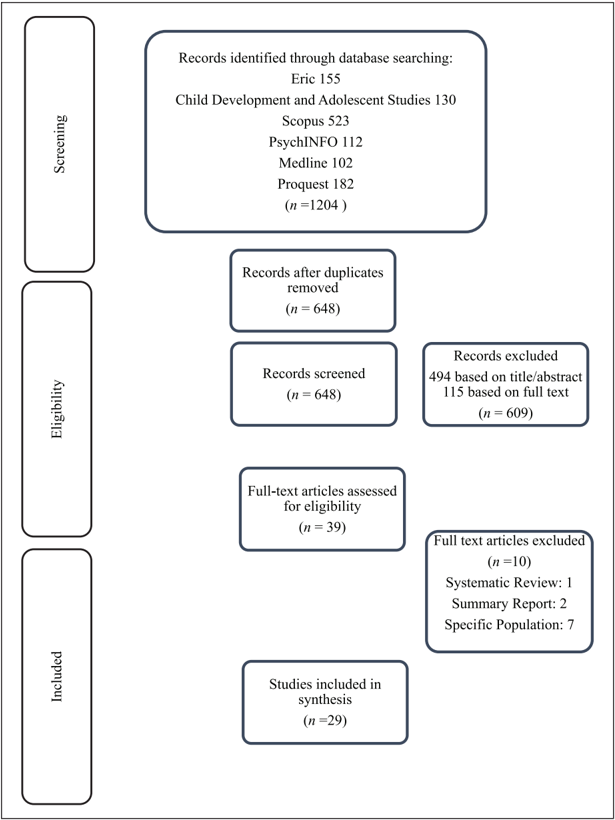
“Figure 1, as recommended by PRISMA (Preferred Reporting Items for Systematic Reviews and MetaAnalyses) (Liberati et al., 2009), details how the studies were selected: The studies were predominantly of a quantitative nature, two were qualitative and one was a mixed-method study.”
MethodThe Presentation of Self in Everyday Life.
Naegele, K. D., & Goffman, E. (1956) · American Sociological Review · doi:10.2307/2089106 · Cited by 25,991
Social network sites: definition, history, and scholarship
boyd, D. M., & Ellison, N. B. (2007) · Journal of Computer-Mediated Communication · doi:10.1111/j.1083-6101.2007.00393.x · Cited by 16,251
Digital Natives, Digital Immigrants Part 1
Prensky, M. (2001) · On the Horizon · doi:10.1108/10748120110424816 · Cited by 11,104 · cited 1×
“Prenskey who is accredited with coining the phrase “digital natives” describes the arrival and dissemination of digital technologies as “discontinuity” from the previous generations (Prensky, 2001).”
BackgroundLiberati, A., Altman, D. G., Tetzlaff, J., Mulrow, C., Gøtzsche, P. C., Ioannidis, J. P. A., Clarke, M., Devereaux, P. J., Kleijnen, J., & Moher, D. (2009) · Journal of Clinical Epidemiology · doi:10.1016/j.jclinepi.2009.06.006 · Cited by 10,578
Ellison, N. B., Steinfield, C., & Lampe, C. (2007) · Journal of Computer-Mediated Communication · doi:10.1111/j.1083-6101.2007.00367.x · Cited by 9,939 · cited 1×
“Social networking sites allow users to “present themselves, articulate their social networks and establish or maintain connections with others” (Ellison et al., 2007, p. 1143).”
BackgroundSocial Network Analysis: A Handbook.
Pappi, F. U., & Scott, J. (1993) · Contemporary Sociology · doi:10.2307/2075047 · Cited by 5,969
The Spread of Obesity in a Large Social Network over 32 Years
Christakis, N. A., & Fowler, J. H. (2007) · New England Journal of Medicine · doi:10.1056/nejmsa066082 · Cited by 5,007
Social media? Get serious! Understanding the functional building blocks of social media
Kietzmann, J. H., Hermkens, K., McCarthy, I. P., & Silvestre, B. S. (2011) · Business Horizons · doi:10.1016/j.bushor.2011.01.005 · Cited by 4,970 · cited 1×
“Social media employ mobile and web-based technologies to create highly interactive platforms through which people create and share content (Kietzmann et al., 2011).”
Background
Research works printed but not linked: 5
- Bentley, H., Burrows, A., Clarke, L., Gillgan, A., Glen, J., Hafizi, M., Letendrie, F., Miller, P., O'Hagan, O., Patel, P., Peppiate, J., Stanley, K., Starr, E., Vasco, N., & Walker, J. (2018). How safe are our children? The most comprehensive overview of child protection in the UK 2018 . National Society for the Prevention of Cruelty to Children.
- Dogan, U. (2016). Effects of social network use on happiness, psychological wellbeing, and life satisfaction of high school students: Case of Facebook and Twitter. Egitim ve Bilim-education and Science , 41 (183), 217-231.
- Miller, H. (1995, June). The presentation of self in electronic life: Goffman on the Internet [Paper presented]. Embodied Knowledge and Virtual Space Conference, London.
- Oxford English Dictionary Online . (2010, July 2007). Oxford English Dictionary. http://dictionary.oed.com
- Putnam, R. D. (2000). Bowling alone: The collapse and revival of American community. 2001 Policy analysis . Simon and Schuster.
Cited by
Items 101–148 of 148
Khairunisa, Y., Hasannuddin, H., & Khairina, K. (2023) · JIIP - Jurnal Ilmiah Ilmu Pendidikan · doi:10.54371/jiip.v6i4.1891 · Cited by 1
Esmene, S., Leyshon, M., de Braal, P., de Bruin, H., & Leyshon, C. (2024) · Geographical Journal · doi:10.1111/geoj.12588 · Cited by 1
¿Cómo afecta el uso de redes sociales a la felicidad?
Caravaggio, L. A. (2024) · Revista de Economía Política de Buenos Aires · doi:10.56503/repba.nro.28(18)/2974 · Cited by 1
“Webster et al. (2021) reseñan distintos estudios en la relación de redes sociales y SWB en adolescentes.”
BackgroundMalo, S., Benítez, I., & González‐Carrasco, M. (2024) · Child Indicators Research · doi:10.1007/s12187-024-10153-2 · Cited by 1
“The afore mentioned results are supported by a meta-analysis carried out by Webster et al. ( 2020 ), in which the authors reviewed all available studies focusing on SWB and the use of both online and offline social networks among 11 to 18-year-old adolescents.”
Biblioterapija, samopomoć i subjektivna dobrobit u otvorenom pristupu u Hrvatskoj
Sveučilište u Rijeci, F. F., Jakovina, I. Ž., Mumelaš, D., & Nacionalna i sveučilišna knjižnica u Zagrebu, Z. (2024) · Socijalna psihijatrija · doi:10.24869/spsih.2024.47 · Cited by 1
“A paper by Deborah Webster, Laura Dunne and Ruth Hunter entitled “Association Between Social Networks and Subjective Well-Being in Adolescents: a Systematic Review” was published in 2021 (12).”
Anonymity as a catalyst for good: Linking social media anonymity to prosocial behavior
Yang, P., Ji, C., Liu, J., & Prentice, C. (2025) · Personality and Individual Differences · doi:10.1016/j.paid.2025.113444 · Cited by 1
Jagodić, G. K. (2020) · Revija za sociologiju · doi:10.5613/rzs.50.2.3 · Cited by 2
Hughes, S., & Moorhead, A. (2021) · Research Square · doi:10.21203/rs.3.rs-800798/v1 · Cited by 1
Branch-Smith, C., Hurley, D., & Salehi, N. (2026) · Health & Social Care in the Community · doi:10.1155/hsc/9924586
Kassman, A. V., & Kneck, Å. (2021) · Cogent Social Sciences · doi:10.1080/23311886.2021.1953768 · Cited by 1
SISTEM PENDIDIKAN ESTONIA: SUATU PERBANDINGAN DENGAN INDONESIA
Rusdinal, M. S. N. G. (2021) · Inovasi Pendidikan · doi:10.31869/ip.v8i2.3010
Sandovici, A., Robu, V., & Stoica, C. M. (2021) · Anuarul Universitatii Petre Andrei din Iasi Fascicula Asistenta sociala sociologie psihologie · doi:10.18662/upasw/27/58
Testoni, S., Amadori, D., Cenna, R., Mannozzi, F., Franchina, V., & Cagnazzo, C. (2022) · Annals of Research in Oncology · doi:10.48286/aro.2022.59
(2023) · Emerald Group Publishing Limited eBooks · doi:10.1108/978-1-80455-147-920231008 · Cited by 1
Hao, L. J., Kok, C., Keat, C. J., & Wan, P. P. (2023) · International Journal of Business and Technology Management · doi:10.55057/ijbtm.2023.5.2.6
Prabowo, A. (2023) · Jurnal Psikologi Integratif · doi:10.14421/jpsi.v11i1.2586
Fitriana, M., Savitri, S. I., Ahmad, J. B., Ali, R. S., & Lathifah, Z. K. (2024) · Islamic Guidance and Counseling Journal · doi:10.25217/0020247450500 · Cited by 3
Pessoa, K. L. E. D. C., Bastos, A. M. D. M. F., & Rodrigues, I. (2024) · ETD - Educação Temática Digital · doi:10.20396/etd.v26i00.8673188
Ardiyasa, I. N. S., Kurniawan, M. F., & Anggraini, P. M. R. (2024) · Mimbar Ilmu · doi:10.23887/mi.v29i2.75423
“Because this is one of the important character values for learners to have (Gildersleeve, 2019; Hallsen, 2021; Webster et al., 2021).”
Cornell, S., & Peden, A. E. (2025) · doi:10.2196/preprints.73089
Digital Technology and Wellbeing
Pelly, D. (2025) · Routledge eBooks · doi:10.4324/9781003382447-18
FRIENDSHIP QUALITY AND SUBJECTIVE VITALITY AMONG ADOLESCENTS: SOCIOECONOMIC STATUS AS MODERATOR
Riaz, A., Sher, A., Khan, R. T., & Yaqoob, M. (2025) · Journal for Current Sign · doi:10.63075/jcs.v3i2.213
Changes in perceived job satisfaction during the transition from adolescence to young adulthood
Śliwicki, D., Osińska, M., Szczepaniak, M., & Szulc‐Obłoza, A. (2025) · Argumenta Oeconomica · doi:10.15611/aoe.2025.2.01 · Cited by 2
The relationships among Instagram use, self-esteem, and symptoms of depression in Albanian youth
Hysi, F., Dervishi, E., Lame, E., & Sauku, V. H. (2025) · Multidisciplinary Science Journal · doi:10.31893/multiscience.2026100 · Cited by 1
Sheehy, M. R., Vora, T., Hiscock, B. B., George, A. C., Swab, M., Fawcett, J. M., & Fawcett, E. J. (2025) · Media Psychology · doi:10.1080/15213269.2025.2564698
Ci vuole un villaggio: costruire reti per il benessere dei giovani
Zunino, A., Panza, M., Dagliano, S., Franceschi, C., Teneggi, A., & Vanara, A. (2025) · PSICOLOGIA DELLA SALUTE · doi:10.3280/pds2025-003008
Efectos del uso de redes sociales sobre el bienestar subjetivo en Latinoamérica
Caravaggio, L. A. (2025) · Revista de Economía del Rosario · doi:10.12804/revistas.urosario.edu.co/economia/a.15552 · Cited by 1
Risk Factors for Childhood Psychopathology
Doherty, J. L., & Ahuja, A. (2025) · Cambridge University Press eBooks · doi:10.1017/9781009110266.003
dos Santos, I. M., & Mota, M. P. (2025) · Simpósio Brasileiro de Fatores Humanos em Sistemas Computacionais (IHC) · doi:10.5753/ihc_estendido.2025.16223
“…2021, Sharevski e Loop 2023], problemas de privacidade e segurança [Dumbrell e Steele 2019], falta de confança [Sharevski e Loop 2023], dependência [Webster et al. 2021], além das difculdades técnicas e problemas de acessibilidade ocasionados pela rápida mudança dos recursos de interface, nem…”
Citerne, A., Roda, C., Rancière, F., & Momas, I. (2024) · Figshare · doi:10.6084/m9.figshare.26588910
Hjetland, G. J., Schønning, V., Hella, R. T., Veseth, M., & Skogen, J. C. (2021) · Figshare · doi:10.6084/m9.figshare.14594174
Madsen, K. R., Tetens, A., Bonde, L. O., Kusier, A. O., Jeppesen, P., & Andersen, S. (2025) · Pilot and Feasibility Studies · doi:10.1186/s40814-025-01757-8 · Cited by 1
“Co-variables questionnaires will include demographic questions to the child and their parent, such as parents’ socioeconomic position, country of birth and family background.”
Predictors of Emotional Well-Being on Social Networks in University Students
Gutiérrez-Aguilar, O., Duche-Pérez, A. B., Aguilar, G., & Huanca, S. C. (2026) · Lecture notes in networks and systems · doi:10.1007/978-3-032-10731-2_7
Instagram Passive Active Use Measure (iPAUM): Development, validation and relation to self-esteem
Tølbøll, K. B., Gerson, J., & Plagnol, A. C. (2026) · Cyberpsychology Journal of Psychosocial Research on Cyberspace · doi:10.5817/cp2026-1-10
“However, a growing body of literature emphasises the importance of examining how and why people spend their time on SNSs, as this provides a more nuanced picture of individual use (Valkenburg, Beyens et al., 2022; Webster et al., 2021).”
The Role of Health Service Regions in Children’s Subjective Well-Being: A Cross-Sectional Study
Dengiz, K. S., Koçoğlu, D., & Saçıkara, Z. (2026) · Child Indicators Research · doi:10.1007/s12187-026-10351-0
“…physical decline, continuous personal development, changes in family responsibilities, retirement, and social loss (Das et al., 2020), while well-being in adolescents is related to making friends, academic performance, parental relationships, delinquency, and socialization (Webster et al., 2021).”
Ytrearne, T. V., Hella, R. T., Hjetland, G. J., Skogen, J. C., & Langeland, E. (2026) · International Journal of Qualitative Studies on Health and Well-Being · doi:10.1080/17482631.2026.2639536 · Cited by 1
Hladík, J., Hrbáčková, K., & Šafránková, A. P. (2026) · Scientific Reports · doi:10.1038/s41598-026-43516-6 · Cited by 1
“However, this relationship is often complex 25,26 .”
Adolescents’ Perceptions of Online and Real-Life Peer Interactions and Social SkillsPreprint
Stolk, T., Lockhorst, D., Kester, L., Scholte, R. H. J., & Pouwels, J. L. (2026) · SSRN Electronic Journal · doi:10.2139/ssrn.6450164
Janssen, L. H. C., van der Wal, A., & Beyens, I. (2026) · Development and Psychopathology · doi:10.1017/s0954579426101485
Borstmann, E. D. S., Ardenghi, T. M., Vettore, M. V., Noronha, T. G., Emmanuelli, B., & Knorst, J. K. (2026) · Brazilian Oral Research · doi:10.1590/1807-3107bor-2026.vol40.026
“34 Therefore, online trust may serve as emotional support and also as a buffer against negative social experiences that impact oral health perceptions.”
Human 2.0? AI and the Future of Well-Being, Connection, and Personal Growth: A Narrative Review
Vannoy, T. K., Cadieux, S., & Lyubomirsky, S. (2026) · Behavioral Sciences · doi:10.3390/bs16060909 · Cited by 3
“Prior research has linked excessive smartphone and social media use to a range of problematic outcomes (e.g., Dutot, 2020; Kayis et al., 2022; Kross et al., 2021; Webster et al., 2021).”
Li, W. O., Fung, C.-M., Chow, T. S., Leung, K. I. D., & Cheung, Y.-W. (2026) · Cyberpsychology Journal of Psychosocial Research on Cyberspace · doi:10.5817/cp2026-3-6
“…overall associations between SNS use and mental health remain modest when measured broadly (Course-Choi & Hammon, 2021; Meier & Reinecke, 2021; Webster et al., 2021), pandemic-era studies such as the work of Marciano et al. (2022) found that elevated usage correlated with increased ill-being,…”
Wang, L., Jiang, L., Ye, P., & Bian, Y. (2026) · Current Psychology · doi:10.1007/s12144-026-09699-x
“This support contributes to increased well-being, improved academic performance, and reduced internalized problems (Cheng & Huang, 2021 ; Letkiewicz et al., 2023 ; Webster et al., 2021).”
Yusriani, S., Rekarti, E., Hanifah, H. M., Nadif, B., & Gunarto, M. (2026) · Ilomata International Journal of Social Science · doi:10.61194/ijss.v7i3.2289
“…that sustainable transformation in higher education depends not only on technological availability, but also on leadership quality, professional motivation, institutional support, and organizational climate (Aboramadan, 2022; Al-Zawahreh et al., 2019; Webster et al., 2021; Widiantari et al., 2024).”
Altan, N. Ş., & Erdemir, E. (2026) · Children and Youth Services Review · doi:10.1016/j.childyouth.2026.109280
Impact of Social Network Ties on Subjective Well-Being: Exploring Structural Conditions of Weak Ties
Sudo, N. (2026) · Social Psychology Quarterly · doi:10.1177/01902725261484087
Dinç, F., Çelik, İ., Aykan, E. B., Griffiths, M. D., & Bektaş, M. (2026) · Current Psychology · doi:10.1007/s12144-026-10134-4
“Their emotional fluctuations may be more pronounced compared to adults (Webster et al., 2021).”
Varghese, S., & Naik, A. R. (2026) · Journal of Research in Health Sciences · doi:10.34172/jrhs.12747
Metadata
- Authors
- Webster, D., Dunne, L., & Hunter, R.
- Affiliations
- Queen's University Belfast (GB)
- Corresponding author
- Webster, Deborah
- Venue
- Youth & Society
- Publisher
- SAGE Publications
- Published
- 2020-05-14
- Volume
- 53
- Issue
- 2
- Pages
- 175-210
- ISSN
- 0044-118X (ISSN-L)
- 1552-8499
- OpenAlex
- W3024025420
- Semantic Scholar
- 371a86ac6ca11c6b7b65ad339ed31c0a63bd86c9
- Cited by
- 148
- References
- 82
- Citations by year
- 2026: 22 · 2025: 36 · 2024: 29 · 2023: 22 · 2022: 17 · 2021: 19 · 2020: 3
- FWCI
- 2.66
- Type
- journal article
- Language
- en
- Open access
- hybrid
- doi.org
- Locations
- Youth & Society (publishedVersion, cc-by)
- Research Portal (Queen's University Belfast) (publishedVersion, cc-by)
- Funders
- Department of Economy (Student Scholarship)
- Topics
- Social Sciences › Sociology and Political Science › Impact of Technology on Adolescents
- Social Sciences › Psychology › Social Psychology › Psychological Well-being and Life Satisfaction
- Social Sciences › Psychology › Social Psychology › Mental Health via Writing
- Keywords
- social networks, subjective well-being, adolescents, social networking sites, social media, offline social networks, mood, self-esteem, loneliness, body image, life satisfaction, passive social media use, support seeking, positive feedback
About these checks
Registry, retraction, Cites and statistics results are computed, not judged, with one exception: a printed reference that no index lists is read once by a model before it counts as a citation error. Claims are extracted by a model and kept only when their quote appears verbatim in the text; each cited source is then checked, with a model’s help, for whether it says what the claim relies on. Those verdicts can be wrong — read the claim’s quote and the cited source before relying on one.
Statistics and arithmetic are recomputed, not judged.
Confidence bands are shown only for fields calibrated on our annotated test set. None is calibrated yet, so no band is shown.
What counts as a claim ›How we measure confidence ›How we check this ›
Are you an author, or do you see a problem with this page? Request a review
Data sources
Bibliographic data: Semantic Scholar, OpenAlex, Crossref.
Contains information from the Semantic Scholar Academic Graph Datasets, made available under the ODC Attribution License (ODC-BY 1.0).
Semantic Scholar’s data is described in: Kinney, R., et al. (2023). The Semantic Scholar Open Data Platform. arXiv:2301.10140.
