

The DOI matches its Crossref record; 72 of the 73 references it cites were found in a registry or an index.
Waiting Time as an Indicator for Health Services Under Strain: A Narrative Review
Open accessAbstract
As pressure increases on public health systems globally, a potential consequence is that this is transferred to patients in the form of longer waiting times to receive care. In this review, we overview what waiting for health care encompasses, its measurement, and the data available in terms of trends and comparability. We also discuss whether waiting time is equally distributed according to socioeconomic status. Finally, we discuss the policy implications and potential approaches to addressing the burden of waiting time. Waiting time for elective surgery and emergency department care is the best described type of waiting time, and it either increases or remains unchanged across multiple developed countries. There are many challenges in drawing direct comparisons internationally, as definitions for these types of waiting times vary. There are less data on waiting time from other settings, but existing data suggest waiting time presents a significant barrier to health care access for a range of health services. There is also evidence that waiting time is unequally distributed to those of lower socioeconomic status, although this may be improving in some countries. Further work to better clarify definitions, identify driving factors, and understand hidden waiting times and identify opportunities for reducing waiting time or better using waiting time could improve health outcomes of our health services.
Overview
The claims and statistics of this paper haven’t been checked yet.
Run the check — free, no account needed. It reads the open-access text and checks the sources it cites.
Integrity signals
Registry
Cites
Statistics
Figures
Verification
Claims the paper makes
The claims and statistics of this paper haven’t been checked yet.
Run the check — free, no account needed. It reads the open-access text and checks the sources it cites.
Claims other papers make about this one
Each is checked against this paper’s own text: does it say what the citing paper says it does?
The source backs part of the claim, not all of it — or backs it for a different population, condition or comparison.
In the citing paper
“Furthermore, these simulations could inform future healthcare robots (Yuan et al. 2023) and ease the global healthcare burden (McIntyre and Chow 2020), (i.e., 40% of the global population (WHO 2018).”
From Human-Clinical AI Agent Collaboration (2025) · cites this paper as McIntyre and Chow 2020
Experimental — accuracy not yet measured
Self-check
Percentages, sums and reported differences re-computed from the paper’s own numbers.
The self-check needs the paper’s full text.
Citations
Cites
Wang, H., Naghavi, M., Allen, C., Barber, R. M., Bhutta, Z. A., Carter, A., Casey, D. C., Charlson, F. J., Chen, A. Z., Coates, M. M., et al. (2016) · The Lancet · doi:10.1016/s0140-6736(16)31012-1 · Cited by 6,596
The American Journal of Managed Care
(2020) · The American Journal of Managed Care · doi:10.37765/ajmc · Cited by 3,254
On the measurement of inequalities in health
Wagstaff, A., Paci, P., & van Doorslaer, E. (1991) · Social Science & Medicine · doi:10.1016/0277-9536(91)90212-u · Cited by 1,810 · cited 1×
“63 Those in the lowest income quartile reported a mean [95% CI] clinic time of 91 [87-95] minutes compared with those in the highest income quartile, who reported a mean clinic time of 72 [65-78] minutes.”
BackgroundKingston, A., Robinson, L. A., Booth, H., Knapp, M. R. J., Jagger, C., & for the MODEM project (2017) · Age and Ageing · doi:10.1093/ageing/afx201 · Cited by 889 · cited 1×
“Among respondents who reported their clinic time during the 24-hour assessment period, a median (95% CI) of 86 [83-88] minutes was spent in-clinic.”
BackgroundOECD (2017) · Health at a glance · doi:10.1787/health_glance-2017-en · Cited by 822
Waiting Time Policies in the Health Sector
OECD (2012) · OECD health policy studies · doi:10.1787/9789264179080-en · Cited by 689
Performance measurement for health system improvement : experiences, challenges and prospects
Smith, P. C., Mossialos, E., Papanicolas, I., & Leatherman, S. (2010) · Cambridge University Press eBooks · doi:10.1017/cbo9780511711800 · Cited by 594
Bähler, C., Huber, C. A., Brüngger, B., & Reich, O. (2015) · BMC Health Services Research · doi:10.1186/s12913-015-0698-2 · Cited by 482
Socioeconomic status and multimorbidity: a systematic review and meta‐analysis
Pathirana, T. I., & Jackson, C. A. (2018) · Australian and New Zealand Journal of Public Health · doi:10.1111/1753-6405.12762 · Cited by 475
Willing to wait?: The influence of patient wait time on satisfaction with primary care
Anderson, R. T., CAMACHO, F. T., & Balkrishnan, R. (2007) · BMC Health Services Research · doi:10.1186/1472-6963-7-31 · Cited by 418
Research works printed but not linked: 23
- Queensland Health, 2019, Queensland Reporting Hospitals Specialist Outpatient
- Victorian Agency for Health Information, 2019, Statewide—Median Wait Time for Urgent Specialist Clinic Appointment—All Specialties—Quarterly Data
- South Australia Health, 2019, Specialist Outpatient Waiting Time Report (Third Release)
- Tasmanian Health Service, 2019, Estimated Outpatient Waiting Times
- Australian Institute of Health and Welfare, 2018, Elective Surgery Waiting Times 2017/18
- NHS England, 2019, Hospital Accident and Emergency Activity, 2018-2019
- Anandaciva S. What Does the NHS England Review of Waiting Times Mean for Accident and Emergency Departments? The Kings Fund. https://www.kingsfund.org.uk/publications/nhs-england-review-waiting-times-accident-emergency. Published 2019. Accessed June 26, 2019.
- Miller P, 2017, Survey of Physician Appointment Wait Times and Medicare and Medicaid Acceptance Rates
- Gubb J, 2009, BMJ, 338, 442
- Canadian Institute for Health Information, 2017, Emergency Department Wait Times in Canada Continue to Rise
- Canadian Institute for Health Information, 2016, How Canada Compares: Results from The Commonwealth Fund’s 2016 International Health Policy Survey of Adults in 11 Countries—Accessible Report
- Australian Institute of Health and Welfare, 2012, Australian Hospital Statistics 2011-2012: Emergency Department Care
- Australian Institute of Health and Welfare, 2017, Elective Surgery Waiting Times 2016-2017: Australian Hospital Statistics
- Haggerty J, 2018, Can Fam Physician, 64, e407
- Carrière G, 2010, Health Rep, 21, 7
- Ahmad BA, 2017, Malaysian family physician: the official journal of the Academy of Family Physicians of Malaysia, 12, 14
- McMullen M, 2013, Clin Ophthalmol, 7, 1655
- Anderson RT, 2007, BMC Health Services Research, 7
- Ray KN, 2015, Am J Manag Care, 21, 567
- Australian Institute of Health and Welfare, 2018, Australian Hospitals 2016-2017 at a Glance
- Iacobucci G, 2019, BMJ (Clinical Research Ed), 364, l1148
- Australian Institute of Health and Welfare, 2012, Australian Hospital Statistics 2011-12: Elective Surgery Waiting Times
- NHS England, 2017, Hospital Accident and Emergency Activity: Supporting Information, 2016-2017
Cited by
Sorted by citations
Items 101–200 of 220
The interdependence between hospital choice and waiting time — with a case study in urban China
van de Klundert, J. J., Cominetti, R., Liu, Y., & Kong, Q. (2024) · Journal of Choice Modelling · doi:10.1016/j.jocm.2024.100509 · Cited by 2
Ononye, R. N., Roberts, J., Igbokwe, K. K., Adebisi, A. A., & Adefehinti, M. (2024) · Cureus · doi:10.7759/cureus.74488 · Cited by 2
A collaborative interdisciplinary approach for trigger finger management
Yanko, E., Thomson, C., Bourassa, R., Gasmo, C., Le, T., & Crockett, K. (2025) · Journal of Hand Therapy · doi:10.1016/j.jht.2024.12.003 · Cited by 2
Hanley, A. W., Davis, A., Worts, P. R., & Pratscher, S. D. (2025) · Journal of Behavioral Medicine · doi:10.1007/s10865-024-00548-5 · Cited by 2
López-Ferreruela, I., Miguel, A. G., Laguna-Berna, C., Malo, S., Castel-Feced, S., Rabanaque, M. J., & Aguilar‐Palacio, I. (2025) · Frontiers in Global Women s Health · doi:10.3389/fgwh.2025.1605400 · Cited by 2
“Rural areas often have shorter waiting lists and greater availability of primary care services (44 – 47).”
Doolan, B. J., Yeon, J., Weaich, M., & Gupta, M. (2022) · Pigment International · doi:10.4103/pigmentinternational.pigmentinternational_9_21 · Cited by 2
Rosenbaum, D., More, E. A., & Orr, M. (2023) · Leadership in health services · doi:10.1108/lhs-02-2023-101 · Cited by 2
Armanaschi, L., Barzan, E., Cavallucci, M., Federici, C., Sartirana, M., & Zerzer, F. (2023) · MECOSAN · doi:10.3280/mesa2022-123oa15593 · Cited by 1
Abiyu, Y., Aderaw, Z., Yismaw, L., Mengaw, M., Demelash, G., & Siferih, M. (2024) · PLOS Global Public Health · doi:10.1371/journal.pgph.0002183 · Cited by 1
Satisfaction-based patient classification: Improving the quality of healthcare services
de Oliveira, L. A. B., de Albuquerque, A. P. G., de Carvalho, R. C., Becerra, C. E. T., & de Medeiros, D. D. (2024) · International Journal of Healthcare Management · doi:10.1080/20479700.2024.2379179 · Cited by 1
“This fi nding enriches the understanding of service quality and patient satisfaction by con fi rming the importance and complexity of the waiting time factor in the quality of healthcare services, as highlighted by previous research [51, 54 – 56].”
Brunilda, A., Tunprasert, T., Tom, W., & Liam, M. (2024) · Journal of Foot and Ankle Research · doi:10.1002/jfa2.12039 · Cited by 1
“This evaluation primarily aimed to address the concern of extended waiting times and patient outcomes, as highlighted in previous literature [20].”
ResultReckers‐Droog, V., van Alphen, A. M. I. A., Knies, S., de Jong, R. J. B., & Reindersma, T. (2025) · Health Policy and Technology · doi:10.1016/j.hlpt.2025.101021 · Cited by 1
Silva-Aravena, F., & Morales, J. (2025) · Health Policy and Technology · doi:10.1016/j.hlpt.2025.101036 · Cited by 2
Azimi, S., & Uddin, N. (2025) · Healthcare · doi:10.3390/healthcare13172092 · Cited by 1
“Therefore, although it has been argued that lower SES groups are disproportionately affected [35], this relationship needs further investigation.”
Raglan, O., Flint, R., Assi, N., Bennet, S. L. M., McDougall, A. A., Kaur, M. M., & Ahmed, J. (2025) · Journal of Robotic Surgery · doi:10.1007/s11701-025-02858-5 · Cited by 1
“Waiting lists are a key metric that represent how well the elective care pathway within a health service is functioning and are therefore an important consideration for many hospitals worldwide [1].”
Understanding Medication Adherence Challenges
Sharma, A., Sharma, S., Sunita, S., Lakshmi, P. V. M., & Sharma, A. (2025) · BENTHAM SCIENCE PUBLISHERS eBooks · doi:10.2174/9789815324457125010004 · Cited by 2
Alhawa, E. A., Presser, E., Zahwe, A., Faraj, S., Al‐Hajj, S., Fares, M., & AlHalbi, M. F. (2025) · Archives of Public Health · doi:10.1186/s13690-025-01588-2 · Cited by 1
“Waiting times represent a key indicator for the provision of timely care globally [1].”
Mcharo, O., Kapesa, A., Materu, J., Luwayi, J. R., Nahay, F., Basinda, N., Chibwe, E., & Okello, E. S. (2025) · Reproductive Health · doi:10.1186/s12978-025-02087-x · Cited by 3
Towards a Digital Twin for Surgical Waiting List Management: A Preliminary Analysis and Design Study
Castilla-Rodríguez, I., Miranda, G., Rodríguez-Orihuela, C., Segredo, E., & Marrero, A. (2025) · Procedia Computer Science · doi:10.1016/j.procs.2025.12.043 · Cited by 1
Patients' Waiting Times in Operating Rooms and Relevant Reasons
Mutlu, Ç. I., & Aslan, M. (2026) · Journal of Evaluation in Clinical Practice · doi:10.1111/jep.70361 · Cited by 1
Chatzoudes, D., Chatzoglou, P., & Amarantou, V. (2026) · Health Systems · doi:10.1080/20476965.2026.2613886 · Cited by 1
“While waiting time has been acknowledged in past studies (e.g., Al Nhdi et al., 2021; Hashemi et al., 2017; McIntyre & Chow, 2020; Nyce et al., 2021) as an important factor, the present study offers a novel contribution by treating perceived waiting time as a distinct and measurable construct…”
Khan, Z., Weaver, S., Dando, R. V., Schlag, A. K., Neill, J. C., & Wainwright, V. (2026) · Qualitative Health Research · doi:10.1177/10497323261419338 · Cited by 1
Ethical aspects of waiting lists in neurosurgery
Balak, N., Broekman, M. L. D., Samprón, N., Tsianaka, E., Sandvik, U., Bolger, C., Soleman, J., Visocchi, M., Agboola, K. K. M., Syrmos, N. C., et al. (2026) · Acta Neurochirurgica · doi:10.1007/s00701-026-06868-6 · Cited by 1
“As a result, long waiting times may worsen clinical outcomes, increase costs, generate inequalities, decrease quality of life, and adversely impact patient trust in health care and health care staff [7, 13, 47, 58, 61, 66, 86].”
InfluentialHealthcare network resilience analysis under equipment failure and patients’ preferences
Piffari, C., Lagorio, A., & Pinto, R. (2026) · International Journal of Production Research · doi:10.1080/00207543.2026.2680583 · Cited by 1
“Among the metrics used to assess healthcare network resilience, patient waiting time is the most common and reflects the system’s capacity to deliver care (McIntyre and Chow 2020).”
Enhancing Access in Academic Medical Centers Through Incentive-Based Evening and Weekend Clinics
Aizenberg, D. A., Lakshminrusimha, S., Murin, S., Button, S., Hall, B. L., & Lubarsky, D. A. (2026) · Journal of Ambulatory Care Management · doi:10.1097/jac.0000000000000557 · Cited by 1
“Prolonged wait times and reduced access may also drive patients to competing health systems, reducing the market share of the academic medical centers (McIntyre & Chow, 2020).”
Kourouche, S., Considine, J., Li, L., Murphy, M., Russell, S. B., Casey, L., Richardson, R., Shaban, R. Z., Aggar, C., Sarrami, P., et al. (2026) · Implementation Science · doi:10.1186/s13012-026-01524-0 · Cited by 1
“Global demand for emergency care has grown over the past decade and continues to exceed resource supply [1, 2], posing serious risks to patient safety [3].”
Luxenburg, O., Myers, V., Ziv, A., Goldberg, Y., Saban, M., Brammli‐Greenberg, S., & Wilf‐Miron, R. (2022) · Health Services and Outcomes Research Methodology · doi:10.1007/s10742-022-00276-w · Cited by 1
“[17] Comparison of WT from survey data and from computerized scheduling systems, to date rarely analyzed, can help determine reliability of both methods, especially if they are measured during a similar time frame.”
BackgroundMethodAz egynapos sebészet helye és szerepe a szürkehályog műtét várólista csökkentésében
Pónusz, R., Endrei, D., Pónusz-Kovács, D., Csutak, A., & Boncz, I. (2022) · IME - Az egészségügyi vezetők szaklapja · doi:10.53020/ime-2022-401 · Cited by 1
The long wait: A discussion of emergency department wait time and its impact on clinical outcomes
Sultan, M. (2023) · Dalhousie Medical Journal · doi:10.15273/dmj.vol49no1.11638 · Cited by 1
Predict2Protect: Machine Learning Web Application in Early Detection of Heart Disease
Mandal, A., & Pradhan, S. (2023) · Cureus · doi:10.7759/cureus.49305 · Cited by 1
“Even within developed countries, healthcare is often infringed upon by the burdens of inadequate scheduling and unaffordable costs for the average citizen [2].”
BackgroundQueue Management system and its relation with Patient Satisfaction of Outpatient Clinics
Hassan, H. A., Ibrahim, S., AbdelSalam, M., & Badran, F. M. (2022) · Egyptian Journal of Nursing and Health Sciences · doi:10.21608/ejnhs.2023.327887 · Cited by 1
“As the burden increases on public health systems worldwide, a possibility significance is transferred to patients in the form of longer waiting times to receive Health care ( McIntyre and Chow,2020 ).”
Background“Sorry for Holding You Up”: Surgeons’ Apologies for Lateness in Clinic Settings
White, S. J., Ho, K., Maini, K., & Liang, R. (2024) · Health Communication · doi:10.1080/10410236.2023.2299888 · Cited by 1
“This is also reflected in how doctors’ lateness is often reframed in academic literature as “patient waiting times” (Anderson et al., 2007; Eilers, 2004; McIntyre & Chow, 2020).”
Egen, L., Wessels, F., Quan, A., Westhoff, N., KRIEGMAIR, M. C., Honeck, P. R., Michel, M. S., & Kowalewski, K. (2024) · Urologic Oncology Seminars and Original Investigations · doi:10.1016/j.urolonc.2024.01.010 · Cited by 1
User Experience Analysis Using Usability Testing Method on Online Queue System at Hospital Service
Fanani, M. W., Lishandary, N. Q., Saputri, N. F., Anita, T. L., & Prasandy, T. (2023) · IEEE International Conference on Computing, Engineering and Design (ICCED) · doi:10.1109/icced60214.2023.10425688 · Cited by 2
“According to a study done in a medical facility for eyes, excessive wait times were the most regularly expressed complaints [2].”
BackgroundPrivate Sector Provision as an “Escape Valve”: The Mexico Diabetes Experiment
Bronsoler, A., B, J. G. A., & Seira, E. (2024) · The Review of Economic Studies · doi:10.1093/restud/rdae024 · Cited by 1
Atalan, A. (2024) · International Journal of Health Management and Tourism · doi:10.31201/ijhmt.1430179 · Cited by 1
The Reality of Scheduling Specialized Medical Appointments in Public Hospitals in Manabí, Ecuador
Briones, M. A., Velásquez, A. C. B., Santos, R. O. Z., & Rodríguez, J. M. S. (2024) · Revista de Gestão Social e Ambiental · doi:10.24857/rgsa.v18n9-092 · Cited by 1
“However, it should be noted that waiting times vary significantly around the world, as reported in a narrative review by (McIntyre & Chow, 2020).”
BackgroundBontia, A. A. I., & Babsa-ay, J. D. (2024) · Acta Medica Philippina · doi:10.47895/amp.v58i13.8098 · Cited by 1
Same-day service: why healthcare cannot continue to be the exception
Chen, A. M. (2024) · BMJ Leader · doi:10.1136/leader-2024-001025 · Cited by 1
Matias, M. A., Santos, R., Gutacker, N., Mason, A., & Rice, N. (2025) · Health Economics Review · doi:10.1186/s13561-025-00603-0 · Cited by 1
“Such widespread and prolonged reductions in the supply of planned care are likely to impact patient health negatively through prolonged waiting times (WTs) [2, 3].”
Nasal versus sublingual routes for emergency drug administration
Debe, M. S., Khan, S. A., Ahmed, I. S., Hussain, Z., Uddin, M. N., & Rawas‐Qalaji, M. (2025) · Journal of Pharmaceutical Sciences · doi:10.1016/j.xphs.2025.103903 · Cited by 2
Ye, L., Jia, C., Qi, Q., Zhou, J., Zhu, C., Jiang, Y., & Wang, L. (2022) · Global Health & Medicine · doi:10.35772/ghm.2022.01049 · Cited by 1
McIntyre, D., Marschner, S. L., Thiagalingam, A., Pryce, D. H., & Chow, C. K. (2023) · INQUIRY The Journal of Health Care Organization Provision and Financing · doi:10.1177/00469580231159491 · Cited by 1
Self-citationLiao, E. N., Chehab, L. Z., Neville, K., Liao, J., Patel, D., & Sammann, A. (2022) · Research Square · doi:10.21203/rs.3.rs-1482903/v1 · Cited by 1
Mosleh, S. M., Hamoud, A. R., Saeed, A. A., Alnaqbi, H. M., Alhouti, R. S., & Alshehhi, S. S. (2023) · Research Square · doi:10.21203/rs.3.rs-3289032/v1 · Cited by 1
Mosleh, S. M., Hamoud, A. R., Saeed, A. A., Alnaqbi, H. M., Alhouti, R. S., & Alshehhi, S. S. (2023) · Research Square · doi:10.21203/rs.3.rs-3289032/v2 · Cited by 1
Human-Clinical AI Agent Collaboration
Kadem, M., & Al-Khazraji, B. (2025) · Proceedings of the AAAI Symposium Series · doi:10.1609/aaaiss.v6i1.36060
“Furthermore, these simulations could inform future healthcare robots (Yuan et al. 2023) and ease the global healthcare burden (McIntyre and Chow 2020), (i.e., 40% of the global population (WHO 2018).”
Matsunaga, S. A. (2021) · ScholarSpace (University of Hawaii at Manoa)
Rana, J., Rahman, F., & Bellanger, M. M. (2021) · Springer eBooks · doi:10.1007/978-3-319-31816-5_212-1
Implementing a General Practitioner-to-General Physician eConsult service (eConsultant) in AustraliaPreprint
Job, J., Nicholson, C., Calleja, Z., Jackson, C. L., & Donald, M. (2022) · Research Square · doi:10.21203/rs.3.rs-1691204/v1
Rodwell, J. (2022) · International Journal of Environmental Research and Public Health · doi:10.3390/ijerph192214707
“Similarly, PHI appears to directly impact overnight hospitalization through the availability of insured funding for hospital care [25] or as a self-selection effect of those expecting hospitalization (confirming [24]), as does the access to special health care cards such as those of military veterans.”
Backgroundde Paula, L. L. R. J., Labriola, M. P. C., Camargo, T. R., Massaneiro, D. A. D. O., Mauad, E. C., Pinto, V. S. D. O. E. A., Fabbro, A. L. D., & Hernandes, I. C. P. (2022) · doi:10.22541/au.167156293.31938022/v1
Rana, J., Rahman, F., & Bellanger, M. M. (2022) · Springer eBooks · doi:10.1007/978-3-030-66252-3_212
Taylor, S. M., Franich, A., Jones, S., & Glass, B. D. (2023) · Pharmacy · doi:10.3390/pharmacy11020077
“This is exacerbated by the increased prevalence of chronic disease, along with insufficient resources and staff maldistribution [3,40].”
BackgroundRakhmawati, L., Wijaya, S., Damayanti, N. A., & Rochmah, T. N. (2023) · Jurnal Aisyah Jurnal Ilmu Kesehatan · doi:10.30604/jika.v8i1.1642
Assessment PLUS: A guided self‐help pilot within the psychological therapies teams
Casella, T., Carrapico, R., Whyte, R., Hanson, R. N., Stefanova, B., Campbell, D., Fraser, F. C., Currie, K. E., Williams, M., & Quinn, P. (2023) · Counselling and Psychotherapy Research · doi:10.1002/capr.12679
Forecasting Elective Surgery Demand Using ARIMA-Machine Learning Hybrid Model
Leong, X. Y., Jajo, N. K., Peiris, S., & Khadra, M. H. (2023) · European Journal of Artificial Intelligence and Machine Learning · doi:10.24018/ejai.2023.2.3.19
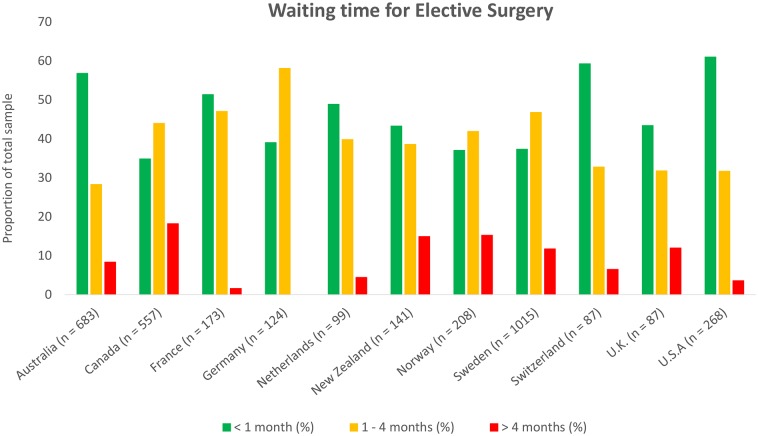
“McIntyre and Chow [5] reported that the Netherlands had the lowest mean elective surgery waiting time of 1.”
BackgroundInfluentialJafri, S. B. F., & Baig, M. K. (2023) · Journal of Entrepreneurship Management and Innovation · doi:10.52633/jemi.v5i4.347
Maqsood, S., Sunil, S., Fatima, M., & Johnson, P. D. (2024) · doi:10.53555/jptcp.v31i3.5116
Brînzac, M. G., Ungureanu, M., & Baba, C. O. (2024) · Research Square · doi:10.21203/rs.3.rs-4329375/v1
Gani, S. (2024) · GHMJ (Global Health Management Journal) · doi:10.35898/ghmj-72983
“For instance, authors such as Alarcon-Ruiz et al. (2019) and McIntyre and Chow (2020) and also identified waiting times as a major concern for patients in healthcare settings, echoing the results of this study.”
BackgroundDavidson, S. R. E., Kamper, S. J., Haskins, R., Petkovic, D., Feenan, N., Smith, D. P., O'Flynn, M., Pallas, J., Donald, B., Smiles, J. P., et al. (2024) · doi:10.31219/osf.io/b97nd
Use of Subsidized Health Services by Artists in Canada: An Exploratory Study
de Youngster, S., & Li, S. (2024) · Community Health Equity Research & Policy · doi:10.1177/2752535x241290666
Santalucia, I., Feola, F., D’Amore, A., Mannelli, M. P., & Fidecicchi, A. (2024) · International Conference on Biomedical Engineering and Applications (ICBEA) · doi:10.1109/icbea62825.2024.00043
“First and foremost, it directly impacts patient care by influencing factors such as wait times [4], timely access to surgical procedures, and overall patient satisfaction [5, 6].”
BackgroundPoudel, S., Sperandei, S., Page, A., Reis, A. C., Guo, Y., Munasinghe, S. B., Worne, K., Saheb, R., & Brakoulias, V. (2024) · Journal of Psychiatric Research · doi:10.1016/j.jpsychires.2024.12.003
Bills, E. R., Westin, A. D., & Andrews, J. M. (2024) · Asia Pacific Journal of Health Management · doi:10.24083/apjhm.v19i3.4169
Quality in Aging: Strategies for Safe and Effective Healthcare
Alvarado, K. P. P., Domínguez‐Cherit, G., Medina-Reyes, P. J., Martínez-Vargas, E., & Reyes‐Morales, H. (2024) · Springer eBooks · doi:10.1007/978-3-031-76469-1_13
Shema, S., Ukwizagira, B., Twagirumugabe, T., & Ndayiragije, C. (2024) · Journal of Health Medicine and Nursing · doi:10.47604/jhmn.3137
Ramdani, D., Kosasih, C. E., & Emaliyawati, E. (2025) · Journal of Multidisciplinary Healthcare · doi:10.2147/jmdh.s498227
Muyomba, M., & Mukirya, N. A. (2025) · Student s Journal of Health Research Africa · doi:10.51168/sjhrafrica.v6i3.1575
Can We Help Our Physicians and Our Profession?
Greenberg, W. E., Guerrero, A. P. S., Morreale, M. K., Castillo, E. G., Balon, R., Coverdale, J., Aggarwal, R., Seritan, A. L., Thomas, L. A., Beresin, E. V., et al. (2025) · Academic Psychiatry · doi:10.1007/s40596-025-02129-3
Chance für neue Versorgungsformen – Lernen: Blended Care
Crüts, B., Gamerschlag, L., Hiebl, S., & Atzmüller, M. (2025) · ergopraxis · doi:10.1055/a-2539-6660
Opuba, E. N., Onyango, P. O., & Owenga, J. A. (2025) · Journal of Public Health in Africa · doi:10.4102/jphia.v16i1.801
Navigational and vaccination health literacy
Izbassarov, M. S., Dauletkaliyeva, S. A., Makhanbetchin, E. Z., Delellis, N. O., Bolatova, Z. E., Yerdessov, N., Zhamantayev, O., Kayupova, G., Nukeshtayeva, K., Маkulbek, A. S., et al. (2025) · Medicine and ecology · doi:10.59598/me-2305-6053-2025-114-1-17-29
Automated Patient Face Registration and Wait Time Prediction Using AWS with LSTM
Deepa, S., & Ramshankar, N. (2025) · doi:10.1109/iccct63501.2025.11019247
“1) Ongoing Challenges in Healthcare Registration: The urge to have healthcare facilities address the situation of patient inflow in a more effective way and with timely care has resulted in an often long and error-prone process of manual registration and verification of patient identity [17].”
InfluentialMichael, G. C., Abolaji, M. L., & Abdulkadir, Z. A. (2025) · Research Square · doi:10.21203/rs.3.rs-6522861/v1
Mannion, M., Dowd, K., & Chéilleachair, N. N. (2025) · Child Care Health and Development · doi:10.1111/cch.70127
Muhumuza, C., Kennedy, C. E., Kajumba, M. M., Kagaayi, J., Kalyango, J. N., Nankabirwa, J. I., Tamale, B. N., & Atuyambe, L. M. (2025) · Research Square · doi:10.21203/rs.3.rs-6744863/v1
“Indeed, previous research shows that private healthcare settings often deliver better patient experiences through shorter wait times and more personalized care (49–52).”
Antunes, S. T., de Lima, V. A., dos Santos, I. L., Miguel, R. A., Ribeiro, G. C. D. A., & Mendes, E. T. (2025) · Epidemiologia e Serviços de Saúde · doi:10.1590/s2237-96222025v34e20240222.en
“The main consequences of prolonged waiting times were worse clinical outcomes, increased costs, and general dissatisfaction with the healthcare system (21).”
Antunes, S. T., de Lima, V. A., dos Santos, I. L., Miguel, R. A., Ribeiro, G. C. D. A., & Mendes, E. T. (2025) · Epidemiologia e Serviços de Saúde · doi:10.1590/s2237-96222025v34e20240222.pt
Alimoradi, Z., Mahmoudi, N., & Alijanzadeh, M. (2025) · Discover Public Health · doi:10.1186/s12982-025-00861-7
“Long waiting times are a significant barrier to access health care in a wide range of health services [35, 36] and can lead to patients’ dissatisfaction regarding the quality of received care [37].”
Kavuma, A., Kibudde, S., Kanyike, D. M., Luutu, I., & Orem, J. (2025) · JCO Global Oncology · doi:10.1200/go-25-00325
Vähätalo, L., Korhonen, M., Siukola, A., Kervinen, E., Winell, K., Reho, T., Viljamaa, M., & Sauni, R. (2025) · Journal of Occupational Rehabilitation · doi:10.1007/s10926-025-10336-w
Wong, E., Kandola, M., Arora, K., Sharda, H. K., Deol, R., Jung, M. E., Paquin, R., Montenegro, M., & MacPherson, M. (2025) · JMIR Human Factors · doi:10.2196/79675
“Beyond individual benefits, Hospital-at-Home can alleviate system-wide pressures by reducing wait times, freeing up hospital bed capacity, and expanding access to care [15].”
Chen, W., Zhou, L., Zeng, Q., Luo, Q., Liao, W., Fong, D., Li, J., Ye, Z., Nie, A., Li, Y., et al. (2025) · Patient Preference and Adherence · doi:10.2147/ppa.s541893
“3,4 Improving outpatient experiences is crucial for enhancing patient satisfaction, 5,6 fostering doctor-patient harmony, 7 and elevating healthcare service levels.”
The effect of the arrangements law on patient mix in Israeli private healthcare
Barnea, R., Goldshtein, H., & Niv-Yagoda, A. (2025) · Frontiers in Public Health · doi:10.3389/fpubh.2025.1674658
Hanley, A. W., Gibson, R. W., Davis, A., Stecher, C. D., Childs, K., & Worts, P. R. (2025) · International Journal of Behavioral Medicine · doi:10.1007/s12529-025-10398-3
“However, once arriving at an orthopedic clinic, patients often wait over 15 min to be seen [2, 3], and longer wait times are associated with less treatment satisfaction [3–5].”
Validating the Client Oriented Scale of Improvement for Dizziness and Imbalance (COSIDI)
Sumner, P., Mora, S., Derry, H., Withey, H., Rajenderkumar, D., & Powell, G. (2025) · International Journal of Audiology · doi:10.1080/14992027.2025.2590151
“However, ever increasing pressures on clinic time dues to long waiting lists and staff shortages in many countries (Amigoni, Lega, and Maggioni 2024; McIntyre and Chow 2020), mean that rehabilitation progress must be assessed as efficiently as possible, while remaining sensitive to individual…”
Halbich, J. G., Sigle, A., Jogho, G., Farin‐Glattacker, E., Dreier, G., & Fichtner, U. A. (2025) · BMC Urology · doi:10.1186/s12894-025-02000-5
“Long waiting times are a common challenge in public health [55], but our patients reported that a reduction in waiting time could be a strong incentive to take part in a clinical study.”
Access Improvement in Healthcare: Be Quick, but Don't Hurry?
Chen, A. M. (2025) · Learning Health Systems · doi:10.1002/lrh2.70052
“all segments of society [2].”
Pereira, W. O., & Morris, K. (2025) · medtigo Journal of Medicine · doi:10.63096/medtigo3084243 · Cited by 1
Messer-Misak, K., Matiz, B., & Habacher, W. (2025) · Springer eBooks · doi:10.1007/978-3-658-48573-3_19
Singstad, T., Holmen, H., Småstuen, M. C., Nermoen, I., Ribu, L., & Torbjørnsen, A. (2025) · BMJ Open · doi:10.1136/bmjopen-2025-102880
Cardone, L. C. Q., Haddad, R. F., Negrini, R., Romano, J. J., Otsuka, M. N., Pandim, T. A., & Zlotnik, E. (2025) · Women · doi:10.3390/women6010002
“Waiting times are not merely technical indicators of health system performance; they also reflect how different social groups access care, with direct implications for distributive equity [11].”
Bahdila, D. (2025) · Community Dentistry And Oral Epidemiology · doi:10.1111/cdoe.70045
Dermatology Appointments as an Indicator of Systemic Healthcare Issues
Rivera, L., Gonzalez, R. M., Torres-Rosario, L. M., Vazquez-Machado, M. C., Calderon‐Casellas, C., Limardo, M., Rivera, M., Babilonia, J., Becemberg, A., & Colón, N. S. (2026) · Cureus · doi:10.7759/cureus.101556
Ithnain, N., Suhaimi, S. A., Omar, E. D., Mat, H., Nor, A. T. M., & Krishnan, M. (2026) · Frontiers in Public Health · doi:10.3389/fpubh.2026.1731516
“The consequences of this overcrowding phenomenon are significant, including delayed treatments, worsened patient outcomes, decreased satisfaction (7, 14), and financial strain on hospitals due to inefficiencies such as prolonged waiting periods (15).”
Xu, L., Choi, H. C. W., Wong, J. L. Y., Chan, R. W. Y., Choi, V. W. L., Chui, W. C. M., Chan, D. K. T., Wu, J. T., & Leung, K. S. M. (2026) · doi:10.2196/preprints.93527
Sharif, H., Huda, M., Omair, W., Rahim, I., Imam, A., Thelvani, D., Jawaid, M. B., Memon, Z., & Siddiqui, S. (2026) · Research Square · doi:10.21203/rs.3.rs-8299980/v1
Metadata
- Authors
- McIntyre, D., & Chow, C. K.
- Affiliations
- The University of Sydney (AU)
- Corresponding author
- McIntyre, Daniel
- Venue
- INQUIRY: The Journal of Health Care Organization, Provision, and Financing
- Publisher
- SAGE Publications
- Published
- 2020-01
- Volume
- 57
- Pages
- 46958020910305-46958020910305
- ISSN
- 0046-9580 (ISSN-L)
- 1945-7243
- PMC
- PMC7235968
- OpenAlex
- W3021632058
- Cited by
- 219
- References
- 73
- Citations by year
- 2026: 32 · 2025: 66 · 2024: 48 · 2023: 32 · 2022: 29 · 2021: 11 · 2020: 1
- FWCI
- 3.48
- Type
- journal article
- Language
- en
- Open access
- gold
- doi.org
- Licence
- Locations
- INQUIRY The Journal of Health Care Organization Provision and Financing (publishedVersion, cc-by-nc)
- PubMed Central (publishedVersion, cc-by-nc)
- PubMed (publishedVersion)
- DOAJ (DOAJ: Directory of Open Access Journals) (submittedVersion, cc-by-sa)
- Funders
- National Health and Medical Research Council (APP1105447)
- National Heart Foundation of Australia (100808)
- Topics
- Health Sciences › Medicine › Public Health, Environmental and Occupational Health › Healthcare Systems and Practices
- Health Sciences › Medicine › Emergency Medicine › Emergency and Acute Care Studies
- Health Sciences › Health Professions › General Health Professions › Health Services Management and Policy
- Keywords
- waiting time, health care access, healthcare system strain, elective surgery waiting lists, emergency department waiting times, socioeconomic inequalities in health care, international comparability, health policy
- MeSH terms
- Australia, Emergency Service, Hospital, England, Europe, Health Services Accessibility, Humans, Socioeconomic Factors, Waiting Lists, Global Health, Elective Surgical Procedures, Healthcare Disparities
About these checks
Registry, retraction, Cites and statistics results are computed, not judged, with one exception: a printed reference that no index lists is read once by a model before it counts as a citation error. Claims are extracted by a model and kept only when their quote appears verbatim in the text; each cited source is then checked, with a model’s help, for whether it says what the claim relies on. Those verdicts can be wrong — read the claim’s quote and the cited source before relying on one.
Statistics and arithmetic are recomputed, not judged.
Confidence bands are shown only for fields calibrated on our annotated test set. None is calibrated yet, so no band is shown.
What counts as a claim ›How we measure confidence ›How we check this ›
Are you an author, or do you see a problem with this page? Request a review
