

Autonomy in Relatedness: How Need Fulfillment Interacts in Close Relationships
Open accessThe DOI matches its Crossref record; 57 of the 57 references it cites were found in a registry or an index.
Abstract
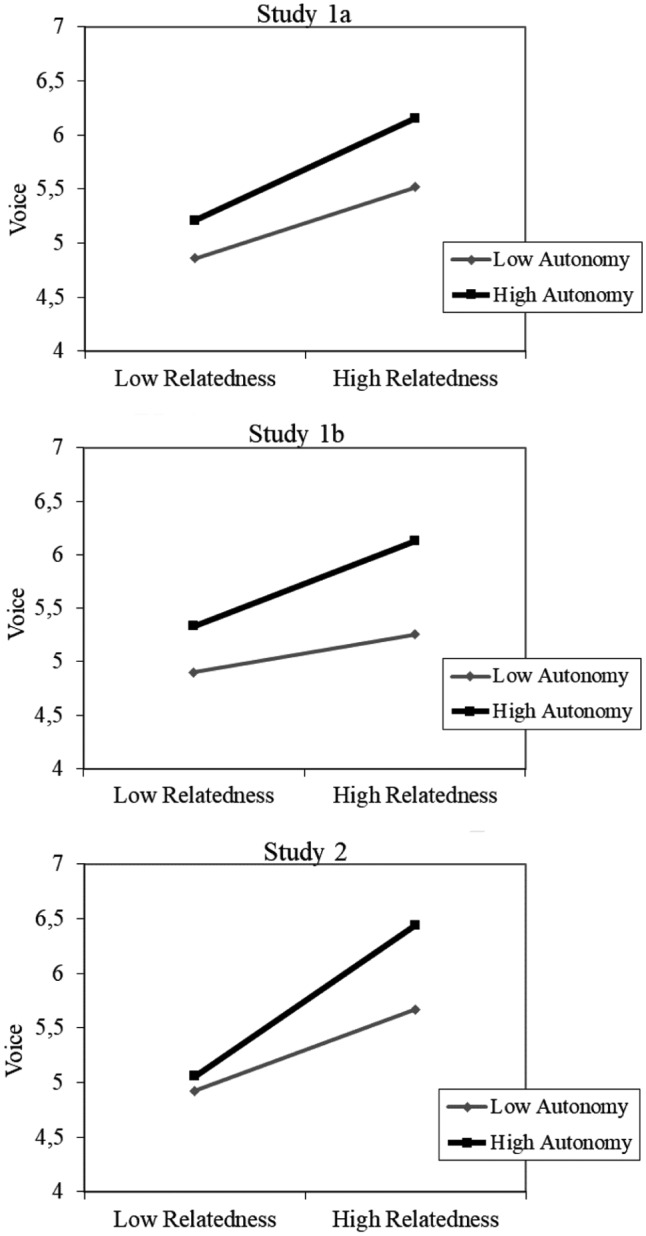
A driving force of relationship maintenance is the fulfillment of basic psychological needs, in particular, the needs for relatedness and autonomy. Until now, research has considered the fulfillment of relatedness and autonomy needs as independent determinants of relationship functioning or as one merged construct called need fulfillment. Little is known about how motivational states interact, even though partners possess and pursue multiple needs at a time in everyday life. Combining theoretical insights from self-determination theory and family systems theory, we test the hypothesis that relatedness and autonomy need fulfillment interact to affect relationship maintenance behavior. In three studies ( N = 388, N = 241, and N = 220), we found that relatedness was positively related to accommodation, but especially (or only) when participants reported high, rather than low, autonomy. This research emphasizes the importance of maintaining a sense of self while being closely connected to the partner.
Overview
The claims and statistics of this paper haven’t been checked yet.
Free: it reads the open-access text and checks the first 5 claims that cite a source we can check. Create a free account to check every claim.
Integrity signals
Registry
Cites
Statistics
Figures
Verification
Claims the paper makes
The claims and statistics of this paper haven’t been checked yet.
Free: it reads the open-access text and checks the first 5 claims that cite a source we can check. Create a free account to check every claim.
Claims other papers make about this one
Each is checked against this paper’s own text: does it say what the citing paper says it does?
The source backs part of the claim, not all of it — or backs it for a different population, condition or comparison.
In the citing paper
“These three needs, each uniquely but also in interactive ways (e.g., Kluwer et al. 2019), appeared to be essential for individuals' well-being across ages, contexts, and cultures.”
From Basic psychological need theory: Advancements, critical themes, and future directions (2020) · cites this paper as Kluwer et al. 2019
Experimental — accuracy not yet measured
Self-check
Percentages, sums and reported differences re-computed from the paper’s own numbers.
The self-check needs the paper’s full text.
Citations
Cites
Self-efficacy: Toward a unifying theory of behavioral change
Bandura, A. (1977) · Psychological Review · doi:10.1037/0033-295x.84.2.191 · Cited by 43,925
Statistical power analyses using G∗Power 3.1: tests for correlation and regression analyses
Faul, F., Erdfelder, E., Buchner, A., & Lang, A.-G. (2009) · Behavior Research Methods · doi:10.3758/brm.41.4.1149 · Cited by 37,615 · cited 1×
“Assuming a small effect, with α = .05, 80% power, and seven predictors (including controls), we would have needed at least 119 participants for each study (G*Power, Version 3.1.7, Faul, Erdfelder, Buchner, & Lang, 2009).”
MethodInfluentialThe "what" and "why" of goal pursuits: Human needs and the self-determination of behavior
Deci, E. L., & Ryan, R. M. (2000) · Psychological Inquiry · doi:10.1207/s15327965pli1104_01 · Cited by 34,210 · cited 6×
“Combining theoretical insights from self-determination theory (Deci & Ryan, 2000) and family systems theory (Bowen, 1978), we argued that partners are more motivated and capable of relationship maintenance behaviors when they feel related to their partner and, at the same time , maintain their…”
BackgroundMethodInfluentialThe need to belong: Desire for interpersonal attachments as a fundamental human motivation.
Baumeister, R. F., & Leary, M. R. (1995) · Psychological Bulletin · doi:10.1037//0033-2909.117.3.497 · Cited by 23,245 · cited 1×
“…autonomy refers to “self-rule,” self-initiation, and self-directed choice (Knee et al., 2013), whereas relatedness refers to a sense of belonging (Baumeister & Leary, 1995), attachment (Mikulincer & Shaver, 2016), and intimacy (Reis & Patrick, 1996), and that both promote relationship…”
BackgroundSelf-efficacy: Toward a unifying theory of behavioral change
Bandura, A. (1978) · Advances in Behaviour Research and Therapy · doi:10.1016/0146-6402(78)90002-4 · Cited by 10,586
Addressing Moderated Mediation Hypotheses: Theory, Methods, and Prescriptions
Preacher, K. J., Rucker, D. D., & Hayes, A. F. (2007) · Multivariate Behavioral Research · doi:10.1080/00273170701341316 · Cited by 9,973 · cited 1×
“We followed the procedures of Preacher, Rucker, and Hayes (2007) for moderation to test our hypothesis using the PROCESS macro (Hayes, 2012).”
MethodMotivation reconsidered: The concept of competence.
White, R. W. (1959) · Psychological Review · doi:10.1037/h0040934 · Cited by 5,681 · cited 1×
“According to self-determination theory, people also have the need to feel competent and effective at what they do (e.g., Bandura, 1977; White, 1959).”
Background-Handbook of Self-Determination Research by Edward L. Deci and Richard M. Ryan (Editors)
Paulson, D. S. (2002) · The Journal of mind and behavior · Cited by 5,171
Social psychology: handbook of basic principles
(1997) · Choice Reviews Online · doi:10.5860/choice.34-3595 · Cited by 4,895
Motivation reconsidered: The concept of competence.
White, R. W. (1963) · Perspectives in psychology. · doi:10.1037/14156-005 · Cited by 4,792
Research works printed but not linked: 6
- Gottman J. M. (1994). What predicts divorce? Hillsdale, NJ: Lawrence Erlbaum.
- Hall L. A. Kiernan B. S. (1992). Psychometric assessment of a measure of the quality of primary intimate relationships. Health Values, 16, 30- 39.
- Hodgins H. S. Knee C. R. (2002). The integrating self and conscious experience. In Deci E. L. Ryan R. M. (Eds.), Handbook of self-determination research (pp. 87- 100). Rochester, NY: University of Rochester Press.
- Kerr M. E. Bowen M. (1988). Family evaluation. New York, NY: W.W. Norton.
- Rusbult C. E. Yovetich N. A. Verette J. (1996). An interdependence analysis of accommodation processes. In Fletcher G. J. O. Fitness J. (Eds.), Knowledge structures in close relationships: A social psychological approach (pp. 63- 90). Mahwah, NJ: Lawrence Erlbaum.
- Schmahl F. Walper S. (2012). Can you relate? The importance of need satisfaction for the quality and progressive union formation process of intimate relationships. Comparative Population Studies—Zeitschrift Für Bevölkerungswissenschaft, 37, 361- 392.
Cited by
Basic psychological need theory: Advancements, critical themes, and future directions
Vansteenkiste, M., Ryan, R. M., & Soenens, B. (2020) · Motivation and Emotion · doi:10.1007/s11031-019-09818-1 · Cited by 1,891
Becker, W. J., Belkin, L. Y., Tuskey, S. E., & Conroy, S. A. (2022) · Human Resource Management · doi:10.1002/hrm.22102 · Cited by 246
Kúld, P. B., Frielink, N., Zijlmans, M., Schuengel, C., & Embregts, P. J. C. M. (2023) · Journal of Intellectual Disability Research · doi:10.1111/jir.13036 · Cited by 76
The link between sacrifice and relational and personal well-being: A meta-analysis.
Righetti, F., Sakaluk, J. K., Faure, R., & Impett, E. A. (2020) · Psychological Bulletin · doi:10.1037/bul0000297 · Cited by 68
Fan, C., Tang, S., Chen, L., & Sun, T. (2022) · Frontiers in Psychology · doi:10.3389/fpsyg.2022.804363 · Cited by 65
Ariccio, S., Lema‐Blanco, I., & Bonaiuto, M. (2021) · Journal of Environmental Psychology · doi:10.1016/j.jenvp.2021.101716 · Cited by 54
Nguyen, H. V., Le, M. T. T., & Do, L. T. (2022) · Resources Conservation and Recycling · doi:10.1016/j.resconrec.2022.106482 · Cited by 49
“At first glance, these negative interactions seem to contradict what was revealed in previous studies in other settings (Dysvik et al., 2013; Kluwer et al., 2020).”
Autonomy–connection tensions, stress, and attachment: The case of COVID-19
Feeney, J. A., & Fitzgerald, J. (2021) · Current Opinion in Psychology · doi:10.1016/j.copsyc.2021.05.004 · Cited by 47
The social factors and functions of media use
Grady, S. M., Tamborini, R., Eden, A., & Heide, B. L. V. D. (2022) · Journal of Communication · doi:10.1093/joc/jqac026 · Cited by 46
Harder, better, faster, stronger: digitalisation and employee well-being in the operations workforce
Lyngstadaas, H., & Berg, T. (2022) · Production Planning & Control · doi:10.1080/09537287.2022.2153735 · Cited by 35
“The fundamental idea of SDT is that individuals have a limited set of basic psychological needs, with well-being as an outcome of experiencing need satisfaction (Vansteenkiste, Ryan, and Soenens 2020; Kluwer et al. 2020).”
Longitudinal dynamics of psychological need satisfaction, meaning in work, and burnout
Maunz, L. A., & Glaser, J. (2024) · Journal of Vocational Behavior · doi:10.1016/j.jvb.2024.103971 · Cited by 31
“For example, exhaustion was related to higher levels of work-family conflict (Tone Innstrand et al., 2008), which was related to lower levels of relatedness need satisfaction (e.g., Kluwer et al., 2020; Vanhee et al., 2018).”
Shoikhedbrod, A., Rosen, N. O., Corsini‐Munt, S., Harasymchuk, C., Impett, E. A., & Muise, A. (2022) · The Journal of Sex Research · doi:10.1080/00224499.2022.2130132 · Cited by 28
“…to increase sexual communal strength in hypothetical scenarios (Day et al., 2015) and perceive a partner as more sexually responsive (Balzarini et al., 2021), as well as foster greater autonomous motivation to help and accommodate in relationships (Kluwer et al., 2020; Weinstein & Ryan, 2010).”
Self-Concept of College Students: Empirical Evidence from an Asian SettingPreprint
Caingcoy, M. (2024) · SSRN Electronic Journal · doi:10.2139/ssrn.4857680 · Cited by 25
ADHD and Psychological Need Fulfillment in College Students
Serrano, J. W., Abu-Ramadan, T. M., Vasko, J. M., Leopold, D. R., Canu, W. H., Willcutt, E. G., & Hartung, C. M. (2023) · Journal of Attention Disorders · doi:10.1177/10870547231161530 · Cited by 21
“…research suggests that the satisfaction or frustration of autonomy, competence, and relatedness are salient to the development, adjustment, and wellness of individuals across ages, contexts (e.g., academic, health, occupational), and cultures (e.g., Kluwer et al., 2020; Slemp et al., 2018).”
An intertwined perspective on technology and digitised individuals: Linkages, needs and outcomes
Turel, O., Matt, C., Trenz, M., & Cheung, C. M. K. (2020) · Information Systems Journal · doi:10.1111/isj.12304 · Cited by 22
“For example, users of a wearable fitness tracker may encounter an increase in relatedness owing to jointly used fitness applications (Kluwer, Karremans, Riedijk, & Knee, 2020; Stragier, Vanden Abeele, & De Marez, 2018).”
MethodDuong, C. D. (2025) · Current Research in Ecological and Social Psychology · doi:10.1016/j.cresp.2025.100217 · Cited by 20
Relationships Motivation Theory
Knee, C. R., & Browne, L. (2023) · Oxford University Press eBooks · doi:10.1093/oxfordhb/9780197600047.013.8 · Cited by 18
Self-citationPrice, J., & Brunet, J. (2022) · Health Informatics Journal · doi:10.1177/14604582221075560 · Cited by 16
“The qualitative results suggest that the satisfaction of one basic psychological need may help to promote satisfaction of another need, highlighting possible connections between the three needs, which has support in the literature.(55) Therefore, it may be prudent to explore how to best capture this connection, whilst…”
BackgroundER, Y. O., & Deniz, M. E. (2022) · Cukurova University Faculty of Education Journal · doi:10.14812/cuefd.1074927 · Cited by 17
The benefits (and costs) of sexual responsiveness in romantic relationships
Muise, A., Kovacevic, K., Shoikhedbrod, A., & Uppot, A. (2023) · Current Opinion in Psychology · doi:10.1016/j.copsyc.2023.101644 · Cited by 15
There is an “I” in “We”: Relatedness Technologies Viewed Through the Lens of the Need for Autonomy
Wenhart, C., & Hassenzahl, M. (2024) · CHI Conference Extended Abstracts on Human Factors in Computing Systems (CHI EA) · doi:10.1145/3613905.3650985 · Cited by 14
“Especially in close relationships, the balance between re-latedness and autonomy has to be constantly negotiated [29] , and not every couple prefers to do so explicitly.”
BackgroundDougall, I., Weick, M., & Vasiljevic, M. (2021) · Journal of Applied Social Psychology · doi:10.1111/jasp.12814 · Cited by 14
Teas, E., Friedman, E. M., & Amireault, S. (2022) · Applied Psychology Health and Well-Being · doi:10.1111/aphw.12347 · Cited by 14
“How did you stay together so long?” Relationship longevity, a cross‐generational qualitative study
Heim, C., & Heim, C. (2023) · Journal of Marital and Family Therapy · doi:10.1111/jmft.12656 · Cited by 14
Shen, J., Jia, J., Wang, L., & Fang, X. (2023) · Journal of Youth and Adolescence · doi:10.1007/s10964-023-01745-2 · Cited by 13
Wang, J., Kaufman, T. M. L., & Branje, S. (2023) · Journal of Research on Adolescence · doi:10.1111/jora.12851 · Cited by 13
Wölk, J., Gerpott, F. H., & Kerschreiter, R. (2025) · Journal of Occupational and Organizational Psychology · doi:10.1111/joop.70037 · Cited by 12
Suryanti, H. H. S., Hartini, S. H. A., & Utami, F. P. (2021) · Jurnal Cakrawala Pendidikan · doi:10.21831/cp.v41i1.43943 · Cited by 11
Holmquist, S., Inzunza, M., Ghazinour, M., & Jonsson, B. (2022) · Education Inquiry · doi:10.1080/20004508.2022.2116877 · Cited by 11
“Autonomy satisfaction has been linked to behaviours that increase the likelihood of satisfying the need for relatedness (Kluwer, Karremans, Riedijk, & Knee, 2020).”
Responsive support: A matter of psychological need fulfillment
Refoua, E., & Rafaeli, E. (2023) · Current Opinion in Psychology · doi:10.1016/j.copsyc.2023.101691 · Cited by 12
Soysal, F. S. Ö., Bakalım, O., Karçkay, A. T., & Samiye, O. G. A. N. (2023) · Emerging Adulthood · doi:10.1177/21676968231220074 · Cited by 11
“…is seen that research has been conducted on the satisfaction of basic psychological needs in romantic relationships (Ery ı lmaz & Do ˘ gan, 2013; Goodboy et al., 2022; Kluwer et al., 2020; La Guardia et al., 2000; Niemiec, 2010; Patrick et al., 2007; Ryan et al., 2005; Sa ˘ gkal & ¨Ozdemir, 2019).”
Chen, C., Yuxin, L. I. U., & Zhao, C. G. (2020) · Advances in Psychological Science · doi:10.3724/sp.j.1042.2020.02076 · Cited by 11
Huang, M.-Y. (2025) · Acta Psychologica · doi:10.1016/j.actpsy.2025.105902 · Cited by 10
Muise, A., & Goss, S. (2023) · Current Directions in Psychological Science · doi:10.1177/09637214231211542 · Cited by 10
“In one study, relatedness (akin to closeness) was associated with more positive relationship behaviors, especially when people were higher, rather than lower, in autonomy (the ability to express one’s true self; Kluwer et al., 2020).”
BackgroundMukba, G. (2023) · Humanistic Perspective · doi:10.47793/hp.1345948 · Cited by 10
Relational needs frustration: an observational study on the role of negative (dis)engaging emotions
Pirrone, D., Sels, L., & Verhofstadt, L. (2023) · Frontiers in Psychology · doi:10.3389/fpsyg.2023.1232125 · Cited by 9
“Additionally, relationship researchers have identified emotional involvement, companionship, security, intimacy, and sex, as essential relational goals in romantic relationships (Birnbaum and Reis, 2019; Brandão et al., 2020; Kluwer et al., 2020).”
BackgroundVermeiden, M., Reijnders, J. S. A. M., van Duin, E., Simons, M., Janssens, M., Peeters, S. C. T., Jacobs, N., & Lataster, J. (2022) · BMC Psychology · doi:10.1186/s40359-022-00980-9 · Cited by 9
“More specifically, recent work [117] has suggested that relatedness and autonomy satisfaction interactively explain relationship quality, such that relatedness satisfaction is positively associated with relationship quality, but especially when autonomy satisfaction is also high.”
BackgroundJiang, Z., Yeo, S., Herremans, D., & Perrault, S. T. (2026) · CHI Conference on Human Factors in Computing Systems · doi:10.1145/3772318.3791370 · Cited by 8
“Self-Determination Theory (SDT) posits that conversations build genuine closeness only when they support three basic needs: autonomy (volition), competence (efficacy), and relatedness (connection) [73, 78, 120].”
Jiménez, M. P. F., Lleó, Á., McNeely, E., & Ruiz‐Palomino, P. (2025) · Business Strategy & Development · doi:10.1002/bsd2.70216 · Cited by 8
Are library staff autonomous? The influence of routines and the development of workarounds
Freeburg, D., & Klein, K. (2022) · Journal of Librarianship and Information Science · doi:10.1177/09610006221140902 · Cited by 9
“However, while continuance workarounds can represent autonomous acts, secretive workarounds are at odds with needs-based autonomy (Kluwer et al., 2020).”
BackgroundWelvart, S. G. M., & Huwae, A. (2024) · Psychological Science and Education · doi:10.17759/pse.2024290411 · Cited by 8
Liu, Y., Chen, C., Zhang, J., Guo, Y., & van Dierendonck, D. (2021) · Journal of Happiness Studies · doi:10.1007/s10902-020-00338-1 · Cited by 7
We decide together, but not equally: extended family influence on women’s decision-making in India
Rizvi, A. A. (2026) · Culture Health & Sexuality · doi:10.1080/13691058.2026.2627461 · Cited by 6
“…relatedness and autonomy coexisting within the family system, rather than in isolation, and individuals tending to maintain proximity to their kin for psychological well-being, safety and security, while also making self-directed choices (Derné 1994; Jothikaran et al. 2023; Kluwer et al. 2020).”
Self-Concept of College Students: Empirical Evidence from an Asian Setting
Balba, J. C., & Caingcoy, M. (2021) · Technium Social Sciences Journal · doi:10.47577/tssj.v24i1.4784 · Cited by 6
Relationship closeness in the context of chronic pain: Daily benefits and challenges for partners.
Martire, L. M., Reis, H. T., Felt, J. M., & Huang, Y. (2025) · Health Psychology · doi:10.1037/hea0001481 · Cited by 5
Tan, K., Gim, G. C. W., Sim, A. K. S., Lew, T. Y., & Hii, I. S. H. (2025) · Journal of Hospitality and Tourism Insights · doi:10.1108/jhti-02-2025-0280 · Cited by 5
Li, Q., Liu, M., Zhou, Z., & Wei, H. L. (2025) · International Journal of Behavioral Development · doi:10.1177/01650254241306123 · Cited by 8
“As indicators of PWB, positive interpersonal relationships are associated with greater satisfaction with basic psychological needs (Kluwer et al., 2019; Leung & Law, 2019).”
Price, A. A., Busby, D. M., & Leavitt, C. E. (2022) · Journal of Sex & Marital Therapy · doi:10.1080/0092623x.2022.2094304 · Cited by 5
“For example, couples in relationships with high levels of both autonomy and relatedness are better able to work through conflict (Kluwer et al., 2020) and individuals who experience need satisfaction in their relationship have better couple functioning and relational well-being (Patrick et al.”
Leavitt, C. E., Price, A. A., Smedley, D. K., Eyring, J. B., Yorgason, J. B., & Holmes, E. K. (2023) · Journal of Sex & Marital Therapy · doi:10.1080/0092623x.2023.2243929 · Cited by 5
“This type of individual power enables individuals to speak up about emotions, attitudes, and values and respond more actively, rather than passively (Kluwer, Karremans, Riedijk, & Knee, 2020).”
BackgroundGoodboy, A. K., Myers, S. A., Goldman, Z. W., & Borzea, D. (2022) · Communication Reports · doi:10.1080/08934215.2022.2058039 · Cited by 5
Alardhi, Y., & Pugh, K. J. (2025) · Frontiers in Psychology · doi:10.3389/fpsyg.2025.1527510 · Cited by 4
Well-being in romantic relationships: the role of motivation and conflict engagement
Gallo, M., Liga, F., Cuzzocrea, F., & Gugliandolo, M. C. (2026) · BMC Psychology · doi:10.1186/s40359-026-04103-6 · Cited by 4
“Partner responsiveness is a central feature of autonomy support [39] and involves acknowledging a partner’s perspective [10].”
The association of spontaneous self-affirmation with relationship functioning
Malatyalı, M. K., & van Koningsbruggen, G. M. (2024) · Current Psychology · doi:10.1007/s12144-024-06321-w · Cited by 4
“…was measured by asking participants to indicate how often they had a differ - ence of opinion, disagreement, fight, or argument with their partner about nine issues (e.g., money, children, family, or in-laws) on a scale ranging from 1 = ‘Never’ to 7 = ‘Very often’ (cf., Kluwer et al., 2020 ).”
A research-driven flowchart to approach change in couples
Capozzi, F. (2025) · Frontiers in Psychology · doi:10.3389/fpsyg.2024.1438394 · Cited by 4
Genesse, D., Brassard, A., Vaillancourt‐Morel, M., Muise, A., Raposo, S., & Péloquin, K. (2025) · Journal of Marital and Family Therapy · doi:10.1111/jmft.70079 · Cited by 4
Li, S., Cheng, S. Y., Shangguan, C., Li, X., & Li, X. (2023) · Biological Psychology · doi:10.1016/j.biopsycho.2023.108653 · Cited by 4
Wang, L., Tang, Y., & Wang, C. L. (2024) · International Journal of Consumer Studies · doi:10.1111/ijcs.13073 · Cited by 4
The Subjective Need for Social Interaction
Guillén, J. M. B. (2023) · British journal of healthcare and medical research · doi:10.14738/bjhmr.102.14560 · Cited by 4
Li, Q., Ma, S., Ma, A., Chen, Z., & Fang, X. (2026) · Asian Journal Of Social Psychology · doi:10.1111/ajsp.70094 · Cited by 4
The Cultural Self-Construals and the Romantic Relationship Experiences of Turkish Young Adults
Safi, O. A., & Erdem, G. (2023) · International Journal of Systemic Therapy · doi:10.1080/2692398x.2023.2224716 · Cited by 3
“Studies document that this pattern was also reported among Dutch adults (Kluwer et al., 2019) as well as cross-cultural studies with participants from Hong Kong, China, and Britain (Wong & Goodwin, 2009), indicating that autonomy and relatedness can promote relationship well-being, in cultures and…”
ResultPerceptions of the caregiver-pediatric physical therapist relationship1
Thomas, J., Santurri, L. E., Borrero, L., & Cech, D. J. (2022) · Journal of Pediatric Rehabilitation Medicine · doi:10.3233/prm-210081 · Cited by 2
A Grounded Theory Analysis of Control and Freedom in Intimate Relationships
Smedley, D. K., Whiting, J. B., Bradford, A. B., & Anderson, S. R. (2025) · Journal of Marital and Family Therapy · doi:10.1111/jmft.70003 · Cited by 2
Ye, F. T.-F., & Gao, X. (2026) · Journal of Family Issues · doi:10.1177/0192513x261465799 · Cited by 2
Hu, J. M., & Nickalo, J. T. (2026) · Emerald Group Publishing Limited eBooks · doi:10.1108/s1530-353520260000038011 · Cited by 2
Schönfeld, F. S., & Mesurado, B. (2024) · Avances en Psicología Latinoamericana · doi:10.12804/revistas.urosario.edu.co/apl/a.13587 · Cited by 2
Shih, C. (2024) · Issues & Studies · doi:10.1142/s1013251124500073 · Cited by 2
D’Olivo, P., Langerak, A. J., Spek, D., Bussmann, J. B. J., Rozendaal, M. C., Regterschot, G. R. H., & Visch, V. (2024) · Design for Health · doi:10.1080/24735132.2024.2397154 · Cited by 2
“…are needed for highly valued human-human relationships (Deci and Ryan 2014), (b) are associated with maintaining long-term relationship interest (Kluwer et al. 2020), and (c) foster the development of positive self-esteem (Baumeister, heatherton, and tice 1993). since basic qualities of a…”
InfluentialMcMillan, G., & Milyavskaya, M. (2022) · Psychological Inquiry · doi:10.1080/1047840x.2022.2038001 · Cited by 2
Philosophical Perspectives on Autonomy in Self-Determination Theory
Arvanitis, A., & Kalliris, K. (2023) · Oxford University Press eBooks · doi:10.1093/oxfordhb/9780197600047.013.20 · Cited by 2
Reconstruction of the category of closeness in the Polish legal system
Drapalska-Grochowicz, M. (2023) · doi:10.31261/pn.4171 · Cited by 2
Tong, W., Jia, J., Li, Q., Ma, S., Chen, Z., He, W., & Fang, X. (2025) · Journal of Family Issues · doi:10.1177/0192513x251330616 · Cited by 1
“Satisfying them is often harmonious and even mutually reinforcing; however, sometimes satisfying some needs may con fl ict with ful fi lling other needs (Finkel et al., 2014; Kluwer et al., 2020; VanderDrift & Agnew., 2012).”
InfluentialEmerging Adults’ Autonomy in Romantic Narrative Identities: Choices Between Emotions and Rationality
Yerofeyeva, V. G., Цыганова, Е. М., & Бочавер, А. А. (2025) · Trends in Psychology · doi:10.1007/s43076-025-00475-7 · Cited by 1
Rodríguez, V. D., & Portela-Pino, I. (2025) · Psychological Reports · doi:10.1177/00332941251363896 · Cited by 1
Pedregosa, A., Jaugan, A., Celiz, R., Tamayo, D. J., Tayco, J. M., & Villamor, K. J. (2025) · Psychology and Education A Multidisciplinary Journal · doi:10.70838/pemj.350904 · Cited by 1
Lamb, P. S., Dagan, O., Dugan, K. A., Bleil, M. E., Booth‐LaForce, C., & Roisman, G. I. (2025) · Journal of Family Psychology · doi:10.1037/fam0001398 · Cited by 1
Vernhout, N., Marien, H., Stok, F. M., & Aarts, H. (2026) · Behavioural Public Policy · doi:10.1017/bpp.2026.10033 · Cited by 1
“Whereas interpersonal processes can be represented in institutional context of autonomy, such as in marriage and families (e.g., Kluwer et al. , 2020), autonomy restrictions that result from policy and regulations speak to a more general context typical for institutions.”
Affizie, G. (2026) · Review of General Psychology · doi:10.1177/10892680261425952 · Cited by 1
“Satisfying autonomy can intensify relatedness needs rather than moving neatly to the next tier of need satisfaction (Kluwer et al., 2019).”
Influential苗金林, Luo, S., Chen, Y., Wang, H., Zhang, Z., & Wehbe, R. R. (2026) · CHI Conference on Human Factors in Computing Systems · doi:10.1145/3772318.3790944 · Cited by 1
“Autonomy is central to social connectedness, as individuals experience greater confidence and interpersonal satisfaction when they can freely initiate, regulate, and terminate social interactions[47, 91].”
Besika, A. (2023) · Current Psychology · doi:10.1007/s12144-023-05225-5 · Cited by 2
“…that having a sense of self (e.g., autonomy) and maintaining proximity to others (e.g., relatedness) are both needs that need fulfill - ment (Kluwer et al., 2020). the psychological level of functioning, a negative feedback loop mechanism reduces inconsistencies, which occur due to various…”
EXPLORING EMMA BOVARY’S DIFFUSED PERSONALITY IN GUSTAVE FLAUBERT’S MADAME BOVARY NOVEL
Tlonaen, Z. A. (2022) · Lire Journal (Journal of Linguistics and Literature) · doi:10.33019/lire.v6i1.138 · Cited by 1
Stress and Internet Gaming Disorder: The Chain Mediation of Psychological Needs
张, 玉. (2024) · Advances in Psychology · doi:10.12677/ap.2024.141014 · Cited by 1
Lane, S. L. S. (2020) · Mspace (University of Manitoba) · Cited by 1
Ward, S. C. (2023) · Digital Commons - Andrews University (Andrews University) · doi:10.32597/dissertations/1795 · Cited by 1
Velikonja, L. (2021) · The Atrium (University of Guelph) · Cited by 1
Toussard, L. (2024) · theses.fr (ABES) · doi:10.70675/197717b8z0eafz4d2cz8f4fz772f35311cad · Cited by 1
ER, Y. O. (2023) · Yildiz Technical University - AVESIS · Cited by 1
YAKIN İLİŞKİLERDE İLİŞKİSEL RİTÜELLER: “MESUT SÜRE İLE İLİŞKİ TESTİ” PROGRAMI İÇERİK ANALİZİ
ÖZŞENLER, S. D. (2020) · Ege Üniversitesi İletişim Fakültesi Yeni Düşünceler Hakemli E-Dergisi
Taking a closer look at the ups and downs in couple relationships
Zygar–Hoffmann, C. (2020) · Elektronische Hochschulschriften der LMU München (Ludwig-Maximilians-Universität München) · doi:10.5282/edoc.26579
Uznawanie, niedostrzeganie, ignorowanie. O postawach prawodawcy wobec faktycznej bliskości
Drapalska-Grochowicz, M. (2021) · Archiwum Filozofii Prawa i Filozofii Społecznej · doi:10.36280/afpifs.2021.1.112
Self-Concept of College Students: Empirical Evidence from an Asian SettingPreprint
Caingcoy, M. (2023) · OSF Preprints (OSF Preprints) · doi:10.31219/osf.io/7hxmk
Shih, C. (2024) · Bristol University Press eBooks · doi:10.51952/9781529238938.bm002
The "Relatedness-Exclusion" Scale: Creation and Validation
Suvorova, I. Y., Rakhanova, A. A., & Korzun, N. V. (2024) · Social Psychology and Society · doi:10.17759/sps.2024150212
Fuertes, A., Orgaz, B. M., Fuertes-Hernández, A., Frías, D. G. S.-P., Vicario‐Molina, I., & González, E. (2024) · Behavioral Psychology/Psicología Conductual · doi:10.51668/bp.8324208n
(2025) · Frontiers research topics · doi:10.3389/978-2-8325-5899-7
Psychological perspectives on partnering
Kluwer, E. S., & Trillingsgaard, T. (2025) · Edward Elgar Publishing eBooks · doi:10.4337/9781803923383.00010
Self-citationGordon, C. S., Brake, N., Hammond, S. P., Picton, I., Notley, T., Rowston, K., Gutierrez, A., Basarkod, G., Costello, K., Gupta, M., et al. (2026) · Educational Research Review · doi:10.1016/j.edurev.2026.100808
Galipeau, C. (2021) · Archipel (Université du Québec à Montréal)
Stories of Motivation and Values of Small-Scale Farmers in Jamaica and the United States
Taylor, R. (2024) · Lincoln (University of Nebraska)
(2020) · Arizona State University Library Digital Repository (Arizona State University)
Самодостатність як особистісна характеристика та її вплив на уявлення про шлюб
Долженкова, О. О. (2025) · Высшая школа: научные исследования · doi:10.36059/978-966-397-562-7-51
Metadata
- Authors
- Kluwer, E. S., Karremans, J. C., Riedijk, L., & Knee, C. R.
- Affiliations
- Radboud University Nijmegen (NL)
- Utrecht University (NL)
- University of Houston (US)
- Corresponding author
- Kluwer, Esther S.
- Venue
- Personality and Social Psychology Bulletin
- Publisher
- SAGE Publications
- Published
- 2019-08-08
- Volume
- 46
- Issue
- 4
- Pages
- 603-616
- ISSN
- 0146-1672 (ISSN-L)
- 1552-7433
- PMC
- PMC7057354
- OpenAlex
- W2969034109
- Cited by
- 92
- References
- 57
- Citations by year
- 2026: 14 · 2025: 15 · 2024: 13 · 2023: 20 · 2022: 18 · 2021: 7 · 2020: 5
- FWCI
- 9.42
- Type
- journal article
- Language
- en
- Open access
- hybrid
- doi.org
- Licence
- cc-by-nc
- journals.sagepub.com/page/policies/text-and-data-mining-license (tdm)
- Locations
- Personality and Social Psychology Bulletin (publishedVersion, cc-by-nc)
- PubMed Central (publishedVersion, cc-by-nc)
- PubMed (publishedVersion)
- Utrecht University Repository (Utrecht University) (submittedVersion, other-oa)
- Radboud Repository (Radboud University) (submittedVersion)
- Radboud Repository (Radboud University) (submittedVersion, other-oa)
- Funders
- Stichting Emotionally-Focused Therapy Netherlands
- Stichting Niemeijer Fonds
- Stichting Marriage Week
- Topics
- Social Sciences › Psychology › Social Psychology › Attachment and Relationship Dynamics
- Social Sciences › Psychology › Social Psychology › Motivation and Self-Concept in Sports
- Social Sciences › Psychology › Social Psychology › Death Anxiety and Social Exclusion
- Keywords
- need satisfaction, relatedness, autonomy, close relationships, relationship maintenance, self-determination theory, family systems theory, accommodation, self-connection
- MeSH terms
- Adult, Female, Humans, Interpersonal Relations, Male, Motivation, Personal Satisfaction, Surveys and Questionnaires, Sexual Partners, Personal Autonomy
About these checks
Registry, retraction, Cites and statistics results are computed, not judged, with one exception: a printed reference that no index lists is read once by a model before it counts as a citation error. Claims are extracted by a model and kept only when their quote appears verbatim in the text; each cited source is then checked, with a model’s help, for whether it says what the claim relies on. Those verdicts can be wrong — read the claim’s quote and the cited source before relying on one.
Statistics and arithmetic are recomputed, not judged.
Confidence bands are shown only for fields calibrated on our annotated test set. None is calibrated yet, so no band is shown.
What counts as a claim ›How we measure confidence ›How we check this ›
Are you an author, or do you see a problem with this page? Request a review
Data sources
Bibliographic data: Semantic Scholar, OpenAlex, Crossref.
Contains information from the Semantic Scholar Academic Graph Datasets, made available under the ODC Attribution License (ODC-BY 1.0).
Semantic Scholar’s data is described in: Kinney, R., et al. (2023). The Semantic Scholar Open Data Platform. arXiv:2301.10140.
