

Bayesian Benefits for the Pragmatic Researcher
Open accessThe DOI matches its Crossref record; 28 of the 28 references it cites were found in a registry or an index.
Abstract
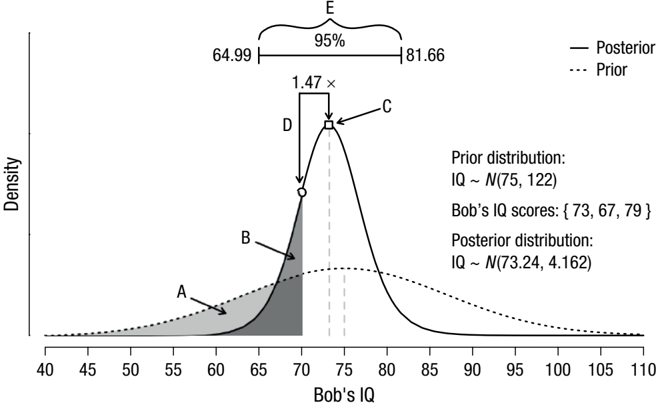
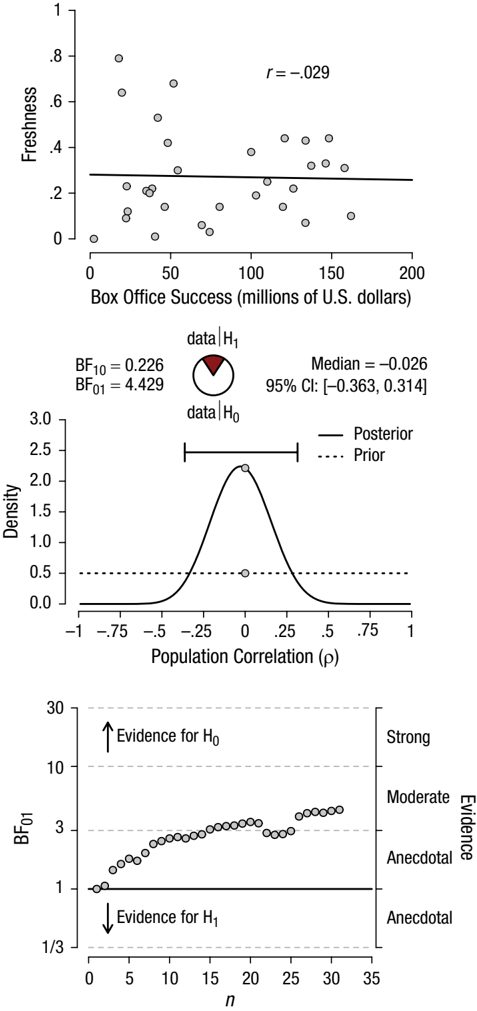
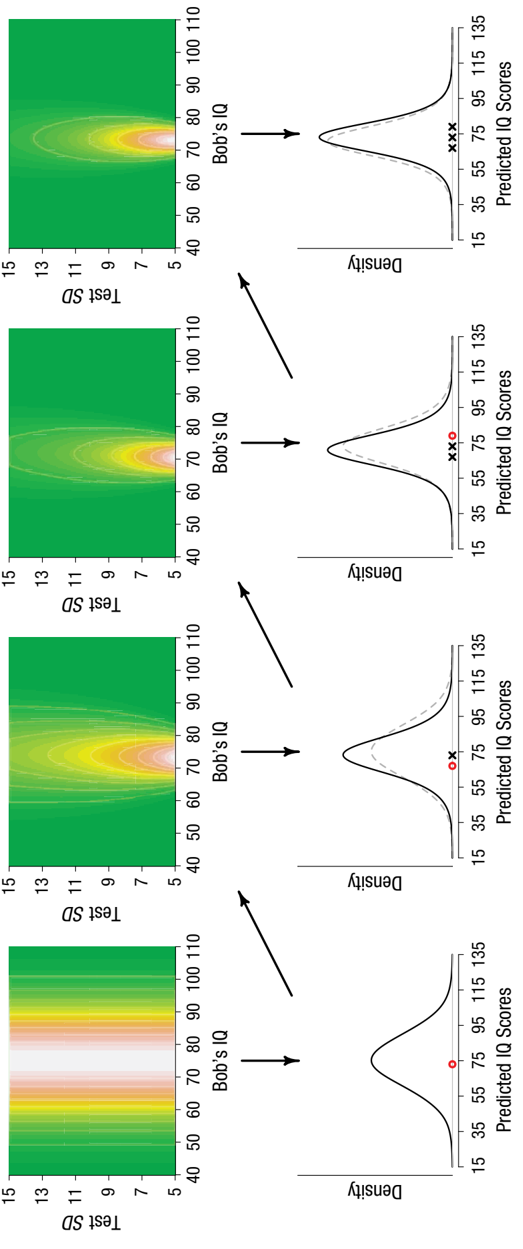
The practical advantages of Bayesian inference are demonstrated here through two concrete examples. In the first example, we wish to learn about a criminal’s IQ: a problem of parameter estimation. In the second example, we wish to quantify and track support in favor of the null hypothesis that Adam Sandler movies are profitable regardless of their quality: a problem of hypothesis testing. The Bayesian approach unifies both problems within a coherent predictive framework, in which parameters and models that predict the data successfully receive a boost in plausibility, whereas parameters and models that predict poorly suffer a decline. Our examples demonstrate how Bayesian analyses can be more informative, more elegant, and more flexible than the orthodox methodology that remains dominant within the field of psychology.
Overview
The claims and statistics of this paper haven’t been checked yet.
Free: it reads the open-access text and checks the first 5 claims that cite a source we can check. Create a free account to check every claim.
Integrity signals
Registry
Cites
Statistics
Figures
Verification
Claims the paper makes
The claims and statistics of this paper haven’t been checked yet.
Free: it reads the open-access text and checks the first 5 claims that cite a source we can check. Create a free account to check every claim.
Claims other papers make about this one
Each is checked against this paper’s own text: does it say what the citing paper says it does?
In the citing paper
“Bayesian analyses offer researchers a number of pragmatic benefits (Wagenmakers, Morey, & Lee, 2016), including intuitive probability statements of inferences, the ability to compare the relative credibility of different estimates, and a full posterior distribution describing the relative plausibility that different population level atheism prevalence rates could have produced our observed data.”
From How many atheists are there? (2017) · cites this paper as Wagenmakers et al., 2016
Self-check
Percentages, sums and reported differences re-computed from the paper’s own numbers.
The self-check needs the paper’s full text.
Citations
Cites
Kass, R. E., & Raftery, A. E. (1995) · Journal of the American Statistical Association · doi:10.1080/01621459.1995.10476572 · Cited by 12,558
Markov Chain Monte Carlo in Practice
(1995) · Chapman & Hall/CRC eBooks · doi:10.1201/b14835 · Cited by 7,757
Markov Chain Monte Carlo in Practice
Gasparini, M. (1997) · Technometrics · doi:10.1080/00401706.1997.10485132 · Cited by 1,879
Bayesian Cognitive Modeling: A Practical Course
Lee, M. D., & Wagenmakers, E.-J. (2014) · doi:10.1017/cbo9781139087759 · Cited by 1,795
Self-citation(2013) · Cited by 1,351
Self-citationStatistical Rethinking: A Bayesian Course with Examples in R and Stan
McElreath, R. L. (2015) · Helmholtz Centre for Ocean Research Kiel (GEOMAR) · Cited by 996
Statistical Rethinking: a Bayesian Course with Examples in R and Stan
Hewson, P. (2016) · Journal of the Royal Statistical Society Series A: Statistics in Society · doi:10.1111/rssa.12221 · Cited by 850
Small Telescopes: Detectability and the Evaluation of Replication Results
Simonsohn, U. (2015) · Psychological Science · doi:10.1177/0956797614567341 · Cited by 742
Bayesian hypothesis testing for psychologists: A tutorial on the Savage–Dickey method
Wagenmakers, E.-J., Lodewyckx, T., Kuriyal, H., & Grasman, R. (2010) · Cognitive Psychology · doi:10.1016/j.cogpsych.2009.12.001 · Cited by 740
Self-citationIntroduction to Statistical Decision Theory.
Schervish, M. J., Pratt, J. W., Raiffa, H., & Schlaifer, R. (1996) · Journal of the American Statistical Association · doi:10.2307/2291759 · Cited by 705 · cited 1×
“Crucially, none of the statements above—not a single one—can be arrived at within the framework of orthodox methods (e.g., Pratt et al., 1995), no matter how many tests Bob completes, and no matter what prior knowledge may or may not be available.3 Yet statements like these may be vitally important…”
Method
Research works printed but not linked: 2
- 12. Jeffreys, H. (1961). Theory of probability (3rd ed.). Oxford, England: Oxford University Press.
- 23. Parker, T. (Writer, Director). (2004). AWESOME-O [Television series episode]. In T. Parker, M. Stone, & A. Garefino (Producers), South Park. New York, NY: Comedy Central Productions.
Cited by
Items 301–330 of 330
Controversies Regarding Null Hypothesis Significance Testing
O’Connor, B. P., & Khattar, N. (2022) · Springer eBooks · doi:10.1007/978-3-031-04968-2_7 · Cited by 3
Applying the asymmetric information management ( AIM ) technique to virtual interviewing
Porter, C. N., Taylor, R., Lee, R., Chioatto, E., Hill, M., & Harvey, A. C. (2023) · Applied Cognitive Psychology · doi:10.1002/acp.4049 · Cited by 1
Duskey, E., Hart, D. R., Chang, J.-H., & Sullivan, P. J. (2023) · Fisheries Research · doi:10.1016/j.fishres.2023.106816 · Cited by 1
Fight your fears: anxiety, avoidance, and expectancy violation in Anorexia Nervosa
Melles, H. (2024) · Research Publications (Maastricht University) · doi:10.26481/dis.20240704hm · Cited by 1
Wolff, B., Glasson, E. J., Babikian, T., & Pestell, C. (2024) · Developmental Neuropsychology · doi:10.1080/87565641.2024.2377689
“Bayesian hypothesis testing was selected as it permits stronger conclusions regarding evidence of between-group equivalence, rather than lack of difference (Wagenmakers et al., 2016) and can estimate the strength of support for both the null and alternative hypotheses (Rouder & Morey, 2012).”
Eid, N. A. A., Arnout, B. A., Al-Qahtani, T. A., Pavlović, S., Alzahrani, M. R., Abdelmotelab, A. S., & Abdelmotelab, Y. S. (2024) · PLoS ONE · doi:10.1371/journal.pone.0308454 · Cited by 6
Raz, I., Gamoran, A., Nir-Cohen, G., Trzewik, M., Salti, M., Sadeh, T., & Gilead, M. (2024) · Cerebral Cortex · doi:10.1093/cercor/bhae469
More Similar than Different: Gender Differences in Basic Numeracy are the Exception not the RulePreprint
Hutchison, J. E., Lyons, I. M., & Ansari, D. (2017) · PsyArXiv (OSF Preprints) · doi:10.31234/osf.io/qk2zs_v1
Variable Control and Conceptual Change: A Large-Scale Quantitative Study in Elementary SchoolPreprint
Edelsbrunner, P. A., Schalk, L., Schumacher, R., & Stern, E. (2016) · PsyArXiv (OSF Preprints) · doi:10.31234/osf.io/escqa_v1
From judgment to action : moral cognition and the tenuous link to moral courage
Kemper, N. (2023) · Scholars Archive - University at Albany (University at Albany, State University of New York) · doi:10.54014/7t5p-zfjx
Bayesian sequential decision-making for rare disease clinical trials
Gao, Y., Bai, J., & Chen, F. (2025) · Technology and Health Care · doi:10.1177/09287329251344056 · Cited by 1
The Understanding of Wrongfulness by Autistic Individuals in the Criminal Justice System
Kernahan, M., Weber, N., Lim, A., & Young, R. L. (2025) · Journal of Autism and Developmental Disorders · doi:10.1007/s10803-025-07077-3
Burum, K., Lyxell, B., & Sundström, S. (2025) · Deafness & Education International · doi:10.1080/14643154.2025.2576988 · Cited by 1
“The Bayes factor (BF) quantifies the relative predictive power of the competing hypotheses (Wagenmakers et al., 2016).”
Additional file 1 of Informed Bayesian survival analysis
Bartos̆, F., Aust, F., & Haaf, J. M. (2022) · Figshare · doi:10.6084/m9.figshare.21077675
Additional file 2 of Informed Bayesian survival analysis
Bartos̆, F., Aust, F., & Haaf, J. M. (2022) · Figshare · doi:10.6084/m9.figshare.21077678
ChatGPT vs Gemini: Which Digs Deeper into Arabic Semantics?
Zaimah, N. R., Rizqiyah, C., Hadi, S., Muthiah, R., & Putri, W. N. (2026) · Mantiqu Tayr Journal of Arabic Language · doi:10.25217/mantiqutayr.v6i1.7146 · Cited by 1
Hierarchical Bayesian Regression for experimental psychology: a case study of cognitive control
Dudey, T., Braver, T. S., Jackson, J. J., & Cooper, S. R. (2026) · Frontiers in Psychology · doi:10.3389/fpsyg.2026.1643463 · Cited by 1
“…sequential learning procedure (i.e., previous posteriors serving as priors for the analysis of subsequent datasets) which ultimately reduces uncertainty regarding possible values as well as enables more precise and valid predictions to be made toward future observations (Wagenmakers et al., 2016).”
Violence against women: a pilot study on the perception of Apulian High School students
Calculli, C., Arima, S., Pollice, A., & Ribecco, N. (2026) · Statistical Methods & Applications · doi:10.1007/s10260-026-00871-y
Béna, J. (2020) · theses.fr (ABES) · doi:10.70675/8ffdae66zf9c1z415czbf5fz376a9c3f27ee · Cited by 1
How to become a Bayesian in eight easy steps: An annotated reading listPreprint
Baribault, B., Vandekerckhove, J., Dablander, F., Etz, A., Gronau, Q. F., & Edelsbrunner, P. A. (2018) · OSF Preprints (OSF Preprints)
The Support IntervalPreprint
Dablander, F., Wagenmakers, E., Etz, A., & Gronau, Q. F. (2018) · OSF Preprints (OSF Preprints)
Self-citationDong, X., Wang, J., & Xing, Q. (2026) · Psychological Research · doi:10.1007/s00426-026-02343-0
“Bayesian analyses of variance (ANOVA) were conducted using JZS default prior scales (Rouder et al., 2012 ; Wagenmakers et al., 2016) on category performance, self-regulated study behavior, and category learning judgment, utilizing JASP 0.18.1 (JASP Team, 2023).”
InfluentialPolito, N. D., Gambarota, F., Hampson, E., & Herlitz, A. (2026) · Neuroscience & Biobehavioral Reviews · doi:10.1016/j.neubiorev.2026.106877
Bai, S., Liu, P., Long, F., & Wang, R. (2026) · Cognitive Affective & Behavioral Neuroscience · doi:10.3758/s13415-026-01486-2
Mapping Multilevel Correlates of Adolescent Mental Health: Evidence from an Ecological Network Study
Li, Y., Gong, S., & Li, H. (2026) · Child Psychiatry & Human Development · doi:10.1007/s10578-026-02085-5
Patria, B., Widhiarso, W., & Subandi, M. A. (2026) · Mental Health Religion & Culture · doi:10.1080/13674676.2025.2534515
“…evaluation of the predictive adequacy of competing hypotheses, a clear and intuitive way of interpreting results, and more robust inference in small sample sizes (Faulkenberry et al., 2020; Kruschke, 2014; van de Schoot et al., 2014; van de Schoot et al., 2017; Wagenmakers et al., 2016).”
Selective encoding failure of self-face identity in subthreshold depression
Wen, M., Su, B., Chen, Y., Gu, T., & Qin, P. (2026) · Psychological Research · doi:10.1007/s00426-026-02385-4
“The analysis yielded BF 01 = 1.910, suggesting that the data were more likely under the null hypothesis than under the alternative hypothesis (Goss-Sampson, 2020; Wagenmakers et al., 2016).”
Influential
Metadata
- Authors
- Wagenmakers, E.-J., Morey, R. D., & Lee, M. D.
- Affiliations
- University of Amsterdam (NL)
- Cardiff University (GB)
- University of California, Irvine (US)
- Corresponding author
- Wagenmakers, Eric-Jan
- Venue
- Current Directions in Psychological Science
- Publisher
- SAGE Publications
- Published
- 2016-06
- Volume
- 25
- Issue
- 3
- Pages
- 169-176
- ISSN
- 0963-7214 (ISSN-L)
- 1467-8721
- OpenAlex
- W2414830033
- Semantic Scholar
- 9669c421dda25250471ae7a69beaf226236a67f1
- Cited by
- 334
- References
- 27
- Citations by year
- 2026: 13 · 2025: 14 · 2024: 27 · 2023: 31 · 2022: 49 · 2021: 36 · 2020: 43 · 2019: 36 · 2018: 39 · 2017: 32 · 2016: 13
- FWCI
- 40.51
- Type
- journal article
- Language
- en
- Open access
- green
- handle.uba.uva.nl
- Licence
- cc-by
- journals.sagepub.com/page/policies/text-and-data-mining-license (tdm)
- Locations
- Current Directions in Psychological Science (publishedVersion)
- ORCA Online Research @Cardiff (Cardiff University) (acceptedVersion)
- UvA-DARE (University of Amsterdam) (submittedVersion, cc-by)
- ORCA Online Research @Cardiff (Cardiff University) (submittedVersion)
- Data Archiving and Networked Services (DANS) (submittedVersion, other-oa)
- Topics
- Physical Sciences › Mathematics › Statistics and Probability › Statistical Methods and Bayesian Inference
- Physical Sciences › Computer Science › Artificial Intelligence › Bayesian Modeling and Causal Inference
- Physical Sciences › Mathematics › Statistics and Probability › Statistical Distribution Estimation and Applications
- Keywords
- Bayesian inference, parameter estimation, hypothesis testing, null hypothesis
About these checks
Registry, retraction, Cites and statistics results are computed, not judged, with one exception: a printed reference that no index lists is read once by a model before it counts as a citation error. Claims are extracted by a model and kept only when their quote appears verbatim in the text; each cited source is then checked, with a model’s help, for whether it says what the claim relies on. Those verdicts can be wrong — read the claim’s quote and the cited source before relying on one.
Statistics and arithmetic are recomputed, not judged.
Confidence bands are shown only for fields calibrated on our annotated test set. None is calibrated yet, so no band is shown.
What counts as a claim ›How we measure confidence ›How we check this ›
Are you an author, or do you see a problem with this page? Request a review
Data sources
Bibliographic data: Semantic Scholar, OpenAlex, Crossref.
Contains information from the Semantic Scholar Academic Graph Datasets, made available under the ODC Attribution License (ODC-BY 1.0).
Semantic Scholar’s data is described in: Kinney, R., et al. (2023). The Semantic Scholar Open Data Platform. arXiv:2301.10140.
