

Bayesian Benefits for the Pragmatic Researcher
Open accessThe DOI matches its Crossref record; 28 of the 28 references it cites were found in a registry or an index.
Abstract
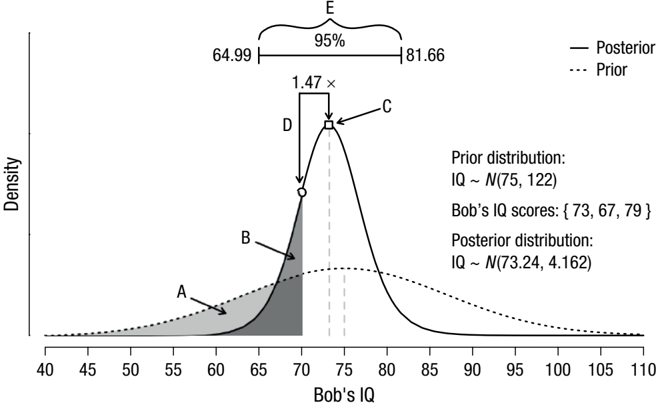
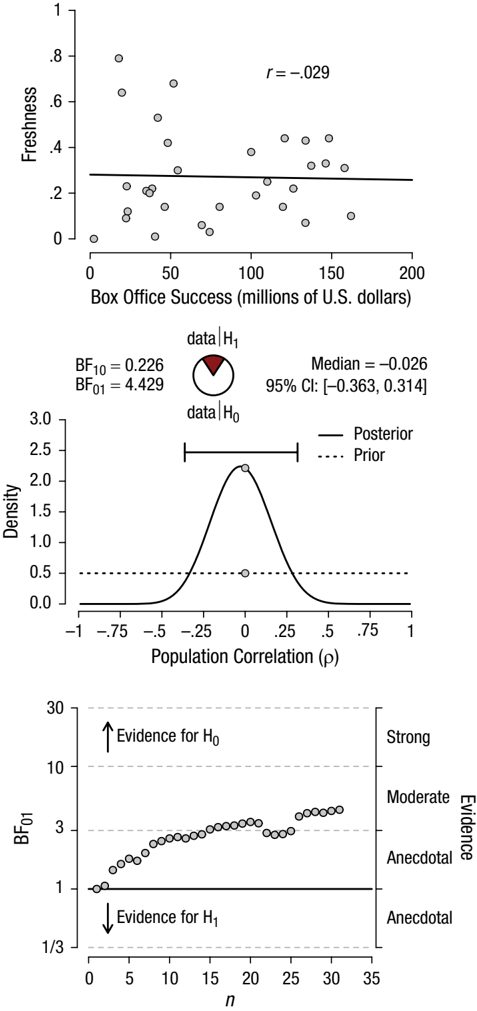
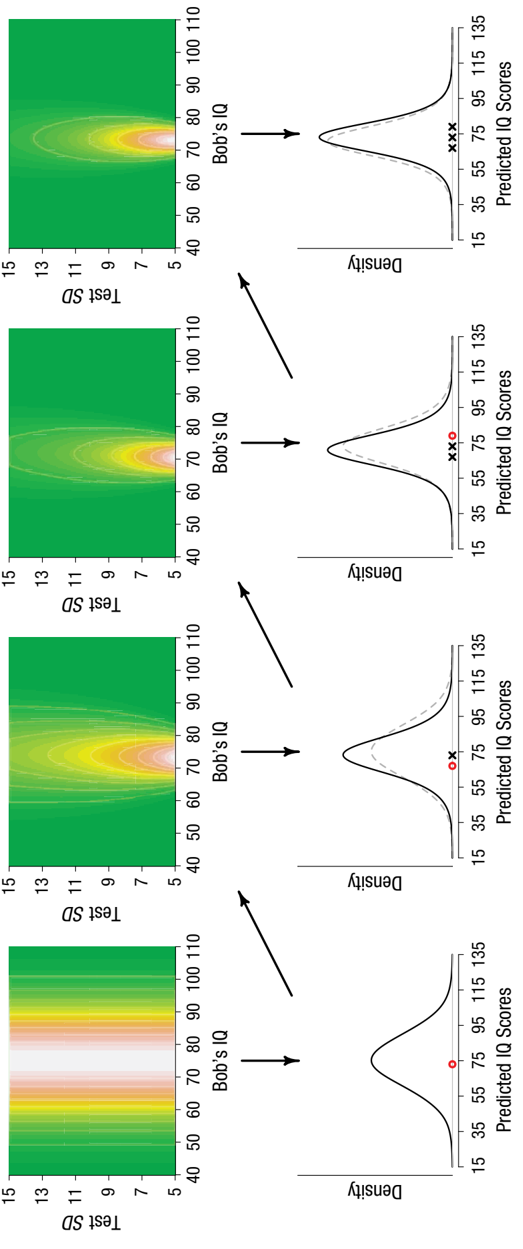
The practical advantages of Bayesian inference are demonstrated here through two concrete examples. In the first example, we wish to learn about a criminal’s IQ: a problem of parameter estimation. In the second example, we wish to quantify and track support in favor of the null hypothesis that Adam Sandler movies are profitable regardless of their quality: a problem of hypothesis testing. The Bayesian approach unifies both problems within a coherent predictive framework, in which parameters and models that predict the data successfully receive a boost in plausibility, whereas parameters and models that predict poorly suffer a decline. Our examples demonstrate how Bayesian analyses can be more informative, more elegant, and more flexible than the orthodox methodology that remains dominant within the field of psychology.
Overview
The claims and statistics of this paper haven’t been checked yet.
Free: it reads the open-access text and checks the first 5 claims that cite a source we can check. Create a free account to check every claim.
Integrity signals
Registry
Cites
Statistics
Figures
Verification
Claims the paper makes
The claims and statistics of this paper haven’t been checked yet.
Free: it reads the open-access text and checks the first 5 claims that cite a source we can check. Create a free account to check every claim.
Claims other papers make about this one
Each is checked against this paper’s own text: does it say what the citing paper says it does?
In the citing paper
“Bayesian analyses offer researchers a number of pragmatic benefits (Wagenmakers, Morey, & Lee, 2016), including intuitive probability statements of inferences, the ability to compare the relative credibility of different estimates, and a full posterior distribution describing the relative plausibility that different population level atheism prevalence rates could have produced our observed data.”
From How many atheists are there? (2017) · cites this paper as Wagenmakers et al., 2016
Self-check
Percentages, sums and reported differences re-computed from the paper’s own numbers.
The self-check needs the paper’s full text.
Citations
Cites
Kass, R. E., & Raftery, A. E. (1995) · Journal of the American Statistical Association · doi:10.1080/01621459.1995.10476572 · Cited by 12,558
Markov Chain Monte Carlo in Practice
(1995) · Chapman & Hall/CRC eBooks · doi:10.1201/b14835 · Cited by 7,757
Markov Chain Monte Carlo in Practice
Gasparini, M. (1997) · Technometrics · doi:10.1080/00401706.1997.10485132 · Cited by 1,879
Bayesian Cognitive Modeling: A Practical Course
Lee, M. D., & Wagenmakers, E.-J. (2014) · doi:10.1017/cbo9781139087759 · Cited by 1,795
Self-citation(2013) · Cited by 1,351
Self-citationStatistical Rethinking: A Bayesian Course with Examples in R and Stan
McElreath, R. L. (2015) · Helmholtz Centre for Ocean Research Kiel (GEOMAR) · Cited by 996
Statistical Rethinking: a Bayesian Course with Examples in R and Stan
Hewson, P. (2016) · Journal of the Royal Statistical Society Series A: Statistics in Society · doi:10.1111/rssa.12221 · Cited by 850
Small Telescopes: Detectability and the Evaluation of Replication Results
Simonsohn, U. (2015) · Psychological Science · doi:10.1177/0956797614567341 · Cited by 742
Bayesian hypothesis testing for psychologists: A tutorial on the Savage–Dickey method
Wagenmakers, E.-J., Lodewyckx, T., Kuriyal, H., & Grasman, R. (2010) · Cognitive Psychology · doi:10.1016/j.cogpsych.2009.12.001 · Cited by 740
Self-citationIntroduction to Statistical Decision Theory.
Schervish, M. J., Pratt, J. W., Raiffa, H., & Schlaifer, R. (1996) · Journal of the American Statistical Association · doi:10.2307/2291759 · Cited by 705 · cited 1×
“Crucially, none of the statements above—not a single one—can be arrived at within the framework of orthodox methods (e.g., Pratt et al., 1995), no matter how many tests Bob completes, and no matter what prior knowledge may or may not be available.3 Yet statements like these may be vitally important…”
Method
Research works printed but not linked: 2
- 12. Jeffreys, H. (1961). Theory of probability (3rd ed.). Oxford, England: Oxford University Press.
- 23. Parker, T. (Writer, Director). (2004). AWESOME-O [Television series episode]. In T. Parker, M. Stone, & A. Garefino (Producers), South Park. New York, NY: Comedy Central Productions.
Cited by
Bayesian inference for psychology. Part I: Theoretical advantages and practical ramifications
Wagenmakers, E.-J., Marsman, M., Jamil, T., Ly, A., Verhagen, J., Love, J., Selker, R., Gronau, Q. F., Šmíra, M., Epskamp, S., et al. (2018) · Psychonomic Bulletin & Review · doi:10.3758/s13423-017-1343-3 · Cited by 1,627
Self-citationThe JASP guidelines for conducting and reporting a Bayesian analysis
van Doorn, J., van den Bergh, D., Böhm, U., Dablander, F., Derks, K., Draws, T., Etz, A., Evans, N. J., Gronau, Q. F., Haaf, J. M., et al. (2021) · Psychonomic Bulletin & Review · doi:10.3758/s13423-020-01798-5 · Cited by 1,114
“The credible interval [ L, U ] has a x % probability that the true parameter lies in the interval that ranges from L to U (an interpretation that is often wrongly attributed to frequentist confidence intervals, see Morey, Hoekstra, Rouder, Lee, & Wagenmakers, 2016).”
Self-citationIndices of Effect Existence and Significance in the Bayesian Framework
Makowski, D., Ben-Shachar, M. S., Chen, S. H. A., & Lüdecke, D. (2019) · Frontiers in Psychology · doi:10.3389/fpsyg.2019.02767 · Cited by 983
Bayes factor design analysis: Planning for compelling evidence
Schönbrodt, F. D., & Wagenmakers, E.-J. (2018) · Psychonomic Bulletin & Review · doi:10.3758/s13423-017-1230-y · Cited by 729
“situations common in ecology and astronomy, where nature provides data over time and sampling plans do not exist (Wagenmakers et al., 2016).”
BackgroundMethodSelf-citationUsing Bayes factor hypothesis testing in neuroscience to establish evidence of absence
Keysers, C., Gazzola, V., & Wagenmakers, E.-J. (2020) · Nature Neuroscience · doi:10.1038/s41593-020-0660-4 · Cited by 654
Self-citationGlobal evidence of extreme intuitive moral prejudice against atheists
Gervais, W. M., Xygalatas, D., McKay, R. T., van Elk, M., Buchtel, E. E., Aveyard, M., Schiavone, S. R., Dar-Nimrod, I., Svedholm-Häkkinen, A. M., Riekki, T., et al. (2017) · Nature Human Behaviour · doi:10.1038/s41562-017-0151 · Cited by 292
Executive Functioning Heterogeneity in Pediatric ADHD
Kofler, M. J., Irwin, L. N., Soto, E. F., Groves, N. B., Harmon, S. L., & Sarver, D. E. (2019) · Journal of Abnormal Child Psychology · doi:10.1007/s10802-018-0438-2 · Cited by 288
“Frequentist statistics were supplemented with Bayesian methods as recommended (Rouder and Morey 2012; Wagenmakers et al. 2016); for our purposes, Bayesian analyses were added because they allow stronger conclusions by estimating the magnitude of support for both the alternative and null hypotheses (Rouder and Morey 20…”
BackgroundMethodInfluentialMarsman, M., & Wagenmakers, E.-J. (2017) · European Journal of Developmental Psychology · doi:10.1080/17405629.2016.1259614 · Cited by 267
“…construction of prior distributions that obey a series of desiderata, such that these priors are suitable for a reference-style analysis that may be refined when additional information is available (e.g. Bayarri, Berger, Forte, & García-Donato, 2012; for a discussion see Wagenmakers et al., 2016).”
Self-citationA Tutorial on Conducting and Interpreting a Bayesian ANOVA in JASP
van den Bergh, D., van Doorn, J., Marsman, M., Draws, T., van Kesteren, E.-J., Derks, K., Dablander, F., Gronau, Q. F., Kucharský, Š., Gupta, A. R. K. N., et al. (2020) · L’Année psychologique · doi:10.3917/anpsy1.201.0073 · Cited by 267
Self-citationToward a principled Bayesian workflow in cognitive science.
Schad, D. J., Betancourt, M., & Vasishth, S. (2021) · Psychological Methods · doi:10.1037/met0000275 · Cited by 252
Applied ambulatory assessment: Integrating idiographic and nomothetic principles of measurement.
Wright, A. G. C., & Zimmermann, J. (2019) · Psychological Assessment · doi:10.1037/pas0000685 · Cited by 205
Introduction to Bayesian Inference for Psychology
Etz, A., & Vandekerckhove, J. (2018) · Psychonomic Bulletin & Review · doi:10.3758/s13423-017-1262-3 · Cited by 195
Gervais, W. M., & Najle, M. B. (2018) · Social Psychological and Personality Science · doi:10.1177/1948550617707015 · Cited by 178
“Inspection of this posterior enables us to make a number of statements regarding the relative credibility of a number of different estimates (Wagenmakers et al., 2016).”
BackgroundThe effects of bilingualism on executive functions: an updated quantitative analysis
Grundy, J. G. (2020) · Journal of Cultural Cognitive Science · doi:10.1007/s41809-020-00062-5 · Cited by 164
Bartos̆, F., Maier, M., Wagenmakers, E., Doucouliagos, H., & Stanley, T. D. (2022) · Research Synthesis Methods · doi:10.1002/jrsm.1594 · Cited by 180
“The relative predictive performance of the rival models determines the update from prior to posterior model probabilities; in other words, models that predict the data well receive a boost in posterior probability, and models that predict the data poorly suffer a decline.(45,51) Thus, the Bayes factor quantifies the d…”
Self-citationNetwork analysis: An overview for mental health research
Briganti, G., Scutari, M., Epskamp, S., Borsboom, D., Hoekstra, R. H. A., Golino, H. F., Christensen, A. P., Morvan, Y., Ebrahimi, O. V., Costantini, G., et al. (2024) · International Journal of Methods in Psychiatric Research · doi:10.1002/mpr.2034 · Cited by 195
“In this case, the prior odds are updated by contrasting two hypotheses to the corresponding posterior odds using the Bayes factor, which is the primary Bayesian tool for comparing models or hypotheses (Kass & Raftery, 1995; Wagenmakers et al., 2016).”
Robust Bayesian meta-analysis: Addressing publication bias with model-averaging.
Maier, M., Bartoš, F., & Wagenmakers, E.-J. (2023) · Psychological Methods · doi:10.1037/met0000405 · Cited by 143
Self-citationDefault “Gunel and Dickey” Bayes factors for contingency tables
Jamil, T., Ly, A., Morey, R. D., Love, J., Marsman, M., & Wagenmakers, E.-J. (2017) · Behavior Research Methods · doi:10.3758/s13428-016-0739-8 · Cited by 130
Self-citationReplication Bayes factors from evidence updating
Ly, A., Etz, A. J., Marsman, M., & Wagenmakers, E. (2018) · Behavior Research Methods · doi:10.3758/s13428-018-1092-x · Cited by 131
“Both the original parameter-updating version and the current EU version of the replication Bayes factor are based on the idea of evidence synthesis and scientific learning (e.g., Marsman, Ly, & Wagenmakers, 2016; Scheibehenne et al., 2016; Silber et al., 2016).”
MethodSelf-citationHow to become a Bayesian in eight easy steps: An annotated reading list
Etz, A., Gronau, Q. F., Dablander, F., Edelsbrunner, P. A., & Baribault, B. (2018) · Psychonomic Bulletin & Review · doi:10.3758/s13423-017-1317-5 · Cited by 112
Hutchison, J. E., Lyons, I. M., & Ansari, D. (2019) · Child Development · doi:10.1111/cdev.13044 · Cited by 141
Bartoš, F., Maier, M., Quintana, D. S., & Wagenmakers, E.-J. (2022) · Advances in Methods and Practices in Psychological Science · doi:10.1177/25152459221109259 · Cited by 109
“In other words, models that predict the data well receive a boost in posterior probability, whereas models that predict the data poorly suffer a decline (Wagenmakers, 2020; Wagenmakers et al., 2016).”
Self-citationA Tutorial on Conducting and Interpreting a Bayesian ANOVA in JASPPreprint
van den Bergh, D., van Doorn, J. B., Marsman, M., Draws, T., van Kesteren, E., Derks, K., Dablander, F., Gronau, Q. F., Kucharský, Š., Raj, A., et al. (2019) · doi:10.31234/osf.io/spreb · Cited by 107
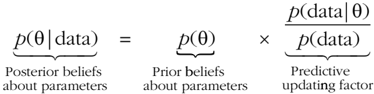
“4 The updating factor—the change from prior to posterior beliefs—is determined by relative predictive performance for the observed data (Wagenmakers et al., 2016).”
Self-citationA tutorial on Bayesian multi-model linear regression with BAS and JASP
van den Bergh, D., Clyde, M. A., Gupta, A., de Jong, T., Gronau, Q. F., Marsman, M., Ly, A., & Wagenmakers, E. (2021) · Behavior Research Methods · doi:10.3758/s13428-021-01552-2 · Cited by 109
“…β ) and the marginal likelihood (i.e., predictive performance across all values for β ): values for β that predicted the data better than average receive a boost in plausibility, whereas values of β that predicted the data worse than average suffer a decline (e.g., Wagenmakers, Morey, & Lee, 2016).”
BackgroundInfluentialSelf-citationAnalytic atheism: A cross-culturally weak and fickle phenomenon?
Gervais, W. M., van Elk, M., Xygalatas, D., McKay, R. T., Aveyard, M., Buchtel, E. E., Dar-Nimrod, I., Klocová, E. K., Ramsay, J. E., Riekki, T., et al. (2018) · Judgment and Decision Making · doi:10.1017/s1930297500007701 · Cited by 88
Bayesian Reanalyses From Summary Statistics: A Guide for Academic Consumers
Ly, A., Raj, A., Etz, A. J., Marsman, M., Gronau, Q. F., & Wagenmakers, E. (2018) · Advances in Methods and Practices in Psychological Science · doi:10.1177/2515245918779348 · Cited by 86
“More generally, by computing the area under the posterior distribution between δ = a and δ = b, one can assess how plausible it is that the population effect size falls in the interval from a to b after the data have been observed (e.g., Wagenmakers, Love, et al., 2018; Wagenmakers et al., 2016).”
Self-citationA Primer on Bayesian Model-Averaged Meta-Analysis
Gronau, Q. F., Heck, D. W., Berkhout, S. W., Haaf, J. M., & Wagenmakers, E. (2021) · Advances in Methods and Practices in Psychological Science · doi:10.1177/25152459211031256 · Cited by 100
“This procedure affords researchers the well-known pragmatic benefits of a Bayesian method (Wagenmakers, Marsman, et al., 2018; Wagenmakers, Morey, & Lee, 2016).”
Self-citationA Bilingual Advantage? An Appeal for a Change in Perspective and Recommendations for Future Research
Poarch, G. J., & Krott, A. (2019) · Behavioral Sciences · doi:10.3390/bs9090095 · Cited by 99
Performing Contrast Analysis in Factorial Designs: From NHST to Confidence Intervals and Beyond
Wiens, S., & Nilsson, M. E. (2016) · Educational and Psychological Measurement · doi:10.1177/0013164416668950 · Cited by 93
“However, Bayesian hypothesis testing is needed if you want to compare different theories (e.g., H0 vs. H1) or argue that there is no effect (Dienes, 2016; Gallistel, 2009; Kruschke, 2010; Rouder, Speckman, Sun, Morey, & Iverson, 2009; Wagenmakers et al., 2014; Wagenmakers et al., 2016).”
BackgroundMethodInfluentialDealing with small samples in football research
Hecksteden, A., Kellner, R., & Donath, L. (2021) · Science and Medicine in Football · doi:10.1080/24733938.2021.1978106 · Cited by 153
“This can provide analyses based on a small number of datapoints with a decisive head start (Wagenmakers et al. 2016; Bolstad and Curran 2016; Van de Schoot 2020).”
BackgroundInfluentialDepression and Subthreshold Depression in Stroke-Related Aphasia
Ashaie, S. A., Hurwitz, R., & Cherney, L. R. (2019) · Archives of Physical Medicine and Rehabilitation · doi:10.1016/j.apmr.2019.01.024 · Cited by 79
Bayesian Analysis of Cross-Sectional Networks: A Tutorial in R and JASP
Huth, K. B. S., de Ron, J., Goudriaan, A. E., Luigjes, J., Mohammadi, R., van Holst, R. J., Wagenmakers, E., & Marsman, M. (2023) · Advances in Methods and Practices in Psychological Science · doi:10.1177/25152459231193334 · Cited by 98
“Structures and parameter values that predicted the observed data well increase in plausibility, whereas those with poor predictions suffer a decline (Wagenmakers et al., 2016).”
Self-citationSchindler, S., & Straube, T. (2020) · Psychophysiology · doi:10.1111/psyp.13585 · Cited by 78
Devine, R. T., & Hughes, C. H. (2019) · Child Development · doi:10.1111/cdev.12990 · Cited by 87
A review of some emergent quantitative analyses in sport and exercise psychology
Myers, N. D., Ntoumanis, N., Gunnell, K. E., Gucciardi, D. F., & Lee, S. (2017) · International Review of Sport and Exercise Psychology · doi:10.1080/1750984x.2017.1317356 · Cited by 72
“In other words, ‘the data shift our prior beliefs about the relative plausibility of the competing hypotheses’ by a factor of 5.65 (Wagenmakers et al., 2016, p. 171).”
BackgroundInfluentialVariable control and conceptual change: A large-scale quantitative study in elementary school
Edelsbrunner, P. A., Schalk, L., Schumacher, R., & Stern, E. (2018) · Learning and Individual Differences · doi:10.1016/j.lindif.2018.02.003 · Cited by 54
Bartos̆, F., Maier, M., Wagenmakers, E., Nippold, F., Doucouliagos, H., Ioannidis, J. P. A., Otte, W. M., Sladekova, M., Deresssa, T. K., Bruns, S. B., et al. (2024) · Research Synthesis Methods · doi:10.1002/jrsm.1703 · Cited by 95
“The ability to quantify evidence for both the null and the alternative is a key benefit of Bayesian methods over null hypothesis significance testing.. 36,37 A corresponding way of quantifying the evidence of an effect is via Bayes factors (see InfoBox 1 for more detail).”
MethodSelf-citationBayesian statistics in educational research: a look at the current state of affairs
König, C., & van de Schoot, R. (2017) · Educational Review · doi:10.1080/00131911.2017.1350636 · Cited by 87
“None of these questions can be addressed in the traditional frequentist framework (Wagenmakers, Morey, and Lee 2016).”
Neurocognitive and behavioral predictors of social problems in ADHD: A Bayesian framework.
Kofler, M. J., Harmon, S. L., Aduen, P. A., Day, T. N., Austin, K. E., Spiegel, J. A., Irwin, L., & Sarver, D. E. (2018) · Neuropsychology · doi:10.1037/neu0000416 · Cited by 61
“05), rather than the strong support that is desirable for conclusively ruling out an effect (Wagenmakers et al., 2016).”
BackgroundMethodResultInfluentialAnalytic atheism: A cross-culturally weak and fickle phenomenon?
Gervais, W. M., van Elk, M., Xygalatas, D., McKay, R., Aveyard, M., BUCHTEL, E. E., Dar-Nimrod, I., Kundtová Klocová, E., Ramsay, J., Riekki, T., et al. (2017) · doi:10.31234/osf.io/92r8x · Cited by 60
Abramovitch (2019) · doi:10.1016/j.cpr.2018.09.001 · Cited by 59
Kofler, M. J., Spiegel, J. A., Soto, E. F., Irwin, L. N., Wells, E. L., & Austin, K. E. (2019) · Journal of Abnormal Child Psychology · doi:10.1007/s10802-018-0447-1 · Cited by 57
“Bayes factor mixed-model ANOVAs with JZS default prior scales (Rouder and Morey 2012; Wagenmakers et al. 2016) were conducted using JASP 0.”
BackgroundMethodBiddlestone, M., Green, R., Douglas, K. M., Azevedo, F., Sutton, R. M., & Cichocka, A. K. (2022) · doi:10.31234/osf.io/rxjqc · Cited by 55
Ding, A.-C. E., & Yu, C.-H. (2024) · Computers & Education · doi:10.1016/j.compedu.2024.105075 · Cited by 107
Wang, D., Nair, K., Kouchaki, M., Zajac, E. J., & Zhao, X. (2019) · Psychological Science · doi:10.1177/0956797619849928 · Cited by 56
Growth-Mindset Intervention Delivered by Teachers Boosts Achievement in Early Adolescence
Porter, T., Molina, D. C., Cimpian, A., Roberts, S., Fredericks, A., Blackwell, L. S., & Trzesniewski, K. H. (2022) · Psychological Science · doi:10.1177/09567976211061109 · Cited by 83
“, 2017) given the advantages they offer over conventional frequentist statistics (Wagenmakers et al., 2016).”
BackgroundNarratives bridge the divide between distant events in episodic memory
Cohn‐Sheehy, B. I., Delarazan, A. I., Crivelli-Decker, J. E., Reagh, Z. M., Mundada, N. S., Yonelinas, A. P., Zacks, J. M., & Ranganath, C. (2021) · Memory & Cognition · doi:10.3758/s13421-021-01178-x · Cited by 81
“For additional interpretation of findings, we computed Bayes factors (see Wagenmakers et al., 2016) using Bayes factor t tests (ttestBF function within BayesFactor in R; r-scale set to default, √2/2; https://www.rdocumentation.org/packages/ BayesFactor; see also Rouder et al., 2009), to determine…”
MethodEquivalent statistics and data interpretation
Francis, G. (2016) · Behavior Research Methods · doi:10.3758/s13428-016-0812-3 · Cited by 56
“Rather than predict observed data, a Bayes factor identifies which model best predicts the observed data (Wagenmakers et al., 2016).”
BackgroundHousehold-Level Strategies to Tackle Plastic Waste Pollution in a Transitional Country
Khuc, Q. V., Dang, T., Tran, M., Tiến, N. Đ., Nguyen, T., Pham, P., & Tran, T. D. (2023) · Urban Science · doi:10.3390/urbansci7010020 · Cited by 55
A Bayesian bird's eye view of ‘Replications of important results in social psychology’
Marsman, M., Schönbrodt, F. D., Morey, R. D., Yao, Y., Gelman, A., & Wagenmakers, E.-J. (2017) · Royal Society Open Science · doi:10.1098/rsos.160426 · Cited by 50
Self-citationThe Origins of Religious Disbelief: A Dual Inheritance Approach
Gervais, W. M., Najle, M. B., & Caluori, N. (2021) · Social Psychological and Personality Science · doi:10.1177/1948550621994001 · Cited by 63
“Bayesian estimation allows us to evaluate the credibility of different parameter estimates, given data and statistical models (Etz & Vandekerckhove, 2018; Kruschke, 2010, 2013; McElreath, 2016; Wagenmakers et al., 2016).”
MethodFu, Q., Hoijtink, H., & Moerbeek, M. (2021) · Behavior Research Methods · doi:10.3758/s13428-020-01408-1 · Cited by 47
Sleep deprivation and its effects on communication during individual and collaborative tasks
Holding, B. C., Sundelin, T., Lekander, M., & Axelsson, J. (2019) · Scientific Reports · doi:10.1038/s41598-019-39271-6 · Cited by 54
A Meta-Analysis of Odor Thresholds and Odor Identification in Autism Spectrum Disorders
Larsson, M. U., Tirado, C., & Wiens, S. (2017) · Frontiers in Psychology · doi:10.3389/fpsyg.2017.00679 · Cited by 47
“In the analysis, a default prior could be used that predicts only the direction of the effect (hyposensitivity or hypersensitivity), and subsequent analyses could evaluate the robustness of the findings depending on the prior (Wagenmakers et al., 2016).”
MethodEmergent data analysis in phonetic sciences: Towards pluralism and reproducibility
Roettger, T. B., Winter, B., & Baayen, R. H. (2018) · Journal of Phonetics · doi:10.1016/j.wocn.2018.12.001 · Cited by 57
“The practice of NHST has been much criticized by researchers in many different disciplines (Gigerenzer, 2004; Goodman, 1999; Hubbard & Lindsay, 2008; Kline, 2004; Krantz, 1999; Morey, Hoekstra, Rouder, Lee, & Wagenmakers, 2016; Nickerson, 2000; Sterne & Smith, 2001; and many others).”
BackgroundFosco, W. D., Kofler, M. J., Alderson, R. M., Tarle, S. J., Raiker, J. S., & Sarver, D. E. (2019) · Journal of Abnormal Child Psychology · doi:10.1007/s10802-018-0504-9 · Cited by 42
Michael, A., Kelman, T., & Pitesky, M. E. (2020) · Animals · doi:10.3390/ani10081405 · Cited by 45
“While this review will not cover Bayesian statistics extensively, the utility of a Bayesian framework for mixture distributions in this context is to take a prior estimate of the distribution and to update it using information from the observed MIC data and covariates to produce a posterior estimate of the parameters…”
Methodvan Ravenzwaaij, D., & Wagenmakers, E. (2022) · Psychological Methods · doi:10.1037/met0000415 · Cited by 46
Self-citationGlobal evidence of extreme intuitive moral prejudice against atheistsPreprint
Gervais, W. M. (2017) · PsyArXiv (OSF Preprints) · doi:10.31234/osf.io/csnp2 · Cited by 46
Test–retest reliability of reinforcement learning parameters
Schaaf, J. V., Weidinger, L., Molleman, L., & van den Bos, W. (2023) · Behavior Research Methods · doi:10.3758/s13428-023-02203-4 · Cited by 63
“…we used hierarchical Bayesian estimation to obtain more reliable parameter estimates by using group distributions to bound participants’ parameter estimates (Efron & Morris, 1977) and by incorporating uncertainty in the estimation process (Lee & Wagenmakers, 2013; Wagenmakers et al., 2016).”
MethodStatistical Learning of Orthographic Regularities in Chinese Children With and Without Dyslexia
Tong, S. X., Zhang, P., & He, X. (2020) · Child Development · doi:10.1111/cdev.13384 · Cited by 39
Brancato, V., Cavaliere, C., Garbino, N., Isgrò, F., Salvatore, M., & Aiello, M. (2022) · Frontiers in Oncology · doi:10.3389/fonc.2022.1005805 · Cited by 43
“5 are considered substantial evidence for or against, and absolute logfactors greater than 1 strong evidence (57, 58).”
BackgroundPopov, V., Marevic, I., Rummel, J., & Reder, L. M. (2019) · Psychological Science · doi:10.1177/0956797619859531 · Cited by 45
Holding, B. C., Laukka, P., Fischer, H., Bänziger, T., Axelsson, J., & Sundelin, T. (2017) · SLEEP · doi:10.1093/sleep/zsx145 · Cited by 42
Competition for priority harms the reliability of science, but reforms can help
Tiokhin, L., Yan, M., & Morgan, T. J. H. (2021) · Nature Human Behaviour · doi:10.1038/s41562-020-01040-1 · Cited by 53
Meta-analyses in psychology often overestimate evidence for and size of effects
Bartos̆, F., Maier, M., Shanks, D. R., Stanley, T. D., Sladekova, M., & Wagenmakers, E. (2023) · Royal Society Open Science · doi:10.1098/rsos.230224 · Cited by 64
Self-citationEckardt, N., & Rosenblatt, N. J. (2018) · Human Movement Science · doi:10.1016/j.humov.2018.09.008 · Cited by 41
Kelter, R. (2020) · Computational Statistics · doi:10.1007/s00180-020-01034-7 · Cited by 51
An Empirically Driven Guide on Using Bayes Factors for M/EEG Decoding
Teichmann, L., Moerel, D., Baker, C. I., & Grootswagers, T. (2022) · Aperture Neuro · doi:10.52294/82179f90-eeb9-4933-adbe-c2a454577289 · Cited by 44
Making Sense of Uncertainty in the Science Classroom: A Bayesian Approach
Rosenberg, J. M., Kubsch, M., Wagenmakers, E., & Dogucu, M. (2022) · Science & Education · doi:10.1007/s11191-022-00341-3 · Cited by 60
“1 3 posterior, can be obtained by multiplying our prior information, the prior, with something called a predictive updating factor (Rouder & Morey, 2019; Wagenmakers et al., 2016): Posterior = Prior × Predictive updating factor.”
MethodSelf-citationAre You for Real? Perceptions of Authenticity Are Systematically Biased and Not Accurate
Bailey, E. R., & Levy, A. (2022) · Psychological Science · doi:10.1177/09567976211056623 · Cited by 39
“For robustness, we estimated Bayesian regressions for the relationship between self- and other-rated authenticity, with noninformative priors, to obtain credible intervals of the regression coefficients (Wagenmakers et al., 2016).”
MethodThe Illusion of Political Tolerance: Social Desirability and Self-Reported Voting Preferences
Brown-Iannuzzi, J. L., Najle, M. B., & Gervais, W. M. (2018) · Social Psychological and Personality Science · doi:10.1177/1948550618760147 · Cited by 40
Mechanisms underlying the spacing effect in learning: A comparison of three computational models.
Walsh, M. M., Gluck, K. A., Gunzelmann, G., Jastrzembski, T. S., Krusmark, M., Myung, J. I., Pitt, M. A., & Zhou, R. (2018) · Journal of Experimental Psychology General · doi:10.1037/xge0000416 · Cited by 42
Current loot box warnings are ineffective for informing consumers
Garrett, E. P., Drummond, A., Lowe-Calverley, E., & Sauer, J. D. (2022) · Computers in Human Behavior · doi:10.1016/j.chb.2022.107534 · Cited by 48
Multilingual Language Control and Executive Function: A Replication Study
Poarch, G. J. (2018) · Frontiers in Communication · doi:10.3389/fcomm.2018.00046 · Cited by 38
Can hypnotic suggestibility be measured online?
Palfi, B., Moga, G., Lush, P., Scott, R. B., & Dienes, Z. (2020) · Psychological Research · doi:10.1007/s00426-019-01162-w · Cited by 31
“Note 1 3 that, although, the bounds of the CIs are numerically equal to the bounds of the confidence intervals (assuming a uniform prior), their interpretation is different (e.g. Morey, Hoekstra, Rouder, Lee, & Wagenmakers, 2016).”
BackgroundExpert agreement in prior elicitation and its effects on Bayesian inference
Stefan, A. M., Katsimpokis, D., Gronau, Q. F., & Wagenmakers, E. (2022) · Psychonomic Bulletin & Review · doi:10.3758/s13423-022-02074-4 · Cited by 42
Self-citationClassroom environment predicts changes in expressed intellectual humility
Porter, T., Molina, D. C., Lucas, M., Oberle, C., & Trzesniewski, K. H. (2022) · Contemporary Educational Psychology · doi:10.1016/j.cedpsych.2022.102081 · Cited by 38
Sebastian, A., Rössler, K., Wibral, M., Mobascher, A., Lieb, K., Jung, P., & Tüscher, O. (2017) · Journal of Neuroscience · doi:10.1523/jneurosci.1476-17.2017 · Cited by 31
“One of the benefits of Bayesian statistics is that it provides evidence favoring the null [i.e., that there is no difference (BF01)] as well as the alternative hypothesis [i.e., that there is a difference (BF10)] (Gallistel, 2009; Wagenmakers et al., 2016).”
BackgroundTransdiagnostic fears and avoidance behaviors in self-reported eating disorders
Melles, H., & Jansen, A. (2023) · Journal of Eating Disorders · doi:10.1186/s40337-023-00745-8 · Cited by 30
“The Bayesian ANOVA yields a Bayes factor (BF) that quantifies the relative plausibility of two rival models [74, 75].”
MethodJacquart, J., Roquet, R. F., Papini, S., Powers, M. B., Rosenfield, D., Smits, J. A. J., & Monfils, M. (2017) · Journal of Anxiety Disorders · doi:10.1016/j.janxdis.2017.05.010 · Cited by 38
Lee, M. D., Gluck, K. A., & Walsh, M. M. (2019) · Decision · doi:10.1037/dec0000105 · Cited by 34
Self-citationVrijsen, J. N., Dainer‐Best, J., Witcraft, S. M., Papini, S., Hertel, P. T., Beevers, C. G., Becker, E. S., & Smits, J. A. J. (2018) · Cognition & Emotion · doi:10.1080/02699931.2018.1450225 · Cited by 35
Wagenmakers, E., Gronau, Q. F., Dablander, F., & Etz, A. J. (2020) · Erkenntnis · doi:10.1007/s10670-019-00209-z · Cited by 29
Self-citationHuth, K. B. S., Keetelaar, S., Sekulovski, N., van den Bergh, D., & Marsman, M. (2024) · advances.in/psychology · doi:10.56296/aip00010 · Cited by 35
Statistical evidence in psychological networks
Huth, K. B. S., Haslbeck, J. M. B., Keetelaar, S., van Holst, R. J., & Marsman, M. (2025) · Nature Human Behaviour · doi:10.1038/s41562-025-02314-2 · Cited by 44
“However, one of the key strengths of the Bayesian approach is that it offers several principled routes for evidence accumulation 40,41 .”
Five Bayesian Intuitions for the Stopping Rule PrinciplePreprint
Wagenmakers, E., Gronau, Q. F., & Vandekerckhove, J. (2019) · PsyArXiv (OSF Preprints) · doi:10.31234/osf.io/5ntkd · Cited by 36
Self-citationBody Odor Trait Disgust Sensitivity Predicts Perception of Sweat Biosamples
Liuzza, M. T., Olofsson, J., Sabiniewicz, A., & Sorokowska, A. (2017) · Chemical Senses · doi:10.1093/chemse/bjx026 · Cited by 27
Davis, M. L., Papini, S., Rosenfield, D., Roelofs, K., Kolb, S., Powers, M. B., & Smits, J. A. J. (2017) · Journal of Anxiety Disorders · doi:10.1016/j.janxdis.2017.09.004 · Cited by 29
Sebastian, A., Konken, A. M., Schaum, M., Lieb, K., Tüscher, O., & Jung, P. (2020) · Journal of Neuroscience · doi:10.1523/jneurosci.1681-20.2020 · Cited by 26
“Finally, we used Bayesian statistics to provide evidence for (null hypothesis, H0) or against (alternative hypothesis, H1) the assumption that regions that are usually assigned to the stopping network are equally recruited when in interrupting ongoing processing regardless of whether an unexpected event requires execu…”
BackgroundMethodLogie, M. R., & Donaldson, D. I. (2021) · Cognition · doi:10.1016/j.cognition.2020.104578 · Cited by 32
Maier, M., Bartos̆, F., Oh, M., Wagenmakers, E., Shanks, D. R., & Harris, A. J. L. (2022) · PsyArXiv (OSF Preprints) · doi:10.31234/osf.io/r8nyu · Cited by 30
Self-citationInformed Bayesian survival analysis
Bartos̆, F., Aust, F., & Haaf, J. M. (2022) · BMC Medical Research Methodology · doi:10.1186/s12874-022-01676-9 · Cited by 36
“Consequently, we can reformulate the Equation 6 as the change from prior model odds to posterior model odds [81, 82], p(data |M1,d, d) p(data |M0,d, d) } {{ } Bayes factor = p(M1,d | data, d) p(M0,d | data, d) } {{ } Posterior odds / p(M1,d | d) p(M0,d | d) } {{ } Prior odds , (7)”
Kelter, R. (2021) · BMC Medical Research Methodology · doi:10.1186/s12874-021-01341-7 · Cited by 33
“In contrast, Bayesian inference is following the likelihood principle [8, 11, 12] andmost of the above problems disappear when utilising Bayesian data analysis and, in particular, Bayesian hypothesis tests [13].”
BackgroundMethodIntroduction to Bayesian Inference for PsychologyPreprint
Etz, A. J., & Vandekerckhove, J. (2017) · PsyArXiv (OSF Preprints) · doi:10.31234/osf.io/q46q3 · Cited by 32
Electrocortical N400 Effects of Semantic Satiation
Ströberg, K., Andersen, L. M., & Wiens, S. (2017) · Frontiers in Psychology · doi:10.3389/fpsyg.2017.02117 · Cited by 21
Hecksteden, A., Forster, S., Egger, F., Buder, F., Kellner, R., & Meyer, T. (2022) · Frontiers in Sports and Active Living · doi:10.3389/fspor.2022.793603 · Cited by 27
“(2013) the rationale being to characterise the range of plausible values pre-trial (Wagenmakers et al., 2016; Hecksteden et al., 2017; Van de Schoot, 2020).”
BackgroundOlfactory Functions in Adults With Autism Spectrum Disorders
Addo, R., Wiens, S., Nord, M., & Larsson, M. U. (2017) · Perception · doi:10.1177/0301006616686100 · Cited by 24
The role of metacognition and schematic support in younger and older adults' episodic memory
Whatley, M. C., & Castel, A. D. (2021) · Memory & Cognition · doi:10.3758/s13421-021-01169-y · Cited by 28
Infants Infer Social Relationships Between Individuals Who Engage in Imitative Social Interactions
Kudrnova, V., Spelke, E. S., & Thomas, A. J. (2024) · Open Mind · doi:10.1162/opmi_a_00124 · Cited by 33
“We pre-registered a stopping rule because with Bayesian hypothesis testing a BF can be computed with each data point until a pre-determined threshold of evidential strength is reached (Wagenmakers et al., 2016).”
Method
Metadata
- Authors
- Wagenmakers, E.-J., Morey, R. D., & Lee, M. D.
- Affiliations
- University of Amsterdam (NL)
- Cardiff University (GB)
- University of California, Irvine (US)
- Corresponding author
- Wagenmakers, Eric-Jan
- Venue
- Current Directions in Psychological Science
- Publisher
- SAGE Publications
- Published
- 2016-06
- Volume
- 25
- Issue
- 3
- Pages
- 169-176
- ISSN
- 0963-7214 (ISSN-L)
- 1467-8721
- OpenAlex
- W2414830033
- Semantic Scholar
- 9669c421dda25250471ae7a69beaf226236a67f1
- Cited by
- 334
- References
- 27
- Citations by year
- 2026: 13 · 2025: 14 · 2024: 27 · 2023: 31 · 2022: 49 · 2021: 36 · 2020: 43 · 2019: 36 · 2018: 39 · 2017: 32 · 2016: 13
- FWCI
- 40.51
- Type
- journal article
- Language
- en
- Open access
- green
- handle.uba.uva.nl
- Licence
- cc-by
- journals.sagepub.com/page/policies/text-and-data-mining-license (tdm)
- Locations
- Current Directions in Psychological Science (publishedVersion)
- ORCA Online Research @Cardiff (Cardiff University) (acceptedVersion)
- UvA-DARE (University of Amsterdam) (submittedVersion, cc-by)
- ORCA Online Research @Cardiff (Cardiff University) (submittedVersion)
- Data Archiving and Networked Services (DANS) (submittedVersion, other-oa)
- Topics
- Physical Sciences › Mathematics › Statistics and Probability › Statistical Methods and Bayesian Inference
- Physical Sciences › Computer Science › Artificial Intelligence › Bayesian Modeling and Causal Inference
- Physical Sciences › Mathematics › Statistics and Probability › Statistical Distribution Estimation and Applications
- Keywords
- Bayesian inference, parameter estimation, hypothesis testing, null hypothesis
About these checks
Registry, retraction, Cites and statistics results are computed, not judged, with one exception: a printed reference that no index lists is read once by a model before it counts as a citation error. Claims are extracted by a model and kept only when their quote appears verbatim in the text; each cited source is then checked, with a model’s help, for whether it says what the claim relies on. Those verdicts can be wrong — read the claim’s quote and the cited source before relying on one.
Statistics and arithmetic are recomputed, not judged.
Confidence bands are shown only for fields calibrated on our annotated test set. None is calibrated yet, so no band is shown.
What counts as a claim ›How we measure confidence ›How we check this ›
Are you an author, or do you see a problem with this page? Request a review
Data sources
Bibliographic data: Semantic Scholar, OpenAlex, Crossref.
Contains information from the Semantic Scholar Academic Graph Datasets, made available under the ODC Attribution License (ODC-BY 1.0).
Semantic Scholar’s data is described in: Kinney, R., et al. (2023). The Semantic Scholar Open Data Platform. arXiv:2301.10140.
