

The Stability and Change of Loneliness Across the Life Span: A Meta-Analysis of Longitudinal Studies
Open accessPublished version of a preprint
The DOI matches its Crossref record; 240 of the 244 references it cites were found in a registry or an index.
Abstract
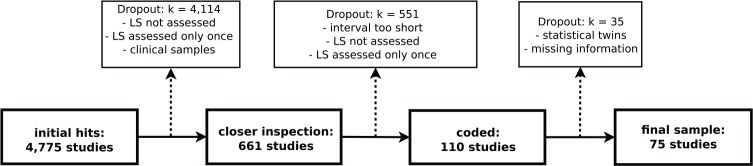
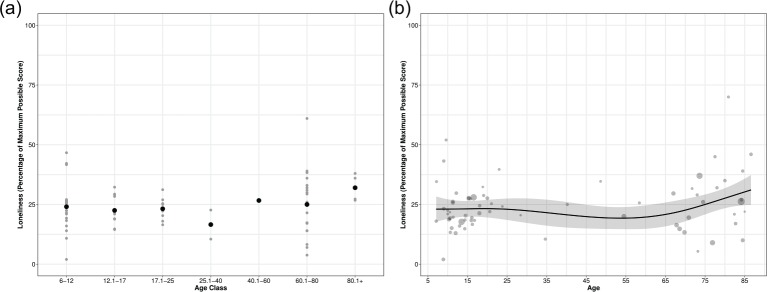
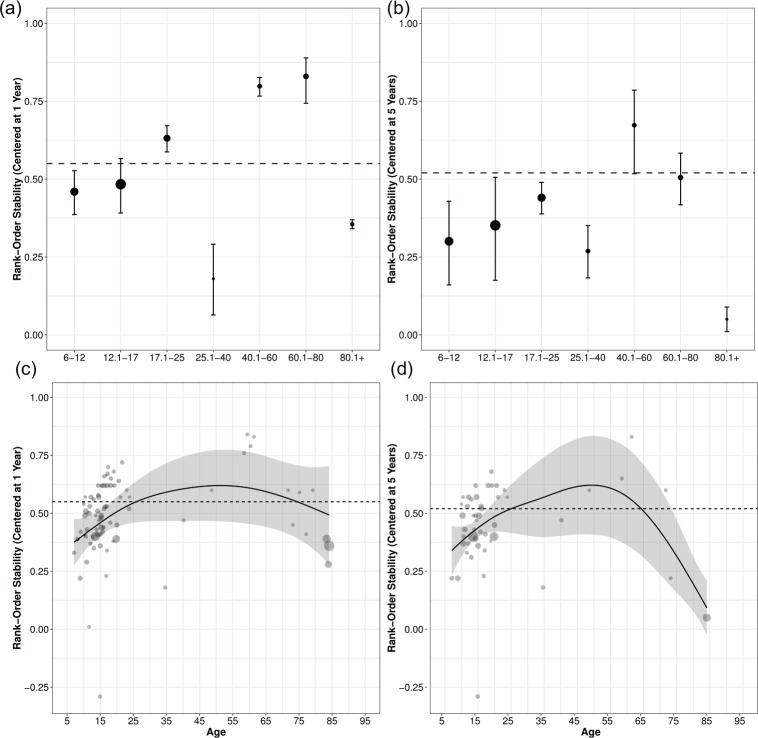
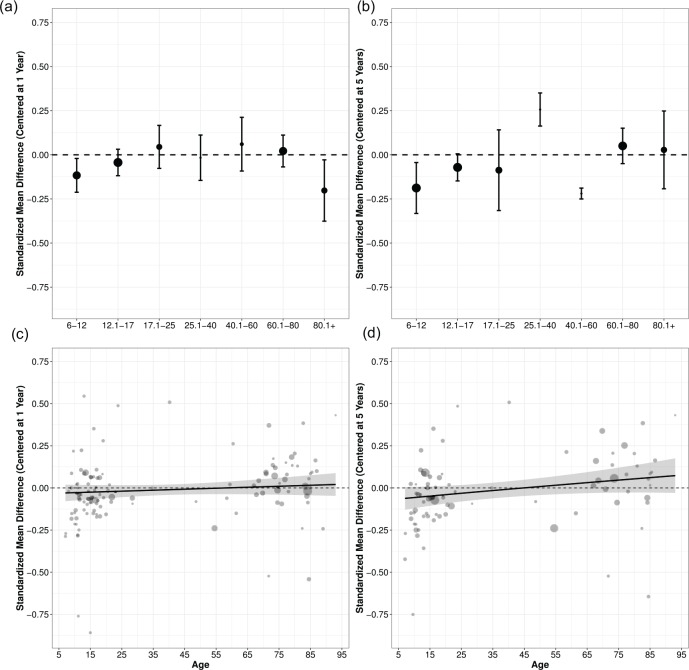
Individuals experience loneliness when they perceive a deficiency in the quality or quantity of their social relationships. In the present meta-analysis, we compiled data from 75 longitudinal studies conducted in Asia, Australia, Europe, and North America ( N = 83, 679) to examine the rank-order and mean-level development of loneliness across the life span. Data were analyzed using two- and three-level meta-analyses and generalized additive mixed models. The results indicate that the rank order of loneliness is as stable as the rank order of personality traits and follows an inverted U-shaped trajectory across the life span. Regarding mean-level development, loneliness was found to decrease throughout childhood and to remain essentially stable from adolescence to oldest old age. Thus, in contrast to other personality characteristics, changes in loneliness are not generally related to age. Implications for theory are discussed.
Overview
The claims and statistics of this paper haven’t been checked yet.
Free: it reads the open-access text and checks the first 5 claims that cite a source we can check. Create a free account to check every claim.
Integrity signals
Registry
Cites
Statistics
Figures
Verification
Claims the paper makes
The claims and statistics of this paper haven’t been checked yet.
Free: it reads the open-access text and checks the first 5 claims that cite a source we can check. Create a free account to check every claim.
Claims other papers make about this one
Each is checked against this paper’s own text: does it say what the citing paper says it does?
The cited source doesn’t support the claim as written.
In the citing paper
“The developmental trajectories of loneliness and negative affect also differ during adolescence (12.1–17 years) and emerging adulthood (17.1–25 years), with feelings of loneliness typically peaking during middle adolescence, whereas negative affect continue to increase between adolescence and young adulthood”
From Adolescent Loneliness and Negative Affect during the COVID-19 Pandemic: The Role of Extraversion and Neuroticism (2023) · cites this paper as Mund et al., 2019
Checked by a reasoning model — may be wrong.
Experimental — accuracy not yet measuredThe source backs part of the claim, not all of it — or backs it for a different population, condition or comparison.
In the citing paper
“It is worth noting that loneliness and negative affect are not commonly understood to be facets of any personality characteristic such as neuroticism”
From Adolescent Loneliness and Negative Affect during the COVID-19 Pandemic: The Role of Extraversion and Neuroticism (2023) · cites this paper as Mund et al., 2019
Experimental — accuracy not yet measuredThe source backs part of the claim, not all of it — or backs it for a different population, condition or comparison.
In the citing paper
“However, a single indicator can be an adequate replacement for a larger scale and is widely used (Mund et al., 2019; Mund et al., 2022).”
From Adolescent Loneliness and Negative Affect during the COVID-19 Pandemic: The Role of Extraversion and Neuroticism (2023) · cites this paper as Mund et al., 2019
Experimental — accuracy not yet measuredThe cited source says what the claim attributes to it.
In the citing paper
“Drawing from a personality psychology perspective, loneliness was expected to be a trait-like personality attribute, given that loneliness has found to be as stable over time as Big Five personality traits (Mund et al., 2019).”
From Adolescent Loneliness and Negative Affect during the COVID-19 Pandemic: The Role of Extraversion and Neuroticism (2023) · cites this paper as Mund et al., 2019
The cited source says what the claim attributes to it.
In the citing paper
“Lastly, some studies find no change in life satisfaction (Baird et al. 2010) or loneliness (Mund et al. 2020) during this period.”
From Patterns of Romantic Relationship Experiences and Psychosocial Adjustment From Adolescence to Young Adulthood (2021) · cites this paper as Mund et al. 2020
1 more claim about this paper
Create a free account to see every claim other papers make about this one.
Self-check
Percentages, sums and reported differences re-computed from the paper’s own numbers.
The self-check needs the paper’s full text.
Citations
Cites
Items 201–240 of 240
Mental well-being: a 16-year follow-up among older residents in Jyväskylä.
Heikkinen, R., & Kauppinen, M. A. (2011) · Archives of gerontology and geriatrics (Print) · doi:10.1016/j.archger.2010.01.017 · Cited by 57
Marital quality and loneliness in later life: A dyadic analysis of older married couples in Ireland
Stokes, J. E. (2016) · Journal of Social and Personal Relationships · doi:10.1177/0265407515626309 · Cited by 57
Lonely at the bottom: a cross-sectional study on being ill, poor, and lonely.
Bosma, H., Jansen, M., Schefman, S., Hajema, K., & Feron, F. (2015) · Public Health · doi:10.1016/j.puhe.2014.11.016 · Cited by 56 · cited 2×
“In oldest old age, the niches that individuals have constructed appear to become more fragile (Kandler, 2012), possibly due to the occurrence of adverse life events such as bereavement or the experience of frailty (Bosma et al., 2015; Hawkley & Kocherginsky, 2018; Hensley et al., 2012; Savikko et al., 2005; Yang, 2018…”
BackgroundSoldani, J. (2019) · ACM SIGSOFT Softw. Eng. Notes · doi:10.1145/3356773.3356776 · Cited by 54 · cited 1×
“…to these primary inclusion criteria, studies were also required to meet two secondary criteria: First, we only included published articles from peer-reviewed journals and dissertations, but we did not consider unpublished manuscripts or other types of gray literature (Rothstein & Hopewell, 2009).”
Backgroundde Leeuw, E. D., Mellenbergh, G. J., & Hox, J. J. (1996) · Sociological Methods & Research · doi:10.1177/0049124196024004002 · Cited by 53
Smith, D. S., Schacter, H. L., Enders, C. K., & Juvonen, J. (2017) · Journal of Youth and Adolescence · doi:10.1007/s10964-017-0732-2 · Cited by 49
Declining Loneliness Over Time: Evidence From American Colleges and High Schools
Clark, D. M. T., Loxton, N. J., & Tobin, S. J. (2015) · Personality and Social Psychology Bulletin · doi:10.1177/0146167214557007 · Cited by 49
The Mental Representation of Social Connections: Generalizability Extended to Beijing Adults
Hawkley, L. C., Gu, Y., Luo, Y.-J., & Cacioppo, J. T. (2012) · PLoS ONE · doi:10.1371/journal.pone.0044065 · Cited by 47
A Behavioral Taxonomy of Loneliness in Humans and Rhesus Monkeys (Macaca mulatta)
Capitanio, J. P., Hawkley, L. C., Cole, S. W., & Cacioppo, J. T. (2014) · PLoS ONE · doi:10.1371/journal.pone.0110307 · Cited by 40
Palmen, H. M. H., Vermande, M. M., Deković, M., & van Aken, M. A. G. (2011) · Merrill-palmer Quarterly · doi:10.1353/mpq.2011.0010 · Cited by 40
Tian, Y., Guo, Z. X., Shi, J. R., Bian, Y. L., Han, P. G., Wang, P., & Gao, F. Q. (2018) · The Journal of Psychology · doi:10.1080/00223980.2018.1468309 · Cited by 38
McCulloch, B. J. (1991) · Journal of Gerontology · doi:10.1093/geronj/46.5.p251 · Cited by 38
Zhang, X., Yeung, D. Y.-L., Fung, H. H.-L., & Lang, F. R. (2011) · Psychology and Aging · doi:10.1037/a0023674 · Cited by 37
Self‐control, peer preference, and loneliness in Chinese children: A three‐year longitudinal study
Liu, J., Xiao, B., Hipson, W. E., Coplan, R. J., Li, D., & Chen, X. (2016) · Social Development · doi:10.1111/sode.12224 · Cited by 37
Du, H., Li, X., Chi, P., Zhao, S., & Zhao, J. (2018) · Applied Psychology Health and Well-Being · doi:10.1111/aphw.12139 · Cited by 31
Barker, S., Jensen, L. A., & Battashi, H. A. (2019) · Mental Wellbeing and Psychology · doi:10.12968/vetn.2019.10.2.59 · Cited by 31
Gallardo, L. O., Martín-Albó, J., & Barrasa, Á. (2018) · Journal of Research on Adolescence · doi:10.1111/jora.12369 · Cited by 30
Sagoe, D., Pallesen, S., Hanss, D., Leino, T. M., Molde, H., Mentzoni, R. A., & Torsheim, T. (2017) · Frontiers in Psychology · doi:10.3389/fpsyg.2017.00478 · Cited by 29
Beam, C. R., & Collins, E. M. (2018) · Clinical Gerontologist · doi:10.1080/07317115.2018.1518283 · Cited by 29
Narrative skills predict peer adjustment across elementary school years
Davidson, A. J., Walton, M. D., Kansal, B., & Cohen, R. (2016) · Social Development · doi:10.1111/sode.12219 · Cited by 28
Song, Q., Koh, J. B. K., & Wang, Q. (2018) · Journal of Child and Family Studies · doi:10.1007/s10826-018-1033-4 · Cited by 27
Young children's interpersonal trust consistency as a predictor of future school adjustment
Betts, L. R., Rotenberg, K. J., & Trueman, M. (2013) · Journal of Applied Developmental Psychology · doi:10.1016/j.appdev.2013.09.003 · Cited by 26
van Bilsen, P. V., Hamers, J., Groot, W., & Spreeuwenberg, C. (2008) · Health Policy · doi:10.1016/j.healthpol.2007.12.015 · Cited by 26
Chou, K., Cacioppo, J. T., Kumari, M., & Song, Y. (2013) · American Journal of Geriatric Psychiatry · doi:10.1016/j.jagp.2012.11.002 · Cited by 25
Spithoven, A. W. M., Bastin, M., Bijttebier, P., & Goossens, L. (2018) · Journal of Child and Family Studies · doi:10.1007/s10826-018-1183-4 · Cited by 25
Positive life orientation in old age: A 15-year follow-up
Eloranta, S., Arve, S., Lavonius, S., Routasalo, P. E., Lehtonen, A., Viitanen, M. H., & Isoaho, H. (2012) · Archives of Gerontology and Geriatrics · doi:10.1016/j.archger.2012.04.010 · Cited by 24
Qualter, P., Hurley, R., Eccles, A. M., Abbott, J., Boivin, M., & Tremblay, R. E. (2018) · Journal of Youth and Adolescence · doi:10.1007/s10964-018-0867-9 · Cited by 24
Loneliness and the Big Five Personality Traits: A Meta-AnalysisPreprint
Buecker, S., Maes, M., Denissen, J. J. A., & Luhmann, M. (2019) · PsyArXiv (OSF Preprints) · doi:10.31234/osf.io/fx5bq · Cited by 21
Social Motives Predict Loneliness During a Developmental Transition
Nikitin, J., & Freund, A. M. (2017) · Swiss Journal of Psychology · doi:10.1024/1421-0185/a000201 · Cited by 18
Abebe, D., Torgersen, L., Lien, L., Hafstad, G. S., & von Soest, T. (2013) · International Journal of Behavioral Development · doi:10.1177/0165025413514871 · Cited by 17
Personality Development in Adulthood
Mund, M., Zimmermann, J., & Neyer, F. J. (2018) · SAGE Publications Ltd eBooks · doi:10.4135/9781526451200.n15 · Cited by 16
Self-citationTransitional Instability Predicts Polymorphous Distress in Emerging Adults
Segrin, C. G., Pavlich, C. A., & McNelis, M. (2017) · The Journal of Psychology · doi:10.1080/00223980.2017.1335687 · Cited by 14
Age Differences in Loneliness: A Meta-Analysis.
Perlman, D. (1990) · Cited by 13
Verhagen, M., Roekel, E. V., & Engels, R. C. M. E. (2014) · PLoS ONE · doi:10.1371/journal.pone.0092768 · Cited by 12
Do not overlook lonely children: Additional evidence from two longitudinal studies
Nishimura, T., Murakami, T., & Sakurai, S. (2017) · Journal of Social and Personal Relationships · doi:10.1177/0265407517701840 · Cited by 10
Predicting longitudinal loneliness in older adults
Skaff, M. L. (2007) · Iowa State University Digital Repository (Iowa State University) · doi:10.31274/rtd-180813-17099 · Cited by 6
Personality Development in Adulthood
Carstensen, L. L. (2001) · Elsevier eBooks · doi:10.1016/b0-08-043076-7/01763-0 · Cited by 5 · cited 5×
“Differential development might well be observable despite perfect mean-level stability, whereas mean-level changes might occur with or without shifts in the rank order of individuals (Mund et al., 2018; Roberts & DelVecchio, 2000; Roberts, Walton, & Viechtbauer, 2006; Roberts et al., 2008).”
BackgroundInfluentialDavis, M. H., & Franzoi, S. L. (1984) · Cited by 3
Woodford-Williams, E. (1966) · BMJ · doi:10.1136/bmj.2.5529.1585 · Cited by 3 · cited 6×
“…we extend previous meta-analyses and large-scale studies that have focused on cross-sectional data or specific age periods (Luhmann & Hawkley, 2016; Perlman, 1990; Pinquart & Sörensen, 2001b; Yang & Victor, 2011) by compiling findings from longitudinal studies and adopting a life span perspective.”
BackgroundResultInfluentialFrom Young Adulthood Through the Middle Ages
Helson, R., Soto, C. J., & Cate, R. A. (2015) · Handbook of Personality Development · doi:10.4324/9781315805610.ch17
Research works printed but not linked: 8
- *Kochenderfer B. J. (1998). An application of HLM for modeling adjustment growth curves of peer victimized children (Unpublished doctoral dissertation). University of Illinois at Urbana-Champaign.
- *Mayer S. E. (2017). Examining the relationships between chronic stress, HPA axis activity, and depression in a prospective and longitudinal study of medical internship (Doctoral dissertation, University of Michigan). Retrieved from https://deepblue.lib.umich.edu/bitstream/handle/2027.42/137074/stemayer_1.pdf?sequence=1&isAllowed=y
- Perlman D. Peplau L. A. (1981). Toward a social psychology of loneliness. In Duck N. Gilmour R. (Eds.), Personal relationships: Personal relationships in disorder (pp. 31- 56). London, England: Academic Press.
- *Polasky S. A. (2010). Coping with school bullying: An examination of longitudinal effects of coping on peer victimization and adjustment (Doctoral dissertation, Arizona State University). Retrieved from https://repository.asu.edu/attachments/56064/content/Polasky_asu_0010E_10037.pdf
- Raudenbush S. W. (2009). Analyzing effect sizes: Random-effects models. In Cooper H. Hedges L. V. Valentine J. C. (Eds.), The handbook of research synthesis and meta-analysis (2nd ed., pp. 295- 316). New York, NY: SAGE.
- Reed J. G. Baxter P. M. (2009). Using reference databases. In Cooper H. Hedges L. V. Valentine J. C. (Eds.), The handbook of research synthesis and meta-analysis (2nd ed., pp. 73- 101). New York, NY: SAGE.
- Shadish W. R. Haddock C. K. (2009). Combining estimates of effect size. In Cooper H. Hedges L. V. Valentine J. C. (Eds.), The handbook of research synthesis and meta-analysis (2nd ed., pp. 257- 277). New York, NY: SAGE.
- *Tong S. S. (2013). The relationship between early attachment and adolescent risky behaviors with changes in loneliness in a mediating role (Doctoral dissertation, University of Louisville). Retrieved from https://ir.library.louisville.edu/etd/1449/
Cited by
Loneliness Before and During the COVID-19 Pandemic: A Systematic Review with Meta-Analysis
Ernst, M., Niederer, D., Werner, A. M., Czaja, S. J., Mikton, C., Ong, A., Rosen, T., Braehler, E., & Beutel, M. E. (2022) · doi:10.31234/osf.io/wjx5v · Cited by 584
Loneliness before and during the COVID-19 pandemic: A systematic review with meta-analysis.
Ernst, M., Niederer, D., Werner, A. M., Czaja, S. J., Mikton, C., Ong, A. D., Rosen, T., Brähler, E., & Beutel, M. E. (2022) · American Psychologist · doi:10.1037/amp0001005 · Cited by 584
Holt-Lunstad, J. (2022) · Annual Review of Public Health · doi:10.1146/annurev-publhealth-052020-110732 · Cited by 545
Gender differences in loneliness across the lifespan: a meta-analysis
Maes, M., Qualter, P., Vanhalst, J., Van den Noortgate, W., & Goossens, L. (2019) · European Journal of Personality · doi:10.1002/per.2220 · Cited by 405
“…are in line with a metasynthesis including over a hundred metaanalyses on gender differences in different psychological domains, suggesting that gender differences were rather small in most domains, and largely stable across time and cultures (Mund et al., 2019; Zell, Krizan, & Teeter, 2015).”
BackgroundResultLoneliness and the Big Five Personality Traits: A Meta–Analysis
Buecker, S., Maes, M., Denissen, J. J. A., & Luhmann, M. (2020) · European Journal of Personality · doi:10.1002/per.2229 · Cited by 361
“There are ongoing discussions if and to what extent loneliness should be conceptualized as a trait-like characteristic with similar features (i.e. similar heritability, stability, and change across the lifespan) as broader personality traits (Mund et al., 2019).”
Background
Metadata
- Authors
- Mund, M., Freuding, M. M., Möbius, K., Horn, N., & Neyer, F. J.
- Affiliations
- Friedrich Schiller University Jena (DE)
- Corresponding author
- Mund, Marcus
- Venue
- Personality and Social Psychology Review
- Publisher
- SAGE Publications
- Published
- 2019-06-10
- Volume
- 24
- Issue
- 1
- Pages
- 24-52
- ISSN
- 1088-8683 (ISSN-L)
- 1532-7957
- PMC
- PMC6943963
- OpenAlex
- W2952367993
- Cited by
- 417
- References
- 244
- Citations by year
- 2026: 66 · 2025: 74 · 2024: 68 · 2023: 67 · 2022: 71 · 2021: 49 · 2020: 18 · 2019: 3
- FWCI
- 5.55
- Type
- journal article
- Language
- en
- Open access
- hybrid
- doi.org
- Licence
- cc-by-nc
- journals.sagepub.com/page/policies/text-and-data-mining-license (tdm)
- Locations
- Personality and Social Psychology Review (publishedVersion, cc-by-nc)
- Europe PMC (PubMed Central) (publishedVersion, cc-by-nc)
- PubMed Central (publishedVersion, cc-by-nc)
- PubMed (publishedVersion)
- PsyArXiv (OSF Preprints) (submittedVersion)
- PsyArXiv (OSF Preprints) (submittedVersion, cc-by)
- Topics
- Social Sciences › Psychology › Clinical Psychology › Personality Traits and Psychology
- Social Sciences › Health › Health disparities and outcomes
- Social Sciences › Psychology › Social Psychology › Attachment and Relationship Dynamics
- Keywords
- loneliness, lifespan development, rank-order stability, personality traits, interpersonal relationships, age differences, childhood, adolescence, old age
- MeSH terms
- Age Factors, Humans, Human Development, Interpersonal Relations, Loneliness, Longitudinal Studies, Personality, Personality Development
About these checks
Registry, retraction, Cites and statistics results are computed, not judged, with one exception: a printed reference that no index lists is read once by a model before it counts as a citation error. Claims are extracted by a model and kept only when their quote appears verbatim in the text; each cited source is then checked, with a model’s help, for whether it says what the claim relies on. Those verdicts can be wrong — read the claim’s quote and the cited source before relying on one.
Statistics and arithmetic are recomputed, not judged.
Confidence bands are shown only for fields calibrated on our annotated test set. None is calibrated yet, so no band is shown.
What counts as a claim ›How we measure confidence ›How we check this ›
Are you an author, or do you see a problem with this page? Request a review
Data sources
Bibliographic data: Semantic Scholar, OpenAlex, Crossref.
Contains information from the Semantic Scholar Academic Graph Datasets, made available under the ODC Attribution License (ODC-BY 1.0).
Semantic Scholar’s data is described in: Kinney, R., et al. (2023). The Semantic Scholar Open Data Platform. arXiv:2301.10140.
