

The DOI matches its Crossref record; 63 of the 63 references it cites were found in a registry or an index.
GenSLMs: Genome-scale language models reveal SARS-CoV-2 evolutionary dynamics
Open accessPublished version of a preprint
Abstract
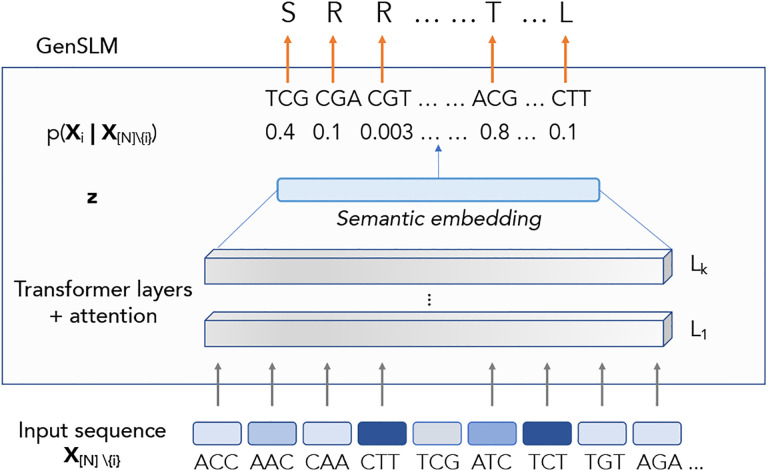
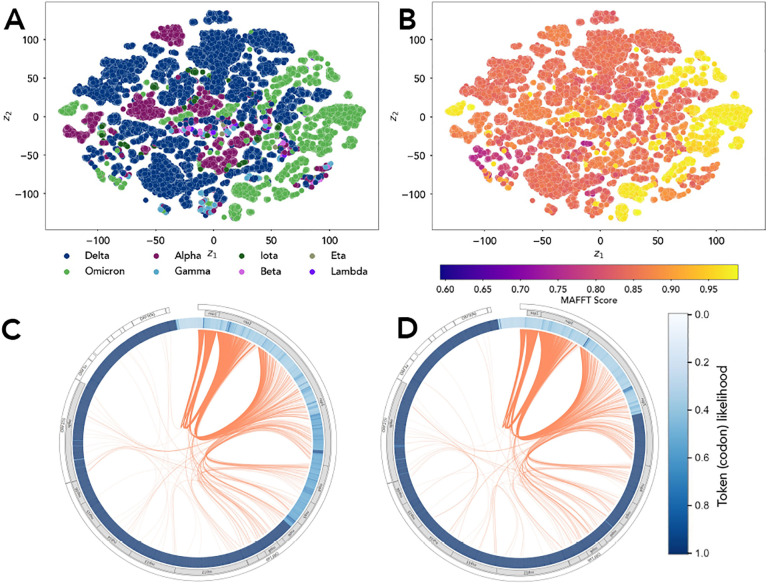
We seek to transform how new and emergent variants of pandemic-causing viruses, specifically SARS-CoV-2, are identified and classified. By adapting large language models (LLMs) for genomic data, we build genome-scale language models (GenSLMs) which can learn the evolutionary landscape of SARS-CoV-2 genomes. By pre-training on over 110 million prokaryotic gene sequences and fine-tuning a SARS-CoV-2-specific model on 1.5 million genomes, we show that GenSLMs can accurately and rapidly identify variants of concern. Thus, to our knowledge, GenSLMs represents one of the first whole-genome scale foundation models which can generalize to other prediction tasks. We demonstrate scaling of GenSLMs on GPU-based supercomputers and AI-hardware accelerators utilizing 1.63 Zettaflops in training runs with a sustained performance of 121 PFLOPS in mixed precision and peak of 850 PFLOPS. We present initial scientific insights from examining GenSLMs in tracking evolutionary dynamics of SARS-CoV-2, paving the path to realizing this on large biological data.
Overview
The claims and statistics of this paper haven’t been checked yet.
Run the check — free, no account needed. It reads the open-access text and checks the sources it cites.
Integrity signals
Registry
Cites
Statistics
Figures
Verification
Claims the paper makes
The claims and statistics of this paper haven’t been checked yet.
Run the check — free, no account needed. It reads the open-access text and checks the sources it cites.
Claims other papers make about this one
Each is checked against this paper’s own text: does it say what the citing paper says it does?
The source backs part of the claim, not all of it — or backs it for a different population, condition or comparison.
In the citing paper
“existing attempts to model DNA as a language (15–17) are limited by the prevailing dense Transformer architecture, which incurs high computational cost as input sequence lengths grow relative to model width (scaling quadratically) and generally underperforms at single-nucleotide or byte-level resolution compared with models trained at coarser resolutions (18).”
From Sequence modeling and design from molecular to genome scale with Evo (2024) · cites this paper as [15]
Experimental — accuracy not yet measuredThe source backs part of the claim, not all of it — or backs it for a different population, condition or comparison.
In the citing paper
“As a result, Transformer-based DNA models are constrained to short context lengths and use schemes that aggregate nucleotides into the basic units of language models, called tokens, thereby sacrificing single-nucleotide resolution (15, 16, 21–23).”
From Sequence modeling and design from molecular to genome scale with Evo (2024) · cites this paper as [15]
Experimental — accuracy not yet measuredThe cited source says what the claim attributes to it.
In the citing paper
“On DMS datasets of prokaryotic proteins, Evo’s zero-shot performance exceeded all other nucleotide models tested (Fig. 2B and table S4), including GenSLM (15)”
From Sequence modeling and design from molecular to genome scale with Evo (2024) · cites this paper as [15]
Self-check
Percentages, sums and reported differences re-computed from the paper’s own numbers.
The self-check needs the paper’s full text.
Citations
Cites
BERT: Pre-training of Deep Bidirectional Transformers for Language Understanding
Devlin, J., Chang, M.-W., Lee, K., & Toutanova, K. (2018) · arXiv · doi:10.48550/arxiv.1810.04805 · Cited by 73,173
Highly accurate protein structure prediction with AlphaFold
Jumper, J., Evans, R., Pritzel, A., Green, T., Figurnov, M., Ronneberger, O., Tunyasuvunakool, K., Bates, R., Žídek, A., Potapenko, A., et al. (2021) · Nature · doi:10.1038/s41586-021-03819-2 · Cited by 43,764
RAxML version 8: a tool for phylogenetic analysis and post-analysis of large phylogenies
Stamatakis, A. (2014) · Bioinformatics · doi:10.1093/bioinformatics/btu033 · Cited by 32,291
Advances in Neural Information Processing Systems 19
(2007) · The MIT Press eBooks · doi:10.52202/085713 · Cited by 16,043
Advances in Neural Information Processing Systems 29
Teymur, O., Zygalakis, K., & Calderhead, B. (2016) · Cited by 13,881
Needleman, S. B., & Wunsch, C. D. (1970) · Journal of Molecular Biology · doi:10.1016/0022-2836(70)90057-4 · Cited by 11,288
Scaling Laws for Neural Language Models
Kaplan, J., McCandlish, S., Henighan, T., Brown, T. B., Chess, B., Child, R., Gray, S., Radford, A., Wu, J., & Amodei, D. (2020) · arXiv · doi:10.48550/arxiv.2001.08361 · Cited by 9,550
Denoising Diffusion Probabilistic Models
Ho, J., Jain, A., & Abbeel, P. (2020) · arXiv · doi:10.48550/arxiv.2006.11239 · Cited by 8,712
Evolutionary-scale prediction of atomic level protein structure with a language model
Lin, Z., Akin, H., Rao, R., Hie, B., Zhu, Z., Lu, W., Smetanin, N., Verkuil, R., Kabeli, O., Shmueli, Y., et al. (2022) · doi:10.1101/2022.07.20.500902 · Cited by 5,990
Han (2023) · doi:10.1109/tpami.2022.3152247 · Cited by 4,682
Research works printed but not linked: 14
- Bradley T, 2012, Gpu Performance Analysis and Optimisation
- Deepspeed, 2022, Flops Profiler - Deepspeed
- Hall S, 2021, Training Giant Neural Networks Using Weight Streaming on Cerebras Wafer-Scale Systems
- Hugging face, 2022, Transformers: State-Of-The-Art Machine Learning For Pytorch, Tensorflow, And Jax
- Kenton JDMWC, 2019, Proceedings of NAACL-HLT, 4171
- Moritz P, Nishihara R, Wang S, et al. (2018) Ray: a distributed framework for emerging AI applications. In 13th USENIX Symposium on Operating Systems Design and Implementation (OSDI 18). Carlsbad, CA, 2018, pp. 561–577. https://www.usenix.org/conference/osdi18/presentation/moritz
- Nvidia, 2022, Automated Mixed Precision
- NVIDIA, 2022, Nvidia Nsight Systems
- Page AJ, 2016, Microbial Genomics, 5, 436
- Pytorch, 2022, Pytorch Lightning
- Radford A, 2018, Improving Language Understanding by Generative Pre-training
- Top500, 2022, June 2022 – Top500
- 10.1101/2022.08.08.22278553 · DOI
- Wang RE, Durmus E, Goodman N, et al. (2022) Language modeling via stochastic processes. In International Conference on Learning Representations. 2022
Cited by
Sorted by citations
Foundation models for generalist medical artificial intelligence
Moor, M., Banerjee, O., Abad, Z. S. H., Krumholz, H. M., Leskovec, J., Topol, E. J., & Rajpurkar, P. (2023) · Nature · doi:10.1038/s41586-023-05881-4 · Cited by 2,028
Nucleotide Transformer: building and evaluating robust foundation models for human genomics
Dalla-Torre, H., Gonzalez, L., Mendoza-Revilla, J., Lopez Carranza, N., Grzywaczewski, A. H., Oteri, F., Dallago, C., Trop, E., de Almeida, B. P., Sirelkhatim, H., et al. (2025) · Nature Methods · doi:10.1038/s41592-024-02523-z · Cited by 772
Self-citationSequence modeling and design from molecular to genome scale with Evo
Nguyen, E., Poli, M., Durrant, M. G., Kang, B., Katrekar, D., Li, D. B., Bartie, L. J., Thomas, A. W., King, S. H., Brixi, G., et al. (2024) · Science · doi:10.1126/science.ado9336 · Cited by 580
Opportunities and Challenges for Machine Learning-Assisted Enzyme Engineering
Yang, J., Li, F.-Z., & Arnold, F. H. (2024) · ACS Central Science · doi:10.1021/acscentsci.3c01275 · Cited by 268
Genome modeling and design across all domains of life with Evo 2Preprint
Brixi, G., Durrant, M. G., Ku, J., Poli, M., Brockman, G., Chang, D., Gonzalez, G. A., King, S. B., Li, D. B., Merchant, A. T., et al. (2025) · bioRxiv (Cold Spring Harbor Laboratory) · doi:10.1101/2025.02.18.638918 · Cited by 218
State-specific protein–ligand complex structure prediction with a multiscale deep generative model
Qiao, Z., Nie, W., Vahdat, A., Miller, T. F., & Anandkumar, A. (2024) · Nature Machine Intelligence · doi:10.1038/s42256-024-00792-z · Cited by 210
Self-citationA Survey of Techniques for Optimizing Transformer Inference
Chitty-Venkata, K. T., Mittal, S., Emani, M., Vishwanath, V., & Somani, A. K. (2023) · Journal of Systems Architecture · doi:10.1016/j.sysarc.2023.102990 · Cited by 154
Self-citationScientific Large Language Models: A Survey on Biological & Chemical Domains
Zhang, Q., Ding, K., Lv, T., Wang, X., Yin, Q., Zhang, Y., Jing, Y., Wang, Y., Li, X., Xiang, Z., et al. (2025) · ACM Computing Surveys · doi:10.1145/3715318 · Cited by 216
Genomic language models: opportunities and challenges
Benegas, G., Ye, C., Albors, C., Li, J. C., & Song, Y. S. (2025) · Trends in Genetics · doi:10.1016/j.tig.2024.11.013 · Cited by 157
Genomic language model predicts protein co-regulation and function
Hwang, Y., Cornman, A. L., Kellogg, E. H., Ovchinnikov, S., & Girguis, P. R. (2024) · Nature Communications · doi:10.1038/s41467-024-46947-9 · Cited by 99
Qiu, X., Li, H., Steeg, G. V., & Godzik, A. (2024) · Biomolecules · doi:10.3390/biom14030339 · Cited by 103
Chen, K., Zhou, Y., Ding, M., Wang, Y., Ren, Z., & Yang, Y. (2024) · Briefings in Bioinformatics · doi:10.1093/bib/bbae163 · Cited by 84
Evaluating the representational power of pre-trained DNA language models for regulatory genomics
Tang, Z., Somia, N., Yu, Y., & Koo, P. K. (2025) · Genome biology · doi:10.1186/s13059-025-03674-8 · Cited by 71
Deep Learning for Genomics: From Early Neural Nets to Modern Large Language Models
Yue, T., Wang, Y., Zhang, L., Gu, C., Xue, H., Wang, W., Lyu, Q., & Dun, Y. (2023) · International Journal of Molecular Sciences · doi:10.3390/ijms242115858 · Cited by 192
Large language models in plant biology
Lam, H. Y. I., Ong, X. E., & Mutwil, M. (2024) · Trends in Plant Science · doi:10.1016/j.tplants.2024.04.013 · Cited by 70
Deep learning methods in metagenomics: a review
Roy, G., Prifti, E., Belda, E., & Zucker, J. (2024) · Microbial Genomics · doi:10.1099/mgen.0.001231 · Cited by 73
Large language models for drug discovery and development
Zheng, Y., Koh, H. Y., Ju, J., Yang, M., May, L. T., Webb, G. I., Li, L., Pan, S., & Church, G. M. (2025) · Patterns · doi:10.1016/j.patter.2025.101346 · Cited by 121
Computational design of mRNA vaccines
Kim, Y.-A., Mousavi, K., Yazdi, A. K., Zwierzyna, M., Cardinali, M., Fox, D. M., Peel, T., Coller, J., Aggarwal, K., & Maruggi, G. (2023) · Vaccine · doi:10.1016/j.vaccine.2023.07.024 · Cited by 47
Chen, K., Zhou, Y., Ding, M., Wang, Y., Ren, Z., & Yang, Y. (2023) · bioRxiv (Cold Spring Harbor Laboratory) · doi:10.1101/2023.01.31.526427 · Cited by 37
Generative AI and large language models: A new frontier in reverse vaccinology
Hayawi, K., Shahriar, S., Alashwal, H., & Serhani, M. A. (2024) · Informatics in Medicine Unlocked · doi:10.1016/j.imu.2024.101533 · Cited by 29
Efficient Training and Inference: Techniques for Large Language Models Using LlamaPreprint
Cunningham, S. R., Archambault, D., & Kung, A. (2024) · doi:10.36227/techrxiv.171651876.65094225/v1 · Cited by 22
DIPER: Detection and Identification of Pathogens Using Edit Distance-Tolerant Resistive CAM
Merlin, I., Garzón, E., Fish, A., & Yavits, L. (2023) · IEEE Transactions on Computers · doi:10.1109/tc.2023.3315829 · Cited by 21
Generative design of bacteriophages with genome language models
King, S. B., Driscoll, C. L., Li, D. B., Guo, D., Merchant, A. T., Brixi, G., Wilkinson, M. E., & Hie, B. (2026) · Science · doi:10.1126/science.aec2657 · Cited by 87
System Optimizations for Enabling Training of Extreme Long Sequence Transformer Models
Jacobs, S. A., Tanaka, M., Zhang, C., Zhang, M., Aminabadi, R. Y., Song, S. L., Rajbhandari, S., & He, Y. (2024) · IEEE International Symposium on Parallel & Distributed Processing, Workshops and Phd Forum · doi:10.1109/ipdpsw63119.2024.00208 · Cited by 17
A Survey of Large Language Model for Drug Research and Development
Guo, H., Xing, X., Zhou, Y., Jiang, W., Chen, X., Wang, T., Jiang, Z., Wang, Y., Hou, J., Jiang, Y., et al. (2025) · IEEE Access · doi:10.1109/access.2025.3552256 · Cited by 18
Uncovering the Genomic Manifold via Scalable Learning from the Global MicrobiomePreprint
Wu, W., Zhou, Z., Riley, R. W., Abdulqader, M., Song, X., Kautsar, S. A., Egan, R. S., Hofmeyr, S. A., Liu, G., Goldhaber-Gordon, S., et al. (2025) · bioRxiv (Cold Spring Harbor Laboratory) · doi:10.1101/2025.01.30.635558 · Cited by 19
CereSZ: Enabling and Scaling Error-bounded Lossy Compression on Cerebras CS-2
Song, S., Huang, Y., Jiang, P., Yu, X., Zheng, W., Di, S., Cao, Q., Feng, Y., Xie, Z., & Cappello, F. (2024) · ACM International Symposium on High-Performance Parallel and Distributed Computing (HPDC) · doi:10.1145/3625549.3658691 · Cited by 14
Self-citationLarge language models transform biological research: from architecture to utilization
Wang, T., & Luo, Z. (2025) · Science China Information Sciences · doi:10.1007/s11432-024-4466-3 · Cited by 14
Chowell, G., & Skums, P. (2024) · Physics of Life Reviews · doi:10.1016/j.plrev.2024.10.011 · Cited by 14
Accurate and General DNA Representations Emerge from Genome Foundation Models at ScalePreprint
Ellington, C. N., Sun, N., Ho, N., Tao, T., Mahbub, S., Li, D., Zhuang, Y., Wang, H., Song, L., & Xing, E. P. (2024) · bioRxiv (Cold Spring Harbor Laboratory) · doi:10.1101/2024.12.01.625444 · Cited by 18
The Development Landscape of Large Language Models for Biomedical Applications
Cao, Z., Keloth, V. K., Xie, Q., Qian, L., Liu, Y., Wang, Y., Shi, R., Zhou, W., Yang, G. F., Zhang, J., et al. (2025) · Annual Review of Biomedical Data Science · doi:10.1146/annurev-biodatasci-102224-074736 · Cited by 16
Tokenization and deep learning architectures in genomics: A comprehensive review
Testagrose, C., & Boucher, C. A. (2025) · Computational and Structural Biotechnology Journal · doi:10.1016/j.csbj.2025.07.038 · Cited by 13
Protein Set Transformer: a protein-based genome language model to power high-diversity viromics
Martin, C., Gitter, A., & Anantharaman, K. (2025) · Nature Communications · doi:10.1038/s41467-025-66049-4 · Cited by 13
A survey on large language models in biology and chemistry
Ashyrmamatov, I., Gwak, S. J., Jin, S.-Y., Jun, I., Ucak, U. V., Lee, J. Y., & Lee, J. (2025) · Experimental & Molecular Medicine · doi:10.1038/s12276-025-01583-1 · Cited by 15
RETRACTED AND REPLACED: FGeneBERT: function-driven pre-trained gene language model for metagenomics
Duan, C., Zang, Z., Xu, Y., He, H., Li, S., Lei, Z., Lei, Z., Zheng, J., & Li, S. Z. (2025) · Briefings in Bioinformatics · doi:10.1093/bib/bbaf149 · Cited by 11
RetractedImproving the generalization of protein expression models with mechanistic sequence information
Shen, Y., Kudla, G., & Oyarzún, D. A. (2025) · Nucleic Acids Research · doi:10.1093/nar/gkaf020 · Cited by 10
Trillion Parameter AI Serving Infrastructure for Scientific Discovery: A Survey and Vision
Hudson, N., Pauloski, J. G., Baughman, M., Kamatar, A., Sakarvadia, M., Ward, L. T., Chard, R., Bauer, A., Levental, M., Wang, W., et al. (2023) · IEEE/ACM International Conference on Big Data Computing, Applications and Technologies (BDCAT) · doi:10.1145/3632366.3632396 · Cited by 13
Self-citationToward a Holistic Performance Evaluation of Large Language Models Across Diverse AI Accelerators
Emani, M. K., Foreman, S., Sastry, V. K., Xie, Z., Raskar, S., Arnold, W., Thakur, R., Vishwanath, V., Papka, M. E., Shanmugavelu, S., et al. (2024) · IEEE International Symposium on Parallel & Distributed Processing, Workshops and Phd Forum · doi:10.1109/ipdpsw63119.2024.00016 · Cited by 9
Self-citationAnnotation-free prediction of microbial dioxygen utilization
Flamholz, A. I., Goldford, J. E., Richter, P. A., Larsson, E. M., Jinich, A., Fischer, W. W., & Newman, D. K. (2024) · mSystems · doi:10.1128/msystems.00763-24 · Cited by 8
Employing artificial intelligence to steer exascale workflows with colmena
Ward, L. T., Pauloski, J. G., Hayot‐Sasson, V., Babuji, Y., Brace, A., Chard, R., Chard, K., Thakur, R., & Foster, I. T. (2024) · The International Journal of High Performance Computing Applications · doi:10.1177/10943420241288242 · Cited by 7
Self-citationArtificial intelligence-driven plant bio-genomics research: a new era
Yang, L., Wang, H., Zou, M., Chai, H., & Xia, Z. (2025) · Tropical Plants · doi:10.48130/tp-0025-0008 · Cited by 11
Sequence-based generative AI design of versatile tryptophan synthases
Lambert, T., Tavakoli, A., Dharuman, G., Yang, J., Bhethanabotla, V. C., Kaur, S., Hill, M., Ramanathan, A., Anandkumar, A., & Arnold, F. H. (2026) · Nature Communications · doi:10.1038/s41467-026-68384-6 · Cited by 11
Self-citationObject Proxy Patterns for Accelerating Distributed Applications
Pauloski, J. G., Hayot‐Sasson, V., Ward, L. T., Brace, A., Bauer, A., Chard, K., & Foster, I. T. (2024) · IEEE Transactions on Parallel and Distributed Systems · doi:10.1109/tpds.2024.3511347 · Cited by 7
Self-citationSokhansanj, B. A., & ROSEN, G. L. (2025) · Human Genetics · doi:10.1007/s00439-025-02768-4 · Cited by 7
Large language models for biological sequence analysis in infectious disease research
Luo, J., Cai, X., & Li, Y. (2025) · Biosafety and Health · doi:10.1016/j.bsheal.2025.09.007 · Cited by 7
Large language models for biomolecular analysis: From methods to applications
Feng, R., Zhang, C., & Zhang, Y. (2024) · TrAC Trends in Analytical Chemistry · doi:10.1016/j.trac.2024.117540 · Cited by 7
RNAGym: Large-scale Benchmarks for RNA Fitness and Structure PredictionPreprint
Arora, R., Angelo, M., Choe, C. A., Shearer, C. A., Kollasch, A. W., Qu, F., Weitzman, R., Gazizov, A., Gurev, S. F., Xie, E., et al. (2025) · bioRxiv (Cold Spring Harbor Laboratory) · doi:10.1101/2025.06.16.660049 · Cited by 7
The DNA dialect: a comprehensive guide to pretrained genomic language models
Veiner, M., & Supek, F. (2026) · Molecular Systems Biology · doi:10.1038/s44320-025-00184-4 · Cited by 10
Dharuman, G., Hippe, K., Brace, A., Foreman, S., Hatanpää, V., Sastry, V. K., Zheng, H., Ward, L. T., Muralidharan, S., Vasan, A. K., et al. (2024) · International Conference for High Performance Computing, Networking, Storage and Analysis (SC) · doi:10.1109/sc41406.2024.00013 · Cited by 9
Self-citationExploring geometry of genome space via Grassmann manifolds
Li, X., Zhou, T., Feng, X., Yau, S., & Yau, S. S. ‐. (2024) · The Innovation · doi:10.1016/j.xinn.2024.100677 · Cited by 6
ARNLE model identifies prevalence potential of SARS-CoV-2 variants
Liu, Y., Li, J., Li, P., Wang, K., Wang, K., Li, J., Yang, L., Liu, J., Jia, L., Wu, A., et al. (2024) · Nature Machine Intelligence · doi:10.1038/s42256-024-00919-2 · Cited by 4
Hossain, E., & Yousefi, N. (2026) · Briefings in Bioinformatics · doi:10.1093/bib/bbag219 · Cited by 5
A Portable, Fast, DCT-based Compressor for AI Accelerators
Shah, M., Yu, X., Di, S., Becchi, M., & Cappello, F. (2024) · ACM International Symposium on High-Performance Parallel and Distributed Computing (HPDC) · doi:10.1145/3625549.3658662 · Cited by 5
Pre-trained language models for protein and molecular design
Zhang, E., Pan, Z., Yao, Z., Dong, T., Chen, G., Deng, T., Chen, S., & Chen, C. Y. (2025) · Physical Chemistry Chemical Physics · doi:10.1039/d5cp00785b · Cited by 3
Decoding complexity through machine learning is redefining scientific discovery
Vinuesa, R., Cinnella, P., Rabault, J., Azizpour, H., Bauer, S., Brunton, B. W., Elofsson, A., Elias Jarlebring, A., Kjellström, H., Markidis, S., et al. (2026) · Communications Physics · doi:10.1038/s42005-026-02676-7 · Cited by 17
ViRAL: Vision Transformer Based Accelerator for ReAL Time Lineage Assignment of Viral Pathogens
Jahshan, Z., Garzón, E., & Yavits, L. (2024) · IEEE Access · doi:10.1109/access.2024.3367801 · Cited by 3
Large language model applications in nucleic acid research
Li, L., & Zhao, C. (2025) · Genomics Communications · doi:10.48130/gcomm-0025-0003 · Cited by 3
Protein Generation via Genome-scale Language Models with Bio-physical Scoring
Dharuman, G., Ward, L. T., Ma, H., Setty, P. V., Gökdemir, O., Foreman, S., Emani, M. K., Hippe, K., Brace, A., Keipert, K., et al. (2023) · International Conference for High Performance Computing, Networking, Storage and Analysis (SC) · doi:10.1145/3624062.3626087 · Cited by 4
Self-citationExascale workflow applications and middleware: An ExaWorks retrospective
Alsaadi, A., Hategan, M., Maheshwari, K. C., Merzky, A., Titov, M., Turilli, M., Wilke, A., Wozniak, J. M., Chard, K., da Silva, R. F., et al. (2025) · The International Journal of High Performance Computing Applications · doi:10.1177/10943420251331674 · Cited by 3
Using Genome Sequence Data to Predict SARS-CoV-2 Detection Cycle Threshold ValuesPreprint
Duesterwald, L., Nguyen, M., Christensen, P. A., Long, S. W., Olsen, R. J., Musser, J. M., & Davis, J. J. (2022) · medRxiv · doi:10.1101/2022.11.14.22282297 · Cited by 3
Self-citationGenerating functional plasmid origins with OriGen
Irvine, J., Martinson, J. N. V., Arora, J., Hasham, S. I., Patel, J. R., Qi, E. T., Cress, B. F., & Rubin, B. E. (2025) · Nucleic Acids Research · doi:10.1093/nar/gkaf1198 · Cited by 4
A Feature Engineering Method for Whole-Genome DNA Sequence with Nucleotide Resolution
Wang, T., Cui, Y.-P., Sun, T., Li, H., Wang, C., Hou, Y., Wang, M., Chen, L., & Wu, J.-M. (2025) · International Journal of Molecular Sciences · doi:10.3390/ijms26052281 · Cited by 2
Applications of Machine Learning in SARS-COV-2 Genomics for Varient Detection and Disease Prediction
Pandiarajan, R., & MuhuLakshmi, G. (2025) · International Conference on IT Innovation and Knowledge Discovery (ITIKD) · doi:10.1109/itikd63574.2025.11004732 · Cited by 2
AI SoC Design Challenges in the Foundation Model Era
Chen, Z., Huang, D., Wang, M., Yang, B., Shin, J. L., Hu, C., Li, B., Prabhakar, R., Gao, D., Sheng, Y., et al. (2023) · Custom Integrated Circuits Conference · doi:10.1109/cicc57935.2023.10121242 · Cited by 3
TrainBF: High-Performance DNN Training Engine Using BFloat16 on AI Accelerators
Xie, Z., Raskar, S., Emani, M. K., & Vishwanath, V. (2023) · Lecture notes in computer science · doi:10.1007/978-3-031-39698-4_31 · Cited by 2
Self-citationMutation prediction in the SARS-CoV-2 genome using attention-based neural machine translation
Quddusi, D. M., Hiremath, S. A., & Bajçinca, N. (2024) · Mathematical Biosciences & Engineering · doi:10.3934/mbe.2024264 · Cited by 2
Jahshan, Z., Merlin, I., Garzón, E., & Yavits, L. (2025) · IEEE Transactions on Emerging Topics in Computing · doi:10.1109/tetc.2025.3563201 · Cited by 2
Large-scale multi-omic biosequence transformers for modeling protein–nucleic acid interactions
Chen, S. F., Steele, R. J., Hocky, G. M., Lemeneh, B., Lad, S. P., & Oermann, E. K. (2026) · PLoS ONE · doi:10.1371/journal.pone.0341501 · Cited by 3
Genos-m: a foundation model for human-associated microbial genomesPreprint
Fang, C., Yang, F., Hou, H., Ren, H., Zhong, H., Xu, H., Zhang, J., Su, J., Cai, J., Yuan, J., et al. (2026) · bioRxiv (Cold Spring Harbor Laboratory) · doi:10.64898/2026.05.21.726868 · Cited by 3
Dong, K., & Gao, J. (2024) · Current Bioinformatics · doi:10.2174/0115748936291075240409080924 · Cited by 1
Kasireddy, H. R., Lucarelli, N., Yun, D., Moon, K. C., Rosa, P. S. L., Tomaszewski, J. E., Han, S. S., Shickel, B., Naglah, A., & Sarder, P. (2025) · SPIE Medical Imaging: Digital and Computational Pathology · doi:10.1117/12.3047908 · Cited by 2
Peng, S., Lyu, L., Registre, L., Subedi, S., Mubassir, M. H. M., Bakheet, M., & Bahl, J. (2025) · Frontiers in Immunology · doi:10.3389/fimmu.2025.1576414 · Cited by 1
DTIO: Data Stack for AI-driven Workflows
Bateman, K., Rajesh, N., Cernuda, J., Logan, L., Nicolae, B., Cappello, F., Sun, X., & Kougkas, A. (2025) · International Conference on Scalable Scientific Data Management (SSDBM) · doi:10.1145/3733723.3733736 · Cited by 1
FGeneBERT: function-driven pre-trained gene language model for metagenomics
Duan, C., Zang, Z., Xu, Y., He, H., Li, S., Liu, Z., Lei, Z., Zheng, J., & Li, S. Z. (2025) · Briefings in Bioinformatics · doi:10.1093/bib/bbaf592 · Cited by 4
Weng, G., Kim, H., Martin, P. C. N., Kim, J., Kim, T., Nam, G., Kim, D., & Won, K. J. (2026) · Advanced Intelligent Systems · doi:10.1002/aisy.202500781 · Cited by 2
Liu, F., Lai, T., Xu, W., & Li, G. (2026) · PLoS ONE · doi:10.1371/journal.pone.0349393 · Cited by 2
Generative artificial intelligence for enzyme design and biocatalysis
Middendorf, L., & Ferruz, N. (2026) · Current Opinion in Chemical Biology · doi:10.1016/j.cbpa.2026.102728 · Cited by 3
Variation and evolution analysis of SARS-CoV-2 using self-game sequence optimization
Liu, Z., Shen, Y., Jiang, Y., Zhu, H., Hu, H., Kang, Y., Chen, M., & Li, Z. (2024) · Frontiers in Microbiology · doi:10.3389/fmicb.2024.1485748 · Cited by 1
Solving Mystery Planning Problems Using Category Theory, Functors, and Large Language Models
Jha, S. K., Jha, S., Ewetz, R., & Velasquez, A. (2024) · IEEE International Conference on Assured Autonomy (ICAA) · doi:10.1109/icaa64256.2024.00028 · Cited by 1
Correia, J. P., da Silva, L. R., & Silva, R. (2025) · Scientific Reports · doi:10.1038/s41598-025-98366-5 · Cited by 2
Dejean, T., Ferrell, B. D., Harrigan, W., Schreiber, Z. D., Sawhney, R., Wommack, K. E., Polson, S. W., & Belcaid, M. (2026) · GigaScience · doi:10.1093/gigascience/giag081 · Cited by 1
DASH-CAM: Dynamic Approximate SearcH Content Addressable Memory for genome classificationPreprint
Jahshan, Z., Merlin, I., Garzón, E., & Yavits, L. (2023) · bioRxiv (Cold Spring Harbor Laboratory) · doi:10.1101/2023.09.29.560142 · Cited by 1
Predicting microbial genome-scale metabolic networks directly from 16S rRNA gene sequencesPreprint
Øyås, O., Kobel, C. M., Vik, J. O., & Pope, P. B. (2024) · bioRxiv (Cold Spring Harbor Laboratory) · doi:10.1101/2024.01.26.576649 · Cited by 1
Harnessing A Unified Multi-modal Sequence Modeling to unveil Protein-DNA InterdependencyPreprint
Li, M., Ren, Y., Ye, P., Cheng, J., Ma, X., Cai, Y., Ouyang, W., Zhong, B., Wu, B., Dong, N., et al. (2025) · bioRxiv (Cold Spring Harbor Laboratory) · doi:10.1101/2025.02.26.640480 · Cited by 1
Predicting emergent phenotypes from single cell populations using CELLECTIONPreprint
Hu, H., Sanghi, S., & Quon, G. (2025) · bioRxiv (Cold Spring Harbor Laboratory) · doi:10.1101/2025.09.02.673886 · Cited by 1
Emergence of Biological Structural Discovery in General-Purpose Language ModelsPreprint
Wang, L. (2026) · Research Square · doi:10.64898/2026.01.03.697478 · Cited by 3
Gutiérrez, J., & Alvarez, J. (2026) · bioRxiv (Cold Spring Harbor Laboratory) · doi:10.64898/2026.04.26.720952 · Cited by 1
SARS-Cov2 seasonality and adaptation are driven by solar activity.Preprint
Gonzalez-Lugo, O. (2023) · Research Square · doi:10.21203/rs.3.rs-2797280/v1
SARS-Cov2 seasonality and adaptation are driven by solar activity.Preprint
Gonzalez-Lugo, O. (2023) · Research Square · doi:10.21203/rs.3.rs-2797280/v2
SARS-Cov2 seasonality and adaptation are driven by solar activity.Preprint
Gonzalez-Lugo, O. (2023) · Research Square · doi:10.21203/rs.3.rs-2797280/v3
Duesterwald, L., Nguyen, M., Christensen, P. A., Long, S. W., Olsen, R. J., Musser, J. M., & Davis, J. J. (2024) · PLoS ONE · doi:10.1371/journal.pone.0312686 · Cited by 2
Self-citationLimitations and Enhancements in Genomic Language Models: Dynamic Selection ApproachPreprint
Qiu, S. (2024) · bioRxiv (Cold Spring Harbor Laboratory) · doi:10.1101/2024.11.25.624002
An unsupervised framework for comparing SARS-CoV-2 protein sequences using LLMsPreprint
Littlefield, S. B., & Campbell, R. H. (2024) · bioRxiv (Cold Spring Harbor Laboratory) · doi:10.1101/2024.12.16.628708
Xin, K., Wang, Q., Chen, J., Yu, P., Zhao, H., & Ji, H. (2024) · IEEE International Conference on Bioinformatics and Biomedicine (BIBM) · doi:10.1109/bibm62325.2024.10822779
Exploring a Large Language Model Approach to Visual Appearance Prediction in Forensic Investigations
Thota, H., Pandkar, N., Moh, T.-S., & Barash, M. (2024) · IEEE/WIC/ACM International Conference on Web Intelligence and Intelligent Agent Technology (WI-IAT) · doi:10.1109/wi-iat62293.2024.00084
HAVEN: Hierarchical Attention for Viral protEin-based host iNferencePreprint
Antony, B., Haghani, M., Lauring, A. S., Karpatne, A., & Murali, T. M. (2025) · bioRxiv (Cold Spring Harbor Laboratory) · doi:10.1101/2025.06.09.658367
Afrasiyabi, A., Kovalic, J., Liu, C., Castro, E., Weinreb, A., Varol, E., Miller, D. M., Hammarlund, M., & Krishnaswamy, S. (2025) · bioRxiv (Cold Spring Harbor Laboratory) · doi:10.1101/2025.06.22.660966
Emerging Trends in Genomics: Big Data and Deep Learning Technique
Chaturvedi, S., Agrawal, A., & Gupta, R. (2025) · Lecture notes in networks and systems · doi:10.1007/978-981-96-4151-2_4
Sequence-Based Generative AI-Guided Design of Versatile Tryptophan SynthasesPreprint
Lambert, T., Tavakoli, A., Dharuman, G., Yang, J., Bhethanabotla, V. C., Kaur, S., Hill, M., Ramanathan, A., Anandkumar, A., & Arnold, F. H. (2025) · bioRxiv · doi:10.1101/2025.08.30.673177 · Cited by 2
Self-citationShah, M., Yu, X., Di, S., Becchi, M., & Cappello, F. (2025) · IEEE International Symposium on Workload Characterization · doi:10.1109/iiswc66894.2025.00027
Metadata
- Authors
- Zvyagin, M., Brace, A., Hippe, K., Deng, Y., Zhang, B., Bohorquez, C. O., Clyde, A., Kale, B., Perez-Rivera, D., Ma, H., Mann, C. M., Irvin, M., Ozgulbas, D. G., Vassilieva, N., Pauloski, J. G., Ward, L., Hayot-Sasson, V., Emani, M., Foreman, S., Xie, Z., Lin, D., Shukla, M., Nie, W., Romero, J., Dallago, C., Vahdat, A., Xiao, C., Gibbs, T., Foster, I., Davis, J. J., Papka, M. E., Brettin, T., Stevens, R., Anandkumar, A., Vishwanath, V., & Ramanathan, A.
- Affiliations
- Argonne National Laboratory (US)
- Harvard University (US)
- Cerebras Systems (United States) (US)
- Northern Illinois University (US)
- Department of Biochemistry, University of Illinois-Urbana Champaign, Champaign, IL, USA
- University of Chicago (US)
- Data Science and Learning Division, Argonne National Laboratory, Lemont, IL, USA
- Nvidia (United States) (US)
- NVIDIA Inc., Santa Clara, CA, USA
- University of Illinois Urbana-Champaign (US)
- Corresponding author
- Vishwanath, Venkatram
- Ramanathan, Arvind
- ORCID
- Brace, Alexander
- Hippe, Kyle
- Deng, Yuntian
- Zhang, Bin
- Clyde, Austin
- Kale, Bharat
- Ma, Heng
- Mann, Carla M.
- Ozgulbas, Defne G.
- Vassilieva, Natalia
- Pauloski, James Gregory
- Ward, Logan
- Emani, Murali
- Foreman, Sam
- Lin, Diangen
- Shukla, Maulik
- Nie, Weili
- Dallago, Christian
- Vahdat, Arash
- Xiao, Chaowei
- Gibbs, Thomas
- Foster, Ian
- Davis, James J.
- Papka, Michael E.
- Brettin, Thomas
- Stevens, Rick
- Vishwanath, Venkatram
- Ramanathan, Arvind
- Venue
- The International Journal of High Performance Computing Applications
- Publisher
- SAGE Publications
- Published
- 2023-10-27
- Volume
- 37
- Issue
- 6
- Pages
- 683-705
- ISSN
- 0890-2720 (ISSN-L)
- 1094-3420
- 1741-2846
- PMC
- PMC9709791
- OpenAlex
- W4387994442
- Cited by
- 120
- References
- 57
- Citations by year
- 2026: 30 · 2025: 40 · 2024: 35 · 2023: 14
- FWCI
- 24.63
- Type
- journal article
- Language
- en
- Open access
- green
- doi.org
- Licence
- Locations
- The International Journal of High Performance Computing Applications (publishedVersion)
- bioRxiv (Cold Spring Harbor Laboratory) (acceptedVersion, cc-by-nc-nd)
- PubMed (publishedVersion)
- OSTI OAI (U.S. Department of Energy Office of Scientific and Technical Information) (submittedVersion)
- PubMed Central (submittedVersion, cc-by-nc-nd)
- Espace ÉTS (ETS) (submittedVersion)
- Funders
- Exascale Computing Project
- Topics
- Health Sciences › Medicine › Infectious Diseases › SARS-CoV-2 and COVID-19 Research
- Life Sciences › Biochemistry, Genetics and Molecular Biology › Molecular Biology › Genomics and Phylogenetic Studies
- Life Sciences › Biochemistry, Genetics and Molecular Biology › Molecular Biology › Machine Learning in Bioinformatics
- Keywords
- SARS-CoV-2, COVID-19 variants of concern, variant identification, viral evolution, foundation models, mixed-precision training
About these checks
Registry, retraction, Cites and statistics results are computed, not judged, with one exception: a printed reference that no index lists is read once by a model before it counts as a citation error. Claims are extracted by a model and kept only when their quote appears verbatim in the text; each cited source is then checked, with a model’s help, for whether it says what the claim relies on. Those verdicts can be wrong — read the claim’s quote and the cited source before relying on one.
Statistics and arithmetic are recomputed, not judged.
Confidence bands are shown only for fields calibrated on our annotated test set. None is calibrated yet, so no band is shown.
What counts as a claim ›How we measure confidence ›How we check this ›
Are you an author, or do you see a problem with this page? Request a review
