

The DOI matches its Crossref record; 94 of the 96 references it cites were found in a registry or an index; 2 of the 223 sources its claims cite were checked for support.
Current and Future Treatments in Alzheimer Disease: An Update
Open accessAbstract
Disease-modifying treatment strategies for Alzheimer disease (AD) are still under extensive research. Nowadays, only symptomatic treatments exist for this disease, all trying to counterbalance the neurotransmitter disturbance: 3 cholinesterase inhibitors and memantine. To block the progression of the disease, therapeutic agents are supposed to interfere with the pathogenic steps responsible for the clinical symptoms, classically including the deposition of extracellular amyloid β plaques and intracellular neurofibrillary tangle formation. Other underlying mechanisms are targeted by neuroprotective, anti-inflammatory, growth factor promotive, metabolic efficacious agents and stem cell therapies. Recent therapies have integrated multiple new features such as novel biomarkers, new neuropsychological outcomes, enrollment of earlier populations in the course of the disease, and innovative trial designs. In the near future different specific agents for every patient might be used in a “precision medicine” context, where aberrant biomarkers accompanied with a particular pattern of neuropsychological and neuroimaging findings could determine a specific treatment regimen within a customized therapeutic framework. In this review, we discuss potential disease-modifying therapies that are currently being studied and potential individualized therapeutic frameworks that can be proved beneficial for patients with AD.
Overview
AI snapshot
Written from the paper’s full text.
TL;DR
This narrative review summarizes current FDA-approved symptomatic treatments for Alzheimer disease and the 2019 pipeline of disease-modifying and symptomatic agents. It emphasizes that no disease-modifying therapy is approved and that future treatment may move toward biomarker-guided precision medicine.
Key findings
Current approved pharmacotherapy remains symptomatic: the 3 AChEIs donepezil, galantamine, and rivastigmine plus the NMDA antagonist memantine; no new FDA drug for AD has been approved since 2003 and there are no approved DMTs.
- A clinicaltrials.gov search accessed August 19, 2019 found 165 recruiting or active-but-not-recruiting phase 1–3 AD trials; the February 2019 pipeline review cited found 132 agents in 156 trials (28 drugs in 42 phase 3 trials, 74 drugs in 83 phase 2 trials, and 30 drugs in 31 phase 1 trials), classified as 73% DMTs, 13% symptomatic cognitive enhancers, and 11% for BPSD.
- Anti-amyloid failures include semagacestat, bapineuzumab, solanezumab, and the BACE inhibitors lanabecestat, verubecestat, and atabecestat; BACE inhibitors reduced CSF Aβ42 dose-dependently but without cognitive or functional benefit.
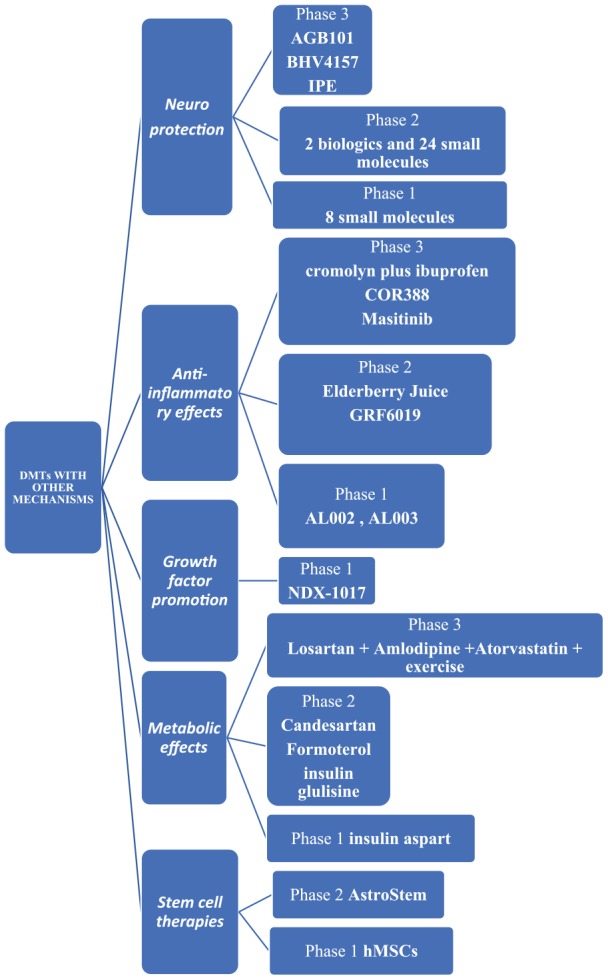
- Tau-directed agents remain earlier-stage: only 1 tau-related agent was in phase 2/3, 10 in phase 2, and 5 in phase 1; other DMT mechanisms include neuroprotection, anti-inflammatory effects, growth factor promotion, metabolic effects, and stem cell therapies.
Methods
Design: narrative review of current nonpharmacological and pharmacological AD management, FDA-approved medications, BPSD treatments, and phase 1–3 investigational agents.
- Data/sample: literature review plus a clinicaltrials.gov search for recruiting or active-but-not-recruiting phase 1–3 AD trials accessed August 19, 2019 (165 outcomes), and citation of the February 2019 AD drug development pipeline review (132 agents in 156 trials).
- Analysis: narrative synthesis and classification of agents by proposed mechanism—amyloid-related, tau-related, other DMT mechanisms, and symptomatic—without a formal systematic review or meta-analysis described.
Limitations
Stated: no effective treatment options and no approved DMTs exist; many trial failures are attributed to starting therapy too late, inappropriate drug doses, wrong treatment targets, inadequate understanding of AD pathophysiology, and variability in diagnostic markers and endpoints.
- Evident from the text: this is a narrative review without a stated systematic search strategy, inclusion/exclusion criteria, or risk-of-bias assessment.
- Evident from the text: pipeline findings are a cross-sectional 2019 snapshot and efficacy claims for many agents are brief, based on cited trials or conference reports rather than independent quantitative synthesis.
Model-written summary. Check it against the paper before relying on it.
Integrity signals
Registry
Cites
Statistics
Figures
Verification
Claims the paper makes
172 Not checked yet · 4 Own interpretation · 3 Sources not found · 1 Supported so far · 1 Partly supported · 1 Own result · 1 No basis given · accuracy not yet measured
The sources with a verdict support this claim; the rest weren’t checked yet, have no full text we could read, or their verdicts aren’t rated yet.
In the paper
“However, the clinical trials with the BACE inhibitors lanabecestat,32 verubecestat,33 and atabecestat34 have been recently discontinued due to unexpected difficulties.”
§ Current and Future Treatments in Alzheimer Disease: An Update > Current Landscape in Treatment Research for AD > Currently studied DMTs for AD
What the sources say
- Not checked yetcites [32] Burki T Alzheimer’s disease research: the future of BACE inhibitors. Lancet. 2018; 391: 2486. 29976459 source
- Supportedcites [33] Egan MF Kost J Voss T, et al Randomized trial of verubecestat for prodromal Alzheimer’s disease. N Engl J Med. 2019; 380: 1408- 1420. 30970186 PMC6776078 source
The Results (Patient Characteristics) state that the verubecestat trial was stopped in February 2018 on the data and safety monitoring committee’s recommendation because neither dose was expected to show superiority over placebo. This supports the verubecestat portion of the sentence, to which this citation is attached; it does not need to establish what happened in the separately cited lanabecestat and atabecestat trials. (LLM, conf=0.93)
- Not checked yetcites [34] Henley D Raghavan N Sperling R Aisen P Raman R Romano G Preliminary results of a trial of atabecestat in preclinical Alzheimer’s disease. N Engl J Med. 2019; 380: 1483- 1485. 30970197 source
plaindirect- Asserted: passes — The authors put it forward as true.
- Checkable: passes — It can be checked against evidence.
- Load-bearing: passes — The paper’s conclusions depend on it.
- Based: passes — The paper gives a reason why it holds.
The cited sources support only part of this claim — read each source’s verdict below.
In the paper
“One of them, compound γ-AA26, seems almost 100-fold as efficient as the compound 18 of the KLVFF in the inhibition of the aggregation of Aβ42.52”
§ Current and Future Treatments in Alzheimer Disease: An Update > Current Landscape in Treatment Research for AD > Currently studied DMTs for AD
What the sources say
- Partly supportedcites [52] Nimmagadda A Shi Y Cai J γ-AApeptides as a new strategy for therapeutic development. Curr Med Chem. 2019; 26: 2313- 2329. 29110596 PMC5936681 sourceExperimental — accuracy not yet measured
Section 6 reports that γ-AA26 was almost 100-fold as potent as KLVFF at inhibiting Aβ aggregation. It describes screening and binding tests with Aβ40, but does not specify Aβ42 for the inhibition comparison; it also calls the comparator P4 (KLVFF), not “compound 18.” (LLM, conf=0.88)
hedgeddirect- Asserted: passes — The authors put it forward as true.
- Checkable: passes — It can be checked against evidence.
- Load-bearing: unclear — It is unclear whether the paper’s conclusions depend on it.
- Based: passes — The paper gives a reason why it holds.
- Partly supported
A result the paper reports from its own data — it cites no other source for it, so there is none to check. The quote shows it is in the paper.
In the paper
“A search for phases 1, 2, and 3 “recruiting” or “active but not recruiting” clinical trials for AD in clinicaltrials.gov (accessed August 19, 2019) showed 165 outcomes.”
§ Current and Future Treatments in Alzheimer Disease: An Update > Current Landscape in Treatment Research for AD
plain- Asserted: passes — The authors put it forward as true.
- Checkable: passes — It can be checked against evidence.
- Load-bearing: unclear — It is unclear whether the paper’s conclusions depend on it.
- Based: passes — The paper gives a reason why it holds.
None of the sources cited for this claim have been checked yet.
In the paper
“However, despite all arduous research efforts, at the moment, there are no effective treatment options for the disease.3,4”
§ Current and Future Treatments in Alzheimer Disease: An Update > Introduction
What the sources say
- Not checked yetcites [3] Scheltens P Blennow K Breteler MMB, et al Alzheimer’s disease. Lancet. 2016; 388: 505- 517. 26921134 source
- Not checked yetcites [4] Cummings J Lee G Ritter A Sabbagh M Zhong K Alzheimer’s disease drug development pipeline: 2019. Alzheimers Dement. 2019; 5: 272- 293. PMC6617248 31334330 source
plain- Asserted: passes — The authors put it forward as true.
- Checkable: passes — It can be checked against evidence.
- Load-bearing: passes — The paper’s conclusions depend on it.
- Based: passes — The paper gives a reason why it holds.
In the paper
“Initiation of AChEI treatment as soon as possible after the diagnosis is preferred as patients who started the AChEI 6 months later showed more rapid cognitive decline than those who started the drug immediately.17”
§ Current and Future Treatments in Alzheimer Disease: An Update > Introduction > Current management of AD
What the sources say
- Not checked yetcites [17] Farlow M Anand R Messina J Hartman R Jr Veach J A 52-week study of the efficacy of rivastigmine in patients with mild to moderately severe Alzheimer’s disease. Eur Neurol. 2000; 44: 236- 241. 11096224 source
plaindirect- Asserted: passes — The authors put it forward as true.
- Checkable: passes — It can be checked against evidence.
- Load-bearing: passes — The paper’s conclusions depend on it.
- Based: passes — The paper gives a reason why it holds.
In the paper
“The elements of the cascade include local inflammation, oxidation, excitoxicity (excessive glutamate), and tau hyperphosphorylation.5”
§ Current and Future Treatments in Alzheimer Disease: An Update > Introduction
What the sources say
- Not checked yetcites [5] Yiannopoulou KG Papageorgiou SG Current and future treatments for Alzheimer’s disease. Ther Adv Neurol Disord. 2013; 6: 19- 33. 23277790 PMC3526946 source
plain- Asserted: passes — The authors put it forward as true.
- Checkable: passes — It can be checked against evidence.
- Load-bearing: unclear — It is unclear whether the paper’s conclusions depend on it.
- Based: passes — The paper gives a reason why it holds.
In the paper
“Progressive neuronal destruction leads to shortage and imbalance between various neurotransmitters (eg, acetylcholine, dopamine, serotonin) and to the cognitive deficiencies seen in AD.5”
§ Current and Future Treatments in Alzheimer Disease: An Update > Introduction
What the sources say
- Not checked yetcites [5] Yiannopoulou KG Papageorgiou SG Current and future treatments for Alzheimer’s disease. Ther Adv Neurol Disord. 2013; 6: 19- 33. 23277790 PMC3526946 source
plaindirect- Asserted: passes — The authors put it forward as true.
- Checkable: passes — It can be checked against evidence.
- Load-bearing: unclear — It is unclear whether the paper’s conclusions depend on it.
- Based: passes — The paper gives a reason why it holds.
In the paper
“The basic pathophysiology and neuropathology of AD that drives the current research suggests that the primary histopathologic lesions of AD are the extracellular amyloid plaques and the intracellular Tau neurofibrillary tangles (NFTs).5”
§ Current and Future Treatments in Alzheimer Disease: An Update > Introduction
What the sources say
- Not checked yetcites [5] Yiannopoulou KG Papageorgiou SG Current and future treatments for Alzheimer’s disease. Ther Adv Neurol Disord. 2013; 6: 19- 33. 23277790 PMC3526946 source
hedged- Asserted: passes — The authors put it forward as true.
- Checkable: passes — It can be checked against evidence.
- Load-bearing: passes — The paper’s conclusions depend on it.
- Based: passes — The paper gives a reason why it holds.
None of the sources cited for this claim have been checked yet.
In the paper
“All 3 AChEIs have proved their treatment benefits in delaying decline, stabilizing, or even improving cognition and activities of daily living in randomized placebo-controlled trials up to 52 weeks duration.10,18”
§ Current and Future Treatments in Alzheimer Disease: An Update > Introduction > Current management of AD
What the sources say
- Not checked yetcites [10] Atri A Current and future treatments in Alzheimer’s disease. Semin Neurol. 2019; 39: 227- 240. 30925615 source
- Not checked yetcites [18] Rountree SD Atri A Lopez OL Doody RS Effectiveness of antidementia drugs in delaying Alzheimer disease progression. Alzheimers Dement. 2013; 9: 338- 345. 23102979 source
boosteddirect- Asserted: passes — The authors put it forward as true.
- Checkable: passes — It can be checked against evidence.
- Load-bearing: passes — The paper’s conclusions depend on it.
- Based: passes — The paper gives a reason why it holds.
In the paper
“In clinical trials, both Aβ and tau are prime targets for disease-modifying treatments (DMTs) in AD.”
§ Current and Future Treatments in Alzheimer Disease: An Update > Introduction
What the sources say
- Not checked yetcites [7] Hampel H Mesulam MM Cuello AC, et al The cholinergic system in the pathophysiology and treatment of Alzheimer’s disease. Brain. 2018; 141: 1917- 1933. 29850777 PMC6022632 source
plain- Asserted: passes — The authors put it forward as true.
- Checkable: passes — It can be checked against evidence.
- Load-bearing: passes — The paper’s conclusions depend on it.
- Based: passes — The paper gives a reason why it holds.
- It may state two separate claims as one. 78
- Probably not a substantial claim. 16
- The quote only partly states this claim. 1
None of the sources cited for this claim have been checked yet.
In the paper
“Thus, AChEIs are contraindicated in conditions including severe cardiac arrhythmias, especially bradycardia or syncope. They are also contraindicated in active peptic ulcer or gastrointestinal bleeding history and uncontrolled seizures.”
§ Current and Future Treatments in Alzheimer Disease: An Update > Introduction > Current management of AD
What the sources say
- Not checked yetcites [17] Farlow M Anand R Messina J Hartman R Jr Veach J A 52-week study of the efficacy of rivastigmine in patients with mild to moderately severe Alzheimer’s disease. Eur Neurol. 2000; 44: 236- 241. 11096224
- Not checked yetcites [18] Rountree SD Atri A Lopez OL Doody RS Effectiveness of antidementia drugs in delaying Alzheimer disease progression. Alzheimers Dement. 2013; 9: 338- 345. 23102979 source
plain- Asserted: passes — The authors put it forward as true.
- Checkable: passes — It can be checked against evidence.
- Load-bearing: unclear — It is unclear whether the paper’s conclusions depend on it.
- Based: passes — The paper gives a reason why it holds.
It may state two separate claims as one.
In the paper
“It is the forming of amyloid oligomers to which neurotoxicity is mainly attributed and initiates the amyloid cascade.”
§ Current and Future Treatments in Alzheimer Disease: An Update > Introduction
What the sources say
- Not checked yetcites [5] Yiannopoulou KG Papageorgiou SG Current and future treatments for Alzheimer’s disease. Ther Adv Neurol Disord. 2013; 6: 19- 33. 23277790 PMC3526946 source
plaindirect- Asserted: passes — The authors put it forward as true.
- Checkable: passes — It can be checked against evidence.
- Load-bearing: unclear — It is unclear whether the paper’s conclusions depend on it.
- Based: passes — The paper gives a reason why it holds.
It may state two separate claims as one.
In the paper
“Memantine binds preferentially to open NMDA receptor–operated calcium channels blocking NMDA-mediated ion flux and ameliorating the dangerous effects of pathologically elevated glutamate levels that lead to neuronal dysfunction.8”
§ Current and Future Treatments in Alzheimer Disease: An Update > Introduction
What the sources say
- Not checked yetcites [8] Matsunaga S Kishi T Iwata N Memantine monotherapy for Alzheimer’s disease: a systematic review and meta-analysis. PLoS ONE. 2015; 10:e0123289. PMC4393306 25860130
plaindirect- Asserted: passes — The authors put it forward as true.
- Checkable: passes — It can be checked against evidence.
- Load-bearing: unclear — It is unclear whether the paper’s conclusions depend on it.
- Based: passes — The paper gives a reason why it holds.
It may state two separate claims as one.
In the paper
“Further decline occurs, but even temporary discontinuation of these drugs results in rapid decline and is associated with greater risk of nursing home placement.16”
§ Current and Future Treatments in Alzheimer Disease: An Update > Introduction > Current management of AD
What the sources say
- Not checked yetcites [16] Howard R McShane R Lindesay J, et al Nursing home placement in the donepezil and memantine in moderate to severe Alzheimer’s disease (DOMINO-AD) trial: secondary and post-hoc analyses. Lancet Neurol. 2015; 14: 1171- 1181. 26515660
plaindirect- Asserted: passes — The authors put it forward as true.
- Checkable: passes — It can be checked against evidence.
- Load-bearing: passes — The paper’s conclusions depend on it.
- Based: passes — The paper gives a reason why it holds.
It may state two separate claims as one.
In the paper
“Memantine is a noncompetitive low-affinity NMDA-receptor open-channel blocker and affects glutamatergic transmission.5”
§ Current and Future Treatments in Alzheimer Disease: An Update > Introduction > Current management of AD
What the sources say
- Not checked yetcites [5] Yiannopoulou KG Papageorgiou SG Current and future treatments for Alzheimer’s disease. Ther Adv Neurol Disord. 2013; 6: 19- 33. 23277790 PMC3526946 source
plaindirect- Asserted: passes — The authors put it forward as true.
- Checkable: passes — It can be checked against evidence.
- Load-bearing: unclear — It is unclear whether the paper’s conclusions depend on it.
- Based: passes — The paper gives a reason why it holds.
It may state two separate claims as one.
In the paper
“Donepezil and rivastigmine have been approved by FDA for mild, moderate, and severe AD, whereas galantamine for mild and moderate AD.18”
§ Current and Future Treatments in Alzheimer Disease: An Update > Introduction > Current management of AD
What the sources say
- Not checked yetcites [18] Rountree SD Atri A Lopez OL Doody RS Effectiveness of antidementia drugs in delaying Alzheimer disease progression. Alzheimers Dement. 2013; 9: 338- 345. 23102979 source
plain- Asserted: passes — The authors put it forward as true.
- Checkable: passes — It can be checked against evidence.
- Load-bearing: unclear — It is unclear whether the paper’s conclusions depend on it.
- Based: passes — The paper gives a reason why it holds.
It may state two separate claims as one.
A conclusion the paper draws from its own results — it cites no other source for it, so there is none to check. The quote shows it is in the paper.
In the paper
“Thus, AChEIs enhance central cholinergic neurotransmission and finally tend to mitigate decline in cognition at least during the first year of treatment.”
§ Current and Future Treatments in Alzheimer Disease: An Update > Introduction > Current management of AD
hedgedconditional- Asserted: passes — The authors put it forward as true.
- Checkable: passes — It can be checked against evidence.
- Load-bearing: passes — The paper’s conclusions depend on it.
- Based: passes — The paper gives a reason why it holds.
It may state two separate claims as one.
In the paper
“Although in the amyloid hypothesis, tau hyperphosphorylation was thought to be a downstream event of Aβ deposition, it is equally probable that tau and Aβ act in parallel pathways causing AD and enhancing each other’s toxic effects.3”
§ Current and Future Treatments in Alzheimer Disease: An Update > Introduction
What the sources say
- Not checked yetcites [3] Scheltens P Blennow K Breteler MMB, et al Alzheimer’s disease. Lancet. 2016; 388: 505- 517. 26921134 source
hedgeddirect- Asserted: passes — The authors put it forward as true.
- Checkable: passes — It can be checked against evidence.
- Load-bearing: unclear — It is unclear whether the paper’s conclusions depend on it.
- Based: passes — The paper gives a reason why it holds.
It may state two separate claims as one.
In the paper
“According to the “amyloid hypothesis” Aβ production in the brain initiates a cascade of events leading to the clinical syndrome of AD.”
§ Current and Future Treatments in Alzheimer Disease: An Update > Introduction
What the sources say
- Not checked yetcites [5] Yiannopoulou KG Papageorgiou SG Current and future treatments for Alzheimer’s disease. Ther Adv Neurol Disord. 2013; 6: 19- 33. 23277790 PMC3526946 source
plaindirect- Asserted: passes — The authors put it forward as true.
- Checkable: passes — It can be checked against evidence.
- Load-bearing: fails — The paper’s conclusions may not depend on it.
- Based: passes — The paper gives a reason why it holds.
Probably not a substantial claim. The paper’s conclusions may not depend on it.
None of the sources cited for this claim have been checked yet.
In the paper
“Pharmacokinetic characteristics differ among AChEIs: the primary route of elimination for donepezil and galantamine is hepatic metabolism, whereas for rivastigmine is liver and intestine metabolism.”
§ Current and Future Treatments in Alzheimer Disease: An Update > Introduction > Current management of AD
What the sources say
- Not checked yetcites [10] Atri A Current and future treatments in Alzheimer’s disease. Semin Neurol. 2019; 39: 227- 240. 30925615 source
- Not checked yetcites [17] Farlow M Anand R Messina J Hartman R Jr Veach J A 52-week study of the efficacy of rivastigmine in patients with mild to moderately severe Alzheimer’s disease. Eur Neurol. 2000; 44: 236- 241. 11096224
- Not checked yetcites [18] Rountree SD Atri A Lopez OL Doody RS Effectiveness of antidementia drugs in delaying Alzheimer disease progression. Alzheimers Dement. 2013; 9: 338- 345. 23102979 source
plain- Asserted: passes — The authors put it forward as true.
- Checkable: passes — It can be checked against evidence.
- Load-bearing: unclear — It is unclear whether the paper’s conclusions depend on it.
- Based: passes — The paper gives a reason why it holds.
It may state two separate claims as one.
In the paper
“From this point of view, AD could be prevented or effectively treated by decreasing the production of Aβ and tau; preventing aggregation or misfolding of these proteins; neutralizing or removing the toxic aggregate or misfolded forms of these proteins; or a combination of these modalities.7”
§ Current and Future Treatments in Alzheimer Disease: An Update > Introduction
What the sources say
- Not checked yetcites [7] Hampel H Mesulam MM Cuello AC, et al The cholinergic system in the pathophysiology and treatment of Alzheimer’s disease. Brain. 2018; 141: 1917- 1933. 29850777 PMC6022632 source
hedgedconditional- Asserted: passes — The authors put it forward as true.
- Checkable: passes — It can be checked against evidence.
- Load-bearing: passes — The paper’s conclusions depend on it.
- Based: passes — The paper gives a reason why it holds.
It may state two separate claims as one.
In the paper
“The AChEIs increase the availability of acetylcholine at synapses and have been proven clinically useful in delaying the cognitive decline in AD.7”
§ Current and Future Treatments in Alzheimer Disease: An Update > Introduction
What the sources say
- Not checked yetcites [7] Hampel H Mesulam MM Cuello AC, et al The cholinergic system in the pathophysiology and treatment of Alzheimer’s disease. Brain. 2018; 141: 1917- 1933. 29850777 PMC6022632 source
boosteddirect- Asserted: passes — The authors put it forward as true.
- Checkable: passes — It can be checked against evidence.
- Load-bearing: passes — The paper’s conclusions depend on it.
- Based: passes — The paper gives a reason why it holds.
It may state two separate claims as one.
None of the sources cited for this claim have been checked yet.
In the paper
“Donepezil and galantamine inhibit selectively and reversibly the acetylcholinesterase, whereas rivastigmine is a “pseudo-irreversible” inhibitor of acetylcholinesterase and butyrylcholinesterase.”
§ Current and Future Treatments in Alzheimer Disease: An Update > Introduction > Current management of AD
What the sources say
- Not checked yetcites [10] Atri A Current and future treatments in Alzheimer’s disease. Semin Neurol. 2019; 39: 227- 240. 30925615 source
- Not checked yetcites [17] Farlow M Anand R Messina J Hartman R Jr Veach J A 52-week study of the efficacy of rivastigmine in patients with mild to moderately severe Alzheimer’s disease. Eur Neurol. 2000; 44: 236- 241. 11096224
- Not checked yetcites [18] Rountree SD Atri A Lopez OL Doody RS Effectiveness of antidementia drugs in delaying Alzheimer disease progression. Alzheimers Dement. 2013; 9: 338- 345. 23102979 source
plaindirect- Asserted: passes — The authors put it forward as true.
- Checkable: passes — It can be checked against evidence.
- Load-bearing: unclear — It is unclear whether the paper’s conclusions depend on it.
- Based: passes — The paper gives a reason why it holds.
It may state two separate claims as one.
None of the sources cited for this claim have been checked yet.
In the paper
“The AChEIs may also trigger bradycardia and increase the risk of syncope.”
§ Current and Future Treatments in Alzheimer Disease: An Update > Introduction > Current management of AD
What the sources say
- Not checked yetcites [17] Farlow M Anand R Messina J Hartman R Jr Veach J A 52-week study of the efficacy of rivastigmine in patients with mild to moderately severe Alzheimer’s disease. Eur Neurol. 2000; 44: 236- 241. 11096224
- Not checked yetcites [18] Rountree SD Atri A Lopez OL Doody RS Effectiveness of antidementia drugs in delaying Alzheimer disease progression. Alzheimers Dement. 2013; 9: 338- 345. 23102979 source
hedgedconditional- Asserted: passes — The authors put it forward as true.
- Checkable: passes — It can be checked against evidence.
- Load-bearing: unclear — It is unclear whether the paper’s conclusions depend on it.
- Based: passes — The paper gives a reason why it holds.
It may state two separate claims as one.
In the paper
“The most popular and broadly accepted explanations for the multiple failures of clinical trials of DMT agents for AD include the too late starting of therapies in disease development, the inappropriate drug doses, the wrong main target of the treatment, and mainly an inadequate understanding of the pathophysiology of AD.35”
§ Current and Future Treatments in Alzheimer Disease: An Update > Current Landscape in Treatment Research for AD
What the sources say
- Not checked yetcites [35] Gauthier S Albert M Fox N, et al Why has therapy development for dementia failed in the last two decades. Alzheimers Dement. 2016; 12: 60- 64. 26710325
plaindirect- Asserted: passes — The authors put it forward as true.
- Checkable: passes — It can be checked against evidence.
- Load-bearing: unclear — It is unclear whether the paper’s conclusions depend on it.
- Based: passes — The paper gives a reason why it holds.
It may state two separate claims as one.
In the paper
“The DMT agents were further separated into small molecules or biologics (monoclonal antibodies [mAbs] and other immunotherapies).”
§ Current and Future Treatments in Alzheimer Disease: An Update > Current Landscape in Treatment Research for AD
What the sources say
- Not checked yetcites [4] Cummings J Lee G Ritter A Sabbagh M Zhong K Alzheimer’s disease drug development pipeline: 2019. Alzheimers Dement. 2019; 5: 272- 293. PMC6617248 31334330 source
plain- Asserted: passes — The authors put it forward as true.
- Checkable: passes — It can be checked against evidence.
- Load-bearing: fails — The paper’s conclusions may not depend on it.
- Based: passes — The paper gives a reason why it holds.
Probably not a substantial claim. The paper’s conclusions may not depend on it.
In the paper
“The DMT agents were also classified according to their potential MOA as amyloid targeting, as tau-related targeting, and as having other MOA such as anti-inflammatory or metabolic protection, neuroprotection, and growth factor support.4”
§ Current and Future Treatments in Alzheimer Disease: An Update > Current Landscape in Treatment Research for AD
What the sources say
- Not checked yetcites [4] Cummings J Lee G Ritter A Sabbagh M Zhong K Alzheimer’s disease drug development pipeline: 2019. Alzheimers Dement. 2019; 5: 272- 293. PMC6617248 31334330 source
plain- Asserted: passes — The authors put it forward as true.
- Checkable: passes — It can be checked against evidence.
- Load-bearing: fails — The paper’s conclusions may not depend on it.
- Based: passes — The paper gives a reason why it holds.
Probably not a substantial claim. The paper’s conclusions may not depend on it.
In the paper
“Symptomatic agents are supposed to show symptomatic benefits over weeks to many months in cognition improvement or BPSD elimination.10”
§ Current and Future Treatments in Alzheimer Disease: An Update > Current Landscape in Treatment Research for AD
What the sources say
- Not checked yetcites [10] Atri A Current and future treatments in Alzheimer’s disease. Semin Neurol. 2019; 39: 227- 240. 30925615 source
plaindirect- Asserted: passes — The authors put it forward as true.
- Checkable: passes — It can be checked against evidence.
- Load-bearing: fails — The paper’s conclusions may not depend on it.
- Based: passes — The paper gives a reason why it holds.
Probably not a substantial claim. The paper’s conclusions may not depend on it.
In the paper
“In addition, the use of clinical trial simulators, Bayesian statistics, and modifiable trial designs is strongly suggested.4”
§ Current and Future Treatments in Alzheimer Disease: An Update > Current Landscape in Treatment Research for AD
What the sources say
- Not checked yetcites [4] Cummings J Lee G Ritter A Sabbagh M Zhong K Alzheimer’s disease drug development pipeline: 2019. Alzheimers Dement. 2019; 5: 272- 293. PMC6617248 31334330 source
boosted- Asserted: passes — The authors put it forward as true.
- Checkable: passes — It can be checked against evidence.
- Load-bearing: fails — The paper’s conclusions may not depend on it.
- Based: passes — The paper gives a reason why it holds.
Probably not a substantial claim. The paper’s conclusions may not depend on it.
In the paper
“Given the fact that longer trial durations increase the probability of detecting a significant effect but at the same time increase tremendously the costs, the proposed solution seems to be the use of clinical trial simulators.28”
§ Current and Future Treatments in Alzheimer Disease: An Update > Current Landscape in Treatment Research for AD
What the sources say
- Not checked yetcites [28] Anderson RM Hadjichrysanthou C Evans S Wong MM Why do so many clinical trials of therapies for Alzheimer’s disease fail? Lancet. 2017; 390: 2327- 2329. 29185425 source
plaindirect- Asserted: passes — The authors put it forward as true.
- Checkable: passes — It can be checked against evidence.
- Load-bearing: passes — The paper’s conclusions depend on it.
- Based: passes — The paper gives a reason why it holds.
It may state two separate claims as one.
In the paper
“A novel approach to the problem seems more technical and mathematical than biological and suggests that the selected trials’ clinical endpoint may be extremely premature, and additionally, the variability in diagnostic markers and end points may result in inaccurate diagnosis of patients’ disease state and is finally a definite source of errors.28”
§ Current and Future Treatments in Alzheimer Disease: An Update > Current Landscape in Treatment Research for AD
What the sources say
- Not checked yetcites [28] Anderson RM Hadjichrysanthou C Evans S Wong MM Why do so many clinical trials of therapies for Alzheimer’s disease fail? Lancet. 2017; 390: 2327- 2329. 29185425 source
hedgedconditional- Asserted: passes — The authors put it forward as true.
- Checkable: passes — It can be checked against evidence.
- Load-bearing: passes — The paper’s conclusions depend on it.
- Based: passes — The paper gives a reason why it holds.
Probably not a substantial claim. It may state two separate claims as one.
In the paper
“They can also help in the perfecting of the design of the study; hence, they may augment the probability of success of estimated new drugs or save invaluable time and resources, by indicating earlier the forthcoming failure of any inappropriate therapy.37”
§ Current and Future Treatments in Alzheimer Disease: An Update > Current Landscape in Treatment Research for AD
What the sources say
- Not checked yetcites [37] Hadjichrysanthou C Ower AK de Wolf F Anderson RM The development of a stochastic mathematical model of Alzheimer’s disease to help improve the design of clinical trials of potential treatments. PLoS ONE. 2018; 13:e0190615. PMC5788351 29377891
hedgedconditional- Asserted: passes — The authors put it forward as true.
- Checkable: passes — It can be checked against evidence.
- Load-bearing: unclear — It is unclear whether the paper’s conclusions depend on it.
- Based: passes — The paper gives a reason why it holds.
It may state two separate claims as one.
In the paper
“The crucial step in AD pathogenesis is the production of amyloid (Aβ), which forms SPs (insoluble and proteolysis-resistant fibrils).”
§ Current and Future Treatments in Alzheimer Disease: An Update > Current Landscape in Treatment Research for AD > Currently studied DMTs for AD
What the sources say
- Not checked yetcites [5] Yiannopoulou KG Papageorgiou SG Current and future treatments for Alzheimer’s disease. Ther Adv Neurol Disord. 2013; 6: 19- 33. 23277790 PMC3526946 source
plaindirect- Asserted: passes — The authors put it forward as true.
- Checkable: passes — It can be checked against evidence.
- Load-bearing: passes — The paper’s conclusions depend on it.
- Based: passes — The paper gives a reason why it holds.
It may state two separate claims as one.
In the paper
“Selective serotonin reuptake inhibitors are preferred for treating depression and anxiety.”
§ Current and Future Treatments in Alzheimer Disease: An Update > Introduction > Current management of AD
What the sources say
- Not checked yetcites [21] Bessey LJ Walaszek A Management of behavioral and psychological symptoms of dementia. Curr Psychiatry Rep. 2019; 21: 66. 31264056
plain- Asserted: passes — The authors put it forward as true.
- Checkable: passes — It can be checked against evidence.
- Load-bearing: fails — The paper’s conclusions may not depend on it.
- Based: passes — The paper gives a reason why it holds.
Probably not a substantial claim. The paper’s conclusions may not depend on it.
In the paper
“The tested agents are classified as DMTs (73%), symptomatic cognitive enhancers (13%), and symptomatic for the treatment of BPSDs (11%).4”
§ Current and Future Treatments in Alzheimer Disease: An Update > Current Landscape in Treatment Research for AD
What the sources say
- Not checked yetcites [4] Cummings J Lee G Ritter A Sabbagh M Zhong K Alzheimer’s disease drug development pipeline: 2019. Alzheimers Dement. 2019; 5: 272- 293. PMC6617248 31334330 source
plain- Asserted: passes — The authors put it forward as true.
- Checkable: passes — It can be checked against evidence.
- Load-bearing: unclear — It is unclear whether the paper’s conclusions depend on it.
- Based: passes — The paper gives a reason why it holds.
It may state two separate claims as one.
In the paper
“The APP cleavage by α-secretase leads to nonamyloidogenic pathway, whereas APP cleavage by β-secretase (BACE1) leads to amyloidogenic pathway.”
§ Current and Future Treatments in Alzheimer Disease: An Update > Current Landscape in Treatment Research for AD > Currently studied DMTs for AD
What the sources say
- Not checked yetcites [5] Yiannopoulou KG Papageorgiou SG Current and future treatments for Alzheimer’s disease. Ther Adv Neurol Disord. 2013; 6: 19- 33. 23277790 PMC3526946 source
plaindirect- Asserted: passes — The authors put it forward as true.
- Checkable: passes — It can be checked against evidence.
- Load-bearing: passes — The paper’s conclusions depend on it.
- Based: passes — The paper gives a reason why it holds.
It may state two separate claims as one.
In the paper
“These simulators are constructed with mathematical, computational, and statistical tools and can predict the likelihood that a strategy and clinical end point selection of a given trial are proper or not, before the initiation of the trial.36”
§ Current and Future Treatments in Alzheimer Disease: An Update > Current Landscape in Treatment Research for AD
What the sources say
- Not checked yetcites [36] Romero K Ito K Rogers JA, et al The future is now: model-based clinical trial design for Alzheimer’s disease. Clin Pharmacol Ther. 2015; 97: 210- 214. 25669145 PMC6463482
plaindirect- Asserted: passes — The authors put it forward as true.
- Checkable: passes — It can be checked against evidence.
- Load-bearing: passes — The paper’s conclusions depend on it.
- Based: passes — The paper gives a reason why it holds.
It may state two separate claims as one.
None of the sources cited for this claim have been checked yet.
In the paper
“No new drug has been approved by FDA for AD since 2003 and there are no approved DMTs for AD, despite many long and expensive trials.22,28”
§ Current and Future Treatments in Alzheimer Disease: An Update > Current Landscape in Treatment Research for AD
What the sources say
- Not checked yetcites [22] Hukins D Macleod U Boland JW Identifying potentially inappropriate prescribing in older people with dementia: a systematic review. Eur J Clin Pharmacol. 2019; 75: 467- 481. 30610274
- Not checked yetcites [28] Anderson RM Hadjichrysanthou C Evans S Wong MM Why do so many clinical trials of therapies for Alzheimer’s disease fail? Lancet. 2017; 390: 2327- 2329. 29185425 source
plain- Asserted: passes — The authors put it forward as true.
- Checkable: passes — It can be checked against evidence.
- Load-bearing: passes — The paper’s conclusions depend on it.
- Based: passes — The paper gives a reason why it holds.
It may state two separate claims as one.
In the paper
“The National Institute on Aging and the Alzheimer’s Association (NIA-AA) proposed a new framework for research,39 which requires the application of amyloid, tau, and neurodegeneration biomarkers to clinical trials, succeeds in precise classification of patients in AD stages, and can be used to assist clinical trials design.”
§ Current and Future Treatments in Alzheimer Disease: An Update > Current Landscape in Treatment Research for AD
What the sources say
- Not checked yetcites [39] Jack CR Jr Bennett DA Blennow K, et al NIA-AA research framework: toward a biological definition of Alzheimer’s disease. Alzheimers Dement. 2018; 14: 535- 562. 29653606 PMC5958625 source
plaindirect- Asserted: passes — The authors put it forward as true.
- Checkable: passes — It can be checked against evidence.
- Load-bearing: unclear — It is unclear whether the paper’s conclusions depend on it.
- Based: passes — The paper gives a reason why it holds.
It may state two separate claims as one.
In the paper
“Consequently, current guidance provided by the FDA for AD clinical trials further includes use of fluid or neuroradiological biomarkers in disease staging for preclinical and prodromal AD trials and of a single primary outcome in prodromal AD trials.”
§ Current and Future Treatments in Alzheimer Disease: An Update > Current Landscape in Treatment Research for AD
What the sources say
- Not checked yetcites [4] Cummings J Lee G Ritter A Sabbagh M Zhong K Alzheimer’s disease drug development pipeline: 2019. Alzheimers Dement. 2019; 5: 272- 293. PMC6617248 31334330 source
plain- Asserted: passes — The authors put it forward as true.
- Checkable: passes — It can be checked against evidence.
- Load-bearing: unclear — It is unclear whether the paper’s conclusions depend on it.
- Based: passes — The paper gives a reason why it holds.
It may state two separate claims as one.
In the paper
“The last annual review of the drug development pipeline for AD examined clinicaltrials.gov in February, 2019 (132 agents in 156 trials) and provides information and conclusions available at that time: 28 drugs in 42 clinical trials in phase 3 trials, 74 drugs in 83 phase 2 trials, and 30 drugs in 31 phase 1 trials.4”
§ Current and Future Treatments in Alzheimer Disease: An Update > Current Landscape in Treatment Research for AD
What the sources say
- Not checked yetcites [4] Cummings J Lee G Ritter A Sabbagh M Zhong K Alzheimer’s disease drug development pipeline: 2019. Alzheimers Dement. 2019; 5: 272- 293. PMC6617248 31334330 source
plain- Asserted: passes — The authors put it forward as true.
- Checkable: passes — It can be checked against evidence.
- Load-bearing: unclear — It is unclear whether the paper’s conclusions depend on it.
- Based: passes — The paper gives a reason why it holds.
It may state two separate claims as one.
None of the sources cited for this claim have been checked yet.
In the paper
“Their combination benefits patients with usually additive effects, without any increase in adverse effects.14,15”
§ Current and Future Treatments in Alzheimer Disease: An Update > Introduction > Current management of AD
What the sources say
- Not checked yetcites [14] Na R Yang JH Yeom Y, et al A systematic review and meta-analysis of nonpharmacological interventions for moderate to severe dementia. Psychiatry Investig. 2019; 16: 325- 335. PMC6539264 31132836
- Not checked yetcites [15] Kishita N Backhouse T Mioshi E Nonpharmacological interventions to improve depression, anxiety, and quality of life (QoL) in people with dementia: an overview of systematic reviews. J Geriatr Psychiatry Neurol. 2019; 33: 28- 41. 31203712 source
plaindirect- Asserted: passes — The authors put it forward as true.
- Checkable: passes — It can be checked against evidence.
- Load-bearing: unclear — It is unclear whether the paper’s conclusions depend on it.
- Based: passes — The paper gives a reason why it holds.
It may state two separate claims as one.
In the paper
“Two BACE inhibitors are still elaborated: elenbecestat (E2609) in phase 2 and umibecestat (CNP520) in phase 3.4”
§ Current and Future Treatments in Alzheimer Disease: An Update > Current Landscape in Treatment Research for AD > Currently studied DMTs for AD
What the sources say
- Not checked yetcites [4] Cummings J Lee G Ritter A Sabbagh M Zhong K Alzheimer’s disease drug development pipeline: 2019. Alzheimers Dement. 2019; 5: 272- 293. PMC6617248 31334330 source
plain- Asserted: passes — The authors put it forward as true.
- Checkable: passes — It can be checked against evidence.
- Load-bearing: unclear — It is unclear whether the paper’s conclusions depend on it.
- Based: passes — The paper gives a reason why it holds.
It may state two separate claims as one.
None of the sources cited for this claim have been checked yet.
In the paper
“The phase 3 lanabecestat trial was discontinued due to lack of efficacy, whereas verubecestat and atabecestat trials were ceased due to ineffectiveness, as well as safety reasons (rash, falls, liver toxicity, and neuropsychiatric symptoms).10,32-34”
§ Current and Future Treatments in Alzheimer Disease: An Update > Current Landscape in Treatment Research for AD > Currently studied DMTs for AD
What the sources say
- Not checked yetcites [10] Atri A Current and future treatments in Alzheimer’s disease. Semin Neurol. 2019; 39: 227- 240. 30925615 source
- Not checked yetcites [32] Burki T Alzheimer’s disease research: the future of BACE inhibitors. Lancet. 2018; 391: 2486. 29976459 source
- Not checked yetcites [33] Egan MF Kost J Voss T, et al Randomized trial of verubecestat for prodromal Alzheimer’s disease. N Engl J Med. 2019; 380: 1408- 1420. 30970186 PMC6776078 source
- Not checked yetcites [34] Henley D Raghavan N Sperling R Aisen P Raman R Romano G Preliminary results of a trial of atabecestat in preclinical Alzheimer’s disease. N Engl J Med. 2019; 380: 1483- 1485. 30970197 source
plaindirect- Asserted: passes — The authors put it forward as true.
- Checkable: passes — It can be checked against evidence.
- Load-bearing: passes — The paper’s conclusions depend on it.
- Based: passes — The paper gives a reason why it holds.
It may state two separate claims as one.
In the paper
“APH-1105 is delivered intranasally and is assessed in mild to moderate AD.4”
§ Current and Future Treatments in Alzheimer Disease: An Update > Current Landscape in Treatment Research for AD > Currently studied DMTs for AD
What the sources say
- Not checked yetcites [4] Cummings J Lee G Ritter A Sabbagh M Zhong K Alzheimer’s disease drug development pipeline: 2019. Alzheimers Dement. 2019; 5: 272- 293. PMC6617248 31334330 source
plain- Asserted: passes — The authors put it forward as true.
- Checkable: passes — It can be checked against evidence.
- Load-bearing: unclear — It is unclear whether the paper’s conclusions depend on it.
- Based: passes — The paper gives a reason why it holds.
It may state two separate claims as one.
In the paper
“Etazolate is currently evaluated in animal studies for its preventive effect in post-traumatic stress disorder.49”
§ Current and Future Treatments in Alzheimer Disease: An Update > Current Landscape in Treatment Research for AD > Currently studied DMTs for AD
What the sources say
- Not checked yetcites [49] Alzoubi KH Al Subeh ZY Khabour OF Molecular targets for the interactive effect of etazolate during post-traumatic stress disorder: role of oxidative stress, BDNF and histones. Behav Brain Res. 2019; 369:111930. 31047921
plaindirect- Asserted: passes — The authors put it forward as true.
- Checkable: passes — It can be checked against evidence.
- Load-bearing: fails — The paper’s conclusions may not depend on it.
- Based: passes — The paper gives a reason why it holds.
Probably not a substantial claim. The paper’s conclusions may not depend on it.
In the paper
“Aβ42 is the most aggregation-prone form and has the tendency to cluster into oligomers.”
§ Current and Future Treatments in Alzheimer Disease: An Update > Current Landscape in Treatment Research for AD > Currently studied DMTs for AD
What the sources say
- Not checked yetcites [5] Yiannopoulou KG Papageorgiou SG Current and future treatments for Alzheimer’s disease. Ther Adv Neurol Disord. 2013; 6: 19- 33. 23277790 PMC3526946 source
plaindirect- Asserted: passes — The authors put it forward as true.
- Checkable: passes — It can be checked against evidence.
- Load-bearing: unclear — It is unclear whether the paper’s conclusions depend on it.
- Based: passes — The paper gives a reason why it holds.
It may state two separate claims as one.
In the paper
“Etazolate (EHT0202) stimulates the nonamyloidogenic α-secretase pathway acting as a selective modulator of GABA receptors.”
§ Current and Future Treatments in Alzheimer Disease: An Update > Current Landscape in Treatment Research for AD > Currently studied DMTs for AD
What the sources say
- Not checked yetcites [48] Vellas B Sol O Snyder PJ, et al EHT0202 in Alzheimer’s disease: a 3-month, randomized, placebo-controlled, double-blind study. Curr Alzheimer Res. 2011; 8: 203- 212. 21222604 source
plaindirect- Asserted: passes — The authors put it forward as true.
- Checkable: passes — It can be checked against evidence.
- Load-bearing: unclear — It is unclear whether the paper’s conclusions depend on it.
- Based: passes — The paper gives a reason why it holds.
It may state two separate claims as one.
In the paper
“The KLVFF compound that mainly prevents the aggregation of Aβ42 and can also dissolve the oligomerics to a limited extend is the final compound 18, which is resilient in proteolytic decomposition.51”
§ Current and Future Treatments in Alzheimer Disease: An Update > Current Landscape in Treatment Research for AD > Currently studied DMTs for AD
What the sources say
- Not checked yetcites [51] Stark T Lieblein T Pohland M, et al Peptidomimetics that inhibit and partially reverse the aggregation of Aβ1-42. Biochemistry. 2017; 56: 4840- 4849. 28841311 source
plaindirect- Asserted: passes — The authors put it forward as true.
- Checkable: passes — It can be checked against evidence.
- Load-bearing: unclear — It is unclear whether the paper’s conclusions depend on it.
- Based: passes — The paper gives a reason why it holds.
It may state two separate claims as one.
In the paper
“A phase 2 clinical trial in patients with AD did not provide evidence to support a clinical benefit of ELND005 while severe toxicity issues (infections) forced the cessation of the study.”
§ Current and Future Treatments in Alzheimer Disease: An Update > Current Landscape in Treatment Research for AD > Currently studied DMTs for AD
What the sources say
- Not checked yetcites [50] Salloway S Sperling R Keren R, et al; ELND005-AD201 Investigators. A phase 2 randomized trial of ELND005, scyllo-inositol, in mild to moderate Alzheimer disease. Neurology. 2011; 77: 1253- 1262. 21917766 PMC3179648 source
plaindirect- Asserted: passes — The authors put it forward as true.
- Checkable: passes — It can be checked against evidence.
- Load-bearing: unclear — It is unclear whether the paper’s conclusions depend on it.
- Based: passes — The paper gives a reason why it holds.
It may state two separate claims as one.
In the paper
“Aβ38 is soluble, present in the vasculature of patients with sporadic and familial AD.”
§ Current and Future Treatments in Alzheimer Disease: An Update > Current Landscape in Treatment Research for AD > Currently studied DMTs for AD
What the sources say
- Not checked yetcites [5] Yiannopoulou KG Papageorgiou SG Current and future treatments for Alzheimer’s disease. Ther Adv Neurol Disord. 2013; 6: 19- 33. 23277790 PMC3526946 source
plain- Asserted: passes — The authors put it forward as true.
- Checkable: passes — It can be checked against evidence.
- Load-bearing: fails — The paper’s conclusions may not depend on it.
- Based: passes — The paper gives a reason why it holds.
Probably not a substantial claim. The paper’s conclusions may not depend on it. It may state two separate claims as one.
None of the sources cited for this claim have been checked yet.
In the paper
“This fact is probably responsible for recent failures in clinical trials with γ-secretase inhibitors: semagacestat29 was associated with worsening of activities in daily leaving and increased rates of infections and skin cancer, avagacestat41 was associated with higher rate of cognitive decline and adverse dose-limiting effects (skin cancer) and tarenflurbil which showed low brain penetration.42”
§ Current and Future Treatments in Alzheimer Disease: An Update > Current Landscape in Treatment Research for AD > Currently studied DMTs for AD
What the sources say
- Not checked yetcites [29] Doody RS Raman R Farlow M, et al A phase 3 trial of semagacestat for treatment of Alzheimer’s disease. N Engl J Med. 2013; 369: 341- 350. 23883379 source
- Not checked yetcites [41] Coric V Salloway S van Dyck CH, et al Targeting prodromal Alzheimer disease with avagacestat: a randomized clinical trial. JAMA Neurol. 2015; 72: 1324- 1333. 26414022 source
- Not checked yetcites [42] Muntimadugu E Dhommati R Jain A Challa VG Shaheen M Khan W Intranasal delivery of nanoparticle encapsulated tarenflurbil: a potential brain targeting strategy for Alzheimer’s disease. Eur J Pharm Sci. 2016; 92: 224- 234. 27185298
hedgedconditional- Asserted: passes — The authors put it forward as true.
- Checkable: passes — It can be checked against evidence.
- Load-bearing: passes — The paper’s conclusions depend on it.
- Based: passes — The paper gives a reason why it holds.
It may state two separate claims as one.
In the paper
“KLVFF is a peptide sequence that resembles the hydrophobic central part of the Aβ and gradually replaces natural polypeptides.”
§ Current and Future Treatments in Alzheimer Disease: An Update > Current Landscape in Treatment Research for AD > Currently studied DMTs for AD
What the sources say
- Not checked yetcites [51] Stark T Lieblein T Pohland M, et al Peptidomimetics that inhibit and partially reverse the aggregation of Aβ1-42. Biochemistry. 2017; 56: 4840- 4849. 28841311 source
plaindirect- Asserted: passes — The authors put it forward as true.
- Checkable: passes — It can be checked against evidence.
- Load-bearing: unclear — It is unclear whether the paper’s conclusions depend on it.
- Based: passes — The paper gives a reason why it holds.
It may state two separate claims as one.
In the paper
“Major sites of γ-secretase cleavage usually occur in positions 40 and 42 of Aβ, thus Aβ40 and Aβ42 oligomers are the main products of the sequential APP cleavage, as the amyloidogenic pathway is favored in neurons because of the greater plentifulness of BACE1.”
§ Current and Future Treatments in Alzheimer Disease: An Update > Current Landscape in Treatment Research for AD > Currently studied DMTs for AD
What the sources say
- Not checked yetcites [5] Yiannopoulou KG Papageorgiou SG Current and future treatments for Alzheimer’s disease. Ther Adv Neurol Disord. 2013; 6: 19- 33. 23277790 PMC3526946 source
plaindirect- Asserted: passes — The authors put it forward as true.
- Checkable: passes — It can be checked against evidence.
- Load-bearing: unclear — It is unclear whether the paper’s conclusions depend on it.
- Based: passes — The paper gives a reason why it holds.
It may state two separate claims as one.
In the paper
“Aβ40 usually constitutes more than 50% of total detected Aβ.”
§ Current and Future Treatments in Alzheimer Disease: An Update > Current Landscape in Treatment Research for AD > Currently studied DMTs for AD
What the sources say
- Not checked yetcites [5] Yiannopoulou KG Papageorgiou SG Current and future treatments for Alzheimer’s disease. Ther Adv Neurol Disord. 2013; 6: 19- 33. 23277790 PMC3526946 source
plain- Asserted: passes — The authors put it forward as true.
- Checkable: passes — It can be checked against evidence.
- Load-bearing: fails — The paper’s conclusions may not depend on it.
- Based: passes — The paper gives a reason why it holds.
Probably not a substantial claim. The paper’s conclusions may not depend on it.
None of the sources cited for this claim have been checked yet.
In the paper
“Restricted, nowadays, knowledge assumes that α-secretase activation is promoted through the phosphatidylinositol 3-kinase (PI3K)/Akt pathway and may be through γ-aminobutyric acid (GABA) receptor signaling; thus, agents that activate the PI3K/Akt pathway or act as selective GABA receptor modulators are suggested as potential therapeutic drugs for AD.47,48”
§ Current and Future Treatments in Alzheimer Disease: An Update > Current Landscape in Treatment Research for AD > Currently studied DMTs for AD
What the sources say
- Not checked yetcites [47] Cho WH Park JC Kim DH, et al ID1201, the ethanolic extract of the fruit of Melia toosendan ameliorates impairments in spatial learning and reduces levels of amyloid beta in 5XFAD mice. Neurosci Lett. 2014; 583: 170- 175. 25281546 source
- Not checked yetcites [48] Vellas B Sol O Snyder PJ, et al EHT0202 in Alzheimer’s disease: a 3-month, randomized, placebo-controlled, double-blind study. Curr Alzheimer Res. 2011; 8: 203- 212. 21222604 source
hedgedconditional- Asserted: passes — The authors put it forward as true.
- Checkable: passes — It can be checked against evidence.
- Load-bearing: passes — The paper’s conclusions depend on it.
- Based: passes — The paper gives a reason why it holds.
Probably not a substantial claim. It may state two separate claims as one.
In the paper
“Aβ40 is somewhat aggregation-prone and it is mostly found in the cerebral vasculature as a main component of “cerebral amyloid angiopathy.””
§ Current and Future Treatments in Alzheimer Disease: An Update > Current Landscape in Treatment Research for AD > Currently studied DMTs for AD
What the sources say
- Not checked yetcites [5] Yiannopoulou KG Papageorgiou SG Current and future treatments for Alzheimer’s disease. Ther Adv Neurol Disord. 2013; 6: 19- 33. 23277790 PMC3526946 source
plaincorrelational- Asserted: passes — The authors put it forward as true.
- Checkable: passes — It can be checked against evidence.
- Load-bearing: fails — The paper’s conclusions may not depend on it.
- Based: passes — The paper gives a reason why it holds.
Probably not a substantial claim. The paper’s conclusions may not depend on it. It may state two separate claims as one.
In the paper
“All agents showed significant and dose-dependent result of reducing CSF Aβ42, but without cognitive or functional benefit while many of them were poorly tolerated and some of them failed in subjects with prodromal AD.”
§ Current and Future Treatments in Alzheimer Disease: An Update > Current Landscape in Treatment Research for AD > Currently studied DMTs for AD
What the sources say
- Not checked yetcites [46] Panza F Lozupone M Solfrizzi V, et al BACE inhibitors in clinical development for the treatment of Alzheimer’s disease. Expert Rev Neurother. 2018; 18: 847- 857. 30277096
plaindirect- Asserted: passes — The authors put it forward as true.
- Checkable: passes — It can be checked against evidence.
- Load-bearing: passes — The paper’s conclusions depend on it.
- Based: passes — The paper gives a reason why it holds.
It may state two separate claims as one.
In the paper
“Unluckily, concerning γ-secretase, in addition to APP, this particular enzyme acts on many other substances and cleaves different transmembrane proteins. Notch receptor 1, which is essential for control of normal cell differentiation and communication, is among them.5”
§ Current and Future Treatments in Alzheimer Disease: An Update > Current Landscape in Treatment Research for AD > Currently studied DMTs for AD
What the sources say
- Not checked yetcites [5] Yiannopoulou KG Papageorgiou SG Current and future treatments for Alzheimer’s disease. Ther Adv Neurol Disord. 2013; 6: 19- 33. 23277790 PMC3526946 source
plaindirect- Asserted: passes — The authors put it forward as true.
- Checkable: passes — It can be checked against evidence.
- Load-bearing: passes — The paper’s conclusions depend on it.
- Based: passes — The paper gives a reason why it holds.
It may state two separate claims as one.
In the paper
“ID1201 is a fruit extract of melia toosendan and also induces α-secretase activation. It is evaluated in mild AD.47”
§ Current and Future Treatments in Alzheimer Disease: An Update > Current Landscape in Treatment Research for AD > Currently studied DMTs for AD
What the sources say
- Not checked yetcites [47] Cho WH Park JC Kim DH, et al ID1201, the ethanolic extract of the fruit of Melia toosendan ameliorates impairments in spatial learning and reduces levels of amyloid beta in 5XFAD mice. Neurosci Lett. 2014; 583: 170- 175. 25281546 source
plaindirect- Asserted: passes — The authors put it forward as true.
- Checkable: passes — It can be checked against evidence.
- Load-bearing: unclear — It is unclear whether the paper’s conclusions depend on it.
- Based: passes — The paper gives a reason why it holds.
It may state two separate claims as one.
In the paper
“Consequently, it is possible that effective AD immunotherapies must be able to simultaneously target both ptau and Aβ pathologies.56”
§ Current and Future Treatments in Alzheimer Disease: An Update > Current Landscape in Treatment Research for AD > Currently studied DMTs for AD
What the sources say
- Not checked yetcites [56] Wisniewski T Goñi F Immunotherapeutic approaches for Alzheimer’s disease. Neuron. 2015; 85: 1162- 1176. 25789753 PMC4366618 source
hedgedconditional- Asserted: passes — The authors put it forward as true.
- Checkable: passes — It can be checked against evidence.
- Load-bearing: fails — The paper’s conclusions may not depend on it.
- Based: passes — The paper gives a reason why it holds.
Probably not a substantial claim. The paper’s conclusions may not depend on it.
A conclusion the paper draws from its own results — it cites no other source for it, so there is none to check. The quote shows it is in the paper.
In the paper
“Overall, Aβ-targeted strategies seem promising if used very early in the progression of the disease, before the presence of any symptoms; thus, they are developed in current trials in preclinical AD.”
§ Current and Future Treatments in Alzheimer Disease: An Update > Current Landscape in Treatment Research for AD > Currently studied DMTs for AD
hedgedconditional- Asserted: passes — The authors put it forward as true.
- Checkable: passes — It can be checked against evidence.
- Load-bearing: passes — The paper’s conclusions depend on it.
- Based: passes — The paper gives a reason why it holds.
It may state two separate claims as one.
In the paper
“CAD106 is an active Aβ immunotherapeutic agent, is studied in preclinical AD under the umbrella of the Alzheimer prevention initiative generation program, which comprises 2 phase 3 studies that evaluate simultaneously the safety and efficacy of CAD106 and umibecestat in asymptomatic individuals at risk of developing AD (60-75 years of age, APOE4 homozygotes, or APOE4 heterozygotes with elevated Am”
§ Current and Future Treatments in Alzheimer Disease: An Update > Current Landscape in Treatment Research for AD > Currently studied DMTs for AD
What the sources say
- Not checked yetcites [45] Lopez Lopez C Tariot PN Caputo A, et al The Alzheimer’s Prevention Initiative Generation Program: study design of two randomized controlled trials for individuals at risk for clinical onset of Alzheimer’s disease. Alzheimers Dement; 5: 216- 227. PMC6562315 31211217 source
plain- Asserted: passes — The authors put it forward as true.
- Checkable: passes — It can be checked against evidence.
- Load-bearing: unclear — It is unclear whether the paper’s conclusions depend on it.
- Based: passes — The paper gives a reason why it holds.
It may state two separate claims as one.
In the paper
“A metal protein–attenuating compound, PBT2, has recently progressed in phase 2 AD treatment trials, as it demonstrated promising efficacy data in preclinical studies.54”
§ Current and Future Treatments in Alzheimer Disease: An Update > Current Landscape in Treatment Research for AD > Currently studied DMTs for AD
What the sources say
- Not checked yetcites [54] Krishnan HS Bernard-Gauthier V Placzek MS Metal protein-attenuating compound for PET neuroimaging: synthesis and preclinical evaluation of [11C]PBT2. Mol Pharm. 2018; 15: 695- 702. 29298483
boosteddirect- Asserted: passes — The authors put it forward as true.
- Checkable: passes — It can be checked against evidence.
- Load-bearing: unclear — It is unclear whether the paper’s conclusions depend on it.
- Based: passes — The paper gives a reason why it holds.
It may state two separate claims as one.
In the paper
“Antigen-presenting cells present the immunogens to B cells. Use of Ab or ptau peptides will produce antibodies to Ab or ptau epitopes, respectively. Use of pBri will produce antibodies to both Aβ and ptau epitopes.56”
§ Current and Future Treatments in Alzheimer Disease: An Update > Current Landscape in Treatment Research for AD > Currently studied DMTs for AD
What the sources say
- Not checked yetcites [56] Wisniewski T Goñi F Immunotherapeutic approaches for Alzheimer’s disease. Neuron. 2015; 85: 1162- 1176. 25789753 PMC4366618 source
plaindirect- Asserted: passes — The authors put it forward as true.
- Checkable: passes — It can be checked against evidence.
- Load-bearing: unclear — It is unclear whether the paper’s conclusions depend on it.
- Based: passes — The paper gives a reason why it holds.
It may state two separate claims as one.
In the paper
“ABvac40 is evaluated in a phase 2 study, as the first active vaccine against the C-terminal end of Aβ40.”
§ Current and Future Treatments in Alzheimer Disease: An Update > Current Landscape in Treatment Research for AD > Currently studied DMTs for AD
What the sources say
- Not checked yetcites [59] Lopez Lopez C Tariot PN Caputo A, et al The Alzheimer’s Prevention Initiative Generation Program: study design of two randomized controlled trials for individuals at risk for clinical onset of Alzheimer’s disease. Alzheimers Dement. 2019; 12: 216- 227. PMC6562315 31211217 source
plain- Asserted: passes — The authors put it forward as true.
- Checkable: passes — It can be checked against evidence.
- Load-bearing: unclear — It is unclear whether the paper’s conclusions depend on it.
- Based: passes — The paper gives a reason why it holds.
It may state two separate claims as one.
In the paper
“ABri is a rare hereditary amyloidosis associated with a mutation that results in the production of a highly amyloidogenic protein with a unique carboxyl terminus that has no homology to any other human protein.”
§ Current and Future Treatments in Alzheimer Disease: An Update > Current Landscape in Treatment Research for AD > Currently studied DMTs for AD
What the sources say
- Not checked yetcites [57] Goñi F Herline K Peyser D, et al Immunomodulation targeting of both Aβ and tau pathological conformers ameliorates Alzheimer’s disease pathology in TgSwDI and 3xTg mouse models. J Neuroinflammation. 2013; 10: 150. 24330773 PMC3878790
plaincorrelational- Asserted: passes — The authors put it forward as true.
- Checkable: passes — It can be checked against evidence.
- Load-bearing: fails — The paper’s conclusions may not depend on it.
- Based: passes — The paper gives a reason why it holds.
Probably not a substantial claim. The paper’s conclusions may not depend on it.
In the paper
“In a 3-month phase 2 study, PBT2 succeeded in a 13% reduction of CSF Aβ and an executive function improvement in a dose-related pattern in patients with early AD.55”
§ Current and Future Treatments in Alzheimer Disease: An Update > Current Landscape in Treatment Research for AD > Currently studied DMTs for AD
What the sources say
- Not checked yetcites [55] Villemagne VL Rowe CC Barnham KJ, et al A randomized, exploratory molecular imaging study targeting amyloid β with a novel 8-OH quinoline in Alzheimer’s disease: the PBT2-204 IMAGINE study. Alzheimers Dement. 2017; 3: 622- 635. PMC5702880 29201996
plaindirect- Asserted: passes — The authors put it forward as true.
- Checkable: passes — It can be checked against evidence.
- Load-bearing: unclear — It is unclear whether the paper’s conclusions depend on it.
- Based: passes — The paper gives a reason why it holds.
It may state two separate claims as one.
In the paper
“GV1001 peptide (tertomotide) was previously studied as a vaccine against various cancers, whereas now it is evaluated in a phase 2 study for AD.60”
§ Current and Future Treatments in Alzheimer Disease: An Update > Current Landscape in Treatment Research for AD > Currently studied DMTs for AD
What the sources say
- Not checked yetcites [60] Lacosta AM Pascual-Lucas M Pesini P, et al Safety, tolerability and immunogenicity of an active anti-Aβ40 vaccine (ABvac40) in patients with Alzheimer’s disease: a randomised, double-blind, placebocontrolled, phase I trial. Alzheimers Res Ther. 2018; 10: 12. 29378651 PMC5789644 source
plain- Asserted: passes — The authors put it forward as true.
- Checkable: passes — It can be checked against evidence.
- Load-bearing: fails — The paper’s conclusions may not depend on it.
- Based: passes — The paper gives a reason why it holds.
Probably not a substantial claim. The paper’s conclusions may not depend on it. It may state two separate claims as one.
In the paper
“Immunotherapeutic approaches have dominated in the past 15 years with negative results until now.”
§ Current and Future Treatments in Alzheimer Disease: An Update > Current Landscape in Treatment Research for AD > Currently studied DMTs for AD
What the sources say
- Not checked yetcites [56] Wisniewski T Goñi F Immunotherapeutic approaches for Alzheimer’s disease. Neuron. 2015; 85: 1162- 1176. 25789753 PMC4366618 source
plain- Asserted: passes — The authors put it forward as true.
- Checkable: passes — It can be checked against evidence.
- Load-bearing: unclear — It is unclear whether the paper’s conclusions depend on it.
- Based: passes — The paper gives a reason why it holds.
It may state two separate claims as one.
In the paper
“UB-311, a synthetic peptide used as Aβ vaccine, has been advanced into an ongoing phase 2 study in patients with mild and moderate AD. In phase 1, it induced a 100% responder rate in patients with AD. The usual adverse effects were swelling in the injection site and agitation. A slower cognitive decline rate was observed in patients with mild AD.62”
§ Current and Future Treatments in Alzheimer Disease: An Update > Current Landscape in Treatment Research for AD > Currently studied DMTs for AD
What the sources say
- Not checked yetcites [62] Hull M Sadowsky C Arai H, et al Long-term extensions of randomized vaccination trials of ACC-001 and QS-21 in mild to moderate Alzheimer’s disease. Curr Alzheimer Res. 2017; 14: 696- 708. 28124589 PMC5543567 source
plaindirect- Asserted: passes — The authors put it forward as true.
- Checkable: passes — It can be checked against evidence.
- Load-bearing: unclear — It is unclear whether the paper’s conclusions depend on it.
- Based: passes — The paper gives a reason why it holds.
It may state two separate claims as one.
In the paper
“Monoclonal Abs to Ab, ptau, or b sheet epitopes are systemically and adequately for BBB penetration infused. As antibodies cross the BBB, they act to clear, degrade, or alternatively disaggregate or neutralize their targets.56”
§ Current and Future Treatments in Alzheimer Disease: An Update > Current Landscape in Treatment Research for AD > Currently studied DMTs for AD
What the sources say
- Not checked yetcites [56] Wisniewski T Goñi F Immunotherapeutic approaches for Alzheimer’s disease. Neuron. 2015; 85: 1162- 1176. 25789753 PMC4366618 source
plaindirect- Asserted: passes — The authors put it forward as true.
- Checkable: passes — It can be checked against evidence.
- Load-bearing: passes — The paper’s conclusions depend on it.
- Based: passes — The paper gives a reason why it holds.
It may state two separate claims as one.
In the paper
“Furthermore, the design of the studies became more specific and targeted: the characteristics of amyloid-related imaging abnormalities were associated with the dose of antibodies and APOε4 genotyping, higher dosing necessity was recognized, and accurate measures for specific targets, such as reduction of Aβ plaque burden on amyloid PET, were required.10”
§ Current and Future Treatments in Alzheimer Disease: An Update > Current Landscape in Treatment Research for AD > Currently studied DMTs for AD
What the sources say
- Not checked yetcites [10] Atri A Current and future treatments in Alzheimer’s disease. Semin Neurol. 2019; 39: 227- 240. 30925615 source
plaincorrelational- Asserted: passes — The authors put it forward as true.
- Checkable: passes — It can be checked against evidence.
- Load-bearing: unclear — It is unclear whether the paper’s conclusions depend on it.
- Based: passes — The paper gives a reason why it holds.
It may state two separate claims as one.
In the paper
“The pBri peptide corresponds to this terminus and induces an immune response that recognizes Aβ and ptau.”
§ Current and Future Treatments in Alzheimer Disease: An Update > Current Landscape in Treatment Research for AD > Currently studied DMTs for AD
What the sources say
- Not checked yetcites [57] Goñi F Herline K Peyser D, et al Immunomodulation targeting of both Aβ and tau pathological conformers ameliorates Alzheimer’s disease pathology in TgSwDI and 3xTg mouse models. J Neuroinflammation. 2013; 10: 150. 24330773 PMC3878790
plaindirect- Asserted: passes — The authors put it forward as true.
- Checkable: passes — It can be checked against evidence.
- Load-bearing: unclear — It is unclear whether the paper’s conclusions depend on it.
- Based: passes — The paper gives a reason why it holds.
It may state two separate claims as one.
In the paper
“ACC-001 (vanutide cridificar), an Aβ vaccine, was studied in phase 2a extension studies in subjects with mild to moderate AD. It was administered with QS-21 adjuvant. Long-term therapy with this combination was very well tolerated and produced the highest anti-Aβ IgG titers compared with other regimens.61”
§ Current and Future Treatments in Alzheimer Disease: An Update > Current Landscape in Treatment Research for AD > Currently studied DMTs for AD
What the sources say
- Not checked yetcites [61] Kim H Seo EH Lee SH Kim BJ The telomerase-derived anticancer peptide vaccine GV1001 as an extracellular heat shock protein-mediated cell-penetrating peptide. Int J Mol Sci. 2016; 17: E2054. PMC5187854 27941629
plaindirect- Asserted: passes — The authors put it forward as true.
- Checkable: passes — It can be checked against evidence.
- Load-bearing: unclear — It is unclear whether the paper’s conclusions depend on it.
- Based: passes — The paper gives a reason why it holds.
It may state two separate claims as one.
The paper states this without a source or data behind it here, so there is nothing to check it against. The quote shows it is in the paper.
In the paper
“Strict inclusion criteria were applied, such as biomarker proof of “amyloid positivity” and enrollment of individuals with preclinical stages of the disease.”
§ Current and Future Treatments in Alzheimer Disease: An Update > Current Landscape in Treatment Research for AD > Currently studied DMTs for AD
plain- Asserted: passes — The authors put it forward as true.
- Checkable: passes — It can be checked against evidence.
- Load-bearing: unclear — It is unclear whether the paper’s conclusions depend on it.
- Based: passes — The paper gives a reason why it holds.
It may state two separate claims as one.
In the paper
“A phase 1 study was conducted with patients with mild to moderate AD aged 50 to 85 years. Neither incident vasogenic edema nor microhemorrhages were identified. Specific anti-Aβ40 antibodies were developed in the 92% of the individuals receiving injections of ABvac40.59”
§ Current and Future Treatments in Alzheimer Disease: An Update > Current Landscape in Treatment Research for AD > Currently studied DMTs for AD
What the sources say
- Not checked yetcites [59] Lopez Lopez C Tariot PN Caputo A, et al The Alzheimer’s Prevention Initiative Generation Program: study design of two randomized controlled trials for individuals at risk for clinical onset of Alzheimer’s disease. Alzheimers Dement. 2019; 12: 216- 227. PMC6562315 31211217 source
plain- Asserted: passes — The authors put it forward as true.
- Checkable: passes — It can be checked against evidence.
- Load-bearing: unclear — It is unclear whether the paper’s conclusions depend on it.
- Based: passes — The paper gives a reason why it holds.
It may state two separate claims as one.
None of the sources cited for this claim have been checked yet.
In the paper
“and crenezumab,70 gantenerumab, and solanezumab71 in studies for preclinical or at-risk populations”
§ Current and Future Treatments in Alzheimer Disease: An Update > Current Landscape in Treatment Research for AD > Currently studied DMTs for AD
What the sources say
- Not checked yetcites [70] Logovinsky V Satlin A Lai R, et al Safety and tolerability of BAN2401–a clinical study in Alzheimer’s disease with a protofibril selective Aβ antibody. Alzheimers Res Ther. 2016; 8: 14. 27048170 PMC4822297
- Not checked yetcites [68] Sevigny J Chiao P Bussière T, et al The antibody aducanumab reduces Aβ plaques in Alzheimer’s disease. Nature. 2016; 537: 50- 56. 27582220 source
- Not checked yetcites [71] Yang T Dang Y Ostaszewski B, et al Target engagement in an Alzheimer trial: crenezumab lowers amyloid β oligomers in cerebrospinal fluid. Ann Neurol. 2019; 86: 215- 224. 31168802 PMC6771589 source
plain- Asserted: passes — The authors put it forward as true.
- Checkable: passes — It can be checked against evidence.
- Load-bearing: unclear — It is unclear whether the paper’s conclusions depend on it.
- Based: passes — The paper gives a reason why it holds.
It may state two separate claims as one.
In the paper
“Eleven of them are studied in phase 3: 3 cognitive intensifiers and 8 acting on BPSD.”
§ Current and Future Treatments in Alzheimer Disease: An Update > Current Landscape in Treatment Research for AD > Currently studied DMTs for AD
What the sources say
- Not checked yetcites [4] Cummings J Lee G Ritter A Sabbagh M Zhong K Alzheimer’s disease drug development pipeline: 2019. Alzheimers Dement. 2019; 5: 272- 293. PMC6617248 31334330 source
plain- Asserted: passes — The authors put it forward as true.
- Checkable: passes — It can be checked against evidence.
- Load-bearing: unclear — It is unclear whether the paper’s conclusions depend on it.
- Based: passes — The paper gives a reason why it holds.
It may state two separate claims as one.
In the paper
“Twenty symptomatic agents are in phase 2: 14 cognitive intensifiers and 6 acting on BPSD.”
§ Current and Future Treatments in Alzheimer Disease: An Update > Current Landscape in Treatment Research for AD > Currently studied DMTs for AD
What the sources say
- Not checked yetcites [4] Cummings J Lee G Ritter A Sabbagh M Zhong K Alzheimer’s disease drug development pipeline: 2019. Alzheimers Dement. 2019; 5: 272- 293. PMC6617248 31334330 source
plain- Asserted: passes — The authors put it forward as true.
- Checkable: passes — It can be checked against evidence.
- Load-bearing: unclear — It is unclear whether the paper’s conclusions depend on it.
- Based: passes — The paper gives a reason why it holds.
It may state two separate claims as one.
In the paper
“Only 1 agent with tau-related mechanism is evaluated in phase 2/3, whereas 10 agents that target tau as one of their mechanisms are evaluated in phase 2, and 5 more agents with tau-related mechanism are assessed in phase 1 studies.4”
§ Current and Future Treatments in Alzheimer Disease: An Update > Current Landscape in Treatment Research for AD > Currently studied DMTs for AD
What the sources say
- Not checked yetcites [4] Cummings J Lee G Ritter A Sabbagh M Zhong K Alzheimer’s disease drug development pipeline: 2019. Alzheimers Dement. 2019; 5: 272- 293. PMC6617248 31334330 source
plain- Asserted: passes — The authors put it forward as true.
- Checkable: passes — It can be checked against evidence.
- Load-bearing: unclear — It is unclear whether the paper’s conclusions depend on it.
- Based: passes — The paper gives a reason why it holds.
It may state two separate claims as one.
In the paper
“NPT088 reduced Aβ and ptau aggregates and improved cognition in aged Tg2576 mice.”
§ Current and Future Treatments in Alzheimer Disease: An Update > Current Landscape in Treatment Research for AD > Currently studied DMTs for AD
What the sources say
- Not checked yetcites [77] Levenson JM Schroeter S Carroll JC, et al NPT088 reduces both amyloid-β and tau pathologies in transgenic mice. Alzheimers Dement. 2016; 2: 141- 155. PMC5651359 29067301
plaindirect- Asserted: passes — The authors put it forward as true.
- Checkable: passes — It can be checked against evidence.
- Load-bearing: unclear — It is unclear whether the paper’s conclusions depend on it.
- Based: passes — The paper gives a reason why it holds.
It may state two separate claims as one.
In the paper
“patients treated with ANAVEX 2-73 had high levels of 2 gut microbiota families, Ruminococcaceae and Porphyromonadaceae, which were associated with improved activities of daily living.”
§ Current and Future Treatments in Alzheimer Disease: An Update > Current Landscape in Treatment Research for AD > Currently studied DMTs for AD
What the sources say
- Not checked yetcites [81] Parmentier F Etcheto A Missling CU, et al Exploring Gut Microbiota as a Source of Potential Biomarkers: Initial Results from the ANAVEX®2-73 Alzheimer’s Disease Clinical Study [O4-02-04]. AAIC; 2019 http://www.arianapharma.com/wp-content/uploads/2019/07/Anavex-Microbiota-Presentation-AAIC-July-2019-FINAL-1.pdf.
plaincorrelational- Asserted: passes — The authors put it forward as true.
- Checkable: passes — It can be checked against evidence.
- Load-bearing: unclear — It is unclear whether the paper’s conclusions depend on it.
- Based: passes — The paper gives a reason why it holds.
It may state two separate claims as one.
In the paper
“There are also 2 cognitive intensifiers being studied in phase 1.4”
§ Current and Future Treatments in Alzheimer Disease: An Update > Current Landscape in Treatment Research for AD > Currently studied DMTs for AD
What the sources say
- Not checked yetcites [4] Cummings J Lee G Ritter A Sabbagh M Zhong K Alzheimer’s disease drug development pipeline: 2019. Alzheimers Dement. 2019; 5: 272- 293. PMC6617248 31334330 source
plain- Asserted: passes — The authors put it forward as true.
- Checkable: passes — It can be checked against evidence.
- Load-bearing: unclear — It is unclear whether the paper’s conclusions depend on it.
- Based: passes — The paper gives a reason why it holds.
The quote only partly states this claim.
In the paper
“A monotherapy trial with MB on mild and moderate AD (NCT00515333) has demonstrated some clinical benefit in moderate, but not mild AD.82”
§ Current and Future Treatments in Alzheimer Disease: An Update > Current Landscape in Treatment Research for AD > Currently studied DMTs for AD
What the sources say
- Not checked yetcites [82] Wischik CM Staff RT Wischik DJ, et al Tau aggregation inhibitor therapy: an exploratory phase 2 study in mild or moderate Alzheimer’s disease. J Alzheimers Dis. 2015; 44: 705- 720. 25550228 source
boostedconditional- Asserted: passes — The authors put it forward as true.
- Checkable: passes — It can be checked against evidence.
- Load-bearing: unclear — It is unclear whether the paper’s conclusions depend on it.
- Based: passes — The paper gives a reason why it holds.
It may state two separate claims as one.
In the paper
“the first completed phase 3 trial of IVIg as a treatment for AD demonstrated good tolerability but lack of efficacy of the agent on clinical stability or delay of cognitive or functional decline of participants with mild and moderate AD.74”
§ Current and Future Treatments in Alzheimer Disease: An Update > Current Landscape in Treatment Research for AD > Currently studied DMTs for AD
What the sources say
- Not checked yetcites [74] Schwarz AJ Sundell KL Charil A, et al Magnetic resonance imaging measures of brain atrophy from the EXPEDITION3 trial in mild Alzheimer’s disease. Alzheimers Dement. 2019; 5: 328- 337. PMC6675941 31388559
boosted- Asserted: passes — The authors put it forward as true.
- Checkable: passes — It can be checked against evidence.
- Load-bearing: unclear — It is unclear whether the paper’s conclusions depend on it.
- Based: passes — The paper gives a reason why it holds.
It may state two separate claims as one.
In the paper
“TNF-α signaling has been proved to exacerbate both Aβ aggregation and tau phosphorylation in vivo,90”
§ Current and Future Treatments in Alzheimer Disease: An Update > Current Landscape in Treatment Research for AD > Currently studied DMTs for AD
What the sources say
- Not checked yetcites [90] Alam Q Alam MZ Mushtaq G, et al Inflammatory process in Alzheimer’s and Parkinson’s diseases: central role of cytokines. Curr Pharm Des. 2016; 22: 541- 548. 26601965
boosteddirect- Asserted: passes — The authors put it forward as true.
- Checkable: passes — It can be checked against evidence.
- Load-bearing: passes — The paper’s conclusions depend on it.
- Based: passes — The paper gives a reason why it holds.
It may state two separate claims as one.
In the paper
“AGB101 (low-dose extended-release levetiracetam) is an SV2A modulator that is assessed in a phase 3 clinical trial as a repurposed agent (approved for use in another indication, not epilepsy but MCI due to AD).”
§ Current and Future Treatments in Alzheimer Disease: An Update > Current Landscape in Treatment Research for AD > Currently studied DMTs for AD
What the sources say
- Not checked yetcites [4] Cummings J Lee G Ritter A Sabbagh M Zhong K Alzheimer’s disease drug development pipeline: 2019. Alzheimers Dement. 2019; 5: 272- 293. PMC6617248 31334330 source
plain- Asserted: passes — The authors put it forward as true.
- Checkable: passes — It can be checked against evidence.
- Load-bearing: unclear — It is unclear whether the paper’s conclusions depend on it.
- Based: passes — The paper gives a reason why it holds.
It may state two separate claims as one.
In the paper
“Overall, there are 33 symptomatic agents in current trials: 19 agents aim to improve cognition and 14 target BPSD.”
§ Current and Future Treatments in Alzheimer Disease: An Update > Current Landscape in Treatment Research for AD > Currently studied DMTs for AD
What the sources say
- Not checked yetcites [4] Cummings J Lee G Ritter A Sabbagh M Zhong K Alzheimer’s disease drug development pipeline: 2019. Alzheimers Dement. 2019; 5: 272- 293. PMC6617248 31334330 source
plain- Asserted: passes — The authors put it forward as true.
- Checkable: passes — It can be checked against evidence.
- Load-bearing: unclear — It is unclear whether the paper’s conclusions depend on it.
- Based: passes — The paper gives a reason why it holds.
It may state two separate claims as one.
In the paper
“COR388 targets a periodontal pathogen acting as bacterial protease inhibitor that reduces neuroinflammation and consequently hippocampal degeneration and is currently assessed in a phase 3 clinical trial (NCT03823404).4”
§ Current and Future Treatments in Alzheimer Disease: An Update > Current Landscape in Treatment Research for AD > Currently studied DMTs for AD
What the sources say
- Not checked yetcites [4] Cummings J Lee G Ritter A Sabbagh M Zhong K Alzheimer’s disease drug development pipeline: 2019. Alzheimers Dement. 2019; 5: 272- 293. PMC6617248 31334330 source
plaindirect- Asserted: passes — The authors put it forward as true.
- Checkable: passes — It can be checked against evidence.
- Load-bearing: unclear — It is unclear whether the paper’s conclusions depend on it.
- Based: passes — The paper gives a reason why it holds.
It may state two separate claims as one.
In the paper
“NDX-1017 is an hepatocyte growth factor with the role to regenerate neurons, which is studied in a phase 1 clinical trial (NCT03298672).4”
§ Current and Future Treatments in Alzheimer Disease: An Update > Current Landscape in Treatment Research for AD > Currently studied DMTs for AD
What the sources say
- Not checked yetcites [4] Cummings J Lee G Ritter A Sabbagh M Zhong K Alzheimer’s disease drug development pipeline: 2019. Alzheimers Dement. 2019; 5: 272- 293. PMC6617248 31334330 source
plaindirect- Asserted: passes — The authors put it forward as true.
- Checkable: passes — It can be checked against evidence.
- Load-bearing: unclear — It is unclear whether the paper’s conclusions depend on it.
- Based: passes — The paper gives a reason why it holds.
It may state two separate claims as one.
In the paper
“BHV4157 (troriluzole) is a glutamate modulator that reduces synaptic levels of glutamate and is assessed in a phase 3 clinical trial (NCT03605667).4”
§ Current and Future Treatments in Alzheimer Disease: An Update > Current Landscape in Treatment Research for AD > Currently studied DMTs for AD
What the sources say
- Not checked yetcites [4] Cummings J Lee G Ritter A Sabbagh M Zhong K Alzheimer’s disease drug development pipeline: 2019. Alzheimers Dement. 2019; 5: 272- 293. PMC6617248 31334330 source
plaindirect- Asserted: passes — The authors put it forward as true.
- Checkable: passes — It can be checked against evidence.
- Load-bearing: unclear — It is unclear whether the paper’s conclusions depend on it.
- Based: passes — The paper gives a reason why it holds.
It may state two separate claims as one.
In the paper
“Losartan plus amlodipine plus atorvastatin plus exercise is a combination repurposed agent suggested to succeed significant reduction of the vascular risk capable of preserving cognitive function. It is assessed in a phase 3 clinical trial (NCT02913664).4”
§ Current and Future Treatments in Alzheimer Disease: An Update > Current Landscape in Treatment Research for AD > Currently studied DMTs for AD
What the sources say
- Not checked yetcites [4] Cummings J Lee G Ritter A Sabbagh M Zhong K Alzheimer’s disease drug development pipeline: 2019. Alzheimers Dement. 2019; 5: 272- 293. PMC6617248 31334330 source
hedgedconditional- Asserted: passes — The authors put it forward as true.
- Checkable: passes — It can be checked against evidence.
- Load-bearing: unclear — It is unclear whether the paper’s conclusions depend on it.
- Based: passes — The paper gives a reason why it holds.
It may state two separate claims as one.
In the paper
“Masitinib acts on mast cells as a selective tyrosine kinase inhibitor and a modulator of neuroinflammation. It is assessed in a phase 3 clinical trial (NCT01872598).4”
§ Current and Future Treatments in Alzheimer Disease: An Update > Current Landscape in Treatment Research for AD > Currently studied DMTs for AD
What the sources say
- Not checked yetcites [4] Cummings J Lee G Ritter A Sabbagh M Zhong K Alzheimer’s disease drug development pipeline: 2019. Alzheimers Dement. 2019; 5: 272- 293. PMC6617248 31334330 source
plaindirect- Asserted: passes — The authors put it forward as true.
- Checkable: passes — It can be checked against evidence.
- Load-bearing: unclear — It is unclear whether the paper’s conclusions depend on it.
- Based: passes — The paper gives a reason why it holds.
It may state two separate claims as one.
In the paper
“AstroStem is currently assessed in a phase 2 study (NCT03117738), whereas hMSCs (human mesenchymal stem cells) treatment is assessed in a phase 1 study (NCT02600130).4”
§ Current and Future Treatments in Alzheimer Disease: An Update > Current Landscape in Treatment Research for AD > Currently studied DMTs for AD
What the sources say
- Not checked yetcites [4] Cummings J Lee G Ritter A Sabbagh M Zhong K Alzheimer’s disease drug development pipeline: 2019. Alzheimers Dement. 2019; 5: 272- 293. PMC6617248 31334330 source
plain- Asserted: passes — The authors put it forward as true.
- Checkable: passes — It can be checked against evidence.
- Load-bearing: unclear — It is unclear whether the paper’s conclusions depend on it.
- Based: passes — The paper gives a reason why it holds.
It may state two separate claims as one.
In the paper
“Candesartan, an angiotensin receptor blocker; formoterol, a β2 adrenergic receptor agonist; and intranasal insulin glulisine, which rises brain insulin signaling, are currently studied in phase 2 clinical trials (NCT02646982, NCT02500784, NCT02503501, respectively), whereas intranasal insulin aspart is assessed in a phase 1 clinical study.4”
§ Current and Future Treatments in Alzheimer Disease: An Update > Current Landscape in Treatment Research for AD > Currently studied DMTs for AD
What the sources say
- Not checked yetcites [4] Cummings J Lee G Ritter A Sabbagh M Zhong K Alzheimer’s disease drug development pipeline: 2019. Alzheimers Dement. 2019; 5: 272- 293. PMC6617248 31334330 source
plain- Asserted: passes — The authors put it forward as true.
- Checkable: passes — It can be checked against evidence.
- Load-bearing: unclear — It is unclear whether the paper’s conclusions depend on it.
- Based: passes — The paper gives a reason why it holds.
It may state two separate claims as one.
In the paper
“Icosapent ethyl is the eicosapentaenoic acid (EPA) omega-3 fatty acid in a purified form. It is supposed to protect neurons from disease pathology and is assessed in a phase 3 clinical trial (NCT02719327).4”
§ Current and Future Treatments in Alzheimer Disease: An Update > Current Landscape in Treatment Research for AD > Currently studied DMTs for AD
What the sources say
- Not checked yetcites [4] Cummings J Lee G Ritter A Sabbagh M Zhong K Alzheimer’s disease drug development pipeline: 2019. Alzheimers Dement. 2019; 5: 272- 293. PMC6617248 31334330 source
plainconditional- Asserted: passes — The authors put it forward as true.
- Checkable: passes — It can be checked against evidence.
- Load-bearing: unclear — It is unclear whether the paper’s conclusions depend on it.
- Based: passes — The paper gives a reason why it holds.
It may state two separate claims as one.
In the paper
“There are also 2 biologics and 24 small molecules with neuroprotection as one of their mechanisms4 assessed in phase 2 clinical studies and 8 small molecules in phase 1 clinical trials.4”
§ Current and Future Treatments in Alzheimer Disease: An Update > Current Landscape in Treatment Research for AD > Currently studied DMTs for AD
What the sources say
- Not checked yetcites [4] Cummings J Lee G Ritter A Sabbagh M Zhong K Alzheimer’s disease drug development pipeline: 2019. Alzheimers Dement. 2019; 5: 272- 293. PMC6617248 31334330 source
plain- Asserted: passes — The authors put it forward as true.
- Checkable: passes — It can be checked against evidence.
- Load-bearing: unclear — It is unclear whether the paper’s conclusions depend on it.
- Based: passes — The paper gives a reason why it holds.
It may state two separate claims as one.
In the paper
“Elderberry Juice improves the mitochondrial function acting as powerful antioxidant rich in anthocyanins (NCT02414607) and GRF6019, a human plasma protein fraction administered with infusions, based on the hypothesis that brain neuroinflammation can be counteracted by young blood parabiosis (NCT03520998, NCT03765762).4”
§ Current and Future Treatments in Alzheimer Disease: An Update > Current Landscape in Treatment Research for AD > Currently studied DMTs for AD
What the sources say
- Not checked yetcites [4] Cummings J Lee G Ritter A Sabbagh M Zhong K Alzheimer’s disease drug development pipeline: 2019. Alzheimers Dement. 2019; 5: 272- 293. PMC6617248 31334330 source
plaindirect- Asserted: passes — The authors put it forward as true.
- Checkable: passes — It can be checked against evidence.
- Load-bearing: fails — The paper’s conclusions may not depend on it.
- Based: passes — The paper gives a reason why it holds.
Probably not a substantial claim. The paper’s conclusions may not depend on it. It may state two separate claims as one.
Claims other papers make about this one
Each is checked against this paper’s own text: does it say what the citing paper says it does?
In the citing paper
“Donepezil, galantamine, and rivastigmine are the cholinesterase inhibitors that are most frequently prescribed [102,103,104,105,106].”
From Recent Advances in Therapeutics for the Treatment of Alzheimer’s Disease (2024) · cites this paper as [102]
In the citing paper
“Monotherapy has shown beneficial effects in the short and long term in patients with moderate to severe AD, improving their quality of life, cognition, and behavioral and psychological symptoms of neurodegenerative diseases [33,34]”
From Multi-Target Mechanisms of Phytochemicals in Alzheimer’s Disease: Effects on Oxidative Stress, Neuroinflammation and Protein Aggregation (2022) · cites this paper as [34]
In the citing paper
“In fact, in preclinical models, decreasing tau protein levels via ASO strategies185,186 and recently by engineered zinc-finger transcription factors187 was shown to be durable and to reverse tau pathology.”
From PROTAC targeted protein degraders: the past is prologue (2022) · cites this paper as [186]
Self-check
Percentages, sums and reported differences re-computed from the paper’s own numbers.
Each contradiction between two passages listed here was confirmed by an independent check.
Rated minor: it would not touch a result — a value no result rests on, a p-value that stays on the same side of the significance level, or a conflict that is clerical, resolved elsewhere in the paper, or outside its own findings.
In the paper
§ Current and Future Treatments in Alzheimer Disease: An Update > References
“45. Lopez Lopez C Tariot PN Caputo A, et al The Alzheimer’s Prevention Initiative Generation Program: study design of two randomized controlled trials for individuals at risk for clinical onset of Alzheimer’s disease. Alzheimers Dement; 5: 216- 227. PMC6562315 31211217”
§ Current and Future Treatments in Alzheimer Disease: An Update > References
“59. Lopez Lopez C Tariot PN Caputo A, et al The Alzheimer’s Prevention Initiative Generation Program: study design of two randomized controlled trials for individuals at risk for clinical onset of Alzheimer’s disease. Alzheimers Dement. 2019; 12: 216- 227. PMC6562315 31211217”
Citations
Cites
NIA‐AA Research Framework: Toward a biological definition of Alzheimer's disease
Jack, C. R., Bennett, D. A., Blennow, K., Carrillo, M. C., Dunn, B., Haeberlein, S. B., Holtzman, D. M., Jagust, W., Jessen, F., Karlawish, J., et al. (2018) · Alzheimer's & Dementia · doi:10.1016/j.jalz.2018.02.018 · Cited by 10,537
The global prevalence of dementia: a systematic review and metaanalysis.
Prince, M., Bryce, R., Albanese, E., Wimo, A., Ribeiro, W., & Ferri, C. P. (2013) · Alzheimer's & Dementia · doi:10.1016/j.jalz.2012.11.007 · Cited by 4,941 · cited 3×
“This therapeutic method is based in the following considerations: (1) high levels of Aβ aggregation in the brain are accompanied by low levels of Aβ in CSF in AD, (2) albumin is the main protein transporter in humans, (3) albumin binds around the 90% of the circulating Aβ, and (4) albumin has proved Aβ-binding ability.”
BackgroundMethodScheltens, P., Blennow, K., Breteler, M. M. B., de Strooper, B., Frisoni, G. B., Salloway, S., & Van der Flier, W. M. (2016) · The Lancet · doi:10.1016/s0140-6736(15)01124-1 · Cited by 3,125
The antibody aducanumab reduces Aβ plaques in Alzheimer’s disease
Sevigny, J., Chiao, P., Bussière, T., Weinreb, P. H., Williams, L., Maier, M., Dunstan, R., Salloway, S., Chen, T., Ling, Y., et al. (2016) · Nature · doi:10.1038/nature19323 · Cited by 3,059
By the American Geriatrics Society 2015 Beers Criteria Update Expert Panel (2015) · Journal of the American Geriatrics Society · doi:10.1111/jgs.13702 · Cited by 2,609
Two Phase 3 Trials of Bapineuzumab in Mild-to-Moderate Alzheimer's Disease
Salloway, S., Sperling, R., Fox, N. C., Blennow, K., Klunk, W., Raskind, M., Sabbagh, M., Honig, L. S., Porsteinsson, A. P., Ferris, S., et al. (2014) · New England Journal of Medicine · doi:10.1056/nejmoa1304839 · Cited by 1,960
Preclinical Alzheimer’s Disease: Definition, Natural History, and Diagnostic Criteria
Dubois, B., Hampel, H., Feldman, H. H., Scheltens, P., Aisen, P., Andrieu, S., Bakardjian, H., Benali, H., Bertram, L., Blennow, K., et al. (2016) · Alzheimer's & Dementia · doi:10.1016/j.jalz.2016.02.002 · Cited by 1,925
The cholinergic system in the pathophysiology and treatment of Alzheimer’s disease
Hampel, H., Mesulam, M.-M., Cuello, A. C., Farlow, M. R., Giacobini, E., Grossberg, G. T., Khachaturian, A. S., Vergallo, A., Cavedo, E., Snyder, P. J., et al. (2018) · Brain · doi:10.1093/brain/awy132 · Cited by 1,918
Phase 3 Trials of Solanezumab for Mild-to-Moderate Alzheimer's Disease
Doody, R. S., Thomas, R. G., Farlow, M., Iwatsubo, T., Vellas, B., Joffe, S., Kieburtz, K., Raman, R., Sun, X., Aisen, P. S., et al. (2014) · New England Journal of Medicine · doi:10.1056/nejmoa1312889 · Cited by 1,668
Clinical effects of Aβ immunization (AN1792) in patients with AD in an interrupted trial
Gilman, S., Koller, M., Black, R. S., Jenkins, L., Griffith, S. G., Fox, N. C., Eisner, L., Kirby, L., Rovira, M. B., Forette, F., et al. (2005) · Neurology · doi:10.1212/01.wnl.0000159740.16984.3c · Cited by 1,329
Research works printed but not linked: 5
- Savolainen-Peltonen H, 2019, BMJ, 364
- Lopez Lopez C, 2019, Alzheimers Dement, 12, 216, 10.1016/j.trci.2019.02.005 · DOI · Paper page
- Yiannopoulou KG, 2009, Primary Psychiatry, 16, 29
- Doody R, 2017, J Prev Alzheimers Dis, 4, 264
- U.S. Food and Drug Administration, U.S. Department of Health and Human Services, 2018, Adaptive Designs for Clinical Trials of Drugs and Biologics
Cited by
Sorted by citations
Items 901–964 of 964
Kumar, S., Kaur, R., Sharma, M., Kaur, J., Attri, V., & Kumar, V. (2026) · Journal of Sustainable Forestry · doi:10.1080/10549811.2026.2647473
“The major cause of AD is aggregation of amyloid plaques which cause inter and intraneuronal dysfunction and cell death by interfering synaptic activity (Yiannopoulou & Papageorgiou, 2020).”
Alqadri, A., Beaton, F., & Moshfeghi, Y. (2026) · JMIR Aging · doi:10.2196/preprints.94726
Association of tear fluid glutathione synthetase and glutathione levels with amyloid positivity
van de Sande, N., Ahmed, S., van Deurse, W., Jansen, W. J., den Braber, A., Visser, P. J., Verhey, F. R. J., Thach, M., Verbraak, F. D., Bouwman, F. H., et al. (2026) · Scientific Reports · doi:10.1038/s41598-026-46738-w · Cited by 1
New Vistas for Withania somnifera in Signal Transduction of Inflammation and Aging
Sharma, E., Mehta, D., Muthuraj, P., Panda, S., Ajgaonkar, S., Maniar, D., Biju, A., & Nair, S. (2026) · Pharmaceutical Research · doi:10.1007/s11095-026-04060-0 · Cited by 1
“At present, the two main symptomatic treatments of AD include: acetylcholine esterase inhibitors—which enhance the availability of acetylcholine at synapse—and non-competitive NMDA receptor antagonists, which mediate calcium channel opening and decrease glutamate neurotoxicity [113].”
Borcuk, C. (2021) · theses.fr (ABES) · doi:10.70675/c316f2dcz54d3z41cfzb3f5z99c7b2d3cd95 · Cited by 1
Mishra, J., Singh, C., & Bhatti, J. S. (2026) · Journal of Pharmacology and Experimental Therapeutics · doi:10.1016/j.jpet.2026.104788
Adhikary, S., Rajak, P., Bhattacharya, S., & Ganguly, A. (2026) · BENTHAM SCIENCE PUBLISHERS eBooks · doi:10.2174/9798898813062126060011
Chen, X., Chen, J., Pan, X., Zhang, X., & Feng, S. (2026) · Humanities and Social Sciences Communications · doi:10.1057/s41599-026-07258-0 · Cited by 1
“Given that there is currently no effective drug treatment for AD, the academic community generally holds the view that timely detection and early intervention for the elderly with cognitive decline are crucial for the prevention of AD (Agbavo et al., 2022; Yiannopoulou et al., 2020).”
SİS, Ç. Ö., Yıldız, O., ELÇİ, M. P., Fatsa, T., & ÖREN, S. (2026) · Brain Research · doi:10.1016/j.brainres.2026.150341
Zhang, X., & Elmansy, R. (2026) · JMIR Formative Research · doi:10.2196/89508
“The concept of precision medicine proposed by Yiannopoulou and Papageorgiou [76] seeks to target the unique drug requirements of each patient to minimize the presence of risk factors and optimize the treatment of comorbidities.”
Progress and challenges in drug delivery for the treatment of Alzheimer’s disease
Haghighi, F. H., Xie, J., Ebert, E., & Siahaan, T. J. (2026) · Expert Opinion on Drug Delivery · doi:10.1080/17425247.2026.2663114 · Cited by 1
“Despite its burden, current therapies offer only symptomatic relief and do not halt neurodegeneration [10,11].”
An interpretable hybrid-domain fusion network for subjective memory concern diagnosis
Wen, J., Zhang, G., Liu, J., Fang, M., Zhang, P., Ding, W., & Unger, H. (2026) · Information Fusion · doi:10.1016/j.inffus.2026.104395 · Cited by 1
Jose, R. P., Jayabal, J., Yagoo, A., Vilvest, J., & Vaishnika, A. M. (2026) · Network Modeling Analysis in Health Informatics and Bioinformatics · doi:10.1007/s13721-026-00792-6
Belavadi, S., & Kadiri, S. K. (2026) · European Journal of Pharmacology · doi:10.1016/j.ejphar.2026.178913 · Cited by 1
Design and in Vitro Neuroprotective Evaluation of Pyrimidine-Based Compounds for Alzheimer’s Therapy
Sharma, V., Rani, G., Rai, S., Yasmeen, A., Kumar, M., Oleti, N., Gulia, S. K., Solanki, R., & Geetha, P. (2026) · Oriental Journal Of Chemistry · doi:10.13005/ojc/420212
Review on Alzheimer-Suppressing Potential of different Medicinal plant
Pawar, V. G., Patel, A., & Sanap, A. R. (2026) · Research Journal of Science and Technology · doi:10.52711/2349-2988.2026.00026
Tanvi, S., Dwivedi, P. S. R., Mole, S. S., Navami, U., & Shastry, C. S. (2026) · Journal of Computer-Aided Molecular Design · doi:10.1007/s10822-026-00819-0 · Cited by 1
“Current pharmacotherapies focus on symptom management, while newer treatments aim to target underlying disease mechanisms [13].”
Kamble, V., Kolekar, K. A., Dabhole, S., Bashir, B., Kumbhar, P., Disouza, J., & Patravale, P. V. B. (2026) · Journal of Drug Delivery Science and Technology · doi:10.1016/j.jddst.2026.108479
Lee, J.-W., Lee, J.-S., Kwon, J., Yoo, H.-R., & Kim, H.-G. (2026) · Behavioural Brain Research · doi:10.1016/j.bbr.2026.116275
L-α-GPC in Cognitive Decline: Mechanisms and Clinical Evidence in Neurodegenerative Disorders
Putri, V., Hapsari, R., & Amalia, R. (2026) · Neuropsychiatric Disease and Treatment · doi:10.2147/ndt.s579603
“10 Compared to AChEIs, which primarily prevent acetylcholine degradation, L-α-GPC enhances both synthesis and release of acetylcholine, potentially offering complementary and longer-lasting benefits.”
InfluentialWilliams, M. N., Patel, N. T., Fleischel, E. J., Wimmer, M. E., Ward, S. J., & Parikh, V. (2026) · Psychopharmacology · doi:10.1007/s00213-026-07093-w
Hwang, J., Kim, M. H., Bak, J., Yun, J.-M., & Leem, J. (2026) · Pharmaceuticals · doi:10.3390/ph19050776
“While these treatments may provide modest benefits, their efficacy varies across dementia subtypes and disease stages [6].”
Cai, M., Zhao, S., Wu, B., Dang, G., Li, J., Liu, W., Zhang, W., Guo, Y., & Zhao, J. (2026) · BMC Psychiatry · doi:10.1186/s12888-026-08224-5
“Pharmacological treatments, including FDA-approved acetylcholinesterase inhibitors (donepezil, galantamine, rivastigmine) and NMDA receptor antagonists (memantine), offer only modest symptomatic benefits and do not meaning-fully alter disease progression [4–6].”
Aytar, E. C., Çolak, E., Kahveci, K. B., et al. (2026) · ChemistryOpen · doi:10.1002/open.70240
Lammari, N., Rabti, H., Ayachi, A. A., Louaer, M., Gueroui, M., Benatallah, S. A., Bouali, K., Bensouıcı, C., Bourougaa, L., Louaer, O., et al. (2026) · Biocatalysis and Agricultural Biotechnology · doi:10.1016/j.bcab.2026.104111 · Cited by 1
Concepts, types, and treatment strategies for neurodegenerative disorders
Rana, R., Jaiswal, S., Sethi, M., Tripathi, S., Mishra, K., Gupta, P., & Chourasia, M. K. (2026) · Elsevier eBooks · doi:10.1016/b978-0-443-33623-2.00003-9
Nanocarriers unveiling ferroptosis as a potential therapeutic target
Sithole, M. N., & Choonara, Y. E. (2026) · Elsevier eBooks · doi:10.1016/b978-0-443-33623-2.00017-9
Al-Massabi, R. F., & Albalawi, M. (2026) · Arabian Journal of Chemistry · doi:10.25259/ajc_1369_2025
Van, D. T. T., Hoàng, T. L. H., Din', N. V., Nguyen, T. H. C., Trần, T. V. T., Le, T. H., Nguyen, T. H. H., Le, L. S., Hồ, X. A. V., Tran, T. M., et al. (2026) · ACS Omega · doi:10.1021/acsomega.5c13219
Yang, Y., Xu, J., Hou, Y., Zhou, Y., Saykin, A. J., & Cheng, F. (2026) · Alzheimer s & Dementia Diagnosis Assessment & Disease Monitoring · doi:10.1002/dad2.70406
Astrocytic Calcium and Default Mode Network Dysfunction in Early Stage AD
Larrivee, D. (2026) · IntechOpen eBooks · doi:10.5772/intechopen.1016224
Álvarez-Rodríguez, L., Vázquez, C., Ciordía, B. C., García‐Martín, E., de Moura, J., Novo, J., & Ortega, M. (2026) · Journal of Imaging Informatics in Medicine · doi:10.1007/s10278-026-02098-5
Joseph, D. K., Ludin, A. F. M., Ibrahim, F. W., Roos, N. A. C., Fairof, M. H. Z., Shahar, S., & Rajab, N. F. (2026) · PLoS ONE · doi:10.1371/journal.pone.0349933
“Current pharmacological treatments for MCI provide modest improvements in cognitive function and neuropsychiatric symptoms for a limited period but do not offer a cure [4].”
Role of NFAT Dysregulation in the Pathogenesis and Progression of Alzheimer’s Disease
Majumdar, S., Prajapati, S. K., Samaiya, P. K., Bhattacharya, S., & Krishnamurthy, S. (2026) · BENTHAM SCIENCE PUBLISHERS eBooks · doi:10.2174/9798898815646126010007
Kim, S., Oda, H., Oyama, R., Makishi, R., Bade, S., Bade, S., Ally, I., Iijima, Y., Gibo, Y., Minami, K., et al. (2026) · BJPsych Open · doi:10.1192/bjo.2026.12044
“4 More recently, monoclonal antibodies (mAbs) targeting amyloid-β have emerged as potential disease-modifying therapies.”
New Insights into Drug Development and Immunotherapy for Alzheimer’s Disease
Gayen, S., Roy, S., Uddin, M. A., & Sukul, D. (2026) · BENTHAM SCIENCE PUBLISHERS eBooks · doi:10.2174/9798898815646126010014
Nurses' Attitudes Toward Innovative Neurotherapies in Memory Disorders: A Pilot Study
Huoponen, S., Kettunen, J., Mežinska, S., et al. (2026) · CNS Neuroscience & Therapeutics · doi:10.1002/cns.71015
Kale, D., Dcunha, B. V., Lakshmi, S., et al. (2026) · Molecular Biology Reports · doi:10.1007/s11033-026-12202-1
Jessup, R. E., Ehrlich, R. S., Teppang, K. L., Dasgupta, S., Sigurdson, C. J., & Yang, J. (2026) · ACS Chemical Neuroscience · doi:10.1021/acschemneuro.6c00316
ALBAYRAK, İ. G. (2026) · Akademisyen Kitabevi eBooks · doi:10.37609/akya.4278
Biochemical modulators of synaptic plasticity: New horizons in Alzheimer's disease treatment
Farzeen, I., Nazir, M. M., Jaan, Z., Ghaffar, W., Masood, A., YASMEEN, M., Ashraf, A., & Różański, H. (2026) · Journal of Alzheimer s Disease · doi:10.1177/13872877261469864
“105 Although multi-target-directed ligands represent a promising therapeutic concept capable of simultaneously targeting multiple pathological pathways, their pharmacokinetic optimization, long-term safety, and clinical ef fi cacy remain insuf fi ciently established.”
Oxidative Stress in Alzheimer’s Disease: Can Dietary Interventions Provide Neuroprotection?
Kupczyk, D., Bilski, R., Kozieł, I., Słota, A., Kurek, M., Stablewska, E., Baumgart, S., Słomka, A., & Studzińska, R. (2026) · Nutrients · doi:10.3390/nu18152436
“Therefore, increasing attention has been directed toward modifiable risk factors, including lifestyle and dietary habits, which may influence disease risk and pathogenic mechanisms [1,5,6].”
The Role of the NMDA Receptor in the Treatment of Psychiatric and Neurological Diseases
Heath, S. P., Ruzicka, M., McLoon, T., Gupta, D., Emeri, O., Nnabugwu, Z., Adeniji, A., Brackett, C. M., Slack, S., & Agbowuro, A. A. (2026) · Brain Sciences · doi:10.3390/brainsci16080786
“However, it has limited benefits for individuals categorized in the mild stage of this disease [56].”
New Genetic Associations Between Alzheimer's Disease and Its Key Risk Factors
Gholami, M., Ahmadi, A. A., Niaki, M. A. A., Asouri, M., Saeedi, S., Amoli, M. M., & Larijani, B. A. (2026) · Psychogeriatrics · doi:10.1111/psyg.70198
Exploring Plant-derived Compounds as Potential Sources of Natural Acetylcholinesterase Inhibitors
Usmani, Q. A., Siddiqui, N., Saifi, A., Sharma, A., Anurag, & Parihar, V. K. (2026) · World Journal of Traditional Chinese Medicine · doi:10.4103/wjtcm.wjtcm_73_25
Targeting Aberrant Protein-Protein Interactions in Cancer and Neurodegenerative Diseases
Ball, T. D. (2025) · Digital Commons - DU (University of Denver) · doi:10.56902/etdcrp.2025.222
Emanuele, E., & Minoretti, P. (2026) · The FASEB Journal · doi:10.1096/fj.202601680rr
“…has partially addressed this fragmentation through periodic pipeline catalogues [13, 14, 31], discussions of recurrent design limitations [30, 32, 33], and regulatory guidance targeting specific methodological deficiencies [34], these contributions have examined individual failure modes…”
Okafor, N. I., Abdelgader, A., Abobaker, M., & Choonara, Y. E. (2026) · ChemistryOpen · doi:10.1002/open.202500425
“In terms of treatment, just six FDA-approved medications are available in the United States, none of which target the fundamental mechanisms driving the condition [62, 63].”
Neuroprotective Role of Formononetin in a Scopolamine-Induced Alzheimer’s Disease Mouse Model
Sahani, A., Puja, Dalal, D., & Singh, A. (2026) · Letters in Applied NanoBioScience · doi:10.33263/lianbs152.070
Electrodermal Activity as a Potential Diagnostic Biomarker for Alzheimer’s Disease: A Pilot Study
Pandian, S. S. R., Díaz, L. R. M., Ruiz-Triviño, J., Aguillon, D. F., & Posada-Quintero, H. F. (2026) · Sensors · doi:10.3390/s26175407
“Early detection through biomarkers is particularly valuable because it enables individuals to plan for their condition [3], improves clinical outcomes [11], and may increase the effectiveness of emerging therapies before substantial neurodegeneration has occurred [12].”
Sharma, V., Vashisht, K., Choudhary, G., Choudhay, V., Bhatia, V., Ashawat, M. S., Baldi, A., & Kushawaha, S. K. (2026) · Inflammopharmacology · doi:10.1007/s10787-026-02392-2 · Cited by 1
Rao, R., Kar, V., & Webb, B. (2026) · Research Square · doi:10.21203/rs.3.rs-10822803/v1
Shakir, S. A., Tan, J. K., & Chin, K. (2026) · Pharmaceuticals · doi:10.3390/ph19091407
“This therapeutic gap has encouraged interest in natural compounds with pleiotropic actions, especially those capable of targeting oxidative stress, inflammation and neurotransmitter dysfunction simultaneously [15,16].”
Investigating oral blarcamesine for treatment of early Alzheimer’s disease
Chandrasekaran, A., Paget‐Blanc, A., Decourt, B., & Sabbagh, M. N. (2026) · Expert Opinion on Pharmacotherapy · doi:10.1080/14656566.2026.2732056
Global Postural Reeducation in Mild Alzheimer’s Disease: A Secondary Analysis of an RCT
Lena, O., & Todri, J. (2026) · American Journal of Alzheimer s Disease & Other Dementias® · doi:10.1177/15333175261489372
Méndez, F., Cisternas, P., Ormazabal, P., Gherardelli, C., Frangópulos, M., Mansilla, A., & Inestrosa, N. C. (2026) · Pharmaceuticals · doi:10.3390/ph19091489
Silva, J. R., Oliveira, M. E. F., Campos, L. K. P., Jacinto, M. J., & Souza, A. D. O. (2026) · Neurology International · doi:10.3390/neurolint18090176
“Memantine, an N-methyl-D-aspartate (NMDA) receptor antagonist, is also used [6].”
Pereira, G., Khadige, P. S., Mandalamari, M. T., et al. (2026) · Phytomedicine Plus · doi:10.1016/j.phyplu.2026.101048
The role of acupuncture in the dendritic cell vaccine against Alzheimer's disease
Hong, Y., Shen, N., Yang, H., Ahmed, G., Regmi, D., Lin, X., Guo, N., Hearn, G., Sawmiller, D. R., & Cao, C. (2026) · Journal of Alzheimer s Disease · doi:10.1177/13872877261490135
Yılmaz, S. N., & Yaşar, Ş. (2026) · Anatolian Journal of Pharmaceutical Sciences · doi:10.71133/anatphar.2001143
Piplani, M., Thakur, S., Kumar, P., Garg, S. S., Goyal, A., & Goyal, P. (2026) · Biomedical & Pharmacology Journal · doi:10.13005/bpj/3483
Metadata
- Authors
- Yiannopoulou, K. G., & Papageorgiou, S. G.
- Affiliations
- Henry Dunant Hospital (GR)
- National and Kapodistrian University of Athens (GR)
- Corresponding author
- Yiannopoulou, Konstantina G
- Venue
- Journal of Central Nervous System Disease
- Publisher
- SAGE Publications
- Published
- 2020-01
- Volume
- 12
- Pages
- 117957352090739
- ISSN
- 1179-5735 (ISSN-L)
- PMC
- PMC7050025
- OpenAlex
- W3007853567
- Semantic Scholar
- 35a37a9e5cb7e502b1d43a326dbbe0efe4d86057
- Cited by
- 966
- References
- 96
- Citations by year
- 2026: 122 · 2025: 171 · 2024: 214 · 2023: 204 · 2022: 136 · 2021: 93 · 2020: 26
- FWCI
- 14.69
- Type
- journal article
- Language
- en
- Open access
- gold
- doi.org
- Locations
- Journal of Central Nervous System Disease (publishedVersion, cc-by-nc)
- Europe PMC (PubMed Central) (publishedVersion, cc-by-nc)
- PubMed Central (publishedVersion, cc-by-nc)
- PubMed (publishedVersion)
- DOAJ (DOAJ: Directory of Open Access Journals) (submittedVersion, cc-by-sa)
- Topics
- Life Sciences › Neuroscience › Cellular and Molecular Neuroscience › Alzheimer's disease research and treatments
- Health Sciences › Medicine › Psychiatry and Mental health › Dementia and Cognitive Impairment Research
- Health Sciences › Medicine › Pharmacology (medical) › Cholinesterase and Neurodegenerative Diseases
- Keywords
- Alzheimer's disease, disease-modifying therapy, cholinesterase inhibitors, memantine, amyloid plaques, neurofibrillary tangles, neuroprotection, anti-inflammatory therapy, growth factor therapy, stem cell therapy, biomarkers, precision medicine, clinical trial design
About these checks
Registry, retraction, Cites and statistics results are computed, not judged, with one exception: a printed reference that no index lists is read once by a model before it counts as a citation error. Claims are extracted by a model and kept only when their quote appears verbatim in the text; each cited source is then checked, with a model’s help, for whether it says what the claim relies on. Those verdicts can be wrong — read the claim’s quote and the cited source before relying on one.
A language model drew the claims from the paper on 2026-10-10, under version 3 of the claim definition (model deepseek-v4.1-flash, prompt extract-v3).
A second model labelled each claim on 2026-10-10 (model jev-1.13-20260917, definition revision gold-guideline-v0.2).
Cited sources are checked with a language model’s help (gpt-6-sol).
Statistics and arithmetic are recomputed, not judged.
Confidence bands are shown only for fields calibrated on our annotated test set. None is calibrated yet, so no band is shown.
What counts as a claim ›How we measure confidence ›How we check this ›
Are you an author, or do you see a problem with this page? Request a review
