

The DOI matches its Crossref record, with a small difference in title or year; 45 of the 46 references it cites were found in a registry or an index.
Evaluating barriers to adopting telemedicine worldwide: A systematic review
Open accessAbstract
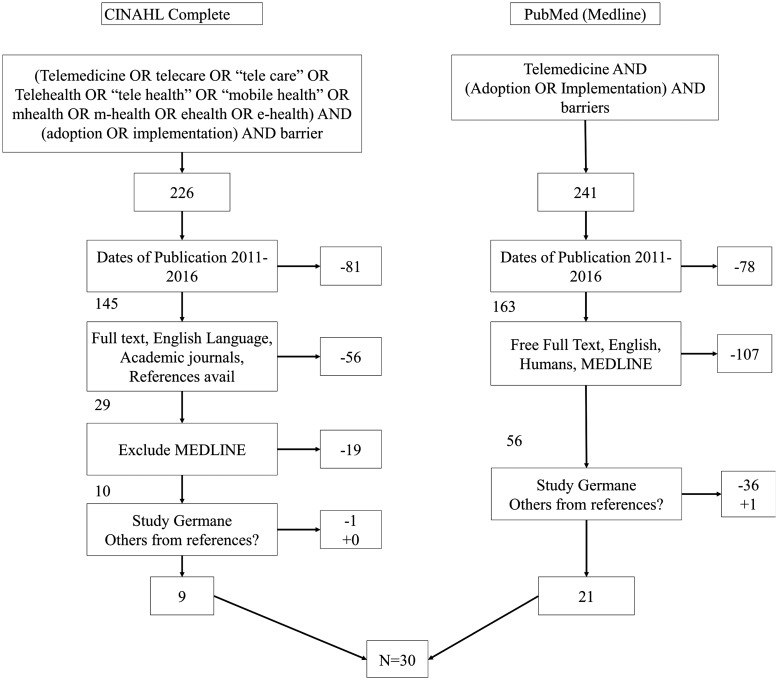
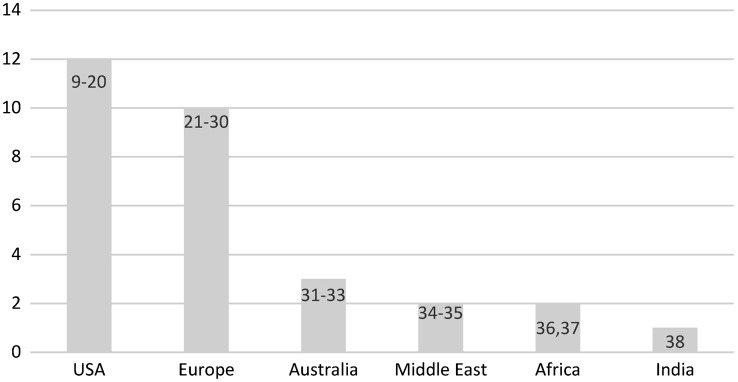
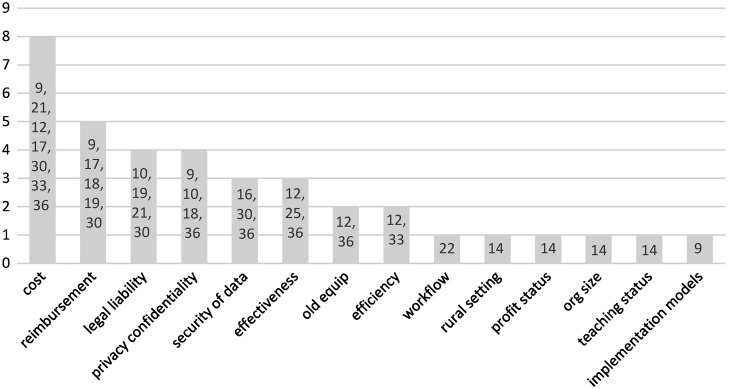
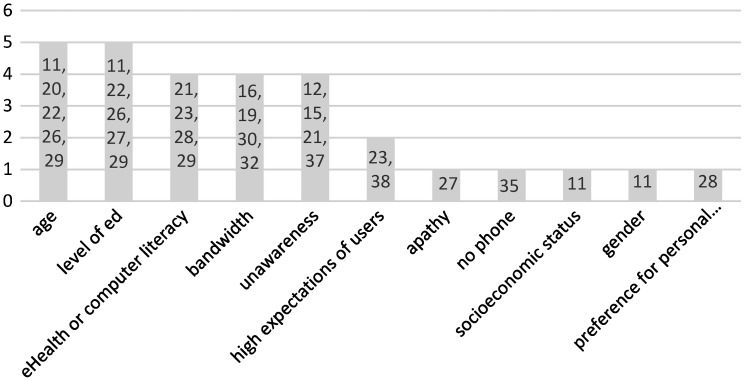
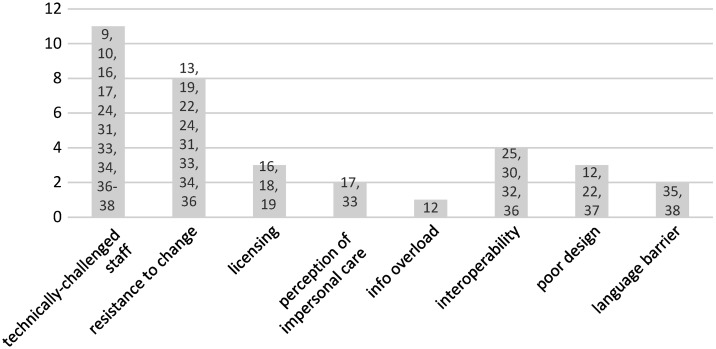
Introduction and objective: Studies on telemedicine have shown success in reducing the geographical and time obstacles incurred in the receipt of care in traditional modalities with the same or greater effectiveness; however, there are several barriers that need to be addressed in order for telemedicine technology to spread. The aim of this review is to evaluate barriers to adopting telemedicine worldwide through the analysis of published work. Methods: The authors conducted a systematic literature review by extracting the data from the Cumulative Index of Nursing and Allied Health Literature (CINAHL) and PubMed (MEDLINE) research databases. The reviewers in this study analysed 30 articles (nine from CINAHL and 21 from Medline) and identified barriers found in the literature. This review followed the checklist from Preferred Reporting Items for Systematic Reviews and Meta-Analyses (PRISMA) 2009. The reviewers organized the results into one table and five figures that depict the data in different ways, organized by: barrier, country-specific barriers, organization-specific barriers, patient-specific barriers, and medical-staff and programmer-specific barriers. Results: The reviewers identified 33 barriers with a frequency of 100 occurrences through the 30 articles. The study identified the issues with technically challenged staff (11%), followed by resistance to change (8%), cost (8%), reimbursement (5%), age of patient (5%), and level of education of patient (5%). All other barriers occurred at or less than 4% of the time. Discussion and conclusions: Telemedicine is not yet ubiquitous, and barriers vary widely. The top barriers are technology-specific and could be overcome through training, change-management techniques, and alternating delivery by telemedicine and personal patient-to-provider interaction. The results of this study identify several barriers that could be eliminated by focused policy. Future work should evaluate policy to identify which one to lever to maximize the results.
Overview
The claims and statistics of this paper haven’t been checked yet.
Run the check — free, no account needed. It reads the open-access text and checks the sources it cites.
Integrity signals
Registry
Cites
Statistics
Figures
Verification
Claims the paper makes
The claims and statistics of this paper haven’t been checked yet.
Run the check — free, no account needed. It reads the open-access text and checks the sources it cites.
Claims other papers make about this one
Each is checked against this paper’s own text: does it say what the citing paper says it does?
The source backs part of the claim, not all of it — or backs it for a different population, condition or comparison.
In the citing paper
“Consistencies with synchronous telemedicine include providing time and cost savings for patients, 51–53 and evidence suggesting a lack of guidance for use of both makes confidentiality a concern. 14,54”
From Effectiveness and safety of asynchronous telemedicine consultations in general practice: a systematic review (2024) · cites this paper as [54]
Experimental — accuracy not yet measuredThe check wasn’t confident either way, so it gives no verdict — never disputed.
In the citing paper
“There are gaps in the existing evidence on the spread and scale-up of video consulting. This was particularly the case in relation to interorganizational networking, which is critical in enabling and sustaining innovation [24,30,64], and yet is not explored in-depth.”
From Spread, Scale-up, and Sustainability of Video Consulting in Health Care: Systematic Review and Synthesis Guided by the NASSS Framework (2021) · cites this paper as [24]
Experimental — accuracy not yet measuredThe check wasn’t confident either way, so it gives no verdict — never disputed.
In the citing paper
“The pandemic has accelerated the adoption of digital health services.”
From Acceptance and perceived usefulness of digital health services in the management of chronic urticaria: a survey of patients and physicians (2025) · cites this paper as [37]
Experimental — accuracy not yet measuredIn the citing paper
“Little is currently known about how to successfully spread and scale up video consulting for sustained use across settings [23-25].”
From Spread, Scale-up, and Sustainability of Video Consulting in Health Care: Systematic Review and Synthesis Guided by the NASSS Framework (2021) · cites this paper as [24]
In the citing paper
“There was a gap in the papers reviewed, on the relevance of interorganizational networking for supporting and sustaining the spread and scale-up of video consulting [24].”
From Spread, Scale-up, and Sustainability of Video Consulting in Health Care: Systematic Review and Synthesis Guided by the NASSS Framework (2021) · cites this paper as [24]
In the citing paper
“They also indicate that the same things that interfere with implementation at one site [eg, 48] are also seen as interfering with spread and scale-up [5,7,17,24], although this may be an artifact of how spread is commonly studied as the sum of multiple implementations.”
From Spread, Scale-up, and Sustainability of Video Consulting in Health Care: Systematic Review and Synthesis Guided by the NASSS Framework (2021) · cites this paper as [24]
In the citing paper
“Findings also raised a number of challenges including the following: technically challenged staff, resistance to change, cost, reimbursement, and patient characteristics [24], as well as project management, patient recruitment, leadership involvement, funding, absence of a long-term strategic plan, resistance to change, workflow changes, lack of resources, and liability [64-66].”
From Spread, Scale-up, and Sustainability of Video Consulting in Health Care: Systematic Review and Synthesis Guided by the NASSS Framework (2021) · cites this paper as [24]
In the citing paper
“Prior reviews have also focused exclusively on the technical aspects of video consulting technology [7]; considered technologies at any stage of implementation, rather than technologies with widespread adoption [24]; or restricted the types of articles included in the review to randomized control trials [78].”
From Spread, Scale-up, and Sustainability of Video Consulting in Health Care: Systematic Review and Synthesis Guided by the NASSS Framework (2021) · cites this paper as [24]
In the citing paper
“This was particularly the case in relation to interorganizational networking, which is critical in enabling and sustaining innovation [24,30,64], and yet is not explored in-depth.”
From Spread, Scale-up, and Sustainability of Video Consulting in Health Care: Systematic Review and Synthesis Guided by the NASSS Framework (2021) · cites this paper as [24]
In the citing paper
“Additionally, reviews have focused on telemedicine or eHealth in general without focusing on video consulting [24,77], with which our findings are consistent.”
From Spread, Scale-up, and Sustainability of Video Consulting in Health Care: Systematic Review and Synthesis Guided by the NASSS Framework (2021) · cites this paper as [24]
In the citing paper
“Other frameworks do exist that might support spread and scale-up (see [24] for an overview) but they have yet to be taken up in the context of expanding video consulting.”
From Spread, Scale-up, and Sustainability of Video Consulting in Health Care: Systematic Review and Synthesis Guided by the NASSS Framework (2021) · cites this paper as [24]
In the citing paper
“Broader barriers for patients include unfamiliarity and difficulties in technology access due to generational differences (where older patients experiences more difficulties in interacting with new technologies) and poor digital literacy, [9] and poor internet connectivity. [10]”
From Use of telemonitoring in patient self-management of chronic disease: a qualitative meta-synthesis (2023) · cites this paper as [9]
In the citing paper
“Broader barriers for patients include unfamiliarity and difficulties in technology access due to generational differences (where older patients experiences more difficulties in interacting with new technologies) and poor digital literacy, [9] and poor internet connectivity. [10]”
From Use of telemonitoring in patient self-management of chronic disease: a qualitative meta-synthesis (2023) · cites this paper as [9]
Self-check
Percentages, sums and reported differences re-computed from the paper’s own numbers.
The self-check needs the paper’s full text.
Citations
Cites
Preferred Reporting Items for Systematic Reviews and Meta-Analyses: the PRISMA statement
Moher, D., Liberati, A., Tetzlaff, J., Altman, D. G., & for the PRISMA Group (2009) · BMJ · doi:10.1136/bmj.b2535 · Cited by 83,823
Preferred Reporting Items for Systematic Reviews and Meta-Analyses: The PRISMA Statement
Moher, D., Liberati, A., Tetzlaff, J., Altman, D. G., & The PRISMA Group (2009) · PLoS Medicine · doi:10.1371/journal.pmed.1000097 · Cited by 64,042
Wang, G., Ma, R., Qiao, G., Wada, K., Aizawa, Y., & Satoh, T. (2015) · Integrative Medicine International · doi:10.1159/000368408 · Cited by 18,762
Kontos, E., Blake, K. D., Chou, W.-Y. S., & Prestin, A. (2014) · Journal of Medical Internet Research · doi:10.2196/jmir.3117 · Cited by 917
The European Health Psychologist
Todorova, I. L. G., Araújo‐Soares, V., & Sniehotta, F. F. (2005) · European Health Psychologist · Cited by 777
Mohr, D. C., Burns, M. N., Schueller, S. M., Clarke, G., & Klinkman, M. (2013) · General Hospital Psychiatry · doi:10.1016/j.genhosppsych.2013.03.008 · Cited by 693 · cited 4×
“Author(s) Barriers Country of origin Molfenter et al.9 Cost, reimbursement, technology-challenged staff, implementation models, confidentiality USA Petersen and DeMuro10 Privacy, legal, and technically challenged staff USA Kontos et al.11 Age, socioeconomic status, gender, level of education USA Levine et al.12 Info o…”
BackgroundInfluentialMair, F. S., May, C., O’Donnell, C., Finch, T., Sullivan, F., & Murray, E. (2012) · Bulletin of the World Health Organization · doi:10.2471/blt.11.099424 · Cited by 553 · cited 4×
“User expectations, computer literacy, and privacy concerns UK Mair et al.(24) Resistance to change, technically challenged staff, time consuming UK May et al.”
BackgroundInfluentialSanders, C., Rogers, A., Bowen, R., Bower, P., Hirani, S., Cartwright, M., Fitzpatrick, R., Knapp, M., Barlow, J., Hendy, J., et al. (2012) · BMC Health Services Research · doi:10.1186/1472-6963-12-220 · Cited by 450
Adoption of telemedicine: from pilot stage to routine delivery
Zanaboni, P., & Wootton, R. (2012) · BMC Medical Informatics and Decision Making · doi:10.1186/1472-6947-12-1 · Cited by 344
Kruse, C. S., Argueta, D. A., Lopez, L., & Nair, A. (2015) · Journal of Medical Internet Research · doi:10.2196/jmir.3703 · Cited by 327
Research works printed but not linked: 6
- World Health Organization (WHO), 2010, Telemedicine: opportunities and developments in Member States: report on the second global survey on eHealth
- Plaete J, 2014, European Health Psychologist, 16, 889
- Stroetmann KA, 2011, AMIA Annu Symp Proc, 2011, 1347
- Schwarz F, 2014, Rural Remote Health, 14, 2871
- Medhanyie AA, 2015, Hum Resour Health, 13, 1
- El-Mahalli AA, 2012, Perspect Health Inf Manag, 9
Cited by
Sorted by citations
Digitalization to achieve sustainable development goals: Steps towards a Smart Green Planet
Mondéjar, M. E., Avtar, R., Díaz, H. L. B., Dubey, R. K., Esteban, J., Gómez‐Morales, A., Hallam, B. J., Mbungu, N. T., Okolo, C. C., Prasad, K. A., et al. (2021) · The Science of The Total Environment · doi:10.1016/j.scitotenv.2021.148539 · Cited by 988
Kamal, S. A., Shafiq, M., & Kakria, P. (2019) · Technology in Society · doi:10.1016/j.techsoc.2019.101212 · Cited by 1,044
Kichloo, A., Albosta, M. S., Dettloff, K., Wani, F., El‐amir, Z., Singh, J., Aljadah, M. M., Chakinala, R. C., Kanugula, A. K., Solanki, S., et al. (2020) · Family Medicine and Community Health · doi:10.1136/fmch-2020-000530 · Cited by 790
Impact of the digital divide in the age of COVID-19
Ramsetty, A., & Adams, C. (2020) · Journal of the American Medical Informatics Association · doi:10.1093/jamia/ocaa078 · Cited by 599
Alexander, G. C., Tajanlangit, M., Heyward, J., Mansour, O., Qato, D. M., & Stafford, R. S. (2020) · JAMA Network Open · doi:10.1001/jamanetworkopen.2020.21476 · Cited by 461
Harrington, R. A., Califf, R. M., Balamurugan, A., Brown, N., Benjamin, R. M., Braund, W. E., Hipp, J. S., Konig, M., Sánchez, E., & Maddox, K. E. J. (2020) · Circulation · doi:10.1161/cir.0000000000000753 · Cited by 393
Chang, J. E., Lai, A. Y., Gupta, A., Nguyen, A. M., Berry, C. A., & Shelley, D. (2021) · Milbank Quarterly · doi:10.1111/1468-0009.12509 · Cited by 421
Experiences of breastfeeding during COVID‐19: Lessons for future practical and emotional support
Brown, A., & Shenker, N. S. (2020) · Maternal and Child Nutrition · doi:10.1111/mcn.13088 · Cited by 392
Telehealth in response to the COVID-19 pandemic: Implications for rural health disparities
Hirko, K. A., Kerver, J. M., Ford, S., Szafranski, C., Beckett, J., Kitchen, C., & Wendling, A. L. (2020) · Journal of the American Medical Informatics Association · doi:10.1093/jamia/ocaa156 · Cited by 390
Telehealth for musculoskeletal physiotherapy
Cottrell, M. A., & Russell, T. G. (2020) · Musculoskeletal Science and Practice · doi:10.1016/j.msksp.2020.102193 · Cited by 369
Omboni, S., McManus, R. J., Bosworth, H. B., Chappell, L. C., Green, B. B., Kario, K., Logan, A. G., Magid, D. J., Mckinstry, B., Margolis, K. L., et al. (2020) · Hypertension · doi:10.1161/hypertensionaha.120.15873 · Cited by 307
Bhaskar, S., Bradley, S., Chattu, V. K., Adisesh, A., Nurtazina, A., Kyrykbayeva, S., Sakhamuri, S., Yaya, S., Sunil, T., Thomas, P., et al. (2020) · Frontiers in Public Health · doi:10.3389/fpubh.2020.556720 · Cited by 305
Cost-Effectiveness of Telemedicine in Remote Orthopedic Consultations: Randomized Controlled Trial
Buvik, A., Bergmo, T. S., Einar Bugge, B., Småbrekke, A., Wilsgaard, T., & Olsen, J. A. (2018) · Journal of Medical Internet Research · doi:10.2196/11330 · Cited by 301
Improving Access to Care: Telemedicine Across Medical Domains
Barbosa, W. A., Zhou, K., Waddell, E. M., Myers, T. L., & Dorsey, E. R. (2021) · Annual Review of Public Health · doi:10.1146/annurev-publhealth-090519-093711 · Cited by 334
Telemedicine barriers and challenges for persons with disabilities: COVID-19 and beyond
Annaswamy, T. M., Verduzco‐Gutierrez, M., & Frieden, L. (2020) · Disability and health journal · doi:10.1016/j.dhjo.2020.100973 · Cited by 276
Impact of COVID-19 on the digital divide: a rapid review
Litchfield, I. J., Shukla, D., & Greenfield, S. (2021) · BMJ Open · doi:10.1136/bmjopen-2021-053440 · Cited by 289
Loeb, A. E., Rao, S. S., Ficke, J. R., Morris, C. D., Riley, L. H., & Levin, A. S. (2020) · Journal of the American Academy of Orthopaedic Surgeons · doi:10.5435/jaaos-d-20-00380 · Cited by 278
The promise of digital healthcare technologies
Yeung, A. W. K., Torkamani, A., Butte, A. J., Glicksberg, B. S., Schuller, B. W., Rodríguez, B., Ting, D. S. W., Bates, D. W., Schaden, E., Peng, H., et al. (2023) · Frontiers in Public Health · doi:10.3389/fpubh.2023.1196596 · Cited by 284
Health Inequalities in the Use of Telehealth in the United States in the Lens of COVID-19
Jaffe, D. H., Lee, L., Huynh, S., & Haskell, T. P. (2020) · Population Health Management · doi:10.1089/pop.2020.0186 · Cited by 240
Da, B. L., Im, G. Y., & Schiano, T. D. (2020) · Hepatology · doi:10.1002/hep.31307 · Cited by 228
Buvik, A., Einar Bugge, B., Knutsen, G., Småbrekke, A., & Wilsgaard, T. (2018) · Journal of Telemedicine and Telecare · doi:10.1177/1357633x18783921 · Cited by 225
Hirani, R., Noruzi, K. A., Khuram, H., Hussaini, A. S., Aifuwa, E., Ely, K., Lewis, J. M., Gabr, A. E., Smiley, A., Tiwari, R. K., et al. (2024) · Life · doi:10.3390/life14050557 · Cited by 280
Appleton, R., Williams, J., Juan, N. V. S., Needle, J. J., Schlief, M., Jordan, H., Rains, L. S., Goulding, L., Badhan, M., Roxburgh, E., et al. (2021) · Journal of Medical Internet Research · doi:10.2196/31746 · Cited by 219
James, H. M., Papoutsi, C., Wherton, J., Greenhalgh, T., & Shaw, S. E. (2021) · Journal of Medical Internet Research · doi:10.2196/23775 · Cited by 164
Kuan, P. X., Chan, W. K., Khoo, D., Rahman, M. A. A., Peariasamy, K. M., Lai, N. M., Mills, N. L., & Anand, A. (2022) · The Lancet Digital Health · doi:10.1016/s2589-7500(22)00124-8 · Cited by 183
An introduction to digital determinants of health
Chidambaram, S., Jain, B., Jain, U., Mwavu, R., Baru, R., Thomas, B., Greaves, F., Jayakumar, S., Jain, P., Rojo, M., et al. (2024) · PLOS Digital Health · doi:10.1371/journal.pdig.0000346 · Cited by 175
Challenges to the Emergence of Telerehabilitation in a Developing Country: A Systematic Review
Leochico, C. F. D., Espiritu, A. I., Ignacio, S. D., & Mojica, J. A. P. (2020) · Frontiers in Neurology · doi:10.3389/fneur.2020.01007 · Cited by 181
Coping with crisis: The paradox of technology and consumer vulnerability
Yap, S. F., Xu, Y., & Tan, L. P. (2021) · International Journal of Consumer Studies · doi:10.1111/ijcs.12724 · Cited by 188
Varsi, C., Solberg Nes, L., Kristjansdottir, O. B., Kelders, S. M., Stenberg, U., Zangi, H. A., Børøsund, E., Weiss, K. E., Stubhaug, A., Asbjørnsen, R. A., et al. (2019) · Journal of Medical Internet Research · doi:10.2196/14255 · Cited by 148
Unmuting Medical Students’ Education: Utilizing Telemedicine During the COVID-19 Pandemic and Beyond
Iancu, A., Kemp, M. T., & Alam, H. B. (2020) · Journal of Medical Internet Research · doi:10.2196/19667 · Cited by 158
Use of Telehealth by Surgical Specialties During the COVID-19 Pandemic
Chao, G. F., Li, K. Y., Zhu, Z., McCullough, J., Thompson, M., Claflin, J., Fliegner, M. A., Steppe, E., Ryan, A. M., & Ellimoottil, C. S. (2021) · JAMA Surgery · doi:10.1001/jamasurg.2021.0979 · Cited by 158
Digital healthcare: the future
Butcher, C. J., & Hussain, W. (2022) · Future Healthcare Journal · doi:10.7861/fhj.2022-0046 · Cited by 189
Geriatric telepsychiatry: systematic review and policy considerations
Gentry, M. T., Lapid, M. I., & Rummans, T. A. (2019) · The American Journal of Geriatric Psychiatry · doi:10.1016/j.jagp.2018.10.009 · Cited by 156
Takahashi, E. A., Schwamm, L. H., Adeoye, O. M., Alabi, O., Jahangir, E., Misra, S., & Still, C. H. (2022) · Circulation · doi:10.1161/cir.0000000000001107 · Cited by 161
Modifying UTAUT2 for a cross-country comparison of telemedicine adoption
Schmitz, A., Díaz‐Martín, A. M., & Guillén, M. J. Y. (2022) · Computers in Human Behavior · doi:10.1016/j.chb.2022.107183 · Cited by 150
Mobile Health Technology and Healthcare Providers: Systemic Barriers to Adoption
Zakerabasali, S., Ayyoubzadeh, S. M., Baniasadi, T., Yazdani, A., & Abhari, S. (2021) · Healthcare Informatics Research · doi:10.4258/hir.2021.27.4.267 · Cited by 155
Chan, R. J., Crichton, M., Crawford-Williams, F., Agbejule, O. A., Yu, K., Hart, N. H., de Abreu Alves, F., Ashbury, F. D., Eng, L., Fitch, M., et al. (2021) · Annals of Oncology · doi:10.1016/j.annonc.2021.09.001 · Cited by 144
Promise and Perils of Telehealth in the Current Era
Mahtta, D., Daher, M., Lee, M., Sayani, S., Shishehbor, M. H., & Virani, S. S. (2021) · Current Cardiology Reports · doi:10.1007/s11886-021-01544-w · Cited by 141
Paterson, C., Bacon, R., Dwyer, R., Morrison, K. S., Toohey, K., O'Dea, A., Slade, J., Mortazavi, R., Roberts, C., Pranavan, G., et al. (2020) · Seminars in Oncology Nursing · doi:10.1016/j.soncn.2020.151090 · Cited by 139
Digital physical therapy in the COVID-19 pandemic
Dantas, L. O., Barreto, R. P. G., & Ferreira, C. H. J. (2020) · Brazilian Journal of Physical Therapy · doi:10.1016/j.bjpt.2020.04.006 · Cited by 137
Technology Literacy as a Barrier to Telehealth During COVID-19
Triana, A. J., Gusdorf, R. E., Shah, K. P., & Horst, S. (2020) · Telemedicine Journal and e-Health · doi:10.1089/tmj.2020.0155 · Cited by 134
E-health for the future. Managerial perspectives using a multiple case study approach
Biancone, P., Secinaro, S. F., Marseglia, G. R., & Calandra, D. (2021) · Technovation · doi:10.1016/j.technovation.2021.102406 · Cited by 139
Kruse, C. S., & Heinemann, K. (2021) · Journal of Medical Internet Research · doi:10.2196/31752 · Cited by 130
Bilder, R. M., Postal, K., Barisa, M. T., Aase, D. M., Cullum, C. M., Gillaspy, S. R., Harder, L., Kanter, G., Lanca, M., Lechuga, D. M., et al. (2020) · The Clinical Neuropsychologist · doi:10.1080/13854046.2020.1767214 · Cited by 126
Kho, J. M., Gillespie, N. A., & Martin‐Khan, M. (2020) · BMC Health Services Research · doi:10.1186/s12913-020-05657-w · Cited by 154
COVID-19 and telemental health: Benefits, challenges, and future directions.
Madigan, S. L., Racine, N. M., Cooke, J. E., & Korczak, D. J. (2020) · Canadian Psychology/Psychologie canadienne · doi:10.1037/cap0000259 · Cited by 138
Palmer, K. R., Tanner, M., Davies-Tuck, M., Rindt, A., Papacostas, K., Giles, M. L., Brown, K., Diamandis, H., Fradkin, R., Stewart, A. E., et al. (2021) · The Lancet · doi:10.1016/s0140-6736(21)00668-1 · Cited by 121
Bilder, R. M., Postal, K., Barisa, M. T., Aase, D. M., Cullum, C. M., Gillaspy, S. R., Harder, L., Kanter, G., Lanca, M., Lechuga, D. M., et al. (2020) · Archives of Clinical Neuropsychology · doi:10.1093/arclin/acaa046 · Cited by 121
Practice Management During the COVID-19 Pandemic
Vaccaro, A. R., Getz, C. L., Cohen, B. E., Cole, B. J., & Donnally, C. J. (2020) · Journal of the American Academy of Orthopaedic Surgeons · doi:10.5435/jaaos-d-20-00379 · Cited by 119
Telemedicine During COVID‐19 for Outpatient Sports and Musculoskeletal Medicine Physicians
Tenforde, A. S., Iaccarino, M. A., Borgstrom, H. E. D., Hefner, J. E., Silver, J. K., Ahmed, M. A., Babu, A. N., Blauwet, C. A., Elson, L. E., Eng, C., et al. (2020) · PM&R · doi:10.1002/pmrj.12422 · Cited by 115
Kinoshita, S., Cortright, K., Crawford, A. S., Mizuno, Y., Yoshida, K., Hilty, D. M., Guinart, D., Torous, J. B., Correll, C. U., Castle, D. J., et al. (2020) · Psychological Medicine · doi:10.1017/s0033291720004584 · Cited by 116
Darcourt, J. G., Aparicio, K., Dorsey, P. M., Ensor, J. E., Zsigmond, E. M., Wong, S. T., Ezeana, C. F., Puppala, M., Heyne, K. E., Geyer, C. E., et al. (2021) · JCO Oncology Practice · doi:10.1200/op.20.00572 · Cited by 114
Rosen, C. S., Morland, L. A., Glassman, L. H., Marx, B. P., Weaver, K. R., Smith, C. A., Pollack, S. J., & Schnurr, P. P. (2020) · American Psychologist · doi:10.1037/amp0000751 · Cited by 119
Valentine, A. Z., Hall, S. S., Young, E., Brown, B. J., Groom, M. J., Hollis, C., & Hall, C. L. (2021) · Journal of Medical Internet Research · doi:10.2196/22619 · Cited by 109
Patient Care During the COVID-19 Pandemic: Use of Virtual Care
Wong, A., Bhyat, R., Srivastava, S., Lomax, L. B., & Appireddy, R. (2020) · Journal of Medical Internet Research · doi:10.2196/20621 · Cited by 109
Gawałko, M., Duncker, D., Manninger, M., van der Velden, R. M. J., Hermans, A. N. L., Verhaert, D. V. M., Pison, L., Pisters, R., Hemels, M., Sultan, A., et al. (2021) · EP Europace · doi:10.1093/europace/euab050 · Cited by 106
The role of telemedicine in healthcare: an overview and update
Stoltzfus, M. T., Kaur, A., Chawla, A., Gupta, V., Anamika, F., & Jain, R. (2023) · The Egyptian Journal of Internal Medicine · doi:10.1186/s43162-023-00234-z · Cited by 137
Sebastian, S., Dhar, A., Baddeley, R., Donnelly, L., Haddock, R., Arasaradnam, R. P., Coulter, A., Disney, B., Griffiths, H., Healey, C., et al. (2022) · Gut · doi:10.1136/gutjnl-2022-328460 · Cited by 102
Gentry, M. T., Puspitasari, A. J., McKean, A. J., Williams, M. D., Breitinger, S., Geske, J. R., Clark, M. M., Moore, K. M., Frye, M. A., & Hilty, D. M. (2021) · Telemedicine and e-Health · doi:10.1089/tmj.2020.0575 · Cited by 95
Payán, D. D., Frehn, J. L., García, L., Tierney, A. A., & Rodríguez, H. P. (2022) · SSM - Qualitative Research in Health · doi:10.1016/j.ssmqr.2022.100054 · Cited by 99
Utility of telemedicine in sub‐Saharan Africa during the COVID ‐19 pandemic. A rapid review
Chitungo, I., Mhango, M., Mbunge, E., Dzobo, M., Musuka, G., & Dzinamarira, T. (2021) · Human Behavior and Emerging Technologies · doi:10.1002/hbe2.297 · Cited by 98
Emerging Technologies for Next Generation Remote Health Care and Assisted Living
Ahmad, I., Asghar, Z., Kumar, T., Li, G., Manzoor, A., Mikhaylov, K., Shah, S. A., Höyhtyä, M., Reponen, J., Huusko, J., et al. (2022) · IEEE Access · doi:10.1109/access.2022.3177278 · Cited by 107
Khoong, E. C., Butler, B. A., Mesina, O., Su, G., DeFries, T. B., Nijagal, M., & Lyles, C. R. (2021) · Journal of the American Medical Informatics Association · doi:10.1093/jamia/ocaa234 · Cited by 94
Mapping Factors That Affect the Uptake of Digital Therapeutics Within Health Systems: Scoping Review
van Kessel, R., Román-Urrestarazu, A., Anderson, M., Kyriopoulos, I., Field, S., Monti, G., Reed, S. D., Pavlova, M., Wharton, G., & Mossialos, E. A. (2023) · Journal of Medical Internet Research · doi:10.2196/48000 · Cited by 109
Kronenfeld, J. P., & Penedo, F. J. (2021) · Translational Behavioral Medicine · doi:10.1093/tbm/ibaa105 · Cited by 93
Scale-up of Digital Innovations in Health Care: Expert Commentary on Enablers and Barriers
Schlieter, H., Marsch, L. A., Whitehouse, D., Otto, L., Londral, A. R. M., Teepe, G. W., Benedict, M., Ollier, J., Ulmer, T., Gasser, N., et al. (2021) · Journal of Medical Internet Research · doi:10.2196/24582 · Cited by 99
Mitchell, J., Shirota, C., & Clanchy, K. (2023) · Journal of NeuroEngineering and Rehabilitation · doi:10.1186/s12984-023-01194-9 · Cited by 94
Telemedicine Usage Among Urologists During the COVID-19 Pandemic: Cross-Sectional Study
Dubin, J. M., Wyant, W. A., Balaji, N. C., Keat, W. O. L., Kettache, R. H., Haffaf, M., Zouari, S., Santillan, D., Autrán-Gómez, A. M., Sadeghi‐Nejad, H., et al. (2020) · Journal of Medical Internet Research · doi:10.2196/21875 · Cited by 91
Telemedicine Guidelines in South East Asia—A Scoping Review
Sabrina, M. I., & Defi, I. R. (2021) · Frontiers in Neurology · doi:10.3389/fneur.2020.581649 · Cited by 88
Khodadad-Saryazdi, A. (2021) · Technovation · doi:10.1016/j.technovation.2021.102273 · Cited by 97
Saigí-Rubió, F., do Nascimento, I. J. B., Robles, N., Ivanovska, K., Katz, C., Muscat, N. A., & Novillo-Ortiz, D. (2022) · Journal of Medical Internet Research · doi:10.2196/40877 · Cited by 108
Tele-ophthalmology: Need of the hour
Sharma, M., Jain, N., Ranganathan, S., Sharma, N., Honavar, S. G., Sharma, N., & Sachdev, M. (2020) · Indian Journal of Ophthalmology · doi:10.4103/ijo.ijo_1784_20 · Cited by 85
Schulz, T., Long, K., Kanhutu, K. N., Bayrak, I., Johnson, D. F., & Fazio, T. N. (2020) · Journal of Telemedicine and Telecare · doi:10.1177/1357633x20942045 · Cited by 87
Funderskov, K. F., Danbjørg, D. B., Jess, M., Munk, L., Zwisler, A., & Dieperink, K. B. (2019) · Journal of Clinical Nursing · doi:10.1111/jocn.15004 · Cited by 92
Albahrouh, S. E., & Buabbas, A. J. (2021) · BMC Medical Informatics and Decision Making · doi:10.1186/s12911-021-01478-x · Cited by 85
Jiang, Y., Sun, P., Chen, Z., Guo, J., Wang, S., Liu, F., & Li, J. (2022) · BMC Geriatrics · doi:10.1186/s12877-021-02702-z · Cited by 86
Talwar, S., Dhir, A., Islam, N., Kaur, P., & Almusharraf, A. I. (2023) · Journal of Business Research · doi:10.1016/j.jbusres.2023.114135 · Cited by 100
Rao, S. S., Loeb, A. E., Amin, R. M., Golladay, G. J., Levin, A. S., & Thakkar, S. C. (2020) · Arthroplasty Today · doi:10.1016/j.artd.2020.04.014 · Cited by 90
Smartphone-based systems for physical rehabilitation applications: A systematic review
Moral-Muñoz, J. A., Zhang, W., Cobo, M. J., Herrera‐Viedma, E., & KABER, D. B. (2019) · Assistive Technology · doi:10.1080/10400435.2019.1611676 · Cited by 88
Barriers to Sustainable Telemedicine Implementation in Ethiopia: A Systematic Review
Sagaro, G. G., Battineni, G., & Amenta, F. (2020) · Telemedicine Reports · doi:10.1089/tmr.2020.0002 · Cited by 83
The impact of COVID-19 and social distancing on people with Parkinson’s disease: a survey study
Feeney, M. P., Xu, Y., Surface, M., Shah, H., Vanegas‐Arroyave, N., Chan, A. K., Delaney, E., Przedborski, S., Beck, J. C., & Alcalay, R. N. (2021) · npj Parkinson s Disease · doi:10.1038/s41531-020-00153-8 · Cited by 79
Digital disparities: designing telemedicine systems with a health equity aim
Samuels‐Kalow, M. E., Jaffe, T. A., & Zachrison, K. S. (2021) · Emergency Medicine Journal · doi:10.1136/emermed-2020-210896 · Cited by 79
Cottrell, M. A., Hill, A. J., O’Leary, S. P., Raymer, M. E., & Russell, T. G. (2018) · International Journal of Telerehabilitation · doi:10.5195/ijt.2018.6249 · Cited by 79
Hewitt, K. C., Rodgin, S., Loring, D. W., Pritchard, A. E., & Jacobson, L. A. (2020) · The Clinical Neuropsychologist · doi:10.1080/13854046.2020.1811891 · Cited by 77
Adoption of Telemedicine for Type 1 Diabetes Care During the COVID-19 Pandemic
Lee, J. M., Carlson, E. J., Albanese-O’Neill, A., Demeterco‐Berggren, C., Corathers, S. D., Vendrame, F., Weinstock, R. S., Prahalad, P., Alonso, G. T., Kamboj, M. K., et al. (2021) · Diabetes Technology & Therapeutics · doi:10.1089/dia.2021.0080 · Cited by 77
Yaghobian, S., Ohannessian, R., Iampetro, T., Riom, I., Salles, N., de Bustos, E. M., Moulin, T., & Mathieu-Fritz, A. (2022) · Journal of Telemedicine and Telecare · doi:10.1177/1357633x20926829 · Cited by 76
Bos, W. H., van Tubergen, A. M., & Vonkeman, H. E. (2021) · Rheumatology International · doi:10.1007/s00296-020-04771-6 · Cited by 76
Telemedicine Acceptance Among Older Adult Patients With Cancer: Scoping Review
Pang, N.-Q., Lau, J., Fong, S.-Y., Wong, C. Y.-H., & Tan, K.-K. (2022) · Journal of Medical Internet Research · doi:10.2196/28724 · Cited by 75
Crowley, M. J., Tarkington, P. E., Bosworth, H. B., Jeffreys, A. S., Coffman, C. J., Maciejewski, M. L., Steinhauser, K., Smith, V. A., Dar, M. S., Fredrickson, S. K., et al. (2022) · JAMA Internal Medicine · doi:10.1001/jamainternmed.2022.2947 · Cited by 75
Providing Outpatient Telehealth Services in the United States
Brotman, J. J., & Kotloff, R. M. (2020) · CHEST Journal · doi:10.1016/j.chest.2020.11.020 · Cited by 81
Telemedicine in Heart Failure During COVID-19: A Step Into the Future
Tersalvi, G., Winterton, D., Cioffi, G. M., Ghidini, S., Roberto, M., Biasco, L., Pedrazzini, G. B., Dauw, J., Ameri, P., & Vicenzi, M. (2020) · Frontiers in Cardiovascular Medicine · doi:10.3389/fcvm.2020.612818 · Cited by 83
Delivering Healthcare Through Teleconsultations: Implications for Offline Healthcare Disparity
Hwang, E. H., Guo, X., Tan, Y., & Dang, Y. (2022) · Information Systems Research · doi:10.1287/isre.2021.1055 · Cited by 76
On behalf of the MASCC Survivorship Study Group, Chan, A., Ashbury, F., Fitch, M. I., Koczwara, B., & Chan, R. J. (2020) · Supportive Care in Cancer · doi:10.1007/s00520-020-05544-4 · Cited by 73
Dimer, N. A., do Canto-Soares, N., dos Santos-Teixeira, L., & de Goulart, B. N. G. (2020) · CoDAS · doi:10.1590/2317-1782/20192020144 · Cited by 72
Older adults' access to primary care: Gender, racial, and ethnic disparities in telemedicine
Ryskina, K. L., Shultz, K., Zhou, Y., Lautenbach, G. L., & Brown, R. T. (2021) · Journal of the American Geriatrics Society · doi:10.1111/jgs.17354 · Cited by 71
Mouchtouris, N., Lavergne, P., Montenegro, T. S., Gonzalez, G. A., Baldassari, M. P., Sharan, A. D., Jabbour, P. M., Harrop, J. S., Rosenwasser, R. H., & Evans, J. J. (2020) · World Neurosurgery · doi:10.1016/j.wneu.2020.05.251 · Cited by 70
Felber, N. A., Tian, Y. J., Pageau, F., Elger, B. S., & Wangmo, T. (2023) · BMC Medical Ethics · doi:10.1186/s12910-023-00898-w · Cited by 78
Osthoff, A.-K. R., Baur, H., Reicherzer, L., Wirz, M., Keller, F., Opsommer, E., Schoeb, V., Vercelli, S., & Barbero, M. (2021) · Archives of Physiotherapy · doi:10.1186/s40945-021-00112-3 · Cited by 78
Bevilacqua, R., Strano, S., Rosa, M. D., Giammarchi, C., Černá, K., Mueller, C., & Maranesi, E. (2021) · International Journal of Environmental Research and Public Health · doi:10.3390/ijerph182211800 · Cited by 74
Clinicians perceptions of a telemedicine system: a mixed method study of Makassar City, Indonesia
Indria, D., Alajlani, M., & Fraser, H. (2020) · BMC Medical Informatics and Decision Making · doi:10.1186/s12911-020-01234-7 · Cited by 67
Metadata
- Authors
- Scott Kruse, C., Karem, P., Shifflett, K., Vegi, L., Ravi, K., & Brooks, M.
- Affiliations
- Texas State University, Texas, USA
- Texas State University (US)
- ORCID
- Brooks, Matthew
- Venue
- Journal of Telemedicine and Telecare
- Publisher
- SAGE Publications
- Published
- 2016-10-16
- Volume
- 24
- Issue
- 1
- Pages
- 4-12
- ISSN
- 1357-633X (ISSN-L)
- 1758-1109
- PMC
- PMC5768250
- OpenAlex
- W2532031923
- Cited by
- 1,735
- References
- 45
- Citations by year
- 2026: 147 · 2025: 221 · 2024: 210 · 2023: 277 · 2022: 323 · 2021: 304 · 2020: 183 · 2019: 49 · 2018: 16 · 2017: 2 · 2016: 2
- FWCI
- 3.44
- Type
- journal article
- Language
- en
- Open access
- hybrid
- doi.org
- Locations
- Journal of Telemedicine and Telecare (publishedVersion, cc-by-nc)
- Europe PMC (PubMed Central) (publishedVersion, cc-by-nc)
- PubMed Central (publishedVersion, cc-by-nc)
- PubMed (publishedVersion)
- Topics
- Health Sciences › Medicine › Public Health, Environmental and Occupational Health › Telemedicine and Telehealth Implementation
- Health Sciences › Medicine › Geriatrics and Gerontology › Technology Use by Older Adults
- Health Sciences › Medicine › Public Health, Environmental and Occupational Health › Healthcare Systems and Technology
- Keywords
- telemedicine, barriers to adoption, technology adoption, resistance to change, employee training, cost, reimbursement, patient age, patient education, change management, health policy
- MeSH terms
- Age Factors, Attitude of Health Personnel, Diffusion of Innovation, Humans, Health Knowledge, Attitudes, Practice, Socioeconomic Factors, Global Health, Telemedicine
About these checks
Registry, retraction, Cites and statistics results are computed, not judged, with one exception: a printed reference that no index lists is read once by a model before it counts as a citation error. Claims are extracted by a model and kept only when their quote appears verbatim in the text; each cited source is then checked, with a model’s help, for whether it says what the claim relies on. Those verdicts can be wrong — read the claim’s quote and the cited source before relying on one.
Statistics and arithmetic are recomputed, not judged.
Confidence bands are shown only for fields calibrated on our annotated test set. None is calibrated yet, so no band is shown.
What counts as a claim ›How we measure confidence ›How we check this ›
Are you an author, or do you see a problem with this page? Request a review
