

Hooking up: Gender Differences, Evolution, and Pluralistic Ignorance
Open accessThe DOI matches its Crossref record; 36 of the 39 references it cites were found in a registry or an index.
Abstract
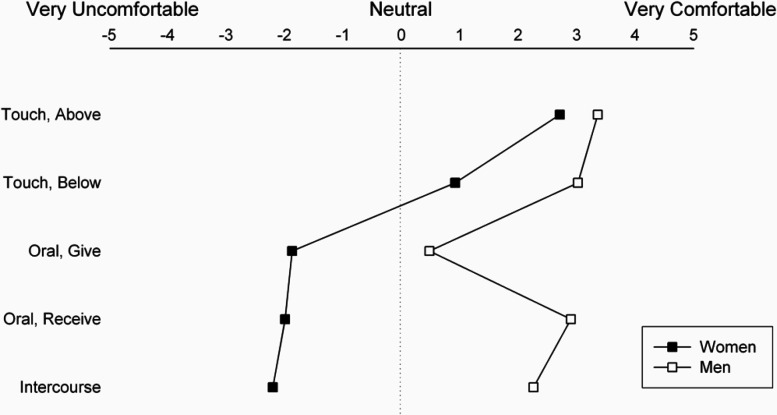
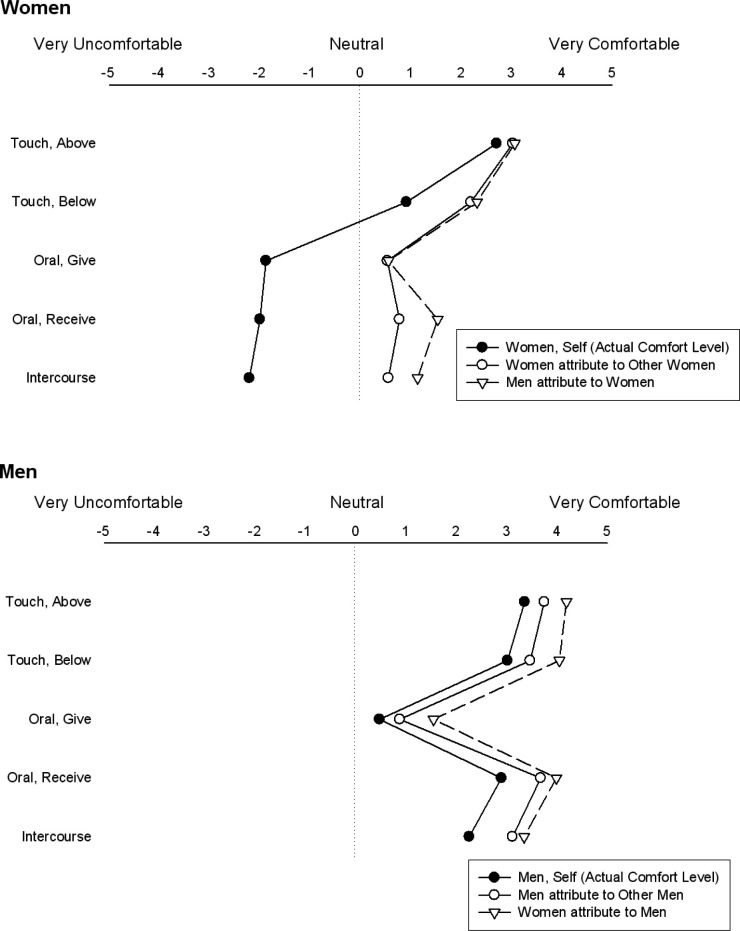
“Hooking-up” – engaging in no-strings-attached sexual behaviors with uncommitted partners - has become a norm on college campuses, and raises the potential for disease, unintended pregnancy, and physical and psychological trauma. The primacy of sex in the evolutionary process suggests that predictions derived from evolutionary theory may be a useful first step toward understanding these contemporary behaviors. This study assessed the hook-up behaviors and attitudes of 507 college students. As predicted by behavioral-evolutionary theory: men were more comfortable than women with all types of sexual behaviors; women correctly attributed higher comfort levels to men, but overestimated men's actual comfort levels; and men correctly attributed lower comfort levels to women, but still overestimated women's actual comfort levels. Both genders attributed higher comfort levels to same-gendered others, reinforcing a pluralistic ignorance effect that might contribute to the high frequency of hook-up behaviors in spite of the low comfort levels reported and suggesting that hooking up may be a modern form of intrasexual competition between females for potential mates.
Overview
The claims and statistics of this paper haven’t been checked yet.
Free: it reads the open-access text and checks the first 5 claims that cite a source we can check. Create a free account to check every claim.
Integrity signals
Registry
Cites
Statistics
Figures
Verification
Claims the paper makes
The claims and statistics of this paper haven’t been checked yet.
Free: it reads the open-access text and checks the first 5 claims that cite a source we can check. Create a free account to check every claim.
Claims other papers make about this one
Each is checked against this paper’s own text: does it say what the citing paper says it does?
The source backs part of the claim, not all of it — or backs it for a different population, condition or comparison.
In the citing paper
“Women typically experience more negative consequences for engaging in hookups while men receive more positive reinforcement (Allison and Risman 2013; Hamilton and Armstrong 2009; Reiber and Garcia 2010).”
From Social Motivations for College Hookups. (2021) · cites this paper as Reiber and Garcia 2010
Experimental — accuracy not yet measured
Self-check
Percentages, sums and reported differences re-computed from the paper’s own numbers.
The self-check needs the paper’s full text.
Citations
Cites
Parental Investment and Sexual Selection
(2017) · Sexual Selection and the Descent of Man · doi:10.4324/9781315129266-7 · Cited by 9,510
Sexual Selection and the Descent of Man: The Darwinian Pivot
(2017) · Routledge eBooks · doi:10.4324/9781315129266 · Cited by 7,252
Sex differences in human mate preferences: Evolutionary hypotheses tested in 37 cultures
Buss, D. M. (1989) · Behavioral and Brain Sciences · doi:10.1017/s0140525x00023992 · Cited by 4,484 · cited 1×
“Thus, male humans are, on average, expected to be more sexually eager than female humans, and females are, on average, expected to be relatively “coy” and choosy concerning mates and mating (Buss, 1989, 2003; Daly and Wilson, 1983; Low, 2000; Symons, 1979).”
Background(1979) · Cited by 2,524
The evolution of human sexuality
Wilson, G. (1980) · Personality and Individual Differences · doi:10.1016/0191-8869(80)90074-4 · Cited by 2,505
The Handbook of evolutionary psychology
(2006) · Choice Reviews Online · doi:10.5860/choice.44-0622 · Cited by 2,121
Nielsen, J. M., Daly, M., & Wilson, M. (1980) · Contemporary Sociology · doi:10.2307/2064296 · Cited by 1,189
Error management theory: A new perspective on biases in cross-sex mind reading
Haselton, M. G., & Buss, D. M. (2000) · Journal of Personality and Social Psychology · doi:10.1037/0022-3514.78.1.81 · Cited by 1,180
Gender differences in sexuality: A meta-analysis.
Oliver, M. B., & Hyde, J. S. (1993) · Psychological Bulletin · doi:10.1037/0033-2909.114.1.29 · Cited by 1,134 · cited 1×
“In the current study, as in several others (Cohen and Shotland, 1996; Knox and Wilson, 1981; Lambert, Kahn, and Apple, 2003; Oliver and Hyde, 1993), men reported higher comfort levels than women with all sexual behaviors.”
Pluralistic ignorance and alcohol use on campus: Some consequences of misperceiving the social norm.
Prentice, D. A., & Miller, D. T. (1993) · Journal of Personality and Social Psychology · doi:10.1037/0022-3514.64.2.243 · Cited by 1,075 · cited 1×
“Also building on the work of Cohen and Shotland (1996), Lambert, Kahn, and Apple (2003), and Prentice and Miller (1993), the current study demonstrated clear patterns of PI with respect to comfort levels with various sexual behaviors during hook-ups.”
Background
Research works printed but not linked: 8
- Fisher H. E. (2009). Why him? Why her? Finding real love by understanding your personality type. New York: Henry Holt and Company.
- Haines M. (1998). Social norms: A wellness model for health promotion in higher education. Wellness Management, 14, 1– 8.
- Low B. S. (2000). Why sex matters. Princeton: Princeton University Press.
- Madison A. (2006). Hooking up: A girl's all-out guide to sex and sexuality. New York: Prometheus Books.
- Reitman J. (2006). Sex and scandal at Duke. Rolling Stone, 1002, 70– 109.
- Rozler J., and Lavinthal A. (2005). The hookup handbook: A single girl's guide to living it up. New York: Simon Spotlight Entertainment.
- Sherman A. J., and Tocantins N. (2004). The happy hook-up: A single girl's guide to casual sex. Berkeley: Ten Speed Press.
- Stepp L. S. (2007). Unhooked: How young women pursue sex, delay love, and lose at both. New York: Riverhead Books.
Cited by
Items 101–109 of 109
Gössl, M. J. (2024) · Queer studies · doi:10.14361/9783839473856-003
Gössl, M. J. (2024) · Queer studies · doi:10.14361/9783839473856-001
Gössl, M. J. (2024) · Queer studies · doi:10.14361/9783839473856-fm
(Mis)estimation of the modal number of desired sexual partners
Shapiro, A., Peters, R. M., & Ahrens, A. H. (2024) · PLoS ONE · doi:10.1371/journal.pone.0315291 · Cited by 1
Swipe, Match, Repeat: The Psychological Effects of Hookup Culture on Relationships and Society
Biswas, S. (2025) · Vidhyayana · doi:10.58213/3zkcpf72
The Gender Gap in One-Night Stand Regret: Evidence from Heterosexual and Same-Sex Encounters
Sagioglou, C., & Dick, M. (2026) · Archives of Sexual Behavior · doi:10.1007/s10508-025-03380-3
“…theory (Trivers, 1972), sexual strategies theory (Buss & Schmitt, 1993), and error management theory (Haselton & Buss, 2000) suggest that casual sex conflicts with evolved female mating preferences (Bendixen et al., 2017; Galperin et al., 2013; Kennair et al., 2016; Reiber & Garcia, 2010).”
Weaver, A. D., Lomore, C. D., Berrigan, L. I., Allen, C., & Spagnuolo, A. (2026) · The Canadian Journal of Human Sexuality · doi:10.3138/cjhs-2025-0019
Why or Who Waits for Marriage? The Sociological Rationale for Chastity
Klaus, H., Napier, S. R., Mitchell, L. A., & Williams, W. V. (2026) · The Linacre Quarterly · doi:10.1177/00243639261478803
Fielder, R. L. (2013) · Syracuse University Libraries (Syracuse University)
Metadata
- Authors
- Reiber, C., & Garcia, J. R.
- Affiliations
- Binghamton University (US)
- Corresponding author
- Reiber, Chris
- ORCID
- Garcia, Justin R.
- Venue
- Evolutionary Psychology
- Publisher
- SAGE Publications
- Published
- 2010-07-01
- Volume
- 8
- Issue
- 3
- Pages
- 390-404
- ISSN
- 1474-7049 (ISSN-L)
- PMC
- PMC10480847
- OpenAlex
- W1524281113
- Cited by
- 110
- References
- 39
- Citations by year
- 2026: 3 · 2025: 2 · 2024: 19 · 2023: 7 · 2022: 1 · 2021: 8 · 2020: 5 · 2019: 5 · 2018: 4 · 2017: 4 · 2016: 6 · 2015: 9 · 2014: 13 · 2013: 15 · 2012: 4
- FWCI
- 9.99
- Type
- journal article
- Language
- en
- Open access
- gold
- doi.org
- Licence
- Locations
- Evolutionary Psychology (publishedVersion, cc-by-nc)
- PubMed Central (publishedVersion, cc-by-nc)
- PubMed (publishedVersion)
- DOAJ (DOAJ: Directory of Open Access Journals) (submittedVersion, cc-by-sa)
- Funders
- Princeton University
- Topics
- Social Sciences › Psychology › Experimental and Cognitive Psychology › Evolutionary Psychology and Human Behavior
- Social Sciences › Sociology and Political Science › Marriage and Sexual Relationships
- Life Sciences › Agricultural and Biological Sciences › Ecology, Evolution, Behavior and Systematics › Animal Behavior and Reproduction
- Keywords
- hooking up, university students, gender differences, pluralistic ignorance, intrasexual competition, mate competition, sexual risk
- MeSH terms
- Adolescent, Adult, Cross-Sectional Studies, Female, Humans, Male, Men, Surveys and Questionnaires, Sexual Behavior, Sex Factors, Social Behavior, Students, Universities, Women, Young Adult
About these checks
Registry, retraction, Cites and statistics results are computed, not judged, with one exception: a printed reference that no index lists is read once by a model before it counts as a citation error. Claims are extracted by a model and kept only when their quote appears verbatim in the text; each cited source is then checked, with a model’s help, for whether it says what the claim relies on. Those verdicts can be wrong — read the claim’s quote and the cited source before relying on one.
Statistics and arithmetic are recomputed, not judged.
Confidence bands are shown only for fields calibrated on our annotated test set. None is calibrated yet, so no band is shown.
What counts as a claim ›How we measure confidence ›How we check this ›
Are you an author, or do you see a problem with this page? Request a review
Data sources
Bibliographic data: Semantic Scholar, OpenAlex, Crossref.
Contains information from the Semantic Scholar Academic Graph Datasets, made available under the ODC Attribution License (ODC-BY 1.0).
Semantic Scholar’s data is described in: Kinney, R., et al. (2023). The Semantic Scholar Open Data Platform. arXiv:2301.10140.
