

Hooking up: Gender Differences, Evolution, and Pluralistic Ignorance
Open accessThe DOI matches its Crossref record; 36 of the 39 references it cites were found in a registry or an index.
Abstract
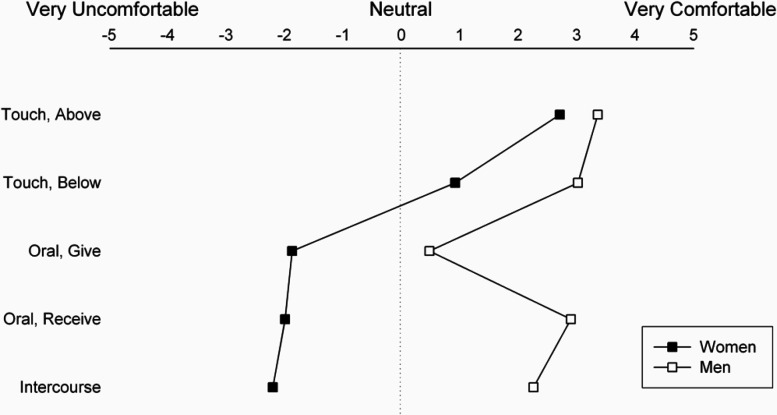
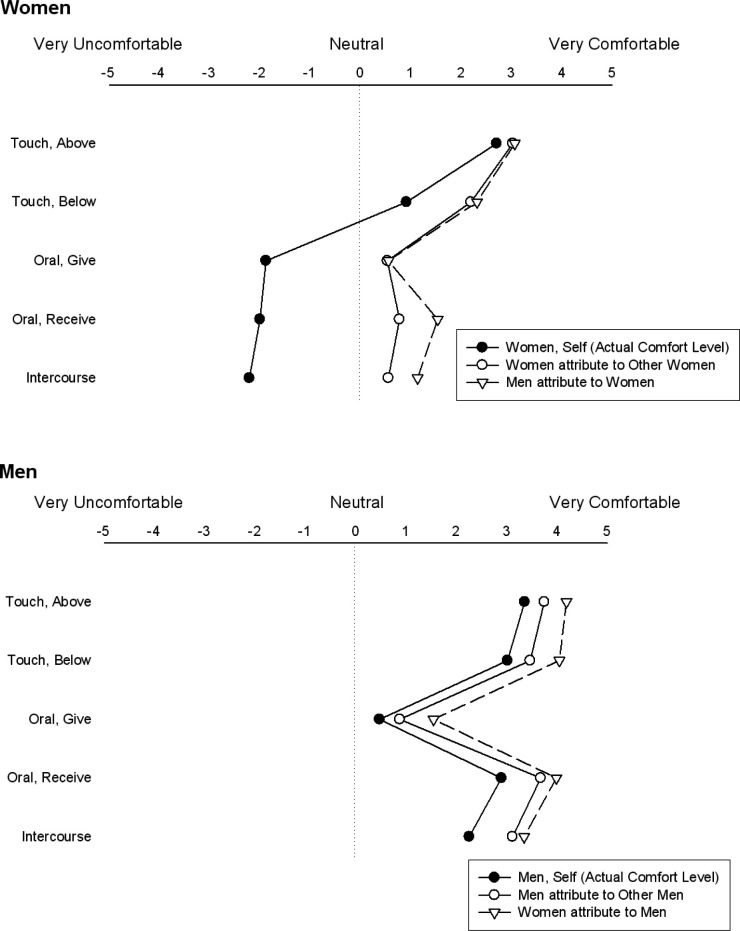
“Hooking-up” – engaging in no-strings-attached sexual behaviors with uncommitted partners - has become a norm on college campuses, and raises the potential for disease, unintended pregnancy, and physical and psychological trauma. The primacy of sex in the evolutionary process suggests that predictions derived from evolutionary theory may be a useful first step toward understanding these contemporary behaviors. This study assessed the hook-up behaviors and attitudes of 507 college students. As predicted by behavioral-evolutionary theory: men were more comfortable than women with all types of sexual behaviors; women correctly attributed higher comfort levels to men, but overestimated men's actual comfort levels; and men correctly attributed lower comfort levels to women, but still overestimated women's actual comfort levels. Both genders attributed higher comfort levels to same-gendered others, reinforcing a pluralistic ignorance effect that might contribute to the high frequency of hook-up behaviors in spite of the low comfort levels reported and suggesting that hooking up may be a modern form of intrasexual competition between females for potential mates.
Overview
The claims and statistics of this paper haven’t been checked yet.
Free: it reads the open-access text and checks the first 5 claims that cite a source we can check. Create a free account to check every claim.
Integrity signals
Registry
Cites
Statistics
Figures
Verification
Claims the paper makes
The claims and statistics of this paper haven’t been checked yet.
Free: it reads the open-access text and checks the first 5 claims that cite a source we can check. Create a free account to check every claim.
Claims other papers make about this one
Each is checked against this paper’s own text: does it say what the citing paper says it does?
The source backs part of the claim, not all of it — or backs it for a different population, condition or comparison.
In the citing paper
“Women typically experience more negative consequences for engaging in hookups while men receive more positive reinforcement (Allison and Risman 2013; Hamilton and Armstrong 2009; Reiber and Garcia 2010).”
From Social Motivations for College Hookups. (2021) · cites this paper as Reiber and Garcia 2010
Experimental — accuracy not yet measured
Self-check
Percentages, sums and reported differences re-computed from the paper’s own numbers.
The self-check needs the paper’s full text.
Citations
Cites
Parental Investment and Sexual Selection
(2017) · Sexual Selection and the Descent of Man · doi:10.4324/9781315129266-7 · Cited by 9,510
Sexual Selection and the Descent of Man: The Darwinian Pivot
(2017) · Routledge eBooks · doi:10.4324/9781315129266 · Cited by 7,252
Sex differences in human mate preferences: Evolutionary hypotheses tested in 37 cultures
Buss, D. M. (1989) · Behavioral and Brain Sciences · doi:10.1017/s0140525x00023992 · Cited by 4,484 · cited 1×
“Thus, male humans are, on average, expected to be more sexually eager than female humans, and females are, on average, expected to be relatively “coy” and choosy concerning mates and mating (Buss, 1989, 2003; Daly and Wilson, 1983; Low, 2000; Symons, 1979).”
Background(1979) · Cited by 2,524
The evolution of human sexuality
Wilson, G. (1980) · Personality and Individual Differences · doi:10.1016/0191-8869(80)90074-4 · Cited by 2,505
The Handbook of evolutionary psychology
(2006) · Choice Reviews Online · doi:10.5860/choice.44-0622 · Cited by 2,121
Nielsen, J. M., Daly, M., & Wilson, M. (1980) · Contemporary Sociology · doi:10.2307/2064296 · Cited by 1,189
Error management theory: A new perspective on biases in cross-sex mind reading
Haselton, M. G., & Buss, D. M. (2000) · Journal of Personality and Social Psychology · doi:10.1037/0022-3514.78.1.81 · Cited by 1,180
Gender differences in sexuality: A meta-analysis.
Oliver, M. B., & Hyde, J. S. (1993) · Psychological Bulletin · doi:10.1037/0033-2909.114.1.29 · Cited by 1,134 · cited 1×
“In the current study, as in several others (Cohen and Shotland, 1996; Knox and Wilson, 1981; Lambert, Kahn, and Apple, 2003; Oliver and Hyde, 1993), men reported higher comfort levels than women with all sexual behaviors.”
Pluralistic ignorance and alcohol use on campus: Some consequences of misperceiving the social norm.
Prentice, D. A., & Miller, D. T. (1993) · Journal of Personality and Social Psychology · doi:10.1037/0022-3514.64.2.243 · Cited by 1,075 · cited 1×
“Also building on the work of Cohen and Shotland (1996), Lambert, Kahn, and Apple (2003), and Prentice and Miller (1993), the current study demonstrated clear patterns of PI with respect to comfort levels with various sexual behaviors during hook-ups.”
Background
Research works printed but not linked: 8
- Fisher H. E. (2009). Why him? Why her? Finding real love by understanding your personality type. New York: Henry Holt and Company.
- Haines M. (1998). Social norms: A wellness model for health promotion in higher education. Wellness Management, 14, 1– 8.
- Low B. S. (2000). Why sex matters. Princeton: Princeton University Press.
- Madison A. (2006). Hooking up: A girl's all-out guide to sex and sexuality. New York: Prometheus Books.
- Reitman J. (2006). Sex and scandal at Duke. Rolling Stone, 1002, 70– 109.
- Rozler J., and Lavinthal A. (2005). The hookup handbook: A single girl's guide to living it up. New York: Simon Spotlight Entertainment.
- Sherman A. J., and Tocantins N. (2004). The happy hook-up: A single girl's guide to casual sex. Berkeley: Ten Speed Press.
- Stepp L. S. (2007). Unhooked: How young women pursue sex, delay love, and lose at both. New York: Riverhead Books.
Cited by
Sexual Hookup Culture: A Review
Garcia, J. R., Reiber, C., Massey, S. G., & Merriwether, A. M. (2012) · Review of General Psychology · doi:10.1037/a0027911 · Cited by 572
“Individuals overestimate others’ comfort with hookups and assign variable meanings to those behaviors (Lambert et al., 2003; Reiber & Garcia, 2010).”
BackgroundInfluentialSelf-citationThe Challenge of Romantic Relationships in Emerging Adulthood: Reconceptualization of the Field
Shulman, S., & Connolly, J. (2013) · Emerging Adulthood · doi:10.1177/2167696812467330 · Cited by 509
“…from nearly 65% to approximately 80% of undergraduate participants reporting having engaged in a hook up at least once in their college career (England, Shafer, and Fogarty, 2007; Garcia & Reiber, 2008; Lambert et al., 2003; Paul & Hayes, 2002; Paul, McManus, & Hayes, 2000; Reiber & Garcia, 2010).”
BackgroundCasual Sexual Relationships and Experiences in Emerging Adulthood
Claxton, S. E., & van Dulmen, M. H. M. (2013) · Emerging Adulthood · doi:10.1177/2167696813487181 · Cited by 271
The Influence of Pornography on Sexual Scripts and Hooking Up Among Emerging Adults in College
Braithwaite, S. R., Coulson, G., Keddington, K., & Fincham, F. D. (2014) · Archives of Sexual Behavior · doi:10.1007/s10508-014-0351-x · Cited by 192
Karaffa, K. M., & Koch, J. M. (2016) · Criminal Justice and Behavior · doi:10.1177/0093854815613103 · Cited by 150
“…ignorance in numerous areas including drinking behaviors (Prentice & Miller, 1993; Segrist, Corcoran, JordanFleming, & Rose, 2007), sexual behaviors (Reiber & Garcia, 2010), body image (Park, yun, McSweeney, & Gunther, 2007), and ethics (Halbesleben, Buckley, & Sauer, 2004), among others.”
Twenge, J. M., Sherman, R. A., & Wells, B. E. (2017) · Archives of Sexual Behavior · doi:10.1007/s10508-016-0798-z · Cited by 122
Predictors of Sexual Hookups: A Theory-Based, Prospective Study of First-Year College Women
Fielder, R. L., Walsh, J. L., Carey, K. B., & Carey, M. P. (2013) · Archives of Sexual Behavior · doi:10.1007/s10508-013-0106-0 · Cited by 113
“A number of scholars have suggested that hooking up differs from casual sex and that it has emerged as a new culture among college students (Aubrey & Smith, 2011; Bogle, 2008; Heldman & Wade, 2010; Holman & Sillars, 2012; Reiber & Garcia,2010).”
BackgroundFeelings of regret following uncommitted sexual encounters in Canadian university students
Fisher, M. L., Worth, K., Garcia, J. R., & Meredith, T. (2012) · Culture, Health & Sexuality · doi:10.1080/13691058.2011.619579 · Cited by 108
Self-citationSargent, R. H., & Newman, L. S. (2021) · Review of General Psychology · doi:10.1177/1089268021995168 · Cited by 117
“For example, Reiber and Garcia (2010) determined that students mistakenly overestimated their same-sex peers’ comfort engaging in sexual behaviors.”
BackgroundVrangalova, Z. (2014) · Archives of Sexual Behavior · doi:10.1007/s10508-013-0255-1 · Cited by 124
“…students—furthercompoundedbypluralisticignorance,thatis, generally false beliefs regarding their high prevalence among others in this group (Lambert, Kahn, & Apple, 2003; Reiber & Garcia,2010),collegemenmayfeelgreaterpressuretoperform well in their hookups leading to greater anxiety.”
A century of pluralistic ignorance: what we have learned about its origins, forms, and consequences
Miller, D. T. (2023) · Frontiers in Social Psychology · doi:10.3389/frsps.2023.1260896 · Cited by 133
Mark, K. P., Garcia, J. R., & Fisher, H. E. (2015) · The Canadian Journal of Human Sexuality · doi:10.3138/cjhs.242-a8 · Cited by 92
“…such as one night stands, casual sex, and friends with benefits (Allison & Risman, 2013; Vrangalova, Bukberg, & Gerulf, 2013), some research has suggested that many people find aspects of these relationships beneficial and fulfilling (Reiber & Garcia, 2010; Paul & Hayes, 2002; Vrangalova, 2015).”
BackgroundSelf-citationEmotional Outcomes of Casual Sexual Relationships and Experiences: A Systematic Review
Wesche, R., Claxton, S. E., & Waterman, E. A. (2020) · The Journal of Sex Research · doi:10.1080/00224499.2020.1821163 · Cited by 78
“…which require long-term commitment from a sexual partner CONTACT Rose Wesche rwesche@vt.edu Department of Human Development and Family Science, Virginia Polytechnic Institute and State University, Blacksburg, VA 24061 © 2020 The Society for the Scientific Study of Sexuality (Reiber & Garcia, 2010).”
BackgroundEaton, A. A., Rose, S. M., Interligi, C., Fernandez, K., & McHugh, M. (2016) · The Journal of Sex Research · doi:10.1080/00224499.2015.1065954 · Cited by 67
“Hookups involve sexual behavior among uncommitted partners, though the extent of sexual behavior on hookups varies widely from kissing to sexual intercourse (Bogle, 2008; Fielder & Carey 2010; Reiber & Garcia, 2010).”
BackgroundOral sex as mate retention behavior
Pham, M. N., & Shackelford, T. K. (2013) · Personality and Individual Differences · doi:10.1016/j.paid.2013.02.012 · Cited by 52
Vrangalova, Z. (2015) · The Journal of Sex Research · doi:10.1080/00224499.2014.910745 · Cited by 50
“A second definitional issue with possible implications for well-being is the physical intimacy level achieved during a hookup, which can range from the ubiquitous kissing to the much rarer vaginal or anal intercourse (Fielder & Carey, 2010a; Reiber & Garcia, 2010).”
BackgroundPartner Meeting Contexts and Risky Behavior in College Students’ Other-Sex and Same-Sex Hookups
Kuperberg, A., & Padgett, J. E. (2017) · The Journal of Sex Research · doi:10.1080/00224499.2015.1124378 · Cited by 48
“…with sexual behaviors and believe others of their same gender are more comfortable than they report being themselves, perhaps leading students to “compete” with others of their gender by hooking up and engaging in activities beyond their comfort level (Lambert et al., 2003; Reiber & Garcia, 2010).”
BackgroundSchmitt, D. P. (2014) · Evolutionary psychology · doi:10.1007/978-1-4939-0314-6_1 · Cited by 51
Katz, J., & Schneider, M. E. (2013) · Archives of Sexual Behavior · doi:10.1007/s10508-013-0078-0 · Cited by 53
Watson, R. J., Snapp, S. D., & Wang, S. (2017) · Sex Roles · doi:10.1007/s11199-017-0831-2 · Cited by 48
“In another study, about one-third of college students engaged in penetrative sexual intercourse in the context of their hookup (Reiber and Garcia 2010), which demonstrates the range of behaviors in the aforementioned 70–85% of young people who hook up.”
BackgroundHeterosexual College Students Who Hookup with Same-Sex Partners
Kuperberg, A., & Walker, A. M. (2018) · Archives of Sexual Behavior · doi:10.1007/s10508-018-1194-7 · Cited by 39
Pham, M. N., Shackelford, T. K., Holden, C. J., Zeigler‐Hill, V., Sela, Y., & Jeffery, A. J. (2014) · Archives of Sexual Behavior · doi:10.1007/s10508-014-0371-6 · Cited by 33
Casual Sexual Scripts on the Screen: A Quantitative Content Analysis
Timmermans, E., & den Bulck, J. V. (2018) · Archives of Sexual Behavior · doi:10.1007/s10508-018-1147-1 · Cited by 42
“…to act in accordance with these false perceived norms (i.e., men’s overestimation of women’s comfort and women’s overestimation of other women’s comfort) may be leading individuals to engage in behavior with which they are uncomfortable, such as engagement in casual sex (Reiber & Garcia, 2010).”
BackgroundSocial Motivations for College Hookups.
Thorpe, S., & Kuperberg, A. (2021) · Sexuality & Culture · doi:10.1007/s12119-020-09786-6 · Cited by 29
Anders, K. M., Goodcase, E. T., Yazedjian, A., & Toews, M. L. (2019) · The Journal of Sex Research · doi:10.1080/00224499.2019.1667946 · Cited by 33
Trinh, S. L., & Ward, L. M. (2015) · The Journal of Sex Research · doi:10.1080/00224499.2015.1015715 · Cited by 33
“College students also believe that their peers are more comfortable during these sexual experiences than they themselves are (Lambert, Kahn, & Apple, 2003; Reiber & Garcia, 2010).”
BackgroundDubé, S., Lavoie, F., Blais, M., & Hébert, M. (2016) · The Journal of Sex Research · doi:10.1080/00224499.2016.1255874 · Cited by 29
“A prevalence of up to 80% was reported in one study asking about specific sexual behaviors (Reiber & Garcia, 2010).”
BackgroundIntimacy Through Casual Sex: Relational Context of Sexual Activity and Affectionate Behaviours
Garcia, J. R., Gesselman, A. N., Massey, S. G., Seibold-Simpson, S. M., & Merriwether, A. M. (2018) · Journal of Relationships Research · doi:10.1017/jrr.2018.10 · Cited by 27
“Issues of consent and coercion extend to why young men and especially young women engage in sexual behaviours in uncommitted contexts that they perceive as normative but that they do not necessarily feel comfortable engaging in (i.e., Lambert, Kahn, & Apple, 2003; Reiber & Garcia, 2010).”
BackgroundSelf-citationSociosexual Attitudes, Sociosexual Behaviors, and Alcohol Use
Corbin, W. R., Scott, C., & Treat, T. A. (2016) · Journal of Studies on Alcohol and Drugs · doi:10.15288/jsad.2016.77.629 · Cited by 27
“In one study, 81% of undergraduate participants reported engaging in hookups, with 34% engaging in sexual intercourse (Reiber & Garcia, 2010).”
BackgroundKenney, S. R., Thadani, V., Ghaidarov, T., & LaBrie, J. W. (2013) · International Journal of Sexual Health · doi:10.1080/19317611.2013.786010 · Cited by 26
“Studies demonstrate that students overestimate how often their peers hook up, as well as peers’ comfort levels and enjoyment related to hooking up (Bogle, 2008; Lambert et al., 2003; Reiber & Garcia, 2010).”
BackgroundKaraffa, K. M., & Hancock, T. S. (2019) · Journal of Veterinary Medical Education · doi:10.3138/jvme.1217-185r · Cited by 30
Unbuckling in the Bible Belt: Conservative sexual norms lower age at marriage.
Garcia, J. R., & Kruger, D. J. (2010) · Journal of Social Evolutionary and Cultural Psychology · doi:10.1037/h0099288 · Cited by 30
“Uncommitted sexual behavior among young adults is becoming more socially permissive and normative, perhaps as a function of shifting life histories (Bogle, 2007; Garcia & Reiber, 2008), despite issues of individual discomfort with these activities (Paul & Hayes, 2002; Reiber & Garcia, 2010).”
BackgroundSelf-citationPluralistic ignorance and misperception of social norms concerning cheating in dating relationships
Boon, S. D., WATKINS, S. J., & Sciban, R. (2014) · Personal Relationships · doi:10.1111/pere.12044 · Cited by 21
Frequency, intensity and expression of post-relationship grief
(2011) · EvoS Journal · doi:10.59077/csjc1258 · Cited by 24
“In addition, the meaning of a “long-term” romantic relationship was left to the discretion of the respondent and was intended mainly to screen out “hook up” behavior (see Garcia & Reiber, 2008; Reiber & Garcia, 2010).”
BackgroundCasual Sex: Integrating Social, Behavioral, and Sexual Health Research
Garcia, J. R., Seibold–Simpson, S. M., Massey, S. G., & Merriwether, A. M. (2015) · Handbooks of sociology and social research · doi:10.1007/978-3-319-17341-2_12 · Cited by 23
Self-citationShukusky, J. A., & Wade, T. J. (2012) · Journal of Social Evolutionary and Cultural Psychology · doi:10.1037/h0099237 · Cited by 16
“College students believe that their peers are more sexually permissive than they actually are (Chia & Gunther, 2006; Reiber & Garcia, 2010).”
BackgroundAubrey, J. S., & Smith, S. E. (2015) · Mass Communication & Society · doi:10.1080/15205436.2015.1070875 · Cited by 18
“For example, one study found that only one third of participants had engaged in penetrative sexual intercourse during a hookup, whereas the remaining participants participated in a variety of other sexual activities ranging from kissing to oral sex to genital touching (Reiber & Garcia, 2010).”
BackgroundLongo, L. M., Ertl, M. M., Pazienza, R., Agiliga, A. U., Dillon, F. R., & Martin, J. L. (2019) · Substance Use & Misuse · doi:10.1080/10826084.2019.1703748 · Cited by 21
“Approximately 30 to 55% of college students report a casual sexual experience at least once per semester (Manthos, Owen, & Fincham, 2014; Owen, Fincham, & Moore, 2011; Vrangalova, 2015b), with lifetime estimates reaching upwards of 80% (Garcia & Reiber, 2008; Reiber & Garcia, 2010).”
BackgroundMasculinities and Hooking Up: Sexual Decision-Making at College
Kalish, R. (2013) · Culture Society and Masculinities · doi:10.3149/csm.0502.147 · Cited by 24
Teasing Apart the Roles of Gender and Alcohol in Drinking Consequences Using an Event-Level Analysis
Dumas, T. M., Wells, S. L., Tremblay, P. F., & Graham, K. (2013) · Contemporary Drug Problems · doi:10.1177/009145091304000303 · Cited by 17
“For example, research on “hooking-up,” or engaging in casual sexual relationships without commitment among college students suggests that men tend to have more positive feelings towards this act than do women (Lambert, Kahn, & Apple, 2003; Reiber & Garcia, 2010).”
BackgroundSelterman, D., Garcia, J. R., & Tsapelas, I. (2020) · Journal of Sex & Marital Therapy · doi:10.1080/0092623x.2020.1856987 · Cited by 8
“For instance, our finding that men were more likely than women to report receiving (rather than performing) oral sex is consistent with other work showing similar patterns for casual sex encounters (Reiber & Garcia, 2010).”
ResultSelf-citation“They're Just a Good Time and Move On”: Fraternity Men Reflect on Their Hookup Experiences
Stinson, R. D., Levy, L. B., & Alt, M. (2014) · Journal of College Student Psychotherapy · doi:10.1080/87568225.2014.854683 · Cited by 18
“Discrepancies in comfort level have been found, with men significantly more comfortable with the range of hookup behaviors (Lambert et al., 2003; Reiber & Garcia, 2010).”
BackgroundDo Men and Women Perform Oral Sex as Mate Retention Behavior?
Sela, Y., Pham, M. N., & Shackelford, T. K. (2014) · Evolutionary psychology · doi:10.1007/978-3-319-09384-0_4 · Cited by 12
Anders, K. M., & Olmstead, S. B. (2019) · Archives of Sexual Behavior · doi:10.1007/s10508-018-1332-2 · Cited by 15
Napper, L. E., Kenney, S. R., & LaBrie, J. W. (2014) · The Journal of Sex Research · doi:10.1080/00224499.2014.952809 · Cited by 17
“Consistent with the social norms model, college students are found to overestimate how often other students hook up and how approving their peers are toward hooking up (Barriger & Vélez-Blasini, 2013; Holman & Sillars, 2012; Lambert, Kahn, & Apple, 2003; Reiber & Garcia, 2010).”
Why do we Need Norm Sensitive Design? A WEIRD Critique of Value Sensitive Approaches to Design
Martin, D. A., Clancy, R. F., Zhu, Q., & Bombaerts, G. J. T. (2023) · Global Philosophy · doi:10.1007/s10516-023-09689-9 · Cited by 22
“Technologies have the potential to change norms by dispelling “pluralistic ignorance,” a lack of knowledge regarding what others do or think one should do, as has been done with practices involving binge drinking, hookup culture, and genital mutilation (Schroeder and Prentice 1998; Prentice and Miller 1993; Reiber and…”
Human Mate Choice, Evolution of
Easton, J. A., Goetz, C. D., & Buss, D. M. (2015) · Elsevier eBooks · doi:10.1016/b978-0-08-097086-8.81049-1 · Cited by 16
“This has changed drastically in the modern first-world environment – the anonymity of modern society makes it easier for men to deceive women into brief casual sexual liaisons at low costs to the men (Carroll et al., 1985; Garcia and Reiber, 2008; Paul and Hayes, 2002; Paul et al., 2000; Reiber and Garcia, 2010; Uecke…”
BackgroundA Behavioral-Science Framework for Understanding College Campus Sexual Assault
Gantman, A. P., & Paluck, E. L. (2021) · Perspectives on Psychological Science · doi:10.1177/17456916211030264 · Cited by 11
“Moreover, men and women each tend to overestimate the other’s comfort levels; students think other students are more comfortable hooking up than they really are (Reiber & Garcia, 2010; for an in-depth treatment, see Wade, 2017).”
BackgroundHookup Sex Versus Romantic Relationship Sex in College: Why Do We Care and What Do We Do?
Calzo, J. P. (2013) · Journal of Adolescent Health · doi:10.1016/j.jadohealth.2013.03.001 · Cited by 13
Grossman, J. M., Black, A. C., & Richer, A. M. (2020) · Journal of Family Issues · doi:10.1177/0192513x19898515 · Cited by 14
“Most emerging adults are sexually active, and studies suggest that 70%–80% of emerging US adults report having ever had a hook-up (sex with a partner on only one occasion; Aubrey & Smith, 2013; Reiber & Garcia, 2010).”
BackgroundAn Empirical Examination of Hookup Definitions Across the Literature, 2000–2019
Bible, J., Matera, K. N., & van Eeden‐Moorefield, B. (2022) · Archives of Sexual Behavior · doi:10.1007/s10508-021-02115-4 · Cited by 12
“Although it appears that most young adults attending college engage in non-committed sexual behavior (Garcia et al., 2012), that number significantly drops when only oral sex and sexual intercourse are included in conceptualizations (Reiber & Garcia, 2010).”
BackgroundThe (Mal) Adaptive Value of Mid-Adolescent Dating Relationship Labels
Howard, D. E., Debnam, K. J., Cham, H. J., Czinn, A., Aiken, N. E., Jordan, J. A., & Goldman, R. E. (2015) · The Journal of Primary Prevention · doi:10.1007/s10935-015-0387-2 · Cited by 13
Williams, C. D., & Harper, S. R. (2014) · Masculinities & Social Change · doi:10.4471/mcs.2014.55 · Cited by 10
“Reiber and Garcia (2010) and Lambert et al. (2003) analyze the role of pluralistic ignorance in the context of a college campus.”
BackgroundInfluentialPluralistic ignorance: Conceptual framework, antecedents and consequences
Mendes, A. C. A., Lopez‐Valeiras, E., & Lunkes, R. J. (2017) · Intangible Capital · doi:10.3926/ic.1063 · Cited by 17
Kuperberg, A., & Allison, R. (2018) · Handbooks of Sociology and Social Research · doi:10.1007/978-3-319-76333-0_23 · Cited by 6
Ignorance of the crowd: dysfunctional thinking in social networks
Seeme, F. B., Green, D., & Kopp, C. (2025) · Frontiers in Communication · doi:10.3389/fcomm.2025.1547489 · Cited by 9
Clancy, R. F., Bode, I., & Zhu, Q. (2023) · Ethics and Information Technology · doi:10.1007/s10676-023-09680-3 · Cited by 7
“Rather, they are affected by social, cultural, and environmental factors (Bicchieri, 2016; Reiber & Garcia, 2010).”
BackgroundBeckmeyer, J. J. (2017) · Substance Abuse · doi:10.1080/08897077.2016.1214212 · Cited by 6
Deutsch, A. R., & Slutske, W. S. (2014) · The Journal of Sex Research · doi:10.1080/00224499.2014.942413 · Cited by 4
“I have,” “I would,” “I won’t”: Hooking up among sexually diverse groups of college students.
Hall, S. S., Knox, D. H., & Shapiro, K. (2017) · Psychology of Sexual Orientation and Gender Diversity · doi:10.1037/sgd0000223 · Cited by 3
“In some cases, however, a hookup culture—as the perceived social norm—creates a context in which students feel pressure to participate in hookups just to fit in (Bogle, 2007; Reiber & Garcia, 2010).”
BackgroundMcElroy, E. E., Perry, S. L., & Grubbs, J. B. (2023) · The Journal of Sex Research · doi:10.1080/00224499.2023.2229317 · Cited by 4
“We may also expect personal projections to be stronger for ingroup (i.e., same gender) estimations (Krueger & Zeiger, 1993; Reiber & Garcia, 2010).”
Hookups to romantic relationships
Shukusky, J. A. (2013) · Rutgers University Community Repository (Rutgers University) · doi:10.7282/t3qc027c · Cited by 5
“…men and women suspect that their same-sex peers are more comfortable with sexual behaviors than they are, and thus foster a pluralistic ignorance effect that may be contributing to the popularity of hookups despite relatively low levels of comfort with intimate behaviors (Garcia & Reiber, 2010).”
BackgroundOral Sex May Serve as Low Mate Value Compensation Among Men: Evidence from a Pre-registered Study
Frankowska, N., Szymków, A., & Galbarczyk, A. (2024) · Archives of Sexual Behavior · doi:10.1007/s10508-024-03064-4 · Cited by 2
“In addition, men typically do not perform cunnilingus on women during casual sexual encounters where there is no perceived threat of partner infidelity (Armstrong et al., 2009; Backstrom et al., 2012; Lewis et al., 2013; Reiber & Garcia, 2010).”
From Value- to Norm-sensitive Design? An Empirical and Intercultural Framework
Clancy, R. F., Qin, Z., Martin, D. A., & Bombaerts, G. J. T. (2024) · ASEE Annual Conference & Exposition · doi:10.18260/1-2--40810 · Cited by 2
Out of the Shadows and Into the Light: New Data Comparing Asexual and Sexual Undergraduates
Hall, S. S., Knox, D. H., & Chang, I.-T. J. (2021) · Journal of Positive Sexuality · doi:10.51681/1.722 · Cited by 2
“Other asexual individuals might hook up out of pressure to conform to the expected cultural sexual norm during college (Reiber & Garcia, 2010).”
BackgroundHooking up in the Twenty-First Century
Marganski, A., & Fauth, K. (2013) · Sociology and Criminology-Open Access · doi:10.4172/2375-4435.1000102 · Cited by 1
“Reiber and Garcia [22] Evolutionary Psychology, 8 (3), 390-404.”
BackgroundInfluentialThe Early Stages of Mate Selection
Li, N. P., & Choy, B. K. C. (2023) · Oxford University Press eBooks · doi:10.1093/oxfordhb/9780197536438.013.2 · Cited by 1
Kelly, C. R. (2024) · Emerald Group Publishing Limited eBooks · doi:10.1108/s0882-614520240000041002 · Cited by 2
Identifying Sexual Attraction in Platonic Cross-Sex Relationships and its Effects on Friendships
Armenta, G. (2012) · Digital Commons - Trinity University (Trinity University) · Cited by 3
Ward, R. M., & Weiner, J. L. (2012) · Open Journal of Leadership · doi:10.4236/ojl.2012.12002 · Cited by 2
“Another risky health behavior that is increasing in prevalence is “hooking up” or sexual interactions with no expectations of a relationship (Bogle, 2008; Paul, McManus & Hayes, 2000; Reiber & Garcia, 2010).”
BackgroundPease, L. J. (2013) · Cited by 2
Gender Differences in Emotional Responses to Hooking Up
Malone, K. (2011) · Bucknell Digital Commons (Bucknell University)
Rau-mason, V. L. (2011) · Iowa State University Digital Repository (Iowa State University) · doi:10.31274/etd-180810-958
“For example, many studies have documented the large proportion of the student population that is hooking up during their college careers (England 2008; Hamilton and Armstrong 2009; Paul, Brian, and Hayes 2000; Reiber and Garcia 2010).”
BackgroundKinsey Reporter: Citizen Science for Sex ResearchPreprint
Davis, C. A., Heiman, J. R., Janssen, E., Sanders, S. A., Garcia, J. R., & Menczer, F. (2016) · arXiv (Cornell University) · doi:10.48550/arxiv.1602.04878 · Cited by 1
“The chart shows expected relationships, such as increased incidence of oral sex amongst those in casual relationships [9], but also unexpected features such as the increased incidence of anal sex in casual encounters (392 reports).”
BackgroundSelf-citationNonrelationship sex and the college student population
White, M. L. (2013) · K-State Research Exchange (Kansas State University)
Pchiru Shelni: a sexual practice in Bhutan
Yangden, T. (2015) · Research Online (University of Wollongong)
Lucht, K. M. (2014) · ISU Red - Research and eData (Illinois State University) · doi:10.30707/etd2014.lucht.k
“Reiber and Garcia (2010) found that 81% of undergraduate students have engaged in some form of hookup behavior.”
BackgroundPredictors Of Positive And Negative Affect Following Casual Sex
Woerner, J. I. (2014) · Human Biology
Casual Sexual Relationships and Experiences
Konstam, V. (2019) · Oxford University Press eBooks · doi:10.1093/oso/9780190639778.003.0006
Associations Between Hookup Culture and Social Group
Abrash, R. (2020)
Perception of sexual interest: examining the roles of situations, dispositions, and culture
Goh, P. H. (2017) · reroDoc Digital Library
Coccimiglio, M. (2021) · Brock University Digital Repository (Brock University)
Ross, R., Blackwell, M. A., Vitek, K. N., & Yeater, E. A. (2021) · Oxford University Press eBooks · doi:10.1093/oso/9780190057008.003.0027
Gössl, M. J. (2021) · transcript Verlag eBooks · doi:10.1515/9783839461273
Gössl, M. J. (2021) · Queer studies · doi:10.14361/9783839461273
Examining the Relationship between Hookup Culture and Self-Esteem among College Students
Chaube, A., & Vijayan, D. (2023) · International Journal for Research in Applied Science and Engineering Technology · doi:10.22214/ijraset.2023.51244
Risk-Taking Behaviors: Rape/Coercion
Shigeto, A., & Jesus, C. D. (2023) · Springer eBooks · doi:10.1007/978-3-031-08956-5_75-1
Gössl, M. J. (2024) · Queer studies · doi:10.14361/9783839473856-006
Gössl, M. J. (2024) · Queer studies · doi:10.14361/9783839473856-007
Gössl, M. J. (2024) · Queer studies · doi:10.14361/9783839473856-010
Gössl, M. J. (2024) · Queer studies · doi:10.14361/9783839473856-012
Gössl, M. J. (2024) · Queer studies · doi:10.14361/9783839473856-009
Gössl, M. J. (2024) · Queer studies · doi:10.14361/9783839473856-008
Gössl, M. J. (2024) · Queer studies · doi:10.14361/9783839473856-005
Gössl, M. J. (2024) · Queer studies · doi:10.14361/9783839473856-011
Gössl, M. J. (2024) · Queer studies · doi:10.14361/9783839473856-002
Gössl, M. J. (2024) · Queer studies · doi:10.14361/9783839473856
Gössl, M. J. (2024) · Queer studies · doi:10.14361/9783839473856-004
Gössl, M. J. (2024) · Queer studies · doi:10.14361/9783839473856-toc
Metadata
- Authors
- Reiber, C., & Garcia, J. R.
- Affiliations
- Binghamton University (US)
- Corresponding author
- Reiber, Chris
- ORCID
- Garcia, Justin R.
- Venue
- Evolutionary Psychology
- Publisher
- SAGE Publications
- Published
- 2010-07-01
- Volume
- 8
- Issue
- 3
- Pages
- 390-404
- ISSN
- 1474-7049 (ISSN-L)
- PMC
- PMC10480847
- OpenAlex
- W1524281113
- Cited by
- 110
- References
- 39
- Citations by year
- 2026: 3 · 2025: 2 · 2024: 19 · 2023: 7 · 2022: 1 · 2021: 8 · 2020: 5 · 2019: 5 · 2018: 4 · 2017: 4 · 2016: 6 · 2015: 9 · 2014: 13 · 2013: 15 · 2012: 4
- FWCI
- 9.99
- Type
- journal article
- Language
- en
- Open access
- gold
- doi.org
- Licence
- Locations
- Evolutionary Psychology (publishedVersion, cc-by-nc)
- PubMed Central (publishedVersion, cc-by-nc)
- PubMed (publishedVersion)
- DOAJ (DOAJ: Directory of Open Access Journals) (submittedVersion, cc-by-sa)
- Funders
- Princeton University
- Topics
- Social Sciences › Psychology › Experimental and Cognitive Psychology › Evolutionary Psychology and Human Behavior
- Social Sciences › Sociology and Political Science › Marriage and Sexual Relationships
- Life Sciences › Agricultural and Biological Sciences › Ecology, Evolution, Behavior and Systematics › Animal Behavior and Reproduction
- Keywords
- hooking up, university students, gender differences, pluralistic ignorance, intrasexual competition, mate competition, sexual risk
- MeSH terms
- Adolescent, Adult, Cross-Sectional Studies, Female, Humans, Male, Men, Surveys and Questionnaires, Sexual Behavior, Sex Factors, Social Behavior, Students, Universities, Women, Young Adult
About these checks
Registry, retraction, Cites and statistics results are computed, not judged, with one exception: a printed reference that no index lists is read once by a model before it counts as a citation error. Claims are extracted by a model and kept only when their quote appears verbatim in the text; each cited source is then checked, with a model’s help, for whether it says what the claim relies on. Those verdicts can be wrong — read the claim’s quote and the cited source before relying on one.
Statistics and arithmetic are recomputed, not judged.
Confidence bands are shown only for fields calibrated on our annotated test set. None is calibrated yet, so no band is shown.
What counts as a claim ›How we measure confidence ›How we check this ›
Are you an author, or do you see a problem with this page? Request a review
Data sources
Bibliographic data: Semantic Scholar, OpenAlex, Crossref.
Contains information from the Semantic Scholar Academic Graph Datasets, made available under the ODC Attribution License (ODC-BY 1.0).
Semantic Scholar’s data is described in: Kinney, R., et al. (2023). The Semantic Scholar Open Data Platform. arXiv:2301.10140.
