

The DOI matches its Crossref record; 85 of the 85 references it cites were found in a registry or an index.
Engaging Men in Psychological Treatment: A Scoping Review
Open accessAbstract
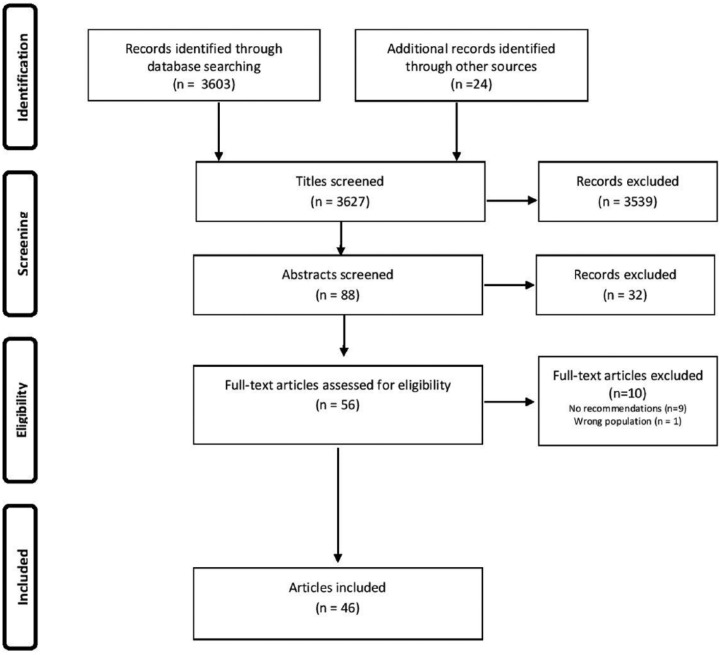
Tailoring psychological treatments to men's specific needs has been a topic of concern for decades given evidence that many men are reticent to seek professional health care. However, existing literature providing clinical recommendations for engaging men in psychological treatments is diffuse. The aim of this scoping review was to provide a comprehensive summary of recommendations for how to engage men in psychological treatment. Four electronic databases (MEDLINE, PubMed, CINAHL, PsycINFO) were searched for articles published between 2000 and 2017. Titles and abstracts were reviewed; data extracted and synthesized thematically. Of 3,627 citations identified, 46 met the inclusion criteria. Thirty articles (65%) were reviews or commentaries; 23 (50%) provided broad recommendations for working with all men. Findings indicate providing male-appropriate psychological treatment requires clinicians to consider the impact of masculine socialization on their client and themselves, and how gender norms may impact clinical engagement and outcomes. Existing literature also emphasized specific process micro-skills (e.g., self-disclosure, normalizing), language adaption (e.g., male-oriented metaphors) and treatment styles most engaging for men (e.g., collaborative, transparent, action-oriented, goal-focused). Presented are clinical recommendations for how to engage men in psychological treatments including paying attention to tapping the strengths of multiple masculinities coexisting within and across men. Our review suggests more empirically informed tailored interventions are needed, along with formal program evaluations to advance the evidence base.
Overview
The claims and statistics of this paper haven’t been checked yet.
Run the check — free, no account needed. It reads the open-access text and checks the sources it cites.
Integrity signals
Registry
Cites
Statistics
Figures
Verification
Claims the paper makes
The claims and statistics of this paper haven’t been checked yet.
Run the check — free, no account needed. It reads the open-access text and checks the sources it cites.
Claims other papers make about this one
Each is checked against this paper’s own text: does it say what the citing paper says it does?
The source backs part of the claim, not all of it — or backs it for a different population, condition or comparison.
In the citing paper
“As widely studied, in general, men are more reticent to search for psychological support compared to women (Liddon et al., 2018; Seidler et al., 2018)”
From A Self-Applied Multi-Component Psychological Online Intervention Based on UX, for the Prevention of Complicated Grief Disorder in the Mexican Population During the COVID-19 Outbreak: Protocol of a Randomized Clinical Trial (2021) · cites this paper as Seidler et al., 2018
Experimental — accuracy not yet measured
Self-check
Percentages, sums and reported differences re-computed from the paper’s own numbers.
The self-check needs the paper’s full text.
Citations
Cites
Preferred Reporting Items for Systematic Reviews and Meta-Analyses: the PRISMA statement
Moher, D., Liberati, A., Tetzlaff, J., Altman, D. G., & for the PRISMA Group (2009) · BMJ · doi:10.1136/bmj.b2535 · Cited by 83,823
Preferred reporting items for systematic reviews and meta-analyses: The PRISMA statement
Moher, D., Liberati, A., Tetzlaff, J., Altman, D. G., & the PRISMA Group* (2009) · Annals of Internal Medicine · doi:10.7326/0003-4819-151-4-200908180-00135 · Cited by 37,554
Scoping studies: towards a methodological framework
Arksey, H., & O'Malley, L. (2005) · International Journal of Social Research Methodology · doi:10.1080/1364557032000119616 · Cited by 36,742
Scoping studies: advancing the methodology
Levac, D., Colquhoun, H., & O'Brien, K. K. (2010) · Implementation Science · doi:10.1186/1748-5908-5-69 · Cited by 15,268
Methods for the thematic synthesis of qualitative research in systematic reviews
Thomas, J., & Harden, A. (2008) · BMC Medical Research Methodology · doi:10.1186/1471-2288-8-45 · Cited by 9,312
Whiteford, H. A., Degenhardt, L., Rehm, J., Baxter, A. J., Ferrari, A. J., Erskine, H. E., Charlson, F. J., Norman, R. E., Flaxman, A. D., Johns, N., et al. (2013) · The Lancet · doi:10.1016/s0140-6736(13)61611-6 · Cited by 6,006
Analysing Data and Undertaking Meta‐Analyses
Deeks, J. J., Higgins, J. P., & Altman, D. G. (2008) · Cochrane Handbook for Systematic Reviews of Interventions · doi:10.1002/9780470712184.ch9 · Cited by 1,800
Men and health help‐seeking behaviour: literature review
Galdas, P. M., Cheater, F., & Marshall, P. (2005) · Journal of Advanced Nursing · doi:10.1111/j.1365-2648.2004.03331.x · Cited by 1,739
Manese, J. E., Croteau, J. P., Helms, J. E., Horwatt, S., Boggs, K., & Stone, G. (2003) · American Psychologist · doi:10.1037/0003-066x.58.5.377 · Cited by 1,703
'Scoping the scope' of a cochrane review
Armstrong, R., Hall, B. J., Doyle, J., & Waters, E. (2011) · Journal of Public Health · doi:10.1093/pubmed/fdr015 · Cited by 1,260
The role of masculinity in men's help-seeking for depression: A systematic review
Seidler, Z. E., Dawes, A. J., Rice, S. M., Oliffe, J. L., & Dhillon, H. M. (2016) · Clinical Psychology Review · doi:10.1016/j.cpr.2016.09.002 · Cited by 1,093 · cited 2×
“…critiques restrictive ideals of traditional masculinity (e.g., strength and stoicism) as contradicting the emotional vulnerability and communication needed to access and fully engage with effective psychological treatment (Seidler et al., 2016; Vogel & Heath, 2016; Westwood & Black, 2012).”
BackgroundArdito, R. B., & Rabellino, D. (2011) · Frontiers in Psychology · doi:10.3389/fpsyg.2011.00270 · Cited by 647
Masculinity scripts, presenting concerns, and help seeking: Implications for practice and training.
Mahalik, J. R., Good, G. E., & Englar-Carlson, M. (2003) · Professional Psychology: Research and Practice · doi:10.1037/0735-7028.34.2.123 · Cited by 388
Studying the Organisation and Delivery of Health Services: Research Methods
Goodwin, N. (2002) · Health & Social Care in the Community · doi:10.1046/j.1365-2524.2002.03832.x · Cited by 385
Using scoping literature reviews as a means of understanding and interpreting existing literature
Rumrill, P. D., Fitzgerald, S. M., & Merchant, W. R. (2010) · WORK: A Journal of Prevention, Assessment & Rehabilitation · doi:10.3233/wor-2010-0998 · Cited by 358
Calear, A. L., Batterham, P. J., & Christensen, H. M. (2014) · Psychiatry Research · doi:10.1016/j.psychres.2014.06.027 · Cited by 287
Pederson, E. L., & Vogel, D. L. (2007) · Journal of Counseling Psychology · doi:10.1037/0022-0167.54.4.373 · Cited by 278
Seymour‐Smith, S., Wetherell, M. S., & Phoenix, A. (2002) · Journal of Health Psychology · doi:10.1177/1359105302007003220 · Cited by 274
Men’s discourses of help‐seeking in the context of depression
Johnson, J. L., Oliffe, J. L., Kelly, M. T., Galdas, P., & Ogrodniczuk, J. S. (2012) · Sociology of Health & Illness · doi:10.1111/j.1467-9566.2011.01372.x · Cited by 238 · cited 2×
“…treatment has been reported as equally efficacious for men and women (Staczan et al., 2017) recent findings suggest some men have difficulty engaging with specific forms and elements of treatment (Johnson et al., 2012) (e.g., finding it difficult to engage in a trusting therapeutic relationship).”
BackgroundSelf-citationKiselica, M. S., & Englar-Carlson, M. (2010) · Psychotherapy: Theory, Research, Practice, Training · doi:10.1037/a0021159 · Cited by 228
Guidelines for psychotherapy with lesbian, gay, and bisexual clients.
(2000) · American Psychologist · doi:10.1037/0003-066x.55.12.1440 · Cited by 219
Healthy masculinities? How ostensibly healthy men talk about lifestyle, health and gender
Sloan, C., Gough, B., & Conner, M. T. (2009) · Psychology and Health · doi:10.1080/08870440902883204 · Cited by 206
Gender-sensitive recommendations for assessment and treatment of depression in men
Cochran, S. V., & Rabinowitz, F. E. (2003) · Professional Psychology: Research and Practice · doi:10.1037/0735-7028.34.2.132 · Cited by 190
Addis, M. E., & Cohane, G. H. (2005) · Journal of Clinical Psychology · doi:10.1002/jclp.20099 · Cited by 189
An intersectional approach to Men's Health
Griffith, D. M. (2012) · Journal of Men s Health · doi:10.1016/j.jomh.2012.03.003 · Cited by 161
Developing a taxonomy of helpful and harmful practices for clinical work with boys and men.
Mahalik, J. R., Good, G. E., Tager, D., Levant, R. F., & Mackowiak, C. (2012) · Journal of Counseling Psychology · doi:10.1037/a0030130 · Cited by 149
Guidelines for Psychological Practice With Older Adults.
(2004) · American Psychologist · doi:10.1037/0003-066x.59.4.236 · Cited by 138
Men’s Mental Health Services: The Case for a Masculinities Model
Seidler, Z., Rice, S., River, J., Oliffe, J., & Dhillon, H. (2018) · The Journal of Men s Studies · doi:10.1177/1060826517729406 · Cited by 132
The study of men and masculinity as an important multicultural competency consideration
Liu, W. M. (2005) · Journal of Clinical Psychology · doi:10.1002/jclp.20103 · Cited by 127
Using the Conformity to Masculine Norms Inventory to work with men in a clinical setting
Mahalik, J. R., Talmadge, W. T., Locke, B. D., & Scott, R. P. J. (2005) · Journal of Clinical Psychology · doi:10.1002/jclp.20101 · Cited by 123
Guidelines for psychological practice with girls and women.
(2007) · American Psychologist · doi:10.1037/0003-066x.62.9.949 · Cited by 117
Demystifying Men's Emotional Behavior: New Directions and Implications for Counseling and Research.
Wong, Y. J., & Rochlen, A. B. (2005) · Psychology of Men & Masculinity · doi:10.1037/1524-9220.6.1.62 · Cited by 115
McCarthy, J., & Holliday, E. L. (2004) · Journal of Counseling & Development · doi:10.1002/j.1556-6678.2004.tb00282.x · Cited by 114
Harris, M. G., Diminic, S., Reavley, N., Baxter, A., Pirkis, J., & Whiteford, H. A. (2015) · Australian & New Zealand Journal of Psychiatry · doi:10.1177/0004867415577434 · Cited by 113
Rochlen, A. B., Whilde, M. R., & Hoyer, W. D. (2005) · Psychology of Men & Masculinity · doi:10.1037/1524-9220.6.3.186 · Cited by 107
Lorber, W., & Garcia, H. A. (2010) · Psychotherapy · doi:10.1037/a0021161 · Cited by 101
Men In and Out of Treatment for Depression: Strategies for Improved Engagement
Seidler, Z. E., Rice, S. M., Oliffe, J. L., Fogarty, A. S., & Dhillon, H. M. (2018) · Australian Psychologist · doi:10.1111/ap.12331 · Cited by 96
Men and therapy: Critical concepts, theoretical frameworks, and research recommendations
Good, G. E., Thomson, D. A., & Brathwaite, A. D. (2005) · Journal of Clinical Psychology · doi:10.1002/jclp.20104 · Cited by 88
Emslie, C., Ridge, D., Ziébland, S., & Hunt, K. (2007) · BMC Family Practice · doi:10.1186/1471-2296-8-43 · Cited by 86
Mahalik, J. R. (1999) · Professional Psychology Research and Practice · doi:10.1037/0735-7028.30.4.333 · Cited by 84
Beyond the Crisis of Masculinity: A Transtheoretical Model for Male-Friendly Therapy
Brooks, G. (2009) · American Psychological Association eBooks · doi:10.1037/12073-000 · Cited by 82
Empirical search for psychotherapists' gender competence in psychotherapy.
Owen, J. J., Wong, Y. J., & Rodolfa, E. R. (2009) · Psychotherapy · doi:10.1037/a0017958 · Cited by 81
Guidelines for Psychological Practice with Older Adults
(2013) · PsycEXTRA Dataset · doi:10.1037/e645272013-001 · Cited by 81
Men, masculinities, and help-seeking patterns.
Vogel, D. L., & Heath, P. J. (2015) · American Psychological Association eBooks · doi:10.1037/14594-031 · Cited by 74
The Male Fear of the Feminine and its Effects on Counseling and Psychotherapy
Kierski, W., & Blazina, C. (2009) · The Journal of Men s Studies · doi:10.3149/jms.1702.155 · Cited by 63
Work–Life Balance for Men: Counseling Implications
Evans, A. M., Carney, J. S., & Wilkinson, M. (2013) · Journal of Counseling & Development · doi:10.1002/j.1556-6676.2013.00115.x · Cited by 59
What a man wants: The male perspective on therapeutic alliance formation.
Bedi, R. P., & Richards, M. (2011) · Psychotherapy · doi:10.1037/a0022424 · Cited by 49
McArdle, S., McGale, N., & Gaffney, P. (2012) · International Journal of Men s Health · doi:10.3149/jmh.1103.240 · Cited by 49
The Men's Stress Workshop: A Gender-Sensitive Treatment for Depressed Men
Primack, J. M., Addis, M. E., Syzdek, M., & Miller, I. W. (2010) · Cognitive and Behavioral Practice · doi:10.1016/j.cbpra.2009.07.002 · Cited by 47
HeadsUpGuys: Canadian online resource for men with depression.
Ogrodniczuk, J. S., Oliffe, J. L., & Beharry, J. (2018) · Europe PMC (PubMed Central) · Cited by 46
Engaging Men in Couples Counseling: Strategies for Overcoming Ambivalence and Inexpressiveness
Englar‐Carlson, M., & Shepard, D. S. (2005) · The Family Journal · doi:10.1177/1066480705278467 · Cited by 44
Spendelow, J. S. (2015) · American Journal of Men s Health · doi:10.1177/1557988314529790 · Cited by 42
Evidence-Based assessment with men
Cochran, S. V. (2005) · Journal of Clinical Psychology · doi:10.1002/jclp.20100 · Cited by 42
Effects of sex and gender in ten types of psychotherapy
Staczan, P., Schmuecker, R., Koehler, M., Berglar, J., Crameri, A., von Wyl, A., Koemeda-Lutz, M., Schulthess, P., & Tschuschke, V. (2015) · Psychotherapy Research · doi:10.1080/10503307.2015.1072285 · Cited by 42
To accept a pilot? Addressing men's ambivalence and altering their expectancies about therapy.
Good, G. E., & Robertson, J. M. (2010) · Psychotherapy · doi:10.1037/a0021162 · Cited by 39
Understanding help-seeking among depressed men
Sierra Hernandez, C. A., Han, C., Oliffe, J. L., & Ogrodniczuk, J. S. (2014) · Psychology of Men & Masculinity · doi:10.1037/a0034052 · Cited by 37
Self-citationMen's use of positive strategies for preventing and managing depression: A qualitative investigation
Fogarty, A. S., Proudfoot, J. G., Whittle, E. L., Player, M. J., Christensen, H. M., Hadži-Pavlović, D., & Wilhelm, K. A. (2015) · Journal of Affective Disorders · doi:10.1016/j.jad.2015.08.070 · Cited by 35
Chovanec, M. G. (2012) · Social Work With Groups · doi:10.1080/01609513.2012.669351 · Cited by 34
Using Football Metaphor to Engage Men in Therapeutic Support
Spandler, H., Roy, A., & McKeown, M. (2013) · Journal of Social Work Practice · doi:10.1080/02650533.2013.853286 · Cited by 33
Owen, J. J., Wong, Y. J., & Rodolfa, E. R. (2010) · Journal of Counseling Psychology · doi:10.1037/a0017870 · Cited by 31
No Man Left Behind: Effectively Engaging Male Military Veterans in Counseling
Kivari, C. A., Oliffe, J. L., Borgen, W. A., & Westwood, M. J. (2016) · American Journal of Men s Health · doi:10.1177/1557988316630538 · Cited by 31
Integrated cognitive–behavioral and psychodynamic psychotherapy for intimate partner violent men.
Lawson, D. M., Kellam, M., Quinn, J., & Malnar, S. G. (2012) · Psychotherapy · doi:10.1037/a0028255 · Cited by 30
Syzdek, M. R., Addis, M. E., Green, J. D., Whorley, M. R., & Berger, J. L. (2014) · Psychology of Men & Masculinity · doi:10.1037/a0030950 · Cited by 30
Syzdek, M. R., Green, J. D., Lindgren, B. R., & Addis, M. E. (2016) · Psychotherapy · doi:10.1037/pst0000043 · Cited by 27
Engaging men in family therapy: does the gender of the therapist make a difference?
Dienhart, A. (2001) · Journal of Family Therapy · doi:10.1111/1467-6427.00167 · Cited by 26
Meeting the Needs of Older Men: Challenges for Those in Helping Professions
Kosberg, J. I. (2005) · The Journal of Sociology & Social Welfare · doi:10.15453/0191-5096.3046 · Cited by 24
Cheshire, A., Peters, D., & Ridge, D. (2016) · BMC Family Practice · doi:10.1186/s12875-016-0410-6 · Cited by 24
Gender and Psychotherapy with Traditional Men
Deering, C. G., & Gannon, E. J. (2005) · American Journal of Psychotherapy · doi:10.1176/appi.psychotherapy.2005.59.4.351 · Cited by 20
Gaining perspective: How men describe incidents damaging the therapeutic alliance.
Richards, M., & Bedi, R. P. (2014) · Psychology of Men & Masculinity · doi:10.1037/a0036924 · Cited by 20
Men's issues in doctoral training: A survey of counseling psychology programs.
Mellinger, T. N., & Liu, W. M. (2006) · Professional Psychology Research and Practice · doi:10.1037/0735-7028.37.2.196 · Cited by 19
Muldoon, J. P., & Gary, J. M. (2011) · Journal of Mental Health Counseling · doi:10.17744/mehc.33.2.8t2q386453231312 · Cited by 18
de Haan, K. B., & Lee, C. W. (2013) · Psychotherapy Research · doi:10.1080/10503307.2013.861092 · Cited by 15
Breaking Barriers in Counseling Men : Insights and Innovations
Rochlen, A. B., & Rabinowitz, F. E. (2013) · Cited by 14
Williams, L., & McBain, H. (2006) · Journal of Marital and Family Therapy · doi:10.1111/j.1752-0606.2006.tb01614.x · Cited by 13
Culture and Masculinity: When Therapist and Patient are Latino Men
Zayas, L. H., & Torres, L. R. (2009) · Clinical Social Work Journal · doi:10.1007/s10615-009-0232-2 · Cited by 13
Working with Men in Individual Psychotherapy from an Integrity Model Perspective: The Unsung Heroes
Nahon, D., & Lander, N. R. (2014) · The Journal of Men s Studies · doi:10.3149/jms.2203.194 · Cited by 12
Using Metaphors to Facilitate Exploration of Emotional Content in Counseling With College Men
Genuchi, M. C., Hopper, B., & Morrison, C. R. (2016) · The Journal of Men s Studies · doi:10.1177/1060826516661187 · Cited by 10
“Gender aware therapy” for professional men in a day treatment center.
Robertson, J. M., & Williams, B. W. (2010) · Psychotherapy · doi:10.1037/a0021163 · Cited by 9
Strokoff, J., Halford, T. C., & Owen, J. J. (2015) · American Psychological Association eBooks · doi:10.1037/14594-034 · Cited by 9
Working with Men in Groups from an Integrity Model Perspective
Nahon, D., & Lander, N. R. (2013) · The Journal of Men s Studies · doi:10.3149/jms.2102.162 · Cited by 8
Carr, E. R., & West, L. M. (2013) · Journal of Psychotherapy Integration · doi:10.1037/a0031422 · Cited by 8
The Story of Manhood: Using a Narrative Approach to Facilitate Unique Constructions of Masculinity
Schermer, T. W. (2013) · Journal of Creativity in Mental Health · doi:10.1080/15401383.2013.792666 · Cited by 7
Self-Disclosure With All-Male Groups
Sternbach, J. C. (2003) · International Journal of Group Psychotherapy · doi:10.1521/ijgp.53.1.61.42803 · Cited by 7
Man Up: Young Men's Lived Experiences and Reflections on Counseling
Reed, E. E. (2014) · Journal of Counseling & Development · doi:10.1002/j.1556-6676.2014.00169.x · Cited by 6
Reigeluth, C. S., & Addis, M. E. (2010) · Pragmatic Case Studies in Psychotherapy · doi:10.14713/pcsp.v6i4.1049 · Cited by 3
Research works printed but not linked: 9
- Connell R., 1995, Masculinities
- Danforth L., 2014, Special Issue: Research on Psychological Issues and Interventions for Military Personnel, Veterans, and Their Families, 45, 443
- Englar-Carlson M., 2014, Foreword. A counselor’s guide to working with men
- Gillon E., 2008, Special Issue: Gender and PCE Therapies, 7, 120
- 10.1186/1784-5908-5-69 · DOI
- Ogrodniczuk J. S., 2018, Canadian Family Physician, 64, 93
- Pollack W. S., 2005, The new handbook of psychotherapy and counselling for men: A comprehensive guide to settings, problems, and treatment approaches, 203
- Rabinowitz F. E., 2007, Counselling and Human Development, 40, 1
- Westwood M. J., 2012, Canadian Journal of Psychotherapy & Counselling, 46, 285
Cited by
Sorted by citations
Oliffe, J. L., Rossnagel, E., Seidler, Z. E., Kealy, D., Ogrodniczuk, J. S., & Rice, S. (2019) · Current Psychiatry Reports · doi:10.1007/s11920-019-1088-y · Cited by 175
Kasparian, N. A., Kan, J. M., Sood, E., Wray, J., Pincus, H. A., & Newburger, J. W. (2019) · Early Human Development · doi:10.1016/j.earlhumdev.2019.104837 · Cited by 115
Seidler, Z. E., Wilson, M. J., Kealy, D., Oliffe, J. L., Ogrodniczuk, J. S., & Rice, S. (2021) · American Journal of Men s Health · doi:10.1177/15579883211014776 · Cited by 88
Seidler, Z. E., Rice, S. M., Dhillon, H. M., Cotton, S. M., Telford, N. R., McEachran, J., & Rickwood, D. J. (2020) · Psychiatric Services · doi:10.1176/appi.ps.201900491 · Cited by 83
Relationship between gender roles, motherhood beliefs and mental health
Delgado-Herrera, M., Aceves-Gómez, A. C., & Reyes-Aguilar, A. (2024) · PLoS ONE · doi:10.1371/journal.pone.0298750 · Cited by 80
Metadata
- Authors
- Seidler, Z. E., Rice, S. M., Ogrodniczuk, J. S., Oliffe, J. L., & Dhillon, H. M.
- Affiliations
- The University of Sydney (AU)
- The University of Melbourne (AU)
- University of British Columbia (CA)
- Corresponding author
- Seidler, Zac E.
- Venue
- American Journal of Men s Health
- Publisher
- SAGE Publications
- Published
- 2018-08-13
- Volume
- 12
- Issue
- 6
- Pages
- 1882-1900
- ISSN
- 1557-9883 (ISSN-L)
- 1557-9891
- PMC
- PMC6199457
- OpenAlex
- W2885310910
- Cited by
- 210
- References
- 85
- Citations by year
- 2026: 23 · 2025: 39 · 2024: 31 · 2023: 26 · 2022: 30 · 2021: 33 · 2020: 14 · 2019: 12 · 2018: 2
- FWCI
- 28.45
- Type
- journal article
- Language
- en
- Open access
- gold
- doi.org
- Locations
- American Journal of Men s Health (publishedVersion, cc-by-nc)
- Europe PMC (PubMed Central) (publishedVersion, cc-by-nc)
- PubMed Central (publishedVersion, cc-by-nc)
- PubMed (publishedVersion)
- Minerva Access (University of Melbourne) (submittedVersion, cc-by-nc)
- DOAJ (DOAJ: Directory of Open Access Journals) (submittedVersion, cc-by-sa)
- Topics
- Social Sciences › Gender Studies › Gender Roles and Identity Studies
- Social Sciences › Psychology › Clinical Psychology › Psychotherapy Techniques and Applications
- Health Sciences › Medicine › Psychiatry and Mental health › Mental Health Treatment and Access
- Keywords
- men's mental health, masculine socialization, gender norms, masculinity, self-disclosure, normalization, language adaptation, help-seeking barriers, personalized interventions
- MeSH terms
- Mental Disorders, Humans, Male, Men, Patient Acceptance of Health Care
About these checks
Registry, retraction, Cites and statistics results are computed, not judged, with one exception: a printed reference that no index lists is read once by a model before it counts as a citation error. Claims are extracted by a model and kept only when their quote appears verbatim in the text; each cited source is then checked, with a model’s help, for whether it says what the claim relies on. Those verdicts can be wrong — read the claim’s quote and the cited source before relying on one.
Statistics and arithmetic are recomputed, not judged.
Confidence bands are shown only for fields calibrated on our annotated test set. None is calibrated yet, so no band is shown.
What counts as a claim ›How we measure confidence ›How we check this ›
Are you an author, or do you see a problem with this page? Request a review
