

Response of Iron Deficiency Markers to Blood Lead Levels and Synergistic Outcomes at Prenatal Stage
Open accessThe DOI matches its Crossref record; 34 of the 34 references it cites were found in a registry or an index.
Abstract
Lead may be passed on from a mother to their unborn fetus. If she has been exposed to lead for an extended period, the lead deposited in their bones can be stimulated to be released into the bloodstream during gestation. This study was planned to examine blood lead level at the prenatal stage and its response to markers of iron deficiency during gestation. We collected 396 samples during the second trimester of gestation from women age 19 to 45 years. Hematological markers including hemoglobin, hepcidin, total iron-binding capacity (TIBC), ferritin, and blood iron were analyzed. For the detection of blood lead, we used Atomic absorption spectroscopy. The mean blood lead level of the control group was 3.25 ± .407 μg/dL, and in the iron deficiency group, it was 7.96 ± .502 μg/dL. At the same time, the women with iron deficiency anemia showed 22.12 ± 1.02 μg/dL of mean blood lead. Pearson’s approach showed a non-significant negative correlation between blood lead and hepcidin, while hemoglobin, total iron-binding capacity, ferritin, and serum iron showed a significant (.01) negative correlation with blood lead. Blood lead has no direct effect on iron deficiency markers. In contrast, iron deficiency contributes to an increase in lead accumulation during pregnancy. Iron and lead both have an impact on the heme-biosynthetic pathways. The study revealed that pre-existing iron deficiency is connected with increased lead intake and can negatively impact health in gestational females.
Overview
The claims and statistics of this paper haven’t been checked yet.
Free: it reads the open-access text and checks the first 5 claims that cite a source we can check. Create a free account to check every claim.
Integrity signals
Registry
Cites
Statistics
Figures
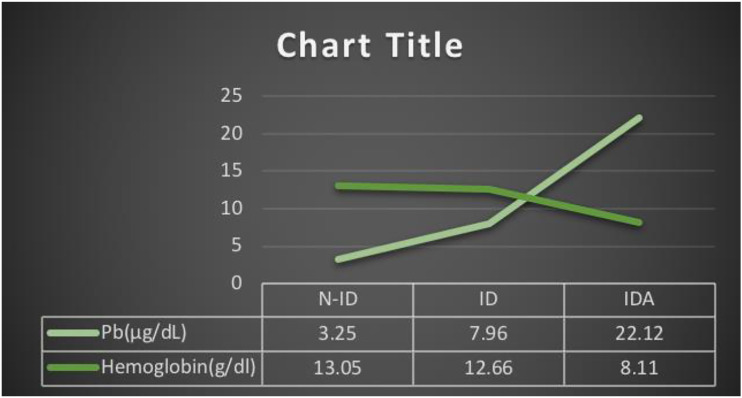
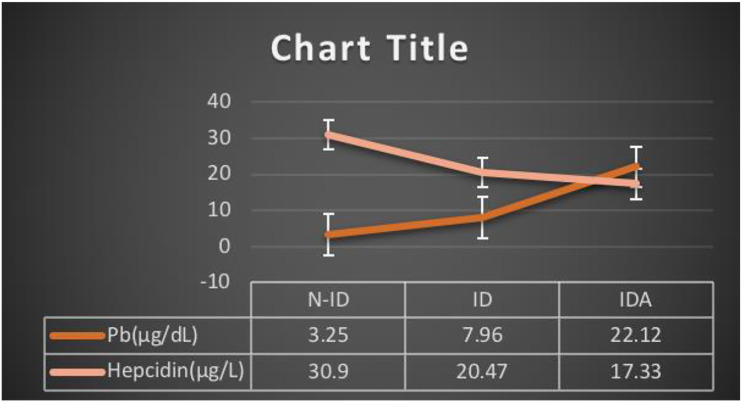
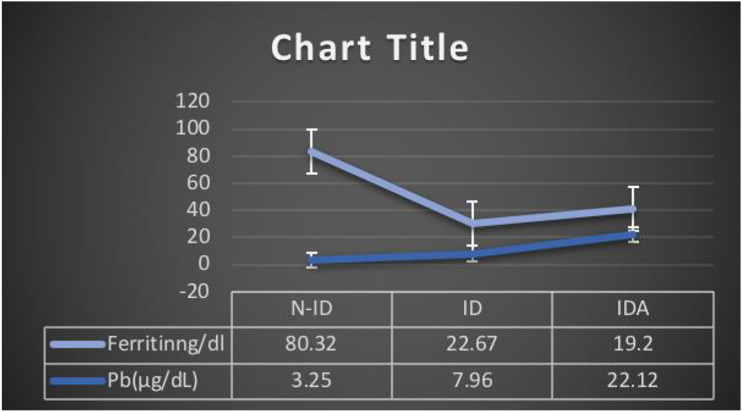
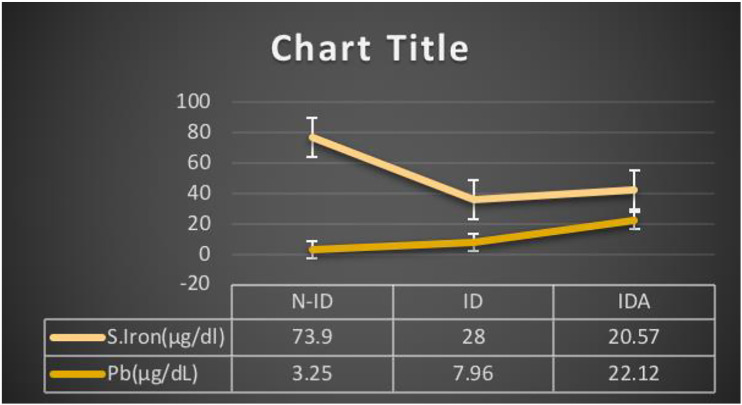
Verification
Claims the paper makes
The claims and statistics of this paper haven’t been checked yet.
Free: it reads the open-access text and checks the first 5 claims that cite a source we can check. Create a free account to check every claim.
Claims other papers make about this one
Each is checked against this paper’s own text: does it say what the citing paper says it does?
The source backs part of the claim, not all of it — or backs it for a different population, condition or comparison.
In the citing paper
“Among pregnant women, higher blood lead levels have frequently been linked to ID/IDA with poor birth outcomes”
From Environmental Contaminants, Iron Deficiency, and Iron‐Deficiency Anemia: A Review of the Literature (2025) · cites this paper as [4]
Experimental — accuracy not yet measuredThe cited source says what the claim attributes to it.
In the citing paper
“Twelve cross-sectional studies of global populations detected an association between lead exposure and ID/IDA [4, 6–12, 19–21, 23].”
From Environmental Contaminants, Iron Deficiency, and Iron‐Deficiency Anemia: A Review of the Literature (2025) · cites this paper as [4]
The check wasn’t confident either way, so it gives no verdict — never disputed.
In the citing paper
“one study of mothers found no association between lead in breast milk or infant hair with maternal anemia status [4–6, 29].”
From Environmental Contaminants, Iron Deficiency, and Iron‐Deficiency Anemia: A Review of the Literature (2025) · cites this paper as [4]
Experimental — accuracy not yet measured
Self-check
Percentages, sums and reported differences re-computed from the paper’s own numbers.
The self-check needs the paper’s full text.
Citations
Cites
Toxicity of lead: a review with recent updates
Flora, G., Gupta, D., & Tiwari, A. (2012) · Interdisciplinary Toxicology · doi:10.2478/v10102-012-0009-2 · Cited by 2,144 · cited 1×
“Lead (Pb), a non-biodegradable heavy metal that remains in the environment, is widely utilized in various sectors, including autos, paint, batteries, plastics, cosmetics, and jewelry.(1,2) Pb pollution is a severe concern to human health, particularly for pregnant women and fragile babies, who are more sensitive to Pb…”
BackgroundNitric oxide in the central nervous system: neuroprotection versus neurotoxicity
Calabrese, V., Mancuso, C., Calvani, M., Rizzarelli, E., Butterfield, D. A., & Giuffrida Stella, A. M. (2007) · Nature Reviews Neuroscience · doi:10.1038/nrn2214 · Cited by 1,543
Lead (Pb) isotopic fingerprinting and its applications in lead pollution studies in China: A review
Cheng, H., & Hu, Y. (2010) · Environmental Pollution · doi:10.1016/j.envpol.2009.12.028 · Cited by 767 · cited 1×
“Lead (Pb), a non-biodegradable heavy metal that remains in the environment, is widely utilized in various sectors, including autos, paint, batteries, plastics, cosmetics, and jewelry.(1,2) Pb pollution is a severe concern to human health, particularly for pregnant women and fragile babies, who are more sensitive to Pb…”
BackgroundDiagnosis and management of iron deficiency anemia in the 21st century
Johnson-Wimbley, T. D., & Graham, D. Y. (2011) · Therapeutic Advances in Gastroenterology · doi:10.1177/1756283x11398736 · Cited by 474
Iron homeostasis during pregnancy
Fisher, A. L., & Nemeth, E. (2017) · The American Journal of Clinical Nutrition · doi:10.3945/ajcn.117.155812 · Cited by 395 · cited 1×
“To satisfy these iron needs, both dietary iron absorption and iron mobilization from reserves increase, a system that is heavily reliant on the iron-regulatory hormone hepcidin.(17) According to few findings, circulating hepcidin is only a minor predictor of dietary iron bioavailability in people.”
BackgroundClinical and molecular aspects of lead toxicity: An update
Mitra, P., Sharma, S., Purohit, P., & Sharma, P. (2017) · Critical Reviews in Clinical Laboratory Sciences · doi:10.1080/10408363.2017.1408562 · Cited by 389 · cited 1×
“Lead risk assessment is required since the previously acknowledged “safe” lead level has also been linked to poor health effects.(29) Although it is well acknowledged that some toxic substances may have positive benefits at low concentrations, integrating these effects into risk assessments often overlooks well-establ…”
BackgroundMeans, R. T. (2020) · Nutrients · doi:10.3390/nu12020447 · Cited by 349
Pfeiffer, C. M., & Looker, A. C. (2017) · The American Journal of Clinical Nutrition · doi:10.3945/ajcn.117.155887 · Cited by 257 · cited 1×
“These primarily focus on detecting iron-deficient conditions.(36) Estimation of hepcidin as well as regular iron profile parameters not only aid in the diagnosis of iron deficiency anemia but also the understanding of the severity/ stage of iron deficiency in females (Table 2).”
BackgroundHaemoglobin adjustments to define anaemia
Sullivan, K. M., Mei, Z., Grummer‐Strawn, L., & Parvanta, I. (2008) · Tropical Medicine & International Health · doi:10.1111/j.1365-3156.2008.02143.x · Cited by 238 · cited 1×
“Because of a lack of resources, we could not improve the analysis of lead concentration in all three trimesters of pregnancy.(40) Blood lead bioavailability must be reduced in any way possible, and actions are made to minimize the occurrence of iron deficiency and anemia during pregnancy.”
BackgroundDórea, J. G. (2019) · Environmental Research · doi:10.1016/j.envres.2019.108641 · Cited by 216
Suchdev, P. S., Namaste, S. M., Aaron, G. J., Raiten, D. J., Brown, K. H., & Flores-Ayala, R. (2016) · Advances in Nutrition · doi:10.3945/an.115.010215 · Cited by 207
Iron homeostasis: An anthropocentric perspective
Coffey, R., & Ganz, T. (2017) · Journal of Biological Chemistry · doi:10.1074/jbc.r117.781823 · Cited by 188 · cited 1×
“Systemic iron homeostasis has been rethought in less than 2 decades.(15,16) Iron levels must rise significantly throughout pregnancy to promote fetoplacental development and maternal pregnancy adaption.”
BackgroundTrovato Salinaro, A., Pennisi, M., Di Paola, R., Scuto, M., Crupi, R., Cambria, M. T., Ontario, M. L., Tomasello, M., Uva, M., Maiolino, L., et al. (2018) · Immunity & Ageing · doi:10.1186/s12979-017-0108-1 · Cited by 168 · cited 1×
“Although it is well acknowledged that some toxic substances may have positive benefits at low concentrations, integrating these effects into risk assessments often overlooks well-established exposure and human susceptibility considerations.(30) Hormesis refers to the phenomena of adaptive health effects at low dosages…”
BackgroundCalabrese, E. J., & Baldwin, L. A. (2003) · Critical Reviews in Toxicology · doi:10.1080/713611040 · Cited by 144 · cited 1×
“reactions in extremely sensitive central nervous system cells such as astroglial cells.(34) Developing fetuses are also at risk for dire health consequences as few researchers discovered a link between lead and microRNA.”
BackgroundCornelius, C., Perrotta, R., Graziano, A., Calabrese, E. J., & Calabrese, V. (2013) · Immunity & Ageing · doi:10.1186/1742-4933-10-15 · Cited by 131
Api, O., Breyman, C., Çetiner, M., Demir, C., & Ecder, T. (2015) · Journal of Turkish Society of Obstetric and Gynecology · doi:10.4274/tjod.01700 · Cited by 110
Zimmermann, M. B., Troesch, B., Biebinger, R., Egli, I. M., Zeder, C., & Hurrell, R. F. (2009) · American Journal of Clinical Nutrition · doi:10.3945/ajcn.2009.28129 · Cited by 99 · cited 1×
“According to few findings, circulating hepcidin is only a minor predictor of dietary iron bioavailability in people.(18) Blood lead levels rose throughout pregnancy, from 24 weeks through delivery, due to increased gastrointestinal absorption and increased bone turnover during this time.”
BackgroundAnemia risk in relation to lead exposure in lead-related manufacturing
Hsieh, N.-H., Chung, S.-H., Chen, S.-C., Chen, W.-Y., Cheng, Y.-H., Lin, Y.-J., You, S.-H., & Liao, C.-M. (2017) · BMC Public Health · doi:10.1186/s12889-017-4315-7 · Cited by 88 · cited 2×
“It is discovered that females are more prone to develop leadinduced anemia than males.(13) Lead can cause abnormalities in iron homeostasis and interference with erythropoiesis.”
BackgroundSevere Lead Poisoning in Pregnancy
Shannon, M. (2003) · Ambulatory Pediatrics · doi:10.1367/1539-4409(2003)003<0037:slpip>2.0.co;2 · Cited by 85
Burden of higher lead exposure in African-Americans starts in utero and persists into childhood
Cassidy-Bushrow, A. E., Sitarik, A. R., Havstad, S., Park, S. K., Bielak, L. F., Austin, C., Johnson, C. C., & Arora, M. (2017) · Environment International · doi:10.1016/j.envint.2017.08.021 · Cited by 80 · cited 1×
“A research finding implies that testingwomen for the lead during pregnancymay be necessary to determine the danger to their future children.(11) Pregnancy causes heightened susceptibility to hazardous chemicals.”
BackgroundMaternal lead exposure and premature rupture of membranes: a birth cohort study in China
Huang, S., Xia, W., Sheng, X., Qiu, L., Zhang, B., Chen, T., Xu, S., & Li, Y. (2018) · BMJ Open · doi:10.1136/bmjopen-2018-021565 · Cited by 63
Cadmium and Lead in Women Who Miscarried
Omeljaniuk, W. J., Socha, K., Soroczyńska, J., Charkiewicz, A. E., LAUDAŃSKI, T., Kulikowski, M., Kobylec, E., & Borawska, M. H. (2018) · Clinical Laboratory · doi:10.7754/clin.lab.2017.170611 · Cited by 55
Laflamme, E. M. (2020) · McGill Journal of Medicine · doi:10.26443/mjm.v13i1.244 · Cited by 54
Rimbaud, D., Restrepo, M., Louison, A., Boukhari, R., Ardillon, V., Carles, G., Lambert, V., & Jolivet, A. (2017) · Journal of Toxicology and Environmental Health · doi:10.1080/15287394.2017.1331490 · Cited by 49
Usefulness of soluble transferrin receptor and ferritin in iron deficiency and chronic disease
Marković, M., Majkić‐Singh, N., & Subota, V. (2005) · Scandinavian Journal of Clinical and Laboratory Investigation · doi:10.1080/00365510500206542 · Cited by 42
Preeclampsia and blood lead (and other metals) in Lubumbashi, DR Congo
Obadia, P. M., Kayembe‐Kitenge, T., Haufroid, V., Nkulu, C. B. L., & Nemery, B. (2018) · Environmental Research · doi:10.1016/j.envres.2018.07.032 · Cited by 38
The association of cadmium and lead exposures with red cell distribution width
Peters, J. L., Perry, M. J., McNeely, E., Wright, R. O., Heiger‐Bernays, W., & Weuve, J. (2021) · PLoS ONE · doi:10.1371/journal.pone.0245173 · Cited by 38 · cited 1×
“Few studies have been published on the interaction of lead levels with different hematological markers of iron deficiency.(14) The definition of iron deficiency has been updated to include additional criteria with demonstrated diagnostic usefulness.”
BackgroundHepcidin as a diagnostic biomarker of iron deficiency anemia during pregnancy
Zaman, B. A., Rasool, S. O., Jasim, S., & Abdulah, D. M. (2019) · The Journal of Maternal-Fetal & Neonatal Medicine · doi:10.1080/14767058.2019.1635112 · Cited by 27 · cited 2×
“It is not a single illness based on its origin, pathophysiology, and clinical characteristics.(24) Synergistic effects of Blood lead and iron deficiency anemia are harmful during pregnancy.”
BackgroundJameil, N. A. (2014) · PubMed · Cited by 20
Effect of iron and folate supplementation on Pb levels in pregnant anemic women: a prospective study
Tiwari, A. K. M., Mahdi, A. A., Mishra, S. K., Parveen, H., & Fatima, G. (2020) · Free Radical Research · doi:10.1080/10715762.2020.1825704 · Cited by 18 · cited 1×
“Because iron deficiency anemia is related to higher blood lead levels and may enhance lead absorption, it also has a detrimental influence on fetal development.(39) Nan-Haung et al found that lead (Pb) exposure was substantially related to anemia risk.”
BackgroundAchieving sustainable development nutrition targets: the challenge for South Asia
Sharma, D. (2020) · Journal of Global Health · doi:10.7189/jogh.10.010303 · Cited by 16 · cited 4×
“Regulatory and health organizations should consider this a priority and make more serious efforts to resolve this public health concern as eradicating iron deficiency and anemia in women with associated problems highlights Sustainable Development Goals (SDGs) 2025 for Pakistan.41”
BackgroundInfluentialBencaiova, G. A., Vogt, D., & Hoesli, I. M. (2019) · BMJ Open · doi:10.1136/bmjopen-2019-032280 · Cited by 9 · cited 1×
“Iron deficiency was identified by lower blood iron and ferritin concentrations(22) Hepcidin, a newly discovered marker for iron homeostasis, is also considered to identify anemia during pregnancy.(23,24)”
BackgroundOccupational and Environmental Exposure to Lead and Reproductive Health Impairment
Rameshbhai, J. A., Kumar, J. K., & Gopalkrishanan, S. (2019) · Indian Journal of Public Health Research & Development · doi:10.5958/0976-5506.2019.03752.5 · Cited by 5
Patharkar, S. A., Shaikh, U. M. J., Patil, N. J., Nerurkar, A. V., & Shinde, U. R. (2021) · Biomedical & Pharmacology Journal · doi:10.13005/bpj/2185 · Cited by 2
Research works printed but not linked: 5
- 10.1367/1539-4409(2003)003<0037:SLPIP>2.0.CO;2 · doi:10.1367/1539-4409(2003)003
- Who Chan M. Haemoglobin Concentrations for the Diagnosis of Anaemia and Assessment of Severity. Geneva, Switzerland: World Health Organization; 2011: 1- 6. Published online.
- Chua M Parreñas T Kierulf A. Application news direct determination of pb in whole blood by graphite furnace atomic absorption spectro. Excellence in Science. 1991; 11(1221): 112- 224.
- Centers for Disease Control and Prevention. Lead Poisoning: Are You Pregnant? Published online; 2018.
- Lead Levels and Epigenetics. https://www.eurekalert.org/pub_releases/2021-05/fda-etl051721.php.
Cited by
Environmental Metal Exposure, Neurodevelopment, and the Role of Iron Status: a Review
Schildroth, S., Kordas, K., Bauer, J. A., Wright, R. O., & Henn, B. C. (2022) · Current Environmental Health Reports · doi:10.1007/s40572-022-00378-0 · Cited by 40
Patriarca, M., Barlow, N. L., Cross, A., Hill, S., Robson, A. F., & Tyson, J. F. (2023) · Journal of Analytical Atomic Spectrometry · doi:10.1039/d3ja90008h · Cited by 21
Iron-related Biomarkers in the Diagnosis and Management of Iron Disorders
Semenova, Y. M., Bjørklund, G., Butnariu, M., & Peana, M. (2024) · Current Medicinal Chemistry · doi:10.2174/0109298673263003231228060800 · Cited by 18
Environmental Contaminants, Iron Deficiency, and Iron‐Deficiency Anemia: A Review of the Literature
Lichtler, R., & Cowley, M. (2025) · Scientifica · doi:10.1155/sci5/5007983 · Cited by 6
“Twelve cross-sectional studies of global populations detected an association between lead exposure and ID/IDA [4, 6–12, 19–21, 23].”
Cubello, J., Peterson, D. R., Wang, L., & Mayer‐Pröschel, M. (2023) · Nutrients · doi:10.3390/nu15194101 · Cited by 8
Metadata
- Authors
- Arshad, S., Arif, A., & Wattoo, J. I.
- Affiliations
- Islamia University of Bahawalpur (PK)
- University of Central Punjab (PK)
- Corresponding author
- Arshad, Shafia
- Venue
- Dose-Response
- Publisher
- SAGE Publications
- Published
- 2022-04
- Volume
- 20
- Issue
- 2
- Pages
- 15593258221101744-15593258221101744
- ISSN
- 1559-3258 (ISSN-L)
- PMC
- PMC9121471
- OpenAlex
- W4280521170
- Cited by
- 9
- References
- 34
- Citations by year
- 2026: 2 · 2025: 2 · 2024: 2 · 2023: 2 · 2022: 1
- FWCI
- 0.69
- Type
- journal article
- Language
- en
- Open access
- gold
- doi.org
- Licence
- Locations
- Dose-Response (publishedVersion, cc-by-nc)
- PubMed Central (publishedVersion, cc-by-nc)
- PubMed (publishedVersion)
- DOAJ (DOAJ: Directory of Open Access Journals) (submittedVersion)
- Funders
- University of Central Punjab, Pakistan
- Topics
- Physical Sciences › Environmental Science › Health, Toxicology and Mutagenesis › Heavy Metal Exposure and Toxicity
- Health Sciences › Medicine › Hematology › Iron Metabolism and Disorders
- Health Sciences › Nursing › Nutrition and Dietetics › Trace Elements in Health
- Keywords
- blood lead levels, iron deficiency, iron deficiency anemia, pregnancy, hepcidin, ferritin, total iron binding capacity, hemoglobin, serum iron, lead exposure, maternal health, heme biosynthesis
About these checks
Registry, retraction, Cites and statistics results are computed, not judged, with one exception: a printed reference that no index lists is read once by a model before it counts as a citation error. Claims are extracted by a model and kept only when their quote appears verbatim in the text; each cited source is then checked, with a model’s help, for whether it says what the claim relies on. Those verdicts can be wrong — read the claim’s quote and the cited source before relying on one.
Statistics and arithmetic are recomputed, not judged.
Confidence bands are shown only for fields calibrated on our annotated test set. None is calibrated yet, so no band is shown.
What counts as a claim ›How we measure confidence ›How we check this ›
Are you an author, or do you see a problem with this page? Request a review
Data sources
Bibliographic data: Semantic Scholar, OpenAlex, Crossref.
Contains information from the Semantic Scholar Academic Graph Datasets, made available under the ODC Attribution License (ODC-BY 1.0).
Semantic Scholar’s data is described in: Kinney, R., et al. (2023). The Semantic Scholar Open Data Platform. arXiv:2301.10140.
