

Adherence to unsupervised exercise in sedentary individuals: A randomised feasibility trial of two mobile health interventions
Open accessThe DOI matches its Crossref record; 62 of the 62 references it cites were found in a registry or an index.
Abstract
Introduction: Adherence to unsupervised exercise is poor, yet unsupervised exercise interventions are utilised in most healthcare settings. Thus, investigating novel ways to enhance adherence to unsupervised exercise is essential. This study aimed to examine the feasibility of two mobile health (mHealth) technology–supported exercise and physical activity (PA) interventions to increase adherence to unsupervised exercise. Methods: Eighty-six participants were randomised to online resources ( n = 44, females n = 29) or MOTIVATE ( n = 42, females n = 28). The online resources group had access to booklets and videos to assist in performing a progressive exercise programme. MOTIVATE participants received exercise counselling sessions supported via mHealth biometrics which allowed instant participant feedback on exercise intensity, and communication with an exercise specialist. Heart rate (HR) monitoring, survey-reported exercise behaviour and accelerometer-derived PA were used to quantify adherence. Remote measurement techniques were used to assess anthropometrics, blood pressure, HbA 1c and lipid profiles. Results: HR–derived adherence rates were 22 ± 34% and 113 ± 68% in the online resources and MOTIVATE groups, respectively. Self-reported exercise behaviour demonstrated moderate (Cohen's d = 0.63, CI = 0.27 to 0.99) and large effects (Cohen's d = 0.88, CI = 0.49 to 1.26) in favour of online resources and MOTIVATE groups, respectively. When dropouts were included, 84% of remotely gathered data were available, with dropouts removed data availability was 94%. Conclusion: Data suggest both interventions have a positive impact on adherence to unsupervised exercise but MOTIVATE enables participants to meet recommended exercise guidelines. Nevertheless, to maximise adherence to unsupervised exercise, future appropriately powered trials should explore the effectiveness of the MOTIVATE intervention.
Overview
The claims and statistics of this paper haven’t been checked yet.
Free: it reads the open-access text and checks the first 5 claims that cite a source we can check. Create a free account to check every claim.
Integrity signals
Registry
Cites
Statistics
Figures



Verification
Claims the paper makes
The claims and statistics of this paper haven’t been checked yet.
Free: it reads the open-access text and checks the first 5 claims that cite a source we can check. Create a free account to check every claim.
Claims other papers make about this one
Each is checked against this paper’s own text: does it say what the citing paper says it does?
The source backs part of the claim, not all of it — or backs it for a different population, condition or comparison.
In the citing paper
“Previous work suggests real-time HR biofeedback facilitates purposeful exercise by helping participants work at an intensity most likely to elicit health changes, fostering self-efficacy to engage through feelings of competence.19”
From Mobile Health Biometrics to Enhance Exercise and Physical Activity Adherence in Type 2 Diabetes (MOTIVATE-T2D): a decentralised feasibility randomised controlled trial delivered across the UK and Canada (2025) · cites this paper as [19]
Experimental — accuracy not yet measuredThe cited source says what the claim attributes to it.
In the citing paper
“Previous reports have also cited issues with using accelerometers to assess non-ambulatory activity (eg, cycling and resistance exercise), which may be promoted through purposeful exercise programmes.19”
The cited source says what the claim attributes to it.
In the citing paper
“Qualitative data suggests such remote feedback may encourage adherence to a PA programme, through enhanced relatedness between patients and health professionals.19”
The cited source says what the claim attributes to it.
In the citing paper
“adherence remains low, though appropriate supervision and the consideration of mHealth technology have promise”
From Lifestyle Medicine for Obesity in the Era of Highly Effective Anti-Obesity Treatment (2025) · cites this paper as [287]
Self-check
Percentages, sums and reported differences re-computed from the paper’s own numbers.
The self-check needs the paper’s full text.
Citations
Cites
Using thematic analysis in psychology
Braun, V., & Clarke, V. (2006) · Qualitative Research in Psychology · doi:10.1191/1478088706qp063oa · Cited by 194,414
The Measurement of Observer Agreement for Categorical Data
Landis, J. R., & Koch, G. G. (1977) · Biometrics · doi:10.2307/2529310 · Cited by 81,148 · cited 1×
“0 very strong correlation.(40) In addition, Bland–Altman analyses determined the level of agreement between GLTEQ and HR monitor–derived and accelerometer and HR monitor–derived outcomes.”
BackgroundSTATISTICAL METHODS FOR ASSESSING AGREEMENT BETWEEN TWO METHODS OF CLINICAL MEASUREMENT
Martin Bland, J., & Altman, D. (1986) · The Lancet · doi:10.1016/s0140-6736(86)90837-8 · Cited by 47,965
Self-efficacy: the exercise of control
(1997) · Choice Reviews Online · doi:10.5860/choice.35-1826 · Cited by 24,281
Michie, S., van Stralen, M. M., & West, R. (2011) · Implementation Science · doi:10.1186/1748-5908-6-42 · Cited by 13,697
Hoffmann, T. C., Glasziou, P. P., Boutron, I., Milne, R., Perera, R., Moher, D., Altman, D. G., Barbour, V., Macdonald, H., Johnston, M., et al. (2014) · BMJ · doi:10.1136/bmj.g1687 · Cited by 10,548
Braun, V., & Clarke, V. (2012) · APA handbook of research methods in psychology, Vol 2: Research designs: Quantitative, qualitative, neuropsychological, and biological. · doi:10.1037/13620-004 · Cited by 10,299
Social Foundations of Thought and Action
Bandura, A. (2002) · The Health Psychology Reader · doi:10.4135/9781446221129.n6 · Cited by 9,902
Guthold, R., Stevens, G. A., Riley, L. M., & Bull, F. C. (2018) · The Lancet Global Health · doi:10.1016/s2214-109x(18)30357-7 · Cited by 4,819
Qualitative Psychology: A Practical Guide to Research Methods
(2008) · QMiP Bulletin · doi:10.53841/bpsqmip.2008.1.6.47 · Cited by 4,351
Exercise as medicine - evidence for prescribing exercise as therapy in 26 different chronic diseases
Pedersen, B. K., & Saltin, B. (2015) · Scandinavian Journal of Medicine & Science in Sports · doi:10.1111/sms.12581 · Cited by 3,514 · cited 1×
“There is overwhelming evidence that regular physical activity (PA) and exercise are vital for prevention and management of long-term conditions.(1) Nevertheless, 28% of adults do not meet the global recommendations of 150 min of moderate, or 75 min of vigorous-intensity PA per week.”
BackgroundCONSORT 2010 statement: extension to randomised pilot and feasibility trials.
Eldridge, S. M., Chan, C. L., Campbell, M. J., Bond, C. M., Hopewell, S., Thabane, L., & Lancaster, G. A. (2016) · BMJ · doi:10.1136/bmj.i5239 · Cited by 3,404
Borg's Perceived Exertion and Pain Scales
Heath, E. M. (1998) · Medicine& Science in Sports & Exercise · doi:10.1097/00005768-199809000-00018 · Cited by 3,037
Umpierre, D. (2011) · JAMA · doi:10.1001/jama.2011.576 · Cited by 1,358
Age Group Comparability of Raw Accelerometer Output from Wrist- and Hip-Worn Monitors
HILDEBRAND, M., VAN HEES, V. T., HANSEN, B. H., & EKELUND, U. (2014) · Medicine & Science in Sports & Exercise · doi:10.1249/mss.0000000000000289 · Cited by 1,043
Sim, J., & Lewis, M. (2012) · Journal of Clinical Epidemiology · doi:10.1016/j.jclinepi.2011.07.011 · Cited by 1,036 · cited 1×
“Sample sizes between 24 and 50 have been recommended for feasibility trials.(38) Our sample size is larger than both of these recommendations.”
BackgroundBillingham, S. A., Whitehead, A. L., & Julious, S. A. (2013) · BMC Medical Research Methodology · doi:10.1186/1471-2288-13-104 · Cited by 962 · cited 1×
“Such a sample size is higher than the median value for pilot studies (36 participants per arm) reported in an audit of pilot and feasibility trials registered in the UK clinical research network.(37) Sample sizes between 24 and 50 have been recommended for feasibility trials.”
Backgroundvan Hees, V. T., Gorzelniak, L., Dean León, E. C., Eder, M., Pias, M., Taherian, S., Ekelund, U., Renström, F., Franks, P. W., Horsch, A., et al. (2013) · PLoS ONE · doi:10.1371/journal.pone.0061691 · Cited by 926
Qualitative Data Analysis for Applied Policy Research
Ritchie, J., & Spencer, L. (2002) · The Qualitative Researcher's Companion · doi:10.4135/9781412986274.n12 · Cited by 905
van Hees, V. T., Fang, Z., Langford, J., Assah, F., Mohammad, A., da Silva, I. C. M., Trenell, M. I., White, T., Wareham, N. J., & Brage, S. (2014) · Journal of Applied Physiology · doi:10.1152/japplphysiol.00421.2014 · Cited by 676
Calibration of Accelerometer Output for Adults
MATTHEW, C. E. (2005) · Medicine & Science in Sports & Exercise · doi:10.1249/01.mss.0000185659.11982.3d · Cited by 659 · cited 2×
“The correlation statistics and Bland–Altman analysis demonstrated poor validity for RT and HIIT, both performed through body weight exercises, likely due to the large static component of these complex movements.(55) However, the correlation statistics and Bland–Altman analysis were also poor for ambulatory MICT and VT.”
BackgroundMethodPrediction of functional aerobic capacity without exercise testing
JACKSON, A. S., BLAIR, S. N., MAHAR, M. T., WIER, L. T., ROSS, R. M., & STUTEVILLE, J. E. (1990) · Medicine & Science in Sports & Exercise · doi:10.1249/00005768-199012000-00021 · Cited by 644
Review: Mortality trends in the general population: the importance of cardiorespiratory fitness
Lee, D.-C., Artero, E. G., Sui, X., & Blair, S. N. (2010) · Journal of Psychopharmacology · doi:10.1177/1359786810382057 · Cited by 628
Godin Leisure-Time Exercise Questionnaire
&NA; (1997) · Medicine& Science in Sports & Exercise · doi:10.1097/00005768-199706001-00009 · Cited by 478
Evaluation of raw acceleration sedentary thresholds in children and adults
Hildebrand, M., Hansen, B. H., van Hees, V. T., & Ekelund, U. (2017) · Scandinavian Journal of Medicine & Science in Sports · doi:10.1111/sms.12795 · Cited by 425 · cited 1×
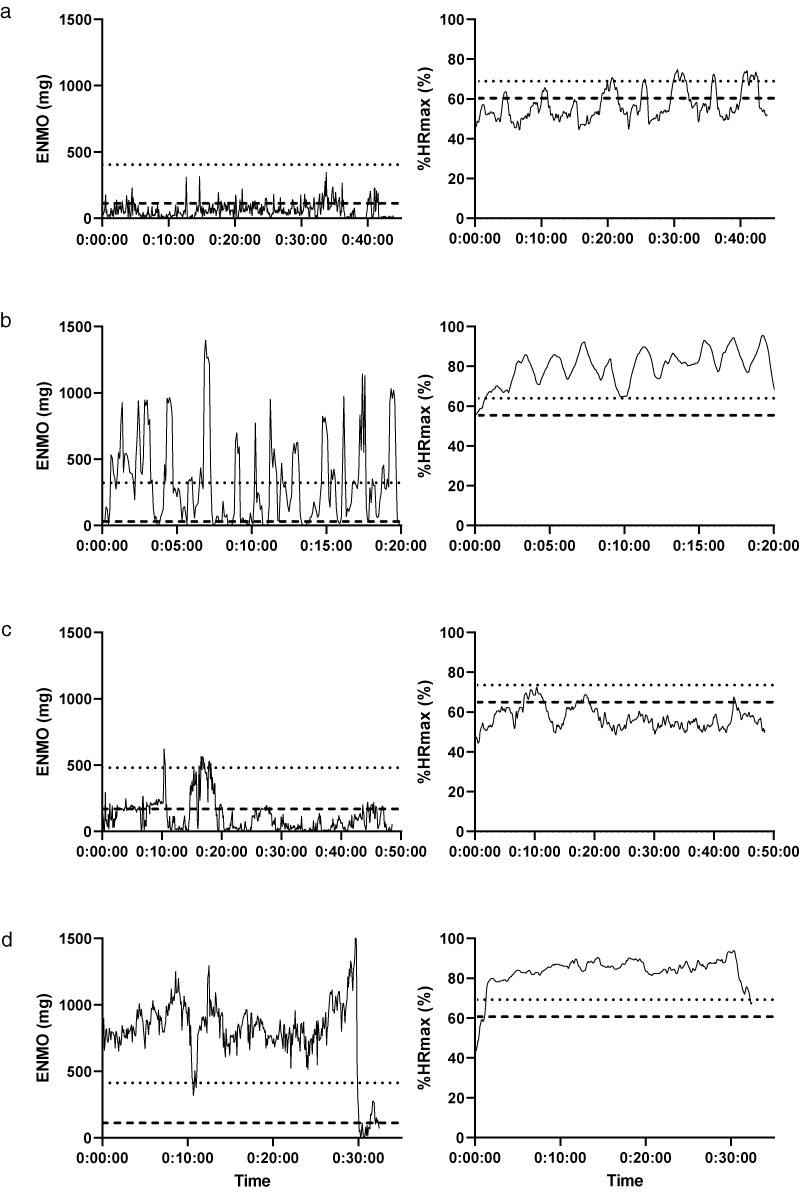
“The time spent in activity intensities was established using published thresholds.(30,31) Sedentary time was defined as time accumulated below 45 mg, light PA was defined as ≥46 mg and <100 mg, moderate PA was defined as ≥101 mg and <428 mg and vigorous PA was defined as ≥429 mg.”
MethodShimbo, D., Artinian, N. T., Basile, J. N., Krakoff, L. R., Margolis, K. L., Rakotz, M. K., Wozniak, G., & On behalf of the American Heart Association and the American Medical Association (2020) · Circulation · doi:10.1161/cir.0000000000000803 · Cited by 389
Palazzo, C., Klinger, E., Dorner, V., Kadri, A., Thierry, O., Boumenir, Y., Martin, W., Poiraudeau, S., & Ville, I. (2016) · Annals of Physical and Rehabilitation Medicine · doi:10.1016/j.rehab.2016.01.009 · Cited by 287 · cited 1×
“Poor adherence and compliance (compliance referring specifically to achieving the recommended duration and intensity of exercise sessions) to prescribed exercise are a huge societal problem that impacts on the ability of an intervention to positively change clinical outcomes.(11,12) Potential reasons for poor adherenc…”
BackgroundLacroix, A., Hortobágyi, T., Beurskens, R., & Granacher, U. (2017) · Sports Medicine · doi:10.1007/s40279-017-0747-6 · Cited by 279
Social deprivation and premature mortality: regional comparison across England.
Eames, M., Ben-Shlomo, Y., & Marmot, M. G. (1993) · BMJ · doi:10.1136/bmj.307.6912.1097 · Cited by 238 · cited 2×
“Despite this limited targeting, a wide spread of degree and extent of deprivation exists in Merseyside.62 Therefore, data are likely representative of the UK population.”
BackgroundMorgan, F., Battersby, A., Weightman, A. L., Searchfield, L., Turley, R., Morgan, H., Jagroo, J., & Ellis, S. (2016) · BMC Public Health · doi:10.1186/s12889-016-2882-7 · Cited by 217 · cited 1×
“Participants considered the flexibility of the intervention and variety of exercise types as instrumental in facilitating session adherence, which is supported by previous research.(49) Unsurprisingly, support from the exercise specialist was also important in facilitating adherence.”
MethodUnger, J. M., Moseley, A., Symington, B., Chavez-MacGregor, M., Ramsey, S. D., & Hershman, D. L. (2018) · JAMA Network Open · doi:10.1001/jamanetworkopen.2018.1235 · Cited by 217 · cited 1×
“Furthermore, studies in rural residents suggest that health disparities could be partially due to a lack of access to, knowledge about, and participation in clinical trials.(60,61) Participants in the current study lived on average 36 (SD: 75) miles drive away from the university.”
BackgroundApproaches to increase physical activity: reviewing the evidence for exercise-referral schemes
Morgan, O. W. (2004) · Public Health · doi:10.1016/j.puhe.2004.06.008 · Cited by 188
Compernolle, S., DeSmet, A., Poppe, L., Crombez, G., De Bourdeaudhuij, I., Cardon, G., van der Ploeg, H. P., & Van Dyck, D. (2019) · International Journal of Behavioral Nutrition and Physical Activity · doi:10.1186/s12966-019-0824-3 · Cited by 186 · cited 1×
“These changes are broadly in line with previous meta-analyses using technology in selfmonitoring interventions.(47,48) Thus, findings demonstrate that MOTIVATE is helpful in mediating positive changes in structured exercise and habitual PA behaviour.”
ResultLevels and predictors of exercise referral scheme uptake and adherence: A systematic review
Pavey, T., Taylor, A., Hillsdon, M., Fox, K., Campbell, J., Foster, C., Moxham, T., Mutrie, N., Searle, J., & Taylor, R. (2012) · Journal of Epidemiology and Community Health · doi:10.1136/jech-2011-200354 · Cited by 184
Validity of Submaximal Step Tests to Estimate Maximal Oxygen Uptake in Healthy Adults
Bennett, H., Parfitt, G., Davison, K., & Eston, R. (2016) · Sports Medicine · doi:10.1007/s40279-015-0445-1 · Cited by 166
ACCURACY AND RELIABILITY OF SELF-MEASUREMENT OF BODY GIRTHS
KUSHI, L. H., KAYE, S. A., FOLSOM, A. R., SOLER, J. T., & PRINEAS, R. J. (1988) · American Journal of Epidemiology · doi:10.1093/oxfordjournals.aje.a115027 · Cited by 159
Baskerville, R., Ricci‐Cabello, I., Roberts, N., & Farmer, A. (2017) · Diabetic Medicine · doi:10.1111/dme.13331 · Cited by 131 · cited 1×
“These changes are broadly in line with previous meta-analyses using technology in selfmonitoring interventions.(47,48) Thus, findings demonstrate that MOTIVATE is helpful in mediating positive changes in structured exercise and habitual PA behaviour.”
ResultTaylor, A. H., Doust, J., & Webborn, N. (1998) · Journal of Epidemiology and Community Health · doi:10.1136/jech.52.9.595 · Cited by 130
Mendes, R., Sousa, N., Almeida, A., Subtil, P., Guedes-Marques, F., Reis, V. M., & Themudo-Barata, J. L. (2016) · British Journal of Sports Medicine · doi:10.1136/bjsports-2015-094895 · Cited by 128
Nes, B. M., Gutvik, C. R., Lavie, C. J., Nauman, J., & Wisløff, U. (2017) · The American Journal of Medicine · doi:10.1016/j.amjmed.2016.09.031 · Cited by 108 · cited 1×
“HR monitoring has previously been advocated as accurate in assessing exercise responses, providing objective personalised data that account for age, body mass and fitness level.(53) The approach was feasible in MOTIVATE, where participants wore the monitor as part of the intervention and provided rich data.”
Remote Research and Clinical Trial Integrity During and After the Coronavirus Pandemic
McDermott, M. M., & Newman, A. B. (2021) · JAMA · doi:10.1001/jama.2021.4609 · Cited by 104 · cited 1×
“A concern with the use of remote clinical trials has been poor protocol adherence, leading to a high proportion of missing data.(57) However, availability of data for anthropometrics, blood pressure and the SF-12 questionnaire was high (baseline≥ 98%; post-intervention≥ 92%), with the majority of participants taking a…”
BackgroundRecommendations for Improving Adherence to Home-Based Exercise: A Systematic Review
Bachmann, C., Oesch, P., & Bachmann, S. (2018) · Physikalische Medizin, Rehabilitationsmedizin, Kurortmedizin · doi:10.1055/s-0043-120527 · Cited by 101 · cited 1×
“Potential reasons for poor adherence and compliance to unsupervised exercise centre around the lack of knowledge, lack of personalisation and lack of support/ feedback from exercise specialists.(13,14) Therefore, effective strategies to overcome these barriers and increase adherence to unsupervised exercise are requir…”
BackgroundROY, M., WILLIAMS, S. M., BROWN, R. C., MEREDITH-JONES, K. A., OSBORNE, H., JOSPE, M., & TAYLOR, R. W. (2018) · Medicine & Science in Sports & Exercise · doi:10.1249/mss.0000000000001642 · Cited by 86
Vemulapalli, S., Dolor, R. J., Hasselblad, V., Schmit, K., Banks, A., Heidenfelder, B., Patel, M. R., & Jones, W. S. (2015) · American Heart Journal · doi:10.1016/j.ahj.2015.03.009 · Cited by 77
Scott, S. N., Cocks, M. S., Andrews, R. C., Narendran, P., Purewal, T. S., Cuthbertson, D. J., Wagenmakers, A. J. M., & Shepherd, S. O. (2018) · The Journal of Clinical Endocrinology & Metabolism · doi:10.1210/jc.2018-01309 · Cited by 71 · cited 1×
“In addition, several studies employing supervised exercise have shown such a frequency to be effective for improving health outcomes.(10,20,21) Online resources.”
BackgroundSelf-citationExercise Dose, Exercise Adherence, and Associated Health Outcomes in the TIGER Study
Miller, F. L., O’Connor, D. P., Herring, M. P., Sailors, M. H., Jackson, A. S., Dishman, R. K., & Bray, M. S. (2014) · Medicine & Science in Sports & Exercise · doi:10.1249/mss.0b013e3182a038b9 · Cited by 64
Fennell, C. (2016) · MOJ Orthopedics & Rheumatology · doi:10.15406/mojor.2016.05.00184 · Cited by 57
Jung, M. E., Locke, S. R., Bourne, J. E., Beauchamp, M. R., Lee, T., Singer, J., MacPherson, M., Barry, J., Jones, C., & Little, J. P. (2020) · International Journal of Behavioral Nutrition and Physical Activity · doi:10.1186/s12966-020-00933-8 · Cited by 53 · cited 5×
“Moreover, Jung, Locke and Bourne et al.(15) reported that participants exercised two to four times per week (selfreported) following a brief exercise counselling intervention.”
BackgroundInfluentialBrown, R. E., Randhawa, A. K., Canning, K. L., Fung, M., Jiandani, D., Wharton, S., & Kuk, J. L. (2017) · Clinical Obesity · doi:10.1111/cob.12231 · Cited by 42 · cited 1×
“Previous work suggests a strong correlation between self-measured and technicianmeasured height, body mass(34) and waist circumference, measured at the umbilicus.(35)”
BackgroundScott, S. N., Shepherd, S. O., Andrews, R. C., Narendran, P., Purewal, T. S., Kinnafick, F., Cuthbertson, D. J., Atkinson-Goulding, S., Noon, T., Wagenmakers, A. J. M., et al. (2019) · Diabetes Care · doi:10.2337/dc19-0871 · Cited by 42
Self-citationKinnafick, F.-E., Thøgersen-Ntoumani, C., Shepherd, S. O., Wilson, O. J., Wagenmakers, A. J. M., & Shaw, C. S. (2018) · Journal of Sport and Exercise Psychology · doi:10.1123/jsep.2017-0306 · Cited by 40 · cited 1×
“that the availability of live HR data facilitates training programmes by educating participants on how to exercise at an intensity most likely to elicit health changes(51) and by developing autonomous motivation through feelings of competence.(52) Given the positive participant perceptions, the current data suggest th…”
BackgroundHesketh, K., Jones, H., Kinnafick, F., Shepherd, S. O., Wagenmakers, A. J. M., Strauss, J. A., & Cocks, M. (2021) · Frontiers in Physiology · doi:10.3389/fphys.2021.750283 · Cited by 35 · cited 6×
“Findings from our laboratory have previously reported adherence levels to exercise of 30–47% in a UK exercise referral scheme using a similar exercise intervention design to the online resources group in the current study with additional HR monitoring.(10) Taylor, Doust and Webborn(46) reported 45% attendance rate (vi…”
BackgroundMethodResultInfluentialSelf-citationShore, C. B., Hubbard, G., Gorely, T., Polson, R., Hunter, A., & Galloway, S. D. (2019) · Journal of Physical Activity and Health · doi:10.1123/jpah.2018-0341 · Cited by 31 · cited 2×
“Poor adherence and compliance (compliance referring specifically to achieving the recommended duration and intensity of exercise sessions) to prescribed exercise are a huge societal problem that impacts on the ability of an intervention to positively change clinical outcomes.(11,12) Potential reasons for poor adherenc…”
BackgroundPersistence despite action? Measuring the patterns of health inequality in England (1997–2007)
Costa‐Font, J., Hernández‐Quevedo, C., & McGuire, A. J. (2011) · Health Policy · doi:10.1016/j.healthpol.2011.07.002 · Cited by 29
Validation of Garmin Fenix 3 HR Fitness Tracker Biomechanics and Metabolics (VO2max)
Carrier, B., Creer, A., Williams, L. R., Holmes, T., Jolley, B. D., Dahl, S., Weber, E., & Standifird, T. W. (2020) · Journal for the Measurement of Physical Behaviour · doi:10.1123/jmpb.2019-0066 · Cited by 28
Taylor, A. H., Taylor, R. S., Ingram, W. M., Dean, S. G., Jolly, K. B., Mutrie, N., Lambert, J. D., Yardley, L., Streeter, A., Greaves, C., et al. (2020) · British Journal of Sports Medicine · doi:10.1136/bjsports-2020-103121 · Cited by 27
Validity of Cardiorespiratory Fitness Measured with Fitbit Compared to V˙O2max
KLEPIN, K., Wing, D., Higgins, M., Nichols, J. F., & Godino, J. (2019) · Medicine & Science in Sports & Exercise · doi:10.1249/mss.0000000000002041 · Cited by 26
Noonan, D., & Simmons, L. A. (2020) · The Journal of Rural Health · doi:10.1111/jrh.12446 · Cited by 26
Young, L., Barnason, S. A., & Do, V. (2015) · Online Journal of Rural Research & Policy · doi:10.4148/1936-0487.1070 · Cited by 25 · cited 1×
“Furthermore, studies in rural residents suggest that health disparities could be partially due to a lack of access to, knowledge about, and participation in clinical trials.(60,61) Participants in the current study lived on average 36 (SD: 75) miles drive away from the university.”
BackgroundParavidino, V. B., Mediano, M. F. F., Crochemore‐Silva, I., da Cruz, V. L., Antunes, M. M. L., Beaulieu, K., Gibbons, C., Finlayson, G., Blundell, J. E., & Sichieri, R. (2020) · Physiology & Behavior · doi:10.1016/j.physbeh.2020.113249 · Cited by 15
Hesketh, K. L., Low, J., Andrews, R. C., Jones, C., Jones, H., Jung, M. E., Little, J. P., Mateus, C., Pulsford, R. M., Singer, J., et al. (2021) · BMJ Open · doi:10.1136/bmjopen-2021-052563 · Cited by 15 · cited 4×
“The mHealth intervention is based on a recently developed intervention entitled MOTIVATE.23 Participants received a series of exercise counselling sessions supported through mHealth technology that consisted of an online coaching platform, a smart phone app and a wrist worn fitness watch.”
MethodInfluentialSelf-citationMaxwell, J. D., France‐Ratcliffe, M., Finnigan, L., Carter, H. H., Thijssen, D. H. J., & Jones, H. (2021) · European Journal of Applied Physiology · doi:10.1007/s00421-020-04580-6 · Cited by 8 · cited 1×
“In addition, several studies employing supervised exercise have shown such a frequency to be effective for improving health outcomes.(10,20,21) Online resources.”
BackgroundSelf-citation
Research works printed but not linked: 3
- American College of Sports Medicine. ACSM’s Guidelines for Exercise Testing and Prescription. 9th ed. Baltimore, MD: Wolters Kluwer; 2014.
- Cohen MP. Determining sample sizes for surveys with data analyzed by hierarchical linear models. J Off Stat 1998; 14: 267.
- Morgan F Battersby A Weightman AL, et al. Adherence to exercise referral schemes by participants–what do providers and commissioners need to know? A systematic review of barriers and facilitators. BMC Public Health 2016; 16: 1– 11. 26944952 PMC4779205 · DOI · Paper page
Cited by
Exercise snacks and physical fitness in sedentary populations
Wang, T., Laher, I., & Li, S. (2025) · Sports Medicine and Health Science · doi:10.1016/j.smhs.2024.02.006 · Cited by 51
Metzendorf, M., Wieland, L. S., & Richter, B. (2024) · Cochrane Database of Systematic Reviews · doi:10.1002/14651858.cd013591.pub2 · Cited by 77
Enhancing digital health services: A machine learning approach to personalized exercise goal setting
Fang, J., Lee, V. C. S., Ji, H., & Wang, H. (2024) · Digital Health · doi:10.1177/20552076241233247 · Cited by 46
“12 13 – 15 Despite the considerable potential of digital health services in promoting exercise regardless of time and location constraints, there are persistent challenges in evaluating and improving exercise guidance in digital health service.”
BackgroundLifestyle Medicine for Obesity in the Era of Highly Effective Anti-Obesity Treatment
Sannidhi, D., Abeles, R., Andrew, W., Bonnet, J. P., Vitale, K., Niranjan, V., Gulati, M., Pauly, K., Moran, R., Alexander, L., et al. (2025) · Nutrients · doi:10.3390/nu17142382 · Cited by 29
Alzghoul, B. I. (2024) · The Open Public Health Journal · doi:10.2174/0118749445234806240206094335 · Cited by 33
Metadata
- Authors
- Bannell, D. J., France-Ratcliffe, M., Buckley, B. J. R., Crozier, A., Davies, A. P., Hesketh, K. L., Jones, H., Cocks, M., Sprung, V. S., & on behalf of the MOTIVATE Team
- Affiliations
- Liverpool John Moores University (GB)
- Research Institute for Sport & Exercise Sciences, Liverpool John Moores University, Liverpool, UK
- University of Liverpool (GB)
- Corresponding author
- Bannell, Daniel J
- ORCID
- Venue
- DIGITAL HEALTH
- Publisher
- SAGE Publications
- Published
- 2023-01
- Volume
- 9
- Pages
- 20552076231183552-20552076231183552
- ISSN
- 2055-2076 (ISSN-L)
- PMC
- PMC10328121
- OpenAlex
- W4382401226
- Cited by
- 25
- References
- 61
- Citations by year
- 2026: 4 · 2025: 9 · 2024: 10 · 2023: 2
- FWCI
- 8.68
- Type
- journal article
- Language
- en
- Open access
- gold
- doi.org
- Locations
- Digital Health (publishedVersion, cc-by)
- PubMed Central (publishedVersion, cc-by)
- PubMed (publishedVersion)
- University of Birmingham Research Portal (University of Birmingham) (publishedVersion, cc-by)
- Liverpool John Moores University (submittedVersion)
- DOAJ (DOAJ: Directory of Open Access Journals) (submittedVersion, cc-by-sa)
- Funders
- UK Research and Innovation (Research England’s Global Challenges Research Fu)
- Topics
- Health Sciences › Health Professions › General Health Professions › Mobile Health and mHealth Applications
- Health Sciences › Medicine › Public Health, Environmental and Occupational Health › Physical Activity and Health
- Physical Sciences › Computer Science › Computer Vision and Pattern Recognition › Context-Aware Activity Recognition Systems
- Keywords
- unsupervised exercise, exercise adherence, mobile health, sedentary individuals, physical activity counseling, heart rate monitoring, physical activity, remote monitoring, feasibility
About these checks
Registry, retraction, Cites and statistics results are computed, not judged, with one exception: a printed reference that no index lists is read once by a model before it counts as a citation error. Claims are extracted by a model and kept only when their quote appears verbatim in the text; each cited source is then checked, with a model’s help, for whether it says what the claim relies on. Those verdicts can be wrong — read the claim’s quote and the cited source before relying on one.
Statistics and arithmetic are recomputed, not judged.
Confidence bands are shown only for fields calibrated on our annotated test set. None is calibrated yet, so no band is shown.
What counts as a claim ›How we measure confidence ›How we check this ›
Are you an author, or do you see a problem with this page? Request a review
Data sources
Bibliographic data: Semantic Scholar, OpenAlex, Crossref.
Contains information from the Semantic Scholar Academic Graph Datasets, made available under the ODC Attribution License (ODC-BY 1.0).
Semantic Scholar’s data is described in: Kinney, R., et al. (2023). The Semantic Scholar Open Data Platform. arXiv:2301.10140.
