

Psychosocial Effects of a Holistic Ayurvedic Approach to Well-being in Health and Wellness Courses
Open accessThe DOI matches its Crossref record; 44 of the 44 references it cites were found in a registry or an index; 2 of the 5 sources its claims cite were checked for support.
Abstract
Background: As individuals are increasingly attending health and wellness courses outside of the conventional medical system, there is a need to obtain objective data on the effects of those programs on well-being. Methods: In total, 154 men and women (mean age 54.7 years; range 25–83) participated in 3 different holistic wellness programs based on Ayurvedic Medicine principles (Seduction of Spirit, Journey into Healing, and Perfect Health) or a vacation control group. Psychosocial outcomes included spirituality (Delaney Spirituality Scale), mindful awareness (Mindful Attention Awareness Scale), psychological flexibility (Acceptance and Action Questionnaire), mood (Center for Epidemiology Studies-Depression), and anxiety (Patient-Reported Outcomes Measurement System Anxiety Scale). Results: Participants in the Seduction of Spirit (P <.004), Journey into Healing (P <.05), and Perfect Health (P <.004) courses showed significant increases in spirituality as compared to vacation controls. Participants in Seduction of Spirit (P <.007) also showed significant increases in mindfulness as compared to vacation controls. Participants in the Seduction of Spirit (P <.001) and Journey into Healing (P <.05) courses showed significant decreases in depressed mood as compared to those in the Perfect Health and vacation control groups. All study participants showed similar increases in psychological flexibility (P <.01) and decreases in anxiety (P <.01). Conclusion: Participation in wellness courses that incorporate a mind–body–spirit approach to health improves multiple domains of psychosocial well-being, which persists even after course participation. © The Author(s) 2019.
Overview
CoChat Summary
## TL;DR
This study compared 3 Ayurvedic-based wellness courses with a vacation control group in 154 adults and found improvements in spirituality, mindfulness, psychological flexibility, anxiety, and some mood outcomes. Several benefits persisted at 1-month follow-up, especially for spirituality and anxiety, though the paper notes important generalizability limits.
## Key findings
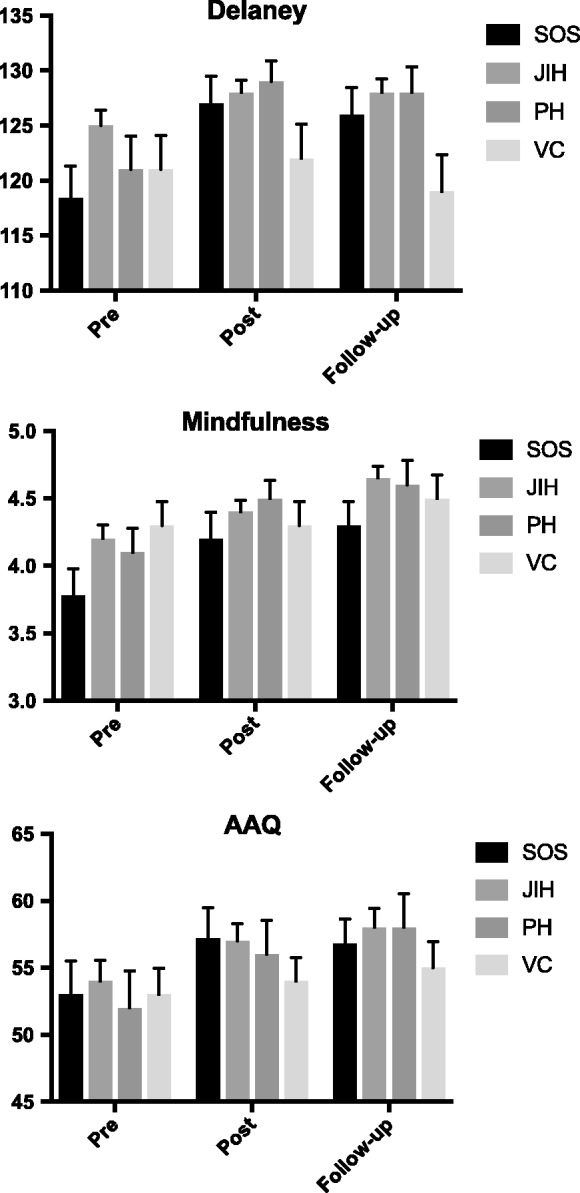
- In the immediate postcourse analysis, participants in Seduction of Spirit, Journey into Healing, and Perfect Health showed significant increases in spirituality versus vacation controls, with reported P values of P < .004, P < .05, and P < .004, respectively.
- Seduction of Spirit participants also showed increased mindfulness versus vacation controls (P < .007), and this effect persisted at 1 month (P < .005).
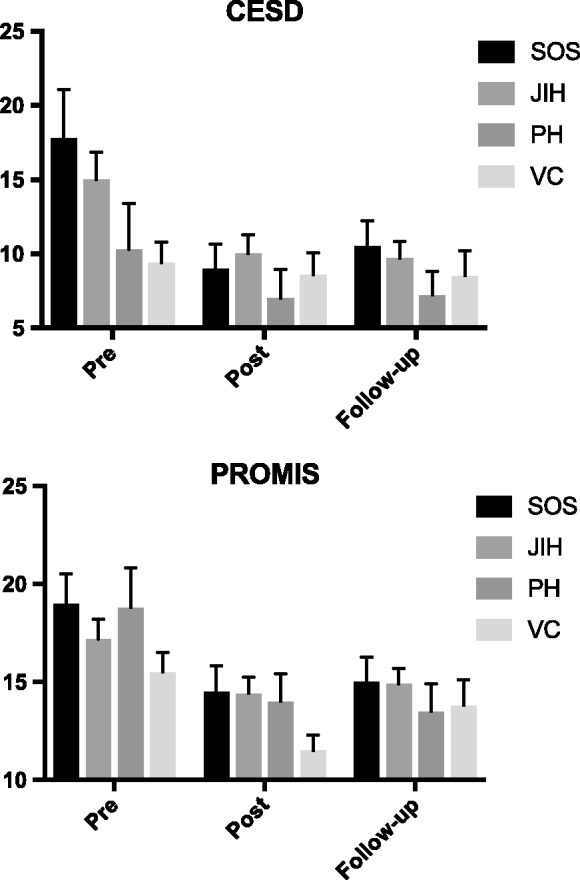
- Seduction of Spirit and Journey into Healing participants showed significant decreases in depressed mood versus Perfect Health and vacation controls (P < .001 and P < .05, respectively); the 1-month follow-up still showed a time effect but no group effects.
- Across all participants, psychological flexibility improved and anxiety decreased over time: AAQ-II P < .01 and PROMIS Anxiety P < .01 in the abstract; in the detailed results, both showed significant main effects of time, with anxiety showing F = 81.3; P < .001 immediately postcourse and F = 33.8; P < .001 at follow-up.
## Methods
- Participants were 154 men and women (mean age 54.7 years, range 25–83) recruited from attendees of three wellness programs based on Ayurvedic principles—Seduction of Spirit, Journey into Healing, and Perfect Health—plus a vacation control group.
- Data were collected between November 2015 and October 2016 at La Costa Resort in Carlsbad, CA; 113 participants completed the 1-month follow-up.
- Outcomes were measured with the DSS, MAAS, AAQ-II, CES-D, and PROMIS Anxiety Scale; analyses included Pearson correlations, 1-way ANOVA, repeated-measures ANOVA, and ANCOVA, with months of meditation and yoga practice used as covariates.
## Limitations
- The paper states that the majority of course attendees were women, so the findings may not generalize well to men.
- The paper states that participants may not reflect a typical population because they were already self-selected to attend a wellness course.
- Evident from the text: there was attrition from 154 immediate postcourse respondents to 113 at 1-month follow-up, which may affect follow-up results.
- The paper also notes that the courses used an Ayurveda-based spirituality framework, so findings may not extend to other wellness frameworks without comparative studies.
Model-written summary. Check it against the paper before relying on it.
Integrity signals
Registry
Cites
Statistics
Figures
Verification
Claims the paper makes
1 Valid · 0 Not valid · 2 Not checked · 21 Own results and interpretations
A result the paper reports from its own data — it cites no other source for it, so there is none to check. The quote shows it is in the paper.
In the paper
“The subsequent analysis including the 1-month follow-up data again showed a significant main effect of time (F = 13.8; P < .001; partial η2 = 0.111), yet no group effects (F = 1.77; P = .118; partial η2 = 0.045).”
§ Psychosocial Effects of a Holistic Ayurvedic Approach to Well-being in Health and Wellness Courses > Results > Postcourse Effects
plain- Asserted: passes — The authors put it forward as true.
- Checkable: passes — It can be checked against evidence.
- Load-bearing: passes — The paper’s conclusions depend on it.
- Based: passes — The paper gives a reason why it holds.
A result the paper reports from its own data — it cites no other source for it, so there is none to check. The quote shows it is in the paper.
In the paper
“The subsequent analysis including the 1-month follow-up showed a significant main effect of time (F = 33.2; P < .001; partial η2 = 0.233) and a significant group by time interaction (F = 2.07; P < .05; partial η2 = 0.054), which showed a continuing effect of Seduction of Spirit (P < .005) as compared to vacation controls.”
§ Psychosocial Effects of a Holistic Ayurvedic Approach to Well-being in Health and Wellness Courses > Results > Postcourse Effects
plainstates a cause- Asserted: passes — The authors put it forward as true.
- Checkable: passes — It can be checked against evidence.
- Load-bearing: passes — The paper’s conclusions depend on it.
- Based: passes — The paper gives a reason why it holds.
A result the paper reports from its own data — it cites no other source for it, so there is none to check. The quote shows it is in the paper.
In the paper
“Participants in Seduction of Spirit (P < .007) also showed significant increases in mindfulness as compared to vacation controls.”
- Also stated in: § Postcourse Effects · plain
“Seduction of Spirit (P < .007) participants showed significant increases in mindfulness as compared to vacation controls.”
§ Psychosocial Effects of a Holistic Ayurvedic Approach to Well-being in Health and Wellness Courses > Abstract > Results
plainstates a cause- Asserted: passes — The authors put it forward as true.
- Checkable: passes — It can be checked against evidence.
- Load-bearing: passes — The paper’s conclusions depend on it.
- Based: passes — The paper gives a reason why it holds.
- Also stated in: § Postcourse Effects · plain
A result the paper reports from its own data — it cites no other source for it, so there is none to check. The quote shows it is in the paper.
In the paper
“Participants in the Seduction of Spirit (P < .001) and Journey into Healing (P < .05) courses showed significant decreases in depressed mood as compared to those in the Perfect Health and vacation control groups.”
- Also stated in: § Postcourse Effects · plain
“Participants in the Seduction of Spirit (P < .001) and Journey into Healing (P < .05) courses showed significant decreases in depressed mood as compared to those in the Perfect Health and vacation control groups.”
§ Psychosocial Effects of a Holistic Ayurvedic Approach to Well-being in Health and Wellness Courses > Abstract > Results
plainstates a cause- Asserted: passes — The authors put it forward as true.
- Checkable: passes — It can be checked against evidence.
- Load-bearing: passes — The paper’s conclusions depend on it.
- Based: passes — The paper gives a reason why it holds.
- Also stated in: § Postcourse Effects · plain
A result the paper reports from its own data — it cites no other source for it, so there is none to check. The quote shows it is in the paper.
In the paper
“Participants in the Seduction of Spirit (P < .004), Journey into Healing (P < .05), and Perfect Health (P < .004) courses showed significant increases in spirituality as compared to vacation controls.”
- Also stated in: § Postcourse Effects · plain
“Seduction of Spirit (P < .004), Journey into Healing (P < .05), and Perfect Health (P < .004) course participants showed significant increases in spirituality scores as compared to vacation controls.”
§ Psychosocial Effects of a Holistic Ayurvedic Approach to Well-being in Health and Wellness Courses > Abstract > Results
plainstates a cause- Asserted: passes — The authors put it forward as true.
- Checkable: passes — It can be checked against evidence.
- Load-bearing: passes — The paper’s conclusions depend on it.
- Based: passes — The paper gives a reason why it holds.
- Also stated in: § Postcourse Effects · plain
6 more claims
Create a free account to see all 24 claims and every source verdict.
- Probably not a substantial claim. 7
- It may state two separate claims as one. 8
- The quote only partly states this claim. 1
Citations
Cites
The benefits of being present: Mindfulness and its role in psychological well-being
Brown, K. W., & Ryan, R. M. (2003) · Journal of Personality and Social Psychology · doi:10.1037/0022-3514.84.4.822 · Cited by 13,448 · cited 1×
“Validity of this measure has been shown in various populations.(24,25)”
ResultScreening for Depression in Well Older Adults: Evaluation of a Short Form of the CES-D
Andresen, E. M., Malmgren, J. A., Carter, W. B., & Patrick, D. L. (1994) · American Journal of Preventive Medicine · doi:10.1016/s0749-3797(18)30622-6 · Cited by 5,403
Andresen, E. M., Malmgren, J. A., Carter, W. B., & Patrick, D. L. (1994) · PubMed · Cited by 4,426
Bond, F. W., Hayes, S. C., Baer, R. A., Carpenter, K. M., Guenole, N., Orcutt, H. K., Waltz, T., & Zettle, R. D. (2011) · Behavior Therapy · doi:10.1016/j.beth.2011.03.007 · Cited by 3,950
Psychological flexibility as a fundamental aspect of health
Kashdan, T. B., & Rottenberg, J. (2010) · Clinical Psychology Review · doi:10.1016/j.cpr.2010.03.001 · Cited by 3,054
Doyle, C., Lennox, L., & Bell, D. (2013) · BMJ Open · doi:10.1136/bmjopen-2012-001570 · Cited by 2,425
The use of the Center for Epidemiologic Studies Depression Scale in adolescents and young adults
Radloff, L. S. (1991) · Journal of Youth and Adolescence · doi:10.1007/bf01537606 · Cited by 1,997 · cited 2×
“This is a 20-item self-report screening tool for depressive symptoms developed by the National Institute of Mental Health.26,27”
MethodEmpathy Decline and Its Reasons: A Systematic Review of Studies With Medical Students and Residents
Neumann, M., Edelhäuser, F., Tauschel, D., Fischer, M. R., Wirtz, M., Woopen, C., Haramati, A., & Scheffer, C. (2011) · Academic Medicine · doi:10.1097/acm.0b013e318221e615 · Cited by 1,637
Effects of mindfulness-based stress reduction on medical and premedical students
Shapiro, S. L., Schwartz, G. E., & Bonner, G. (1998) · Journal of Behavioral Medicine · doi:10.1023/a:1018700829825 · Cited by 1,493
Singer, T., & Klimecki, O. M. (2014) · Current Biology · doi:10.1016/j.cub.2014.06.054 · Cited by 1,254
A case for including spirituality in quality of life measurement in oncology
Brady, M. J., Peterman, A. H., Fitchett, G., Mo, M., & Cella, D. (1999) · Psycho-Oncology · doi:10.1002/(sici)1099-1611(199909/10)8:5<417::aid-pon398>3.0.co;2-4 · Cited by 835
Differential pattern of functional brain plasticity after compassion and empathy training
Klimecki, O. M., Leiberg, S., Ricard, M., & Singer, T. (2014) · Social Cognitive and Affective Neuroscience · doi:10.1093/scan/nst060 · Cited by 676
Validation of the Mindful Attention Awareness Scale in a cancer population
Carlson, L. E., & Brown, K. W. (2005) · Journal of Psychosomatic Research · doi:10.1016/j.jpsychores.2004.04.366 · Cited by 583 · cited 1×
“Validity of this measure has been shown in various populations.(24,25)”
ResultMedical Student Mental Health 3.0: Improving Student Wellness Through Curricular Changes
Slavin, S. J., Schindler, D. L., & Chibnall, J. T. (2014) · Academic Medicine · doi:10.1097/acm.0000000000000166 · Cited by 542 · cited 1×
“Further, wellness programs implemented for medical students with required resilience and mindfulness training, which is often an overlooked component of medical student health, were associated with significantly lower levels of perceived depression, anxiety, and stress compared to programs that did not have a wellness…”
BackgroundMindfulness-Based Stress Reduction Lowers Psychological Distress In Medical Students
Rosenzweig, S., Reibel, D. K., Greeson, J. M., Brainard, G. C., & Hojat, M. (2003) · Teaching and Learning in Medicine · doi:10.1207/s15328015tlm1502_03 · Cited by 507
Stress Management in Medical Education: A Review of the Literature
Shapiro, S. L., Shapiro, D. E., & Schwartz, G. E. R. (2000) · Academic Medicine · doi:10.1097/00001888-200007000-00023 · Cited by 412
Rippentrop, E. A., Altmaier, E. M., Chen, J. J., Found, E. M., & Keffala, V. J. (2005) · Pain · doi:10.1016/j.pain.2005.05.008 · Cited by 384 · cited 1×
“propose several mechanisms for the positive effects of spirituality on both mental and physical health, including prayer and meditation practices.(31) There are models that have been developed for the training of medical students and residents to improve the integration of spirituality into patient visits.”
BackgroundA review of expressed emotion research in health care
Wearden, A. J., Tarrier, N., Barrowclough, C., Zastowny, T. R., & Rahill, A. A. (2000) · Clinical Psychology Review · doi:10.1016/s0272-7358(99)00008-2 · Cited by 367
Instruments Measuring Spirituality in Clinical Research: A Systematic Review
Monod, S., Brennan, M., Rochat, E., Martin, E., Rochat, S., & Büla, C. J. (2011) · Journal of General Internal Medicine · doi:10.1007/s11606-011-1769-7 · Cited by 338 · cited 1×
“practices, and rituals representative of the human spiritual experience.(20,21) Cronbach’s a was 0.”
BackgroundDelaney, C. (2005) · Journal of Holistic Nursing · doi:10.1177/0898010105276180 · Cited by 259
Advances in Patient Reported Outcomes: The NIH PROMIS Measures
Broderick, J., DeWit, E. M., Rothrock, N., Crane, P., & Forrest, C. B. (2013) · eGEMs (Generating Evidence & Methods to improve patient outcomes) · doi:10.13063/2327-9214.1015 · Cited by 244 · cited 1×
“Institutes of Health research initiative, the PROMIS, and Assessment Center, assessing a range of anxiety symptoms.(28) Additionally, data on age, gender, and number of months practicing meditation and/or number of months practicing yoga were obtained (Table 1).”
MethodSpirituality and health: What’s the evidence and what’s needed?
Thoresen, C. E., & Harris, A. H. S. (2002) · Annals of Behavioral Medicine · doi:10.1207/s15324796abm2401_02 · Cited by 243 · cited 1×
“Many theories have been postulated as to the mechanisms of this improvement, and the relationship has been found to be complex and multi-faceted.(5) In addition, studies also show that emotional well-being is strongly associated with physical well-being.”
BackgroundBridging Ayurveda with evidence-based scientific approaches in medicine
Patwardhan, B. (2014) · EPMA Journal · doi:10.1186/1878-5085-5-19 · Cited by 236 · cited 1×
“This 6-day immersion program of detoxification and rejuvenation was based on core principles from the traditional Ayurvedic system of medicine that emphasized holistic principles primarily focused on personalized health and well-being.(16,17) Daily practices included twice daily group meditation (30 min per session),…”
MethodHealthy Coping, Negative Emotions, and Diabetes Management
Fisher, E. B., Thorpe, C. T., McEvoy DeVellis, B., & DeVellis, R. F. (2007) · The Diabetes Educator · doi:10.1177/0145721707309808 · Cited by 223
Further evaluation of the psychometric properties of the acceptance and action questionnaire-II
Fledderus, M., Oude Voshaar, M. A. H., ten Klooster, P. M., & Bohlmeijer, E. T. (2012) · Psychological Assessment · doi:10.1037/a0028200 · Cited by 195 · cited 1×
“consistency as well as convergent and divergent validity.(22,23)”
BackgroundBai, M., & Lazenby, M. (2015) · Journal of Palliative Medicine · doi:10.1089/jpm.2014.0189 · Cited by 194 · cited 1×
“There are observational associations between spiritual wellbeing and the beneficial health outcomes that can uniquely be explained by these aspects of “existential wellbeing,” such as a sense of peace and meaning in life, with much less of a unique explanatory contribution from religious well-being.(13) Spiritual well…”
BackgroundWhitford, H. S., & Olver, I. N. (2012) · Psycho-Oncology · doi:10.1002/pon.1937 · Cited by 152 · cited 1×
“Spiritual well-being can also encompass a desire to connect to something bigger than our individual selves, as in consciousness-based spiritual systems where there is a notion of Oneness or Interconnectedness with all beings.(14) Models of medicine are emerging that acknowledge the need for a more holistic approach to…”
BackgroundRavindran, A. V., & da Silva, T. L. (2013) · Journal of Affective Disorders · doi:10.1016/j.jad.2013.05.042 · Cited by 121 · cited 1×
“We found that participants in the Seduction of Spirit meditation course experienced a greater reduction in depressed mood scores compared to the other courses, which supports previous data on the beneficial effects of meditation specifically on depression.(34) Participants in the Seduction of Spirit course also spent…”
ResultA program for reducing depressive symptoms and suicidal ideation in medical students
Thompson, D., Goebert, D., & Takeshita, J. (2010) · Academic Medicine · doi:10.1097/acm.0b013e3181f0b49c · Cited by 117
Stewart-Brown, S. (1998) · BMJ · doi:10.1136/bmj.317.7173.1608 · Cited by 96
Spiritual well-being and depressive symptoms among cancer survivors
González, P., Castañeda, S. F., Dale, J., Medeiros, E. A., Buelna, C., Nuñez, A., Espinoza, R. A., & Talavera, G. A. (2014) · Supportive Care in Cancer · doi:10.1007/s00520-014-2207-2 · Cited by 93
Cone, P. H., & Giske, T. (2018) · Nurse Education Today · doi:10.1016/j.nedt.2018.08.015 · Cited by 74 · cited 1×
“Courses that offer topics on health and wellness with a spiritual foundation are unique and may offer improvements in health beyond courses that address physical or emotional well-being alone.(9,10) A spiritual foundation does not necessarily suggest religious teachings but acknowledges a search for deeper meaning and…”
BackgroundHerbal and Holistic Solutions for Neurodegenerative and Depressive Disorders: Leads from Ayurveda
Sharma, R., Kabra, A., Rao, M. M., & Prajapati, P. (2018) · Current Pharmaceutical Design · doi:10.2174/1381612824666180821165741 · Cited by 72 · cited 2×
“This 4-day health, medical, and wellness program focused on overall health, including physical and emotional health, and included a focus on the Ayurvedic Medicine tradition.(15) In the healing tradition of Ayurveda, there are practices that address physical health, such as nutrition and mindful physical movement, as…”
BackgroundResultSpirituality and medicine: A workshop for medical students and residents
Barnett, K. G., & Fortin, A. H. (2006) · Journal of General Internal Medicine · doi:10.1111/j.1525-1497.2006.00431.x · Cited by 70
Bai, M.-Y., Lazenby, M., Jeon, S., Dixon, J., & McCorkle, R. (2014) · Palliative & Supportive Care · doi:10.1017/s1478951514000820 · Cited by 66 · cited 1×
“Another study of patients with advanced cancer showed that spiritual well-being is more strongly associated with quality of life than emotional or physical well-being individually.(4) Many theories have been postulated as to the mechanisms of this improvement, and the relationship has been found to be complex and mult…”
BackgroundPeterson, C. T., Lucas, J. E., John‐Williams, L. S., Thompson, J. W., Moseley, M. A., Patel, S., Peterson, S. N., Porter, V., Schadt, E. E., Mills, P. J., et al. (2016) · Scientific Reports · doi:10.1038/srep32609 · Cited by 61
Self-citationAllowing spirituality into the healing process.
Kliewer, S. P. (2004) · PubMed · Cited by 57
Yoon, S., Suh, S., Kim, S., Park, J., Kim, Y. J., Kang, B., Park, Y., Kwon, J. H., Park, K., Shin, D. W., et al. (2018) · Journal of Pain and Symptom Management · doi:10.1016/j.jpainsymman.2018.09.001 · Cited by 48
Lee, Y., & Salman, A. (2017) · Archives of Psychiatric Nursing · doi:10.1016/j.apnu.2017.12.008 · Cited by 46 · cited 1×
“Spiritual well-being has been defined as a sense of peace and contentment stemming from an individual’s relationship with the spiritual aspects of life, such as meaning and purpose of life, as well as connection to something bigger than their individual self.(11,12) There are observational associations between spiritu…”
BackgroundPersonalized medicine: a confluence of traditional and contemporary medicine.
Jafari, S., Abdollahi, M. R., & Saeidnia, S. (2014) · PubMed · Cited by 41
The health impact of residential retreats: a systematic review
Naidoo, D., Schembri, A. J., & Cohen, M. M. (2018) · BMC Complementary and Alternative Medicine · doi:10.1186/s12906-017-2078-4 · Cited by 41 · cited 1×
“Courses that offer topics on health and wellness with a spiritual foundation are unique and may offer improvements in health beyond courses that address physical or emotional well-being alone.(9,10) A spiritual foundation does not necessarily suggest religious teachings but acknowledges a search for deeper meaning and…”
BackgroundEverson, N., Levett-Jones, T. L., & Pitt, V. (2018) · Nurse Education in Practice · doi:10.1016/j.nepr.2018.05.015 · Cited by 38
The Self-Directed Biological Transformation Initiative and Well-Being
Mills, P. J., Wilson, K. L., Pung, M. A., Weiss, L., Patel, S., Doraiswamy, P. M., Peterson, C. T., Porter, V., Schadt, E. E., Chopra, D., et al. (2016) · The Journal of Alternative and Complementary Medicine · doi:10.1089/acm.2016.0002 · Cited by 21 · cited 3×
“Daily practices included twice daily group meditation (30 min per session), daily yoga (60 min per session), breathing exercises (pranayama) (5 min per session), and emotional expression through a process of daily journaling and emotional support.(18) Lectures (75 min per session) on Ayurvedic lifestyle and mantra med…”
InfluentialSelf-citationA Review of the Evolution of Ayurveda in the United States.
Halpern, M. (2018) · PubMed · Cited by 4
Cited by
Goldsby, T. L., & Goldsby, M. E. (2020) · PubMed · Cited by 15
Busi, A. N., Nsoh, M., Otieno, M., et al. (2021) · African Health Sciences · doi:10.4314/ahs.v21i1.3s · Cited by 9
Understanding Self and Well-Being Based on Ayurveda: Implications for Indian Management
Kapadia, M., & Dagar, C. (2022) · Palgrave studies in Indian management · doi:10.1007/978-3-030-87906-8_6 · Cited by 17
Shah, P., Banerjee, S., Singh, A., Kulhari, H., & Saharan, V. A. (2025) · Wiley eBooks · doi:10.1002/9781119769484.ch1 · Cited by 17
Determinants of Customers’ Trust in Ayurvedic Products – A Review
BHARATHI, B., & Mahale, P. (2023) · International Journal of Case Studies in Business IT and Education · doi:10.47992/ijcsbe.2581.6942.0330 · Cited by 8
Metadata
- Authors
- Patel, S., Klagholz, S., Peterson, C. T., Weiss, L., Chopra, D., & Mills, P. J.
- Affiliations
- University of California San Diego (US)
- Georgetown University (US)
- The Chopra Foundation (US)
- Corresponding author
- Mills, Paul J
- Venue
- Global Advances In Health and Medicine
- Publisher
- SAGE Publications
- Published
- 2019-01
- Volume
- 8
- Pages
- 2164956119843814-2164956119843814
- ISSN
- 2164-9561 (ISSN-L)
- 2164-957X
- PMC
- PMC6492358
- OpenAlex
- W2943310882
- Cited by
- 29
- References
- 44
- Citations by year
- 2026: 3 · 2025: 4 · 2024: 1 · 2023: 3 · 2022: 5 · 2021: 1 · 2020: 12
- FWCI
- 5.26
- Type
- journal article
- Language
- en
- Open access
- gold
- doi.org
- Licence
- cc-by-nc
- journals.sagepub.com/page/policies/text-and-data-mining-license (tdm)
- Locations
- Global Advances in Health and Medicine (publishedVersion, cc-by-nc)
- Europe PMC (PubMed Central) (publishedVersion, cc-by-nc)
- PubMed Central (publishedVersion, cc-by-nc)
- PubMed (publishedVersion)
- DOAJ (DOAJ: Directory of Open Access Journals) (submittedVersion, cc-by-sa)
- eScholarship (California Digital Library) (submittedVersion)
- eScholarship (California Digital Library) (submittedVersion, cc-by-nc)
- Funders
- The National Philanthropic Trust
- The MCJ Amelior Foundation
- The Fred Foundation
- The Walton Family Foundation
- The Chopra Foundation
- Topics
- Social Sciences › Psychology › Clinical Psychology › Mindfulness and Compassion Interventions
- Social Sciences › Health › Religion, Spirituality, and Psychology
- Health Sciences › Health Professions › General Health Professions › Health, psychology, and well-being
- Keywords
- Ayurveda, psychosocial well-being, spirituality, mindfulness, psychological flexibility, depression, anxiety, mind-body-spirit
About these checks
Registry, retraction, Cites and statistics results are computed, not judged, with one exception: a printed reference that no index lists is read once by a model before it counts as a citation error. Claims are extracted by a model and kept only when their quote appears verbatim in the text; each cited source is then checked, with a model’s help, for whether it says what the claim relies on. Those verdicts can be wrong — read the claim’s quote and the cited source before relying on one.
A language model drew the claims from the paper on 2026-10-11, under version 3 of the claim definition (model deepseek-v4.1-flash, prompt extract-v3).
A second model labelled each claim on 2026-10-11 (model jev-1.13-20260917, definition revision gold-guideline-v0.2).
Statistics and arithmetic are recomputed, not judged.
Confidence bands are shown only for fields calibrated on our annotated test set. None is calibrated yet, so no band is shown.
What counts as a claim ›How we measure confidence ›How we check this ›
Are you an author, or do you see a problem with this page? Request a review
Data sources
Bibliographic data: Semantic Scholar, OpenAlex, Crossref.
Contains information from the Semantic Scholar Academic Graph Datasets, made available under the ODC Attribution License (ODC-BY 1.0).
Semantic Scholar’s data is described in: Kinney, R., et al. (2023). The Semantic Scholar Open Data Platform. arXiv:2301.10140.
