

Measuring implementation outcomes: An updated systematic review of measures’ psychometric properties
Open accessThe DOI matches its Crossref record; 105 of the 105 references it cites were found in a registry or an index.
Abstract
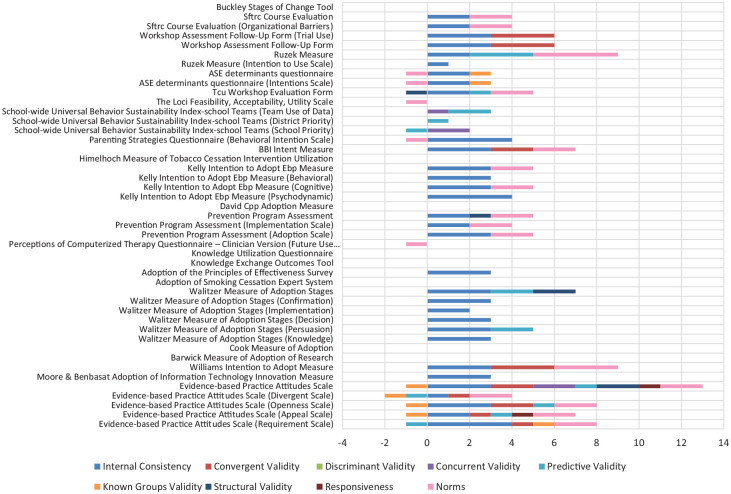
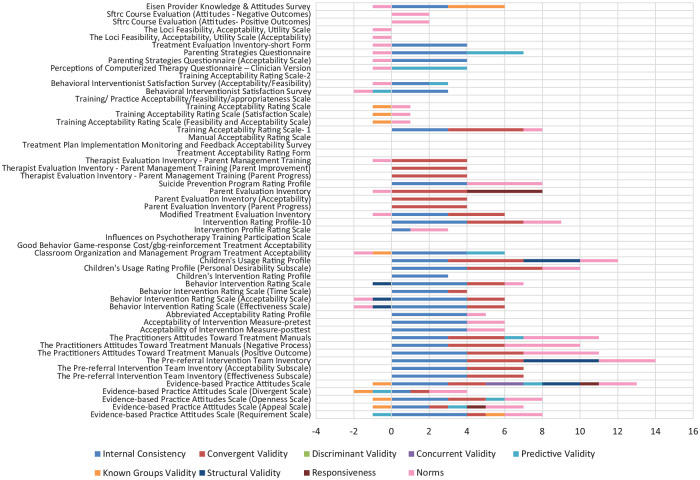
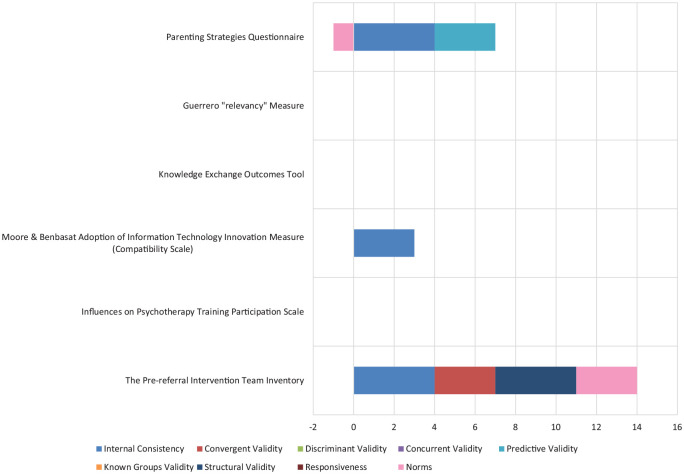
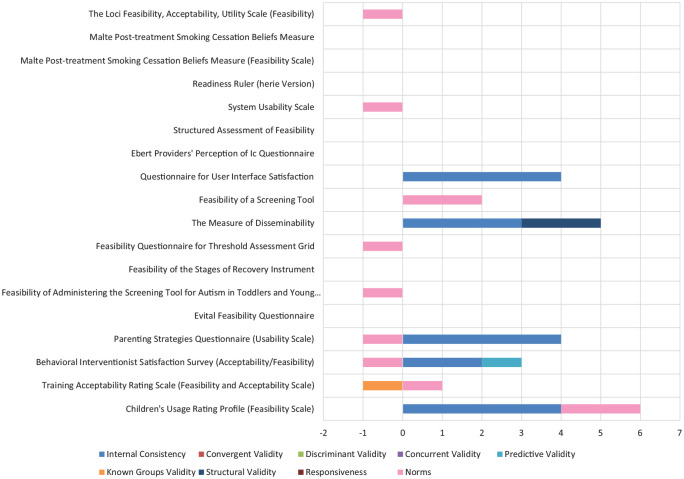
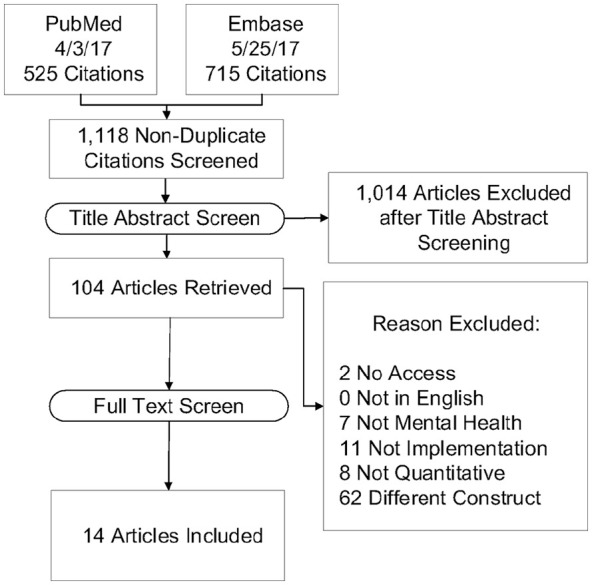
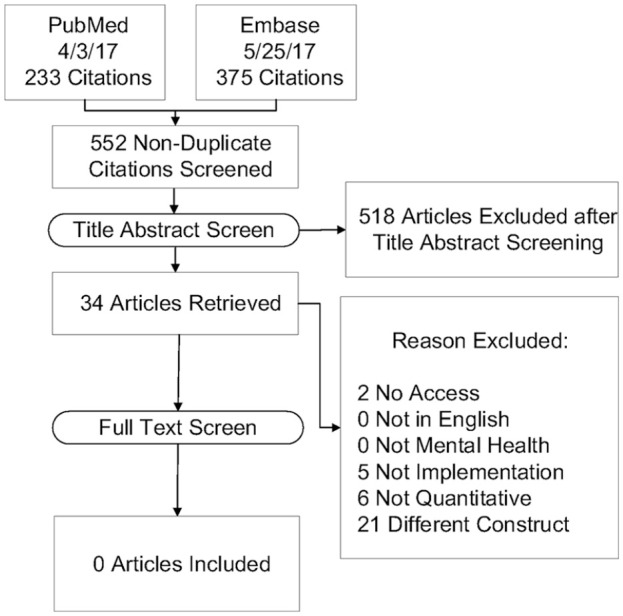
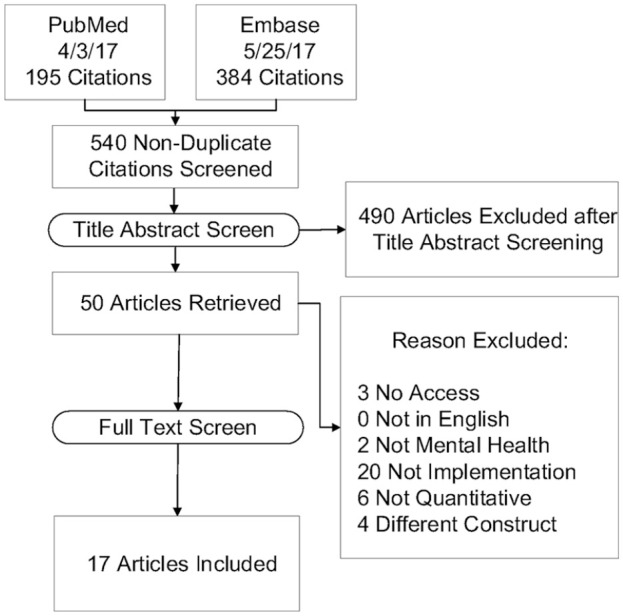
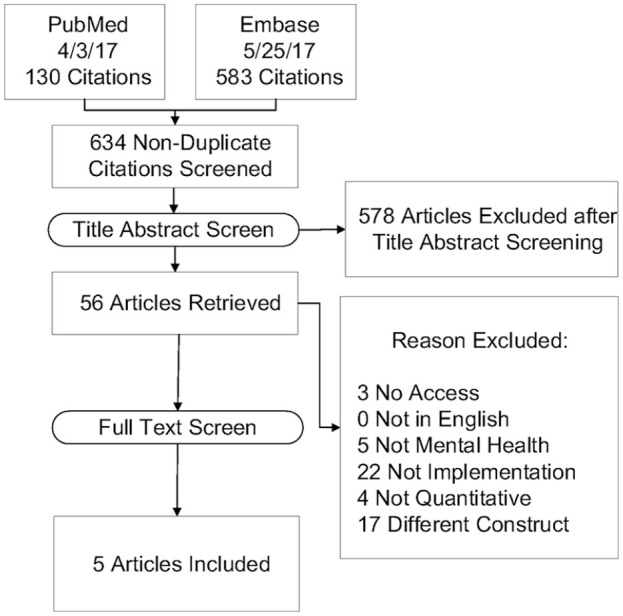
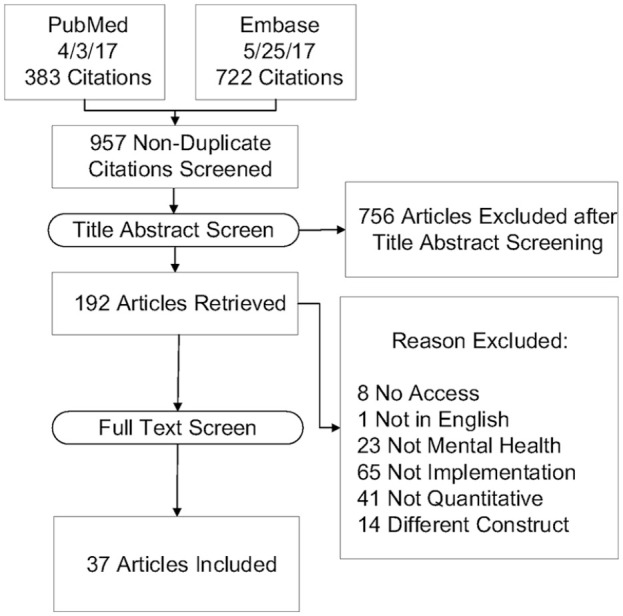
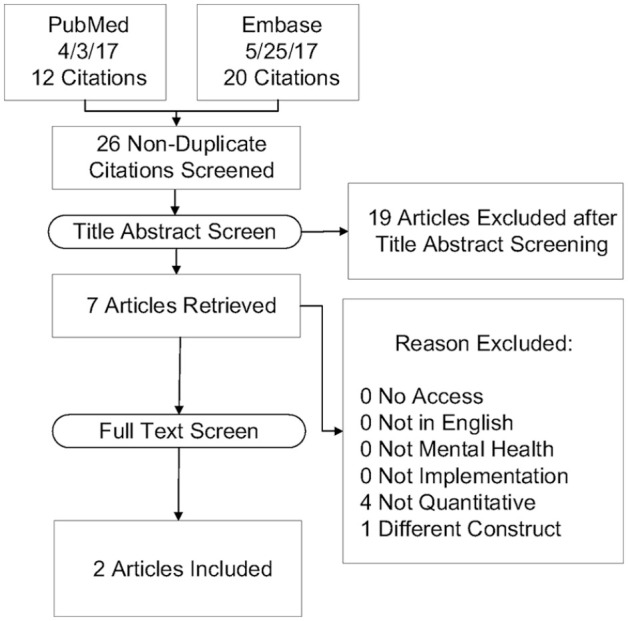
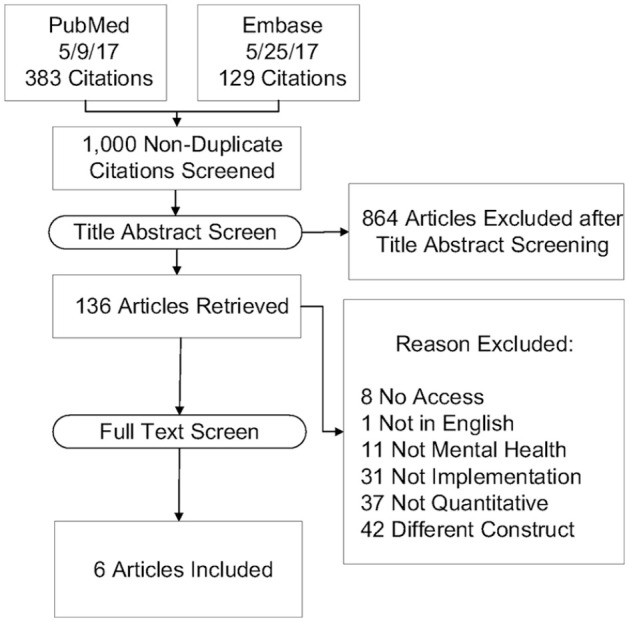
Background: Systematic reviews of measures can facilitate advances in implementation research and practice by locating reliable and valid measures and highlighting measurement gaps. Our team completed a systematic review of implementation outcome measures published in 2015 that indicated a severe measurement gap in the field. Now, we offer an update with this enhanced systematic review to identify and evaluate the psychometric properties of measures of eight implementation outcomes used in behavioral health care. Methods: The systematic review methodology is described in detail in a previously published protocol paper and summarized here. The review proceeded in three phases. Phase I, data collection, involved search string generation, title and abstract screening, full text review, construct assignment, and measure forward searches. Phase II, data extraction, involved coding psychometric information. Phase III, data analysis, involved two trained specialists independently rating each measure using PAPERS (Psychometric And Pragmatic Evidence Rating Scales). Results: Searches identified 150 outcomes measures of which 48 were deemed unsuitable for rating and thus excluded, leaving 102 measures for review. We identified measures of acceptability ( N = 32), adoption ( N = 26), appropriateness ( N = 6), cost ( N = 31), feasibility ( N = 18), fidelity ( N = 18), penetration ( N = 23), and sustainability ( N = 14). Information about internal consistency and norms were available for most measures (59%). Information about other psychometric properties was often not available. Ratings for internal consistency and norms ranged from “adequate” to “excellent.” Ratings for other psychometric properties ranged mostly from “poor” to “good.” Conclusion: While measures of implementation outcomes used in behavioral health care (including mental health, substance use, and other addictive behaviors) are unevenly distributed and exhibit mostly unknown psychometric quality, the data reported in this article show an overall improvement in availability of psychometric information. This review identified a few promising measures, but targeted efforts are needed to systematically develop and test measures that are useful for both research and practice. Plain language abstract: When implementing an evidence-based treatment into practice, it is important to assess several outcomes to gauge how effectively it is being implemented. Outcomes such as acceptability, feasibility, and appropriateness may offer insight into why providers do not adopt a new treatment. Similarly, outcomes such as fidelity and penetration may provide important context for why a new treatment did not achieve desired effects. It is important that methods to measure these outcomes are accurate and consistent. Without accurate and consistent measurement, high-quality evaluations cannot be conducted. This systematic review of published studies sought to identify questionnaires (referred to as measures) that ask staff at various levels (e.g., providers, supervisors) questions related to implementation outcomes, and to evaluate the quality of these measures. We identified 150 measures and rated the quality of their evidence with the goal of recommending the best measures for future use. Our findings suggest that a great deal of work is needed to generate evidence for existing measures or build new measures to achieve confidence in our implementation evaluations.
Overview
The claims and statistics of this paper haven’t been checked yet.
Free: it reads the open-access text and checks the first 5 claims that cite a source we can check. Create a free account to check every claim.
Integrity signals
Registry
Cites
Statistics
Figures
Verification
Claims the paper makes
The claims and statistics of this paper haven’t been checked yet.
Free: it reads the open-access text and checks the first 5 claims that cite a source we can check. Create a free account to check every claim.
Claims other papers make about this one
Each is checked against this paper’s own text: does it say what the citing paper says it does?
The cited source says what the claim attributes to it.
In the citing paper
“We now have systematic reviews of implementation outcomes [15] and their measurement properties in behavioral health [16], public policy [17], stroke care [7], and physical healthcare [18].”
From Ten years of implementation outcomes research: a scoping review (2023) · cites this paper as [15]
The cited source says what the claim attributes to it.
In the citing paper
“Moreover, Mettert and colleagues reported that acceptability had the greatest number of measurement options [15].”
From Ten years of implementation outcomes research: a scoping review (2023) · cites this paper as [15]
Self-check
Percentages, sums and reported differences re-computed from the paper’s own numbers.
The self-check needs the paper’s full text.
Citations
Cites
Damschroder, L. J., Aron, D. C., Keith, R. E., Kirsh, S. R., Alexander, J. A., & Lowery, J. C. (2009) · Implementation Science · doi:10.1186/1748-5908-4-50 · Cited by 14,496 · cited 1×
“This systematic review is part of a larger project to identify measures of all implementation constructs associated with the Consolidated Framework for Implementation Research Constructs (CFIR) (Damschroder et al., 2009), which are included in this special section.”
BackgroundMoore, G. C., & Benbasat, I. (1991) · Information Systems Research · doi:10.1287/isre.2.3.192 · Cited by 9,150 · cited 1×
“Six measures of appropriateness were identified, of which one was a scale within a broader measure (i.e., Moore & Benbasat Adoption of IT Innovation Measure— Compatibility scale) (Moore & Benbasat, 1991).”
BackgroundProctor, E., Silmere, H., Raghavan, R., Hovmand, P., Aarons, G., Bunger, A., Griffey, R., & Hensley, M. (2011) · Administration and Policy in Mental Health and Mental Health Services Research · doi:10.1007/s10488-010-0319-7 · Cited by 8,721 · cited 3×
“Trained research specialists (C.D., K.M.) mapped measures and/or their scales to one or more of the eight aforementioned implementation outcomes (Proctor et al., 2011).”
BackgroundMethodMotivational interviewing: preparing people for change.
Miller, W. R., & Rollnick, S. (2002) · Guilford Press eBooks · Cited by 7,896
Evaluating the public health impact of health promotion interventions: the RE-AIM framework.
Glasgow, R. E., Vogt, T. M., & Boles, S. M. (1999) · American Journal of Public Health · doi:10.2105/ajph.89.9.1322 · Cited by 7,217 · cited 1×
“While many other implementation frameworks exist (Glasgow et al., 1999), the outcomes framework developed by Proctor and colleagues provides clear differentiation of implementation outcomes from clinical and services outcomes and offers a harmonized focus for the field.”
BackgroundAdvancing a Conceptual Model of Evidence-Based Practice Implementation in Public Service Sectors
Aarons, G. A., Hurlburt, M., & Horwitz, S. M. (2011) · Administration and Policy in Mental Health and Mental Health Services Research · doi:10.1007/s10488-010-0327-7 · Cited by 3,240 · cited 2×
“(1) country of origin, (2) concept defined by authors, (3) number of articles contained in each measure packet, (4) number of scales, (5) number of items, (6) setting in which measure had been used, (7) level of analysis, (8) target problem, and (9) stage of implementation as defined by the Exploration, Adoption/Prepa…”
BackgroundMethodProctor, E. K., Landsverk, J., Aarons, G., Chambers, D., Glisson, C., & Mittman, B. (2009) · Administration and Policy in Mental Health and Mental Health Services Research · doi:10.1007/s10488-008-0197-4 · Cited by 1,894 · cited 1×
“Proctor and colleagues’ seminal work (Proctor et al., 2009, 2011) articulated at least eight implementation outcomes for the field: (1) acceptability, (2) adoption, (3) appropriateness, (4) cost, (5) feasibility, (6) fidelity, (7) penetration, and (8) sustainability (Table 1) (Lewis et al., 2015).”
Development of an instrument measuring user satisfaction of the human-computer interface
Chin, J. P., Diehl, V. A., & Norman, L. K. (1988) · Proceedings of the SIGCHI conference on Human factors in computing systems - CHI '88 · doi:10.1145/57167.57203 · Cited by 1,609
Journal of General Internal Medicine
(2013) · Journal of General Internal Medicine · doi:10.1007/11606.1525-1497 · Cited by 1,283
Aarons, G. A. (2004) · Mental Health Services Research · doi:10.1023/b:mhsr.0000024351.12294.65 · Cited by 1,272
Research works printed but not linked: 5
- 31. Easton J. E. (2009). Teacher acceptability of treatment plan implementation monitoring and feedback methods [Unpublished master’s thesis]. North Carolina State University, Raleigh, NC.
- 38. Forchuk C. Hartford K. Blomqvist A. Martin M. Chan L. Donner A. (2002). Therapeutic relationships: From hospital to community: First year results. Ottawa Report to the Canadian Health Services Research Foundation. Lawson Health Research Institute, London, ON.
- 68. Maher L. Gustafson D. Evans A. (2007). Sustainability and model guide. NHS Institute for Innovation and Improvement.
- 78. Milne D. Noone S. (1996). Teaching and training for non-teachers. The British Psychological Society.
- 104. Trent L. R. (2010). Development of a measure of disseminability (MOD). University of Mississippi.
Cited by
Items 101–181 of 181
Kuruppu, N. R., Ranse, K., Tobiano, G., Abayadeera, A., & Chaboyer, W. P. (2025) · Australian Critical Care · doi:10.1016/j.aucc.2024.101153 · Cited by 1
McNeil, R., McGrath, R. L., Ackland, K., Oates, R.-K., Woodhart, L., & Wright, K. (2025) · BMJ Open · doi:10.1136/bmjopen-2025-105353 · Cited by 1
“40 This included measures that captured information important to stakeholders, low burden for respondents and staff, actionable and sensitive to change.”
Developing and Testing the Integrated Multi-tiered Systems of Support Fidelity Rubric
Pierce, J. D., Thomas, E., Majeika, C. E., Casasanto-Ferro, J., Gandhi, A. G., & Lembke, E. S. (2025) · Global Implementation Research and Applications · doi:10.1007/s43477-025-00191-5 · Cited by 1
“These opportunities can elucidate insights which otherwise may not come to light and offer an avenue for infusing practitioners’ profes - sional wisdom into a FOI measure (Mettert et al., 2020).”
Lagerberg, P. J., Woodham, R. D., Chapman, S., da Silva, A. D. J., Hanifa, E., Morety, S., Oxbury, P., & Fu, C. H. Y. (2025) · Psychiatry Research Communications · doi:10.1016/j.psycom.2025.100236 · Cited by 1
A Measurement Roadmap to Guide Implementation Practitioners in Selecting Implementation Measures
Martinez, R. G., Antonaccio, C. M., Crane, M. E., Cramer, E. R., Fu, E. S., Arnold, T. L., Frank, H. E., Littlewood, A., Guzman, L. E., Hoyos, C. C.-D., et al. (2025) · Global Implementation Research and Applications · doi:10.1007/s43477-025-00189-z · Cited by 1
“An example of a bar graph of a measure’s psychometric properties (Mettert et al., 2020)”
Self-citationAnnerstedt, K. S., Kwak, L., Andermo, S., Patterson, E., Norman, Å., Raposo, S., Stattin, N. S., & Elinder, L. S. (2026) · BMC Public Health · doi:10.1186/s12889-026-29302-z · Cited by 1
“Despite increasing interest in implementation processes, there is limited empirical research examining how readiness and early implementation outcomes change over time in real-world school settings, particularly in the context of health promotion interventions [14].”
Hinrichs‐Kinney, L., Pontiff, M. E., Butera, K. A., Beisheim, E. H., Magnusson, D., & Stevens‐Lapsley, J. E. (2026) · Physical Therapy · doi:10.1093/ptj/pzag008 · Cited by 1
Lamsal, A., Germain, R. H., Bevilacqua, E., & Brown, K. R. (2026) · Forests · doi:10.3390/f17030361 · Cited by 1
Pearce, N., CROSS, D. S., Francis, J., Sae-Koew, J. H., Godley, A. M., Attwell, C., Evans-Whipp, T. J., Allen, J. B. H., Homel, R. J., Olsson, C. A., et al. (2026) · Clinical Child and Family Psychology Review · doi:10.1007/s10567-026-00567-5 · Cited by 1
“…intervention, however, their use and the reporting of any adaptations and additional validity and reliability testing is paramount to building standardised measurements for the field and reduc - ing the gap between what intervention is intended and what is delivered (Mettert et al., 2020 ).”
Factor selection in configurational comparative analysis – guidance for implementation researchers
Caci, L., Blum, K., Clack, L., & Albers, B. (2026) · Implementation Science Communications · doi:10.1186/s43058-026-00981-4 · Cited by 1
“For quantitative factor data collection, the broader literature and databases of implementation measures can help identify tools previously used in relevant settings [31–33] and guide decisions regarding tool appropriateness and feasibility.”
Henskens, I. J., Dinger, T. L., Stekelenburg, I., Dijksman, L. M., Verkooijen, H. M., Postma, E. L., Doeksen, A., & Schuijt, H. J. (2026) · BMJ Open · doi:10.1136/bmjopen-2026-117847 · Cited by 1
“56 57 Therefore, a context-specific questionnaire was developed using a CFIR-informed approach, supplemented by determinants derived from the Measurement Instrument for Determinants of Innovations framework and factors identified in the SLNB and ICG-fluorescence literature.”
Button, E., Thamm, C., Crichton, M., Charalambous, A., Christina, J., Turner, M. R., Mahony, J., Crawford-Williams, F. M., Cook, O., Doherty, N., et al. (2026) · Journal of Advanced Nursing · doi:10.1111/jan.70686 · Cited by 2
Lorenz, L., Krebs, F., Nawabi, F., Senyel, D., Alayli, A., Bau, A.-M., & Stock, S. (2021) · Zeitschrift für Evidenz Fortbildung und Qualität im Gesundheitswesen · doi:10.1016/j.zefq.2021.06.005 · Cited by 1
Challenges of Maternal and Child Health after the COVID-19 Pandemic
Kikuchi, K., Yi, S., Nanishi, K., & Yasuoka, J. (2024) · Frontiers research topics · doi:10.3389/978-2-8325-4385-6 · Cited by 1
Implementation Science in Schools
Montgomery, K. L., & Connors, E. H. (2024) · Oxford University Press eBooks · doi:10.1093/oso/9780197603413.003.0054 · Cited by 1
Finch, T. L., Bührmann, L., Potthoff, S., May, C. R., Gibson, B., Gumančík, J., Wilson-Dickson, O., Girling, M., & Rapley, T. (2024) · NIHR Open Research · doi:10.3310/nihropenres.13559.1 · Cited by 1
“In the latter review, Mettert et al. 5 concluded that although there had been some improvement in measurement quality between reviews, few measures were identified as promising on the basis of the psychometric information provided.”
BackgroundMethodHarden, S. M., Chang, K., & Chen, S. (2024) · Journal of the Academy of Nutrition and Dietetics · doi:10.1016/j.jand.2024.05.007 · Cited by 1
Zbukvic, I., Bryce, S., Pilkington, V., Mills, R., Smith, D., Alahakoon, L., Crlenjak, C., Benson, M., Delprado, J., Kamminga, J., et al. (2025) · Global Implementation Research and Applications · doi:10.1007/s43477-024-00146-2 · Cited by 1
“…measures have demonstrated good validity, reliability, and consistency in professional populations, and are widely used as early indicators of implementation success in formative research and pilot studies (Fishman et al., 2020; Mettert et al., 2020; Moullin et al., 2018 ; Weiner et al., 2017 ).”
Carrasco, M., Muñoz, B., Villablanca, V., Araya, I., Aranda, C., & Brown, J. (2023) · Global Implementation Research and Applications · doi:10.1007/s43477-023-00099-y
“There are issues with reporting, with describing the methodology and with the taxonomies used (Lengnick-Hall et al., 2022; Mettert et al., 2020; Proctor et al., 2011).”
Kemp, C. G. (2023) · Cambridge Prisms Global Mental Health · doi:10.1017/gmh.2023.63.pr7
(2023) · Cambridge Prisms Global Mental Health · doi:10.1017/gmh.2023.63.pr11
(2023) · Cambridge Prisms Global Mental Health · doi:10.1017/gmh.2023.63.pr4
(2023) · Cambridge Prisms Global Mental Health · doi:10.1017/gmh.2023.63.pr5
(2023) · Cambridge Prisms Global Mental Health · doi:10.1017/gmh.2023.63.pr10
(2023) · Cambridge Prisms Global Mental Health · doi:10.1017/gmh.2023.63.pr6
(2023) · Cambridge Prisms Global Mental Health · doi:10.1017/gmh.2023.63.pr9
(2023) · Cambridge Prisms Global Mental Health · doi:10.1017/gmh.2023.63.pr8
(2023) · Cambridge Prisms Global Mental Health · doi:10.1017/gmh.2023.63.pr3
(2023) · Cambridge Prisms Global Mental Health · doi:10.1017/gmh.2023.63.pr2
Kemp, C. G. (2023) · Cambridge Prisms Global Mental Health · doi:10.1017/gmh.2023.63.pr1
Evidence to Practice: Implementing Evidence-Based Prevention Programs
Fuhr, D. C., & Wensing, M. (2024) · Springer eBooks · doi:10.1007/978-1-4614-6625-3_93-1
Hashemi, M., Soury, S., & Pournajaf, A. H. (2024) · doi:10.32592/joohe.11.1.1
Vebares, T. J. (2024) · MOspace Institutional Repository (University of Missouri) · doi:10.32469/10355/105939
Harnessing implementation science to integrate ambulatory assessment data into clinical practice
Scholten, S., Burger, J., Hall, M., Hehlmann, M. I., & Piccirillo, M. L. (2025) · Psychotherapy Research · doi:10.1080/10503307.2025.2477556
“Going forward, we recommend systematically evaluating and reporting the use of implementation strategies across domains based on established implementation outcomes, reducing redundant efforts and enabling more efficient long-term progress (Mettert et al., 2020; Proctor et al., 2011).”
Simpson, A., Derbyshire, A., Keegan, R. J., Ridgers, N. D., Rosenberg, M., Dudley, D. A., Salmon, J., & Barnett, L. M. (2025) · Journal of Teaching in Physical Education · doi:10.1123/jtpe.2024-0331 · Cited by 1
Evaluating spoke facilitation costs of implementing TelePain in the Veterans Health Administration
Rose, A. L., Coogan, S., Indresano, J., Zeliadt, S. B., & Chen, J. A. (2025) · Implementation Science Communications · doi:10.1186/s43058-025-00729-6
“Though there are several published protocols stating authors intend to look at the cost of implementation strategies aiming to expand access to pain services, actual results are extremely limited to date [23, 24].”
Blackburn, C., Steller, A., Meisman, A. R., Real, F. J., & Rosen, B. L. (2025) · Preventive Medicine · doi:10.1016/j.ypmed.2025.108308
Sinatra, M., Monacis, L., Bertacchini, F., Demarco, F., Lamonaca, F., Bilotta, E., & Pantano, P. (2025) · IEEE International Workshop on Metrology for Living Environment (MetroLivEnv) · doi:10.1109/metrolivenv64961.2025.11107117
“One of the central challenges in psychometrics is ensuring that instruments accurately capture the latent constructs they are intended to measure [19].”
Pierce, J. S., Morales, N., Alderfer, M. A., Arasteh, K., & Gurnurkar, S. (2025) · Contemporary Clinical Trials · doi:10.1016/j.cct.2025.108073
Gan, J., Hu, P., Tang, T.-K., Lee, C., Liu, C.-W., Wong, E. L., Lai, F. T. T., & Yip, B. H. K. (2025) · Journal of Primary Care & Community Health · doi:10.1177/21501319251368995
“…to: (1) incorporate broader cultural nuances across diverse populations, and (2) evaluate critical psychometric properties, such as responsiveness, 81 cross-cultural validity, and measurement invariance The current absence of these validations limits the comprehensiveness and the applicability in…”
A Novel Primary Care Tool to Promote Mental Health Management in Adolescents
Krantz, L. B., Hardie, J., Banister, A. K., & Herbst, R. B. (2025) · Academic Pediatrics · doi:10.1016/j.acap.2025.103174
Rainer, T. H., Lam, R. P. K., Tsang, T. C., Wai, A. K. C., Leung, S. C., Leung, R. Y. Y., Wong, C. K. H., Gill, H., Lam, W., Chan, W., et al. (2025) · BMJ Open · doi:10.1136/bmjopen-2025-108010
Implementoinnin tulosten arviointi mittareilla – kirjallisuuskatsaus
Tani, S., Seilo, N., Lämsä, R., Kouvonen, P., & Linnaranta, O. (2025) · Kasvun tuki -aikakauslehti · doi:10.61259/kt.147577 · Cited by 1
Patel-Syed, Z., Becker, S., Olson, M. B., Rinella, H., & Scott, K. (2024) · Figshare · doi:10.6084/m9.figshare.26680738
van Houten, M. E., Vloet, L. C. M., Rikkert, M. G. M. O., van de Kerkhof-van Bon, B., de Rooij, A., Verhoeven, M., Bil, W. M. E., Lucke, J. A., Schoon, Y., & Berben, S. A. A. (2024) · Figshare · doi:10.6084/m9.figshare.26701477
van Houten, M. E., Vloet, L. C. M., Rikkert, M. G. M. O., van de Kerkhof-van Bon, B., de Rooij, A., Verhoeven, M., Bil, W. M. E., Lucke, J. A., Schoon, Y., & Berben, S. A. A. (2024) · Figshare · doi:10.6084/m9.figshare.25538607
Blackburn, N. A., Joniak-Grant, E., Nocera, M., Dorris, S. W., Dasgupta, N., Chelminski, P. R., Carey, T. S., Wu, L.-T. T., Edwards, D. A., Marshall, S. W., et al. (2021) · Figshare · doi:10.6084/m9.figshare.16928223
Blackburn, N. A., Joniak-Grant, E., Nocera, M., Dorris, S. W., Dasgupta, N., Chelminski, P. R., Carey, T. S., Wu, L.-T. T., Edwards, D. A., Marshall, S. W., et al. (2021) · Figshare · doi:10.6084/m9.figshare.16928226
van Houten, M. E., Vloet, L. C. M., Rikkert, M. G. M. O., van de Kerkhof-van Bon, B., de Rooij, A., Verhoeven, M., Bil, W. M. E., Lucke, J. A., Schoon, Y., & Berben, S. A. A. (2024) · Figshare · doi:10.6084/m9.figshare.26701480
van Houten, M. E., Vloet, L. C. M., Rikkert, M. G. M. O., van de Kerkhof-van Bon, B., de Rooij, A., Verhoeven, M., Bil, W. M. E., Lucke, J. A., Schoon, Y., & Berben, S. A. A. (2024) · Figshare · doi:10.6084/m9.figshare.26701483
Additional file 1 of Ten years of implementation outcomes research: a scoping review
Proctor, E. K., Bunger, A. C., Lengnick‐Hall, R., Gerke, D. R., Martin, J. K., Phillips, R. J., & Swanson, J. C. (2024) · Figshare · doi:10.6084/m9.figshare.26606383
van Houten, M. E., Vloet, L. C. M., Rikkert, M. G. M. O., van de Kerkhof-van Bon, B., de Rooij, A., Verhoeven, M., Bil, W. M. E., Lucke, J. A., Schoon, Y., & Berben, S. A. A. (2024) · Figshare · doi:10.6084/m9.figshare.25538532
En studie av implementeringen av tiltaket Tidlig Trygg
Eidjar, O. (2021) · Duo Research Archive (University of Oslo) · Cited by 1
Schmitt, M. E. (2024) · UWM Digital Commons (University of Wisconsin–Milwaukee)
Pinto, R. I. D. S. (2025) · Portuguese National Funding Agency for Science, Research and Technology (RCAAP Project by FCT) · doi:10.34626/bqye-wf55
Syarah, E. S., Puspitasari, K. A., Aisyah, S. A., Mustapa, N., Sudirman, S., Linawati, L., Khalid, N. B., & Himphinit, M. (2023) · Indonesian Journal of Early Childhood Educational Research (IJECER) · doi:10.31958/ijecer.v4i2.15911
Joseph, J., Kushwaha, R., Rajan, S. K., & Cannistrà, F. (2026) · Measurement and Evaluation in Counseling and Development · doi:10.1080/07481756.2025.2608090
“At the programmatic level, they can be integrated into interventions designed to foster an SST mindset, aligning with broader efforts to evaluate implementation outcomes and workforce development in mental health (Mettert et al., 2020).”
Hyzak, K. A., Bunger, A. C., Bogner, J., & Davis, A. K. (2026) · Implementation Research and Practice · doi:10.1177/26334895261417230
“The fi eld of implementation science would bene fi t from additional research on the development and improvement of existing implementation outcome measurement (Mettert et al., 2020).”
How can we make interventions more ‘acceptable’ in mental health?
Kabir, T. (2026) · BMJ Mental Health · doi:10.1136/bmjment-2025-302337
Aittasalo, M., Tokola, K., Vähä‐Ypyä, H., Husu, P., Mänttäri, A., Martiskainen, T., Laatikainen, T., & Sievänen, H. T. (2026) · JMIR Formative Research · doi:10.2196/80304
“However, until now, only a few such measures have been identified in health care [53,56].”
The card game Dobble as a diagnostic tool
Solcova, A., & Děchtěrenko, F. (2026) · Acta Psychologica · doi:10.1016/j.actpsy.2026.106696
Subramanian, S., O’Rourke, K., Fournier, A. P., Zerbe, A., Donenberg, G. R., Emerson, E. M., Garofalo, R., John-Stewart, G. C., Kuhns, L. M., Mwangwa, F., et al. (2026) · Global Implementation Research and Applications · doi:10.1007/s43477-026-00225-6
“Addi - tional research is needed to systematically test and develop a succinct set of measures that can be implemented both in research and practice settings (Mettert, K et al., 2020; Yang et al. 2024).”
Nayahangan, L. J., Dubrowski, A., Clarke, K. M., Beavers, L., Friis, M. L., Yudkowsky, R., Konge, L., & Gustafsson, A. (2026) · Simulation in Healthcare The Journal of the Society for Simulation in Healthcare · doi:10.1097/sih.0000000000000928
Haque, N. B., Lystad, R. P., Braithwaite, J., & Mitchell, R. J. (2026) · Journal of Health Services Research & Policy · doi:10.1177/13558196261454533
Green, K., Asthana, S., Downey, J. A., & Watson, J. (2026) · International Journal of Integrated Care · doi:10.5334/ijic.9854
Aung, T., Osterhage, K. P., Graham, A. K., Proctor, E. K., Lyon, A. R., & Munson, S. A. (2026) · Implementation Science Communications · doi:10.1186/s43058-026-01035-5
“IS measures characterize implementation success by considering effectiveness and contextual factors (Table 1) [89, 90].”
Insights from an Umbrella Review of Digital Storytelling
Arslan, A. N. (2026) · Education Sciences · doi:10.3390/educsci16071152
Priority aims and testable hypotheses in implementation science: a scoping review
Riley, S. R., Aldrich, A. M., Voisin, C. E., Perin, M., Philbrick, S. M., Mungo, J., Patel, S. V., & Garner, B. R. (2026) · Implementation Science Communications · doi:10.1186/s43058-026-01058-y
“Many implementation outcome instruments have uncertain psychometric strength, inconsistent use across studies, and limited validation linking them to HHROs [27, 29].”
Eagle, S. R., McNett, M., Madhok, D. Y., Bazarian, J. J., Barton, D., Edelman, K. L., Sharpless, J., Sugar, G., Gotthardt, C. J., Wu, A., et al. (2026) · Frontiers in Health Services · doi:10.3389/frhs.2026.1891721
“The Williams Intention to Adopt Measure (WIAM) will also be used to evaluate adoption (16).”
An ancillary study of implementation strategies used in surgical care: a scoping review
Lambert‐Kerzner, A., Henderson, W. G., Myers, Q. W. O., Hagedorn, H., Mucharsky, E., Harnke, B., Stuart, C., Dyas, A. R., Bronsert, M. R., Colborn, K. L., et al. (2026) · BMC Health Services Research · doi:10.1186/s12913-026-15208-4
“Strategies are designed to achieve desired implementation outcomes [21].”
Harmonizing quantitative implementation data across studies: challenges and proposed strategies
Kim, J. P., Begna, H., Chin-Purcell, L., Garneau, H. C., Brown, C. H., & McGovern, M. P. (2026) · Implementation Science · doi:10.1186/s13012-026-01532-0
Kristensen, R. K., Guldager, J. D., Bilenberg, N., & Andersen, P. (2026) · Nordisk Sygeplejeforskning · doi:10.18261/nsf.16.3.3
Journal writing for enhancing career adaptability in vocational students: a clinical case study
Jalil, M. K., Ramli, M., Atmoko, A., & Hambali, I. (2026) · Journal of Poetry Therapy · doi:10.1080/08893675.2026.2725157
Fidelity to an evidence-based model for physical healthcare for patients with severe mental illness
Larsen, S., Benth, J. Š., Høifødt, T. S., Ruud, T., & Høye, A. (2026) · Nordic Journal of Psychiatry · doi:10.1080/08039488.2026.2739316
Merrill, K. G., Paige, K., Beima‐Sofie, K., Hirschhorn, L. R., Emerson, E., Zerbe, A., Fournier, A., Obiezu‐Umeh, C., Nwaozuru, U., & Donenberg, G. R. (2026) · Journal of Clinical and Translational Science · doi:10.1017/cts.2026.10842
“The reviews found limited psychometric information and quality across the outcomes [6, 9, 10], which is a critical research gap.”
Solihin, D. I. Y., Alam, H. V., Aneta, A., & Djafri, N. (2026) · Education and Social Sciences Review · doi:10.29210/07essr721700
“Its explanatory and predictive value should be tested through longitudinal implementation research, comparison across regencies, and measurement models with verified psychometric properties (Mettert et al., 2020).”
The Sommelier's Guide to Implementation Science: A Metaphor for Nurse‐Led Implementation
Dougherty, K. (2026) · Nursing Open · doi:10.1002/nop2.70901
Fitri, I., Iballa, B. D. M., Hartati, R., Andrian, W., & Farras, A. (2026) · Mental Health & Prevention · doi:10.1016/j.mhp.2026.200590
Metadata
- Authors
- Mettert, K., Lewis, C., Dorsey, C., Halko, H., & Weiner, B.
- Affiliations
- Kaiser Permanente Washington Health Research Institute (US)
- Harvard University (US)
- University of Washington (US)
- Corresponding author
- Mettert, Kayne
- Venue
- Implementation Research and Practice
- Publisher
- SAGE Publications
- Published
- 2020-01
- Volume
- 1
- Pages
- 2633489520936644-2633489520936644
- ISSN
- 2633-4895 (ISSN-L)
- PMC
- PMC9924262
- OpenAlex
- W3082080819
- Semantic Scholar
- 4f80bbc490a413737ef8eeb7506b6bd739a914a7
- Cited by
- 162
- References
- 104
- Citations by year
- 2026: 24 · 2025: 37 · 2024: 35 · 2023: 36 · 2022: 17 · 2021: 12 · 2020: 1
- FWCI
- 3.15
- Type
- journal article
- Language
- en
- Open access
- gold
- doi.org
- Licence
- Locations
- Implementation Research and Practice (publishedVersion, cc-by-nc)
- PubMed Central (publishedVersion, cc-by-nc)
- PubMed (publishedVersion)
- DOAJ (DOAJ: Directory of Open Access Journals) (submittedVersion, cc-by-sa)
- Funders
- National Institute of Mental Health (R01MH106510)
- Topics
- Health Sciences › Health Professions › General Health Professions › Health Policy Implementation Science
- Health Sciences › Nursing › Research and Theory › Health Education and Validation
- Social Sciences › Decision Sciences › Management Science and Operations Research › Psychometric Methodologies and Testing
- Keywords
- outcome measures, psychometric properties, measurement gaps, behavioral health services, mental health services, addiction treatment, implementation fidelity, acceptability, feasibility, appropriateness, questionnaire quality, implementation evaluation, scale development, internal consistency, norms, construct validity, content validity, inter-rater reliability
About these checks
Registry, retraction, Cites and statistics results are computed, not judged, with one exception: a printed reference that no index lists is read once by a model before it counts as a citation error. Claims are extracted by a model and kept only when their quote appears verbatim in the text; each cited source is then checked, with a model’s help, for whether it says what the claim relies on. Those verdicts can be wrong — read the claim’s quote and the cited source before relying on one.
Statistics and arithmetic are recomputed, not judged.
Confidence bands are shown only for fields calibrated on our annotated test set. None is calibrated yet, so no band is shown.
What counts as a claim ›How we measure confidence ›How we check this ›
Are you an author, or do you see a problem with this page? Request a review
Data sources
Bibliographic data: Semantic Scholar, OpenAlex, Crossref.
Contains information from the Semantic Scholar Academic Graph Datasets, made available under the ODC Attribution License (ODC-BY 1.0).
Semantic Scholar’s data is described in: Kinney, R., et al. (2023). The Semantic Scholar Open Data Platform. arXiv:2301.10140.
