

Hepcidin is the major predictor of erythrocyte iron incorporation in anemic African children
Open accessThe DOI matches its Crossref record; 42 of the 43 references it cites were found in a registry or an index.
Abstract
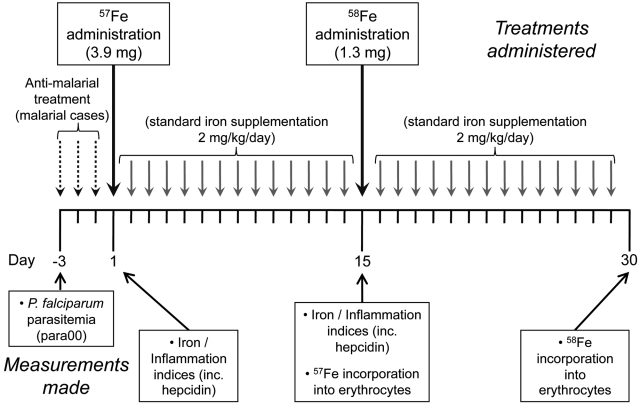
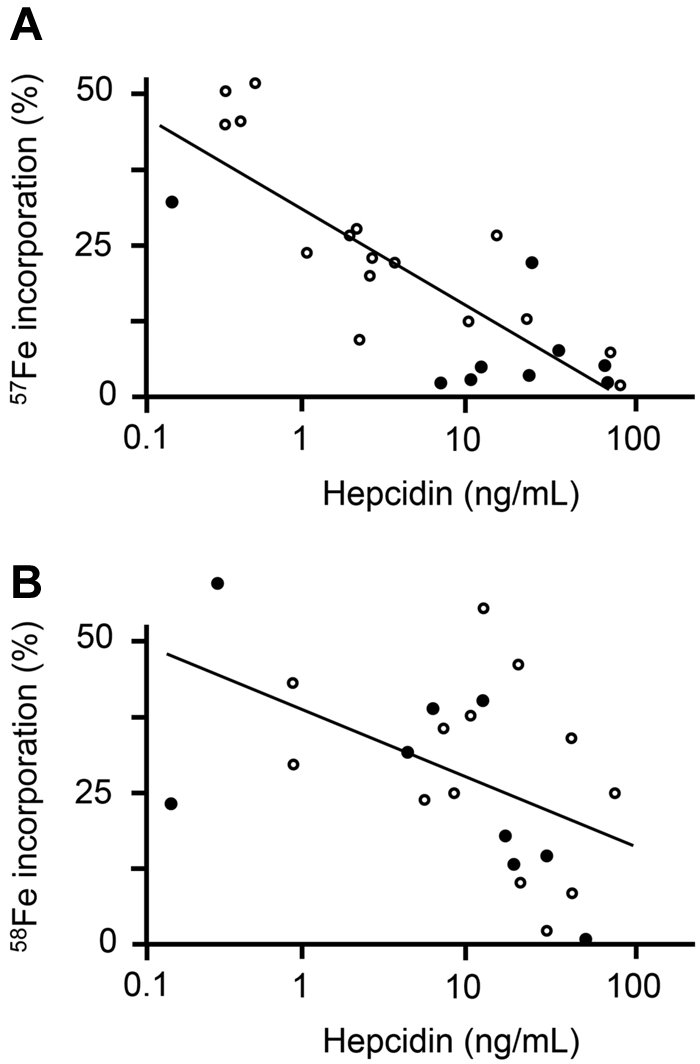
Iron supplementation strategies in the developing world remain controversial because of fears of exacerbating prevalent infectious diseases. Understanding the conditions in which iron will be absorbed and incorporated into erythrocytes is therefore important. We studied Gambian children with either postmalarial or nonmalarial anemia, who were given oral iron supplements daily for 30 days. Supplements administered on days 1 and 15 contained the stable iron isotopes 57Fe and 58Fe, respectively, and erythrocyte incorporation was measured in blood samples drawn 14 days later. We investigated how the iron-regulatory hormone hepcidin and other inflammatory/iron-related indices, all measured on the day of isotope administration, correlated with erythrocyte iron incorporation. In univariate analyses, hepcidin, ferritin, C-reactive protein, and soluble transferrin receptor (sTfR) strongly predicted incorporation of 57Fe given on day 1, while hepcidin, ferritin, and sTfR/log ferritin correlated with 58Fe incorporation. In a final multivariate model, the most consistent predictor of erythrocyte isotope incorporation was hepcidin. We conclude that under conditions of competing signals (anemia, iron deficiency, and infection), hepcidin powerfully controls use of dietary iron. We suggest that low-cost point-of-care hepcidin assays would aid iron supplementation programs in the developing world.
Overview
The claims and statistics of this paper haven’t been checked yet.
Free: it reads the open-access text and checks the first 5 claims that cite a source we can check. Create a free account to check every claim.
Integrity signals
Registry
Cites
Statistics
Figures
Verification
Claims the paper makes
The claims and statistics of this paper haven’t been checked yet.
Free: it reads the open-access text and checks the first 5 claims that cite a source we can check. Create a free account to check every claim.
Claims other papers make about this one
Each is checked against this paper’s own text: does it say what the citing paper says it does?
In the citing paper
“In addition, malaria induces HAMP, suggesting that iron sequestration is a major contributing factor to malarial anemia [100, 101].”
From Iron deficiency or anemia of inflammation?: Differential diagnosis and mechanisms of anemia of inflammation (2016) · cites this paper as [100]
Self-check
Percentages, sums and reported differences re-computed from the paper’s own numbers.
The self-check needs the paper’s full text.
Citations
Cites
Hepcidin Regulates Cellular Iron Efflux by Binding to Ferroportin and Inducing Its Internalization
Nemeth, E., Tuttle, M. S., Powelson, J., Vaughn, M. B., Donovan, A., Ward, D. M., Ganz, T., & Kaplan, J. (2004) · Science · doi:10.1126/science.1104742 · Cited by 4,803
Nemeth, E., Rivera, S., Gabayan, V., Keller, C., Taudorf, S., Pedersen, B. K., & Ganz, T. (2004) · Journal of Clinical Investigation · doi:10.1172/jci200420945 · Cited by 2,650 · cited 1×
“12,39 In this respect, the fact that hepcidin causes rapid hypoferremia in response to infection 39-41 and that it declines rapidly after an infection or inflammatory signal has been cleared 26,27 (thus allowing rapid absorption of dietary iron and remobilization of sequestered iron) would favor…”
BackgroundPositional cloning of zebrafish ferroportin1 identifies a conserved vertebrate iron exporter
Donovan, A., Brownlie, A., Zhou, Y., Shepard, J., Pratt, S. J., Moynihan, J., Paw, B. H., Drejer, A., Barut, B., Zapata, A., et al. (2000) · Nature · doi:10.1038/35001596 · Cited by 1,667
McKie, A. T., Marciani, P., Rolfs, A., Brennan, K., Wehr, K., Barrow, D., Miret, S., Bomford, A., Peters, T. J., Farzaneh, F., et al. (2000) · Molecular Cell · doi:10.1016/s1097-2765(00)80425-6 · Cited by 1,422
Zimmermann, M. B., & Hurrell, R. F. (2007) · The Lancet · doi:10.1016/s0140-6736(07)61235-5 · Cited by 1,405 · cited 1×
“Specifically, we considered associations between (1) plasma iron/inflammatory indices on the day of 57Fe administration (day 1) and subsequent 57Fe erythrocyte incorporation; (2) plasma iron/inflammatory indices on the day of 58Fe administration (day 15) and subsequent 58Fe erythrocyte incorporation; and (3) combined…”
MethodThe iron exporter ferroportin/Slc40a1 is essential for iron homeostasis
Donovan, A., Lima, C. A., Pinkus, J. L., Pinkus, G. S., Zon, L. I., Robine, S., & Andrews, N. C. (2005) · Cell Metabolism · doi:10.1016/j.cmet.2005.01.003 · Cited by 1,275
A Novel Mammalian Iron-regulated Protein Involved in Intracellular Iron Metabolism
Abboud, S., & Haile, D. J. (2000) · Journal of Biological Chemistry · doi:10.1074/jbc.m000713200 · Cited by 1,267 · cited 1×
“15-17 Therefore, when hepcidin levels are high, enterocyte absorption of dietary iron and release of macrophage iron to serum are blocked, resulting in hypoferremia that is thought to be anti-infective, but which also limits iron supply to the erythron and other tissues.”
BackgroundNicolas, G., Chauvet, C., Viatte, L., Danan, J. L., Bigard, X., Devaux, I., Beaumont, C., Kahn, A., & Vaulont, S. (2002) · Journal of Clinical Investigation · doi:10.1172/jci0215686 · Cited by 1,214 · cited 1×
“Hepcidin likewise was raised in these individuals, but not as markedly as CRP or ferritin; this might either reflect differing kinetics of clearance, and/or that other hepcidin-suppresive factors were also in operation (eg, erythropoietic drive, 28 hypoxia 29 ).”
BackgroundSazawal, S., Black, R. E., Ramsan, M., Chwaya, H. M., Stoltzfus, R. J., Dutta, A., Dhingra, U., Kabole, I., Deb, S., Othman, M. K., et al. (2006) · The Lancet · doi:10.1016/s0140-6736(06)67962-2 · Cited by 981 · cited 2×
“Elevated iron status may increase vulnerability to bacterial, 3,4 protozoal, 5 and viral 6 infections.”
BackgroundMethodHepcidin and iron regulation, 10 years later
Ganz, T. (2011) · Blood · doi:10.1182/blood-2011-01-258467 · Cited by 962 · cited 1×
“12,39 In this respect, the fact that hepcidin causes rapid hypoferremia in response to infection 39-41 and that it declines rapidly after an infection or inflammatory signal has been cleared 26,27 (thus allowing rapid absorption of dietary iron and remobilization of sequestered iron) would favor…”
Background
Cited by
Items 101–165 of 165
Lee, N., Makani, J., Tluway, F. D., Makubi, A. N., Armitage, A. E., Pasricha, S., Drakesmith, H., Prentice, A. M., & Cox, S. E. (2018) · EBioMedicine · doi:10.1016/j.ebiom.2018.07.024 · Cited by 15
“[18,23] Using the same cut off as in this study, more children in HbQ1 group had low hepcidin.”
Self-citationThe wolf of hypomethylating agent failure: what comes next?
Kubasch, A. S., & Platzbecker, U. (2019) · Haematologica · doi:10.3324/haematol.2019.222794 · Cited by 13
Cusick, S. E., Opoka, R. O., Ssemata, A. S., Georgieff, M., & John, C. C. (2016) · American Journal of Clinical Nutrition · doi:10.3945/ajcn.115.117820 · Cited by 13
“(16) reported that lower hepcidin concentrations best predicted the incorporation of supplemental iron into hemoglobin in Gambian toddlers who were recovering from postmalaria anemia.”
BackgroundHigh-precision iron isotope analysis of whole blood, erythrocytes, and serum in adults
Liang, Y.-H. C., Huang, K.-Y. A., Lee, D., Pang, K., & Chen, S. (2019) · Journal of Trace Elements in Medicine and Biology · doi:10.1016/j.jtemb.2019.126421 · Cited by 14
de Mendonça, V. R. R., Souza, L. C. L., Garcia, G., Magalhães, B. M. L., Gonçalves, M. D. S., Lacerda, M., & Barral‐Netto, M. (2015) · Malaria Journal · doi:10.1186/s12936-015-0930-x · Cited by 14
“Recently, hepcidin levels were demonstrated to be the best predictor of iron absorption in children under competing conditions, such as anaemia, iron deficiency and infection [28].”
BackgroundResolution of iron deficiency following successful eradication of Helicobacter pylori in children
Tanous, O., Levin, C., Suchdev, P. S., Luo, H., & Rinawi, F. (2022) · Acta Paediatrica · doi:10.1111/apa.16255 · Cited by 12
Hematologic Changes Associated with Specific Infections in the Tropics
Roberts, D. J. (2016) · Hematology/Oncology Clinics of North America · doi:10.1016/j.hoc.2015.11.007 · Cited by 15
Uyoga, M. A., Mzembe, G., Stoffel, N. U., Moretti, D., Zeder, C., Phiri, K. S., Sabatier, M., Hays, N. P., Zimmermann, M. B., & Mwangi, M. N. (2021) · Journal of Nutrition · doi:10.1093/jn/nxab406 · Cited by 12
“Our findings are consistent with stable iron isotope studies conducted in Kenyan infants (43, 44) and Gambian preschool children (45) that also found hepcidin is a significant predictor of fractional iron absorption.”
Diagnostic biologique de la carence martiale chez l’enfant
Thuret, I. (2017) · Archives de Pédiatrie · doi:10.1016/s0929-693x(17)24003-2 · Cited by 16
Delayed iron improves iron status without altering malaria risk in severe malarial anemia
Cusick, S. E., Opoka, R. O., Ssemata, A. S., Georgieff, M., & John, C. C. (2020) · American Journal of Clinical Nutrition · doi:10.1093/ajcn/nqaa004 · Cited by 12
“However, the suboptimal absorption of dietary iron and poor distribution of iron to the bone marrow induced by high hepcidin during acute malarial infection make providing iron at this time ineffective (10, 11, 21, 22).”
BackgroundDas, A., Suar, M., & Reddy, K. S. (2024) · Bioscience Reports · doi:10.1042/bsr20240482 · Cited by 11
Potential of natural source polysaccharides for the treatment of anemia: A review
Hou, H., Wu, Q., Yang, L., Sun, Y., Bai, N., & Chen, H. (2026) · Industrial Crops and Products · doi:10.1016/j.indcrop.2026.123211 · Cited by 9
Clinical interpretation of serum hepcidin-25 in inflammation and renal dysfunction
Chen, M. X., Kuehne, N., Mattman, A., Liu, J., van der Gugten, G., & Wright, B. (2022) · Journal of Mass Spectrometry and Advances in the Clinical Lab · doi:10.1016/j.jmsacl.2022.03.002 · Cited by 9
Plasma Concentrations of Hepcidin in Anemic Zimbabwean Infants
Mupfudze, T. G., Stoltzfus, R. J., Rukobo, S., Moulton, L. H., Humphrey, J. H., Prendergast, A. J., & SHINE Trial Team (2015) · PLoS ONE · doi:10.1371/journal.pone.0135227 · Cited by 12
“Recent studies [17, 18] suggest that hepcidin levels are the strongest predictor of erythrocyte iron incorporation in African children at increased risk of iron deficiency and inflammation/infection.”
BackgroundFerrer, P., Castillo-Neyra, R., Roy, C. N., & Sullivan, D. J. (2015) · Microbes and Infection · doi:10.1016/j.micinf.2015.08.018 · Cited by 8
“In Gambian children hepcidin levels were generally at 25 ng/ml after malaria compared to 12-16 ng/ml after iron supplementation [18].”
BackgroundSsemata, A. S., Hickson, M., Ssenkusu, J. M., Cusick, S. E., Nakasujja, N., Opoka, R. O., Kroupina, M., Georgieff, M., Bangirana, P., & John, C. C. (2020) · Pediatric Research · doi:10.1038/s41390-020-0957-8 · Cited by 9
Huibers, M. H. W., Calis, J. C. J., Allain, T. J., Coupland, S. E., Phiri, C. T., Phiri, K. S., Swinkels, D. W., van Hensbroek, M. B., & Bates, I. (2020) · PLoS ONE · doi:10.1371/journal.pone.0218694 · Cited by 12
Prediction of human iron bioavailability using rapid c-ELISAs for human plasma hepcidin
Stoffel, N. U., Zeder, C., Fort, E., Swinkels, D. W., Zimmermann, M. B., & Moretti, D. (2017) · Clinical Chemistry and Laboratory Medicine (CCLM) · doi:10.1515/cclm-2017-0097 · Cited by 9
“9% [19] and in a univariate association between erythrocyte iron incorporation and PHep with adjusted R2 = 67% [20].”
BackgroundAnemia of critical illness: a narrative review
Czempik, P. F., & Krzych, Ł. J. (2022) · Acta Haematologica Polonica · doi:10.5603/ahp.a2022.0016 · Cited by 9
Htet, M. K., Dillon, D., Rosida, A., Timan, I. S., Fahmida, U., & Thurnham, D. I. (2014) · Food and Nutrition Bulletin · doi:10.1177/156482651403500202 · Cited by 10
“assess the success of an intervention, as it can reflect the incorporation of iron into erythrocytes during iron supplementation [14].”
BackgroundResponse to oral iron therapy in children with anemia of chronic kidney disease
Meza, K., Biswas, S., Talmor, C., Baqai, K., Samsonov, D. V., Solomon, S., & Akchurin, O. M. (2023) · Pediatric Nephrology · doi:10.1007/s00467-023-06048-z · Cited by 6
“Depleted iron stores and low hepcidin are the strongest known predictors of iron absorption in children and young adults without CKD [17, 18], while CKD is characterized by elevated hepcidin [5] and potentially by iron sequestration [7, 19].”
BackgroundLewis, E. D., Ortega, E. F., Dao, M. C., Barger, K., Mason, J. B., Leong, J. M., Osburne, M. S., Magoun, L., Nepveux, F. J., V, Chishti, A. H., et al. (2023) · Frontiers in Nutrition · doi:10.3389/fnut.2023.1230061 · Cited by 6
“These effects are thought to involve stress on the gut by unabsorbed iron, which can be pro-oxidative and pro-inflammatory, favoring the proliferation of pathogenic enteric bacteria (14),and contributing to inflammatory responses (2, 5, 16, 17) that lead to down-regulation of iron absorption (18).”
BackgroundAlbayaty, N. K., & Ahmed, S. Y. A. (2022) · Ibn AL- Haitham Journal For Pure and Applied Science · doi:10.30526/35.4.2867 · Cited by 8
“Bioavailability should be a useful clinical tool in circulation and measurement for iron disorders management [4,5].”
Al‐Rawaf, H. A., Gabr, S. A., Iqbal, A., & Alghadir, A. H. (2023) · European journal of medical research · doi:10.1186/s40001-023-01579-5 · Cited by 6
“…miR-122, to provide an additional means of controlling or regulating cellular iron uptake or metabolism either via the oxidative stress pathway [91, 92] or the regulation of genes encoding Hfe and Hjv activators, which are responsible for encoding activators of hepcidin expression [28, 39, 88–90].”
BackgroundInfluentialAN OVERVIEW ON MALARIA IN SUB-SAHARAN WITH SPECIAL REFERENCE TO TANZANIA
Al-Agroudi, M. A., MEGAHED, L., Banda, L., & Morsy, T. A. (2017) · Journal of the Egyptian Society of Parasitology · doi:10.21608/jesp.2017.77777 · Cited by 5
Mettananda, S., & Athapathu, A. S. (2023) · Elsevier eBooks · doi:10.1016/b978-0-443-15717-2.00028-7 · Cited by 5
Pathophysiology and therapeutic management of anemia in gastrointestinal disorders
Bergamaschi, G., Caprioli, F., Lenti, M. V., Elli, L., Radaelli, F., Rondonotti, E., Mengoli, C., Miceli, E., Ricci, C., Ardizzone, S., et al. (2022) · Expert Review of Gastroenterology & Hepatology · doi:10.1080/17474124.2022.2089114 · Cited by 4
“carential anemia response to treatment [158].”
Karthikappallil, R., & Atkinson, S. H. (2023) · Wellcome Open Research · doi:10.12688/wellcomeopenres.19750.1 · Cited by 5
Self-citationDuru, N. S. (2014) · Turkish Journal of Biochemistry · doi:10.5505/tjb.2014.19480 · Cited by 5
“However, there are not enough studies investigating the effectiveness of serum hepcidin levels in iron-deficiency anemia and anemia of inflammation in children [1,2,8-11].”
BackgroundThe diagnostic potential of the iron‐regulatory hormone hepcidin
Armitage, A. E., & Drakesmith, H. (2019) · HemaSphere · doi:10.1097/hs9.0000000000000236 · Cited by 4
Self-citationFuchs, G. J. (2025) · Gastroenterology Clinics of North America · doi:10.1016/j.gtc.2025.08.008 · Cited by 3
Braz, B. F., Omena, J., Voll, V. M., Citelli, M., Rodrigues, C. D. S. C., Cincotto, F. H., Fernández‐Sánchez, M. L., & Santelli, R. E. (2023) · Talanta · doi:10.1016/j.talanta.2023.125579 · Cited by 3
Cox, S. E., Nweneka, C. V., Doherty, C. P., Fulford, A. J. C., Moore, S. E., & Prentice, A. M. (2013) · BMJ Open · doi:10.1136/bmjopen-2013-002666 · Cited by 4
“Clinically, malaria-induced inflammation has been shown to be associated with a hepcidin-mediated reduction in intestinal absorption of iron.(17) Inflammatory cytokines, particularly interleukin (IL)-6 and IL-1, stimulate hepcidin release,(18) 19 which results both in the reduced iron absorption of dietary iron and im…”
BackgroundSelf-citationIron Supplementation in Children with Malaria: Timing the Treatment
McClung, J. P. (2016) · Journal of Nutrition · doi:10.3945/jn.116.236463 · Cited by 3
“iron incorporation into red blood cells in the group that received delayed iron supplementation, in contrast to earlier studies suggesting that hepcidin may be the most consistent predictor of iron incorporation in children with anemia (14).”
ResultAl-azazi, A. A., Abdul-Ghani, R. A., El-Sayad, M. H., Sadek, N. A., & El-Taweel, H. A. (2022) · Hemoglobin · doi:10.1080/03630269.2022.2083970 · Cited by 2
“Such upregulation accumulates iron in macrophages, decreases serum iron, and directly inhibits dietary iron absorption and its incorporation during erythropoiesis, possibly leading to the dyserythropoiesis and anemia accompanying malaria infections [3,21].”
BackgroundIs DNA a better assay for residual disease in chronic myeloid leukemia?
Radich, J. P. (2018) · Haematologica · doi:10.3324/haematol.2018.205583 · Cited by 4
Lewis, E. D., Wu, D., Mason, J. B., Chishti, A. H., Leong, J. M., Barger, K., Meydani, S. N., & Combs, G. F. (2019) · Gates Open Research · doi:10.12688/gatesopenres.13039.2 · Cited by 2
Mendoza, E., Duque, X., Morán, S., Martínez-Andrade, G. O., Maldonado, E. R., Flores‐Huerta, S., & Martínez, H. (2021) · Annals of Hematology · doi:10.1007/s00277-021-04402-5 · Cited by 2
“Studies in African children showed that serum hepcidin concentration could be used as a guide to oral iron supplementation: Low concentrations of this peptide identified individuals who responded effectively to iron supplementation, and high concentration of hepcidin was associated with higher values in inflammation m…”
BackgroundKang, W., Baer, N., Ramsan, M., Vermeylen, F., Stoltzfus, R. J., & O'Brien, K. O. (2021) · American Journal of Clinical Nutrition · doi:10.1093/ajcn/nqab044 · Cited by 1
“This finding differs from that observed in a population of anemic Gambian toddlers (21), where hepcidin was found to be the best predictor of RBC Fe incorporation.”
MethodResultA step toward an expanded iron toolkit: Hepcidin values in healthy Dutch children
Powers, J. M. (2019) · Pediatric Blood & Cancer · doi:10.1002/pbc.28122 · Cited by 1
Fe Deficiency, Dietary Bioavailability and Absorption
Tako, E. (2018) · MDPI eBooks · doi:10.3390/books978-3-03897-231-0 · Cited by 2
Omena, J., Voll, V. M., Bezerra, F. F., Braz, B. F., Santelli, R. E., Donangelo, C. M., Jauregui, G. F., Ribeiro, A. S., Rodrigues, C. D. S. C., & Citelli, M. (2024) · European Journal of Clinical Nutrition · doi:10.1038/s41430-024-01465-1 · Cited by 1
Iron homeostasis and cytokine responses in Gabonese children with febrile illness
Mayr, W., Ndong, P. E., ALABI, A. K., Kabwende, A. L., Weiß, G., & Agnandji, S. T. (2025) · Communications Medicine · doi:10.1038/s43856-025-00988-3 · Cited by 1
“While hepcidin has been shown to be a good indicator of iron needs and therapy guidance in non-febrile African children 31 , results of hepcidin tests are dif fi culttointerpretinasetting of AFI.”
Bah, M., Verhoef, H., Okoh, E., Bah, A., Colley, A., Saidykhan, A., Prentice, A. M., & Cerami, C. (2025) · American Journal of Clinical Nutrition · doi:10.1016/j.ajcnut.2025.07.037 · Cited by 2
Self-citationSafety and efficacy of iron supplementation in pregnant Kenyan women
Mwangi, M. N. (2014) · doi:10.18174/304172 · Cited by 2
Does iron let boys grow faster?!
Weiß, G. (2019) · Haematologica · doi:10.3324/haematol.2019.222018 · Cited by 1
“Thus, hepcidin determination in children has been seen to be a reliable diagnostic test to predict the response to oral iron therapy.(10) This is also of interest as infection inducible inflammatory signals impact on cytokine formation and stimulate hepcidin production, resulting in the develop-”
BackgroundLedger, E., Verhoef, H., Jallow, A. T., Cunningham, N., Prentice, A. M., & Cerami, C. (2024) · medRxiv · doi:10.1101/2024.02.09.24301930 · Cited by 1
Self-citationHepcidin knockout mice as a model of iron-overload associated liver disease
Lunová, M., Vaulont, S., Haybaeck, J., Lackner, K., Adler, G., & Strnad, P. (2011) · Zeitschrift für Gastroenterologie · doi:10.1055/s-0030-1269571
Improving iron supplements: cooking with GOS
Drakesmith, H., & Allen, S. J. (2017) · Gut · doi:10.1136/gutjnl-2017-314593
Self-citationLaboratory Assessment of Iron Status
Brugnara, C. (2019) · Cambridge University Press eBooks · doi:10.1017/9781139023993.006 · Cited by 1
Moussa, S., Ibrahim, A. A.-A., & Ahmed, N. M. (2020) · Open Journal of Pediatrics · doi:10.4236/ojped.2020.102035
Zhang, Y., Li, Y. J., Ren, T. X., Liu, X. B., Li, Y., Piao, J. H., Wang, J., & Yang, X. G. (2020) · PubMed · doi:10.3967/bes2020.056 · Cited by 1
Rahman, S., Ireen, S., & Shaheen, N. (2021) · World Nutrition · doi:10.26596/wn.2021122119-122
Çıkım, G., & Baylan, F. A. (2021) · Sağlık Bilimlerinde Değer · doi:10.33631/duzcesbed.893862
Inflammation Mediated Alterations in the Iron Homeostasis of Eales’ DiseasePreprint
Bharathselvi, M., Sulochana, K. N., Saravanan, R., & Biswas, J. (2022) · Research Square · doi:10.21203/rs.3.rs-1334699/v1
(2017) · Transfusion Medicine · doi:10.1111/tme.12416
(2020) · American Academy of PediatricsItasca, IL eBooks · doi:10.1542/9781610023610-10
Measurement Methods for Anemia and Iron Status Surveillance
Namaste, S. M. L., Brindle, E., & Garrett, D. (2022) · Nutrition and health · doi:10.1007/978-3-031-14521-6_3 · Cited by 2
Safitri, D. E., Woelansari, E. D., & Suhariyadi (2022) · Medicra (Journal of Medical Laboratory Science/Technology) · doi:10.21070/medicra.v5i2.1648
(2020) · American Academy of PediatricsItasca, IL eBooks · doi:10.1542/9781610024181-10
Ahmed, S. Y. A., & Shafeeq, N. K. (2023) · International Journal of Drug Delivery Technology · doi:10.25258/ijddt.13.3.19
Mendoza, E., Duque, X., Maldonado, E. R., Hernández-Franco, J. I., Martínez-Andrade, G. O., Vilchis‐Gil, J., Martínez, H., & Morán, S. (2024) · Annals of Hematology · doi:10.1007/s00277-024-05889-4
“In scenarios where both anemia and infectious diseases are prevalent, determining hepcidin concentration has proven to be a useful tool for identifying individuals who may benefit from iron supplementation and those who may not respond to this intervention [41, 42].”
The Global Burden of Pediatric Undernutrition and Malnutrition
(2025) · American Academy of PediatricsItasca, IL eBooks · doi:10.1542/9781610027700-ch10
Jiménez Feijoo, R. M. (2016) · Rovira & Virgili repository · Cited by 2
Anémie à la sortie de réanimation pédiatrique : prévalence, marqueurs de risque et prise en charge
Demaret, P. (2020) · theses.fr (ABES) · doi:10.70675/9f43b8dfz2d19z4048zb4a2z2d5ac9df5190
Metadata
- Authors
- Prentice, A. M., Doherty, C. P., Abrams, S. A., Cox, S. E., Atkinson, S. H., Verhoef, H., Armitage, A. E., & Drakesmith, H.
- Affiliations
- London School of Hygiene & Tropical Medicine (GB)
- Royal Hospital for Children (GB)
- Agricultural Research Service (US)
- University of Oxford (GB)
- John Radcliffe Hospital (GB)
- Corresponding author
- Armitage, Andrew E.
- Drakesmith, Hal
- ORCID
- Venue
- Blood
- Publisher
- American Society of Hematology
- Published
- 2012-02-23
- Volume
- 119
- Issue
- 8
- Pages
- 1922-1928
- ISSN
- 0006-4971 (ISSN-L)
- 1528-0020
- PMC
- PMC3351093
- OpenAlex
- W2003339005
- Semantic Scholar
- 0b5eadd889ab15bf31066383d209369c0688c4de
- Cited by
- 167
- References
- 43
- Citations by year
- 2026: 1 · 2025: 5 · 2024: 4 · 2023: 8 · 2022: 10 · 2021: 12 · 2020: 13 · 2019: 17 · 2018: 15 · 2017: 18 · 2016: 17 · 2015: 11 · 2014: 19 · 2013: 8 · 2012: 8
- FWCI
- 9.81
- Type
- journal article
- Language
- en
- Open access
- bronze
- doi.org
- Locations
- Blood (publishedVersion)
- Europe PMC (PubMed Central) (publishedVersion, cc-by-nc)
- PubMed Central (publishedVersion, cc-by-nc)
- PubMed (publishedVersion)
- Socio-Environmental Systems Modeling (acceptedVersion)
- LSHTM Research Online (London School of Hygiene and Tropical Medicine) (acceptedVersion)
- ENLIGHTEN (Jurnal Bimbingan dan Konseling Islam) (submittedVersion)
- Data Archiving and Networked Services (DANS) (submittedVersion, other-oa)
- Funders
- Wellcome Trust
- Medical Research Council
- Topics
- Health Sciences › Medicine › Hematology › Iron Metabolism and Disorders
- Health Sciences › Medicine › Hematology › Erythropoietin and Anemia Treatment
- Health Sciences › Medicine › Genetics (clinical) › Hemoglobinopathies and Related Disorders
- Keywords
- hepcidin, erythrocyte iron incorporation, iron supplementation, anemia, iron deficiency, infection, iron regulation, iron stable isotopes, ferritin, C-reactive protein, soluble transferrin receptor, children
- MeSH terms
- Antimalarials, C-Reactive Protein, Child, Preschool, Drug Administration Schedule, Enzyme-Linked Immunosorbent Assay, Erythrocytes, Ferritins, Gambia, Humans, Infant, Iron Isotopes, Predictive Value of Tests, Receptors, Transferrin, Time Factors, Multivariate Analysis, Malaria, Falciparum, Treatment Outcome, Anemia, Iron-Deficiency, Iron, Dietary, Antimicrobial Cationic Peptides, Hepcidins
About these checks
Registry, retraction, Cites and statistics results are computed, not judged, with one exception: a printed reference that no index lists is read once by a model before it counts as a citation error. Claims are extracted by a model and kept only when their quote appears verbatim in the text; each cited source is then checked, with a model’s help, for whether it says what the claim relies on. Those verdicts can be wrong — read the claim’s quote and the cited source before relying on one.
Statistics and arithmetic are recomputed, not judged.
Confidence bands are shown only for fields calibrated on our annotated test set. None is calibrated yet, so no band is shown.
What counts as a claim ›How we measure confidence ›How we check this ›
Are you an author, or do you see a problem with this page? Request a review
Data sources
Bibliographic data: Semantic Scholar, OpenAlex, Crossref.
Contains information from the Semantic Scholar Academic Graph Datasets, made available under the ODC Attribution License (ODC-BY 1.0).
Semantic Scholar’s data is described in: Kinney, R., et al. (2023). The Semantic Scholar Open Data Platform. arXiv:2301.10140.
