

Hepcidin is the major predictor of erythrocyte iron incorporation in anemic African children
Open accessThe DOI matches its Crossref record; 42 of the 43 references it cites were found in a registry or an index.
Abstract
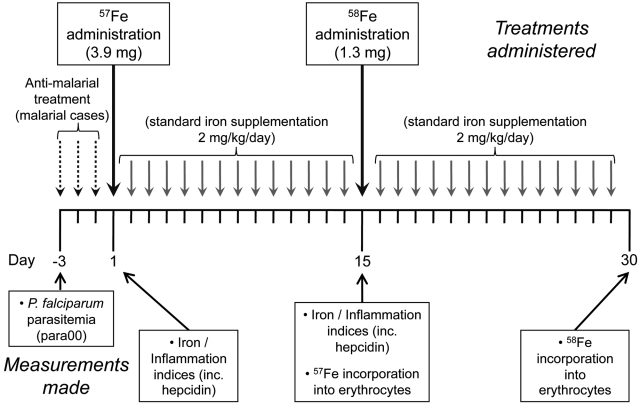
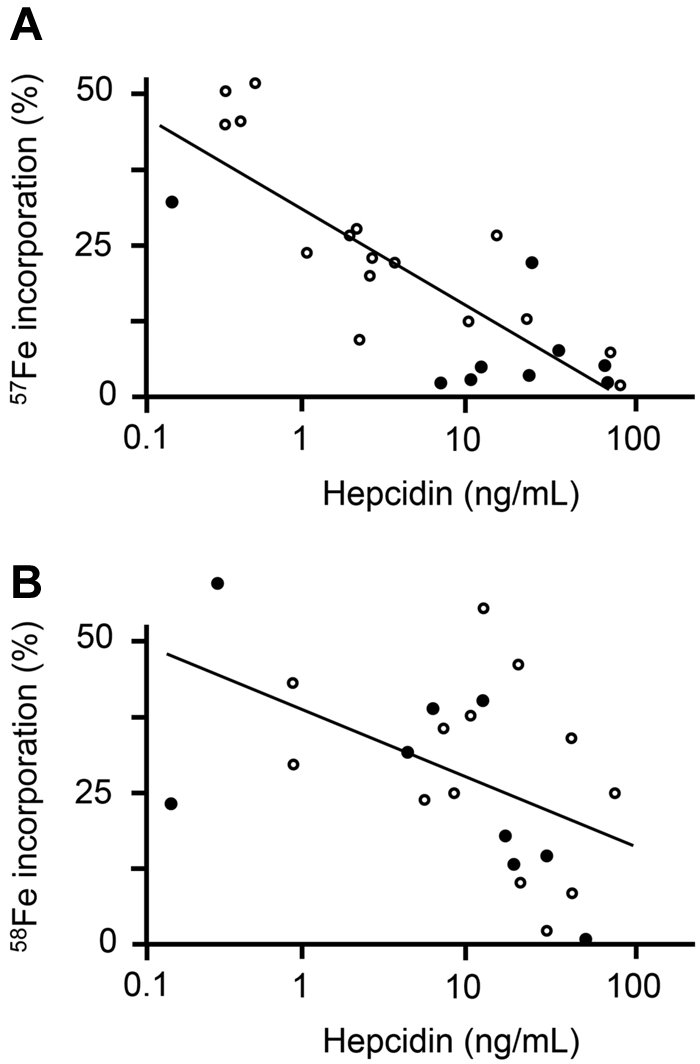
Iron supplementation strategies in the developing world remain controversial because of fears of exacerbating prevalent infectious diseases. Understanding the conditions in which iron will be absorbed and incorporated into erythrocytes is therefore important. We studied Gambian children with either postmalarial or nonmalarial anemia, who were given oral iron supplements daily for 30 days. Supplements administered on days 1 and 15 contained the stable iron isotopes 57Fe and 58Fe, respectively, and erythrocyte incorporation was measured in blood samples drawn 14 days later. We investigated how the iron-regulatory hormone hepcidin and other inflammatory/iron-related indices, all measured on the day of isotope administration, correlated with erythrocyte iron incorporation. In univariate analyses, hepcidin, ferritin, C-reactive protein, and soluble transferrin receptor (sTfR) strongly predicted incorporation of 57Fe given on day 1, while hepcidin, ferritin, and sTfR/log ferritin correlated with 58Fe incorporation. In a final multivariate model, the most consistent predictor of erythrocyte isotope incorporation was hepcidin. We conclude that under conditions of competing signals (anemia, iron deficiency, and infection), hepcidin powerfully controls use of dietary iron. We suggest that low-cost point-of-care hepcidin assays would aid iron supplementation programs in the developing world.
Overview
The claims and statistics of this paper haven’t been checked yet.
Free: it reads the open-access text and checks the first 5 claims that cite a source we can check. Create a free account to check every claim.
Integrity signals
Registry
Cites
Statistics
Figures
Verification
Claims the paper makes
The claims and statistics of this paper haven’t been checked yet.
Free: it reads the open-access text and checks the first 5 claims that cite a source we can check. Create a free account to check every claim.
Claims other papers make about this one
Each is checked against this paper’s own text: does it say what the citing paper says it does?
In the citing paper
“In addition, malaria induces HAMP, suggesting that iron sequestration is a major contributing factor to malarial anemia [100, 101].”
From Iron deficiency or anemia of inflammation?: Differential diagnosis and mechanisms of anemia of inflammation (2016) · cites this paper as [100]
Self-check
Percentages, sums and reported differences re-computed from the paper’s own numbers.
The self-check needs the paper’s full text.
Citations
Cites
Hepcidin Regulates Cellular Iron Efflux by Binding to Ferroportin and Inducing Its Internalization
Nemeth, E., Tuttle, M. S., Powelson, J., Vaughn, M. B., Donovan, A., Ward, D. M., Ganz, T., & Kaplan, J. (2004) · Science · doi:10.1126/science.1104742 · Cited by 4,803
Nemeth, E., Rivera, S., Gabayan, V., Keller, C., Taudorf, S., Pedersen, B. K., & Ganz, T. (2004) · Journal of Clinical Investigation · doi:10.1172/jci200420945 · Cited by 2,650 · cited 1×
“12,39 In this respect, the fact that hepcidin causes rapid hypoferremia in response to infection 39-41 and that it declines rapidly after an infection or inflammatory signal has been cleared 26,27 (thus allowing rapid absorption of dietary iron and remobilization of sequestered iron) would favor…”
BackgroundPositional cloning of zebrafish ferroportin1 identifies a conserved vertebrate iron exporter
Donovan, A., Brownlie, A., Zhou, Y., Shepard, J., Pratt, S. J., Moynihan, J., Paw, B. H., Drejer, A., Barut, B., Zapata, A., et al. (2000) · Nature · doi:10.1038/35001596 · Cited by 1,667
McKie, A. T., Marciani, P., Rolfs, A., Brennan, K., Wehr, K., Barrow, D., Miret, S., Bomford, A., Peters, T. J., Farzaneh, F., et al. (2000) · Molecular Cell · doi:10.1016/s1097-2765(00)80425-6 · Cited by 1,422
Zimmermann, M. B., & Hurrell, R. F. (2007) · The Lancet · doi:10.1016/s0140-6736(07)61235-5 · Cited by 1,405 · cited 1×
“Specifically, we considered associations between (1) plasma iron/inflammatory indices on the day of 57Fe administration (day 1) and subsequent 57Fe erythrocyte incorporation; (2) plasma iron/inflammatory indices on the day of 58Fe administration (day 15) and subsequent 58Fe erythrocyte incorporation; and (3) combined…”
MethodThe iron exporter ferroportin/Slc40a1 is essential for iron homeostasis
Donovan, A., Lima, C. A., Pinkus, J. L., Pinkus, G. S., Zon, L. I., Robine, S., & Andrews, N. C. (2005) · Cell Metabolism · doi:10.1016/j.cmet.2005.01.003 · Cited by 1,275
A Novel Mammalian Iron-regulated Protein Involved in Intracellular Iron Metabolism
Abboud, S., & Haile, D. J. (2000) · Journal of Biological Chemistry · doi:10.1074/jbc.m000713200 · Cited by 1,267 · cited 1×
“15-17 Therefore, when hepcidin levels are high, enterocyte absorption of dietary iron and release of macrophage iron to serum are blocked, resulting in hypoferremia that is thought to be anti-infective, but which also limits iron supply to the erythron and other tissues.”
BackgroundNicolas, G., Chauvet, C., Viatte, L., Danan, J. L., Bigard, X., Devaux, I., Beaumont, C., Kahn, A., & Vaulont, S. (2002) · Journal of Clinical Investigation · doi:10.1172/jci0215686 · Cited by 1,214 · cited 1×
“Hepcidin likewise was raised in these individuals, but not as markedly as CRP or ferritin; this might either reflect differing kinetics of clearance, and/or that other hepcidin-suppresive factors were also in operation (eg, erythropoietic drive, 28 hypoxia 29 ).”
BackgroundSazawal, S., Black, R. E., Ramsan, M., Chwaya, H. M., Stoltzfus, R. J., Dutta, A., Dhingra, U., Kabole, I., Deb, S., Othman, M. K., et al. (2006) · The Lancet · doi:10.1016/s0140-6736(06)67962-2 · Cited by 981 · cited 2×
“Elevated iron status may increase vulnerability to bacterial, 3,4 protozoal, 5 and viral 6 infections.”
BackgroundMethodHepcidin and iron regulation, 10 years later
Ganz, T. (2011) · Blood · doi:10.1182/blood-2011-01-258467 · Cited by 962 · cited 1×
“12,39 In this respect, the fact that hepcidin causes rapid hypoferremia in response to infection 39-41 and that it declines rapidly after an infection or inflammatory signal has been cleared 26,27 (thus allowing rapid absorption of dietary iron and remobilization of sequestered iron) would favor…”
BackgroundSchaible, U. E., & Kaufmann, S. H. E. (2004) · Nature Reviews Microbiology · doi:10.1038/nrmicro1046 · Cited by 945
Suppression of hepcidin during anemia requires erythropoietic activity
Pak, M., Lopez, M. A., Gabayan, V., Ganz, T., & Rivera, S. (2006) · Blood · doi:10.1182/blood-2006-06-028787 · Cited by 472 · cited 1×
“Hepcidin likewise was raised in these individuals, but not as markedly as CRP or ferritin; this might either reflect differing kinetics of clearance, and/or that other hepcidin-suppresive factors were also in operation (eg, erythropoietic drive, 28 hypoxia 29 ).”
BackgroundViral infection and iron metabolism
Drakesmith, H., & Prentice, A. (2008) · Nature Reviews Microbiology · doi:10.1038/nrmicro1930 · Cited by 469 · cited 1×
“Elevated iron status may increase vulnerability to bacterial, 3,4 protozoal, 5 and viral 6 infections.”
BackgroundSelf-citationHepcidin and disorders of iron metabolism
Ganz, T., & Nemeth, E. (2011) · Annual Review of Medicine · doi:10.1146/annurev-med-050109-142444 · Cited by 466
Iron Sequestration and Anemia of Inflammation
Ganz, T., & Nemeth, E. (2009) · Seminars in Hematology · doi:10.1053/j.seminhematol.2009.06.001 · Cited by 361
Rivera, S., Nemeth, E., Gabayan, V., Lopez, M. A., Farshidi, D., & Ganz, T. (2005) · Blood · doi:10.1182/blood-2005-04-1766 · Cited by 308
Serum hepcidin: reference ranges and biochemical correlates in the general population
Galesloot, T. E., Vermeulen, S. H., Geurts-Moespot, A. J., Klaver, S. M., Kroot, J. J., van Tienoven, D., Wetzels, J. F. M., Kiemeney, L. A. L. M., Sweep, F. C., den Heijer, M., et al. (2011) · Blood · doi:10.1182/blood-2011-02-337907 · Cited by 303
Hepcidin regulation by innate immune and infectious stimuli
Armitage, A. E., Eddowes, L. A., Gileadi, U., Cole, S., Spottiswoode, N., Selvakumar, T. A., Ho, L.-P., Townsend, A. R. M., & Drakesmith, H. (2011) · Blood · doi:10.1182/blood-2011-04-351957 · Cited by 294 · cited 1×
“12,39 In this respect, the fact that hepcidin causes rapid hypoferremia in response to infection 39-41 and that it declines rapidly after an infection or inflammatory signal has been cleared 26,27 (thus allowing rapid absorption of dietary iron and remobilization of sequestered iron) would favor…”
BackgroundSelf-citationHost-mediated regulation of superinfection in malaria
Portugal, S., Carret, C., Recker, M., Armitage, A. E., Gonçalves, L. A., Epiphanio, S., Sullivan, D., Roy, C., Newbold, C. I., Drakesmith, H., et al. (2011) · Nature Medicine · doi:10.1038/nm.2368 · Cited by 232 · cited 1×
“…reported in iron-replete European men ( R 2 (cid:2) 30%, n (cid:2) 33), 36 in iron-replete nonpregnant American women ( P (cid:2) .03, n (cid:2) 18), 37 and in European women with iron status ranging from replete to moderately deficient ( R 2 (cid:2) 31%, n (cid:2) 98 from ferrous sulfate; R 2…”
BackgroundSelf-citationOral iron supplements for children in malaria-endemic areas
Neuberger, A., Okebe, J., Yahav, D., & Paul, M. (2016) · Cochrane Database of Systematic Reviews · doi:10.1002/14651858.cd006589.pub4 · Cited by 220
The Effect of the Host’s Iron Status on Tuberculosis
Boelaert, J. R., Vandecasteele, S. J., Appelberg, R., & Gordeuk, V. R. (2007) · The Journal of Infectious Diseases · doi:10.1086/518040 · Cited by 217 · cited 1×
“Elevated iron status may increase vulnerability to bacterial, 3,4 protozoal, 5 and viral 6 infections.”
BackgroundSuppression of erythropoiesis in malarial anemia is associated with hemozoin in vitro and in vivo
Casals-Pascual, C., Kai, O., Cheung, J. O. P., Williams, S., Lowe, B., Nyanoti, M., Williams, T. N., Maitland, K., Molyneux, M., Newton, C. R. J. C., et al. (2006) · Blood · doi:10.1182/blood-2006-05-018697 · Cited by 198
Contribution of STAT3 and SMAD4 pathways to the regulation of hepcidin by opposing stimuli
Huang, H., Constante, M., Layoun, A., & Santos, M. M. (2009) · Blood · doi:10.1182/blood-2008-08-173641 · Cited by 166
Cercamondi, C. I., Egli, I. M., Ahouandjinou, E., Dossa, R. A. M., Zeder, C., Salami, L., Tjalsma, H., Wiegerinck, E. T. G., Tanno, T., Hurrell, R. F., et al. (2010) · American Journal of Clinical Nutrition · doi:10.3945/ajcn.2010.30051 · Cited by 128 · cited 2×
“Double-isotope studies (oral and IV) in nonpregnant Beninese women, with very similar absorption percentages to our study 33 showed that 88% of absorbed iron was incorporated into erythrocytes, 34 indicating the contribution of intestinal absorption to eventual RBC iron.”
BackgroundResultYoung, M. F., Glahn, R. P., Ariza‐Nieto, M., Inglis, J., Olbina, G., Westerman, M. E., & O'Brien, K. O. (2008) · American Journal of Clinical Nutrition · doi:10.3945/ajcn.2008.26589 · Cited by 127
de Mast, Q., Syafruddin, D., Keijmel, S., Riekerink, T. O., Deky, O., Asih, P. B., Swinkels, D. W., & van der Ven, A. J. (2010) · Haematologica · doi:10.3324/haematol.2009.019331 · Cited by 112 · cited 1×
“…causes rapid hypoferremia in response to infection 39-41 and that it declines rapidly after an infection or inflammatory signal has been cleared 26,27 (thus allowing rapid absorption of dietary iron and remobilization of sequestered iron) would favor safe iron acquisition by anemic children…”
BackgroundOral iron supplementation for preventing or treating anaemia among children in malaria-endemic areas
Ojukwu, J. U., Okebe, J. U., Yahav, D., & Paul, M. (2009) · Cochrane Database of Systematic Reviews · doi:10.1002/14651858.cd006589.pub2 · Cited by 104 · cited 1×
“2 However, iron is also a critical mediator of host-pathogen interactions, and supplementation may have serious adverse consequences in areas of high infectious burden.”
BackgroundZimmermann, M. B., Troesch, B., Biebinger, R., Egli, I. M., Zeder, C., & Hurrell, R. F. (2009) · American Journal of Clinical Nutrition · doi:10.3945/ajcn.2009.28129 · Cited by 99 · cited 1×
“38 A study in 23 nonpregnant Beninese women with asymptomatic P falciparum parasitemia reported no association between hepcidin and iron absorption at baseline, 34 but a significant association ( R 2 (cid:2) 46%, P (cid:1) .01) 25 days after treatment.”
BackgroundPhiri, K. S., Calis, J. C. J., Siyasiya, A., Bates, I., Brabin, B., & van Hensbroek, M. B. (2009) · Journal of Clinical Pathology · doi:10.1136/jcp.2009.066498 · Cited by 99 · cited 1×
“20 For stable isotope administration, 57 Fe and 58 Fe were made as an aqueous solution of iron sulfate as previously described.”
Methodde Mast, Q., Nadjm, B., Reyburn, H., Kemna, E. H. J. M., Amos, B., Laarakkers, C. M. M., Silalye, S., Verhoef, H., Sauerwein, R. W., Swinkels, D. W., et al. (2009) · The Journal of Infectious Diseases · doi:10.1086/595790 · Cited by 89 · cited 1×
“…causes rapid hypoferremia in response to infection 39-41 and that it declines rapidly after an infection or inflammatory signal has been cleared 26,27 (thus allowing rapid absorption of dietary iron and remobilization of sequestered iron) would favor safe iron acquisition by anemic children…”
BackgroundSelf-citationRoe, M. A., Collings, R., Dainty, J. R., Swinkels, D. W., & Fairweather‐Tait, S. J. (2009) · American Journal of Clinical Nutrition · doi:10.3945/ajcn.2008.27297 · Cited by 89 · cited 1×
“…weaker, associations between hepcidin and iron absorption/use have also been reported in iron-replete European men ( R 2 (cid:2) 30%, n (cid:2) 33), 36 in iron-replete nonpregnant American women ( P (cid:2) .03, n (cid:2) 18), 37 and in European women with iron status ranging from replete to…”
BackgroundOral iron supplements for children in malaria-endemic areas
Okebe, J. U., Yahav, D., Shbita, R., & Paul, M. (2011) · Cochrane Database of Systematic Reviews · doi:10.1002/14651858.cd006589.pub3 · Cited by 82 · cited 1×
“7,8 The regulatory systems controlling iron absorption and localization reflect this conflict of priorities.”
BackgroundDe Mast, Q., Van Dongen‐Lases, E. C., Swinkels, D. W., Nieman, A., Roestenberg, M., Druilhe, P., Arens, T. A., Luty, A. J., Hermsen, C. C., Sauerwein, R. W., et al. (2009) · British Journal of Haematology · doi:10.1111/j.1365-2141.2009.07664.x · Cited by 74
Howard, C. T., McKakpo, U. S., Quakyi, I. A., Bosompem, K. M., Addison, E. A., Sun, K., Sullivan, D., & Semba, R. D. (2007) · The American Journal of Tropical Medicine and Hygiene · doi:10.4269/ajtmh.2007.77.623 · Cited by 66
Malarial anemia leads to adequately increased erythropoiesis in asymptomatic Kenyan children
Verhoef, H., West, C. E., Kraaijenhagen, R., Nzyuko, S. M., King, R., Mbandi, M. M., van Laatum, S., Hogervorst, R., Schep, C., & Kok, F. J. (2002) · Blood · doi:10.1182/blood-2001-12-0228 · Cited by 64 · cited 1×
“EPO levels were significantly higher in the postmalarial cases, potentially reflecting a compensatory response to malaria-mediated suppression of EPO responsiveness as previously described 30-32 ; the lower Hb levels in this group could also contribute to higher EPO.”
BackgroundSelf-citationAmes, S. K., Gorham, B. M., & Abrams, S. A. (1999) · American Journal of Clinical Nutrition · doi:10.1093/ajcn/70.1.44 · Cited by 57 · cited 1×
“21 Isotope ratios were measured by thermal ionization magnetic sector mass spectrometry, 21,22 expressed relative to the nonadministered isotope 56 Fe and corrected for temperature-specific differences in fractionation using the ratio of 54 Fe to 56 Fe.”
MethodSelf-citationIron Incorporation and Post-Malaria Anaemia
Doherty, C. P., Cox, S. E., Fulford, A. J., Austin, S., Hilmers, D. C., Abrams, S. A., & Prentice, A. M. (2008) · PLoS ONE · doi:10.1371/journal.pone.0002133 · Cited by 55 · cited 1×
“19 Despite having cleared para-sitemias after 3 days of antimalarial treatment, they still had raised inflammatory markers (CRP and ferritin), presumably reflecting residual effects of malarial inflammation.”
BackgroundSelf-citationChen, Z., Griffin, I. J., Plumlee, L. M., & Abrams, S. A. (2005) · Journal of Nutrition · doi:10.1093/jn/135.7.1790 · Cited by 35 · cited 1×
“Iron isotope ratios were converted to tracer:tracee ratios as described 23 and RBC incorporation was expressed as the percentage of dose administered.”
MethodSelf-citationRaiten, D. J., Namasté, S., & Brabin, B. (2011) · International Journal for Vitamin and Nutrition Research · doi:10.1024/0300-9831/a000051 · Cited by 31 · cited 2×
“7,8 The regulatory systems controlling iron absorption and localization reflect this conflict of priorities.”
BackgroundErythropoietin Production in Virulent Malaria
RENCRICCA, N. J., Stout, J. P., & Coleman, R. M. (1974) · Infection and Immunity · doi:10.1128/iai.10.4.831-833.1974 · Cited by 28 · cited 1×
“EPO levels were significantly higher in the postmalarial cases, potentially reflecting a compensatory response to malaria-mediated suppression of EPO responsiveness as previously described 30-32 ; the lower Hb levels in this group could also contribute to higher EPO.”
BackgroundUsing Stable Isotopes to Assess the Bioavailability of Minerals in Food Fortification Programs
Abrams, S. A., Griffin, I. J., & Herman, S. (2002) · Food and Nutrition Bulletin · doi:10.1177/15648265020233s131 · Cited by 13
Self-citationAsymptomatic malaria in the etiology of iron deficiency anemia: a nutritionist's viewpoint
Prentice, A. M., Cox, S. E., & Nweneka, C. V. (2010) · American Journal of Clinical Nutrition · doi:10.3945/ajcn.110.004465 · Cited by 11 · cited 2×
“Double-isotope studies (oral and IV) in nonpregnant Beninese women, with very similar absorption percentages to our study 33 showed that 88% of absorbed iron was incorporated into erythrocytes, 34 indicating the contribution of intestinal absorption to eventual RBC iron.”
BackgroundResultSelf-citation
Cited by
Weiss, G., Ganz, T., & Goodnough, L. T. (2019) · Blood · doi:10.1182/blood-2018-06-856500 · Cited by 1,219
Iron metabolism and iron disorders revisited in the hepcidin era
Camaschella, C., Nai, A., & Silvestri, L. (2020) · Haematologica · doi:10.3324/haematol.2019.232124 · Cited by 734
Camaschella, C. (2019) · Blood · doi:10.1182/blood-2018-05-815944 · Cited by 702
Hepcidin and the iron-infection axis
Drakesmith, H., & Prentice, A. M. (2012) · Science · doi:10.1126/science.1224577 · Cited by 686
Self-citationMoretti, D., Goede, J. S., Zeder, C., Jiskra, M., Chatzinakou, V., Tjalsma, H., Melse-Boonstra, A., Brittenham, G., Swinkels, D. W., & Zimmermann, M. B. (2015) · Blood · doi:10.1182/blood-2015-05-642223 · Cited by 547
“The variation in the absorption data are not fully explained by iron markers and PHep: it is possible that the remaining variance—besides analytical variation—is explained by effects on absorption modulated via the iron regulatory protein/iron-responsive elements system,(11) HIF2a,(10,12,13) or H-ferritin–related intr…”
Background
Metadata
- Authors
- Prentice, A. M., Doherty, C. P., Abrams, S. A., Cox, S. E., Atkinson, S. H., Verhoef, H., Armitage, A. E., & Drakesmith, H.
- Affiliations
- London School of Hygiene & Tropical Medicine (GB)
- Royal Hospital for Children (GB)
- Agricultural Research Service (US)
- University of Oxford (GB)
- John Radcliffe Hospital (GB)
- Corresponding author
- Armitage, Andrew E.
- Drakesmith, Hal
- ORCID
- Venue
- Blood
- Publisher
- American Society of Hematology
- Published
- 2012-02-23
- Volume
- 119
- Issue
- 8
- Pages
- 1922-1928
- ISSN
- 0006-4971 (ISSN-L)
- 1528-0020
- PMC
- PMC3351093
- OpenAlex
- W2003339005
- Semantic Scholar
- 0b5eadd889ab15bf31066383d209369c0688c4de
- Cited by
- 167
- References
- 43
- Citations by year
- 2026: 1 · 2025: 5 · 2024: 4 · 2023: 8 · 2022: 10 · 2021: 12 · 2020: 13 · 2019: 17 · 2018: 15 · 2017: 18 · 2016: 17 · 2015: 11 · 2014: 19 · 2013: 8 · 2012: 8
- FWCI
- 9.81
- Type
- journal article
- Language
- en
- Open access
- bronze
- doi.org
- Locations
- Blood (publishedVersion)
- Europe PMC (PubMed Central) (publishedVersion, cc-by-nc)
- PubMed Central (publishedVersion, cc-by-nc)
- PubMed (publishedVersion)
- Socio-Environmental Systems Modeling (acceptedVersion)
- LSHTM Research Online (London School of Hygiene and Tropical Medicine) (acceptedVersion)
- ENLIGHTEN (Jurnal Bimbingan dan Konseling Islam) (submittedVersion)
- Data Archiving and Networked Services (DANS) (submittedVersion, other-oa)
- Funders
- Wellcome Trust
- Medical Research Council
- Topics
- Health Sciences › Medicine › Hematology › Iron Metabolism and Disorders
- Health Sciences › Medicine › Hematology › Erythropoietin and Anemia Treatment
- Health Sciences › Medicine › Genetics (clinical) › Hemoglobinopathies and Related Disorders
- Keywords
- hepcidin, erythrocyte iron incorporation, iron supplementation, anemia, iron deficiency, infection, iron regulation, iron stable isotopes, ferritin, C-reactive protein, soluble transferrin receptor, children
- MeSH terms
- Antimalarials, C-Reactive Protein, Child, Preschool, Drug Administration Schedule, Enzyme-Linked Immunosorbent Assay, Erythrocytes, Ferritins, Gambia, Humans, Infant, Iron Isotopes, Predictive Value of Tests, Receptors, Transferrin, Time Factors, Multivariate Analysis, Malaria, Falciparum, Treatment Outcome, Anemia, Iron-Deficiency, Iron, Dietary, Antimicrobial Cationic Peptides, Hepcidins
About these checks
Registry, retraction, Cites and statistics results are computed, not judged, with one exception: a printed reference that no index lists is read once by a model before it counts as a citation error. Claims are extracted by a model and kept only when their quote appears verbatim in the text; each cited source is then checked, with a model’s help, for whether it says what the claim relies on. Those verdicts can be wrong — read the claim’s quote and the cited source before relying on one.
Statistics and arithmetic are recomputed, not judged.
Confidence bands are shown only for fields calibrated on our annotated test set. None is calibrated yet, so no band is shown.
What counts as a claim ›How we measure confidence ›How we check this ›
Are you an author, or do you see a problem with this page? Request a review
Data sources
Bibliographic data: Semantic Scholar, OpenAlex, Crossref.
Contains information from the Semantic Scholar Academic Graph Datasets, made available under the ODC Attribution License (ODC-BY 1.0).
Semantic Scholar’s data is described in: Kinney, R., et al. (2023). The Semantic Scholar Open Data Platform. arXiv:2301.10140.
