

Hepcidin is the major predictor of erythrocyte iron incorporation in anemic African children
Open accessThe DOI matches its Crossref record; 42 of the 43 references it cites were found in a registry or an index.
Abstract
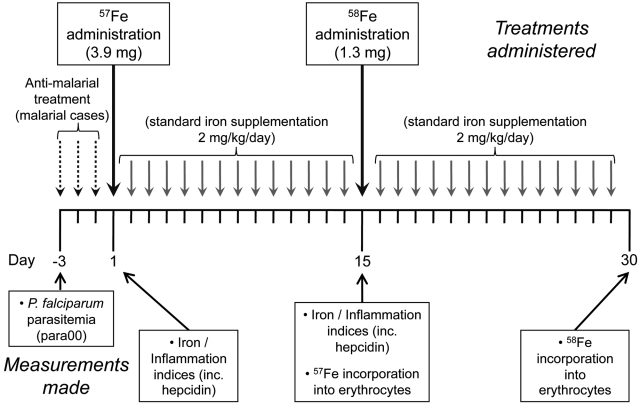
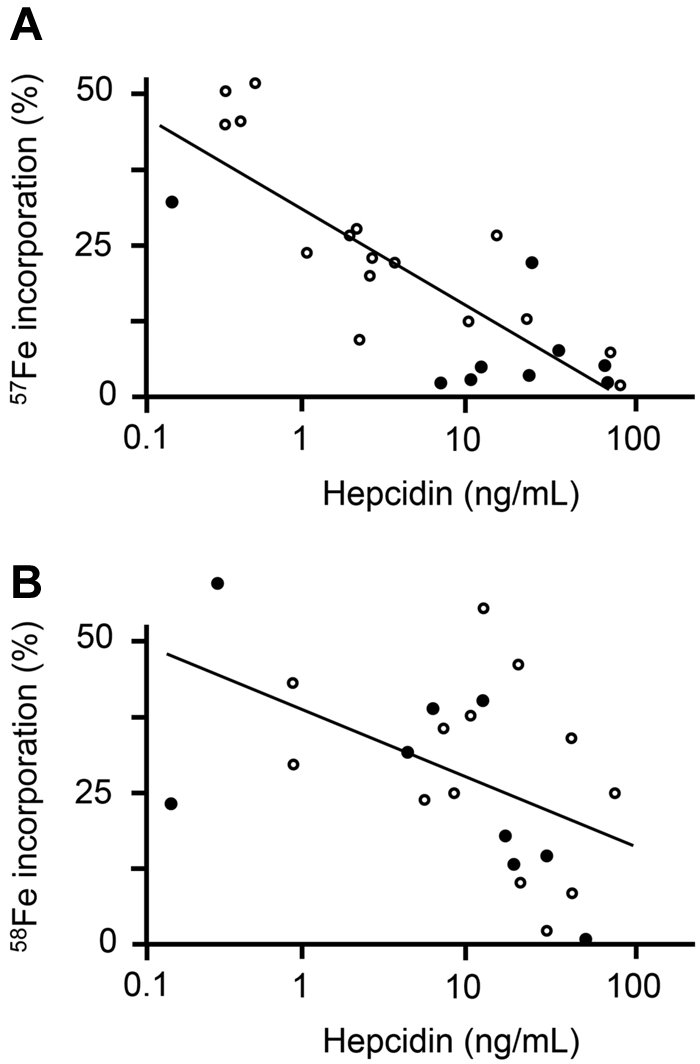
Iron supplementation strategies in the developing world remain controversial because of fears of exacerbating prevalent infectious diseases. Understanding the conditions in which iron will be absorbed and incorporated into erythrocytes is therefore important. We studied Gambian children with either postmalarial or nonmalarial anemia, who were given oral iron supplements daily for 30 days. Supplements administered on days 1 and 15 contained the stable iron isotopes 57Fe and 58Fe, respectively, and erythrocyte incorporation was measured in blood samples drawn 14 days later. We investigated how the iron-regulatory hormone hepcidin and other inflammatory/iron-related indices, all measured on the day of isotope administration, correlated with erythrocyte iron incorporation. In univariate analyses, hepcidin, ferritin, C-reactive protein, and soluble transferrin receptor (sTfR) strongly predicted incorporation of 57Fe given on day 1, while hepcidin, ferritin, and sTfR/log ferritin correlated with 58Fe incorporation. In a final multivariate model, the most consistent predictor of erythrocyte isotope incorporation was hepcidin. We conclude that under conditions of competing signals (anemia, iron deficiency, and infection), hepcidin powerfully controls use of dietary iron. We suggest that low-cost point-of-care hepcidin assays would aid iron supplementation programs in the developing world.
Overview
The claims and statistics of this paper haven’t been checked yet.
Free: it reads the open-access text and checks the first 5 claims that cite a source we can check. Create a free account to check every claim.
Integrity signals
Registry
Cites
Statistics
Figures
Verification
Claims the paper makes
The claims and statistics of this paper haven’t been checked yet.
Free: it reads the open-access text and checks the first 5 claims that cite a source we can check. Create a free account to check every claim.
Claims other papers make about this one
Each is checked against this paper’s own text: does it say what the citing paper says it does?
In the citing paper
“In addition, malaria induces HAMP, suggesting that iron sequestration is a major contributing factor to malarial anemia [100, 101].”
From Iron deficiency or anemia of inflammation?: Differential diagnosis and mechanisms of anemia of inflammation (2016) · cites this paper as [100]
Self-check
Percentages, sums and reported differences re-computed from the paper’s own numbers.
The self-check needs the paper’s full text.
Citations
Cites
Hepcidin Regulates Cellular Iron Efflux by Binding to Ferroportin and Inducing Its Internalization
Nemeth, E., Tuttle, M. S., Powelson, J., Vaughn, M. B., Donovan, A., Ward, D. M., Ganz, T., & Kaplan, J. (2004) · Science · doi:10.1126/science.1104742 · Cited by 4,803
Nemeth, E., Rivera, S., Gabayan, V., Keller, C., Taudorf, S., Pedersen, B. K., & Ganz, T. (2004) · Journal of Clinical Investigation · doi:10.1172/jci200420945 · Cited by 2,650 · cited 1×
“12,39 In this respect, the fact that hepcidin causes rapid hypoferremia in response to infection 39-41 and that it declines rapidly after an infection or inflammatory signal has been cleared 26,27 (thus allowing rapid absorption of dietary iron and remobilization of sequestered iron) would favor…”
BackgroundPositional cloning of zebrafish ferroportin1 identifies a conserved vertebrate iron exporter
Donovan, A., Brownlie, A., Zhou, Y., Shepard, J., Pratt, S. J., Moynihan, J., Paw, B. H., Drejer, A., Barut, B., Zapata, A., et al. (2000) · Nature · doi:10.1038/35001596 · Cited by 1,667
McKie, A. T., Marciani, P., Rolfs, A., Brennan, K., Wehr, K., Barrow, D., Miret, S., Bomford, A., Peters, T. J., Farzaneh, F., et al. (2000) · Molecular Cell · doi:10.1016/s1097-2765(00)80425-6 · Cited by 1,422
Zimmermann, M. B., & Hurrell, R. F. (2007) · The Lancet · doi:10.1016/s0140-6736(07)61235-5 · Cited by 1,405 · cited 1×
“Specifically, we considered associations between (1) plasma iron/inflammatory indices on the day of 57Fe administration (day 1) and subsequent 57Fe erythrocyte incorporation; (2) plasma iron/inflammatory indices on the day of 58Fe administration (day 15) and subsequent 58Fe erythrocyte incorporation; and (3) combined…”
MethodThe iron exporter ferroportin/Slc40a1 is essential for iron homeostasis
Donovan, A., Lima, C. A., Pinkus, J. L., Pinkus, G. S., Zon, L. I., Robine, S., & Andrews, N. C. (2005) · Cell Metabolism · doi:10.1016/j.cmet.2005.01.003 · Cited by 1,275
A Novel Mammalian Iron-regulated Protein Involved in Intracellular Iron Metabolism
Abboud, S., & Haile, D. J. (2000) · Journal of Biological Chemistry · doi:10.1074/jbc.m000713200 · Cited by 1,267 · cited 1×
“15-17 Therefore, when hepcidin levels are high, enterocyte absorption of dietary iron and release of macrophage iron to serum are blocked, resulting in hypoferremia that is thought to be anti-infective, but which also limits iron supply to the erythron and other tissues.”
BackgroundNicolas, G., Chauvet, C., Viatte, L., Danan, J. L., Bigard, X., Devaux, I., Beaumont, C., Kahn, A., & Vaulont, S. (2002) · Journal of Clinical Investigation · doi:10.1172/jci0215686 · Cited by 1,214 · cited 1×
“Hepcidin likewise was raised in these individuals, but not as markedly as CRP or ferritin; this might either reflect differing kinetics of clearance, and/or that other hepcidin-suppresive factors were also in operation (eg, erythropoietic drive, 28 hypoxia 29 ).”
BackgroundSazawal, S., Black, R. E., Ramsan, M., Chwaya, H. M., Stoltzfus, R. J., Dutta, A., Dhingra, U., Kabole, I., Deb, S., Othman, M. K., et al. (2006) · The Lancet · doi:10.1016/s0140-6736(06)67962-2 · Cited by 981 · cited 2×
“Elevated iron status may increase vulnerability to bacterial, 3,4 protozoal, 5 and viral 6 infections.”
BackgroundMethodHepcidin and iron regulation, 10 years later
Ganz, T. (2011) · Blood · doi:10.1182/blood-2011-01-258467 · Cited by 962 · cited 1×
“12,39 In this respect, the fact that hepcidin causes rapid hypoferremia in response to infection 39-41 and that it declines rapidly after an infection or inflammatory signal has been cleared 26,27 (thus allowing rapid absorption of dietary iron and remobilization of sequestered iron) would favor…”
Background
Cited by
Weiss, G., Ganz, T., & Goodnough, L. T. (2019) · Blood · doi:10.1182/blood-2018-06-856500 · Cited by 1,219
Iron metabolism and iron disorders revisited in the hepcidin era
Camaschella, C., Nai, A., & Silvestri, L. (2020) · Haematologica · doi:10.3324/haematol.2019.232124 · Cited by 734
Camaschella, C. (2019) · Blood · doi:10.1182/blood-2018-05-815944 · Cited by 702
Hepcidin and the iron-infection axis
Drakesmith, H., & Prentice, A. M. (2012) · Science · doi:10.1126/science.1224577 · Cited by 686
Self-citationMoretti, D., Goede, J. S., Zeder, C., Jiskra, M., Chatzinakou, V., Tjalsma, H., Melse-Boonstra, A., Brittenham, G., Swinkels, D. W., & Zimmermann, M. B. (2015) · Blood · doi:10.1182/blood-2015-05-642223 · Cited by 547
“The variation in the absorption data are not fully explained by iron markers and PHep: it is possible that the remaining variance—besides analytical variation—is explained by effects on absorption modulated via the iron regulatory protein/iron-responsive elements system,(11) HIF2a,(10,12,13) or H-ferritin–related intr…”
BackgroundIron deficiency anaemia revisited
Cappellini, M. D., Musallam, K. M., & Taher, A. T. (2020) · Journal of Internal Medicine · doi:10.1111/joim.13004 · Cited by 508
Transcriptional regulation by Ferric Uptake Regulator (Fur) in pathogenic bacteria
Troxell, B., & Hassan, H. M. (2013) · Frontiers in Cellular and Infection Microbiology · doi:10.3389/fcimb.2013.00059 · Cited by 500
Control of iron deficiency anemia in low- and middle-income countries
Pasricha, S.-R., Drakesmith, H., Black, J., Hipgrave, D., & Biggs, B.-A. (2013) · Blood · doi:10.1182/blood-2012-09-453522 · Cited by 440
“Erythrocyte incorporation of orally administered iron is suppressed in children with postmalarial anemia mediated by hepcidin.(47) The balance of benefit and harm may depend on the intensity of malaria transmission and local immunity to malaria, the prevalence of iron deficiency, and the general health of the populati…”
BackgroundSelf-citationHepcidin in the diagnosis of iron disorders
Girelli, D., Nemeth, E., & Swinkels, D. W. (2016) · Blood · doi:10.1182/blood-2015-12-639112 · Cited by 417
Iron at the interface of immunity and infection
Nairz, M., Haschka, D., Demetz, E., & Weiss, G. (2014) · Frontiers in Pharmacology · doi:10.3389/fphar.2014.00152 · Cited by 325
“…al., 2008; Gwamaka et al., 2012; Jonker et al., 2013) whereas other studies found interesting associations between iron delivery for erythropoiesis, circulating hepcidin levels and the prevalence of malaria in tropical countries (de Mast et al., 2010; Prentice et al., 2012; Atkinson et al., 2014).”
ResultNew insights into iron deficiency and iron deficiency anemia
Camaschella, C. (2017) · Blood Reviews · doi:10.1016/j.blre.2017.02.004 · Cited by 278
Serum ferritin as an indicator of iron status: What do we need to know?
Daru, J., Colman, K., Stanworth, S. J., De La Salle, B., Wood, E. M., & Pasricha, S.-R. (2017) · The American Journal of Clinical Nutrition · doi:10.3945/ajcn.117.155960 · Cited by 246
“ID is associated with an increase in erythrocyte iron incorporation that can be measured by using stable isotope studies (41).”
BackgroundModern iron replacement therapy: clinical and pathophysiological insights
Girelli, D., Ugolini, S., Busti, F., Marchi, G., & Castagna, A. (2018) · International Journal of Hematology · doi:10.1007/s12185-017-2373-3 · Cited by 188
“This would be particularly useful in certain “difficult” populations, such as the elderly [4] and children in developing countries [80].”
BackgroundAnemia and Iron Deficiency in Cancer Patients: Role of Iron Replacement Therapy
Busti, F., Marchi, G., Ugolini, S., Castagna, A., & Girelli, D. (2018) · Pharmaceuticals · doi:10.3390/ph11040094 · Cited by 165
“Of note, low hepcidin levels may be useful not only for diagnosis of ID, but also for predicting response to iron treatment [65].”
BackgroundThe Sanitation Hygiene Infant Nutrition Efficacy (SHINE) Trial: Rationale, Design, and Methods
(2015) · Clinical Infectious Diseases · doi:10.1093/cid/civ844 · Cited by 161
“elevated proinflammatory cytokines trigger increased hepatic synthesis of hepcidin, which suppresses iron absorption and utilization [56, 57], leading to iron deficiency anemia [58].”
BackgroundPasricha, S.-R., Low, M., Thompson, J., Farrell, A., & De-Regil, L.-M. (2014) · The Journal of Nutrition · doi:10.3945/jn.113.189589 · Cited by 158
“Hepcidin regulates systemic iron homeostasis and is induced by inflammation [including intensive exercise (47)] and storage iron; suppressed hepcidin facilitates iron absorption and utilization, whereas elevated hepcidin prevents it (48), suggesting that restitution of iron stores with oral iron may be less effective…”
BackgroundPasricha, S.-R., Frazer, D. M., Bowden, D. K., & Anderson, G. J. (2013) · Blood · doi:10.1182/blood-2012-12-471441 · Cited by 152
Approaches to reduce zinc and iron deficits in food systems
Gregory, P. J., Wahbi, A., Adu-Gyamfi, J. J., Heiling, M., Gruber, R., Joy, E. J. M., & Broadley, M. R. (2017) · Global Food Security · doi:10.1016/j.gfs.2017.03.003 · Cited by 171
Nairz, M., Theurl, I., Wolf, D., & Weiss, G. (2016) · Wiener Medizinische Wochenschrift · doi:10.1007/s10354-016-0505-7 · Cited by 152
“iron sequestration is a major contributing factor to malarial anemia [100, 101].”
BackgroundDietary strategies for improving iron status: balancing safety and efficacy
Prentice, A. M., Mendoza, Y. A., Pereira, D. I. A., Cerami, C., Wegmüller, R., Constable, A., & Spieldenner, J. (2016) · Nutrition Reviews · doi:10.1093/nutrit/nuw055 · Cited by 171
Self-citationEngle‐Stone, R., Aaron, G. J., Huang, J., Wirth, J. P., Namaste, S. M. L., Williams, A. M., Peerson, J. M., Rohner, F., Varadhan, R., Addo, O. Y., et al. (2017) · American Journal of Clinical Nutrition · doi:10.3945/ajcn.116.142323 · Cited by 165
“The administration of iron during inflammation may be ineffective if hepcidin is elevated (38) and may also be harmful in the case of certain infections (12, 13).”
BackgroundAnaemia in inflammatory rheumatic diseases
Weiss, G., & Schett, G. (2013) · Nature Reviews Rheumatology · doi:10.1038/nrrheum.2012.183 · Cited by 146
Iron, anemia and hepcidin in malaria
Spottiswoode, N., Duffy, P. E., & Drakesmith, H. (2014) · Frontiers in Pharmacology · doi:10.3389/fphar.2014.00125 · Cited by 127
Self-citationAnemia of chronic disorders: new diagnostic tools and new treatment strategies
Weiss, G. (2015) · Seminars in Hematology · doi:10.1053/j.seminhematol.2015.07.004 · Cited by 116
Anaemia, iron deficiency and susceptibility to infections
Jonker, F. A. M., & van Hensbroek, M. B. (2014) · Journal of Infection · doi:10.1016/j.jinf.2014.08.007 · Cited by 127
Oral iron acutely elevates bacterial growth in human serum
Cross, J. H., Bradbury, R. S., Fulford, A. J., Jallow, A. T., Wegmüller, R., Prentice, A. M., & Cerami, C. (2015) · Scientific Reports · doi:10.1038/srep16670 · Cited by 108
Self-citationExpression of the iron hormone hepcidin distinguishes different types of anemia in African children
Pasricha, S.-R., Atkinson, S. H., Armitage, A. E., Khandwala, S., Veenemans, J., Cox, S. E., Eddowes, L. A., Hayes, T., Doherty, C. P., Demir, A. Y., et al. (2014) · Science Translational Medicine · doi:10.1126/scitranslmed.3008249 · Cited by 108
Self-citationCandida albicans specializations for iron homeostasis: from commensalism to virulence
Noble, S. M. (2013) · Current Opinion in Microbiology · doi:10.1016/j.mib.2013.09.006 · Cited by 104
“albicans, host inflammatory responses further reduce serum iron levels through mechanisms such as decreased intestinal absorption and retention within reticuloendothelial cells [8,9].”
Xu, Y., Alfaro-Magallanes, V. M., & Babitt, J. L. (2020) · British Journal of Haematology · doi:10.1111/bjh.17252 · Cited by 104
“Lower hepcidin levels may also be helpful to identify patients who would be responsive to oral iron or in whom iron supplementation strategies would be safe in settings with a high prevalence of infection.(114,118,120) However, there are still several limitations that preclude the use of hepcidin assays in clinical pr…”
BackgroundBah, A., Pasricha, S., Jallow, M. W., Sise, E. A., Wegmüller, R., Armitage, A. E., Drakesmith, H., Moore, S. E., & Prentice, A. M. (2017) · Journal of Nutrition · doi:10.3945/jn.116.245373 · Cited by 95
“A key advantage of hepcidin measurement is that it directly interrogates systemic iron handling, and hence predicts absorption and utilization of ingested iron (41).”
BackgroundSelf-citationApproaches for Reducing the Risk of Early-Life Iron Deficiency-Induced Brain Dysfunction in Children
Cusick, S. E., Georgieff, M., & Rao, R. (2018) · Nutrients · doi:10.3390/nu10020227 · Cited by 102
“Low hepcidin also best predicted successful incorporation of dietary iron into red blood cells in an iron-stable isotope study in Gambian children [71,72].”
Backgroundvan der Vorm, L. N., Hendriks, J. C. M., Laarakkers, C. M., Klaver, S. M., Armitage, A. E., Bamberg, A., Geurts-Moespot, A. J., Girelli, D., Herkert, M., Itkonen, O., et al. (2016) · Clinical Chemistry · doi:10.1373/clinchem.2016.256768 · Cited by 97
“IC-4 cELISA None Synthetic hepcidin-25 Bachem (32, 33)”
BackgroundInfluentialSelf-citationRegulation of Hepcidin by Erythropoiesis: The Story So Far
Pasricha, S.-R., McHugh, K., & Drakesmith, H. (2016) · Annual Review of Nutrition · doi:10.1146/annurev-nutr-071715-050731 · Cited by 80
“In humans, there is a linear correlation between iron absorption (measured by erythrocyte iron incorporation of iron stable isotopes) and hepcidin levels (71).”
BackgroundSelf-citationDiagnosis of iron-deficient states
Archer, N. M., & Brugnara, C. (2015) · Critical Reviews in Clinical Laboratory Sciences · doi:10.3109/10408363.2015.1038744 · Cited by 82
Serum hepcidin levels and iron parameters in children with iron deficiency
Choi, H. S., Song, S. H., Lee, J. H., Kim, H.-J., & Yang, H. R. (2012) · The Korean Journal of Hematology · doi:10.5045/kjh.2012.47.4.286 · Cited by 79
Armitage, A. E., & Moretti, D. (2019) · Pharmaceuticals · doi:10.3390/ph12020059 · Cited by 90
“Recurrent or chronic infections, or other drivers of persistent inflammation, even if mild, may also lead to raised hepcidin and relative inhibition of dietary iron absorption [90,106].”
BackgroundSelf-citationRational Management of Iron-Deficiency Anaemia in Inflammatory Bowel Disease
Nielsen, O., Soendergaard, C., Vikner, M., & Weiss, G. (2018) · Nutrients · doi:10.3390/nu10010082 · Cited by 76
“The assessment should be guided by predictive serum parameters such as hepcidin, soluble transferrin receptor and others including red cell indices but no gold standard is available at present [76,84].”
BackgroundDonker, A. E., van der Staaij, H., & Swinkels, D. W. (2021) · Blood Reviews · doi:10.1016/j.blre.2021.100866 · Cited by 83
Flipside of the Coin: Iron Deficiency and Colorectal Cancer
Aksan, A., Farrag, K., Aksan, S., Schroeder, O., & Stein, J. M. (2021) · Frontiers in Immunology · doi:10.3389/fimmu.2021.635899 · Cited by 78
“Measurement of circulating hepcidin could offer additional utility, not only in assessing iron status, but also in predicting response to iron therapy (38, 39).”
BackgroundMalaria is a cause of iron deficiency in African children
Muriuki, J. M., Mentzer, A. J., Mitchell, R. E., Webb, E. L., Etyang, A. O., Kyobutungi, C. K., Morovat, A., Kimita, W., Ndungu, F. M., Macharia, A., et al. (2021) · Nature Medicine · doi:10.1038/s41591-021-01238-4 · Cited by 83
Self-citationPowers, J. M., & Buchanan, G. R. (2019) · Hematology/Oncology Clinics of North America · doi:10.1016/j.hoc.2019.01.006 · Cited by 83
Hepcidin is suppressed by erythropoiesis in hemoglobin E β-thalassemia and β-thalassemia trait
Jones, E., Pasricha, S.-R., Allen, A., Evans, P., Fisher, C. A., Wray, K., Premawardhena, A., Bandara, D., Perera, A., Webster, C., et al. (2015) · Blood · doi:10.1182/blood-2014-10-606491 · Cited by 68
Self-citationSchulze, K. J., Christian, P. S., Wu, L. S. F., Arguello, M. A., Cui, H., Nanayakkara‐Bind, A., Stewart, C. P., Khatry, S. K., LeClerq, S. C., & West, K. P. (2014) · Journal of Nutrition · doi:10.3945/jn.114.192336 · Cited by 65
“Hepcidin, a hormonal regulator of iron absorption during deficiency (low hepcidin) and/or sequestration in stores during sufficiency and inflammation (elevated hepcidin), may ultimately be a useful indicator of the body s iron need under both conditions (50).”
Atkinson, S. H., Armitage, A. E., Khandwala, S., Mwangi, T. W., Uyoga, S., Bejon, P. A., Williams, T. N., Prentice, A. M., & Drakesmith, H. (2014) · Blood · doi:10.1182/blood-2013-10-533000 · Cited by 64
“Malaria raises hepcidin levels in febrile and asymptomatic infection,(12-18) and raised plasma hepcidin impairs iron absorption.(7,19) In agreementwithdeMast et al,(18)we found that asymptomatic malaria parasitemia was associated with increased hepcidin levels inKenyan children (age-adjustedb 0.”
BackgroundMethodSelf-citationAslam, M. F., Frazer, D. M., Faria, N., Bruggraber, S. F. A., Wilkins, S. J., Mirciov, C. S. G., Powell, J. J., Anderson, G. J., & Pereira, D. I. A. (2014) · The FASEB Journal · doi:10.1096/fj.14-251520 · Cited by 64
Langer, A. L., & Ginzburg, Y. Z. (2017) · Hemodialysis International · doi:10.1111/hdi.12543 · Cited by 52
Stoffel, N. U., Lazrak, M., Bellitir, S., Mir, N. E., Hamdouchi, A. E., Barkat, A., Zeder, C., Moretti, D., Aguenaou, H., & Zimmermann, M. B. (2019) · Haematologica · doi:10.3324/haematol.2018.208645 · Cited by 62
“high SHep even in anemic subjects.(8,9) Nearly all experimental data are derived from cells or mice, where often very strong stimuli are applied (e.”
BackgroundIron deficiency anaemia: experiences and challenges
Stelle, I., Kalea, A. Z., & Pereira, D. I. A. (2018) · Proceedings of The Nutrition Society · doi:10.1017/s0029665118000460 · Cited by 62
“Iron absorption can be as high as 50 % when hepcidin is switched off and is virtually zero when hepcidin is high((66)).”
BackgroundJaeggi, T., Moretti, D., Kvalsvig, J., Holding, P. A., Tjalsma, H., Kortman, G. A. M., Joosten, I., Mwangi, A., & Zimmermann, M. B. (2013) · PLoS ONE · doi:10.1371/journal.pone.0057513 · Cited by 53
“serum hepcidin was the major predictor of erythrocyte iron incorporation [14].”
BackgroundPrentice, A. M., Bah, A., Jallow, M. W., Jallow, A. T., Sanyang, S., Sise, E. A., Ceesay, K., Danso, E., Armitage, A. E., Pasricha, S., et al. (2019) · Science Advances · doi:10.1126/sciadv.aav9020 · Cited by 59
Self-citationChronic Inflammation and Iron Metabolism
Osterholm, E. A., & Georgieff, M. (2015) · The Journal of Pediatrics · doi:10.1016/j.jpeds.2015.01.017 · Cited by 54
Hepcidin demonstrates a biphasic association with anemia in acute Plasmodium falciparum malaria
Casals-Pascual, C., Huang, H., Lakhal-Littleton, S., Thezenas, M. L., Kai, O., Newton, C. R. J. C., & Roberts, D. J. (2012) · Haematologica · doi:10.3324/haematol.2012.065854 · Cited by 47
“Furthermore, iron is not absorbed or incorporated into hemoglobin during acute infection.(12) Finally, our results show raised hepcidin levels directly related to malaria infection for up to a week after treatment has commenced and longer in some cases.”
BackgroundPaesano, R., Natalizi, T., Berlutti, F., & Valenti, P. (2012) · Pathogens and Global Health · doi:10.1179/2047773212y.0000000043 · Cited by 48
Should we reconsider iron administration based on prevailing ferritin and hepcidin concentrations?
Nakanishi, T., Kuragano, T., Kaibe, S., Nagasawa, Y., & Hasuike, Y. (2012) · Clinical and Experimental Nephrology · doi:10.1007/s10157-012-0694-3 · Cited by 46
Advances in understanding iron metabolism and its crosstalk with erythropoiesis
Camaschella, C., & Pagani, A. (2018) · British Journal of Haematology · doi:10.1111/bjh.15403 · Cited by 49
Theurl, M., Nairz, M., Schroll, A., Sonnweber, T., Asshoff, M., Haschka, D., Seifert, M., Willenbacher, W., Wilflingseder, D., Posch, W., et al. (2014) · Haematologica · doi:10.3324/haematol.2013.099481 · Cited by 42
“dren in Africa.(45) As hepcidin is regulated by various stimuli such as hypoxia, anemia, iron and inflammation,(3,15,17) it is important to consider which regulatory mechanism underlies the poor predictive effect of high hepcidin levels for the response to ESA therapy.”
BackgroundJonker, F. A. M., Calis, J. C. J., Phiri, K., Kraaijenhagen, R. J., Brabin, B. J., Faragher, B., Wiegerinck, E. T., Tjalsma, H., Swinkels, D. W., & Boele van Hensbroek, M. (2013) · PLoS ONE · doi:10.1371/journal.pone.0078964 · Cited by 42
Armitage, A. E., Agbla, S. C., Betts, M., Sise, E. A., Jallow, M. W., Sambou, E., Darboe, B., Worwui, A. K., Weinstock, G. M., Antonio, M., et al. (2019) · Haematologica · doi:10.3324/haematol.2018.210146 · Cited by 45
“Iron absorption is facilitated in the presence of low hepcidin concentrations, but inhibited when hepcidin is raised (such as during infection/inflammation), potentially explaining why many infants respond poorly to iron interventions.(20,49,50) Growth rate has previously been linked to reduced ferritin and iron defic…”
BackgroundSelf-citationMinchella, P. A., Armitage, A. E., Darboe, B., Jallow, M. W., Drakesmith, H., Jaye, A., Prentice, A. M., & McDermid, J. M. (2015) · The Journal of Nutrition · doi:10.3945/jn.114.203158 · Cited by 39
“Hepcidin concentrations have been shown to predict nonresponsiveness to oral iron therapy (41); and in combination with other iron biomarkers such as ferritin and/or transferrin, hepcidin may guide in whom and when iron-based anemia interventions may be ineffective (27, 42, 43).”
BackgroundMethodSelf-citationImplications of Malaria On Iron Deficiency Control Strategies
Spottiswoode, N., Fried, M., Drakesmith, H., & Duffy, P. E. (2012) · Advances in Nutrition · doi:10.3945/an.111.001156 · Cited by 43
“Individuals with higher hepcidin do not incorporate oral iron into RBC as well (56).”
Self-citationPrentice, A. M. (2017) · Annals of Nutrition and Metabolism · doi:10.1159/000480743 · Cited by 48
Self-citationde Souza, L. V., Hoffmann, A., Fischer, C., Petzer, V., Aßhoff, M., Theurl, I., Tymoszuk, P., Seifert, M., Brigo, N., Hilbe, R., et al. (2022) · Haematologica · doi:10.3324/haematol.2022.281149 · Cited by 36
Jonker, F. A. M., van Hensbroek, M. B., Leenstra, T., Vet, R. J. W. M., Brabin, B. J., Maseko, N., Gushu, M. B., Emana, M., Kraaijenhagen, R. J., Tjalsma, H., et al. (2014) · Journal of Clinical Pathology · doi:10.1136/jclinpath-2014-202291 · Cited by 42
Wegmüller, R., Bah, A., Kendall, L., Goheen, M. M., Mulwa, S. N., Cerami, C., Moretti, D., & Prentice, A. M. (2016) · BMC Pediatrics · doi:10.1186/s12887-016-0689-4 · Cited by 34
“lowering iron availability for erythropoiesis [12].”
Self-citationBah, A., Muhammad, A. K., Wegmüller, R., Verhoef, H., Goheen, M. M., Sanyang, S., Danso, E., Sise, E. A., Pasricha, S., Armitage, A. E., et al. (2019) · The Lancet Global Health · doi:10.1016/s2214-109x(19)30393-6 · Cited by 35
Self-citationZinc Absorption from Micronutrient Powder Is Low but Is not Affected by Iron in Kenyan Infants
Esamai, F., Liechty, E. A., Ikemeri, J. E., Westcott, J., Kemp, J., Culbertson, D., Miller, L. V., Hambidge, K. M., & Krebs, N. F. (2014) · Nutrients · doi:10.3390/nu6125636 · Cited by 32
“In addition to presumed negative effect of high phytate diet on iron absorption, the elevated inflammatory state could reasonably be expected to also stimulate hepcidin, which would further impair absorption, even in the face of iron deficiency [37].”
BackgroundHepcidin: a real-time biomarker of iron need
Hare, D. J. (2017) · Metallomics · doi:10.1039/c7mt00047b · Cited by 35
Malaria and Age Variably but Critically Control Hepcidin Throughout Childhood in Kenya
Atkinson, S. H., Uyoga, S. M., Armitage, A. E., Khandwala, S., Mugyenyi, C. K., Bejon, P., Marsh, K., Beeson, J. G., Prentice, A. M., Drakesmith, H., et al. (2015) · EBioMedicine · doi:10.1016/j.ebiom.2015.08.016 · Cited by 30
Self-citationWray, K., Allen, A., Evans, E., Fisher, C. A., Premawardhena, A., Perera, L., Rodrigo, R., Goonathilaka, G., Ramees, L., Webster, C., et al. (2017) · American Journal of Hematology · doi:10.1002/ajh.24617 · Cited by 31
Self-citationon behalf of the IRONMAN Study investigators, Litton, E., Baker, S., Erber, W. N., Farmer, S. L., Ferrier, J., French, C., Gummer, J. P. A., Hawkins, D., Higgins, A. M., et al. (2018) · Journal of Intensive Care · doi:10.1186/s40560-018-0328-2 · Cited by 33
Hepcidin level predicts hemoglobin concentration in individuals undergoing repeated phlebotomy
Mast, A. E., Schlumpf, K. S., Wright, D. J., Johnson, B. R., Glynn, S. A., Busch, M. P., Olbina, G., Westerman, M., Nemeth, E., Ganz, T., et al. (2013) · Haematologica · doi:10.3324/haematol.2012.070979 · Cited by 29
“This has been demonstrated in a recent study of children with anemia in Africa by Prentice and co-workers.(20) These investigators found that hepcidin concentration was the most consistent predictor of the incorporation of dietary iron into hemoglobin in patients with complex and competing signals for iron absorption,…”
ResultBah, A., Wegmüller, R., Cerami, C., Kendall, L., Pasricha, S., Moore, S. E., & Prentice, A. M. (2016) · BMC Pregnancy and Childbirth · doi:10.1186/s12884-016-0934-8 · Cited by 26
“Recent studies have noted that over the course of a malaria season, hepcidin integrates signals arising from parasitaemia, inflammation and anaemia [7, 20].”
BackgroundSelf-citationDuval, C., Macabiou, C., Garcia, C., Lesuisse, E., Camadro, J., & Auchère, F. (2019) · MicrobiologyOpen · doi:10.1002/mbo3.970 · Cited by 30
Speich, C., Wegmüller, R., Brittenham, G. M., Zeder, C., Cercamondi, C. I., Buhl, D., Prentice, A. M., Zimmermann, M. B., & Moretti, D. (2020) · British Journal of Haematology · doi:10.1111/bjh.17039 · Cited by 26
“Measurement of plasma hepcidin has been considered as a potential guide to the timing of iron supplementation.(17) The Hepcidin and Iron in Global Health (HIGH) study was a double-blind randomized controlled trial in toddlers in rural Gambia.”
BackgroundSelf-citationLanser, L., & Weiß, G. (2025) · Advances in experimental medicine and biology · doi:10.1007/978-3-031-92033-2_13 · Cited by 30
Frosch, A. E. P., Ondigo, B. N., Ayodo, G., VULULE, J. M., John, C. C., & Cusick, S. E. (2014) · American Journal of Clinical Nutrition · doi:10.3945/ajcn.114.087114 · Cited by 26
Teshome, E. M., Andang’o, P. E. A., Osoti, V., Terwel, S. R., Otieno, W., Demir, A. Y., Prentice, A. M., & Verhoef, H. (2017) · BMC Medicine · doi:10.1186/s12916-017-0839-z · Cited by 27
“The notion that infection-induced inflammation can reduce iron absorption is supported by the findings of a study conducted among Gambian children aged 18–36 months, which showed elevated serum CRP concentrations and impaired absorption of orally supplemented iron in children with post-malarial anaemia compared with t…”
BackgroundResultSelf-citationHepcidin as a diagnostic biomarker of iron deficiency anemia during pregnancy
Zaman, B. A., Rasool, S. O., Jasim, S., & Abdulah, D. M. (2019) · The Journal of Maternal-Fetal & Neonatal Medicine · doi:10.1080/14767058.2019.1635112 · Cited by 27
Hepcidin quantification: methods and utility in diagnosis
Konz, T., Montes‐Bayón, M., & Vaulont, S. (2014) · Metallomics · doi:10.1039/c4mt00063c · Cited by 26
The effect of iron dosing schedules on plasma hepcidin and iron absorption in Kenyan infants
Uyoga, M. A., Mikulic, N., Paganini, D., Mwasi, E., Stoffel, N. U., Zeder, C., Karanja, S. M., & Zimmermann, M. B. (2020) · American Journal of Clinical Nutrition · doi:10.1093/ajcn/nqaa174 · Cited by 24
Wegmüller, R., Bah, A., Kendall, L., Goheen, M. M., Sanyang, S., Danso, E., Sise, E. A., Jallow, A. T., Verhoef, H., Jallow, M. W., et al. (2022) · The Lancet Global Health · doi:10.1016/s2214-109x(22)00449-1 · Cited by 23
Self-citationRole of Activins in Hepcidin Regulation during Malaria
Spottiswoode, N., Armitage, A. E., Williams, A. R., Fyfe, A. J., Biswas, S., Hodgson, S. H. C., Llewellyn, D., Choudhary, P., Draper, S. J., Duffy, P. E., et al. (2017) · Infection and Immunity · doi:10.1128/iai.00191-17 · Cited by 22
“The initial hepcidin upregulation blocks oral iron absorption during and after infection (22, 23) and plays a role in determining host susceptibility to malaria superinfection (20) and, possibly, coinfections with other pathogens (24).”
Self-citationDonker, A. E., Galesloot, T. E., Laarakkers, C. M., Klaver, S. M., Bakkeren, D. L., & Swinkels, D. W. (2019) · Pediatric Blood & Cancer · doi:10.1002/pbc.28038 · Cited by 22
Brindle, E., Stevens, D., Crudder, C. H., Levin, C., Garrett, D., Lyman, C., & Boyle, D. S. (2014) · PLoS ONE · doi:10.1371/journal.pone.0115164 · Cited by 22
“Because ferritin cannot be measured accurately in DBS [46], it would be necessary to include an alternative indicator of iron status, such as hepcidin [47].”
BackgroundAdaptive immunity and vaccination – iron in the spotlight
Preston, A. E., Drakesmith, H., & Frost, J. N. (2021) · Immunotherapy Advances · doi:10.1093/immadv/ltab007 · Cited by 25
“A major issue in populations with high infection burden is that persistent mild inflammation can drive high hepcidin concentrations, disabling efficient dietary iron absorption [107, 108].”
BackgroundSelf-citationIron and Malaria Interactions: Research Needs From Basic Science to Global Policy
Prentice, A. M., & Cox, S. E. (2012) · Advances in Nutrition · doi:10.3945/an.111.001230 · Cited by 24
“Evidence from recently treated malaria patients also indicates that hepcidin decreases rapidly when the infectious threat has passed (much more rapidly than C-reactive protein and ferritin, for instance) and hence reopens pathways for iron absorption and redistribution to the erythron, allowing rapid recovery of iron…”
BackgroundSelf-citationCusick, S. E., Opoka, R. O., Abrams, S. A., John, C. C., Georgieff, M., & Mupere, E. (2016) · Journal of Nutrition · doi:10.3945/jn.116.233239 · Cited by 20
“Subsequent analysis of the same data set revealed that hepcidin concentration best predicted iron incorporation, with greater hepcidin associated with lower red blood cell iron incorporation (11).”
BackgroundSelf-citationEbola and Marburg Virus Infection in Bats Induces a Systemic Response
Jayaprakash, A. D., Ronk, A. J., Prasad, A. N., Covington, M. F., Stein, K. R., Schwarz, T. M., Hekmaty, S., Fenton, K. A., Geisbert, T. W., Basler, C. F., et al. (2020) · Viruses · doi:10.3390/v15020350 · Cited by 19
“Iron is exported from macrophages and absorbed from food [46] through ferroportin (SLC40A1/FPN1).”
BackgroundUijterschout, L., Swinkels, D. W., Akkermans, M. D., Zandstra, T., Nuijsink, M., Hendriks, D. M., Hudig, C., Tjalsma, H., Vos, R. C., van Goudoever, J. B., et al. (2014) · Journal of Cystic Fibrosis · doi:10.1016/j.jcf.2014.03.007 · Cited by 22
Iron replacement therapy: do we need new guidelines?
Nielsen, O. H., Coskun, M., & Weiß, G. (2016) · Current Opinion in Gastroenterology · doi:10.1097/mog.0000000000000247 · Cited by 21
“Thus, clinical evidence suggests that high serum hepcidin concentrations are associated with an impaired response to iron therapy [52,53].”
BackgroundCastberg, F. C., Sarbah, E. W., Koram, K. A., Opoku, N. O., Ofori, M. F., Styrishave, B., Hviid, L., & Kurtzhals, J. A. L. (2018) · Malaria Journal · doi:10.1186/s12936-018-2609-6 · Cited by 19
Kanuri, G., Chichula, D., Sawhney, R., Kuriakose, K., DeSouza, S. I., Pais, F. M., Arumugam, K., & Shet, A. S. (2018) · Haematologica · doi:10.3324/haematol.2018.193243 · Cited by 21
“Serum hepcidin, a key regulator of iron homeostasis, is an important biomarker because its levels determine how well oral iron is absorbed, with low hepcidin levels indicating both a requirement for iron and an ability to utilize it if provided.(7,8) Although ZPP/H reference values are available for iron deficient pre…”
BackgroundHershko, C. (2018) · Haematologica · doi:10.3324/haematol.2018.205575 · Cited by 18
Iron Isotopic Composition of Biological Standards Relevant to Medical and Biological Applications
Kubik, E., Moynier, F., Paquet, M., & Siebert, J. (2021) · Frontiers in Medicine · doi:10.3389/fmed.2021.696367 · Cited by 17
Next-Generation Biomarkers for Iron Status
Drakesmith, H. (2016) · Nestlé Nutrition Institute Workshop series · doi:10.1159/000436955 · Cited by 18
Self-citationHow Eliminating Malaria May Also Prevent Iron Deficiency in African Children
Muriuki, J. M., & Atkinson, S. H. (2018) · Pharmaceuticals · doi:10.3390/ph11040096 · Cited by 16
Self-citationRaiten, D. J., Neufeld, L. M., De‐Regil, L. M., Pasricha, S., Darnton‐Hill, I., Hurrell, R. F., Murray‐Kolb, L. E., Nair, K. M., Wefwafwa, T., Kupka, R., et al. (2016) · Advances in Nutrition · doi:10.3945/an.115.008581 · Cited by 17
Modulation of iron status biomarkers in tuberculosis-diabetes co-morbidity
Kumar, N. P., Banurekha, V. V., Nair, D., Dolla, C., Kumaran, P., & Babu, S. (2017) · Tuberculosis · doi:10.1016/j.tube.2017.11.011 · Cited by 16
“Previously published data reports that increased plasma hepcidin levels, may indicate anemia of inflammation, which indicates harmful effects of iron supplementation often observed during infections [27].”
BackgroundBrickley, E. B., Spottiswoode, N., Kabyemela, E., Morrison, R., Kurtis, J. D., Wood, A., Drakesmith, H., Fried, M., & Duffy, P. E. (2016) · American Journal of Tropical Medicine and Hygiene · doi:10.4269/ajtmh.16-0218 · Cited by 15
“form of hepcidin was detected in cord blood plasma using the hepcidin-25 (human) EIA kit (Bachem, Bubendorf, Switzerland) as previously described.(24) A dilution series of standard hepcidin-25 was run on each plate with values ranging”
MethodSelf-citationvon Roedern, M., Buriko, Y., Prittie, J. E., & Lamb, K. E. (2017) · Journal of Small Animal Practice · doi:10.1111/jsap.12658 · Cited by 14
“Hepcidin measurement has been used to further characterise anaemia and to predict patient response to iron supplementation (Roe et al. 2009 , Prentice et al. 2012 ).”
Method
Metadata
- Authors
- Prentice, A. M., Doherty, C. P., Abrams, S. A., Cox, S. E., Atkinson, S. H., Verhoef, H., Armitage, A. E., & Drakesmith, H.
- Affiliations
- London School of Hygiene & Tropical Medicine (GB)
- Royal Hospital for Children (GB)
- Agricultural Research Service (US)
- University of Oxford (GB)
- John Radcliffe Hospital (GB)
- Corresponding author
- Armitage, Andrew E.
- Drakesmith, Hal
- ORCID
- Venue
- Blood
- Publisher
- American Society of Hematology
- Published
- 2012-02-23
- Volume
- 119
- Issue
- 8
- Pages
- 1922-1928
- ISSN
- 0006-4971 (ISSN-L)
- 1528-0020
- PMC
- PMC3351093
- OpenAlex
- W2003339005
- Cited by
- 167
- References
- 43
- Citations by year
- 2026: 1 · 2025: 5 · 2024: 4 · 2023: 8 · 2022: 10 · 2021: 12 · 2020: 13 · 2019: 17 · 2018: 15 · 2017: 18 · 2016: 17 · 2015: 11 · 2014: 19 · 2013: 8 · 2012: 8
- FWCI
- 9.81
- Type
- journal article
- Language
- en
- Open access
- bronze
- doi.org
- Locations
- Blood (publishedVersion)
- Europe PMC (PubMed Central) (publishedVersion, cc-by-nc)
- PubMed Central (publishedVersion, cc-by-nc)
- PubMed (publishedVersion)
- Socio-Environmental Systems Modeling (acceptedVersion)
- LSHTM Research Online (London School of Hygiene and Tropical Medicine) (acceptedVersion)
- ENLIGHTEN (Jurnal Bimbingan dan Konseling Islam) (submittedVersion)
- Data Archiving and Networked Services (DANS) (submittedVersion, other-oa)
- Funders
- Wellcome Trust
- Medical Research Council
- Topics
- Health Sciences › Medicine › Hematology › Iron Metabolism and Disorders
- Health Sciences › Medicine › Hematology › Erythropoietin and Anemia Treatment
- Health Sciences › Medicine › Genetics (clinical) › Hemoglobinopathies and Related Disorders
- Keywords
- hepcidin, erythrocyte iron incorporation, iron supplementation, anemia, iron deficiency, infection, iron regulation, iron stable isotopes, ferritin, C-reactive protein, soluble transferrin receptor, children
- MeSH terms
- Antimalarials, C-Reactive Protein, Child, Preschool, Drug Administration Schedule, Enzyme-Linked Immunosorbent Assay, Erythrocytes, Ferritins, Gambia, Humans, Infant, Iron Isotopes, Predictive Value of Tests, Receptors, Transferrin, Time Factors, Multivariate Analysis, Malaria, Falciparum, Treatment Outcome, Anemia, Iron-Deficiency, Iron, Dietary, Antimicrobial Cationic Peptides, Hepcidins
About these checks
Registry, retraction, Cites and statistics results are computed, not judged, with one exception: a printed reference that no index lists is read once by a model before it counts as a citation error. Claims are extracted by a model and kept only when their quote appears verbatim in the text; each cited source is then checked, with a model’s help, for whether it says what the claim relies on. Those verdicts can be wrong — read the claim’s quote and the cited source before relying on one.
Statistics and arithmetic are recomputed, not judged.
Confidence bands are shown only for fields calibrated on our annotated test set. None is calibrated yet, so no band is shown.
What counts as a claim ›How we measure confidence ›How we check this ›
Are you an author, or do you see a problem with this page? Request a review
Data sources
Bibliographic data: Semantic Scholar, OpenAlex, Crossref.
Contains information from the Semantic Scholar Academic Graph Datasets, made available under the ODC Attribution License (ODC-BY 1.0).
Semantic Scholar’s data is described in: Kinney, R., et al. (2023). The Semantic Scholar Open Data Platform. arXiv:2301.10140.
