

The DOI matches its Crossref record; 6 of the 6 references it cites were found in a registry or an index.
Pracinostat plus azacitidine in older patients with newly diagnosed acute myeloid leukemia: results of a phase 2 study
Abstract
Pracinostat, a potent oral pan-histone deacetylase inhibitor with modest single-agent activity in acute myeloid leukemia (AML), has shown synergistic antitumor activity when combined with azacitidine. This single-group, multicenter phase 2 study assessed the safety and efficacy of pracinostat combined with azacitidine in patients who were at least 65 years old with newly diagnosed AML and who were ineligible for standard induction chemotherapy. Patients received pracinostat 60 mg/d, 3 d/wk, for 3 consecutive weeks, plus azacitidine 75 mg/m2 daily for 7 days in a 28-day cycle. Primary endpoints were complete remission (CR), CR with incomplete count recovery (CRi), and morphologic leukemia-free state (MLFS) rates of the combination. Secondary endpoints included safety, progression-free survival (PFS), and overall survival (OS) of the regimen. Fifty patients (33 de novo, 12 secondary, and 5 therapy-related AML) were enrolled. Twenty-six patients (52%) achieved the primary endpoint of CR (42%), CRi (4%), and MLFS (6%). Median OS and PFS were 19.1 months (95% confidence interval [CI], 10-26.5 months) and 12.6 months (95% CI, 10-17.7 months), respectively, with a 1-year OS rate of 62%. Forty-three patients (86%) experienced at least 1 grade 3 or worse treatment-emergent adverse event with the combination, with infections (52%), thrombocytopenia (46%), and febrile neutropenia (44%) reported as the most common toxicities. The 30- and 60-day all-cause mortality rates were 2% and 10%, respectively. DNA sequencing revealed somatic mutations at baseline, and clearance rates correlated with response to treatment. Pracinostat plus azacitidine is a well-tolerated and active regimen in the frontline treatment of older patients with AML unfit for intensive therapy. A larger controlled trial is ongoing. This trial was registered at www.clinicaltrials.gov as #NCT01912274.
Overview
The claims and statistics of this paper haven’t been checked yet.
Run the check — free, no account needed. It reads the open-access text and checks the sources it cites.
Integrity signals
Registry
Cites
Statistics
Figures
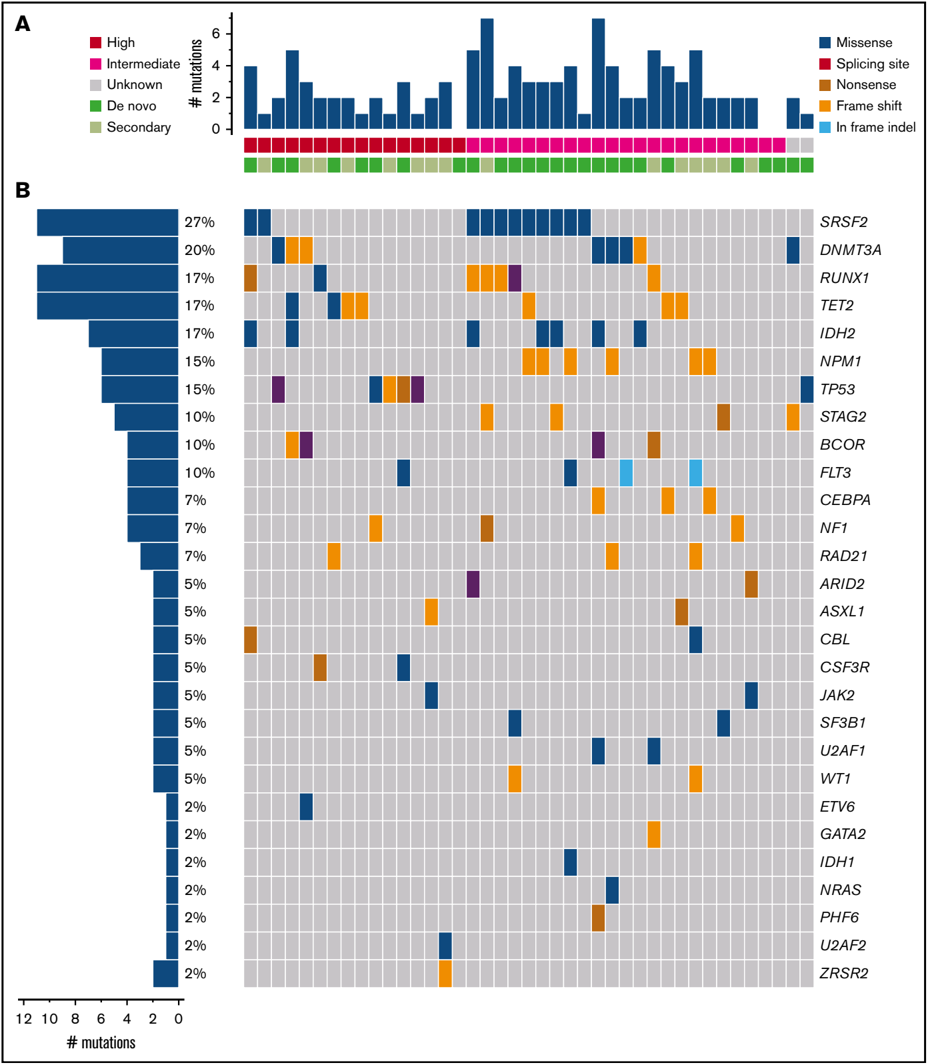
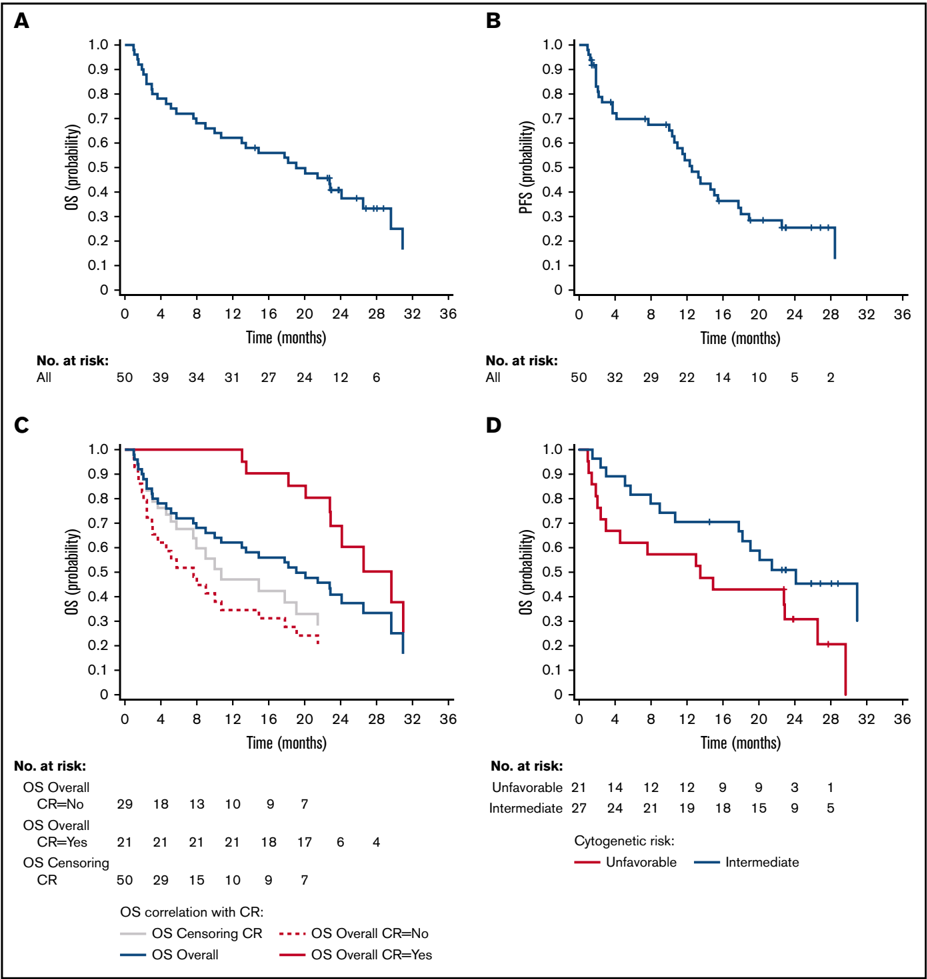
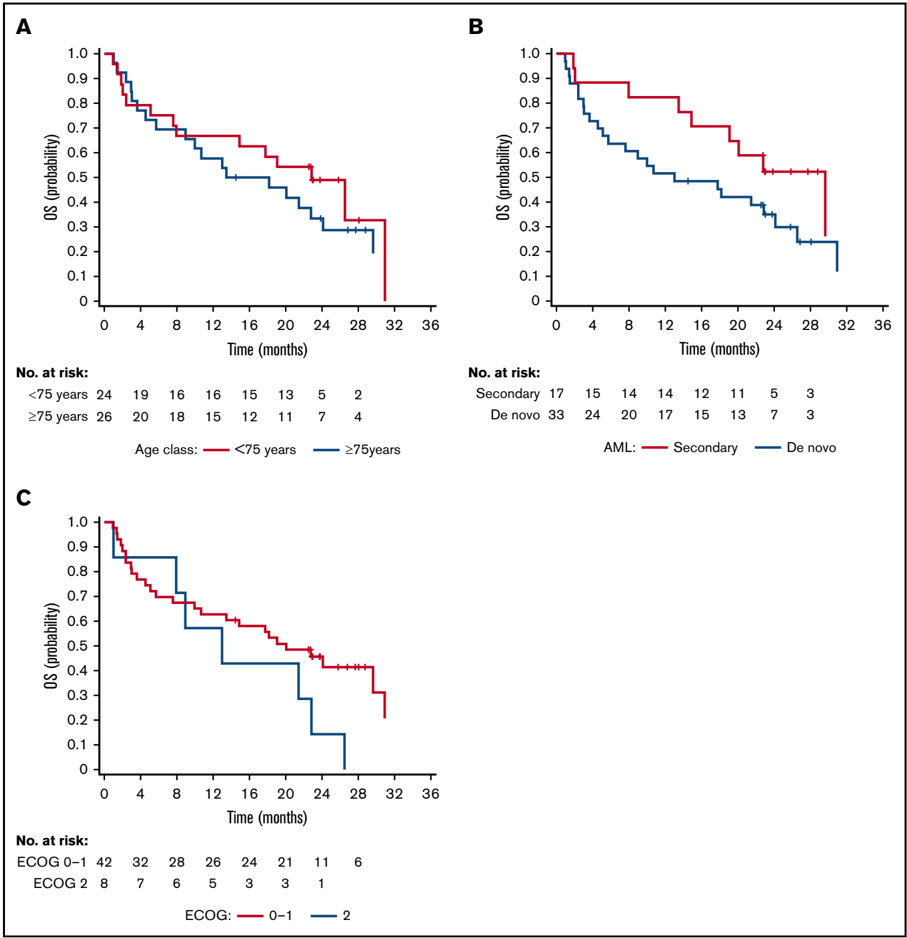
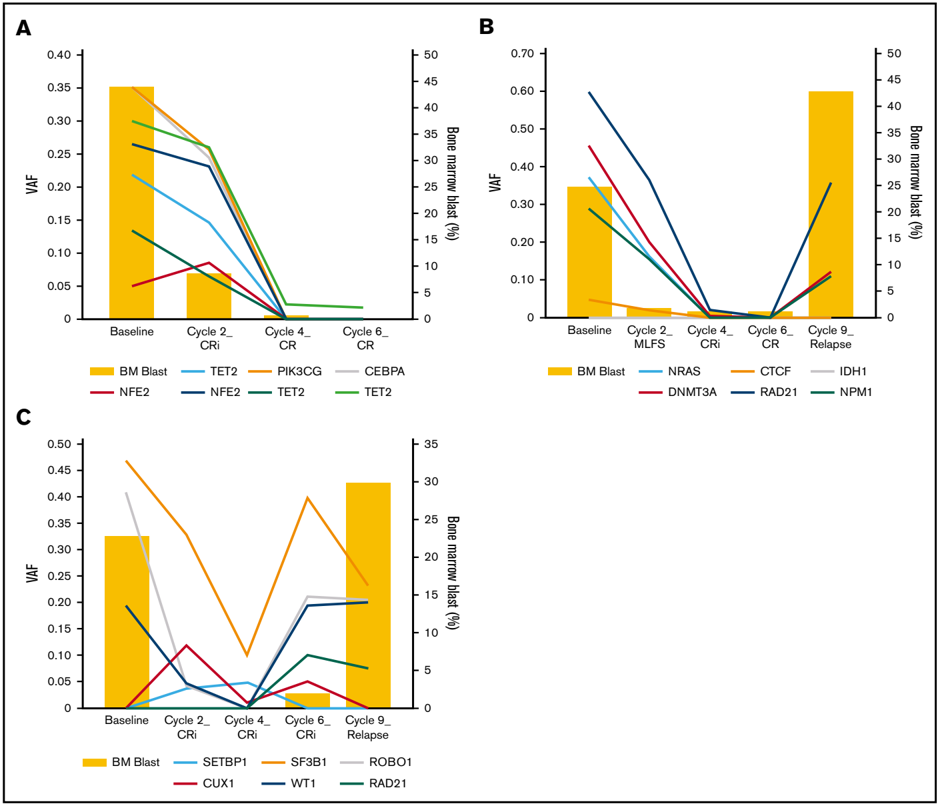
Verification
Claims the paper makes
The claims and statistics of this paper haven’t been checked yet.
Run the check — free, no account needed. It reads the open-access text and checks the sources it cites.
Claims other papers make about this one
Each is checked against this paper’s own text: does it say what the citing paper says it does?
In the citing paper
“Others have begun to use a combination of HMAs with other targeted agents and have reported good outcomes in patients with DNMT3A mutations (49).”
From Loss of Dnmt3a impairs hematopoietic homeostasis and myeloid cell skewing via the PI3Kinase pathway (2023) · cites this paper as [49]
Self-check
Percentages, sums and reported differences re-computed from the paper’s own numbers.
The self-check needs the paper’s full text.
Citations
Cites
Age-related clonal hematopoiesis associated with adverse outcomes
Jaiswal, S., Fontanillas, P., Flannick, J., Manning, A., Grauman, P. V., Mar, B. G., Lindsley, R. C., Mermel, C. H., Burtt, N., Chavez, A., et al. (2014) · New England Journal of Medicine · doi:10.1056/nejmoa1408617 · Cited by 4,841
Clonal hematopoiesis and blood-cancer risk inferred from blood DNA sequence
Genovese, G., Kähler, A. K., Handsaker, R. E., Lindberg, J., Rose, S. A., Bakhoum, S. F., Chambert, K., Mick, E., Neale, B. M., Fromer, M., et al. (2014) · New England Journal of Medicine · doi:10.1056/nejmoa1409405 · Cited by 3,531
Histone deacetylases (HDACs): characterization of the classical HDAC family
RUIJTER, A. J. M. D., GENNIP, A. H. V., CARON, H. N., KEMP, S., & KUILENBURG, A. B. P. V. (2003) · Biochemical Journal · doi:10.1042/bj20021321 · Cited by 3,114
Clonal evolution in relapsed acute myeloid leukaemia revealed by whole-genome sequencing
Ding, L., Ley, T. J., Larson, D. E., Miller, C. A., Koboldt, D. C., Welch, J. S., Ritchey, J. K., Young, M. A., Lamprecht, T., McLellan, M. D., et al. (2012) · Nature · doi:10.1038/nature10738 · Cited by 1,993
Histone-deacetylase inhibitors: novel drugs for the treatment of cancer
Johnstone, R. W. (2002) · Nature Reviews Drug Discovery · doi:10.1038/nrd772 · Cited by 1,515
Preleukaemic clonal haemopoiesis and risk of therapy-related myeloid neoplasms: a case-control study
Takahashi, K., Wang, F., Kantarjian, H., Doss, D., Khanna, K., Thompson, E., Zhao, L., Patel, K., Neelapu, S., Gumbs, C., et al. (2017) · The Lancet Oncology · doi:10.1016/s1470-2045(16)30626-x · Cited by 399
Self-citation
Research works printed but not linked: 37
- O’Donnell, 2017, Acute myeloid leukemia, version 3.2017, NCCN Clinical Practice Guidelines in Oncology, J Natl Compr Canc Netw, 15, 926, 10.6004/jnccn.2017.0116 · DOI
- Kantarjian, 2010, Intensive chemotherapy does not benefit most older patients (age 70 years or older) with acute myeloid leukemia, Blood, 116, 4422, 10.1182/blood-2010-03-276485 · DOI
- Anderson, 2002, Outcome after induction chemotherapy for older patients with acute myeloid leukemia is not improved with mitoxantrone and etoposide compared to cytarabine and daunorubicin: a Southwest Oncology Group study, Blood, 100, 3869, 10.1182/blood-2001-12-0354 · DOI
- Dombret, 2008, Acute myeloid leukemia in the elderly, Semin Oncol, 35, 430, 10.1053/j.seminoncol.2008.04.013 · DOI
- Gardin, 2007, Postremission treatment of elderly patients with acute myeloid leukemia in first complete remission after intensive induction chemotherapy: results of the multicenter randomized Acute Leukemia French Association (ALFA) 9803 trial, Blood, 109, 5129, 10.1182/blood-2007-02-069666 · DOI
- Döhner, 2015, Acute myeloid leukemia, N Engl J Med, 373, 1136, 10.1056/NEJMra1406184 · DOI
- Dombret, 2015, International phase 3 study of azacitidine vs conventional care regimens in older patients with newly diagnosed AML with >30% blasts, Blood, 126, 291, 10.1182/blood-2015-01-621664 · DOI · Paper page
- Fenaux, 2010, Azacitidine prolongs overall survival compared with conventional care regimens in elderly patients with low bone marrow blast count acute myeloid leukemia, J Clin Oncol, 28, 562, 10.1200/JCO.2009.23.8329 · DOI · Paper page
- Kantarjian, 2012, Multicenter, randomized, open-label, phase III trial of decitabine versus patient choice, with physician advice, of either supportive care or low-dose cytarabine for the treatment of older patients with newly diagnosed acute myeloid leukemia, J Clin Oncol, 30, 2670, 10.1200/JCO.2011.38.9429 · DOI
- Oran, 2012, Survival for older patients with acute myeloid leukemia: a population-based study, Haematologica, 97, 1916, 10.3324/haematol.2012.066100 · DOI
- Granfeldt Østgård, 2015, Epidemiology and clinical significance of secondary and therapy-related acute myeloid leukemia: a national population-based cohort study, J Clin Oncol, 33, 3641, 10.1200/JCO.2014.60.0890 · DOI
- Schneider-Stock, 2007, Epigenetic therapy in cancer: molecular background and clinical development of histone deacetylase and DNA methyltransferase inhibitors, IDrugs, 10, 557
- Cai, 2015, Discovery, bioactivity and docking simulation of vorinostat analogues containing 1,2,4-oxadiazole moiety as potent histone deacetylase inhibitors and antitumor agents, Bioorg Med Chem, 23, 3457, 10.1016/j.bmc.2015.04.028 · DOI
- Cameron, 1999, Synergy of demethylation and histone deacetylase inhibition in the re-expression of genes silenced in cancer, Nat Genet, 21, 103, 10.1038/5047 · DOI
- Yang, 2005, Antileukemia activity of the combination of 5-aza-2′-deoxycytidine with valproic acid, Leuk Res, 29, 739, 10.1016/j.leukres.2004.11.022 · DOI
- Kirschbaum, 2014, A phase 1 clinical trial of vorinostat in combination with decitabine in patients with acute myeloid leukaemia or myelodysplastic syndrome, Br J Haematol, 167, 185, 10.1111/bjh.13016 · DOI
- Gore, 2006, Combined DNA methyltransferase and histone deacetylase inhibition in the treatment of myeloid neoplasms, Cancer Res, 66, 6361, 10.1158/0008-5472.CAN-06-0080 · DOI
- Maslak, 2006, Pilot study of combination transcriptional modulation therapy with sodium phenylbutyrate and 5-azacytidine in patients with acute myeloid leukemia or myelodysplastic syndrome, Leukemia, 20, 212, 10.1038/sj.leu.2404050 · DOI
- Garcia-Manero, 2006, Phase 1/2 study of the combination of 5-aza-2′-deoxycytidine with valproic acid in patients with leukemia, Blood, 108, 3271, 10.1182/blood-2006-03-009142 · DOI
- Kirschbaum, 2009, Vorinostat in combination with decitabine for the treatment of relapsed or newly diagnosed acute myelogenous leukemia (AML) or myelodysplastic syndrome (MDS): a phase I, dose-escalation study [abstract], Blood, 114, 10.1182/blood.V114.22.2089.2089 · DOI
- Quintás-Cardama, 2012, Very high rates of clinical and cytogenetic response with the combination of the histone deacetylase inhibitor pracinostat (SB939) and 5-azacitidine in high-risk myelodysplastic syndrome [abstract], Blood, 120, 10.1182/blood.V120.21.3821.3821 · DOI
- Prebet, 2014, Prolonged administration of azacitidine with or without entinostat for myelodysplastic syndrome and acute myeloid leukemia with myelodysplasia-related changes: results of the US Leukemia Intergroup trial E1905, J Clin Oncol, 32, 1242, 10.1200/JCO.2013.50.3102 · DOI
- Sekeres, 2017, Randomized phase II study of azacitidine alone or in combination with lenalidomide or with vorinostat in higher-risk myelodysplastic syndromes and chronic myelomonocytic leukemia: North American Intergroup Study SWOG S1117, J Clin Oncol, 35, 2745, 10.1200/JCO.2015.66.2510 · DOI · Paper page
- Abaza, 2017, Phase 1 dose escalation multicenter trial of pracinostat alone and in combination with azacitidine in patients with advanced hematologic malignancies, Cancer, 123, 4851, 10.1002/cncr.30949 · DOI
- Novotny-Diermayr, 2010, SB939, a novel potent and orally active histone deacetylase inhibitor with high tumor exposure and efficacy in mouse models of colorectal cancer, Mol Cancer Ther, 9, 642, 10.1158/1535-7163.MCT-09-0689 · DOI
- Novotny-Diermayr, 2011, Pharmacodynamic evaluation of the target efficacy of SB939, an oral HDAC inhibitor with selectivity for tumor tissue, Mol Cancer Ther, 10, 1207, 10.1158/1535-7163.MCT-11-0044 · DOI
- Wang, 2011, Discovery of (2E)-3-{2-butyl-1-[2-(diethylamino)ethyl]-1H-benzimidazol-5-yl}-N-hydroxyacrylamide (SB939), an orally active histone deacetylase inhibitor with a superior preclinical profile, J Med Chem, 54, 4694, 10.1021/jm2003552 · DOI
- Slovak, 2000, Karyotypic analysis predicts outcome of preremission and postremission therapy in adult acute myeloid leukemia: a Southwest Oncology Group/Eastern Cooperative Oncology Group Study, Blood, 96, 4075, 10.1182/blood.V96.13.4075 · DOI
- Silverman, 2006, Further analysis of trials with azacitidine in patients with myelodysplastic syndrome: studies 8421, 8921, and 9221 by the Cancer and Leukemia Group B, J Clin Oncol, 24, 3895, 10.1200/JCO.2005.05.4346 · DOI
- Al-Ali, 2012, Azacitidine in patients with acute myeloid leukemia medically unfit for or resistant to chemotherapy: a multicenter phase I/II study, Leuk Lymphoma, 53, 110, 10.3109/10428194.2011.606382 · DOI
- Pleyer, 2014, Azacitidine in 302 patients with WHO-defined acute myeloid leukemia: results from the Austrian Azacitidine Registry of the AGMT-Study Group, Ann Hematol, 93, 1825, 10.1007/s00277-014-2126-9 · DOI
- Cheson, 2003, Revised recommendations of the International Working Group for Diagnosis, Standardization of Response Criteria, Treatment Outcomes, and Reporting Standards for Therapeutic Trials in Acute Myeloid Leukemia, J Clin Oncol, 21, 4642, 10.1200/JCO.2003.04.036 · DOI
- Jongen-Lavrencic, 2018, Molecular minimal residual disease in acute myeloid leukemia, N Engl J Med, 378, 1189, 10.1056/NEJMoa1716863 · DOI
- Morita, 2018, Clearance of somatic mutations at remission and the risk of relapse in acute myeloid leukemia, J Clin Oncol, 36, 1788, 10.1200/JCO.2017.77.6757 · DOI
- Kantarjian, 2006, Results of intensive chemotherapy in 998 patients age 65 years or older with acute myeloid leukemia or high-risk myelodysplastic syndrome: predictive prognostic models for outcome, Cancer, 106, 1090, 10.1002/cncr.21723 · DOI
- Corces-Zimmerman, 2014, Preleukemic mutations in human acute myeloid leukemia affect epigenetic regulators and persist in remission, Proc Natl Acad Sci USA, 111, 2548, 10.1073/pnas.1324297111 · DOI · Paper page
- Garcia-Manero, 2017, Phase 2, randomized, double-blind study of pracinostat in combination with azacitidine in patients with untreated, higher-risk myelodysplastic syndromes, Cancer, 123, 994, 10.1002/cncr.30533 · DOI · Paper page
Cited by
Thirty Years of HDAC Inhibitors: 2020 Insight and Hindsight
Ho, T. C. S., Chan, A. H. Y., & Ganesan, A. (2020) · Journal of Medicinal Chemistry · doi:10.1021/acs.jmedchem.0c00830 · Cited by 795
Adhikari, N., Jha, T., & Ghosh, B. (2021) · Journal of Medicinal Chemistry · doi:10.1021/acs.jmedchem.0c01676 · Cited by 74
Structure-Based Inhibitor Discovery of Class I Histone Deacetylases (HDACs)
Luo, Y., & Li, H. (2020) · International Journal of Molecular Sciences · doi:10.3390/ijms21228828 · Cited by 62
Medicinal chemistry advances in targeting class I histone deacetylases
Abdallah, D. I., de Araujo, E. D., Patel, N. H., Hasan, L. S., Moriggl, R., Krämer, O. H., & Gunning, P. T. (2023) · Exploration of Targeted Anti-tumor Therapy · doi:10.37349/etat.2023.00166 · Cited by 17
Loss of Dnmt3a impairs hematopoietic homeostasis and myeloid cell skewing via the PI3Kinase pathway
Palam, L. R., Ramdas, B., Pickerell, K., Pasupuleti, S. K., Kanumuri, R., Cesarano, A., Szymanski, M., Selman, B., Dave, U. P., Sandusky, G., et al. (2023) · JCI Insight · doi:10.1172/jci.insight.163864 · Cited by 13
Metadata
- Authors
- Garcia-Manero, G., Abaza, Y., Takahashi, K., Medeiros, B. C., Arellano, M., Khaled, S. K., Patnaik, M., Odenike, O., Sayar, H., Tummala, M., Patel, P., Maness-Harris, L., Stuart, R., Traer, E., Karamlou, K., Yacoub, A., Ghalie, R., Giorgino, R., & Atallah, E.
- Venue
- Blood Advances
- Publisher
- American Society of Hematology
- Published
- 2019-02-13
- Volume
- 3
- Issue
- 4
- Pages
- 508-518
- ISSN
- 2473-9529
- 2473-9537
- Cited by
- 78
- References
- 6
- Language
- en
About these checks
Registry, retraction, Cites and statistics results are computed, not judged, with one exception: a printed reference that no index lists is read once by a model before it counts as a citation error. Claims are extracted by a model and kept only when their quote appears verbatim in the text; each cited source is then checked, with a model’s help, for whether it says what the claim relies on. Those verdicts can be wrong — read the claim’s quote and the cited source before relying on one.
Statistics and arithmetic are recomputed, not judged.
Confidence bands are shown only for fields calibrated on our annotated test set. None is calibrated yet, so no band is shown.
What counts as a claim ›How we measure confidence ›How we check this ›
Are you an author, or do you see a problem with this page? Request a review
