

Distinct immune composition in lymph node and peripheral blood of CLL patients is reshaped during venetoclax treatment
Open accessThe DOI matches its Crossref record; 63 of the 63 references it cites were found in a registry or an index.
Abstract
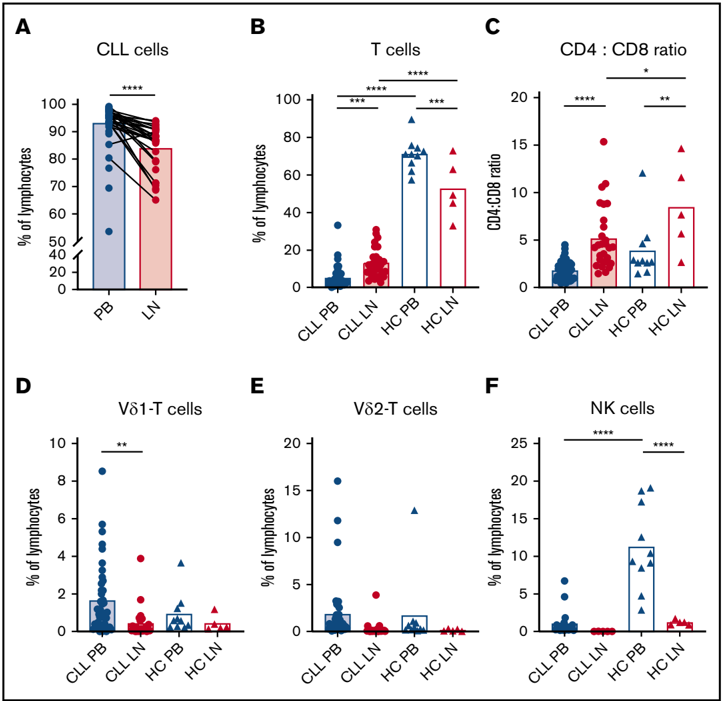
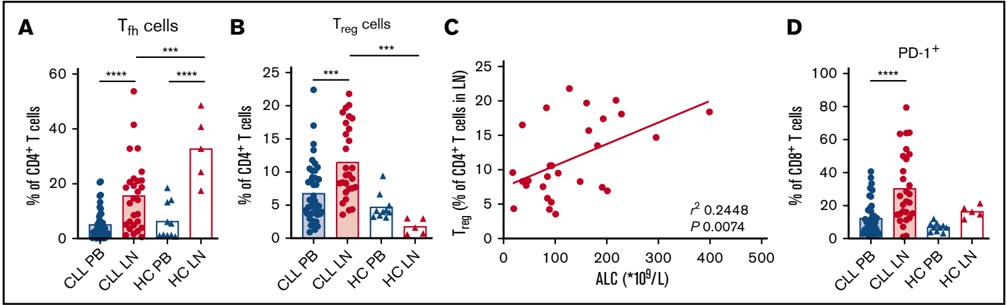
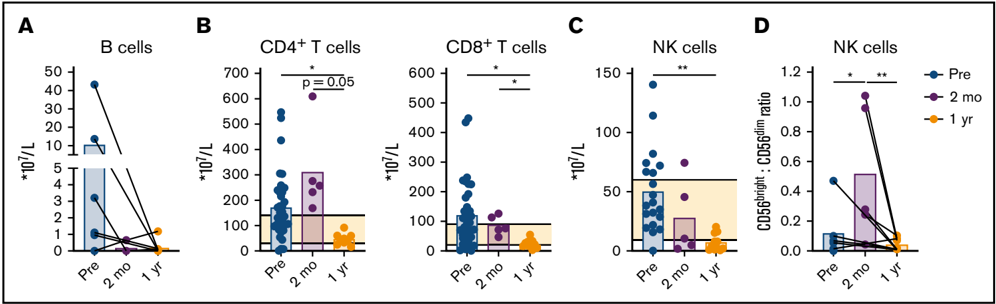
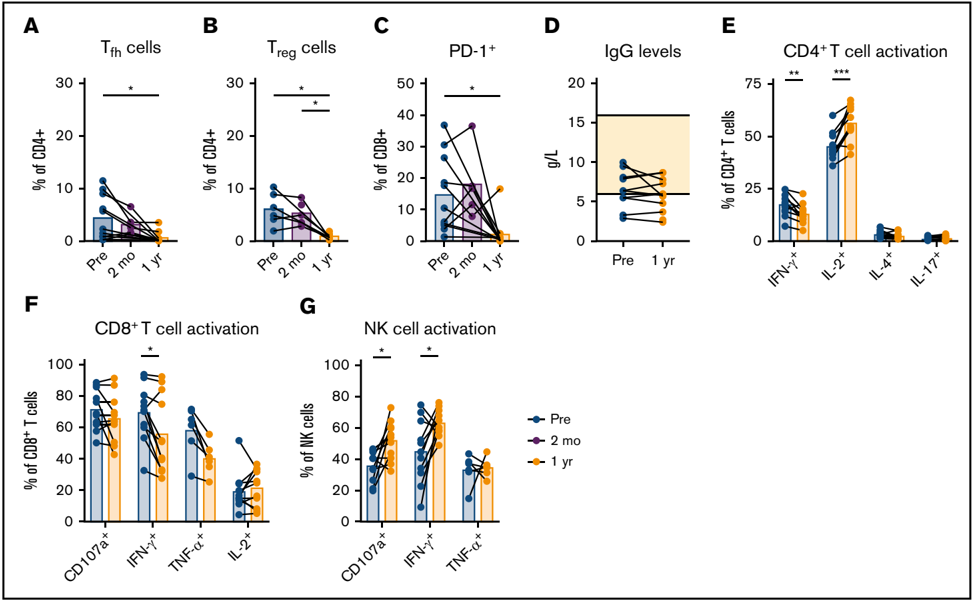
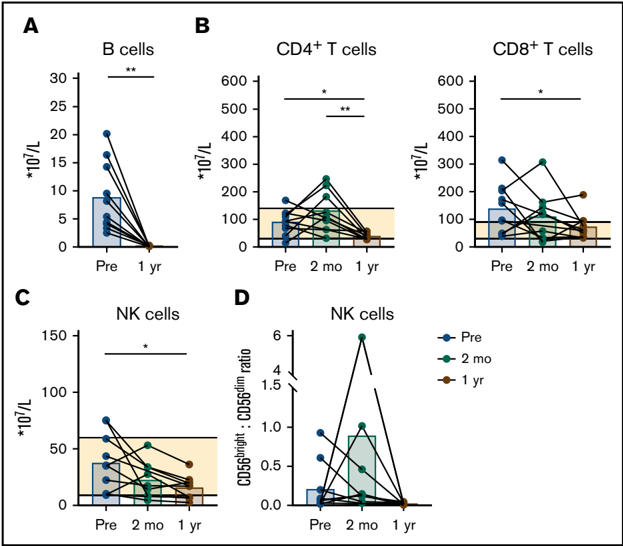
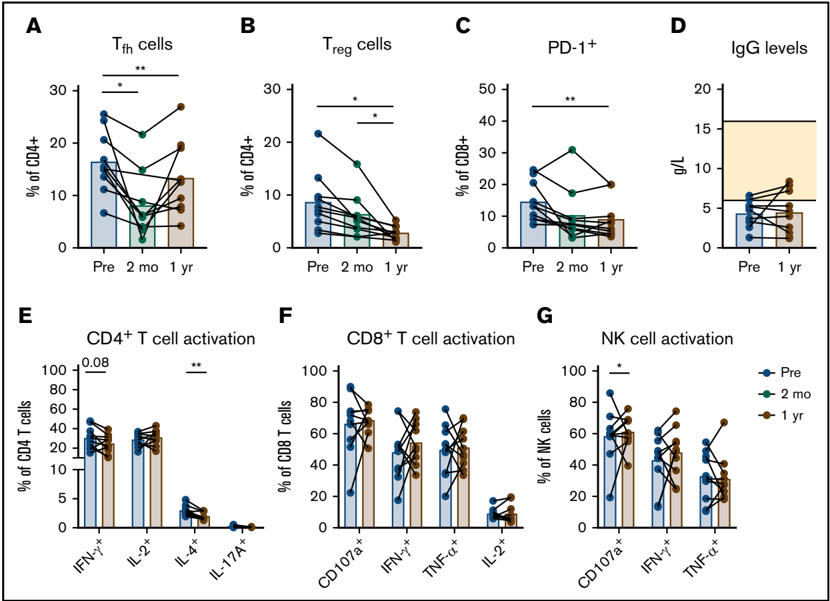
Abstract Morbidity and mortality due to immunosuppression remain among the foremost clinical challenges in chronic lymphocytic leukemia (CLL). Although immunosuppression is considered to originate within the lymph node (LN) microenvironment, alterations in T and natural killer (NK) cells have almost exclusively been studied in peripheral blood (PB). Whereas chemoimmunotherapy further deteriorates immune function, novel targeted agents like the B-cell lymphoma 2 inhibitor venetoclax potentially spare nonmalignant lymphocytes; however, the effects of venetoclax on nonleukemic cells have not been explored. We address these unresolved issues using a comprehensive analysis of nonmalignant lymphocytes in paired LN and PB samples from untreated CLL patients, and by analyzing the effects of venetoclax-based treatment regimens on the immune system in PB samples from previously untreated and relapsed/refractory patients. CLL-derived LNs contained twice the amount of suppressive regulatory T cells (Tregs) and CLL supportive follicular T helper (Tfh) cells compared with PB. This was accompanied by a low frequency of cytotoxic lymphocytes. The expression of PD-1 by CD8+ T cells was significantly higher in LN compared with PB. Venetoclax-based treatment led to deep responses in the majority of patients, but also to decreased absolute numbers of B, T, and NK cells. Tfh cell, Treg, and PD-1+ CD8+ T cell numbers were reduced more than fivefold after venetoclax-based therapy, and overproduction of inflammatory cytokines was reduced. Furthermore, we observed restoration of NK cell function. These data support the notion that the immunosuppressive state in CLL is more prominent within the LN. Venetoclax-based regimens reduced the immunosuppressive footprint of CLL, suggesting immune recovery after the elimination of leukemic cells.
Overview
The claims and statistics of this paper haven’t been checked yet.
Free: it reads the open-access text and checks the first 5 claims that cite a source we can check. Create a free account to check every claim.
Integrity signals
Registry
Cites
Statistics
Figures
Verification
Claims the paper makes
The claims and statistics of this paper haven’t been checked yet.
Free: it reads the open-access text and checks the first 5 claims that cite a source we can check. Create a free account to check every claim.
Claims other papers make about this one
Each is checked against this paper’s own text: does it say what the citing paper says it does?
The source backs part of the claim, not all of it — or backs it for a different population, condition or comparison.
In the citing paper
“Of note, venetoclax limits several features of CLL-associated immunosuppression in patients, including CTL exhaustion and NK-cell dysfunction (de Weerdt et al., 2019) and does not reduce the number of peripheral T cells in patients with HR + BCL2 + metastatic breast cancer (Lok et al., 2019).”
From Immunomodulation by targeted anticancer agents (2021) · cites this paper as de Weerdt et al., 2019
Experimental — accuracy not yet measured
Self-check
Percentages, sums and reported differences re-computed from the paper’s own numbers.
The self-check needs the paper’s full text.
Citations
Cites
Targeting BCL2 with Venetoclax in Relapsed Chronic Lymphocytic Leukemia
Roberts, A. W., Davids, M. S., Pagel, J. M., Kahl, B. S., Puvvada, S. D., Gerecitano, J. F., Kipps, T. J., Anderson, M. A., Brown, J. R., Gressick, L., et al. (2016) · New England Journal of Medicine · doi:10.1056/nejmoa1513257 · Cited by 1,900 · cited 1×
“Venetoclax, an inhibitor of the antiapoptotic protein B-cell lymphoma 2 (Bcl-2), is highly effective in CLL, even as monotherapy.(28) High rates of minimal residual disease (MRD) negativity and low rates of progression are observed with venetoclax treatment in combination with anti-CD20 monoclonal antibodies, such as…”
BackgroundPorter, D. L., Hwang, W.-T., Frey, N. V., Lacey, S. F., Shaw, P. A., Loren, A. W., Bagg, A., Marcucci, K. T., Shen, A., Gonzalez, V., et al. (2015) · Science Translational Medicine · doi:10.1126/scitranslmed.aac5415 · Cited by 1,729
Venetoclax-Rituximab in Relapsed or Refractory Chronic Lymphocytic Leukemia
Seymour, J. F., Kipps, T. J., Eichhorst, B., Hillmen, P., D’Rozario, J., Assouline, S., Owen, C., Gerecitano, J., Robak, T., De la Serna, J., et al. (2018) · New England Journal of Medicine · doi:10.1056/nejmoa1713976 · Cited by 940
Self-citationThe who's who of T ‐cell differentiation: Human memory T ‐cell subsets
Mahnke, Y. D., Brodie, T. M., Sallusto, F., Roederer, M., & Lugli, E. (2013) · European Journal of Immunology · doi:10.1002/eji.201343751 · Cited by 817 · cited 1×
“effector memory T cells based on CD27 and CD45RA expression.(43) Although the differentiation status of CD4(1) T cells did not differ between LN and PB in CLL patients and HCs, the CD8(1) compartment in CLL patients consisted of a larger proportion of central memory T cells in the LN in comparison with the PB (37.”
ResultHerishanu, Y., Pérez-Galán, P., Liu, D., Biancotto, A., Pittaluga, S., Vire, B., Gibellini, F., Njuguna, N., Lee, E., Stennett, L., et al. (2011) · Blood · doi:10.1182/blood-2010-05-284984 · Cited by 815
Dubovsky, J. A., Beckwith, K. A., Natarajan, G., Woyach, J. A., Jaglowski, S., Zhong, Y., Hessler, J. D., Liu, T.-M., Chang, B. Y., Larkin, K. M., et al. (2013) · Blood · doi:10.1182/blood-2013-06-507947 · Cited by 810 · cited 1×
“Treatment with venetoclax-ibrutinib led to significantly reduced IL-4 production by CD4(1) T cells, in line with previous reports on abrogated TH2 cell responses after ibrutinib in vitro (Figure 6E).(26) We did not observe any clear changes in the cytokine-production profiles of CD8(1) T cells or Vd2 T cells after tre…”
ResultTam, C. S., O'Brien, S., Wierda, W., Kantarjian, H., Wen, S., Do, K.-A., Thomas, D. A., Cortes, J., Lerner, S., & Keating, M. J. (2008) · Blood · doi:10.1182/blood-2008-02-140582 · Cited by 693 · cited 2×
“6 months, leading to an extended period of increased infection risk.(20,21) Now that discontinuation of venetoclax-based treatments upon reaching deep remissions appears to be feasible,(29-31) it is of clinical relevance to assess whether lymphocyte counts recover after cessation, especially if the decrease in nonmali…”
BackgroundTurtle, C. J., Hay, K. A., Hanafi, L.-A., Li, D., Cherian, S., Chen, X., Wood, B., Lozanski, A., Byrd, J. C., Heimfeld, S., et al. (2017) · Journal of Clinical Oncology · doi:10.1200/jco.2017.72.8519 · Cited by 662
Ramsay, A. G., Johnson, A. J., Lee, A. M., Gorgün, G., Le Dieu, R., Blum, W., Byrd, J. C., & Gribben, J. G. (2008) · Journal of Clinical Investigation · doi:10.1172/jci35017 · Cited by 600
Riches, J. C., Davies, J. K., McClanahan, F., Fatah, R., Iqbal, S., Agrawal, S., Ramsay, A. G., & Gribben, J. G. (2013) · Blood · doi:10.1182/blood-2012-09-457531 · Cited by 529 · cited 1×
“CD8(1) T cells from untreated CLL patients show increased production of effector-type cytokines.(16) Venetoclax-obinutuzumab treatment resulted in a significantly decreased production of IFN-g and a trend toward lower tumor necrosis factor-a production by CD8(1) T cells (Figure 4F).”
Background
Cited by
Immunomodulation by targeted anticancer agents
Petroni, G., Buqué, A., Zitvogel, L., Kroemer, G., & Galluzzi, L. (2021) · Cancer Cell · doi:10.1016/j.ccell.2020.11.009 · Cited by 212
T follicular helper cells in cancer
Gutiérrez-Melo, N., & Baumjohann, D. (2023) · Trends in Cancer · doi:10.1016/j.trecan.2022.12.007 · Cited by 209
Michels, K. R., Sheih, A., Hernández, S., Brandes, A., Parrilla, D., Irwin, B., Perez, A. M., Ting, H.-A., Nicolai, C. J., Gervascio, T., et al. (2023) · Journal for ImmunoTherapy of Cancer · doi:10.1136/jitc-2022-006292 · Cited by 146
T-cells in chronic lymphocytic leukemia: Guardians or drivers of disease?
Roessner, P. M., & Seiffert, M. (2020) · Leukemia · doi:10.1038/s41375-020-0873-2 · Cited by 144
Siddiqi, T., Soumerai, J. D., Dorritie, K. A., Stephens, D. M., Riedell, P. A., Arnason, J. E., Kipps, T. J., Gillenwater, H. H., Gong, L., Yang, L., et al. (2021) · Blood · doi:10.1182/blood.2021011895 · Cited by 131
Rogers, K. A., Huang, Y., Ruppert, A. S., Abruzzo, L. V., Andersen, B. L., Awan, F. T., Bhat, S. A., Dean, A., Lucas, M. S., Banks, C., et al. (2020) · Journal of Clinical Oncology · doi:10.1200/jco.20.00491 · Cited by 113
“(%) 8 (36) 11(50) 19 (43) Complex CLL karyotype, No.”
InfluentialTargeting the tumor microenvironment in chronic lymphocytic leukemia
Svanberg, R., Janum, S., Patten, P., Ramsay, A. G., & Niemann, C. U. (2021) · Haematologica · doi:10.3324/haematol.2020.268037 · Cited by 99
Self-citationZhao, L., Liu, P., Mao, M., Zhang, S., Bigenwald, C., Dutertre, C., Lehmann, C. H. K., Pan, H., Paulhan, N., Amon, L., et al. (2023) · Cancer Discovery · doi:10.1158/2159-8290.cd-22-1338 · Cited by 78
“…BCL2 inhibitor venetoclax causes a depletion of various (B, T and NK) circulating lymphocyte subsets after one year of treatment of patients E u r op e P M C F und e r s A u t ho r M a nu s c r i p t s E u r op e P M C F und e r s A u t ho r M a nu s c r i p t s with chronic lymphoid leukemia (39).”
Immune Dysfunctions and Immune-Based Therapeutic Interventions in Chronic Lymphocytic Leukemia
Griggio, V., Perutelli, F., Salvetti, C., Boccellato, E., Boccadoro, M., Vitale, C., & Coscia, M. (2020) · Frontiers in Immunology · doi:10.3389/fimmu.2020.594556 · Cited by 74
“PD-1 expression is further increased in T cells from the lymphnode compared to the peripheral blood compartment (90, 114).”
BackgroundT Cells in Chronic Lymphocytic Leukemia: A Two-Edged Sword
Vlachonikola, E., Σταματόπουλος, Κ., & Chatzidimitriou, A. (2021) · Frontiers in Immunology · doi:10.3389/fimmu.2020.612244 · Cited by 74
“Effects on the CLL TME are not restricted to BCRi though, since treatment with the BCL2 inhibitor venetoclax has been associated with reduced numbers of PD-1 T cells and expression of inflammatory cytokines, suggesting a mechanism of immune recovery (117).”
Backgroundde Weerdt, I., Lameris, R., Ruben, J. M., de Boer, R., Kloosterman, J., King, L. A., Levin, M., Parren, P. W. H. I., de Gruijl, T. D., Kater, A. P., et al. (2021) · Clinical Cancer Research · doi:10.1158/1078-0432.ccr-20-4576 · Cited by 68
“Because ex vivo culture leads to alleviation of Vg9Vd2-T cell dysfunction the bispecific Vg9Vd2-T cell engager could be combined with such an approach (9, 56, 57).”
BackgroundMethodSelf-citationEOMES is essential for antitumor activity of CD8+ T cells in chronic lymphocytic leukemia
Cid, L. L., Roessner, P. M., Chapaprieta, V., Öztürk, S., Roider, T., Bordas, M., Ízcue, A., Colomer, D., Dietrich, S., Stilgenbauer, S., et al. (2021) · Leukemia · doi:10.1038/s41375-021-01198-1 · Cited by 68
Roessner, P. M., Cid, L. L., Lupar, E., Roider, T., Bordas, M., Schifflers, C., Arseni, L., Gaupel, A., Kilpert, F., Krötschel, M., et al. (2021) · Leukemia · doi:10.1038/s41375-021-01136-1 · Cited by 63
Huber, H., Tausch, E., Schneider, C., Edenhofer, S., von Tresckow, J., Robrecht, S., Giza, A., Zhang, C., Fürstenau, M., Dreger, P., et al. (2023) · Blood · doi:10.1182/blood.2023020013 · Cited by 59
Self-citationLangerbeins, P., & Eichhorst, B. F. (2021) · Acta Haematologica · doi:10.1159/000514071 · Cited by 50
COVID-19 among fit patients with CLL treated with venetoclax-based combinations
Fürstenau, M., Langerbeins, P., Silva, N. D., Fink, A. M., Robrecht, S., von Tresckow, J., Simon, F., Hohloch, K., Droogendijk, J., van der Klift, M., et al. (2020) · Leukemia · doi:10.1038/s41375-020-0941-7 · Cited by 46
Self-citationMhibik, M., Gaglione, E. M., Eik, D., Herrick, J., Le, J., Ahn, I. E., Chiu, C., Wielgos-Bonvallet, M., Hiemstra, I. H., Breij, E. C. W., et al. (2023) · Blood Advances · doi:10.1182/bloodadvances.2022009517 · Cited by 43
“65,66 However, the effects of venetoclax and its combination with epcoritamab on immune function in patients with CLL need to be further investigated.”
Patient-tailored design for selective co-inhibition of leukemic cell subpopulations
Ianevski, A., Lahtela, J., Javarappa, K. K., Sergeev, P., Ghimire, B. R., Gautam, P., Vähä-Koskela, M. J. V., Turunen, L., Linnavirta, N., Kuusanmäki, H. A., et al. (2021) · Science Advances · doi:10.1126/sciadv.abe4038 · Cited by 43
T-cell dysfunction in chronic lymphocytic leukemia from an epigenetic perspective
Peters, F. S., Strefford, J. C., Eldering, E., & Kater, A. P. (2021) · Haematologica · doi:10.3324/haematol.2020.267914 · Cited by 48
Self-citationde Weerdt, I., Lameris, R., Scheffer, G. L., Vree, J., de Boer, R., Stam, A. G. M., van de Ven, R., Levin, M., Pals, S. T., Roovers, R. C., et al. (2021) · Cancer Immunology Research · doi:10.1158/2326-6066.cir-20-0138 · Cited by 47
“We have previously shown that ibrutinib favorably alters the cytokine production profile of Vg9Vd2 T cells (70).”
BackgroundSelf-citationRole of the tumor microenvironment in CLL pathogenesis
Stein, A. F. V., Hallek, M. J., & Nguyen, P. (2023) · Seminars in Hematology · doi:10.1053/j.seminhematol.2023.12.004 · Cited by 46
Regulatory T cells (Tregs) in lymphoid malignancies and the impact of novel therapies
Maharaj, K. K., Uriepero, A., Sahakian, E., & Pinilla-Ibarz, J. A. (2022) · Frontiers in Immunology · doi:10.3389/fimmu.2022.943354 · Cited by 46
“Immune composition was altered in CLL patients after venetoclax treatment compared to baseline (112).”
BackgroundInfluentialAutoimmune Complications in Chronic Lymphocytic Leukemia in the Era of Targeted Drugs
Vitale, C., Montalbano, M. C., Salvetti, C., Boccellato, E., Griggio, V., Boccadoro, M., & Coscia, M. (2020) · Cancers · doi:10.3390/cancers12020282 · Cited by 48
Moreno, C., Muñoz, C., Terol, M. J., Hernández‐Rivas, J., & Villanueva, M. (2021) · Journal of Experimental & Clinical Cancer Research · doi:10.1186/s13046-021-02115-1 · Cited by 41
“In addition, ibrutinib is associated with a the reduction of the T-reg/CD4+ cells ratio, the net increase of Th17 cells and the inhibition of the expression of PD-1 and CTLA-4 in CD4+ and CD8+ T-cells all together leading to a reduction in the immunosuppressive status and an improvement in immune surveillance [50, 55].”
BackgroundResultInfluentialMaharaj, K. K., Powers, J. J., Mediavilla-Varela, M., Achille, A. N., Gamal, W. M., Quayle, S. N., Jones, S. S., Sahakian, E., & Pinilla-Ibarz, J. A. (2020) · Frontiers in Immunology · doi:10.3389/fimmu.2020.590072 · Cited by 36
“reported that after 1 year of venetoclax-based therapy, frequencies of tumor-supportive T-follicular helper cells, Tregs and PD-1 CD8 T cells were significantly decreased in CLL patients (40).”
BackgroundChronic Lymphocytic Leukemia: Disease Biology
Koehrer, S., & Burger, J. A. (2023) · Acta Haematologica · doi:10.1159/000533610 · Cited by 41
Targeting Chronic Myeloid Leukemia Stem/Progenitor Cells Using Venetoclax-Loaded Immunoliposome
Houshmand, M., Garello, F., Stefanìa, R., Gaidano, V., Cignetti, A., Spinelli, M., Fava, C., Zarif, M. N., Galimberti, S., Pungolino, E. M., et al. (2021) · Cancers · doi:10.3390/cancers13061311 · Cited by 36
“Venetoclax is a substrate of the p-glycoprotein pump and liposome delivery allows for bypassing this pump through endocytosis and may results in improved drug uptake and drug concentration within tumor cells [30,50].”
BackgroundMangolini, M., Maiqués-Díaz, A., Charalampopoulou, S., Hartmann, E., Bloehdorn, J., Moore, A., Giachetti, G., Lu, J., Franklin, V. N. R., Chilamakuri, C. S. R., et al. (2022) · Nature Communications · doi:10.1038/s41467-022-33739-2 · Cited by 32
Progress of research on PD-1/PD-L1 in leukemia
Cao, H., Wu, T., Zhou, X., Xie, S., Sun, H., Sun, Y., & Li, Y. (2023) · Frontiers in Immunology · doi:10.3389/fimmu.2023.1265299 · Cited by 32
“In a venetoclax (VEN)–ibrutinib combination treatment, the number of PD-1 +CD8+ T cells, Tregs, and follicular helper T cells decreases more than fivefold, thereby reducing the immunosuppressive characteristics of CLL (97).”
BackgroundJebaraj, B. M. C., Müller, A., Dheenadayalan, R. P., Endres, S., Roessner, P. M., Seyfried, F., Walliser, C., Wist, M., Qi, J., Tausch, E., et al. (2021) · Blood · doi:10.1182/blood.2021011516 · Cited by 28
Haselager, M. V., van Driel, B. F., Perelaer, E., de Rooij, D., Lashgari, D., Loos, R., Kater, A. P., Moerland, P. D., & Eldering, E. (2023) · HemaSphere · doi:10.1097/hs9.0000000000000938 · Cited by 33
Self-citationUnderstanding the Immune-Stroma Microenvironment in B Cell Malignancies for Effective Immunotherapy
Apollonio, B., Ioannou, N., Papazoglou, D., & Ramsay, A. G. (2021) · Frontiers in Oncology · doi:10.3389/fonc.2021.626818 · Cited by 31
Wu, H.-Y., Li, K., Pan, W., Guo, M., Qiu, D.-Z., He, Y., Li, Y., & Huang, Y. (2022) · International Immunopharmacology · doi:10.1016/j.intimp.2021.108497 · Cited by 27
Aydin, E., Faehling, S., Saleh, M., Cid, L. L., Seiffert, M., & Roessner, P. M. (2021) · Frontiers in Immunology · doi:10.3389/fimmu.2020.595818 · Cited by 28
“But based on the very small patient cohort in this study and recent findings showing that CD8 T-cells derived from lymphoid organs of CLL patients are more active than their blood-derived counterparts (149, 152), the provided analysis of blood T-cells during idelalisib-treatment allows only for very limited conclusion…”
ResultMancuso, S., Mattana, M., Carlisi, M., Santoro, M., & Siragusa, S. M. (2022) · International Journal of Molecular Sciences · doi:10.3390/ijms23063368 · Cited by 30
“In addition, venetoclax reduces the number of immunosuppressive cells in the microenvironment and leads to an overproduction of inflammatory cytokines [122].”
BackgroundXPO1 inhibition sensitises CLL cells to NK cell mediated cytotoxicity and overcomes HLA-E expression
Fisher, J. G., Doyle, A. D. P., Graham, L. V., Sonar, S., Sale, B., Henderson, I., Rio, L. D., Johnson, P., Landesman, Y., Cragg, M. S., et al. (2023) · Leukemia · doi:10.1038/s41375-023-01984-z · Cited by 25
Rezazadeh, H., Astaneh, M., Tehrani, M., Hossein‐Nataj, H., Zaboli, E., Shekarriz, R., & Asgarian‐Omran, H. (2020) · Immunologic Research · doi:10.1007/s12026-020-09146-4 · Cited by 26
“[30], lymphocytes in peripheral lymphoid organs of CLL patients and the mouse model show more features of exhaustion than those of peripheral blood.”
BackgroundHow We Manage Patients With Chronic Lymphocytic Leukemia During the SARS‐CoV‐2 Pandemic
Rossi, D., Shadman, M. S., Condoluci, A., Brown, J. R., Byrd, J. C., Gaïdano, G., Hallek, M. J., Hillmen, P., Mato, A. R., Montserrat, E., et al. (2020) · HemaSphere · doi:10.1097/hs9.0000000000000432 · Cited by 22
“B-lymphocytes recover to normal levels within an average of 60 days from venetoclax discontinuation.(83,91) The disadvantage of venetoclax treatment is the need for frequent access to the hospital during the ramp-up phase to prevent tumor lysis syndrome (TLS).”
BackgroundVenetoclax treatment in patients with cancer has limited impact on circulating T and NK cells
Teh, C. E., Peng, H., Luo, M.-X., Tan, T., Trussart, M., Howson, L. J., Chua, C. C., Muttiah, C., Brown, F. C., Ritchie, M. E., et al. (2023) · Blood Advances · doi:10.1182/bloodadvances.2022008221 · Cited by 24
“The different lymphocyte compositions and microenvironments of lymphoid or nonlymphoid tissues may engender different sensitivity to treatment, as observed by de Weerdt et al, after venetoclax and obinotuzumab treatment.(16) In the context of this combination therapy, it should be noted that obinotuzumab treatment dep…”
O-GlcNAcylation in Chronic Lymphocytic Leukemia and Other Blood Cancers
Spaner, D. (2021) · Frontiers in Immunology · doi:10.3389/fimmu.2021.772304 · Cited by 25
Zha, C., Yang, X., Yang, J., Zhang, Y., & Huang, R. (2024) · Annals of Hematology · doi:10.1007/s00277-024-06117-9 · Cited by 24
Management of CLL patients early in the COVID ‐19 pandemic: An international survey of CLL experts
Koffman, B., Mato, A. R., Byrd, J. C., Danilov, A. V., Hedrick, B., Ujjani, C. S., Roeker, L. E., Stephens, D. M., Davids, M. S., Pagel, J. M., et al. (2020) · American Journal of Hematology · doi:10.1002/ajh.25851 · Cited by 20
Gasparetto, C., Bowles, K. M., Abdallah, A.-O. A., Morris, L. J., Mander, G., Coppola, S., Wang, J., Ross, J. A., Bueno, O. F., Arriola, E. L., et al. (2021) · Clinical Lymphoma Myeloma & Leukemia · doi:10.1016/j.clml.2021.07.029 · Cited by 24
Prosty, C. J., Katergi, K., Nguyen, A., Luo, O. D., Sorin, M., Cherniak, V., Sébag, M., Demir, K. K., McDonald, E. G., Lee, T. C., et al. (2024) · Blood Advances · doi:10.1182/bloodadvances.2023011964 · Cited by 22
“16,17 On the other hand, data from patients with CLL suggest that venetoclax may mitigate some immunosuppressive effects of CLL, 18 potentially reducing the risk of IAEs.”
BackgroundInfluentialvan Bruggen, J. A. C., Peters, F. S., Mes, M., Rietveld, J. M., Cerretani, E., Cretenet, G., van Kampen, R. J. W., Jongejan, A., Moerland, P. D., Melenhorst, J. J., et al. (2024) · Blood Advances · doi:10.1182/bloodadvances.2023011934 · Cited by 24
“57 It has been well established that T-cell activation in the presence of CD40-stimulated CLL cells enhances T-cell activation when compared with coculture with resting CLL cells.”
Self-citationvan Bruggen, J. A. C., van der Windt, G. J. W., Hoogendoorn, M., Dubois, J. M. N., Kater, A. P., & Peters, F. S. (2022) · Blood Advances · doi:10.1182/bloodadvances.2022007034 · Cited by 21
“Indeed, treatment of CLL with both venetoclax and ibrutinib resulted in overall improvements in the immune cell compartment.(15) Our results incentivize investigation of whether the efficacy of alternative autologous-based therapies, such as chimeric antigen receptor (CAR) T-cell therapy, can be similarly improved in…”
BackgroundResultInfluentialSelf-citationAgius, R., Parviz, M., & Niemann, C. U. (2021) · Leukemia & lymphoma/Leukemia and lymphoma · doi:10.1080/10428194.2021.1973672 · Cited by 20
Self-citationYano, M., Byrd, J. C., & Muthusamy, N. (2022) · Cancers · doi:10.3390/cancers14235787 · Cited by 19
“Venetoclax, an inhibitor of Bcl-2 (B cell lymphoma 2, an anti-apoptotic protein in the intrinsic pathway of apoptosis), is not thought to directly interact with immunoreceptor signaling, but it does exert a significant immunologic effect through the depletion of leukocytes, including neutrophils, T cells, and NK cells…”
BackgroundInfluentialTreatment of Richter Transformation of Chronic Lymphocytic Leukemia in the Modern Era
Briski, R. E., & Taylor, J. (2023) · Cancers · doi:10.3390/cancers15061857 · Cited by 16
“Application of checkpoint blockade was first suggested in CLL and RT after researchers discovered populations of immunosuppressed T-cells in the lymph nodes of CLL patients [62].”
BackgroundVaca, A., Ioannou, N., Sivina, M., Vlachonikola, E., Clise-Dwyer, K., Kim, E., Li, D., Ma, Q., Ferrajoli, A., Estrov, Z. E., et al. (2022) · Leukemia · doi:10.1038/s41375-022-01519-y · Cited by 20
The role of Th17 cells in chronic lymphocytic leukemia: friend or foe?
Gamal, W. M., Sahakian, E., & Pinilla-Ibarz, J. A. (2023) · Blood Advances · doi:10.1182/bloodadvances.2022008985 · Cited by 17
“In addition to their inhibitory effects on malignant CLL cell survival, modulatory effects on other immune cells have been documented.(34,167-170) Few studies have started to investigate the modulatory effects of these inhibitors on Th17 cells in CLL (summarized in Table 2).”
BackgroundCorradi, G., Forte, D., Cristiano, G., Polimeno, A., Ciciarello, M., Salvestrini, V., Bandini, L., Robustelli, V., Ottaviani, E., Cavo, M., et al. (2024) · Frontiers in Immunology · doi:10.3389/fimmu.2024.1386517 · Cited by 14
CAR-T and ibrutinib vs CLL: sequential or simultaneous?
Kater, A. P., & Melenhorst, J. J. (2020) · Blood · doi:10.1182/blood.2020005362 · Cited by 14
Self-citationSkånland, S. S., Inngjerdingen, M., Bendiksen, H., York, J. P., Spetalen, S., Munthe, L. A., & Tjønnfjord, G. E. (2022) · Haematologica · doi:10.3324/haematol.2021.280393 · Cited by 13
Enhanced Costimulatory Signaling Improves CAR T-cell Effector Responses in CLL
Collins, M. A., Jung, I.-Y., Zhao, Z., Apodaca, K., Kong, W., Lundh, S. M., Fraietta, J. A., Kater, A. P., Sun, C., Wiestner, A. U., et al. (2022) · Cancer Research Communications · doi:10.1158/2767-9764.crc-22-0200 · Cited by 18
“It is well established that a significant fraction of LN-resident CLL cells expresses the cell-cycle marker Ki67, while PB CLL cells are largely quiescent (50, 51, 53, 54, 56).”
Self-citationLiang, B., Jiang, D., Pan, L., Xiong, F., Feng, S., Wu, S., Ye, H., Yu, Z., Shi, C., & Gao, S. (2022) · Acta Biomaterialia · doi:10.1016/j.actbio.2022.04.005 · Cited by 13
Overcoming the Hurdles of Autologous T-Cell-Based Therapies in B-Cell Non-Hodgkin Lymphoma
van Bruggen, J. A. C., Martens, A. W. J., Tonino, S. H., & Kater, A. P. (2020) · Cancers · doi:10.3390/cancers12123837 · Cited by 14
Self-citationMaharaj, D., Srinivasan, G., Abreu, M. M., Ko, M.-W., Jewett, A., & Gouvea, J. (2020) · Cells · doi:10.3390/cells10010010 · Cited by 11
“Standard dose venetoclax has been shown to reduce immunosuppressive regulatory T cells in the lymph node environment while sparing nonmalignant lymphocytes and promoting immune recovery through the restoration of NK cell function [34].”
BackgroundMikulková, Z., Manukyan, G. P., Turcsányi, P., Kudělka, M., Urbanová, R., Savara, J., Ochodková, E., Brychtová, Y., Molinský, J., Šimkovič, M., et al. (2021) · Scientific Reports · doi:10.1038/s41598-020-79121-4 · Cited by 11
Immunohistochemical Phenotype of T Cells Invading Muscle in Inclusion Body Myositis
Matsubara, S., Suzuki, S., & Komori, T. (2022) · Journal of Neuropathology & Experimental Neurology · doi:10.1093/jnen/nlac067 · Cited by 11
Immune Dysfunction and Consequences in Chronic Lymphocytic Leukemia
Narkhede, M. S., & Ujjani, C. S. (2025) · Journal of the National Comprehensive Cancer Network · doi:10.6004/jnccn.2024.7090 · Cited by 15
Impact of mitochondrial metabolism on T-cell dysfunction in chronic lymphocytic leukemia
Gamal, W. M., Mediavilla-Varela, M., Kunta, V., Sahakian, E., & Pinilla-Ibarz, J. A. (2025) · Frontiers in Cell and Developmental Biology · doi:10.3389/fcell.2025.1577081 · Cited by 11
Shree, T., Czerwinski, D. K., Haebe, S., Sathe, A., Grimes, S. M., Martin, B. A., Ozawa, M. G., Hoppe, R. T., Ji, H. P., & Levy, R. (2025) · Clinical Cancer Research · doi:10.1158/1078-0432.ccr-24-2770 · Cited by 11
Managing novel therapies and concomitant medications in chronic lymphocytic leukemia: key challenges
Kozarac, S., Ivanović, J., Mitrovic, M., Tomić-Vujović, K., Arsenović, I., Suvajdžić, N., Bogdanovic, A. D., Vidović, A., Todorović, M., Bila, J., et al. (2025) · Frontiers in Pharmacology · doi:10.3389/fphar.2024.1517972 · Cited by 10
Martínez, V. J. S., Buonincontro, B., Cassarino, C., Bernatowiez, J., Colado, A., Cordini, G., Custidiano, M. D. R., Mahuad, C. V., Pavlovsky, M. A., Bezares, R. F., et al. (2023) · Frontiers in Oncology · doi:10.3389/fonc.2023.1143881 · Cited by 9
“T cells were shown to be an important source of the stimuli that CLL cells receive within lymph nodes (30).”
BackgroundVaccinations in patients with chronic lymphocytic leukemia
Francis, E. R., Vu, J., Perez, C. O., & Sun, C. (2024) · Seminars in Hematology · doi:10.1053/j.seminhematol.2024.01.003 · Cited by 10
Collier‐Bain, H. D., Emery, A., Causer, A. J., Brown, F. F., Oliver, R., Dutton, D. A., Crowe, J., Augustine, D. X., Graby, J., Leach, S., et al. (2024) · Brain Behavior and Immunity · doi:10.1016/j.bbi.2024.03.023 · Cited by 14
“…in survival niches is thought to be driven by a variety of factors including a suppressive stromal environment that promotes CLL cell survival (Burger et al., 2009) and low CD56 dim NK-cells – which express CD16 (Morvan and Lanier, 2016) – frequency in lymphoid tissue (De Weerdt et al., 2019).”
BackgroundThe complexities of T-cell dysfunction in chronic lymphocytic leukemia
Camerini, E., Amsen, D., Kater, A. P., & Peters, F. S. (2024) · Seminars in Hematology · doi:10.1053/j.seminhematol.2024.04.001 · Cited by 10
Self-citationDiamantopoulos, P. T., Stafylidis, C., Vlachopoulou, D., Kontandreopoulou, C., Giannakopoulou, N., Vardaka, M., Mpouhla, A., Mastrogianni, E., Variami, E., Galanopoulos, A. G., et al. (2022) · Therapeutic Advances in Hematology · doi:10.1177/20406207221090150 · Cited by 8
Hatefi, F., Asgarian‐Omran, H., Hossein‐Nataj, H., Akbar, A., Shekarriz, R., Zaboli, E., Janbabai, G., & Tehrani, M. (2022) · Asian Pacific Journal of Cancer Prevention · doi:10.31557/apjcp.2022.23.7.2225 · Cited by 8
“Concurrently, another study by (de Weerdt et al., 2019), using peripheral blood and fine-needle lymph node biopsies collected from CLL patients, showed that the expression of PD-1 by CD8+ T-cells was significantly higher in lymph nodes than in the peripheral blood.”
ResultMauro, F. R., Frustaci, A. M., Visentin, A., Vitale, C., Bartoletti, M., Oltolini, C., Zappulo, E., & Mikulska, M. (2024) · Critical Reviews in Oncology/Hematology · doi:10.1016/j.critrevonc.2024.104408 · Cited by 7
Marischen, L., Fritsch, J., Ilic, J., Wahl, L., Bertsch, T., Knop, S. T., & Bold, A. (2025) · International Journal of Molecular Sciences · doi:10.3390/ijms26031262 · Cited by 7
Can Immunocompetence Be Restored in Chronic Lymphocytic Leukemia?
Sun, C., & Wiestner, A. U. (2021) · Hematology/Oncology Clinics of North America · doi:10.1016/j.hoc.2021.03.010 · Cited by 8
Can the New and Old Drugs Exert an Immunomodulatory Effect in Acute Myeloid Leukemia?
Tarantini, F., Cumbo, C., Anelli, L., Zagaria, A., Specchia, G., Musto, P., & Albano, F. (2021) · Cancers · doi:10.3390/cancers13164121 · Cited by 7
“This may suggest that the effects on the T-cell repertoire observed in CLL may be a consequence of a perturbation of cancer and IS crosstalking rather than a direct pharmacological action [97].”
BackgroundInfluentialNK Cells in the Lymph Nodes and Their Role in Anti-Tumour Immunity
Graham, L. V., Khakoo, S. I., & Blunt, M. D. (2024) · Biomedicines · doi:10.3390/biomedicines12081667 · Cited by 7
“NK cells represent over 10% of the cells in the lymph nodes of DLBCL [66] compared with negligible detection in the lymph nodes of CLL patients [24].”
BackgroundBELLINI: a renaissance for an era of precision therapy in multiple myeloma
Ghobrial, I. M. (2020) · The Lancet Oncology · doi:10.1016/s1470-2045(20)30587-8 · Cited by 6
Harrop, S., Polliack, A., & Tam, C. S. L. (2020) · Leukemia & lymphoma/Leukemia and lymphoma · doi:10.1080/10428194.2020.1849682 · Cited by 6
Kater, A. P., Eichhorst, B. F., Owen, C., Jaeger, U., Chyla, B., Lefebure, M., Millen, R., Jiang, Y., Thadani‐Mulero, M., Boyer, M., et al. (2024) · HemaSphere · doi:10.1002/hem3.146 · Cited by 5
Self-citationPeng, X., Tang, F., Li, Y., Bai, J. Y., Li, L., & Zhang, L. (2024) · Discover Oncology · doi:10.1007/s12672-024-01161-3 · Cited by 6
Management of patients with chronic lymphocytic leukemia during the SARS‑CoV‑2 pandemic (Review)
Mihăilă, R. G. (2021) · Oncology Letters · doi:10.3892/ol.2021.12897 · Cited by 5
“It has been suggested that chemo‐ therapeutic regimens that include venetoclax would decrease immunosuppression of patients with CLL (49).”
BackgroundCOVID-19 in Patients with Chronic Lymphocytic Leukemia: What Have We Learned?
Harel, R., & Itchaki, G. (2023) · Acta Haematologica · doi:10.1159/000534540 · Cited by 4
“There is some evidence suggesting that successful treatment with venetoclax-based regimens may reduce the inherent immunosuppression seen in CLL patients [50].”
BackgroundTeglgaard, R. S., Marquart, H. V., Hartling, H. J., Bay, J. T., da Cunha‐Bang, C., Brieghel, C., Faitová, T., Enggaard, L., Kater, A. P., Levin, M., et al. (2024) · Clinical Cancer Research · doi:10.1158/1078-0432.ccr-23-2522 · Cited by 4
Self-citationT-cell subset composition and functionality in patients with Waldenström’s macroglobulinemia
Amaador, K., Martens, A. W. J., de Boer, R., Rietveld, J. M., Heemskerk, M. H. M., Rutten, C. E., Eldering, E., Kersten, M. J., Kater, A. P., Vos, J. M. I., et al. (2022) · Leukemia & lymphoma/Leukemia and lymphoma · doi:10.1080/10428194.2022.2030478 · Cited by 3
Self-citationIncreasing CART cell engine performance in CLL
Peters, F. S., & Kater, A. P. (2022) · Blood · doi:10.1182/blood.2021013895 · Cited by 3
Self-citationVISTA is a potential target for immunotherapy in B-cell acute lymphoblastic leukemia in children
Mohamed, N., El‐Mokhtar, M. A., Zahran, A. M., Gad, G. F. M., & Ibrahem, R. A. (2025) · Scientific Reports · doi:10.1038/s41598-025-08164-2 · Cited by 3
“Also, T regs become active and higher in frequency, thus further downregulating the activity of lymphocytes in AML and CLL 24,49–52 suggesting that the observed increase could be owed to an increase in T regs frequency however, further investigation is required.”
The Role of Tumor Microenvironment and Targeted Therapy in Chronic Lymphocytic Leukemia
Saleh, K., Arbab, A., Khalife, N., Khoury, R., Ibrahim, R., Hachem, M. A., Khalil, C., Orm, C. B., Sawan, J., Lafarge, G., et al. (2025) · Current Issues in Molecular Biology · doi:10.3390/cimb47080604 · Cited by 3
“Moreover, the authors documented decreased level of the PD-1 + T-cell phenotype and inflammatory cytokines [52].”
Follicular helper T cells: emerging roles in lymphomagenesis
Wang, J., Zheng, G., Wu, W., & Huang, H. (2023) · Journal of Leukocyte Biology · doi:10.1093/jleuko/qiad140 · Cited by 2
NOTCH1 drives immune-escape mechanisms in B cell malignanciesPreprint
Mangolini, M., Maiqués-Díaz, A., Charalampopoulou, S., Hartmann, E., Bloehdorn, J., Moore, A., Lu, J., Franklin, V. N. R., Chilamakuri, C. S. R., Moutsoupoulos, I., et al. (2021) · bioRxiv (Cold Spring Harbor Laboratory) · doi:10.1101/2021.04.10.439192 · Cited by 2
Сергеевна, Ф. О., Chuksina, Y. Y., Khmelevskaya, A. N., Khvastunova, A. N., Matveev, Y. N., Васильевна, К. Е., Filatov, A. V., & Kuznetsova, S. A. (2021) · Almanac of Clinical Medicine · doi:10.18786/2072-0505-2021-49-053 · Cited by 1
RETRACTED: Tfh cells potential dual role in cancer: A perspective
Yaqub, M., Pathan, M. S., Dev, S., & He, L. (2024) · Heliyon · doi:10.1016/j.heliyon.2024.e37502 · Cited by 1
RetractedChung, C., & Doan, D. (2025) · European Journal Of Haematology · doi:10.1111/ejh.14408 · Cited by 1
Dreisinger, M., Roškar, Z., Goropevšek, A., Zakelšek, A., Čurič, S., Živko, N., Bevc, S., & Homšak, E. (2025) · Biomedicines · doi:10.3390/biomedicines13051204 · Cited by 4
Šlisere, B., Kārkliņš, R., Rivkina, A., Lejniece, S., & Oļeiņika, K. (2025) · Pathogens · doi:10.3390/pathogens14090890 · Cited by 2
Yin, Y., Athanasiadis, P., Karlsen, L., Urban, A., Murali, I., Fernandes, S. M., Arribas, A. J., Hilli, A. K., Taskén, K., Bertoni, F., et al. (2022) · bioRxiv (Cold Spring Harbor Laboratory) · doi:10.1101/2022.04.14.488428 · Cited by 1
“Reshaping of immune cell compartments in response to venetoclax treatment has been reported by us and others.(25;43) The modest reshaping of the immune phenotype at T3 was in agreement with the partial clinical response to idelalisib + venetoclax therapy.”
ResultHandunnetti, S. M., & Tam, C. S. L. (2020) · Leukemia & lymphoma/Leukemia and lymphoma · doi:10.1080/10428194.2020.1811865
CLL: Wie die Therapie den Verlauf einer COVID-19 Infektion beeinflusst
Bogner, C. (2021) · Kompass Onkologie · doi:10.1159/000516873
Mikulková, Z., Manukyan, G. P., Turcsányi, P., Urbanová, R., Savara, J., Ochodková, E., Kudělka, M., Brychtová, Y., Molinský, J., Šimkovič, M., et al. (2020) · doi:10.21203/rs.3.rs-41110/v1
Chronische lymphatische Leukämie
Freye, R. (2023) · Onkologische Welt · doi:10.1055/a-2120-7182
Cellini, A., Visentin, A., Salvalaggio, A., Cacciavillani, M., Ferrari, S., & Briani, C. (2023) · Hemato · doi:10.3390/hemato5010003
Tfh Cells Potential Dual Role in Cancer: A PerspectivePreprint
Yaqub, M., Pathan, M. S., Dev, S., & He, L. (2024) · SSRN Electronic Journal · doi:10.2139/ssrn.4866606
Metadata
- Authors
- de Weerdt, I., Hofland, T., de Boer, R., Dobber, J. A., Dubois, J., van Nieuwenhuize, D., Mobasher, M., de Boer, F., Hoogendoorn, M., Velders, G. A., van der Klift, M., Remmerswaal, E. B. M., Bemelman, F. J., Niemann, C. U., Kersting, S., Levin, M.-D., Eldering, E., Tonino, S. H., & Kater, A. P.
- Affiliations
- Department of Hematology, Cancer Center Amsterdam, and
- Amsterdam University Medical Centers (NL)
- Cancer Center Amsterdam (NL)
- Genentech (US)
- Internal Medicine, Ikazia Hospital, Rotterdam, The Netherlands;
- Medisch Centrum Leeuwarden (NL)
- Ziekenhuis Gelderse Vallei (NL)
- Department of Internal Medicine, Amphia Hospital, Breda, The Netherlands;
- Renal Transplant Unit, Amsterdam UMC, University of Amsterdam, Amsterdam, The Netherlands;
- Copenhagen University Hospital (DK)
- Haga Hospital (NL)
- Albert Schweitzer Ziekenhuis (NL)
- Corresponding author
- Hofland, Tom
- Tonino, Sanne H.
- Kater, Arnon P.
- ORCID
- Venue
- Blood Advances
- Publisher
- American Society of Hematology
- Published
- 2019-09-10
- Volume
- 3
- Issue
- 17
- Pages
- 2642-2652
- ISSN
- 2473-9529 (ISSN-L)
- 2473-9537
- PMC
- PMC6737416
- OpenAlex
- W2973024487
- Cited by
- 110
- References
- 63
- Citations by year
- 2026: 4 · 2025: 13 · 2024: 14 · 2023: 17 · 2022: 19 · 2021: 24 · 2020: 19
- FWCI
- 8.50
- Type
- journal article
- Language
- en
- Open access
- gold
- doi.org
- Licence
- cc-by-nc-nd
- Locations
- Blood Advances (publishedVersion, cc-by-nc-nd)
- PubMed Central (publishedVersion)
- PubMed (publishedVersion)
- Research at the University of Copenhagen (University of Copenhagen) (publishedVersion, other-oa)
- Pure Amsterdam UMC (submittedVersion, cc-by)
- Data Archiving and Networked Services (DANS) (submittedVersion, other-oa)
- DOAJ (DOAJ: Directory of Open Access Journals) (submittedVersion)
- Funders
- Novo Nordisk Fonden (NNF16OC0019302)
- Topics
- Health Sciences › Medicine › Hematology › Chronic Lymphocytic Leukemia Research
- Health Sciences › Medicine › Pathology and Forensic Medicine › Lymphoma Diagnosis and Treatment
- Life Sciences › Immunology and Microbiology › Immunology › T-cell and B-cell Immunology
- Keywords
- chronic lymphocytic leukemia, venetoclax, lymph node microenvironment, regulatory T cells, T follicular helper cells, PD-1, CD8+ T cells, natural killer cells, immunosuppression, BCL-2 inhibitor, inflammatory cytokines, immune recovery, relapsed/refractory CLL
- MeSH terms
- Adult, Aged, Antineoplastic Agents, Blood, Female, Humans, Immune System, Immunosuppression Therapy, Killer Cells, Natural, Lymph Nodes, Lymphocytes, Male, Middle Aged, Sulfonamides, Leukemia, Lymphocytic, Chronic, B-Cell, CD8-Positive T-Lymphocytes, Bridged Bicyclo Compounds, Heterocyclic, T-Lymphocytes, Regulatory
About these checks
Registry, retraction, Cites and statistics results are computed, not judged, with one exception: a printed reference that no index lists is read once by a model before it counts as a citation error. Claims are extracted by a model and kept only when their quote appears verbatim in the text; each cited source is then checked, with a model’s help, for whether it says what the claim relies on. Those verdicts can be wrong — read the claim’s quote and the cited source before relying on one.
Statistics and arithmetic are recomputed, not judged.
Confidence bands are shown only for fields calibrated on our annotated test set. None is calibrated yet, so no band is shown.
What counts as a claim ›How we measure confidence ›How we check this ›
Are you an author, or do you see a problem with this page? Request a review
Data sources
Bibliographic data: Semantic Scholar, OpenAlex, Crossref.
Contains information from the Semantic Scholar Academic Graph Datasets, made available under the ODC Attribution License (ODC-BY 1.0).
Semantic Scholar’s data is described in: Kinney, R., et al. (2023). The Semantic Scholar Open Data Platform. arXiv:2301.10140.
