

Distinct immune composition in lymph node and peripheral blood of CLL patients is reshaped during venetoclax treatment
Open accessThe DOI matches its Crossref record; 63 of the 63 references it cites were found in a registry or an index.
Abstract
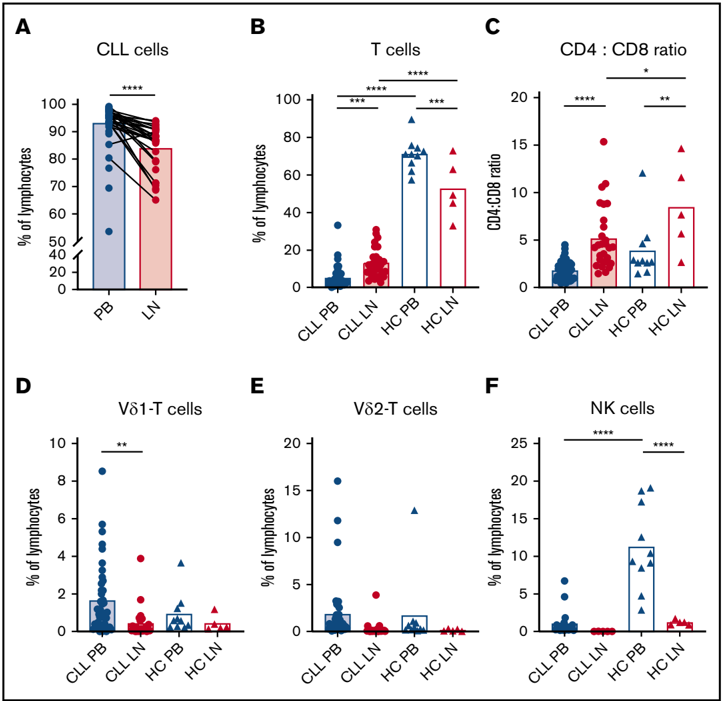
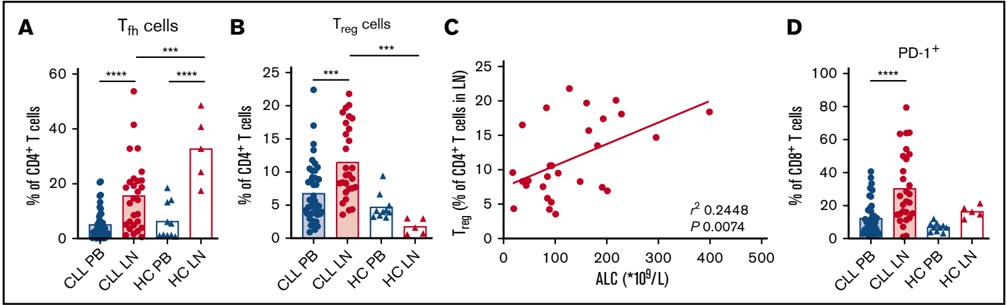
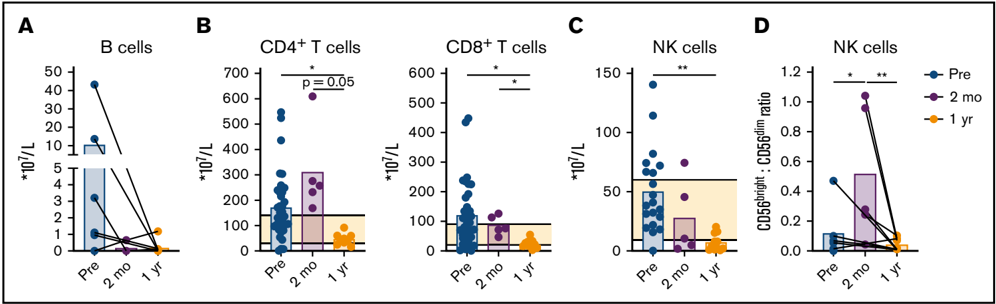
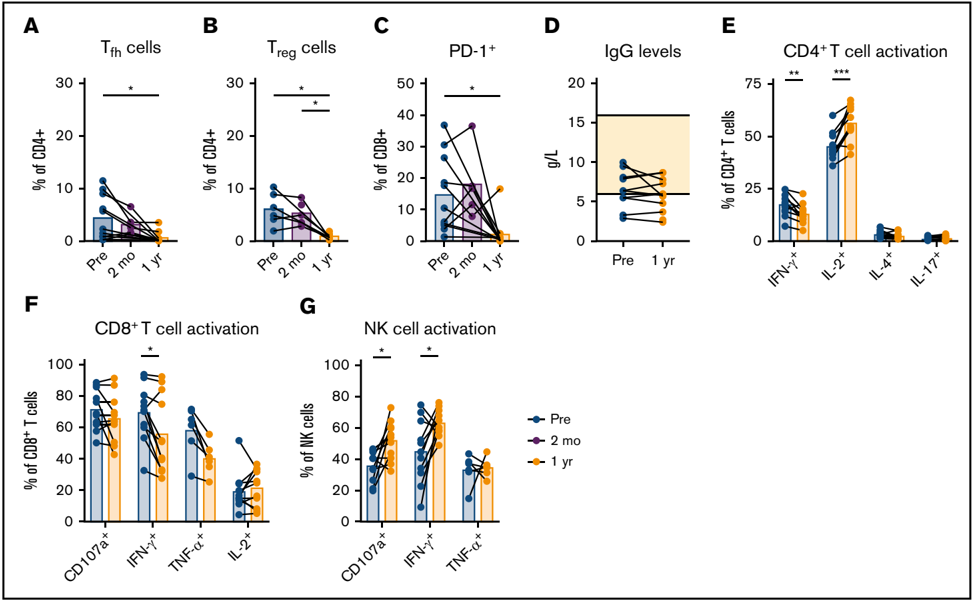
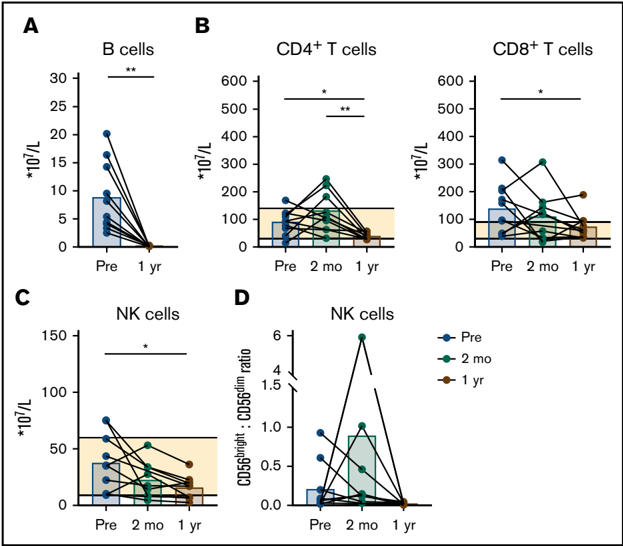
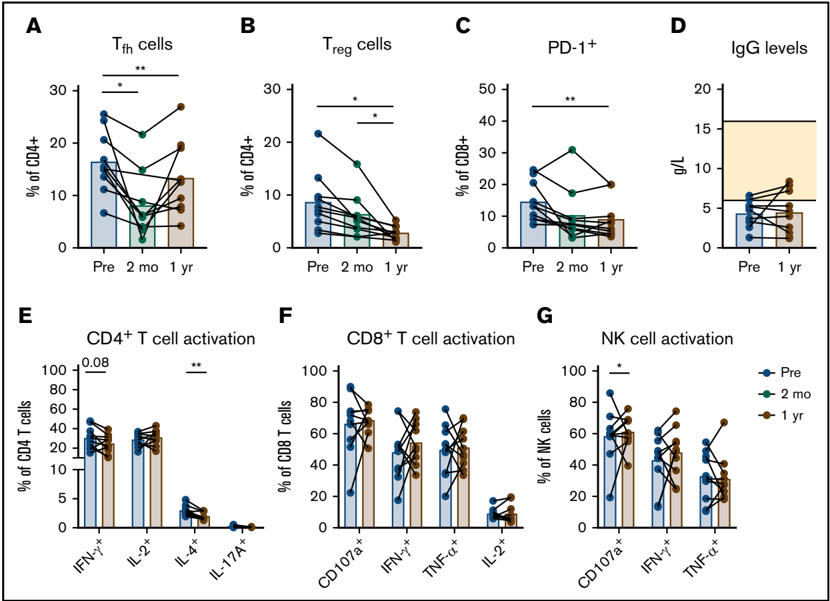
Abstract Morbidity and mortality due to immunosuppression remain among the foremost clinical challenges in chronic lymphocytic leukemia (CLL). Although immunosuppression is considered to originate within the lymph node (LN) microenvironment, alterations in T and natural killer (NK) cells have almost exclusively been studied in peripheral blood (PB). Whereas chemoimmunotherapy further deteriorates immune function, novel targeted agents like the B-cell lymphoma 2 inhibitor venetoclax potentially spare nonmalignant lymphocytes; however, the effects of venetoclax on nonleukemic cells have not been explored. We address these unresolved issues using a comprehensive analysis of nonmalignant lymphocytes in paired LN and PB samples from untreated CLL patients, and by analyzing the effects of venetoclax-based treatment regimens on the immune system in PB samples from previously untreated and relapsed/refractory patients. CLL-derived LNs contained twice the amount of suppressive regulatory T cells (Tregs) and CLL supportive follicular T helper (Tfh) cells compared with PB. This was accompanied by a low frequency of cytotoxic lymphocytes. The expression of PD-1 by CD8+ T cells was significantly higher in LN compared with PB. Venetoclax-based treatment led to deep responses in the majority of patients, but also to decreased absolute numbers of B, T, and NK cells. Tfh cell, Treg, and PD-1+ CD8+ T cell numbers were reduced more than fivefold after venetoclax-based therapy, and overproduction of inflammatory cytokines was reduced. Furthermore, we observed restoration of NK cell function. These data support the notion that the immunosuppressive state in CLL is more prominent within the LN. Venetoclax-based regimens reduced the immunosuppressive footprint of CLL, suggesting immune recovery after the elimination of leukemic cells.
Overview
The claims and statistics of this paper haven’t been checked yet.
Free: it reads the open-access text and checks the first 5 claims that cite a source we can check. Create a free account to check every claim.
Integrity signals
Registry
Cites
Statistics
Figures
Verification
Claims the paper makes
The claims and statistics of this paper haven’t been checked yet.
Free: it reads the open-access text and checks the first 5 claims that cite a source we can check. Create a free account to check every claim.
Claims other papers make about this one
Each is checked against this paper’s own text: does it say what the citing paper says it does?
The source backs part of the claim, not all of it — or backs it for a different population, condition or comparison.
In the citing paper
“Of note, venetoclax limits several features of CLL-associated immunosuppression in patients, including CTL exhaustion and NK-cell dysfunction (de Weerdt et al., 2019) and does not reduce the number of peripheral T cells in patients with HR + BCL2 + metastatic breast cancer (Lok et al., 2019).”
From Immunomodulation by targeted anticancer agents (2021) · cites this paper as de Weerdt et al., 2019
Experimental — accuracy not yet measured
Self-check
Percentages, sums and reported differences re-computed from the paper’s own numbers.
The self-check needs the paper’s full text.
Citations
Cites
Targeting BCL2 with Venetoclax in Relapsed Chronic Lymphocytic Leukemia
Roberts, A. W., Davids, M. S., Pagel, J. M., Kahl, B. S., Puvvada, S. D., Gerecitano, J. F., Kipps, T. J., Anderson, M. A., Brown, J. R., Gressick, L., et al. (2016) · New England Journal of Medicine · doi:10.1056/nejmoa1513257 · Cited by 1,900 · cited 1×
“Venetoclax, an inhibitor of the antiapoptotic protein B-cell lymphoma 2 (Bcl-2), is highly effective in CLL, even as monotherapy.(28) High rates of minimal residual disease (MRD) negativity and low rates of progression are observed with venetoclax treatment in combination with anti-CD20 monoclonal antibodies, such as…”
BackgroundPorter, D. L., Hwang, W.-T., Frey, N. V., Lacey, S. F., Shaw, P. A., Loren, A. W., Bagg, A., Marcucci, K. T., Shen, A., Gonzalez, V., et al. (2015) · Science Translational Medicine · doi:10.1126/scitranslmed.aac5415 · Cited by 1,729
Venetoclax-Rituximab in Relapsed or Refractory Chronic Lymphocytic Leukemia
Seymour, J. F., Kipps, T. J., Eichhorst, B., Hillmen, P., D’Rozario, J., Assouline, S., Owen, C., Gerecitano, J., Robak, T., De la Serna, J., et al. (2018) · New England Journal of Medicine · doi:10.1056/nejmoa1713976 · Cited by 940
Self-citationThe who's who of T ‐cell differentiation: Human memory T ‐cell subsets
Mahnke, Y. D., Brodie, T. M., Sallusto, F., Roederer, M., & Lugli, E. (2013) · European Journal of Immunology · doi:10.1002/eji.201343751 · Cited by 817 · cited 1×
“effector memory T cells based on CD27 and CD45RA expression.(43) Although the differentiation status of CD4(1) T cells did not differ between LN and PB in CLL patients and HCs, the CD8(1) compartment in CLL patients consisted of a larger proportion of central memory T cells in the LN in comparison with the PB (37.”
ResultHerishanu, Y., Pérez-Galán, P., Liu, D., Biancotto, A., Pittaluga, S., Vire, B., Gibellini, F., Njuguna, N., Lee, E., Stennett, L., et al. (2011) · Blood · doi:10.1182/blood-2010-05-284984 · Cited by 815
Dubovsky, J. A., Beckwith, K. A., Natarajan, G., Woyach, J. A., Jaglowski, S., Zhong, Y., Hessler, J. D., Liu, T.-M., Chang, B. Y., Larkin, K. M., et al. (2013) · Blood · doi:10.1182/blood-2013-06-507947 · Cited by 810 · cited 1×
“Treatment with venetoclax-ibrutinib led to significantly reduced IL-4 production by CD4(1) T cells, in line with previous reports on abrogated TH2 cell responses after ibrutinib in vitro (Figure 6E).(26) We did not observe any clear changes in the cytokine-production profiles of CD8(1) T cells or Vd2 T cells after tre…”
ResultTam, C. S., O'Brien, S., Wierda, W., Kantarjian, H., Wen, S., Do, K.-A., Thomas, D. A., Cortes, J., Lerner, S., & Keating, M. J. (2008) · Blood · doi:10.1182/blood-2008-02-140582 · Cited by 693 · cited 2×
“6 months, leading to an extended period of increased infection risk.(20,21) Now that discontinuation of venetoclax-based treatments upon reaching deep remissions appears to be feasible,(29-31) it is of clinical relevance to assess whether lymphocyte counts recover after cessation, especially if the decrease in nonmali…”
BackgroundTurtle, C. J., Hay, K. A., Hanafi, L.-A., Li, D., Cherian, S., Chen, X., Wood, B., Lozanski, A., Byrd, J. C., Heimfeld, S., et al. (2017) · Journal of Clinical Oncology · doi:10.1200/jco.2017.72.8519 · Cited by 662
Ramsay, A. G., Johnson, A. J., Lee, A. M., Gorgün, G., Le Dieu, R., Blum, W., Byrd, J. C., & Gribben, J. G. (2008) · Journal of Clinical Investigation · doi:10.1172/jci35017 · Cited by 600
Riches, J. C., Davies, J. K., McClanahan, F., Fatah, R., Iqbal, S., Agrawal, S., Ramsay, A. G., & Gribben, J. G. (2013) · Blood · doi:10.1182/blood-2012-09-457531 · Cited by 529 · cited 1×
“CD8(1) T cells from untreated CLL patients show increased production of effector-type cytokines.(16) Venetoclax-obinutuzumab treatment resulted in a significantly decreased production of IFN-g and a trend toward lower tumor necrosis factor-a production by CD8(1) T cells (Figure 4F).”
BackgroundIbrutinib enhances chimeric antigen receptor T-cell engraftment and efficacy in leukemia
Fraietta, J. A., Beckwith, K. A., Patel, P. R., Ruella, M., Zheng, Z., Barrett, D. M., Lacey, S. F., Melenhorst, J. J., McGettigan, S. E., Cook, D. R., et al. (2016) · Blood · doi:10.1182/blood-2015-11-679134 · Cited by 474 · cited 1×
“Therefore, the disappointing efficacy of cellular-based therapies may improve when such treatment modalities are combined with agents that displace CLL cells from the LN, as is seen in early clinical studies with ibrutinib and chimeric antigen receptor T cells.(55)”
BackgroundIbrutinib treatment improves T cell number and function in CLL patients
Long, M., Beckwith, K., Do, P., Mundy, B. L., Gordon, A., Lehman, A. M., Maddocks, K. J., Cheney, C., Jones, J. A., Flynn, J. M., et al. (2017) · Journal of Clinical Investigation · doi:10.1172/jci89756 · Cited by 388 · cited 2×
“The decrease in exhaustion markers and Treg numbers is also seen following treatment with ibrutinib, supporting the hypothesis that this is CLL dependent rather than treatment drug dependent.(23,27) Fludarabine has profound detrimental effects on T-cell numbers, and immune recovery of T cells takes .”
BackgroundPerturbation of the normal immune system in patients with CLL
Forconi, F., & Moss, P. (2015) · Blood · doi:10.1182/blood-2015-03-567388 · Cited by 385 · cited 1×
“Chronic lymphocytic leukemia (CLL) is accompanied by considerable immunosuppression, which results in an increased risk for infections and secondary malignancies.(1,2) Immune disruptions are thought to arise from interactions between CLL cells and the immune system.”
BackgroundRamsay, A. G., Clear, A. J., Fatah, R., & Gribben, J. G. (2012) · Blood · doi:10.1182/blood-2012-02-411678 · Cited by 358
Burger, J. A., Quiroga, M. P., Hartmann, E., Bürkle, A., Wierda, W. G., Keating, M. J., & Rosenwald, A. (2009) · Blood · doi:10.1182/blood-2008-07-170415 · Cited by 330 · cited 1×
“CLL cells actively shape a supportive immune environment that results in progressive abnormalities in the myeloid, T, and natural killer (NK) cell compartment of CLL patients.(3,4) One result of such T-cell alterations is the elevation of CD4(1) and CD8(1) T-cell numbers, resulting in a decreased CD4/CD8 ratio.”
BackgroundChronic lymphocytic leukemia cells induce changes in gene expression of CD4 and CD8 T cells
Görgün, G., Holderried, T. A. W., Zahrieh, D., Neuberg, D., & Gribben, J. G. (2005) · Journal of Clinical Investigation · doi:10.1172/jci24176 · Cited by 298
Jitschin, R., Braun, M., Büttner, M., Dettmer-Wilde, K., Bricks, J., Berger, J., Eckart, M. J., Krause, S. W., Oefner, P. J., Le Blanc, K., et al. (2014) · Blood · doi:10.1182/blood-2013-12-546416 · Cited by 251
Sun, C., Tian, X., Lee, Y. S., Gunti, S., Lipsky, A., Herman, S. E. M., Salem, D., Stetler-Stevenson, M., Yuan, C., Kardava, L., et al. (2015) · Blood · doi:10.1182/blood-2015-04-639203 · Cited by 221 · cited 1×
“Low healthy B-cell numbers persist during ibrutinib monotherapy, especially in patients with relapsed or refractory disease.(46) Also in our cohort, the percentage and absolute numbers of healthy B cells were low at baseline and decreased after 1 year of venetoclaxibrutinib treatment (from 8.”
BackgroundIbrutinib antagonizes rituximab-dependent NK cell–mediated cytotoxicity
Kohrt, H. E., Sagiv-Barfi, I., Rafiq, S., Herman, S. E. M., Butchar, J. P., Cheney, C., Zhang, X., Buggy, J. J., Muthusamy, N., Levy, R., et al. (2014) · Blood · doi:10.1182/blood-2014-01-547869 · Cited by 217
Niemann, C. U., Herman, S. E. M., Maric, I., Gomez-Rodriguez, J., Biancotto, A., Chang, B. Y., Martyr, S., Stetler-Stevenson, M., Yuan, C. M., Calvo, K. R., et al. (2016) · Clinical Cancer Research · doi:10.1158/1078-0432.ccr-15-1965 · Cited by 201 · cited 1×
“The decrease in exhaustion markers and Treg numbers is also seen following treatment with ibrutinib, supporting the hypothesis that this is CLL dependent rather than treatment drug dependent.(23,27) Fludarabine has profound detrimental effects on T-cell numbers, and immune recovery of T cells takes .”
BackgroundSelf-citationStiff, A., Trikha, P., Wesolowski, R., Kendra, K., Hsu, V., Uppati, S., McMichael, E., Duggan, M., Campbell, A., Keller, K., et al. (2016) · Cancer Research · doi:10.1158/0008-5472.can-15-1490 · Cited by 188
Carrington, E. M., Zhan, Y., Brady, J. L., Zhang, J., Sutherland, R. M., Anstee, N. S., Schenk, R. L., Vikstrom, I. B., Delconte, R. B., Segal, D., et al. (2017) · Cell Death and Differentiation · doi:10.1038/cdd.2017.30 · Cited by 184 · cited 1×
“Although CLL cells rely heavily on Bcl-2 for their survival, other leukocytes also depend on Bcl-2 to varying degrees and, thus, may be affected by venetoclax-based treatment.(33,34)”
BackgroundDissecting CD56dim human NK cells
Moretta, L. (2010) · Blood · doi:10.1182/blood-2010-09-303057 · Cited by 181 · cited 1×
“Within the NK cell compartment, CD56 cells with a cytotoxic potential are distinguished from CD56 cells that have a higher proliferative and cytokine-producing capacity.(40) In patients with CLL and HCs, the majority (.”
BackgroundDavids, M. S., Hallek, M., Wierda, W., Roberts, A. W., Stilgenbauer, S., Jones, J. A., Gerecitano, J. F., Kim, S. Y., Potluri, J., Busman, T., et al. (2018) · Clinical Cancer Research · doi:10.1158/1078-0432.ccr-17-3761 · Cited by 164
D’Arena, G., Laurenti, L., Minervini, M. M., Deaglio, S., Bonello, L., De Martino, L., De Padua, L., Savino, L., Tarnani, M., De Feo, V., et al. (2011) · Leukemia Research · doi:10.1016/j.leukres.2010.08.010 · Cited by 161
Pascutti, M. F., Jak, M., Tromp, J. M., Derks, I. A. M., Remmerswaal, E. B. M., Thijssen, R., van Attekum, M. H. A., van Bochove, G. G., Luijks, D. M., Pals, S. T., et al. (2013) · Blood · doi:10.1182/blood-2012-11-467670 · Cited by 139 · cited 2×
“CD4(1) T cells can differentiate into follicular T helper (Tfh) cells that provide support to healthy B cells, and are similarly instrumental for CLL cell support.(7,41) LNs of CLL patients and HCs contained 3 times more Tfh cells compared with the PB (Figure 2A).”
BackgroundResultSelf-citationHerndon, T. M., Chen, S.-S., Saba, N. S., Valdez, J., Emson, C., Gatmaitan, M., Tian, X., Hughes, T. E., Sun, C., Arthur, D. C., et al. (2017) · Leukemia · doi:10.1038/leu.2017.11 · Cited by 134
Self-citationEnhanced formation and survival of CD4+CD25hiFoxp3+T-cells in chronic lymphocytic leukemia
Jak, M., Mous, R., Remmerswaal, E. B. M., Spijker, R., Jaspers, A., Yagüe, A., Eldering, E., van Lier, R. A. W., & van Oers, M. H. J. (2009) · Leukemia & lymphoma/Leukemia and lymphoma · doi:10.1080/10428190902803677 · Cited by 130
Self-citationHallaert, D. Y. H., Jaspers, A., van Noesel, C. J., van Oers, M. H. J., Kater, A. P., & Eldering, E. (2008) · Blood · doi:10.1182/blood-2008-03-146704 · Cited by 119 · cited 1×
“PB mononuclear cells (PBMCs) were collected before the start of the trial, as well as after cycle 2 and after cycle 14 (or;1 year) of treatment, and were used directly or cryopreserved as described earlier.(38) Core LN biopsies were collected at baseline and used directly.”
MethodSelf-citationVenetoclax and obinutuzumab in chronic lymphocytic leukemia
Fischer, K., Al-Sawaf, O., Fink, A.-M., Dixon, M., Bahlo, J., Warburton, S., Kipps, T. J., Weinkove, R., Robinson, S., Seiler, T., et al. (2017) · Blood · doi:10.1182/blood-2017-01-761973 · Cited by 119
Self-citationYin, Q., Sivina, M., Robins, H., Yusko, E., Vignali, M., O’Brien, S., Keating, M. J., Ferrajoli, A., Estrov, Z., Jain, N., et al. (2017) · The Journal of Immunology · doi:10.4049/jimmunol.1601190 · Cited by 116
Understanding the Immunodeficiency in Chronic Lymphocytic Leukemia
Riches, J. C., & Gribben, J. G. (2013) · Hematology/Oncology Clinics of North America · doi:10.1016/j.hoc.2013.01.003 · Cited by 105 · cited 1×
“Chronic lymphocytic leukemia (CLL) is accompanied by considerable immunosuppression, which results in an increased risk for infections and secondary malignancies.(1,2) Immune disruptions are thought to arise from interactions between CLL cells and the immune system.”
BackgroundExpansion of CMV-specific CD8+CD45RA+CD27- T cells in B-cell chronic lymphocytic leukemia
Mackus, W. J. M., Frakking, F. N. J., Grummels, A., Gamadia, L. E., de Bree, G. J., Hamann, D., van Lier, R. A. W., & van Oers, M. H. J. (2003) · Blood · doi:10.1182/blood-2003-01-0182 · Cited by 102
The BAFF receptor TACI controls IL-10 production by regulatory B cells and CLL B cells
Saulep-Easton, D., Vincent, F. B., Quah, P. S., Wei, A., Ting, S. B., Croce, C. M., Tam, C., & Mackay, F. (2016) · Leukemia · doi:10.1038/leu.2015.174 · Cited by 101
Siegers, G. M., Dhamko, H., Wang, X.-H., Mathieson, A. M., Kosaka, Y., Felizardo, T. C., Medin, J. A., Tohda, S., Schüler, J. B., Fisch, P., et al. (2011) · Cytotherapy · doi:10.3109/14653249.2011.553595 · Cited by 98
Review: Current clinical applications of chimeric antigen receptor (CAR) modified T cells
Geyer, M. B., & Brentjens, R. J. (2016) · Cytotherapy · doi:10.1016/j.jcyt.2016.07.003 · Cited by 98
Life and Death of Activated T Cells: How Are They Different from Naïve T Cells?
Zhan, Y., Carrington, E. M., Zhang, Y., Heinzel, S., & Lew, A. M. (2017) · Frontiers in Immunology · doi:10.3389/fimmu.2017.01809 · Cited by 95
Teh, B. W., Tam, C. S. L., Handunnetti, S. M., Worth, L. J., & Slavin, M. A. (2018) · Blood Reviews · doi:10.1016/j.blre.2018.04.007 · Cited by 86 · cited 4×
“Understanding the effects of novel treatment regimens on the immune system is particularly important considering the fact that infections remain a leading cause of morbidity and mortality in CLL.(35,36) In addition, knowledge about how venetoclax impacts lymphocytes may be valuable in designing future combination stra…”
BackgroundInfluentialHuman virus-specific effector-type T cells accumulate in blood but not in lymph nodes
Remmerswaal, E. B. M., Havenith, S. H. C., Idu, M. M., van Leeuwen, E. M. M., van Donselaar, K. A. M. I., ten Brinke, A., van der Bom-Baylon, N., Bemelman, F. J., van Lier, R. A. W., & ten Berge, I. J. M. (2012) · Blood · doi:10.1182/blood-2011-09-381574 · Cited by 83 · cited 1×
“Healthy control (HC) PB and LN samples were collected from patients undergoing renal transplantation, as described previously.(37) During sample collection, HCs had received no immunosuppressive medication other than 1 administration of anti-CD25 monoclonal antibody.”
MethodSelf-citationHilal, T., Gea‐Banacloche, J., & Leis, J. F. (2018) · Blood Reviews · doi:10.1016/j.blre.2018.03.004 · Cited by 83 · cited 4×
“Understanding the effects of novel treatment regimens on the immune system is particularly important considering the fact that infections remain a leading cause of morbidity and mortality in CLL.(35,36) In addition, knowledge about how venetoclax impacts lymphocytes may be valuable in designing future combination stra…”
BackgroundInfluentialCatakovic, K., Gassner, F. J., Ratswohl, C., Zaborsky, N., Rebhandl, S., Schubert, M., Steiner, M. J., Gutjahr, J. C., Pleyer, L., Egle, A., et al. (2017) · OncoImmunology · doi:10.1080/2162402x.2017.1371399 · Cited by 82
Chronic lymphocytic leukemia cells are active participants in microenvironmental cross-talk
van Attekum, M. H., Eldering, E., & Kater, A. P. (2017) · Haematologica · doi:10.3324/haematol.2016.142679 · Cited by 77
Self-citationFlinn, I. W., Gribben, J. G., Dyer, M. J. S., Wierda, W. G., Maris, M. B., Furman, R. R., Hillmen, P., Rogers, K. A., Iyer, S. P., Quillet‐Mary, A., et al. (2019) · Blood · doi:10.1182/blood-2019-01-896290 · Cited by 77
Self-citationMacfarlane, A. W., Jillab, M., Smith, M. R., Alpaugh, R. K., Cole, M. E., Litwin, S., Millenson, M. M., Al‐Saleem, T., Cohen, A. D., & Campbell, K. S. (2017) · OncoImmunology · doi:10.1080/2162402x.2017.1330235 · Cited by 73
TFH cells in bystander and cognate interactions with B cells
Wan, Z., Lin, Y., Zhao, Y., & Qi, H. (2019) · Immunological Reviews · doi:10.1111/imr.12747 · Cited by 70 · cited 1×
“CD4(1) T cells can differentiate into follicular T helper (Tfh) cells that provide support to healthy B cells, and are similarly instrumental for CLL cell support.(7,41) LNs of CLL patients and HCs contained 3 times more Tfh cells compared with the PB (Figure 2A).”
ResultParry, H., Stevens, T., Oldreive, C., Zadran, B., McSkeane, T., Rudzki, Z., Paneesha, S., Chadwick, C., Stanković, T., Pratt, G., et al. (2016) · Oncotarget · doi:10.18632/oncotarget.12097 · Cited by 63 · cited 2×
“In contrast to CD8(1) T cells, NK cell cytokine production and degranulation are impaired in untreated CLL patients.(17,18) Following venetoclax-obinutuzumab treatment, degranulation, as well as IFN-g production, of NK cells improved significantly (Figure 4G).”
BackgroundResultYsebaert, L., Gross, E. T. E., Kühlein, E., Blanc, A., Corre, J., Fournié, J., Laurent, G., & Quillet‐Mary, A. (2010) · Leukemia · doi:10.1038/leu.2010.89 · Cited by 59
Improving CLL Vγ9Vδ2-T–cell fitness for cellular therapy by ex vivo activation and ibrutinib
de Weerdt, I., Hofland, T., Lameris, R., Endstra, S., Jongejan, A., Moerland, P. D., de Bruin, R. C. G., Remmerswaal, E. B. M., ten Berge, I. J. M., Liu, N., et al. (2018) · Blood · doi:10.1182/blood-2017-12-822569 · Cited by 58
Self-citationAssociation of peripheral CD4+ CXCR5+ T cells with chronic lymphocytic leukemia
Cha, Z., Zang, Y., Guo, H., Rechlic, J. R., Olasnova, L. M., Gu, H., Tu, X., Song, H., & Qian, B. (2013) · Tumor Biology · doi:10.1007/s13277-013-0937-2 · Cited by 55
Lad, D. P., Varma, S. C., Varma, N., Sachdeva, M. U. S., Bose, P. L., & Malhotra, P. (2012) · Leukemia & lymphoma/Leukemia and lymphoma · doi:10.3109/10428194.2012.728287 · Cited by 55 · cited 7×
“The numbers of NK and CD81 T cells are relatively low, as well as Vd1 and Vd2 T-cell numbers, both of which have cytotoxic properties against CLL cells.52,53 Moreover, high PD-1 expression on CD81 T cells fits with an immunosuppressed profile in the LN.”
ResultInfluentialHanna, B. S., Roessner, P. M., Scheffold, A., Jebaraj, B. M. C., Demerdash, Y., Öztürk, S., Lichter, P., Stilgenbauer, S., & Seiffert, M. (2019) · Leukemia · doi:10.1038/s41375-018-0318-3 · Cited by 55
Antigen Selection Shapes the T-cell Repertoire in Chronic Lymphocytic Leukemia
Vardi, A., Agathangelidis, A., Stalika, E., Karypidou, M., Siorenta, A., Anagnostopoulos, Α., Rosenquist, R., Hadzidimitriou, A., Ghia, P., Sutton, L., et al. (2015) · Clinical Cancer Research · doi:10.1158/1078-0432.ccr-14-3017 · Cited by 49 · cited 1×
“Although there is no definitive proof for CLL-specific T-cell clones, the consistent elevation of T-cell numbers and skewed T-cell receptor repertoire suggest their existence, and such clones may disappear when no longer receiving CLL-derived antigenic stimulation.(5,58) Considering the active recruitment of a support…”
BackgroundMu, X. Y., Kay, N. E., Gosland, M. P., & JENNINGS, C. D. (1997) · British Journal of Haematology · doi:10.1046/j.1365-2141.1997.d01-2107.x · Cited by 47
Lorentzen, C. L., & Straten, P. T. (2015) · Scandinavian Journal of Immunology · doi:10.1111/sji.12331 · Cited by 41
Pasikowska, M., Walsby, E. J., Apollonio, B., Cuthill, K., Phillips, E. H., Coulter, E., Longhi, M. S., Ma, Y., Yallop, D., Barber, L. D., et al. (2016) · Blood · doi:10.1182/blood-2016-01-683128 · Cited by 40
Positive & Negative Roles of Innate Effector Cells in Controlling Cancer Progression
Stolk, D. A., van der Vliet, H. J., de Gruijl, T. D., van Kooyk, Y., & Exley, M. A. (2018) · Frontiers in Immunology · doi:10.3389/fimmu.2018.01990 · Cited by 35
Immunological changes with kinase inhibitor therapy for chronic lymphocytic leukemia
Pleyer, C., Wiestner, A. U., & Sun, C. (2018) · Leukemia & lymphoma/Leukemia and lymphoma · doi:10.1080/10428194.2018.1457147 · Cited by 33 · cited 1×
“Although experience so far indicates that most novel targeted therapeutic strategies do not have such unfavorable effects on T cells, targeted agents may also influence the immune system of CLL patients.(22) The Bruton tyrosine kinase (BTK) inhibitor ibrutinib alters T, NK, and myeloid cell function, which may result,…”
BackgroundKater, A. P., Kersting, S., van Norden, Y., Dubois, J. M. N., Dobber, J. A., Mellink, C. H. M., Evers, L. M., Boer, F. C., Schreurs, J., van der Spek, E., et al. (2018) · Blood Advances · doi:10.1182/bloodadvances.2018019422 · Cited by 29
Self-citationObinutuzumab Induces Depletion of NK Cells in Patients with Chronic Lymphocytic Leukemia
García‐Muñoz, R., Aguinaga, L., Feliu, J., Anton-Remirez, J., Jorge-del-Val, L., Navasal, A. C., Nebot-Villacampa, M. J., Daroca-Fernandez, I., Domínguez-Garrido, E., Rabasa, P., et al. (2018) · Immunotherapy · doi:10.2217/imt-2017-0147 · Cited by 21
Jain, N., Keating, M. J., Thompson, P. A., Ferrajoli, A., Burger, J. A., Borthakur, G. M., Takahashi, K., Estrov, Z. E., Fowler, N. H., Kadia, T. M., et al. (2018) · Blood · doi:10.1182/blood-2018-186 · Cited by 18
Rimsza, L. M., & Jaramillo, M. C. (2014) · Hematology · doi:10.1182/asheducation-2014.1.163 · Cited by 13 · cited 1×
“Similar to other B-cell lymphomas, such as follicular lymphoma, the lymph node (LN) microenvironment in CLL is thought to be the predominant site of interaction between the malignant cells and tumor-associated and tumor-specific immune cells.(19) However, data on immune abnormalities in CLL patients are primarily obta…”
ResultSahaf, B., Tebaykin, D., Hopper, M. J., Cheung, P. C., Bittencourt, F. M., Cutler, C. S., Arora, M., Waller, E. K., Jagasia, M., Pusic, I., et al. (2017) · Blood · doi:10.1182/blood.v130.suppl_1.4481.4481 · Cited by 4
Abnormal T follicular helper cell subsets in Chronic Lymphocytic Leukemia
Marshall, A. J., Zhang, C., Hou, S., & Wu, X. (2018) · The Journal of Immunology · doi:10.4049/jimmunol.200.supp.166.28 · Cited by 1
Cited by
Immunomodulation by targeted anticancer agents
Petroni, G., Buqué, A., Zitvogel, L., Kroemer, G., & Galluzzi, L. (2021) · Cancer Cell · doi:10.1016/j.ccell.2020.11.009 · Cited by 212
T follicular helper cells in cancer
Gutiérrez-Melo, N., & Baumjohann, D. (2023) · Trends in Cancer · doi:10.1016/j.trecan.2022.12.007 · Cited by 209
Michels, K. R., Sheih, A., Hernández, S., Brandes, A., Parrilla, D., Irwin, B., Perez, A. M., Ting, H.-A., Nicolai, C. J., Gervascio, T., et al. (2023) · Journal for ImmunoTherapy of Cancer · doi:10.1136/jitc-2022-006292 · Cited by 146
T-cells in chronic lymphocytic leukemia: Guardians or drivers of disease?
Roessner, P. M., & Seiffert, M. (2020) · Leukemia · doi:10.1038/s41375-020-0873-2 · Cited by 144
Siddiqi, T., Soumerai, J. D., Dorritie, K. A., Stephens, D. M., Riedell, P. A., Arnason, J. E., Kipps, T. J., Gillenwater, H. H., Gong, L., Yang, L., et al. (2021) · Blood · doi:10.1182/blood.2021011895 · Cited by 131
Metadata
- Authors
- de Weerdt, I., Hofland, T., de Boer, R., Dobber, J. A., Dubois, J., van Nieuwenhuize, D., Mobasher, M., de Boer, F., Hoogendoorn, M., Velders, G. A., van der Klift, M., Remmerswaal, E. B. M., Bemelman, F. J., Niemann, C. U., Kersting, S., Levin, M.-D., Eldering, E., Tonino, S. H., & Kater, A. P.
- Affiliations
- Department of Hematology, Cancer Center Amsterdam, and
- Amsterdam University Medical Centers (NL)
- Cancer Center Amsterdam (NL)
- Genentech (US)
- Internal Medicine, Ikazia Hospital, Rotterdam, The Netherlands;
- Medisch Centrum Leeuwarden (NL)
- Ziekenhuis Gelderse Vallei (NL)
- Department of Internal Medicine, Amphia Hospital, Breda, The Netherlands;
- Renal Transplant Unit, Amsterdam UMC, University of Amsterdam, Amsterdam, The Netherlands;
- Copenhagen University Hospital (DK)
- Haga Hospital (NL)
- Albert Schweitzer Ziekenhuis (NL)
- Corresponding author
- Hofland, Tom
- Tonino, Sanne H.
- Kater, Arnon P.
- ORCID
- Venue
- Blood Advances
- Publisher
- American Society of Hematology
- Published
- 2019-09-10
- Volume
- 3
- Issue
- 17
- Pages
- 2642-2652
- ISSN
- 2473-9529 (ISSN-L)
- 2473-9537
- PMC
- PMC6737416
- OpenAlex
- W2973024487
- Cited by
- 110
- References
- 63
- Citations by year
- 2026: 4 · 2025: 13 · 2024: 14 · 2023: 17 · 2022: 19 · 2021: 24 · 2020: 19
- FWCI
- 8.50
- Type
- journal article
- Language
- en
- Open access
- gold
- doi.org
- Licence
- cc-by-nc-nd
- Locations
- Blood Advances (publishedVersion, cc-by-nc-nd)
- PubMed Central (publishedVersion)
- PubMed (publishedVersion)
- Research at the University of Copenhagen (University of Copenhagen) (publishedVersion, other-oa)
- Pure Amsterdam UMC (submittedVersion, cc-by)
- Data Archiving and Networked Services (DANS) (submittedVersion, other-oa)
- DOAJ (DOAJ: Directory of Open Access Journals) (submittedVersion)
- Funders
- Novo Nordisk Fonden (NNF16OC0019302)
- Topics
- Health Sciences › Medicine › Hematology › Chronic Lymphocytic Leukemia Research
- Health Sciences › Medicine › Pathology and Forensic Medicine › Lymphoma Diagnosis and Treatment
- Life Sciences › Immunology and Microbiology › Immunology › T-cell and B-cell Immunology
- Keywords
- chronic lymphocytic leukemia, venetoclax, lymph node microenvironment, regulatory T cells, T follicular helper cells, PD-1, CD8+ T cells, natural killer cells, immunosuppression, BCL-2 inhibitor, inflammatory cytokines, immune recovery, relapsed/refractory CLL
- MeSH terms
- Adult, Aged, Antineoplastic Agents, Blood, Female, Humans, Immune System, Immunosuppression Therapy, Killer Cells, Natural, Lymph Nodes, Lymphocytes, Male, Middle Aged, Sulfonamides, Leukemia, Lymphocytic, Chronic, B-Cell, CD8-Positive T-Lymphocytes, Bridged Bicyclo Compounds, Heterocyclic, T-Lymphocytes, Regulatory
About these checks
Registry, retraction, Cites and statistics results are computed, not judged, with one exception: a printed reference that no index lists is read once by a model before it counts as a citation error. Claims are extracted by a model and kept only when their quote appears verbatim in the text; each cited source is then checked, with a model’s help, for whether it says what the claim relies on. Those verdicts can be wrong — read the claim’s quote and the cited source before relying on one.
Statistics and arithmetic are recomputed, not judged.
Confidence bands are shown only for fields calibrated on our annotated test set. None is calibrated yet, so no band is shown.
What counts as a claim ›How we measure confidence ›How we check this ›
Are you an author, or do you see a problem with this page? Request a review
Data sources
Bibliographic data: Semantic Scholar, OpenAlex, Crossref.
Contains information from the Semantic Scholar Academic Graph Datasets, made available under the ODC Attribution License (ODC-BY 1.0).
Semantic Scholar’s data is described in: Kinney, R., et al. (2023). The Semantic Scholar Open Data Platform. arXiv:2301.10140.
