

KAT2A complexes ATAC and SAGA play unique roles in cell maintenance and identity in hematopoiesis and leukemia
Open accessThe DOI matches its Crossref record; 57 of the 59 references it cites were found in a registry or an index.
Abstract
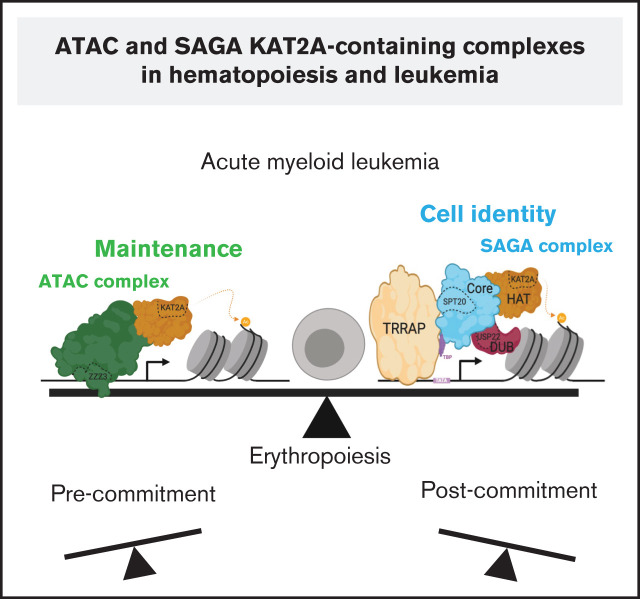
Epigenetic histone modifiers are key regulators of cell fate decisions in normal and malignant hematopoiesis. Their enzymatic activities are of particular significance as putative therapeutic targets in leukemia. In contrast, less is known about the contextual role in which those enzymatic activities are exercised and specifically how different macromolecular complexes configure the same enzymatic activity with distinct molecular and cellular consequences. We focus on KAT2A, a lysine acetyltransferase responsible for histone H3 lysine 9 acetylation, which we recently identified as a dependence in acute myeloid leukemia stem cells and that participates in 2 distinct macromolecular complexes: Ada two-A-containing (ATAC) and Spt-Ada-Gcn5-Acetyltransferase (SAGA). Through analysis of human cord blood hematopoietic stem cells and progenitors, and of myeloid leukemia cells, we identify unique respective contributions of the ATAC complex to regulation of biosynthetic activity in undifferentiated self-renewing cells and of the SAGA complex to stabilization or correct progression of cell type–specific programs with putative preservation of cell identity. Cell type and stage-specific dependencies on ATAC and SAGA-regulated programs explain multilevel KAT2A requirements in leukemia and in erythroid lineage specification and development. Importantly, they set a paradigm against which lineage specification and identity can be explored across developmental stem cell systems.
Overview
The claims and statistics of this paper haven’t been checked yet.
Free: it reads the open-access text and checks the first 5 claims that cite a source we can check. Create a free account to check every claim.
Integrity signals
Registry
Cites
Statistics
Figures
Verification
Claims the paper makes
The claims and statistics of this paper haven’t been checked yet.
Free: it reads the open-access text and checks the first 5 claims that cite a source we can check. Create a free account to check every claim.
Claims other papers make about this one
Each is checked against this paper’s own text: does it say what the citing paper says it does?
The source backs part of the claim, not all of it — or backs it for a different population, condition or comparison.
In the citing paper
“other TKI-resistance hits, such as EIF2AK1 and CCDC101, are key regulatory factors of erythroid differentiation of HSCs.”
From Integrated drug profiling and CRISPR screening identify BCR::ABL1-independent vulnerabilities in chronic myeloid leukemia (2024) · cites this paper as [48]
Experimental — accuracy not yet measuredThe cited source says what the claim attributes to it.
In the citing paper
“KAT2A has previously been identified as a potential targetable dependency in AML through functional genomic studies (28, 27, 46).”
From Degron-independent recruitment of KAT2A expands the target space of CRBN molecular glues (2026) · cites this paper as [46]
Self-check
Percentages, sums and reported differences re-computed from the paper’s own numbers.
The self-check needs the paper’s full text.
Citations
Cites
Enrichr: a comprehensive gene set enrichment analysis web server 2016 update
Kuleshov, M. V., Jones, M. R., Rouillard, A. D., Fernandez, N. F., Duan, Q., Wang, Z., Koplev, S., Jenkins, S. L., Jagodnik, K. M., Lachmann, A., et al. (2016) · Nucleic Acids Research · doi:10.1093/nar/gkw377 · Cited by 10,799
Brownell, J. E., Zhou, J., Ranalli, T., Kobayashi, R., Edmondson, D. G., Roth, S. Y., & Allis, C. D. (1996) · Cell · doi:10.1016/s0092-8674(00)81063-6 · Cited by 1,640
Control of Stochasticity in Eukaryotic Gene Expression
Raser, J. M., & O'Shea, E. K. (2004) · Science · doi:10.1126/science.1098641 · Cited by 1,425 · cited 1×
“2 Control of transcriptional variability by KAT2A-like acetyl-transferases is well established in yeast GCN5, 53 which integrates a SAGA-like complex that was shown to regulate the global transcriptome.”
Grant, P. A., Duggan, L., Côté, J., Roberts, S. M., Brownell, J. E., Candau, R., Ohba, R., Owen-Hughes, T., Allis, C. D., Winston, F., et al. (1997) · Genes & Development · doi:10.1101/gad.11.13.1640 · Cited by 1,085
Jin, Q., Yu, L., Wang, L., Zhang, Z., Kasper, L. H., Lee, J., Wang, C., Brindle, P. K., Dent, S. Y. R., & Ge, K. (2011) · The EMBO Journal · doi:10.1038/emboj.2010.318 · Cited by 877 · cited 1×
“…suggested operating mode of KAT2A-containing complexes is compatible with the role of KAT2A in sustaining rather than initiating gene transcription, 52 as well as in stabilizing promoter activity and minimizing variability in transcriptional output as recently described by us in leukemia 7 and ES…”
Distinct routes of lineage development reshape the human blood hierarchy across ontogeny
Notta, F., Zandi, S., Takayama, N., Dobson, S., Gan, O. I., Wilson, G., Kaufmann, K. B., McLeod, J., Laurenti, E., Dunant, C. F., et al. (2016) · Science · doi:10.1126/science.aab2116 · Cited by 780 · cited 1×
“50 In the context of malignant hematopoiesis, SAGA participates in maintenance of the AML differentiation block, irrespective of the exact stage of cell differentiation, compatible with a general control of cell identity through preservation of existing transcriptional programs.”
Tzelepis, K., Koike-Yusa, H., De Braekeleer, E., Li, Y., Metzakopian, E., Dovey, O. M., Mupo, A., Grinkevich, V., Li, M., Mazan, M., et al. (2016) · Cell Reports · doi:10.1016/j.celrep.2016.09.079 · Cited by 761 · cited 6×
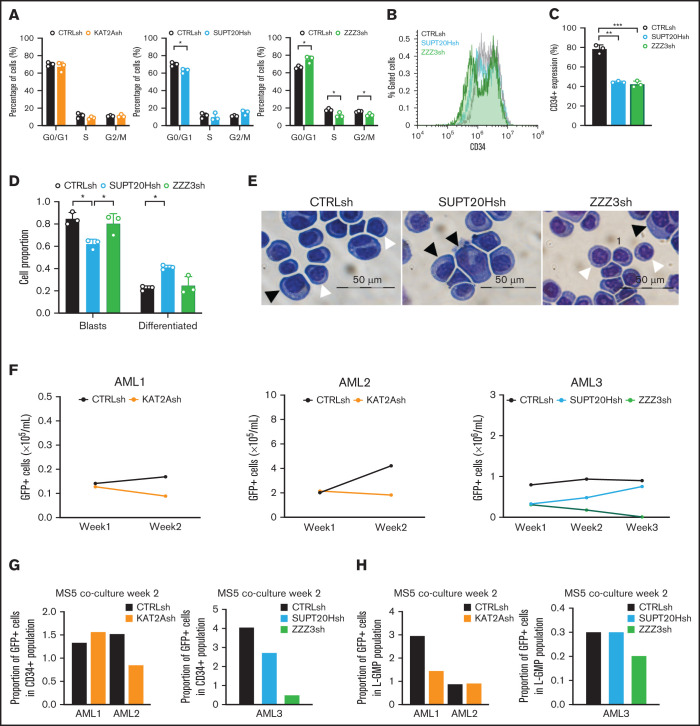
“8 Similarly, we investigated primary CD34 1 AML patient samples for which stem-like compartments have been more clearly established.”
InfluentialSelf-citationThe novel ATM-related protein TRRAP is an essential cofactor for the c-Myc and E2F oncoproteins
McMahon, S. B., Van Buskirk, H. A., Dugan, K. A., Copeland, T. D., & Cole, M. D. (1998) · Cell · doi:10.1016/s0092-8674(00)81479-8 · Cited by 693 · cited 1×
“24 Expression of SAGA USP22 associates with an oncogenic signature of poor prognosis.”
Haematopoietic stem cells require a highly regulated protein synthesis rate
Signer, R. A. J., Magee, J. A., Salic, A., & Morrison, S. J. (2014) · Nature · doi:10.1038/nature13035 · Cited by 674 · cited 2×
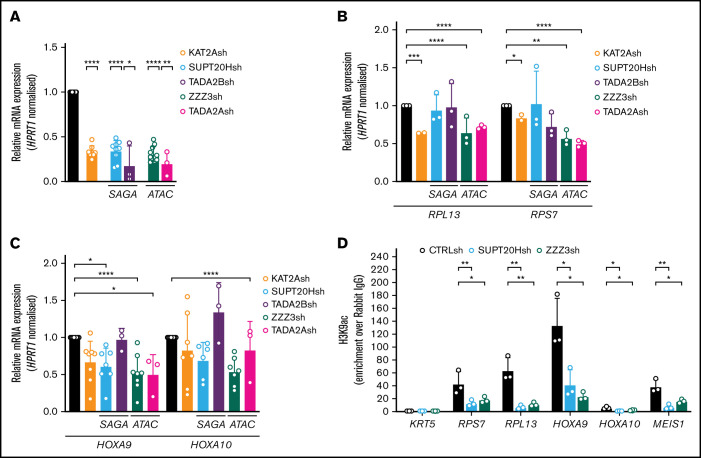
“42 We found that ribosomal protein genes are selectively affected by loss of ATAC elements, which may nevertheless control other self-renewal associated genes, namely the underlying HOXA signature associated with KMT2A/MLL rearrangements.”
Coexistence of LMPP-like and GMP-like Leukemia Stem Cells in Acute Myeloid Leukemia
Goardon, N., Marchi, E., Atzberger, A., Quek, L., Schuh, A., Soneji, S., Woll, P., Mead, A., Alford, K. A., Rout, R., et al. (2011) · Cancer Cell · doi:10.1016/j.ccr.2010.12.012 · Cited by 653
KAT2A coupled with the α-KGDH complex acts as a histone H3 succinyltransferase
Wang, Y., Guo, Y. R., Liu, K., Yin, Z., Liu, R., Xia, Y., Tan, L., Yang, P., Lee, J.-H., Li, X.-J., et al. (2017) · Nature · doi:10.1038/nature25003 · Cited by 567 · cited 1×
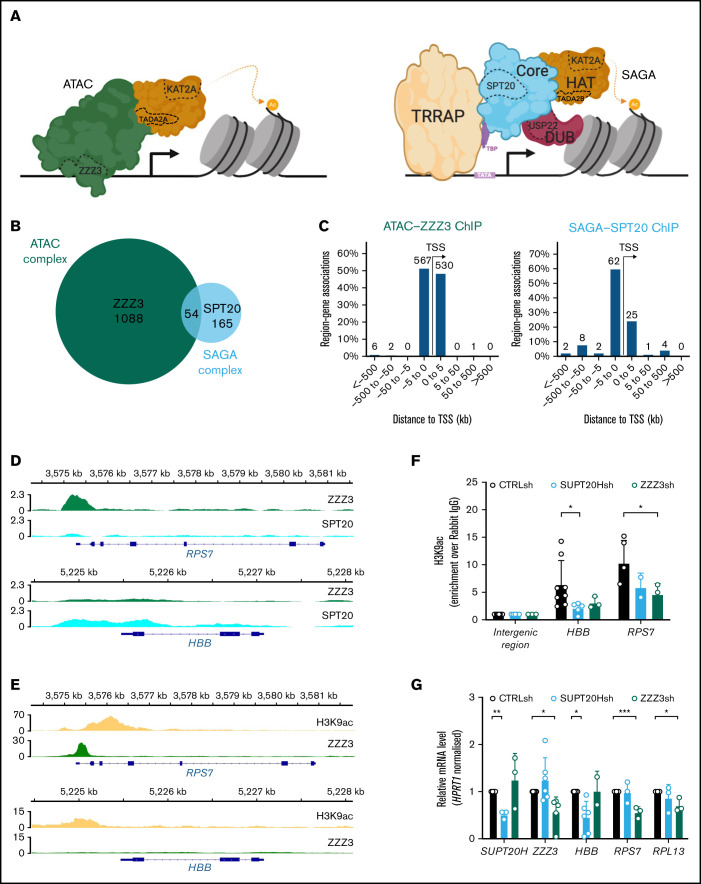
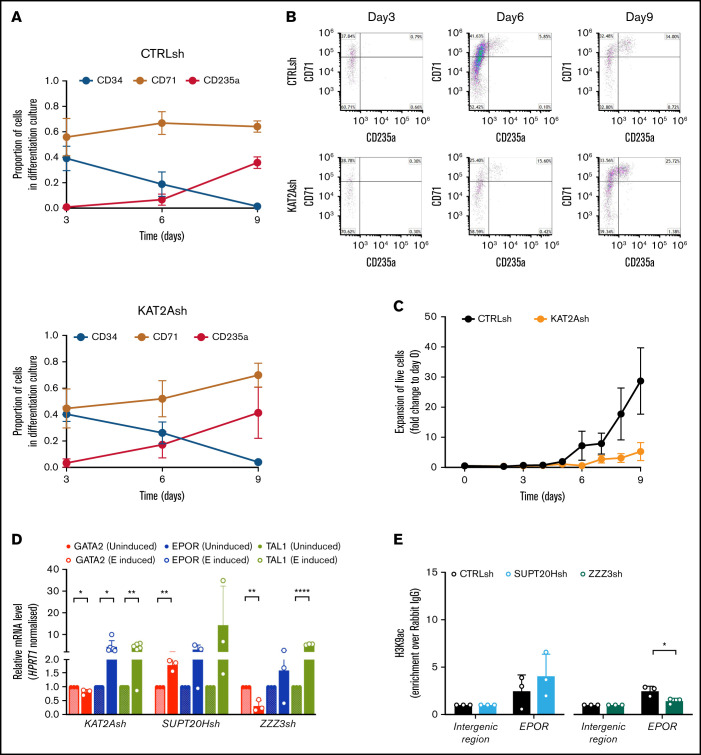
“11 KAT2A exerts its activity in the context of 2 macromolecular complexes, Ada-Two-A-Containing (ATAC) and Spt-Ada-Gcn5-Acetyl-transferase (SAGA) (Figure 1A).”
Ribosome Levels Selectively Regulate Translation and Lineage Commitment in Human Hematopoiesis
Khajuria, R. K., Munschauer, M., Ulirsch, J. C., Fiorini, C., Ludwig, L. S., McFarland, S. K., Abdulhay, N. J., Specht, H., Keshishian, H., Mani, D. R., et al. (2018) · Cell · doi:10.1016/j.cell.2018.02.036 · Cited by 416 · cited 1×
“44 Selective loss of individual ribosomal proteins 45 or of global ribosomal protein regulators such as BMI1 46 have been shown to associate with proliferation and survival of early erythroid committed cells, with minimal changes to terminal differentiation.”
Hierarchically related lineage-restricted fates of multipotent haematopoietic stem cells
Carrelha, J., Meng, Y., Kettyle, L. M., Luis, T. C., Norfo, R., Alcolea, V., Boukarabila, H., Grasso, F., Gambardella, A., Grover, A., et al. (2018) · Nature · doi:10.1038/nature25455 · Cited by 395
Population snapshots predict early haematopoietic and erythroid hierarchies
Tusi, B. K., Wolock, S. L., Weinreb, C., Hwang, Y., Hidalgo, D., Zilionis, R., Waisman, A., Huh, J. R., Klein, A. M., & Socolovsky, M. (2018) · Nature · doi:10.1038/nature25741 · Cited by 384
Loss of Gcn5l2 leads to increased apoptosis and mesodermal defects during mouse development
Xu, W., Edmondson, D. G., Evrard, Y. A., Wakamiya, M., Behringer, R. R., & Roth, S. Y. (2000) · Nature Genetics · doi:10.1038/79973 · Cited by 269
Multiple faces of the SAGA complex
Koutelou, E., Hirsch, C. L., & Dent, S. Y. (2010) · Current Opinion in Cell Biology · doi:10.1016/j.ceb.2010.03.005 · Cited by 261
SAGA Is a General Cofactor for RNA Polymerase II Transcription
Baptista, T., Grünberg, S., Minoungou, N., Koster, M. J. E., Timmers, H. T. M., Hahn, S., Devys, D., & Tora, L. (2017) · Molecular Cell · doi:10.1016/j.molcel.2017.08.016 · Cited by 196
Self-citationATAC is a double histone acetyltransferase complex that stimulates nucleosome sliding
Suganuma, T., Gutiérrez, J. L., Li, B., Florens, L., Swanson, S. K., Washburn, M. P., Abmayr, S. M., & Workman, J. L. (2008) · Nature Structural & Molecular Biology · doi:10.1038/nsmb.1397 · Cited by 194
ATAC-king the complexity of SAGA during evolution
Spedale, G., Timmers, H. T. M., & Pijnappel, W. W. M. P. (2012) · Genes & Development · doi:10.1101/gad.184705.111 · Cited by 184
Helmlinger, D., & Tora, L. (2017) · Trends in Biochemical Sciences · doi:10.1016/j.tibs.2017.09.001 · Cited by 173
Self-citationYEATS2 links histone acetylation to tumorigenesis of non-small cell lung cancer
Mi, W., Guan, H., Lyu, J., Zhao, D., Xi, Y., Jiang, S., Andrews, F. H., Wang, X., Gagea, M., Wen, H., et al. (2017) · Nature Communications · doi:10.1038/s41467-017-01173-4 · Cited by 159 · cited 10×
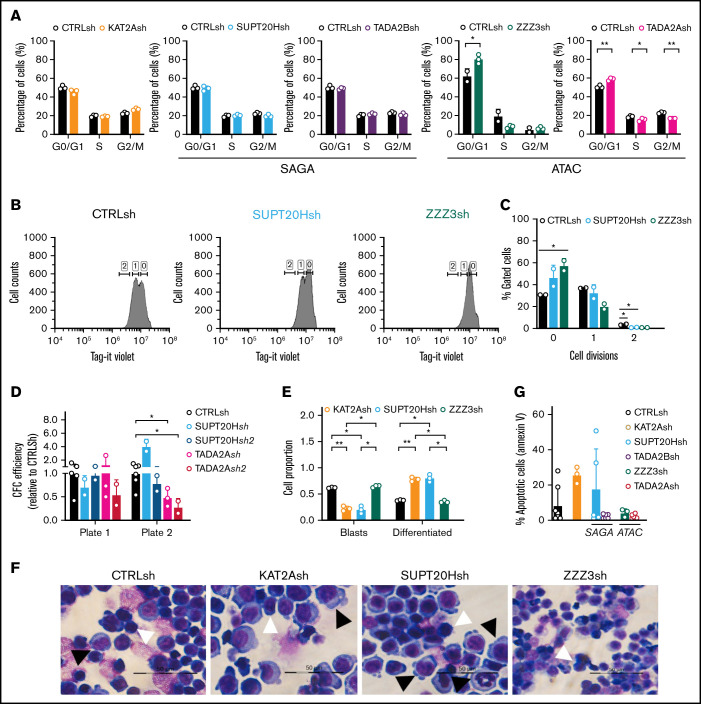
“39,40 In both models, loss of ATAC, but not SAGA elements, restricted cell cycle progression (Figure 7A; supplemental Figure 6A).”
InfluentialSelf-citationErythropoietin guides multipotent hematopoietic progenitor cells toward an erythroid fate
Grover, A., Mancini, E., Moore, S., Mead, A. J., Atkinson, D., Rasmussen, K. D., O’Carroll, D., Jacobsen, S. E. W., & Nerlov, C. (2014) · Journal of Experimental Medicine · doi:10.1084/jem.20131189 · Cited by 155
Structure of the transcription coactivator SAGA
Wang, H., Dienemann, C., Stützer, A., Urlaub, H., Cheung, A. C. M., & Cramer, P. (2020) · Nature · doi:10.1038/s41586-020-1933-5 · Cited by 149
Structure of SAGA and mechanism of TBP deposition on gene promoters
Pápai, G., Frechard, A., Kolesnikova, O., Crucifix, C., Schultz, P., & Shem, A. B. (2020) · Nature · doi:10.1038/s41586-020-1944-2 · Cited by 135
Krebs, A. R., Karmodiya, K., Lindahl-Allen, M., Struhl, K., & Tora, L. (2011) · Molecular Cell · doi:10.1016/j.molcel.2011.08.037 · Cited by 129
Self-citationThe Double-Histone-Acetyltransferase Complex ATAC Is Essential for Mammalian Development
Guelman, S., Kozuka, K., Mao, Y., Pham, V., Solloway, M. J., Wang, J., Wu, J., Lill, J. R., & Zha, J. (2009) · Molecular and Cellular Biology · doi:10.1128/mcb.01599-08 · Cited by 127
USP22 regulates oncogenic signaling pathways to drive lethal cancer progression
Schrecengost, R. S., Dean, J. L., Goodwin, J. F., Schiewer, M. J., Urban, M. W., Stanek, T. J., Sussman, R. T., Hicks, J. L., Birbe, R. C., Draganova-Tacheva, R. A., et al. (2014) · Cancer Research · doi:10.1158/0008-5472.can-13-1954 · Cited by 126 · cited 1×
“25 However, recent studies propose a tumor suppressor function of USP22, 26 including in AML, 27 suggesting dependency on cell context for functional consequences and fate decisions.”
RUNX1 represses the erythroid gene expression program during megakaryocytic differentiation
Kuvardina, O. N., Herglotz, J., Kolodziej, S., Kohrs, N., Herkt, S., Wojcik, B., Oellerich, T., Corso, J., Behrens, K., Kumar, A., et al. (2015) · Blood · doi:10.1182/blood-2014-11-610519 · Cited by 123
Differentiation of K562 leukemia cells along erythroid, macrophage, and megakaryocyte lineages.
Sutherland, J. A., Turner, A. R., Mannoni, P., McGann, L. E., & Turc, J. M. (1986) · PubMed · Cited by 111
Belluschi, S., Calderbank, E. F., Ciaurro, V., Pijuan-Sala, B., Santoro, A., Mende, N., Diamanti, E., Sham, K. Y. C., Wang, X., Lau, W. W. Y., et al. (2018) · Nature Communications · doi:10.1038/s41467-018-06442-4 · Cited by 109
The ATAC acetyl transferase complex controls mitotic progression by targeting non‐histone substrates
Orpinell, M., Fournier, M. L., Riss, A., Nagy, Z., Krebs, A. R., Frontini, M., & Tora, L. (2010) · The EMBO Journal · doi:10.1038/emboj.2010.125 · Cited by 108
Self-citationGlobal gene expression analysis of human erythroid progenitors
Merryweather-Clarke, A. T., Atzberger, A., Soneji, S., Gray, N., Clark, K., Waugh, C., McGowan, S. J., Taylor, S., Nandi, A. K., Wood, W. G., et al. (2011) · Blood · doi:10.1182/blood-2010-07-290825 · Cited by 106
Lam, L. T., Ronchini, C., Norton, J. E., Capobianco, A. J., & Bresnick, E. H. (2000) · Journal of Biological Chemistry · doi:10.1074/jbc.m002866200 · Cited by 99
MLLT3 Regulates Early Human Erythroid and Megakaryocytic Cell Fate
Pina, C., May, G. E., Soneji, S., Hong, D., & Enver, T. (2008) · Cell stem cell · doi:10.1016/j.stem.2008.01.013 · Cited by 97
Self-citationThe Kasumi-1 cell line: a t(8;21)-kit mutant model for acute myeloid leukemia
Larizza, L., Magnani, I., & Beghini, A. (2004) · Leukemia & lymphoma/Leukemia and lymphoma · doi:10.1080/10428190400007565 · Cited by 91
Mi, W., Zhang, Y., Lyu, J., Wang, X., Tong, Q., Peng, D., Xue, Y., Tencer, A. H., Wen, H., Li, W., et al. (2018) · Nature Communications · doi:10.1038/s41467-018-06247-5 · Cited by 90
Melo-Cardenas, J., Xu, Y., Wei, J., Tan, C., Kong, S., Gao, B., Montauti, E., Kirsammer, G., Licht, J. D., Yu, J., et al. (2018) · Blood · doi:10.1182/blood-2017-10-811760 · Cited by 84
Gu, T.-L., Goss, V. L., Reeves, C., Popova, L., Nardone, J., MacNeill, J., Walters, D. K., Wang, Y., Rush, J., Comb, M. J., et al. (2006) · Blood · doi:10.1182/blood-2006-06-026666 · Cited by 76
Miyake, K., Utsugisawa, T., Flygare, J., Kiefer, T., Hamaguchi, I., Richter, J., & Karlsson, S. (2007) · Stem Cells · doi:10.1634/stemcells.2007-0569 · Cited by 73
HSP27 controls GATA-1 protein level during erythroid cell differentiation
de Thonel, A., Vandekerckhove, J., Lanneau, D., Selvakumar, S., Courtois, G., Hazoume, A., Brunet, M., Maurel, S., Hammann, A., Ribeil, J. A., et al. (2010) · Blood · doi:10.1182/blood-2009-09-241778 · Cited by 71
N-Myc and GCN5 Regulate Significantly Overlapping Transcriptional Programs in Neural Stem Cells
Martínez-Cerdeño, V., Lemen, J. M., Chan, V., Wey, A., Lin, W., Dent, S. R., & Knoepfler, P. S. (2012) · PLoS ONE · doi:10.1371/journal.pone.0039456 · Cited by 64
Riss, A., Scheer, E., Joint, M., Trowitzsch, S., Berger, I., & Tora, L. (2015) · Journal of Biological Chemistry · doi:10.1074/jbc.m115.668533 · Cited by 58
Self-citationThe Histone Acetyltransferase Gcn5 Positively Regulates T Cell Activation
Gao, B., Kong, Q., Zhang, Y., Yun, C., Dent, S., Song, J. J., Zhang, D. D., Wang, Y., Li, X., & Fang, D. (2017) · The Journal of Immunology · doi:10.4049/jimmunol.1600312 · Cited by 54
Loss of Kat2a enhances transcriptional noise and depletes acute myeloid leukemia stem-like cells
Domingues, A. F., Kulkarni, R., Giotopoulos, G., Gupta, S., Vinnenberg, L., Arede, L., Foerner, E., Khalili, M., Adao, R. R., Johns, A., et al. (2020) · eLife · doi:10.7554/elife.51754 · Cited by 52 · cited 10×
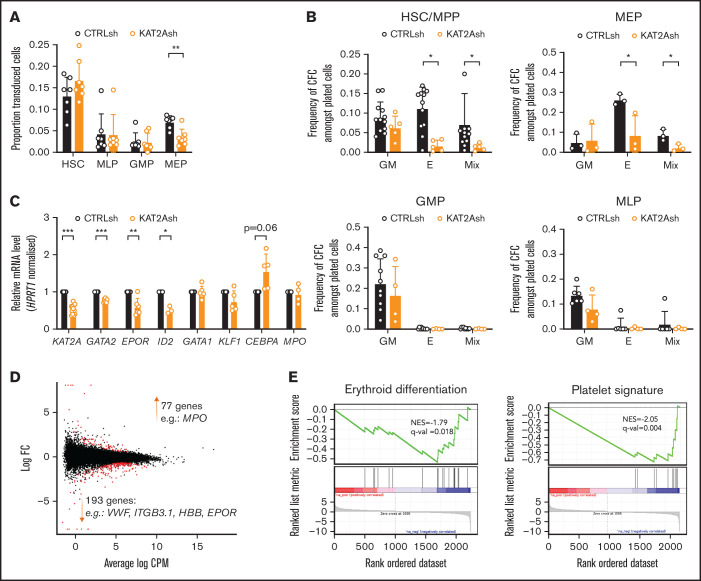
“As we pointed out, detailed analysis of our own conditional Kat2a knockout model 7 suggests a retention of MEP carrying unexcised Kat2a alleles, compatible with a requirement in erythroid speci fi cation.”
InfluentialSelf-citationMoris, N., Edri, S., Seyres, D., Kulkarni, R., Domingues, A. F., Balayo, T., Frontini, M., & Pina, C. (2018) · Stem Cells · doi:10.1002/stem.2919 · Cited by 51
Self-citationKosinsky, R. L., Helms, M., Zerche, M., Wohn, L., Dyas, A., Prokakis, E., Kazerouni, Z. B., Bedi, U., Wegwitz, F., & Johnsen, S. A. (2019) · Cell Death and Disease · doi:10.1038/s41419-019-2141-9 · Cited by 51
Acetylation of C/EBPα inhibits its granulopoietic function
Bararia, D., Kwok, H. S., Welner, R. S., Numata, A., Sárosi, M. B., Yang, H., Wee, S., Tschuri, S., Ray, D., Weigert, O., et al. (2016) · Nature Communications · doi:10.1038/ncomms10968 · Cited by 49
Carré, C., Ciurciu, A., Komonyi, O., Jacquier, C., Fagegaltier, D., Pidoux, J., Tricoire, H., Tora, L., Boros, I., & Antoniewski, C. (2007) · EMBO Reports · doi:10.1038/sj.embor.7401141 · Cited by 48
Self-citationSchuringa, J. J., & Schepers, H. (2009) · Methods in molecular biology · doi:10.1007/978-1-59745-418-6_14 · Cited by 41
The Lysine Acetyltransferase GCN5 Is Required for iNKT Cell Development through EGR2 Acetylation
Wang, Y., Yun, C., Gao, B., Xu, Y., Zhang, Y., Wang, Y., Kong, Q., Zhao, F., Wang, C.-R., Dent, S., et al. (2017) · Cell Reports · doi:10.1016/j.celrep.2017.06.065 · Cited by 39
Bmi1 Promotes Erythroid Development Through Regulating Ribosome Biogenesis
Gao, R., Chen, S., Kobayashi, M., Yu, H., Zhang, Y., Wan, Y., Young-Baird, S. K., Soltis, A. R., Yu, M., Vemula, S., et al. (2015) · Stem Cells · doi:10.1002/stem.1896 · Cited by 39
Magee, J. A., & Signer, R. A. J. (2021) · Stem Cell Reports · doi:10.1016/j.stemcr.2020.11.017 · Cited by 38
Fischer, V., Plassard, D., Ye, T., Reina‐San‐Martin, B., Stierlé, M., Tora, L., & Devys, D. (2021) · Cell Reports · doi:10.1016/j.celrep.2021.109598 · Cited by 33
Self-citationXie, Y., Gao, L., Xu, C., Chu, L., Gao, L., Wu, R., Liu, Y., Liu, T., Sun, X., Ren, R., et al. (2019) · Haematologica · doi:10.3324/haematol.2018.210286 · Cited by 31
van den Berk, P. C. M., Lancini, C., Serresi, M., Sánchez-Bailón, M. P., Hulsman, D., Pritchard, C., Song, J., Schmitt, M. J., Tanger, E., Popp, O., et al. (2020) · Cell Reports · doi:10.1016/j.celrep.2020.108533 · Cited by 30
Arede, L., & Pina, C. (2020) · Experimental Hematology · doi:10.1016/j.exphem.2020.10.003 · Cited by 29
Self-citationArchitecture of Saccharomyces cerevisiae SAGA complex
Liu, G., Zheng, X., Guan, H., Cao, Y., Qu, H., Kang, J., Ren, X., Lei, J., Dong, M., Li, X., et al. (2019) · Cell Discovery · doi:10.1038/s41421-019-0094-x · Cited by 23
Cited by
Malone, C. F., Mabe, N. W., Forman, A. B., Alexe, G., Engel, K. L., Chen, Y.-J. C., Soeung, M., Salhotra, S., Thayakumar, A., Liu, B., et al. (2024) · Science Advances · doi:10.1126/sciadv.adm9449 · Cited by 27
“KAT2A has been shown to have distinct functions when incorporated into SAGA or ATAC during hematopoiesis ( 46 ), and we observe very different dependency profiles for TADA2A (ATAC) and TADA2B (SAGA), suggesting that some functions may be complex specific.”
Kont, A., Mendonça, M. C. P., Cronin, M. F., Cahill, M. R., & O’Driscoll, C. M. (2022) · International Journal of Molecular Sciences · doi:10.3390/ijms23179791 · Cited by 21
“Pre-clinical results showed that KAT2a k ockdown exhibited transcriptio al instability in AML stem cel s rather than hematopoietic stem cells, making this gene a potential target for AML cells and leuka ic stem cells directed therapy [6].”
BackgroundTranscriptional control of leukemogenesis by the chromatin reader SGF29
Barbosa, K., Deshpande, A. J., Perales, M., Xiang, P., Murad, R., Pramod, A. B., Minkina, A., Robertson, N., Schischlik, F., Lei, X., et al. (2023) · Blood · doi:10.1182/blood.2023021234 · Cited by 21
“47,48 Interestingly, our results also show that SGF29 may regulate transcription and chromatin abundance of several leukemia-associated transcription factors in AML cells and sustain leuke-mogenesis driven by diverse AML oncoproteins.”
BackgroundAdnan Awad, S., Dufva, O., Klievink, J., Karjalainen, E., Ianevski, A., Pietarinen, P., Kim, D., Potdar, S., Wolf, M., Lotfi, K., et al. (2024) · Cell Reports Medicine · doi:10.1016/j.xcrm.2024.101521 · Cited by 14
Ragusa, D., Cicirò, Y., Federico, C., Saccone, S., Bruno, F., Saeedi, R., Sisu, C., Pina, C., Sala, A., & Tosi, S. (2022) · Oncogenesis · doi:10.1038/s41389-022-00426-2 · Cited by 15
Self-citation
Metadata
- Authors
- Arede, L., Foerner, E., Wind, S., Kulkarni, R., Domingues, A. F., Giotopoulos, G., Kleinwaechter, S., Mollenhauer-Starkl, M., Davison, H., Chandru, A., Asby, R., Samarista, R., Gupta, S., Forte, D., Curti, A., Scheer, E., Huntly, B. J. P., Tora, L., & Pina, C.
- Affiliations
- University of Cambridge (GB)
- Wellcome/MRC Cambridge Stem Cell Institute (GB)
- Brunel University of London (GB)
- Istituto di Ematologia di Bologna (IT)
- Centre National de la Recherche Scientifique (FR)
- Institut de Génétique et de Biologie Moléculaire et Cellulaire, Illkirch, France;
- Corresponding author
- Pina, Cristina
- ORCID
- Venue
- Blood Advances
- Publisher
- American Society of Hematology
- Published
- 2022-01-07
- Volume
- 6
- Issue
- 1
- Pages
- 165-180
- ISSN
- 2473-9529 (ISSN-L)
- 2473-9537
- PMC
- PMC8753207
- OpenAlex
- W3205707724
- Cited by
- 25
- References
- 59
- Citations by year
- 2026: 9 · 2025: 2 · 2024: 4 · 2023: 4 · 2022: 5
- FWCI
- 2.12
- Type
- journal article
- Language
- en
- Open access
- gold
- doi.org
- Licence
- cc-by-nc-nd
- Locations
- Blood Advances (publishedVersion, cc-by-nc-nd)
- PubMed Central (publishedVersion, cc-by-nc-nd)
- PubMed (publishedVersion)
- HAL (submittedVersion, other-oa)
- HAL (submittedVersion)
- Brunel University Research Archive (BURA) (Brunel University London) (submittedVersion, cc-by-nc-nd)
- Archivio istituzionale della ricerca (Alma Mater Studiorum Università di Bologna) (submittedVersion, other-oa)
- Funders
- Wellcome Trust (ANR-10-LABX-0030-INRT)
- Leuka
- International Seafood Sustainability Foundation
- Cancer Research UK (25508)
- Kay Kendall Leukaemia Fund (KKL888)
- Rosetrees Trust
- Agence Nationale de la Recherche (ANR-10-IDEX-0002, AAPG2019, 1R01GM131626-01, ANR-10-LABX-0030, ANR-10, AAPG2019 PICen)
- Cambridge Trust
- National Institutes of Health (ANR-10-LABX-0030-INRT, AAPG2019 PICen)
- Medical Research Council (MC_PC_17230, MR/R009708/1)
- National Institute of General Medical Sciences (R01GM131626)
- Topics
- Health Sciences › Medicine › Hematology › Acute Myeloid Leukemia Research
- Life Sciences › Biochemistry, Genetics and Molecular Biology › Molecular Biology › Genomics and Chromatin Dynamics
- Health Sciences › Medicine › Hematology › Hematopoietic Stem Cell Transplantation
- Keywords
- GCN5, SAGA complex, histone H3 lysine 9 acetylation, histone acetyltransferase, hematopoiesis, acute myeloid leukemia, leukemia stem cells, hematopoietic stem cells, cell identity, lineage specification, erythroid development, histone modifiers, epigenetic regulation, self-renewal
- MeSH terms
- p300-CBP-Associated Factor, Acetylation, Hematopoiesis, Histones, Humans, Leukemia, Myeloid, Acute, Histone Acetyltransferases
About these checks
Registry, retraction, Cites and statistics results are computed, not judged, with one exception: a printed reference that no index lists is read once by a model before it counts as a citation error. Claims are extracted by a model and kept only when their quote appears verbatim in the text; each cited source is then checked, with a model’s help, for whether it says what the claim relies on. Those verdicts can be wrong — read the claim’s quote and the cited source before relying on one.
Statistics and arithmetic are recomputed, not judged.
Confidence bands are shown only for fields calibrated on our annotated test set. None is calibrated yet, so no band is shown.
What counts as a claim ›How we measure confidence ›How we check this ›
Are you an author, or do you see a problem with this page? Request a review
Data sources
Bibliographic data: Semantic Scholar, OpenAlex, Crossref.
Contains information from the Semantic Scholar Academic Graph Datasets, made available under the ODC Attribution License (ODC-BY 1.0).
Semantic Scholar’s data is described in: Kinney, R., et al. (2023). The Semantic Scholar Open Data Platform. arXiv:2301.10140.
