

Fatal thrombotic microangiopathy case following adeno-associated viral SMN gene therapy
Open accessThe DOI matches its Crossref record; 13 of the 13 references it cites were found in a registry or an index.
Abstract
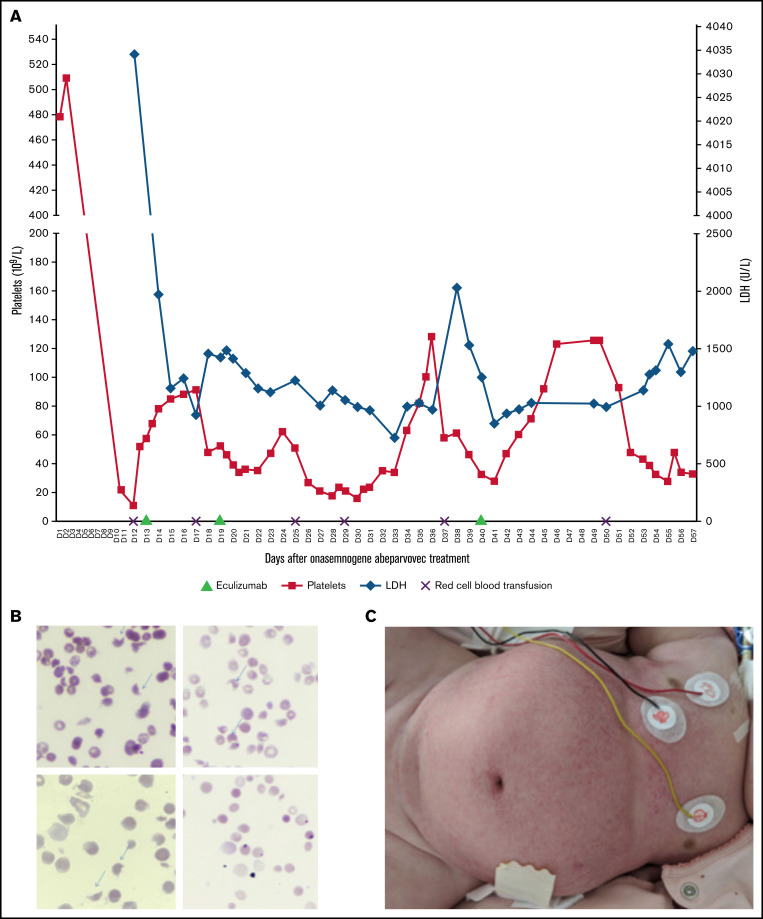
Adeno-associated virus (AAV) gene therapies are highly promising, such as the onasemnogene abeparvovec (Zolgensma) in spinal muscle atrophy (SMA). We report the first case of fatal systemic thrombotic microangiopathy (TMA) following onasemnogene abeparvovec in a 6-month-old child with SMA type 1, carrying a potential genetic predisposition in the complement factor I gene. Other cases of TMA have recently been reported after onasemnogene abeparvovec and after AAV9 minidystrophin therapy in Duchenne muscular dystrophy. The risk-benefit ratio of this therapy must therefore be assessed. Early recognition of TMA and targeted immunotherapy are fundamental to ensure the safety of patients treated with AAV gene therapies.
Overview
The claims and statistics of this paper haven’t been checked yet.
Free: it reads the open-access text and checks the first 5 claims that cite a source we can check. Create a free account to check every claim.
Integrity signals
Registry
Cites
Statistics
Figures
Verification
Claims the paper makes
The claims and statistics of this paper haven’t been checked yet.
Free: it reads the open-access text and checks the first 5 claims that cite a source we can check. Create a free account to check every claim.
Claims other papers make about this one
Each is checked against this paper’s own text: does it say what the citing paper says it does?
The source backs part of the claim, not all of it — or backs it for a different population, condition or comparison.
In the citing paper
“Complement activation in response to systemic AAV administration and related acute toxicities has been reported for numerous clinical and preclinical studies (39, 52–56).”
From Intravitreal AAV vector delivery induces integrin-dependent ocular inflammation, complement activation, and antiviral and DNA damage responses (2026) · cites this paper as [55]
Experimental — accuracy not yet measuredThe source backs part of the claim, not all of it — or backs it for a different population, condition or comparison.
In the citing paper
“In clinical trials for DMD and SMA1, patients who received intravenous AAV doses > 1×10¹⁴ vector genomes (vg)/kg presented with symptoms of complement activation and a thrombotic microangiopathy (TMA) [54–56].”
From Immunogenicity of Recombinant Adeno-Associated Virus (AAV) Vectors for Gene Transfer (2023) · cites this paper as [54]
Experimental — accuracy not yet measuredThe source backs part of the claim, not all of it — or backs it for a different population, condition or comparison.
In the citing paper
“Furthermore, the complement arm of the immune system has been implemented in recent fatalities in high-dose systemic AAV administration in patients.”
From Innate immune sensing of adeno-associated virus vectors (2024) · cites this paper as [13]
Experimental — accuracy not yet measuredThe source backs part of the claim, not all of it — or backs it for a different population, condition or comparison.
In the citing paper
“Complement activation following AAV administration had not been observed in clinical trials until very high doses were used for systemic delivery, which we now know may trigger life-threatening immunotoxicities.12,13,88,[90][91][92]”
From Innate immune sensing of adeno-associated virus vectors (2024) · cites this paper as [13]
Experimental — accuracy not yet measuredThe source backs part of the claim, not all of it — or backs it for a different population, condition or comparison.
In the citing paper
“Vector-related severe adverse events included severe thrombocytopenia, transaminase elevations, edema, acute endothelial injury, cholestatic, and hepatotoxicity, among others, and showed some similarities to the ones observed in clinical studies of DMD, spinal muscular atrophy, and Xlinked myotubular myopathy.12,13,17,97,98”
From Innate immune sensing of adeno-associated virus vectors (2024) · cites this paper as [13]
Experimental — accuracy not yet measured
4 more claims about this paper
Create a free account to see every claim other papers make about this one.
Self-check
Percentages, sums and reported differences re-computed from the paper’s own numbers.
The self-check needs the paper’s full text.
Citations
Cites
Current clinical applications of in vivo gene therapy with AAVs
Mendell, J. R., Al-Zaidy, S. A., Rodino-Klapac, L. R., Goodspeed, K., Gray, S. J., Kay, C. N., Boye, S. L., Boye, S. E., George, L. A., Salabarria, S., et al. (2021) · Molecular Therapy · doi:10.1016/j.ymthe.2020.12.007 · Cited by 743
International, F. H., Loirat, C., Fakhouri, F., Ariceta, G., Besbas, N., Bitzan, M., Bjerre, A., Coppo, R., Emma, F., Johnson, S., et al. (2016) · Pediatric Nephrology · doi:10.1007/s00467-015-3076-8 · Cited by 596
Self-citationD'Amico, A., Mercuri, E., Tiziano, F. D., & Bertini, E. (2011) · Orphanet Journal of Rare Diseases · doi:10.1186/1750-1172-6-71 · Cited by 577
Day, J. W., Finkel, R. S., Chiriboga, C. A., Connolly, A. M., Crawford, T. O., Darras, B. T., Iannaccone, S. T., Kuntz, N. L., Peña, L. D. M., Shieh, P. B., et al. (2021) · The Lancet Neurology · doi:10.1016/s1474-4422(21)00001-6 · Cited by 494 · cited 2×
“Infantile-onset SMA, or SMA type 1, is typically characterized by decreased motor skills before 6 months of age, progressive respiratory failure, and premature death before the age of 2 years, despite supportive care.1 Onasemnogene abeparvovec (Zolgensma, Novartis, Basel, Switzerland), the adeno-associated virus (AAV)…”
BackgroundComplement factor I: a susceptibility gene for atypical haemolytic uraemic syndrome
Fremeaux-Bacchi, V, Dragon-Durey, M.-A., Blouin, J., Vigneau, C., Kuypers, D., Boudailliez, B., Loirat, C., Rondeau, E., & Fridman, W. H. (2004) · Journal of Medical Genetics · doi:10.1136/jmg.2004.019083 · Cited by 339
Self-citationChand, D. H., Zaidman, C., Arya, K., Millner, R., Farrar, M. A., Mackie, F. E., Goedeker, N. L., Dharnidharka, V. R., Dandamudi, R., & Reyna, S. P. (2021) · The Journal of Pediatrics · doi:10.1016/j.jpeds.2020.11.054 · Cited by 210 · cited 3×
“Three TMA cases induced by this therapy were reported after our current report of this patient.(5) Our case shows similarities to the other reported cases: TMA occurred rapidly after treatment (D7-D10) and was predominated by acute renal failure, and further investigations showed an increase in sC5b9.”
BackgroundResultInfluentialThe genetic fingerprint of susceptibility for transplant-associated thrombotic microangiopathy
Jodele, S., Zhang, K., Zou, F., Laskin, B., Dandoy, C. E., Myers, K. C., Lane, A., Meller, J., Medvedovic, M., Chen, J., et al. (2016) · Blood · doi:10.1182/blood-2015-08-663435 · Cited by 190 · cited 1×
“However, our observation suggests that onasemnogene abeparvovec may be the “second hit” in a genetic background that predisposes to the occurrence and the severity of TMA clinical symptoms, as described after hematopoietic stem cell transplant.(13)”
BackgroundKavanagh, D., Yu, Y., Schramm, E. C., Triebwasser, M., Wagner, E. K., Raychaudhuri, S., Daly, M. J., Atkinson, J. P., & Seddon, J. M. (2015) · Human Molecular Genetics · doi:10.1093/hmg/ddv091 · Cited by 124
Clinical Trial and Postmarketing Safety of Onasemnogene Abeparvovec Therapy
Day, J. W., Mendell, J. R., Mercuri, E., Finkel, R. S., Strauss, K. A., Kleyn, A., Tauscher-Wisniewski, S., Tukov, F. F., Reyna, S. P., & Chand, D. H. (2021) · Drug Safety · doi:10.1007/s40264-021-01107-6 · Cited by 119
Soluble C5b-9 as a Biomarker for Complement Activation in Atypical Hemolytic Uremic Syndrome
Bu, F., Meyer, N. C., Zhang, Y., Borsa, N. G., Thomas, C. P., Nester, C., & Smith, R. J. (2015) · American Journal of Kidney Diseases · doi:10.1053/j.ajkd.2015.02.326 · Cited by 60 · cited 1×
“It is also proposed as a biomarker of disease progression in typical HUS or TMA after hematopoietic stem cell transplantation.(16,17) Eculizumab, the recommended treatment for complement-associated TMA, had mixed effects on the laboratory results in our patient: a slight increase in platelet count and a decrease in LD…”
Background
Cited by
Adeno-associated virus as a delivery vector for gene therapy of human diseases
Wang, J.-H., Gessler, D. J., Zhan, W., Gallagher, T. L., & Gao, G. (2024) · Signal Transduction and Targeted Therapy · doi:10.1038/s41392-024-01780-w · Cited by 904
“413 It should be noted that as of Jan 13, 2022, nine cases of TMA were recorded out of over 1400 patients (~0.6”
BackgroundInfluentialLethal immunotoxicity in high-dose systemic AAV therapy
Duan, D. (2023) · Molecular Therapy · doi:10.1016/j.ymthe.2023.10.015 · Cited by 240
AAV-based in vivo gene therapy for neurological disorders
Ling, Q., Herstine, J. A., Bradbury, A., & Gray, S. J. (2023) · Nature Reviews Drug Discovery · doi:10.1038/s41573-023-00766-7 · Cited by 197
Successes and challenges in clinical gene therapy
Kohn, D. B., Chen, Y. Y., & Spencer, M. J. (2023) · Gene Therapy · doi:10.1038/s41434-023-00390-5 · Cited by 184
“Based on reports from P fi zer, Solid Biosciences, and Novartis [111, 112], there is ample evidence that this adverse event likely relies on the presence of anti-AAV antibodies [113].”
ResultDrug delivery systems for CRISPR-based genome editors
Madigan, V., Zhang, F., & Dahlman, J. E. (2023) · Nature Reviews Drug Discovery · doi:10.1038/s41573-023-00762-x · Cited by 172
“Furthermore, complement-driven systemic thrombotic microangiopathy has been observed in patients following administration of Zolgensma and other AAV-based therapeutics, including one recent fatal case 124 .”
BackgroundSalabarria, S. M., Corti, M., Coleman, K. E., Wichman, M. B., Berthy, J. A., D’Souza, P., Tifft, C. J., Herzog, R. W., Elder, M. E., Shoemaker, L. R., et al. (2024) · Journal of Clinical Investigation · doi:10.1172/jci173510 · Cited by 159
“Participants in Group 1A (SMA) and 2A (SMA) received prophylactic oral prednisone (1 mg/kg/d) 1 day prior to AAV gene therapy administration and continued for 4 weeks after infusion as per the drug insert with consecutive tapering per clinician’s discretion over 4 to 8 weeks.”
BackgroundInfluentialImmunogenicity of Recombinant Adeno-Associated Virus (AAV) Vectors for Gene Transfer
Arjomandnejad, M., Dasgupta, I., Flotte, T. R., & Keeler, A. M. (2023) · BioDrugs · doi:10.1007/s40259-023-00585-7 · Cited by 159
“Gene therapy using recombinant adeno-associated viral (AAV) vectors have yielded encouraging results over recent years, in addition to the three US Food and Drug Administration (FDA)-approved AAV gene therapy products, Luxturna, Zolgensma, and HEMGENIX, for treating Leber’s congenital amaurosis, spinal muscular atroph…”
BackgroundInfluentialAdeno-Associated Virus Gene Therapy for Hemophilia
Samelson‐Jones, B. J., & George, L. A. (2022) · Annual Review of Medicine · doi:10.1146/annurev-med-043021-033013 · Cited by 150
Current clinical applications of AAV-mediated gene therapy
Byrne, B. J., Flanigan, K. M., Matesanz, S. E., Finkel, R. S., Waldrop, M. A., D'Ambrosio, E. S., Johnson, N. E., Smith, B. K., Bönnemann, C. G., Carrig, S., et al. (2025) · Molecular Therapy · doi:10.1016/j.ymthe.2025.04.045 · Cited by 166
“19,78,79 Uncommonly, patients have suffered from severe and even fatal super-infection from other viruses when immunosup-pressed with prednisone.”
Gene therapy clinical trials worldwide to 2023—an update
Ginn, S. L., Mandwie, M., Alexander, I. E., Edelstein, M. L., & Abedi, M. R. (2024) · The Journal of Gene Medicine · doi:10.1002/jgm.3721 · Cited by 113
“108 Other toxicities include myocarditis, observed in trials for DMD 109,110 and inflammatory responses noted in a clinical trial for familial amyotrophic lateral sclerosis.”
Hordeaux, J., Lamontagne, R. J., Song, C., Buchlis, G., Dyer, C., Buza, E. L., Ramezani, A., Wielechowski, E., Greig, J. A., Chichester, J. A., et al. (2024) · Molecular Therapy · doi:10.1016/j.ymthe.2024.02.002 · Cited by 81
Angilletta, I., Ferrante, R., Giansante, R., Lombardi, L., Babore, A., Dell’Elice, A., Alessandrelli, E., Notarangelo, S., Ranaudo, M., Palmarini, C., et al. (2023) · International Journal of Molecular Sciences · doi:10.3390/ijms241914873 · Cited by 76
“Following onasemnogene abeparvovec therapy, it is also important to mention the rare occurrence of severe adverse events, like thrombotic microangiopathy and atypical hemolytic uremia syndrome [81,82].”
BackgroundGene therapy for liver diseases — progress and challenges
Zabaleta, N., Unzu, C., Weber, N. D., & González‐Aseguinolaza, G. (2023) · Nature Reviews Gastroenterology & Hepatology · doi:10.1038/s41575-022-00729-0 · Cited by 82
A systematic review of immunosuppressive protocols used in AAV gene therapy for monogenic disorders
Vrellaku, B., Hassan, I. S., Howitt, R., Webster, C. P., Harriss, E., McBlane, F., Betts, C., Schettini, J. L., Lion, M., Mindur, J. E., et al. (2024) · Molecular Therapy · doi:10.1016/j.ymthe.2024.07.016 · Cited by 84
“21,22 25 – 27 A study reported the fi rst fatal TMA case following administration of OA in a 6-month-old child with SMA type 1 25 who was a carrier of a potential genetic predisposition in the complement factor I gene.”
Srivastava, A. (2023) · Molecular Therapy — Nucleic Acids · doi:10.1016/j.omtn.2023.05.014 · Cited by 71
Daci, R., & Flotte, T. R. (2024) · International Journal of Molecular Sciences · doi:10.3390/ijms25021050 · Cited by 81
“Thrombotic microangiopathy (TMA) has been reported in a few cases treated with Zolgensma [73,74].”
BackgroundIn the business of base editors: Evolution from bench to bedside
Porto, E. M., & Komor, A. C. (2023) · PLoS Biology · doi:10.1371/journal.pbio.3002071 · Cited by 57
“Unfortunately, one of the first reported in vivo clinical trials using an AAV resulted in a fatal immune response [63,64].”
BackgroundInnate immune sensing of adeno-associated virus vectors
Cao, D., Byrne, B. J., de Jong, Y. P., Terhorst, C., Duan, D., Herzog, R. W., & Kumar, S. R. P. (2024) · Human Gene Therapy · doi:10.1089/hum.2024.040 · Cited by 50
“12,13,17,97,98 This time point would be early during IgM formation and may therefore not re fl ect classical pathway activation.”
Stettner, G. M., Hasselmann, O., Tscherter, A., Galiart, E., Jacquier, D., & Klein, A. (2023) · BMC Neurology · doi:10.1186/s12883-023-03133-6 · Cited by 52
“However, it is important to mention that adverse events after OA treatment can be severe with even fatal outcome in rare cases due to thrombotic microangiopathy [50] and hepatic failure [44].”
BackgroundDeciphering conundrums of adeno-associated virus liver-directed gene therapy: focus on hemophilia
Pierce, G. F., Fong, S., Long, B. R., & Kaczmarek, R. (2023) · Journal of Thrombosis and Haemostasis · doi:10.1016/j.jtha.2023.12.005 · Cited by 50
The curious case of AAV immunology
Keeler, A. M., Zhan, W., Ram, S., Fitzgerald, K. A., & Gao, G. (2025) · Molecular Therapy · doi:10.1016/j.ymthe.2025.03.037 · Cited by 53
Liver‐directed gene therapy for inherited metabolic diseases
Baruteau, J., Brunetti‐Pierri, N., & Gissen, P. (2024) · Journal of Inherited Metabolic Disease · doi:10.1002/jimd.12709 · Cited by 49
“90 These vector doses are significantly higher than doses required for liver gene transfer needed to achieve therapeutic benefit in inherited metabolic liver disorders.”
BackgroundServais, L., Horton, R. H., Saade, D., Bönnemann, C. G., Muntoni, F., Adjali, O., Beggs, A. H., Bharucha, D., Bönnemann, C. G., Braun, S., et al. (2023) · Neuromuscular Disorders · doi:10.1016/j.nmd.2023.09.008 · Cited by 47
Mendell, J. R., Proud, C. M., Zaidman, C. M., Mason, S., Darton, E., Wang, S., Wandel, C., Murphy, A. P., Mercuri, E. M., Muntoni, F., et al. (2024) · Pediatric Neurology · doi:10.1016/j.pediatrneurol.2024.01.003 · Cited by 48
Xie, Q., Chen, X., Ma, H., Zhu, Y., Ma, Y., Jalinous, L., Cox, G. F., Weaver, F., Yang, J., Kennedy, Z., et al. (2024) · EMBO Molecular Medicine · doi:10.1038/s44321-024-00037-x · Cited by 44
“A fatal case of systemic thrombotic micro-angiopathy was reported after a child, carrying a predisposing risk factor in the complement factor I gene, received onasemnogene abeparvovec (Guillou et al, 2022).”
Complement System Response to Adeno-Associated Virus Vector Gene Therapy
Kropf, E., Markusic, D. M., Majowicz, A., Mingozzi, F., & Kuranda, K. (2024) · Human Gene Therapy · doi:10.1089/hum.2023.194 · Cited by 39
Duchenne Muscular Dystrophy Gene Therapy in 2023: Status, Perspective, and Beyond
Duan, D. (2023) · Human Gene Therapy · doi:10.1089/hum.2023.29242.ddu · Cited by 46
“15,27,28 There is an urgent need for myotropic super AAV variants.”
Understanding and Tackling Immune Responses to Adeno-Associated Viral Vectors
Verdera, H. C., Unzu, C., Valeri, E., Adriouch, S., González‐Aseguinolaza, G., Mingozzi, F., & Kajaste‐Rudnitski, A. (2023) · Human Gene Therapy · doi:10.1089/hum.2023.119 · Cited by 47
“…been reported in clinical studies of gene therapy for diseases, including Fabry disease, spinal muscular atrophy (SMA), Methylmalonic acidemia, 28,31,36 and Duchenne muscular dystrophy (DMD), 32 in which patients had been prescreened for pre-existing anti-AAV antibody titers, whereas no…”
Gurung, S., Timmermand, O. V., Perocheau, D. P. B., Gil-Martínez, A. L., Minnion, M., Touramanidou, L., Fang, S., Messina, M., Khalil, Y., Śpiewak, J., et al. (2024) · Science Translational Medicine · doi:10.1126/scitranslmed.adh1334 · Cited by 50
“There have been recent reports of serious hepatotoxicity following AAV gene delivery in X-linked myotubular myopathy and spinal muscular atrophy (54–57).”
BackgroundErtl, H. C. J. (2023) · Drugs · doi:10.1007/s40265-023-01836-1 · Cited by 43
“equal or exceeding 5 × 10¹³ vg/kg resulted in nine out of 1400 patients in thrombotic microangiopathy (TMA), which due to clot formation within capillaries led to kidney damage [30].”
BackgroundAAV microdystrophin gene replacement therapy for Duchenne muscular dystrophy: progress and prospects
Chwalenia, K., Feng, V.-Y., Hemmer, N., Friedrichsen, H. J., Vorobieva, I., Wood, M. J. A., & Roberts, T. C. (2025) · Gene Therapy · doi:10.1038/s41434-025-00561-6 · Cited by 45
Kachanov, A., Kostyusheva, A. P., Brezgin, S. A., Karandashov, I. V., Ponomareva, N. I., Tikhonov, A., Lukashev, A. N., Pokrovsky, V. S., Zamyatnin, A. A., Parodi, A., et al. (2024) · Medicinal Research Reviews · doi:10.1002/med.22036 · Cited by 49
Liver directed adeno‐associated viral vectors to treat metabolic disease
Chuecos, M. A., & Lagor, W. R. (2023) · Journal of Inherited Metabolic Disease · doi:10.1002/jimd.12637 · Cited by 37
Gene therapy and other novel treatment approaches for Charcot-Marie-Tooth disease
Pisciotta, C., & Pareyson, D. (2023) · Neuromuscular Disorders · doi:10.1016/j.nmd.2023.07.001 · Cited by 35
Gene therapy vector-related myocarditis
Silver, E., Argirò, A., Hong, K. N., & ADLER, E. D. (2023) · International Journal of Cardiology · doi:10.1016/j.ijcard.2023.131617 · Cited by 36
Hepatotoxicity in Adeno-Associated Viral Vector Gene Therapy
Jagadisan, B., & Dhawan, A. (2023) · Current Hepatology Reports · doi:10.1007/s11901-023-00624-5 · Cited by 36
“The complement system is implicated in the causation of thrombotic microangiopathy when rAAV is used in very high doses and has been shown to be important in the development of a humoral response [57, 58].”
Harkins, A. L., Ambegaokar, P. P., & Keeler, A. M. (2024) · Neurotherapeutics · doi:10.1016/j.neurot.2024.e00435 · Cited by 39
“In addition, high titers of IV AAV are generally required to transduce suf-fi cient cells in the CNS and this can cause signi fi cant toxicities associated with the heart and the liver [96,97].”
Laforet, G. A. (2025) · Human Gene Therapy · doi:10.1089/hum.2024.156 · Cited by 37
“That said, given the possible contribution of a variant of unknown signi fi cance in a complement inhibitory factor in the published OA TMA fatality, 19 genetic testing for abnormalities in the complement pathway may be worth considering.”
Immune Responses to Muscle-Directed Adeno-Associated Viral Gene Transfer in Clinical Studies
Kumar, S. R. P., Duan, D., & Herzog, R. W. (2023) · Human Gene Therapy · doi:10.1089/hum.2023.056 · Cited by 28
“34,35 39 Primary and memory antibody responses may contribute to complement activation by AAV–antibody complexes, which is unlikely serotype-specific.”
Strategies to improve safety profile of AAV vectors
Suoranta, T., Laham-Karam, N., & Ylä‐Herttuala, S. (2022) · Frontiers in Molecular Medicine · doi:10.3389/fmmed.2022.1054069 · Cited by 33
Clinical and Translational Landscape of Viral Gene Therapies
Yudaeva, A., Kostyusheva, A. P., Kachanov, A., Brezgin, S. A., Ponomareva, N., Parodi, A., Pokrovsky, V. S., Lukashev, A. N., Chulanov, V., & Kostyushev, D. S. (2024) · Cells · doi:10.3390/cells13221916 · Cited by 34
In vivo applications and toxicities of AAV-based gene therapies in rare diseases
Zhao, Q., Peng, H., Ma, Y., Yuan, H., & Jiang, H. (2025) · Orphanet Journal of Rare Diseases · doi:10.1186/s13023-025-03893-z · Cited by 33
“Of the 1,400 people treated with Zolgensma, nine developed TMA, and one died [85].”
Horton, R. H., Saade, D. N., Markati, T., Harriss, E., Bönnemann, C. G., Muntoni, F., & Servais, L. (2022) · Journal of Neurology Neurosurgery & Psychiatry · doi:10.1136/jnnp-2022-329431 · Cited by 32
Desguerre, I., Barrois, R., Audic, F., Barnérias, C., Chabrol, B., Davion, J., Durigneux, J., Espil‐Taris, C., de la Banda, M. G. G., Guichard, M., et al. (2024) · Orphanet Journal of Rare Diseases · doi:10.1186/s13023-024-03326-3 · Cited by 29
“Among the 29 patients treated with onasemnogene abe-parvovec, one patient presented a generalized TMA on day 7 after GT (previously reported [16]).”
BackgroundInfluentialSelf-citationJodele, S., & Sabulski, A. (2023) · American Journal of Hematology · doi:10.1002/ajh.26872 · Cited by 25
Gardin, A., & Ronzitti, G. (2023) · Archives de Pédiatrie · doi:10.1016/s0929-693x(23)00227-0 · Cited by 26
Porcari, G. S., Collyer, J. W., Adang, L. A., & Rajan, D. S. (2025) · Neurology Genetics · doi:10.1212/nxg.0000000000200229 · Cited by 31
“25,27 In addition to platelet monitoring, patients should be followed closely for hypertension, bruises, seizures, and decreased urine output.”
Barrois, R., Barnérias, C., Deladrière, E., Leloup-Germa, V., Tervil, B., Audic, F., Boulay, C., Cancés, C., Cintas, P., Davion, J., et al. (2023) · Neuromuscular Disorders · doi:10.1016/j.nmd.2023.02.004 · Cited by 24
Self-citationCharcot–Marie–Tooth neuropathies: Current gene therapy advances and the route toward translation
Stavrou, M., Kagiava, A., Sargiannidou, I., Georgiou, E., & Kleopa, K. A. (2023) · Journal of the Peripheral Nervous System · doi:10.1111/jns.12543 · Cited by 27
Musolino, P. L., Rosser, S. J., Brittan, M., Newby, D. E., Berry, C., Riley, P. R., Giacca, M., Hajjar, R. J., & Baker, A. H. (2025) · Cardiovascular Research · doi:10.1093/cvr/cvaf109 · Cited by 26
“18,19 Severe but reversible adverse events (SAEs) have also been observed in cardiac gene therapy trials where systemic injection of AAV9 has been used highlighting key areas for caution on intravenous dosing for risk: benefit considerations for the patient.”
Innate and adaptive AAV-mediated immune responses in a mouse model of Duchenne muscular dystrophy
Emami, M. R., Espinoza, A., Young, C. S., Ma, F., Farahat, P. K., Felgner, P. L., Chamberlain, J. S., Xu, X., Pyle, A. D., Pellegrini, M., et al. (2023) · Molecular Therapy - Methods & Clinical Development · doi:10.1016/j.omtm.2023.06.002 · Cited by 22
“Additionally, two deaths have been reported in pediatric patients with SMA treated with FDA-approved Zolgensma.(5,7) The high-dose systemic administration required for treating patients with neuromuscular diseases makes these patients more susceptible to immune-mediated SAEs that can lead to death even in the presence…”
BackgroundRevolution of AAV in Drug Discovery: From Delivery System to Clinical Application
Yin, L., He, H., Zhang, H., Shang, Y., Fu, C., Wu, S., & Jin, T. (2025) · Journal of Medical Virology · doi:10.1002/jmv.70447 · Cited by 27
“…thrombocytopenia (reduced platelet count), renal dysfunction (elevated serum creatinine, proteinuria, and hematuria), acute kidney injury (elevated creatinine, proteinuria, hematuria), and neurological symptoms (confusion, headaches, seizures, and focal neurological deficits) [264, 265].”
Gene therapies for mucopolysaccharidoses
Rossi, A., & Brunetti‐Pierri, N. (2023) · Journal of Inherited Metabolic Disease · doi:10.1002/jimd.12626 · Cited by 26
“52 Hepatotoxicity has been frequently detected in liver GT clinical trials employing AAV vectors.”
BackgroundByrne, B. J., Butterfield, R. J., Shieh, P. B., Smith, E. C., Licht, C. P. B., Binks, M. H., Casinghino, S. R., Delnomdedieu, M., Ravindra, K. C., McDonnell, T. G., et al. (2025) · Molecular Therapy · doi:10.1016/j.ymthe.2025.06.032 · Cited by 20
Soini, V., Schreiber, G., Wilken, B., & Hell, A. K. (2023) · Children · doi:10.3390/children10060998 · Cited by 25
Borges, B., Varthaliti, A., Schwab, M. E., Clarke, M. T., Pivetti, C. D., Gupta, N. M., Cadwell, C. R., Guibinga, G.-H., Phillips, S., del Rio, T., et al. (2024) · Molecular Therapy — Methods & Clinical Development · doi:10.1016/j.omtm.2024.101263 · Cited by 21
Neutralizing Antibodies: Role in Immune Response and Viral Vector Based Gene Therapy
Tsaregorodtseva, T. S., Gubaidullina, A. A., Kayumova, B. R., Shaimardanova, A. A., Issa, S. S., Solovyeva, V. V., Sufianov, A. A., Суфианова, Г. З., & Rizvanov, A. A. (2025) · International Journal of Molecular Sciences · doi:10.3390/ijms26115224 · Cited by 20
“Out of more than 1400 patients treated with Zolgensma, the FDA has reported nine cases of TMA [117].”
Zanoteli, E., Araújo, A. P. D. Q. C., Becker, M. M., Fortes, C. P. D. D., França, M. C., Costa, M. C. M., Marques, W., Matsui, C., Mendonça, R. D. H., Nardes, F., et al. (2024) · Arquivos de Neuro-Psiquiatria · doi:10.1055/s-0044-1779503 · Cited by 32
Thrombotic Microangiopathy as an Emerging Complication of Viral Vector–Based Gene Therapy
Schwotzer, N., Sissy, C. E., Desguerre, I., Frémeaux‐Bacchi, V., Servais, L., & Fakhouri, F. (2024) · Kidney International Reports · doi:10.1016/j.ekir.2024.04.024 · Cited by 22
Self-citationMaurizi, N., Ammirati, E., Silver, E., Hong, K., Bui, Q. M., Argirò, A., Olivotto, I., & Adler, E. D. (2026) · Molecular Therapy · doi:10.1016/j.ymthe.2026.01.004 · Cited by 20
Ilyinskii, P. O., Roy, C. J., Michaud, A. M., Rizzo, G. L., Capela, T., Leung, S. S., & Kishimoto, T. (2023) · PNAS Nexus · doi:10.1093/pnasnexus/pgad394 · Cited by 22
Opportunities for Microphysiological Systems in Toxicity Testing of New Drug Modalities
Maulana, T. I., Wevers, N. R., Kristoforus, T., Chandler, M. R., Lanz, H. L., Joore, J., Vulto, P., Villenave, R., Kustermann, S., Loskill, P., et al. (2024) · The Annual Review of Pharmacology and Toxicology · doi:10.1146/annurev-pharmtox-061724-080621 · Cited by 24
Xicluna, R., Schwalie, P. C., Bell, E., von Tell, D., Steiner, G., Seeger, E., Heeren, J. J. F., Turksma, A. W., Pouw, R. B., Schwandt, T., et al. (2025) · Molecular Therapy — Methods & Clinical Development · doi:10.1016/j.omtm.2025.101551 · Cited by 16
“24,30,33,34 Prior research has indicated that rAAV vectors can activate the complement system, particularly in the presence of IgG.”
Treatment Options in Spinal Muscular Atrophy: A Pragmatic Approach for Clinicians
Ramdas, S., Oskoui, M., & Servais, L. (2024) · Drugs · doi:10.1007/s40265-024-02051-2 · Cited by 18
“Fatal outcomes have been reported in subjects treated with onasemnogene abeparvo-vec due to acute liver failure and to thrombotic microangi-opathy [42].”
Byrne, B. J., Elder, M. E., Leon‐Astudillo, C., & Corti, M. (2022) · Molecular Therapy · doi:10.1016/j.ymthe.2022.11.007 · Cited by 15
Duan, D., & Herzog, R. W. (2026) · Molecular Therapy · doi:10.1016/j.ymthe.2025.12.067 · Cited by 25
Engineering adeno-associated viral vectors for CRISPR/Cas based in vivo therapeutic genome editing
Moyo, B., Brown, L. B. C., Khondaker, I., & Bao, G. (2025) · Biomaterials · doi:10.1016/j.biomaterials.2025.123314 · Cited by 13
In vivo delivery systems for CRISPR genome editing: Viral and non-viral carriers
Lee, Y., Kim, B., Lee, D., Cheon, S. Y., Lim, S. G., Kim, Y., & Koo, H. (2025) · Applied Physics Reviews · doi:10.1063/5.0228874 · Cited by 13
Current trends in gene therapy to treat inherited disorders of the brain
Matuszek, Ż., Brown, B. L., Yrigollen, C. M., Keiser, M. S., & Davidson, B. L. (2025) · Molecular Therapy · doi:10.1016/j.ymthe.2025.03.057 · Cited by 14
Wolff, J. M., Capocci, N., Atas, E., Bharucha-Goebel, D. X., Brandsema, J. F., Butterfield, R. J., Chadwick, C. B., Corti, M., Crawford, T. O., Cripe, L. H., et al. (2025) · Neuromuscular Disorders · doi:10.1016/j.nmd.2025.106208 · Cited by 14
Circumventing B Cell Responses to Allow for Redosing of Adeno-Associated Virus Vectors
Ertl, H. C. J. (2024) · Human Gene Therapy · doi:10.1089/hum.2023.162 · Cited by 10
Ables, C., Jaramillo, C., Wood, E. L., Stern, S. M., Alashari, M., Book, L. S., & Butterfield, R. J. (2024) · Molecular Therapy — Methods & Clinical Development · doi:10.1016/j.omtm.2024.101296 · Cited by 11
Mendonça, R. D. H., Ortega, A., Matsui, C., van der Linden, V., Kerstenetzky, M., Grossklauss, L. F., Silveira, E. L., Polido, G. J., & Zanoteli, E. (2024) · Gene Therapy · doi:10.1038/s41434-024-00456-y · Cited by 13
“More recently, the presence of variants of uncertain signi fi cance in the Complement Factor I (CFI) gene was reported in the literature as being associated with an increased risk of developing TMA [40].”
Benemei, S., Gatto, F., Marcucci, R., & Gresele, P. (2024) · Thrombosis and Haemostasis · doi:10.1055/a-2413-4345 · Cited by 11
“37 In the fi eld of gene therapy, there is an urgent and widely recognized need for biomarkers to identify patients at high risk of TMA complications before initiating AAV-based gene therapy, and to ensure the prompt recognition and diagnosis of TMA following therapy delivery.”
InfluentialJarvi, N. L., Hofman, K., Venkatesh, A., Gorecki, E., & Balu‐Iyer, S. V. (2024) · Journal of Pharmaceutical Sciences · doi:10.1016/j.xphs.2024.09.006 · Cited by 10
Zhang, W., Yin, Y., Yang, D., Liu, M., Ye, C., Yan, R., & Li, R. (2025) · Frontiers in Pharmacology · doi:10.3389/fphar.2024.1475884 · Cited by 14
Iroanya, G. I., Subramanyam, P. N., Wells, K. D., & Green, J. A. (2025) · Human Gene Therapy · doi:10.1177/10430342251378524 · Cited by 11
“42,44 A recent study by Salabarria et al ., 45 however, provided compelling clinical evidence that complement activation following systemic AAV9 administration is predominantly antibody-driven.”
Jodele, S., Mizuno, K., Sabulski, A., & Vinks, A. A. T. M. M. (2023) · Clinical Pharmacology & Therapeutics · doi:10.1002/cpt.2966 · Cited by 10
“Based on the reported PK model with these PK parameter estimates, the eculizumab concentrationtime profiles can be simulated for these cases receiving the FDAlabeled initial mg dose amount.(2) The simulated PK profiles will give the initial optimal dose amount options and the optimal timing of the subsequent dose to r…”
BackgroundMethodmRNA therapy restores ureagenesis and corrects glutathione metabolism in argininosuccinic aciduriaPreprint
Gurung, S., Timmermand, O. V., Perocheau, D. P. B., Gil-Martínez, A. L., Minnion, M., Touramanidou, L., Fang, S., Messina, M., Khalil, Y., Barber, A. R., et al. (2022) · bioRxiv (Cold Spring Harbor Laboratory) · doi:10.1101/2022.10.19.512931 · Cited by 10
“There have been recent reports of serious hepatotoxicity following AAV gene delivery, in XLMTM & SMN (54-57).”
BackgroundClinical perspectives: Treating spinal muscular atrophy
McPheron, M. A., & Felker, M. V. (2024) · Molecular Therapy · doi:10.1016/j.ymthe.2024.06.020 · Cited by 12
The future of gene therapy: Safer vectors, sharper focus
Chamberlain, J. S., Davidson, B. L., George, L. A., Byrne, B. J., & Barrett, D. (2025) · Molecular Therapy · doi:10.1016/j.ymthe.2025.08.029 · Cited by 9
Liquid foam improves potency and safety of gene therapy vectors
Fitzgerald, K., Stephan, S. B., Ma, N., Wu, Q. V., & Stephan, M. T. (2024) · Nature Communications · doi:10.1038/s41467-024-48753-9 · Cited by 8
“Gene therapy can pose signi fi cant risks, including potential oncogenesis and immune system-mediated toxicity against the vector, which can be fatal 29,30 .”
Cao, M., Katial, R., Liu, Y., Lu, X., Gu, Q., Chen, C., Liu, K. A., Zhu, Z., Marshall, M. R., Yu, Y., et al. (2025) · Gene Therapy · doi:10.1038/s41434-025-00512-1 · Cited by 11
Venkataraman, L., Jeanty, C. J., Kaniganti, T., Kennedy, B. J., Sullivan, P., Goldstein, D. S., & Kaler, S. G. (2025) · Science Advances · doi:10.1126/sciadv.adw5612 · Cited by 10
“High-dose AAV itself has been associated with fatal renal toxicity ( 29 , 30 ), and the timing of mo-br mice death shortly after the initial CuHis doses may be coincidental.”
Cheng, M. L., de la Cruz, D., Crain, A. V., Espinoza, P., Ng, C., Elmore, Z. C., Asokan, A., & Maguire, C. A. (2025) · Molecular Therapy — Methods & Clinical Development · doi:10.1016/j.omtm.2025.101407 · Cited by 11
“Importantly, empty capsids migrated primarily to fractions 7 and 8 area, which allowed us to assess EV-AAV function without confounding effects from empty capsids.”
Jiang, F., Zhang, C., Liu, W., Liu, F., Huang, H., Tan, Y. F., & Qin, B. (2023) · Frontiers in Cellular and Infection Microbiology · doi:10.3389/fcimb.2023.1301915 · Cited by 9
Araujo, A. E., Bentler, M., Garmendia, X. P., Kaleem, A., Fabian, C., Morgan, M. A., Hacker, U. T., & Büning, H. (2024) · Human Gene Therapy · doi:10.1089/hum.2024.114 · Cited by 7
“36 – 38 The involvement of complement activation to the death of a young patient with Duchenne muscular dystrophy who received a high dose of AAV9 vectors to activate endogenous dystrophin expression by gene editing has remained unclear.”
Pant, D. C., & Verma, S. (2025) · Gene Therapy · doi:10.1038/s41434-025-00513-0 · Cited by 9
Wie sicher ist die Gentherapie? Zweiter Todesfall nach Therapie der Duchenne-Muskeldystrophie
Horn, S., & Fehse, B. (2024) · Die Innere Medizin · doi:10.1007/s00108-024-01711-5 · Cited by 13
Stem cell and gene therapies for leukodystrophies
Lin, W., Zhang, M., Zheng, S., & Lian, Q. (2025) · Molecular Therapy — Methods & Clinical Development · doi:10.1016/j.omtm.2025.101527 · Cited by 8
“Notably, the SMA trial (ClinicalTrials.gov: NCT03381729) revealed dorsal root ganglion (DRG) pathology with neuronal loss following systemic high-dose administration, 200 potentially linked to complement activation pathways requiring mechanistic clarification.”
Tsaregorodtseva, T. S., Radyukhina, M. A., Ayupova, A. I., Solovyeva, V. V., Sufianov, A. A., Суфианова, Г. З., & Rizvanov, A. A. (2026) · International Journal of Molecular Sciences · doi:10.3390/ijms27114818 · Cited by 5
“As the clinical application of AAV has expanded, reports of fatal outcomes have emerged, including cases of TMA, hepatotoxicity, and severe immune-mediated reactions, raising serious safety concerns regarding the method [102,119].”
Massaro, G., Geard, A. F., Nelvagal, H. R., Gore, K., Clemo, N. K., Waddington, S. N., & Rahim, A. A. (2024) · Human Molecular Genetics · doi:10.1093/hmg/ddae081 · Cited by 8
“In the light of recent clinical data, such as the reports describing adverse events of thrombotic microangiopathy in patients treated with AAV9 gene therapies for Duchenne muscular dystrophy [34] and spinal muscular atrophy [35], careful consideration must be given to dosing of viral vectors.”
Development of Inorganic and Hybrid Nanosystems for Delivery of CRISPR-Based Gene Editors
Spataru, I. A., Mahoro, F., & Badea, I. (2025) · Molecular Pharmaceutics · doi:10.1021/acs.molpharmaceut.5c00251 · Cited by 7
Abdelhamid, L., & Mazor, R. (2025) · The AAPS Journal · doi:10.1208/s12248-025-01127-5 · Cited by 7
“However, clinical and pre-clinical data from the past 20 years have shown that AAV triggers diverse immune responses (27) and induces inflammation in tissues such as the eye (28), the brain (29) and the liver, resulting in serious adverse events (SAEs) after high systemic doses (30, 31).”
Levart, T. K., Kar, N. O., Pegan, C. M., Vrščaj, E., Gergeli, A. T., Loboda, T., & Osredkar, D. (2025) · Case Reports in Nephrology and Dialysis · doi:10.1159/000546114 · Cited by 6
“Based on a detailed analysis of this case, one could conclude that the patient had died because of new-onset sepsis with multiorgan failure and severe dysautonomia, which compromised hemo fi ltration 1 month after TMA [4, 11].”
InfluentialVaccination proposal for patients on onasemnogene abeparvovec therapy
Dobner, S., Kulcsár, A., Liptai, Z., Vojnisek, Z., Constantin, T., & Szabó, L. (2024) · European Journal of Paediatric Neurology · doi:10.1016/j.ejpn.2024.02.010 · Cited by 4
Safety of in vivo gene therapy in children: mechanisms and management of liver injury
Jeyaraj, R., Brown, L. K., Jagadisan, B., Muntoni, F., Baruteau, J., Gupte, G. L., Breuer, J., Gissen, P., Oo, Y. H., & Dhawan, A. (2026) · The Lancet Child & Adolescent Health · doi:10.1016/s2352-4642(25)00380-3 · Cited by 5
The evolving landscape of NF gene therapy: Hurdles and opportunities
O’Donohue, A. K., Ginn, S. L., Burgio, G., Berman, Y. D., Dabscheck, G., & Schindeler, A. (2025) · Molecular Therapy — Nucleic Acids · doi:10.1016/j.omtn.2025.102475 · Cited by 8
“88 Notably, biodistribution analysis of tissues from SMA patients demonstrates that, after systemic delivery of Zolgensma, vector genomes are widely distributed throughout the body, with the liver having be-tween 300-to 1,000-fold more copies than neural tissue, the desired target.”
Gene-based therapies for neuromuscular disorders
Zanoteli, E., França, M. C., & Marques, W. (2024) · Arquivos de Neuro-Psiquiatria · doi:10.1055/s-0043-1777755 · Cited by 9
“Fatalcasesofthromboticmicroangiopathy and acute liver failure have been reported, 60,61 as well as potentially fatal conditions such as hemophagocytic syndrome, 62 and necrotizing enterocolitis.”
BackgroundTherapeutic tools for inherited neuropathies
Péréon, Y. (2022) · Revue Neurologique · doi:10.1016/j.neurol.2022.12.001 · Cited by 4
Self-citation
Metadata
- Authors
- Guillou, J., de Pellegars, A., Porcheret, F., Frémeaux-Bacchi, V., Allain-Launay, E., Debord, C., Denis, M., Péréon, Y., Barnérias, C., Desguerre, I., Roussey, G., & Mercier, S.
- Affiliations
- Centre Hospitalier Universitaire de Nantes (FR)
- 2CHU Angers, Fédération de Pédiatrie, Angers, France;
- 3Assistance Publique-Hôpitaux de Paris, Hôpital Européen Georges Pompidou, Service d'Immunologie, Paris, France;
- 1Centre Hospitalier Universitaire (CHU) Nantes, Nantes, France;
- Centre National de la Recherche Scientifique (FR)
- Hôpital Necker-Enfants Malades (FR)
- Corresponding author
- Mercier, Sandra
- ORCID
- Venue
- Blood Advances
- Publisher
- American Society of Hematology
- Published
- 2022-07-22
- Volume
- 6
- Issue
- 14
- Pages
- 4266-4270
- ISSN
- 2473-9529 (ISSN-L)
- 2473-9537
- PMC
- PMC9327533
- OpenAlex
- W4280574529
- Semantic Scholar
- 85d95f3a4c46e8899c3cbf7fda24dbca2dc1a1cb
- Cited by
- 166
- References
- 13
- Citations by year
- 2026: 37 · 2025: 41 · 2024: 38 · 2023: 42 · 2022: 8
- FWCI
- 12.32
- Type
- journal article
- Language
- en
- Open access
- gold
- doi.org
- Licence
- cc-by-nc-nd
- Locations
- Blood Advances (publishedVersion, cc-by-nc-nd)
- PubMed Central (publishedVersion, cc-by-nc-nd)
- PubMed (publishedVersion)
- HAL (submittedVersion)
- Topics
- Life Sciences › Immunology and Microbiology › Immunology › Complement system in diseases
- Life Sciences › Biochemistry, Genetics and Molecular Biology › Genetics › Virus-based gene therapy research
- Health Sciences › Medicine › Genetics (clinical) › Neurogenetic and Muscular Disorders Research
- Keywords
- thrombotic microangiopathy, onasemnogene abeparvovec, adeno-associated virus gene therapy, spinal muscular atrophy type 1, complement factor I, Duchenne muscular dystrophy, pediatric patient safety, targeted immunotherapy
- MeSH terms
- Dependovirus, Humans, Immunotherapy, Infant, Muscular Atrophy, Spinal, Genetic Therapy, Fatal Outcome, Thrombotic Microangiopathies
About these checks
Registry, retraction, Cites and statistics results are computed, not judged, with one exception: a printed reference that no index lists is read once by a model before it counts as a citation error. Claims are extracted by a model and kept only when their quote appears verbatim in the text; each cited source is then checked, with a model’s help, for whether it says what the claim relies on. Those verdicts can be wrong — read the claim’s quote and the cited source before relying on one.
Statistics and arithmetic are recomputed, not judged.
Confidence bands are shown only for fields calibrated on our annotated test set. None is calibrated yet, so no band is shown.
What counts as a claim ›How we measure confidence ›How we check this ›
Are you an author, or do you see a problem with this page? Request a review
Data sources
Bibliographic data: Semantic Scholar, OpenAlex, Crossref.
Contains information from the Semantic Scholar Academic Graph Datasets, made available under the ODC Attribution License (ODC-BY 1.0).
Semantic Scholar’s data is described in: Kinney, R., et al. (2023). The Semantic Scholar Open Data Platform. arXiv:2301.10140.
