

Fatal thrombotic microangiopathy case following adeno-associated viral SMN gene therapy
Open accessThe DOI matches its Crossref record; 13 of the 13 references it cites were found in a registry or an index.
Abstract
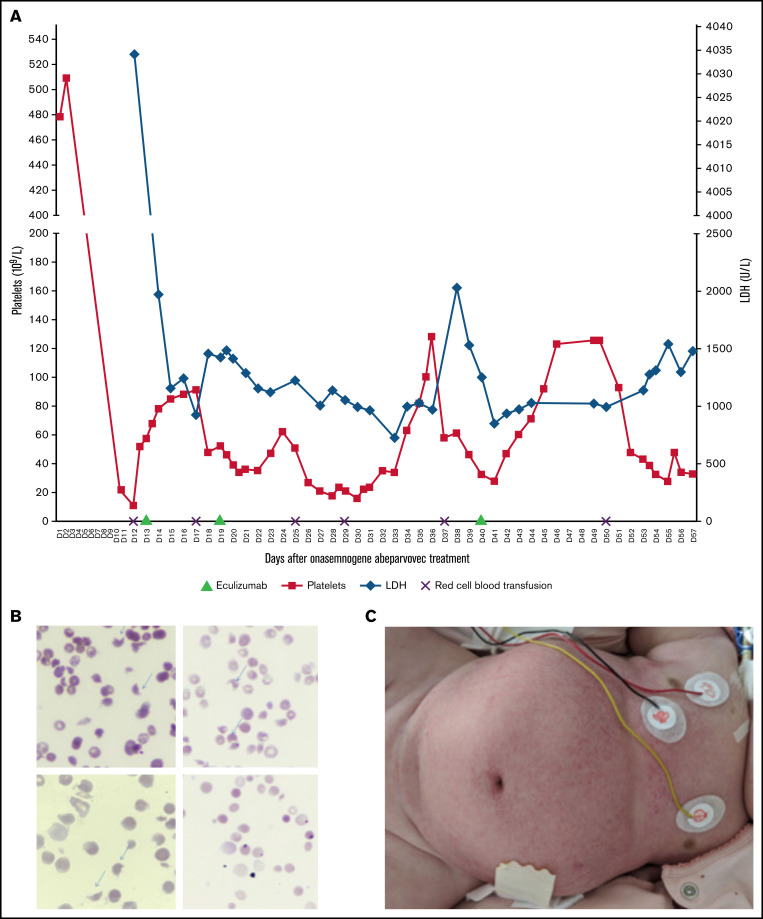
Adeno-associated virus (AAV) gene therapies are highly promising, such as the onasemnogene abeparvovec (Zolgensma) in spinal muscle atrophy (SMA). We report the first case of fatal systemic thrombotic microangiopathy (TMA) following onasemnogene abeparvovec in a 6-month-old child with SMA type 1, carrying a potential genetic predisposition in the complement factor I gene. Other cases of TMA have recently been reported after onasemnogene abeparvovec and after AAV9 minidystrophin therapy in Duchenne muscular dystrophy. The risk-benefit ratio of this therapy must therefore be assessed. Early recognition of TMA and targeted immunotherapy are fundamental to ensure the safety of patients treated with AAV gene therapies.
Overview
The claims and statistics of this paper haven’t been checked yet.
Free: it reads the open-access text and checks the first 5 claims that cite a source we can check. Create a free account to check every claim.
Integrity signals
Registry
Cites
Statistics
Figures
Verification
Claims the paper makes
The claims and statistics of this paper haven’t been checked yet.
Free: it reads the open-access text and checks the first 5 claims that cite a source we can check. Create a free account to check every claim.
Claims other papers make about this one
Each is checked against this paper’s own text: does it say what the citing paper says it does?
The source backs part of the claim, not all of it — or backs it for a different population, condition or comparison.
In the citing paper
“Complement activation in response to systemic AAV administration and related acute toxicities has been reported for numerous clinical and preclinical studies (39, 52–56).”
From Intravitreal AAV vector delivery induces integrin-dependent ocular inflammation, complement activation, and antiviral and DNA damage responses (2026) · cites this paper as [55]
Experimental — accuracy not yet measuredThe source backs part of the claim, not all of it — or backs it for a different population, condition or comparison.
In the citing paper
“In clinical trials for DMD and SMA1, patients who received intravenous AAV doses > 1×10¹⁴ vector genomes (vg)/kg presented with symptoms of complement activation and a thrombotic microangiopathy (TMA) [54–56].”
From Immunogenicity of Recombinant Adeno-Associated Virus (AAV) Vectors for Gene Transfer (2023) · cites this paper as [54]
Experimental — accuracy not yet measuredThe source backs part of the claim, not all of it — or backs it for a different population, condition or comparison.
In the citing paper
“Furthermore, the complement arm of the immune system has been implemented in recent fatalities in high-dose systemic AAV administration in patients.”
From Innate immune sensing of adeno-associated virus vectors (2024) · cites this paper as [13]
Experimental — accuracy not yet measuredThe source backs part of the claim, not all of it — or backs it for a different population, condition or comparison.
In the citing paper
“Complement activation following AAV administration had not been observed in clinical trials until very high doses were used for systemic delivery, which we now know may trigger life-threatening immunotoxicities.12,13,88,[90][91][92]”
From Innate immune sensing of adeno-associated virus vectors (2024) · cites this paper as [13]
Experimental — accuracy not yet measuredThe source backs part of the claim, not all of it — or backs it for a different population, condition or comparison.
In the citing paper
“Vector-related severe adverse events included severe thrombocytopenia, transaminase elevations, edema, acute endothelial injury, cholestatic, and hepatotoxicity, among others, and showed some similarities to the ones observed in clinical studies of DMD, spinal muscular atrophy, and Xlinked myotubular myopathy.12,13,17,97,98”
From Innate immune sensing of adeno-associated virus vectors (2024) · cites this paper as [13]
Experimental — accuracy not yet measured
4 more claims about this paper
Create a free account to see every claim other papers make about this one.
Self-check
Percentages, sums and reported differences re-computed from the paper’s own numbers.
The self-check needs the paper’s full text.
Citations
Cites
Current clinical applications of in vivo gene therapy with AAVs
Mendell, J. R., Al-Zaidy, S. A., Rodino-Klapac, L. R., Goodspeed, K., Gray, S. J., Kay, C. N., Boye, S. L., Boye, S. E., George, L. A., Salabarria, S., et al. (2021) · Molecular Therapy · doi:10.1016/j.ymthe.2020.12.007 · Cited by 743
International, F. H., Loirat, C., Fakhouri, F., Ariceta, G., Besbas, N., Bitzan, M., Bjerre, A., Coppo, R., Emma, F., Johnson, S., et al. (2016) · Pediatric Nephrology · doi:10.1007/s00467-015-3076-8 · Cited by 596
Self-citationD'Amico, A., Mercuri, E., Tiziano, F. D., & Bertini, E. (2011) · Orphanet Journal of Rare Diseases · doi:10.1186/1750-1172-6-71 · Cited by 577
Day, J. W., Finkel, R. S., Chiriboga, C. A., Connolly, A. M., Crawford, T. O., Darras, B. T., Iannaccone, S. T., Kuntz, N. L., Peña, L. D. M., Shieh, P. B., et al. (2021) · The Lancet Neurology · doi:10.1016/s1474-4422(21)00001-6 · Cited by 494 · cited 2×
“Infantile-onset SMA, or SMA type 1, is typically characterized by decreased motor skills before 6 months of age, progressive respiratory failure, and premature death before the age of 2 years, despite supportive care.1 Onasemnogene abeparvovec (Zolgensma, Novartis, Basel, Switzerland), the adeno-associated virus (AAV)…”
BackgroundComplement factor I: a susceptibility gene for atypical haemolytic uraemic syndrome
Fremeaux-Bacchi, V, Dragon-Durey, M.-A., Blouin, J., Vigneau, C., Kuypers, D., Boudailliez, B., Loirat, C., Rondeau, E., & Fridman, W. H. (2004) · Journal of Medical Genetics · doi:10.1136/jmg.2004.019083 · Cited by 339
Self-citationChand, D. H., Zaidman, C., Arya, K., Millner, R., Farrar, M. A., Mackie, F. E., Goedeker, N. L., Dharnidharka, V. R., Dandamudi, R., & Reyna, S. P. (2021) · The Journal of Pediatrics · doi:10.1016/j.jpeds.2020.11.054 · Cited by 210 · cited 3×
“Three TMA cases induced by this therapy were reported after our current report of this patient.(5) Our case shows similarities to the other reported cases: TMA occurred rapidly after treatment (D7-D10) and was predominated by acute renal failure, and further investigations showed an increase in sC5b9.”
BackgroundResultInfluentialThe genetic fingerprint of susceptibility for transplant-associated thrombotic microangiopathy
Jodele, S., Zhang, K., Zou, F., Laskin, B., Dandoy, C. E., Myers, K. C., Lane, A., Meller, J., Medvedovic, M., Chen, J., et al. (2016) · Blood · doi:10.1182/blood-2015-08-663435 · Cited by 190 · cited 1×
“However, our observation suggests that onasemnogene abeparvovec may be the “second hit” in a genetic background that predisposes to the occurrence and the severity of TMA clinical symptoms, as described after hematopoietic stem cell transplant.(13)”
BackgroundKavanagh, D., Yu, Y., Schramm, E. C., Triebwasser, M., Wagner, E. K., Raychaudhuri, S., Daly, M. J., Atkinson, J. P., & Seddon, J. M. (2015) · Human Molecular Genetics · doi:10.1093/hmg/ddv091 · Cited by 124
Clinical Trial and Postmarketing Safety of Onasemnogene Abeparvovec Therapy
Day, J. W., Mendell, J. R., Mercuri, E., Finkel, R. S., Strauss, K. A., Kleyn, A., Tauscher-Wisniewski, S., Tukov, F. F., Reyna, S. P., & Chand, D. H. (2021) · Drug Safety · doi:10.1007/s40264-021-01107-6 · Cited by 119
Soluble C5b-9 as a Biomarker for Complement Activation in Atypical Hemolytic Uremic Syndrome
Bu, F., Meyer, N. C., Zhang, Y., Borsa, N. G., Thomas, C. P., Nester, C., & Smith, R. J. (2015) · American Journal of Kidney Diseases · doi:10.1053/j.ajkd.2015.02.326 · Cited by 60 · cited 1×
“It is also proposed as a biomarker of disease progression in typical HUS or TMA after hematopoietic stem cell transplantation.(16,17) Eculizumab, the recommended treatment for complement-associated TMA, had mixed effects on the laboratory results in our patient: a slight increase in platelet count and a decrease in LD…”
Background
Cited by
Items 101–166 of 166
AAV Kills Dividing Cells by Depleting PARP1 and Other DNA Damage Response ProteinsPreprint
Friese, S., Zai, J., Luzbetak, G., Khanna, N., Gesperger, J., Liu, C.-H., Roos, W. P., Al‐Rahahleh, R. Q., Willardson, M., Yang, F., et al. (2025) · bioRxiv (Cold Spring Harbor Laboratory) · doi:10.1101/2025.10.14.682484 · Cited by 4
Proud, C. M., Kichula, E. A., Matesanz, S. E., Kumar, A., Saito, K., Laverty, C. G., Farrar, M. A., Bharucha-Goebel, D. X., Haberlová, J., Mundada, V., et al. (2025) · Journal of Neuromuscular Diseases · doi:10.1177/22143602251391258 · Cited by 6
Yan, Y., You, Y., Ma, S., Yi, H. J., Chen, G., Ni, J., Chen, C., Ke, W., Li, L., Bai, R., et al. (2025) · Journal of Extracellular Vesicles · doi:10.1002/jev2.70186 · Cited by 4
AAV9 Gene Therapy in Type II GM1 Gangliosidosis — A Phase 1–2 Trial
Lewis, C. J., D’Souza, P., Johnston, J. M., Acosta, M. T., Farmer, C., Baker, E. H., Crowell, A., Algarin, Y. M., Ashraf, S., Joseph, L. A., et al. (2026) · New England Journal of Medicine · doi:10.1056/nejmoa2510935 · Cited by 10
Bedoyan, J. K., Morgan, T., Sun, A., Li, H., Gruskin, D. J., Payton, M., Chereau, F., Swenson, E. S., Lin, Q., Kay, M. A., et al. (2026) · Gene Therapy · doi:10.1038/s41434-026-00609-1 · Cited by 4
X-linked myotubular myopathy: an untreated treatable disease
Martín, C., & Servais, L. (2025) · Expert Opinion on Biological Therapy · doi:10.1080/14712598.2025.2473430 · Cited by 3
Leon‐Astudillo, C., Byrne, B. J., & Salloum, R. G. (2022) · Frontiers in Neurology · doi:10.3389/fneur.2022.1064194 · Cited by 5
Accessorizing viral vectors with extracellular vesicles for enhanced performance
Maguire, C. A. (2023) · Molecular Therapy · doi:10.1016/j.ymthe.2023.03.031 · Cited by 4
AAV Immunotoxicity: Implications in Anti-HBV Gene Therapy
Jacobs, R., Dogbey, D. M., Mnyandu, N., Neves, K., Barth, S., Arbuthnot, P. B., & Maepa, M. B. (2023) · Microorganisms · doi:10.3390/microorganisms11122985 · Cited by 3
“The majority of those who suffered side effects received a higher dose of 1.1 × 10 14 vg/kg [28,96,120].”
BackgroundInfluentialRecent developments in gene therapy research in India
Selot, R., & Ghosh, A. (2024) · Journal of Biosciences · doi:10.1007/s12038-024-00423-0 · Cited by 7
“…patient should be checked (including complement testing (C3, C4, CH50, sC5b9, factor H, FI) during pre-treatment screening), (c) close monitoring for cases of thrombotic microangiopathy or thrombocytopenia should be followed by customization of the immune-suppression regime (Guillou et al. 2022).”
Challenges in Cardiomyopathy Gene Therapy Clinical Trial Design
Satish, T., Hong, K. N., Kaski, J. P., & Greenberg, B. H. (2024) · JACC Heart Failure · doi:10.1016/j.jchf.2024.08.024 · Cited by 3
AAV vector immunotoxicity: Stopping the domino effect
Asokan, A. (2023) · Molecular Therapy · doi:10.1016/j.ymthe.2023.11.016 · Cited by 3
CRISPR screen for rAAV production implicates genes associated with infectionPreprint
O'Driscoll, E., Arora, S., Lang, J. F., Davidson, B. L., & Shalem, O. (2024) · bioRxiv (Cold Spring Harbor Laboratory) · doi:10.1101/2024.09.17.613356 · Cited by 3
AAV9 Gene Therapy in GM1 Gangliosidosis Type II: A Phase 1/2 TrialPreprint
Lewis, C. J., D’Souza, P., Johnston, J. M., Acosta, M. T., Farmer, C., Baker, E. H., Crowell, A., Algarin, Y. M., Rahman, S., Joseph, L. A., et al. (2025) · medRxiv · doi:10.1101/2025.07.28.25332074 · Cited by 3
Costa-Verdera, H., Jamwal, D., Fabyanic, E., Hippen, A., Salvatore, M., Du, A., Majowicz, A., Markusic, D., Chatterton, J. E., Haurigot, V., et al. (2026) · Frontiers in Immunology · doi:10.3389/fimmu.2026.1799327 · Cited by 2
O'Driscoll, E., Arora, S., Lang, J. F., Davidson, B. L., & Shalem, O. (2025) · Molecular Therapy — Methods & Clinical Development · doi:10.1016/j.omtm.2025.101408 · Cited by 7
Thrombotic microangiopathy following gene therapy for 5q-spinal muscular atrophy
Camelo, C. G., Mendonça, R. D. H., Moreno, C. A. M., Ferreira, J. C. O. A., Ortega, A., van der Linden, V., Campos, R. S. M., van der Linden, H., da Cunha, N. S. C., Gurgel‐Giannetti, J., et al. (2025) · Gene Therapy · doi:10.1038/s41434-025-00545-6 · Cited by 2
“Based on current knowledge, the recommended treatments are plasmapheresis and eculizumab [10, 12, 13, 28, 37].”
Lehman, I., Matošević, M., Lamot, L., & Bunoza, B. (2025) · Frontiers in Medicine · doi:10.3389/fmed.2025.1609072 · Cited by 4
Gasperetti, A., Calkins, H. G., & Barth, A. S. (2026) · Heart Rhythm · doi:10.1016/j.hrthm.2026.03.1942 · Cited by 2
Maurizi, N., Ammirati, E., Silver, E., Hong, K. N., Bui, Q. M., Argirò, A., Olivotto, I., & Adler, E. (2026) · Circulation Heart Failure · doi:10.1161/circheartfailure.125.013771 · Cited by 2
Xu, R., Diep, T., Singh, K., Bakshi, S., Wu, G. F., Lu, M., Tang, G., Schwerk, J., Sun, Q., Häberle, J., et al. (2026) · Molecular Therapy · doi:10.1016/j.ymthe.2026.04.045 · Cited by 3
AAV gene therapy for homozygous familial hypercholesterolemia: a phase 1 trial
Zheng, T., Gao, G., Xu, C. B., Li, R. F., Shao, J., Wang, X., Han, X., Li, J., Liu, P. N., Xiong, Y., et al. (2026) · Nature Medicine · doi:10.1038/s41591-026-04441-3 · Cited by 4
“Other severe CTL responses such as thrombotic microangiopathy, which have been reported in gene therapy trials 28,29 , were not observed in our study.”
Selective Enrichment of Full Capsids of Adeno-Associated Virus
Bal, V., Wolfrum, J. M., Barone, P. W., Springs, S. L., Sinskey, A. J., Kotin, R. M., & Braatz, R. D. (2025) · ACS Nano · doi:10.1021/acsnano.5c00566 · Cited by 6
Gene therapy for spinal muscular atrophy
Gowda, V. L., Jungbluth, H., & Wraige, E. (2023) · Archives of Disease in Childhood Education & Practice · doi:10.1136/archdischild-2023-325359 · Cited by 2
Flotte, T. R., Blackwood, M., Arjomandnejad, M., Harkins, A. L., Sylvia, K., Iyer, S., Kokoski, D., Artinian, R., & Keeler, A. M. (2025) · medRxiv · doi:10.1101/2025.05.07.25327170 · Cited by 3
Gene therapy in spinal muscular atrophy
Audic, F. (2023) · Archives de Pédiatrie · doi:10.1016/s0929-693x(23)00222-1 · Cited by 2
Ren, D., Chauveau, G. A., Cabon, E., Vendomèle, J., Vignal‐Clermont, C., Saliba, H., Ail, D., Dalkara, D., & Fisson, S. (2026) · Progress in Retinal and Eye Research · doi:10.1016/j.preteyeres.2026.101443 · Cited by 1
Gene-based Therapies for Genetic Cardiomyopathies: Molecular Medicine for Heart Disease
Sharma, S., Sadasivan, C., Yan, Y., & Oudit, G. Y. (2026) · Canadian Journal of Cardiology · doi:10.1016/j.cjca.2026.01.055 · Cited by 3
Hurnikova, J., Venkatesan, J. K., Liu, W., Madry, H., Cucchiarini, M., & Petrovová, E. (2026) · SLAS TECHNOLOGY · doi:10.1016/j.slast.2026.100404 · Cited by 1
Saylam, E., D'Ambrosio, E. S., Pesco, M. T., & Gushchina, L. V. (2026) · Genes · doi:10.3390/genes17030284 · Cited by 1
“In the SMA world, a fatal case of systemic TMA was reported following onasemnogene abeparvovec in a 6-month-old child who carried a potential genetic predisposition in the complement factor I gene [54].”
Long-term restoration of auditory function in a DFNA2 mouse model by adenine base editing
Kong, Y., Zhang, Y. L., Xie, E., Li, X., Peng, Z., Zhang, J., Zhao, Y., & Yuan, H. (2026) · EMBO Molecular Medicine · doi:10.1038/s44321-026-00433-5 · Cited by 2
“Immune management, including baseline NAb screening, longitudinal monitoring, and timely immunomodulation, is essential to mitigate in fl ammatory or complement-driven adverse events (Guillou et al, 2022; Wang et al, 2025a).”
Preclinical efficacy of a gene therapy for CHKB-mediated muscular dystrophy
Tavasoli, M., Alkandari, M., Dorighello, G. G., Devitt, J., Hagerty, L., Damsker, J. M., Hoffman, E. P., & McMaster, C. R. (2026) · Molecular Therapy Advances · doi:10.1016/j.omta.2026.201766 · Cited by 1
Lin, N., Mavropoulos, S., & Ishikawa, K. (2026) · Human Gene Therapy · doi:10.1177/10430342261462309 · Cited by 1
“20,21 After reaching target cells, productive AAV entry typically begins with attachment to cell-surface glycans.”
Scott, S., Hallwirth, C. V., Sasaki, N., Cunningham, S. C., Zhu, E., Khandekar, N., Kizana, E., Baruteau, J., Gissen, P., Perocheau, D. P. B., et al. (2026) · Molecular Therapy · doi:10.1016/j.ymthe.2026.07.039 · Cited by 1
Defining Meaningful Outcomes for Patients with Spinal Muscular Atrophy in the Era of Gene Therapy
Haberlová, J., Muntoni, F., Mercuri, E. M., & Roberts, E. (2023) · EMJ Neurology · doi:10.33590/emjneurol/10304219 · Cited by 1
Technologies for In Utero Stem Cell Targeting
Borges, B., Lum, T., & MacKenzie, T. C. (2025) · Current Stem Cell Reports · doi:10.1007/s40778-025-00243-4 · Cited by 1
Les thérapies géniques en neurologie
de Courssou, J.-B. B., & Deiva, K. (2023) · Pratique Neurologique - FMC · doi:10.1016/j.praneu.2023.08.002 · Cited by 1
Waldrop, M. A., Kolb, S. J., Kissel, J. T., & Elsheikh, B. (2024) · Elsevier eBooks · doi:10.1016/b978-0-443-19176-3.00014-5 · Cited by 1
Ziółkiewicz, A., Bielak, M., Welian-Polus, I., & Chrościńska–Krawczyk, M. (2022) · Journal of Pre-Clinical and Clinical Research · doi:10.26444/jpccr/154984
Learning to lock down genetic diseases without throwing away the key
Tai, P. W. L., & Xie, J. (2023) · Molecular Therapy · doi:10.1016/j.ymthe.2023.03.005
Miesbach, W., Foster, G. R., & Peyvandi, F. (2023) · Journal of Thrombosis and Haemostasis · doi:10.1016/j.jtha.2023.04.011
Friese, J. (2024) · Elsevier eBooks · doi:10.1016/b978-3-437-21781-4.00014-6
Complement and Complement-Mediated Toxicity
Twardy, S. M., Frazer‐Abel, A. A., & McCullough, R. L. (2024) · Elsevier eBooks · doi:10.1016/b978-0-323-95488-4.00145-5
Current and Future of Complement Therapeutics and their Impact on the Clinical Immunology Laboratory
Dixon, B. P., Purohit, S., & Frazer‐Abel, A. A. (2024) · Wiley eBooks · doi:10.1002/9781683674023.ch12
Bedside manufacturing of engineered stem cells using gene therapy foam
Cummings, C. L., Stephan, S. B., Fitzgerald, K., & Stephan, M. T. (2025) · Molecular Therapy — Methods & Clinical Development · doi:10.1016/j.omtm.2025.101612
“11,12 Without new, simplified methods to genetically modify primary stem cells, the high cost plus the burden of treatment will remain barriers to access and utilization of HSC-based gene therapies.”
Horn, S., & Fehse, B. (2025) · Wiener klinisches Magazin · doi:10.1007/s00740-025-00564-4
Gaston, C., Fayard, A., Dufour, N., Hantraye, P., Badin, R. A., & Bemelmans, A. (2025) · Revue de primatologie · doi:10.4000/15jub · Cited by 1
Chauhan, M., Daugherty, A. L., Khadir, F., Duzenli, O. F., Hoffman, A., Wan, O., Tinklenberg, J. A., Kang, P. B., Aslanidi, G., & Pacak, C. A. (2026) · Molecular Therapy Advances · doi:10.1016/j.omta.2026.201681 · Cited by 1
Regenerative medicine and hemostatic biomaterials
Chauhan, T., Raina, V., Shah, M., Patel, R. A., Tripathi, M., & Jain, P. (2026) · Elsevier eBooks · doi:10.1016/b978-0-443-34246-2.00012-6
Alvisi, M., Roberts, L., Roessig, L., Balderson, D. E., Sanganalmath, S. K., Braun, M., Gordon, S. N., Lacey, S. F., Pandya, P., & Hajjar, R. J. (2026) · Human Gene Therapy · doi:10.1177/10430342261430244 · Cited by 2
“64 Additionally, dose-limiting toxicities reported in AAV GT-based clinical trials and the postmarketing setting include: hepatoxicity, complement activation resulting in cytopenias and renal toxicity and fatalities due to progression of pre-existing hepatobiliary disease.”
Guo, Y., Huang, J., Zhang, Y., Huang, Y., Li, Z., Xie, Y., Cao, Y., Qian, K., Bai, F., Li, W., et al. (2026) · Acta Pharmaceutica Sinica B · doi:10.1016/j.apsb.2026.04.001
“These immune responses not only limit the efficacy of AAV gene therapy but may also lead to severe side effects, such as hepatobiliary diseases, and in some cases, even result in patient mortality 7,9,50 .”
Gardin, A. (2023) · theses.fr (ABES) · doi:10.70675/ac839ccez52b2z45bez9294ze72731823d9b · Cited by 1
Аймалетдинов, А. М., Malanyeva, A. G., & Zakirova, E. B. (2026) · Biology Bulletin Reviews · doi:10.1134/s2079086425601735
Henry, B. M., Rincón, M. Y., Lippi, G., Prohászka, Z., & Benoit, S. W. (2026) · Seminars in Thrombosis and Hemostasis · doi:10.1055/a-2887-9935
“Under-centrifugation can instead leave platelets and leukocytes in the sample, leading to ex vivo complement activation and falsely elevated sC5b-9.”
Yin, L. (2026) · IntechOpen eBooks · doi:10.5772/intechopen.1016169
Preclinical study of an optimized AAV cancer vaccine in a spontaneous canine model of oral melanoma
Ghersa, F., Yung, C., Molina, E., Kuoch, H., Caine, C., Krotova, K. Y., Borgatti, A., & Aslanidi, G. (2026) · Molecular Therapy Oncology · doi:10.1016/j.omton.2026.201282
“63,64 We were able to detect this response to AAV by observing relative elevation of common inflammatory markers MyD88, TLR9, IFN-γ , TNF-α , and IL-6, previously reported as indicators of AAV infection, 65 with quantitative reverse-transcription PCR (RT-qPCR) performed for PBMCs collected 2 h…”
Orbach, R., Gil-Garzon, M. R., Büning, H., Bönnemann, C. G., Muntoni, F., Bönnemann, C. G., Büning, H., Assaf, B. T., Beaverson, K., Braun, S., et al. (2026) · Neuromuscular Disorders · doi:10.1016/j.nmd.2026.107371
D’Alessandro, R., Somà, A., Vacchetti, M., Salvalaggio, A., Guarnone, E., Cavallina, I., Rolle, E., Rossi, F., Montin, D., Saglio, F., et al. (2026) · Neuromuscular Disorders · doi:10.1016/j.nmd.2026.107376
Ziegler, A., Weiß, C., Vill, K., Baumann, M., Bernert, G., Blaschek, A., Eisenkölbl, A., Flotats‐Bastardas, M., Friese, J., Holzwarth, D., et al. (2026) · Journal of Neuromuscular Diseases · doi:10.1177/22143602261433270 · Cited by 1
Genetherapy in neurological disorders
Bushlyar, V., Roy, B., & Chatterjee, A. (2026) · Elsevier eBooks · doi:10.1016/b978-0-443-44631-3.00001-9
Decoding Nonlinearities in AAV-Based Gene Therapy Using PBPK Modelling
Rajwade, A., Liu, S., Kumar, M., & Shah, D. K. (2026) · The AAPS Journal · doi:10.1208/s12248-026-01285-0
Clinical immunogenicity in rAAV gene therapy: Insights and implications
Gulve, N., Bego, M. G., Gandhi, H., Khan, Z., Tong, O., Katebifar, S., & Rajadhyaksha, M. (2026) · Molecular Therapy Advances · doi:10.1016/j.omta.2026.201848 · Cited by 1
“67 TMA has also been observed in rAAV gene therapy trials for the correction of SMA, 67 Duchenne muscular dystrophy (DMD), 60 Fabry disease cardiomyopathy, 60 Danon disease, 68 and methylmalonic acidemia (MMA).”
Gene therapy in spinal muscular atrophy (SMA)
Pinto, W. B. V. D. R., & Sgobbi, P. V. (2026) · Elsevier eBooks · doi:10.1016/b978-0-443-40467-2.00009-9
IPNA clinical practice recommendations for the management of aHUS and secondary TMA in children
Khursigara, M. R., Alconcher, L. F., Alhasan, K. A., Awan, A., Bagga, A., Bashir, A., Boyer, O., Bresolin, N. L., Coccia, P. A., Durkan, A., et al. (2026) · Pediatric Nephrology · doi:10.1007/s00467-026-07537-7 · Cited by 2
Caragiulo, A., Rosenberg, J. B., De, B. P., Kaminsky, S. M., Martin, H. R., Butler, S. J., Rodó, J., Sondhi, D., Strulovici, Y., & Crystal, R. G. (2026) · Human Gene Therapy · doi:10.1177/10430342261495296
CNS targeted AAV gene therapies: Recent advances and clinical insights
Brown, B. P., Lewis, R. W., Jr., & Davidson, B. L. (2026) · Cell Reports Medicine · doi:10.1016/j.xcrm.2026.103118 · Cited by 1
Metadata
- Authors
- Guillou, J., de Pellegars, A., Porcheret, F., Frémeaux-Bacchi, V., Allain-Launay, E., Debord, C., Denis, M., Péréon, Y., Barnérias, C., Desguerre, I., Roussey, G., & Mercier, S.
- Affiliations
- Centre Hospitalier Universitaire de Nantes (FR)
- 2CHU Angers, Fédération de Pédiatrie, Angers, France;
- 3Assistance Publique-Hôpitaux de Paris, Hôpital Européen Georges Pompidou, Service d'Immunologie, Paris, France;
- 1Centre Hospitalier Universitaire (CHU) Nantes, Nantes, France;
- Centre National de la Recherche Scientifique (FR)
- Hôpital Necker-Enfants Malades (FR)
- Corresponding author
- Mercier, Sandra
- ORCID
- Venue
- Blood Advances
- Publisher
- American Society of Hematology
- Published
- 2022-07-22
- Volume
- 6
- Issue
- 14
- Pages
- 4266-4270
- ISSN
- 2473-9529 (ISSN-L)
- 2473-9537
- PMC
- PMC9327533
- OpenAlex
- W4280574529
- Semantic Scholar
- 85d95f3a4c46e8899c3cbf7fda24dbca2dc1a1cb
- Cited by
- 166
- References
- 13
- Citations by year
- 2026: 37 · 2025: 41 · 2024: 38 · 2023: 42 · 2022: 8
- FWCI
- 12.32
- Type
- journal article
- Language
- en
- Open access
- gold
- doi.org
- Licence
- cc-by-nc-nd
- Locations
- Blood Advances (publishedVersion, cc-by-nc-nd)
- PubMed Central (publishedVersion, cc-by-nc-nd)
- PubMed (publishedVersion)
- HAL (submittedVersion)
- Topics
- Life Sciences › Immunology and Microbiology › Immunology › Complement system in diseases
- Life Sciences › Biochemistry, Genetics and Molecular Biology › Genetics › Virus-based gene therapy research
- Health Sciences › Medicine › Genetics (clinical) › Neurogenetic and Muscular Disorders Research
- Keywords
- thrombotic microangiopathy, onasemnogene abeparvovec, adeno-associated virus gene therapy, spinal muscular atrophy type 1, complement factor I, Duchenne muscular dystrophy, pediatric patient safety, targeted immunotherapy
- MeSH terms
- Dependovirus, Humans, Immunotherapy, Infant, Muscular Atrophy, Spinal, Genetic Therapy, Fatal Outcome, Thrombotic Microangiopathies
About these checks
Registry, retraction, Cites and statistics results are computed, not judged, with one exception: a printed reference that no index lists is read once by a model before it counts as a citation error. Claims are extracted by a model and kept only when their quote appears verbatim in the text; each cited source is then checked, with a model’s help, for whether it says what the claim relies on. Those verdicts can be wrong — read the claim’s quote and the cited source before relying on one.
Statistics and arithmetic are recomputed, not judged.
Confidence bands are shown only for fields calibrated on our annotated test set. None is calibrated yet, so no band is shown.
What counts as a claim ›How we measure confidence ›How we check this ›
Are you an author, or do you see a problem with this page? Request a review
Data sources
Bibliographic data: Semantic Scholar, OpenAlex, Crossref.
Contains information from the Semantic Scholar Academic Graph Datasets, made available under the ODC Attribution License (ODC-BY 1.0).
Semantic Scholar’s data is described in: Kinney, R., et al. (2023). The Semantic Scholar Open Data Platform. arXiv:2301.10140.
