

Outcome measures in chronic obstructive pulmonary disease (COPD): strengths and limitations
Open accessThe DOI matches its Crossref record; 103 of the 103 references it cites were found in a registry or an index.
Abstract
Current methods for assessing clinical outcomes in COPD mainly rely on physiological tests combined with the use of questionnaires. The present review considers commonly used outcome measures such as lung function, health status, exercise capacity and physical activity, dyspnoea, exacerbations, the multi-dimensional BODE score, and mortality. Based on current published data, we provide a concise overview of the principles, strengths and weaknesses, and discuss open questions related to each methodology. Reviewed is the current set of markers for measuring clinically relevant outcomes with particular emphasis on their limitations and opportunities that should be recognized when assessing and interpreting their use in clinical trials of COPD.
Overview
The claims and statistics of this paper haven’t been checked yet.
Free: it reads the open-access text and checks the first 5 claims that cite a source we can check. Create a free account to check every claim.
Integrity signals
Registry
Cites
Statistics
Figures
Verification
Claims the paper makes
The claims and statistics of this paper haven’t been checked yet.
Free: it reads the open-access text and checks the first 5 claims that cite a source we can check. Create a free account to check every claim.
Claims other papers make about this one
Each is checked against this paper’s own text: does it say what the citing paper says it does?
The source backs part of the claim, not all of it — or backs it for a different population, condition or comparison.
In the citing paper
“Although neither group achieved the minimum clinically important difference of 4 points”
From Cognitive behavioral therapy for management of dyspnea: A pilot study (2015) · cites this paper as [33]
Experimental — accuracy not yet measuredThe cited source says what the claim attributes to it.
In the citing paper
“both achieved the lower range of changes considered clinically meaningful (change between 2 and 8 points 33 )”
From Cognitive behavioral therapy for management of dyspnea: A pilot study (2015) · cites this paper as [33]
Self-check
Percentages, sums and reported differences re-computed from the paper’s own numbers.
The self-check needs the paper’s full text.
Citations
Cites
Psychophysical bases of perceived exertion
BORG, G. A. V. (1982) · Medicine & Science in Sports & Exercise · doi:10.1249/00005768-198205000-00012 · Cited by 16,580 · cited 1×
“Borg-Scale (CR-10) The CR-10 or Borg-Scale has been developed primarily as an objective tool to measure exertional dyspnoea in COPD patients [50,51].”
MethodVestbo, J., Hurd, S. S., Agustí, A. G., Jones, P. W., Vogelmeier, C., Anzueto, A., Barnes, P. J., Fabbri, L. M., Martinez, F. J., Nishimura, M., et al. (2013) · American Journal of Respiratory and Critical Care Medicine · doi:10.1164/rccm.201204-0596pp · Cited by 15,983
Self-citationMiller, M. R., Hankinson, J., Brusasco, V., Burgos, F., Casaburi, R., Coates, A., Crapo, R., Enright, P., van der Grinten, C. P. M., Gustafsson, P., et al. (2005) · European Respiratory Journal · doi:10.1183/09031936.05.00034805 · Cited by 15,627
ATS Statement: Guidelines for the Six-Minute Walk Test
(2002) · American Journal of Respiratory and Critical Care Medicine · doi:10.1164/ajrccm.166.1.at1102 · Cited by 11,195
Interpretative strategies for lung function tests
Pellegrino, R., Viegi, G., Brusasco, V., Crapo, R. O., Burgos, F., Casaburi, R., Coates, A., van der Grinten, C. P. M., Gustafsson, P., Hankinson, J., et al. (2005) · European Respiratory Journal · doi:10.1183/09031936.05.00035205 · Cited by 5,945 · cited 2×
“•Reference equations for lung function by European Community for Coal and Steel are disputed and limited in predicting lung function in the general population [12].”
BackgroundMethodRabe, K. F., Hurd, S., Anzueto, A., Barnes, P. J., Buist, S. A., Calverley, P., Fukuchi, Y., Jenkins, C., Rodriguez-Roisin, R., van Weel, C., et al. (2007) · American Journal of Respiratory and Critical Care Medicine · doi:10.1164/rccm.200703-456so · Cited by 4,925 · cited 4×
“Limitations •There is no standardized definition of an exacerbation, making comparative evaluations of clinical study results difficult [1,66].”
BackgroundInfluentialCelli, B. R., Cote, C. G., Marin, J. M., Casanova, C., Montes de Oca, M., Mendez, R. A., Pinto Plata, V., & Cabral, H. J. (2004) · New England Journal of Medicine · doi:10.1056/nejmoa021322 · Cited by 4,015 · cited 2×
“Relevance So far the only multidimensional scoring system that has gained broader acceptance is the BODE index which has been developed as a prognostic marker for COPD patients in an attempt to integrate not only the respiratory but also the systemic expressions of COPD in a single grading system [70].”
BackgroundSalmeterol and Fluticasone Propionate and Survival in Chronic Obstructive Pulmonary Disease
Calverley, P. M. A., Anderson, J. A., Celli, B., Ferguson, G. T., Jenkins, C., Jones, P. W., Yates, J. C., & Vestbo, J. (2007) · New England Journal of Medicine · doi:10.1056/nejmoa063070 · Cited by 3,248 · cited 3×
“Strengths •All-cause mortality is the most robust and reliable outcome of clinical trials in COPD and is relatively easy to follow-up [4,83,84].”
BackgroundMethodDevelopment and first validation of the COPD Assessment Test
Jones, P. W., Harding, G., Berry, P., Wiklund, I., Chen, W.-H., & Kline Leidy, N. (2009) · European Respiratory Journal · doi:10.1183/09031936.00102509 · Cited by 3,198
Jones, P. W., Quirk, F. H., Baveystock, C. M., & Littlejohns, P. (1992) · American Review of Respiratory Disease · doi:10.1164/ajrccm/145.6.1321 · Cited by 3,035
Cited by
Goals of COPD treatment: Focus on symptoms and exacerbations
Vogelmeier, C. F., Román-Rodríguez, M., Singh, D., Han, M. K., Rodríguez-Roisin, R., & Ferguson, G. T. (2020) · Respiratory Medicine · doi:10.1016/j.rmed.2020.105938 · Cited by 371
Self-citationKendzerska, T., Mollayeva, T., Gershon, A. S., Leung, R. S., Hawker, G., & Tomlinson, G. (2014) · Sleep Medicine Reviews · doi:10.1016/j.smrv.2013.01.003 · Cited by 265
Waschki, B., Spruit, M. A., Watz, H., Albert, P. S., Shrikrishna, D., Groenen, M., Smith, C., Man, W. D.-C., Tal-Singer, R., Edwards, L. D., et al. (2012) · Respiratory Medicine · doi:10.1016/j.rmed.2011.10.022 · Cited by 170
Improving physical activity in COPD: towards a new paradigm
Troosters, T., van der Molen, T., Polkey, M., Rabinovich, R. A., Vogiatzis, I., Weisman, I., & Kulich, K. (2013) · Respiratory Research · doi:10.1186/1465-9921-14-115 · Cited by 158
“Accelerometers are electronic devices, generally worn on the arm (multisensory armband devices) or waist, which estimate physical activity outcomes such as body posture, quantity and intensity of body movements, energy expenditure, and physical activity level based on measurements of body’s acceleration [41].”
BackgroundHome telemonitoring effectiveness in COPD: a systematic review.
Cruz, J., Brooks, D., & Marques, A. (2014) · International Journal of Clinical Practice · doi:10.1111/ijcp.12345 · Cited by 147
Reychler, G., Boucard, E., Péran, L., Pichon, R., Ber-Moy, C. L., Ouksel, H., Liistro, G., Chambellan, A., & Beaumont, M. (2017) · The Clinical Respiratory Journal · doi:10.1111/crj.12658 · Cited by 219
“It is a good predictor of functional status and mortality(8) and it is strongly correlated to activities of daily living in COPD patients.(9) The 6MWT is well validated, reproducible,10–12 easy to perform and safe even if it is less sensitive to clinical changes than endurance test.”
BackgroundVooijs, M., Alpay, L. L., Snoeck-Stroband, J. B., Beerthuizen, T., Siemonsma, P. C., Abbink, J. J., Sont, J. K., & Rövekamp, T. A. (2014) · interactive Journal of Medical Research · doi:10.2196/ijmr.3056 · Cited by 118
“Sophisticated accelerometers have proven valid in patients with COPD [12,13], and are recommended to assess patients’ PA for instance in the context of rehabilitation programs [14].”
Martínez, F. J., Donohue, J. F., & Rennard, S. I. (2011) · The Lancet · doi:10.1016/s0140-6736(11)61047-7 · Cited by 103
Understanding the GOLD 2011 Strategy as applied to a real-world COPD population
Vestbo, J., Vogelmeier, C. F., Small, M., & Higgins, V. (2014) · Respiratory Medicine · doi:10.1016/j.rmed.2014.03.002 · Cited by 93
“However, it has become increasingly clear that airflow limitation alone does not reflect the true burden of the disease, as FEV1 reflects some aspects of a single biological variable (lung function) and correlates poorly with patientcentered outcomes such as exercise tolerance, dyspnea and health status [3].”
BackgroundSelf-citationUsing the Physician Global Assessment in a Clinical Setting to Measure and Track Patient Outcomes
Pascoe, V. L., Enamandram, M., Corey, K. C., Cheng, C. E., Javorsky, E., Sung, S. M., Donahue, K. R., & Kimball, A. B. (2014) · JAMA Dermatology · doi:10.1001/jamadermatol.2014.3513 · Cited by 93
COMET: a multicomponent home-based disease-management programmeversusroutine care in severe COPD
Kessler, R., Casán, P., Koehler, D., Tognella, S., Viejo, J. L., Negro, R. W. D., Lobato, S. D., Reissig, K., González-Moro, J. M. R., Devouassoux, G., et al. (2018) · European Respiratory Journal · doi:10.1183/13993003.01612-2017 · Cited by 94
Cazzola, M., Hanania, N. A., MacNee, W., Rüdell, K., Hackford, C., & Tamimi, N. (2015) · International Journal of COPD · doi:10.2147/copd.s77368 · Cited by 85
“The SGRQ has well documented content validity and has shown good reliability and validity.(23,24) The SGRQ has been recommended as a suitable HRQoL instrument that can be used in drug development programs and clinical trials in a UK report to the department of health, European Medicines Agency,(25) as well as mentione…”
BackgroundMethodD'Ruiz, C. D., O'Connell, G., Graff, D. W., & Yan, X. S. (2017) · Regulatory Toxicology and Pharmacology · doi:10.1016/j.yrtph.2017.05.002 · Cited by 73
Hareendran, Leidy, N. K., Monz, Randall, Karin, & Mahler (2012) · International Journal of COPD · doi:10.2147/copd.s29571 · Cited by 85
“In a recent review of outcome measures in COPD, Glaab and colleagues 37 suggested the need for more research to optimize and validate the items on the MBS, including direct patient involvement in instrument generation, to enhance their content validity for use in clinical trials.”
A dose-ranging study of the inhaled dual phosphodiesterase 3 and 4 inhibitor ensifentrine in COPD
Singh, D., Martínez, F. J., Watz, H., Bengtsson, T., & Maurer, B. T. (2020) · Respiratory Research · doi:10.1186/s12931-020-1307-4 · Cited by 72
Buhl, R., Geßner, C., Schuermann, W., Foerster, K., Sieder, C., Hiltl, S., & Korn, S. (2015) · Thorax · doi:10.1136/thoraxjnl-2014-206345 · Cited by 61
Self-citationComorbidity in adults with traumatic brain injury and all-cause mortality: a systematic review
Xiong, C., Hanafy, S., Chan, V., Hu, Z. J., Sutton, M., Escobar, M. D., Colantonio, A., & Mollayeva, T. (2019) · BMJ Open · doi:10.1136/bmjopen-2019-029072 · Cited by 70
Guideline-based survey of outpatient COPD management by pulmonary specialists in Germany
Glaab, T., Vogelmeier, C., Hellmann, A., & Buhl, R. (2012) · International Journal of COPD · doi:10.2147/copd.s27887 · Cited by 58
Self-citationChronic Obstructive Pulmonary Disease: A Concise Review
Balkissoon, R., Lommatzsch, S. E., Carolan, B. J., & Make, B. J. (2011) · Medical Clinics of North America · doi:10.1016/j.mcna.2011.08.009 · Cited by 67
“While lung function is important for diagnosis and classification of the severity of COPD, clinicians and patients are also very interested in so-called patient-centered outcomes such as symptoms, ability to function, quality of life, and health status.(32) In recent years there has been an emphasis on identifying the…”
BackgroundOga, T., Tsukino, M., Hajiro, T., Ikeda, A., & Nishimura, K. (2012) · Respiratory Research · doi:10.1186/1465-9921-13-85 · Cited by 53
“It is still unknown how changes in dyspnea are related to changes in forced expiratory volume in one second (FEV1) and other clinical measurements; the gold standard measurement for following dyspnea has also not been established, as none of the available methods is optimal, having regard to their merits and limitatio…”
BackgroundLodewijckx, C., Decramer, M., Sermeus, W., Panella, M., Deneckere, S., & Vanhaecht, K. (2012) · Trials · doi:10.1186/1745-6215-13-229 · Cited by 56
“After exclusion of irrelevant publications (n = 2,851), and after appraisal of full text, three guidelines, two process flow diagrams, and 37 reviews were included for development of the evidence-based clinical content of the COPD care pathway [5,23-56].”
MethodAtto, B., Eapen, M. S., Sharma, P. K., Frey, U., Ammit, A. J., Markos, J., Chia, C., Larby, J., Haug, G., Weber, H. C., et al. (2019) · Clinical Science · doi:10.1042/cs20181009 · Cited by 50
Chen, X., May, B. H., Di, Y. M., Zhang, A. L., Lu, C., Xue, C. C., & Lin, L. (2014) · PLoS ONE · doi:10.1371/journal.pone.0091830 · Cited by 47
“The Six-Minute Walk Test (6MWT) is a wellvalidated standardised test of exercise capacity that has been used as an outcome measure in clinical trials of COPD, is well tolerated, and reflects everyday life like activities [20].”
MethodMeasuring disease activity in COPD: is clinically important deterioration the answer?
Singh, D., Criner, G. J., Naya, I. P., Jones, P., Tombs, L., Lipson, D. A., & Han, M. K. (2020) · Respiratory Research · doi:10.1186/s12931-020-01387-z · Cited by 45
Papadopoulos, G., Vardavas, C. I., Limperi, M., Linardis, A., Georgoudis, G., & BEHRAKIS, P. K. (2011) · BMC Pulmonary Medicine · doi:10.1186/1471-2466-11-13 · Cited by 43
“In general patients with mild COPD have better respiratory function test (FEV1, FEV1/FVC) than patients with moderate COPD, and this association was also indicated through our study [20,21].”
ResultXiao, Y., Wang, H., Zhang, T., & Ren, X. (2019) · Health and Quality of Life Outcomes · doi:10.1186/s12955-019-1145-6 · Cited by 50
“Compared with healthy people, decreased exercise tolerance, muscle dysfunction and other symptoms are main factors leading to a lower physical activity level for those with chronic disease [47, 48].”
BackgroundSion, K., Huisman, E. L., Punekar, Y. S., Naya, I. P., & Ismaila, A. (2017) · Pulmonary Therapy · doi:10.1007/s41030-017-0048-0 · Cited by 39
“This result may indicate that some PROs may be more subject to recall bias, as patients are required to recall their previous state in order to estimate changes [49], making them potentially less effective in discriminating between different active therapies over time, and suggests that shorter assessments may be more…”
Sciriha, A., Lungaro-Mifsud, S., Scerri, J., Magro, R., Camilleri, L., & Montefort, S. (2017) · Chronic Respiratory Disease · doi:10.1177/1479972317694622 · Cited by 39
“15 The CAT was developed in order to have a short and easy tool which could be administered in the clinical setting.”
van Ranst, D., Stoop, W. A. M., Meijer, J.-W., Otten, H. J. A. M., & van de Port, I. G. L. (2014) · International Journal of COPD · doi:10.2147/copd.s69574 · Cited by 39
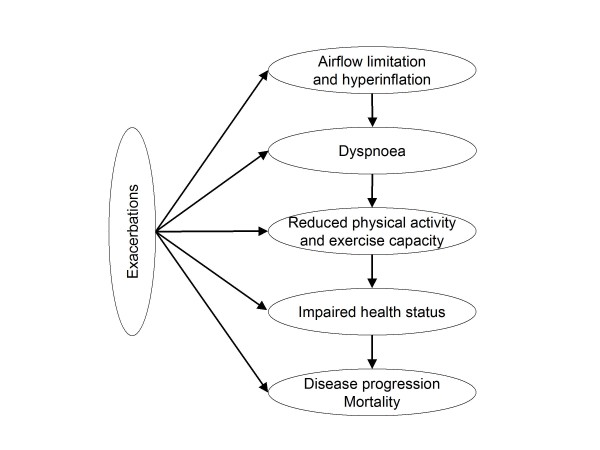
“Reducing exacerbation frequency and subsequent health care utilization is considered to be an important outcome target in the treatment of COPD.4,5 Exacerbations lead to increased complaints, reduced HRQoL, and reduced physical activity.6 This can lead to reduced exercise tolerance and muscle dysfunction.7,8 Furthermo…”
MethodInfluentialGOLD Stage and Treatment in COPD: A 500 Patient Point Prevalence Study
Safka, K., Wald, J., Wang, H., McIvor, L., & McIvor, A. (2017) · Chronic Obstructive Pulmonary Diseases Journal of the COPD Foundation · doi:10.15326/jcopdf.4.1.2016.0126 · Cited by 34
A simple and rapid test of physical performance in chronic obstructive pulmonary disease
Albarrati, A., Gale, N., Enright, S., Munnery, M. M., Cockcroft, J., & Shale, D. J. (2016) · International Journal of COPD · doi:10.2147/copd.s106151 · Cited by 35
“The 6MWD is a validated measure of submaximal physical performance and reflects daily activities, but only commonly used in clinical research.(10) The timed up and go (TUG) test is a relatively simple and reproducible test that assesses balance, gait speed, and physical performance and can predict of the risk of falls…”
MethodSmall airways disease in chronic obstructive pulmonary disease
Lazarinis, N., Fouka, E., Lindén, A., & Bossios, A. (2024) · Expert Review of Respiratory Medicine · doi:10.1080/17476348.2024.2380070 · Cited by 35
“It is generally accepted that an RV value greater than 120% or an RV/TLC ratio exceeding 40% of the predicted values are considered reliable markers of air trapping, irrespective of FEV1, particularly in the early stages of COPD [54].”
Outcome of pulmonary rehabilitation in COPD patients with severely impaired health status
van Ranst, D., Otten, Meijer, & Hul, A. J. V. ‘. (2011) · International Journal of COPD · doi:10.2147/copd.s24579 · Cited by 36
Topole, E., Biondaro, S., Montagna, I., Corre, S., Corradi, M., Stanojevic, S., Graham, B. L., Das, N., Ray, K., & Topalovic, M. (2022) · ERJ Open Research · doi:10.1183/23120541.00292-2022 · Cited by 38
Verwey, R., van der Weegen, S., Spreeuwenberg, M., Tange, H., van der Weijden, T., & de Witte, L. (2014) · BMC Family Practice · doi:10.1186/1471-2296-15-93 · Cited by 30
“Items are scored from 1 (most severe) to 7 (no impairment) [40,41].”
BackgroundThe Impact of Listening to Music During a High-Intensity Exercise Endurance Test in People With COPD
Lee, A. L., Dolmage, T. E., Rhim, M., Goldstein, R. S., & Brooks, D. (2017) · CHEST Journal · doi:10.1016/j.chest.2017.12.001 · Cited by 26
Shen, T., Bimali, M., Faramawi, M. F., & Orloff, M. S. (2020) · Frontiers in Nutrition · doi:10.3389/fnut.2020.00047 · Cited by 25
Measuring Performance in Psychiatry: A Call to Action
Glied, S., Stein, B. D., McGuire, T. G., Beale, R. R., Duffy, F. F., Shugarman, S. A., & Goldman, H. H. (2015) · Psychiatric Services · doi:10.1176/appi.ps.201400393 · Cited by 25
“The development and use of functional outcome measures to assess the value of health care has been a challenge to the broader health care field, yet in the past several decades, such measures have been developed and incorporated in the routine practice of a range of health care disciplines, such as chronic obstructive…”
Disease Modification in Emphysema Related to Alpha-1 Antitrypsin Deficiency
Chorostowska‐Wynimko, J. (2016) · COPD Journal of Chronic Obstructive Pulmonary Disease · doi:10.1080/15412555.2016.1178224 · Cited by 25
“Several surrogate outcome measures have been suggested for COPD as shown in Table 1 (9, 41, 43, 44); these include dyspnoea, health-related quality”
MethodFiliform needle acupuncture for copd: A systematic review and meta-analysis
Fernández-Jané, C., Vilaró, J., Fei, Y., Wang, C., Liu, J., Huang, N., Xia, R., Tian, X., Hu, R., Yu, M., et al. (2019) · Complementary Therapies in Medicine · doi:10.1016/j.ctim.2019.08.016 · Cited by 27
Improving End-of-Life Care Prognostic Discussions
Kalowes, P. (2015) · AACN Advanced Critical Care · doi:10.1097/nci.0000000000000086 · Cited by 27
Balfe, D. L., French, A. N., Mirocha, J., Falk, J., & Mosenifar, Z. (2015) · International Journal of COPD · doi:10.2147/copd.s76739 · Cited by 31
van den Akker, E. L. T., Hul, A. J. V. ‘., Chavannes, N. H., van Bruggen, A., Mölken, M. R., Veen, J. C. I. ’., & Braunstahl, G. (2015) · International Journal of COPD · doi:10.2147/copd.s90680 · Cited by 23
“For each of these domains, we reviewed the available diagnostic tests, questionnaires, and severity indicators.(17,18) We also reviewed which measurements were recommended in international and national guidelines for primary and secondary care.”
Responsiveness of PROMIS® to change in chronic obstructive pulmonary disease
Yount, S., Atwood, C. W., Donohue, J. F., Hays, R. D., Irwin, D. E., Leidy, N. K., Liu, H., Spritzer, K. L., & DeWalt, D. A. (2019) · Journal of Patient-Reported Outcomes · doi:10.1186/s41687-019-0155-9 · Cited by 23
Respiratory health effects of e-cigarette substitution for tobacco cigarettes: a systematic review
Qureshi, M., Vernooij, R. W. M., Rosa, G. R. M. L., Polosa, R., & O’Leary, R. (2023) · Harm Reduction Journal · doi:10.1186/s12954-023-00877-9 · Cited by 27
“The FEV 1 test measures the volume of air that is forced out of the lungs in 1 s; it can assess the severity and development of COPD [42, 43].”
BackgroundGarcía, E. C., González‐González, A. I., Heijmans, M., de Guzmán, E. N., Valli, C., Beltran, J., Hernandez, H. P., Ninov, L., Strammiello, V., Immonen, K., et al. (2021) · PLoS ONE · doi:10.1371/journal.pone.0247522 · Cited by 22
“The five included studies reported: i) a summary of outcomes for COPD pharmacological trials from lung function to biomarkers created by the American Thoracic Society/European Respiratory Society Task Force [49], ii) a review of instruments used to measure symptom response in pharmacological trials [50], iii) a review…”
Webber, S. C., Tittlemier, B. J., & Loewen, H. (2021) · Physical Therapy · doi:10.1093/ptj/pzab155 · Cited by 25
Reychler, G., Mottart, F., Boland, M., Wasterlain, E., Pieters, T., Caty, G. D., & Liistro, G. (2015) · Respiratory Care · doi:10.4187/respcare.03671 · Cited by 22
“Fatigue (Borg scale), median (IQR) 13 (4) 13 (1) .”
Criner, G. J., Martínez, F. J., Aaron, S. D., Agustí, A. G. N., Anzueto, A., Bafadhel, M., Barnes, P. J., Bourbeau, J., Chen, R., Ewig, J. M., et al. (2019) · Annals of the American Thoracic Society · doi:10.1513/annalsats.201808-557ps · Cited by 22
Self-citationElghafari, A., & Finkelstein, J. (2021) · JMIR Medical Informatics · doi:10.2196/18298 · Cited by 20
“[32-35] Chronic Respiratory Disease Questionnaire”
InfluentialThe Inventory of Physical Activity Barriers for Adults 50 Years and Older: Refinement and Validation
Wingood, M., Jones, S. M. W., Gell, N., Brach, J. S., & Peters, D. M. (2021) · The Gerontologist · doi:10.1093/geront/gnab165 · Cited by 19
Zhang, L., Lou, P., Zhu, Y., Chen, P., Zhang, P., Yu, J., Zhang, N., Chen, N., Wu, H., & Zhao, J. (2013) · BMC Public Health · doi:10.1186/1471-2458-13-627 · Cited by 17
“Because clinical and patient-reported outcome measures such as dyspnea, exercise capacity, physical activity, exacerbation of symptoms, health status and mortality are an essential part of the clinical assessment of COPD [16], the objective of studies that assess the health of patients with COPD is to evaluate the rel…”
MethodFeldman, G. (2013) · International Journal of COPD · doi:10.2147/copd.s31209 · Cited by 16
“Exacerbations of COPD Exacerbations of COPD indicate clinical instability and progression of the disease and are associated with reduced health status, physical and physiologic deterioration, and an increased risk of morbidity and mortality.(38,39) The prevention or reduction of exacerbations thus constitutes a major…”
Glaab, T., Sauer, R., Hänsel, M., Rubin, R., Frey, M., & Buhl, R. (2016) · International Journal of COPD · doi:10.2147/copd.s103023 · Cited by 16
“16–20 Although the efficacy of tiotropium + olodaterol has been documented in controlled trials, more evidence is needed regarding its effectiveness in everyday clinical practice and, indeed, of its translational benefit into improved physical functioning.”
Self-citationCognitive behavioral therapy for management of dyspnea: A pilot study
Williams, M. T., Cafarella, P., Paquet, C., & Frith, P. (2015) · Respiratory Care · doi:10.4187/respcare.03764 · Cited by 15
“Although neither group achieved the minimum clinically important difference of 4 points, both achieved the lower range of changes considered clinically meaningful (change between 2 and 8 points 33 ), and there was no difference in these changes between historical control and pilot groups.”
Kerwin, E., Siler, T. M., Korenblat, P. E., White, A., Eckert, J. H., Henley, M., Patalano, F., & D’Andrea, P. (2016) · Chronic Obstructive Pulmonary Diseases Journal of the COPD Foundation · doi:10.15326/jcopdf.3.2.2015.0157 · Cited by 15
Levy, I., Elimeleh, Y., Gavrieli, S., Attias, S., Schiff, A., Oliven, A., & Schiff, E. (2022) · Acupuncture in Medicine · doi:10.1177/09645284221086293 · Cited by 15
Tiotropium Respimat® improves physical functioning in chronic obstructive pulmonary disease
Rau-Berger, H., Mitfessel, & Glaab (2010) · International Journal of COPD · doi:10.2147/copd.s14082 · Cited by 15
Maltais, F., de la Hoz, A., Casaburi, R. H., & O'Donnell, D. E. (2020) · Advances in Therapy · doi:10.1007/s12325-020-01557-x · Cited by 17
Buican, I.-L., Buican-Chirea, A.-C., Mușat, M. I., & Streba, C. T. (2025) · Healthcare · doi:10.3390/healthcare13182344 · Cited by 23
“Several standardized measures used to assess COPD severity also provide indirect insight into the psychological burden of the disease [114,115].”
Williams, M. (2011) · Current Opinion in Supportive and Palliative Care · doi:10.1097/spc.0b013e328345d4a1 · Cited by 14
Personalizing Selection of Inhaled Delivery Systems in Chronic Obstructive Pulmonary Disease
Mahler, D. A., & Halpin, D. M. G. (2023) · Annals of the American Thoracic Society · doi:10.1513/annalsats.202304-384cme · Cited by 13
Oh, D. K., Baek, S., Lee, S. W., Lee, J., Lee, S., & Oh, Y. (2018) · International Journal of COPD · doi:10.2147/copd.s148421 · Cited by 12
“However, there have only been a few studies comparing both methods in terms of the long-term mortality, which is the most robust and reliable outcome in clinical studies.(23,24) Therefore, we performed a study to identify the proper method for defining the airflow limitation in terms of long-term mortalities in the el…”
MethodDisability in Patients With COPD
Yohannes, A. M. (2014) · CHEST Journal · doi:10.1378/chest.13-1703 · Cited by 15
Ferreira, D. H., Kochovska, S., Brunelli, V. N., & Currow, D. C. (2023) · Expert Review of Respiratory Medicine · doi:10.1080/17476348.2023.2208348 · Cited by 14
“In view of reported time constrains in clinical settings [65], a single unidimensional scale measuring the severity of breathlessness may be appropriate for screening, if followed by a detailed, meaningful discussion when breathlessness is detected.”
BackgroundPutting health status guided COPD management to the test: protocol of the MARCH study
Kocks, J. W. H., de Jong, C., Berger, M. Y., Kerstjens, H. A. M., & van der Molen, T. (2013) · BMC Pulmonary Medicine · doi:10.1186/1471-2466-13-41 · Cited by 11
“However, FEV1 has been found to have a very poor correlation with markers of COPD that seem to matter most to patients, such as exercise tolerance, symptoms and also health status [46,47].”
BackgroundVogelmeier, C. F., & Alter, P. J. (2020) · Clinics in Chest Medicine · doi:10.1016/j.ccm.2020.06.005 · Cited by 12
Self-citationChanges in physical activity in healthy people and COPD patients
Tudorache, V., Oancea, C. I., Avram, C., & Firă-Mladinescu, O. (2013) · Wiener klinische Wochenschrift · doi:10.1007/s00508-013-0452-x · Cited by 13
“Changes in physical activity in healthy people and COPD patients 31 1 3 nary function alteration inevitably leads to the decrease of exercise tolerance, muscular dysfunction is probably a more influential factor affecting exercise capacity, especially in patients with moderate-to-severe COPD [1].”
BackgroundYuan, X., Fang, J., Wang, L., Yao, L., Li, L., Zhan, X., Wu, H., Pinto, J. M., & Wei, Y. (2014) · Sleep And Breathing · doi:10.1007/s11325-014-1091-9 · Cited by 14
“, respiratory versus cardiovascular versus other mortality) have not yet been established [32].”
BackgroundRodriquez, E. J., Stoecklin‐Marois, M. T., Bennett, D. H., Tancredi, D. J., & Schenker, M. B. (2014) · Journal of Agromedicine · doi:10.1080/1059924x.2014.945709 · Cited by 13
Role of indacaterol, a once-daily bronchodilator, in chronic obstructive pulmonary disease.
Seth, H., Sultan, S., & Gotfried, M. H. (2013) · Europe PMC (PubMed Central) · doi:10.3978/j.issn.2072-1439.2013.10.11 · Cited by 10
Spielmanns, M., Meier, A., Winkler, A., Glöckl, R., Nell, C., Koczulla, A. R., Boeselt, T., Alter, P. J., Magnet, F. S., Storre, J. H., et al. (2017) · DMW - Deutsche Medizinische Wochenschrift · doi:10.1055/s-0042-121346 · Cited by 10
Ridolo, E., Montagni, Olivieri, E., Riario-Sforza, & Incorvaia, C. (2013) · International Journal of COPD · doi:10.2147/copd.s49179 · Cited by 10
“Questionnaire (SGRQ), Transition Dyspnea Index (TDI), and the modified Medical Research Council scale.(8) The main data from the trials on indacaterol are reported in Table 2.”
MethodRossi, A., Zanardi, E., Poletti, V. E., & Cazzola, M. (2015) · International Journal of COPD · doi:10.2147/copd.s55488 · Cited by 13
“As previously mentioned, this review focuses on QVA149, and discusses the PRO data.(64) In fact, due to the recognized limitation of FEV 1 , interest in PROs is increasing.”
Wang, H., Mattes, W. B., Richter, P., & Mendrick, D. L. (2012) · Biomarkers in Medicine · doi:10.2217/bmm.12.78 · Cited by 8
Lee, A. L., Beauchamp, M., Goldstein, R. S., & Brooks, D. (2017) · Journal of Cardiopulmonary Rehabilitation and Prevention · doi:10.1097/hcr.0000000000000280 · Cited by 13
Coquart, J. B., Heutte, N., Terce, G., & Grosbois, J. (2019) · International Journal of COPD · doi:10.2147/copd.s222165 · Cited by 59
“Although generic questionnaires can be used to assess HRQoL in COPD patients, disease-specific tools may be more appropriate to obtain better responsiveness.(8,9) Among respiratory disease-specific HRQoL questionnaires, the St George’s respiratory questionnaire (SGRQ)(10) and the chronic respiratory questionnaire (CRQ…”
BackgroundOu, C.-Y., Chen, C., Yu, C.-H., Shiu, C., & Hsiue, T. (2014) · Respirology · doi:10.1111/resp.12313 · Cited by 8
Current methods to diagnose small airway disease in patients with COPD
Filho, F. S. L., Chen, H. H., Ngan, D. A., Tam, A., Kirby, M., & Sin, D. D. (2016) · Expert Review of Respiratory Medicine · doi:10.1586/17476348.2016.1155455 · Cited by 7
Grønhaug, L. M., Farver-Vestergaard, I., Frølund, J. C., Egholm, C. L., & Løkke, A. (2024) · Frontiers in Rehabilitation Sciences · doi:10.3389/fresc.2024.1434298 · Cited by 7
Kim, S. H., Lee, J.-K., Min, K. H., Kim, D. K., & Lee, H. W. (2026) · Annals of Medicine · doi:10.1080/07853890.2025.2611466 · Cited by 6
“In most COPD trials, demonstrating treatment effects typically requires improvements in lung function and respiratory symptoms or a decrease in exacerbation rates [8].”
Chadha, N., Blackstock, F. C., Smith, S. M. S., Camp, P. G., & Tang, C. Y. (2024) · Respiratory Medicine · doi:10.1016/j.rmed.2024.107885 · Cited by 6
Dhamodharan, P., & Arumugam, M. (2020) · COPD Journal of Chronic Obstructive Pulmonary Disease · doi:10.1080/15412555.2020.1793314 · Cited by 7
Corchón, S., Rodríguez‐Blázquez, C., Carrascal, G. C., Fuentes-Ramírez, A., Armentia, M. I. R. D. O., Caparros, N., Timonet-Andreu, E. M., Sánchez, M. V. N., & Ambrosio, L. (2021) · BMJ Open · doi:10.1136/bmjopen-2020-039973 · Cited by 6
On behalf of the PROEPOC/COPD study group, Espantoso-Romero, M., Román-Rodríguez, M., Duarte-Pérez, A., Rey, J. G., Callejas-Cabanillas, P. A., Lazić, Đ. K., Anta-Agudo, B., Torán‐Monserrat, P., Magallón-Botaya, R. M., et al. (2016) · BMC Pulmonary Medicine · doi:10.1186/s12890-016-0305-2 · Cited by 6
“Exercise tolerance, exacerbations, comorbidity, social support and quality of life are all dimensions that have been shown to be important predictors of mortality, each with its own strengths and limitations [4].”
BackgroundCheng, W., Wu, B., Liao, W.-C., Chen, C., Chen, W., Hsia, T., Tu, C., Chen, C., & Hsu, W. (2020) · International Journal of COPD · doi:10.2147/copd.s279482 · Cited by 6
“No single aspect of COPD can provide sufficient or appropriate monitoring of clinical deterioration.(13,14,28,29) To address this issue, the concept of a composite CID score was developed.”
BackgroundSuehs, C., Zysman, M., Chenivesse, C., Burgel, P., Couturaud, F., Deslée, G., Berger, P., Rahérison, C., Devouassoux, G., Brousse, C., et al. (2020) · BMJ Open · doi:10.1136/bmjopen-2019-035811 · Cited by 7
Cross-Cultural Adaptation of the CHAMPS Questionnaire in French Canadians with COPD
Mak, S., Soicher, J. E., Mayo, N. E., Wood-Dauphinée, S., & Bourbeau, J. (2016) · Canadian Respiratory Journal · doi:10.1155/2016/9304505 · Cited by 7
“, reliability) have not been fully investigated [13].”
BackgroundLee, A. L., Butler, S. J., Jung, P., Clark, I. N., Tamplin, J., Goldstein, R. S., & Brooks, D. (2024) · Chronic Respiratory Disease · doi:10.1177/14799731241291065 · Cited by 7
Exhaled Breath Condensate and Dyspnea in COPD
Patsiris, S., Papanikolaou, I. C., Stelios, G., Exarchos, T. P., & Vlamos, P. (2021) · Advances in experimental medicine and biology · doi:10.1007/978-3-030-78771-4_38 · Cited by 6
Validation of the COPD Assessment Test in Patients with COPD in Iran
Fakharian, A., Masouleh, S. K., Karimzadeh, S., & Farhadi, T. (2017) · Chronic Obstructive Pulmonary Disease Open Access · doi:10.21767/2572-5548.100022 · Cited by 5
“the HRQL (Health Related Quality of Life) as well as the CRQ questionnaires, separately [10,11].”
MethodSpielmanns, M., Tamm, M., Schildge, S., & Valipour, A. (2021) · Journal of Clinical Medicine Research · doi:10.14740/jocmr4542 · Cited by 5
Spielmanns, M., Müller, K., Schott, N., Winkler, A., Polanski, H., Nell, C., Boeselt, T., Koczulla, A., Storre, J. H., Windisch, W., et al. (2017) · Die Rehabilitation · doi:10.1055/s-0042-119248 · Cited by 4
“Die Veränderungen in der Spirometrie bei COPD-Patienten sind in der Regel irreversibel und durch eine Rehabilitationsmaßnahme nicht beeinflussbar [34].”
Hao, W., Li, M., Zhang, Y., Zhang, C., & Wang, P. (2019) · Lung · doi:10.1007/s00408-019-00263-y · Cited by 4
Malaysia, U. P., Yahya, N. F., Omar, N., Malaysia, U. P., Adznam, S. N., Malaysia, U. P., Daut, U. N., Malaysia, U. P., Yusof, B. N. M., & Malaysia, U. P. (2019) · Malaysian Journal of Nutrition · doi:10.31246/mjn-2018-0162 · Cited by 5
P148 Correlating changes in lung function with patient reported outcomes in COPD
Jones, P., Donohue, J. F., Nedelman, J. R., Pinault, G., & Pascoe, S. J. (2010) · Thorax · doi:10.1136/thx.2010.150987.49 · Cited by 4
Systems Engineering Approach to Modeling and Analysis of Chronic Obstructive Pulmonary Disease
Kurian, V., Ghadipasha, N., Gee, M., Chalant, A., Hamill, T., Okossi, A., Chen, L. L., Yu, B., Ogunnaike, B. A., & Beris, A. N. (2023) · ACS Omega · doi:10.1021/acsomega.3c00854 · Cited by 3
G, J. P., Manuel De La Prida, C., Francisco Arancibia, H., S, C. V., R, M. J. H., S, S. J., M, X. V., SARMIENTO, N., STÖRM, K., V, & M, E. L. (2011) · Revista chilena de enfermedades respiratorias · doi:10.4067/s0717-73482011000200003 · Cited by 6
Impact of Endobronchial Coiling for Lung Volume Reduction on Pulmonary Volume and Attenuation
Grosse, U., Hetzel, J., Gündel, L., Gatidis, S., Syha, R., Schabel, C., Springer, L., & Horger, M. (2014) · Journal of Computer Assisted Tomography · doi:10.1097/rct.0000000000000121 · Cited by 3
“Nevertheless, the walking distance of the 6MWTwas used to separate responders from nonresponders as it reflects everyday life-like activity of emphysema patients being also seen as a better outcome and mortality predictor in severe COPD patients by some authors.(25,34) Furthermore, changes in lung volumes, which are m…”
MethodPalliative Management of Breathlessness
Currow, D. C., & Ferreira, D. H. (2019) · Springer eBooks · doi:10.1007/978-3-319-77740-5_11 · Cited by 3
Metadata
- Authors
- Glaab, T., Vogelmeier, C., & Buhl, R.
- Affiliations
- Johannes Gutenberg University Mainz (DE)
- Universitätsklinikum Gießen und Marburg (DE)
- Corresponding author
- Buhl, Roland
- ORCID
- Glaab, Thomas
- Venue
- Respiratory Research
- Published
- 2010-06-17
- Volume
- 11
- Issue
- 1
- Pages
- 79-79
- ISSN
- 1465-9921 (ISSN-L)
- 1465-993X
- PMC
- PMC2902430
- OpenAlex
- W1998032464
- Cited by
- 130
- References
- 103
- Citations by year
- 2026: 4 · 2025: 3 · 2024: 6 · 2023: 8 · 2022: 2 · 2021: 7 · 2020: 10 · 2019: 9 · 2018: 4 · 2017: 12 · 2016: 9 · 2015: 11 · 2014: 16 · 2013: 10 · 2012: 7
- FWCI
- 1.62
- Type
- journal article
- Language
- en
- Open access
- gold
- doi.org
- Licence
- cc-by
- Locations
- Respiratory Research (publishedVersion, cc-by)
- PubMed Central (publishedVersion, cc-by)
- PubMed (publishedVersion)
- DOAJ (DOAJ: Directory of Open Access Journals) (submittedVersion)
- Topics
- Health Sciences › Medicine › Pulmonary and Respiratory Medicine › Chronic Obstructive Pulmonary Disease (COPD) Research
- Social Sciences › Economics, Econometrics and Finance › Economics and Econometrics › Health Systems, Economic Evaluations, Quality of Life
- Health Sciences › Medicine › Pulmonary and Respiratory Medicine › Asthma and respiratory diseases
- Keywords
- chronic obstructive pulmonary disease, outcome measures, lung function, health status, exercise capacity, physical activity, dyspnea, COPD exacerbations, BODE index, mortality, clinical trial endpoints
- MeSH terms
- Clinical Trials as Topic, Dyspnea, Exercise Test, Health Status Indicators, Humans, Predictive Value of Tests, Surveys and Questionnaires, Respiratory Function Tests, Severity of Illness Index, Reproducibility of Results, Comorbidity, Treatment Outcome, Exercise Tolerance, Pulmonary Disease, Chronic Obstructive
About these checks
Registry, retraction, Cites and statistics results are computed, not judged, with one exception: a printed reference that no index lists is read once by a model before it counts as a citation error. Claims are extracted by a model and kept only when their quote appears verbatim in the text; each cited source is then checked, with a model’s help, for whether it says what the claim relies on. Those verdicts can be wrong — read the claim’s quote and the cited source before relying on one.
Statistics and arithmetic are recomputed, not judged.
Confidence bands are shown only for fields calibrated on our annotated test set. None is calibrated yet, so no band is shown.
What counts as a claim ›How we measure confidence ›How we check this ›
Are you an author, or do you see a problem with this page? Request a review
Data sources
Bibliographic data: Semantic Scholar, OpenAlex, Crossref.
Contains information from the Semantic Scholar Academic Graph Datasets, made available under the ODC Attribution License (ODC-BY 1.0).
Semantic Scholar’s data is described in: Kinney, R., et al. (2023). The Semantic Scholar Open Data Platform. arXiv:2301.10140.
