

Outcome measures in chronic obstructive pulmonary disease (COPD): strengths and limitations
Open accessThe DOI matches its Crossref record; 103 of the 103 references it cites were found in a registry or an index.
Abstract
Current methods for assessing clinical outcomes in COPD mainly rely on physiological tests combined with the use of questionnaires. The present review considers commonly used outcome measures such as lung function, health status, exercise capacity and physical activity, dyspnoea, exacerbations, the multi-dimensional BODE score, and mortality. Based on current published data, we provide a concise overview of the principles, strengths and weaknesses, and discuss open questions related to each methodology. Reviewed is the current set of markers for measuring clinically relevant outcomes with particular emphasis on their limitations and opportunities that should be recognized when assessing and interpreting their use in clinical trials of COPD.
Overview
The claims and statistics of this paper haven’t been checked yet.
Free: it reads the open-access text and checks the first 5 claims that cite a source we can check. Create a free account to check every claim.
Integrity signals
Registry
Cites
Statistics
Figures
Verification
Claims the paper makes
The claims and statistics of this paper haven’t been checked yet.
Free: it reads the open-access text and checks the first 5 claims that cite a source we can check. Create a free account to check every claim.
Claims other papers make about this one
Each is checked against this paper’s own text: does it say what the citing paper says it does?
The source backs part of the claim, not all of it — or backs it for a different population, condition or comparison.
In the citing paper
“Although neither group achieved the minimum clinically important difference of 4 points”
From Cognitive behavioral therapy for management of dyspnea: A pilot study (2015) · cites this paper as [33]
Experimental — accuracy not yet measuredThe cited source says what the claim attributes to it.
In the citing paper
“both achieved the lower range of changes considered clinically meaningful (change between 2 and 8 points 33 )”
From Cognitive behavioral therapy for management of dyspnea: A pilot study (2015) · cites this paper as [33]
Self-check
Percentages, sums and reported differences re-computed from the paper’s own numbers.
The self-check needs the paper’s full text.
Citations
Cites
Psychophysical bases of perceived exertion
BORG, G. A. V. (1982) · Medicine & Science in Sports & Exercise · doi:10.1249/00005768-198205000-00012 · Cited by 16,580 · cited 1×
“Borg-Scale (CR-10) The CR-10 or Borg-Scale has been developed primarily as an objective tool to measure exertional dyspnoea in COPD patients [50,51].”
MethodVestbo, J., Hurd, S. S., Agustí, A. G., Jones, P. W., Vogelmeier, C., Anzueto, A., Barnes, P. J., Fabbri, L. M., Martinez, F. J., Nishimura, M., et al. (2013) · American Journal of Respiratory and Critical Care Medicine · doi:10.1164/rccm.201204-0596pp · Cited by 15,983
Self-citationMiller, M. R., Hankinson, J., Brusasco, V., Burgos, F., Casaburi, R., Coates, A., Crapo, R., Enright, P., van der Grinten, C. P. M., Gustafsson, P., et al. (2005) · European Respiratory Journal · doi:10.1183/09031936.05.00034805 · Cited by 15,627
ATS Statement: Guidelines for the Six-Minute Walk Test
(2002) · American Journal of Respiratory and Critical Care Medicine · doi:10.1164/ajrccm.166.1.at1102 · Cited by 11,195
Interpretative strategies for lung function tests
Pellegrino, R., Viegi, G., Brusasco, V., Crapo, R. O., Burgos, F., Casaburi, R., Coates, A., van der Grinten, C. P. M., Gustafsson, P., Hankinson, J., et al. (2005) · European Respiratory Journal · doi:10.1183/09031936.05.00035205 · Cited by 5,945 · cited 2×
“•Reference equations for lung function by European Community for Coal and Steel are disputed and limited in predicting lung function in the general population [12].”
BackgroundMethodRabe, K. F., Hurd, S., Anzueto, A., Barnes, P. J., Buist, S. A., Calverley, P., Fukuchi, Y., Jenkins, C., Rodriguez-Roisin, R., van Weel, C., et al. (2007) · American Journal of Respiratory and Critical Care Medicine · doi:10.1164/rccm.200703-456so · Cited by 4,925 · cited 4×
“Limitations •There is no standardized definition of an exacerbation, making comparative evaluations of clinical study results difficult [1,66].”
BackgroundInfluentialCelli, B. R., Cote, C. G., Marin, J. M., Casanova, C., Montes de Oca, M., Mendez, R. A., Pinto Plata, V., & Cabral, H. J. (2004) · New England Journal of Medicine · doi:10.1056/nejmoa021322 · Cited by 4,015 · cited 2×
“Relevance So far the only multidimensional scoring system that has gained broader acceptance is the BODE index which has been developed as a prognostic marker for COPD patients in an attempt to integrate not only the respiratory but also the systemic expressions of COPD in a single grading system [70].”
BackgroundSalmeterol and Fluticasone Propionate and Survival in Chronic Obstructive Pulmonary Disease
Calverley, P. M. A., Anderson, J. A., Celli, B., Ferguson, G. T., Jenkins, C., Jones, P. W., Yates, J. C., & Vestbo, J. (2007) · New England Journal of Medicine · doi:10.1056/nejmoa063070 · Cited by 3,248 · cited 3×
“Strengths •All-cause mortality is the most robust and reliable outcome of clinical trials in COPD and is relatively easy to follow-up [4,83,84].”
BackgroundMethodDevelopment and first validation of the COPD Assessment Test
Jones, P. W., Harding, G., Berry, P., Wiklund, I., Chen, W.-H., & Kline Leidy, N. (2009) · European Respiratory Journal · doi:10.1183/09031936.00102509 · Cited by 3,198
Jones, P. W., Quirk, F. H., Baveystock, C. M., & Littlejohns, P. (1992) · American Review of Respiratory Disease · doi:10.1164/ajrccm/145.6.1321 · Cited by 3,035
ATS/ACCP statement on cardiopulmonary exercise testing
(2003) · American Journal of Respiratory and Critical Care Medicine · doi:10.1164/rccm.167.2.211 · Cited by 3,026
Fit Yourself and Take Your Lungs to Heart
Palange, P., & Bonini, M. (2013) · Respiration · doi:10.1159/000350831 · Cited by 2,779
The St George's Respiratory Questionnaire
Jones, P. W., Quirk, F. H., & Baveystock, C. M. (1991) · Respiratory Medicine · doi:10.1016/s0954-6111(06)80166-6 · Cited by 2,683
Overview of the SF-36 Health Survey and the International Quality of Life Assessment (IQOLA) Project
Ware, J. E., & Gandek, B. (1998) · Journal of Clinical Epidemiology · doi:10.1016/s0895-4356(98)00081-x · Cited by 2,605 · cited 1×
“Medical Outcomes Study Short Form-36 (SF-36) The SF-36 is a generic health survey [63].”
BackgroundRabe, K. F. (2007) · American Journal of Respiratory and Critical Care Medicine · Cited by 2,567
ATS/ACCP statement on cardiopulmonary exercise testing
Ross, R. M. (2003) · American Journal of Respiratory and Critical Care Medicine · doi:10.1164/ajrccm.167.10.950 · Cited by 2,073
Psychophysical scaling with applications in physical work and the perception of exertion
Borg, G. (1990) · Scandinavian Journal of Work, Environment & Health · doi:10.5271/sjweh.1815 · Cited by 1,817 · cited 1×
“Borg-Scale (CR-10) The CR-10 or Borg-Scale has been developed primarily as an objective tool to measure exertional dyspnoea in COPD patients [50,51].”
MethodA measure of quality of life for clinical trials in chronic lung disease
Guyatt, G. H., Berman, L. B., Townsend, M., Pugsley, S. O., & Chambers, L. W. (1987) · Thorax · doi:10.1136/thx.42.10.773 · Cited by 1,721 · cited 1×
“Chronic Respiratory Disease Questionnaire (CRQ) The CRQ measures physical-functional and emotional limitations due to chronic lung diseases including COPD [60].”
BackgroundTwo-, six-, and 12-minute walking tests in respiratory disease.
Butland, R. J., Pang, J., Gross, E. R., Woodcock, A. A., & Geddes, D. M. (1982) · BMJ · doi:10.1136/bmj.284.6329.1607 · Cited by 1,668
A 4-Year Trial of Tiotropium in Chronic Obstructive Pulmonary Disease
Tashkin, D. P., Celli, B., Senn, S., Burkhart, D., Kesten, S., Menjoge, S., & Decramer, M. (2008) · New England Journal of Medicine · doi:10.1056/nejmoa0805800 · Cited by 1,604
Development of a shuttle walking test of disability in patients with chronic airways obstruction.
Singh, S. J., Morgan, M. D., Scott, S., Walters, D., & Hardman, A. E. (1992) · Thorax · doi:10.1136/thx.47.12.1019 · Cited by 1,455
COPD exacerbations: Defining their cause and prevention
Wedzicha, J. A., & Seemungal, T. A. (2007) · The Lancet · doi:10.1016/s0140-6736(07)61382-8 · Cited by 1,370 · cited 1×
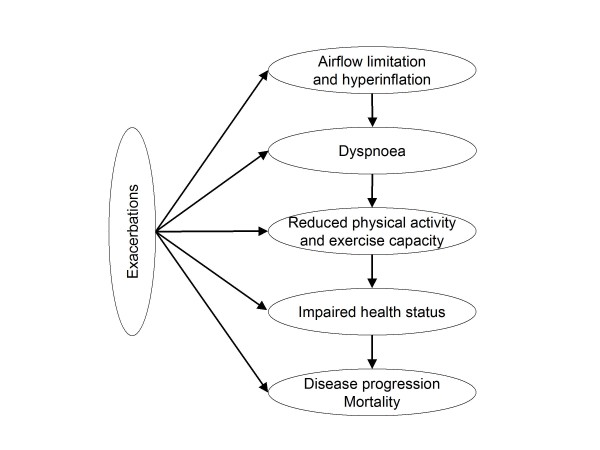
“Relevance Exacerbations of COPD indicate clinical instability and progression of the disease and are associated with increased morbidity, deterioration of comorbidities, reduced health status, physical and physiologic deterioration and an increased risk of mortality [64,65].”
BackgroundMahler, D. A., Weinberg, D. H., Wells, C. K., & Feinstein, A. R. (1984) · Chest · doi:10.1378/chest.85.6.751 · Cited by 1,292 · cited 1×
“, baseline (BDI)), and measuring changes in breathlessness from this baseline state over time (TDI) [40].”
BackgroundThe Effects of a Smoking Cessation Intervention on 14.5-Year Mortality: A Randomized Clinical Trial
Anthonisen, N. R., Skeans, M. A., Wise, R. A., Manfreda, J., Kanner, R. E., Connett, J. E., & for the Lung Health Study Research Group* (2005) · Annals of Internal Medicine · doi:10.7326/0003-4819-142-4-200502150-00005 · Cited by 1,237
Solway, S., Brooks, D., Lacasse, Y., & Thomas, S. (2001) · Chest · doi:10.1378/chest.119.1.256 · Cited by 1,063
Mortality in COPD: role of comorbidities
Sin, D. D., Anthonisen, N. R., Soriano, J. B., & Agusti, A. G. (2006) · European Respiratory Journal · doi:10.1183/09031936.00133805 · Cited by 1,052
The Relationship Between Reduced Lung Function and Cardiovascular Mortality
Sin, D. D., Wu, L., & Man, S. F. P. (2005) · Chest · doi:10.1378/chest.127.6.1952 · Cited by 881 · cited 2×
“•Reduction in lung function is a risk factor for all cause and cardiovascular mortality [6-8], and impaired health status [9].”
BackgroundEffect of Systemic Glucocorticoids on Exacerbations of Chronic Obstructive Pulmonary Disease
Niewoehner, D. E., Erbland, M. L., Deupree, R. H., Collins, D., Gross, N. J., Light, R. W., Anderson, P., & Morgan, N. A. (1999) · New England Journal of Medicine · doi:10.1056/nejm199906243402502 · Cited by 875
Outcomes for COPD pharmacological trials: from lung function to biomarkers
Cazzola, M., MacNee, W., Martinez, F. J., Rabe, K. F., Franciosi, L. G., Barnes, P. J., Brusasco, V., Burge, P. S., Calverley, P. M. A., Celli, B. R., et al. (2008) · European Respiratory Journal · doi:10.1183/09031936.00099306 · Cited by 858
Recommendations on the use of exercise testing in clinical practice
Palange, P., Ward, S. A., Carlsen, K.-H., Casaburi, R., Gallagher, C. G., Gosselink, R., O'Donnell, D. E., Puente-Maestu, L., Schols, A. M., Singh, S., et al. (2007) · European Respiratory Journal · doi:10.1183/09031936.00046906 · Cited by 718
Physical activity in patients with COPD
Watz, H., Waschki, B., Meyer, T., & Magnussen, H. (2009) · European Respiratory Journal · doi:10.1183/09031936.00024608 · Cited by 684 · cited 4×
“Limitations •Solid evidence for reliability, validity and responsiveness for different types of accelerometers still has to be provided [26,31].”
BackgroundInfluentialCOPD exacerbations: definitions and classifications
Burge, S., & Wedzicha, J. A. (2003) · European Respiratory Journal · doi:10.1183/09031936.03.00078002 · Cited by 664 · cited 1×
“•Seasonal variations in exacerbation frequency usually require long-term studies of at least one year duration [4,68].”
BackgroundA test to determine parameters of aerobic function during exercise
Whipp, B. J., Davis, J. A., Torres, F., & Wasserman, K. (1981) · Journal of Applied Physiology · doi:10.1152/jappl.1981.50.1.217 · Cited by 657
Guidelines for the six-minute walk test
Ats, S. (2002) · Medical Entomology and Zoology · Cited by 651
Mannino, D. M. (2003) · Thorax · doi:10.1136/thorax.58.5.388 · Cited by 639
Casanova, C., Cote, C., de Torres, J. P., Aguirre-Jaime, A., Marin, J. M., Pinto-Plata, V., & Celli, B. R. (2005) · American Journal of Respiratory and Critical Care Medicine · doi:10.1164/rccm.200407-867oc · Cited by 597
Interpreting thresholds for a clinically significant change in health status in asthma and COPD
Jones, P. W. (2002) · European Respiratory Journal · doi:10.1183/09031936.02.00063702 · Cited by 585
Rennard, S., Decramer, M., Calverley, P. M. A., Pride, N. B., Soriano, J. B., Vermeire, P. A., & Vestbo, J. (2002) · European Respiratory Journal · doi:10.1183/09031936.02.03242002 · Cited by 563 · cited 1×
“Limitations •A possible underestimation bias due to avoidance of exertion has to be taken into account [47].”
BackgroundPuhan, M. A., Garcia-Aymerich, J., Frey, M., ter Riet, G., Antó, J. M., Agustí, A. G., Gómez, F. P., Rodríguez-Roisín, R., Moons, K. G., Kessels, A. G., et al. (2009) · The Lancet · doi:10.1016/s0140-6736(09)61301-5 · Cited by 521 · cited 1×
“The validity of the BODE index as a prognostic marker to predict mortality in COPD patients has recently been challenged by a study demonstrating that the risk of allcause mortality over 3 years was considerably underestimated by the BODE index in a population of severe COPD patients, while on the contrary it was over…”
Quantifying physical activity in daily life with questionnaires and motion sensors in COPD
Pitta, F., Troosters, T., Probst, V. S., Spruit, M. A., Decramer, M., & Gosselink, R. (2006) · European Respiratory Journal · doi:10.1183/09031936.06.00064105 · Cited by 473 · cited 5×
“On the other hand, underreporting bias may evolve from poor compliance [26,39].”
BackgroundInfluentialRevill, S. M., Morgan, M. D. L., Singh, S. J., Williams, J., & Hardman, A. E. (1999) · Thorax · doi:10.1136/thx.54.3.213 · Cited by 462 · cited 1×
“The Endurance Shuttle Walk Test has been developed to determine sub-maximal exercise capacity with the acoustic signal frequency being constant throughout the walk [23].”
MethodHyperinflation, Dyspnea, and Exercise Intolerance in Chronic Obstructive Pulmonary Disease
O'Donnell, D. E. (2006) · Proceedings of the American Thoracic Society · doi:10.1513/pats.200508-093do · Cited by 398
Meguro, M., Barley, E. A., Spencer, S., & Jones, P. W. (2007) · Chest · doi:10.1378/chest.06-0702 · Cited by 350 · cited 1×
“A COPD-specific version is available [55].”
Pulmonary rehabilitation and the BODE index in COPD
Cote, C. G., & Celli, B. R. (2005) · European Respiratory Journal · doi:10.1183/09031936.05.00045505 · Cited by 335 · cited 1×
“to assess therapeutic efficacy in interventional studies investigating effects of lung volume reduction surgery [74-76], pulmonary rehabilitation [77,78], and physical training [79], but so far not in pharmacological intervention trials.”
BackgroundInterpretation of quality of life scores from the St George's Respiratory Questionnaire
Ferrer, M., Villasante, C., Alonso, J., Sobradillo, V., Gabriel, R., Vilagut, G., Masa, J. F., Viejo, J. L., Jiménez-Ruiz, C. A., & Miravitlles, M. (2002) · European Respiratory Journal · doi:10.1183/09031936.02.00213202 · Cited by 311 · cited 1×
“•SGRQ scores were shown to be influenced by subjects' sex, age, education, and by comorbidities [58].”
BackgroundSevere exacerbations and BODE index: Two independent risk factors for death in male COPD patients
Soler-Cataluña, J. J., Martínez-García, M. Á., Sánchez, L. S., Tordera, M. P., & Sánchez, P. R. (2009) · Respiratory Medicine · doi:10.1016/j.rmed.2008.12.005 · Cited by 309 · cited 1×
“Replacing the 6MWD with a component for exacerbation frequency (BODEx index) resulted in fully preserved power to predict the mortality risk in a prospective observational study, while expanding the BODE index with exacerbation frequency as a fifth component (e-BODE index) did not further improve its predictive power…”
MethodWise, R. A., & Brown, C. D. (2005) · COPD: Journal of Chronic Obstructive Pulmonary Disease · doi:10.1081/copd-200050527 · Cited by 308
Inhaled corticosteroids and mortality in chronic obstructive pulmonary disease
Sin, D. D. (2005) · Thorax · doi:10.1136/thx.2005.045385 · Cited by 307 · cited 1×
“•It is as yet unclear, whether COPD-specific mortality is increased in patients with milder forms of COPD (GOLD stages I and II) [2,89].”
BackgroundYoung, R. P., Hopkins, R., & Eaton, T. E. (2007) · European Respiratory Journal · doi:10.1183/09031936.00021707 · Cited by 306 · cited 2×
“•Reduction in lung function is a risk factor for all cause and cardiovascular mortality [6-8], and impaired health status [9].”
BackgroundSIN, D. D., & TU, J. V. (2001) · American Journal of Respiratory and Critical Care Medicine · doi:10.1164/ajrccm.164.4.2009033 · Cited by 305 · cited 1×
“•Retrospective mortality data may be confounded by inherent statistical bias [85,86], and even prospective studies are susceptible to bias due to missing follow-up of withdrawals [86,87].”
BackgroundMinimum clinically important improvement for the incremental shuttle walking test
Singh, S. J., Jones, P. W., Evans, R., & Morgan, M. D. L. (2008) · Thorax · doi:10.1136/thx.2007.081208 · Cited by 305
Measurement Properties and Interpretability of the Chronic Respiratory Disease Questionnaire (CRQ)
Schünemann, H. J., Puhan, M., Goldstein, R., Jaeschke, R., & Guyatt, G. H. (2005) · COPD: Journal of Chronic Obstructive Pulmonary Disease · doi:10.1081/copd-200050651 · Cited by 287
Suissa, S. (2003) · American Journal of Respiratory and Critical Care Medicine · doi:10.1164/rccm.200210-1231oc · Cited by 272
de Torres, J. P., Pinto-Plata, V., Ingenito, E., Bagley, P., Gray, A., Berger, R., & Celli, B. (2002) · Chest · doi:10.1378/chest.121.4.1092 · Cited by 261
Patient Understanding, Detection, and Experience of COPD Exacerbations
Kessler, R., Ståhl, E., Vogelmeier, C., Haughney, J., Trudeau, E., Löfdahl, C.-G., & Partridge, M. R. (2006) · Chest · doi:10.1378/chest.130.1.133 · Cited by 255 · cited 1×
“•The symptom- and event-based approach involves subjective and recall bias, particularly because patients often have a poor understanding of exacerbation symptoms, resulting in substantial underreporting of exacerbations [67].”
BackgroundSelf-citationOutcomes and markers in the assessment of chronic obstructive pulmonary disease
Jones, P. W., & Agusti, A. G. N. (2006) · European Respiratory Journal · doi:10.1183/09031936.06.00145104 · Cited by 244
Physiology and consequences of lung hyperinflation in COPD
O'Donnell, D. E., & Laveneziana, P. (2006) · European Respiratory Review · doi:10.1183/09059180.00010002 · Cited by 234
Minimal important difference of the transition dyspnoea index in a multinational clinical trial
Witek, T. J., & Mahler, D. A. (2003) · European Respiratory Journal · doi:10.1183/09031936.03.00068503a · Cited by 226 · cited 1×
“•A MID with a difference of 1 unit for the mean total score being considered clinically meaningful is available though it is mainly based on retrospective data analysis [41,42].”
MethodValidation and comparison of reference equations for the 6-min walk distance test
Cote, C. G., Casanova, C., Marín, J. M., Lopez, M. V., Pinto-Plata, V., de Oca, M. M., Dordelly, L. J., Nekach, H., & Celli, B. R. (2008) · European Respiratory Journal · doi:10.1183/09031936.00104507 · Cited by 204 · cited 2×
“Body weight has much less effect on bicycle ergometry performance [30].”
BackgroundMortality in GOLD stages of COPD and its dependence on symptoms of chronic bronchitis
Ekberg-Aronsson, M., Pehrsson, K., Nilsson, J.-Å., Nilsson, P. M., & Löfdahl, C.-G. (2005) · Respiratory Research · doi:10.1186/1465-9921-6-98 · Cited by 200 · cited 1×
“Relevance Long-term observations of large patient populations have shown an increased risk for all-cause mortality in COPD patients that rises proportionally to severity classes [6,8,81,82].”
BackgroundExacerbations of Chronic Obstructive Pulmonary Disease
Anzueto, A., Sethi, S., & Martinez, F. J. (2007) · Proceedings of the American Thoracic Society · doi:10.1513/pats.200701-003fm · Cited by 200
The MCID of the Transition Dyspnea Index is a Total Score of One Unit
Mahler, D. A., & Witek, T. J. (2005) · COPD: Journal of Chronic Obstructive Pulmonary Disease · doi:10.1081/copd-200050666 · Cited by 181 · cited 1×
“•A MID with a difference of 1 unit for the mean total score being considered clinically meaningful is available though it is mainly based on retrospective data analysis [41,42].”
MethodDevelopment of a Shuttle Walking Test of Disability in Patients with Chronic Airways Obstruction
Singh, S. J., Morgan, M., Scott, S., Walters, D., & Hardman, A. E. (1993) · Journal of Cardiopulmonary Rehabilitation · doi:10.1097/00008483-199305000-00014 · Cited by 178
Schünemann, H. (2003) · Journal of Clinical Epidemiology · doi:10.1016/s0895-4356(03)00115-x · Cited by 176 · cited 1×
“•There is little published empiric evidence supporting the MID of four points [59].”
BackgroundA Treadmill Ramp Protocol Using Simultaneous Changes in Speed and Grade
PORSZASZ, J., CASABURI, R., SOMFAY, A., WOODHOUSE, L. J., & WHIPP, B. J. (2003) · Medicine & Science in Sports & Exercise · doi:10.1249/01.mss.0000084593.56786.da · Cited by 170
COPD exacerbations: the importance of a standard definition
Pauwels, R., Calverley, P. M. A., Buist, A. S., Rennard, S. I., Fukuchi, Y., Ståhl, E., & Löfdahl, C.-G. (2003) · Respiratory Medicine · doi:10.1016/j.rmed.2003.09.001 · Cited by 169
Reproducibility of Borg Scale Measurements of Dyspnea During Exercise in Patients With COPD
Mador, M. J., Rodis, A., & Magalang, U. J. (1995) · Chest · doi:10.1378/chest.107.6.1590 · Cited by 165 · cited 1×
“Although the 10-point category ratio scale is easy to use, concise and detailed instructions for patients are indispensable for appropriate application [52].”
BackgroundGender differences in the management and experience of Chronic Obstructive Pulmonary Disease
Watson, L., Vestbo, J., Postma, D. S., Decramer, M., Rennard, S., Kiri, V. A., Vermeire, P. A., & Soriano, J. B. (2004) · Respiratory Medicine · doi:10.1016/j.rmed.2004.05.004 · Cited by 158 · cited 1×
“Strengths •The method has been widely used in the past [43-46].”
MethodPrediction of risk of COPD exacerbations by the BODE index
Marín, J. M., Carrizo, S. J., Casanova, C., Martínez‐Camblor, P., Soriano, J. B., Agustí, A. G. N., & Celli, B. R. (2008) · Respiratory Medicine · doi:10.1016/j.rmed.2008.10.004 · Cited by 147 · cited 1×
“, FEV1) to predict mortality and future exacerbations in patient populations with severe-to-very severe COPD [70,80].”
BackgroundHealth Status and the Spiral of Decline
Jones, P. W. (2009) · COPD: Journal of Chronic Obstructive Pulmonary Disease · doi:10.1080/15412550802587943 · Cited by 144 · cited 1×
“It is important to make a distinction between quality of life (QoL), which is unique to the individual, and health status measurement, which is a standardized quantification of the impact of disease [53].”
BackgroundInhaled corticosteroids in COPD: the case against: Fig. 1—
Suissa, S., & Barnes, P. J. (2009) · European Respiratory Journal · doi:10.1183/09031936.00190908 · Cited by 141 · cited 2×
“Intent-to-treat (ITT)-analyses, aiming for complete follow-up of deaths are recommended for unbiased comparison between treatment groups and should be used preferentially as shown in major trials [83,84,87].”
BackgroundMethodFoglio, K., Bianchi, L. N. C., Bruletti, G., Porta, R., Vitacca, M., Balbi, B., & Ambrosino, N. (2007) · Respiratory Medicine · doi:10.1016/j.rmed.2007.04.007 · Cited by 123
Longitudinal Change in the BODE Index Predicts Mortality in Severe Emphysema
Martinez, F. J., Han, M. K., Andrei, A.-C., Wise, R., Murray, S., Curtis, J. L., Sternberg, A., Criner, G., Gay, S. E., Reilly, J., et al. (2008) · American Journal of Respiratory and Critical Care Medicine · doi:10.1164/rccm.200709-1383oc · Cited by 122
Puhan, M. A., Guyatt, G. H., Goldstein, R., Mador, J., McKim, D., Stahl, E., Griffith, L., & Schünemann, H. J. (2007) · Respiratory Medicine · doi:10.1016/j.rmed.2006.04.023 · Cited by 120 · cited 1×
“The questionnaire has primarily been applied in rehabilitation trials of COPD patients [61].”
MethodImpact on patients’ health status following early identification of a COPD exacerbation
Bourbeau, J., Ford, G. T., Zackon, H., Pinsky, N., Lee, J. E., & Ruberto, G. (2007) · European Respiratory Journal · doi:10.1183/09031936.00166606 · Cited by 107 · cited 1×
“Strengths •The method has been widely used in the past [43-46].”
MethodWise, R. A. (2006) · The American Journal of Medicine · doi:10.1016/j.amjmed.2006.08.002 · Cited by 90 · cited 1×
“Limitations •FEV1 measurements are based on an artificial manoeuvre and do not always correlate with clinically relevant outcomes such as dyspnoea, health status, exercise capacity, or exacerbations [4,11].”
BackgroundImpact of chronic airflow obstruction in a working population
Roche, N., Dalmay, F., Perez, T., Kuntz, C., Vergnenégre, A., Neukirch, F., Giordanella, J. ‐., & Huchon, G. (2008) · European Respiratory Journal · doi:10.1183/09031936.00089607 · Cited by 81 · cited 1×
“•Reduction in lung function is a risk factor for all cause and cardiovascular mortality [6-8], and impaired health status [9].”
BackgroundField Tests of Exercise in COPD: The Six-Minute Walk Test and the Shuttle Walk Test
Brown, C. D., & Wise, R. A. (2007) · COPD Journal of Chronic Obstructive Pulmonary Disease · doi:10.1080/15412550701480125 · Cited by 77
Proposal for a multidimensional staging system for chronic obstructive pulmonary disease
Celli, B. R., Calverley, P. M. A., Rennard, S. I., Wouters, E. F. �., Agustí, A. G. N., Anthonisen, N. R., MacNee, W., Jones, P., Pride, N. B., Rodriguez‐Roisin, R., et al. (2005) · Respiratory Medicine · doi:10.1016/j.rmed.2005.03.019 · Cited by 70 · cited 1×
“A truncated version of the BODE index has been presented in which the exercise component is omitted (BOD index) [72].”
MethodSensor Acceptance Model – Measuring Patient Acceptance of Wearable Sensors
Pedersen, P. E., Gundersen, T., Hejlesen, O., & Fensli, R. (2008) · Methods of Information in Medicine · doi:10.3414/me9106 · Cited by 70 · cited 1×
“•Some activity sensors are poorly accepted by patients [36].”
BackgroundReproducibility of lung volume measurements
Hankinson, J., Stocks, J., & Peslin, R. (1998) · European Respiratory Journal · doi:10.1183/09031936.98.11030787 · Cited by 62 · cited 1×
“The variability of lung volume measurements has been reviewed elsewhere [16].”
BackgroundCriner, G., Belt, P. H., Sternberg, A., Mosenifar, Z., Make, B., Utz, J., & Sciurba, F. (2009) · Chest · doi:10.1378/chest.08-1625 · Cited by 47
Pompeo, E., & Mineo, T. C. (2007) · The Annals of Thoracic Surgery · doi:10.1016/j.athoracsur.2007.07.007 · Cited by 40 · cited 1×
“to assess therapeutic efficacy in interventional studies investigating effects of lung volume reduction surgery [74-76], pulmonary rehabilitation [77,78], and physical training [79], but so far not in pharmacological intervention trials.”
BackgroundCardiorespiratory risk factors as predictors of 40-year mortality in women and men
Ferrie, J. E., Singh-Manoux, A., Kivimäki, M., Mindell, J., Breeze, E., Smith, G. D., & Shipley, M. J. (2009) · Heart · doi:10.1136/hrt.2008.164251 · Cited by 39 · cited 1×
“•Reduction in lung function is a risk factor for all cause and cardiovascular mortality [6-8], and impaired health status [9].”
BackgroundPerceptual and Physiologic Responses During Treadmill and Cycle Exercise in Patients With COPD
Murray, J. A., Waterman, L. A., Ward, J., Baird, J. C., & Mahler, D. A. (2008) · CHEST Journal · doi:10.1378/chest.08-1258 · Cited by 37 · cited 1×
“breathlessness, provide additional insights [34].”
van Wetering, C. R., van Nooten, F. E., Mol, S. J. M., Hoogendoorn, M., Mölken, M. P. M. H. R.-V., & Schols, A. M. W. J. (2008) · International Journal of COPD · doi:10.2147/copd.s2588 · Cited by 36
Lederer, D. J., Thomashow, B. M., Ginsburg, M. E., Austin, J. H. M., Bartels, M. N., Yip, C. K., Jellen, P. A., Brogan, F., Kawut, S. M., Maxfield, R. A., et al. (2007) · Journal of Thoracic and Cardiovascular Surgery · doi:10.1016/j.jtcvs.2006.12.062 · Cited by 30
Jones, P., & Higenbottam, T. (2007) · Proceedings of the American Thoracic Society · doi:10.1513/pats.200707-115th · Cited by 29 · cited 1×
“In that context, the EXACT-PRO initiative began to develop and evaluate a novel patient-reported outcome tool to measure the rate, duration and severity of exacerbations of COPD [69].”
MethodEffects of interval-load versus constant-load training on the BODE index in COPD patients.
Nasis, I., Vogiatzis, I., Stratakos, G., Athanasopoulos, D., Koutsoukou, A., Daskalakis, A., Spetsioti, S., Evangelodimou, A., Roussos, C., & Zakynthinos, S. (2009) · Respiratory Medicine · doi:10.1016/j.rmed.2009.03.003 · Cited by 29 · cited 1×
“to assess therapeutic efficacy in interventional studies investigating effects of lung volume reduction surgery [74-76], pulmonary rehabilitation [77,78], and physical training [79], but so far not in pharmacological intervention trials.”
BackgroundPoor Sensitivity of Symptoms in Early Detection of COPD
Akamatsu, K., Yamagata, T., Kida, Y., Tanaka, H., Ueda, H., & Ichinose, M. (2008) · COPD Journal of Chronic Obstructive Pulmonary Disease · doi:10.1080/15412550802363303 · Cited by 29 · cited 1×
“absent, thus creating the opportunity of early intervention [10].”
BackgroundHaughney, J., & Gruffydd‐Jones, K. (2004) · Primary Care Respiratory Journal · doi:10.1016/j.pcrj.2004.06.006 · Cited by 28
Activity Monitoring in Assessing Activities of Daily Living
Casaburi, R. H. (2007) · COPD Journal of Chronic Obstructive Pulmonary Disease · doi:10.1080/15412550701480158 · Cited by 27 · cited 2×
“On the other hand, underreporting bias may evolve from poor compliance [26,39].”
BackgroundIs Sustained Pharmacologic Lung Volume Reduction Now Possible in COPD?
O’Donnell, D. E. (2006) · CHEST Journal · doi:10.1378/chest.129.3.501 · Cited by 27
Proposal for a multidimensional staging system for chronic obstructive pulmonary disease
Celli, B. R., Calverley, P. M., Rennard, S. I., Wouters, E. F. �., Agustí, A. G. N., Anthonisen, N. A., MacNee, W., Jones, P., Pride, N. B., Rodríguez-Roisin, R., et al. (2006) · Respiratory Medicine COPD Update · doi:10.1016/j.rmedu.2006.03.018 · Cited by 27
Outcome Measures for COPD Treatments: A Critical Evaluation
Gross, N. J. (2004) · COPD Journal of Chronic Obstructive Pulmonary Disease · doi:10.1081/copd-120030413 · Cited by 23 · cited 3×
“Clinical trials evaluating death as a primary or secondary endpoint should have a data safety monitoring board and an independent adjudicating committee [3,4,91].”
BackgroundMeasurement of Dyspnea: Clinical Ratings
Mahler, D. A. (2005) · CRC Press eBooks · doi:10.1201/b14111-11 · Cited by 21
Life in slow motion: quantifying physical activity in COPD
Morgan, M. D. L. (2008) · Thorax · doi:10.1136/thx.2007.093492 · Cited by 19 · cited 1×
“•Variability in sensitivity among accelerometers of a given model has been detected [37].”
BackgroundO’Donnell, M. D. L. A. D. E. (2005) · CRC Press eBooks · doi:10.1201/b14111-8 · Cited by 16
Roflumilast for chronic obstructive pulmonary disease – Author's reply
Rabe, K. F. (2005) · The Lancet · doi:10.1016/s0140-6736(05)67751-3 · Cited by 6 · cited 1×
“It was suggested that an appropriate range of values for the MID for FEV1 might be 100-140 mL [4] but the MID for FEV1 remains poorly defined for COPD [14].”
BackgroundMühlig, S., & Petermann-Rocha, F. E. (1998) · PubMed · Cited by 6
Roflumilast for chronic obstructive pulmonary disease
Vassiliou, V. S. (2005) · The Lancet · doi:10.1016/s0140-6736(05)67750-1 · Cited by 5
Physical Activity Monitoring: A New Outcome Facing many Challenges, but Yielding Promising Results
Troosters, T. (2009) · COPD Journal of Chronic Obstructive Pulmonary Disease · doi:10.1080/15412550902806037 · Cited by 5 · cited 2×
“•Activity sensors may actually fail to accurately capture the inactive life style of patients with COPD [38].”
BackgroundRoflumilast for chronic obstructive pulmonary disease
Boyd, A., Bhowmik, A., & Rajakulasingam, K. (2005) · The Lancet · doi:10.1016/s0140-6736(05)67749-5 · Cited by 4
Cited by
Goals of COPD treatment: Focus on symptoms and exacerbations
Vogelmeier, C. F., Román-Rodríguez, M., Singh, D., Han, M. K., Rodríguez-Roisin, R., & Ferguson, G. T. (2020) · Respiratory Medicine · doi:10.1016/j.rmed.2020.105938 · Cited by 371
Self-citationKendzerska, T., Mollayeva, T., Gershon, A. S., Leung, R. S., Hawker, G., & Tomlinson, G. (2014) · Sleep Medicine Reviews · doi:10.1016/j.smrv.2013.01.003 · Cited by 265
Waschki, B., Spruit, M. A., Watz, H., Albert, P. S., Shrikrishna, D., Groenen, M., Smith, C., Man, W. D.-C., Tal-Singer, R., Edwards, L. D., et al. (2012) · Respiratory Medicine · doi:10.1016/j.rmed.2011.10.022 · Cited by 170
Improving physical activity in COPD: towards a new paradigm
Troosters, T., van der Molen, T., Polkey, M., Rabinovich, R. A., Vogiatzis, I., Weisman, I., & Kulich, K. (2013) · Respiratory Research · doi:10.1186/1465-9921-14-115 · Cited by 158
“Accelerometers are electronic devices, generally worn on the arm (multisensory armband devices) or waist, which estimate physical activity outcomes such as body posture, quantity and intensity of body movements, energy expenditure, and physical activity level based on measurements of body’s acceleration [41].”
BackgroundHome telemonitoring effectiveness in COPD: a systematic review.
Cruz, J., Brooks, D., & Marques, A. (2014) · International Journal of Clinical Practice · doi:10.1111/ijcp.12345 · Cited by 147
Metadata
- Authors
- Glaab, T., Vogelmeier, C., & Buhl, R.
- Affiliations
- Johannes Gutenberg University Mainz (DE)
- Universitätsklinikum Gießen und Marburg (DE)
- Corresponding author
- Buhl, Roland
- ORCID
- Glaab, Thomas
- Venue
- Respiratory Research
- Published
- 2010-06-17
- Volume
- 11
- Issue
- 1
- Pages
- 79-79
- ISSN
- 1465-9921 (ISSN-L)
- 1465-993X
- PMC
- PMC2902430
- OpenAlex
- W1998032464
- Cited by
- 130
- References
- 103
- Citations by year
- 2026: 4 · 2025: 3 · 2024: 6 · 2023: 8 · 2022: 2 · 2021: 7 · 2020: 10 · 2019: 9 · 2018: 4 · 2017: 12 · 2016: 9 · 2015: 11 · 2014: 16 · 2013: 10 · 2012: 7
- FWCI
- 1.62
- Type
- journal article
- Language
- en
- Open access
- gold
- doi.org
- Licence
- cc-by
- Locations
- Respiratory Research (publishedVersion, cc-by)
- PubMed Central (publishedVersion, cc-by)
- PubMed (publishedVersion)
- DOAJ (DOAJ: Directory of Open Access Journals) (submittedVersion)
- Topics
- Health Sciences › Medicine › Pulmonary and Respiratory Medicine › Chronic Obstructive Pulmonary Disease (COPD) Research
- Social Sciences › Economics, Econometrics and Finance › Economics and Econometrics › Health Systems, Economic Evaluations, Quality of Life
- Health Sciences › Medicine › Pulmonary and Respiratory Medicine › Asthma and respiratory diseases
- Keywords
- chronic obstructive pulmonary disease, outcome measures, lung function, health status, exercise capacity, physical activity, dyspnea, COPD exacerbations, BODE index, mortality, clinical trial endpoints
- MeSH terms
- Clinical Trials as Topic, Dyspnea, Exercise Test, Health Status Indicators, Humans, Predictive Value of Tests, Surveys and Questionnaires, Respiratory Function Tests, Severity of Illness Index, Reproducibility of Results, Comorbidity, Treatment Outcome, Exercise Tolerance, Pulmonary Disease, Chronic Obstructive
About these checks
Registry, retraction, Cites and statistics results are computed, not judged, with one exception: a printed reference that no index lists is read once by a model before it counts as a citation error. Claims are extracted by a model and kept only when their quote appears verbatim in the text; each cited source is then checked, with a model’s help, for whether it says what the claim relies on. Those verdicts can be wrong — read the claim’s quote and the cited source before relying on one.
Statistics and arithmetic are recomputed, not judged.
Confidence bands are shown only for fields calibrated on our annotated test set. None is calibrated yet, so no band is shown.
What counts as a claim ›How we measure confidence ›How we check this ›
Are you an author, or do you see a problem with this page? Request a review
Data sources
Bibliographic data: Semantic Scholar, OpenAlex, Crossref.
Contains information from the Semantic Scholar Academic Graph Datasets, made available under the ODC Attribution License (ODC-BY 1.0).
Semantic Scholar’s data is described in: Kinney, R., et al. (2023). The Semantic Scholar Open Data Platform. arXiv:2301.10140.
