

Hepcidin expression in human airway epithelial cells is regulated by interferon-γ
Open accessThe DOI matches its Crossref record; 43 of the 44 references it cites were found in a registry or an index.
Abstract
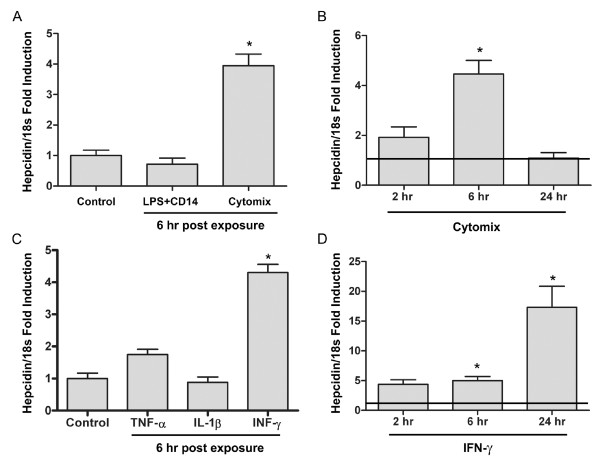
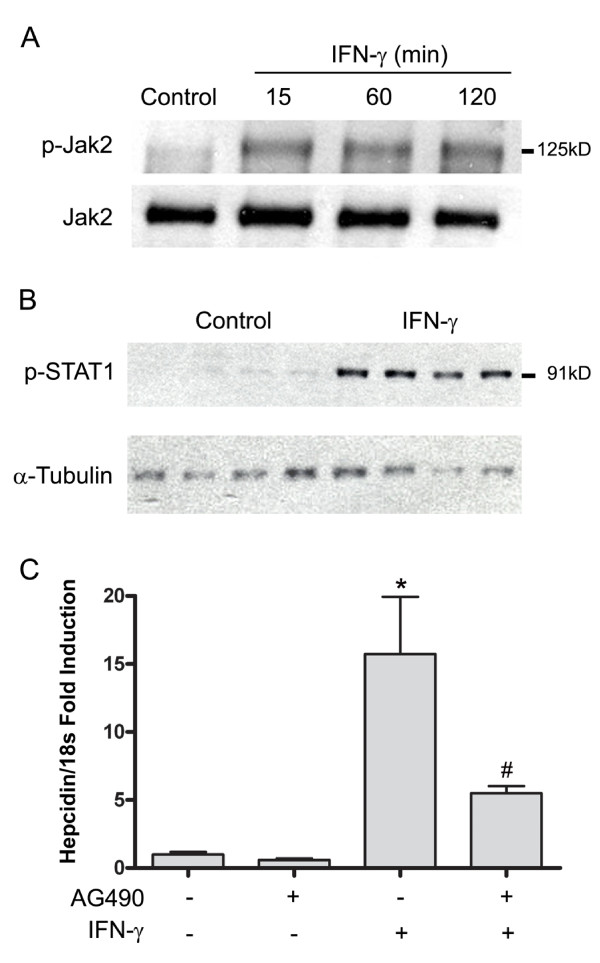
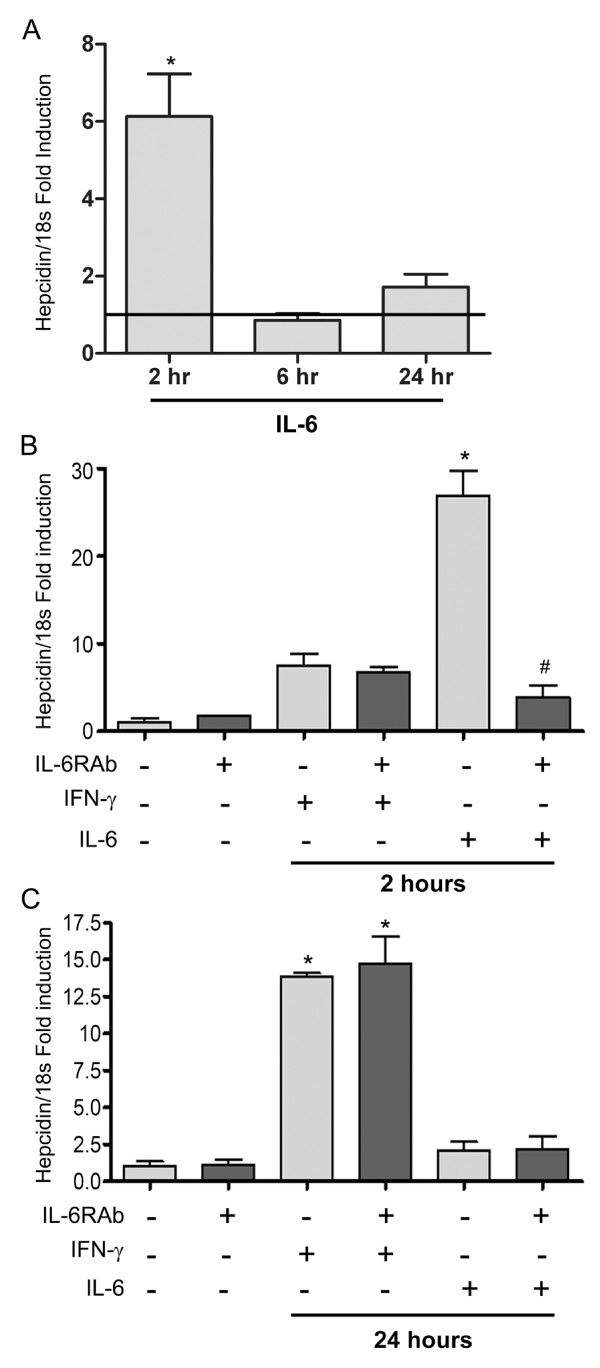
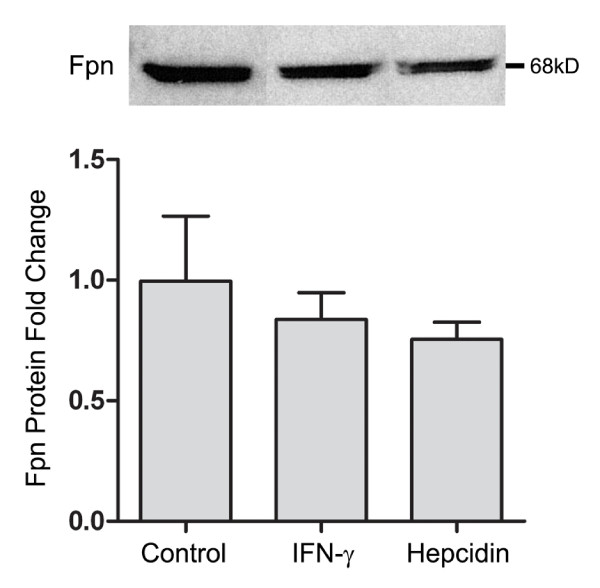
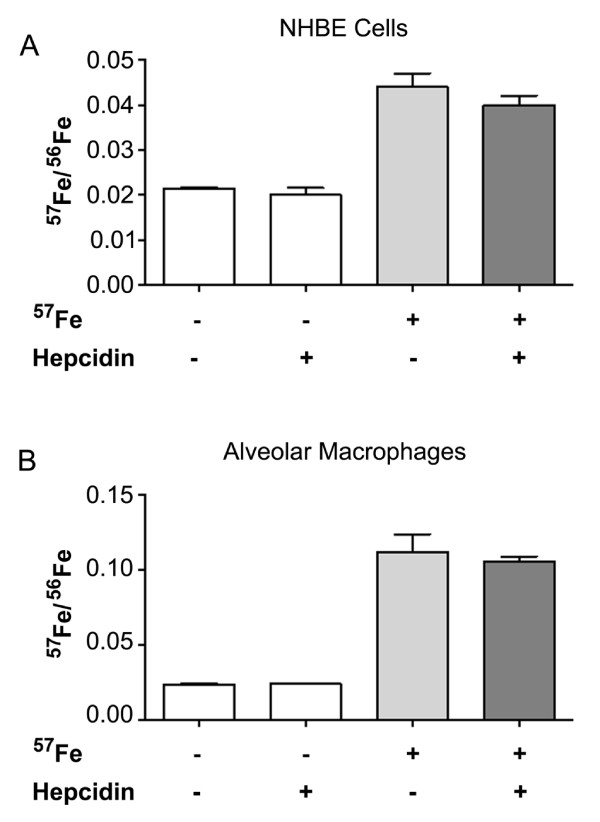
Background: Hepcidin serves as a major regulator of systemic iron metabolism and immune function. Airway epithelial cells have an extensive interface with the environment, and so must be able to respond locally to the presence of particulates, infection, and inflammation. Therefore, we hypothesized that hepcidin is expressed in airway epithelial cells and is regulated by early phase cytokines. Methods: Primary, differentiated human bronchial epithelial (NHBE) cells were used to assess hepcidin gene expression in response to IFN-γ, TNF-α, IL-1β, and IL-6, as well as to LPS + CD14. The role of the Janus Kinase-signal transducer and activator of transcription (JAK-STAT) pathway in IFN-γ-mediated hepcidin production was assessed by measuring JAK2 phophorylation and STAT1 nuclear translocation. Inductively coupled plasma mass spectroscopy (ICP-MS) was used to determine whether hepcidin altered iron transport in either NHBE cells or primary alveolar macrophages. Results: We demonstrate that differentiated human airway epithelial cells express hepcidin mRNA and that its expression is augmented in response to IFN-γ via activation of STAT1. However, while IFN-γ induced hepcidin gene expression, we were not able to demonstrate diminished expression of the iron export protein, ferroportin (Fpn), at the cell surface, or iron accumulation in airway epithelial in the presence of exogenous hepcidin. Conclusion: These data demonstrate that airway epithelial cells express hepcidin in the lung in response to IFN-γ. The presence of hepcidin in the airway does not appear to alter cellular iron transport, but may serve as a protective factor via its direct antimicrobial effects.
Overview
The claims and statistics of this paper haven’t been checked yet.
Free: it reads the open-access text and checks the first 5 claims that cite a source we can check. Create a free account to check every claim.
Integrity signals
Registry
Cites
Statistics
Figures
Verification
Claims the paper makes
The claims and statistics of this paper haven’t been checked yet.
Free: it reads the open-access text and checks the first 5 claims that cite a source we can check. Create a free account to check every claim.
Claims other papers make about this one
Each is checked against this paper’s own text: does it say what the citing paper says it does?
The source backs part of the claim, not all of it — or backs it for a different population, condition or comparison.
In the citing paper
“However, the major lung defence is performed by one class of macrophages (alveolar macrophages) that, interacting and responding to various stresses, are capable of iron scavenging too, protecting lung tissue against oxidative damage232425.”
From The interaction of asbestos and iron in lung tissue revealed by synchrotron-based scanning X-ray microscopy (2013) · cites this paper as [25]
Experimental — accuracy not yet measuredThe check wasn’t confident either way, so it gives no verdict — never disputed.
In the citing paper
“These macrophages are also involved in the pathogenesis of asbestosis and cancer52526.”
From The interaction of asbestos and iron in lung tissue revealed by synchrotron-based scanning X-ray microscopy (2013) · cites this paper as [25]
Experimental — accuracy not yet measured
Self-check
Percentages, sums and reported differences re-computed from the paper’s own numbers.
The self-check needs the paper’s full text.
Citations
Cites
Hepcidin Regulates Cellular Iron Efflux by Binding to Ferroportin and Inducing Its Internalization
Nemeth, E., Tuttle, M. S., Powelson, J., Vaughn, M. B., Donovan, A., Ward, D. M., Ganz, T., & Kaplan, J. (2004) · Science · doi:10.1126/science.1104742 · Cited by 4,803 · cited 1×
“The subsequent degradation of Fpn in the lysosomes leads to decreased cellular iron export and intracellular iron retention [5-8].”
Functional diversity of helper T lymphocytes
Abbas, A. K., Murphy, K. M., & Sher, A. (1996) · Nature · doi:10.1038/383787a0 · Cited by 4,450 · cited 1×
“Given the role of the Th1 cytokine, IFN-g in defense against intracellular pathogens by macrophages [7,39], we next investigated whether hepcidin produced by airway epithelial cells acts on alveolar macrophages to coordinate iron sequestration.”
Interferon-γ: an overview of signals, mechanisms and functions
Schroder, K., Hertzog, P. J., Ravasi, T., & Hume, D. A. (2004) · Journal of Leukocyte Biology · doi:10.1189/jlb.0603252 · Cited by 4,120 · cited 1×
“IFN-g classically signals through the JAK-STAT pathway [32], such that binding to the IFN-g receptor phosphorylates JAK2.”
BackgroundCELLULAR RESPONSES TO INTERFERON-γ
Boehm, U., Klamp, T., Groot, M., & Howard, J. C. (1997) · Annual Review of Immunology · doi:10.1146/annurev.immunol.15.1.749 · Cited by 2,890
Nemeth, E., Rivera, S., Gabayan, V., Keller, C., Taudorf, S., Pedersen, B. K., & Ganz, T. (2004) · Journal of Clinical Investigation · doi:10.1172/jci200420945 · Cited by 2,650
Hepcidin, a urinary antimicrobial peptide synthesized in the liver
Park, C. H., Valore, E. V., Waring, A. J., & Ganz, T. (2001) · Journal of Biological Chemistry · doi:10.1074/jbc.m008922200 · Cited by 2,168 · cited 4×
“Initial identification of hepcidin, or liver-expressed antimicrobial peptide (LEAP-1), was based on the presence of structural features and a spectrum of antimicrobial activity that are very similar to the defensin peptide family [3,15].”
InfluentialHepcidin, a key regulator of iron metabolism and mediator of anemia of inflammation
Ganz, T. (2003) · Blood · doi:10.1182/blood-2003-03-0672 · Cited by 1,544 · cited 1×
“The 25-amino acid peptide is secreted predominantly by the liver in response to anemia, hypoxia, and inflammation [1-4].”
Hepcidin, a putative mediator of anemia of inflammation, is a type II acute-phase protein
Nemeth, E., Valore, E. V., Territo, M., Schiller, G., Lichtenstein, A., & Ganz, T. (2003) · Blood · doi:10.1182/blood-2002-10-3235 · Cited by 1,417 · cited 1×
“We examined the effect of increased hepcidin on cell surface expression of Fpn in NHBE cells treated with either IFN-g for 24 hours or exogenous hepcidin for 2 hours at a concentration consistent with measurements of serum hepcidin in patients with anemia of chronic disease or iron overload [24].”
LEAP-1, a novel highly disulfide-bonded human peptide, exhibits antimicrobial activity
Krause, A., Neitz, S., Mägert, H.-J., Schulz, A., Forssmann, W.-G., Schulz-Knappe, P., & Adermann, K. (2000) · FEBS Letters · doi:10.1016/s0014-5793(00)01920-7 · Cited by 1,324 · cited 5×
“Although the primary function of hepcidin is considered to be the regulation of iron homeostasis, hepcidin was initially identified by its close structural and functional resemblance to the defensin antimicrobial peptides [3,15].”
InfluentialNicolas, G., Chauvet, C., Viatte, L., Danan, J. L., Bigard, X., Devaux, I., Beaumont, C., Kahn, A., & Vaulont, S. (2002) · Journal of Clinical Investigation · doi:10.1172/jci0215686 · Cited by 1,214 · cited 3×
“Locally, hepcidin is expressed in numerous cell types including macrophages, myocytes, and neurons, where it responds in a tissue specific manner to alterations in iron content, changes in oxygen tension, and the presence of inflammation [1,7,9-11].”
Cited by
Urrutia, P., Aguirre, P., Esparza, A., Tapia, V., Mena, N. P., Arredondo, M., González‐Billault, C., & Núñez, M. T. (2013) · Journal of Neurochemistry · doi:10.1111/jnc.12244 · Cited by 364
Role of iron in the pathogenesis of respiratory disease
Ali, M. K., Kim, R., Karim, R., Mayall, J., Martin, K. L., Shahandeh, A., Abbasian, F., Starkey, M. R., Loustaud-Ratti, V., Johnstone, D. M., et al. (2017) · The International Journal of Biochemistry & Cell Biology · doi:10.1016/j.biocel.2017.05.003 · Cited by 124
Iron Homeostasis in the Lungs—A Balance between Health and Disease
Neves, J., Haider, T., Gassmann, M., & Muckenthaler, M. U. (2019) · Pharmaceuticals · doi:10.3390/ph12010005 · Cited by 94
“Consistently, others showed that an increase in hepcidin expression in human bronchial epithelial cells in vitro does not cause a decrease in FPN protein levels [90].”
BackgroundPascolo, L., Gianoncelli, A., Schneider, G., Salomé, M., Schneider, M., Calligaro, C., Kiskinova, M., Melato, M., & Rizzardi, C. (2013) · Scientific Reports · doi:10.1038/srep01123 · Cited by 88
Hu, Y., Huang, Y., Zong, L., Lin, J., Liu, X., & Ning, S. (2024) · Cell Death Discovery · doi:10.1038/s41420-024-02078-0 · Cited by 90
“Although hepcidin primarily originates from hepatic sources, an in vitro study revealed that interferon-γ (IFN-γ ) regulates hepcidin expression in AECs without signi fi cantly impacting iron transport in these cells or alveolar macrophages [107].”
BackgroundHepcidin as a Major Component of Renal Antibacterial Defenses against Uropathogenic Escherichia coli
Houamel, D., Ducrot, N., Lefèbvre, T., Daher, R., Moulouel, B., Sari, M., Lettéron, P., Lyoumi, S., Millot, S., Tourret, J., et al. (2015) · Journal of the American Society of Nephrology · doi:10.1681/asn.2014101035 · Cited by 65
Dao, M. C., & Meydani, S. N. (2013) · Advances in Nutrition · doi:10.3945/an.113.004424 · Cited by 74
Zhang, V., Nemeth, E., & Kim, A. (2019) · Pharmaceuticals · doi:10.3390/ph12010030 · Cited by 57
“Interestingly, another in vitro study showed that Fpn in airway epithelial cells did not internalize in response to hepcidin and that hepcidin itself had no significant effect on iron transport in either airway epithelial cells or alveolar macrophages [30].”
BackgroundThe Role of Iron Metabolism in Lung Inflammation and Injury
Kim, J., & Wessling-Resnick, M. (2012) · Journal of Allergy & Therapy · doi:10.4172/2155-6121.s4-004 · Cited by 58
“Interestingly, airway epithelial cells express hepcidin in response to interferon-γ, likely providing a direct protective mechanism against microbial growth [68].”
Yang, H., Chen, X., Chen, J., Dong, Y., Huang, Y., Qin, L., Tan, J., & Yi, W. (2024) · Frontiers in Cell and Developmental Biology · doi:10.3389/fcell.2024.1492870 · Cited by 47
Pulmonary Iron Homeostasis in Hepcidin Knockout Mice
Deschemin, J., Mathieu, J. R. R., Zumerle, S., Peyssonnaux, C., & Vaulont, S. (2017) · Frontiers in Physiology · doi:10.3389/fphys.2017.00804 · Cited by 41
“IFNγ was also shown by Frazier et al. to increase Hamp gene expression in differentiated human airway cells (Frazier et al., 2011).”
BackgroundResultInfluentialIron Chelation in Local Infection
Scott, C., Arora, G., Dickson, K., & Lehmann, C. (2021) · Molecules · doi:10.3390/molecules26010189 · Cited by 43
“Stimulation of other pathways such as TLR2/TLR6 and interferon-gamma have been shown to be involved in reducing ferrop rtin expression through hepcid n-independent and dependent echanisms, pectively [11,12].”
BackgroundInfluentialSilencing airway epithelial cell-derived hepcidin exacerbates sepsis-induced acute lung injury
Chen, Q. X., Song, S. W., Chen, Q. H., Zeng, C. L., Zheng, X., Wang, J. L., & Fang, X. M. (2014) · Critical Care · doi:10.1186/s13054-014-0470-8 · Cited by 38
“Because the role of AECs in pulmonary iron metabolism is much less than that of alveolar macrophages [22], the iron status in”
BackgroundInfluentialIron in airway macrophages and infective exacerbations of chronic obstructive pulmonary disease
Ho, T. N., Nichols, M. T., Nair, G. S., Radford, K., Kjarsgaard, M., Huang, C., Bhalla, A., LaVigne, N., Mukherjee, M., Surette, M. G., et al. (2022) · Respiratory Research · doi:10.1186/s12931-022-01929-7 · Cited by 39
“Contrary to our findings, they found that exogeneous hepcidin did not cause iron sequestration in pulmonary macrophages [23], which may be related to our experiments using a higher concentration of hepcidin corresponding with systemic inflammation.”
ResultSchürmann, M., Oppel, F., Gottschalk, M., Büker, B., Jantos, C. A., Knabbe, C., Hütten, A., Kaltschmidt, B., Kaltschmidt, C., & Sudhoff, H. H. (2019) · Frontiers in Microbiology · doi:10.3389/fmicb.2019.02325 · Cited by 38
“In accordance to the literature (reviewed in Kawai and Akira, 2006), NF-kB is at least partly responsible for the transcription of cytokines and antimicrobial peptides (Frohm et al., 1997; Tsutsumi-Ishii and Nagaoka, 2002; Frazier et al., 2011).”
BackgroundMohan, S., Ho, T. N., Kjarsgaard, M., Radford, K., Borhan, S., Thabane, L., & Nair, P. K. (2017) · BMC Pulmonary Medicine · doi:10.1186/s12890-017-0408-4 · Cited by 33
“In our study, we found higher levels of sputum IL-6 in those with hemosiderin-laden AMs, which suggests that chronic inflammation may play a role in iron overload, causing local iron sequestration, and subsequent iron deprivation for pathogenic organisms [26].”
BackgroundClioquinol Attenuates Pulmonary Fibrosis through Inactivation of Fibroblasts via Iron Chelation
Zhu, Y., Chang, J., Tan, K., Huang, S. K., Liu, X., Wang, X., Cao, M., Zhang, H., Li, S., Duan, X., et al. (2021) · American Journal of Respiratory Cell and Molecular Biology · doi:10.1165/rcmb.2020-0279oc · Cited by 34
Hepcidin Alleviates LPS-Induced ARDS by Regulating the Ferritin-Mediated Suppression of Ferroptosis
Jiao, Y., Yong, C., Zhang, R., Qi, D., & Wang, D. (2022) · Shock · doi:10.1097/shk.0000000000001941 · Cited by 36
“Although hepcidin is mainly secreted by hepatocytes, it can also be secreted by lung epithelial cells (11).”
BackgroundTandara, L., Grubišić, T. Ž., Gudelj, I., Jurišić, Z., Tandara, M., Gugo, K., Mladinov, S., & Salamunić, I. (2015) · Clinical Biochemistry · doi:10.1016/j.clinbiochem.2015.07.010 · Cited by 33
Toblli, J. E., Cao, G., Giani, J. F., Dominici, F. P., & Angerosa, M. (2017) · Drug Design Development and Therapy · doi:10.2147/dddt.s132612 · Cited by 30
Extrahepatic hepcidin production: The intriguing outcomes of recent years
Daher, R., Lefèbvre, T., Puy, H., & Karim, Z. (2019) · World Journal of Clinical Cases · doi:10.12998/wjcc.v7.i15.1926 · Cited by 30
Systems genetic analysis of multivariate response to iron deficiency in mice
Yin, L., Unger, E. L., Jellen, L. C., Earley, C. J., Allen, R. P., Tomaszewicz, A., Fleet, J. C., & Jones, B. C. (2012) · American Journal of Physiology-Regulatory, Integrative and Comparative Physiology · doi:10.1152/ajpregu.00634.2011 · Cited by 28
Involvement of hepcidin in iron metabolism dysregulation in Gaucher disease
Lefèbvre, T., Reihani, N., Daher, R., de Villemeur, T. B., Belmatoug, N., Rosé, C., Colin, Y., Puy, H., Kim, C. L. V., Franco, M., et al. (2018) · Haematologica · doi:10.3324/haematol.2017.177816 · Cited by 27
Iron homeostasis and its disruption in mouse lung in iron deficiency and overload
Giorgi, G., D’Anna, M. C., & Roque, M. E. (2015) · Experimental Physiology · doi:10.1113/ep085166 · Cited by 28
“The central iron regulator, hepcidin, is also expressed in differentiated human airway epithelial cells and isolated mouse alveolar macrophages (Nguyen et al. 2006; Frazier et al. 2011).”
BackgroundHepcidin: A useful marker in chronic obstructive pulmonary disease
Duru, S. A., Bilgin, E., & Ardiç, S. (2012) · Annals of Thoracic Medicine · doi:10.4103/1817-1737.91562 · Cited by 26
“In a study, it was found that hepcidin was expressed by airway epithelial cells and was induced by both interferon gamma and IL-6 in a cell‐specific pattern andmay serve as a protective factor through its direct antimicrobial effects.[15]”
Hepcidin: an important iron metabolism regulator in chronic kidney disease
Antunes, S. A., & Canziani, M. E. F. (2016) · Brazilian Journal of Nephrology · doi:10.5935/0101-2800.20160053 · Cited by 33
Increased hepcidin levels in high-altitude pulmonary edema
Altamura, S., Bärtsch, P., Dehnert, C., Maggiorini, M., Weiß, G., Theurl, I., Muckenthaler, M. U., & Mairbäurl, H. (2014) · Journal of Applied Physiology · doi:10.1152/japplphysiol.00940.2014 · Cited by 19
Hfe Deficiency Impairs Pulmonary Neutrophil Recruitment in Response to Inflammation
Benesova, K., Spasić, M. V., Schaefer, S. M., Stolte, J., Bähr-Ivacevic, T., Robichon, K., Zhou, Z., Klingmüller, U., Beneš, V., Mall, M. A., et al. (2012) · PLoS ONE · doi:10.1371/journal.pone.0039363 · Cited by 18
McElroy, A. E., Hice, L. A., Frisk, M. G., Purcell, S. L., Phillips, N. C., & Fast, M. D. (2015) · Comparative Biochemistry and Physiology Part D Genomics and Proteomics · doi:10.1016/j.cbd.2015.01.006 · Cited by 16
Abouzed, T. K., Sadek, K. M., Ayoub, M., Saleh, E. A., Nasr, S. M., El-Sayed, Y. S., & Shoukry, M. (2018) · Journal of Animal Physiology and Animal Nutrition · doi:10.1111/jpn.13032 · Cited by 16
Wang, H., Zeng, C., Luo, G., Sun, Y., Zhang, J., Xu, Z., Guo, Y., Ye, H., Mao, J., Chen, S., et al. (2022) · iScience · doi:10.1016/j.isci.2022.105698 · Cited by 14
Airway Epithelial Hepcidin Coordinates Lung Macrophages and Immunity Against Bacterial Pneumonia
Yang, Y., Zeng, C., Yang, S., Zhang, Y., Song, S., Liu, S., Shu, Q., Fang, X., & Chen, Q. (2019) · Shock · doi:10.1097/shk.0000000000001471 · Cited by 14
“Although the liver is the source of most systemic hepcidin, airway epithelia are also produced hepcidin (17, 18).”
BackgroundSun, C., Song, N., Xie, A., Xie, J., & Jiang, H. F. (2012) · Toxicology Letters · doi:10.1016/j.toxlet.2012.05.022 · Cited by 13
Handono, K., Wahono, C. S., Pratama, M. Z., & Kalim, H. (2021) · Lupus · doi:10.1177/09612033211038057 · Cited by 12
“IFNγ could increase the expression of hepcidin and divalent metal transporter 1 (DMT1), leading to iron deficiency in the previous studies.(29,30) Byrd et al.”
BackgroundDimitriadis, A., Foka, P., Kyratzopoulou, E., Karamichali, E., Petroulia, S., Tsitoura, P., Kakkanas, A., Eliadis, P., Georgopoulou, U., & Mamalaki, A. (2020) · FEBS Open Bio · doi:10.1002/2211-5463.13048 · Cited by 11
Iron overload in HFE-related hemochromatosis severely impairs Vδ2+ γδ T-cell homeostasis
Erdoğdu, D., Becoku, I., Huber, V., Wang, Y., Eyrich, M. K., Hashimoto, H., Döring, M., Schulte, J. H., & Schilbach, K. (2025) · Blood · doi:10.1182/blood.2024025345 · Cited by 10
Effects of Acute Dietary Iron Overload in Pigs (Sus scrofa) with Induced Type 2 Diabetes Mellitus
Espinoza, A., Morales, S., & Arredondo, M. (2014) · Biological Trace Element Research · doi:10.1007/s12011-014-9944-4 · Cited by 9
“The relevance of extra hepatic Hcp production is still not very clear, but could have an important role in the local regulation of flows of Fe [45–48].”
BackgroundJarczak, J., Kościuczuk, E. M., Ostrowska, M., Lisowski, P., Strzałkowska, N., ̃wik, A. J., Krzyżewski, J., Zwierzchowski, L., Słoniewska, D., & Bagnicka, E. (2014) · Animal Science Papers and Reports · Cited by 10
Crosstalk between Acidosis and Iron Metabolism: Data from In Vivo Studies
Daher, R., Ducrot, N., Lefèbvre, T., Zineeddine, S., Ausseil, J., Puy, H., & Karim, Z. (2022) · Metabolites · doi:10.3390/metabo12020089 · Cited by 7
Hepcidin and Tissue-Specific Iron Regulatory Networks
Lakhal‐Littleton, S., & Peyssonnaux, C. (2025) · Advances in experimental medicine and biology · doi:10.1007/978-3-031-92033-2_7 · Cited by 7
The relationship between serum hepcidin level and hypoxemia in the COPD patients
Attia, A. I., Mohammed, T., & Aziz, U. A. A. (2014) · Egyptian Journal of Chest Diseases and Tuberculosis · doi:10.1016/j.ejcdt.2014.09.008 · Cited by 7
Interferon-gamma polymorphisms and risk of iron deficiency and anaemia in Gambian children
Abuga, K. M., Rockett, K. A., Muriuki, J. M., Koch, O., Nairz, M., Sirugo, G., Bejon, P., Kwiatkowski, D. P., Prentice, A. M., & Atkinson, S. H. (2020) · Wellcome Open Research · doi:10.12688/wellcomeopenres.15750.2 · Cited by 6
Could Hepcidin Be a New Biomarker in Patients with Idiopathic Pulmonary Fibrosis (IPF)?
Yilmaz, G., Çoban, H., Sarıoğlu, N., Erel, F., Yılmaz, M. A., Çolak, M., Şenel, M. Y., & Hişmioğulları, A. A. (2024) · Journal of Clinical Medicine · doi:10.3390/jcm13226823 · Cited by 3
Mabasa, V., Seheri, M. L., & Magwira, C. A. (2025) · Frontiers in Immunology · doi:10.3389/fimmu.2025.1517893 · Cited by 3
Expression of iron regulatory proteins in full‐term swine placenta
Rajamanickam, K., Leela, V., Suganya, G., Basha, S. H., Parthiban, M., Pazhanivel, N., & Gowri, A. M. (2020) · Reproduction in Domestic Animals · doi:10.1111/rda.13730 · Cited by 3
Lactoferrin and Cystic Fibrosis Airway Infection
Valenti, P., Catizone, A., Frioni, A., & Berlutti, F. (2014) · Elsevier eBooks · doi:10.1016/b978-0-12-800051-9.00030-4 · Cited by 13
Iron Neurotoxicity in Parkinson’s Disease
Urrutia, P. J., Bórquez, D. A., & Núñez, M. T. (2021) · Springer eBooks · doi:10.1007/978-3-030-71519-9_11-1 · Cited by 2
Iron Neurotoxicity in Parkinson’s Disease
Núñez, M. T., Urrutia, P. J., Mena, N. P., & Aguirre, P. (2014) · Springer eBooks · doi:10.1007/978-1-4614-5836-4_11 · Cited by 2
Fang, W., Chen, C., Wu, Y., He, K., Lu, T., Zheng, B., Wang, D., Liao, W., Dong, X., & Zhigang, Z. (2026) · International Journal of General Medicine · doi:10.2147/ijgm.s591982 · Cited by 1
“51,52 In addition, hepcidin has been shown to be a protective factor that modulates the dysregulation of iron metabolism in ALI.”
Казаков, С. П., MARCHENKOVA, M. A., Kryukov, E. V., Sakhin, V. T., & Анатольевич, Р. О. (2024) · Лабораторная медицина · doi:10.58953/15621790_2024_15_3-4_5 · Cited by 1
Tandara, L. (2016) · Repozitorij Farmaceutsko-biokemijskog fakulteta (Sveučilišta u Zagrebu)
Lyn regulates drug resistance mechanisms in chronic myelogenous leukemia (CML)
Okumu, D. O. (2018) · Carolina Digital Repository (University of North Carolina at Chapel Hill) · doi:10.17615/6pxd-mm31
Ho, T., Nichols, M., Nair, G. S., Radford, K., Kjarsgaard, M., Huang, C., Bhalla, A., LaVigne, N., Mukherjee, M., Surette, M., et al. (2022) · Figshare · doi:10.6084/m9.figshare.18318205
Ho, T., Nichols, M., Nair, G. S., Radford, K., Kjarsgaard, M., Huang, C., Bhalla, A., LaVigne, N., Mukherjee, M., Surette, M., et al. (2022) · Figshare · doi:10.6084/m9.figshare.18318220
Ho, T., Nichols, M., Nair, G. S., Radford, K., Kjarsgaard, M., Huang, C., Bhalla, A., LaVigne, N., Mukherjee, M., Surette, M., et al. (2022) · Figshare · doi:10.6084/m9.figshare.18318223
Ho, T., Nichols, M., Nair, G. S., Radford, K., Kjarsgaard, M., Huang, C., Bhalla, A., LaVigne, N., Mukherjee, M., Surette, M., et al. (2022) · Figshare · doi:10.6084/m9.figshare.18318208
Ho, T., Nichols, M., Nair, G. S., Radford, K., Kjarsgaard, M., Huang, C., Bhalla, A., LaVigne, N., Mukherjee, M., Surette, M., et al. (2022) · Figshare · doi:10.6084/m9.figshare.18318226
Ho, T., Nichols, M., Nair, G. S., Radford, K., Kjarsgaard, M., Huang, C., Bhalla, A., LaVigne, N., Mukherjee, M., Surette, M., et al. (2022) · Figshare · doi:10.6084/m9.figshare.18318229
Ho, T., Nichols, M., Nair, G. S., Radford, K., Kjarsgaard, M., Huang, C., Bhalla, A., LaVigne, N., Mukherjee, M., Surette, M., et al. (2022) · Figshare · doi:10.6084/m9.figshare.18318211
Ho, T., Nichols, M., Nair, G. S., Radford, K., Kjarsgaard, M., Huang, C., Bhalla, A., LaVigne, N., Mukherjee, M., Surette, M., et al. (2022) · Figshare · doi:10.6084/m9.figshare.18318217
Jiménez Feijoo, R. M. (2016) · Rovira & Virgili repository · Cited by 2
The immunomodulatory role of epidermal hepcidin in infectious condition
Malerba, M. (2018) · theses.fr (ABES) · doi:10.70675/134f18cfz8511z4855zb6adz7d46b3afbb25
Lefèbvre, T. (2016) · theses.fr (ABES) · doi:10.70675/e5dc07c0zc4ffz4428z98dbzfc451dd304d1
Rôle de l'hepcidine produite par l'épiderme dans le psoriasis
Abboud, E. (2023) · theses.fr (ABES) · doi:10.70675/c56b0343z3c90z4f5fz806fz7452c85d9b7b
Tissue-specific role of hepcidin in iron homeostasis and innate immunity
Zumerle, S. (2015) · theses.fr (ABES) · doi:10.70675/aa2f1a08z2318z4d7fzbc43zcc7ae99d7177
Maciel, R. O., Mendonça, P. D. S., Mota, A. G. D. M., Wong, D. V. T., Lima‐Júnior, R. C. P., Pinheiro, R. F., & Magalhães, S. M. M. (2026) · Einstein (São Paulo) · doi:10.31744/einstein_journal/2026ao1756
Could Hepcidin Be a Phenotype-Related Biomarker in Patients with Stable Bronchiectasis?
Yilmaz, G., Çoban, H., Erel, F., Akış, M., Sarıoğlu, N., Colak, M., Şenel, M. Y., & Elmalı, A. D. M. (2026) · Life · doi:10.3390/life16091439
“These findings support the view that airway epithelium-derived hepcidin may contribute to local antimicrobial defense or paracrine intercellular communication rather than to systemic iron metabolism [26].”
Hepcidin as a Biomarker of Response to Antifibrotic Therapy in Idiopathic Pulmonary Fibrosis
Yilmaz, G., Çoban, H., Erel, F., Akış, M., Sarıoğlu, N., Colak, M., & Şenel, M. Y. (2026) · Journal of Clinical Medicine · doi:10.3390/jcm15187023
“Although hepcidin is primarily defined as a hepatic-derived systemic iron regulator, the demonstration of its expression in cells such as airway epithelium and alveolar macrophages in the lung suggests the presence of a regulatory layer specific to the pulmonary microenvironment [21,22].”
BRONXIAL ASTMADA GEPSIDIN DARAJASI VA LATENT TEMIR TANQISLIGI
Turmanova, S., & Achilova, D. (2026) · Natural Sciences in the Modern World · doi:10.70413/zdtf-v05-i15-s59561
Metadata
- Authors
- Frazier, M. D., Mamo, L. B., Ghio, A. J., & Turi, J. L.
- Affiliations
- Marshall University (US)
- Duke Medical Center (US)
- Environmental Protection Agency (US)
- Corresponding author
- Turi, Jennifer L
- ORCID
- Ghio, Andrew J
- Venue
- Respiratory Research
- Published
- 2011-12
- Volume
- 12
- Issue
- 1
- Pages
- 100-100
- ISSN
- 1465-9921 (ISSN-L)
- 1465-993X
- PMC
- PMC3160958
- OpenAlex
- W2150926825
- Cited by
- 64
- References
- 44
- Citations by year
- 2026: 4 · 2025: 3 · 2024: 4 · 2022: 12 · 2021: 4 · 2020: 4 · 2019: 6 · 2018: 2 · 2017: 4 · 2016: 2 · 2015: 4 · 2014: 7 · 2013: 4 · 2012: 4
- FWCI
- 3.29
- Type
- journal article
- Language
- en
- Open access
- gold
- doi.org
- Licence
- Locations
- Respiratory Research (publishedVersion, cc-by)
- Europe PMC (PubMed Central) (publishedVersion, cc-by)
- PubMed Central (publishedVersion, cc-by)
- PubMed (publishedVersion)
- DOAJ (DOAJ: Directory of Open Access Journals) (submittedVersion)
- Funders
- Children's Miracle Network Hospitals
- National Institutes of Health (5k08hl081269-04)
- National Heart, Lung, and Blood Institute (HL-081269)
- Topics
- Health Sciences › Medicine › Hematology › Iron Metabolism and Disorders
- Life Sciences › Immunology and Microbiology › Immunology › Cytokine Signaling Pathways and Interactions
- Life Sciences › Biochemistry, Genetics and Molecular Biology › Cancer Research › Ferroptosis and cancer prognosis
- Keywords
- hepcidin, airway epithelial cells, interferon-gamma, STAT1, JAK/STAT signaling, iron metabolism, ferroportin, iron export, bronchial epithelial cells, alveolar macrophages, TNF-α, IL-1β, interleukin-6, lipopolysaccharide, antimicrobial activity
- MeSH terms
- Ferroportin, Adolescent, Adult, Bronchi, Cell Differentiation, Cells, Cultured, Epithelial Cells, Humans, Interferon-gamma, Iron, Phosphorylation, RNA, Messenger, Spectrophotometry, Atomic, Time Factors, Macrophages, Alveolar, Ion Transport, Inflammation Mediators, Respiratory Mucosa, Active Transport, Cell Nucleus, Antimicrobial Cationic Peptides, Cation Transport Proteins, STAT1 Transcription Factor, Janus Kinase 2, Hepcidins
About these checks
Registry, retraction, Cites and statistics results are computed, not judged, with one exception: a printed reference that no index lists is read once by a model before it counts as a citation error. Claims are extracted by a model and kept only when their quote appears verbatim in the text; each cited source is then checked, with a model’s help, for whether it says what the claim relies on. Those verdicts can be wrong — read the claim’s quote and the cited source before relying on one.
Statistics and arithmetic are recomputed, not judged.
Confidence bands are shown only for fields calibrated on our annotated test set. None is calibrated yet, so no band is shown.
What counts as a claim ›How we measure confidence ›How we check this ›
Are you an author, or do you see a problem with this page? Request a review
Data sources
Bibliographic data: Semantic Scholar, OpenAlex, Crossref.
Contains information from the Semantic Scholar Academic Graph Datasets, made available under the ODC Attribution License (ODC-BY 1.0).
Semantic Scholar’s data is described in: Kinney, R., et al. (2023). The Semantic Scholar Open Data Platform. arXiv:2301.10140.
