

Hepcidin expression in human airway epithelial cells is regulated by interferon-γ
Open accessThe DOI matches its Crossref record; 43 of the 44 references it cites were found in a registry or an index.
Abstract
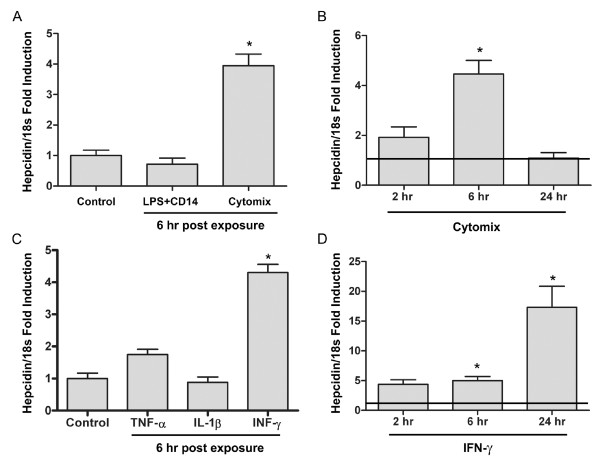
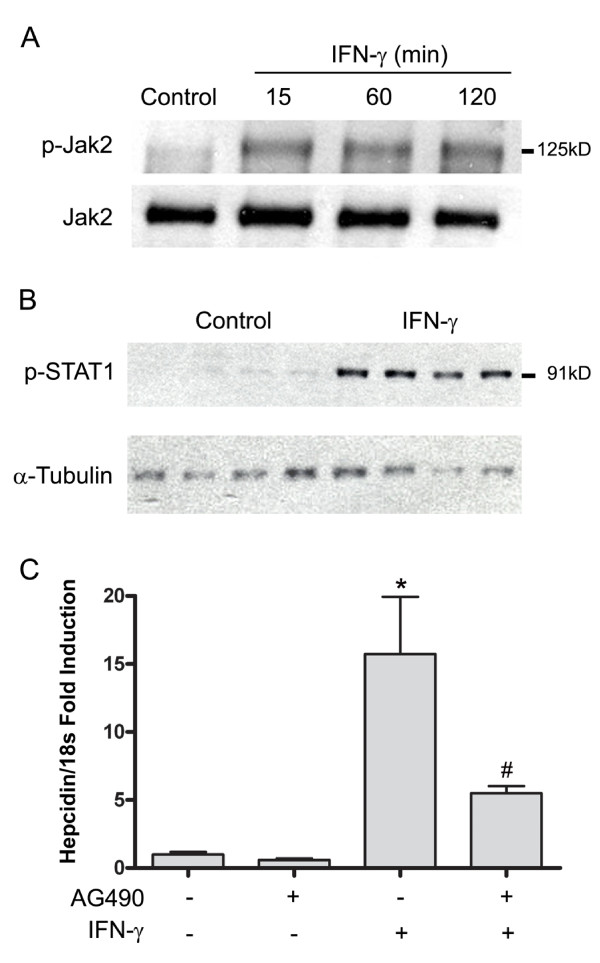
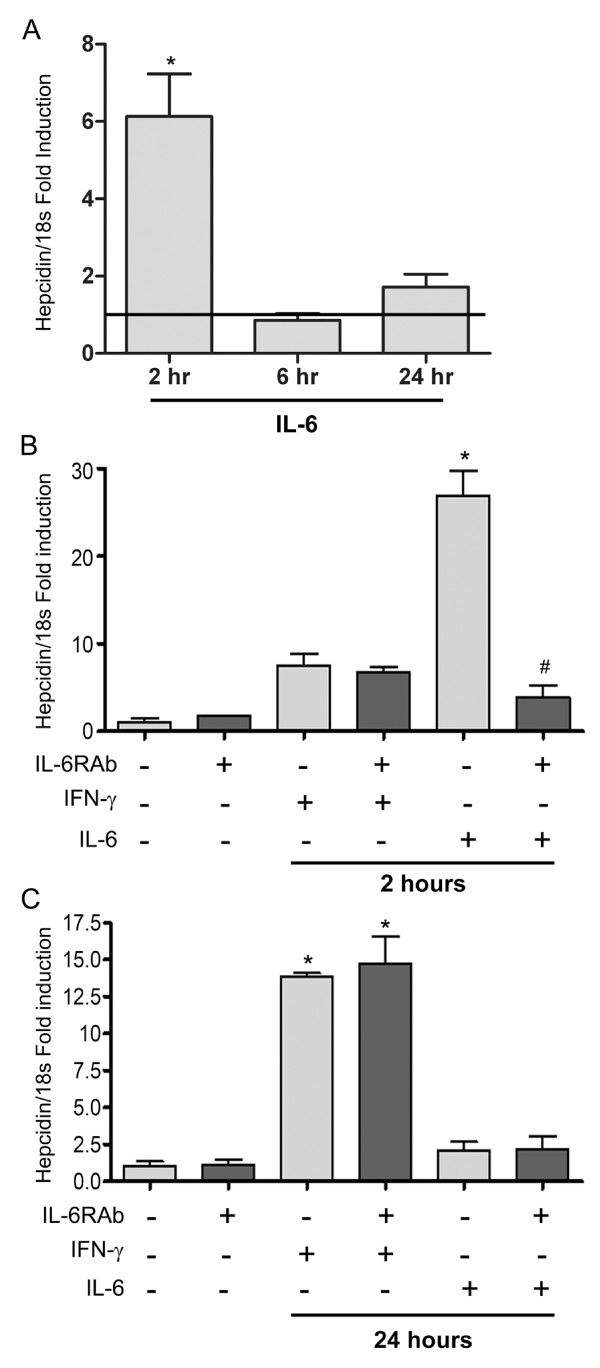
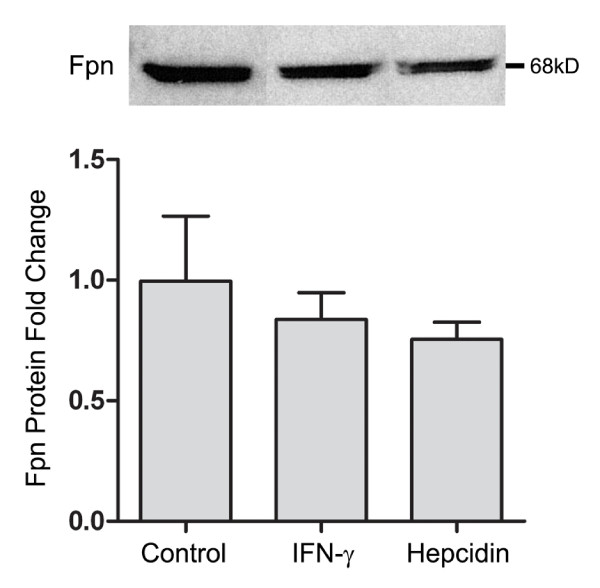
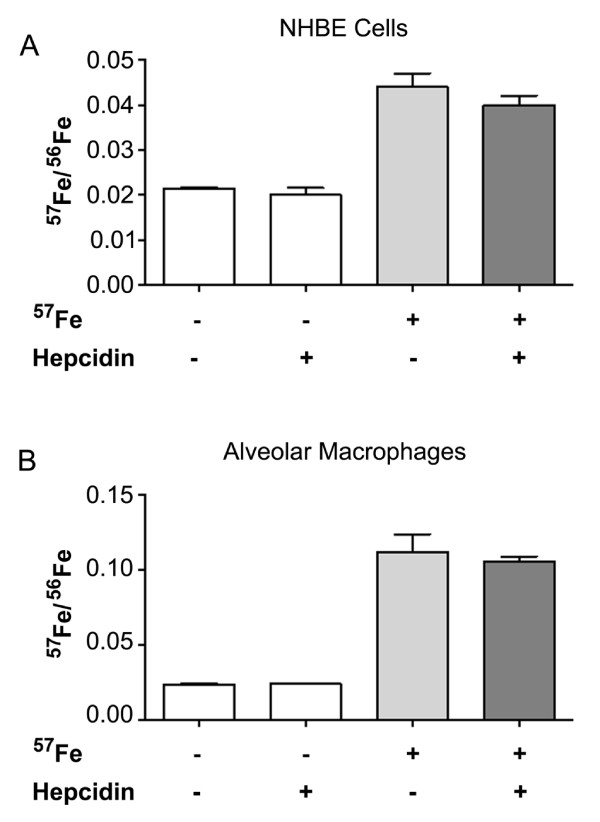
Background: Hepcidin serves as a major regulator of systemic iron metabolism and immune function. Airway epithelial cells have an extensive interface with the environment, and so must be able to respond locally to the presence of particulates, infection, and inflammation. Therefore, we hypothesized that hepcidin is expressed in airway epithelial cells and is regulated by early phase cytokines. Methods: Primary, differentiated human bronchial epithelial (NHBE) cells were used to assess hepcidin gene expression in response to IFN-γ, TNF-α, IL-1β, and IL-6, as well as to LPS + CD14. The role of the Janus Kinase-signal transducer and activator of transcription (JAK-STAT) pathway in IFN-γ-mediated hepcidin production was assessed by measuring JAK2 phophorylation and STAT1 nuclear translocation. Inductively coupled plasma mass spectroscopy (ICP-MS) was used to determine whether hepcidin altered iron transport in either NHBE cells or primary alveolar macrophages. Results: We demonstrate that differentiated human airway epithelial cells express hepcidin mRNA and that its expression is augmented in response to IFN-γ via activation of STAT1. However, while IFN-γ induced hepcidin gene expression, we were not able to demonstrate diminished expression of the iron export protein, ferroportin (Fpn), at the cell surface, or iron accumulation in airway epithelial in the presence of exogenous hepcidin. Conclusion: These data demonstrate that airway epithelial cells express hepcidin in the lung in response to IFN-γ. The presence of hepcidin in the airway does not appear to alter cellular iron transport, but may serve as a protective factor via its direct antimicrobial effects.
Overview
The claims and statistics of this paper haven’t been checked yet.
Free: it reads the open-access text and checks the first 5 claims that cite a source we can check. Create a free account to check every claim.
Integrity signals
Registry
Cites
Statistics
Figures
Verification
Claims the paper makes
The claims and statistics of this paper haven’t been checked yet.
Free: it reads the open-access text and checks the first 5 claims that cite a source we can check. Create a free account to check every claim.
Claims other papers make about this one
Each is checked against this paper’s own text: does it say what the citing paper says it does?
The source backs part of the claim, not all of it — or backs it for a different population, condition or comparison.
In the citing paper
“However, the major lung defence is performed by one class of macrophages (alveolar macrophages) that, interacting and responding to various stresses, are capable of iron scavenging too, protecting lung tissue against oxidative damage232425.”
From The interaction of asbestos and iron in lung tissue revealed by synchrotron-based scanning X-ray microscopy (2013) · cites this paper as [25]
Experimental — accuracy not yet measuredThe check wasn’t confident either way, so it gives no verdict — never disputed.
In the citing paper
“These macrophages are also involved in the pathogenesis of asbestosis and cancer52526.”
From The interaction of asbestos and iron in lung tissue revealed by synchrotron-based scanning X-ray microscopy (2013) · cites this paper as [25]
Experimental — accuracy not yet measured
Self-check
Percentages, sums and reported differences re-computed from the paper’s own numbers.
The self-check needs the paper’s full text.
Citations
Cites
Hepcidin Regulates Cellular Iron Efflux by Binding to Ferroportin and Inducing Its Internalization
Nemeth, E., Tuttle, M. S., Powelson, J., Vaughn, M. B., Donovan, A., Ward, D. M., Ganz, T., & Kaplan, J. (2004) · Science · doi:10.1126/science.1104742 · Cited by 4,803 · cited 1×
“The subsequent degradation of Fpn in the lysosomes leads to decreased cellular iron export and intracellular iron retention [5-8].”
Functional diversity of helper T lymphocytes
Abbas, A. K., Murphy, K. M., & Sher, A. (1996) · Nature · doi:10.1038/383787a0 · Cited by 4,450 · cited 1×
“Given the role of the Th1 cytokine, IFN-g in defense against intracellular pathogens by macrophages [7,39], we next investigated whether hepcidin produced by airway epithelial cells acts on alveolar macrophages to coordinate iron sequestration.”
Interferon-γ: an overview of signals, mechanisms and functions
Schroder, K., Hertzog, P. J., Ravasi, T., & Hume, D. A. (2004) · Journal of Leukocyte Biology · doi:10.1189/jlb.0603252 · Cited by 4,120 · cited 1×
“IFN-g classically signals through the JAK-STAT pathway [32], such that binding to the IFN-g receptor phosphorylates JAK2.”
BackgroundCELLULAR RESPONSES TO INTERFERON-γ
Boehm, U., Klamp, T., Groot, M., & Howard, J. C. (1997) · Annual Review of Immunology · doi:10.1146/annurev.immunol.15.1.749 · Cited by 2,890
Nemeth, E., Rivera, S., Gabayan, V., Keller, C., Taudorf, S., Pedersen, B. K., & Ganz, T. (2004) · Journal of Clinical Investigation · doi:10.1172/jci200420945 · Cited by 2,650
Hepcidin, a urinary antimicrobial peptide synthesized in the liver
Park, C. H., Valore, E. V., Waring, A. J., & Ganz, T. (2001) · Journal of Biological Chemistry · doi:10.1074/jbc.m008922200 · Cited by 2,168 · cited 4×
“Initial identification of hepcidin, or liver-expressed antimicrobial peptide (LEAP-1), was based on the presence of structural features and a spectrum of antimicrobial activity that are very similar to the defensin peptide family [3,15].”
InfluentialHepcidin, a key regulator of iron metabolism and mediator of anemia of inflammation
Ganz, T. (2003) · Blood · doi:10.1182/blood-2003-03-0672 · Cited by 1,544 · cited 1×
“The 25-amino acid peptide is secreted predominantly by the liver in response to anemia, hypoxia, and inflammation [1-4].”
Hepcidin, a putative mediator of anemia of inflammation, is a type II acute-phase protein
Nemeth, E., Valore, E. V., Territo, M., Schiller, G., Lichtenstein, A., & Ganz, T. (2003) · Blood · doi:10.1182/blood-2002-10-3235 · Cited by 1,417 · cited 1×
“We examined the effect of increased hepcidin on cell surface expression of Fpn in NHBE cells treated with either IFN-g for 24 hours or exogenous hepcidin for 2 hours at a concentration consistent with measurements of serum hepcidin in patients with anemia of chronic disease or iron overload [24].”
LEAP-1, a novel highly disulfide-bonded human peptide, exhibits antimicrobial activity
Krause, A., Neitz, S., Mägert, H.-J., Schulz, A., Forssmann, W.-G., Schulz-Knappe, P., & Adermann, K. (2000) · FEBS Letters · doi:10.1016/s0014-5793(00)01920-7 · Cited by 1,324 · cited 5×
“Although the primary function of hepcidin is considered to be the regulation of iron homeostasis, hepcidin was initially identified by its close structural and functional resemblance to the defensin antimicrobial peptides [3,15].”
InfluentialNicolas, G., Chauvet, C., Viatte, L., Danan, J. L., Bigard, X., Devaux, I., Beaumont, C., Kahn, A., & Vaulont, S. (2002) · Journal of Clinical Investigation · doi:10.1172/jci0215686 · Cited by 1,214 · cited 3×
“Locally, hepcidin is expressed in numerous cell types including macrophages, myocytes, and neurons, where it responds in a tissue specific manner to alterations in iron content, changes in oxygen tension, and the presence of inflammation [1,7,9-11].”
Bone morphogenetic protein signaling by hemojuvelin regulates hepcidin expression
Babitt, J. L., Huang, F. W., Wrighting, D. M., Xia, Y., Sidis, Y., Samad, T. A., Campagna, J. A., Chung, R. T., Schneyer, A. L., Woolf, C. J., et al. (2006) · Nature Genetics · doi:10.1038/ng1777 · Cited by 1,026 · cited 1×
“Rather, IL-6-induced hepcidin expression occurred much earlier than that mediated by IFN-g, suggesting that these two inflammatory cytokines may provide a concerted response to infection [35,38], and thus an additional means to fine tune the regulation of hepcidin.”
Interleukin-6 induces hepcidin expression through STAT3
Wrighting, D. M., & Andrews, N. C. (2006) · Blood · doi:10.1182/blood-2006-06-027631 · Cited by 983 · cited 5×
“Hepcidin expression is strongly regulated by IL-6 in a number of cell types [26,37].”
InfluentialForging a field: the golden age of iron biology.
Andrews, N. C. (2008) · Blood · doi:10.1182/blood-2007-12-077388 · Cited by 623
Regulation of hepcidin transcription by interleukin-1 and interleukin-6
Lee, P., Peng, H., Gelbart, T., Wang, L., & Beutler, E. (2005) · Proceedings of the National Academy of Sciences · doi:10.1073/pnas.0409808102 · Cited by 543 · cited 1×
“The hepcidin peptide is predominantly synthesized in the liver where it is released into the circulation to control systemic iron metabolism in response to serum iron content and the presence of hypoxia or inflammation [1,26,27].”
The Molecular Mechanism of Hepcidin-mediated Ferroportin Down-Regulation
De Domenico, I., Ward, D. M., Langelier, C., Vaughn, M. B., Nemeth, E., Sundquist, W. I., Ganz, T., Musci, G., & Kaplan, J. (2007) · Molecular Biology of the Cell · doi:10.1091/mbc.e07-01-0060 · Cited by 434
The innate immune response of the respiratory epithelium: Innate immunity in the airway
Diamond, G., Legarda, D., & Ryan, L. K. (2000) · Immunological Reviews · doi:10.1034/j.1600-065x.2000.917304.x · Cited by 422 · cited 1×
“To achieve this, epithelial cells and macrophages of the lung have developed coordinated defense mechanisms that include mucociliary clearance, modulation of macrophage activation, and secretion of antimicrobial peptides [42,43].”
The response of Pseudomonas aeruginosa to iron: genetics, biochemistry and virulence
Vasil, M. L., & Ochsner, U. A. (1999) · Molecular Microbiology · doi:10.1046/j.1365-2958.1999.01586.x · Cited by 366 · cited 1×
“Iron is an essential nutrient for growth and development of all organisms, and its availability closely correlates with bacterial virulence [12-14].”
Frazer, D. M., Wilkins, S. J., Becker, E. M., Vulpe, C. D., Mckie, A. T., Trinder, D., & Anderson, G. J. (2002) · Gastroenterology · doi:10.1053/gast.2002.35353 · Cited by 343 · cited 1×
“The subsequent degradation of Fpn in the lysosomes leads to decreased cellular iron export and intracellular iron retention [5-8].”
Toxic Trace Elements Associated with Airborne Particulate Matter: A Review
Schroeder, W. H., Dobson, M., Kane, D. M., & Johnson, N. D. (1987) · JAPCA · doi:10.1080/08940630.1987.10466321 · Cited by 320 · cited 1×
“An essential component of this is to prevent the unregulated access of host metal to microbes [17].”
Becker, M. N., Diamond, G., Verghese, M. W., & Randell, S. H. (2000) · Journal of Biological Chemistry · doi:10.1074/jbc.m000184200 · Cited by 308
McLoughlin, R. M., Witowski, J., Robson, R. L., Wilkinson, T. S., Hurst, S. M., Williams, A. S., Williams, J. D., Rose-John, S., Jones, S. A., & Topley, N. (2003) · Journal of Clinical Investigation · doi:10.1172/jci17129 · Cited by 281
Iron and infection: the heart of the matter
Bullen, J. J., Rogers, H. J., Spalding, P. B., & Ward, C. G. (2005) · FEMS Immunology & Medical Microbiology · doi:10.1016/j.femsim.2004.11.010 · Cited by 273 · cited 1×
“Iron is an essential nutrient for growth and development of all organisms, and its availability closely correlates with bacterial virulence [12-14].”
Ganz, T., & Lehrer, R. I. (1995) · Pharmacology & Therapeutics · doi:10.1016/0163-7258(94)00076-f · Cited by 261
Expression and localization of hepcidin in macrophages: a role in host defense against tuberculosis
Sow, F. B., Florence, W. C., Satoskar, A. R., Schlesinger, L. S., Zwilling, B. S., & Lafuse, W. P. (2007) · Journal of Leukocyte Biology · doi:10.1189/jlb.0407216 · Cited by 229 · cited 5×
“While response to IL-6 has been established in a number of cell types [10,26], hepcidin induction by IFN-g alone has not been reported.”
InfluentialIron depletion limits intracellular bacterial growth in macrophages
Paradkar, P. N., De Domenico, I., Durchfort, N., Zohn, I., Kaplan, J., & Ward, D. M. (2008) · Blood · doi:10.1182/blood-2007-12-126854 · Cited by 216 · cited 1×
“Further, infected murine bone marrow macrophages treated with exogenous hepcidin demonstrated internalized cell surface Fpn, increased cellular iron retention, and enhanced growth of intracellular organisms [41].”
Endotoxin responsiveness of human airway epithelia is limited by low expression of MD-2
Jia, H. P., Kline, J. N., Penisten, A., Apicella, M. A., Gioannini, T. L., Weiss, J., & McCray, P. B. (2004) · American Journal of Physiology-Lung Cellular and Molecular Physiology · doi:10.1152/ajplung.00377.2003 · Cited by 158
Interferon‐γ limits the availability of iron for intramacrophage Salmonella typhimurium
Nairz, M., Fritsche, G., Brunner, P., Talasz, H., Hantke, K., & Weiss, G. (2008) · European Journal of Immunology · doi:10.1002/eji.200738056 · Cited by 151
Verga Falzacappa, M. V., Casanovas, G., Hentze, M. W., & Muckenthaler, M. U. (2008) · Journal of Molecular Medicine · doi:10.1007/s00109-008-0313-7 · Cited by 146 · cited 2×
“Rather, IL-6-induced hepcidin expression occurred much earlier than that mediated by IFN-g, suggesting that these two inflammatory cytokines may provide a concerted response to infection [35,38], and thus an additional means to fine tune the regulation of hepcidin.”
Krunkosky, T. M., Fischer, B. M., Martin, L. D., Jones, N., Akley, N. J., & Adler, K. B. (2000) · American Journal of Respiratory Cell and Molecular Biology · doi:10.1165/ajrcmb.22.6.3925 · Cited by 145
Hepcidin expression and iron transport in alveolar macrophages
Nguyen, N.-B., Callaghan, K. D., Ghio, A. J., Haile, D. J., & Yang, F. (2006) · American Journal of Physiology-Lung Cellular and Molecular Physiology · doi:10.1152/ajplung.00484.2005 · Cited by 143 · cited 5×
“The subsequent degradation of Fpn in the lysosomes leads to decreased cellular iron export and intracellular iron retention [5-8].”
InfluentialSelf-citationKim, S., & Ponka, P. (2000) · Journal of Biological Chemistry · doi:10.1074/jbc.275.9.6220 · Cited by 142
Role of hepcidin in murine brain iron metabolism
Wang, S.-M., Fu, L.-J., Duan, X.-L., Crooks, D. R., Yu, P., Qian, Z.-M., Di, X.-J., Li, J., Rouault, T. A., & Chang, Y.-Z. (2010) · Cellular and Molecular Life Sciences · doi:10.1007/s00018-009-0167-3 · Cited by 125
The iron cycle and oxidative stress in the lung
Turi, J. L., Yang, F., Garrick, M. D., Piantadosi, C. A., & Ghio, A. J. (2004) · Free Radical Biology and Medicine · doi:10.1016/j.freeradbiomed.2003.12.008 · Cited by 125 · cited 1×
“Because iron metabolism in the lung requires coordination between epithelial cells and macrophages [25], we next evaluated whether hepcidin released by airway epithelial cells could impact iron transport in”
Self-citationPatruta, S., & Hörl, W. H. (1999) · Kidney International · doi:10.1046/j.1523-1755.1999.055suppl.69125.x · Cited by 112
Airway epithelial cells modify immune responses by inducing an anti‐inflammatory microenvironment
Mayer, A. K., Bartz, H., Fey, F., Schmidt, L. M., & Dalpke, A. H. (2008) · European Journal of Immunology · doi:10.1002/eji.200737936 · Cited by 109
Pathways for the regulation of interferon-γ-inducible genes by iron in human monocytic cells
Oexle, H., Kaser, A., Möst, J., Bellmann-Weiler, R., Werner, E. R., Werner-Felmayer, G., & Weiss, G. (2003) · Journal of Leukocyte Biology · doi:10.1189/jlb.0802420 · Cited by 108 · cited 1×
“IFN-g decreases the expression of the transferrin receptor and ferritin [30,31] and thus, contributes to antimicrobial defense by limiting iron availability.”
Truksa, J., Lee, P., & Beutler, E. (2009) · Blood · doi:10.1182/blood-2008-05-160184 · Cited by 106 · cited 1×
“This is reminiscent of the coordinated transcriptional activation of hepcidin in response to IL-6, which requires activation of both the STAT3 and BMPresponse elements [35], and supports the idea that complex transcriptional regulation of hepcidin is required for precise coordination of iron availability in the face o…”
Of JAKs, STATs, blind watchmakers, jeeps and trains
Kerr, I. M., Costa‐Pereira, A. P., Lillemeier, B. F., & Strobl, B. (2003) · FEBS Letters · doi:10.1016/s0014-5793(03)00411-3 · Cited by 92 · cited 1×
“The lack of complete inhibition of IFN-g-induced hepcidin expression in our cells also implies that additional signaling pathways are required [34].”
Sow, F. B., Alvarez, G. R., Gross, R. P., Satoskar, A. R., Schlesinger, L. S., Zwilling, B. S., & Lafuse, W. P. (2009) · Journal of Leukocyte Biology · doi:10.1189/jlb.1208719 · Cited by 83
Isoda, M., Hanawa, H., Watanabe, R., Yoshida, T., Toba, K., Yoshida, K., Kojima, M., Otaki, K., Hao, K., Ding, L., et al. (2009) · The Journal of Nutritional Biochemistry · doi:10.1016/j.jnutbio.2009.04.009 · Cited by 71 · cited 2×
“Locally, hepcidin is expressed in numerous cell types including macrophages, myocytes, and neurons, where it responds in a tissue specific manner to alterations in iron content, changes in oxygen tension, and the presence of inflammation [1,7,9-11].”
TNF, IFN-γ, and endotoxin increase expression of DMT1 in bronchial epithelial cells
Wang, X., Garrick, M. D., Yang, F., Dailey, L. A., Piantadosi, C. A., & Ghio, A. J. (2005) · American Journal of Physiology-Lung Cellular and Molecular Physiology · doi:10.1152/ajplung.00428.2003 · Cited by 51
Self-citationHepcidin expression by human monocytes in response to adhesion and pro-inflammatory cytokines
Zhang, X., & Rovin, B. H. (2010) · Biochimica et Biophysica Acta (BBA) - General Subjects · doi:10.1016/j.bbagen.2010.08.005 · Cited by 48
Apical location of ferroportin 1 in airway epithelia and its role in iron detoxification in the lung
Yang, F., Haile, D. J., Wang, X., Dailey, L. A., Stonehuerner, J. G., & Ghio, A. J. (2005) · American Journal of Physiology-Lung Cellular and Molecular Physiology · doi:10.1152/ajplung.00456.2004 · Cited by 47 · cited 2×
“The pattern of regulation of the iron export protein, Fpn, in the lung suggests that it serves an iron detoxification function rather than the nutritive purpose of iron transporters in the duodenal epithelial cells [18].”
Self-citation
Cited by
Urrutia, P., Aguirre, P., Esparza, A., Tapia, V., Mena, N. P., Arredondo, M., González‐Billault, C., & Núñez, M. T. (2013) · Journal of Neurochemistry · doi:10.1111/jnc.12244 · Cited by 364
Role of iron in the pathogenesis of respiratory disease
Ali, M. K., Kim, R., Karim, R., Mayall, J., Martin, K. L., Shahandeh, A., Abbasian, F., Starkey, M. R., Loustaud-Ratti, V., Johnstone, D. M., et al. (2017) · The International Journal of Biochemistry & Cell Biology · doi:10.1016/j.biocel.2017.05.003 · Cited by 124
Iron Homeostasis in the Lungs—A Balance between Health and Disease
Neves, J., Haider, T., Gassmann, M., & Muckenthaler, M. U. (2019) · Pharmaceuticals · doi:10.3390/ph12010005 · Cited by 94
“Consistently, others showed that an increase in hepcidin expression in human bronchial epithelial cells in vitro does not cause a decrease in FPN protein levels [90].”
BackgroundPascolo, L., Gianoncelli, A., Schneider, G., Salomé, M., Schneider, M., Calligaro, C., Kiskinova, M., Melato, M., & Rizzardi, C. (2013) · Scientific Reports · doi:10.1038/srep01123 · Cited by 88
Hu, Y., Huang, Y., Zong, L., Lin, J., Liu, X., & Ning, S. (2024) · Cell Death Discovery · doi:10.1038/s41420-024-02078-0 · Cited by 90
“Although hepcidin primarily originates from hepatic sources, an in vitro study revealed that interferon-γ (IFN-γ ) regulates hepcidin expression in AECs without signi fi cantly impacting iron transport in these cells or alveolar macrophages [107].”
Background
Metadata
- Authors
- Frazier, M. D., Mamo, L. B., Ghio, A. J., & Turi, J. L.
- Affiliations
- Marshall University (US)
- Duke Medical Center (US)
- Environmental Protection Agency (US)
- Corresponding author
- Turi, Jennifer L
- ORCID
- Ghio, Andrew J
- Venue
- Respiratory Research
- Published
- 2011-12
- Volume
- 12
- Issue
- 1
- Pages
- 100-100
- ISSN
- 1465-9921 (ISSN-L)
- 1465-993X
- PMC
- PMC3160958
- OpenAlex
- W2150926825
- Cited by
- 64
- References
- 44
- Citations by year
- 2026: 4 · 2025: 3 · 2024: 4 · 2022: 12 · 2021: 4 · 2020: 4 · 2019: 6 · 2018: 2 · 2017: 4 · 2016: 2 · 2015: 4 · 2014: 7 · 2013: 4 · 2012: 4
- FWCI
- 3.29
- Type
- journal article
- Language
- en
- Open access
- gold
- doi.org
- Licence
- Locations
- Respiratory Research (publishedVersion, cc-by)
- Europe PMC (PubMed Central) (publishedVersion, cc-by)
- PubMed Central (publishedVersion, cc-by)
- PubMed (publishedVersion)
- DOAJ (DOAJ: Directory of Open Access Journals) (submittedVersion)
- Funders
- Children's Miracle Network Hospitals
- National Institutes of Health (5k08hl081269-04)
- National Heart, Lung, and Blood Institute (HL-081269)
- Topics
- Health Sciences › Medicine › Hematology › Iron Metabolism and Disorders
- Life Sciences › Immunology and Microbiology › Immunology › Cytokine Signaling Pathways and Interactions
- Life Sciences › Biochemistry, Genetics and Molecular Biology › Cancer Research › Ferroptosis and cancer prognosis
- Keywords
- hepcidin, airway epithelial cells, interferon-gamma, STAT1, JAK/STAT signaling, iron metabolism, ferroportin, iron export, bronchial epithelial cells, alveolar macrophages, TNF-α, IL-1β, interleukin-6, lipopolysaccharide, antimicrobial activity
- MeSH terms
- Ferroportin, Adolescent, Adult, Bronchi, Cell Differentiation, Cells, Cultured, Epithelial Cells, Humans, Interferon-gamma, Iron, Phosphorylation, RNA, Messenger, Spectrophotometry, Atomic, Time Factors, Macrophages, Alveolar, Ion Transport, Inflammation Mediators, Respiratory Mucosa, Active Transport, Cell Nucleus, Antimicrobial Cationic Peptides, Cation Transport Proteins, STAT1 Transcription Factor, Janus Kinase 2, Hepcidins
About these checks
Registry, retraction, Cites and statistics results are computed, not judged, with one exception: a printed reference that no index lists is read once by a model before it counts as a citation error. Claims are extracted by a model and kept only when their quote appears verbatim in the text; each cited source is then checked, with a model’s help, for whether it says what the claim relies on. Those verdicts can be wrong — read the claim’s quote and the cited source before relying on one.
Statistics and arithmetic are recomputed, not judged.
Confidence bands are shown only for fields calibrated on our annotated test set. None is calibrated yet, so no band is shown.
What counts as a claim ›How we measure confidence ›How we check this ›
Are you an author, or do you see a problem with this page? Request a review
Data sources
Bibliographic data: Semantic Scholar, OpenAlex, Crossref.
Contains information from the Semantic Scholar Academic Graph Datasets, made available under the ODC Attribution License (ODC-BY 1.0).
Semantic Scholar’s data is described in: Kinney, R., et al. (2023). The Semantic Scholar Open Data Platform. arXiv:2301.10140.
