

Weight and metabolic effects of cpap in obstructive sleep apnea patients with obesity
Open accessThe DOI matches its Crossref record; 46 of the 47 references it cites were found in a registry or an index.
Abstract
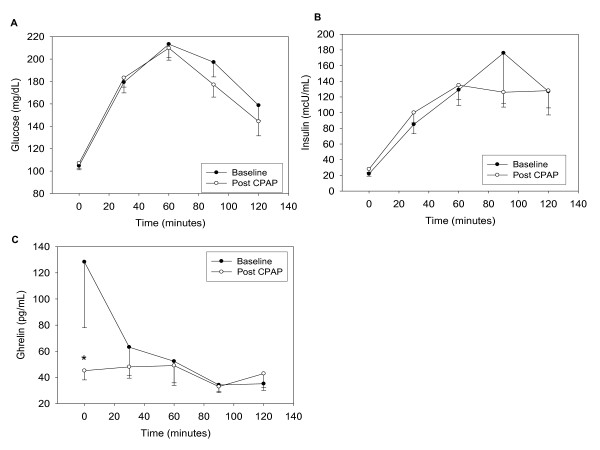
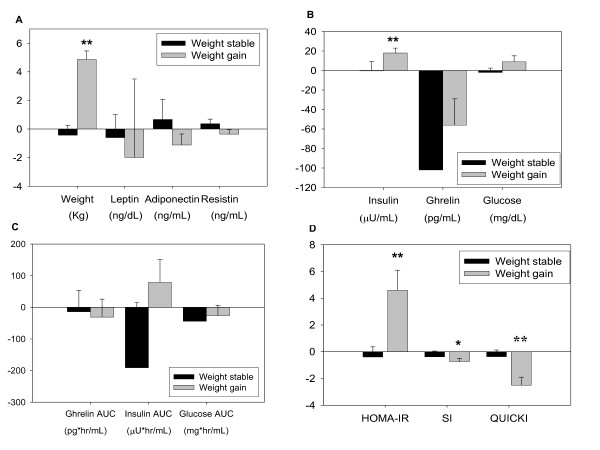
Background: Obstructive sleep apnea (OSA) is associated with obesity, insulin resistance (IR) and diabetes. Continuous positive airway pressure (CPAP) rapidly mitigates OSA in obese subjects but its metabolic effects are not well-characterized. We postulated that CPAP will decrease IR, ghrelin and resistin and increase adiponectin levels in this setting. Methods: In a pre- and post-treatment, within-subject design, insulin and appetite-regulating hormones were assayed in 20 obese subjects with OSA before and after 6 months of CPAP use. Primary outcome measures included glucose, insulin, and IR levels. Other measures included ghrelin, leptin, adiponectin and resistin levels. Body weight change were recorded and used to examine the relationship between glucose regulation and appetite-regulating hormones. Results: CPAP effectively improved hypoxia. However, subjects had increased insulin and IR. Fasting ghrelin decreased significantly while leptin, adiponectin and resistin remained unchanged. Forty percent of patients gained weight significantly. Changes in body weight directly correlated with changes in insulin and IR. Ghrelin changes inversely correlated with changes in IR but did not change as a function of weight. Conclusions: Weight change rather than elimination of hypoxia modulated alterations in IR in obese patients with OSA during the first six months of CPAP therapy.
Overview
The claims and statistics of this paper haven’t been checked yet.
Free: it reads the open-access text and checks the first 5 claims that cite a source we can check. Create a free account to check every claim.
Integrity signals
Registry
Cites
Statistics
Figures
Verification
Claims the paper makes
The claims and statistics of this paper haven’t been checked yet.
Free: it reads the open-access text and checks the first 5 claims that cite a source we can check. Create a free account to check every claim.
Claims other papers make about this one
Each is checked against this paper’s own text: does it say what the citing paper says it does?
The source backs part of the claim, not all of it — or backs it for a different population, condition or comparison.
In the citing paper
“Although untreated OSA is associated with weight gain”
From International Consensus Statement on Obstructive Sleep Apnea (2023) · cites this paper as [792]
Experimental — accuracy not yet measuredThe cited source says what the claim attributes to it.
In the citing paper
“CPAP adherence has not been associated with weight loss and may even lead to weight gain.”
From International Consensus Statement on Obstructive Sleep Apnea (2023) · cites this paper as [792]
Self-check
Percentages, sums and reported differences re-computed from the paper’s own numbers.
The self-check needs the paper’s full text.
Citations
Cites
Matthews, D. R., Hosker, J. P., Rudenski, A. S., Naylor, B. A., Treacher, D. F., & Turner, R. C. (1985) · Diabetologia · doi:10.1007/bf00280883 · Cited by 31,502
Matsuda, M., & DeFronzo, R. A. (1999) · Diabetes Care · doi:10.2337/diacare.22.9.1462 · Cited by 5,621
Leptin and the regulation of body weight in mammals
Friedman, J. M., & Halaas, J. L. (1998) · Nature · doi:10.1038/27376 · Cited by 5,405 · cited 1×
“It is elevated in obesity and its administration suppresses appetite and induces weight loss [8].”
BackgroundEpidemiology of Obstructive Sleep Apnea: A Population Health Perspective
Young, T., Peppard, P. E., & Gottlieb, D. J. (2002) · American Journal of Respiratory and Critical Care Medicine · doi:10.1164/rccm.2109080 · Cited by 4,244 · cited 1×
“Obesity is a strong risk factor for OSA [3] and both obesity and OSA are associated with increased insulin resistance and diabetes [4].”
BackgroundKatz, A., Nambi, S. S., Mather, K., Baron, A. D., Follmann, D. A., Sullivan, G., & Quon, M. J. (2000) · The Journal of Clinical Endocrinology & Metabolism · doi:10.1210/jcem.85.7.6661 · Cited by 3,931 · cited 1×
“Estimates of insulin resistance from both indices correlate well with estimates from the “gold standard” hyperinsulinemic euglycemic clamp method [10,11].”
MethodGhrelin enhances appetite and increases food intake in humans
Wren, A. M., Seal, L. J., Cohen, M. A., Brynes, A. E., Frost, G. S., Murphy, K. G., Dhillo, W. S., Ghatei, M. A., & Bloom, S. R. (2001) · The Journal of Clinical Endocrinology & Metabolism · doi:10.1210/jcem.86.12.8111 · Cited by 2,494 · cited 1×
“Administration of ghrelin increases adiposity, food intake and body weight [6].”
BackgroundPlasma Ghrelin Levels after Diet-Induced Weight Loss or Gastric Bypass Surgery
Cummings, D. E., Weigle, D. S., Frayo, R. S., Breen, P. A., Ma, M. K., Dellinger, E. P., & Purnell, J. Q. (2002) · New England Journal of Medicine · doi:10.1056/nejmoa012908 · Cited by 2,241
Obstructive Sleep Apnea Is Independently Associated with Insulin Resistance
Ip, M. S. M., Lam, B., Ng, M. M. T., Lam, W. K., Tsang, K. W. T., & Lam, K. S. L. (2002) · American Journal of Respiratory and Critical Care Medicine · doi:10.1164/ajrccm.165.5.2103001 · Cited by 1,300 · cited 2×
“Several reports have demonstrated an association between OSA and insulin resistance [2,21-24].”
BackgroundResultSleep-disordered Breathing and Insulin Resistance in Middle-aged and Overweight Men
PUNJABI, N. M., SORKIN, J. D., KATZEL, L. I., GOLDBERG, A. P., SCHWARTZ, A. R., & SMITH, P. L. (2002) · American Journal of Respiratory and Critical Care Medicine · doi:10.1164/ajrccm.165.5.2104087 · Cited by 962
Becker, H. F., Jerrentrup, A., Ploch, T., Grote, L., Penzel, T., Sullivan, C. E., & Peter, J. H. (2003) · Circulation · doi:10.1161/01.cir.0000042706.47107.7a · Cited by 931
Cited by
International Consensus Statement on Obstructive Sleep Apnea
Chang, J. L., Goldberg, A. N., Alt, J. A., Mohammed, A., Ashbrook, L., Auckley, D., Ayappa, I., Bakhtiar, H., Barrera, J. E., Bartley, B. L., et al. (2023) · International Forum of Allergy & Rhinology · doi:10.1002/alr.23079 · Cited by 350
Drager, L. F., Brunoni, A. R., Jenner, R., Lorenzi-Filho, G., Bensenor, I. M., & Lotufo, P. A. (2015) · Thorax · doi:10.1136/thoraxjnl-2014-205361 · Cited by 277
Obstructive Sleep Apnea and Type 2 Diabetes: Is There a Link?
Pamidi, S., & Tasali, E. (2012) · Frontiers in Neurology · doi:10.3389/fneur.2012.00126 · Cited by 231
“…were negative (Saini et al., 1993; Cooper et al., 1995; Stoohs et al., 1996; Saarelainen et al., 1997; Ip et al., 2000; Smurra et al., 2001; Czupryniak et al., 2005; Trenell et al., 2007; Vgontzas et al., 2008; Carneiro et al., 2009; Comondore et al., 2009; Murri et al., 2009; Garcia et al., 2011).”
Morselli, L. L., Guyon, A., & Spiegel, K. (2012) · Pflügers Archiv - European Journal of Physiology · doi:10.1007/s00424-011-1053-z · Cited by 199
Role of sleep quality in the metabolic syndrome
Gozal, D., Dumin, M., & Koren, D. (2016) · Diabetes, Metabolic Syndrome and Obesity: Targets and Therapy · doi:10.2147/dmso.s95120 · Cited by 196
“ment (which appeared to be primarily due to CPAP-associated weight gain).(238) Recently, a randomized, parallel-group”
The reciprocal interaction between obesity and obstructive sleep apnoea
Ong, C. W., O’Driscoll, D. M., Truby, H., Naughton, M. T., & Hamilton, G. S. (2012) · Sleep Medicine Reviews · doi:10.1016/j.smrv.2012.05.002 · Cited by 188
Sleep apnea and type 2 diabetes
Muraki, I., Wada, H., & Tanigawa, T. (2018) · Journal of Diabetes Investigation · doi:10.1111/jdi.12823 · Cited by 183
Lin, J., Jiang, Y., Wang, G., Meng, M., Zhu, Q., Mei, H., Liu, S., & Jiang, F. (2020) · Obesity Reviews · doi:10.1111/obr.13051 · Cited by 126
Nicholl, D. D. M., Hanly, P. J., Poulin, M. J., Handley, G. B., Hemmelgarn, B. R., Sola, D. Y., & Ahmed, S. B. (2014) · American Journal of Respiratory and Critical Care Medicine · doi:10.1164/rccm.201403-0526oc · Cited by 119
Quan, S. F., Budhiraja, R., Clarke, D. P., Goodwin, J. L., Gottlieb, D. J., Nichols, D. A., Simon, R., Smith, T. W., Walsh, J. K., & Kushida, C. A. (2013) · Journal of Clinical Sleep Medicine · doi:10.5664/jcsm.3064 · Cited by 133
“13,14,32 Furthermore, given our current findings, greater adherence would likely have made the differences in weight between CPAP and Sham even more striking.”
InfluentialYang, D., Liu, Z., Yang, H., & Luo, Q. (2012) · Sleep And Breathing · doi:10.1007/s11325-012-0680-8 · Cited by 120
Changes in Energy Metabolism after Continuous Positive Airway Pressure for Obstructive Sleep Apnea
Tachikawa, R., Ikeda, K., Minami, T., Matsumoto, T., Hamada, S., Murase, K., Tanizawa, K., Inouchi, M., Oga, T., Akamizu, T., et al. (2016) · American Journal of Respiratory and Critical Care Medicine · doi:10.1164/rccm.201511-2314oc · Cited by 100
Leptin: A biomarker for sleep disorders?
Pan, W., & Kastin, A. J. (2013) · Sleep Medicine Reviews · doi:10.1016/j.smrv.2013.07.003 · Cited by 105
Management of diabesity: Current concepts
Michaelidou, M., Pappachan, J. M., & Jeeyavudeen, M. S. (2023) · World Journal of Diabetes · doi:10.4239/wjd.v14.i4.396 · Cited by 149
Zonisamide reduces obstructive sleep apnoea: a randomised placebo-controlled study
Eskandari, D., Zou, D., Karimi, M., Stenlöf, K., Grote, L., & Hedner, J. A. (2014) · European Respiratory Journal · doi:10.1183/09031936.00158413 · Cited by 84
Role of Leptin in Obstructive Sleep Apnea
Imayama, I., & Prasad, B. (2017) · Annals of the American Thoracic Society · doi:10.1513/annalsats.201702-181fr · Cited by 76
Martínez-Cerón, E., Fernández-Navarro, I., & Rio, F. G. (2015) · Sleep Medicine Reviews · doi:10.1016/j.smrv.2015.03.002 · Cited by 77
“…in HOMA index Chung et al. (2011) [40] OSA patients without DM 51 ± 1 27.7 ± 3.7 64.9 ± 20 >4 25 None Fasting glucose and insulin, HOMA index 5 mo No changes in glucose or insulin resistance Garcia et al. (2011) [41] Obese OSA patients without DM 60 ± 2 36.5 ± 1.8 50 ± 6 5.3 ± 0.4 20 None…”
InfluentialChen, L., Kuang, J., Pei, J.-H., Chen, H.-M., Chen, Z., Li, Z.-W., Yang, H.-Z., Fu, X.-Y., Wang, L., Chen, Z.-J., et al. (2017) · European Journal of Internal Medicine · doi:10.1016/j.ejim.2016.11.010 · Cited by 57
“Wedid not include ISI as it was evaluated differently across the studies, including frequently sampled intravenous glucose tolerance test (FSIGTT) [36,42,62], HOMA-S [37,40,48,51], quantitative insulin sensitivity check index (QUICKI) [43,58], insulin sensitivity index for glycemia [Belfiore index] [49,63] and euglyce…”
MethodArchontogeorgis, K., Nena, E., Παπάνας, Ν., & Steiropoulos, P. (2014) · Pulmonary Medicine · doi:10.1155/2014/930535 · Cited by 62
“By contrast, several authors have failed to demonstrate an association between leptin levels and OSAS [123, 124].”
BackgroundArnardottir, E. S., Maislin, G., Jackson, N., Schwab, R. J., Benediktsdottir, B., Teff, K., Juliusson, S., Pack, A. I., & Gislason, T. (2013) · International Journal of Obesity · doi:10.1038/ijo.2012.138 · Cited by 53
Non-alcoholic fatty liver disease - the heart of the matter
Azzam, H., & Malnick, S. (2015) · World Journal of Hepatology · doi:10.4254/wjh.v7.i10.1369 · Cited by 55
Impact of CPAP on Activity Patterns and Diet in Patients with Obstructive Sleep Apnea (OSA)
Batool‐Anwar, S., Goodwin, J. L., Drescher, A. A., Baldwin, C. M., Simon, R., Smith, T. W., & Quan, S. F. (2014) · Journal of Clinical Sleep Medicine · doi:10.5664/jcsm.3686 · Cited by 54
“Mild 151 (14) 31 (13) 8 (11) 6 (15) 6 (7.”
Effects of continuous positive airway pressure on energy balance regulation: a systematic review
Shechter, A. (2016) · European Respiratory Journal · doi:10.1183/13993003.00689-2016 · Cited by 45
Enhanced recovery after bariatric surgery
Alvarez, A., Goudra, B. G., & Singh, P. M. (2017) · Current Opinion in Anaesthesiology · doi:10.1097/aco.0000000000000404 · Cited by 38
Endocrine Physiology in Relation to Sleep and Sleep Disturbances
Cauter, E. V., & Tasali, E. (2011) · Elsevier eBooks · doi:10.1016/b978-1-4160-6645-3.00026-8 · Cited by 50
Alves, E. D. S., Ackel-D’Elia, C., Luz, G. C. P., Cunha, T. C. A., Carneiro, G., Tufik, S., Bittencourt, L., & de Mello, M. T. (2012) · Sleep And Breathing · doi:10.1007/s11325-012-0729-8 · Cited by 43
“Weight alterations are associated with OSAS severity [23].”
Obstructive sleep apnoea, insulin resistance and adipocytokines
Lam, D. C.-L., Lam, K. S. L., & Ip, M. (2014) · Clinical Endocrinology · doi:10.1111/cen.12597 · Cited by 37
Chen, X., Niu, X., Xiao, Y., Dong, J., Lü, M., & Kong, W. (2014) · Otolaryngology · doi:10.1177/0194599814562719 · Cited by 40
Leptin and Asthma: What Are the Interactive Correlations?
Wang, Y., & Hu, C. (2022) · Biomolecules · doi:10.3390/biom12121780 · Cited by 30
Associations of Obstructive Sleep Apnea, Obestatin, Leptin, and Ghrelin with Gastroesophageal Reflux
Pardak, P., Filip, R., Woliński, J., & Krzaczek, M. (2021) · Journal of Clinical Medicine · doi:10.3390/jcm10215195 · Cited by 26
“, effective CPAP therapy led to a decrease in ghrelin levels [44,45,60,61].”
BackgroundMyllylä, M., Kurki, S., Anttalainen, U., Saaresranta, T., & Laitinen, T. (2016) · Journal of Clinical Sleep Medicine · doi:10.5664/jcsm.5680 · Cited by 22
“9–11,22,23 Stenlöf et al. 22 discovered that even though patients with untreated OSAS have increased energy expenditure (EE) levels during sleep, they often result in gaining weight.”
Effect of continuous positive airway pressure therapy on glucose control
Surani, S., & Subramanian, S. (2012) · World Journal of Diabetes · doi:10.4239/wjd.v3.i4.65 · Cited by 23
Chihara, Y., Akamizu, T., Azuma, M., Murase, K., Harada, Y., Tanizawa, K., Handa, T., Oga, T., Mishima, M., & Chin, K. (2015) · Journal of Clinical Sleep Medicine · doi:10.5664/jcsm.4942 · Cited by 24
Turnbull, C. D., Rossi, V. A., Santer, P., Schwarz, E. I., Stradling, J. R., Petousi, N., & Kohler, M. (2016) · Respirology · doi:10.1111/resp.12946 · Cited by 21
Hoyos, C. M., Murugan, S. M., Melehan, K. L., Yee, B. J., Phillips, C. L., Killick, R., Cayanan, E. A., WONG, K. K. H., Liu, P. Y., Grunstein, R. R., et al. (2018) · Journal of Sleep Research · doi:10.1111/jsr.12788 · Cited by 18
Zhang, P., Liu, J., Long, S.-Z., Xie, X., & Guo, Y. (2014) · Sleep And Breathing · doi:10.1007/s11325-014-0941-9 · Cited by 19
Pardak, P., Filip, R., & Woliński, J. (2022) · Journal of Clinical Medicine · doi:10.3390/jcm11072032 · Cited by 19
Schlatzer, C., Schwarz, E. I., & Kohler, M. (2014) · Chronic Respiratory Disease · doi:10.1177/1479972313516882 · Cited by 18
“Garcia et al.15 reported an unexpected increase in HOMA-IR and QUICKI in 23 patients with OSA (AHI 15 h 1) after 6 months of CPAP treatment.”
BackgroundEffect of Continuous Positive Airway Pressure on Type 2 Diabetes Mellitus and Glucose Metabolism
Gallegos, L., Dharia, T., & Gadegbeku, A. B. (2014) · Hospital Practice · doi:10.3810/hp.2014.04.1101 · Cited by 16
Dieu, H. D. T., Vo-Thi-Kim, A., Tran-Van, H., & Duong‐Quy, S. (2020) · Multidisciplinary Respiratory Medicine · doi:10.4081/mrm.2020.468 · Cited by 23
“The favorable effect of CPAP therapy in reduction of blood pressure [28,29] and its beneficial effect on metabolic syndrome have been reported [30,31].”
BackgroundOzcan, B., Blachot‐Minassian, B., Paradis, S., Mazière, L., Chambion-Diaz, M., Bouyon, S., Pépin, J., Pialoux, V., Arnaud, C., Moinard, C., et al. (2022) · Antioxidants · doi:10.3390/antiox11122326 · Cited by 15
Pleava, R. M., Mihaicuta, S. D., Șerban, C. L., Ardelean, C. L., Marincu, I., Gaiță, D. I., & Frent, S. (2020) · Journal of Clinical Medicine · doi:10.3390/jcm9092802 · Cited by 14
“Although CPAP treatment is a long-term therapy, there are few studies that show an effect of CPAP use in achieving weight loss [20].”
BackgroundBasoglu, O. K., Zou, D., Tasbakan, M. S., Hedner, J., Ryan, S., Verbraecken, J., Escourrou, P., Antalainen, U., Kvamme, J. A., Bonsignore, M. R., et al. (2018) · Journal of Sleep Research · doi:10.1111/jsr.12705 · Cited by 12
Uygur, F., Tanrıverdi, H., Can, M., Erboy, F., Altınsoy, B., Atalay, F., Örnek, T., Damar, M., Köktürk, F., & Tor, M. M. (2016) · Sleep And Breathing · doi:10.1007/s11325-016-1315-2 · Cited by 12
Managements for Obstructive Sleep Apnea in Adults: Review
Tserenpil, G., Gebre, M., Zergham, A. S., Sekhon, A. K., & Malik, B. H. (2020) · Cureus · doi:10.7759/cureus.9905 · Cited by 16
“Prevalence is even higher and reaches 98% in patients with BMI >40 [4,19].”
BackgroundEndocrine Physiology in Relation to Sleep and Sleep Disturbances
Cauter, E. V., & Tasali, E. (2016) · Elsevier eBooks · doi:10.1016/b978-0-323-24288-2.00020-9 · Cited by 13
Chen, L., Liu, J., Lin, L., Wu, Z., Li, H., Ye, Y.-M., Xu, Q.-Z., & Lin, Q.-C. (2015) · PLoS ONE · doi:10.1371/journal.pone.0136837 · Cited by 14
Impact of Continuous Positive Airway Pressure on Cardiovascular Risk Factors in High-Risk Patients
Zhao, Y. Y., & Redline, S. S. (2015) · Current Atherosclerosis Reports · doi:10.1007/s11883-015-0540-7 · Cited by 9
Chen, S., Wang, J., Wang, J., Gao, Q., Zhao, X., Guan, H., & Wang, T. (2022) · Sleep And Breathing · doi:10.1007/s11325-022-02705-z · Cited by 8
Tarantino, G., Citro, V., & Finelli, C. (2014) · Journal of Gastrointestinal and Liver Diseases · doi:10.15403/jgld.2014.1121.233.gvt · Cited by 9
Daneshvar, S., Seyedrezazadeh, E., Seyyedi, M., Jafari, S., Ansarin, A., Gilani, N., Mokhlesi, B., & Ansarin, K. (2025) · Sleep Medicine Reviews · doi:10.1016/j.smrv.2025.102187 · Cited by 5
Dupuy-McCauley, K. L., Benzo, R., & Barwise, A. K. (2022) · Journal of Clinical Sleep Medicine · doi:10.5664/jcsm.10354 · Cited by 6
Gender-specific change in leptin concentrations during long-term CPAP therapy
Aro, M., Anttalainen, U., Kurki, S. H., Irjala, K. M. A., Polo, O. J., & Saaresranta, T. (2019) · Sleep And Breathing · doi:10.1007/s11325-019-01846-y · Cited by 6
Wang, M., Tang, J., Pan, Z., Jiang, H., Hu, D., Zhu, B., Liang, Z., Zhao, X., & Li, Y. (2025) · Drug Design Development and Therapy · doi:10.2147/dddt.s498238 · Cited by 4
“32 In a study by Perger, 48 patients with class III obesity underwent PSG, and the mean Nadir SpO 2 was 73%, 28 which was below the threshold (75”
Oki, T., Kozu, Y., Hoshi, M., Itoda, Y., Furusho, N., Ozoe, R., Jinno, Y., Hirata, A., Kurosawa, Y., Yamada, S., et al. (2024) · Sleep Science · doi:10.1055/s-0043-1777779 · Cited by 5
Up, down, or no change: weight gain as an unwanted side effect of CPAP for obstructive sleep apnea
Brown, L. K. (2020) · Journal of Clinical Sleep Medicine · doi:10.5664/jcsm.8888 · Cited by 4
“These investigators utilized data from the Apnea Positive Pressure Long-Term Efficacy Study (APPLES), a prospective, randomized, double-blind sham-controlled clinical trial that involved the collaboration of 5 different sites in the United States.8 This was a robust study design involving a large cohort (n = 1,105) wi…”
MethodThe Metabolic Outcomes of Obstructive Sleep Apnea Surgery: A Scoping Review
Kutler, R. B., Caplan, I. F., Jelić, S., St‐Onge, M., & Cai, Y. (2025) · The Laryngoscope · doi:10.1002/lary.32255 · Cited by 4
“Similarly, CPAP has uncertain effects on glucose metabolism, with some studies reporting improvements in HOMA-IR and HbA1c but others finding no change or even worsening outcomes [29, 88–95].”
Choudhary, S. S., Khedkar, C. R., Aurangabadkar, G. M., Khan, S. M., & Nayse, J. (2024) · Cureus · doi:10.7759/cureus.57807 · Cited by 4
Medical Management of Obstructive Sleep Apnea
Min, J., & Kim, S. J. (2015) · Korean Journal of Medicine · doi:10.3904/kjm.2015.89.1.21 · Cited by 2
“지속형 양압기 치료(continuous positive airway pressure, CPAP)만 하는 경우에는 체중이 증가한다는 보고가 있어[13- 15], 늘 체중 감량을 염두에 두어야 한다.”
Yurgaky, J. M., Bastidas, A., Jhon, A., Montaña, J. A., & Ana María Arredondo, G. (2011) · Revista Med · doi:10.18359/rmed.1275 · Cited by 5
Shechter, A., Kovtun, K., & St‐Onge, M. (2016) · Physiology & Behavior · doi:10.1016/j.physbeh.2016.10.011 · Cited by 4
“Indeed, CPAP may alter EI by normalizing levels of hunger/satiety hormones, as was reported after CPAP use for ghrelin [4,5,11,23] and leptin [2,5,6,24–29].”
BackgroundWeighing the Impact of CPAP Therapy on Body Mass in Persons With OSA
Budhiraja, R., & Quan, S. F. (2019) · CHEST Journal · doi:10.1016/j.chest.2018.10.029 · Cited by 2
“One study found that increase in weight after CPAP therapy correlated with insulin resistance.(10) However, some recent studies involving a more detailed analysis of weight gain have suggested that the weight gain may actually result from an increase in lean mass rather than body fat.”
Koca, A. O., İriz, A., Hazır, B., Şemsi, R., Bilger, N., Dikmen, A. U., Dinçel, A. S., & Yetkin, İ. (2022) · European Archives of Oto-Rhino-Laryngology · doi:10.1007/s00405-022-07799-5 · Cited by 1
“Interestingly, it has been shown that PAP treatment in OSAS can reduce ghrelin levels independent of BMI [3, 15].”
BackgroundUlusoy, S., Yavuz, N., Dinç, M., & Acar, M. (2015) · ENT Updates · doi:10.2399/jmu.2015003010 · Cited by 1
“Our results thus support those of Quan et al.,[13] Redenius et al.,[12] and Garcia et al.[27] Moreover, we found that the extent of weight gain did not vary among devices.”
BackgroundInfluentialMao, Y., Ambrogini, E., Lendel, I., & Goulden, P. (2019) · Journal of Obesity and Chronic Diseases · doi:10.17756/jocd.2019-029 · Cited by 1
“However, the available evidence is conflicting, with some studies demonstrating that CPAP users lost weight [16], while others observed either no change [24-26] or increases in weight [18, 27, 28].”
BackgroundEffects of Obesity on OSA and Its Treatment
Jones, S. F., & Brito, V. (2014) · Springer eBooks · doi:10.1007/978-1-4939-1185-1_18
Bansal, A., & Yadav, P. K. (2013) · Indian Journal of Sleep Medicine · doi:10.5958/0974-0155.2014.01095.x
Continuous Positive Airway Pressure Use and Mild Obstructive Sleep Apnea Syndrome (OSAS)
Nelson, M. (2014) · UWM Digital Commons (University of Wisconsin–Milwaukee) · Cited by 1
Sleep Disturbances: Impact on Risk and Severity of Diabetes
Holes-Lewis, K. (2012) · Springer eBooks · doi:10.1007/978-1-4614-3492-4_11
LIvES: Lifestyle, Energy Expenditure, and Sleep in Obstructive Sleep Apnoea (A pilot study)
Edwards, S. B. (2016) · Otago University Research Archive (University of Otago)
Li, Z., Wu, W., Li, Y., Gu, L., Zhao, T., Tang, T., Zhou, X., & Qin, G. (2016) · Sleep and Biological Rhythms · doi:10.1007/s41105-016-0057-7
“At last, 10 articles, containing 2 clinical randomized controlled studies, which included 289 patients met the inclusion criteria were analyzed in meta-analysis [9–15, 17–19].”
BackgroundResultRole of adipokines in obstructive sleep apnea syndrome
Śmietanowska, M., Balcerzak, J., Cudnoch‐Jędrzejewska, A., Wysocki, J., & Niemczyk, K. (2015) · Polski Przegląd Otorynolaryngologiczny · doi:10.5604/20845308.1151456
“Absence of changes in plasma resistin levels upon CPAP treatment was confirmed several years later by Garcia et al. (2011).”
BackgroundSleep and its association with cardiometabolic risk factors in young adults
Hamidi, A. (2018) · UWA Profiles and Research Repository (UWA) · doi:10.4225/23/5ad43549ee0cf
“In a study of 20 obese males with a mean age of 60, Garcia et al(153) showed an increase in body weight (109.”
BackgroundResultTIẾP CẬN CHẨN ĐOÁN VÀ ĐIỀU TRỊ NGƯNG THỞ KHI NGỦ DO TẮC NGHẼN Ở NGƯỜI BÉO PHÌ
Võ, P. M. T., Phan, T. X. Q., & Trần, X. Q. (2023) · Tạp chí Y Dược học Cần Thơ · doi:10.58490/ctump.2023i67.2187
CPAP and cardiometabolic markers in obstructive sleep apnea: a nationwide retrospective cohort
Tsur, N., Edri, N., Dudkiewicz, D., Reuven, Y., Bsc, S. K., Alkan, U., & Bachar, G. Y. (2026) · Sleep Science and Practice · doi:10.1186/s41606-026-00173-y
Metadata
- Authors
- Garcia, J. M., Sharafkhaneh, H., Hirshkowitz, M., Elkhatib, R., & Sharafkhaneh, A.
- Affiliations
- Baylor College of Medicine (US)
- Michael E. DeBakey VA Medical Center (US)
- Corresponding author
- Sharafkhaneh, Amir
- Venue
- Respiratory Research
- Published
- 2011-12
- Volume
- 12
- Issue
- 1
- Pages
- 80-80
- ISSN
- 1465-9921 (ISSN-L)
- 1465-993X
- PMC
- PMC3146428
- OpenAlex
- W2158839902
- Semantic Scholar
- f9d3d5994d201c7431584cacf6d6c48aaac7b2c2
- Cited by
- 75
- References
- 47
- Citations by year
- 2026: 1 · 2025: 3 · 2024: 2 · 2023: 2 · 2022: 7 · 2021: 1 · 2020: 5 · 2019: 3 · 2018: 4 · 2017: 1 · 2016: 12 · 2015: 8 · 2014: 13 · 2013: 3 · 2012: 7
- FWCI
- 5.67
- Type
- journal article
- Language
- en
- Open access
- gold
- doi.org
- Licence
- Locations
- Respiratory Research (publishedVersion, cc-by)
- Europe PMC (PubMed Central) (publishedVersion, cc-by)
- PubMed Central (publishedVersion, cc-by)
- PubMed (publishedVersion)
- DOAJ (DOAJ: Directory of Open Access Journals) (submittedVersion)
- Funders
- U.S. Department of Veterans Affairs
- National Institutes of Health (NIH K12)
- Topics
- Health Sciences › Medicine › Physiology (medical) › Obstructive Sleep Apnea Research
- Health Sciences › Medicine › Endocrinology, Diabetes and Metabolism › Adipokines, Inflammation, and Metabolic Diseases
- Life Sciences › Neuroscience › Endocrine and Autonomic Systems › Regulation of Appetite and Obesity
- Keywords
- obstructive sleep apnea, obesity, continuous positive airway pressure, insulin resistance, ghrelin, leptin, adiponectin, resistin, weight change, hypoxia, glucose regulation, appetite-regulating hormones
- MeSH terms
- Appetite Regulation, Blood Glucose, Body Weight, Female, Humans, Insulin, Insulin Resistance, Male, Middle Aged, Obesity, Sleep, Texas, Time Factors, Biomarkers, Chi-Square Distribution, Linear Models, Treatment Outcome, Sleep Apnea, Obstructive, Continuous Positive Airway Pressure, Adiponectin, Resistin, Ghrelin
About these checks
Registry, retraction, Cites and statistics results are computed, not judged, with one exception: a printed reference that no index lists is read once by a model before it counts as a citation error. Claims are extracted by a model and kept only when their quote appears verbatim in the text; each cited source is then checked, with a model’s help, for whether it says what the claim relies on. Those verdicts can be wrong — read the claim’s quote and the cited source before relying on one.
Statistics and arithmetic are recomputed, not judged.
Confidence bands are shown only for fields calibrated on our annotated test set. None is calibrated yet, so no band is shown.
What counts as a claim ›How we measure confidence ›How we check this ›
Are you an author, or do you see a problem with this page? Request a review
Data sources
Bibliographic data: Semantic Scholar, OpenAlex, Crossref.
Contains information from the Semantic Scholar Academic Graph Datasets, made available under the ODC Attribution License (ODC-BY 1.0).
Semantic Scholar’s data is described in: Kinney, R., et al. (2023). The Semantic Scholar Open Data Platform. arXiv:2301.10140.
