

Semi-automated screening of biomedical citations for systematic reviews
Open accessThe DOI matches its Crossref record; 44 of the 45 references it cites were found in a registry or an index.
Abstract
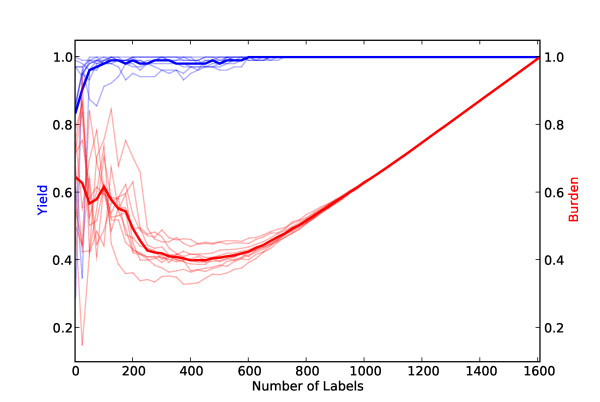
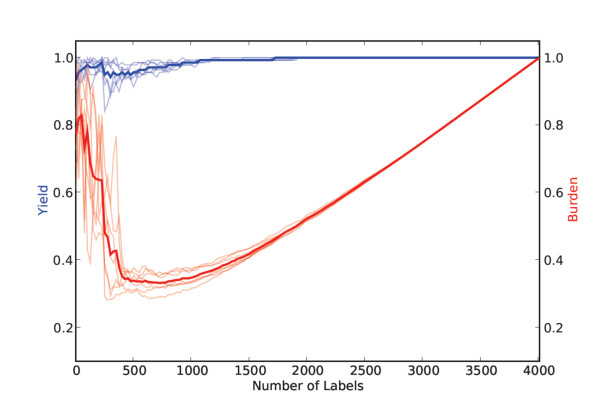
BACKGROUND: Systematic reviews address a specific clinical question by unbiasedly assessing and analyzing the pertinent literature. Citation screening is a time-consuming and critical step in systematic reviews. Typically, reviewers must evaluate thousands of citations to identify articles eligible for a given review. We explore the application of machine learning techniques to semi-automate citation screening, thereby reducing the reviewers' workload. RESULTS: We present a novel online classification strategy for citation screening to automatically discriminate "relevant" from "irrelevant" citations. We use an ensemble of Support Vector Machines (SVMs) built over different feature-spaces (e.g., abstract and title text), and trained interactively by the reviewer(s). Semi-automating the citation screening process is difficult because any such strategy must identify all citations eligible for the systematic review. This requirement is made harder still due to class imbalance; there are far fewer "relevant" than "irrelevant" citations for any given systematic review. To address these challenges we employ a custom active-learning strategy developed specifically for imbalanced datasets. Further, we introduce a novel undersampling technique. We provide experimental results over three real-world systematic review datasets, and demonstrate that our algorithm is able to reduce the number of citations that must be screened manually by nearly half in two of these, and by around 40% in the third, without excluding any of the citations eligible for the systematic review. CONCLUSIONS: We have developed a semi-automated citation screening algorithm for systematic reviews that has the potential to substantially reduce the number of citations reviewers have to manually screen, without compromising the quality and comprehensiveness of the review.
Overview
The claims and statistics of this paper haven’t been checked yet.
Free: it reads the open-access text and checks the first 5 claims that cite a source we can check. Create a free account to check every claim.
Integrity signals
Registry
Cites
Statistics
Figures
Verification
Claims the paper makes
The claims and statistics of this paper haven’t been checked yet.
Free: it reads the open-access text and checks the first 5 claims that cite a source we can check. Create a free account to check every claim.
Claims other papers make about this one
Each is checked against this paper’s own text: does it say what the citing paper says it does?
The source backs part of the claim, not all of it — or backs it for a different population, condition or comparison.
In the citing paper
“Several statistical stopping metrics have been proposed in the literature [15, 21, 22, 35, 38, 49, 50, 53, 55]).”
From The SAFE procedure: a practical stopping heuristic for active learning-based screening in systematic reviews and meta-analyses (2024) · cites this paper as [50]
Experimental — accuracy not yet measuredThe source backs part of the claim, not all of it — or backs it for a different population, condition or comparison.
In the citing paper
“These include computing an inflection point [16, 21, 35, 38, 49, 50], estimating recall for the sequential screening of a ranked list of references [22], or computing the lengths of consecutive spans of excluded documents that occur between each relevant document during screening [38, 53, 55].”
From The SAFE procedure: a practical stopping heuristic for active learning-based screening in systematic reviews and meta-analyses (2024) · cites this paper as [50]
Experimental — accuracy not yet measuredThe source backs part of the claim, not all of it — or backs it for a different population, condition or comparison.
In the citing paper
“For example, Wallace et al. (2010) found that using a time-based approach in which reviewers classified 50% of all records in a database resulted in a 100% recall.”
From Screening Smarter, Not Harder: A Comparative Analysis of Machine Learning Screening Algorithms and Heuristic Stopping Criteria for Systematic Reviews in Educational Research (2024) · cites this paper as Wallace et al. (2010)
Experimental — accuracy not yet measuredThe source backs part of the claim, not all of it — or backs it for a different population, condition or comparison.
In the citing paper
“Lastly, researchers have an ongoing uncertainty regarding the optimal number of articles to screen using these tools, and the existing simulation studies have yielded limited and conflicting findings (Callaghan & MüllerHansen, 2020; Wallace et al., 2010).”
From Screening Smarter, Not Harder: A Comparative Analysis of Machine Learning Screening Algorithms and Heuristic Stopping Criteria for Systematic Reviews in Educational Research (2024) · cites this paper as Wallace et al., 2010
Experimental — accuracy not yet measuredThe source backs part of the claim, not all of it — or backs it for a different population, condition or comparison.
In the citing paper
“Moreover, classifiers can achieve high accuracy but still fail to identify any of the relevant publications [15].”
From Performance of active learning models for screening prioritization in systematic reviews: a simulation study into the Average Time to Discover relevant records (2023) · cites this paper as [15]
Experimental — accuracy not yet measured
10 more claims about this paper
Create a free account to see every claim other papers make about this one.
Self-check
Percentages, sums and reported differences re-computed from the paper’s own numbers.
The self-check needs the paper’s full text.
Citations
Cites
LIBSVM: A library for support vector machines
Chang, C.-C., & Lin, C.-J. (2011) · ACM Transactions on Intelligent Systems and Technology · doi:10.1145/1961189.1961199 · Cited by 40,918 · cited 1×
“Our code is written in Python and makes use of a modified version of LibSVM [39].”
The Nature of Statistical Learning Theory
Vapnik, V. N. (1995) · doi:10.1007/978-1-4757-2440-0 · Cited by 39,138
Breiman, L. (1996) · Machine Learning · doi:10.1007/bf00058655 · Cited by 16,325 · cited 1×
“One obvious technique that we plan on implementing is bagging [36], in which multiple subsets of each feature-space would be constructed at random from the labeled data, and used to build ensemble classifiers over each feature-space.”
MethodProceedings of the 24th international conference on Machine learning
(2007) · doi:10.1145/1273496 · Cited by 11,630
Libsvm : A library for support vector machines
Ferrari, V. (2008) · Medical Entomology and Zoology · Cited by 10,123
Text categorization with Support Vector Machines: Learning with many relevant features
Joachims, T. (1998) · Lecture Notes in Computer Science · doi:10.1007/bfb0026683 · Cited by 7,999 · cited 1×
“We use SVMs because they have empirically performed well over high-dimensional text data in general [21], and in the context of biomedical text classification in particular [9,10].”
Combining labeled and unlabeled data with co-training
Blum, A., & Mitchell, T. (1998) · Proceedings of the eleventh annual conference on Computational learning theory · doi:10.1145/279943.279962 · Cited by 5,495
A Practical Guide to Support Vector Classication
Hsu, C., Chang, C.-C., & Lin, C. (2008) · Cited by 5,083
(2009) · Minds at UW (University of Wisconsin) · Cited by 4,791
A STATISTICAL INTERPRETATION OF TERM SPECIFICITY AND ITS APPLICATION IN RETRIEVAL
SPARCK JONES, K. (1972) · Journal of Documentation · doi:10.1108/eb026526 · Cited by 4,505 · cited 1×
“use standard Term Frequency/Inverse Document Frequency (TF-IDF) encoding [25] to generate “bag-ofwords” representations of each citation in the respective feature-spaces.”
Research works printed but not linked: 3
- Wilcox A Hripcsak G Friedman C Using Knowledge Sources to Improve Classification of Medical Text Reports KDD-2000 Workshop on Text Mining (poster) 2000 Boston, MA
- Wallace B Trikalinos T Lau J Schmid C Brodley C SRSM (Presentation), Seattle, WA 2009
- PubMed Stopword List 2009 http://www.ncbi.nlm.nih.gov/entrez/query/static/help/pmhelp.html#Stopwords
Cited by
Items 201–300 of 355
Campos, D., Fütterer, T., Gfrörer, T., Lavelle-Hill, R. E., Murayama, K., König, L., Hecht, M., Zitzmann, S., & Scherer, R. (2023) · doi:10.31234/osf.io/fpwc2 · Cited by 11
Locality-based security bug report identification via active learning
Ge, X., Fang, C., Qian, M., Ge, Y., & Qing, M. (2022) · Information and Software Technology · doi:10.1016/j.infsof.2022.106899 · Cited by 13
Boetje, J., & van de Schoot, R. (2023) · doi:10.31234/osf.io/c93gq · Cited by 10
ContReviews: A content-based recommendation system for updating Living Evidences in health care
Tenti, P., Thomas, J., Peñaloza, R., & Pasi, G. (2025) · Knowledge-Based Systems · doi:10.1016/j.knosys.2025.112981 · Cited by 11
The hunt for the last relevant paper: blending the best of humans and AI
van de Schoot, R., Messina Coimbra, B., Evenhuis, T., Lombaers, P., Weijdema, F., de Bruin, L., Neeleman, R., Grandfield, E., Sijbrandij, M., Teijema, J. J., et al. (2025) · European Journal of Psychotraumatology · doi:10.1080/20008066.2025.2546214 · Cited by 6
“This prioritisation ensures that only a portion of the dataset requires screening by a human because, at a certain point, only irrelevant records are presented to the screener, and at some point, the screener may stop screening (Wallace et al., 2010).”
Yang, E., & Lewis, D. D. (2022) · International ACM SIGIR Conference on Research and Development in Information Retrieval (SIGIR) · doi:10.1145/3477495.3531663 · Cited by 9
“Application areas include legal discovery [3], systematic literature review in medicine [36], construction of evaluation collections [18], and responses to sunshine law requests [26].”
BackgroundMethodSystematic literature review (SLR) automation: a systematic literature review
Hamad, Z., & Salim, N. B. (2014) · Journal of Theoretical and Applied Information Technology · Cited by 9
Active Literature Discovery for Scoping Evidence Reviews How Many Needles are There
Wallace, B., Dahabreh, I. J., Moran, K. H., Brodley, C. E., & Trikalinos, T. A. (2013) · Cited by 17
Self-citationUthman, O. A., Court, R. A., Enderby, J., Al-Khudairy, L., Nduka, C. U., Mistry, H., Meléndez‐Torres, G. J., Taylor‐Phillips, S., & Clarke, A. (2022) · Health Technology Assessment · doi:10.3310/udir6682 · Cited by 12
“41 Wallace et al. 42 reduced the number of papers to be checked manually by approximately 50% for a systematic review.”
MethodGuest Editor’s Introduction to Special Issue: The Science and Practice of Research Synthesis
Littell, J. H. (2013) · Journal of the Society for Social Work and Research · doi:10.5243/jsswr.2013.19 · Cited by 12
Impact of Lifestyle Modifications on the Prevention and Treatment of Pelvic Organ Prolapse
Jeppson, P. C., Balgobin, S., Wheeler, T., Forner, L., Caagbay, D., Thompson, J., Muffly, T. M., Meyer, I., Beestrum, M., Collins, S., et al. (2025) · International Urogynecology Journal · doi:10.1007/s00192-024-05992-0 · Cited by 8
“Citations identified by our search were screened for eligibility by nine reviewers using Abstrackr (http:// abstr ackr. cebm. brown. edu/) [6].”
Patient-Reported Outcome Measures for Use in Women With Pelvic Organ Prolapse: A Systematic Review
Dieter, A. A., Halder, G. E., Pennycuff, J. F., Singh, R., El‐Nashar, S. A., Lipetskaia, L., Orejuela, F. J., Jeppson, P. C., Sleemi, A., Raman, S. V., et al. (2023) · Obstetrics and Gynecology · doi:10.1097/aog.0000000000005212 · Cited by 9
Li, Y., Du, X., Wang, Y., Chen, X., Zhou, Z., Lian, J., Chuang, Y.-W., Hou, P. C., Hou, P. C., & Zhou, L. (2025) · International Journal of Medical Informatics · doi:10.1016/j.ijmedinf.2025.106205 · Cited by 23
Machine learning for semi-automated scoping reviews
Mozgai, S., Kaurloto, C., Winn, J. G., Leeds, A., Heylen, D., Hartholt, A., & Scherer, S. J. (2023) · Intelligent Systems with Applications · doi:10.1016/j.iswa.2023.200249 · Cited by 9
Impact of Treatment of Pudendal Neuralgia on Pain: A Systematic Review and Meta-Analysis
Andiman, S. E., Maron, J. S., Dandolu, V., Drugge, E. D., Cosgro, R. P., Vasey, M. M., Spaulding, G. C., Ricciardi, F., Yaskhi, G., Toal, C. A., et al. (2024) · International Urogynecology Journal · doi:10.1007/s00192-024-06004-x · Cited by 12
“Abstracts were doubly-screened using Abstrackr (http:// abstr ackr. cebm. brown. edu ) [4], then full-text articles were doubly-screened.”
Modernizing Evidence Synthesis for Evidence-Based Medicine
Wallace, B., Dahabreh, I. J., Schmid, C. H., Lau, J., & Trikalinos, T. A. (2014) · Elsevier eBooks · doi:10.1016/b978-0-12-398476-0.00012-9 · Cited by 14
Self-citationUsing rule-based classifiers in systematic reviews
Sellak, H., Ouhbi, B., & Frikh, B. (2015) · International Conference on Information Integration and Web-based Applications & Services (iiWAS) · doi:10.1145/2837185.2837279 · Cited by 8
“Wallace et al. [3] proposed a modified version for the automation of the systematic reviews process that will make it rapidly accomplished by logically replacing the manual screening (i.e., humans) with a semi-automated screening approach.”
BackgroundInfluentialCarter, B. U. (2018) · Systematic Reviews · doi:10.1186/s13643-018-0782-x · Cited by 9
A Regularization Approach to Combining Keywords and Training Data in Technology-Assisted Review
Yang, E., Lewis, D. D., & Frieder, O. (2019) · International Conference on Artificial Intelligence and Law · doi:10.1145/3322640.3326713 · Cited by 9
“Similar tasks outside the law include systematic review in medicine [32], annotation of data sets for analytics, and archival research.”
BackgroundAssessing expert system-assisted literature reviews with a case study
Yu, Z., Carver, J. C., Rothermel, G., & Menzies, T. (2022) · Expert Systems with Applications · doi:10.1016/j.eswa.2022.116958 · Cited by 6
“Expert Systems for Primary Study Selection The problem of how to efficiently find the dozens of relevant papers among thousands of candidates is categorized as one type of information retrieval problem called total recall, and has been studied for years (Cormack and Grossman, 2015, 2014; Grossman and Cormack, 2013; Wa…”
BackgroundGates, A., Guitard, S., Pillay, J., Elliott, S. A., Dyson, M. P., Newton, A. S., & Hartling, L. (2019) · doi:10.23970/ahrqepcmethmachineperformance · Cited by 8
Large-Scale Simulation Study of Active Learning Models for Systematic Reviews
Teijema, J. J., de Bruin, J., Bagheri, A., & van de Schoot, R. (2023) · doi:10.31234/osf.io/2w3rm · Cited by 8
Evaluating the Efficacy of Large Language Models for Systematic Review and Meta-Analysis ScreeningPreprint
Luo, R., Sastimoglu, Z., Faisal, A. I., & Deen, M. J. (2024) · medRxiv · doi:10.1101/2024.06.03.24308405 · Cited by 18
“Text mining, a field within data science, involves analyzing unstructured text to extract meaningful information and supports various stages of the review process such as . study identification, screening, and data extraction—stages that are traditionally manual and labor-intensive [11–17].”
Soares, A., Schilling, L. M., Richardson, J. E., Kommadi, B., Subbian, V., Dehnbostel, J., Shahin, K., Robinson, K. A., Afzal, M., Lehmann, H. P., et al. (2024) · Journal of Medical Internet Research · doi:10.2196/54265 · Cited by 13
Leveraging LLMs for semi-automatic corpus filtration in systematic literature reviews
Joos, L., Keim, D. A., & Fischer, M. T. (2026) · Computers & Graphics · doi:10.1016/j.cag.2026.104537 · Cited by 14
“Wallace et al. [8] report that an experienced reviewer can manually screen approximately two papers per minute based on title and abstract.”
The Role of Dietary Ingredients in Mental Energy – A Scoping Review of Randomized Controlled Trials
Nieman, K. M., Zhu, Y., Tucker, M., & Koecher, K. J. (2023) · Journal of the American Nutrition Association · doi:10.1080/27697061.2023.2244031 · Cited by 7
Mining Information from Collections of Papers: Illustrative Analysis of Groundwater and Disease
Zhang, Y., Ji, X., Ibaraki, M., & Schwartz, F. W. (2018) · Ground Water · doi:10.1111/gwat.12804 · Cited by 9
“(Matwin et al. 2010; Wallace et al. 2010, 2012; Ji et al. 2015).”
A Dataset of Systematic Review Updates
Alharbi, A., & Stevenson, M. (2019) · International ACM SIGIR Conference on Research and Development in Information Retrieval (SIGIR) · doi:10.1145/3331184.3331358 · Cited by 14
“The screening stages are one of the most time consuming parts of this process since an experienced reviewer takes at least 30 seconds to review an abstract and substantially longer for complex topics [22].”
BackgroundMethodArora, A., Pollack, B. L., Babajanian, M., Friedman-Ciment, R., Glass, M., Kasoff, M., Bibi, M., Magovern, M., Soto, R., Hirani, R., et al. (2025) · American Journal of Obstetrics & Gynecology MFM · doi:10.1016/j.ajogmf.2025.101680 · Cited by 11
Accelerating the Early Identification of Relevant Studies in Title and Abstract Screening
Bravo, Á., Bennetts, L. E., & Atanasov, P. (2021) · International Symposium on Computer Science and Intelligent Control (ISCSIC) · doi:10.1109/iscsic54682.2021.00034 · Cited by 6
Efficient evidence selection for systematic reviews in traditional Chinese medicine
Li, Y., Huang, Z., Luan, Z., Xu, S., Zhang, Y., Wu, L., Wu, D., Han, D., & Liu, Y. (2025) · BMC Medical Research Methodology · doi:10.1186/s12874-024-02430-z · Cited by 9
Towards a multi-level framework for supporting systematic review — A pilot study
Li, D., Wang, Z., Shen, F., Murad, M. H., & Liu, H. (2014) · IEEE International Conference on Bioinformatics and Biomedicine (BIBM) · doi:10.1109/bibm.2014.6999266 · Cited by 8
“Similar app using factorized version of complement naïv [21], ensembles of SVMs [22], and evolutio However, supervised machine learning requir training data, which are hard to acquire in Specifically, for a question of interest, we previous systematic reviews to serve as the g training.”
MethodHassler, E. E., Hale, D. P., & Hale, J. E. (2018) · Information and Software Technology · doi:10.1016/j.infsof.2018.02.001 · Cited by 11
Systematic review automation methods
Norman, C. R. (2020) · theses.fr (ABES) · doi:10.70675/044ffa34z5c9bz433az99c8z64697dcd28a2 · Cited by 8
Niżnik, Ł., Toporowska-Kaźmierak, J., Jabłońska, K., Głąb, N., Stach, S., Florek, J., Sowińska, M., Adamczyk, A., & Jurowski, K. (2024) · Toxicology · doi:10.1016/j.tox.2024.153755 · Cited by 6
König, L., Zitzmann, S., & Hecht, M. (2025) · Research Synthesis Methods · doi:10.1017/rsm.2025.10053 · Cited by 5
“50 For example, when screening stops after 30% of the total abstracts have been reviewed, sensitivity would be 50% if only half of the relevant abstracts were identified within that 30%.”
SWARM-SLR - Streamlined Workflow Automation for Machine-Actionable Systematic Literature Reviews
Wittenborg, T., Karras, O., & Auer, S. (2024) · Lecture notes in computer science · doi:10.1007/978-3-031-72437-4_2 · Cited by 15
Rich, A. J., McGorray, E. L., Baldwin-SoRelle, C., Cawley, M. A., Grigg, K., Beach, L. B., Phillips, G., & Poteat, T. (2025) · Journal of the Medical Library Association JMLA · doi:10.5195/jmla.2025.1860 · Cited by 3
A hybrid feature selection rule measure and its application to systematic review
Ouhbi, B., Kamoune, M., Frikh, B., Zemmouri, E. M., & Behja, H. (2016) · International Conference on Information Integration and Web-based Applications & Services (iiWAS) · doi:10.1145/3011141.3011177 · Cited by 5
MMiDaS-AE: multi-modal missing data aware stacked autoencoder for biomedical abstract screening
Lee, E. W., Wallace, B., Galaviz, K. I., & Ho, J. C. (2020) · ACM Conference on Health, Inference, and Learning (CHIL) · doi:10.1145/3368555.3384463 · Cited by 7
“Moreover, the existing methods focus primarily only on the text itself including using representations like bag-of-words, or word embeddings [6, 13, 15, 27, 28, 34, 52].”
BackgroundMethodInfluentialSelf-citationEpistemological aspect of topic modelling in the social sciences: Latent Dirichlet Allocation
Baranowski, M. (2022) · Przegląd Krytyczny · doi:10.14746/pk.2022.4.1.1 · Cited by 8
“…(García Adeva, Pikatza Atxa, Ubeda Carrillo, & Ansuategi Zengotitabengoa, 2014) and active learning (Wallace, Small, Brodley, & Tri-kalinos, 2010; Wallace, Trikalinos, Lau, Brodley, & Schmid, 2010) have been used to partially automate this process, in order to reduce the workload, without…”
Wu, L., Chen, S., Guo, L., Shpyleva, S., Harris, K., Fahmi, T., Flanigan, T., Tong, W., Xu, J., & Ren, Z. X. (2022) · Regulatory Toxicology and Pharmacology · doi:10.1016/j.yrtph.2022.105287 · Cited by 9
Nedelcu, A., Oerther, B., Engel, H., Sigle, A., Schmucker, C. M., Schoots, I. G., Eisenblätter, M., & Benndorf, M. (2023) · European Urology Open Science · doi:10.1016/j.euros.2023.07.005 · Cited by 7
“We can assume that the time for screening a single study by title and abstract ranges between 30 s and 7 min, depending on reviewer experience and domain complexity [8].”
BackgroundYoung people's access to tobacco : a mixed-method systematic review
Sutcliffe, K., Twamley, K., Hinds, K., O’Mara-Eves, A., Thomas, J., & Brunton, G. (2011) · IOE EPrints · Cited by 5
Microscopic Hematuria as a Screening Tool for Urologic Malignancies in Women
Jeppson, P. C., Jakus-Waldman, S. M., Yazdany, T., Schimpf, M. O., Ferzandi, T. R., Yurteri-Kaplan, L. A., Knoepp, L. R., Mamik, M. M., Resnick, H. E., & Ward, R. M. (2019) · Urogynecology · doi:10.1097/spv.0000000000000726 · Cited by 5
Napoleão, B. M., Petrillo, F. D. S., & Hallé, S. (2021) · Euromicro Conference on Software Engineering and Advanced Applications (SEAA) · doi:10.1109/seaa53835.2021.00015 · Cited by 7
“– [20], [64], [67], [73] Yield The fraction of studies that are identified by a given screening approach.”
BackgroundMethodEastaugh, C., Still, M., Beyer, F. R., Wallace, S. A., & O’Keefe, H. (2025) · Cochrane Evidence Synthesis and Methods · doi:10.1002/cesm.70049 · Cited by 7
Active Compared With Passive Voiding Trials After Midurethral Sling Surgery
Drangsholt, S., Lleras, C., Kindler, R., Babajanian, M., Pollack, B. L., Harutyunyan, A., Grunfeld, M., Gejerman, Y., Kilkenny, K., Bulmash, M., et al. (2024) · Obstetrics and Gynecology · doi:10.1097/aog.0000000000005567 · Cited by 4
“Abstracts were doubly screened with Abstrackr, 5 and then full-text articles were doubly screened.”
MethodGreen, S. J., Littell, J. H., Hammerstrøm, K. T., Tanner‐Smith, E. E., & Wilen, J. S. (2013) · Campbell Systematic Reviews · doi:10.1002/cl2.109 · Cited by 7
Bashir, R., Dunn, A. G., & Surian, D. (2020) · Research Synthesis Methods · doi:10.1002/jrsm.1473 · Cited by 7
A Mixed‐Method Usability Study on User Experience with Systematic Review Software
Wang, M., Sharmin, S., Wang, M., & Yu, F. (2021) · Proceedings of the Association for Information Science and Technology · doi:10.1002/pra2.462 · Cited by 10
Cawley, M. A. (2022) · Advances in library and information science (ALIS) book series · doi:10.4018/978-1-7998-9702-6.ch008 · Cited by 6
An active learning-based approach for screening scholarly articles about the origins of SARS-CoV-2
An, X., Zhang, M., & Xu, S. (2022) · PLoS ONE · doi:10.1371/journal.pone.0273725 · Cited by 5
“Therefore, many scholars have considered whether a focal model approaches stability in terms of performance as a stopping criterion [43,54].”
BackgroundTimely, Efficient, and Living Systematic Reviews: Opportunities in International Development
Snilstveit, B., Stevenson, J., Shemilt, I., Clarke, M. J., Jiménez, E., & Thomas, J. (2018) · doi:10.51744/cip7 · Cited by 6
“, 2015) Screening/ study classification Study classification (Bekhuis and Demner-Fushman 2012; Marshall et al., 2018; Wallace et al., 2010), Study classification and crowd-sourcing (Wallace et al.”
BackgroundLiu, S., Bourgeois, F. T., Narang, C., & Dunn, A. G. (2023) · Research Synthesis Methods · doi:10.1002/jrsm.1672 · Cited by 7
“12,16,26,27 A key issue is that the best performing tools require human expertise before or during the use of the tools.”
BackgroundModelling Stopping Criteria for Search Results using Poisson Processes
Sneyd, A., & Stevenson, M. (2019) · Conference on Empirical Methods in Natural Language Processing (EMNLP) · doi:10.18653/v1/d19-1351 · Cited by 9
“(Miwa et al., 2014; Wallace et al., 2010; O’Mara-Eves et al., 2015; Shemilt et al., 2016).”
BackgroundSystematic literature review supported by information retrieval techniques: A case study
Abilio, R., Vale, G., Pereira, D. A., Oliveira, C., Morais, F. J. D. O., & Costa, H. A. X. (2014) · Latin American Computer Conference (CLEI) · doi:10.1109/clei.2014.6965144 · Cited by 4
“…Informação: extração automática de textos baseada em 1 http://ieeexplore.ieee.org/ 2 http://dl.acm.org/ 3 http://www.scopus.com/ 4 http://www.sciencedirect.com/ técnicas de processamento de linguagem natural e agrupamento de estudos similares utilizando as técnicas de agrupamento k-means ou k-NN.”
BackgroundAbilio, R., Morais, F., Vale, G., Oliveira, C., Pereira, D. A., & Costa, H. A. X. (2015) · CLEI electronic journal · doi:10.19153/cleiej.18.2.2 · Cited by 4
“Each group is connected by the logical operator AND in order to create the search string.”
BackgroundMethodWang, L., Rouse, B., Marks‐Anglin, A., Duan, R., Shi, Q., Quach, K., Chen, Y., Cameron, C., Schmid, C. H., & Li, T. (2019) · Journal of Clinical Epidemiology · doi:10.1016/j.jclinepi.2019.06.010 · Cited by 4
Self-citationPubMed and Beyond: Biomedical Literature Search in the Age of Artificial IntelligencePreprint
Jin, Q., Leaman, R., & Lu, Z. (2023) · PubMed Central · doi:10.48550/arxiv.2307.09683 · Cited by 4
“20 Despite efforts to use machine learning to automate this screening process, 21 – 26 these features are not yet integrated into web-based EBM search engines due to the intrinsic complexity and low tolerance for errors in this task.”
Using sentiment analysis to assess PMBOK knowledge areas’ compatibility with agile methodology
David, I., & Gelbard, R. M. (2024) · Procedia Computer Science · doi:10.1016/j.procs.2024.06.185 · Cited by 7
Schmitz, T., Bukowski, M., Koschmieder, S., Schmitz‐Rode, T., & Farkas, R. (2019) · Research Synthesis Methods · doi:10.1002/jrsm.1350 · Cited by 2
“12,26 Apart from improving performance, active learning shall also overcome the main drawback of conventional automated classification (AC), namely, the need for a sufficient amount of previously labeled training data, which limits the applicability to updating reviews or replacing the required…”
BackgroundMethodInfluentialModernizing evidence synthesis for evidence-based medicine
Saldanha, I. J., Adam, G. P., Schmid, C. H., Trikalinos, T. A., & Konnyu, K. J. (2023) · Elsevier eBooks · doi:10.1016/b978-0-323-91200-6.00006-1 · Cited by 4
Self-citationMachine learning based system for the automation of systematic literature reviews
Pytlak, R., Bukhvalova, B. A., Cichosz, P., Fajdek, B., Grahek‐Ogden, D., Jastrzębski, B., Khan, M., Postupolski, J., Yazidi, A., & Waszkowski, R. (2023) · IEEE International Conference on Bioinformatics and Biomedicine (BIBM) · doi:10.1109/bibm58861.2023.10385372 · Cited by 4
“According to [1] an experienced reviewer is able to screen an average of two abstracts per minute.”
BackgroundMethodInfluentialRepresenting and extracting lung cancer study metadata: Study objective and study design
Garcia-Gathright, J. I., Oh, A. S., Abarca, P. A., Han, M., Sago, W., Spiegel, M. L., Wolf, B., Garon, E. B., Bui, A. A. T., & Aberle, D. R. (2015) · Computers in Biology and Medicine · doi:10.1016/j.compbiomed.2015.01.004 · Cited by 3
Abdulkadhar, S., Murugesan, G., & Natarajan, J. (2017) · International Conference on Research in Computational Intelligence and Communication Networks (ICRCICN) · doi:10.1109/icrcicn.2017.8234505 · Cited by 5
A Deep Analysis of an Explainable Retrieval Model for Precision Medicine Literature Search
Qu, J., Arguello, J., & Wang, Y. (2021) · Lecture notes in computer science · doi:10.1007/978-3-030-72113-8_36 · Cited by 3
What Does the Evidence Say? Models to Help Make Sense of the Biomedical Literature
Wallace, B. (2019) · International Joint Conference on Artificial Intelligence · doi:10.24963/ijcai.2019/899 · Cited by 4
Self-citationA Scoping Review of Adopted Information Extraction Methods for RCTs.
Aletaha, A., Nemati-Anaraki, L., Keshtkar, A., Sedghi, S., Keramatfar, A., & Korolyova, A. (2023) · Medical Journal of The Islamic Republic of Iran · doi:10.47176/mjiri.37.95 · Cited by 2
Pitre, T., Zeraatkar, D., Granton, J., Busse, J., Rochwerg, B., & Guyatt, G. (2026) · Journal of Clinical Epidemiology · doi:10.1016/j.jclinepi.2026.112514 · Cited by 2
Active learning of optical path classification
Cichosz, P. (2025) · Engineering Applications of Artificial Intelligence · doi:10.1016/j.engappai.2025.110582 · Cited by 2
Varghese, A., Allen, K., Agyeman-Badu, G., Haire, J. A., & Madsen, R. (2021) · Environment Systems & Decisions · doi:10.1007/s10669-021-09830-2 · Cited by 2
Gupta, A., Balk, E. M., Lenger, S. M., Yang, L. C., Misal, M., Balgobin, S., Chang, O. H., Sharma, V., Stuparich, M. A., Behbehani, S., et al. (2023) · Obstetrics and Gynecology · doi:10.1097/aog.0000000000005260 · Cited by 2
Active Learning for Biomedical Article Classification with Bag of Words and FastText Embeddings
Cichosz, P. (2024) · Applied Sciences · doi:10.3390/app14177945 · Cited by 5
Using Machine Learning for Systematic Literature Review Case in Point: Agile Software Development
David, I., & Gelbard, R. M. (2024) · Wiley Interdisciplinary Reviews Data Mining and Knowledge Discovery · doi:10.1002/widm.1569 · Cited by 11
An NLP Based Approach to Automate and Enhance the Systematic Review Within PRISMA Format
Thankachan, J. A., & Srinivasan, B. (2024) · IFIP advances in information and communication technology · doi:10.1007/978-3-031-73617-9_16 · Cited by 3
Boolean and Ranked Information Retrieval for Biomedical Systematic Reviewing
Pohl, S. (2012) · Minerva Access (University of Melbourne) · Cited by 4
Supporting HIV literature screening with data sampling and supervised learning
Almeida, H., Meurs, M., Kosseim, L., & Tsang, A. (2015) · IEEE International Conference on Bioinformatics and Biomedicine (BIBM) · doi:10.1109/bibm.2015.7359733 · Cited by 3
“Automatic literature classification also reduces the possibility of missing relevant information, as a system-based screening might be less error-prone than a manual screening [33].”
BackgroundMatching Possible Mitigations to Cyber Threats: A Document-Driven Decision Support Systems Approach
McNeil, M., Noteboom, C., Liu, J., El-Gayar, O., & Llansó, T. (2020) · Hawaii International Conference on System Sciences (HICSS) · doi:10.24251/hicss.2020.780 · Cited by 2
“Classificationbased document selection has been researched extensively in the context of medical systematic reviews (SRs) underpinning evidence-based medicine [17]–[24].”
BackgroundMethodA Roadmap for Composing Automatic Literature Reviews: A Text Mining Approach
Júnior, E. M. D. S., & Dutra, M. L. (2021) · Lecture notes of the Institute for Computer Sciences, Social Informatics and Telecommunications Engineering · doi:10.1007/978-3-030-77417-2_17 · Cited by 3
Testing Reading Tactics for Automated Reading Assistance: Is it Useful to Apply Old Knowledge?Preprint
Yu, Z., & Menzies, T. (2017) · arXiv (Cornell University) · Cited by 2
Tóth, B., Berek, L., Gulàcsi, L., Péntek, M., & Zrubka, Z. (2023) · Research Square · doi:10.21203/rs.3.rs-3425312/v1 · Cited by 2
Study screening for meta-research: An overview of AI toolsPreprint
Quan, Y., & Hui, B. (2023) · doi:10.31219/osf.io/bd6fj · Cited by 2
Robleto, E., & Shehadeh, L. A. (2025) · American Journal of Physiology. Heart and Circulatory Physiology · doi:10.1152/ajpheart.00374.2025 · Cited by 2
Lagopoulos, A., & Tsoumakas, G. (2020) · arXiv (Cornell University) · doi:10.48550/arxiv.2011.09752 · Cited by 4
Machine Learning in Evidence Synthesis Research
Carrasco‐Labra, A., Urquhart, O., & Spallek, H. (2021) · Springer eBooks · doi:10.1007/978-3-030-71881-7_12 · Cited by 2
Barrett-Catton, E., Jones, E. P., & Carlson, R. (2025) · Medical Reference Services Quarterly · doi:10.1080/02763869.2025.2471879 · Cited by 1
“4,10 This means that screening titles and abstracts of 5,000 references would take two screeners between 50 and 80 h to complete.”
Active Learning for Medical Article Classification with Bag of Words and Bag of Concepts Embeddings
Pytlak, R., Cichosz, P., Fajdek, B., & Jastrzębski, B. (2025) · Applied Sciences · doi:10.3390/app15147955 · Cited by 1
Simulation-based active learning for systematic reviews: A scoping review of literature
Teijema, J. J., Ribeiro, G., Seuren, S., Anadria, D., Bagheri, A., & van de Schoot, R. (2025) · Journal of Information Science · doi:10.1177/01655515251379058 · Cited by 1
Koh, Z. H., Zarnegar, A., Skues, J., & Murray, G. (2026) · BMC Research Notes · doi:10.1186/s13104-026-07651-7 · Cited by 2
“Although their prospect seems promising [14], they are susceptible to the hasty generalisation problem , a bias in which a tool overgeneralises articles based on the information it has learned so far [4, 6, 15].”
Fütterer, T., König, L., Campos, D., Scherer, R., Zitzmann, S., & Hecht, M. (2026) · Advances in Methods and Practices in Psychological Science · doi:10.1177/25152459261442150 · Cited by 2
“Various heuristic-based (Campos et al., 2024; Wallace et al., 2010) and statistical (Callaghan & Müller-Hansen, 2020; König, Zitzmann, Fütterer, et al., 2024) approaches have been proposed.”
Nunnery, J. A. (2026) · Research Synthesis Methods · doi:10.1017/rsm.2026.10116 · Cited by 1
Green, S. J., Littell, J. H., Hammerstrøm, K. T., Tanner‐Smith, E. E., & Wilen, J. S. (2013) · Scholarship, Research, and Creative Work at Bryn Mawr College (Bryn Mawr College) · Cited by 1
Nguyen, H. D., Eiring, Ø., & Poo, D. C. C. (2018) · Lecture notes in computer science · doi:10.1007/978-3-319-91800-6_7 · Cited by 1
NLP Applications—Biomedical Literature
Zhang, R., Kastrin, A., Hristovski, D., Fiszman, M., & Kilicoglu, H. (2024) · Cognitive informatics in biomedicine and healthcare · doi:10.1007/978-3-031-55865-8_13 · Cited by 1
Molléri, J. S., Benitti, F. B. V., & Fernandes, A. M. D. R. (2013) · Anais SULCOMP · Cited by 1
Blake, C. L., & Kehm, R. D. (2019) · Journal of Biomedical Informatics · doi:10.1016/j.yjbinx.2019.100005 · Cited by 2
Yu, Z., Carver, J. C., Rothermel, G., & Menzies, T. (2019) · Cited by 4
Machine learning in health informatics: making better use of domain experts
Brodley, C. E., & Wallace, B. (2012) · Cited by 1
Self-citationRohner, E., Bohlius, J., da Costa, B. R., & Trelle, S. (2022) · Wiley eBooks · doi:10.1002/9781119099369.ch6 · Cited by 1
Metadata
- Authors
- Wallace, B. C., Trikalinos, T. A., Lau, J., Brodley, C., & Schmid, C. H.
- Affiliations
- Tufts University (US)
- Tufts Medical Center (US)
- Corresponding author
- Wallace, Byron C
- Venue
- BMC Bioinformatics
- Published
- 2010-01-26
- Volume
- 11
- Issue
- 1
- Pages
- 55-55
- ISSN
- 1471-2105 (ISSN-L)
- PMC
- PMC2824679
- OpenAlex
- W2043566294
- Cited by
- 351
- References
- 45
- Citations by year
- 2026: 23 · 2025: 27 · 2024: 34 · 2023: 33 · 2022: 23 · 2021: 28 · 2020: 36 · 2019: 29 · 2018: 22 · 2017: 15 · 2016: 12 · 2015: 20 · 2014: 15 · 2013: 21 · 2012: 7
- FWCI
- 3.01
- Type
- journal article
- Language
- en
- Open access
- gold
- doi.org
- Licence
- cc-by
- creativecommons.org/licenses/by/2.0 (tdm)
- Locations
- BMC Bioinformatics (publishedVersion, cc-by)
- PubMed Central (publishedVersion, cc-by)
- PubMed (publishedVersion)
- DOAJ (DOAJ: Directory of Open Access Journals) (submittedVersion)
- Funders
- U.S. Social Security Administration
- Tufts Medical Center
- National Institutes of Health (5r33rr017109-03)
- Agency for Healthcare Research and Quality (R01HS018494)
- National Center for Research Resources (R33 RR17109)
- Topics
- Social Sciences › Decision Sciences › Statistics, Probability and Uncertainty › Meta-analysis and systematic reviews
- Physical Sciences › Computer Science › Artificial Intelligence › Text and Document Classification Technologies
- Physical Sciences › Computer Science › Information Systems › Information Retrieval and Search Behavior
- Keywords
- citation screening, systematic reviews, semi-automated screening, active learning (machine learning), class imbalance, undersampling, support vector machine, ensemble classifiers, text classification, biomedical literature
- MeSH terms
- Periodicals as Topic, Publications, Review Literature as Topic, Information Storage and Retrieval
About these checks
Registry, retraction, Cites and statistics results are computed, not judged, with one exception: a printed reference that no index lists is read once by a model before it counts as a citation error. Claims are extracted by a model and kept only when their quote appears verbatim in the text; each cited source is then checked, with a model’s help, for whether it says what the claim relies on. Those verdicts can be wrong — read the claim’s quote and the cited source before relying on one.
Statistics and arithmetic are recomputed, not judged.
Confidence bands are shown only for fields calibrated on our annotated test set. None is calibrated yet, so no band is shown.
What counts as a claim ›How we measure confidence ›How we check this ›
Are you an author, or do you see a problem with this page? Request a review
Data sources
Bibliographic data: Semantic Scholar, OpenAlex, Crossref.
Contains information from the Semantic Scholar Academic Graph Datasets, made available under the ODC Attribution License (ODC-BY 1.0).
Semantic Scholar’s data is described in: Kinney, R., et al. (2023). The Semantic Scholar Open Data Platform. arXiv:2301.10140.
