

Semi-automated screening of biomedical citations for systematic reviews
Open accessThe DOI matches its Crossref record; 44 of the 45 references it cites were found in a registry or an index.
Abstract
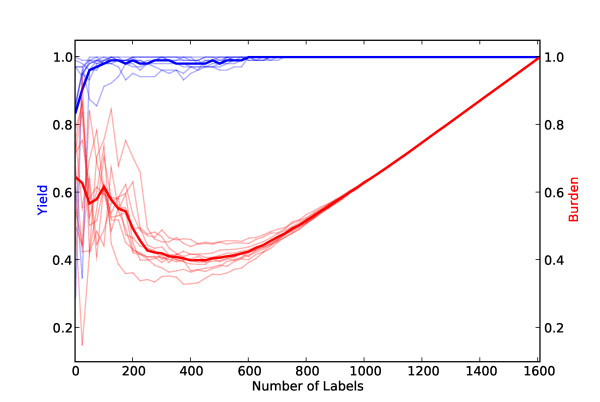
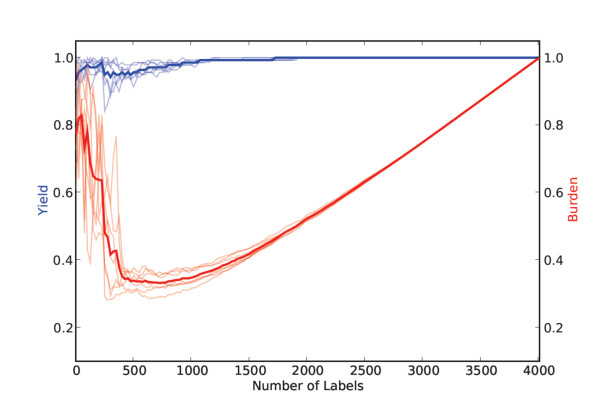
BACKGROUND: Systematic reviews address a specific clinical question by unbiasedly assessing and analyzing the pertinent literature. Citation screening is a time-consuming and critical step in systematic reviews. Typically, reviewers must evaluate thousands of citations to identify articles eligible for a given review. We explore the application of machine learning techniques to semi-automate citation screening, thereby reducing the reviewers' workload. RESULTS: We present a novel online classification strategy for citation screening to automatically discriminate "relevant" from "irrelevant" citations. We use an ensemble of Support Vector Machines (SVMs) built over different feature-spaces (e.g., abstract and title text), and trained interactively by the reviewer(s). Semi-automating the citation screening process is difficult because any such strategy must identify all citations eligible for the systematic review. This requirement is made harder still due to class imbalance; there are far fewer "relevant" than "irrelevant" citations for any given systematic review. To address these challenges we employ a custom active-learning strategy developed specifically for imbalanced datasets. Further, we introduce a novel undersampling technique. We provide experimental results over three real-world systematic review datasets, and demonstrate that our algorithm is able to reduce the number of citations that must be screened manually by nearly half in two of these, and by around 40% in the third, without excluding any of the citations eligible for the systematic review. CONCLUSIONS: We have developed a semi-automated citation screening algorithm for systematic reviews that has the potential to substantially reduce the number of citations reviewers have to manually screen, without compromising the quality and comprehensiveness of the review.
Overview
The claims and statistics of this paper haven’t been checked yet.
Free: it reads the open-access text and checks the first 5 claims that cite a source we can check. Create a free account to check every claim.
Integrity signals
Registry
Cites
Statistics
Figures
Verification
Claims the paper makes
The claims and statistics of this paper haven’t been checked yet.
Free: it reads the open-access text and checks the first 5 claims that cite a source we can check. Create a free account to check every claim.
Claims other papers make about this one
Each is checked against this paper’s own text: does it say what the citing paper says it does?
The source backs part of the claim, not all of it — or backs it for a different population, condition or comparison.
In the citing paper
“Several statistical stopping metrics have been proposed in the literature [15, 21, 22, 35, 38, 49, 50, 53, 55]).”
From The SAFE procedure: a practical stopping heuristic for active learning-based screening in systematic reviews and meta-analyses (2024) · cites this paper as [50]
Experimental — accuracy not yet measuredThe source backs part of the claim, not all of it — or backs it for a different population, condition or comparison.
In the citing paper
“These include computing an inflection point [16, 21, 35, 38, 49, 50], estimating recall for the sequential screening of a ranked list of references [22], or computing the lengths of consecutive spans of excluded documents that occur between each relevant document during screening [38, 53, 55].”
From The SAFE procedure: a practical stopping heuristic for active learning-based screening in systematic reviews and meta-analyses (2024) · cites this paper as [50]
Experimental — accuracy not yet measuredThe source backs part of the claim, not all of it — or backs it for a different population, condition or comparison.
In the citing paper
“For example, Wallace et al. (2010) found that using a time-based approach in which reviewers classified 50% of all records in a database resulted in a 100% recall.”
From Screening Smarter, Not Harder: A Comparative Analysis of Machine Learning Screening Algorithms and Heuristic Stopping Criteria for Systematic Reviews in Educational Research (2024) · cites this paper as Wallace et al. (2010)
Experimental — accuracy not yet measuredThe source backs part of the claim, not all of it — or backs it for a different population, condition or comparison.
In the citing paper
“Lastly, researchers have an ongoing uncertainty regarding the optimal number of articles to screen using these tools, and the existing simulation studies have yielded limited and conflicting findings (Callaghan & MüllerHansen, 2020; Wallace et al., 2010).”
From Screening Smarter, Not Harder: A Comparative Analysis of Machine Learning Screening Algorithms and Heuristic Stopping Criteria for Systematic Reviews in Educational Research (2024) · cites this paper as Wallace et al., 2010
Experimental — accuracy not yet measuredThe source backs part of the claim, not all of it — or backs it for a different population, condition or comparison.
In the citing paper
“Moreover, classifiers can achieve high accuracy but still fail to identify any of the relevant publications [15].”
From Performance of active learning models for screening prioritization in systematic reviews: a simulation study into the Average Time to Discover relevant records (2023) · cites this paper as [15]
Experimental — accuracy not yet measured
10 more claims about this paper
Create a free account to see every claim other papers make about this one.
Self-check
Percentages, sums and reported differences re-computed from the paper’s own numbers.
The self-check needs the paper’s full text.
Citations
Cites
LIBSVM: A library for support vector machines
Chang, C.-C., & Lin, C.-J. (2011) · ACM Transactions on Intelligent Systems and Technology · doi:10.1145/1961189.1961199 · Cited by 40,918 · cited 1×
“Our code is written in Python and makes use of a modified version of LibSVM [39].”
The Nature of Statistical Learning Theory
Vapnik, V. N. (1995) · doi:10.1007/978-1-4757-2440-0 · Cited by 39,138
Breiman, L. (1996) · Machine Learning · doi:10.1007/bf00058655 · Cited by 16,325 · cited 1×
“One obvious technique that we plan on implementing is bagging [36], in which multiple subsets of each feature-space would be constructed at random from the labeled data, and used to build ensemble classifiers over each feature-space.”
MethodProceedings of the 24th international conference on Machine learning
(2007) · doi:10.1145/1273496 · Cited by 11,630
Libsvm : A library for support vector machines
Ferrari, V. (2008) · Medical Entomology and Zoology · Cited by 10,123
Text categorization with Support Vector Machines: Learning with many relevant features
Joachims, T. (1998) · Lecture Notes in Computer Science · doi:10.1007/bfb0026683 · Cited by 7,999 · cited 1×
“We use SVMs because they have empirically performed well over high-dimensional text data in general [21], and in the context of biomedical text classification in particular [9,10].”
Combining labeled and unlabeled data with co-training
Blum, A., & Mitchell, T. (1998) · Proceedings of the eleventh annual conference on Computational learning theory · doi:10.1145/279943.279962 · Cited by 5,495
A Practical Guide to Support Vector Classication
Hsu, C., Chang, C.-C., & Lin, C. (2008) · Cited by 5,083
(2009) · Minds at UW (University of Wisconsin) · Cited by 4,791
A STATISTICAL INTERPRETATION OF TERM SPECIFICITY AND ITS APPLICATION IN RETRIEVAL
SPARCK JONES, K. (1972) · Journal of Documentation · doi:10.1108/eb026526 · Cited by 4,505 · cited 1×
“use standard Term Frequency/Inverse Document Frequency (TF-IDF) encoding [25] to generate “bag-ofwords” representations of each citation in the respective feature-spaces.”
Research works printed but not linked: 3
- Wilcox A Hripcsak G Friedman C Using Knowledge Sources to Improve Classification of Medical Text Reports KDD-2000 Workshop on Text Mining (poster) 2000 Boston, MA
- Wallace B Trikalinos T Lau J Schmid C Brodley C SRSM (Presentation), Seattle, WA 2009
- PubMed Stopword List 2009 http://www.ncbi.nlm.nih.gov/entrez/query/static/help/pmhelp.html#Stopwords
Cited by
Items 301–355 of 355
Oami, T., Okada, Y., & Nakada, T. (2023) · medRxiv · doi:10.1101/2023.12.29.23300652 · Cited by 1
Koh, Z. H., Zarnegar, A., Skues, J., & Murray, G. (2024) · doi:10.31234/osf.io/e25tn · Cited by 1
Alluri, S., Komatineni, K., Goli, R., Boyce, R. D., Hubig, N., Min, H., Gong, Y., Sittig, D. F., Robinson, D., Biondich, P., et al. (2025) · medRxiv · doi:10.1101/2025.04.15.25325868 · Cited by 1
“The use of KPAvg in reverse order provides a more uniform document selection process, though the later-stage fluctuations suggest that the diversity of available documents might become a limiting factor over time.”
EpistAid: Interactive Interface for Document Filtering in Evidence-based Health CarePreprint
Donoso-Guzmán, I., & Parra, D. (2016) · arXiv (Cornell University) · doi:10.48550/arxiv.1611.02119
SSDOnt: An Ontology for Representing Single-Subject Design Studies
Bermúdez, J., Illarramendi, A., & Berges, I. (2018) · Methods of Information in Medicine · doi:10.3414/me17-01-0109
“[30]) many of them require training a classifier against a hard-coded gold standard, which limits their scalability.”
BackgroundSearching for Test Case Prioritization Schemes: An Expert System-Assisted Literature Review.Preprint
Yu, Z., Carver, J. C., Rothermel, G., & Menzies, T. (2019) · arXiv (Cornell University)
Loskot, P. (2021) · arXiv (Cornell University) · doi:10.48550/arxiv.2101.10554 · Cited by 1
“A semi-automated screening of biomedical literature to identify relevant papers has been implemented in [59] using supervised machine learning.”
BackgroundSeed-driven document ranking for systematic reviews in evidence-based medicine
Lee, E. (2020) · DR-NTU (Nanyang Technological University) · doi:10.32657/10356/146709
Hedges, L. V., & Citkowicz, M. (2015) · Emerging Trends in the Social and Behavioral Sciences · doi:10.1002/9781118900772.etrds0218
Breevaart, S., Erasmus, S. W., & Huppertz, T. (2022) · SSRN Electronic Journal · doi:10.2139/ssrn.4093742
Oami, T., Okada, Y., Fukuda, T., Sakuraya, M., Nakada, T., & Shime, N. (2022) · medRxiv · doi:10.1101/2022.11.17.22282374
“Recently, several automation software for citation screening using machine learning has been developed [4-8].”
MethodLee, E. W., & Ho, J. C. (2023) · Lecture notes in computer science · doi:10.1007/978-3-031-28244-7_35 · Cited by 2
Comparison of large language models for citation screening: A protocol for a prospective studyPreprint
Oami, T., Okada, Y., & Nakada, T. (2024) · medRxiv · doi:10.1101/2024.06.26.24309513
van Grinsven, M., Brinkhuis, M. J. S., Krempl, G., & Snijder, J. (2025) · Communications in computer and information science · doi:10.1007/978-3-031-74627-7_8
Li, H., Wang, J., & Liu, H. (2025) · Europe PMC (PubMed Central)
Jacob, A. M., Spelten, E. R., & Kinsman, L. (2025) · Health Services Insights · doi:10.1177/11786329251366383 · Cited by 1
“22 To alleviate this burden on the research team, the lead author on this paper undertook an additional round of title screening where all obviously irrelevant titles were removed prior to abstract screening.”
Abdelkader, W., Xie, D., Lokker, C., Chu, L., Schandelmaier, S., Saha, A., Afzal, M., & Iorio, A. (2025) · medRxiv · doi:10.1101/2025.10.13.25337935
“Active-screening performance metrics were reported, including WSS, precision, Burden, and time to achieve 100% recall 26,27 (supplementary Table 1).”
Mahlangu, G., Phahlane, M. M., & Mbohwa, C. (2025) · doi:10.2196/preprints.86347
Elmitwalli, S., Mehegan, J., Braznell, S., & Gallagher, A. W. A. (2025) · Frontiers in Artificial Intelligence · doi:10.3389/frai.2025.1659861 · Cited by 2
“…for evidence extraction (Sarrouti and El Alaoui, 2017), automated implementation of evidence quality assessment frameworks (Marshall et al., 2015; Wallace et al., 2010), and methods for quantifying scientific consensus (Luo et al., 2017; Zhang et al., 2016), creating opportunities for more…”
Gates, A., Gates, M., DaRosa, D., Elliott, S. A., Pillay, J., Rahman, S., Vandermeer, B., & Hartling, L. (2020) · Figshare · doi:10.6084/m9.figshare.13294975
Dennstädt, F., Zink, J., Putora, P. M., Hastings, J., & Cihoric, N. (2024) · Figshare · doi:10.6084/m9.figshare.26045554
Gates, A., Gates, M., DaRosa, D., Elliott, S. A., Pillay, J., Rahman, S., Vandermeer, B., & Hartling, L. (2020) · Figshare · doi:10.6084/m9.figshare.13294978
Gates, A., Gates, M., DaRosa, D., Elliott, S. A., Pillay, J., Rahman, S., Vandermeer, B., & Hartling, L. (2020) · Figshare · doi:10.6084/m9.figshare.13294969
Gates, A., Gates, M., DaRosa, D., Elliott, S. A., Pillay, J., Rahman, S., Vandermeer, B., & Hartling, L. (2020) · Figshare · doi:10.6084/m9.figshare.13294966
Gates, A., Gates, M., Sebastianski, M., Guitard, S., Elliott, S. A., & Hartling, L. (2020) · Figshare · doi:10.6084/m9.figshare.12422534
Reddy, S. M., Patel, S. V., Weyrich, M. S., Fenton, J. J., & Viswanathan, M. (2020) · Figshare · doi:10.6084/m9.figshare.13115241
Boetje, J., & van de Schoot, R. (2024) · Figshare · doi:10.6084/m9.figshare.26687522
Chai, K. E. K., Lines, R. L. J., Gucciardi, D. F., & Ng, L. (2021) · Figshare · doi:10.6084/m9.figshare.14361540
O'Hearn, K., MacDonald, C., Tsampalieros, A., Kadota, L., Sandarage, R., Jayawarden, S. K., Datko, M., Reynolds, J. M., Bui, T., Sultan, S. A., et al. (2021) · Figshare · doi:10.6084/m9.figshare.14936470
Dennstädt, F., Zink, J., Putora, P. M., Hastings, J., & Cihoric, N. (2024) · Figshare · doi:10.6084/m9.figshare.26734479
Gates, A., Gates, M., DaRosa, D., Elliott, S. A., Pillay, J., Rahman, S., Vandermeer, B., & Hartling, L. (2020) · Figshare · doi:10.6084/m9.figshare.13294972
Dennstädt, F., Zink, J., Putora, P. M., Hastings, J., & Cihoric, N. (2024) · Figshare · doi:10.6084/m9.figshare.26045481
Gates, A., Gates, M., Sebastianski, M., Guitard, S., Elliott, S. A., & Hartling, L. (2020) · Figshare · doi:10.6084/m9.figshare.12422528
Dennstädt, F., Zink, J., Putora, P. M., Hastings, J., & Cihoric, N. (2024) · Figshare · doi:10.6084/m9.figshare.26734476
Efficient Citation Screening by Weak Classifier Ensemble*
Jiang, X., Akinseloyin, O., & Palade, V. (2025) · ACM/IEEE Joint Conference on Digital Libraries · doi:10.1109/jcdl67857.2025.00042
“Active learning allows systematic reviewers to interact with the classifier by re-annotating some samples, either the most certain [5] or uncertain ones [6] by the classifier, and retraining the classifier until performance is satisfactory or saturated.”
Rule-Based Classification and Clustering for Thematic Analysis of Research Papers
Abid, M. H., & Yao, J. (2026) · IEEE Annual Computing and Communication Workshop and Conference (CCWC) · doi:10.1109/ccwc67433.2026.11393808
“In contrast, manual screening at two abstracts per minute [2] would require several hours.”
Rostam, Z. R. K., & Kertész, G. (2026) · IEEE World Symposium on Applied Machine Intelligence and Informatics (SAMI) · doi:10.1109/sami68106.2026.11420295 · Cited by 2
“Wallace et al. [16] suggest a method for semi-automating the citation screening through SVM ensembles along with an active learning strategy, like PAL, to deal with imbalanced datasets.”
Haroutunian, L. (2022) · theses.fr (ABES) · doi:10.70675/a3de09d0z30faz4d04z846fz1d75d3f69a3a
Ahn, S., Kim, S., & Valdes, J. (2026) · Springer international handbooks of education · doi:10.1007/978-3-031-88898-4_24-1
Concerns of Using Large Language Models in Health Care Research and Practice: Umbrella Review
Yarar, F., Addis, P., Fairweather, M., Craig, D., & O’Keefe, H. (2026) · Journal of Medical Internet Research · doi:10.2196/87804 · Cited by 1
Wang, H., Lei, C., & Chiu, D. K. W. (2026) · Research Square · doi:10.21203/rs.3.rs-9413287/v1
Verduin, M. D., Lodi, V. K., & Reis, J. C. S. (2026) · doi:10.5753/sbcas.2026.21687
Automated Study Selection Using Representation Learning and Clustering
Owolabi, F. (2026) · Lecture notes in networks and systems · doi:10.1007/978-3-032-20897-2_53
Chen, W., Sun, K., Wen, J., Zhu, Y., & Fang, J. (2026) · Lecture notes in computer science · doi:10.1007/978-981-92-3444-8_19
Prentice, S., Mundy, B., Prentice, C. L. S., Dorstyn, D., Massy‐Westropp, N., Weerasekara, I., Bentley, M., Fisher, K. E., Kharwadkar, S., & Tran, T. (2026) · JBI Evidence Synthesis · doi:10.11124/jbies-25-00309
Lai, H., & Li, Y. (2026) · Telematics and Informatics · doi:10.1016/j.tele.2026.102447
Oberdiek, S., Gottschling, T., Miehe, R., & Sauer, A. (2026) · Knowledge-Based Systems · doi:10.1016/j.knosys.2026.116842 · Cited by 1
Hobson, D., Meriwether, K. V., Pincus, J. B., DiCarlo-Meacham, A. M., Welch, E. K., Balk, E. M., Miranne, J. M., Lipetskaia, L., Halder, G. E., Parker‐Autry, C., et al. (2026) · Journal of Minimally Invasive Gynecology · doi:10.1016/j.jmig.2026.08.022
Large language models for literature screening in conceptually complex and interdisciplinary reviews
Cheng, N., Dong, H., Han, X., Tan, B., & Zhu, S. (2026) · Aslib Journal of Information Management · doi:10.1108/ajim-06-2025-0363
Technology scanning: a systematic mapping review using text analytics
Nazari, A., & Weiss, M. (2026) · Scientometrics · doi:10.1007/s11192-026-05812-w
Adam, G. P., Davies, M. C., Caputo, E. L., Mai, H. J., Coppola, E. L., Holmer, H. K., Kuhn, E., Balk, E. M., Trikalinos, T. A., Ivlev, I., et al. (2026) · Research Synthesis Methods · doi:10.1017/rsm.2026.10118
Self-citationLabel-free, low-cost AI ranking for systematic review screeningPreprint
Jo, T., 이동현, & Lee, L. (2026) · medRxiv · doi:10.64898/2026.10.09.26365173
Nunnery, J. A. (2026) · Journal of Higher Education Theory and Practice · doi:10.33423/5tg2ts54
“Wallace, Trikalinos, Lau, Brodley, and Schmid (2010) evaluated semi-automated screening across three finished reviews in which title-and-abstract decisions had determined what advanced.”
Pietrancosta, M., Wang, S., Wu, Y., Brulotte, V., Harutyunyan, R., Hemmerling, T. M., Morisson, L., & Laferrière-Langlois, P. (2026) · Research Square · doi:10.21203/rs.3.rs-10879359/v1
Metadata
- Authors
- Wallace, B. C., Trikalinos, T. A., Lau, J., Brodley, C., & Schmid, C. H.
- Affiliations
- Tufts University (US)
- Tufts Medical Center (US)
- Corresponding author
- Wallace, Byron C
- Venue
- BMC Bioinformatics
- Published
- 2010-01-26
- Volume
- 11
- Issue
- 1
- Pages
- 55-55
- ISSN
- 1471-2105 (ISSN-L)
- PMC
- PMC2824679
- OpenAlex
- W2043566294
- Cited by
- 351
- References
- 45
- Citations by year
- 2026: 23 · 2025: 27 · 2024: 34 · 2023: 33 · 2022: 23 · 2021: 28 · 2020: 36 · 2019: 29 · 2018: 22 · 2017: 15 · 2016: 12 · 2015: 20 · 2014: 15 · 2013: 21 · 2012: 7
- FWCI
- 3.01
- Type
- journal article
- Language
- en
- Open access
- gold
- doi.org
- Licence
- cc-by
- creativecommons.org/licenses/by/2.0 (tdm)
- Locations
- BMC Bioinformatics (publishedVersion, cc-by)
- PubMed Central (publishedVersion, cc-by)
- PubMed (publishedVersion)
- DOAJ (DOAJ: Directory of Open Access Journals) (submittedVersion)
- Funders
- U.S. Social Security Administration
- Tufts Medical Center
- National Institutes of Health (5r33rr017109-03)
- Agency for Healthcare Research and Quality (R01HS018494)
- National Center for Research Resources (R33 RR17109)
- Topics
- Social Sciences › Decision Sciences › Statistics, Probability and Uncertainty › Meta-analysis and systematic reviews
- Physical Sciences › Computer Science › Artificial Intelligence › Text and Document Classification Technologies
- Physical Sciences › Computer Science › Information Systems › Information Retrieval and Search Behavior
- Keywords
- citation screening, systematic reviews, semi-automated screening, active learning (machine learning), class imbalance, undersampling, support vector machine, ensemble classifiers, text classification, biomedical literature
- MeSH terms
- Periodicals as Topic, Publications, Review Literature as Topic, Information Storage and Retrieval
About these checks
Registry, retraction, Cites and statistics results are computed, not judged, with one exception: a printed reference that no index lists is read once by a model before it counts as a citation error. Claims are extracted by a model and kept only when their quote appears verbatim in the text; each cited source is then checked, with a model’s help, for whether it says what the claim relies on. Those verdicts can be wrong — read the claim’s quote and the cited source before relying on one.
Statistics and arithmetic are recomputed, not judged.
Confidence bands are shown only for fields calibrated on our annotated test set. None is calibrated yet, so no band is shown.
What counts as a claim ›How we measure confidence ›How we check this ›
Are you an author, or do you see a problem with this page? Request a review
Data sources
Bibliographic data: Semantic Scholar, OpenAlex, Crossref.
Contains information from the Semantic Scholar Academic Graph Datasets, made available under the ODC Attribution License (ODC-BY 1.0).
Semantic Scholar’s data is described in: Kinney, R., et al. (2023). The Semantic Scholar Open Data Platform. arXiv:2301.10140.
