

Semi-automated screening of biomedical citations for systematic reviews
Open accessThe DOI matches its Crossref record; 44 of the 45 references it cites were found in a registry or an index.
Abstract
BACKGROUND: Systematic reviews address a specific clinical question by unbiasedly assessing and analyzing the pertinent literature. Citation screening is a time-consuming and critical step in systematic reviews. Typically, reviewers must evaluate thousands of citations to identify articles eligible for a given review. We explore the application of machine learning techniques to semi-automate citation screening, thereby reducing the reviewers' workload. RESULTS: We present a novel online classification strategy for citation screening to automatically discriminate "relevant" from "irrelevant" citations. We use an ensemble of Support Vector Machines (SVMs) built over different feature-spaces (e.g., abstract and title text), and trained interactively by the reviewer(s). Semi-automating the citation screening process is difficult because any such strategy must identify all citations eligible for the systematic review. This requirement is made harder still due to class imbalance; there are far fewer "relevant" than "irrelevant" citations for any given systematic review. To address these challenges we employ a custom active-learning strategy developed specifically for imbalanced datasets. Further, we introduce a novel undersampling technique. We provide experimental results over three real-world systematic review datasets, and demonstrate that our algorithm is able to reduce the number of citations that must be screened manually by nearly half in two of these, and by around 40% in the third, without excluding any of the citations eligible for the systematic review. CONCLUSIONS: We have developed a semi-automated citation screening algorithm for systematic reviews that has the potential to substantially reduce the number of citations reviewers have to manually screen, without compromising the quality and comprehensiveness of the review.
Overview
The claims and statistics of this paper haven’t been checked yet.
Free: it reads the open-access text and checks the first 5 claims that cite a source we can check. Create a free account to check every claim.
Integrity signals
Registry
Cites
Statistics
Figures
Verification
Claims the paper makes
The claims and statistics of this paper haven’t been checked yet.
Free: it reads the open-access text and checks the first 5 claims that cite a source we can check. Create a free account to check every claim.
Claims other papers make about this one
Each is checked against this paper’s own text: does it say what the citing paper says it does?
The source backs part of the claim, not all of it — or backs it for a different population, condition or comparison.
In the citing paper
“Several statistical stopping metrics have been proposed in the literature [15, 21, 22, 35, 38, 49, 50, 53, 55]).”
From The SAFE procedure: a practical stopping heuristic for active learning-based screening in systematic reviews and meta-analyses (2024) · cites this paper as [50]
Experimental — accuracy not yet measuredThe source backs part of the claim, not all of it — or backs it for a different population, condition or comparison.
In the citing paper
“These include computing an inflection point [16, 21, 35, 38, 49, 50], estimating recall for the sequential screening of a ranked list of references [22], or computing the lengths of consecutive spans of excluded documents that occur between each relevant document during screening [38, 53, 55].”
From The SAFE procedure: a practical stopping heuristic for active learning-based screening in systematic reviews and meta-analyses (2024) · cites this paper as [50]
Experimental — accuracy not yet measuredThe source backs part of the claim, not all of it — or backs it for a different population, condition or comparison.
In the citing paper
“For example, Wallace et al. (2010) found that using a time-based approach in which reviewers classified 50% of all records in a database resulted in a 100% recall.”
From Screening Smarter, Not Harder: A Comparative Analysis of Machine Learning Screening Algorithms and Heuristic Stopping Criteria for Systematic Reviews in Educational Research (2024) · cites this paper as Wallace et al. (2010)
Experimental — accuracy not yet measuredThe source backs part of the claim, not all of it — or backs it for a different population, condition or comparison.
In the citing paper
“Lastly, researchers have an ongoing uncertainty regarding the optimal number of articles to screen using these tools, and the existing simulation studies have yielded limited and conflicting findings (Callaghan & MüllerHansen, 2020; Wallace et al., 2010).”
From Screening Smarter, Not Harder: A Comparative Analysis of Machine Learning Screening Algorithms and Heuristic Stopping Criteria for Systematic Reviews in Educational Research (2024) · cites this paper as Wallace et al., 2010
Experimental — accuracy not yet measuredThe source backs part of the claim, not all of it — or backs it for a different population, condition or comparison.
In the citing paper
“Moreover, classifiers can achieve high accuracy but still fail to identify any of the relevant publications [15].”
From Performance of active learning models for screening prioritization in systematic reviews: a simulation study into the Average Time to Discover relevant records (2023) · cites this paper as [15]
Experimental — accuracy not yet measured
10 more claims about this paper
Create a free account to see every claim other papers make about this one.
Self-check
Percentages, sums and reported differences re-computed from the paper’s own numbers.
The self-check needs the paper’s full text.
Citations
Cites
LIBSVM: A library for support vector machines
Chang, C.-C., & Lin, C.-J. (2011) · ACM Transactions on Intelligent Systems and Technology · doi:10.1145/1961189.1961199 · Cited by 40,918 · cited 1×
“Our code is written in Python and makes use of a modified version of LibSVM [39].”
The Nature of Statistical Learning Theory
Vapnik, V. N. (1995) · doi:10.1007/978-1-4757-2440-0 · Cited by 39,138
Breiman, L. (1996) · Machine Learning · doi:10.1007/bf00058655 · Cited by 16,325 · cited 1×
“One obvious technique that we plan on implementing is bagging [36], in which multiple subsets of each feature-space would be constructed at random from the labeled data, and used to build ensemble classifiers over each feature-space.”
MethodProceedings of the 24th international conference on Machine learning
(2007) · doi:10.1145/1273496 · Cited by 11,630
Libsvm : A library for support vector machines
Ferrari, V. (2008) · Medical Entomology and Zoology · Cited by 10,123
Text categorization with Support Vector Machines: Learning with many relevant features
Joachims, T. (1998) · Lecture Notes in Computer Science · doi:10.1007/bfb0026683 · Cited by 7,999 · cited 1×
“We use SVMs because they have empirically performed well over high-dimensional text data in general [21], and in the context of biomedical text classification in particular [9,10].”
Combining labeled and unlabeled data with co-training
Blum, A., & Mitchell, T. (1998) · Proceedings of the eleventh annual conference on Computational learning theory · doi:10.1145/279943.279962 · Cited by 5,495
A Practical Guide to Support Vector Classication
Hsu, C., Chang, C.-C., & Lin, C. (2008) · Cited by 5,083
(2009) · Minds at UW (University of Wisconsin) · Cited by 4,791
A STATISTICAL INTERPRETATION OF TERM SPECIFICITY AND ITS APPLICATION IN RETRIEVAL
SPARCK JONES, K. (1972) · Journal of Documentation · doi:10.1108/eb026526 · Cited by 4,505 · cited 1×
“use standard Term Frequency/Inverse Document Frequency (TF-IDF) encoding [25] to generate “bag-ofwords” representations of each citation in the respective feature-spaces.”
Research works printed but not linked: 3
- Wilcox A Hripcsak G Friedman C Using Knowledge Sources to Improve Classification of Medical Text Reports KDD-2000 Workshop on Text Mining (poster) 2000 Boston, MA
- Wallace B Trikalinos T Lau J Schmid C Brodley C SRSM (Presentation), Seattle, WA 2009
- PubMed Stopword List 2009 http://www.ncbi.nlm.nih.gov/entrez/query/static/help/pmhelp.html#Stopwords
Cited by
Rayyan-a web and mobile app for systematic reviews.
Ouzzani, M., Hammady, H., Fedorowicz, Z., & Elmagarmid, A. (2016) · Systematic Reviews · doi:10.1186/s13643-016-0384-4 · Cited by 26,092
“Interest in the automation of systematic reviews has been driven by a necessity to expedite the availability of current best evidence for policy and clinical decision-making as much as engaging with technology to allow review authors to redirect their focus on aspects where they are best at [4].”
BackgroundTraumatic brain injury: integrated approaches to improve prevention, clinical care, and research
Maas, A. I. R., Menon, D. K., Adelson, P. D., Andelic, N., Bell, M. J., Belli, A., Bragge, P., Brazinova, A., Büki, A., Chesnut, R. M., et al. (2017) · The Lancet Neurology · doi:10.1016/s1474-4422(17)30371-x · Cited by 2,609
An open source machine learning framework for efficient and transparent systematic reviews
van de Schoot, R., de Bruin, J., Schram, R., Zahedi, P., de Boer, J., Weijdema, F., Kramer, B., Huijts, M., Hoogerwerf, M., Ferdinands, G., et al. (2021) · Nature Machine Intelligence · doi:10.1038/s42256-020-00287-7 · Cited by 1,157
O’Mara-Eves, A., Thomas, J., McNaught, J., Miwa, M., & Ananiadou, S. (2015) · Systematic Reviews · doi:10.1186/2046-4053-4-5 · Cited by 681
“as a means of overcoming hasty generalisation using an active learning approach [11].”
BackgroundMethodInfluentialLiving Systematic Reviews: An Emerging Opportunity to Narrow the Evidence-Practice Gap
Elliott, J. H., Turner, T., Clavisi, O., Thomas, J., Higgins, J. P. T., Mavergames, C., & Gruen, R. L. (2014) · PLoS Medicine · doi:10.1371/journal.pmed.1001603 · Cited by 596
“Here, machine learning technologies have the potential to reduce the manual ‘‘screening’’ of titles and abstracts by up to 50% in new reviews [27] and more than 90% in review updates [28], greatly enhancing the efficiency of review production.”
BackgroundDeploying an interactive machine learning system in an evidence-based practice center: abstrackr
Wallace, B. C., Small, K., Brodley, C. E., Lau, J., & Trikalinos, T. A. (2012) · Proceedings of the 2nd ACM SIGHIT International Health Informatics Symposium · doi:10.1145/2110363.2110464 · Cited by 532
“Additionally, domain experts in clinical research bring a wealth of background knowledge to their task, and it makes sense to exploit this knowledge to build a better model with less effort; to this end, we use the dual supervision paradigm [1], which allows experts to specify that certain features…”
MethodSelf-citationSystematic review automation technologies
Tsafnat, G., Glasziou, P., Choong, M. K., Dunn, A., Galgani, F., & Coiera, E. (2014) · Systematic Reviews · doi:10.1186/2046-4053-3-74 · Cited by 472
“Automation approaches are to use ML to infer exclusion and inclusion rules by observing a human screener [102-106], a class of algorithms called supervised ML.”
BackgroundMethodAutomation of systematic literature reviews: A systematic literature review
van Dinter, R., Tekinerdogan, B., & Catal, C. (2021) · Information and Software Technology · doi:10.1016/j.infsof.2021.106589 · Cited by 432
“In their study, they also describe that: “Given that an experienced reviewer can take between 30 s and several minutes to evaluate a citation [22], the work involved in screening 10,000 citations is considerable (and the screening burden in some reviews is considerably higher than this)”.”
BackgroundUhlig, K., Patel, K., Ip, S., Kitsios, G. D., & Balk, E. M. (2013) · Annals of Internal Medicine · doi:10.7326/0003-4819-159-3-201308060-00008 · Cited by 368
“Five reviewers independently screened abstracts using the computerized screening program abstrackr (Tufts Medical Center, Boston, Massachusetts) (4) after iteratively calibrating screening on an initial batch of 200 abstracts that were screened by all reviewers.”
MethodLiving systematic reviews: 2. Combining human and machine effort
Thomas, J., Noel-Storr, A., Marshall, I., Wallace, B., McDonald, S., Mavergames, C., Glasziou, P., Shemilt, I., Synnot, A., Turner, T., et al. (2017) · Journal of Clinical Epidemiology · doi:10.1016/j.jclinepi.2017.08.011 · Cited by 355
“First, the most significant drawback to using this type of classifier is the lack of training data, although there are techniques for using machine learning even in entirely new reviews where humans and computers operate in a workflow which prioritizes the relevant items for manual screening while simultaneously impro…”
MethodSelf-citationO’Mara-Eves, A., Thomas, J., McNaught, J., Miwa, M., & Ananiadou, S. (2015) · Systematic Reviews · doi:10.1186/s13643-015-0031-5 · Cited by 353
Vaginal Estrogen for Genitourinary Syndrome of Menopause: A Systematic Review
Rahn, D. D., Carberry, C., Sanses, T. V., Mamik, M. M., Ward, R. M., Meriwether, K. V., Olivera, C. K., Abed, H., Balk, E. M., & Murphy, M. (2014) · Obstetrics & Gynecology · doi:10.1097/aog.0000000000000526 · Cited by 309
“edu/).(12) Data extraction was then completed in duplicate by the same nine independent reviewers, all with experience in the systematic review process,(13,14) into customized forms in the Systematic Review Data Repository, which is maintained by the Agency for Healthcare Research and Quality; it is an open, searchabl…”
MethodBeckmann, M., Gerstner, K., Akin‐Fajiye, M., Ceaușu, S., Kambach, S., Kinlock, N. L., Phillips, H. R. P., Verhagen, W., Gurevitch, J., Klotz, S., et al. (2019) · Global Change Biology · doi:10.1111/gcb.14606 · Cited by 300
Automating data extraction in systematic reviews: a systematic review
Jonnalagadda, S. R., Goyal, P., & Huffman, M. D. (2015) · Systematic Reviews · doi:10.1186/s13643-015-0066-7 · Cited by 287
“Wallace et al. [48, 49] and Miwa et al. [50] an active learning framework to reduce the workload in citation screening for inclusion in the systematic reviews.”
BackgroundExplaining Data-Driven Document Classifications1
Martens, D., & Provost, F. (2014) · MIS Quarterly · doi:10.25300/misq/2014/38.1.04 · Cited by 264
“…2008), spam identification (Attenberg et al. 2009), web page classifi- cation (Qi and Davison 2009), legal document classification(Tseng et al. 2007), medical document triage (Wallace et al. 2010), and document classification for topical web search (Pant and Srini- vasan 2005), just to name a few.”
BackgroundMeriwether, K. V., Antosh, D. D., Olivera, C. K., Kim-Fine, S., Balk, E. M., Murphy, M., Grimes, C. L., Sleemi, A., Singh, R., Dieter, A. A., et al. (2018) · American Journal of Obstetrics and Gynecology · doi:10.1016/j.ajog.2018.01.018 · Cited by 254
“edu/).(16) If a discrepancy arose between 2 reviewers regarding abstract inclusion, the tie was broken by a third reviewer.”
BackgroundOptimal literature search for systematic reviews in surgery
Goossen, K., Tenckhoff, S., Probst, P., Grummich, K., Mihaljevic, A. L., Büchler, M. W., & Diener, M. K. (2018) · Langenbeck's Archives of Surgery · doi:10.1007/s00423-017-1646-x · Cited by 248
Boeker, M., Vach, W., & Motschall, E. (2013) · BMC Medical Research Methodology · doi:10.1186/1471-2288-13-131 · Cited by 225
“Assuming fast reference checking for exclusion of irrelevant references as a first step of manual study selection [41], an experienced information specialist can check up to 1,000 references a day [53].”
BackgroundAutomated Paper Screening for Clinical Reviews Using Large Language Models
Guo, E., Gupta, M., Deng, J., Park, Y.-J., Paget, M., & Naugler, C. (2023) · arXiv · doi:10.48550/arxiv.2305.00844 · Cited by 230
“While automation using these tools was found to save time, there was still minimal to substantive risk that there would be missing studies if the tool were fully independent or automated [22,23].”
Applications of text mining within systematic reviews
Thomas, J., McNaught, J., & Ananiadou, S. (2011) · Research Synthesis Methods · doi:10.1002/jrsm.27 · Cited by 212
“relevant studies being missed systematically) and have developed ways to overcome this in the context of their work (Wallace et al., 2010).”
BackgroundGala, R. B., Margulies, R., Steinberg, A., Murphy, M., Lukban, J., Jeppson, P., Aschkenazi, S., Olivera, C., South, M., Lowenstein, L., et al. (2014) · Journal of Minimally Invasive Gynecology · doi:10.1016/j.jmig.2013.11.010 · Cited by 208
Rathbone, J., Carter, M., Hoffmann, T., & Glasziou, P. (2015) · Systematic Reviews · doi:10.1186/2046-4053-4-6 · Cited by 206
“Typically of the thousands of citations retrieved for a systematic review search, over 90% are excluded on the basis of title and abstract screening [5].”
BackgroundAutomated paper screening for clinical reviews using large language models: Data analysis study
Guo, E., Gupta, M., Deng, J., Park, Y.-J., Paget, M., & Naugler, C. (2024) · Journal of Medical Internet Research · doi:10.2196/48996 · Cited by 205
“While automation using these tools was found to save time, there was still minimal to substantive risk that there would be missing studies if the tool were fully independent or automated [22,23].”
Titles versus titles and abstracts for initial screening of articles for systematic reviews
Mateen, F., Oh, Tergas, Bhayani, & Kamdar (2013) · Clinical Epidemiology · doi:10.2147/clep.s43118 · Cited by 202
Chai, K. E. K., Lines, R. L. J., Gucciardi, D. F., & Ng, L. (2021) · Systematic Reviews · doi:10.1186/s13643-021-01635-3 · Cited by 190
“In a simulation study over two data sets, Abstrackr demonstrated a similar saving with WSS@100, whereby a workload saving of approaching 50% was found [43].”
MethodReducing systematic review workload through certainty-based screening
Miwa, M., Thomas, J., O’Mara-Eves, A., & Ananiadou, S. (2014) · Journal of Biomedical Informatics · doi:10.1016/j.jbi.2014.06.005 · Cited by 190
“Voting PAL PAL with AU LDA (b) micro nutrients 0 0.2 0.4 0.6 0.8 1 0 200 400 600 800 1000 1200 1400 Plain CS Utility with different enhancements 0 0.2 0.4 0.6 0.8 1 0 500 1000 1500 2000 2500 3000 3500 4000 Plain CS Voting PAL PAL with AU LDA (a) proton beam 0 0.2 0.4 0.6 0.8 1 0 500 1000 1500 2000 2500 3000 3500 Plain…”
BackgroundMethodInfluentialWallace, B. C., Noel-Storr, A., Marshall, I. J., Cohen, A. M., Smalheiser, N. R., & Thomas, J. (2017) · Journal of the American Medical Informatics Association · doi:10.1093/jamia/ocx053 · Cited by 186
Self-citationBannach-Brown, A., Przybyła, P., Thomas, J., Rice, A. S. C., Ananiadou, S., Liao, J., & Macleod, M. R. (2019) · Systematic Reviews · doi:10.1186/s13643-019-0942-7 · Cited by 185
“Machine learning approaches have been evaluated in context of systematic reviews of several medical problems including drug class efficacy assessment [7, 8, 12], genetic associations [9], public health [13, 16], cost-effectiveness analyses [9], toxicology [3], treatment effectiveness [17, 18], and nutrition [17].”
BackgroundShemilt, I., Simon, A., Hollands, G. J., Marteau, T. M., Ogilvie, D., O'Mara‐Eves, A., Kelly, M. P., & Thomas, J. (2014) · Research Synthesis Methods · doi:10.1002/jrsm.1093 · Cited by 170
“This study expands an emerging corpus of empirical evidence for the use of TM to support study screening and selection in reviews (Cohen et al., 2012; Cohen et al., 2010; Wallace et al., 2010a; Cohen et al., 2006) by demonstrating its feasibility, strengths and limitations in two extremely large-scale scoping reviews…”
BackgroundShemilt, I., Khan, N., Park, S., & Thomas, J. (2016) · Systematic Reviews · doi:10.1186/s13643-016-0315-4 · Cited by 168
O’Connor, A. M., Tsafnat, G., Thomas, J., Glasziou, P., Gilbert, S. B., & Hutton, B. (2019) · Systematic Reviews · doi:10.1186/s13643-019-1062-0 · Cited by 167
Howard, B. E., Phillips, J., Tandon, A., Maharana, A., Elmore, R., Mav, D., Sedykh, A., Thayer, K., Merrick, B. A., Walker, V., et al. (2020) · Environment International · doi:10.1016/j.envint.2020.105623 · Cited by 157
Prioritising references for systematic reviews with RobotAnalyst: A user study
Przybyła, P., Brockmeier, A. J., Kontonatsios, G., Le Pogam, M., McNaught, J., von Elm, E., Nolan, K., & Ananiadou, S. (2018) · Research Synthesis Methods · doi:10.1002/jrsm.1311 · Cited by 148
“22 , 23 , 26 , 30 , 31 , 54 Another approach is relevancy-based prioritisation, where the references with the highest probability of being relevant are screened first 24 , 26 , 29 , 31 , 33 (a process known as relevancy feedback 57 or certainty-based screening 26 ).”
BackgroundGates, A., Johnson, C., & Hartling, L. (2018) · Systematic Reviews · doi:10.1186/s13643-018-0707-8 · Cited by 148
“Traditionally, human reviewers must screen each record, first by title and abstract, taking at least 30 s per record [13].”
BackgroundIp, S., D'Ambrosio, C., Patel, K., Obadan, N., Kitsios, G. D., Chung, M., & Balk, E. M. (2012) · Systematic Reviews · doi:10.1186/2046-4053-1-20 · Cited by 148
“We used a computerized screening program, abstrackr, to automate the screening of abstracts for the selection of eligible articles for full-text screening [7].”
MethodDennstädt, F., Zink, J., Putora, P. M., Hastings, J., & Cihoric, N. (2024) · Systematic Reviews · doi:10.1186/s13643-024-02575-4 · Cited by 145
(2023) · doi:10.21203/rs.3.rs-2856011/v1 · Cited by 145
Boetje, J., & van de Schoot, R. (2024) · Systematic Reviews · doi:10.1186/s13643-024-02502-7 · Cited by 146
“Several statistical stopping metrics have been proposed in the literature [15, 21, 22, 35, 38, 49, 50, 53, 55]).”
BackgroundGates, A., Guitard, S., Pillay, J., Elliott, S. A., Dyson, M. P., Newton, A. S., & Hartling, L. (2019) · Systematic Reviews · doi:10.1186/s13643-019-1222-2 · Cited by 133
PubMed and beyond: biomedical literature search in the age of artificial intelligence
Jin, Q., Leaman, R., & Lu, Z. (2024) · eBioMedicine · doi:10.1016/j.ebiom.2024.104988 · Cited by 124
“20 Despite efforts to use machine learning to automate this screening process, 21 – 26 these features are not yet integrated into web-based EBM search engines due to the intrinsic complexity and low tolerance for errors in this task.”
Automatic text classification to support systematic reviews in medicine
García Adeva, J. J., Pikatza Atxa, J. M., Ubeda Carrillo, M., & Ansuategi Zengotitabengoa, E. (2014) · Expert Systems with Applications · doi:10.1016/j.eswa.2013.08.047 · Cited by 125
Créquit, P., Trinquart, L., Yavchitz, A., & Ravaud, P. (2016) · BMC Medicine · doi:10.1186/s12916-016-0555-0 · Cited by 125
Active learning for biomedical citation screening
Wallace, B. C., Small, K., Brodley, C. E., & Trikalinos, T. A. (2010) · Proceedings of the 16th ACM SIGKDD international conference on Knowledge discovery and data mining · doi:10.1145/1835804.1835829 · Cited by 123
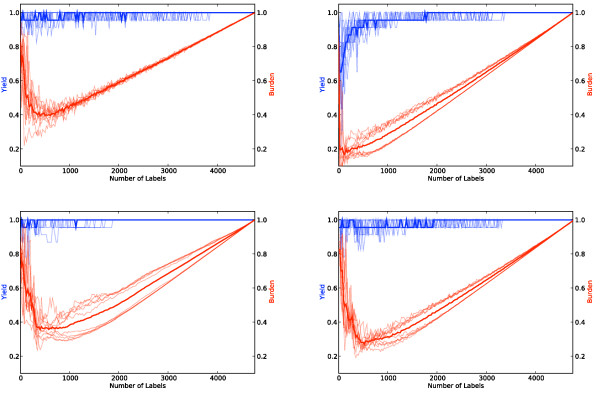
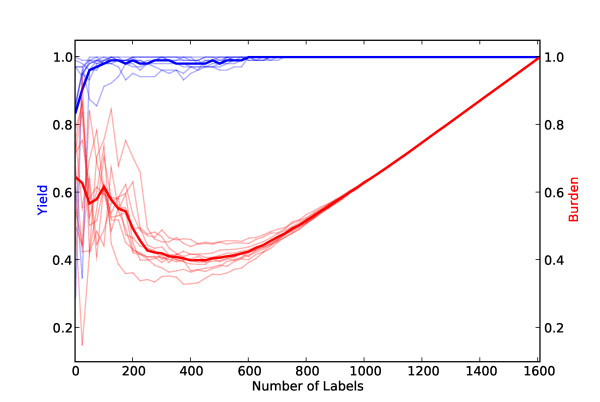
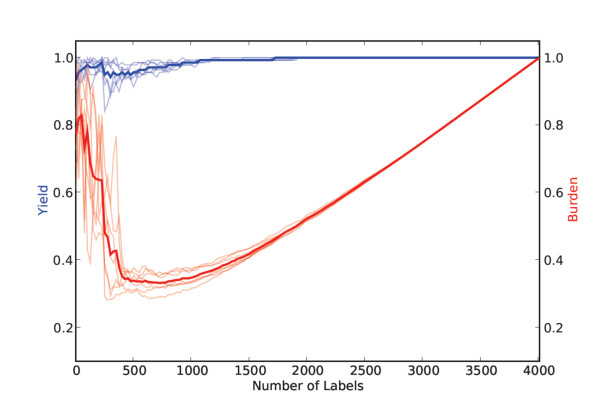
“To formalize the above intuition, we define two metrics we have proposed elsewhere [29]: yield and burden.”
BackgroundMethodSelf-citationHow to conduct systematic reviews more expeditiously?
Tsertsvadze, A., Chen, Y.-F., Moher, D., Sutcliffe, P., & McCarthy, N. (2015) · Systematic Reviews · doi:10.1186/s13643-015-0147-7 · Cited by 104
“For the task of study selection, a new semi-automated algorithmic strategy reduced the screening workload by 50 % without missing any relevant bibliographic citation [16].”
MethodTsou, A. Y., Treadwell, J. R., Erinoff, E., & Schoelles, K. (2020) · Systematic Reviews · doi:10.1186/s13643-020-01324-7 · Cited by 122
Innovations in Data Collection, Management, and Archiving for Systematic Reviews
Li, T., Vedula, S. S., Hadar, N., Parkin, C., Lau, J., & Dickersin, K. (2015) · Annals of Internal Medicine · doi:10.7326/m14-1603 · Cited by 117
“We anticipate that tools for automated screening of titles and abstracts will enable seamless data flow and handling from screening of search results to data abstraction (22, 23).”
MethodSelf-citationStatistical stopping criteria for automated screening in systematic reviews
Callaghan, M. W., & Müller-Hansen, F. (2020) · Systematic Reviews · doi:10.1186/s13643-020-01521-4 · Cited by 121
“[4] develop a “simple, operational stopping criterion”: stopping after half the documents have been screened.”
BackgroundRapid evidence assessments of research to inform social policy: taking stock and moving forward
Thomas, J., Newman, M., & Oliver, S. (2013) · Evidence and Policy · doi:10.1332/174426413x662572 · Cited by 109
An open source machine learning framework for efficient and transparent systematic reviews
van de Schoot, R., Bruin, J. D., Schram, R. D., Zahedi, P., de Boer, J., Weijdema, F., Kramer, B. M. R., Huijts, M., Hoogerwerf, M., Ferdinands, G., et al. (2021) · Utrecht University Repository (Utrecht University) · Cited by 106
Topic detection using paragraph vectors to support active learning in systematic reviews
Hashimoto, K., Kontonatsios, G., Miwa, M., & Ananiadou, S. (2016) · Journal of Biomedical Informatics · doi:10.1016/j.jbi.2016.06.001 · Cited by 100
“[5] proposed a multi-view active learning approach that represents documents using different feature spaces, e.”
BackgroundMethodInfluentialSearch strategy formulation for systematic reviews: Issues, challenges and opportunities
MacFarlane, A., Russell‐Rose, T., & Shokraneh, F. (2022) · Intelligent Systems with Applications · doi:10.1016/j.iswa.2022.200091 · Cited by 211
Khabsa, M., Elmagarmid, A., Ilyas, I., Hammady, H., & Ouzzani, M. (2016) · Machine Learning · doi:10.1007/s10994-015-5535-7 · Cited by 98
“…active learning to select which articles to tag reported needing up to 30–40 % of the entire dataset to be able to achieve recall as high as 1 (Wallace et al. 2010b) (Albeit working with a different dataset that contains three SRs only, their results about the required percentage of training…”
BackgroundFerdinands, G., Schram, R., de Bruin, J., Bagheri, A., Oberski, D. L., Tummers, L., Teijema, J. J., & van de Schoot, R. (2023) · Systematic Reviews · doi:10.1186/s13643-023-02257-7 · Cited by 96
“While previous studies have evaluated active learning models in many forms and shapes [10–15, 17– 19 ], ready-to-use Another component that influences model performance is how the textual content of titles and abstracts is represented in a model, called the feature extraction strategy [17, 19, 29].”
BackgroundThesmar, D., Sraer, D., Pinheiro, L., Dadson, N., Veliche, R., & Greenberg, P. (2019) · PharmacoEconomics · doi:10.1007/s40273-019-00777-6 · Cited by 91
“In machine learning this problem is referred to as “hasty generalization” [34].”
Backgroundfor the Society of Gynecologic Surgeons Systematic Review Group, Rahn, D. D., Ward, R. M., Sanses, T. V. D., Carberry, C. L., Mamik, M. M., Meriwether, K. V., Olivera, C. K., Abed, H., Balk, E. M., et al. (2014) · International Urogynecology Journal · doi:10.1007/s00192-014-2554-z · Cited by 96
“edu/) [15].”
Ofori-Boateng, R., Aceves-Martins, M., Wiratunga, N., & Moreno-Garcia, C. F. (2024) · Artificial Intelligence Review · doi:10.1007/s10462-024-10844-w · Cited by 86
Performance of a Large Language Model in Screening Citations
Oami, T., Okada, Y., & Nakada, T.-A. (2024) · JAMA Network Open · doi:10.1001/jamanetworkopen.2024.20496 · Cited by 84
Finding better active learners for faster literature reviews
Yu, Z., Kraft, N. A., & Menzies, T. (2018) · Empirical Software Engineering · doi:10.1007/s10664-017-9587-0 · Cited by 83
“– Review those active learning methods [10, 11, 45, 58, 60] and find that in evidence-based medicine and legal electronic discovery, there are three widely recognized state-of-the-art active learning methods [10, 38, 60].”
BackgroundMethodInfluentialSupporting systematic reviews using LDA-based document representations
Mo, Y., Kontonatsios, G., & Ananiadou, S. (2015) · Systematic Reviews · doi:10.1186/s13643-015-0117-0 · Cited by 83
“To overcome these limitations, methods such as machine learning, text mining [9, 10], text classification [11] and active learning [6, 12] have been used to partially automate this process, in order to reduce the workload, without sacrificing the quality of the reviews.”
BackgroundMethodFAST2: An intelligent assistant for finding relevant papers
Yu, Z., & Menzies, T. (2019) · Expert Systems with Applications · doi:10.1016/j.eswa.2018.11.021 · Cited by 80
“Yu et al. [41] and many other works [22, 38] focus on generating the best reading curve and do not discuss the stopping rule.”
BackgroundMethodPrecision of healthcare systematic review searches in a cross‐sectional sample
Sampson, M., Tetzlaff, J., & Urquhart, C. (2011) · Research Synthesis Methods · doi:10.1002/jrsm.42 · Cited by 80
“(Cohen et al., 2006; Ananiadou et al., 2009; Bekhuis and mner-Fushman, 2010; Wallace et al., 2010), human effort will be required for the foreseeable future.”
BackgroundGates, A., Gates, M., Sebastianski, M., Guitard, S., Elliott, S. A., & Hartling, L. (2020) · BMC Medical Research Methodology · doi:10.1186/s12874-020-01031-w · Cited by 80
Text-Mining Techniques and Tools for Systematic Literature Reviews: A Systematic Literature Review
Feng, L., Chiam, Y. K., & Lo, S. K. (2017) · 2017 24th Asia-Pacific Software Engineering Conference (APSEC) · doi:10.1109/apsec.2017.10 · Cited by 70
“[37] 2010 Journal USA ME Abstrackr S20 Tomassetti [38] 2011 Conference Italy SE DBPedia S21 Cohen et al.”
BackgroundCombining Crowd and Expert Labels Using Decision Theoretic Active Learning
Nguyen, A., Wallace, B., & Lease, M. (2015) · Proceedings of the AAAI Conference on Human Computation and Crowdsourcing · doi:10.1609/hcomp.v3i1.13225 · Cited by 73
“We investigate finite-pool data categorization (Wallace et al. 2010a), in which the objective is to exhaustively and accurately categorize a set of examples while minimizing cost.”
BackgroundMethodSelf-citationNieman, K. M., Anderson, B. D., & Cifelli, C. J. (2020) · Journal of the American College of Nutrition · doi:10.1080/07315724.2020.1800532 · Cited by 91
Campos, D. G., Fütterer, T., Gfrörer, T., Lavelle-Hill, R., Murayama, K., König, L., Hecht, M., Zitzmann, S., & Scherer, R. (2024) · Educational Psychology Review · doi:10.1007/s10648-024-09862-5 · Cited by 75
“Time-based approaches involve stopping the review after reviewing a certain number of abstracts (Wallace et al., 2010).”
Machine learning to assist risk-of-bias assessments in systematic reviews
Millard, L. A., Flach, P. A., & Higgins, J. P. (2016) · International Journal of Epidemiology · doi:10.1093/ije/dyv306 · Cited by 65
Screening nonrandomized studies for medical systematic reviews: a comparative study of classifiers
Bekhuis, T., & Demner-Fushman, D. (2012) · Artificial Intelligence in Medicine · doi:10.1016/j.artmed.2012.05.002 · Cited by 70
“Researchers interested in [semi-]automating the screening phase for systematic reviews are currently using the classifiers complement naïve Bayes (cNB) [22] or a Support Vector Machine (SVM) with a linear kernel [23, 24], or are developing a factorized version of cNB [25].”
MethodAccelerating clinical evidence synthesis with large language models
Wang, Z., Cao, L., Danek, B., Jin, Q., Lu, Z., & Sun, J. (2025) · npj Digital Medicine · doi:10.1038/s41746-025-01840-7 · Cited by 69
“However, most of them focused on an individual aspect of the clinical evidence synthesis process, such as literature search 35,36 ,citationscreening 37 – 39 ,qualityassessment 40 ,ordataextraction 41,42 .”
Sim, I., Tu, S. W., Carini, S., Lehmann, H. P., Pollock, B. H., Peleg, M., & Wittkowski, K. M. (2014) · Journal of Biomedical Informatics · doi:10.1016/j.jbi.2013.11.002 · Cited by 68
“Second, while there have been heuristic and machine-learning approaches to determining the relevance of studies to a search query [96,97] many of the approaches require training a classifier against a hand-coded gold standard, which limits their scalability.”
Who Should Label What? Instance Allocation in Multiple Expert Active Learning
Wallace, B. C., Small, K., Brodley, C. E., & Trikalinos, T. A. (2011) · Proceedings of the 2011 SIAM International Conference on Data Mining · doi:10.1137/1.9781611972818.16 · Cited by 63
“We demonstrate empirically that this strategy out-performs strong baselines, including previously proposed strategies for MEAL [8], for both sentiment analysis [11] in Section 5 and biomedical citation screening [21] in Section 7.”
BackgroundMethodSelf-citationSantos, Á. O. D., da Silva, E. S., Couto, L. M., Reis, G. V. L., & Belo, V. S. (2023) · Journal of Biomedical Informatics · doi:10.1016/j.jbi.2023.104389 · Cited by 64
The Campbell Collaboration: Providing Better Evidence for a Better World
Littell, J. H., & White, H. (2017) · Research on Social Work Practice · doi:10.1177/1049731517703748 · Cited by 83
Improving reference prioritisation with PICO recognition.
Brockmeier, A. J., Ju, M., Przybyła, P., & Ananiadou, S. (2019) · BMC Medical Informatics and Decision Making · doi:10.1186/s12911-019-0992-8 · Cited by 62
“A variety of ML models (different classifiers, algorithms, and feature sets) have been proposed for screening references for systematic reviews [14, 15, 79– 95].”
Toward modernizing the systematic review pipeline in genetics: efficient updating via data mining
Wallace, B. C., Small, K., Brodley, C. E., Lau, J., Schmid, C. H., Bertram, L., Lill, C. M., Cohen, J. T., & Trikalinos, T. A. (2012) · Genetics in Medicine · doi:10.1038/gim.2012.7 · Cited by 62
“16,17 Here we describe a tool to expedite the process of updating systematic reviews, meta-analyses, or field synopses by semi-automating the step of screening citations published after the latest update.”
BackgroundMethodSelf-citationCitation analysis as a literature search method for systematic reviews
Belter, C. (2015) · Journal of the Association for Information Science and Technology · doi:10.1002/asi.23605 · Cited by 78
A new iterative method to reduce workload in systematic review process
Jonnalagadda, S., & Petitti, D. (2013) · International Journal of Computational Biology and Drug Design · doi:10.1504/ijcbdd.2013.052198 · Cited by 61
“Recently, Wallace et al (Wallace et al, 2010) described the application of active learning, a novel extension of supervised machine learning, as an approach to the same problem.”
BackgroundMethodInfluentialToward a Formalization of the Process to Select IMIA Yearbook Best Papers
Séroussi, B., Griffon, N., Kerdelhué, G., Jaulent, M., Bouaud, J., & Lamy, J. B. (2014) · Methods of Information in Medicine · doi:10.3414/me14-01-0031 · Cited by 68
“A last possibility is to use semi-automatic reference screening algorithms [24].”
MethodImproving class probability estimates for imbalanced data
Wallace, B., & Dahabreh, I. J. (2013) · Knowledge and Information Systems · doi:10.1007/s10115-013-0670-6 · Cited by 80
“Specifically, the latter 22 datasets represent ‘abstract screening’ datasets [8,29].”
Self-citationBao, Y., Deng, Z., Wang, Y., Kim, H., Armengol, V. D., Acevedo, F., Ouardaoui, N., Wang, C., Parmigiani, G., Barzilay, R., et al. (2019) · JCO Clinical Cancer Informatics · doi:10.1200/cci.19.00042 · Cited by 67
Generating Better Queries for Systematic Reviews
Scells, H., & Zuccon, G. (2018) · The 41st International ACM SIGIR Conference on Research & Development in Information Retrieval · doi:10.1145/3209978.3210020 · Cited by 52
“Previous work has in fact reported that it can take experienced reviewers between 30 seconds and several minutes [27] to screen a single study (title, abstract and metadata).”
BackgroundOlorisade, B. K., Brereton, P., & Andras, P. (2017) · Journal of Biomedical Informatics · doi:10.1016/j.jbi.2017.07.010 · Cited by 54
Clark, J., McFarlane, C., Cleo, G., Ishikawa Ramos, C., & Marshall, S. (2021) · JMIR Medical Education · doi:10.2196/24418 · Cited by 54
“Findings from this study align more with the findings of Wallace et al [25], with time savings between 25% and 50%.”
MethodResultMeriwether, K. V., Balk, E. M., Antosh, D. D., Olivera, C. K., Kim-Fine, S., Murphy, M., Grimes, C. L., Sleemi, A., Singh, R., Dieter, A. A., et al. (2019) · International Urogynecology Journal · doi:10.1007/s00192-019-03876-2 · Cited by 58
Nawaz, R., Sun, Q., Shardlow, M., Kontonatsios, G., Aljohani, N. R., Visvizi, A., & Hassan, S. (2022) · Applied Sciences · doi:10.3390/app12010514 · Cited by 63
“A supervised algorithm can substantially reduce the time needed to analyze a large document collection, whereby a human coder manually categorizes a sample of the documents (normally a small percentage of the whole data), and the remaining unlabeled ones are automatically categorized by the trained text-mining algorit…”
BackgroundActive learning for screening prioritization in systematic reviews - A simulation study
Ferdinands, G., Schram, R., de Bruin, J., Bagheri, A., Oberski, D. L., Tummers, L., & van de Schoot, R. (2020) · doi:10.31219/osf.io/w6qbg · Cited by 51
“Recent studies have demonstrated the effectiveness of screening prioritization by means of active learning models [10, 11, 12, 13, 14, 15, 16].”
InfluentialThomas, J. (2013) · OA Evidence-Based Medicine · doi:10.13172/2053-2636-1-2-1109 · Cited by 44
Modernizing the systematic review process to inform comparative effectiveness: tools and methods
Wallace, B. C., Dahabreh, I. J., Schmid, C. H., Lau, J., & Trikalinos, T. A. (2013) · Journal of Comparative Effectiveness Research · doi:10.2217/cer.13.17 · Cited by 51
Self-citationKebede, M. M., Le Cornet, C., & Fortner, R. T. (2023) · Research Synthesis Methods · doi:10.1002/jrsm.1589 · Cited by 50
“The vast majority of studies used SVM classifiers with linear kernel.(2,39,40) This popular choice of linear kernel function seems to be theoretically justified.”
BackgroundAutomatic Boolean Query Formulation for Systematic Review Literature Search
Scells, H., Zuccon, G., Koopman, B., & Clark, J. (2020) · Proceedings of The Web Conference 2020 · doi:10.1145/3366423.3380185 · Cited by 46
“The majority of the research that is focused on reducing the workload of the screening phase has primarily investigated the use of active learning [5, 28, 48].”
BackgroundOude Wolcherink, M. J., Pouwels, X. G. L. V., van Dijk, S. H. B., Doggen, C. J. M., & Koffijberg, H. (2023) · Expert Review of Pharmacoeconomics & Outcomes Research · doi:10.1080/14737167.2023.2234639 · Cited by 50
“It has been suggested that an experienced reviewer is able to screen two abstracts per minute [14].”
BackgroundZwakman, M., Verberne, L. M., Kars, M. C., Hooft, L., van Delden, J. J. M., & Spijker, R. (2018) · BMC Palliative Care · doi:10.1186/s12904-018-0335-z · Cited by 60
“Regarding the time needed, we know from previous research that an experienced reviewer can screen an average of two abstracts per minute, but abstracts for complex topics may take several minutes each to evaluate [32].”
BackgroundTóth, B., Berek, L., Gulácsi, L., Péntek, M., & Zrubka, Z. (2024) · Systematic Reviews · doi:10.1186/s13643-024-02592-3 · Cited by 48
“…126], SyRF [92, 111], ASR (automated systematic review) [67], ASReview [133], Aggre-gator [58], ATCER [63], Cochrane RCT Classifier [72], Covidence [131], Curious Snake [83], DoCTER [65], GAP Screener [52], MetaPreg [74], Research Screener [102], revtools [134], RobotAnalyst, and TeMMPo [124].”
BackgroundMethodInfluentialBetter Data Labelling With EMBLEM (and how that Impacts Defect Prediction)
Tu, H., Yu, Z., & Menzies, T. (2020) · IEEE Transactions on Software Engineering · doi:10.1109/tse.2020.2986415 · Cited by 60
“Step 4 Certainty Sampling: Next, EMBLEM trains further using certainty sampling and Wallace’s “aggressive undersampling” [103] that culls majority class examples closest to the decision boundary.”
MethodRefining Boolean queries to identify relevant studies for systematic review updates
Alharbi, A., & Stevenson, M. (2020) · Journal of the American Medical Informatics Association · doi:10.1093/jamia/ocaa148 · Cited by 68
“identification of studies for inclusion in systematic reviews by applying text mining techniques, for example, [9-16].”
BackgroundShemilt, I., Hollands, G. J., Marteau, T. M., Nakamura, R., Jebb, S. A., Kelly, M. P., Suhrcke, M., & Ogilvie, D. (2013) · PLoS ONE · doi:10.1371/journal.pone.0075070 · Cited by 59
“We used text mining technologies to prioritise records for manual screening [31,32].”
MethodJi, X., Ritter, A., & Yen, P. (2017) · Journal of Biomedical Informatics · doi:10.1016/j.jbi.2017.03.007 · Cited by 55
Improving Vulnerability Inspection Efficiency Using Active Learning
Yu, Z., Theisen, C., Williams, L. A., & Menzies, T. (2019) · IEEE Transactions on Software Engineering · doi:10.1109/tse.2019.2949275 · Cited by 69
“[19] designed patient active learning to help researchers prioritize their effort on papers to be included.”
BackgroundMethodInfluentialBekhuis, T., Tseytlin, E., Mitchell, K. J., & Demner-Fushman, D. (2014) · PLoS ONE · doi:10.1371/journal.pone.0086277 · Cited by 45
Adverse events following implantable cardioverter defibrillator implantation: a systematic review
Persson, R., Earley, A., Garlitski, A. C., Balk, E. M., & Uhlig, K. (2014) · Journal of Interventional Cardiac Electrophysiology · doi:10.1007/s10840-014-9913-z · Cited by 48
Metadata
- Authors
- Wallace, B. C., Trikalinos, T. A., Lau, J., Brodley, C., & Schmid, C. H.
- Affiliations
- Tufts University (US)
- Tufts Medical Center (US)
- Corresponding author
- Wallace, Byron C
- Venue
- BMC Bioinformatics
- Published
- 2010-01-26
- Volume
- 11
- Issue
- 1
- Pages
- 55-55
- ISSN
- 1471-2105 (ISSN-L)
- PMC
- PMC2824679
- OpenAlex
- W2043566294
- Cited by
- 351
- References
- 45
- Citations by year
- 2026: 23 · 2025: 27 · 2024: 34 · 2023: 33 · 2022: 23 · 2021: 28 · 2020: 36 · 2019: 29 · 2018: 22 · 2017: 15 · 2016: 12 · 2015: 20 · 2014: 15 · 2013: 21 · 2012: 7
- FWCI
- 3.01
- Type
- journal article
- Language
- en
- Open access
- gold
- doi.org
- Licence
- cc-by
- creativecommons.org/licenses/by/2.0 (tdm)
- Locations
- BMC Bioinformatics (publishedVersion, cc-by)
- PubMed Central (publishedVersion, cc-by)
- PubMed (publishedVersion)
- DOAJ (DOAJ: Directory of Open Access Journals) (submittedVersion)
- Funders
- U.S. Social Security Administration
- Tufts Medical Center
- National Institutes of Health (5r33rr017109-03)
- Agency for Healthcare Research and Quality (R01HS018494)
- National Center for Research Resources (R33 RR17109)
- Topics
- Social Sciences › Decision Sciences › Statistics, Probability and Uncertainty › Meta-analysis and systematic reviews
- Physical Sciences › Computer Science › Artificial Intelligence › Text and Document Classification Technologies
- Physical Sciences › Computer Science › Information Systems › Information Retrieval and Search Behavior
- Keywords
- citation screening, systematic reviews, semi-automated screening, active learning (machine learning), class imbalance, undersampling, support vector machine, ensemble classifiers, text classification, biomedical literature
- MeSH terms
- Periodicals as Topic, Publications, Review Literature as Topic, Information Storage and Retrieval
About these checks
Registry, retraction, Cites and statistics results are computed, not judged, with one exception: a printed reference that no index lists is read once by a model before it counts as a citation error. Claims are extracted by a model and kept only when their quote appears verbatim in the text; each cited source is then checked, with a model’s help, for whether it says what the claim relies on. Those verdicts can be wrong — read the claim’s quote and the cited source before relying on one.
Statistics and arithmetic are recomputed, not judged.
Confidence bands are shown only for fields calibrated on our annotated test set. None is calibrated yet, so no band is shown.
What counts as a claim ›How we measure confidence ›How we check this ›
Are you an author, or do you see a problem with this page? Request a review
Data sources
Bibliographic data: Semantic Scholar, OpenAlex, Crossref.
Contains information from the Semantic Scholar Academic Graph Datasets, made available under the ODC Attribution License (ODC-BY 1.0).
Semantic Scholar’s data is described in: Kinney, R., et al. (2023). The Semantic Scholar Open Data Platform. arXiv:2301.10140.
