

Hierarchical modularity of nested bow-ties in metabolic networks
Open accessThe DOI matches its Crossref record; 40 of the 41 references it cites were found in a registry or an index.
Abstract
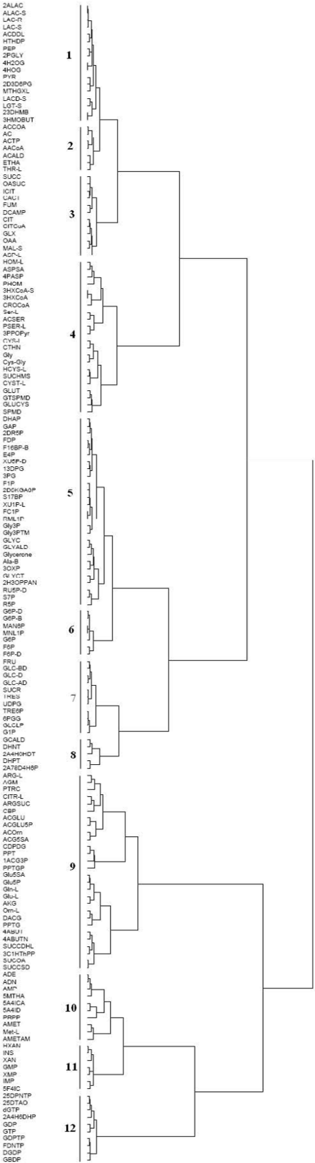
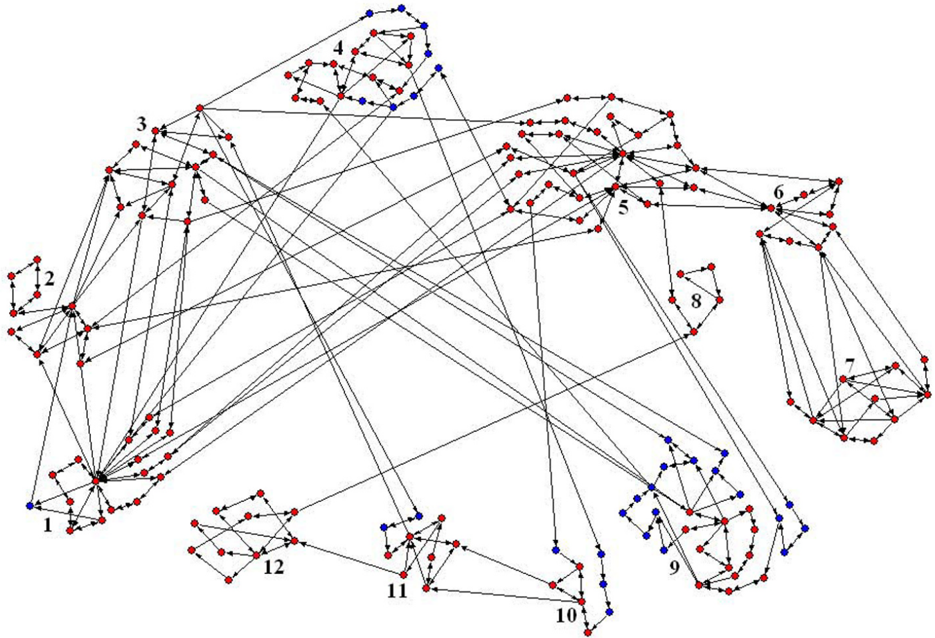
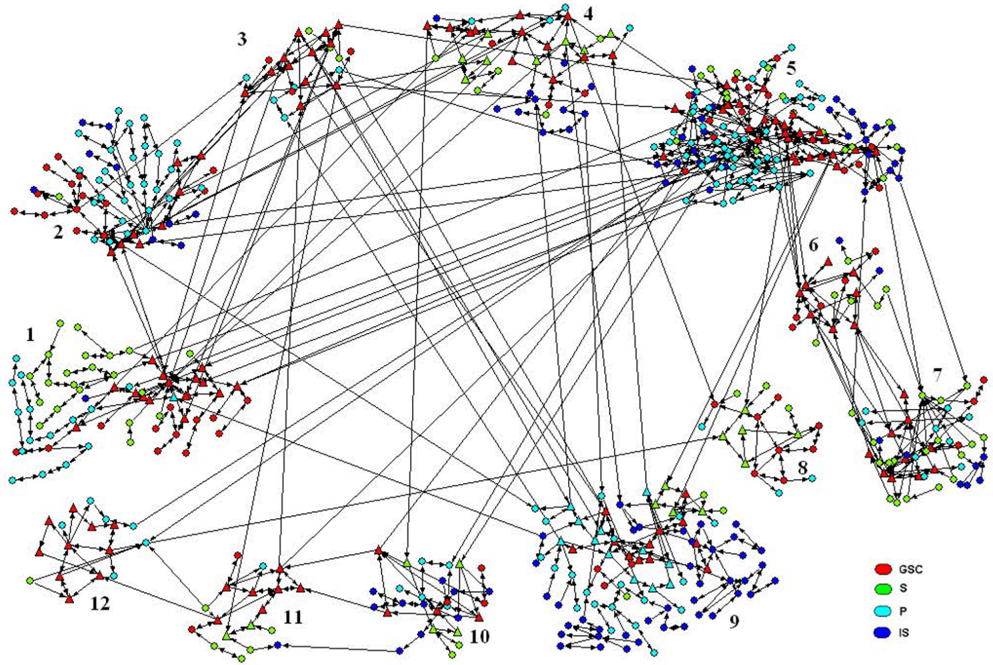
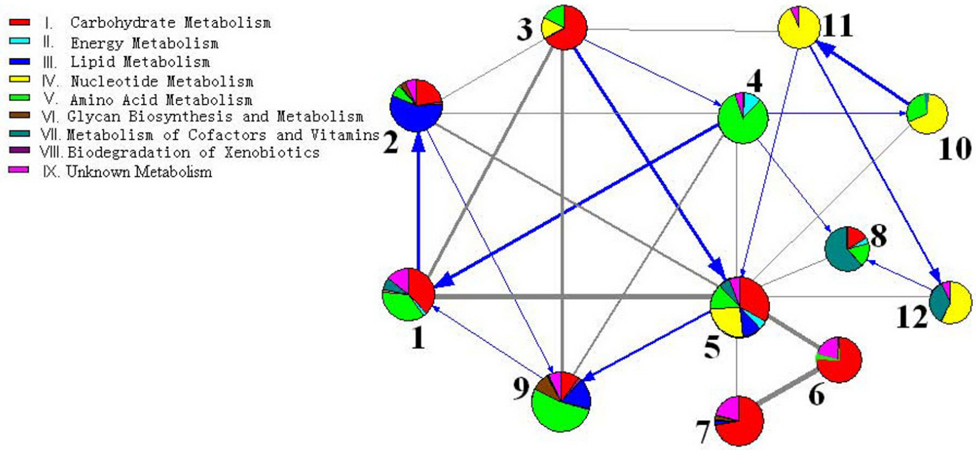
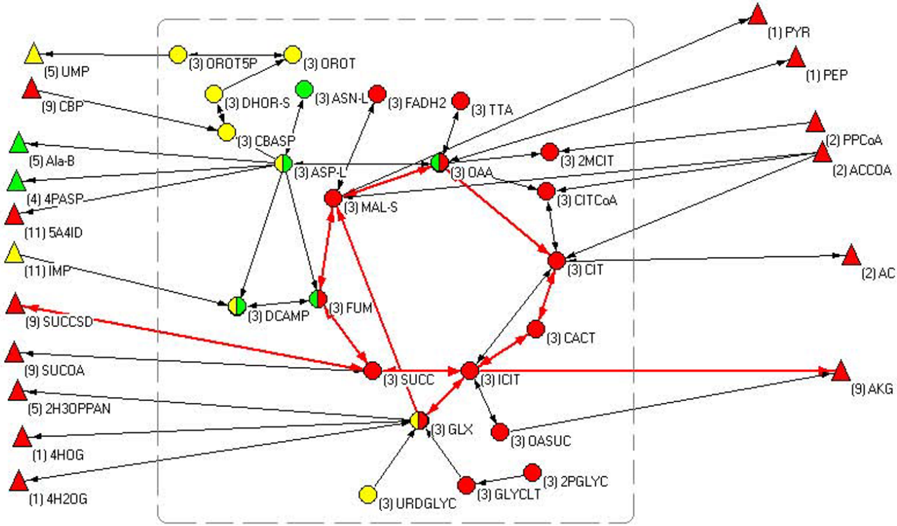
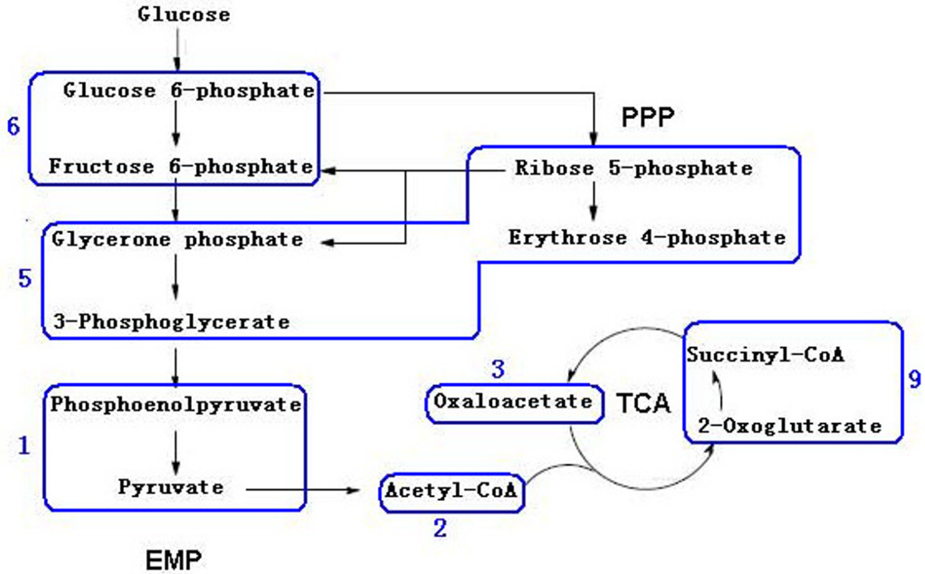
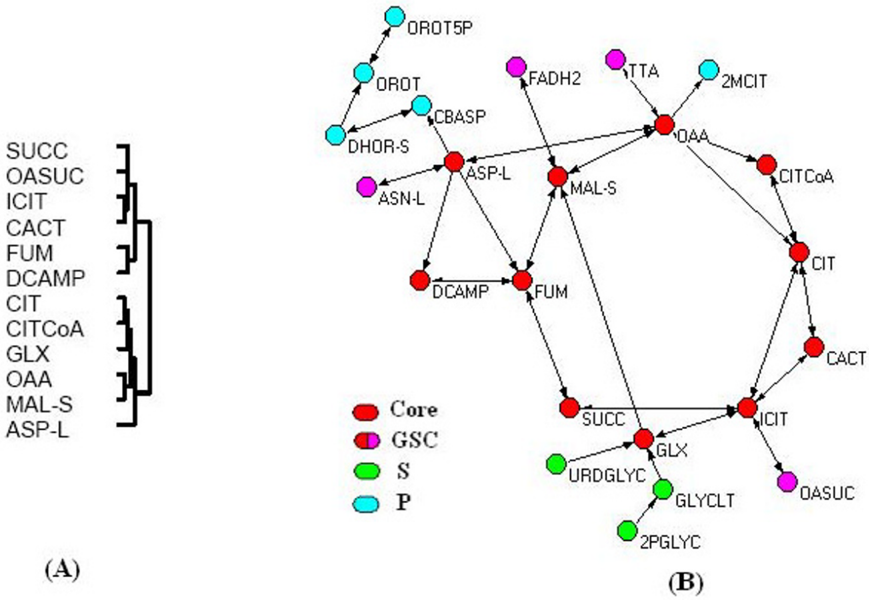
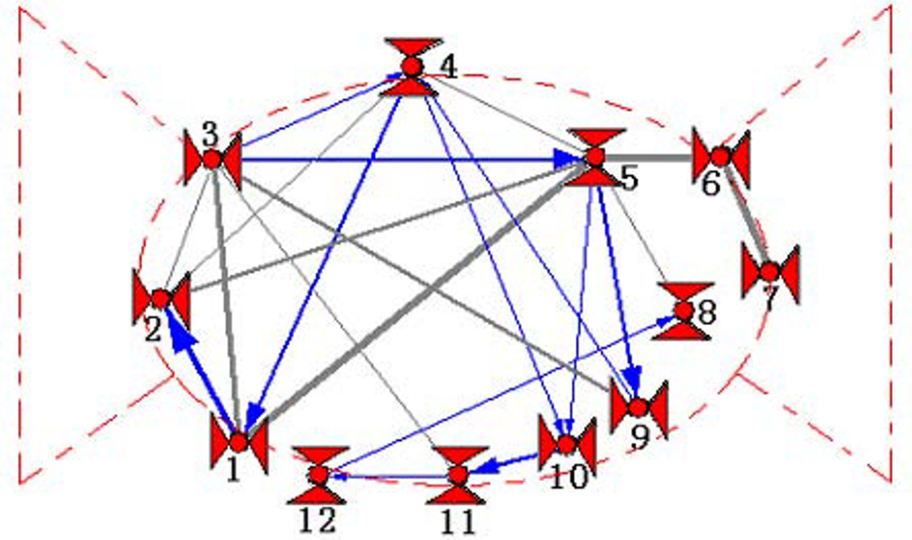
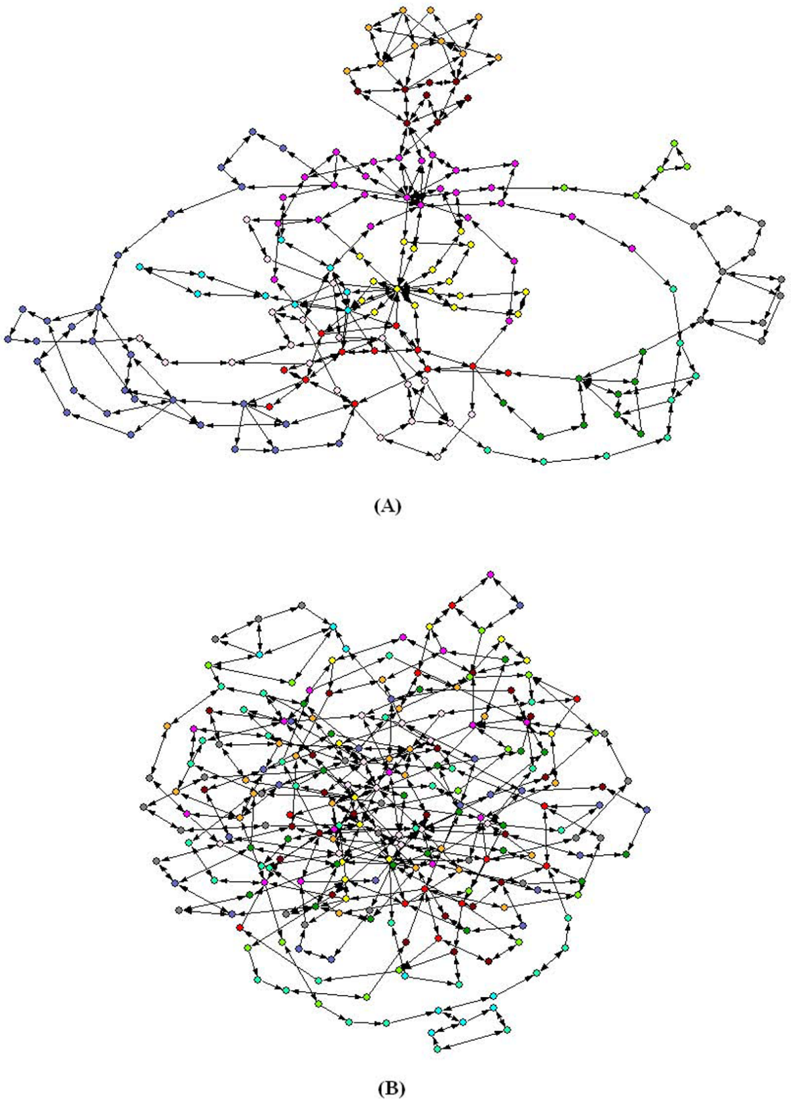
Background: The exploration of the structural topology and the organizing principles of genome-based large-scale metabolic networks is essential for studying possible relations between structure and functionality of metabolic networks. Topological analysis of graph models has often been applied to study the structural characteristics of complex metabolic networks. Results: In this work, metabolic networks of 75 organisms were investigated from a topological point of view. Network decomposition of three microbes (Escherichia coli, Aeropyrum pernix and Saccharomyces cerevisiae) shows that almost all of the sub-networks exhibit a highly modularized bow-tie topological pattern similar to that of the global metabolic networks. Moreover, these small bow-ties are hierarchically nested into larger ones and collectively integrated into a large metabolic network, and important features of this modularity are not observed in the random shuffled network. In addition, such a bow-tie pattern appears to be present in certain chemically isolated functional modules and spatially separated modules including carbohydrate metabolism, cytosol and mitochondrion respectively. Conclusion: The highly modularized bow-tie pattern is present at different levels and scales, and in different chemical and spatial modules of metabolic networks, which is likely the result of the evolutionary process rather than a random accident. Identification and analysis of such a pattern is helpful for understanding the design principles and facilitate the modelling of metabolic networks.
Overview
The claims and statistics of this paper haven’t been checked yet.
Free: it reads the open-access text and checks the first 5 claims that cite a source we can check. Create a free account to check every claim.
Integrity signals
Registry
Cites
Statistics
Figures
Verification
Claims the paper makes
The claims and statistics of this paper haven’t been checked yet.
Free: it reads the open-access text and checks the first 5 claims that cite a source we can check. Create a free account to check every claim.
Claims other papers make about this one
Each is checked against this paper’s own text: does it say what the citing paper says it does?
The cited source says what the claim attributes to it.
In the citing paper
“In this particular structure, a large SCC occupies a central position in a quite symmetrized feedforward structure of inputs and outputs [45].”
From On the origins of hierarchy in complex networks (2013) · cites this paper as [45]
In the citing paper
“Interestingly, when cycles are incorporated to this structure at T = 0, the resulting structure is a bow-tie organization.”
From On the origins of hierarchy in complex networks (2013) · cites this paper as [45]
Self-check
Percentages, sums and reported differences re-computed from the paper’s own numbers.
The self-check needs the paper’s full text.
Citations
Cites
Collective dynamics of ‘small-world’ networks
Watts, D. J., & Strogatz, S. H. (1998) · Nature · doi:10.1038/30918 · Cited by 43,060 · cited 1×
“, the average of CC (v) over all v, could reflect the cliquishness of the network [29].”
BackgroundHierarchical Grouping to Optimize an Objective Function
Ward, J. H. (1963) · Journal of the American Statistical Association · doi:10.1080/01621459.1963.10500845 · Cited by 20,598 · cited 1×
“Having obtained the dissimilarity indexes, Ward's clustering, a hierarchically agglomerative clustering method, is used to decompose the network [38].”
MethodFinding and evaluating community structure in networks
Newman, M. E. J., & Girvan, M. (2004) · Physical Review E · doi:10.1103/physreve.69.026113 · Cited by 13,931 · cited 9×
“For a given decomposition of a network, the modularity metric is defined as the fraction of arcs within clusters minus the expected fraction of edges if the arcs are wired with no structural bias [11]:”
BackgroundMethodInfluentialGraph Theory with Applications
Bondy, J. A., & Murty, U. S. R. (1976) · doi:10.1007/978-1-349-03521-2 · Cited by 9,043
The Large-Scale Organization of Metabolic Networks
Jeong, H., Tombor, B., Albert, R., Oltvai, Z. N., & Barabási, A.-L. (2000) · Nature · doi:10.1038/35036627 · Cited by 4,972 · cited 1×
“Background Cellular metabolism is an essential process for the maintenance of life and metabolic networks have been extensively studied [1-7].”
BackgroundHierarchical Organization of Modularity in Metabolic Networks
Ravasz, E., Somera, A. L., Mongru, D. A., Oltvai, Z. N., & Barabási, A.-L. (2002) · Science · doi:10.1126/science.1073374 · Cited by 4,224 · cited 1×
“Several algorithms have been developed to break up a metabolic network into modules [12-16], while the corresponding modularity metric could be used as a quantitative criterion to evaluate the decomposing quality of a network [11].”
MethodFunctional cartography of complex metabolic networks
Guimerà, R., & Nunes Amaral, L. A. (2005) · Nature · doi:10.1038/nature03288 · Cited by 3,983 · cited 7×
“They also developed a simulated annealing algorithm to compute the largest modularity metric of a network [14,18].”
BackgroundMethodInfluentialFrom molecular to modular cell biology.
Hartwell, L. H., Hopfield, J. J., Leibler, S., & Murray, A. W. (1999) · Nature · doi:10.1038/35011540 · Cited by 3,632 · cited 1×
“Cellular functions are carried out in a modular way [9], while it has been suggested that biological modules correlates with locally dense links in molecular networks [10].”
BackgroundHierarchical Grouping to Optimize an Objective Function
Ward, J. H. (1963) · Journal of the American Statistical Association · doi:10.2307/2282967 · Cited by 3,294
Specificity and Stability in Topology of Protein Networks
Maslov, S., & Sneppen, K. (2002) · Science · doi:10.1126/science.1065103 · Cited by 3,051 · cited 3×
“coli network were then compared with those of the properly randomized counterparts that preserve the linkage degree of each node and the total number of directed and bi-directed arcs [20,21].”
BackgroundMethod
Research works printed but not linked: 2
- Erdos P, Renyi A: On the evolution of random graphs. Publication of the Mathematical Institute of the Hungarian Academy of Science 1960, 5:17-61.
- Batagelj V, Mrvar A, Ferligoj A, Doreian P: Generalized blockmod- eling with Pajek. Metodoloski Zvezki 2004, 1:455-467.
Cited by
Items 101–134 of 134
Batta, I., Yao, Q., Sabrin, K. M., & Dovrolis, C. (2021) · PLoS ONE · doi:10.1371/journal.pone.0249846 · Cited by 2
“Among the neuronal networks in biology, the connectome of the Caenorhabditis elegans ( C. elegans ) has been of particular interest.”
Topology of Plant Metabolic Networks
Grafahrend‐Belau, E., Junker, B. H., Klukas, C., Koschützki, D., Schreiber, F., & Schwöbbermeyer, H. (2008) · Springer eBooks · doi:10.1007/978-0-387-78745-9_7 · Cited by 2
Why Do Big Data and Machine Learning Entail the Fractional Dynamics?
Niu, H., & Chen, Y. (2023) · Agriculture automation and control · doi:10.1007/978-3-031-52645-9_2 · Cited by 2
Campbell, T. (2015) · ScholarsArchive (Brigham Young University) · Cited by 2
Moyano, F. J. M.-R. (2016) · UPM Digital Archive (Technical University of Madrid) · doi:10.20868/upm.thesis.39538 · Cited by 2
Ma, H., & Zeng, A. (2013) · Elsevier eBooks · doi:10.1016/b978-0-12-405926-9.00007-1 · Cited by 1
A comparison of three weighted human gene functional association networks
Zhao, J., Wang, C., Yang, T., Li, B., Chen, X., Shen, X., & Fang, L. (2012) · IEEE International Conference on Systems Biology · doi:10.1109/isb.2012.6314108 · Cited by 1
“On the other hand, studies of biological networks have revealed that functional modules usually correspond to densely linked topological sub-networks of the global network[31, 32].”
BackgroundSelf-citationLiu, Q., Wang, Z., Li, M., Li, D., & Zhu, Y. (2009) · IEEE International Conference on Computer Science and Information Technology · doi:10.1109/iccsit.2009.5234476 · Cited by 1
“That is, the protein-protein interaction network is also structured in the form of modularity organization[12, 13]; Zhao et al found that the metabolic network presents hierarchical nested bow-ties structures[5].”
BackgroundMinimal Cut Sets and Their Use in Modelling Flavonoid Metabolism
Clark, S. T. (2014) · Lincoln University Research Archive (Lincoln University) · Cited by 1
Une approche de modélisation de biologie des systèmes sur la spondylarthrite
Chaplais, E. (2015) · theses.fr (ABES) · doi:10.70675/eb753ddeze85dz473dzb50czcf88d00862e7 · Cited by 1
(n.d.) · Tesis Doctorals en Xarxa (Consorci de Serveis Universitaris de Catalunya) · Cited by 1
Three faces of metabolites: Pathways, localizations and network positionsPreprint
Zhao, J., & Holme, P. (2009) · arXiv (Cornell University) · doi:10.48550/arxiv.0907.3927
Self-citationModularity in the evolution of yeast protein interaction network
Ogishima, S., Tanaka, H., & Nakaya, J. (2015) · Bioinformation · doi:10.6026/97320630011127
Graph-based modeling and evolutionary analysis of microbial metabolism
Zhou, W. (2013) · Rice Research Repository (Rice University)
A Computational Approach for Multi-Level Biological Complex Systems Analysis
Colombo, R. (2015) · BOA (University of Milano-Bicocca)
Microbial environment, immunity and human health
Gerber, G. K. (2008) · The scientific electronic library of periodicals of the National Academy of Sciences of Ukraine (National Academy of Sciences of Ukraine)
EVALUATING A MICROBIAL COMMUNITY THROUGH FEATURE MATCHING AND GRAPH TOPOLOGY
Porter, M. S. (2012) · Library and Archives Canada (Government of Canada)
Community Structure, Inference and Network-Based Markers
Gao, S. (2014) · Libraries and Cultural Resources (University of Calgary) · doi:10.11575/prism/25365
Zeidler, S. (2013) · eDiss (Georg-August-Universität Göttingen) · doi:10.53846/goediss-4175
Metabolic Pathway Analysis : from small to genome-scale networks
Figueiredo, R. N., & de, L. F. D. P. (2011) · Common Library Network (Der Gemeinsame Bibliotheksverbund)
Duijn, V. M. (2012)
Decomposing complexity: the discovering of pathway dynamics
White, A. (2016) · London School of Economics and Political Science Theses Online (London School of Economics and Political Science) · doi:10.21953/lse.1u7ur27v68kc
“11 Table listing some of the metabolites shared by ‘modules’ of Zhao et al.’s (2006) decomposition of E.”
BackgroundInfluentialThree faces of metabolites : pathways, localizations and network positions
Zhao, J., & Holme, P. (2010)
Self-citationMachine learning methods for detecting structure in metabolic flow networks
Jay, M. (2018) · Apollo (University of Cambridge) · doi:10.17863/cam.48344
“This validation process was partly inspired by that used in Zhao et al.[175], which also examines network structure and uses a shuffled baseline, although the baseline is generated by shuffling the network rather than the labelling, as here.”
MethodModularity-based Network Decomposition
Ma, H., & Zeng, A. (2013) · Springer eBooks · doi:10.1007/978-1-4419-9863-7_560
赵, 静., 曹, 志., 骆, 建., 俞, 鸿., 陶, 林., & 李, 亦. (2007) · Chinese Science Bulletin (Chinese Version) · doi:10.1360/csb2007-52-1-47
Niu, H., & Chen, Y. (2022) · Springer eBooks · doi:10.1007/978-3-031-14937-5_1
Local 2-connected bow-tie structure of the Web and of social networks
Perekhodko, E. (2024) · Applied Network Science · doi:10.1007/s41109-024-00638-y
Regulatory network discovery using heuristics
Zarnegar, A. (2011) · FedUni ResearchOnline (Federation University Australia)
Tree islands of fertility and fine woody debris structure the soil bacterial community
Peterson, S. C., Campbell, T., Roundy, B. A., Madsen, M. D., & Aanderud, Z. T. (2026) · Arid Land Research and Management · doi:10.1080/15324982.2026.2650753
“Canopy data also had the highest average degree, average clustering coefficient, and density, detailing a more robust community that is resistant to random node failure (i.e., removal or death of a random taxa) (Zhao et al. 2006; Gutteridge et al. 2007).”
Prediction of GO Terms Based on Partitioning PPI Networks Into Highly Connected Components
Grbić, M., Gemović, B., Vračević, S., Davidović, R., Matić, D., & Kartelj, A. (2026) · IEEE Transactions on Computational Biology and Bioinformatics · doi:10.1109/tcbbio.2026.3706474
Bi, K., Lv, C., Zhang, Y., Chen, T., Tao, Y., Song, G., Dai, Z., & Qiu, T. (2026) · Chinese Journal of Chemical Engineering · doi:10.1016/j.cjche.2026.08.025
The evolutionary dynamics of biochemical networks in fluctuating environments
Platt, R. J. (2011) · Research Explorer (The University of Manchester)
Metadata
- Authors
- Zhao, J., Yu, H., Luo, J.-H., Cao, Z.-W., & Li, Y.-X.
- Affiliations
- Shanghai Jiao Tong University (CN)
- Shanghai Center For Bioinformation Technology (CN)
- Corresponding author
- Cao, Zhi-Wei
- Li, Yi-Xue
- ORCID
- Venue
- BMC Bioinformatics
- Published
- 2006-08-18
- Volume
- 7
- Issue
- 1
- Pages
- 386-386
- ISSN
- 1471-2105 (ISSN-L)
- OpenAlex
- W1668115650
- Cited by
- 128
- References
- 40
- Citations by year
- 2026: 4 · 2025: 1 · 2024: 1 · 2023: 3 · 2022: 4 · 2021: 6 · 2020: 4 · 2019: 5 · 2018: 7 · 2017: 3 · 2016: 3 · 2015: 6 · 2014: 8 · 2013: 11 · 2012: 10
- FWCI
- 4.07
- Type
- journal article
- Language
- en
- Open access
- gold
- doi.org
- Licence
- cc-by
- Locations
- BMC Bioinformatics (publishedVersion, cc-by)
- Europe PMC (PubMed Central) (publishedVersion, cc-by)
- PubMed (publishedVersion)
- DOAJ (DOAJ: Directory of Open Access Journals) (submittedVersion)
- Funders
- National Natural Science Foundation of China (2003CB715900, 30500107)
- Science and Technology Commission of Shanghai Municipality
- Topics
- Life Sciences › Biochemistry, Genetics and Molecular Biology › Molecular Biology › Microbial Metabolic Engineering and Bioproduction
- Life Sciences › Biochemistry, Genetics and Molecular Biology › Molecular Biology › Bioinformatics and Genomic Networks
- Life Sciences › Biochemistry, Genetics and Molecular Biology › Molecular Biology › Gene Regulatory Network Analysis
- Keywords
- metabolic networks, network modularity, network hierarchy, network decomposition, Escherichia coli, Aeropyrum pernix, Saccharomyces cerevisiae, functional modules, carbohydrate metabolism, mitochondria, cytosol, network topology
- MeSH terms
- Algorithms, Cell Physiological Phenomena, Computer Graphics, Computer Simulation, Models, Biological, Software, User-Computer Interface, Signal Transduction, Gene Expression, Proteome
About these checks
Registry, retraction, Cites and statistics results are computed, not judged, with one exception: a printed reference that no index lists is read once by a model before it counts as a citation error. Claims are extracted by a model and kept only when their quote appears verbatim in the text; each cited source is then checked, with a model’s help, for whether it says what the claim relies on. Those verdicts can be wrong — read the claim’s quote and the cited source before relying on one.
Statistics and arithmetic are recomputed, not judged.
Confidence bands are shown only for fields calibrated on our annotated test set. None is calibrated yet, so no band is shown.
What counts as a claim ›How we measure confidence ›How we check this ›
Are you an author, or do you see a problem with this page? Request a review
Data sources
Bibliographic data: Semantic Scholar, OpenAlex, Crossref.
Contains information from the Semantic Scholar Academic Graph Datasets, made available under the ODC Attribution License (ODC-BY 1.0).
Semantic Scholar’s data is described in: Kinney, R., et al. (2023). The Semantic Scholar Open Data Platform. arXiv:2301.10140.
