

Novel metaheuristic for parameter estimation in nonlinear dynamic biological systems
Open accessThe DOI matches its Crossref record; 58 of the 58 references it cites were found in a registry or an index.
Abstract
Background: We consider the problem of parameter estimation (model calibration) in nonlinear dynamic models of biological systems. Due to the frequent ill-conditioning and multi-modality of many of these problems, traditional local methods usually fail (unless initialized with very good guesses of the parameter vector). In order to surmount these difficulties, global optimization (GO) methods have been suggested as robust alternatives. Currently, deterministic GO methods can not solve problems of realistic size within this class in reasonable computation times. In contrast, certain types of stochastic GO methods have shown promising results, although the computational cost remains large. Rodriguez-Fernandez and coworkers have presented hybrid stochastic-deterministic GO methods which could reduce computation time by one order of magnitude while guaranteeing robustness. Our goal here was to further reduce the computational effort without loosing robustness. Results: We have developed a new procedure based on the scatter search methodology for nonlinear optimization of dynamic models of arbitrary (or even unknown) structure (i.e. black-box models). In this contribution, we describe and apply this novel metaheuristic, inspired by recent developments in the field of operations research, to a set of complex identification problems and we make a critical comparison with respect to the previous (above mentioned) successful methods. Conclusion: Robust and efficient methods for parameter estimation are of key importance in systems biology and related areas. The new metaheuristic presented in this paper aims to ensure the proper solution of these problems by adopting a global optimization approach, while keeping the computational effort under reasonable values. This new metaheuristic was applied to a set of three challenging parameter estimation problems of nonlinear dynamic biological systems, outperforming very significantly all the methods previously used for these benchmark problems.
Overview
The claims and statistics of this paper haven’t been checked yet.
Free: it reads the open-access text and checks the first 5 claims that cite a source we can check. Create a free account to check every claim.
Integrity signals
Registry
Cites
Statistics
Figures
Verification
Claims the paper makes
The claims and statistics of this paper haven’t been checked yet.
Free: it reads the open-access text and checks the first 5 claims that cite a source we can check. Create a free account to check every claim.
Claims other papers make about this one
Each is checked against this paper’s own text: does it say what the citing paper says it does?
The cited source says what the claim attributes to it.
In the citing paper
“For example, scatter search has proved to be a very efficient method when the local search phase is performed by a specialized local method [114,116].”
From Reverse engineering and identification in systems biology: strategies, perspectives and challenges (2014) · cites this paper as [114]
In the citing paper
“Therefore, based on the current status of the NP issue [111], approximate methods (such as stochastic algorithms and metaheuristics) are a more attractive alternative for problems of realistic size [112–114].”
From Reverse engineering and identification in systems biology: strategies, perspectives and challenges (2014) · cites this paper as [114]
Self-check
Percentages, sums and reported differences re-computed from the paper’s own numbers.
The self-check needs the paper’s full text.
Citations
Cites
Storn, R., & Price, K. (1997) · Journal of Global Optimization · doi:10.1023/a:1008202821328 · Cited by 29,569 · cited 1×
“Our tests and comparisons indicate that DE [28] and SRES [29] are one of the most competitive algorithms, with the additional advantage of being able to handle arbitrary constraints if needed.”
MethodSystem Identification: Theory for the User
Lennart Ljung, A. (1987) · Cited by 17,690
Nonlinear Regression Analysis and Its Applications
Bates, D. M., & Watts, D. G. (1988) · Wiley Series in Probability and Statistics · doi:10.1002/9780470316757 · Cited by 3,979
Ljung, L. (1999) · Wiley Encyclopedia of Electrical and Electronics Engineering · doi:10.1002/047134608x.w1046 · Cited by 3,778
Stochastic ranking for constrained evolutionary optimization
Runarsson, T. P., & Yao, X. (2000) · IEEE Transactions on Evolutionary Computation · doi:10.1109/4235.873238 · Cited by 1,807 · cited 1×
“Our tests and comparisons indicate that DE [28] and SRES [29] are one of the most competitive algorithms, with the additional advantage of being able to handle arbitrary constraints if needed.”
MethodSNOPT: An SQP Algorithm for Large-Scale Constrained Optimization
Gill, P. E., Murray, W., & Saunders, M. A. (2002) · SIAM Journal on Optimization · doi:10.1137/s1052623499350013 · Cited by 1,587 · cited 1×
“ The user can choose a number of different local solvers such us SQP methods like fmincon (The MathWorks Inc.), SOLNP [34], SNOPT [ 35 ], direct methods like Nomad [36] for the cases of very noisy data, and others specifically designed for parameter estimation problems such as N2FB/DN2FB [37].”
MethodProgram DYNAFIT for the Analysis of Enzyme Kinetic Data: Application to HIV Proteinase
Kuzmič, P. (1996) · Analytical Biochemistry · doi:10.1006/abio.1996.0238 · Cited by 1,495 · cited 2×
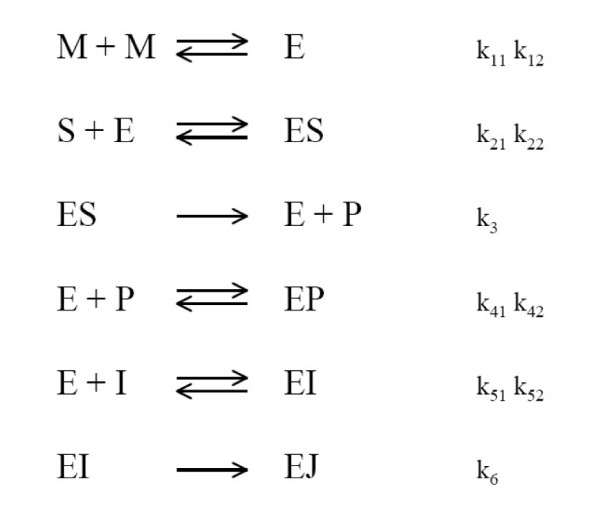
“This problem consists of the estimation of a number of rate constants of a model for the reaction mechanism of irreversible inhibition of HIV proteinase as originally studied by Kuzmic [52] (Figure 7).”
MethodHEURISTICS FOR INTEGER PROGRAMMING USING SURROGATE CONSTRAINTS
Glover, F. (1977) · Decision Sciences · doi:10.1111/j.1540-5915.1977.tb01074.x · Cited by 1,363
Identification of parametric models : from experimental data
Walter, É., & Pronzato, L. (1997) · Cited by 1,197
Parameter estimation in biochemical pathways: a comparison of global optimization methods
Moles, C. G., Mendes, P., & Banga, J. R. (2003) · Genome Research · doi:10.1101/gr.1262503 · Cited by 858 · cited 4×
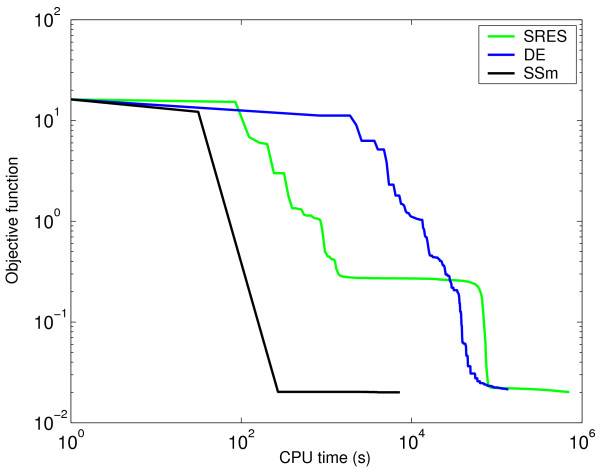
“In short, using SSm we have reduced the computation time from two days [19] to a couple of minutes, while ensuring robustness.”
BackgroundMethodInfluentialSelf-citation
Research works printed but not linked: 3
- Ye Y Interior algorithms for linear, quadratic and linearly constrained non-linear programming PhD thesis 1987 Department of ESS, Stanford University
- Dolan ED Moré JJ Munson TS Benchmarking optimization problems with COPS 3.0 Technical Report ANL/MCS-TM-273 Argonne National Laboratory 2004
- Hunter WG McGregor JF The Estimation of Common Parameters from Several Responses: Some Actual Examples Unpublished Report 1967 The Department of Statistics. University of Winsconsin
Cited by
Items 201–277 of 277
Optimization of lipid production by oleaginous yeast in continuous culture
Muñoz‐Tamayo, R., Aceves-Lara, C. A., & Bideaux, C. (2014) · IFAC Proceedings Volumes · doi:10.3182/20140824-6-za-1003.02125 · Cited by 3
“SSmGo performs global optimization by using a scatter search method (Rodríguez-Fernández et al., 2006; Egea et al., 2007).”
MethodBǎleanu, D., & Karaca, Y. (2022) · Elsevier eBooks · doi:10.1016/b978-0-323-90032-4.00011-0 · Cited by 3
Global optimization approaches to parameters identification in immune competition model
Afraites, L., & Bellouquid, A. (2014) · Communications in Applied and Industrial Mathematics · doi:10.1685/journal.caim.466 · Cited by 3
Madi, M. K., & Karameh, F. N. (2018) · Journal of Neural Engineering · doi:10.1088/1741-2552/aac3f7 · Cited by 3
Optimal Experimental Design in the Modelling of Pattern Formation
de Lomana, A. L. G., Gómez-Garrido, À., Sportouch, D., & Villà-Freixa, J. (2008) · Lecture notes in computer science · doi:10.1007/978-3-540-69384-0_66 · Cited by 5
“Once the fitting parameters are obtained to some approximation, by using the above detailed simple approach or by more sophisticated methods[9], we are interested in improving their confidence intervals.”
MethodModelica based computational tools for sensitivity analysis via automatic differentiation
Elsheikh, A. M. G., & Naumann, U. (2014) · JuSER (Forschungszentrum Jülich) · Cited by 3
BioPreDyn-bench: benchmark problems for kinetic modelling in systems biologyPreprint
Villaverde, A. F., Henriques, D., B, K. S. A., Bongard, S., Schmid, J., Cicin-Sain, D., Crombach, A., Sáez-Rodríguez, J., Mauch, K., Balsa‐Canto, E., et al. (2014) · arXiv (Cornell University) · doi:10.48550/arxiv.1407.5856 · Cited by 3
“Note that, while DN2FB is generally recommended [67], we have realized that for large-scale problems it may not be the most efficient local method, due to the large number of evaluations needed to calculate the derivatives.”
BackgroundSelf-citationKnowledge discovery for stochastic models of biological systems
Forlin, M. (2010) · Unitn-eprints PhD (University of Trento) · doi:10.15168/11572_367835 · Cited by 3
OBTAINING THE BEST MODEL PREDICTIONS AND PARAMETER ESTIMATES USING LIMITED DATA
McLean, K. A. P. (2011) · QSpace (Queen's University Library) · Cited by 6
Nonlinear behavior of passive heave compensator: modeling, experiment validation and investigation
Yi, B., Zhan, Y., Zhang, H., & Xu, J. (2026) · Mechanical Systems and Signal Processing · doi:10.1016/j.ymssp.2026.114130 · Cited by 2
Modeling and Simulation of a Packed Column Batch Still for Fruit Wine Distillations
Díaz-Quezada, S., Wilson, D. I., & Pérez‐Correa, J. R. (2022) · IEEE Access · doi:10.1109/access.2022.3197604 · Cited by 4
Foliar Uptake Models for Biocides: Testing Practical Identifiability of Diffusion-Based Models
Sangoi, E., Cattani, F., Padia, F. N., & Galvanin, F. (2024) · IFAC-PapersOnLine · doi:10.1016/j.ifacol.2024.10.013 · Cited by 4
Foliar uptake of biocides: Statistical assessment of compartmental and diffusion-based models
Sangoi, E., Cattani, F., Padia, F. N., & Galvanin, F. (2025) · Chemical Engineering Science · doi:10.1016/j.ces.2025.121984 · Cited by 3
., S. S., & Göncü, S. (2008) · Journal of Applied Animal Research · doi:10.1080/09712119.2008.9706937 · Cited by 2
Inference in dynamic systems using B‐splines and quasilinearized ODE penalties
Frasso, G., Jaeger, J., & Lambert, P. (2015) · Biometrical Journal · doi:10.1002/bimj.201500082 · Cited by 2
Direct Sequential Based Firefly Algorithm for the $$\alpha $$ -Pinene Isomerization Problem
Rocha, A. M. A. C., Martins, M. C., Costa, M. F. P., & Fernandes, E. M. G. P. (2016) · Lecture notes in computer science · doi:10.1007/978-3-319-42085-1_30 · Cited by 8
“1163 in [18] 19.”
BackgroundMethodInfluentialReaction Rate Constant Evaluation of Thermal Isomerization of α-Pinene
Zhang, W., Li, M., Zhang, T., & Wang, L. (2017) · Journal of Materials Science and Chemical Engineering · doi:10.4236/msce.2017.55002 · Cited by 2
“In an ill-conditioned system of equations, the gradient-based algorithms can trap in local minimums and are usually failed to find the global minimum error [5].”
BackgroundMethodInfluentialEvans, M. V., Eklund, C. R., Williams, D. N., Sey, Y. M., & Simmons, J. E. (2020) · Inhalation Toxicology · doi:10.1080/08958378.2020.1742818 · Cited by 2
“This type of global optimization strategy has been shown to be accurate and efficient for estimating in vitro kinetic parameters (Rodriguez-Fernandez et al. 2006).”
MethodWest, G., Sinkala, Z., & Wallin, J. F. (2022) · Frontiers in Applied Mathematics and Statistics · doi:10.3389/fams.2022.915294 · Cited by 2
The Identifiability of Mathematical Models in Epidemiology: Tuberculosis, HIV, COVID-19
Игоревна, К. О., Kabanikhin, S. I., & Petrakova, V. (2023) · Mathematical Biology and Bioinformatics · doi:10.17537/2023.18.177 · Cited by 3
Quantifying Parameter Interdependence in Stochastic Discrete Models of Biochemical Systems
Gholami, S., & Ilie, S. (2023) · Entropy · doi:10.3390/e25081168 · Cited by 4
“, [18,19,22,25] for analyses of deterministic models).”
Parameter estimation of an empirical kinetic model for CO preferential oxidation
Moreno, M. S., López, E., Divins, N. J., & Llorca, J. (2014) · El Servicio de Difusión de la Creación Intelectual (National University of La Plata) · Cited by 2
Global optimization using Gaussian processes to estimate biological parameters from image data
Barac, D., Multerer, M., & Iber, D. (2018) · Journal of Theoretical Biology · doi:10.1016/j.jtbi.2018.12.002 · Cited by 4
Игоревна, К. О., & Andornaya, D. V. (2021) · Journal of Physics Conference Series · doi:10.1088/1742-6596/2092/1/012012 · Cited by 5
A statistical framework for recovering pseudo-dynamic networks from static data
Chen, C., Shen, B., Ma, T., Wang, M., & Wu, R. (2022) · Bioinformatics · doi:10.1093/bioinformatics/btac038 · Cited by 4
Learning Nonlinear Brain Dynamics: van der Pol Meets LSTMPreprint
Abrevaya, G., Aravkin, A. Y., Cecchi, G., Rish, I., Polosecki, P. I., Zheng, P., & Dawson, S. P. (2018) · bioRxiv (Cold Spring Harbor Laboratory) · doi:10.1101/330548 · Cited by 3
“The whole process of alternating between stochastic search and VP optimization is repeated several times, since, consistently with reported works [14, 27], a hybrid stochastic-deterministic method performs better than a sole local optimization method for complex problems.”
MethodZain, J. M., Azrag, M. A. K., Yatin, S. F. M., Aldehim, G., Zain, Z. M., Shaiba, H. A., Alturki, N. M., Sakri, S. B., Mohamed, A., & Jaber, A. S. (2024) · IEEE Access · doi:10.1109/access.2024.3422450 · Cited by 1
“As a result of the model’s nonlinearity, getting high data features is a difficult task because kinetics are collected from numerous laboratories and under different conditions [40], [41], [42].”
Modelling of biochemical systems using the particle swarm optimization and chaotic theory
Lu, M., Shin, D. P., & Kang, H. I. (2009) · IEEE International Conference on Intelligent Computing and Intelligent Systems (ICIS) · doi:10.1109/icicisys.2009.5357810 · Cited by 1
“This problem includes 36 kinetic parameters to be estimated in the nonlinear biochemical dynamic model (8 nonlinear ODEs) which describes the variation of the metabolite concentration with time [7].”
BackgroundResultState estimation of yeast galactose pathway using extended Kalman filter
Dhobaley, S., & Bhopale, P. (2014) · International Conference on Control, Instrumentation, Communication and Computational Technologies · doi:10.1109/iccicct.2014.6993156 · Cited by 1
Južnič‐Zonta, Ž., Ripoll, X. F., & Aloy, A. M. (2011) · RECERCAT (Consorci de Serveis Universitaris de Catalunya) · Cited by 2
Model validation in dynamic systems for time‐course data with complex error structures
Kim, Y., & Kim, J. (2018) · Journal of Chemometrics · doi:10.1002/cem.3108 · Cited by 2
Flow-Based Bayesian Estimation of Nonlinear Differential Equations for Modeling Biological Networks
Brunel, N., & d’Alché–Buc, F. (2010) · Lecture notes in computer science · doi:10.1007/978-3-642-16001-1_38 · Cited by 2
“The estimation of ODE parameters by classical approaches (such as least squares [12]) is standard but gives rise to difficult global optimization problem [1].”
MethodBasco, L. M., & Mathews, Y. (2020) · International Journal of Research in English Education · doi:10.29252/ijree.5.4.80 · Cited by 1
Balsa‐Canto, E., Banga, J. R., & Garcia, M. R. (2010) · Wiley eBooks · doi:10.1002/9783527631339.ch13 · Cited by 4
Self-citationGennemark, P., & Wedelin, D. (2009) · Lecture notes in computer science · doi:10.1007/978-3-642-03845-7_14 · Cited by 2
Zimmer, C., Bergmann, F., & Sahle, S. (2016) · arXiv (Cornell University) · doi:10.48550/arxiv.1601.04458 · Cited by 1
“The landscape is full of local minima and optimization will require many function evaluations even on the relatively small interval [2, 4].”
BackgroundLinearly convergent nonlinear conjugate gradient methods for a parameter identification problemsPreprint
Riahi, M. K., & Qattan, I. A. (2018) · arXiv (Cornell University) · doi:10.48550/arxiv.1806.10197 · Cited by 2
“However, they have been shown several restrictions and limitations [26, 31], where faced to large uncertainty on the range of variation of the parameter the multi-start methods become inefficient and time and memory consuming.”
BackgroundA systems engineering approach to model, tune and test synthetic gene circuits
Acosta, Y. F. B. (2018) · RiuNet (Universitat Politècnica de València) · doi:10.4995/thesis/10251/112725 · Cited by 1
“So, methods including local analyses are based on the computation of local sensitivities, the Fisher Information Matrix, the covariance matrix, or the Hessian of the least-squares function (Rodriguez-Fernandez et al., 2006; Srinath and Gunawan, 2010) have been proposed.”
MethodPhysics-Informed Neural Networks for Parameter Recovery in the Repressilator Oscillatory ModelPreprint
Casajuana, B., Casals-Franch, R., de Lomana, A. L. G., Martí-Puig, P., & Villà-Freixa, J. (2026) · bioRxiv (Cold Spring Harbor Laboratory) · doi:10.64898/2026.05.12.724679 · Cited by 1
“Global and hybrid metaheuristics have improved robustness in biological calibration problems [12, 10], while regularized and scalable nonlinear programming formulations address overfitting, local minima, and larger model classes [14, 9].”
Multi-level models and infrastructures for simulating biological system development
Montagna, S. (2011) · AMS Dottorato Institutional Doctoral Theses Repository (University of Bologna) · doi:10.6092/unibo/amsdottorato/3415
Hybrid Architectures for Evolutionary Computing Algorithms
Burns, D. J. (2006) · Defense Technical Information Center (DTIC)
A cooperative strategy for parameter estimation problems in Systems Biology: Preliminary results
Masegosa, A. D., Rutolo, F., & Pelta, D. A. (2011) · International Conference on Intelligent Systems Design and Applications (ISDA) · doi:10.1109/isda.2011.6121823
“…the cooperative strategy where the solvers do not exchange information • cswm: the coordinator is set to use the control rule WM • csfuzz: the coordinator of the cooperative strategy uses the rule M • ssm: scatter search method presented in [2] • fssm: an enhanced version of the former algorithm.”
BackgroundMethodInfluentialA systems biology approach to signalling pathway and gene network regulation modelling in Mastitis
Ny, V. L.-D.-B., & Nicoline, Y. (2011) · Lincoln University Research Archive (Lincoln University)
CONTRIBUTIONS IN COMPUTATIONAL BIOLOGY
Sciacca, . (2009)
Golfar, B. (2014) · QSpace (Queen's University Library)
Mathematical model to uncover the role of receptor ubiquitination in dose dependent EGFR trafficking
Suryawanshi, G. W. (2012) · heiDOK (Heidelberg University) · doi:10.11588/heidok.00013108
“If the sensitivity equations show a linear dependence then FIM will become singular leading to unidentifiability (Rodriguez-Fernandez et al., 2006; Rehm and Reed, 2001).”
BackgroundCompartmental modeling for the volatile organic compound isoprene in human breath
Rauchenwald, H. K. (2011)
Zimmer, C., Schleich, K., & Lavrik, I. N. (2016) · Molecular BioSystems · doi:10.1039/c6mb00028b
Perchlorate reduction using salt-tolerant cultures
Xiao, Y. (2012) · cIRcle (University of British Columbia) · doi:10.14288/1.0050688
strategies, perspectives and challenges Reverse engineering and identification in systems biology:
Villaverde, A. F., & Banga, J. R. (2014)
Self-citationNetwork Based Simulation on HPC for Translational Medicine: an Application to Anticoagulation
Castaldi, D. (2014) · BOA (University of Milano-Bicocca)
COMPUTATIONAL PROCEDURES FOR OPTIMAL MODEL IDENTIFICATION IN SYSTEMS BIOLOGY.
Balsa‐Canto, E., & Banga, J. R. (2009) · IFAC Proceedings Volumes · doi:10.3182/20090706-3-fr-2004.00207
Self-citationEgea, J. A., Henriques, D., Cokelaer, T., Villaverde, A. F., Banga, J. R., & Sáez-Rodríguez, J. (2013)
Self-citationModeling and identification of a gene regulatory network programming erythropoiesis (1)
Vos, D. D. (2009) · Centrum Wiskunde & Informatica (CWI), the national research institute for mathematics and computer science in the Netherlands
Gábor, A. (2017) · REAL-PhD (Hungarian Academy of Sciences) · doi:10.18136/pe.2017.639
Egea, J. A., Balsa‐Canto, E., & Banga, J. R. (2009) · SNE Simulation Notes Europe · doi:10.11128/sne.19.tn.09949
“The application of our algorithm for solving nonlinear optimization problems arising from chemical and biological systems has provided excellent results [10, 18].”
MethodSelf-citationCOST-EFFECTIVENESS OF PRESSURE ULCER PREVENTION AND CALIBRATION ANALYSIS OF DECISION-ANALYTIC MODELS
Pham, B. (2015) · TSpace (University of Toronto) · Cited by 2
Lopes, F. J. P., Barros, C. D. T., de Carvalho, J. X., Vieira, F. D. M. C., & Costa, C. N. (2020) · Computational biology · doi:10.1007/978-3-030-51862-2_7
Gunawan, R., & Bagheri, N. (2018) · MDPI eBooks · doi:10.3390/books978-3-03897-434-5
Balsa‐Canto, E., Banga, J. R., & Garcia, M. R. (2010) · Wiley eBooks · doi:10.1002/9783527631209.ch73
Self-citationRemli, M. A., Ismail, N. S. N., Sahabudin, N. A., & Warif, N. B. A. (2022) · International Journal of Advanced Computer Science and Applications · doi:10.14569/ijacsa.2022.0130854
“Unlike RNG, controlled randomization (CR) strategy generates the first five populations ( ) of equal size for each vector as in the following equation [14]:”
BackgroundStochastic Analysis of Hankel and Toeplitz Matrices for Medical and Technical Applications
Kulikov, V. B., Kulikov, A., & Khranilov, V. P. (2023) · Studies in systems, decision and control · doi:10.1007/978-3-031-35875-3_1
Experimental designs for controlling the correlation of estimators in two‐parameter models
Benítez, É., & López–Fidalgo, J. (2023) · Journal of Chemometrics · doi:10.1002/cem.3525
An Objective Measure of Distributional Estimability as Applied to the Phase-Type Aging Model
Nie, C., Liu, X., & Provost, S. B. (2024) · Risks · doi:10.3390/risks12020037
van Boekel, M. A. J. S. (2024) · Journal of Food Engineering · doi:10.1016/j.jfoodeng.2024.112455
Abarbanel, H. D. I. (2013) · Understanding complex systems · doi:10.1007/978-1-4614-7218-6_4
Model Identification from Ambulatory Data for Post-Prandial Glucose Control in type 1 Diabetes
Sanz, L. O., & José, A. S. (2011)
Carlozo, M. N., Wang, N., Dowling, A. W., & Maginn, E. J. (2026) · Digital Discovery · doi:10.1039/d5dd00537j
Robust model calibration in large-scale systems biology via an adaptive hybrid algorithm
Polo-Rodríguez, A., Penas, D. R., & Banga, J. R. (2026) · BMC Bioinformatics · doi:10.64898/2026.01.27.701977
Self-citationClairon, Q. (2015) · theses.fr (ABES) · doi:10.70675/8b8876bcz097cz46fbz9183z198a61ad8c86
Munoz, E. E., Buvat, J.-C., & Leveneur, S. (2026) · Industrial & Engineering Chemistry Research · doi:10.1021/acs.iecr.6c00814
Cvetković, S., Ostojić, M., Milošević, M., & Platiša, M. M. (2026) · Physiological Measurement · doi:10.1088/1361-6579/ae7175
“Hybrid global–local optimization schemes of this form are widely adopted in nonlinear system identification and biomedical modeling, where complex parameter interactions preclude reliable single-stage optimization (Moles et al 2003, Rodriguez-Fernandez et al 2006).”
Exploiting the data from digital protective relays for generator model validation in power systems
Challa, K. K., & Gurrala, G. (2026) · Electric Power Systems Research · doi:10.1016/j.epsr.2026.113785
Turgut, O. E., Turgut, M. S., & Kırtepe, E. (2026) · Journal of Experimental & Theoretical Artificial Intelligence · doi:10.1080/0952813x.2026.2727170
Modeling biotechnological processes under uncertainty anaerobic digestion as case study
Južnič‐Zonta, Ž. (2012) · UPCommons institutional repository (Universitat Politècnica de Catalunya) · doi:10.5821/dissertation-2117-94710
Evolutionary Algorithms for Parameter Estimation of Metabolic Systems
Lebedik, A. S., & Zelinka, I. (2013) · Advances in intelligent systems and computing · doi:10.1007/978-3-319-00542-3_21
Metadata
- Authors
- Rodriguez-Fernandez, M., Egea, J. A., & Banga, J. R.
- Affiliations
- Consejo Superior de Investigaciones Científicas (ES)
- Corresponding author
- Banga, Julio R
- ORCID
- Banga, Julio R
- Venue
- BMC Bioinformatics
- Published
- 2006-11-02
- Volume
- 7
- Issue
- 1
- Pages
- 483-483
- ISSN
- 1471-2105 (ISSN-L)
- PMC
- PMC1654195
- OpenAlex
- W1600765471
- Cited by
- 278
- References
- 58
- Citations by year
- 2026: 8 · 2025: 2 · 2024: 9 · 2023: 8 · 2022: 10 · 2021: 10 · 2020: 9 · 2019: 10 · 2018: 22 · 2017: 16 · 2016: 13 · 2015: 15 · 2014: 25 · 2013: 18 · 2012: 12
- FWCI
- 16.34
- Type
- journal article
- Language
- en
- Open access
- gold
- doi.org
- Licence
- cc-by
- Locations
- BMC Bioinformatics (publishedVersion, cc-by)
- PubMed (publishedVersion)
- DIGITAL.CSIC (Spanish National Research Council (CSIC)) (submittedVersion)
- DOAJ (DOAJ: Directory of Open Access Journals) (submittedVersion, cc-by-sa)
- Funders
- Xunta de Galicia
- Topics
- Physical Sciences › Computer Science › Artificial Intelligence › Metaheuristic Optimization Algorithms Research
- Life Sciences › Biochemistry, Genetics and Molecular Biology › Molecular Biology › Gene Regulatory Network Analysis
- Physical Sciences › Engineering › Control and Systems Engineering › Control Systems and Identification
- Keywords
- parameter estimation, model calibration, metaheuristic optimization, scatter search, global optimization, black-box models, systems biology, parameter identifiability
- MeSH terms
- Bicyclic Monoterpenes, Algorithms, Computers, Models, Chemical, Models, Theoretical, Numerical Analysis, Computer-Assisted, Software, Stochastic Processes, Models, Statistical, HIV Protease Inhibitors, Nonlinear Dynamics, Computational Biology, Monoterpenes, Systems Biology
About these checks
Registry, retraction, Cites and statistics results are computed, not judged, with one exception: a printed reference that no index lists is read once by a model before it counts as a citation error. Claims are extracted by a model and kept only when their quote appears verbatim in the text; each cited source is then checked, with a model’s help, for whether it says what the claim relies on. Those verdicts can be wrong — read the claim’s quote and the cited source before relying on one.
Statistics and arithmetic are recomputed, not judged.
Confidence bands are shown only for fields calibrated on our annotated test set. None is calibrated yet, so no band is shown.
What counts as a claim ›How we measure confidence ›How we check this ›
Are you an author, or do you see a problem with this page? Request a review
Data sources
Bibliographic data: Semantic Scholar, OpenAlex, Crossref.
Contains information from the Semantic Scholar Academic Graph Datasets, made available under the ODC Attribution License (ODC-BY 1.0).
Semantic Scholar’s data is described in: Kinney, R., et al. (2023). The Semantic Scholar Open Data Platform. arXiv:2301.10140.
