

The tumor suppressor Scrib interacts with the zyxin-related protein LPP, which shuttles between cell adhesion sites and the nucleus
Open accessThe DOI matches its Crossref record; 55 of the 55 references it cites were found in a registry or an index.
Abstract
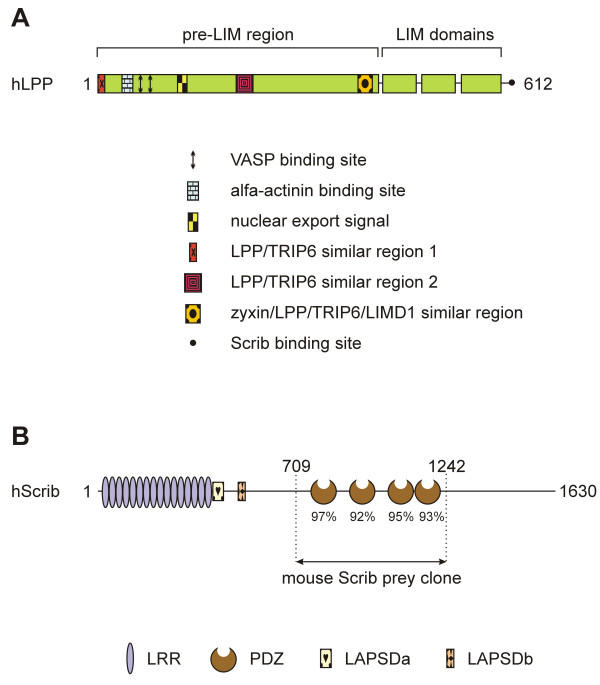
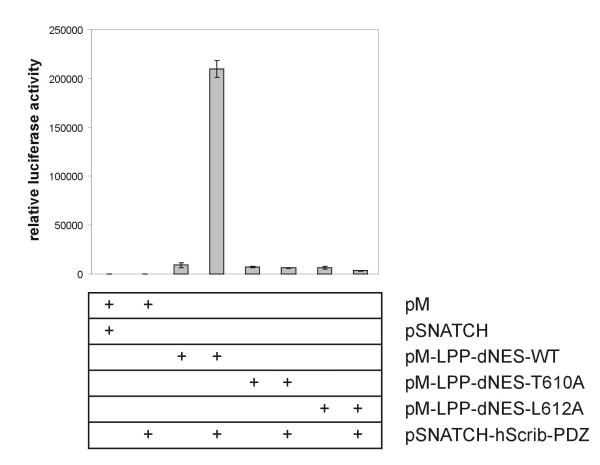
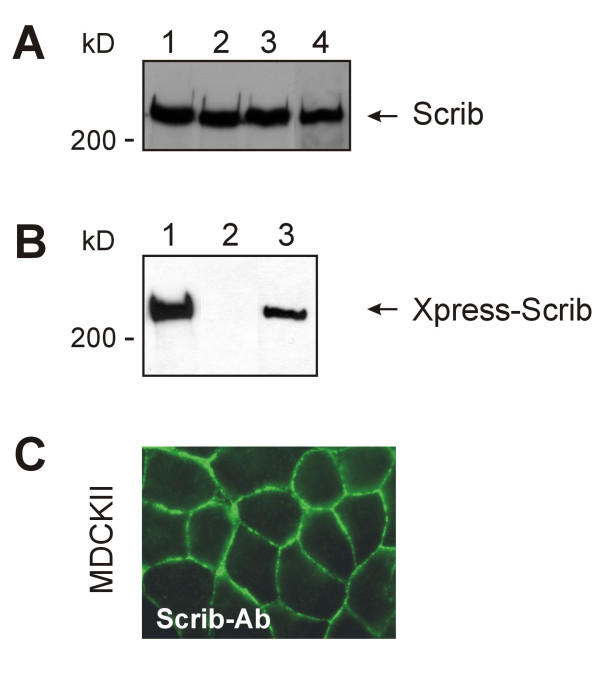
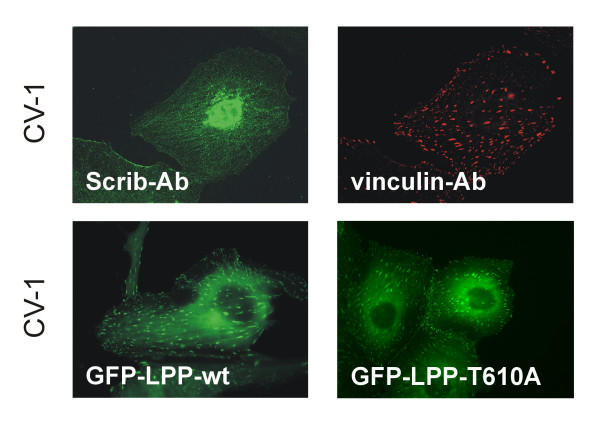
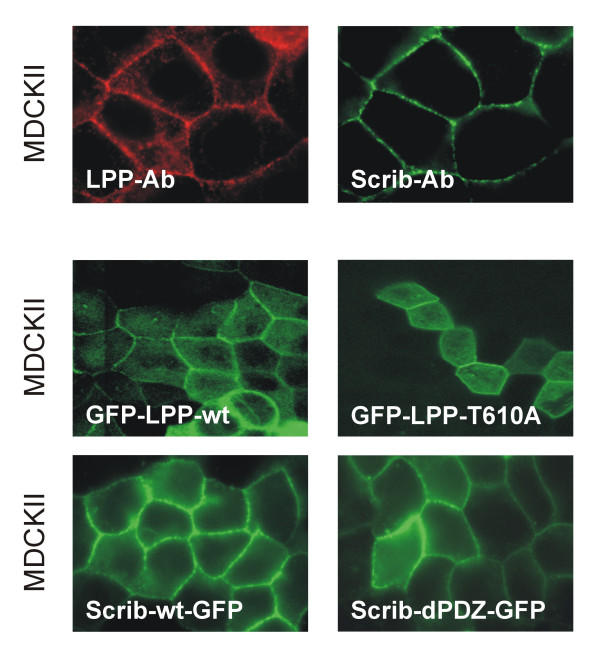
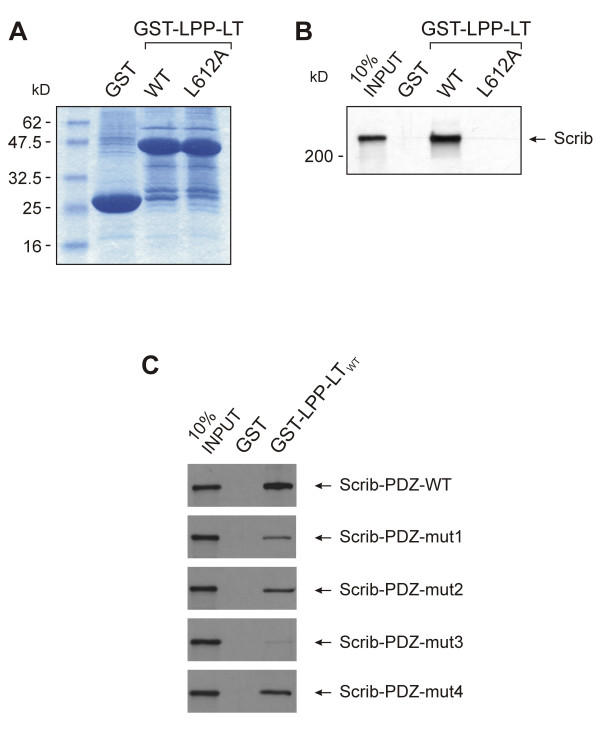
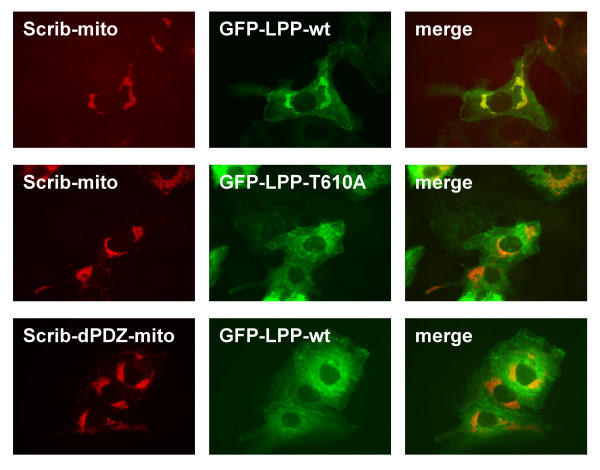
Background: At sites of cell adhesion, proteins exist that not only perform structural tasks but also have a signaling function. Previously, we found that the Lipoma Preferred Partner (LPP) protein is localized at sites of cell adhesion such as focal adhesions and cell-cell contacts, and shuttles to the nucleus where it has transcriptional activation capacity. LPP is a member of the zyxin family of proteins, which contains five members: ajuba, LIMD1, LPP, TRIP6 and zyxin. LPP has three LIM domains (zinc-finger protein interaction domains) at its carboxy-terminus, which are preceded by a proline-rich pre-LIM region containing a number of protein interaction domains. Results: To catch the role of LPP at sites of cell adhesion, we made an effort to identify binding partners of LPP. We found the tumor suppressor protein Scrib, which is a component of cell-cell contacts, as interaction partner of LPP. Human Scrib, which is a functional homologue of Drosophila scribble, is a member of the leucine-rich repeat and PDZ (LAP) family of proteins that is involved in the regulation of cell adhesion, cell shape and polarity. In addition, Scrib displays tumor suppressor activity. The binding between Scrib and LPP is mediated by the PDZ domains of Scrib and the carboxy-terminus of LPP. Both proteins localize in cell-cell contacts. Whereas LPP is also localized in focal adhesions and in the nucleus, Scrib could not be detected at these locations in MDCKII and CV-1 cells. Furthermore, our investigations indicate that Scrib is dispensable for targeting LPP to focal adhesions and to cell-cell contacts, and that LPP is not necessary for localizing Scrib in cell-cell contacts. We show that all four PDZ domains of Scrib are dispensable for localizing this protein in cell-cell contacts. Conclusions: Here, we identified an interaction between one of zyxin's family members, LPP, and the tumor suppressor protein Scrib. Both proteins localize in cell-cell contacts. This interaction links Scrib to a communication pathway between cell-cell contacts and the nucleus, and implicates LPP in Scrib-associated functions.
Overview
The claims and statistics of this paper haven’t been checked yet.
Free: it reads the open-access text and checks the first 5 claims that cite a source we can check. Create a free account to check every claim.
Integrity signals
Registry
Cites
Statistics
Figures
Verification
Claims the paper makes
The claims and statistics of this paper haven’t been checked yet.
Free: it reads the open-access text and checks the first 5 claims that cite a source we can check. Create a free account to check every claim.
Claims other papers make about this one
Each is checked against this paper’s own text: does it say what the citing paper says it does?
The cited source says what the claim attributes to it.
In the citing paper
“in which individual PDZ domains were inactivated by mutating the GLGF motif41”
From Membrane recruitment of the polarity protein Scribble by the cell adhesion receptor TMIGD1 (2023) · cites this paper as [41]
Self-check
Percentages, sums and reported differences re-computed from the paper’s own numbers.
The self-check needs the paper’s full text.
Citations
Cites
Transformation of yeast by lithium acetate/single-stranded carrier DNA/polyethylene glycol method
Daniel Gietz, R., & Woods, R. A. (2002) · Methods in Enzymology · doi:10.1016/s0076-6879(02)50957-5 · Cited by 2,871
Recognition of Unique Carboxyl-Terminal Motifs by Distinct PDZ Domains
Songyang, Z., Fanning, A. S., Fu, C., Xu, J., Marfatia, S. M., Chishti, A. H., Crompton, A., Chan, A. C., Anderson, J. M., & Cantley, L. C. (1997) · Science · doi:10.1126/science.275.5296.73 · Cited by 1,385 · cited 1×
“[25,26], the carboxy-terminal sequence of Scrib target proteins is predicted to require a hydrophobic amino acid (h) at the 0 (carboxy-terminus) position, and a serine (S) or threonine (T) at the -2 position.”
BackgroundCooperative Regulation of Cell Polarity and Growth by Drosophila Tumor Suppressors
Bilder, D., Li, M., & Perrimon, N. (2000) · Science · doi:10.1126/science.289.5476.113 · Cited by 919
Localization of apical epithelial determinants by the basolateral PDZ protein Scribble
Bilder, D., & Perrimon, N. (2000) · Nature · doi:10.1038/35001108 · Cited by 716 · cited 3×
“Drosophila Scribble was identified as being required for the apical confinement of polarity determinants in epithelia [18].”
BackgroundIdentification of Vangl2 and Scrb1 as planar polarity genes in mammals
Montcouquiol, M., Rachel, R. A., Lanford, P. J., Copeland, N. G., Jenkins, N. A., & Kelley, M. W. (2003) · Nature · doi:10.1038/nature01618 · Cited by 705 · cited 3×
“Drosophila Scribble was identified as being required for the apical confinement of polarity determinants in epithelia [18].”
BackgroundPDZ Domains: Structural Modules for Protein Complex Assembly
Hung, A. Y., & Sheng, M. (2002) · Journal of Biological Chemistry · doi:10.1074/jbc.r100065200 · Cited by 699
scribble mutants cooperate with oncogenic Ras or Notch to cause neoplastic overgrowth in Drosophila
Brumby, A. M., & Richardson, H. E. (2003) · The EMBO Journal · doi:10.1093/emboj/cdg548 · Cited by 628
LIM domains: multiple roles as adapters and functional modifiers in protein interactions
Dawid, I. B., Breen, J. J., & Toyama, R. (1998) · Trends in Genetics · doi:10.1016/s0168-9525(98)01424-3 · Cited by 600
The LIM domain: regulation by association
Bach, I. (2000) · Mechanisms of Development · doi:10.1016/s0925-4773(99)00314-7 · Cited by 558
A Genetic Screen in Drosophila for Metastatic Behavior
Pagliarini, R. A., & Xu, T. (2003) · Science · doi:10.1126/science.1088474 · Cited by 543
Cited by
Assémat, E., Bazellières, E., Pallesi-Pocachard, E., Le Bivic, A., & Massey-Harroche, D. (2008) · Biochimica et Biophysica Acta (BBA) - Biomembranes · doi:10.1016/j.bbamem.2007.08.029 · Cited by 470
An overview of spatial microscopic and accelerated kinetic Monte Carlo methods
Chatterjee, A., & Vlachos, D. G. (2007) · Journal of Computer-Aided Materials Design · doi:10.1007/s10820-006-9042-9 · Cited by 464
Qin, Y., Capaldo, C., Gumbiner, B. M., & Macara, I. G. (2005) · The Journal of Cell Biology · doi:10.1083/jcb.200506094 · Cited by 285
“Other binding partners for mammalian Scrib have been reported recently, but their physiological significance remains unclear (Metais et al., 2005; Petit et al., 2005).”
BackgroundRewiring cell polarity signaling in cancer
Halaoui, R., & McCaffrey, L. (2015) · Oncogene · doi:10.1038/onc.2014.59 · Cited by 174
DNA damage associated with mitosis and cytokinesis failure
Hayashi, M. T., & Karlseder, J. (2013) · Oncogene · doi:10.1038/onc.2012.615 · Cited by 169
Zheng, Q., & Zhao, Y. (2007) · Biology of the Cell · doi:10.1042/bc20060126 · Cited by 160
“…the expression of paired-domain transcription factors, such as Pax2, Pax5 and Pax8, in the development of dorsal inter neurons in the spinal cord (Pillai et al., 2007), whereas LHX1 and LHX5 contribute to forebrain development by activating the transcription of secreted Wnt antagonists, Sfrp1a…”
BackgroundScribble: A master scaffold in polarity, adhesion, synaptogenesis, and proliferation
Bonello, T. T., & Peifer, M. (2019) · Journal of Cell Biology · doi:10.1083/jcb.201810103 · Cited by 127
Phillips, H. M., Rhee, H. J., Murdoch, J. N., Hildreth, V., Peat, J. D., Anderson, R. H., Copp, A. J., Chaudhry, B., & Henderson, D. J. (2007) · Circulation Research · doi:10.1161/circresaha.106.142406 · Cited by 133
Stephens, R., Lim, K., Portela, M., Kvansakul, M., Humbert, P. O., & Richardson, H. E. (2018) · Journal of Molecular Biology · doi:10.1016/j.jmb.2018.01.011 · Cited by 132
Anastas, J. N., Biechele, T. L., Robitaille, M., Muster, J., Allison, K. H., Angers, S., & Moon, R. T. (2012) · Oncogene · doi:10.1038/onc.2011.528 · Cited by 128
Imaging proteins in vivo using fluorescence lifetime microscopy
Festy, F., Ameer‐Beg, S., Ng, T., & Suhling, K. (2007) · Molecular BioSystems · doi:10.1039/b617204k · Cited by 140
The N and C Termini of ZO-1 Are Surrounded by Distinct Proteins and Functional Protein Networks
Van Itallie, C. M., Aponte, A., Tietgens, A. J., Gucek, M., Fredriksson, K., & Anderson, J. M. (2013) · Journal of Biological Chemistry · doi:10.1074/jbc.m113.466193 · Cited by 117
Thomas, M., Massimi, P., Navarro, C., Borg, J.-P., & Banks, L. (2005) · Oncogene · doi:10.1038/sj.onc.1208757 · Cited by 117
Scrib regulates PAK activity during the cell migration process
Nola, S., Sebbagh, M., Marchetto, S., Osmani, N., Nourry, C., Audebert, S., Navarro, C., Rachel, R., Montcouquiol, M., Sans, N., et al. (2008) · Human Molecular Genetics · doi:10.1093/hmg/ddn248 · Cited by 111
Synaptic plasticity in Alzheimer’s disease and healthy aging
Cuestas Torres, D. M., & Cardenas, F. P. (2020) · Reviews in the Neurosciences · doi:10.1515/revneuro-2019-0058 · Cited by 98
Van Itallie, C. M., Tietgens, A. J., Aponte, A., Fredriksson, K., Fanning, A. S., Gucek, M., & Anderson, J. M. (2013) · Journal of Cell Science · doi:10.1242/jcs.140475 · Cited by 96
Ubiquilin 1 Modulates Amyloid Precursor Protein Trafficking and Aβ Secretion
Hiltunen, M., Lu, A., Thomas, A. V., Romano, D. M., Kim, M., Jones, P. B., Xie, Z., Kounnas, M. Z., Wagner, S. L., Berezovska, O., et al. (2006) · Journal of Biological Chemistry · doi:10.1074/jbc.m603106200 · Cited by 90
Towards integrating extracellular matrix and immunological pathways
Boyd, D. F., & Thomas, P. G. (2017) · Cytokine · doi:10.1016/j.cyto.2017.03.004 · Cited by 86
Kinase-interacting substrate screening is a novel method to identify kinase substrates
Amano, M., Hamaguchi, T., Shohag, M. H., Kozawa, K., Kato, K., Zhang, X., Yura, Y., Matsuura, Y., Kataoka, C., Nishioka, T., et al. (2015) · The Journal of Cell Biology · doi:10.1083/jcb.201412008 · Cited by 89
Yates, L. L., Schnatwinkel, C., Hazelwood, L., Chessum, L., Paudyal, A., Hilton, H., Romero, M. R., Wilde, J., Bogani, D., Sanderson, J., et al. (2013) · Developmental Biology · doi:10.1016/j.ydbio.2012.11.012 · Cited by 78
“Scrib protein is composed of multiple domains that mediate protein–protein interactions (Kallay et al., 2006; Metais et al., 2005; Petit et al., 2005; Sun et al., 2009).”
BackgroundTopological features of integrin adhesion complexes revealed by multiplexed proximity biotinylation
Chastney, M. R., Lawless, C., Humphries, J. D., Warwood, S., Jones, M. C., Knight, D., Jorgensen, C., & Humphries, M. J. (2020) · Journal of Cell Biology · doi:10.1083/jcb.202003038 · Cited by 77
Gritsenko, P., Leenders, W., & Friedl, P. (2017) · Histochemistry and Cell Biology · doi:10.1007/s00418-017-1604-2 · Cited by 76
Tumor suppressor scribble regulates assembly of tight junctions in the intestinal epithelium
Ivanov, A. I., Young, C., Beste, K. D., Capaldo, C. T., Humbert, P. O., Brennwald, P., Parkos, C. A., & Nusrat, A. (2010) · The American Journal of Pathology · doi:10.2353/ajpath.2010.090220 · Cited by 73
Rico, M., Mukherjee, A., Konieczkowski, M., Bruggeman, L. A., Miller, R. T., Khan, S., Schelling, J. R., & Sedor, J. R. (2005) · American Journal of Physiology-Renal Physiology · doi:10.1152/ajprenal.00389.2004 · Cited by 73
The LIM Domain Protein LPP Is a Coactivator for the ETS Domain Transcription Factor PEA3
Guo, B., Sallis, R. E., Greenall, A., Petit, M. M. R., Jansen, E., Young, L. S., de Ven, W. J. M. V., & Sharrocks, A. D. (2006) · Molecular and Cellular Biology · doi:10.1128/mcb.01667-05 · Cited by 76
Self-citationCytoplasmic Ig‐domain proteins: Cytoskeletal regulators with a role in human disease
Otey, C. A., Dixon, R. D. S., Stack, C., & Goicoechea, S. M. (2009) · Cell Motility and the Cytoskeleton · doi:10.1002/cm.20385 · Cited by 63
Defective Mitochondrial Dynamics Underlie Manganese-Induced Neurotoxicity
Morcillo, P., Cordero, H., Ijomone, O. M., Ayodele, A. J., Bornhorst, J., Gunther-Cummins, L., Macaluso, F., Bowman, A. B., & Aschner, M. (2021) · Molecular Neurobiology · doi:10.1007/s12035-021-02341-w · Cited by 59
Lelièvre, S. A. (2010) · Journal of Mammary Gland Biology and Neoplasia · doi:10.1007/s10911-010-9168-y · Cited by 63
Cell Adhesion and Transcriptional Activity — Defining the Role of the Novel Protooncogene LPP
Grünewald, T. G. P., Pasedag, S. M., & Butt, E. (2009) · Translational Oncology · doi:10.1593/tlo.09112 · Cited by 66
Salašová, A., Yokota, C., Potěšil, D., Zdráhal, Z., Bryja, V., & Arenas, E. (2017) · Molecular Neurodegeneration · doi:10.1186/s13024-017-0193-9 · Cited by 51
Yuan, B., Jefferson, A. M., Millecchia, L., Popescu, N. C., & Reynolds, S. H. (2007) · Experimental Cell Research · doi:10.1016/j.yexcr.2007.08.009 · Cited by 57
Pharmacological validation of targets regulating CD14 during macrophage differentiation
Jimenez‐Duran, G., Luque-Martin, R., Patel, M. N., Koppe, E. L., Bernard, S. G., Sharp, C. H., Buchan, N. S., Rea, C., de Winther, M. P. J., Turan, N., et al. (2020) · EBioMedicine · doi:10.1016/j.ebiom.2020.103039 · Cited by 54
Giantin interacts with both the small GTPase Rab6 and Rab1
Rosing, M., Ossendorf, E., Rak, A., & Barnekow, A. (2007) · Experimental Cell Research · doi:10.1016/j.yexcr.2007.03.031 · Cited by 55
Xiang, Z., Sun, H. X., Cai, X., Chen, D., & Zheng, X. (2015) · Molecular BioSystems · doi:10.1039/c4mb00573b · Cited by 50
Kamei, Y., Kito, K., Takeuchi, T., Imai, Y., Murase, R., Ueda, N., Kobayashi, N., & Abe, Y. (2007) · Human Pathology · doi:10.1016/j.humpath.2007.01.026 · Cited by 51
Defining the role of TRIP6 in cell physiology and cancer
Willier, S. M., Butt, E., Richter, G. H. S., Burdach, S. E. G., & Grünewald, T. G. P. (2011) · Biology of the Cell · doi:10.1042/bc20110077 · Cited by 52
Fournane, S., Charbonnier, S., Chappelle, A., Kieffer, B., Orfanoudakis, G., Travé, G., Masson, M., & Nominé, Y. (2010) · Journal of Molecular Recognition · doi:10.1002/jmr.1056 · Cited by 49
Fucoidan induces ROS-dependent epigenetic modulation in cervical cancer HeLa cell
Mustafa, S., Pawar, J. S., & Ghosh, I. (2021) · International Journal of Biological Macromolecules · doi:10.1016/j.ijbiomac.2021.03.110 · Cited by 43
Petit, M. M. R., Crombez, K. R. M. O., Vervenne, H. B. V. K., Weyns, N., & Van de Ven, W. J. M. (2005) · FEBS Letters · doi:10.1016/j.febslet.2005.08.012 · Cited by 38
Self-citationNgan, E., Northey, J. J., Brown, C. M., Ursini‐Siegel, J., & Siegel, P. M. (2013) · Journal of Cell Science · doi:10.1242/jcs.118315 · Cited by 49
An in vitro beating heart model for long-term assessment of experimental therapeutics
Habeler, W., Pouillot, S., Plancheron, A., Pucéat, M., Peschanski, M., & Monville, C. (2008) · Cardiovascular Research · doi:10.1093/cvr/cvn299 · Cited by 44
SGEF forms a complex with Scribble and Dlg1 and regulates epithelial junctions and contractility
Awadia, S. S., Huq, F., Arnold, T. R., Goicoechea, S. M., Sun, Y. J., Hou, T., Kreider-Letterman, G., Massimi, P., Banks, L., Fuentes, E. J., et al. (2019) · The Journal of Cell Biology · doi:10.1083/jcb.201811114 · Cited by 35
Kumeta, M., Yoshimura, S. H., Hejna, J., & Takeyasu, K. (2011) · International Journal of Cell Biology · doi:10.1155/2012/494902 · Cited by 38
The Critical Role of DNA Extraction for Detection of Mycobacteria in Tissues
Radomski, N., Kreitmann, L., McIntosh, F. A., & Behr, M. A. (2013) · PLoS ONE · doi:10.1371/journal.pone.0078749 · Cited by 35
Karyopherin-independent spontaneous transport of amphiphilic proteins through the nuclear pore
Kumeta, M., Yamaguchi, H., Yoshimura, S. H., & Takeyasu, K. (2012) · Journal of Cell Science · doi:10.1242/jcs.109520 · Cited by 38
Vervenne, H. B. V. K., Crombez, K. R. M. O., Lambaerts, K., Carvalho, L., Köppen, M., Heisenberg, C., de Ven, W. J. M. V., & Petit, M. M. R. (2008) · Developmental Biology · doi:10.1016/j.ydbio.2008.05.529 · Cited by 36
Self-citationCollins, S. D., Chatterjee, A., & Vlachos, D. G. (2008) · The Journal of Chemical Physics · doi:10.1063/1.3005225 · Cited by 29
Targeted disruption of the mouse Lipoma Preferred Partner gene
Vervenne, H. B. V. K., Crombez, K. R. M. O., Delvaux, E. L. D., Janssens, V., de Ven, W. J. M. V., & Petit, M. M. R. (2008) · Biochemical and Biophysical Research Communications · doi:10.1016/j.bbrc.2008.12.074 · Cited by 33
Self-citationEffect of A22 on the Conformation of Bacterial Actin MreB
Awuni, E., & Mu, Y. (2019) · International Journal of Molecular Sciences · doi:10.3390/ijms20061304 · Cited by 27
Janssens, V., Zwaenepoel, K., Rossé, C., Petit, M. M. R., Goris, J., & Parker, P. J. (2016) · Journal of Cell Science · doi:10.1242/jcs.175778 · Cited by 30
Self-citationLocalization and cellular distribution of CPNE5 in embryonic mouse brain
Ding, X., Jin, Y., Wu, Y., Wu, Y., Wu, H., Xiong, L., Xiaoguo, S., Liu, S., Fan, W., & Fan, M. (2008) · Brain Research · doi:10.1016/j.brainres.2008.05.051 · Cited by 26
Blanchard, A. (2006) · Frontiers in bioscience · doi:10.2741/2225 · Cited by 23
Chen, Y., Chang, W., Wu, L., Huang, C.-F., Chen, C., & Kuo, P. (2019) · International Journal of Medical Sciences · doi:10.7150/ijms.35611 · Cited by 23
Petit, M. M. R., Lindskog, H., Larsson, E., Wasteson, P., Athley, E., Breuer, S., Angstenberger, M., Hertfelder, D., Mattsson, E. J. R., Nordheim, A., et al. (2008) · Circulation Research · doi:10.1161/circresaha.108.177436 · Cited by 22
Self-citationLasp1gene disruption is linked to enhanced cell migration and tumor formation
Zhang, H., Chen, X., Bollag, W. B., Bollag, R. J., Sheehan, D. J., & Chew, C. S. (2009) · Physiological Genomics · doi:10.1152/physiolgenomics.00048.2009 · Cited by 26
Spendlove, I., Al‐Attar, A., Watherstone, O., Webb, T. M., Ellis, I. O., Longmore, G. D., & Sharp, T. V. (2008) · International Journal of Cancer · doi:10.1002/ijc.23851 · Cited by 18
The Cytoskeletal Regulator Zyxin is Required for Viability in Drosophila melanogaster
Renfranz, P. J., Blankman, E., & Beckerle, M. C. (2010) · The Anatomical Record · doi:10.1002/ar.21193 · Cited by 20
Bellini, M. H., Caldini, E. T. E. G., Scapinelli, M. P., Simões, M. D. J., Machado, D. B., & Nürmberg, R. (2009) · Veterinary Dermatology · doi:10.1111/j.1365-3164.2008.00732.x · Cited by 16
Status of Targeting MreB for the Development of Antibiotics
Awuni, E. (2020) · Frontiers in Chemistry · doi:10.3389/fchem.2019.00884 · Cited by 21
Virtanen, L., Holm, E., Halme, M., West, G., Lindholm, F., Gullmets, J., Irjala, J., Heliö, T. M., Padzik, A., Meinander, A., et al. (2023) · Journal of Cell Science · doi:10.1242/jcs.259788 · Cited by 17
The mechanisms and implications of hScrib regulation of ERK
Nagasaka, K., Massimi, P., Pim, D., Subbaiah, V. K., Kranjec, C., Nakagawa, S., Yano, T., Taketani, Y., & Banks, L. (2010) · Small GTPases · doi:10.4161/sgtp.1.2.13649 · Cited by 16
Goldberg–Shprintzen syndrome is determined by the absence, or reduced expression levels, of KIFBP
MacKenzie, K. C., de Graaf, B. M., Syrimis, A., Zhao, Y., Brosens, E., Mancini, G. M. S., Schot, R., Halley, D. J. J., Wilke, M., Vøllo, A., et al. (2020) · Human Mutation · doi:10.1002/humu.24097 · Cited by 13
DomPep—A General Method for Predicting Modular Domain-Mediated Protein-Protein Interactions
Li, L., Zhao, B. T., Du, J., Zhang, K., Ling, C. X., & Li, S. S. ‐. (2011) · PLoS ONE · doi:10.1371/journal.pone.0025528 · Cited by 16
Molecular studies into cell biological role of Copine-4 in Retinal Ganglion Cells
Goel, M., Aponte, A. M., Wistow, G. J., & Badea, T. C. (2021) · PLoS ONE · doi:10.1371/journal.pone.0255860 · Cited by 9
Kail, M., & Barnekow, A. (2008) · Methods in molecular biology · doi:10.1007/978-1-59745-178-9_9 · Cited by 14
Differentially Regulated miRNAs and Their Related Molecular Pathways in Lichen Sclerosus
Tan, X., Ren, S., Yang, C., Ren, S., Fu, M. Z., Goldstein, A. R., Li, X., Mitchell, L., Krapf, J. M., Macri, C. J., et al. (2021) · Cells · doi:10.3390/cells10092291 · Cited by 11
Effect of nalidixic acid on the morphology and protein expression of Pseudomonas aeruginosa
Al-Bahry, S. N., Sivakumar, N., & Al-Khambashi, M. (2012) · Asian Pacific Journal of Tropical Medicine · doi:10.1016/s1995-7645(12)60037-6 · Cited by 12
Identification of rare variants in the hLIMD1 gene in breast cancer
Huggins, C. J., Gill, M., & Andrulis, I. L. (2007) · Cancer Genetics and Cytogenetics · doi:10.1016/j.cancergencyto.2007.06.007 · Cited by 11
Thyrock, A., Stehling, M., Waschbüsch, D., & Barnekow, A. (2010) · Biochemical and Biophysical Research Communications · doi:10.1016/j.bbrc.2010.04.161 · Cited by 11
Papagiannouli, F. (2014) · InTech eBooks · doi:10.5772/58756 · Cited by 9
Du, X., Jiang, Z., Liu, R., Huang, G., Fang, G., Zhang, C., Yang, Z., Hu, S., & Zhang, Z. (2025) · Arthritis Research & Therapy · doi:10.1186/s13075-025-03573-0 · Cited by 9
Farsi, H. F. A., Al-Azwani, I. K., Malek, J. A., Chouchane, L., Rafii, A., & Halabi, N. M. (2022) · Journal of Translational Medicine · doi:10.1186/s12967-022-03440-5 · Cited by 9
Reduction and S-nitrosation of the neuropeptide oxytocin: Implications for its biological function
Roy, J.-F., Chrétien, M. N., Woodside, B. C., & English, A. M. (2007) · Nitric Oxide · doi:10.1016/j.niox.2007.06.005 · Cited by 9
Papagiannouli, F., & Bernard, M. (2012) · InTech eBooks · doi:10.5772/26017 · Cited by 10
Membrane recruitment of the polarity protein Scribble by the cell adhesion receptor TMIGD1
Thüring, E.-M., Hartmann, C., Maddumage, J. C., Javorsky, A., Michels, B. E., Gerke, V., Banks, L., Humbert, P. O., Kvansakul, M., & Ebnet, K. (2023) · Communications Biology · doi:10.1038/s42003-023-05088-3 · Cited by 7
Zepeda-Gurrola, R. C., Fu, Y., Rodríguez-Luna, I. C., Benítez‐Cardoza, C. G., López-López, M. D. J., López‐Vidal, Y., Aguilar‐Gutiérrez, G. R., Rodríguez-Pérez, M. A., & Guo, X. (2017) · Microbiological Research · doi:10.1016/j.micres.2017.04.008 · Cited by 9
Zhang, C., Zhang, H., Zhan, Z., & Liang, Y. (2016) · Molecular Breeding · doi:10.1007/s11032-016-0510-y · Cited by 6
Sone, K., Nakagawa, S., Nakagawa, K., Takizawa, S., Matsumoto, Y., Nagasaka, K., Tsuruga, T., Hiraike, H., Hiraike‐Wada, O., Miyamoto, Y., et al. (2008) · Genes to Cells · doi:10.1111/j.1365-2443.2008.01204.x · Cited by 8
CK2β Is a Gatekeeper of Focal Adhesions Regulating Cell Spreading
Filhol, O., Hesse, A.-M., Bouin, A., Albigès‐Rizo, C., Jeanneret, F., Battail, C., Pflieger, D., & Cochet, C. (2022) · Frontiers in Molecular Biosciences · doi:10.3389/fmolb.2022.900947 · Cited by 6
Application of optical tweezers for biochemical and thermal cell stimulation
Berghoff, K., Keller, S. H., Gross, W., Gebhardt, L., & Kress, H. (2017) · Elsevier eBooks · doi:10.1016/b978-0-7020-7096-9.00013-6 · Cited by 5
Development and characterization of 2-dimensional culture for buffalo intestinal cells
Chaudhary, N., Agrawal, H., Pandey, M., Onteru, S. K., & Singh, D. (2017) · Cytotechnology · doi:10.1007/s10616-017-0151-y · Cited by 4
Komoto, T., Fujii, M., & Awazu, A. (2022) · Biophysics and Physicobiology · doi:10.2142/biophysico.bppb-v19.0018 · Cited by 3
Bonifaci, N., Colás, E., Serra-Musach, J., Karbalai, N., Brunet, J., Gómez, A., Esteller, M., Fernández-Taboada, E., Berenguer, A., Reventós, J., et al. (2013) · Carcinogenesis · doi:10.1093/carcin/bgt403 · Cited by 3
Effects of Lamina-Chromatin Attachment on Super Long-Range Chromatin InteractionsPreprint
Delafrouz, P., Farooq, H., Du, L., Ma, A., & Liang, J. (2025) · bioRxiv (Cold Spring Harbor Laboratory) · doi:10.1101/2025.02.13.638183 · Cited by 3
Almeida, S. M., Ivantsiv, S., Niibori, R., Dunham, W. H., Green, B. A., Zhao, L., Gingras, A., & Cordes, S. P. (2023) · Disease Models & Mechanisms · doi:10.1242/dmm.049762 · Cited by 2
Particle simulation of epidermal growth factor receptor in prostate cancer cells
Kenmochi, R., Hanai, T., Nakakuki, T., Okada, M., & Ishii, C. (2011) · IFAC Proceedings Volumes · doi:10.3182/20110828-6-it-1002.02825 · Cited by 1
Nonlinear robust stage control of atomic force microscope
Nakakuki, T., Ogawa, M., & Ishii, C. (2012) · The proceedings of the IEEE Conference on Control Applications/The proceedings of the ... IEEE Conference on Control Applications · doi:10.1109/cca.2012.6402658 · Cited by 1
Awuni, E. (2024) · Journal of Computational Biophysics and Chemistry · doi:10.1142/s2737416524500558 · Cited by 1
Velay, F., Abdallah, D., Lecampion, C., Kbiri, N., D’Alessandro, S., Field, B., & Laloi, C. (2022) · bioRxiv (Cold Spring Harbor Laboratory) · doi:10.1101/2022.10.27.514040 · Cited by 1
Richier, L. (2010) · Library and Archives Canada (Government of Canada)
A search for the in vivo function of the LPP protein
Vervenne, H. B. V. K. (2008) · Lirias
Interconnection between molecular regulators in LMNA related muscular dystrophyPreprint
Dutta, S., & Vasudevan, M. (2022) · bioRxiv (Cold Spring Harbor Laboratory) · doi:10.1101/2022.03.09.483617
Ebnet, K., Thüring, E.-M., Hartmann, C., Maddumage, J. C., Javorsky, A., Michels, B. E., Gerke, V., Banks, L., Humbert, P. O., & Kvansakul, M. (2023) · Research Square · doi:10.21203/rs.3.rs-2639220/v1
Farsi, H. F. A., Al-Azwani, I. K., Malek, J. A., Chouchane, L., Rafii, A., & Halabi, N. M. (2022) · Figshare · doi:10.6084/m9.figshare.19906192
The Scrib1 Interactome and its relevance for synaptic plasticity & neurodevelopmental disorders
Pinheiro, V. L. M. (2014) · theses.fr (ABES) · doi:10.70675/b1c2e418zac9cz44c5zb050z72f9b6a47586
Identification and functional characterization of a novel Scribble phosphorylation site
Wagner, M. S. (2019) · theses.fr (ABES) · doi:10.70675/4042eb4fz7dbfz4465za1bez63d3149b21d5
Peng, Y., Wang, S., Shrestha, R., Tian, X., Zakharchenko, E., Maezawa, S., Ascenção, C. F. R., Smolka, M. B., Cohen, P. E., Reddi, P. P., et al. (2026) · bioRxiv (Cold Spring Harbor Laboratory) · doi:10.64898/2026.05.28.728562
Chang, C.-F., Lin, W., Huang, C.-Y., Yu, C., Lin, V. C.-H., Lu, T., Huang, S., & Bao, B. (2026) · International Journal of Molecular Sciences · doi:10.3390/ijms27177686
Metadata
- Authors
- Petit, M. M., Meulemans, S. M., Alen, P., Ayoubi, T. A., Jansen, E., & Van de Ven, W. J.
- Affiliations
- Vlaams Instituut voor Biotechnologie (BE)
- ORCID
- Petit, Marleen MR
- Venue
- BMC Cell Biology
- Published
- 2005-01-13
- Volume
- 6
- Issue
- 1
- Pages
- 1-1
- ISSN
- 1471-2121 (ISSN-L)
- PMC
- PMC546208
- OpenAlex
- W1583388272
- Cited by
- 99
- References
- 54
- Citations by year
- 2026: 2 · 2025: 2 · 2024: 1 · 2023: 4 · 2022: 6 · 2021: 4 · 2020: 5 · 2019: 4 · 2018: 2 · 2017: 6 · 2016: 2 · 2015: 2 · 2014: 3 · 2013: 6 · 2012: 6
- FWCI
- 5.59
- Type
- journal article
- Language
- en
- Open access
- gold
- doi.org
- Licence
- cc-by
- creativecommons.org/licenses/by/2.0/ (tdm)
- creativecommons.org/licenses/by/2.0/ (vor)
- Locations
- BMC Cell Biology (publishedVersion, cc-by)
- PubMed Central (publishedVersion, cc-by)
- PubMed (publishedVersion)
- Research Publications (Maastricht University) (publishedVersion, cc-by)
- DOAJ (DOAJ: Directory of Open Access Journals) (submittedVersion, cc-by-sa)
- Research Publications (Maastricht University) (submittedVersion, cc-by)
- Funders
- Vlaamse regering
- Topics
- Health Sciences › Medicine › Immunology and Allergy › Cell Adhesion Molecules Research
- Life Sciences › Biochemistry, Genetics and Molecular Biology › Cell Biology › Hippo pathway signaling and YAP/TAZ
- Life Sciences › Biochemistry, Genetics and Molecular Biology › Cell Biology › Cellular Mechanics and Interactions
- Keywords
- SCRIB, LPP, PDZ domain, tumor suppressor, cell-cell contact, focal adhesions, nuclear shuttling, transcriptional activation, protein-protein interaction, cell adhesion signaling, cell polarity
- MeSH terms
- Binding Sites, Cell Adhesion, Cell Line, Cytoskeletal Proteins, Humans, Membrane Proteins, Protein Binding, Transfection, Protein Structure, Tertiary, Protein Transport, Active Transport, Cell Nucleus, Tumor Suppressor Proteins, LIM Domain Proteins
About these checks
Registry, retraction, Cites and statistics results are computed, not judged, with one exception: a printed reference that no index lists is read once by a model before it counts as a citation error. Claims are extracted by a model and kept only when their quote appears verbatim in the text; each cited source is then checked, with a model’s help, for whether it says what the claim relies on. Those verdicts can be wrong — read the claim’s quote and the cited source before relying on one.
Statistics and arithmetic are recomputed, not judged.
Confidence bands are shown only for fields calibrated on our annotated test set. None is calibrated yet, so no band is shown.
What counts as a claim ›How we measure confidence ›How we check this ›
Are you an author, or do you see a problem with this page? Request a review
Data sources
Bibliographic data: Semantic Scholar, OpenAlex, Crossref.
Contains information from the Semantic Scholar Academic Graph Datasets, made available under the ODC Attribution License (ODC-BY 1.0).
Semantic Scholar’s data is described in: Kinney, R., et al. (2023). The Semantic Scholar Open Data Platform. arXiv:2301.10140.
