

The tumor suppressor Scrib interacts with the zyxin-related protein LPP, which shuttles between cell adhesion sites and the nucleus
Open accessThe DOI matches its Crossref record; 55 of the 55 references it cites were found in a registry or an index.
Abstract
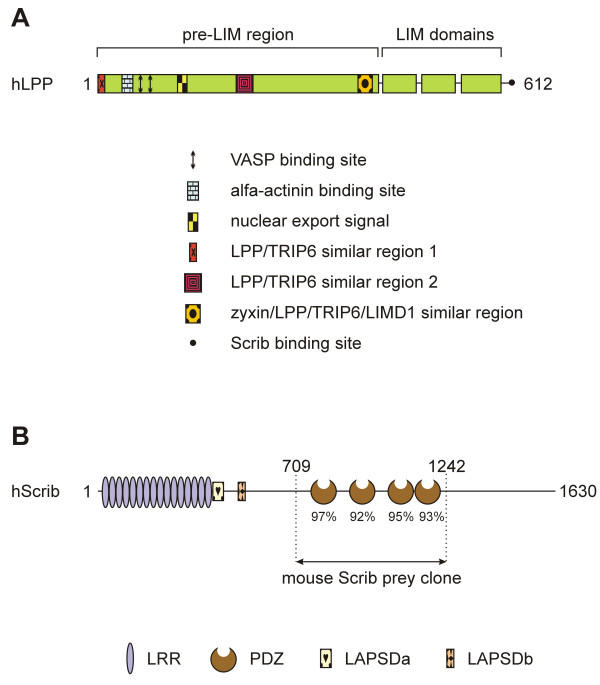
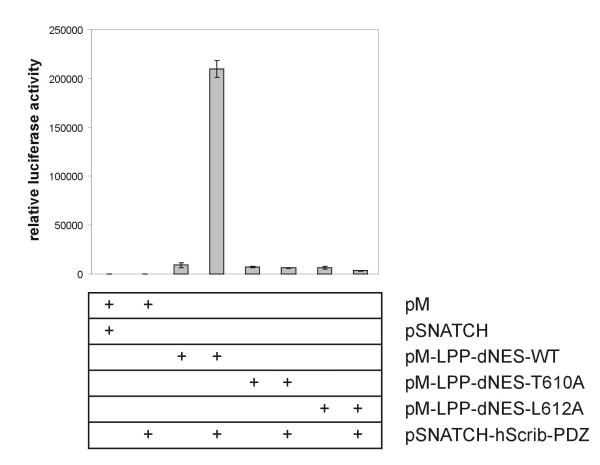
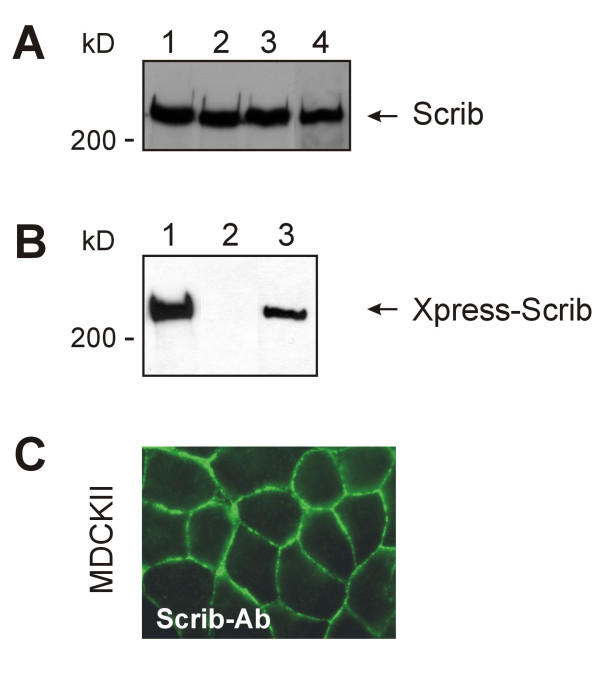
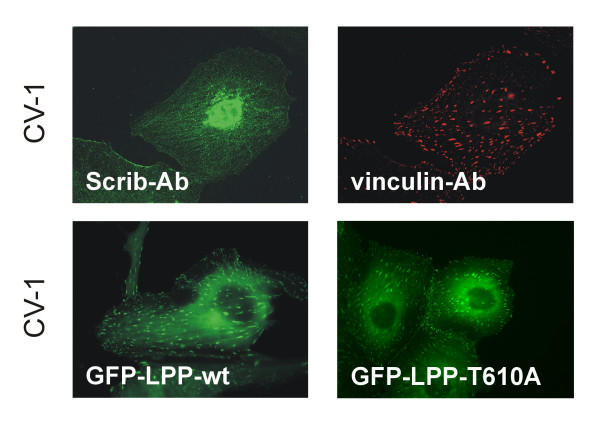
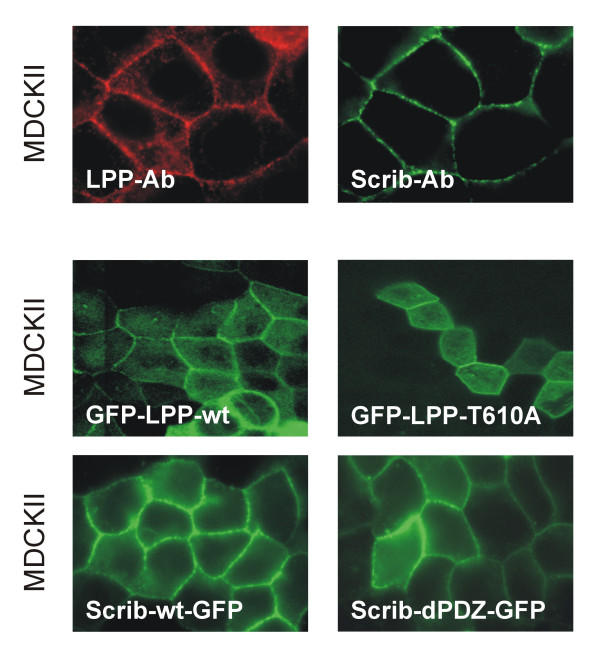
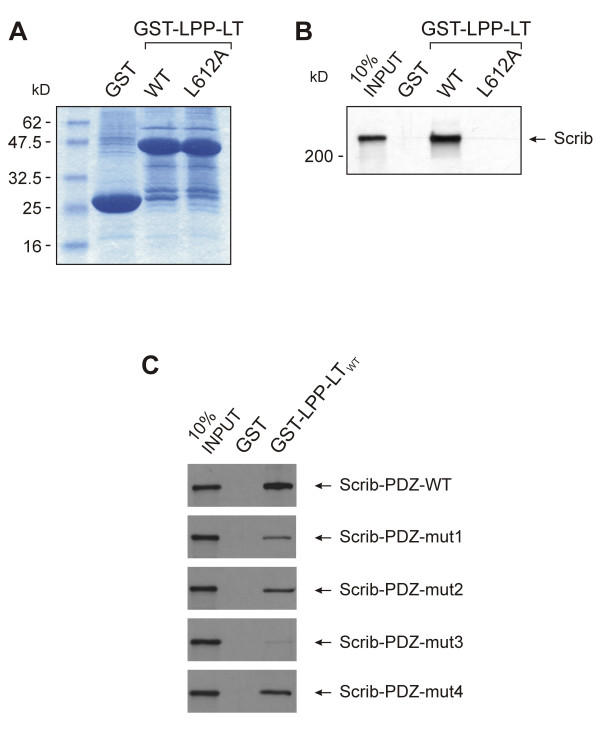
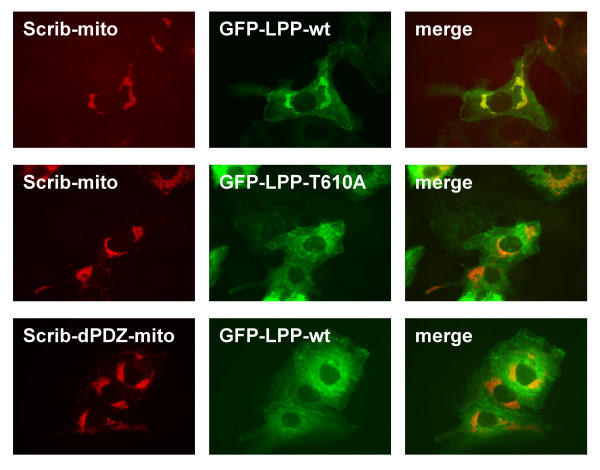
Background: At sites of cell adhesion, proteins exist that not only perform structural tasks but also have a signaling function. Previously, we found that the Lipoma Preferred Partner (LPP) protein is localized at sites of cell adhesion such as focal adhesions and cell-cell contacts, and shuttles to the nucleus where it has transcriptional activation capacity. LPP is a member of the zyxin family of proteins, which contains five members: ajuba, LIMD1, LPP, TRIP6 and zyxin. LPP has three LIM domains (zinc-finger protein interaction domains) at its carboxy-terminus, which are preceded by a proline-rich pre-LIM region containing a number of protein interaction domains. Results: To catch the role of LPP at sites of cell adhesion, we made an effort to identify binding partners of LPP. We found the tumor suppressor protein Scrib, which is a component of cell-cell contacts, as interaction partner of LPP. Human Scrib, which is a functional homologue of Drosophila scribble, is a member of the leucine-rich repeat and PDZ (LAP) family of proteins that is involved in the regulation of cell adhesion, cell shape and polarity. In addition, Scrib displays tumor suppressor activity. The binding between Scrib and LPP is mediated by the PDZ domains of Scrib and the carboxy-terminus of LPP. Both proteins localize in cell-cell contacts. Whereas LPP is also localized in focal adhesions and in the nucleus, Scrib could not be detected at these locations in MDCKII and CV-1 cells. Furthermore, our investigations indicate that Scrib is dispensable for targeting LPP to focal adhesions and to cell-cell contacts, and that LPP is not necessary for localizing Scrib in cell-cell contacts. We show that all four PDZ domains of Scrib are dispensable for localizing this protein in cell-cell contacts. Conclusions: Here, we identified an interaction between one of zyxin's family members, LPP, and the tumor suppressor protein Scrib. Both proteins localize in cell-cell contacts. This interaction links Scrib to a communication pathway between cell-cell contacts and the nucleus, and implicates LPP in Scrib-associated functions.
Overview
The claims and statistics of this paper haven’t been checked yet.
Free: it reads the open-access text and checks the first 5 claims that cite a source we can check. Create a free account to check every claim.
Integrity signals
Registry
Cites
Statistics
Figures
Verification
Claims the paper makes
The claims and statistics of this paper haven’t been checked yet.
Free: it reads the open-access text and checks the first 5 claims that cite a source we can check. Create a free account to check every claim.
Claims other papers make about this one
Each is checked against this paper’s own text: does it say what the citing paper says it does?
The cited source says what the claim attributes to it.
In the citing paper
“in which individual PDZ domains were inactivated by mutating the GLGF motif41”
From Membrane recruitment of the polarity protein Scribble by the cell adhesion receptor TMIGD1 (2023) · cites this paper as [41]
Self-check
Percentages, sums and reported differences re-computed from the paper’s own numbers.
The self-check needs the paper’s full text.
Citations
Cites
Transformation of yeast by lithium acetate/single-stranded carrier DNA/polyethylene glycol method
Daniel Gietz, R., & Woods, R. A. (2002) · Methods in Enzymology · doi:10.1016/s0076-6879(02)50957-5 · Cited by 2,871
Recognition of Unique Carboxyl-Terminal Motifs by Distinct PDZ Domains
Songyang, Z., Fanning, A. S., Fu, C., Xu, J., Marfatia, S. M., Chishti, A. H., Crompton, A., Chan, A. C., Anderson, J. M., & Cantley, L. C. (1997) · Science · doi:10.1126/science.275.5296.73 · Cited by 1,385 · cited 1×
“[25,26], the carboxy-terminal sequence of Scrib target proteins is predicted to require a hydrophobic amino acid (h) at the 0 (carboxy-terminus) position, and a serine (S) or threonine (T) at the -2 position.”
BackgroundCooperative Regulation of Cell Polarity and Growth by Drosophila Tumor Suppressors
Bilder, D., Li, M., & Perrimon, N. (2000) · Science · doi:10.1126/science.289.5476.113 · Cited by 919
Localization of apical epithelial determinants by the basolateral PDZ protein Scribble
Bilder, D., & Perrimon, N. (2000) · Nature · doi:10.1038/35001108 · Cited by 716 · cited 3×
“Drosophila Scribble was identified as being required for the apical confinement of polarity determinants in epithelia [18].”
BackgroundIdentification of Vangl2 and Scrb1 as planar polarity genes in mammals
Montcouquiol, M., Rachel, R. A., Lanford, P. J., Copeland, N. G., Jenkins, N. A., & Kelley, M. W. (2003) · Nature · doi:10.1038/nature01618 · Cited by 705 · cited 3×
“Drosophila Scribble was identified as being required for the apical confinement of polarity determinants in epithelia [18].”
BackgroundPDZ Domains: Structural Modules for Protein Complex Assembly
Hung, A. Y., & Sheng, M. (2002) · Journal of Biological Chemistry · doi:10.1074/jbc.r100065200 · Cited by 699
scribble mutants cooperate with oncogenic Ras or Notch to cause neoplastic overgrowth in Drosophila
Brumby, A. M., & Richardson, H. E. (2003) · The EMBO Journal · doi:10.1093/emboj/cdg548 · Cited by 628
LIM domains: multiple roles as adapters and functional modifiers in protein interactions
Dawid, I. B., Breen, J. J., & Toyama, R. (1998) · Trends in Genetics · doi:10.1016/s0168-9525(98)01424-3 · Cited by 600
The LIM domain: regulation by association
Bach, I. (2000) · Mechanisms of Development · doi:10.1016/s0925-4773(99)00314-7 · Cited by 558
A Genetic Screen in Drosophila for Metastatic Behavior
Pagliarini, R. A., & Xu, T. (2003) · Science · doi:10.1126/science.1088474 · Cited by 543
Verschueren, K., Remacle, J. E., Collart, C., Kraft, H., Baker, B. S., Tylzanowski, P., Nelles, L., Wuytens, G., Su, M.-T., Bodmer, R., et al. (1999) · Journal of Biological Chemistry · doi:10.1074/jbc.274.29.20489 · Cited by 506
PDZ Domain Proteins: Plug and Play!
Nourry, C., Grant, S. G. N., & Borg, J.-P. (2003) · Science's STKE · doi:10.1126/stke.2003.179.re7 · Cited by 483
Nakagawa, S., & Huibregtse, J. M. (2000) · Molecular and Cellular Biology · doi:10.1128/mcb.20.21.8244-8253.2000 · Cited by 382
Cellular transformation by SV40 large T antigen: interaction with host proteins
Ali, S. H., & DeCaprio, J. A. (2001) · Seminars in Cancer Biology · doi:10.1006/scbi.2000.0342 · Cited by 367
Cell adhesion molecules, signal transduction and cell growth
Aplin, A. E., Howe, A. K., & Juliano, R. (1999) · Current Opinion in Cell Biology · doi:10.1016/s0955-0674(99)00045-9 · Cited by 344
Schaefer, B. C. (1995) · Analytical Biochemistry · doi:10.1006/abio.1995.1279 · Cited by 320
ERBIN: a basolateral PDZ protein that interacts with the mammalian ERBB2/HER2 receptor
Borg, J.-P., Marchetto, S., Le Bivic, A., Ollendorff, V., Jaulin-Bastard, F., Saito, H., Fournier, E., Adélaïde, J., Margolis, B., & Birnbaum, D. (2000) · Nature Cell Biology · doi:10.1038/35017038 · Cited by 311
Disruption of scribble (Scrb1) causes severe neural tube defects in the circletail mouse
Murdoch, J. N. (2003) · Human Molecular Genetics · doi:10.1093/hmg/ddg014 · Cited by 308
Dlg, Scrib and Lgl regulate neuroblast cell size and mitotic spindle asymmetry
Albertson, R., & Doe, C. Q. (2003) · Nature Cell Biology · doi:10.1038/ncb922 · Cited by 269 · cited 1×
“Recently, these three tumor suppressors were shown to regulate cell size and mitotic spindle asymmetry in Drosophila neuroblasts [35].”
BackgroundMammalian Scribble Forms a Tight Complex with the βPIX Exchange Factor
Audebert, S., Navarro, C., Nourry, C., Chasserot-Golaz, S., Lécine, P., Bellaiche, Y., Dupont, J.-L., Premont, R. T., Sempéré, C., Strub, J.-M., et al. (2004) · Current Biology · doi:10.1016/j.cub.2004.05.051 · Cited by 218 · cited 2×
“... been described that bind to the PDZ domains of Scrib: as mentioned above, the high-risk human papillomavirus E6 protein [32] interacts with the PDZ domains of human Scrib, whereas the GUKH (guanylate kinase holder) protein was shown to bind to the PDZ domains of Scribble at Drosophila synapses [38], and very recen…”
BackgroundMethodGAL4 fusion vectors for expression in yeast or mammalian cells
Sadowski, I., Bell, B., Broad, P., & Hollis, M. (1992) · Gene · doi:10.1016/0378-1119(92)90261-m · Cited by 209
Petit, M. M. R., Mols, R., Schoenmakers, E. F. P. M., Mandahl, N., & Van de Ven, W. J. M. (1996) · Genomics · doi:10.1006/geno.1996.0432 · Cited by 199
Self-citationHirota, T., Morisaki, T., Nishiyama, Y., Marumoto, T., Tada, K., Hara, T., Masuko, N., Inagaki, M., Hatakeyama, K., & Saya, H. (2000) · The Journal of Cell Biology · doi:10.1083/jcb.149.5.1073 · Cited by 196
Pistor, S., Chakraborty, T., Niebuhr, K., Domann, E., & Wehland, J. (1994) · The EMBO Journal · doi:10.1002/j.1460-2075.1994.tb06318.x · Cited by 193
Legouis, R., Gansmuller, A., Sookhareea, S., Bosher, J. M., Baillie, D. L., & Labouesse, M. (2000) · Nature Cell Biology · doi:10.1038/35017046 · Cited by 189
Apperson, M. L., Moon, I. S., & Kennedy, M. B. (1996) · The Journal of Neuroscience · doi:10.1523/jneurosci.16-21-06839.1996 · Cited by 163
Walker, G. J., Flores, J. F., Glendening, J. M., Lin, A. H., Markl, I. D. C., & Fountain, J. W. (1998) · Genes Chromosomes and Cancer · doi:10.1002/(sici)1098-2264(199806)22:2<157::aid-gcc11>3.0.co;2-n · Cited by 162
PDZ Motifs in PTP-BL and RIL Bind to Internal Protein Segments in the LIM Domain Protein RIL
Cuppen, E. P. J. G., Gerrits, H., Pepers, B. A., Wieringa, B., & Hendriks, W. J. A. J. (1998) · Molecular Biology of the Cell · doi:10.1091/mbc.9.3.671 · Cited by 155
Petit, M. M. R., Fradelizi, J., Golsteyn, R. M., Ayoubi, T. A. Y., Menichi, B., Louvard, D., Van de Ven, W. J. M., & Friederich, E. (2000) · Molecular Biology of the Cell · doi:10.1091/mbc.11.1.117 · Cited by 154
Self-citationBasolateral targeting by leucine‐rich repeat domains in epithelial cells
Legouis, R., Jaulin‐Bastard, F., Schott, S., Navarro, C., Borg, J., & Labouesse, M. (2003) · The EMBO Reports · doi:10.1038/sj.embor.7400006 · Cited by 153 · cited 1×
“[45], who have shown that a point mutation of a specific proline residue that is located at position 305 in LRR”
BackgroundIdentification of a new protein localized at sites of cell-substrate adhesion.
Beckerle, M. C. (1986) · The Journal of Cell Biology · doi:10.1083/jcb.103.5.1679 · Cited by 136
Mathew, D., Gramates, L. S., Packard, M., Thomas, U., Bilder, D., Perrimon, N., Gorczyca, M., & Budnik, V. (2002) · Current Biology · doi:10.1016/s0960-9822(02)00758-3 · Cited by 134
hScrib is a functional homologue of the Drosophila tumour suppressor Scribble
Dow, L. E., Brumby, A. M., Muratore, R., Coombe, M. L., Sedelies, K. A., Trapani, J. A., Russell, S. M., Richardson, H. E., & Humbert, P. O. (2003) · Oncogene · doi:10.1038/sj.onc.1207154 · Cited by 120
Nguyen, M. M., Nguyen, M. L., Caruana, G., Bernstein, A., Lambert, P. F., & Griep, A. E. (2003) · Molecular and Cellular Biology · doi:10.1128/mcb.23.24.8970-8981.2003 · Cited by 114
Yi, J., Kloeker, S., Jensen, C. C., Bockholt, S., Honda, H., Hirai, H., & Beckerle, M. C. (2002) · Journal of Biological Chemistry · doi:10.1074/jbc.m106922200 · Cited by 108
Fusion, Disruption, and Expression of HMGA2 in Bone and Soft Tissue Chondromas
Dahlén, A., Mertens, F., Rydholm, A., Brosjö, O., Wejde, J., Mandahl, N., & Panagopoulos, I. (2003) · Modern Pathology · doi:10.1097/01.mp.0000092954.42656.94 · Cited by 102
Regulation of Synaptic Plasticity and Synaptic Vesicle Dynamics by the PDZ Protein Scribble
Roche, J. P., Packard, M. C., Moeckel-Cole, S., & Budnik, V. (2002) · The Journal of Neuroscience · doi:10.1523/jneurosci.22-15-06471.2002 · Cited by 100
Goyal, R. K., Lin, P., Kanungo, J., Payne, A. S., Muslin, A. J., & Longmore, G. D. (1999) · Molecular and Cellular Biology · doi:10.1128/mcb.19.6.4379 · Cited by 99
The LAP family: a phylogenetic point of view
Santoni, M.-J., Pontarotti, P., Birnbaum, D., & Borg, J.-P. (2002) · Trends in Genetics · doi:10.1016/s0168-9525(02)02738-5 · Cited by 88 · cited 3×
“LAP proteins contain a set of leucine-rich repeats (LRRs) at their amino-terminus, and either four (Scrib and Scribble), one (Erbin, Densin-180 and LET-413) or no (Lano) copies of the PDZ domain.”
BackgroundInfluentialYi, J., & Beckerle, M. C. (1998) · Genomics · doi:10.1006/geno.1998.5248 · Cited by 86
Petit, M. M. R., Meulemans, S. M. P., & de Ven, W. J. M. V. (2003) · Journal of Biological Chemistry · doi:10.1074/jbc.m206106200 · Cited by 83
Self-citationCollective nomenclature for LAP proteins
Bilder, D., Birnbaum, D., Borg, J.-P., Bryant, P., Huigbretse, J., Jansen, E., Kennedy, M. B., Labouesse, M., Legouis, R., Mechler, B., et al. (2000) · Nature Cell Biology · doi:10.1038/35017119 · Cited by 81
Self-citationKiss, H. E., Kedra, D., Yang, Y., Kost‐Alimova, M., Kiss, C., O'Brien, K. P., Fransson, I., Klein, G., Imreh, S., & Dumanski, J. P. (1999) · Human Genetics · doi:10.1007/s004399900188 · Cited by 70
Lano, a Novel LAP Protein Directly Connected to MAGUK Proteins in Epithelial Cells
Saito, H., Santoni, M.-J., Arsanto, J.-P., Jaulin-Bastard, F., Le Bivic, A., Marchetto, S., Audebert, S., Isnardon, D., Adélaı̈de, J., Birnbaum, D., et al. (2001) · Journal of Biological Chemistry · doi:10.1074/jbc.c100330200 · Cited by 64
Expression of Reciprocal Fusion Transcripts of the HMGIC and LPP Genes in Parosteal Lipoma
Petit, M. M. R., Swarts, S. J., Bridge, J. A., & de Ven, W. J. M. V. (1998) · Cancer Genetics and Cytogenetics · doi:10.1016/s0165-4608(98)00038-7 · Cited by 59
Self-citationLPP, a LIM protein highly expressed in smooth muscle
Gorenne, I., Nakamoto, R. K., Phelps, C. P., Beckerle, M. C., Somlyo, A. V., & Somlyo, A. P. (2003) · American Journal of Physiology-Cell Physiology · doi:10.1152/ajpcell.00608.2002 · Cited by 49
Human LPP gene is fused to MLL in a secondary acute leukemia with a t(3;11) (q28;q23)
Daheron, L. M., Veinstein, A., Brizard, F., Drabkin, H. A., Lacotte, L., Guilhot, F., Larsen, C. J., Brizard, A., & Roche, J. (2001) · Genes Chromosomes and Cancer · doi:10.1002/gcc.1157 · Cited by 48
Ligand recruitment by vinculin domains in transfected cells
Bubeck, P., Pistor, S., Wehland, J., & Jockusch, B. M. (1997) · Journal of Cell Science · doi:10.1242/jcs.110.12.1361 · Cited by 42
Characterization of mouse Trip6: a putative intracellular signaling protein
Wang, Y., Dooher, J. E., Zhao, M. K., & Gilmore, T. D. (1999) · Gene · doi:10.1016/s0378-1119(99)00168-7 · Cited by 41
Nelander, S., Mostad, P., & Lindahl, P. (2003) · Genome Research · doi:10.1101/gr.1197303 · Cited by 38
Basolateral targeting by leucine-rich repeat domains in epithelial cells
Legouis, R., Jaulin‐Bastard, F., Schott, S., et al. (2003) · EMBO Reports · doi:10.1038/sj.embor.embor7400006 · Cited by 37
Scribble Is Essential for Olfactory Behavior in Drosophila melanogaster
Ganguly, I., Mackay, T. F. C., & Anholt, R. R. H. (2003) · Genetics · doi:10.1093/genetics/164.4.1447 · Cited by 35
The lipoma preferred partner LPP interacts with α-actinin
Li, B., Zhuang, L., Reinhard, M., & Trüeb, B. (2003) · Journal of Cell Science · doi:10.1242/jcs.00309 · Cited by 34
The t(3;12)(q27;q14-q15) with underlyingHMGIC-LPP fusion is not determining an adipocytic phenotype
Rogalla, P., Kazmierczak, B., Meyer‐Bolte, K., Tran, K. H., & Bullerdiek, J. (1998) · Genes Chromosomes and Cancer · Cited by 32
Useful Vectors for the Two-Hybrid System in Mammalian Cells
Büchert, M., Schneider, S., Adams, M. T., Hefti, H. P., Moelling, K., & Hovens, C. M. (1997) · BioTechniques · doi:10.2144/97233bm10 · Cited by 21
Cited by
Assémat, E., Bazellières, E., Pallesi-Pocachard, E., Le Bivic, A., & Massey-Harroche, D. (2008) · Biochimica et Biophysica Acta (BBA) - Biomembranes · doi:10.1016/j.bbamem.2007.08.029 · Cited by 470
An overview of spatial microscopic and accelerated kinetic Monte Carlo methods
Chatterjee, A., & Vlachos, D. G. (2007) · Journal of Computer-Aided Materials Design · doi:10.1007/s10820-006-9042-9 · Cited by 464
Qin, Y., Capaldo, C., Gumbiner, B. M., & Macara, I. G. (2005) · The Journal of Cell Biology · doi:10.1083/jcb.200506094 · Cited by 285
“Other binding partners for mammalian Scrib have been reported recently, but their physiological significance remains unclear (Metais et al., 2005; Petit et al., 2005).”
BackgroundRewiring cell polarity signaling in cancer
Halaoui, R., & McCaffrey, L. (2015) · Oncogene · doi:10.1038/onc.2014.59 · Cited by 174
DNA damage associated with mitosis and cytokinesis failure
Hayashi, M. T., & Karlseder, J. (2013) · Oncogene · doi:10.1038/onc.2012.615 · Cited by 169
Metadata
- Authors
- Petit, M. M., Meulemans, S. M., Alen, P., Ayoubi, T. A., Jansen, E., & Van de Ven, W. J.
- Affiliations
- Vlaams Instituut voor Biotechnologie (BE)
- ORCID
- Petit, Marleen MR
- Venue
- BMC Cell Biology
- Published
- 2005-01-13
- Volume
- 6
- Issue
- 1
- Pages
- 1-1
- ISSN
- 1471-2121 (ISSN-L)
- PMC
- PMC546208
- OpenAlex
- W1583388272
- Cited by
- 99
- References
- 54
- Citations by year
- 2026: 2 · 2025: 2 · 2024: 1 · 2023: 4 · 2022: 6 · 2021: 4 · 2020: 5 · 2019: 4 · 2018: 2 · 2017: 6 · 2016: 2 · 2015: 2 · 2014: 3 · 2013: 6 · 2012: 6
- FWCI
- 5.59
- Type
- journal article
- Language
- en
- Open access
- gold
- doi.org
- Licence
- cc-by
- creativecommons.org/licenses/by/2.0/ (tdm)
- creativecommons.org/licenses/by/2.0/ (vor)
- Locations
- BMC Cell Biology (publishedVersion, cc-by)
- PubMed Central (publishedVersion, cc-by)
- PubMed (publishedVersion)
- Research Publications (Maastricht University) (publishedVersion, cc-by)
- DOAJ (DOAJ: Directory of Open Access Journals) (submittedVersion, cc-by-sa)
- Research Publications (Maastricht University) (submittedVersion, cc-by)
- Funders
- Vlaamse regering
- Topics
- Health Sciences › Medicine › Immunology and Allergy › Cell Adhesion Molecules Research
- Life Sciences › Biochemistry, Genetics and Molecular Biology › Cell Biology › Hippo pathway signaling and YAP/TAZ
- Life Sciences › Biochemistry, Genetics and Molecular Biology › Cell Biology › Cellular Mechanics and Interactions
- Keywords
- SCRIB, LPP, PDZ domain, tumor suppressor, cell-cell contact, focal adhesions, nuclear shuttling, transcriptional activation, protein-protein interaction, cell adhesion signaling, cell polarity
- MeSH terms
- Binding Sites, Cell Adhesion, Cell Line, Cytoskeletal Proteins, Humans, Membrane Proteins, Protein Binding, Transfection, Protein Structure, Tertiary, Protein Transport, Active Transport, Cell Nucleus, Tumor Suppressor Proteins, LIM Domain Proteins
About these checks
Registry, retraction, Cites and statistics results are computed, not judged, with one exception: a printed reference that no index lists is read once by a model before it counts as a citation error. Claims are extracted by a model and kept only when their quote appears verbatim in the text; each cited source is then checked, with a model’s help, for whether it says what the claim relies on. Those verdicts can be wrong — read the claim’s quote and the cited source before relying on one.
Statistics and arithmetic are recomputed, not judged.
Confidence bands are shown only for fields calibrated on our annotated test set. None is calibrated yet, so no band is shown.
What counts as a claim ›How we measure confidence ›How we check this ›
Are you an author, or do you see a problem with this page? Request a review
Data sources
Bibliographic data: Semantic Scholar, OpenAlex, Crossref.
Contains information from the Semantic Scholar Academic Graph Datasets, made available under the ODC Attribution License (ODC-BY 1.0).
Semantic Scholar’s data is described in: Kinney, R., et al. (2023). The Semantic Scholar Open Data Platform. arXiv:2301.10140.
