

The DOI matches its Crossref record; 36 of the 36 references it cites were found in a registry or an index.
The transcription factor Nfixis essential for normal brain development
Open accessAbstract
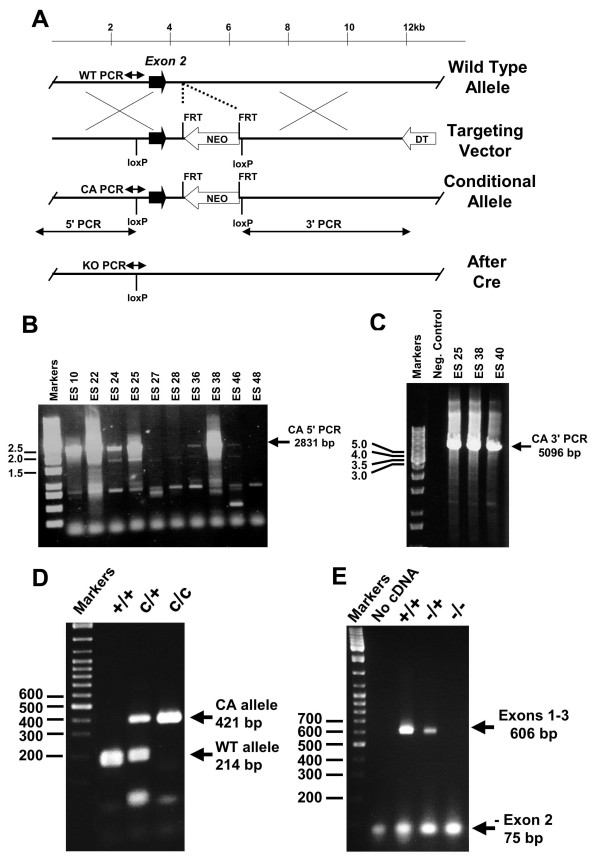
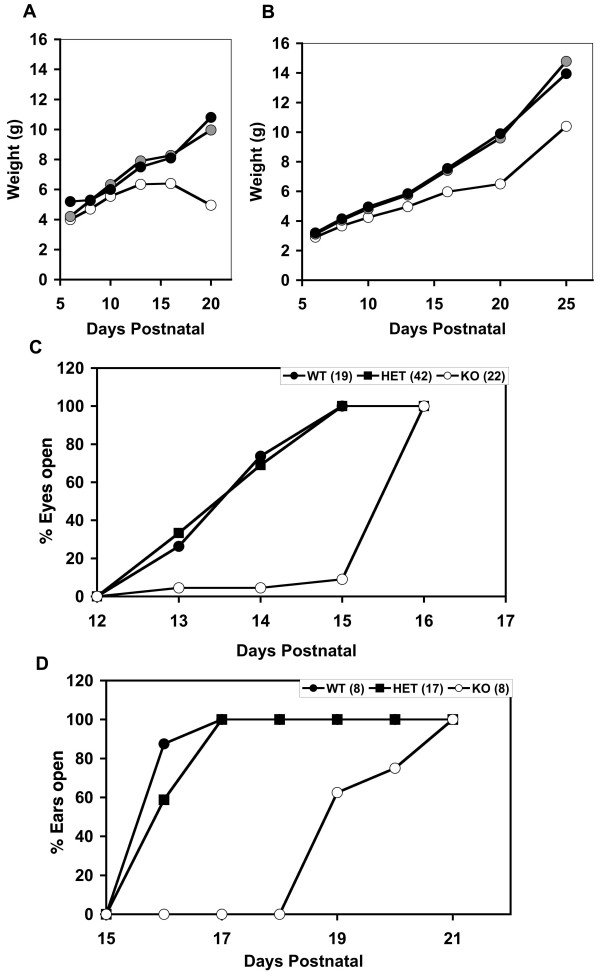
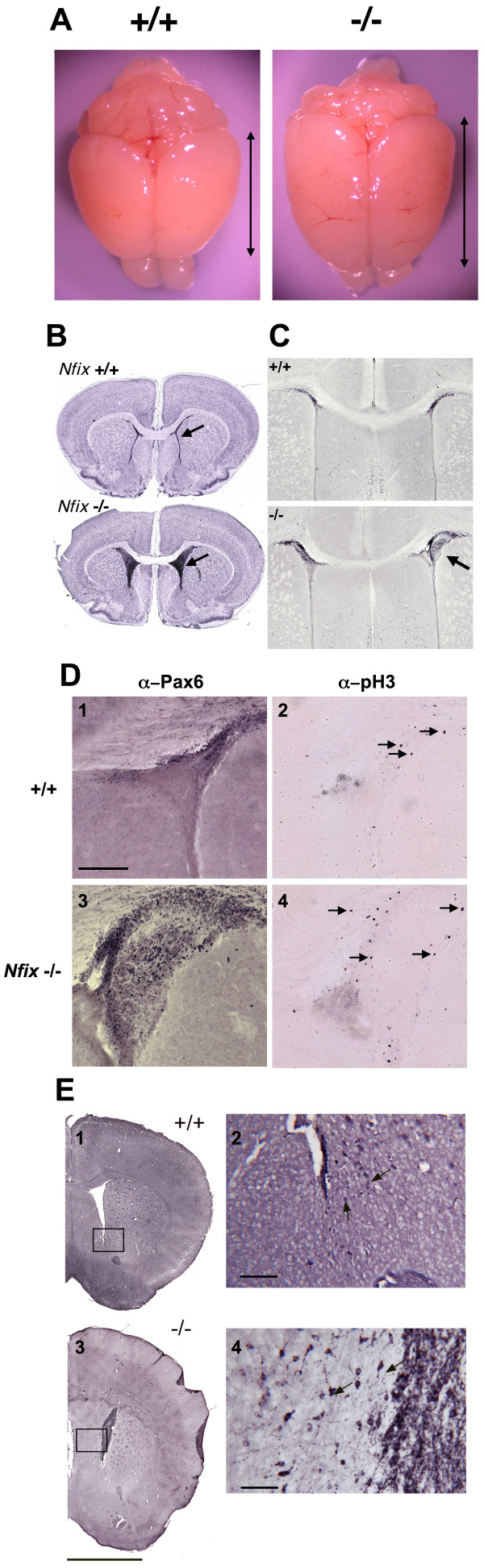
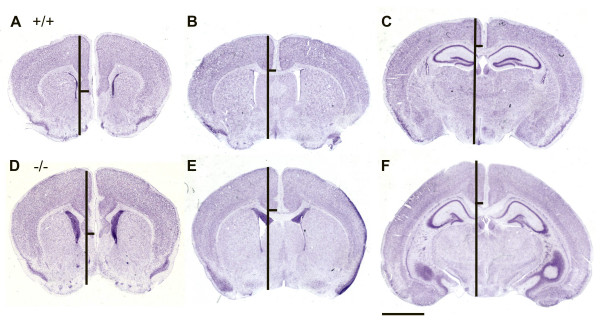
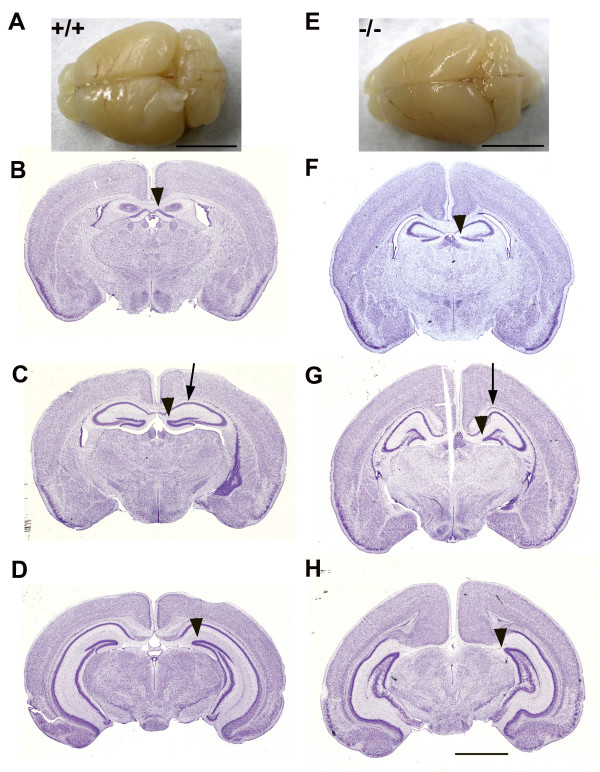
Background: The Nuclear Factor I (NFI) multi-gene family encodes site-specific transcription factors essential for the development of a number of organ systems. We showed previously that Nfia -deficient mice exhibit agenesis of the corpus callosum and other forebrain defects; Nfib -deficient mice have defects in lung maturation and show callosal agenesis and forebrain defects resembling those seen in Nfia -deficient animals, while Nfic -deficient mice have defects in tooth root formation. Recently the Nfix gene has been disrupted and these studies indicated that there were largely uncharacterized defects in brain and skeletal development in Nfix -deficient mice. Results: Here we show that disruption of Nfix by Cre-recombinase mediated excision of the 2nd exon results in defects in brain development that differ from those seen in Nfia and Nfib KO mice. In particular, complete callosal agenesis is not seen in Nfix -/- mice but rather there appears to be an overabundance of aberrant Pax6 - and doublecortin-positive cells in the lateral ventricles of Nfix -/- mice, increased brain weight, expansion of the cingulate cortex and entire brain along the dorsal ventral axis, and aberrant formation of the hippocampus. On standard lab chow Nfix -/- animals show a decreased growth rate from ~P8 to P14, lose weight from ~P14 to P22 and die at ~P22. If their food is supplemented with a soft dough chow from P10, Nfix -/- animals show a lag in weight gain from P8 to P20 but then increase their growth rate. A fraction of the animals survive to adulthood and are fertile. The weight loss correlates with delayed eye and ear canal opening and suggests a delay in the development of several epithelial structures in Nfix -/- animals. Conclusion: These data show that Nfix is essential for normal brain development and may be required for neural stem cell homeostasis. The delays seen in eye and ear opening and the brain morphology defects appear independent of the nutritional deprivation, as rescue of perinatal lethality with soft dough does not eliminate these defects.
Overview
The claims and statistics of this paper haven’t been checked yet.
Run the check — free, no account needed. It reads the open-access text and checks the sources it cites.
Integrity signals
Registry
Cites
Statistics
Figures
Verification
Claims the paper makes
The claims and statistics of this paper haven’t been checked yet.
Run the check — free, no account needed. It reads the open-access text and checks the sources it cites.
Claims other papers make about this one
Each is checked against this paper’s own text: does it say what the citing paper says it does?
The source backs part of the claim, not all of it — or backs it for a different population, condition or comparison.
In the citing paper
“Although their loci are not very near to each other, Nfia, Nfib and Nfix regulate cell-type differentiation in many tissues94–96, function as homo- or heterodimers, and bind to largely common targets97.”
From A high-resolution transcriptomic and spatial atlas of cell types in the whole mouse brain (2023) · cites this paper as [94]
Experimental — accuracy not yet measured
Self-check
Percentages, sums and reported differences re-computed from the paper’s own numbers.
The self-check needs the paper’s full text.
Citations
Cites
Targeted mutation of the DNA methyltransferase gene results in embryonic lethality
Li, E., Bestor, T. H., & Jaenisch, R. (1992) · Cell · doi:10.1016/0092-8674(92)90611-f · Cited by 3,984
Reduced Apoptosis and Cytochrome c–Mediated Caspase Activation in Mice Lacking Caspase 9
Kuida, K., Haydar, T. F., Kuan, C.-Y., Gu, Y., Taya, C., Karasuyama, H., Su, M. S.-S., Rakic, P., & Flavell, R. A. (1998) · Cell · doi:10.1016/s0092-8674(00)81476-2 · Cited by 1,643
Englund, C., Fink, A., Lau, C., Pham, D., Daza, R. A. M., Bulfone, A., Kowalczyk, T., & Hevner, R. F. (2005) · The Journal of Neuroscience · doi:10.1523/jneurosci.2899-04.2005 · Cited by 1,261
The glucose oxidase-DAB-nickel method in peroxidase histochemistry of the nervous system
Shu, S., Ju, G., & Fan, L. (1988) · Neuroscience Letters · doi:10.1016/0304-3940(88)90346-1 · Cited by 1,235
Silver, J., Lorenz, S., Wahłsten, D., & Coughlin, J. (1982) · The Journal of Comparative Neurology · doi:10.1002/cne.902100103 · Cited by 571
Roles of the NFI/CTF gene family in transcription and development
Gronostajski, R. M. (2000) · Gene · doi:10.1016/s0378-1119(00)00140-2 · Cited by 546
Self-citationThe transcription factor NFIA controls the onset of gliogenesis in the developing spinal cord
Deneen, B., Ho, R., Lukaszewicz, A., Hochstim, C. J., Gronostajski, R. M., & Anderson, D. J. (2006) · Neuron · doi:10.1016/j.neuron.2006.11.019 · Cited by 514
Self-citationNagata, K., Guggenheimer, R. A., Enomoto, T., Lichy, J. H., & Hurwitz, J. (1982) · Proceedings of the National Academy of Sciences · doi:10.1073/pnas.79.21.6438 · Cited by 334
Nagata, K., Guggenheimer, R. A., & Hurwitz, J. (1983) · Proceedings of the National Academy of Sciences · doi:10.1073/pnas.80.20.6177 · Cited by 318
The Transcription Factor Gene Nfib Is Essential for both Lung Maturation and Brain Development
Steele-Perkins, G., Plachez, C., Butz, K. G., Yang, G., Bachurski, C. J., Kinsman, S. L., Litwack, E. D., Richards, L. J., & Gronostajski, R. M. (2005) · Molecular and Cellular Biology · doi:10.1128/mcb.25.2.685-698.2005 · Cited by 310
Self-citation
Cited by
Sorted by citations
A high-resolution transcriptomic and spatial atlas of cell types in the whole mouse brain
Yao, Z., van Velthoven, C. T. J., Kunst, M., Zhang, M., McMillen, D., Lee, C., Jung, W., Goldy, J., Abdelhak, A., Aitken, M., et al. (2023) · Nature · doi:10.1038/s41586-023-06812-z · Cited by 1,203
Darmanis, S., Sloan, S. A., Croote, D., Mignardi, M., Chernikova, S. B., Samghababi, P., Zhang, Y., Neff, N. F., Kowarsky, M., Caneda, C., et al. (2017) · Cell Reports · doi:10.1016/j.celrep.2017.10.030 · Cited by 991
Brain cell type–specific enhancer–promoter interactome maps and disease - risk association
Nott, A., Holtman, I. R., Coufal, N. G., Schlachetzki, J. C. M., Yu, M., Hu, R., Han, C. Z., Pena, M., Xiao, J., Wu, Y., et al. (2019) · Science · doi:10.1126/science.aay0793 · Cited by 699
Clark, B. S., Stein-O’Brien, G., Shiau, F., Cannon, G. H., Davis-Marcisak, E. F., Sherman, T. D., Santiago, C. P., Hoang, T. V., Rajaii, F., James-Esposito, R. E., et al. (2019) · Neuron · doi:10.1016/j.neuron.2019.04.010 · Cited by 527
Self-citationNeurogenesis in the embryonic and adult brain: same regulators, different roles
Urbán, N., & Guillemot, F. (2014) · Frontiers in Cellular Neuroscience · doi:10.3389/fncel.2014.00396 · Cited by 493
Metadata
- Authors
- Campbell, C. E., Piper, M., Plachez, C., Yeh, Y.-T., Baizer, J. S., Osinski, J. M., Litwack, E. D., Richards, L. J., & Gronostajski, R. M.
- Affiliations
- University at Buffalo, State University of New York (US)
- The University of Queensland (AU)
- University of Maryland, Baltimore (US)
- Corresponding author
- Gronostajski, Richard M
- ORCID
- Venue
- BMC Developmental Biology
- Published
- 2008-05-13
- Volume
- 8
- Issue
- 1
- Pages
- 52-52
- ISSN
- 1471-213X (ISSN-L)
- PMC
- PMC2414869
- OpenAlex
- W2092041178
- Cited by
- 179
- References
- 36
- Citations by year
- 2026: 6 · 2025: 17 · 2024: 8 · 2023: 9 · 2022: 4 · 2021: 13 · 2020: 9 · 2019: 11 · 2018: 11 · 2017: 14 · 2016: 6 · 2015: 9 · 2014: 11 · 2013: 15 · 2012: 9
- FWCI
- 2.75
- Type
- journal article
- Language
- en
- Open access
- hybrid
- doi.org
- Licence
- cc-by
- Locations
- BMC Developmental Biology (publishedVersion, cc-by)
- PubMed Central (publishedVersion, cc-by)
- PubMed (publishedVersion)
- Funders
- National Aeronautics and Space Administration (NNJ06HA59G)
- National Institutes of Health (5r01hl080624-05, HL080624)
- University at Buffalo
- Medical Research Council
- National Health and Medical Research Council (401616)
- National Heart, Lung, and Blood Institute (R01-HL080624, HL080624)
- National Institute of Neurological Disorders and Stroke (R01NS050515, NS050515)
- Topics
- Life Sciences › Neuroscience › Developmental Neuroscience › Neurogenesis and neuroplasticity mechanisms
- Health Sciences › Medicine › Pediatrics, Perinatology and Child Health › Fetal and Pediatric Neurological Disorders
- Life Sciences › Biochemistry, Genetics and Molecular Biology › Molecular Biology › Developmental Biology and Gene Regulation
- Keywords
- NFIX, nuclear factor I, transcription factors, brain development, callosal agenesis, Pax6, doublecortin, skeletal development, perinatal lethality, dietary supplementation, NFIA, NFIB
- MeSH terms
- Animals, Brain, Cerebral Cortex, Cerebral Ventricles, Embryo, Mammalian, Female, Hippocampus, Immunohistochemistry, Male, Mice, Inbred C57BL, Phenotype, Blotting, Western, Polymerase Chain Reaction, Mice, Knockout, Gene Targeting, Gene Expression Regulation, Developmental, Genes, Developmental, Mice, NFI Transcription Factors, Embryonic Stem Cells
About these checks
Registry, retraction, Cites and statistics results are computed, not judged, with one exception: a printed reference that no index lists is read once by a model before it counts as a citation error. Claims are extracted by a model and kept only when their quote appears verbatim in the text; each cited source is then checked, with a model’s help, for whether it says what the claim relies on. Those verdicts can be wrong — read the claim’s quote and the cited source before relying on one.
Statistics and arithmetic are recomputed, not judged.
Confidence bands are shown only for fields calibrated on our annotated test set. None is calibrated yet, so no band is shown.
What counts as a claim ›How we measure confidence ›How we check this ›
Are you an author, or do you see a problem with this page? Request a review
