

The DOI matches its Crossref record; 109 of the 110 references it cites were found in a registry or an index.
Phylogeography of the reef fish Cephalopholis argus (Epinephelidae) indicates Pleistocene isolation across the indo-pacific barrier with contemporary overlap in the coral triangle
Open accessAbstract
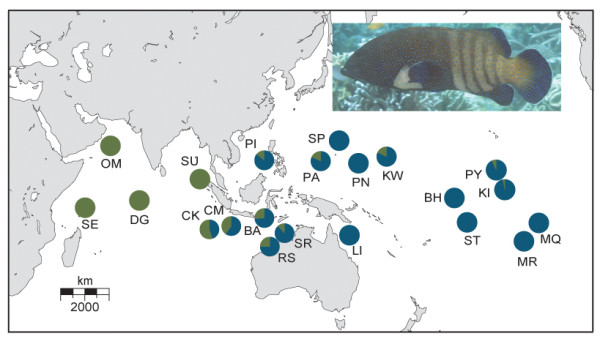
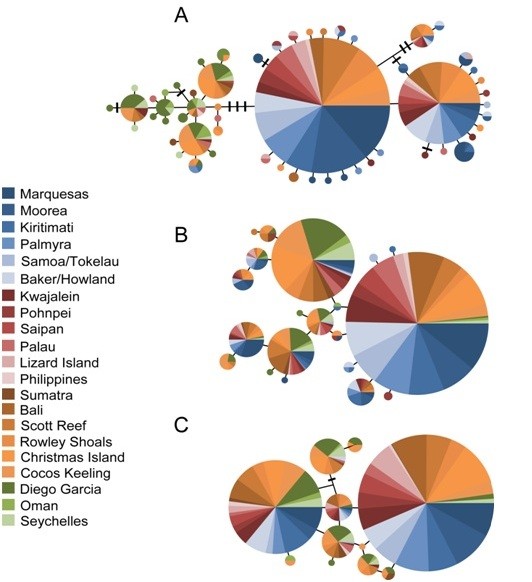
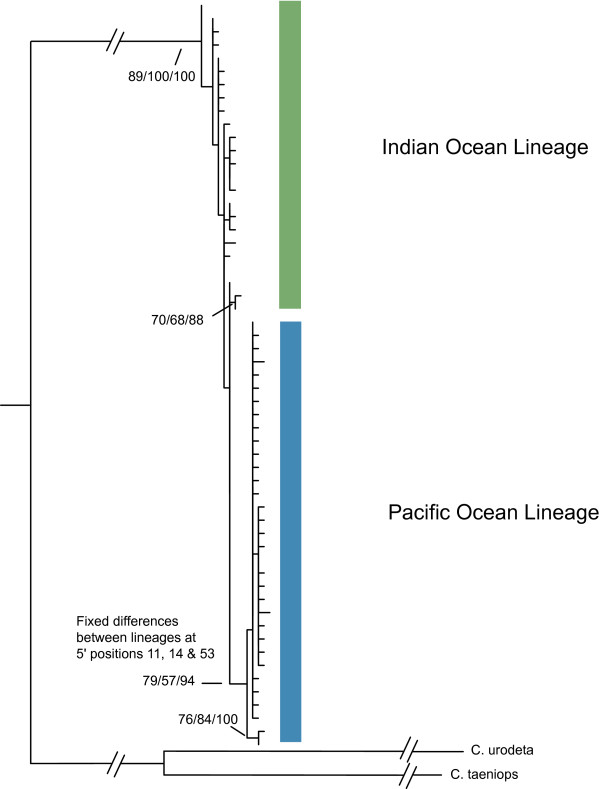
BACKGROUND: The Coral Triangle (CT), bounded by the Philippines, the Malay Peninsula, and New Guinea, is the epicenter of marine biodiversity. Hypotheses that explain the source of this rich biodiversity include 1) the center of origin, 2) the center of accumulation, and 3) the region of overlap. Here we contribute to the debate with a phylogeographic survey of a widely distributed reef fish, the Peacock Grouper (Cephalopholis argus; Epinephelidae) at 21 locations (N = 550) using DNA sequence data from mtDNA cytochrome b and two nuclear introns (gonadotropin-releasing hormone and S7 ribosomal protein). RESULTS: Population structure was significant (ΦST = 0.297, P < 0.001; FST = 0.078, P < 0.001; FST = 0.099, P < 0.001 for the three loci, respectively) among five regions: French Polynesia, the central-west Pacific (Line Islands to northeastern Australia), Indo-Pacific boundary (Bali and Rowley Shoals), eastern Indian Ocean (Cocos/Keeling and Christmas Island), and western Indian Ocean (Diego Garcia, Oman, and Seychelles). A strong signal of isolation by distance was detected in both mtDNA (r = 0.749, P = 0.001) and the combined nuclear loci (r = 0.715, P < 0.001). We detected evidence of population expansion with migration toward the CT. Two clusters of haplotypes were detected in the mtDNA data (d = 0.008), corresponding to the Pacific and Indian Oceans, with a low level of introgression observed outside a mixing zone at the Pacific-Indian boundary. CONCLUSIONS: We conclude that the Indo-Pacific Barrier, operating during low sea level associated with glaciation, defines the primary phylogeographic pattern in this species. These data support a scenario of isolation on the scale of 105 year glacial cycles, followed by population expansion toward the CT, and overlap of divergent lineages at the Pacific-Indian boundary. This pattern of isolation, divergence, and subsequent overlap likely contributes to species richness at the adjacent CT and is consistent with the region of overlap hypothesis.
Overview
The claims and statistics of this paper haven’t been checked yet.
Run the check — free, no account needed. It reads the open-access text and checks the sources it cites.
Integrity signals
Registry
Cites
Statistics
Figures
Verification
Claims the paper makes
The claims and statistics of this paper haven’t been checked yet.
Run the check — free, no account needed. It reads the open-access text and checks the sources it cites.
Claims other papers make about this one
Each is checked against this paper’s own text: does it say what the citing paper says it does?
The cited source says what the claim attributes to it.
In the citing paper
“The geographical range of C. porosus encompasses a well-known phylogeographic boundary, the Indo-Pacific Barrier, that affects many Indo-Pacific species (e.g., gastropods [56]; reef fish [57]).”
From Mitogenomic Crocodylia phylogeny and population structure of Crocodylus porosus including the extinct Seychelles crocodile (2026) · cites this paper as [57]
Self-check
Percentages, sums and reported differences re-computed from the paper’s own numbers.
The self-check needs the paper’s full text.
Citations
Cites
MEGA4: Molecular Evolutionary Genetics Analysis (MEGA) Software Version 4.0
Tamura, K., Dudley, J. T., Nei, M., & Kumar, S. (2007) · Molecular Biology and Evolution · doi:10.1093/molbev/msm092 · Cited by 28,734 · cited 1×
“05 among all pairwise tests by controlling for the false discovery [51,52].”
BackgroundMRBAYES: Bayesian inference of phylogenetic trees.
Huelsenbeck, J. P., & Ronquist, F. (2001) · Bioinformatics · doi:10.1093/bioinformatics/17.8.754 · Cited by 21,937 · cited 1×
“The ML tree topology was confirmed by neighbor-joining (NJ) and Bayesian Markov Chain Monte Carlo (MCMC) analysis using MEGA 4.0 [52] and MRBAYES 3.1.1 [ 53 ], respectively.”
MethodInfluentialA Simple, Fast, and Accurate Algorithm to Estimate Large Phylogenies by Maximum Likelihood
Guindon, S., & Gascuel, O. (2003) · Systematic Biology · doi:10.1080/10635150390235520 · Cited by 16,923 · cited 1×
“We used default priors under the HKY + G model of mutation (jMODELTEST) [61,62] and ran simulations for 10 million generations with sampling every 1000 generations.”
MethodMolecular Evolutionary Genetics
Nei, M. (1987) · Columbia University Press eBooks · doi:10.7312/nei-92038 · Cited by 16,583
Excoffier, L., & Lischer, H. E. L. (2010) · Molecular Ecology Resources · doi:10.1111/j.1755-0998.2010.02847.x · Cited by 16,266
DnaSP v5: a software for comprehensive analysis of DNA polymorphism data
Librado, P., & Rozas, J. (2009) · Bioinformatics · doi:10.1093/bioinformatics/btp187 · Cited by 16,147
RAxML-VI-HPC: maximum likelihood-based phylogenetic analyses with thousands of taxa and mixed models
Stamatakis, A. (2006) · Bioinformatics · doi:10.1093/bioinformatics/btl446 · Cited by 15,582
BEAST: Bayesian evolutionary analysis by sampling trees
Drummond, A. J., & Rambaut, A. (2007) · BMC Evolutionary Biology · doi:10.1186/1471-2148-7-214 · Cited by 13,104
Median-joining networks for inferring intraspecific phylogenies
Bandelt, H. J., Forster, P., & Rohl, A. (1999) · Molecular Biology and Evolution · doi:10.1093/oxfordjournals.molbev.a026036 · Cited by 11,742 · cited 1×
“5 with default settings [50].”
Tamura, K., & Nei, M. (1993) · Molecular Biology and Evolution · doi:10.1093/oxfordjournals.molbev.a040023 · Cited by 11,390 · cited 2×
“Because the TPM1uf+G model of sequence evolution is not implemented in ARLEQUIN, we used the most similar model available [54] with a gamma value of 0.”
MethodjModelTest: Phylogenetic Model Averaging
Posada, D. (2008) · Molecular Biology and Evolution · doi:10.1093/molbev/msn083 · Cited by 10,578 · cited 1×
“We used default priors under the HKY + G model of mutation (jMODELTEST) [61,62] and ran simulations for 10 million generations with sampling every 1000 generations.”
MethodThe control of the false discovery rate in multiple testing under dependency
Benjamini, Y., & Yekutieli, D. (2001) · The Annals of Statistics · doi:10.1214/aos/1013699998 · Cited by 10,490 · cited 3×
“Benjamini Y, Yekutieli D: The control of the false discovery rate in multiple testing under dependency.”
MethodInfluentialA New Statistical Method for Haplotype Reconstruction from Population Data
Stephens, M., Smith, N. J. C., & Donnelly, P. (2001) · The American Journal of Human Genetics · doi:10.1086/319501 · Cited by 7,512 · cited 4×
“The best maximum likelihood tree generated using program default settings in RAxML [44] and rooted using two congenerics (C. urodeta and C. taeniops).”
MethodInfluentialFu, Y. (1997) · Genetics · doi:10.1093/genetics/147.2.915 · Cited by 7,195
MacClade 4.0: analysis of phylogeny and character evolution
(2001) · Choice Reviews Online · doi:10.5860/choice.39-2183 · Cited by 5,533
Molecular Markers, Natural History and Evolution
Avise, J. C. (1994) · Springer eBooks · doi:10.1007/978-1-4615-2381-9 · Cited by 5,210
MRBAYES: Bayesian inference of phylogeny
Huelsenbeck, J. P., & Ronquist, F. (2001) · Bioinformatics · Cited by 4,892
Hays, J. D., Imbrie, J., & Shackleton, N. J. (1976) · Science · doi:10.1126/science.194.4270.1121 · Cited by 3,781 · cited 1×
“5 million yrs), a time interval that corresponds to Pleistocene sea level fluctuations linked to Milankovitch climate cycles on the scale of 10(5) years [70].”
BackgroundA Comparison of Bayesian Methods for Haplotype Reconstruction from Population Genotype Data
Stephens, M., & Donnelly, P. (2003) · The American Journal of Human Genetics · doi:10.1086/379378 · Cited by 3,516 · cited 1×
“1 [44,45] as implemented in the software DnaSP 5.”
MethodMaps of Pleistocene sea levels in Southeast Asia: shorelines, river systems and time durations
Voris, H. K. (2000) · Journal of Biogeography · doi:10.1046/j.1365-2699.2000.00489.x · Cited by 1,968
Signature of ancient population growth in a low-resolution mitochondrial DNA mismatch distribution.
Harpending, H. C. (1994) · PubMed · Cited by 1,887
Preparation of PCR-Quality Mouse Genomic DNA with Hot Sodium Hydroxide and Tris (HotSHOT)
Truett, G. E., Heeger, P. S., Mynatt, R. L., Truett, A. A., Walker, J. A., & Warman, M. L. (2000) · BioTechniques · doi:10.2144/00291bm09 · Cited by 1,748 · cited 1×
“DNA was isolated using the modified HotSHOT method [40,41].”
MethodBeerli, P., & Felsenstein, J. (2001) · Proceedings of the National Academy of Sciences · doi:10.1073/pnas.081068098 · Cited by 1,701 · cited 1×
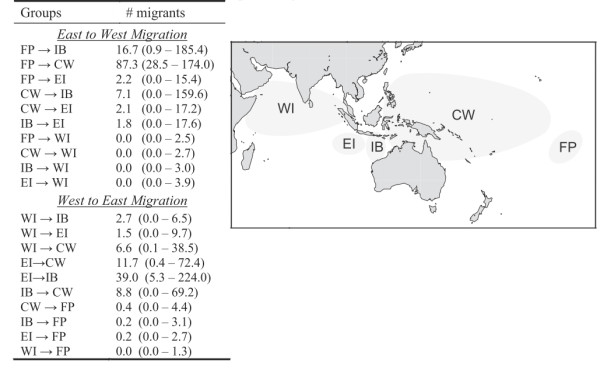
“Migration Migration rates between groups (Nm: where N is effective population size and m is migration rate) were calculated with the software MIGRATE 3.1.6 [64, 65 ].”
MethodInfluentialMarine biodiversity hotspots and conservation priorities for tropical reefs
Roberts, C. M., McClean, C. J., Veron, J. E. N., Hawkins, J. P., Allen, G. R., McAllister, D. E., Mittermeier, C. G., Schueler, F. W., Spalding, M., Wells, F., et al. (2002) · Science · doi:10.1126/science.1067728 · Cited by 1,691 · cited 1×
“Species diversity declines with distance from this region, both latitudinally and longitudinally, a pattern that applies to a broad array of taxa [ 2-8 ].”
BackgroundPreservation of avian blood and tissue samples for DNA analyses
Seutin, G., White, B. N., & Boag, P. T. (1991) · Canadian Journal of Zoology · doi:10.1139/z91-013 · Cited by 1,677 · cited 2×
“Tissues samples (fin clips or gill filaments) were preserved in salt-saturated DMSO [ 39 ] and stored at room temperature.”
MethodInfluentialIsolation by distance, web service
Jensen, J. L., Bohonak, A. J., & Kelley, S. T. (2005) · BMC Genetics · doi:10.1186/1471-2156-6-13 · Cited by 1,431 · cited 1×
“A Mantel test was performed to determine whether significant isolation-bydistance exists among populations by testing for correlation between pairwise FST values and geographic distance using the Isolation-by-Distance Web Service 3.16 [ 59 ].”
MethodInfluentialProceedings of the 12th International Coral Reef Symposium
Yellowlees, D., & Hughes, T. P. (2012) · ResearchOnline - JCU (James Cook University) · Cited by 1,328
(1953) · AIBS Bulletin · doi:10.1093/aibsbulletin/3.2.17-e · Cited by 1,085
The ecology of fishes on coral reefs
(1992) · Reviews in Fish Biology and Fisheries · doi:10.1007/bf00045046 · Cited by 1,064
Beerli, P., & Felsenstein, J. (1999) · Genetics · doi:10.1093/genetics/152.2.763 · Cited by 986
Molecular Markers, Natural History, and Evolution
Sites, J. W., & Avise, J. C. (1994) · Copeia · doi:10.2307/1446738 · Cited by 943
Beyond Bonferroni: Less conservative analyses for conservation genetics
Narum, S. R. (2006) · Conservation Genetics · doi:10.1007/s10592-005-9056-y · Cited by 889 · cited 3×
“Narum SR: Beyond Bonferroni: Less conservative analyses for conservation genetics.”
MethodInfluentialBeyond Bonferroni: less conservative analyses for conservation genetics
Narum, S. R. (2006) · Conservation Genetics · doi:10.1007/s10592-006-9189-7 · Cited by 788
Aquatic Conservation: Marine and Freshwater Ecosystems
Piller, W. (2002) · Aquatic Conservation Marine and Freshwater Ecosystems · doi:10.1002/(issn)1099-0755 · Cited by 782
Obliquity-paced Pliocene West Antarctic ice sheet oscillations
Naish, T., Powell, R. D., Levy, R., Wilson, G. S., Scherer, R. P., Talarico, F. M., Krissek, L. A., Niessen, F., Pompilio, M., Wilson, T. J., et al. (2009) · Nature · doi:10.1038/nature07867 · Cited by 748
Ecological Biogeography of Australia
(1981) · Monographiae biologicae · doi:10.1007/978-94-009-8629-9 · Cited by 658
A realignment of marine biogeographic provinces with particular reference to fish distributions
Briggs, J. C., & Bowen, B. W. (2011) · Journal of Biogeography · doi:10.1111/j.1365-2699.2011.02613.x · Cited by 637
Self-citationCoral reef fishes : dynamics and diversity in a complex ecosystem
Sale, P. F. (2011) · Cited by 582
Lessios, H. A. (2008) · Annual Review of Ecology Evolution and Systematics · doi:10.1146/annurev.ecolsys.38.091206.095815 · Cited by 564 · cited 1×
“Using the program BEAST and implementing a molecular clock of 2% per million years [67-69] we estimated a coalescence time of approximately 930,000 years with bounds of the 95% highest posterior density intervals (HPD) of 0.”
MethodMethod for Isolation of PCR-Ready Genomic DNA from Zebrafish Tissues
Meeker, N. D., Hutchinson, S. A., Ho, L., & Trede, N. S. (2007) · BioTechniques · doi:10.2144/000112619 · Cited by 522 · cited 1×
“DNA was isolated using the modified HotSHOT method [ 40 ,41].”
MethodThe Pelagic Stage of Reef Fishes: The Larval Biology of Coral Reef Fishes
Leis, J. M. (1991) · Elsevier eBooks · doi:10.1016/b978-0-08-092551-6.50013-1 · Cited by 472
Conservation hotspots of biodiversity and endemism for Indo‐Pacific coral reef fishes
Allen, G. R. (2007) · Aquatic Conservation Marine and Freshwater Ecosystems · doi:10.1002/aqc.880 · Cited by 464
Interactive Analysis of Phylogeny and Character Evolution Using the Computer Program MacClade
Maddison, W. P., & Maddison, D. R. (1989) · Folia Primatologica · doi:10.1159/000156416 · Cited by 432
Lessios, H. A., Kessing, B. D., & Pearse, J. S. (2001) · Evolution · doi:10.1554/0014-3820(2001)055[0955:psasit]2.0.co;2 · Cited by 418
The History and Biogeography of Fishes on Coral Reefs
Bellwood, D. R., & Wainwright, P. C. (2002) · Elsevier eBooks · doi:10.1016/b978-012615185-5/50003-7 · Cited by 391
Barber, P. H., Palumbi, S. R., Erdmann, M. V. N., & Moosa, M. K. (2000) · Nature · doi:10.1038/35021135 · Cited by 386
Patterns and processes in reef fish diversity
Mora, C., Chittaro, P. M., Sale, P. F., Kritzer, J. P., & Ludsin, S. A. (2003) · Nature · doi:10.1038/nature01393 · Cited by 356 · cited 3×
“Pacific, no consensus has emerged [7,24,25].”
BackgroundUniversal PCR primers for S7 ribosomal protein gene introns in fish.
Chow, S., & Hazama, K. (1998) · PubMed · Cited by 351
Marine centres of origin as evolutionary engines
Briggs, J. C. (2003) · Journal of Biogeography · doi:10.1046/j.1365-2699.2003.00810.x · Cited by 328 · cited 1×
“Species diversity declines with distance from this region, both latitudinally and longitudinally, a pattern that applies to a broad array of taxa [ 2-8 ].”
BackgroundThe encyclopedia of oceanography
Manten, A. A. (1967) · Earth-Science Reviews · doi:10.1016/0012-8252(67)90311-x · Cited by 312
PHYLOGEOGRAPHY OF THE TRUMPETFISHES (AULOSTOMUS): RING SPECIES COMPLEX ON A GLOBAL SCALE
Bowen, B. W., Bass, A. L., Rocha, L. A., Grant, W. S., & Robertson, D. R. (2001) · Evolution · doi:10.1554/0014-3820(2001)055[1029:pottar]2.0.co;2 · Cited by 293
Self-citationHow to use MIGRATE or why are Markov chain Monte Carlo programs difficult to use?
Beerli, P. (2001) · Cambridge University Press eBooks · doi:10.1017/cbo9780511626920.004 · Cited by 277 · cited 1×
“Estimates of the number of immigrants per generation (Nm) were calculated by multiplying final estimates of θ and M [66].”
MethodLessios, H. A., Kane, J. E., & Robertson, D. R. (2003) · Evolution · doi:10.1111/j.0014-3820.2003.tb00382.x · Cited by 245 · cited 1×
“Studies of demersal organisms that lack vagile adults have found intraspecific genetic differentiation across the IPB in many fishes [80-88] and invertebrates [89-96] with few exceptions [67,69,95,97,98].”
BackgroundSpeciation in coral‐reef fishes
Rocha, L. A., & Bowen, B. W. (2008) · Journal of Fish Biology · doi:10.1111/j.1095-8649.2007.01770.x · Cited by 219 · cited 1×
“Others have suggested that increased rates of sympatric or parapatric speciation driven by different selection pressures in a heterogeneous environment could be contributing to the species richness of the CT [11,12].”
BackgroundSelf-citationConcordant evolutionary patterns among Indo-West Pacific Butterflyfishes
McMillan, W. O., & Palumbi, S. R. (1995) · Proceedings of the Royal Society B Biological Sciences · doi:10.1098/rspb.1995.0085 · Cited by 213 · cited 1×
“Historical and contemporary restrictions to dispersal between the Pacific and Indian Oceans are indicated by the confinement of many demersal species primarily to one ocean or the other [3,21,78,79].”
BackgroundContrasting demographic history and phylogeographical patterns in two Indo-Pacific gastropods
CRANDALL, E. D., FREY, M. A., GROSBERG, R. K., & BARBER, P. H. (2008) · Molecular Ecology · doi:10.1111/j.1365-294x.2007.03600.x · Cited by 211 · cited 1×
“argus share haplotypes but mixing is incomplete as evidenced by significant population structure between oceans, a pattern observed in several other species (Myripristis berndti [84]; Naso vlamingii [99]; Nerita albieilla [106]).”
BackgroundBarber, P. H., Erdmann, M. V. N., & Palumbi, S. R. (2006) · Evolution · doi:10.1111/j.0014-3820.2006.tb00526.x · Cited by 209 · cited 1×
“Evidence for this argument includes the finding of fine scale population subdivisions within the CT [13-18].”
BackgroundINDO-PACIFIC BIODIVERSITY OF CORAL REEFS: DEVIATIONS FROM A MID-DOMAIN MODEL
Connolly, S. R., Bellwood, D. R., & Hughes, T. P. (2003) · Ecology · doi:10.1890/02-0254 · Cited by 207 · cited 2×
“[24], using a midpoint domain model, found evidence for the accumulation of taxa in the CT due to species dispersing on oceanic gyres.”
MethodMolecular biogeography of the Pacific
Palumbi, S. R. (1997) · Coral Reefs · doi:10.1007/s003380050241 · Cited by 203 · cited 1×
“On the other hand, sea urchins [32] and wrasses [33] invoke a combination of the center of origin and the center of accumulation hypotheses.”
BackgroundGaither, M. R., Toonen, R. J., Robertson, D. R., Planes, S., & Bowen, B. W. (2009) · Journal of Biogeography · doi:10.1111/j.1365-2699.2009.02188.x · Cited by 196
Self-citationBarber, P. H., & Bellwood, D. R. (2005) · Molecular Phylogenetics and Evolution · doi:10.1016/j.ympev.2004.10.004 · Cited by 194 · cited 1×
“Evidence for a combined influence of all these processes in generating the high biodiversity in the CT has led many to conclude that the processes are not mutually exclusive and act simultaneously [3,26-28].”
BackgroundGlobal phylogeography and seascape genetics of the lemon sharks (genus Negaprion)
Schultz, J. K., Feldheim, K. A., Gruber, S. H., Ashley, M. V., McGovern, T. M., & Bowen, B. W. (2008) · Molecular Ecology · doi:10.1111/j.1365-294x.2008.04000.x · Cited by 190 · cited 1×
“This pattern of extensive population connectivity across the central Pacific with isolation at the ends of the Pacific range is emerging in reef fishes (reviewed in [86]; see also [107]).”
BackgroundSelf-citationCoral Reef Fishes of Indonesia
Allen, G. R., & Adrim, M. (2003) · Zoological studies · Cited by 185
Planes, S., & Fauvelot, C. (2002) · Evolution · doi:10.1111/j.0014-3820.2002.tb01348.x · Cited by 180 · cited 1×
“Studies of demersal organisms that lack vagile adults have found intraspecific genetic differentiation across the IPB in many fishes [80-88] and invertebrates [89-96] with few exceptions [67,69,95,97,98].”
BackgroundHughes, C. R., Melland, R. R., & Beissinger, S. R. (1998) · Molecular Ecology · doi:10.1046/j.1365-294x.1998.00406.x · Cited by 177
Indo‐Pacific population structure and evolutionary history of the coconut crab Birgus latro
Lavery, S., Moritz, C. C., & Fielder, D. R. (1996) · Molecular Ecology · doi:10.1046/j.1365-294x.1996.00125.x · Cited by 172
Williams, S. T., & Benzie, J. (1998) · Evolution · doi:10.1111/j.1558-5646.1998.tb05141.x · Cited by 170 · cited 1×
“Studies of demersal organisms that lack vagile adults have found intraspecific genetic differentiation across the IPB in many fishes [80-88] and invertebrates [89-96] with few exceptions [67,69,95,97,98].”
BackgroundHorne, J. B., van Herwerden, L., Choat, J. H., & Robertson, D. R. (2008) · Molecular Phylogenetics and Evolution · doi:10.1016/j.ympev.2008.08.023 · Cited by 161 · cited 4×
“Studies of demersal organisms that lack vagile adults have found intraspecific genetic differentiation across the IPB in many fishes [80-88] and invertebrates [89-96] with few exceptions [67,69,95,97,98].”
BackgroundInfluentialCraig, M. T., Eble, J. A., Bowen, B., & Robertson, D. R. (2007) · Marine Ecology Progress Series · doi:10.3354/meps334245 · Cited by 158 · cited 3×
“argus share haplotypes but mixing is incomplete as evidenced by significant population structure between oceans, a pattern observed in several other species (Myripristis berndti [84]; Naso vlamingii [99]; Nerita albieilla [106]).”
BackgroundSelf-citationThe Encyclopedia of Oceanography
Zonn, I. S., Kostianoy, A. G., & Semenov, A. V. (2016) · Springer eBooks · doi:10.1007/978-3-319-24237-8_524 · Cited by 153
Benzie, J. (1999) · Evolution · doi:10.1111/j.1558-5646.1999.tb04562.x · Cited by 146 · cited 1×
“Studies of demersal organisms that lack vagile adults have found intraspecific genetic differentiation across the IPB in many fishes [80-88] and invertebrates [89-96] with few exceptions [67,69,95,97,98].”
BackgroundDuda, T. F., & Palumbi, S. R. (1999) · Marine Biology · doi:10.1007/s002270050586 · Cited by 141 · cited 3×
“Studies of demersal organisms that lack vagile adults have found intraspecific genetic differentiation across the IPB in many fishes [80-88] and invertebrates [89-96] with few exceptions [67,69,95,97,98].”
BackgroundMarine hybrid hotspot at Indo-Pacific biogeographic border
Hobbs, J., Frisch, A. J., Allen, G. R., & van Herwerden, L. (2008) · Biology Letters · doi:10.1098/rsbl.2008.0561 · Cited by 140 · cited 2×
“Range expansions are also indicated by the presence of a hybrid zone in the eastern Indian Ocean [103].”
BackgroundBowen, B. W., Clark, A., Abreu‐Grobois, F. A., Chaves, A., Reichart, H. A., & Ferl, R. J. (1997) · Genetica · doi:10.1023/a:1018382415005 · Cited by 140 · cited 1×
“The center of origin hypothesis predicts that the oldest populations (within new species) will be in the CT, possibly with decreasing haplotype diversity emanating from the center similar to the observed decline in species richness (sensu [ 30 ]).”
BackgroundSelf-citationPopulation Genetics for Animal Conservation
Bertorelle, G., Bruford, M. W., Hauffe, H. C., Rizzoli, A. P., & Vernesi, C. (2001) · Cambridge University Press eBooks · doi:10.1017/cbo9780511626920 · Cited by 138
The marine East Indies: diversity and speciation
Briggs, J. C. (2005) · Journal of Biogeography · doi:10.1111/j.1365-2699.2005.01266.x · Cited by 126 · cited 1×
“Others have suggested that increased rates of sympatric or parapatric speciation driven by different selection pressures in a heterogeneous environment could be contributing to the species richness of the CT [11,12].”
BackgroundBay, L. K., Choat, J. H., van Herwerden, L., & Robertson, D. R. (2003) · Marine Biology · doi:10.1007/s00227-003-1224-3 · Cited by 126 · cited 3×
“Studies of demersal organisms that lack vagile adults have found intraspecific genetic differentiation across the IPB in many fishes [80-88] and invertebrates [89-96] with few exceptions [67,69,95,97,98].”
BackgroundThe Vortex Model of Coral Reef Biogeography
Jokiel, P. L., & Martinelli, F. J. (1992) · Journal of Biogeography · doi:10.2307/2845572 · Cited by 122 · cited 1×
“The long history of the Pacific archipelagos, some of which date to the Cretaceous, and ocean current and wind patterns that favor dispersal toward the CT have been offered as a mechanism [19,20].”
BackgroundMiller, M. P., Bellinger, M. R., Forsman, E. D., & Haig, S. M. (2005) · Molecular Ecology · doi:10.1111/j.1365-294x.2005.02765.x · Cited by 119
Late Cainozoic environments in Australia
GALLOWAY, R. W., & Kemp, E. M. (1981) · Monographiae biologicae · doi:10.1007/978-94-009-8629-9_4 · Cited by 109
DeBoer, T. S., SUBIA, M. D., Ambariyanto, A., Erdmann, M. V. N., KOVITVONGSA, K., & Barber, P. H. (2008) · Conservation Biology · doi:10.1111/j.1523-1739.2008.00983.x · Cited by 107
Evolution of coral reef fish Thalassoma spp. (Labridae). 1. Molecular phylogeny and biogeography
Bernardi, G., Bucciarelli, G., Costagliola, D., Robertson, D. R., & Heiser, J. B. (2004) · Marine Biology · doi:10.1007/s00227-003-1199-0 · Cited by 107 · cited 1×
“On the other hand, sea urchins [32] and wrasses [33] invoke a combination of the center of origin and the center of accumulation hypotheses.”
BackgroundHighly restricted gene flow and deep evolutionary lineages in the giant clam Tridacna maxima
Nuryanto, ., & Kochzius, M. (2009) · Coral Reefs · doi:10.1007/s00338-009-0483-y · Cited by 100 · cited 1×
“Evidence for this argument includes the finding of fine scale population subdivisions within the CT [13-18].”
BackgroundLeray, M., Beldade, R., Holbrook, S. J., Schmitt, R. J., Planes, S., & Bernardi, G. (2009) · Evolution · doi:10.1111/j.1558-5646.2009.00917.x · Cited by 94 · cited 2×
“Studies of demersal organisms that lack vagile adults have found intraspecific genetic differentiation across the IPB in many fishes [80-88] and invertebrates [89-96] with few exceptions [67,69,95,97,98].”
BackgroundPhylogeography of Two Moray Eels Indicates High Dispersal Throughout the Indo-Pacific
Reece, J. S., Bowen, B. W., Joshi, K., Goz, V., & Larson, A. (2010) · Journal of Heredity · doi:10.1093/jhered/esq036 · Cited by 91 · cited 2×
“Studies of demersal organisms that lack vagile adults have found intraspecific genetic differentiation across the IPB in many fishes [80-88] and invertebrates [89-96] with few exceptions [67,69,95,97,98].”
BackgroundMethodSelf-citationWilliams, S. T., & Benzie, J. (1998) · Evolution · doi:10.2307/2410923 · Cited by 89
Timm, J., & Kochzius, M. (2008) · Molecular Ecology · doi:10.1111/j.1365-294x.2008.03881.x · Cited by 87
Seventeen new exon‐primed intron‐crossing polymerase chain reaction amplifiable introns in fish
Hassan, M., Lemaire, C., Fauvelot, C., & Bonhomme, F. (2002) · Molecular Ecology Notes · doi:10.1046/j.1471-8286.2002.00236.x · Cited by 84
Klanten, O. S., Choat, J. H., & van Herwerden, L. (2006) · Marine Biology · doi:10.1007/s00227-006-0372-7 · Cited by 83 · cited 2×
“argus share haplotypes but mixing is incomplete as evidenced by significant population structure between oceans, a pattern observed in several other species (Myripristis berndti [84]; Naso vlamingii [99]; Nerita albieilla [106]).”
BackgroundLate Quaternary history, climate, and oceanography of the Timor sea, northwestern Australia
van Andel, T. H., Heath, G. R., Moore, T. C., & McGEARY, D. F. R. (1967) · American Journal of Science · doi:10.2475/ajs.265.9.737 · Cited by 71
Drew, J., & Barber, P. H. (2009) · Molecular Phylogenetics and Evolution · doi:10.1016/j.ympev.2009.04.014 · Cited by 64 · cited 2×
“Each hypothesis results in specific predictions about geographic positioning of new species and lineages within species [29].”
BackgroundKnittweis, L., Krämer, W. E., Timm, J., & Kochzius, M. (2008) · Conservation Genetics · doi:10.1007/s10592-008-9566-5 · Cited by 64
Eble, J. A., Toonen, R. J., Sorenson, L., Basch, L., Papastamatiou, Y. P., & Bowen, B. (2011) · Marine Ecology Progress Series · doi:10.3354/meps09083 · Cited by 64 · cited 1×
“Evidence for the center of accumulation hypothesis has been found in the Lemon Damselfish (Pomacentrus moluccensis) [29] and the Yellow Tang (Zebrasoma flavescens) [31].”
BackgroundSelf-citationFITZPATRICK, J. M., Carlon, D. B., Lippé, C., & Robertson, D. R. (2010) · Molecular Ecology · doi:10.1111/j.1365-294x.2010.04942.x · Cited by 63
Mora, M. S., Lessa, E. P., Cutrera, A., Kittlein, M. J., & Vassallo, A. I. (2007) · Molecular Ecology · doi:10.1111/j.1365-294x.2007.03398.x · Cited by 60 · cited 1×
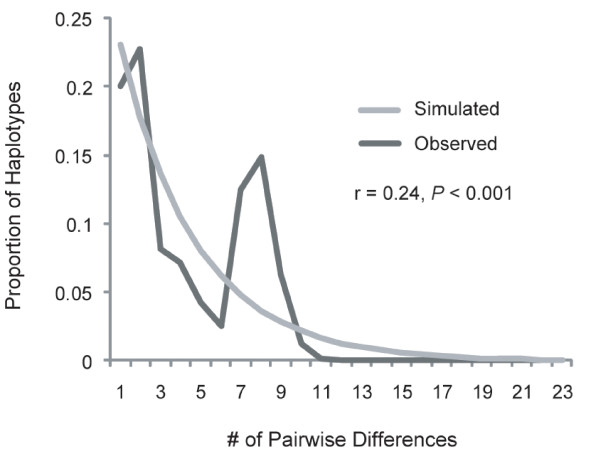
“The mismatch distribution for C. argus is distinctly bimodal (Figure 4) which is characteristic of species under the influence of a strong biogeographic barrier [100, 101 ].”
BackgroundLavery, S., Moritz, C. C., & Fielder, D. R. (1995) · Heredity · doi:10.1038/hdy.1995.75 · Cited by 56 · cited 1×
“Studies of demersal organisms that lack vagile adults have found intraspecific genetic differentiation across the IPB in many fishes [80-88] and invertebrates [89-96] with few exceptions [67,69,95,97,98].”
BackgroundWinters, K. L., van Herwerden, L., Choat, J. H., & Robertson, D. R. (2010) · Marine Biology · doi:10.1007/s00227-010-1442-4 · Cited by 55 · cited 2×
“Studies of demersal organisms that lack vagile adults have found intraspecific genetic differentiation across the IPB in many fishes [80-88] and invertebrates [89-96] with few exceptions [67,69,95,97,98].”
BackgroundKochzius, M., Seidel, C., Hauschild‐Quintern, J., Kirchhoff, S., Mester, P., Meyer-Wachsmuth, I., Nuryanto, ., & Timm, J. (2009) · Marine Ecology Progress Series · doi:10.3354/meps08281 · Cited by 55
Eble, J. A., Rocha, L. A., Craig, M. T., & Bowen, B. W. (2010) · Journal of Marine Biology · doi:10.1155/2011/518516 · Cited by 53
Self-citationHybridization of reef fishes at the Indo-Pacific biogeographic barrier: a case study
Marie, A. D., van Herwerden, L., Choat, J. H., & Hobbs, J. (2007) · Coral Reefs · doi:10.1007/s00338-007-0273-3 · Cited by 53 · cited 1×
“Here, sister species that are otherwise restricted to different oceans inhabit the same reefs and in many cases hybridize [103-105].”
BackgroundShpigel, M., & Fishelson, L. (1991) · Journal of Fish Biology · doi:10.1111/j.1095-8649.1991.tb03628.x · Cited by 45
Lacson, J. M., & Clark, S. (1995) · Marine Biology · doi:10.1007/bf00349293 · Cited by 45 · cited 1×
“Studies of demersal organisms that lack vagile adults have found intraspecific genetic differentiation across the IPB in many fishes [80-88] and invertebrates [89-96] with few exceptions [67,69,95,97,98].”
BackgroundExtinction and replacement in the Indo‐West Pacific Ocean
Briggs, J. C. (1999) · Journal of Biogeography · doi:10.1046/j.1365-2699.1999.00322.x · Cited by 44 · cited 1×
“Historical and contemporary restrictions to dispersal between the Pacific and Indian Oceans are indicated by the confinement of many demersal species primarily to one ocean or the other [3,21,78,79].”
BackgroundMenezes, M. R., Ikeda, M., & Taniguchi, N. (2006) · Journal of Fish Biology · doi:10.1111/j.0022-1112.2006.00993.x · Cited by 42 · cited 1×
“Studies of demersal organisms that lack vagile adults have found intraspecific genetic differentiation across the IPB in many fishes [80-88] and invertebrates [89-96] with few exceptions [67,69,95,97,98].”
BackgroundFisheries of the Cocos (Keeling) Islands
Allen, G. R., & Smith‐Vaniz, W. F. (1994) · Atoll research bulletin · doi:10.5479/si.00775630.412.1 · Cited by 42
A phylogenetic test of multiple proposals for the origins of the East Indies coral reef biota
Halas, D., & Winterbottom, R. (2009) · Journal of Biogeography · doi:10.1111/j.1365-2699.2009.02103.x · Cited by 36 · cited 4×
“Halas and Winterbottom [25] employed a novel phylogenetic approach to address the issue but found no conclusive evidence for any of the hypotheses.”
BackgroundInfluentialWinterbottom, R., & Anderson, R. C. (1997) · Cited by 31
Gaia's Handmaidens: the Orlog Model for Conservation Biology
Bowen, B. W., & Roman, J. (2005) · Conservation Biology · doi:10.1111/j.1523-1739.2005.00100.x · Cited by 30 · cited 1×
“Conservation efforts must preserve not just standing biodiversity but also the mechanisms that produce it [1].”
BackgroundSelf-citationCraig, M. T. (2008) · Zootaxa · doi:10.11646/zootaxa.1850.1.6 · Cited by 17 · cited 1×
“Here, sister species that are otherwise restricted to different oceans inhabit the same reefs and in many cases hybridize [103-105].”
BackgroundSelf-citation
Research works printed but not linked: 13
- Veron JEM: Corals in space and time: The biogeography and evolution of the Scleratinia. 1995, Sydney: University of New South Wales Press
- Randall JE: Zoogeography of shorefishes of the Indo-Pacific region. Zool Studies. 1998, 37: 227-268.
- McManus JW: Marine speciation, tectonics, and sea-level changes in southeast Asia. Proceedings of the Fifth International Coral Reef Congress. Edited by: Gabrie C, Vivien MH. 1985, Moorea: Antenne Museum-Ephe, 133-138. 27 May-1 June 1985; Tahiti
- Ladd HS: Origin of the Pacific Island molluscan fauna. Am J Sci. 1960, 258A: 137-150.
- Woodland DJ: Zoogeography of the Siganidae (Pisces): an interpretation of distribution and richness patterns. Bull Mar Sci. 1983, 33: 713-717.
- Briggs JC: Marine zoogeography. 1974, New York: McGraw-Hill
- Randall JE: Reef and Shore Fishes of the South Pacific. 2005, Honolulu: Sea Grant College Program University of Hawaii
- Linderman KC, Lee TM, Wilson WD, Claro R, Ault JS: Transport of larvae originating in southwest Cuba and the Dry Tortugas: evidence for partial retention in grunts and snappers. Proc Gulf Carib Fish Inst. 2000, 52: 253-278.
- Fleminger A: The Pleistocene equatorial barrier between the Indian and Pacific Oceans and a likely cause for Wallace's line. UNESCO Technical Papers in Marine Science. 1986, 49: 84-97.
- Chappell J: Relative and average sea level changes, and endo-, epi-, and exogenic processes on the earth. Sea level, ice, and climatic change Int Ass Hydrol Sci Publ. 1981, 131: 411-430.
- Potts DC: Evolutionary disequilibrium among Indo-Pacific corals. Bull Mar Sci. 1983, 33: 619-632.
- Eble JA, Rocha LA, Craig MT, Bowen BW: Not all larvae stay close to home: Long-distance dispersal in Indo-Pacific reef fishes, with a focus on the Brown Surgeonfish (Acanthurus nigrofuscus). J Mar Bio. 2011
- Donaldson TJ: Distribution and species richness patterns of Indo-West Pacific Cirrhitidae: support for Woodland's hypothesis. Proceedings of the Second International Conference on Indo-Pacific fishes. Edited by: Uyeno T, Arai R, Taniuchi T, Matsuura K. 1986, Tokyo: Ichthyological Society of Japan, 623-628. 1986; Tokyo
Cited by
Sorted by citations
A realignment of marine biogeographic provinces with particular reference to fish distributions
Briggs, J. C., & Bowen, B. W. (2011) · Journal of Biogeography · doi:10.1111/j.1365-2699.2011.02613.x · Cited by 637
Self-citationThe origins of tropical marine biodiversity
Bowen, B. W., Rocha, L. A., Toonen, R. J., & Karl, S. A. (2013) · Trends in Ecology & Evolution · doi:10.1016/j.tree.2013.01.018 · Cited by 507
Self-citationFounder takes all: density-dependent processes structure biodiversity
Waters, J. M., Fraser, C. I., & Hewitt, G. M. (2012) · Trends in Ecology & Evolution · doi:10.1016/j.tree.2012.08.024 · Cited by 441
Comparative phylogeography of the ocean planet
Bowen, B. W., Gaither, M. R., DiBattista, J. D., Iacchei, M. J., Andrews, K. R., Grant, W. S., Toonen, R. J., & Briggs, J. C. (2016) · Proceedings of the National Academy of Sciences · doi:10.1073/pnas.1602404113 · Cited by 287
“(49), Sphyrna lewini data from Duncan et al.”
BackgroundSelf-citationThe historical biogeography of coral reef fishes: global patterns of origination and dispersal
Cowman, P. F., & Bellwood, D. R. (2012) · Journal of Biogeography · doi:10.1111/jbi.12003 · Cited by 256
“In contrast to the Indian Ocean, the island arcs that make up the Central Pacific region have been closely linked to the IAA, with gene flow between the two regions allowing the Central Pacific to easily inherit ancestral widespread ranges (and vice versa; see Craig et al., 2010; Gaither et al., 2011).”
Background
Metadata
- Authors
- Gaither, M. R., Bowen, B. W., Bordenave, T.-R., Rocha, L. A., Newman, S. J., Gomez, J. A., van Herwerden, L., & Craig, M. T.
- Affiliations
- University of Hawaii System (US)
- University of Hawaiʻi at Mānoa (US)
- California Academy of Sciences (US)
- Government of Western Australia (AU)
- James Cook University (AU)
- University of Puerto Rico-Mayaguez (PR)
- Corresponding author
- Gaither, Michelle R
- ORCID
- Venue
- BMC Evolutionary Biology
- Published
- 2011-07-01
- Volume
- 11
- Issue
- 1
- Pages
- 189-189
- ISSN
- 1471-2148 (ISSN-L)
- PMC
- PMC3145601
- OpenAlex
- W1989413030
- Cited by
- 191
- References
- 110
- Citations by year
- 2026: 12 · 2025: 12 · 2024: 11 · 2023: 5 · 2022: 11 · 2021: 13 · 2020: 15 · 2019: 9 · 2018: 14 · 2017: 8 · 2016: 16 · 2015: 14 · 2014: 12 · 2013: 17 · 2012: 17
- FWCI
- 9.98
- Type
- journal article
- Language
- en
- Open access
- gold
- doi.org
- Licence
- Locations
- BMC Evolutionary Biology (publishedVersion, cc-by)
- Europe PMC (PubMed Central) (publishedVersion, cc-by)
- PubMed Central (publishedVersion, cc-by)
- PubMed (publishedVersion)
- ResearchOnline at James Cook University (James Cook University) (submittedVersion)
- DOAJ (DOAJ: Directory of Open Access Journals) (submittedVersion, cc-by-sa)
- eSpace (Curtin University) (submittedVersion)
- Funders
- National Science Foundation (2005-008/66882, 0554657, OCE#09‐29031, 8208-07, 0929031, 0453167)
- U.S. Department of Commerce
- National Geographic Society (0453167, 0929031, 8208-07)
- Nature Conservancy
- National Oceanic and Atmospheric Administration (09-29031, 2005-008/66882, OCE-0929031, 0453167, NA09OAR4170060)
- U.S. Fish and Wildlife Service
- Hawai'i Sea Grant, University of Hawai'i (NA09OAR4170060, 2005-008/66882)
- Topics
- Life Sciences › Biochemistry, Genetics and Molecular Biology › Genetics › Genetic diversity and population structure
- Physical Sciences › Environmental Science › Ecology › Coral and Marine Ecosystems Studies
- Life Sciences › Agricultural and Biological Sciences › Aquatic Science › Fish Biology and Ecology Studies
- Keywords
- Cephalopholis argus, phylogeography, Pleistocene isolation, Coral Triangle, reef fish, population structure, isolation by distance, population growth, introgression, center of origin, Epinephelidae, cytochrome b, nuclear introns
- MeSH terms
- Animals, Bass, DNA, Mitochondrial, Molecular Sequence Data, Pacific Ocean, Phylogeny, Evolution, Molecular, Indian Ocean, Animal Migration, Fish Proteins, Phylogeography
About these checks
Registry, retraction, Cites and statistics results are computed, not judged, with one exception: a printed reference that no index lists is read once by a model before it counts as a citation error. Claims are extracted by a model and kept only when their quote appears verbatim in the text; each cited source is then checked, with a model’s help, for whether it says what the claim relies on. Those verdicts can be wrong — read the claim’s quote and the cited source before relying on one.
Statistics and arithmetic are recomputed, not judged.
Confidence bands are shown only for fields calibrated on our annotated test set. None is calibrated yet, so no band is shown.
What counts as a claim ›How we measure confidence ›How we check this ›
Are you an author, or do you see a problem with this page? Request a review
