

Phylogenomics of the oxidative phosphorylation in fungi reveals extensive gene duplication followed by functional divergence
Open accessThe DOI matches its Crossref record; 39 of the 39 references it cites were found in a registry or an index.
Abstract
Background: Oxidative phosphorylation is central to the energy metabolism of the cell. Due to adaptation to different life-styles and environments, fungal species have shaped their respiratory pathways in the course of evolution. To identify the main mechanisms behind the evolution of respiratory pathways, we conducted a phylogenomics survey of oxidative phosphorylation components in the genomes of sixty fungal species. Results: Besides clarifying orthology and paralogy relationships among respiratory proteins, our results reveal three parallel losses of the entire complex I, two of which are coupled to duplications in alternative dehydrogenases. Duplications in respiratory proteins have been common, affecting 76% of the protein families surveyed. We detect several instances of paralogs of genes coding for subunits of respiratory complexes that have been recruited to other multi-protein complexes inside and outside the mitochondrion, emphasizing the role of evolutionary tinkering. Conclusions: Processes of gene loss and gene duplication followed by functional divergence have been rampant in the evolution of fungal respiration. Overall, the core proteins of the respiratory pathways are conserved in most lineages, with major changes affecting the lineages of microsporidia, Schizosaccaromyces and Saccharomyces/Kluyveromyces due to adaptation to anaerobic life-styles. We did not observe specific adaptations of the respiratory metabolism common to all pathogenic species.
Overview
The claims and statistics of this paper haven’t been checked yet.
Free: it reads the open-access text and checks the first 5 claims that cite a source we can check. Create a free account to check every claim.
Integrity signals
Registry
Cites
Statistics
Figures
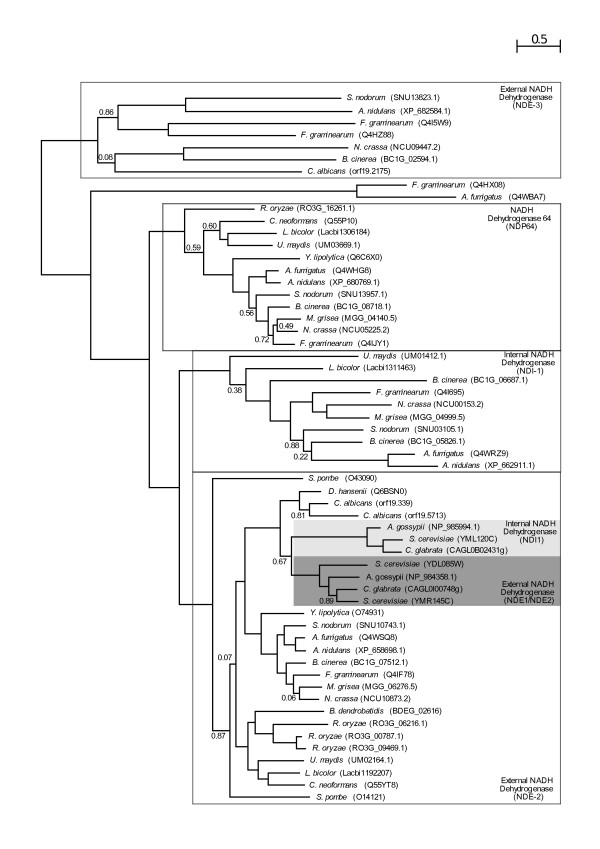
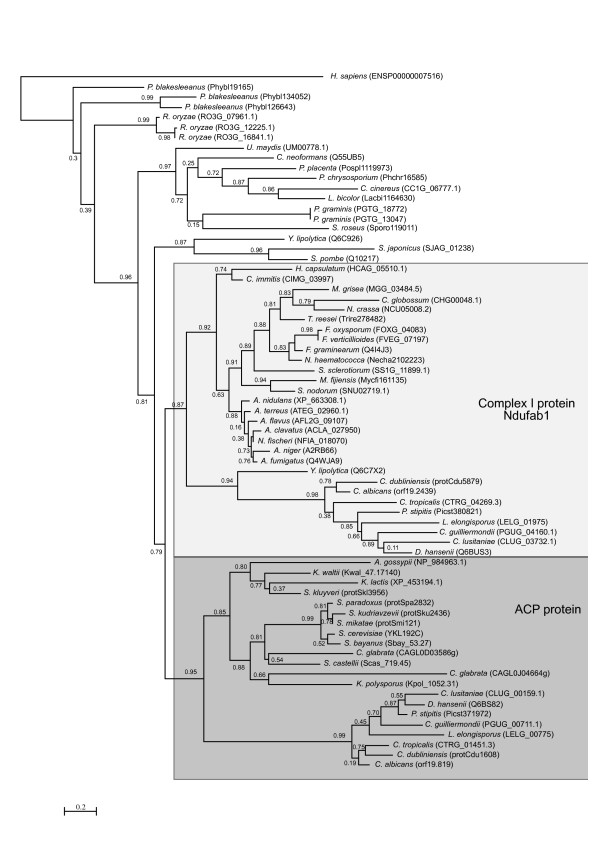
Verification
Claims the paper makes
The claims and statistics of this paper haven’t been checked yet.
Free: it reads the open-access text and checks the first 5 claims that cite a source we can check. Create a free account to check every claim.
Claims other papers make about this one
Each is checked against this paper’s own text: does it say what the citing paper says it does?
The cited source says what the claim attributes to it.
In the citing paper
“Oxidative phosphorylation is critical for energy metabolism in aerobic fungi (32), which is required for the oxidation of carbohydrates, amino acids, and fats to produce ATP.”
From Combined Transcriptome and Metabolome Analysis Reveals That the Potent Antifungal Pyrylium Salt Inhibits Mitochondrial Complex I in Candida albicans (2023) · cites this paper as [32]
Self-check
Percentages, sums and reported differences re-computed from the paper’s own numbers.
The self-check needs the paper’s full text.
Citations
Cites
Basic local alignment search tool
Altschul, S. F., Gish, W., Miller, W., Myers, E. W., & Lipman, D. J. (1990) · Journal of Molecular Biology · doi:10.1006/jmbi.1990.9999 · Cited by 98,669 · cited 1×
“Putative absences in the matrix were doublechecked by tBlastN [32] searches against the corresponding genome sequence and Blast searches from family members of more related species.”
MethodInformation Theory and an Extension of the Maximum Likelihood Principle
Akaike, H. (1998) · Springer Series in Statistics · doi:10.1007/978-1-4612-1694-0_15 · Cited by 17,781
A Simple, Fast, and Accurate Algorithm to Estimate Large Phylogenies by Maximum Likelihood
Guindon, S., & Gascuel, O. (2003) · Systematic Biology · doi:10.1080/10635150390235520 · Cited by 16,806 · cited 1×
“Finally, PhyML aLRT version [36,37] was used to derive Maximum Likelihood (ML) trees.”
MethodtrimAl: a tool for automated alignment trimming in large-scale phylogenetic analyses
Capella-Gutiérrez, S., Silla-Martínez, J. M., & Gabaldón, T. (2009) · Bioinformatics · doi:10.1093/bioinformatics/btp348 · Cited by 12,751 · cited 1×
“Positions in the alignment with gaps in more than 10% of the sequences were trimmed with trimAl [35].”
Self-citationMUSCLE: a multiple sequence alignment method with reduced time and space complexity
Edgar, R. C. (2004) · BMC Bioinformatics · doi:10.1186/1471-2105-5-113 · Cited by 8,970 · cited 1×
“Sets of homologous proteins were aligned using MUSCLE 3.6 [ 34 ] with default parameters.”
MethodInfluentialOhno, S. (1970) · doi:10.1007/978-3-642-86659-3 · Cited by 7,833 · cited 1×
“Recognizing gene duplications is important, since this process is considered one of the main processes that drive functional innovation [15].”
BackgroundKEGG for linking genomes to life and the environment
Kanehisa, M., Araki, M., Goto, S., Hattori, M., Hirakawa, M., Itoh, M., Katayama, T., Kawashima, S., Okuda, S., Tokimatsu, T., et al. (2007) · Nucleic Acids Research · doi:10.1093/nar/gkm882 · Cited by 6,782 · cited 1×
“Fungal proteins annotated as being part of the OXPHOS pathway were downloaded from the KEGG database (map 00190) [31].”
MethodApproximate likelihood-ratio test for branches: A fast, accurate, and powerful alternative
Anisimova, M., & Gascuel, O. (2006) · Systematic Biology · doi:10.1080/10635150600755453 · Cited by 2,693 · cited 1×
“Finally, PhyML aLRT version [36,37] was used to derive Maximum Likelihood (ML) trees.”
MethodProof and evolutionary analysis of ancient genome duplication in the yeast Saccharomyces cerevisiae
Kellis, M., Birren, B. W., & Lander, E. S. (2004) · Nature · doi:10.1038/nature02424 · Cited by 1,522 · cited 11×
“Similarly, the presence of a complete repertoire of Complex I subunits in all species in the Candida cluster and the lack of this complex in all surveyed species from the Saccharomyces/Kluyveromyces clade, situates the loss of Complex I in the latter lineage.”
InfluentialDistinguishing Homologous from Analogous Proteins
Fitch, W. M. (1970) · Systematic Zoology · doi:10.2307/2412448 · Cited by 1,503 · cited 1×
“This phylogeny-based approach to orthology detection, approaches more closely the original definition of orthology and reflects more appropriately the complex evolutionary relationships within protein families [13,14].”
Method
Cited by
Skippington, E., Barkman, T. J., Rice, D. W., & Palmer, J. D. (2015) · Proceedings of the National Academy of Sciences · doi:10.1073/pnas.1504491112 · Cited by 498
“The losses of complex I in two yeast lineages have been accompanied by duplications of nuclear-encoded alternative NADH dehydrogenases that bypass complex I and oxidize NADH without proton translocation (34).”
BackgroundMarcet-Houben, M., & Gabaldón, T. (2015) · PLOS Biology · doi:10.1371/journal.pbio.1002220 · Cited by 329
“Finally, notable exceptions to expectations from the gene balance hypothesis, which posits that WGD would favour duplications of entire complexes rather than single subunits, have been noted [51].”
ResultSelf-citationGladieux, P., Ropars, J., Badouin, H., Branca, A., Aguileta, G., de Vienne, D. M., Rodríguez de la Vega, R. C., Branco, S., & Giraud, T. (2014) · Molecular Ecology · doi:10.1111/mec.12631 · Cited by 272
“evolution of various degrees of sensitivity to drugs or anaerobic fermentation in yeasts (Dunn et al. 2005; Marcet-Houben et al. 2009; Lin & Li 2010).”
BackgroundMitochondrial Respiratory Chain Complexes
Sousa, J. S., D’Imprima, E., & Vonck, J. (2018) · Subcellular Biochemistry · doi:10.1007/978-981-10-7757-9_7 · Cited by 231
Mitochondrial Structure and Bioenergetics in Normal and Disease Conditions
Protasoni, M., & Zeviani, M. (2021) · International Journal of Molecular Sciences · doi:10.3390/ijms22020586 · Cited by 220
Expansion of Signal Transduction Pathways in Fungi by Extensive Genome Duplication
Corrochano, L. M., Kuo, A., Marcet-Houben, M., Polaino, S., Salamov, A., Villalobos-Escobedo, J. M., Grimwood, J., Álvarez, M. I., Avalos, J., Bauer, D., et al. (2016) · Current Biology · doi:10.1016/j.cub.2016.04.038 · Cited by 183
“This early WGD explains gene duplications in the oxidative phosphorylation complex in Mucorales [15] and segmental duplications in Lichtheimia corymbifera where previously a species-specific WGD had been rejected [16].”
BackgroundInfluentialSelf-citationDavies, K. M., Blum, T. B., & Kühlbrandt, W. (2018) · Proceedings of the National Academy of Sciences · doi:10.1073/pnas.1720702115 · Cited by 167
“Since the widely studied yeast Saccharomyces cerevisiae lacks a conventional complex I (33), we investigated the membranes of the obligate aerobic yeast Y.”
BackgroundGenome Diversity and Evolution in the Budding Yeasts (Saccharomycotina)
Dujon, B. A., & Louis, E. J. (2017) · Genetics · doi:10.1534/genetics.116.199216 · Cited by 129
Hagman, A., & Piškur, J. (2015) · PLOS ONE · doi:10.1371/journal.pone.0116942 · Cited by 130
“We have demonstrated that both effects, short-term and long-term Crabtree effect originated at approximately the same time during the Saccharomycetales evolutionary history [16, 17], and the origin occurred with the horizontal transfer of URA1 gene [18] and the ability to proliferate anaerobically [15, 19], after the…”
Genome plasticity in Candida albicans is driven by long repeat sequences
Todd, R. T., Wikoff, T. D., Forche, A., & Selmecki, A. (2019) · eLife · doi:10.7554/elife.45954 · Cited by 118
“albicans that did not undergo the ancient whole genome duplication event (Butler et al., 2009; Marcet-Houben et al., 2009; Wolfe and Shields, 1997).”
BackgroundImportance of Nonenteric Protozoan Infections in Immunocompromised People
Barratt, J., HARKNESS, J., Marriott, D., Ellis, J., & Stark, D. J. (2010) · Clinical Microbiology Reviews · doi:10.1128/cmr.00001-10 · Cited by 118
“While the microsporidia are often described as protozoa (25, 363, 577, 578), recent reports indicated that they are actually more closely related to fungi (199, 256, 351, 376).”
BackgroundSchwartze, V. U., Winter, S., Shelest, E., Marcet‐Houben, M., Horn, F., Wehner, S., Linde, J., Valiante, V., Sammeth, M., Riege, K., et al. (2014) · PLoS Genetics · doi:10.1371/journal.pgen.1004496 · Cited by 105
“[45] which is no longer detectable in the duplicated”
BackgroundSelf-citationMitochondrial genome evolution in yeasts: an all-encompassing view
Freel, K. C., Friedrich, A., & Schacherer, J. (2015) · FEMS Yeast Research · doi:10.1093/femsyr/fov023 · Cited by 106
Divergent Mitochondrial Respiratory Chains in Phototrophic Relatives of Apicomplexan Parasites
Flegontov, P., Michálek, J., Janouškovec, J., Lai, D.-H., Jirků, M., Hajdušková, E., Tomčala, A., Otto, T. D., Keeling, P. J., Pain, A., et al. (2015) · Molecular Biology and Evolution · doi:10.1093/molbev/msv021 · Cited by 85
“…from the mitochondrion of Plasmodium spp. and other apicomplexans (van Dooren et al. 2006; Vaidya and Mather 2009; Sheiner et al. 2013), as well as from some fungi (e.g., Saccharomyces) where alternative NADH dehydrogenases substitute its electron transfer function (Marcet-Houben et al. 2009).”
BackgroundAbsence of Complex I Implicates Rearrangement of the Respiratory Chain in European Mistletoe
Senkler, J., Rugen, N., Eubel, H., Hegermann, J., & Braun, H. (2018) · Current Biology · doi:10.1016/j.cub.2018.03.050 · Cited by 88
Plant mitochondrial Complex I composition and assembly: A review
Subrahmanian, N., Remacle, C., & Hamel, P. P. (2016) · Biochimica et Biophysica Acta (BBA) - Bioenergetics · doi:10.1016/j.bbabio.2016.01.009 · Cited by 88
Alternative NAD(P)H dehydrogenase and alternative oxidase: Proposed physiological roles in animals
McDonald, A. E., & Gospodaryov, D. V. (2019) · Mitochondrion · doi:10.1016/j.mito.2018.01.009 · Cited by 70
“Moreover, some species of facultatively anaerobic yeasts, Saccharomyces cerevisiae, Saccharomyces carlsbergensis, Kluyveromyces marxianus, Ashbya gossypii, Candida glabrata and other species from the Saccharomyces/Kluyveromyces cluster do not contain complex I (Kerscher, 2000; Gabaldón et al., 2005; Marcet-Houben et a…”
BackgroundOborník, M., & Lukeš, J. (2015) · Annual Review of Microbiology · doi:10.1146/annurev-micro-091014-104449 · Cited by 67
A single Gal4-like transcription factor activates the Crabtree effect in Komagataella phaffii
Ata, Ö., Rebnegger, C., Tatto, N. E., Valli, M., Mairinger, T., Hann, S., Steiger, M. G., Çalık, P., & Mattanovich, D. (2018) · Nature Communications · doi:10.1038/s41467-018-07430-4 · Cited by 61
Franck, W. L., Gökce, E., Oh, Y., Muddiman, D. C., & Dean, R. A. (2013) · Molecular & Cellular Proteomics · doi:10.1074/mcp.m112.025874 · Cited by 59
“oryzae genes likely to encode components of this pathway (89).”
BackgroundMacroevolutionary dynamics of gene family gain and loss along multicellular eukaryotic lineages
Domazet-Lošo, M., Široki, T., Šimičević, K., & Domazet‐Lošo, T. (2024) · Nature Communications · doi:10.1038/s41467-024-47017-w · Cited by 56
“A striking exampleof reductive evolution is the loss of respiratory chain complex I in the oxidative phosphorylation pathway of Sac-charomycetaceae yeasts related to their fermentative and anaerobic lifestyles 61,62 .”
Benevenuto, J., Teixeira‐Silva, N. S., Kuramae, E. E., Croll, D., & Monteiro-Vitorello, C. B. (2018) · Frontiers in Microbiology · doi:10.3389/fmicb.2018.00660 · Cited by 56
“Such enzymes participate in the oxidative phosphorylation pathway, but also in the oxidative stress (Marcet-Houben et al., 2009).”
BackgroundUnique, Diverged, and Conserved Mitochondrial Functions Influencing Candida albicans Respiration
Sun, N., Parrish, R. S., Calderone, R. A., & Fonzi, W. A. (2019) · mBio · doi:10.1128/mbio.00300-19 · Cited by 51
“Evolutionary addition and deletion of subunits have occurred broadly across phylogenetic lineages, including fungi (26, 28, 29).”
BackgroundInfluentialBlack, B., Lee, C., Horianopoulos, L. C., Jung, W. H., & Kronstad, J. W. (2021) · PLOS Pathogens · doi:10.1371/journal.ppat.1009661 · Cited by 51
Epidemiology and Evolution of Fungal Pathogens in Plants and Animals
Gladieux, P., Byrnes, E. J., Aguileta, G., Fisher, M. C., Heitman, J., & Giraud, T. (2010) · Elsevier eBooks · doi:10.1016/b978-0-12-384890-1.00004-2 · Cited by 50
“Gene duplications related to adaptations to the pathogenic lifestyle have also been documented, as in the case of the oxidative phosphorylation pathway, whose components have evolved by functional divergence with several instances of gene loss and duplication (Marcet-Houben et al., 2009).”
BackgroundThe Case of the Missing Ancient Fungal Polyploids
Campbell, M. A., Ganley, A. R. D., Gabaldón, T., & Cox, M. P. (2016) · The American Naturalist · doi:10.1086/688763 · Cited by 47
Self-citationWidespread Recurrent Evolution of Genomic Features
Maeso, I., Roy, S. W., & Irimia, M. (2012) · Genome Biology and Evolution · doi:10.1093/gbe/evs022 · Cited by 36
Ke, C.-L., Liao, Y.-T., & Lin, C.-H. (2021) · Virulence · doi:10.1080/21505594.2020.1870082 · Cited by 41
Maximizing Power in Phylogenetics and Phylogenomics: A Perspective Illuminated by Fungal Big Data
Dornburg, A., Townsend, J. P., & Wang, Z. (2017) · Advances in genetics · doi:10.1016/bs.adgen.2017.09.007 · Cited by 40
Using genomics to understand the mechanisms of virulence and drug resistance in fungal pathogens
Schikora-Tamarit, M. À., & Gabaldón, T. (2022) · Biochemical Society Transactions · doi:10.1042/bst20211123 · Cited by 35
Self-citationRNA-seq analysis of Pichia anomala reveals important mechanisms required for survival at low pH
Fletcher, E., Feizi, A., Kim, S. S., Siewers, V., & Nielsen, J. (2015) · Microbial Cell Factories · doi:10.1186/s12934-015-0331-4 · Cited by 36
“Although core proteins were conserved in the respiratory chain of both yeasts, S. cerevisiae lacks most subunits of Complex I as a result of an evolutionary adaptation to fermentative anaerobic growth [37].”
Amphotericin B Resistance in Aspergillus terreus Is Overpowered by Coapplication of Pro-oxidants
Blatzer, M., Jukic, E., Posch, W., Schöpf, B., Binder, U., Steger, M., Blum, G., Hackl, H., Gnaiger, E., Lass‐Flörl, C., et al. (2015) · Antioxidants and Redox Signaling · doi:10.1089/ars.2014.6220 · Cited by 34
“Complex V utilizes this proton gradient as energy transfer force to generate ATP (23, 32).”
Maynard, L. D., Slinn, H. L., Glassmire, A. E., Matarrita‐Carranza, B., Dodson, C. D., Nguyen, T. T., Burroughs, M., Dyer, L. A., Jeffrey, C. S., & Whitehead, S. R. (2020) · Ecology · doi:10.1002/ecy.3192 · Cited by 29
“A high tolerance to secondary metabolites can evolve in fungi through mechanisms such as the production of alternative enzymes (Kerscher et al. 1999, Marcet-Houben et al. 2009, O’Donnell et al. 2011, Adams et al. 2019).”
BackgroundMultiple Approaches to Phylogenomic Reconstruction of the Fungal Kingdom
McCarthy, C. G. P., & Fitzpatrick, D. A. (2017) · Advances in genetics · doi:10.1016/bs.adgen.2017.09.006 · Cited by 26
“…et al. (2006) were further supported by a 31,123-character superalignment from 69 proteins conserved in up to 60 fungal genomes generated by Marcet-Houben, Marceddu, and Gabaldón (2009), although they found a large degree of topological conflict within a 21-species Saccharomycotina clade…”
BackgroundRaven, J. A., & Beardall, J. (2017) · Journal of Experimental Botany · doi:10.1093/jxb/erx149 · Cited by 25
Editorial: The Significance of Mitogenomics in Mycology
Kulik, T., van Diepeningen, A. D., & Hausner, G. (2021) · Frontiers in Microbiology · doi:10.3389/fmicb.2020.628579 · Cited by 26
“The mitochondrial respiration chain has been linked to adaptation of fungi to oxygen-limited conditions or oxidative stress during certain phases of their life cycle, which explains the ability of fungi to survive in different environments and their potential to shift to different modes of living (Marcet-Houben et al.…”
BackgroundFungal Seed Pathogens of Wild Chili Peppers Possess Multiple Mechanisms To Tolerate Capsaicinoids
Adams, C. A., Zimmerman, K., Fenstermacher, K. A., Thompson, M. G., Skyrud, W., Behie, S. W., & Pringle, A. (2019) · Applied and Environmental Microbiology · doi:10.1128/aem.01697-19 · Cited by 22
Bellasio, M., Peymann, A., Steiger, M. G., Valli, M., Sipiczki, M., Sauer, M., Graf, A. B., Marx, H., & Mattanovich, D. (2016) · FEMS Yeast Research · doi:10.1093/femsyr/fow037 · Cited by 22
Epidemiology and Evolution of Fungal Pathogens in Plants and Animals
Gladieux, P., Byrnes, E. J., Aguileta, G., Fisher, M. C., Billmyre, R. B., Heitman, J., & Giraud, T. (2017) · Elsevier eBooks · doi:10.1016/b978-0-12-799942-5.00004-4 · Cited by 22
“Gene duplications related to adaptations to the pathogenic lifestyle have also been documented, as in the case of the oxidative phosphorylation pathway, whose components have evolved by functional divergence with several instances of gene loss and duplication (Marcet-Houben et al., 2009).”
BackgroundMamouei, Z., Singh, S., Lemire, B., Gu, Y., Alqarihi, A., Nabeela, S., Li, D., Ibrahim, A., & Uppuluri, P. (2021) · PLOS Biology · doi:10.1371/journal.pbio.3000957 · Cited by 19
“cerevisiae is devoid of complex I (NADH: ubiquinone oxidoreductase) 500 (51-53).”
BackgroundA phylogenetic analysis of macroevolutionary patterns in fermentative yeasts
Paleo‐López, R., Quintero‐Galvis, J. F., Solano‐Iguaran, J. J., Sánchez-Salazar, Á. M., Gaitán‐Espitía, J. D., & Nespolo, R. F. (2016) · Ecology and Evolution · doi:10.1002/ece3.2097 · Cited by 19
Proteomic analysis of Aspergillus niger 3.316 under heat stress
Deng, X., Du, B., Zhu, F., Gao, Y., & Li, J. (2020) · MicrobiologyOpen · doi:10.1002/mbo3.1012 · Cited by 18
Gleason, F. H., Larkum, A. W. D., Raven, J. A., Manohar, C. S., & Lilje, O. (2019) · Fungal ecology · doi:10.1016/j.funeco.2018.12.011 · Cited by 18
2 Genomics to Study Basal Lineage Fungal Biology: Phylogenomics Suggests a Common Origin
Shelest, E., & Voigt, K. (2014) · Springer eBooks · doi:10.1007/978-3-642-45218-5_2 · Cited by 17
“The origin of the duplicated genes in mucoralean genomes (besides Rhizopus) may be a much more ancient genome duplication, as suggested by Marcet-Houben et al. (2009), which is no longer detectable as regions’ duplications.”
BackgroundSchikora-Tamarit, M. À., Marcet-Houben, M., Nosek, J., & Gabaldón, T. (2021) · Open Biology · doi:10.1098/rsob.200362 · Cited by 16
“We found that AOX loss is always related to CI loss (preceding it in 4/6 events), whereas NDH2 duplication is associated with CI loss (preceding 3/6 events) in all but S. bacillaris.”
BackgroundResultInfluentialSelf-citationPhylogenomics-Based Reconstruction of Protozoan Species Tree
Ocaña, K., & Dávila, A. M. R. (2011) · Evolutionary Bioinformatics · doi:10.4137/ebo.s6861 · Cited by 19
Wang, N., Li, L., Ma, Y., Shen, C., Ao, Z., Song, C., Mehmood, M. A., Zhang, P., Liu, Y., Sun, X., et al. (2025) · Frontiers in Microbiology · doi:10.3389/fmicb.2025.1572004 · Cited by 15
“In response to altered environmental conditions, fungi have been observed to modify their energy metabolism pathways, thereby acclimatising to the novel conditions (Marcet-Houben et al., 2009).”
Lv, Q., Yan, L., Wang, J., Feng, J., Gao, L., Qiu, L., Chao, W., Qin, Y.-L., & Jiang, Y. (2023) · Microbiology Spectrum · doi:10.1128/spectrum.03209-22 · Cited by 12
“Oxidative phosphorylation is critical for energy metabolism in aerobic fungi (32), which is required for the oxidation of carbohydrates, amino acids, and fats to produce ATP.”
BackgroundCharacterization of mitochondrial proteomes of nonbilaterian animals
Muthye, V., & Lavrov, D. V. (2018) · IUBMB Life · doi:10.1002/iub.1961 · Cited by 11
Bernal, M., Navarro, M. P. M., Arvizu‐Gómez, J. L., Saldaña, C., Ramos-López, M. Á., Amaro-Reyes, A., Escamilla‐García, M., Pacheco-Aguilar, J. R., Pérez-Moreno, V., Morales, J. A. R., et al. (2024) · Microorganisms · doi:10.3390/microorganisms12101943 · Cited by 10
Outsourcing of energetically costly amino acids at the origin of animals
Kasalo, N., Domazet-Lošo, M., & Domazet‐Lošo, T. (2026) · Nature Communications · doi:10.1038/s41467-026-68724-6 · Cited by 11
“A third approach is a shift to a predominantly fermentative lifestyle with occasional aerobic episodes featuring reduced respiration, as seen in some yeasts 7,42 .”
Nespolo, R. F., Solano‐Iguaran, J. J., Paleo‐López, R., Quintero‐Galvis, J. F., Cubillos, F. A., & Bozinovic, F. (2020) · Ecology and Evolution · doi:10.1002/ece3.6208 · Cited by 9
Revisiting the Neurospora crassa mitochondrial genome
Monteiro, J., Pratas, D., Videira, A., & Pereira, F. (2021) · Letters in Applied Microbiology · doi:10.1111/lam.13538 · Cited by 7
“It is therefore tempting to speculate that the partial duplication of nd2 results in a protein with a novel function, supporting the Marcet-Houben et al. (2009) hypothesis.”
BackgroundResultMathewson, I. (2015) · Medical Hypotheses · doi:10.1016/j.mehy.2015.01.032 · Cited by 7
Fermenting Futures: an artistic view on yeast biotechnology
Dumitriu, A., May, A., Ata, Ö., & Mattanovich, D. (2021) · FEMS Yeast Research · doi:10.1093/femsyr/foab042 · Cited by 8
Li, L., Cheng, X., Dai, T., Wang, Z., Jin, L., Li, X., Lei, B., Liu, P., Hao, J. J., & Liu, X. (2020) · Frontiers in Microbiology · doi:10.3389/fmicb.2020.574039 · Cited by 6
3 Phylogenomics for the Study of Fungal Biology
Gabaldón, T., & Marcet‐Houben, M. (2014) · Springer eBooks · doi:10.1007/978-3-642-45218-5_3 · Cited by 6
Self-citationDeletion of the ATP2 Gene in Candida albicans Blocks Its Escape From Macrophage Clearance
Zhang, Y., Tang, C., Zhang, Z., Li, S., Zhao, Y., Weng, L., & Zhang, H. (2021) · Frontiers in Cellular and Infection Microbiology · doi:10.3389/fcimb.2021.643121 · Cited by 5
Perkins, A. K., Grossart, H., Rojas-Jiménez, K., Retter, A., & Oakes, J. M. (2025) · Environmental Microbiology Reports · doi:10.1111/1758-2229.70140 · Cited by 4
“…endosymbiotic gene transfer (Ternes and Schönknecht 2014), pathogenesis (Roussin and Salcedo 2021), stress responses, signalling pathways (Amjad et al. 2021), secretory processes (Fischer and Glass 2019), pathogenicity (Strømland et al. 2021) and functional divergence (Marcet-Houben et al. 2009).”
Hoffman, J. R., Karol, K. G., Ohmura, Y., Pogoda, C. S., Keepers, K. G., McMullin, R. T., & Lendemer, J. C. (2023) · Mycologia · doi:10.1080/00275514.2022.2157665 · Cited by 4
“Duplications of respiratory proteins are not rare in fungi (Marcet-Houben et al. 2009), and there are instances where a paralogous gene accrues mutations and develops a specialized function.”
BackgroundFUNGALOXPHOS: An integrated database for oxidative phosphorylation in fungi
Lavín, J. L., Marcet‐Houben, M., Gutiérrez-Vázquez, R. L., Ramírez, L., Pisabarro, A. G., Gabaldón, T., & Oguiza, J. A. (2013) · Mitochondrion · doi:10.1016/j.mito.2013.04.009 · Cited by 4
Self-citationMirus, O., & Schleiff, E. (2011) · Springer eBooks · doi:10.1007/978-3-642-22380-8_8 · Cited by 4
Zinc PVA versus potassium dichromate for preservation of microsporidian spores of human origin
El-Taweel, H. A., Tolba, M. M., Sadaka, H. A., El-Zawawy, L. A., & Osman, M. M. (2012) · Parasitology Research · doi:10.1007/s00436-012-2888-8 · Cited by 4
“Microsporidia are often described, by convention, as protozoa (Stark et al. 2009; Lee et al. 2010), although molecular phylogenetic analysis indicates that they are more closely related to fungi (Lee et al. 2008; Marcet-Houben et al. 2009).”
BackgroundHsu, P., Lu, T., Hung, P.-H., & Leu, J. (2024) · Nucleic Acids Research · doi:10.1093/nar/gkae1147 · Cited by 2
“…( 42 ,60 ) allows the yeast cells to bypass Complex I electron transport by oxidizing NADH without proton pumping ( 61 ), possibly further promoting the evolution of alternative NADH dehydrogenases via duplications ( 62 ) and entrenchment of Nde1-related moonlighting functions ( 44 ,45 ).”
Codon models applied to the study of fungal genomes
Aguileta, G., & Giraud, T. (2012) · Oxford University Press eBooks · doi:10.1093/acprof:osobl/9780199601165.003.0012 · Cited by 2
“Some can be related to adaptations to the pathogenic lifestyle, as in the case of the oxidative phosphorylation pathway, whose components have evolved by functional divergence with several instances of gene loss and duplication (Marcet-Houben et al., 2009).”
BackgroundEvolution of Fungi and Their Respiratory Metabolism
Marcet‐Houben, M., & Gabaldón, T. (2011) · Springer eBooks · doi:10.1007/978-3-642-20763-1_15 · Cited by 2
“We later extended this study to encompass a total of 60 completely sequenced species ( Marcet-Houben et al. 2009 ).”
BackgroundMethodSelf-citationReduction of the Saccharomyces cerevisiae Genome: Challenges and Perspectives
Caspeta, L., & Salas-Navarrete, P. C. (2019) · Springer eBooks · doi:10.1007/978-3-030-31897-0_5 · Cited by 2
Gabaldón, T. (2011) · Springer eBooks · doi:10.1007/978-3-642-22380-8_1 · Cited by 2
Self-citationHagman, A. (2013) · Lund University Publications (Lund University) · Cited by 2
Xylanase hyper-producer : the genome of the thermophilic fungus Thermomyces lanuginosus
Mchunu, N. P. (2014) · DUT Open Scholar (Durban University of Technology) · doi:10.51415/10321/1116 · Cited by 2
Benevenuto, J. (2017) · Digital Library of Theses and Dissertations (Universidade de São Paulo) · doi:10.11606/t.11.2017.tde-29082017-085644 · Cited by 1
A tale of two clades: genome evolution of oomycetes and fungi.
McCarthy, C. G. P. (2019) · Maynooth University ePrints and eTheses Archive (Maynooth University) · Cited by 1
Génomique évolutive chez les champignons Microbotryum : adaptation et chromosomes de types sexuels
Badouin, H. (2016) · theses.fr (ABES) · doi:10.70675/d895d45bz46faz445fza754z90b16e80e61c · Cited by 1
Fungal phylogenomics.A global analysis of fungal genomes and their evolution
Marcet‐Houben, M. (2010) · Rovira & Virgili repository
Self-citationCommunity-level consequences of Piper chemistry on tropical herbivores, parasitoids and fungi
Slinn, H. L. (2021) · The Atrium (University of Guelph)
Schwartze, V. U., Winter, S., Shelest, E., Marcet‐Houben, M., Horn, F., Wehner, S., Linde, J., Valiante, V., Sammeth, M., Riege, K., et al. (2016) · PLoS Genetics · doi:10.1371/journal.pgen.1006491
“[45] which is no longer detectable in the duplicated”
BackgroundSelf-citationLai, J., Liu, B., Xiong, G., Song, S., Yang, Y., Wei, H., Xie, S., & Jiang, J. (2025) · Journal of Agricultural and Food Chemistry · doi:10.1021/acs.jafc.5c00433
Production of organic acids from lignocellulosic material
Bellasio, M. (2016) · BOK:ePub (Universitätsbibliothek der Universität f Bodenkultur Wien)
Mitochondriale Marker zur Prostatakrebsprognose und -therapie
Schöpf (2016) · Digital Library of the University of Innsbruck (University of Innsbruck)
Evolution of Penicillium fungi : Adaptation and Degeneration in Fermented Food Environments
Lo, Y. (2019) · theses.fr (ABES) · doi:10.70675/19160c2bz4bb7z4dcezb04az8d64f7073d9a
Integrative Modeling and Analysis of Fungal Central Carbon MetabolismPreprint
Edirisinghe, J. N., Lerma‐Ortiz, C., Liu, F., Faria, J. P., Cottingham, R. W., Arkin, A. P., Liu, Q., & Henry, C. S. (2026) · bioRxiv (Cold Spring Harbor Laboratory) · doi:10.64898/2026.05.08.723079
Jibril, S. M., Yang, X., Wang, C., Cheng, R., Cui, Y., Sun, J. Y., Liu, Q., Chao, Y., Hera, M. H. R., Liu, R., et al. (2026) · BMC Plant Biology · doi:10.1186/s12870-026-09573-9
“The conservation of these binding sites across diverse strains representing different host origins and genetic backgrounds suggests strong purifying selection acting on these functionally essential proteins [52, 55].”
Benevenuto, J., Teixeira-Silva, N. S., Kuramae, E. E., Croll, D., & Monteiro-Vitorello, C. B. (2018) · doi:10.3389/fmicb.2018.00660.s003
Metadata
- Authors
- Marcet-Houben, M., Marceddu, G., & Gabaldón, T.
- Affiliations
- Centre for Genomic Regulation (ES)
- Corresponding author
- Gabaldón, Toni
- ORCID
- Gabaldón, Toni
- Venue
- BMC Evolutionary Biology
- Published
- 2009-12
- Volume
- 9
- Issue
- 1
- Pages
- 295-295
- ISSN
- 1471-2148 (ISSN-L)
- PMC
- PMC2803194
- OpenAlex
- W2145197240
- Cited by
- 75
- References
- 39
- Citations by year
- 2026: 3 · 2025: 3 · 2024: 3 · 2023: 2 · 2022: 1 · 2021: 9 · 2020: 4 · 2019: 6 · 2018: 7 · 2017: 6 · 2016: 5 · 2015: 9 · 2014: 4 · 2013: 4 · 2012: 3
- FWCI
- 1.21
- Type
- journal article
- Language
- en
- Open access
- gold
- doi.org
- Licence
- cc-by
- Locations
- BMC Evolutionary Biology (publishedVersion, cc-by)
- PubMed Central (publishedVersion, cc-by)
- PubMed (publishedVersion)
- DOAJ (DOAJ: Directory of Open Access Journals) (submittedVersion, cc-by-sa)
- Topics
- Life Sciences › Biochemistry, Genetics and Molecular Biology › Molecular Biology › Fungal and yeast genetics research
- Life Sciences › Biochemistry, Genetics and Molecular Biology › Molecular Biology › Genomics and Phylogenetic Studies
- Life Sciences › Biochemistry, Genetics and Molecular Biology › Molecular Biology › Mitochondrial Function and Pathology
- Keywords
- oxidative phosphorylation, fungal respiration, gene duplication, functional divergence, gene loss, respiratory chain complexes, complex I, mitochondrial proteins, microsporidia, anaerobic adaptation, fungal pathogens
- MeSH terms
- Fungi, Humans, Oxidative Phosphorylation, Oxidoreductases, Phylogeny, Arabidopsis, Evolution, Molecular, Gene Duplication
About these checks
Registry, retraction, Cites and statistics results are computed, not judged, with one exception: a printed reference that no index lists is read once by a model before it counts as a citation error. Claims are extracted by a model and kept only when their quote appears verbatim in the text; each cited source is then checked, with a model’s help, for whether it says what the claim relies on. Those verdicts can be wrong — read the claim’s quote and the cited source before relying on one.
Statistics and arithmetic are recomputed, not judged.
Confidence bands are shown only for fields calibrated on our annotated test set. None is calibrated yet, so no band is shown.
What counts as a claim ›How we measure confidence ›How we check this ›
Are you an author, or do you see a problem with this page? Request a review
Data sources
Bibliographic data: Semantic Scholar, OpenAlex, Crossref.
Contains information from the Semantic Scholar Academic Graph Datasets, made available under the ODC Attribution License (ODC-BY 1.0).
Semantic Scholar’s data is described in: Kinney, R., et al. (2023). The Semantic Scholar Open Data Platform. arXiv:2301.10140.
