

Phylogenomics of the oxidative phosphorylation in fungi reveals extensive gene duplication followed by functional divergence
Open accessThe DOI matches its Crossref record; 39 of the 39 references it cites were found in a registry or an index.
Abstract
Background: Oxidative phosphorylation is central to the energy metabolism of the cell. Due to adaptation to different life-styles and environments, fungal species have shaped their respiratory pathways in the course of evolution. To identify the main mechanisms behind the evolution of respiratory pathways, we conducted a phylogenomics survey of oxidative phosphorylation components in the genomes of sixty fungal species. Results: Besides clarifying orthology and paralogy relationships among respiratory proteins, our results reveal three parallel losses of the entire complex I, two of which are coupled to duplications in alternative dehydrogenases. Duplications in respiratory proteins have been common, affecting 76% of the protein families surveyed. We detect several instances of paralogs of genes coding for subunits of respiratory complexes that have been recruited to other multi-protein complexes inside and outside the mitochondrion, emphasizing the role of evolutionary tinkering. Conclusions: Processes of gene loss and gene duplication followed by functional divergence have been rampant in the evolution of fungal respiration. Overall, the core proteins of the respiratory pathways are conserved in most lineages, with major changes affecting the lineages of microsporidia, Schizosaccaromyces and Saccharomyces/Kluyveromyces due to adaptation to anaerobic life-styles. We did not observe specific adaptations of the respiratory metabolism common to all pathogenic species.
Overview
The claims and statistics of this paper haven’t been checked yet.
Free: it reads the open-access text and checks the first 5 claims that cite a source we can check. Create a free account to check every claim.
Integrity signals
Registry
Cites
Statistics
Figures
Verification
Claims the paper makes
The claims and statistics of this paper haven’t been checked yet.
Free: it reads the open-access text and checks the first 5 claims that cite a source we can check. Create a free account to check every claim.
Claims other papers make about this one
Each is checked against this paper’s own text: does it say what the citing paper says it does?
The cited source says what the claim attributes to it.
In the citing paper
“Oxidative phosphorylation is critical for energy metabolism in aerobic fungi (32), which is required for the oxidation of carbohydrates, amino acids, and fats to produce ATP.”
From Combined Transcriptome and Metabolome Analysis Reveals That the Potent Antifungal Pyrylium Salt Inhibits Mitochondrial Complex I in Candida albicans (2023) · cites this paper as [32]
Self-check
Percentages, sums and reported differences re-computed from the paper’s own numbers.
The self-check needs the paper’s full text.
Citations
Cites
Basic local alignment search tool
Altschul, S. F., Gish, W., Miller, W., Myers, E. W., & Lipman, D. J. (1990) · Journal of Molecular Biology · doi:10.1006/jmbi.1990.9999 · Cited by 98,669 · cited 1×
“Putative absences in the matrix were doublechecked by tBlastN [32] searches against the corresponding genome sequence and Blast searches from family members of more related species.”
MethodInformation Theory and an Extension of the Maximum Likelihood Principle
Akaike, H. (1998) · Springer Series in Statistics · doi:10.1007/978-1-4612-1694-0_15 · Cited by 17,781
A Simple, Fast, and Accurate Algorithm to Estimate Large Phylogenies by Maximum Likelihood
Guindon, S., & Gascuel, O. (2003) · Systematic Biology · doi:10.1080/10635150390235520 · Cited by 16,806 · cited 1×
“Finally, PhyML aLRT version [36,37] was used to derive Maximum Likelihood (ML) trees.”
MethodtrimAl: a tool for automated alignment trimming in large-scale phylogenetic analyses
Capella-Gutiérrez, S., Silla-Martínez, J. M., & Gabaldón, T. (2009) · Bioinformatics · doi:10.1093/bioinformatics/btp348 · Cited by 12,751 · cited 1×
“Positions in the alignment with gaps in more than 10% of the sequences were trimmed with trimAl [35].”
Self-citationMUSCLE: a multiple sequence alignment method with reduced time and space complexity
Edgar, R. C. (2004) · BMC Bioinformatics · doi:10.1186/1471-2105-5-113 · Cited by 8,970 · cited 1×
“Sets of homologous proteins were aligned using MUSCLE 3.6 [ 34 ] with default parameters.”
MethodInfluentialOhno, S. (1970) · doi:10.1007/978-3-642-86659-3 · Cited by 7,833 · cited 1×
“Recognizing gene duplications is important, since this process is considered one of the main processes that drive functional innovation [15].”
BackgroundKEGG for linking genomes to life and the environment
Kanehisa, M., Araki, M., Goto, S., Hattori, M., Hirakawa, M., Itoh, M., Katayama, T., Kawashima, S., Okuda, S., Tokimatsu, T., et al. (2007) · Nucleic Acids Research · doi:10.1093/nar/gkm882 · Cited by 6,782 · cited 1×
“Fungal proteins annotated as being part of the OXPHOS pathway were downloaded from the KEGG database (map 00190) [31].”
MethodApproximate likelihood-ratio test for branches: A fast, accurate, and powerful alternative
Anisimova, M., & Gascuel, O. (2006) · Systematic Biology · doi:10.1080/10635150600755453 · Cited by 2,693 · cited 1×
“Finally, PhyML aLRT version [36,37] was used to derive Maximum Likelihood (ML) trees.”
MethodProof and evolutionary analysis of ancient genome duplication in the yeast Saccharomyces cerevisiae
Kellis, M., Birren, B. W., & Lander, E. S. (2004) · Nature · doi:10.1038/nature02424 · Cited by 1,522 · cited 11×
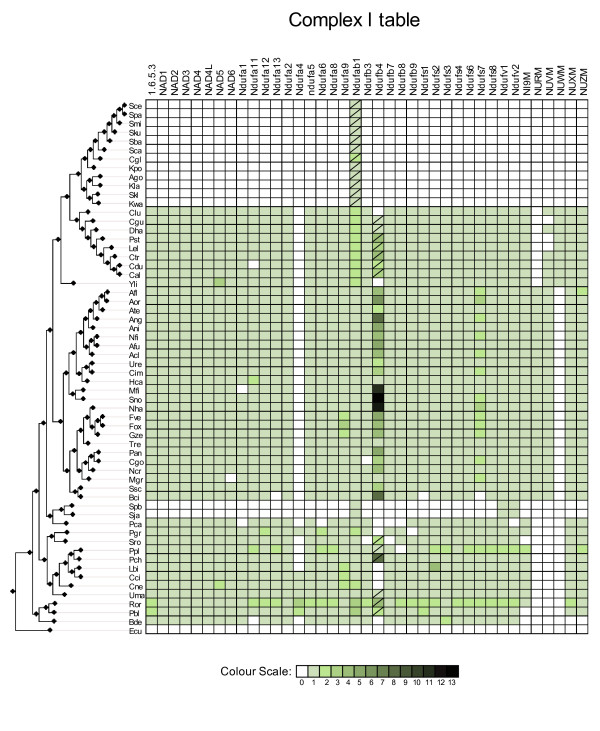
“Similarly, the presence of a complete repertoire of Complex I subunits in all species in the Candida cluster and the lack of this complex in all surveyed species from the Saccharomyces/Kluyveromyces clade, situates the loss of Complex I in the latter lineage.”
InfluentialDistinguishing Homologous from Analogous Proteins
Fitch, W. M. (1970) · Systematic Zoology · doi:10.2307/2412448 · Cited by 1,503 · cited 1×
“This phylogeny-based approach to orthology detection, approaches more closely the original definition of orthology and reflects more appropriately the complex evolutionary relationships within protein families [13,14].”
MethodOxidative Phosphorylation at the fin de siècle
Saraste, M. (1999) · Science · doi:10.1126/science.283.5407.1488 · Cited by 1,313
Genome sequence and gene compaction of the eukaryote parasite Encephalitozoon cuniculi
Katinka, M. D., Duprat, S., Cornillot, E., Méténier, G., Thomarat, F., Prensier, G., Barbe, V., Peyretaillade, E., Brottier, P., Wincker, P., et al. (2001) · Nature · doi:10.1038/35106579 · Cited by 1,058 · cited 1×
“Our results confirm earlier findings of a complete loss of the OXPHOS pathway in microsporidia [18] and the absence of most components of Complex I in Schizosaccharomyces and Saccharomycetales [4].”
ResultDosage sensitivity and the evolution of gene families in yeast
Papp, B., Pál, C., & Hurst, L. D. (2003) · Nature · doi:10.1038/nature01771 · Cited by 753 · cited 2×
“According to the gene balance hypothesis [10], the duplication of genes that encode for subunits of multi-protein complexes should have a higher chance of being deleterious due to dosage effects.”
BackgroundKEGG Atlas mapping for global analysis of metabolic pathways
Okuda, S., Yamada, T., Hamajima, M., Itoh, M., Katayama, T., Bork, P., Goto, S., & Kanehisa, M. (2008) · Nucleic Acids Research · doi:10.1093/nar/gkn282 · Cited by 510 · cited 1×
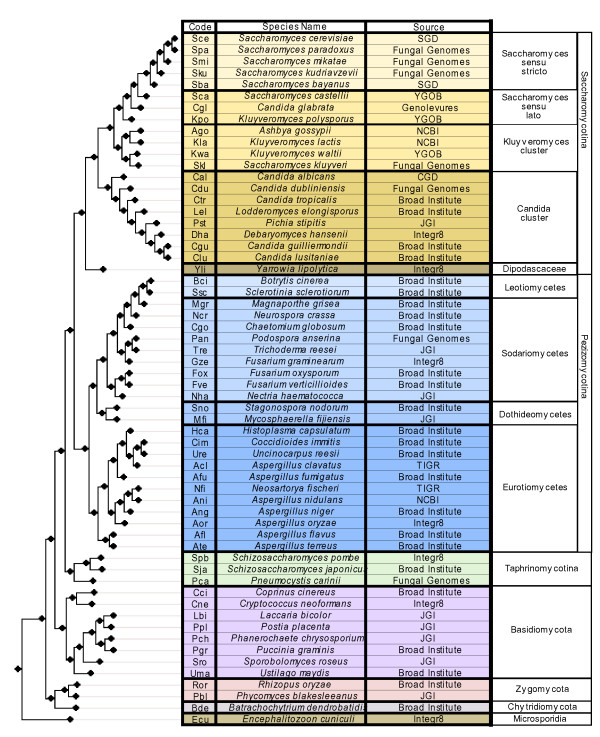
“Sequences of fungal proteins annotated as OXPHOS components were retrieved from the KEGG database [11] and used as queries for blastp searches against the proteins encoded in 60 fully-sequenced fungal genomes (see figure 1 and Methods section).”
MethodMitochondrial processing peptidases
Gakh, O., Cavadini, P., & Isaya, G. (2002) · Biochimica et Biophysica Acta (BBA) - Molecular Cell Research · doi:10.1016/s0167-4889(02)00265-3 · Cited by 434 · cited 1×
“Paralogies to the protein import system in the mitochondrion extend to the two subunits of the Mitochondrial processing peptidase (MPP), an essential processing enzyme that cleaves the N-terminal targeting sequences from mitochondrially imported proteins [25].”
BackgroundGenomic Analysis of the Basal Lineage Fungus Rhizopus oryzae Reveals a Whole-Genome Duplication
Ma, L.-J., Ibrahim, A. S., Skory, C., Grabherr, M. G., Burger, G., Butler, M., Elias, M., Idnurm, A., Lang, B. F., Sone, T., et al. (2009) · PLoS Genetics · doi:10.1371/journal.pgen.1000549 · Cited by 379 · cited 1×
“oryzae [17], in a comprehensive study that catalogues duplicated regions where the gene order is conserved.”
BackgroundGenomics of the fungal kingdom: Insights into eukaryotic biology
Galagan, J. E., Henn, M. R., Ma, L.-J., Cuomo, C. A., & Birren, B. (2005) · Genome Research · doi:10.1101/gr.3767105 · Cited by 319
The altered evolutionary trajectories of gene duplicates
Lynch, M., & Katju, V. (2004) · Trends in Genetics · doi:10.1016/j.tig.2004.09.001 · Cited by 304 · cited 1×
“A possible reconciliation between the extensive rate of gene duplications and the gene balance hypothesis is that functional divergence directly followed the duplication event, thereby facilitating the retention of both duplicates [23].”
BackgroundChristie, K. R. (2004) · Nucleic Acids Research · doi:10.1093/nar/gkh033 · Cited by 289 · cited 1×
“cerevisiae) [39] and the Broad Institute (N.”
Ogilvie, I. (2005) · Journal of Clinical Investigation · doi:10.1172/jci26020 · Cited by 279 · cited 1×
“This protein was later found to be participating as a chaperone in Complex I assembly and a mutation in this gene was identified in patients showing severe encephalopathy [5].”
BackgroundZaragoza, O., Chrisman, C. J., Castelli, M. V., Frases, S., Cuenca-Estrella, M., Rodríguez-Tudela, J. L., & Casadevall, A. (2008) · Cellular Microbiology · doi:10.1111/j.1462-5822.2008.01186.x · Cited by 250 · cited 1×
“For instance, the presence of a polysaccharide capsule in Cryptococcus has been shown to confer resistance to oxidative stress [22].”
BackgroundLarge-scale assignment of orthology: back to phylogenetics?
Gabaldón, T. (2008) · Genome Biology · doi:10.1186/gb-2008-9-10-235 · Cited by 228 · cited 2×
“This phylogeny-based approach to orthology detection, approaches more closely the original definition of orthology and reflects more appropriately the complex evolutionary relationships within protein families [13,14].”
MethodSelf-citationGabaldón, T., Rainey, D., & Huynen, M. A. (2005) · Journal of Molecular Biology · doi:10.1016/j.jmb.2005.02.067 · Cited by 224
Self-citationPresence of an acyl carrier protein in NADH:ubiquinone oxidoreductase from bovine heart mitochondria
Runswick, M. J., Fearnley, I. M., Skehel, J. M., & Walker, J. E. (1991) · FEBS Letters · doi:10.1016/0014-5793(91)80955-3 · Cited by 181 · cited 1×
“The fact that a mammalian homolog of this protein family has also been identified as a Complex I subunit in bovine mitochondria [28], suggests that association with Complex I is an ancestral feature of the family.”
BackgroundReconstruction of the Proto-Mitochondrial Metabolism
Gabaldón, T., & Huynen, M. A. (2003) · Science · doi:10.1126/science.1085463 · Cited by 181 · cited 1×
“Molecular phylogenies of eukaryotic OXPHOS components indicate that the core subunits of the complexes were inherited from the alpha-proteobacterial ancestor of mitochondria [2,3].”
BackgroundSelf-citationShaping the mitochondrial proteome
Gabaldón, T., & Huynen, M. A. (2004) · Biochimica et Biophysica Acta (BBA) - Bioenergetics · doi:10.1016/j.bbabio.2004.07.011 · Cited by 181 · cited 2×
“Molecular phylogenies of eukaryotic OXPHOS components indicate that the core subunits of the complexes were inherited from the alpha-proteobacterial ancestor of mitochondria [2,3].”
BackgroundSelf-citationHuerta-Cepas, J., Dopazo, H., Dopazo, J., & Gabaldón, T. (2007) · Genome Biology · doi:10.1186/gb-2007-8-6-r109 · Cited by 176 · cited 2×
“This tree was used to establish orthology and paralogy relationships using a species-overlap algorithm that has been described earlier [12].”
MethodSelf-citationMitochondrial acyl carrier protein is involved in lipoic acid synthesis in Saccharomyces cerevisiae
Brody, S., Oh, C., Hoja, U., & Schweizer, E. (1997) · FEBS Letters · doi:10.1016/s0014-5793(97)00428-6 · Cited by 160 · cited 1×
“cerevisiae ACPM protein has been found to participate in the synthesis of octanoic acid, a precursor of lipoic acid [26], whereas the acyl carrier Complex I subunit in Neurospora crassa seems not to participate in this process [27].”
BackgroundFungal evolution: the case of the vanishing mitochondrion
Bullerwell, C. E., & Lang, B. F. (2005) · Current Opinion in Microbiology · doi:10.1016/j.mib.2005.06.009 · Cited by 121 · cited 1×
“The adaptation of this kingdom to a diversity of environments is reflected in a high metabolic variability that also affects the respiratory pathway [3,8].”
BackgroundSchneider, R., Massow, M., Lisowsky, T., & Weiss, H. (1995) · Current Genetics · doi:10.1007/bf00313188 · Cited by 117 · cited 1×
“cerevisiae ACPM protein has been found to participate in the synthesis of octanoic acid, a precursor of lipoic acid [26], whereas the acyl carrier Complex I subunit in Neurospora crassa seems not to participate in this process [27].”
BackgroundGenome duplication and gene-family evolution: The case of three OXPHOS gene families
Grassi, A., Lanave, C., & Saccone, C. (2008) · Gene · doi:10.1016/j.gene.2008.05.011 · Cited by 109 · cited 1×
“This continuous evolution of OXPHOS components seems to be common in other groups of organisms [4,29,30], emphasizing the plasticity of this central energetic pathway.”
BackgroundPhylomeDB: a database for genome-wide collections of gene phylogenies
Huerta-Cepas, J., Bueno, A., Dopazo, J., & Gabaldon, T. (2007) · Nucleic Acids Research · doi:10.1093/nar/gkm899 · Cited by 105 · cited 1×
“We used a similar pipeline to that described in [33].”
MethodSelf-citationCyanide-resistant respiration, a very frequent metabolic pathway in yeasts
VEIGA, A., ARRABACA, J., & LOUREIRODIAS, M. (2003) · FEMS Yeast Research · doi:10.1016/s1567-1356(03)00036-9 · Cited by 90 · cited 1×
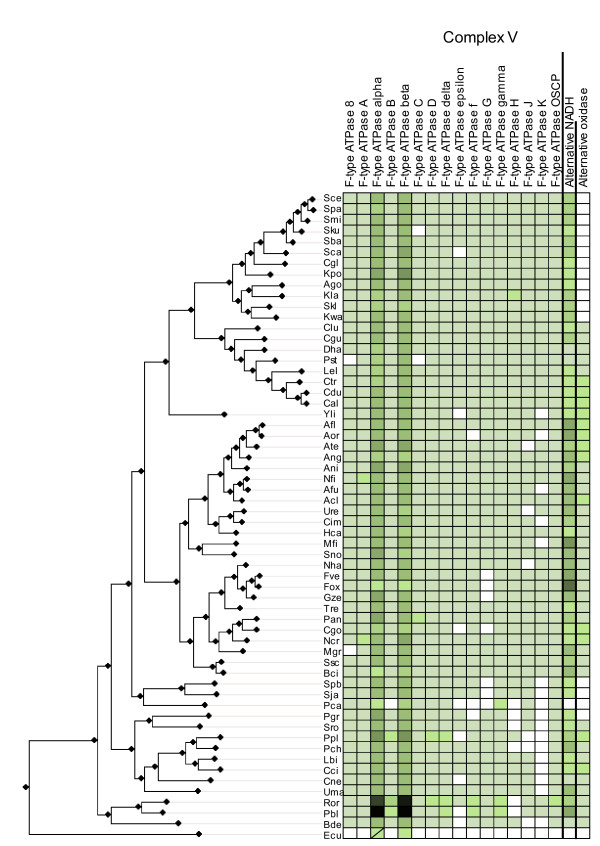
“This pathway directly transfers electrons from the ubiquinone pool to oxygen, thereby bypassing complex III and cytochrome c oxidase [19].”
BackgroundInverse regulation of the yeast COX5 genes by oxygen and heme.
Hodge, M. R., Kim, G., Singh, K., & Cumsky, M. G. (1989) · Molecular and Cellular Biology · doi:10.1128/mcb.9.5.1958 · Cited by 86 · cited 1×
“For instance, Cox5 (YNL052W) is expressed during aerobic growth whereas its paralog (YIL111W) is expressed under anaerobic growth [24].”
BackgroundMarcet-Houben, M., & Gabaldón, T. (2009) · PLoS ONE · doi:10.1371/journal.pone.0004357 · Cited by 83 · cited 5×
“Orthology and paralogy relationships among members of a family were inferred from the analysis of their corresponding phylogenetic trees, using a previously described algorithm that has been described before and has been shown to be accurate [7,12].”
BackgroundMethodSelf-citationMagnani, T., Soriani, F. M., Martins, V. P., Nascimento, A. M., Tudella, V. G., Curti, C., & Uyemura, S. A. (2007) · FEMS Microbiology Letters · doi:10.1111/j.1574-6968.2007.00716.x · Cited by 72 · cited 1×
“It has been shown that alternative oxidases represent an important factor for the survival of pathogenic fungi inside macrophages [20].”
BackgroundMetazoan OXPHOS gene families: Evolutionary forces at the level of mitochondrial and nuclear genomes
Saccone, C., Lanave, C., & Grassi, A. (2006) · Biochimica et Biophysica Acta (BBA) - Bioenergetics · doi:10.1016/j.bbabio.2006.04.021 · Cited by 45 · cited 1×
“This continuous evolution of OXPHOS components seems to be common in other groups of organisms [4,29,30], emphasizing the plasticity of this central energetic pathway.”
BackgroundCharacterization of an alternative oxidase activity of Histoplasma capsulatum
Johnson, C. H., Prigge, J. T., Warren, A. D., & McEwen, J. E. (2003) · Yeast · doi:10.1002/yea.968 · Cited by 40 · cited 1×
“Conversely, we find pathogenic species such as Histoplasma capsulatum or Cryptococcus neoformans that have been shown to survive in macrophages [21] and nevertheless present a single alternative oxidase.”
BackgroundComparative genomics of the oxidative phosphorylation system in fungi
Lavín, J. L., Oguiza, J. A., Ramírez, L., & Pisabarro, A. G. (2008) · Fungal Genetics and Biology · doi:10.1016/j.fgb.2008.06.005 · Cited by 38 · cited 2×
“A recent comparative genomics study [9] has provided a comprehensive view of the patterns of presence and absence of OXPHOS components in 27 fungal species.”
Background
Cited by
Skippington, E., Barkman, T. J., Rice, D. W., & Palmer, J. D. (2015) · Proceedings of the National Academy of Sciences · doi:10.1073/pnas.1504491112 · Cited by 498
“The losses of complex I in two yeast lineages have been accompanied by duplications of nuclear-encoded alternative NADH dehydrogenases that bypass complex I and oxidize NADH without proton translocation (34).”
BackgroundMarcet-Houben, M., & Gabaldón, T. (2015) · PLOS Biology · doi:10.1371/journal.pbio.1002220 · Cited by 329
“Finally, notable exceptions to expectations from the gene balance hypothesis, which posits that WGD would favour duplications of entire complexes rather than single subunits, have been noted [51].”
ResultSelf-citationGladieux, P., Ropars, J., Badouin, H., Branca, A., Aguileta, G., de Vienne, D. M., Rodríguez de la Vega, R. C., Branco, S., & Giraud, T. (2014) · Molecular Ecology · doi:10.1111/mec.12631 · Cited by 272
“evolution of various degrees of sensitivity to drugs or anaerobic fermentation in yeasts (Dunn et al. 2005; Marcet-Houben et al. 2009; Lin & Li 2010).”
BackgroundMitochondrial Respiratory Chain Complexes
Sousa, J. S., D’Imprima, E., & Vonck, J. (2018) · Subcellular Biochemistry · doi:10.1007/978-981-10-7757-9_7 · Cited by 231
Mitochondrial Structure and Bioenergetics in Normal and Disease Conditions
Protasoni, M., & Zeviani, M. (2021) · International Journal of Molecular Sciences · doi:10.3390/ijms22020586 · Cited by 220
Metadata
- Authors
- Marcet-Houben, M., Marceddu, G., & Gabaldón, T.
- Affiliations
- Centre for Genomic Regulation (ES)
- Corresponding author
- Gabaldón, Toni
- ORCID
- Gabaldón, Toni
- Venue
- BMC Evolutionary Biology
- Published
- 2009-12
- Volume
- 9
- Issue
- 1
- Pages
- 295-295
- ISSN
- 1471-2148 (ISSN-L)
- PMC
- PMC2803194
- OpenAlex
- W2145197240
- Cited by
- 75
- References
- 39
- Citations by year
- 2026: 3 · 2025: 3 · 2024: 3 · 2023: 2 · 2022: 1 · 2021: 9 · 2020: 4 · 2019: 6 · 2018: 7 · 2017: 6 · 2016: 5 · 2015: 9 · 2014: 4 · 2013: 4 · 2012: 3
- FWCI
- 1.21
- Type
- journal article
- Language
- en
- Open access
- gold
- doi.org
- Licence
- cc-by
- Locations
- BMC Evolutionary Biology (publishedVersion, cc-by)
- PubMed Central (publishedVersion, cc-by)
- PubMed (publishedVersion)
- DOAJ (DOAJ: Directory of Open Access Journals) (submittedVersion, cc-by-sa)
- Topics
- Life Sciences › Biochemistry, Genetics and Molecular Biology › Molecular Biology › Fungal and yeast genetics research
- Life Sciences › Biochemistry, Genetics and Molecular Biology › Molecular Biology › Genomics and Phylogenetic Studies
- Life Sciences › Biochemistry, Genetics and Molecular Biology › Molecular Biology › Mitochondrial Function and Pathology
- Keywords
- oxidative phosphorylation, fungal respiration, gene duplication, functional divergence, gene loss, respiratory chain complexes, complex I, mitochondrial proteins, microsporidia, anaerobic adaptation, fungal pathogens
- MeSH terms
- Fungi, Humans, Oxidative Phosphorylation, Oxidoreductases, Phylogeny, Arabidopsis, Evolution, Molecular, Gene Duplication
About these checks
Registry, retraction, Cites and statistics results are computed, not judged, with one exception: a printed reference that no index lists is read once by a model before it counts as a citation error. Claims are extracted by a model and kept only when their quote appears verbatim in the text; each cited source is then checked, with a model’s help, for whether it says what the claim relies on. Those verdicts can be wrong — read the claim’s quote and the cited source before relying on one.
Statistics and arithmetic are recomputed, not judged.
Confidence bands are shown only for fields calibrated on our annotated test set. None is calibrated yet, so no band is shown.
What counts as a claim ›How we measure confidence ›How we check this ›
Are you an author, or do you see a problem with this page? Request a review
Data sources
Bibliographic data: Semantic Scholar, OpenAlex, Crossref.
Contains information from the Semantic Scholar Academic Graph Datasets, made available under the ODC Attribution License (ODC-BY 1.0).
Semantic Scholar’s data is described in: Kinney, R., et al. (2023). The Semantic Scholar Open Data Platform. arXiv:2301.10140.
