

Next-generation pyrosequencing of gonad transcriptomes in the polyploid lake sturgeon (Acipenser fulvescens): the relative merits of normalization and rarefaction in gene discovery
Open accessThe DOI matches its Crossref record; 43 of the 43 references it cites were found in a registry or an index.
Abstract
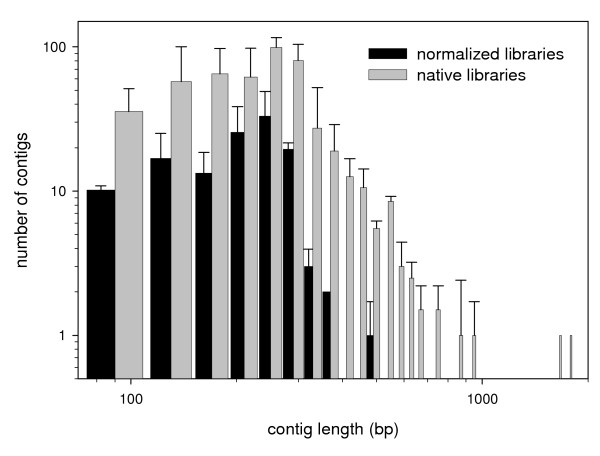
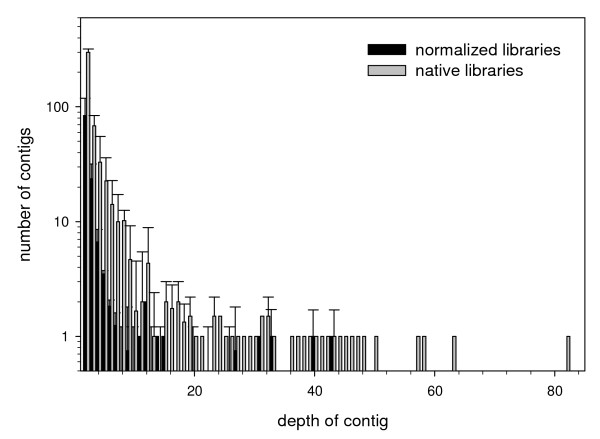
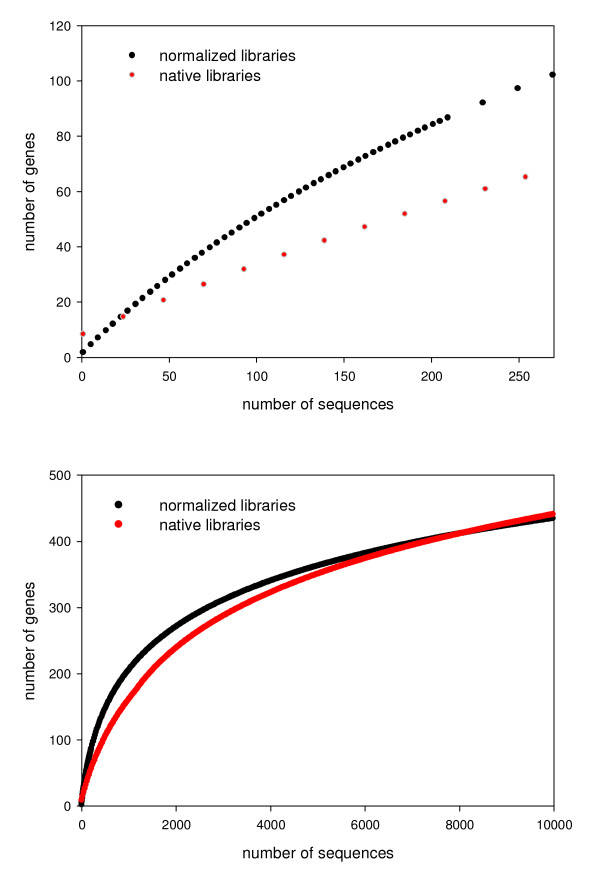
BACKGROUND: Next-generation sequencing technologies have been applied most often to model organisms or species closely related to a model. However, these methods have the potential to be valuable in many wild organisms, including those of conservation concern. We used Roche 454 pyrosequencing to characterize gene expression in polyploid lake sturgeon (Acipenser fulvescens) gonads. RESULTS: Titration runs on a Roche 454 GS-FLX produced more than 47,000 sequencing reads. These reads represented 20,741 unique sequences that passed quality control (mean length = 186 bp). These were assembled into 1,831 contigs (mean contig depth = 4.1 sequences). Over 4,000 sequencing reads (approximately 19%) were assigned gene ontologies, mostly to protein, RNA, and ion binding. A total of 877 candidate SNPs were identified from > 50 different genes. We employed an analytical approach from theoretical ecology (rarefaction) to evaluate depth of sequencing coverage relative to gene discovery. We also considered the relative merits of normalized versus native cDNA libraries when using next-generation sequencing platforms. Not surprisingly, fewer genes from the normalized libraries were rRNA subunits. Rarefaction suggests that normalization has little influence on the efficiency of gene discovery, at least when working with thousands of reads from a single tissue type. CONCLUSION: Our data indicate that titration runs on 454 sequencers can characterize thousands of expressed sequence tags which can be used to identify SNPs, gene ontologies, and levels of gene expression in species of conservation concern. We anticipate that rarefaction will be useful in evaluations of gene discovery and that next-generation sequencing technologies hold great potential for the study of other non-model organisms.
Overview
The claims and statistics of this paper haven’t been checked yet.
Free: it reads the open-access text and checks the first 5 claims that cite a source we can check. Create a free account to check every claim.
Integrity signals
Registry
Cites
Statistics
Figures
Verification
Claims the paper makes
The claims and statistics of this paper haven’t been checked yet.
Free: it reads the open-access text and checks the first 5 claims that cite a source we can check. Create a free account to check every claim.
Claims other papers make about this one
Each is checked against this paper’s own text: does it say what the citing paper says it does?
The source backs part of the claim, not all of it — or backs it for a different population, condition or comparison.
In the citing paper
“The newly developed high throughput sequencing technology, i.e. Next Generation Sequencing (NGS), including the Roche/454 Genome Sequencer FLX Instrument, the ABI SOLiD System, and the Illumina Genome Analyser, is a powerful and cost-efficient tool for advanced research in many areas, including re-sequencing, microRNA expression profiling, DNA methylation, especially de novo transcriptome”
From De novo assembly and characterization of root transcriptome using Illumina paired-end sequencing and development of cSSR markers in sweetpotato (Ipomoea batatas) (2010) · cites this paper as [18]
Experimental — accuracy not yet measuredThe cited source says what the claim attributes to it.
In the citing paper
“According to previous publication, there is no real advantage to normalization when thousands of sequences were generated [18].”
Self-check
Percentages, sums and reported differences re-computed from the paper’s own numbers.
The self-check needs the paper’s full text.
Citations
Cites
Gene Ontology: tool for the unification of biology
Ashburner, M., Ball, C. A., Blake, J. A., Botstein, D., Butler, H., Cherry, J. M., Davis, A. P., Dolinski, K., Dwight, S. S., Eppig, J. T., et al. (2000) · Nature Genetics · doi:10.1038/75556 · Cited by 43,206 · cited 2×
“(page number not for citation purposes) BLAST results were then imported into Blast2GO [40], a software package that retrieves GO terms, allowing the function of ESTs to be determined and compared [40,41].”
Genome sequencing in microfabricated high-density picolitre reactors
Margulies, M., Egholm, M., Altman, W. E., Attiya, S., Bader, J. S., Bemben, L. A., Berka, J., Braverman, M. S., Chen, Y.-J., Chen, Z., et al. (2005) · Nature · doi:10.1038/nature03959 · Cited by 7,693 · cited 4×
“For example, we documented only 16 indels despite the susceptibility of 454 sequencing technology to indel-type errors [1].”
InfluentialThe Nonconcept of Species Diversity: A Critique and Alternative Parameters
Hurlbert, S. H. (1971) · Ecology · doi:10.2307/1934145 · Cited by 4,183
Devlin, R. H., & Nagahama, Y. (2002) · Aquaculture · doi:10.1016/s0044-8486(02)00057-1 · Cited by 2,588 · cited 1×
“, evolutionary labile) than in mammals and birds [19,22,23].”
Hedrick, P. W. (1983) · Cited by 1,580
Gotelli, N. J., & Graves, G. R. (1996) · Cited by 1,382
Zhu, Y. Y., Machleder, E. M., Chenchik, A., Li, R., & Siebert, P. D. (2001) · BioTechniques · doi:10.2144/01304pf02 · Cited by 776 · cited 1×
“All other primers were unmodified from the ClonTech protocol [37].”
Rapid transcriptome characterization for a nonmodel organism using 454 pyrosequencing
VERA, J. C., WHEAT, C. W., FESCEMYER, H. W., FRILANDER, M. J., CRAWFORD, D. L., HANSKI, I., & MARDEN, J. H. (2008) · Molecular Ecology · doi:10.1111/j.1365-294x.2008.03666.x · Cited by 714 · cited 5×
“Mean length of lake sturgeon reads after removing primers, linkers, and substandard bases was 190 bp, in between the 111 bp and 209 bp reported in similar non-model 454 studies [9,10].”
InfluentialADZE: a rarefaction approach for counting alleles private to combinations of populations
Szpiech, Z. A., Jakobsson, M., & Rosenberg, N. A. (2008) · Bioinformatics · doi:10.1093/bioinformatics/btn478 · Cited by 707 · cited 1×
“It has more recently been adopted in population genetics [29-31] and it has potential utility in genomics, particularly with regard to gene discovery as a function of effort.”
The utility of single nucleotide polymorphisms in inferences of population history
Brumfield, R. T., Beerli, P., Nickerson, D. A., & Edwards, S. V. (2003) · Trends in Ecology & Evolution · doi:10.1016/s0169-5347(03)00018-1 · Cited by 695 · cited 1×
“The identification of SNPs is especially appealing in nonmodel species because as genetic markers, SNPs can illuminate population structure, sex ratios, and genetic variability [15].”
Cited by
Items 101–163 of 163
Boscari, E., Barmintseva, A., Zhang, S., Yue, H., Li, C., Shedko, S. V., Lieckfeldt, D., Ludwig, A., Wei, Q., Mugue, N. S., et al. (2017) · Food Control · doi:10.1016/j.foodcont.2017.07.001 · Cited by 16
Zhang, X. J., Jiang, H., Li, L. M., Yuan, L., & Chen, J. P. (2016) · Genetics and Molecular Research · doi:10.4238/gmr.15027999 · Cited by 14
“Comparison of enriched functional groups in A. schrenckii with those in A. fulvescens (Hale et al., 2009) revealed common GO terms, including 7 terms in molecular function, 2 in biological process and 6 in cellular component.”
BackgroundResultBugg, W. S., Yoon, G. R., Brandt, C., Earhart, M. L., Anderson, W. G., & Jeffries, K. M. (2021) · Journal of Fish Biology · doi:10.1111/jfb.14897 · Cited by 17
Comparative community gene expression analysis of A quificales‐dominated geothermal springs
Hamamura, N., Meneghin, J., & Reysenbach, A. (2013) · Environmental Microbiology · doi:10.1111/1462-2920.12061 · Cited by 18
Du, H., Jian, J., Wang, B., Liu, X., Chen, J., Xiao, K., Xia, J., Yang, J., Gao, Y., & Chen, L. (2019) · Scientific Data · doi:10.1038/s41597-019-0099-1 · Cited by 14
Fajkowska, M., Głowacka, D. K., Adamek‐Urbańska, D., Ostaszewska, T., Krajnik, K. A., & Rzepkowska, M. (2018) · Aquaculture · doi:10.1016/j.aquaculture.2018.10.066 · Cited by 13
Ruan, R., Li, Y., Yue, H., Ye, H., Jin, J., Wu, J., Du, H., & Li, C. (2023) · Genes · doi:10.3390/genes14112058 · Cited by 12
“…Chinese sturgeon ( Acipenser sinensis ) [18–20], Russian sturgeon ( Acipenser gueldenstaedtii ) [21–23], Yangtze sturgeon ( Acipenser dabryanus ) [24], Siberian sturgeon ( Acipenser baeri ) [25,26], lake sturgeon ( Acipenser fulvescens ) [27,28] and Amur sturgeon ( Acipenser schrenckii ) [29–33].”
BackgroundZhang, X., Shi, J., Sun, Y., Zhu, Y., Zhang, Z., & Wang, Y. (2018) · Molecular Reproduction and Development · doi:10.1002/mrd.23065 · Cited by 12
“fulvescens, the expression of Foxl2 and Sox9 was no significant difference in gonads, even if they were all high expression in ovaries (Hale et al., 2009).”
BackgroundResultInfluentialFilée, J., Farhat, S., Higuet, D., Teysset, L., Marie, D., Thomas–Bulle, C., Hourdez, S., Jollivet, D., & Bonnivard, É. (2021) · Mobile DNA · doi:10.1186/s13100-021-00252-0 · Cited by 12
“It has been suggested that sequencing of very small numbers of reads can be most subject to biases [55]; and previous studies have shown that representative assemblies are difficult to generate below 20 million reads [42].”
BackgroundDoyle, J. M., Siegmund, G., Ruhl, J. D., Eo, S. H., Hale, M. C., Marra, N. J., Waser, P. M., & DeWoody, J. A. (2013) · Genome · doi:10.1139/gen-2013-0056 · Cited by 10
“For each RNA sample, a cDNA library was constructed using the ClonTech SMART cDNA synthesis kit, utilizing a modified poly-T primer (Hale et al. 2009).”
MethodSelf-citationShi, Y., Xu, M., Huang, J. L., Zhang, H., Liu, W., Ou, Z., & He, M. (2018) · Comparative Biochemistry and Physiology Part D Genomics and Proteomics · doi:10.1016/j.cbd.2018.11.010 · Cited by 11
Ganie, S. A., Mazumder, A., Kiran, K., Hossain, F., Sharma, R., & Mondal, T. K. (2020) · Genomics · doi:10.1016/j.ygeno.2020.06.009 · Cited by 10
Expression Patterns of Atlantic Sturgeon (Acipenser oxyrinchus) During Embryonic Development
Kaitetzidou, E., Ludwig, A., Geßner, J., & Sarropoulou, E. (2017) · G3 Genes Genomes Genetics · doi:10.1534/g3.116.036699 · Cited by 9
Zhang, A. J., Liu, S., Zhu, J., Gu, Z. M., Zhou, Z., Zhang, G. F., & Lu, K. (2016) · AquaDocs (United Nations Educational, Scientific and Cultural Organization) · doi:10.22092/ijfs.2018.114620 · Cited by 11
Siberian sturgeon multi-tissue reference transcriptome database
Klopp, C., Cabau, C., Greif, G., Gerla, A. L., Landro, S. D., & Vizziano‐Cantonnet, D. (2020) · Database · doi:10.1093/database/baaa082 · Cited by 8
Thorstensen, M. J., Weinrauch, A. M., Bugg, W. S., Jeffries, K. M., & Anderson, W. G. (2023) · Database · doi:10.1093/database/baad055 · Cited by 8
Vo, T. T. B. (2018) · MOJ Current Research & Reviews · doi:10.15406/mojcrr.2018.01.00003 · Cited by 7
DeWoody, J. A., Hale, M. C., & Avise, J. C. (2010) · Cambridge University Press eBooks · doi:10.1017/cbo9780511777592.005 · Cited by 7
Self-citationSingh, T. R., Gupta, A. K., Riju, A., MAHALAXMI, M., Seal, A., & Arunachalam, V. (2011) · Journal of Genetics · doi:10.1007/s12041-011-0052-3 · Cited by 6
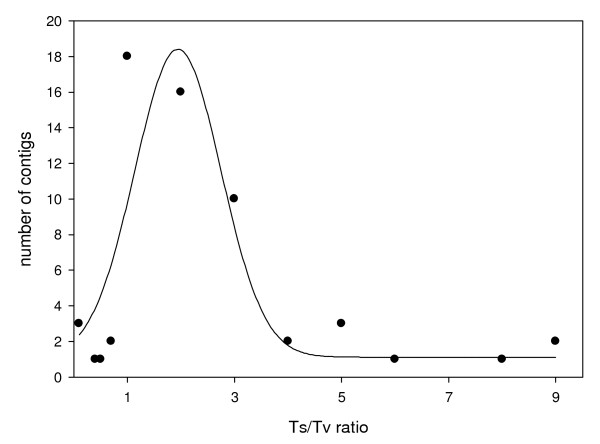
“Recent report on SNP analysis revealed higher transversion sites than transitions sites, Ts/Tv ratio < 1 (more transversions than transitions) was seen in regulatory genes such as endonuclease reverse transcriptase and Tc1-like transposase (Hale et al. 2009).”
BackgroundGomez‐Uchida, D., Seeb, L. W., Warheit, K. I., McKinney, G. J., & Seeb, J. E. (2014) · Conservation Genetics Resources · doi:10.1007/s12686-014-0235-3 · Cited by 6
“%) and to assess which contigs had a ratio Ts/Tv \1, as these might be differentially targeted by selection (Hale et al. 2009).”
InfluentialKhodaparast, M., Keyvanshokooh, S., Pourkazemi, M., Hosseini, S. J., & Zolgharnein, H. (2014) · AquaDocs (United Nations Educational, Scientific and Cultural Organization) · Cited by 5
Functional Genomics Research in Aquaculture: Principles and General Approaches
Liu, S., Zhang, Y., Sun, F., Jiang, Y., Wang, R., Li, C., Zhang, J., & Liu, Z. (2012) · Wiley eBooks · doi:10.1002/9781118350041.ch1 · Cited by 8
“…other new sequencing technologies, 454 has been effectively used for de novo assembly of the transcriptome in several aquaculture species including lake sturgeon (Hale et al., 2009), rainbow trout (Salem et al., 2010), Atlantic cod (Johansen et al., 2011), and Yesso scallop (Hou et al., 2011).”
MethodInfluentialLiu, Z., & Wen, J. (2016) · Journal of Insect Science · doi:10.1093/jisesa/iew067 · Cited by 4
Safflower (Carthamus tinctorius) Metabolites and Their Pharmacological Uses
Mani, V., Natesan, K., Choi, J.-W., Swamy, M. K., & Vasamsetti, B. M. K. (2022) · Springer eBooks · doi:10.1007/978-981-19-5779-6_6 · Cited by 6
Eo, S. H., & DeWoody, J. A. (2012) · BMC Genomics · doi:10.1186/1471-2164-13-259 · Cited by 4
“We constructed a total of 19 tissue-specific cDNA libraries from these RNA samples using the ClonTech SMART cDNA synthesis kit, utilizing a modified poly-T primer [25].”
MethodSelf-citationSimide, R., & Gaillard, S. (2017) · Springer eBooks · doi:10.1007/978-3-319-61664-3_5 · Cited by 5
Functional Genomic Analysis of Sex Determination and Differentiation in Teleost Fish
Piferrer, F., Marténez, P., Ribas, L., ̃nas, A. V., & Díaz, N. (2012) · Wiley eBooks · doi:10.1002/9781118350041.ch8 · Cited by 4
Transcriptomic characterization of the immunogenetic repertoires of heteromyid rodents
Marra, N. J., & DeWoody, J. A. (2014) · BMC Genomics · doi:10.1186/1471-2164-15-929 · Cited by 3
“CDS III/3’ primer (see [43,45,46]).”
Self-citationModern Approaches for Transcriptome Analyses in Plants
Riaño‐Pachón, D. M., Espitia-Navarro, H. F., Riascos, J. J., & Margarido, G. R. A. (2021) · Advances in experimental medicine and biology · doi:10.1007/978-3-030-80352-0_2 · Cited by 5
Durosaro, S. O., Ozoje, M. O., Adebambo, A. O., & Onagbesan, O. M. (2021) · Agricultura tropica et subtropica · doi:10.2478/ats-2021-0001 · Cited by 1
“Presence of more transversions in exon 5 of IRF‑5 gene in normal feathered chickens is in agreement with the findings of Hale et al. (2009) who reported higher transversion sites in the regulatory genes such as Endonuclease reverse transcriptase and TC1‑like transposase.”
ResultHigh-Throughput Transcriptome Analysis of Plant Stress Responses
Tombuloğlu, G., & Tombuloğlu, H. (2015) · Springer eBooks · doi:10.1007/978-3-319-17157-9_12
Mining SSR and SNP/Indel sites in expressed sequence tag libraries of Radopholus similis
Riju, A., Lakshmi, P. D. K., Nima, P. L., Reena, N., & Eapen, S. J. (2010) · International Symposium on Biocomputing (ISB) · doi:10.1145/1722024.1722042
Deskodetutako arrainak: atzo, gaur eta bihar.
de Cerio, O. D., & Bilbao, E. (2015) · EKAIA Euskal Herriko Unibertsitateko Zientzi eta Teknologi Aldizkaria · doi:10.1387/ekaia.13266
Bergseth, E. F. (2015) · NORA - Norwegian Open Research Archives
Migratory Genomics of Lake Sturgeon
Whitaker, J. M. (2016) · doi:10.33915/etd.6941
“Hale et al (2009) used next generation sequencing (NGS) to characterize gonad transcriptomes, showing that non-model, polyploid species are candidates for NGS studies.”
BackgroundBEHAVIORS IN THE HAWAIIAN SWORDTAIL CRICKET GENUS LAUPALA
Fergus, D. J. (2010)
The evolution of freeze tolerance in a historically tropical snail
Dennis, A. B. (2010) · Louisiana State University · doi:10.31390/gradschool_dissertations.1003
“The resulting cDNA was amplified with the Advantage 2 PCR kit (ClonTech cat#639207) with the primers CDSIII and 5’PCR (AAG CAG TGG TAT CAA CGC AGA GT) and the following thermal profile: 1 min at 95ºC followed by 23 cycles of 95ºC for 15 seconds and 68ºC for 6 minutes.”
MethodInfluentialDeBiasse, M. B. (2014) · Louisiana State University · doi:10.31390/gradschool_dissertations.3540
“Therefore, nuclear markers for this study were generated de novo from a C. vaginalis cDNA library following the protocol of Hale et al. (2009) using 454 sequencing technology.”
MethodAdaptive Divergence and Speciation across Depth in a Caribbean Candelabrum Coral
Montoya, C. P. (2014) · Louisiana State University · doi:10.31390/gradschool_dissertations.1736
Novel EST-SNPs Polymorphisms and their Association with Growth Traits in Schizothorax prenanti
Yang, Y., Xiang, M., Zhang, Z., Zhou, M., Hu, B., Jing, T., Li, Z., Liu, F., Luo, H., Li, Q., et al. (2022) · Pakistan Journal of Zoology · doi:10.17582/journal.pjz/20190605130648
“In aquatic animals, SNP markers associated with growth traits have been reported in Chlamys farreri (Guo et al., 2012), Pelteobagrus fulvidraco (Li et al., 2016), Crassostrea gigas (Cong et al., 2013; Cong et al., 2014), Micrpterus salmoides (Li et al., 2012), Macrobrachium rosenbergii (Thanh et…”
BackgroundWang, Z., Fang, B., Chen, J., Zhang, X., Luo, Z., Huang, L., Chen, X., & Li, Y. (2020) · Figshare · doi:10.6084/m9.figshare.12880604
Coppe, A., Pujolar, J. M., Maes, G. E., Larsen, P. F., Hansen, M. M., Bernatchez, L., Zane, L., & Bortoluzzi, S. (2021) · Figshare · doi:10.6084/m9.figshare.14434826
Filée, J., Farhat, S., Higuet, D., Teysset, L., Marie, D., Thomas–Bulle, C., Hourdez, S., Jollivet, D., & Bonnivard, É. (2021) · Figshare · doi:10.6084/m9.figshare.16907318
Wang, Z., Fang, B., Chen, J., Zhang, X., Luo, Z., Huang, L., Chen, X., & Li, Y. (2020) · Figshare · doi:10.6084/m9.figshare.12880616
Wang, Z., Fang, B., Chen, J., Zhang, X., Luo, Z., Huang, L., Chen, X., & Li, Y. (2020) · Figshare · doi:10.6084/m9.figshare.12880619
Filée, J., Farhat, S., Higuet, D., Teysset, L., Marie, D., Thomas–Bulle, C., Hourdez, S., Jollivet, D., & Bonnivard, É. (2021) · Figshare · doi:10.6084/m9.figshare.16907309
Filée, J., Farhat, S., Higuet, D., Teysset, L., Marie, D., Thomas–Bulle, C., Hourdez, S., Jollivet, D., & Bonnivard, É. (2021) · Figshare · doi:10.6084/m9.figshare.16907288
Wang, Z., Fang, B., Chen, J., Zhang, X., Luo, Z., Huang, L., Chen, X., & Li, Y. (2020) · Figshare · doi:10.6084/m9.figshare.12880610
Coppe, A., Pujolar, J. M., Maes, G. E., Larsen, P. F., Hansen, M. M., Bernatchez, L., Zane, L., & Bortoluzzi, S. (2021) · Figshare · doi:10.6084/m9.figshare.14434838
Wang, Z., Fang, B., Chen, J., Zhang, X., Luo, Z., Huang, L., Chen, X., & Li, Y. (2020) · Figshare · doi:10.6084/m9.figshare.12880625
Filée, J., Farhat, S., Higuet, D., Teysset, L., Marie, D., Thomas–Bulle, C., Hourdez, S., Jollivet, D., & Bonnivard, É. (2021) · Figshare · doi:10.6084/m9.figshare.16907267
Filée, J., Farhat, S., Higuet, D., Teysset, L., Marie, D., Thomas–Bulle, C., Hourdez, S., Jollivet, D., & Bonnivard, É. (2021) · Figshare · doi:10.6084/m9.figshare.16907291
Filée, J., Farhat, S., Higuet, D., Teysset, L., Marie, D., Thomas–Bulle, C., Hourdez, S., Jollivet, D., & Bonnivard, É. (2021) · Figshare · doi:10.6084/m9.figshare.16907315
Filée, J., Farhat, S., Higuet, D., Teysset, L., Marie, D., Thomas–Bulle, C., Hourdez, S., Jollivet, D., & Bonnivard, É. (2021) · Figshare · doi:10.6084/m9.figshare.16907297
Wang, Z., Fang, B., Chen, J., Zhang, X., Luo, Z., Huang, L., Chen, X., & Li, Y. (2020) · Figshare · doi:10.6084/m9.figshare.12880601
Coppe, A., Pujolar, J. M., Maes, G. E., Larsen, P. F., Hansen, M. M., Bernatchez, L., Zane, L., & Bortoluzzi, S. (2021) · Figshare · doi:10.6084/m9.figshare.14434844
Filée, J., Farhat, S., Higuet, D., Teysset, L., Marie, D., Thomas–Bulle, C., Hourdez, S., Jollivet, D., & Bonnivard, É. (2021) · Figshare · doi:10.6084/m9.figshare.16907306
Wang, Z., Fang, B., Chen, J., Zhang, X., Luo, Z., Huang, L., Chen, X., & Li, Y. (2020) · Figshare · doi:10.6084/m9.figshare.12880631
Wang, Z., Fang, B., Chen, J., Zhang, X., Luo, Z., Huang, L., Chen, X., & Li, Y. (2020) · Figshare · doi:10.6084/m9.figshare.12880628
Wang, Z., Fang, B., Chen, J., Zhang, X., Luo, Z., Huang, L., Chen, X., & Li, Y. (2020) · Figshare · doi:10.6084/m9.figshare.12880613
Wang, Z., Fang, B., Chen, J., Zhang, X., Luo, Z., Huang, L., Chen, X., & Li, Y. (2020) · Figshare · doi:10.6084/m9.figshare.12880598
de Carvalho, J. F. (2013) · theses.fr (ABES) · doi:10.70675/1e79d92cz4a5fz4205zab66zcc2e30c0d6f1 · Cited by 1
Marra, N. J., Eo, S. H., Hale, M. C., Waser, P. M., & DeWoody, J. A. (2012) · Data Archiving and Networked Services (DANS) · doi:10.5061/dryad.sf654.1
Self-citation
Metadata
- Authors
- Hale, M. C., McCormick, C. R., Jackson, J. R., & DeWoody, J. A.
- Affiliations
- Purdue University West Lafayette (US)
- Cornell University (US)
- Corresponding author
- Hale, Matthew C
- Venue
- BMC Genomics
- Published
- 2009
- Volume
- 10
- Issue
- 1
- Pages
- 203
- ISSN
- 1471-2164 (ISSN-L)
- PMC
- PMC2688523
- OpenAlex
- W1977759371
- Cited by
- 163
- References
- 43
- Citations by year
- 2024: 1 · 2023: 1 · 2022: 3 · 2021: 16 · 2020: 16 · 2019: 1 · 2018: 5 · 2017: 5 · 2016: 10 · 2015: 9 · 2014: 12 · 2013: 18 · 2012: 21
- FWCI
- 8.85
- Type
- journal article
- Language
- en
- Open access
- gold
- doi.org
- Licence
- cc-by
- Locations
- BMC Genomics (publishedVersion, cc-by)
- Europe PMC (PubMed Central) (publishedVersion, cc-by)
- PubMed Central (publishedVersion, cc-by)
- PubMed (publishedVersion)
- Purdue e-Pubs (Purdue University System) (submittedVersion)
- DOAJ (DOAJ: Directory of Open Access Journals) (submittedVersion)
- Funders
- Great Lakes Fishery Trust
- Indiana Department of Natural Resources
- Topics
- Life Sciences › Biochemistry, Genetics and Molecular Biology › Molecular Biology › Genomics and Phylogenetic Studies
- Life Sciences › Biochemistry, Genetics and Molecular Biology › Physiology › Reproductive biology and impacts on aquatic species
- Life Sciences › Biochemistry, Genetics and Molecular Biology › Genetics › Chromosomal and Genetic Variations
- Keywords
- lake sturgeon, Acipenser fulvescens, polyploidy, gonad transcriptome, gene discovery, rarefaction, expressed sequence tags, single nucleotide polymorphisms, Gene Ontology, conservation genetics, non-model organisms, sequencing depth
- MeSH terms
- Animals, Female, Fishes, Gonads, Male, Pilot Projects, Gene Library, Sequence Analysis, DNA, Expressed Sequence Tags, Polymorphism, Single Nucleotide, Gene Expression Profiling
About these checks
Registry, retraction, Cites and statistics results are computed, not judged, with one exception: a printed reference that no index lists is read once by a model before it counts as a citation error. Claims are extracted by a model and kept only when their quote appears verbatim in the text; each cited source is then checked, with a model’s help, for whether it says what the claim relies on. Those verdicts can be wrong — read the claim’s quote and the cited source before relying on one.
Statistics and arithmetic are recomputed, not judged.
Confidence bands are shown only for fields calibrated on our annotated test set. None is calibrated yet, so no band is shown.
What counts as a claim ›How we measure confidence ›How we check this ›
Are you an author, or do you see a problem with this page? Request a review
Data sources
Bibliographic data: Semantic Scholar, OpenAlex, Crossref.
Contains information from the Semantic Scholar Academic Graph Datasets, made available under the ODC Attribution License (ODC-BY 1.0).
Semantic Scholar’s data is described in: Kinney, R., et al. (2023). The Semantic Scholar Open Data Platform. arXiv:2301.10140.
