

Exploring temporal transcription regulation structure of Aspergillus fumigatus in heat shock by state space model
Open accessThe DOI matches its Crossref record; 17 of the 17 references it cites were found in a registry or an index.
Abstract
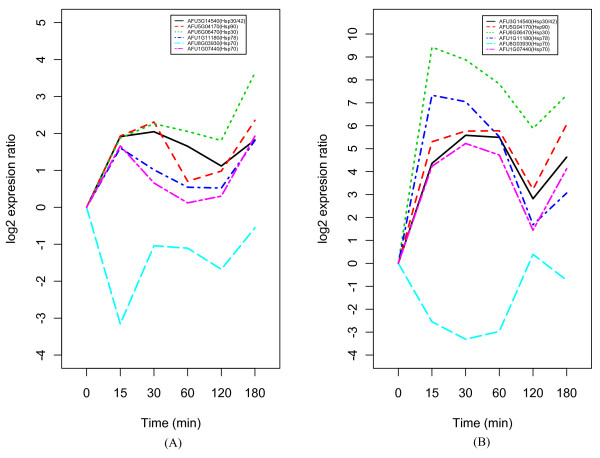
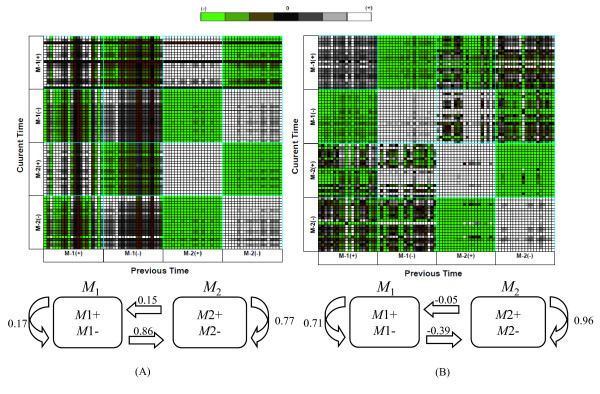
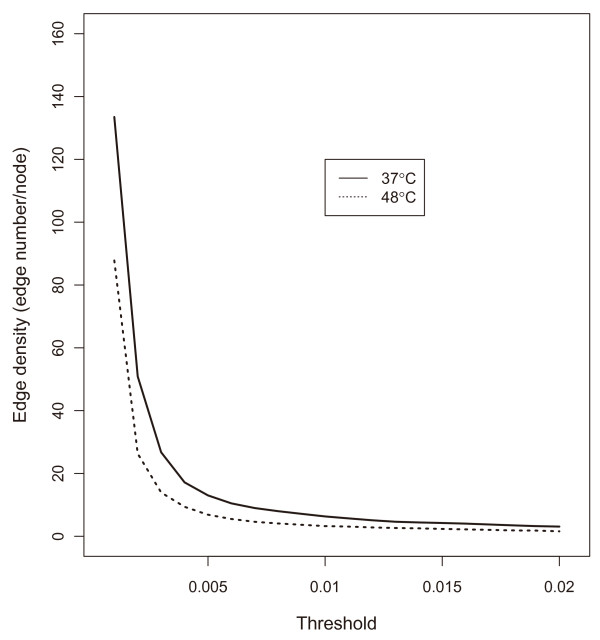
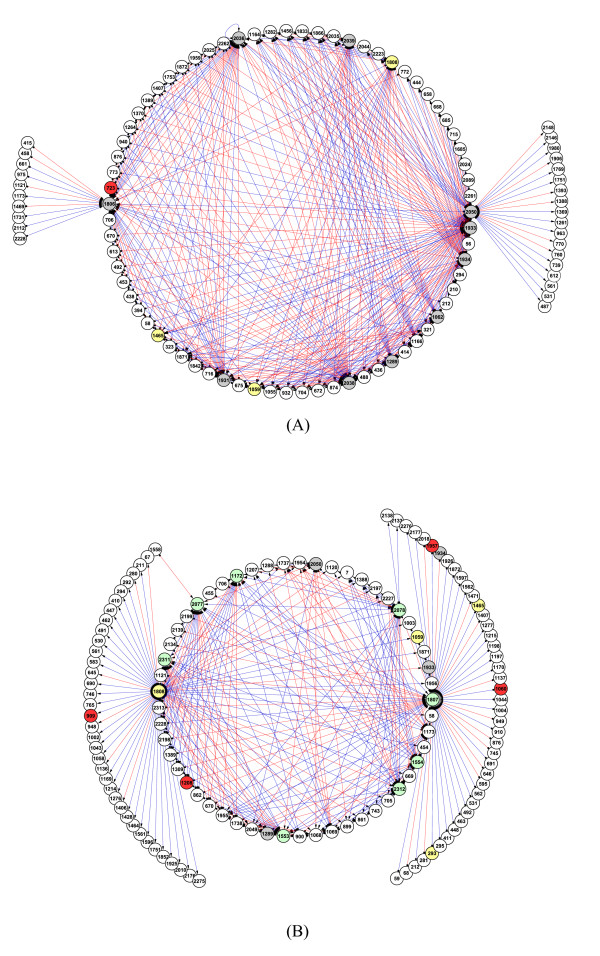
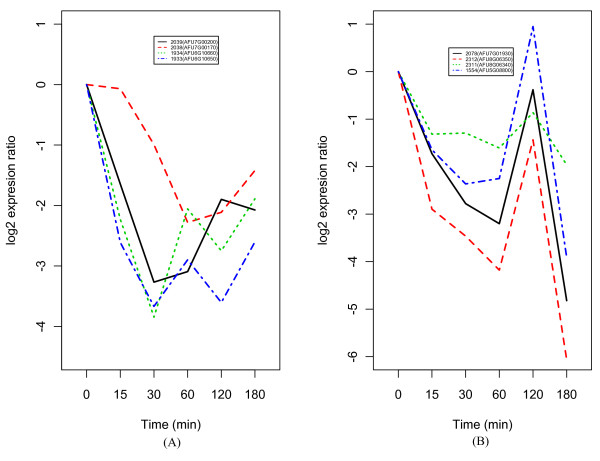
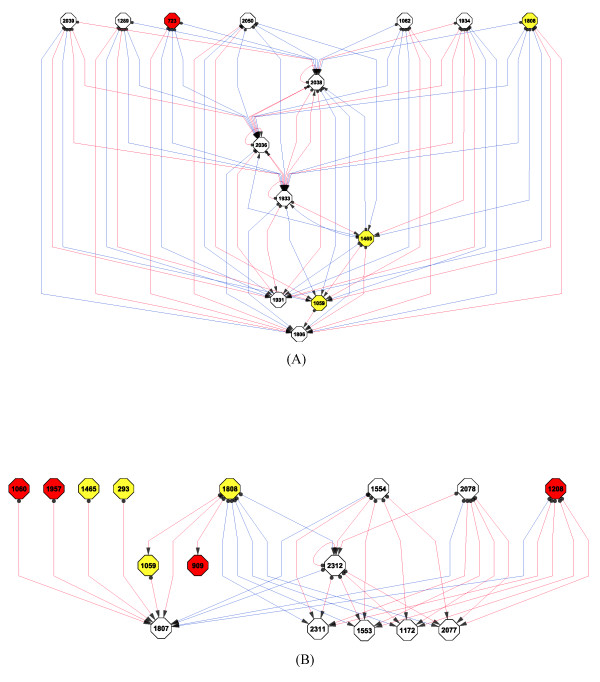
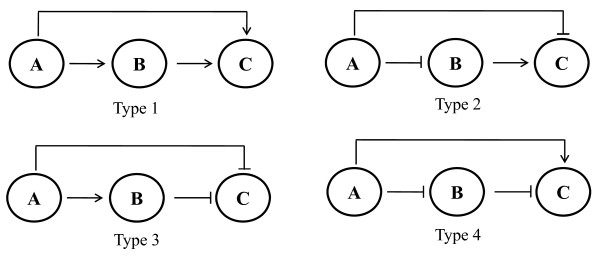
Background: The thermotolerance of Aspergillus fumigatus plays a critical role in mammalian and avian infections. Thus, the identification of its adaptation mechanism to higher temperature is very important for an efficient anti-fungal drug development as well as fundamental understanding of its pathogenesis. We explored the temporal transcription regulation structure of this pathogenic fungus under heat shock conditions using the time series microarray data reported by Nierman et al. (Nature 2005, 438:1151-1156). Results: The estimated transcription regulation structure of A. fumigatus shows that the heat shock proteins are strongly negatively associated with central metabolic pathway genes such as the tricarboxylic acid cycle (TCA cycle) and carbohydrate metabolism. It was 60 min and 120 min, respectively, after the growth temperature changes from 30°C (corresponding to environments of tropical soil) to 37°C and 48°C (corresponding to temperatures in the human body and compost, respectively) that some of genes in TCA cycle were started to be upregulated. In these points, most of heat shock proteins showed lowest expression level after heat shocks. Among the heat shock proteins, the HSP30 (AFU6G06470), a single integral plasma membrane heat shock protein, presented most active role in transcription regulation structure in both heat shock conditions of 37°C and 48°C. The metabolic genes associated with multiple genes in the gene regulation network showed a tendency to have opposite expression patterns of heat shock proteins. The role of those metabolic genes was second regulator in the coherent feed-forward loop type of regulation structure having heat shock protein as its first regulator. This type of regulation structure might be very advantageous for the thermal adaptation of A. fumigatus under heat shock because a small amount of heat shock proteins can rapidly magnify their regulation effect on target genes. However, the coherent feed-forward loop type of regulation of heat shock proteins with metabolic genes became less frequent with increasing temperature. This might be the reason for dramatic increase in the expression of heat shock proteins and the number of heat shock response genes at heat shock of 48°C. Conclusion: We systemically analysed the thermal adaption mechanism of A. fumigatus by state space model with times series microarray data in terms of transcription regulation structure. We suggest for the first time that heat shock proteins might efficiently regulate metabolic genes using the coherent feed-forward loop type of regulation structure. This type of regulation structure would also be efficient for adjustment to the other stresses requiring rapid change of metabolic mode as well as thermal adaptation.
Overview
The claims and statistics of this paper haven’t been checked yet.
Free: it reads the open-access text and checks the first 5 claims that cite a source we can check. Create a free account to check every claim.
Integrity signals
Registry
Cites
Statistics
Figures
Verification
Claims the paper makes
The claims and statistics of this paper haven’t been checked yet.
Free: it reads the open-access text and checks the first 5 claims that cite a source we can check. Create a free account to check every claim.
Claims other papers make about this one
Each is checked against this paper’s own text: does it say what the citing paper says it does?
In the citing paper
“However, no specific pathway controlling the thermophilicity of this species has been identified (410–412).”
From Aspergillus fumigatus and Aspergillosis in 2019 (2019) · cites this paper as [411]
Self-check
Percentages, sums and reported differences re-computed from the paper’s own numbers.
The self-check needs the paper’s full text.
Citations
Cites
Modeling and Simulation of Genetic Regulatory Systems: A Literature Review
de Jong, H. (2002) · Journal of Computational Biology · doi:10.1089/10665270252833208 · Cited by 2,663
Aspergillus fumigatus and Aspergillosis
Latgé, J.-P. (1999) · Clinical Microbiology Reviews · doi:10.1128/cmr.12.2.310 · Cited by 2,307 · cited 1×
“Invasive aspergillosis has an associated mortality rate ranging from 50 % to 90 % depending on the patient population [3].”
BackgroundGenomic sequence of the pathogenic and allergenic filamentous fungus Aspergillus fumigatus
Nierman, W. C., Pain, A., Anderson, M. J., Wortman, J. R., Kim, H. S., Arroyo, J., Berriman, M., Abe, K., Archer, D. B., Bermejo, C., et al. (2005) · Nature · doi:10.1038/nature04332 · Cited by 1,391 · cited 2×
“fumigatus in mammalian and avian infection depends basically on its thermotolerance [4].”
BackgroundAKUTSU, T., MIYANO, S., & KUHARA, S. (1998) · Biocomputing '99 · doi:10.1142/9789814447300_0003 · Cited by 689 · cited 1×
“Several methods have been proposed for modelling gene networks including Boolean networks [7,8], Bayesian networks [9], differential equations [10] and state space model (SSM) [11,12].”
MethodSelf-citationThe pathobiology of Aspergillus fumigatus
Latgé, J.-P. (2001) · Trends in Microbiology · doi:10.1016/s0966-842x(01)02104-7 · Cited by 546 · cited 1×
“The host respiratory system, including that of human, is constantly exposed to its spore because of prolific production of spores and nearly ubiquitous distribution in the environment, at a density of 1 to 100 conidia/m3 [2].”
BackgroundGenomic Islands in the Pathogenic Filamentous Fungus Aspergillus fumigatus
Fedorova, N. D., Khaldi, N., Joardar, V. S., Maiti, R., Amedeo, P., Anderson, M. J., Crabtree, J., Silva, J. C., Badger, J. H., Albarraq, A., et al. (2008) · PLoS Genetics · doi:10.1371/journal.pgen.1000046 · Cited by 508 · cited 1×
“Background Aspergillus fumigatus is both a primary and opportunistic pathogen as well as a major allergen associated with severe asthma and sinusitis [1].”
BackgroundPrediction and measurement of an autoregulatory genetic module
Isaacs, F. J., Hasty, J., Cantor, C. R., & Collins, J. J. (2003) · Proceedings of the National Academy of Sciences · doi:10.1073/pnas.1332628100 · Cited by 442
Inferring qualitative relations in genetic networks and metabolic pathways
Akutsu, T., Miyano, S., & Kuhara, S. (2000) · Bioinformatics · doi:10.1093/bioinformatics/16.8.727 · Cited by 376 · cited 1×
“Several methods have been proposed for modelling gene networks including Boolean networks [7,8], Bayesian networks [9], differential equations [10] and state space model (SSM) [11,12].”
MethodSelf-citationIMOTO, S., GOTO, T., & MIYANO, S. (2001) · Biocomputing 2002 · doi:10.1142/9789812799623_0017 · Cited by 290 · cited 1×
“Several methods have been proposed for modelling gene networks including Boolean networks [7,8], Bayesian networks [9], differential equations [10] and state space model (SSM) [11,12].”
MethodSelf-citationDE HOON, M. J. L., IMOTO, S., KOBAYASHI, K., OGASAWARA, N., & MIYANO, S. (2002) · Biocomputing 2003 · doi:10.1142/9789812776303_0003 · Cited by 204 · cited 1×
“Several methods have been proposed for modelling gene networks including Boolean networks [7,8], Bayesian networks [9], differential equations [10] and state space model (SSM) [11,12].”
MethodSelf-citation
Cited by
Aspergillus fumigatus and Aspergillosis in 2019
Latgé, J.-P., & Chamilos, G. (2019) · Clinical Microbiology Reviews · doi:10.1128/cmr.00140-18 · Cited by 1,400
Regulatory circuitry governing fungal development, drug resistance, and disease.
Shapiro, R. S., Robbins, N., & Cowen, L. E. (2011) · Microbiology and Molecular Biology Reviews · doi:10.1128/mmbr.00045-10 · Cited by 576
“The heat shock response of this fungus has been the subject of in-depth investigations (2, 154, 418).”
BackgroundAbad, A., Victoria Fernández-Molina, J., Bikandi, J., Ramírez, A., Margareto, J., Sendino, J., Luis Hernando, F., Pontón, J., Garaizar, J., & Rementeria, A. (2010) · Revista Iberoamericana de Micología · doi:10.1016/j.riam.2010.10.003 · Cited by 394
“On the other hand, Do et al. 76 proposed that the thermal tolerance of A. fumigatus might be due to the efficient regulation of metabolic genes by HSPs.”
Paulussen, C., Hallsworth, J. E., Álvarez‐Pérez, S., Nierman, W. C., Hamill, P. G., Blain, D., Rediers, H., & Lievens, B. (2017) · Microbial Biotechnology · doi:10.1111/1751-7915.12367 · Cited by 334
“The heat-shock response of A. fumigatus is highly ef fi cient; the regulation of genes involved in the TCA cycle and production of chaperonins is linked (Do et al. , 2009).”
BackgroundInfluentialThe Genomes of Three Uneven Siblings: Footprints of the Lifestyles of Three Trichoderma Species
Schmoll, M., Dattenböck, C., Carreras-Villaseñor, N., Mendoza-Mendoza, A., Tisch, D., Alemán, M. I., Baker, S. E., Brown, C., Cervantes-Badillo, M. G., Cetz-Chel, J., et al. (2016) · Microbiology and Molecular Biology Reviews · doi:10.1128/mmbr.00040-15 · Cited by 192
Pathogenicity and virulence of Aspergillus fumigatus
Earle, K., Valero, C., Conn, D. P., Vere, G., Cook, P. C., Bromley, M., Bowyer, P., & Gago, S. (2023) · Virulence · doi:10.1080/21505594.2023.2172264 · Cited by 132
Gauthier, G. M., & Keller, N. P. (2013) · Fungal Genetics and Biology · doi:10.1016/j.fgb.2013.08.016 · Cited by 128
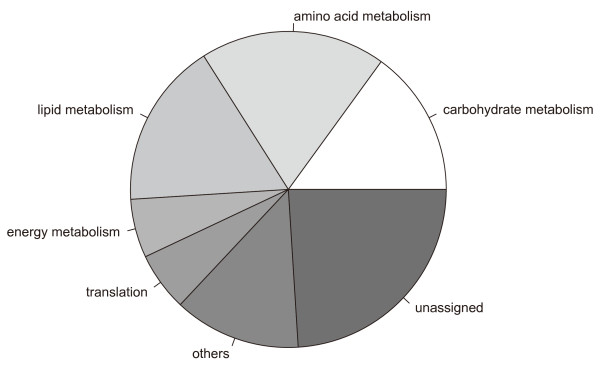
“Gene expression analysis of A. fumigatus following an increase in temperature from 30 C to 37 C identified 726 differentially expressed genes with many involved with translation, amino acid, carbohydrate, lipid, and energy metabolism (Do et al., 2009).”
BackgroundIntegrative analysis of the heat shock response in Aspergillus fumigatus
Albrecht, D., Guthke, R., Brakhage, A. A., & Kniemeyer, O. (2010) · BMC Genomics · doi:10.1186/1471-2164-11-32 · Cited by 105
“Recently, a state space model was used to examine the regulation of heat shock and metabolism genes [18].”
BackgroundMethodHagiwara, D., Sakamoto, K., Abe, K., & Gomi, K. (2016) · Bioscience, Biotechnology, and Biochemistry · doi:10.1080/09168451.2016.1162085 · Cited by 88
Wang, Z., López‐Giráldez, F., Lehr, N. A., Farré, M., Common, R. S., Trail, F., & Townsend, J. P. (2013) · Eukaryotic Cell · doi:10.1128/ec.00248-13 · Cited by 76
Aspergillus fumigatus AcuM regulates both iron acquisition and gluconeogenesis: A. fumigatus AcuM
Liu, H., Gravelat, F. N., Chiang, L. Y., Chen, D., Vanier, G., Ejzykowicz, D. E., Ibrahim, A. S., Nierman, W. C., Sheppard, D. C., & Filler, S. G. (2010) · Molecular Microbiology · doi:10.1111/j.1365-2958.2010.07389.x · Cited by 61
“DAfu8g05460 Afu8g05460 Upregulated in heat shock (Do et al., 2009) 7.”
BackgroundInfluentialRocha, M. C., de Godoy, K. F., de Castro, P. A., Hori, J. I., Bom, V. L. P., Brown, N. A., da Cunha, A. F., Goldman, G. H., & Malavazi, I. (2015) · PLoS ONE · doi:10.1371/journal.pone.0135195 · Cited by 64
Shaping the fungal adaptome – Stress responses of Aspergillus fumigatus
Hartmann, T., Sasse, C., Schedler, A., Hasenberg, M., Gunzer, M., & Krappmann, S. (2011) · International Journal of Medical Microbiology · doi:10.1016/j.ijmm.2011.04.008 · Cited by 52
Dinamarco, T. M., Almeida, R. S., de Castro, P. A., Brown, N. A., dos Reis, T. F., Ramalho, L. N. Z., Savoldi, M., Goldman, M. H. S., & Goldman, G. H. (2012) · Eukaryotic Cell · doi:10.1128/ec.00016-12 · Cited by 49
“Thermotolerance is the most important genetic trait for fungal survival during mammalian and avian infection and within compost (1, 19, 40).”
BackgroundThe allergenicity of Aspergillus fumigatus conidia is influenced by growth temperature
Low, S. Y., Dannemiller, K., Yao, M., Yamamoto, N., & Peccia, J. (2011) · Fungal Biology · doi:10.1016/j.funbio.2011.03.006 · Cited by 41
“While previous microarray studies have analyzed gene expression changes of A. fumigatus under time-course temperature shift (heat shock) conditions (Do et al., 2009, Nierman et al., 2005), to our knowledge, this is the first investigation into the transcriptional response of the fungus under two…”
BackgroundKniemeyer, O., Schmidt, A. D., Vödisch, M., Wartenberg, D., & Brakhage, A. A. (2011) · International Journal of Medical Microbiology · doi:10.1016/j.ijmm.2011.04.001 · Cited by 47
Rocha, M. C., Minari, K., Fabri, J. H. T. M., Kerkaert, J. D., Gava, L. M., da Cunha, A. F., Cramer, R. A., Borges, J. C., & Malavazi, I. (2020) · Cellular Microbiology · doi:10.1111/cmi.13273 · Cited by 43
Tashiro, M., Takazono, T., & Izumikawa, K. (2024) · Therapeutic Advances in Infectious Disease · doi:10.1177/20499361241253751 · Cited by 65
“…A. fumigatus demonstrates remarkable adaptability to various stressors, including high temperatures within deep tissues of the human body, 48,123,124 low pH conditions like those found in phagolysosomes, 49,125 low oxygen levels in tissues, 126–128 changes in osmotic pressure, 129–131…”
BackgroundHeat shock proteins and the calcineurin-crz1 signaling regulate stress responses in fungi
Roy, A., & Tamuli, R. (2022) · Archives of Microbiology · doi:10.1007/s00203-022-02833-w · Cited by 42
Valsecchi, I., Sarikaya‐Bayram, Ö., Wong Sak Hoi, J., Muszkieta, L., Gibbons, J., Prevost, M., Mallet, A., Krijnse‐Locker, J., Ibrahim‐Granet, O., Mouyna, I., et al. (2017) · Molecular Microbiology · doi:10.1111/mmi.13744 · Cited by 35
“play the most active role in transcription regulation at 488C (Do et al., 2009).”
BackgroundGlobal gene expression reveals stress-responsive genes in Aspergillus fumigatus mycelia
Takahashi, H., Kusuya, Y., Hagiwara, D., Takahashi-Nakaguchi, A., Sakai, K., & Gonoi, T. (2017) · BMC Genomics · doi:10.1186/s12864-017-4316-z · Cited by 32
“(2009) have reported 726 and 2200 genes for heat shock of 37 °C and 48 °C based on microarray data, respectively [6, 15].”
BackgroundMethodResultInfluentialWu, J., Wang, M., Zhou, L., & Yu, D. (2015) · Gene · doi:10.1016/j.gene.2015.09.044 · Cited by 30
Wilkinson, J. R., Kale, S. P., Bhatnagar, D., Yu, J., & Ehrlich, K. C. (2011) · Toxins · doi:10.3390/toxins3080932 · Cited by 29
“All of these proteins could affect nutrient transport or transmission of environmental signals [53,54].”
BackgroundNetwork Analyses in Plant Pathogens
Botero, D., Alvarado, C., Bernal, A., Danies, G., & Restrepo, S. (2018) · Frontiers in Microbiology · doi:10.3389/fmicb.2018.00035 · Cited by 28
Krishnan, K., Ren, Z., Losada, L. C., Nierman, W. C., Lu, L. J., & Askew, D. S. (2014) · BMC Genomics · doi:10.1186/1471-2164-15-159 · Cited by 29
“congruent with previous transcriptomic analyses, which showed little upregulation of heat-shock protein-encoding mRNAs under these conditions [45,46].”
ResultGlucose Metabolism and Use of Alternative Carbon Sources in Medically-Important Fungi
Chew, S. Y., & Than, L. T. L. (2021) · Elsevier eBooks · doi:10.1016/b978-0-12-819990-9.00068-8 · Cited by 19
Kraft, M., Scheidegger, C., & Werth, S. (2022) · The Lichenologist · doi:10.1017/s0024282921000463 · Cited by 15
“An important heat shock protein gene in Aspergillus fumigatus is hsp98 (Do et al. 2009), and this gene was also upregulated under thermal stress in P.”
Félix, C., Meneses, R. S., Gonçalves, M. F. M., Duarte, A. S., Jorrín-Novo, J. V., de Peer, Y. V., Deforce, D. L. D., Nieuwerburgh, F. V., Alves, A., & Esteves, A. C. (2024) · The Science of The Total Environment · doi:10.1016/j.scitotenv.2024.171917 · Cited by 9
Carriel, C. C., Halberg, S., Kotvanova, M., Pyne, S., Park, S. C., Seo, H., Schmidt, A., Calise, D. G., Ané, J., Keller, N. P., et al. (2026) · Nucleic Acids Research · doi:10.1093/nar/gkaf1439 · Cited by 8
Pulmonary Aspergillosis in People with Cystic Fibrosis
Schwarz, C., Eschenhagen, P. N., Mainz, J. G., Schmidergall, T., Schuette, H., & Romanowska, E. (2024) · Seminars in Respiratory and Critical Care Medicine · doi:10.1055/s-0043-1777267 · Cited by 9
“51 Like many other pathogens, A. fumigatus has developed several strategies to acquire nutrients from its host, with some of these being essential to virulence.”
BackgroundLong-term survival of asexual Zymoseptoria tritici spores in the environment
Kay, W. T., O’Neill, P., Gurr, S. J., & Fones, H. N. (2024) · BMC Biology · doi:10.1186/s12915-024-02060-3 · Cited by 8
“402) with homology to Aspergillus Hsp30/Hsp42, which is implicated in the response to a number of stresses including heat, antifungals and oxidative stress [31–33], two genes encoding major facilitator superfamily transporters (ZTRI_8.”
Sharafi, G., Khosravi, A., Vahedi, G., Yahyaraeyat, R., & Abbasi, T. (2016) · Molecular Medicine Reports · doi:10.3892/mmr.2016.5058 · Cited by 4
“One study indicated that HSP expression in A. fumigatus is tightly negatively linked to fungal cell metabolic‑related gene expression (43).”
InfluentialBai, Y., Huang, W., Tao, Y., & Feng, Z. (2014) · Journal of the Korean Society for Applied Biological Chemistry · doi:10.1007/s13765-013-4284-1 · Cited by 4
“, 2003) found that regulatory structure of HSP30 in Aspergillus fumigatus is very conducive to temperature adaptations under rapid thermal changes (Do et al., 2009).”
BackgroundDo, J. H. (2014) · BioChip Journal · doi:10.1007/s13206-014-8209-9 · Cited by 3
Self-citationEnhanced Fumagillin Production by Optimizing Fermentation and Purification Techniques
Feng, Z., Du, P., Sheng, Y., Wang, B., Chen, W., & Peng, H. (2024) · Fermentation · doi:10.3390/fermentation10110588 · Cited by 2
Biologie et diagnostic des infections à Aspergillus
Gangneux, J., Bouchara, J. P., & Chabasse, D. (2013) · Cited by 3
Swid, M. A., Koulintchenko, M. V., Onele, A. O., Leksin, I. Y., Rakhmatullina, D. F., Galeeva, E. I., Valitova, Y. N., Minibayeva, F. V., & BECKETT, R. P. (2025) · Microbiology Research · doi:10.3390/microbiolres16070139 · Cited by 1
Nascimento, É. (2010) · Digital Library of Theses and Dissertations (Universidade de São Paulo) · doi:10.11606/t.60.2010.tde-23072010-102011 · Cited by 1
Silva, P. A. (2017) · Digital Library of Theses and Dissertations (Universidade de São Paulo) · doi:10.11606/d.17.2017.tde-27012017-144118
Isolation Characterization and Cloning of Selected Genes of Scopulariopsis brevicaulis
Harjit, K. (2014) · Shodhganga
Luperini, R. S. (2023) · Digital Library of Theses and Dissertations (Universidade de São Paulo) · doi:10.11606/d.17.2023.tde-17102023-105339
Hua, T., Bott, N., & Phan, H. (2026) · Springer eBooks · doi:10.1007/978-981-95-2300-9_10-1
Metadata
- Authors
- Do, J. H., Yamaguchi, R., & Miyano, S.
- Affiliations
- Institute of Medical Science, The University of Tokyo (JP)
- Corresponding author
- Miyano, Satoru
- Venue
- BMC Genomics
- Published
- 2009-07-08
- Volume
- 10
- Issue
- 1
- Pages
- 306-306
- ISSN
- 1471-2164 (ISSN-L)
- PMC
- PMC2714559
- OpenAlex
- W2129331994
- Cited by
- 42
- References
- 17
- Citations by year
- 2026: 2 · 2025: 1 · 2024: 5 · 2023: 2 · 2022: 2 · 2021: 1 · 2020: 1 · 2019: 1 · 2018: 1 · 2017: 3 · 2016: 4 · 2015: 2 · 2014: 4 · 2013: 3 · 2012: 1
- FWCI
- 1.34
- Type
- journal article
- Language
- en
- Open access
- gold
- doi.org
- Licence
- cc-by
- Locations
- BMC Genomics (publishedVersion, cc-by)
- Europe PMC (PubMed Central) (publishedVersion, cc-by)
- PubMed Central (publishedVersion, cc-by)
- PubMed (publishedVersion)
- DOAJ (DOAJ: Directory of Open Access Journals) (submittedVersion)
- Funders
- Japan Society for the Promotion of Science
- Topics
- Life Sciences › Biochemistry, Genetics and Molecular Biology › Molecular Biology › Fungal and yeast genetics research
- Life Sciences › Biochemistry, Genetics and Molecular Biology › Molecular Biology › Gene Regulatory Network Analysis
- Life Sciences › Biochemistry, Genetics and Molecular Biology › Molecular Biology › Heat shock proteins research
- Keywords
- Aspergillus fumigatus, heat shock, transcriptional regulation, heat shock proteins, HSP30, state-space model, heat tolerance, TCA cycle, carbohydrate metabolism, gene regulatory networks, thermal adaptation, fungal pathogenesis, antifungal drug development
- MeSH terms
- Aspergillus fumigatus, Hot Temperature, Models, Genetic, Time Factors, Transcription, Genetic, Gene Expression Regulation, Fungal, Heat-Shock Response, Oligonucleotide Array Sequence Analysis, Metabolome
About these checks
Registry, retraction, Cites and statistics results are computed, not judged, with one exception: a printed reference that no index lists is read once by a model before it counts as a citation error. Claims are extracted by a model and kept only when their quote appears verbatim in the text; each cited source is then checked, with a model’s help, for whether it says what the claim relies on. Those verdicts can be wrong — read the claim’s quote and the cited source before relying on one.
Statistics and arithmetic are recomputed, not judged.
Confidence bands are shown only for fields calibrated on our annotated test set. None is calibrated yet, so no band is shown.
What counts as a claim ›How we measure confidence ›How we check this ›
Are you an author, or do you see a problem with this page? Request a review
Data sources
Bibliographic data: Semantic Scholar, OpenAlex, Crossref.
Contains information from the Semantic Scholar Academic Graph Datasets, made available under the ODC Attribution License (ODC-BY 1.0).
Semantic Scholar’s data is described in: Kinney, R., et al. (2023). The Semantic Scholar Open Data Platform. arXiv:2301.10140.
