

The DOI matches its Crossref record; 76 of the 77 references it cites were found in a registry or an index.
Signed weighted gene co-expression network analysis of transcriptional regulation in murine embryonic stem cells
Open accessAbstract
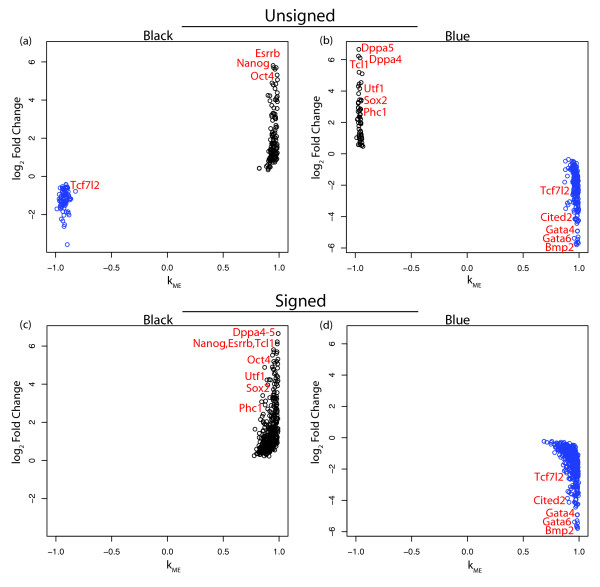
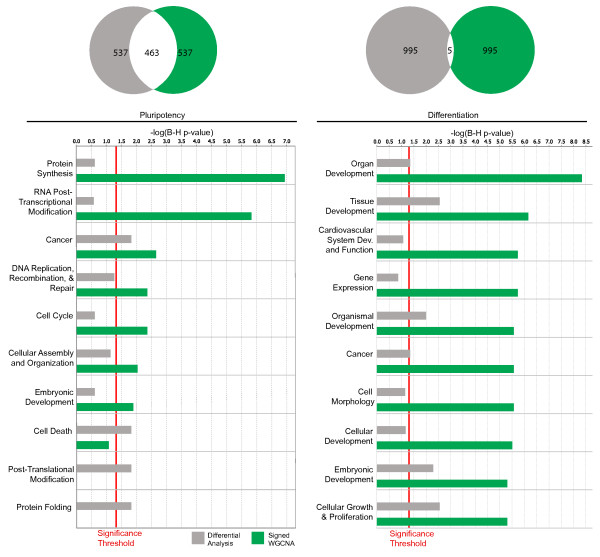
Background: Recent work has revealed that a core group of transcription factors (TFs) regulates the key characteristics of embryonic stem (ES) cells: pluripotency and self-renewal. Current efforts focus on identifying genes that play important roles in maintaining pluripotency and self-renewal in ES cells and aim to understand the interactions among these genes. To that end, we investigated the use of unsigned and signed network analysis to identify pluripotency and differentiation related genes. Results: We show that signed networks provide a better systems level understanding of the regulatory mechanisms of ES cells than unsigned networks, using two independent murine ES cell expression data sets. Specifically, using signed weighted gene co-expression network analysis (WGCNA), we found a pluripotency module and a differentiation module, which are not identified in unsigned networks. We confirmed the importance of these modules by incorporating genome-wide TF binding data for key ES cell regulators. Interestingly, we find that the pluripotency module is enriched with genes related to DNA damage repair and mitochondrial function in addition to transcriptional regulation. Using a connectivity measure of module membership, we not only identify known regulators of ES cells but also show that Mrpl15, Msh6, Nrf1, Nup133, Ppif, Rbpj, Sh3gl2, and Zfp39, among other genes, have important roles in maintaining ES cell pluripotency and self-renewal. We also report highly significant relationships between module membership and epigenetic modifications (histone modifications and promoter CpG methylation status), which are known to play a role in controlling gene expression during ES cell self-renewal and differentiation. Conclusion: Our systems biologic re-analysis of gene expression, transcription factor binding, epigenetic and gene ontology data provides a novel integrative view of ES cell biology.
Overview
The claims and statistics of this paper haven’t been checked yet.
Run the check — free, no account needed. It reads the open-access text and checks the sources it cites.
Integrity signals
Registry
Cites
Statistics
Figures
Verification
Claims the paper makes
The claims and statistics of this paper haven’t been checked yet.
Run the check — free, no account needed. It reads the open-access text and checks the sources it cites.
Claims other papers make about this one
Each is checked against this paper’s own text: does it say what the citing paper says it does?
The cited source says what the claim attributes to it.
In the citing paper
“A signed method creates networks where biologically meaningful modules (such as those representing a specific biological process) are better separated [37].”
From Gene co-expression analysis for functional classification and gene–disease predictions (2017) · cites this paper as [37]
Self-check
Percentages, sums and reported differences re-computed from the paper’s own numbers.
The self-check needs the paper’s full text.
Citations
Cites
WGCNA: an R package for weighted correlation network analysis
Langfelder, P., & Horvath, S. (2008) · BMC Bioinformatics · doi:10.1186/1471-2105-9-559 · Cited by 27,252
Self-citationTakahashi, K., & Yamanaka, S. (2006) · Cell · doi:10.1016/j.cell.2006.07.024 · Cited by 26,673 · cited 2×
“the four TFs that can reprogram differentiated cells into a pluripotency state [3].”
BackgroundInduction of Pluripotent Stem Cells from Adult Human Fibroblasts by Defined Factors
Takahashi, K., Tanabe, K., Ohnuki, M., Narita, M., Ichisaka, T., Tomoda, K., & Yamanaka, S. (2007) · Cell · doi:10.1016/j.cell.2007.11.019 · Cited by 20,221
Induced Pluripotent Stem Cell Lines Derived from Human Somatic Cells
Yu, J., Vodyanik, M. A., Smuga-Otto, K., Antosiewicz-Bourget, J., Frane, J. L., Tian, S., Nie, J., Jonsdottir, G. A., Ruotti, V., Stewart, R., et al. (2007) · Science · doi:10.1126/science.1151526 · Cited by 10,310 · cited 9×
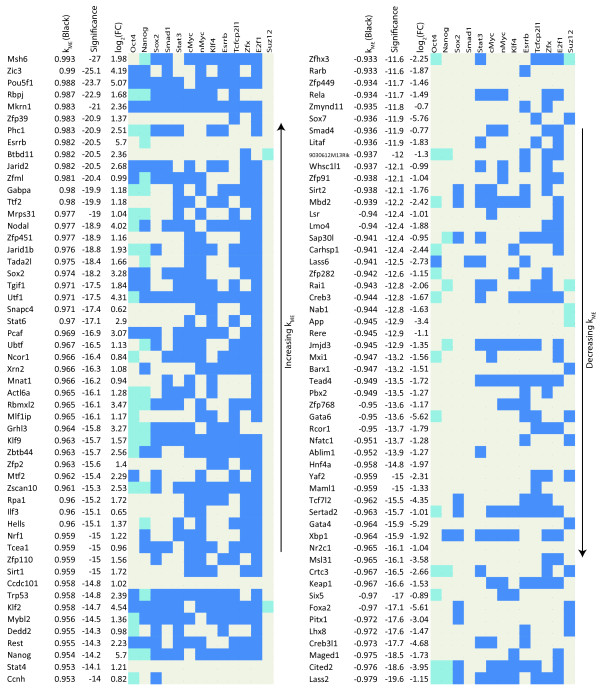
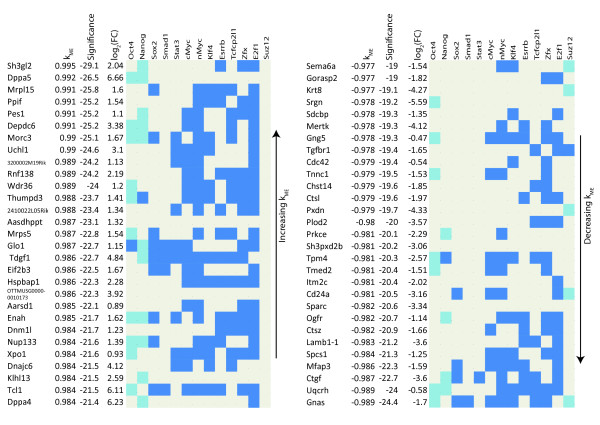
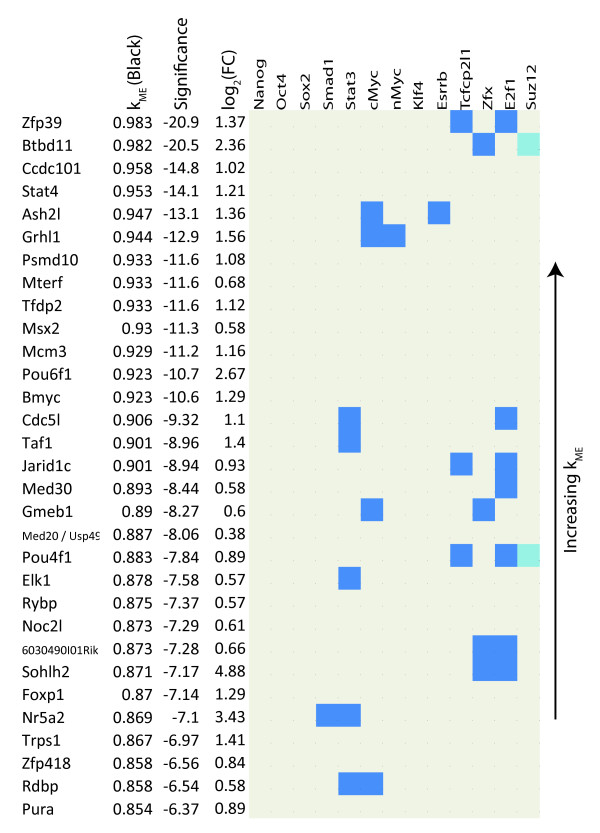
“Figure 9 shows genes with relatively high that lack binding by the TFs Nanog, Oct4, Sox2, and Klf4 [10,11] and have low binding (≤ 2) by other TFs that maintain pluripotency (Smad1, Stat3, cMyc, nMyc, Esrrb, Tcfcp2l1, Zfx, and E2f1).”
BackgroundInfluentialDAVID: Database for Annotation, Visualization, and Integrated Discovery
Dennis, G., Sherman, B. T., Hosack, D. A., Yang, J., Gao, W., Lane, H. C., & Lempicki, R. A. (2003) · Genome Biology · doi:10.1186/gb-2003-4-5-p3 · Cited by 9,327 · cited 3×
“ment using the Database for Annotation Visualization and Integrated Discovery (DAVID) [53].”
MethodInfluentialA General Framework for Weighted Gene Co-Expression Network Analysis
Zhang, B., & Horvath, S. (2005) · Statistical Applications in Genetics and Molecular Biology · doi:10.2202/1544-6115.1128 · Cited by 5,684 · cited 29×
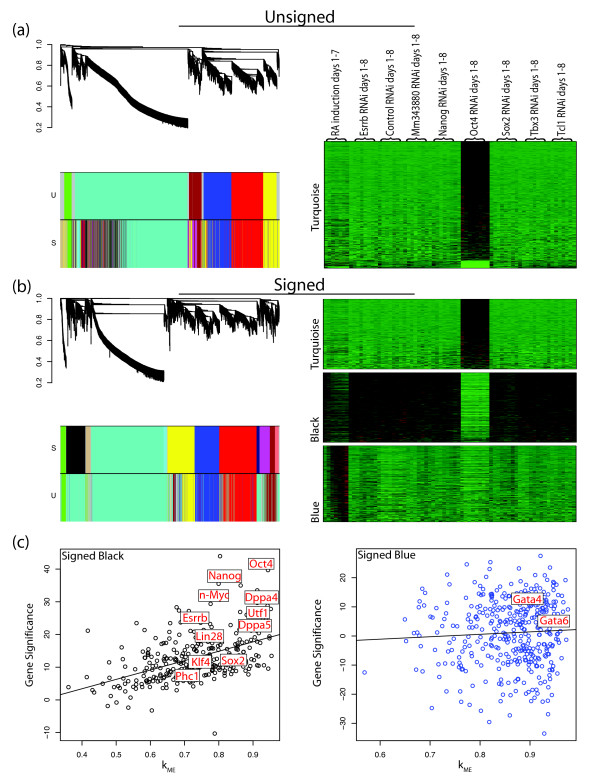
“It is important to reiterate that the pluripotency/self-renewal black module was only found using signed WGCNA.”
BackgroundMethodInfluentialSelf-citationA bivalent chromatin structure marks key developmental genes in embryonic stem cells
Bernstein, B. E., Mikkelsen, T. S., Xie, X., Kamal, M., Huebert, D. J., Cuff, J., Fry, B., Meissner, A., Wernig, M., Plath, K., et al. (2006) · Cell · doi:10.1016/j.cell.2006.02.041 · Cited by 5,361 · cited 1×
“Recent studies suggest that chromatin structure and epigenetic modifications, like histone modification and DNA methylation, play a role in controlling gene expression during ES cell self-renewal and differentiation [46-51].”
BackgroundSelf-citationHierarchical Organization of Modularity in Metabolic Networks
Ravasz, E., Somera, A. L., Mongru, D. A., Oltvai, Z. N., & Barabási, A.-L. (2002) · Science · doi:10.1126/science.1073374 · Cited by 4,224 · cited 7×
“Specifically, we define the proximity as the topological overlap measure (TOM) [35-37] which can also be defined for weighted networks [19].”
BackgroundInfluentialGenome-wide maps of chromatin state in pluripotent and lineage-committed cells
Mikkelsen, T. S., Ku, M., Jaffe, D. B., Issac, B., Lieberman, E., Giannoukos, G., Alvarez, P., Brockman, W., Kim, T.-K., Koche, R. P., et al. (2007) · Nature · doi:10.1038/nature06008 · Cited by 4,129 · cited 10×
“Recent studies suggest that chromatin structure and epigenetic modifications, like histone modification and DNA methylation, play a role in controlling gene expression during ES cell self-renewal and differentiation [46-51].”
BackgroundMethodInfluentialThe Homeoprotein Nanog Is Required for Maintenance of Pluripotency in Mouse Epiblast and ES Cells
Mitsui, K., Tokuzawa, Y., Itoh, H., Segawa, K., Murakami, M., Takahashi, K., Maruyama, M., Maeda, M., & Yamanaka, S. (2003) · Cell · doi:10.1016/s0092-8674(03)00393-3 · Cited by 3,192 · cited 1×
“Several studies have identified the targets of these TFs and the mechanism by which they regulate them [4,8,17].”
BackgroundPolycomb complexes repress developmental regulators in murine embryonic stem cells
Boyer, L. A., Plath, K., Zeitlinger, J., Brambrink, T., Medeiros, L. A., Lee, T. I., Levine, S. S., Wernig, M., Tajonar, A., Ray, M. K., et al. (2006) · Nature · doi:10.1038/nature04733 · Cited by 2,568 · cited 9×
“For completeness, it also includes information regarding genes bound by Nanog or Oct4 in the proximal promoter (within 10 kb) or bound by Nanog and Oct4 long range (within 500 kb), or bound by Polycomb [5,6].”
BackgroundMethodResultInfluentialSelf-citationChen, X., Han, X., Yuan, P., Fang, F., Huss, M., Vega, V. B., Wong, E., Orlov, Y. L., Zhang, W., Jiang, J., et al. (2008) · Cell · doi:10.1016/j.cell.2008.04.043 · Cited by 2,547 · cited 13×
“Binding data from Chen et al (2008), Boyer et al (2006), and Loh et al (2006), are marked in blue (bound) and beige (unbound).”
BackgroundMethodInfluentialThe Oct4 and Nanog transcription network regulates pluripotency in mouse embryonic stem cells
Loh, Y., Wu, Q., Chew, J.-L., Vega, V. B., Zhang, W., Chen, X., Bourque, G., George, J., Leong, B., Liu, J., et al. (2006) · Nature Genetics · doi:10.1038/ng1760 · Cited by 2,438 · cited 8×
“For completeness, it also includes information regarding genes bound by Nanog or Oct4 in the proximal promoter (within 10 kb) or bound by Nanog and Oct4 long range (within 500 kb), or bound by Polycomb [5,6].”
BackgroundMethodResultInfluentialReprogramming of human somatic cells to pluripotency with defined factors
Park, I.-H., Zhao, R., West, J. A., Yabuuchi, A., Huo, H., Ince, T. A., Lerou, P. H., Lensch, M. W., & Daley, G. Q. (2008) · Nature · doi:10.1038/nature06534 · Cited by 2,436
DAVID: Database for Annotation, Visualization, and Integrated Discovery
Dennis, G., Sherman, B. T., Hosack, D. A., Yang, J., Gao, W., Lane, H. C., & Lempicki, R. A. (2003) · Genome biology · doi:10.1186/gb-2003-4-9-r60 · Cited by 2,383
Generation of induced pluripotent stem cells without Myc from mouse and human fibroblasts
Nakagawa, M., Koyanagi, M., Tanabe, K., Takahashi, K., Ichisaka, T., Aoi, T., Okita, K., Mochiduki, Y., Takizawa, N., & Yamanaka, S. (2008) · Nature Biotechnology · doi:10.1038/nbt1374 · Cited by 2,380 · cited 9×
“Figure 9 shows genes with relatively high that lack binding by the TFs Nanog, Oct4, Sox2, and Klf4 [10,11] and have low binding (≤ 2) by other TFs that maintain pluripotency (Smad1, Stat3, cMyc, nMyc, Esrrb, Tcfcp2l1, Zfx, and E2f1).”
BackgroundInfluentialControl of Developmental Regulators by Polycomb in Human Embryonic Stem Cells
Lee, T. I., Jenner, R. G., Boyer, L. A., Guenther, M. G., Levine, S. S., Kumar, R., Chevalier, B. S., Johnstone, S. E., Cole, M. F., Isono, K., et al. (2006) · Cell · doi:10.1016/j.cell.2006.02.043 · Cited by 2,296 · cited 1×
“For example, gene repression by the PcG protein complex via histone H3 lysine 27 trimethylation (H3K27me3) is required for ES cell self-renewal and pluripotency [6,52].”
BackgroundBaines, C. P., Kaiser, R. A., Purcell, N. H., Blair, N. S., Osinska, H., Hambleton, M. A., Brunskill, E. W., Sayen, M. R., Gottlieb, R. A., Dorn, G. W., et al. (2005) · Nature · doi:10.1038/nature03434 · Cited by 2,280 · cited 1×
“involved in mitochondrial function and oxidative stressinduced cell death [64].”
BackgroundA Gene-Coexpression Network for Global Discovery of Conserved Genetic Modules
Stuart, J. M., Segal, E., Koller, D., & Kim, S. K. (2003) · Science · doi:10.1126/science.1087447 · Cited by 2,274 · cited 2×
“Gene co-expression network methods have been successfully applied in a variety of different settings [18,19,21,22,24-32].”
BackgroundBernstein, B. E., Meissner, A., & Lander, E. S. (2007) · Cell · doi:10.1016/j.cell.2007.01.033 · Cited by 2,086 · cited 1×
“Recent studies suggest that chromatin structure and epigenetic modifications, like histone modification and DNA methylation, play a role in controlling gene expression during ES cell self-renewal and differentiation [46-51].”
BackgroundA Chromatin Landmark and Transcription Initiation at Most Promoters in Human Cells
Guenther, M. G., Levine, S. S., Boyer, L. A., Jaenisch, R., & Young, R. A. (2007) · Cell · doi:10.1016/j.cell.2007.05.042 · Cited by 2,002 · cited 3×
“In this Additional File, we merged Additional File 11 (Module Membership kME etc in the Ivanova data) with a Table (S4) from [50] that contained promoter CPG methylation and lysine trimethylation data from [49].”
BackgroundMethodDefining clusters from a hierarchical cluster tree: the Dynamic Tree Cut package for R
Langfelder, P., Zhang, B., & Horvath, S. (2008) · Bioinformatics · doi:10.1093/bioinformatics/btm563 · Cited by 1,892 · cited 2×
“Modules were found by cutting branches of the cluster tree (dendrogram), using the dynamic tree cut library in R [38].”
BackgroundMethodSelf-citationMaherali, N., Sridharan, R., Xie, W., Utikal, J., Eminli, S., Arnold, K., Stadtfeld, M., Yachechko, R., Tchieu, J., Jaenisch, R., et al. (2007) · Cell stem cell · doi:10.1016/j.stem.2007.05.014 · Cited by 1,725
Self-citationSelective Blockade of MicroRNA Processing by Lin28
Viswanathan, S. R., Daley, G. Q., & Gregory, R. I. (2008) · Science · doi:10.1126/science.1154040 · Cited by 1,449
An Extended Transcriptional Network for Pluripotency of Embryonic Stem Cells
Kim, J., Chu, J., Shen, X., Wang, J., & Orkin, S. H. (2008) · Cell · doi:10.1016/j.cell.2008.02.039 · Cited by 1,361 · cited 1×
“black module tend to be bound by more ES cell related TFs compared to the negatively connected genes, supporting the idea that these TFs bind and activate pluripotency and self-renewal genes [13].”
BackgroundEmbryonic stem cell differentiation: emergence of a new era in biology and medicinePreprint
Keller, G. M. (2005) · Genes & Development · doi:10.1101/gad.1303605 · Cited by 1,174 · cited 1×
“Recent studies suggest that chromatin structure and epigenetic modifications, like histone modification and DNA methylation, play a role in controlling gene expression during ES cell self-renewal and differentiation [46-51].”
BackgroundGeneration of human induced pluripotent stem cells from dermal fibroblasts
Lowry, W. E., Richter, L., Yachechko, R., Pyle, A. D., Tchieu, J., Sridharan, R., Clark, A. T., & Plath, K. (2008) · Proceedings of the National Academy of Sciences · doi:10.1073/pnas.0711983105 · Cited by 1,041
Self-citationDissecting self-renewal in stem cells with RNA interference
Ivanova, N., Dobrin, R., Lu, R., Kotenko, I., Levorse, J. M., DeCoste, C. J., Schafer, X., Lun, Y., & Lemischka, I. R. (2006) · Nature · doi:10.1038/nature04915 · Cited by 994 · cited 25×
“of the genes whose RNAi knock down induced ES cell differentiation in Ivanova et al [4] belong to the black module (Oct4, Nanog, Sox2, Esrrb, and Dppa4, Fisher's exact”
BackgroundMethodInfluentialEigengene networks for studying the relationships between co-expression modules
Langfelder, P., & Horvath, S. (2007) · BMC Systems Biology · doi:10.1186/1752-0509-1-54 · Cited by 867 · cited 1×
“We find it convenient to summarize the gene expression profiles of a given module with the module eigengene, which can be considered as the best summary of the standardized module expression data [33,41].”
BackgroundSelf-citationGeometric Interpretation of Gene Coexpression Network Analysis
Horvath, S., & Dong, J. (2008) · PLoS Computational Biology · doi:10.1371/journal.pcbi.1000117 · Cited by 867 · cited 28×
“It is important to reiterate that the pluripotency/self-renewal black module was only found using signed WGCNA.”
BackgroundMethodInfluentialSelf-citationA core Klf circuitry regulates self-renewal of embryonic stem cells
Jiang, J., Chan, Y.-S., Loh, Y., Cai, J., Tong, G., Lim, C.-A., Robson, P., Zhong, S., & Ng, H. (2008) · Nature Cell Biology · doi:10.1038/ncb1698 · Cited by 780 · cited 2×
“Jarid2, Nodal, Jarid1b, Tgif1, Utf1, Hells, and Rest) [20,55,56].”
Functional organization of the transcriptome in human brain
Oldham, M. C., Konopka, G., Iwamoto, K., Langfelder, P., Kato, T., Horvath, S., & Geschwind, D. H. (2008) · Nature Neuroscience · doi:10.1038/nn.2207 · Cited by 752 · cited 2×
“Gene co-expression network methods have been successfully applied in a variety of different settings [18,19,21,22,24-32].”
BackgroundMethodSelf-citationAnalysis of oncogenic signaling networks in glioblastoma identifies ASPM as a molecular target
Horvath, S., Zhang, B., Carlson, M., Lu, K. V., Zhu, S., Felciano, R. M., Laurance, M. F., Zhao, W., Qi, S., Chen, Z., et al. (2006) · Proceedings of the National Academy of Sciences · doi:10.1073/pnas.0608396103 · Cited by 641 · cited 25×
“It is important to reiterate that the pluripotency/self-renewal black module was only found using signed WGCNA.”
BackgroundMethodInfluentialSelf-citationGene network interconnectedness and the generalized topological overlap measure
Yip, A. M., & Horvath, S. (2007) · BMC Bioinformatics · doi:10.1186/1471-2105-8-22 · Cited by 633 · cited 7×
“Specifically, we define the proximity as the topological overlap measure (TOM) [35-37] which can also be defined for weighted networks [19].”
BackgroundInfluentialSelf-citationConservation and evolution of gene coexpression networks in human and chimpanzee brains
Oldham, M. C., Horvath, S., & Geschwind, D. H. (2006) · Proceedings of the National Academy of Sciences · doi:10.1073/pnas.0605938103 · Cited by 566 · cited 3×
“Gene co-expression network methods have been successfully applied in a variety of different settings [18,19,21,22,24-32].”
BackgroundMethodStem-cell-based therapy and lessons from the heart
Passier, R. C., Laake, L. W. V., & Mummery, C. L. (2008) · Nature · doi:10.1038/nature07040 · Cited by 528 · cited 1×
“As such, they have tremendous therapeutic potential for regenerative medicine [1,2].”
BackgroundCho, Y. M., Kwon, S., Pak, Y. K., Seol, H. W., Choi, Y. M., Park, D. J., Park, K. S., & Lee, H. K. (2006) · Biochemical and Biophysical Research Communications · doi:10.1016/j.bbrc.2006.08.020 · Cited by 479 · cited 4×
“that mitochondrial regulation may be distinct in ES cells [69-71] and suggests that they may be important regulators of mitochondrial function in ES cells.”
BackgroundInfluentialTwo Supporting Factors Greatly Improve the Efficiency of Human iPSC Generation
Zhao, Y., Yin, X., Qin, H., Zhu, F., Liu, H., Yang, W., Zhang, Q., Xiang, C., Hou, P., Song, Z., et al. (2008) · Cell Stem Cell · doi:10.1016/j.stem.2008.10.002 · Cited by 468 · cited 9×
“Utf1 interacts with Oct4, affects chromatin regulation in ES cells, and has recently been shown to improve reprogramming efficiency [43-45].”
BackgroundInfluentialIntegrating Genetic and Network Analysis to Characterize Genes Related to Mouse Weight
Ghazalpour, A., Doss, S., Zhang, B., Wang, S., Plaisier, C., Castellanos, R., Brozell, A., Schadt, E. E., Drake, T. A., Lusis, A. J., et al. (2006) · PLoS Genetics · doi:10.1371/journal.pgen.0020130 · Cited by 462 · cited 3×
“Gene co-expression network methods have been successfully applied in a variety of different settings [18,19,21,22,24-32].”
Self-citationFouse, S. D., Shen, Y., Pellegrini, M. A., Cole, S. W., Meissner, A., Neste, L. V., Jaenisch, R., & Fan, G. (2008) · Cell stem cell · doi:10.1016/j.stem.2007.12.011 · Cited by 456 · cited 5×
“Recent studies suggest that chromatin structure and epigenetic modifications, like histone modification and DNA methylation, play a role in controlling gene expression during ES cell self-renewal and differentiation [46-51].”
BackgroundInfluentialSelf-citationUnderstanding network concepts in modules
Dong, J., & Horvath, S. (2007) · BMC Systems Biology · doi:10.1186/1752-0509-1-24 · Cited by 455
Self-citationKeller, M. P., Choi, Y., Wang, P., Belt Davis, D., Rabaglia, M. E., Oler, A. T., Stapleton, D. S., Argmann, C., Schueler, K. L., Edwards, S., et al. (2008) · Genome Research · doi:10.1101/gr.074914.107 · Cited by 377 · cited 2×
“Gene co-expression network methods have been successfully applied in a variety of different settings [18,19,21,22,24-32].”
BackgroundMethodWeighted gene coexpression network analysis strategies applied to mouse weight
Fuller, T. F., Ghazalpour, A., Aten, J. E., Drake, T. A., Lusis, A. J., & Horvath, S. (2007) · Mammalian Genome · doi:10.1007/s00335-007-9043-3 · Cited by 372
Self-citationCathepsin L Proteolytically Processes Histone H3 During Mouse Embryonic Stem Cell Differentiation
Duncan, E. M., Muratore‐Schroeder, T. L., Cook, R. G., Garcia, B. A., Shabanowitz, J., Hunt, D. F., & Allis, C. D. (2008) · Cell · doi:10.1016/j.cell.2008.09.055 · Cited by 372 · cited 2×
“tiation [65], while little is known about Ctsz, also a cathe-”
BackgroundCarlson, M. R. J., Zhang, B., Fang, Z., Mischel, P. S., Horvath, S., & Nelson, S. F. (2006) · BMC Genomics · doi:10.1186/1471-2164-7-40 · Cited by 346 · cited 2×
“Gene co-expression network methods have been successfully applied in a variety of different settings [18,19,21,22,24-32].”
BackgroundMethodSelf-citationRegulatory networks define phenotypic classes of human stem cell lines
Müller, F.-J., Laurent, L. C., Kostka, D., Ulitsky, I., Williams, R., Lu, C., Park, I.-H., Rao, M. S., Shamir, R., Schwartz, P. H., et al. (2008) · Nature · doi:10.1038/nature07213 · Cited by 343 · cited 1×
“Genes found only by signed WGCNA are significantly enriched for functions important to ES cells like DNA Replication, Recombination, and Repair, Cell Cycle, Cancer, Protein Synthesis, and RNA Post-Transcriptional Modification, which have previously been found using network methods [54].”
MethodCell Cycle Control of Embryonic Stem Cells
White, J., & Dalton, S. (2005) · Stem Cell Reviews and Reports · doi:10.1385/scr:1:2:131 · Cited by 330 · cited 1×
“The enrichment for genes that respond to DNA damage is not surprising given that ES cells spend a larger portion of their cell cycle in S phase and have a shorter G1 phase than differentiated cells [73].”
BackgroundA gene regulatory network in mouse embryonic stem cells
Zhou, Q., Chipperfield, H., Melton, D. A., & Wong, W. H. (2007) · Proceedings of the National Academy of Sciences · doi:10.1073/pnas.0701014104 · Cited by 288 · cited 26×
“Click here for file [http://www.biomedcentral.com/content/supplementary/14712164-10-327-S6.xls] Additional file 7 Ingenuity Pathway Analysis of the Pluripotency and Differentiation Modules from Zhou et al (2007).”
BackgroundMethodInfluentialSelf-citationGu, P., Goodwin, B. J., Chung, A. C.-K., Xu, X., Wheeler, D. A., Price, R. R., Galardi, C. M., Peng, L., Latour, A. M., Koller, B. H., et al. (2005) · Molecular and Cellular Biology · doi:10.1128/mcb.25.9.3492-3505.2005 · Cited by 284
Saretzki, G. C., Walter, T., Atkinson, S. P., Passos, J. F., Bareth, B., Keith, W. N., Stewart, R., Hoare, S. F., Stojković, M., Armstrong, L., et al. (2007) · Stem Cells · doi:10.1634/stemcells.2007-0628 · Cited by 262 · cited 5×
“ES cells, however, produce ATP anaerobically and thus minimize the amount of DNA damaging ROS [69,71].”
BackgroundInfluentialProteomic analysis of the mouse liver mitochondrial inner membrane
Da Cruz, S., Xenarios, I., Langridge, J., Vilbois, F., Parone, P. A., & Martinou, J.-C. (2003) · Journal of Biological Chemistry · doi:10.1074/jbc.m304940200 · Cited by 247 · cited 1×
“The high negative connectivity of Uqcrh, a mitochondrial inner membrane protein [68], along with the”
BackgroundNetwork neighborhood analysis with the multi-node topological overlap measure
Ai, L. S., & Horvath, S. (2006) · Bioinformatics · doi:10.1093/bioinformatics/btl581 · Cited by 223 · cited 7×
“Specifically, we define the proximity as the topological overlap measure (TOM) [35-37] which can also be defined for weighted networks [19].”
BackgroundInfluentialSelf-citationTranscriptional Coordination of the Metabolic Network in Arabidopsis
Wei, H., Persson, S., Mehta, T. S., Srinivasasainagendra, V., Chen, L., Page, G. P., Somerville, C. R., & Loraine, A. E. (2006) · PLANT PHYSIOLOGY · doi:10.1104/pp.106.080358 · Cited by 197 · cited 1×
“Gene co-expression network methods have been successfully applied in a variety of different settings [18,19,21,22,24-32].”
BackgroundPresson, A. P., Sobel, E. M., Papp, J. C., Suarez, C., Whistler, T., Rajeevan, M. S., Vernon, S. D., & Horvath, S. (2008) · BMC Systems Biology · doi:10.1186/1752-0509-2-95 · Cited by 189 · cited 3×
“Gene co-expression network methods have been successfully applied in a variety of different settings [18,19,21,22,24-32].”
Self-citationTranscriptome Analysis of Mouse Stem Cells and Early Embryos
Sharov, A. A., Piao, Y., Matoba, R., Dudekula, D. B., Qian, Y., VanBuren, V., Falco, G., Martin, P. R., Stagg, C. A., Bassey, U. C., et al. (2003) · PLoS Biology · doi:10.1371/journal.pbio.0000074 · Cited by 187 · cited 2×
“Jarid2, Nodal, Jarid1b, Tgif1, Utf1, Hells, and Rest) [20,55,56].”
Howard, L., Nelson, K. K., Maciewicz, R. A., & Blobel, C. (1999) · Journal of Biological Chemistry · doi:10.1074/jbc.274.44.31693 · Cited by 180 · cited 1×
“Other candidate genes include Sh3gl2, which binds lipids and proteins [63], Mrpl15, a mitochondrial ribosomal protein, and Ppif,”
BackgroundNuclear Pore Composition Regulates Neural Stem/Progenitor Cell Differentiation in the Mouse Embryo
Lupu, F. I., Alves, A., Anderson, K. V., Doye, V., & Lacy, E. (2008) · Developmental Cell · doi:10.1016/j.devcel.2008.03.011 · Cited by 172 · cited 10×
“Utf1 interacts with Oct4, affects chromatin regulation in ES cells, and has recently been shown to improve reprogramming efficiency [43-45].”
BackgroundInfluentialLonergan, T. A., Bavister, B. D., & Brenner, C. A. (2007) · Mitochondrion · doi:10.1016/j.mito.2007.05.002 · Cited by 143 · cited 2×
“that mitochondrial regulation may be distinct in ES cells [69-71] and suggests that they may be important regulators of mitochondrial function in ES cells.”
BackgroundHori, K., Cholewa-Waclaw, J., Nakada, Y., Glasgow, S. M., Masui, T., Henke, R. M., Wildner, H., Martarelli, B., Beres, T. M., Epstein, J. A., et al. (2008) · Genes & Development · doi:10.1101/gad.1628008 · Cited by 125 · cited 1×
“ing [58]), Zfp39 (spermatogenesis [59]), and Nrf1 (mito-”
Weston, D. J., Gunter, L. E., Rogers, A., & Wullschleger, S. D. (2008) · BMC Systems Biology · doi:10.1186/1752-0509-2-16 · Cited by 112 · cited 2×
“Gene co-expression network methods have been successfully applied in a variety of different settings [18,19,21,22,24-32].”
BackgroundMethodWalker, E. M., Ohishi, M., Davey, R. E., Zhang, W. J., Cassar, P. A., Tanaka, T. S., Der, S. D., Morris, Q., Hughes, T. R., Zandstra, P. W., et al. (2007) · Cell stem cell · doi:10.1016/j.stem.2007.04.002 · Cited by 107 · cited 1×
“In contrast, co-expression networks, also referred to as 'association,' 'correlation,' or 'influence' networks [18-22], realize that genes can be highly correlated and thus can be grouped into large clusters (co-expression modules).”
BackgroundOct4 RNA interference induces trophectoderm differentiation in mouse embryonic stem cells
Velkey, J. M., & O’Shea, K. S. (2003) · genesis · doi:10.1002/gene.10218 · Cited by 102 · cited 1×
“Genes in this module exhibit a positive (red) or negative (green) change in expression upon knock down of the master regulator Oct4, which is not surprising given that Oct4 RNAi has be shown to cause a distinct differentiation pattern from other TF RNAi's [4,42].”
BackgroundUTF1 is a chromatin-associated protein involved in ES cell differentiation
van den Boom, V., Kooistra, S. M., Boesjes, M., Geverts, B., Houtsmuller, A. B., Monzen, K., Komuro, I., Essers, J., Drenth-Diephuis, L. J., & Eggen, B. J. L. (2007) · The Journal of Cell Biology · doi:10.1083/jcb.200702058 · Cited by 102
Sakamoto, A., Chen, M., Nakamura, T., Xie, T., Karsenty, G., & Weinstein, L. S. (2005) · Journal of Biological Chemistry · doi:10.1074/jbc.m500346200 · Cited by 97
Nishimoto, M., Miyagi, S., Yamagishi, T., Sakaguchi, T., Niwa, H., Muramatsu, M., & Okuda, A. (2005) · Molecular and Cellular Biology · doi:10.1128/mcb.25.12.5084-5094.2005 · Cited by 97 · cited 1×
“Utf1 interacts with Oct4, affects chromatin regulation in ES cells, and has recently been shown to improve reprogramming efficiency [43-45].”
BackgroundRegenerative medicine and human models of human disease
Chien, K. R. (2008) · Nature · doi:10.1038/nature07037 · Cited by 92 · cited 1×
“As such, they have tremendous therapeutic potential for regenerative medicine [1,2].”
BackgroundAn Extended Transcriptional Network for Pluripotency of Embryonic Stem Cells
Kim, J., Chu, J., Shen, X., Wang, J., & Orkin, S. H. (2008) · Cell · doi:10.1016/j.cell.2008.06.004 · Cited by 86
Huang, Y. S., Li, H., Hu, H., Yan, X., Waterman, M. S., Huang, H., & Zhou, X. J. (2007) · Bioinformatics · doi:10.1093/bioinformatics/btm222 · Cited by 84 · cited 2×
“Gene co-expression network methods have been successfully applied in a variety of different settings [18,19,21,22,24-32].”
BackgroundKendall, S. E., Battelli, C., Irwin, S., Mitchell, J., Glackin, C. A., & Verdi, J. M. (2005) · Molecular and Cellular Biology · doi:10.1128/mcb.25.17.7711-7724.2005 · Cited by 76
Expression and roles of connective tissue growth factor in Meckel's cartilage development
Shimo, T., Kanyama, M., Wu, C., Sugito, H., Billings, P. C., Abrams, W. R., Rosenbloom, J., Iwamoto, M., Pacifici, M., & Koyama, E. (2004) · Developmental Dynamics · doi:10.1002/dvdy.20109 · Cited by 57 · cited 1×
“psin, while Gnas and Ctgf are differentiation genes [66,67].”
BackgroundExpression of a mouse zinc finger protein gene in both spermatocytes and oocytes during meiosis
Noce, T., Fujiwara, Y., Sezaki, M., Fujimoto, H., & Higashinakagawa, T. (1992) · Developmental Biology · doi:10.1016/0012-1606(92)90120-6 · Cited by 46 · cited 1×
“ing [58]), Zfp39 (spermatogenesis [59]), and Nrf1 (mito-”
Mitochondrial benzodiazepine receptors regulate oxygen homeostasis in the early mouse embryo
O'Hara, M. F., Nibbio, B., Craig, R. C., Rozett, K., Charlap, J. H., & Knudsen, T. B. (2003) · Reproductive Toxicology · doi:10.1016/s0890-6238(03)00035-2 · Cited by 29 · cited 1×
“chondrial organization and biogenesis [60]).”
Shieh, G. S., Chen, C., Yu, C.-Y., Huang, J., Wang, W.-F., & Lo, Y. (2008) · BMC Bioinformatics · doi:10.1186/1471-2105-9-134 · Cited by 24 · cited 1×
“Gene co-expression network methods have been successfully applied in a variety of different settings [18,19,21,22,24-32].”
BackgroundYoung, L. C., Keuling, A. M., Lai, R. L., Nation, P. N., Tron, V. A., & Andrew, S. E. (2007) · Carcinogenesis · doi:10.1093/carcin/bgm153 · Cited by 23 · cited 1×
“Such genes include Msh6 (involved in DNA damage and repair [57]), Rbpj (involved in Notch signal-”
BackgroundBang, A. G., & Carpenter, M. K. (2008) · Science · doi:10.1126/science.1157042 · Cited by 11
A search engine to identify pathway genes from expression data on multiple organisms
Chen, C., Weirauch, M. T., Powell, C. C., Zambon, A. C., & Stuart, J. M. (2007) · BMC Systems Biology · doi:10.1186/1752-0509-1-20 · Cited by 7 · cited 2×
“Gene co-expression network methods have been successfully applied in a variety of different settings [18,19,21,22,24-32].”
Background
Cited by
Sorted by citations
Transcriptome-wide isoform-level dysregulation in ASD, schizophrenia, and bipolar disorder
Gandal, M. J., Zhang, P., Hadjimichael, E., Walker, R. L., Chen, C., Liu, S., Won, H., van Bakel, H., Varghese, M., Wang, Y., et al. (2018) · Science · doi:10.1126/science.aat8127 · Cited by 1,247
Shared molecular neuropathology across major psychiatric disorders parallels polygenic overlap
Gandal, M. J., Haney, J. R., Parikshak, N. N., Leppa, V., Ramaswami, G., Hartl, C., Schork, A. J., Appadurai, V., Buil, A., Werge, T. M., et al. (2018) · Science · doi:10.1126/science.aad6469 · Cited by 1,095
Self-citationGene co-expression analysis for functional classification and gene–disease predictions
van Dam, S., Võsa, U., van der Graaf, A., Franke, L., & de Magalhães, J. P. (2017) · Briefings in Bioinformatics · doi:10.1093/bib/bbw139 · Cited by 995
“A signed method creates networks where biologically meaningful modules (such as those representing a specific biological process) are better separated [37].”
MethodIs My Network Module Preserved and Reproducible?
Langfelder, P., Luo, R., Oldham, M. C., & Horvath, S. (2011) · PLoS Computational Biology · doi:10.1371/journal.pcbi.1001057 · Cited by 1,012
“application; both signed [56] and unsigned [13,30,33] weighted”
BackgroundSelf-citationCorrelating transcriptional networks to breast cancer survival: a large-scale coexpression analysis
Clarke, C., Madden, S. F., Doolan, P., Aherne, S. T., Joyce, H., O’Driscoll, L., Gallagher, W. M., Hennessy, B. T., Moriarty, M. J., Crown, J. P., et al. (2013) · Carcinogenesis · doi:10.1093/carcin/bgt208 · Cited by 854
Metadata
- Authors
- Mason, M. J., Fan, G., Plath, K., Zhou, Q., & Horvath, S.
- Affiliations
- University of California, Los Angeles (US)
- Corresponding author
- Zhou, Qing
- Horvath, Steve
- Venue
- BMC Genomics
- Published
- 2009-07-20
- Volume
- 10
- Issue
- 1
- Pages
- 327-327
- ISSN
- 1471-2164 (ISSN-L)
- PMC
- PMC2727539
- OpenAlex
- W2138720219
- Cited by
- 243
- References
- 77
- Citations by year
- 2026: 8 · 2025: 10 · 2024: 12 · 2023: 12 · 2022: 18 · 2021: 34 · 2020: 18 · 2019: 18 · 2018: 18 · 2017: 12 · 2016: 10 · 2015: 8 · 2014: 14 · 2013: 22 · 2012: 11
- FWCI
- 3.89
- Type
- journal article
- Language
- en
- Open access
- gold
- doi.org
- Licence
- cc-by
- Locations
- BMC Genomics (publishedVersion, cc-by)
- PubMed Central (publishedVersion, cc-by)
- PubMed (publishedVersion)
- DOAJ (DOAJ: Directory of Open Access Journals) (submittedVersion)
- eScholarship (California Digital Library) (submittedVersion)
- The HKU Scholars Hub (University of Hong Kong) (submittedVersion)
- Funders
- National Science Foundation (0805491)
- National Institutes of Health (1dp2od001686-01)
- National Cancer Institute (P50CA092131, P30CA016042)
- National Institute of General Medical Sciences (P01GM081621)
- National Institute of Allergy and Infectious Diseases (U19AI063603)
- National Institute of Diabetes and Digestive and Kidney Diseases (R01DK072206, DK-072206)
- Topics
- Life Sciences › Biochemistry, Genetics and Molecular Biology › Molecular Biology › Pluripotent Stem Cells Research
- Life Sciences › Biochemistry, Genetics and Molecular Biology › Molecular Biology › Bioinformatics and Genomic Networks
- Life Sciences › Biochemistry, Genetics and Molecular Biology › Molecular Biology › Gene Regulatory Network Analysis
- Keywords
- mouse embryonic stem cells, pluripotency, self-renewal, gene co-expression network, transcriptional regulation, transcription factor binding, DNA repair, mitochondrial function, histone modifications, promoter CpG methylation, epigenetic regulation, module membership
- MeSH terms
- Animals, Chromatin, DNA, DNA Damage, DNA Repair, Gene Expression Regulation, Protein Binding, Transcription Factors, Transcription, Genetic, CpG Islands, DNA Methylation, Gene Expression Profiling, Pluripotent Stem Cells, Mice, Gene Regulatory Networks, Embryonic Stem Cells
About these checks
Registry, retraction, Cites and statistics results are computed, not judged, with one exception: a printed reference that no index lists is read once by a model before it counts as a citation error. Claims are extracted by a model and kept only when their quote appears verbatim in the text; each cited source is then checked, with a model’s help, for whether it says what the claim relies on. Those verdicts can be wrong — read the claim’s quote and the cited source before relying on one.
Statistics and arithmetic are recomputed, not judged.
Confidence bands are shown only for fields calibrated on our annotated test set. None is calibrated yet, so no band is shown.
What counts as a claim ›How we measure confidence ›How we check this ›
Are you an author, or do you see a problem with this page? Request a review
