

The iron/heme regulated genes of Haemophilus influenzae: Comparative transcriptional profiling as a tool to define the species core modulon
Open accessThe DOI matches its Crossref record; 72 of the 75 references it cites were found in a registry or an index.
Abstract
BACKGROUND: Haemophilus influenzae requires heme for aerobic growth and possesses multiple mechanisms to obtain this essential nutrient. Although an understanding of the heme acquisition mechanisms of H. influenzae is emerging, significant gaps in our knowledge remain. Unresolved issues include the identities of all genes exhibiting altered transcription in response to iron and heme availability, the fraction of such genes functioning in iron/heme acquisition, and the heterogeneity of this gene set among clinical isolates. Previously we utilized H. influenzae strain Rd KW20 to demonstrate the utility of transcriptional profiling in defining the genes exhibiting altered transcription in response to environmental iron and heme levels. The current study expands upon those observations by determining the iron/heme modulons of two clinical isolates, the type b isolate 10810 and the nontypeable isolate R2866. These data are used to begin to define the core iron/heme modulon of the species. RESULTS: Microarray studies were performed to compare gene expression on transition from iron/heme-restricted to iron/heme-replete conditions for each isolate. Of 1820 ORFs on the array corresponding to R2866 genes, 363 were significantly differentially expressed: 233 were maximally transcribed under iron/heme-replete conditions and 130 under iron/heme-restricted conditions. Of the 1883 ORFs representing genes of strain 10810, 353 were significantly differentially transcribed: 150 were preferentially transcribed under iron/heme-replete conditions and 203 under iron/heme-restricted conditions. Comparison of the data sets indicated that 163 genes exhibited similar regulation in both isolates and that 74 of these exhibited similar patterns of regulation in Rd KW20. These comprise the putative core iron/heme modulon. CONCLUSION: This study provides evidence for a conserved core of H. influenzae genes the transcription of which is altered by the availability of iron and/or heme in the growth environment. Elucidation of this modulon provides a means to identify genes with unrecognized roles in iron/heme acquisition or homeostasis, unanticipated responsiveness to environmental levels of the micronutrients or potential roles in virulence. Defining these core genes is also of potential importance in identifying targets for therapeutic and vaccine designs since products of these genes are likely to be preferentially expressed during growth in iron/heme restricted sites of the human body.
Overview
The claims and statistics of this paper haven’t been checked yet.
Free: it reads the open-access text and checks the first 5 claims that cite a source we can check. Create a free account to check every claim.
Integrity signals
Registry
Cites
Statistics
Figures
Verification
Claims the paper makes
The claims and statistics of this paper haven’t been checked yet.
Free: it reads the open-access text and checks the first 5 claims that cite a source we can check. Create a free account to check every claim.
Claims other papers make about this one
Each is checked against this paper’s own text: does it say what the citing paper says it does?
In the citing paper
“hxuCBA and the hgp genes are expressed under in vitro iron/heme deplete conditions during experimental infection of the chinchilla ear [184,185].”
From Heme Synthesis and Acquisition in Bacterial Pathogens (2016) · cites this paper as [185]
Self-check
Percentages, sums and reported differences re-computed from the paper’s own numbers.
The self-check needs the paper’s full text.
Citations
Cites
Analysis of Relative Gene Expression Data Using Real-Time Quantitative PCR and the 2−ΔΔCT Method
Livak, K. J., & Schmittgen, T. D. (2001) · Methods · doi:10.1006/meth.2001.1262 · Cited by 180,860 · cited 1×
“Relative quantification of gene expression was determined using the 2-ΔΔCt method of Livak and Schmittgen where ΔΔCt = (Ct, Target - Ct,16s)Timex - (Ct, Target -Ct,16s)Control [ 58 ].”
MethodExploration, normalization, and summaries of high density oligonucleotide array probe level data
Irizarry, R. A. (2003) · Biostatistics · doi:10.1093/biostatistics/4.2.249 · Cited by 10,603 · cited 1×
“Data was normalized using quantile normalization [61], and gene calls generated using the Robust multichip average (RMA) algorithm as described [62].”
MethodBolstad, B. M., Irizarry, R. A., Åstrand, M., & Speed, T. P. (2003) · Bioinformatics · doi:10.1093/bioinformatics/19.2.185 · Cited by 8,266
Whole-Genome Random Sequencing and Assembly of Haemophilus influenzae Rd
Fleischmann, R. D., Adams, M. D., White, O., Clayton, R. A., Kirkness, E. F., Kerlavage, A. R., Bult, C. J., Tomb, J.-F., Dougherty, B. A., Merrick, J. M., et al. (1995) · Science · doi:10.1126/science.7542800 · Cited by 5,654
TM4: a free, open-source system for microarray data management and analysis
Saeed, A. I., Sharov, V., White, J., Li, J., Liang, W., Bhagabati, N., Braisted, J., Klapa, M., Currier, T., Thiagarajan, M., et al. (2003) · BioTechniques · doi:10.2144/03342mt01 · Cited by 4,837 · cited 1×
“The data were log2 transformed and compared between the two conditions by performing individual t tests using the TMEV software [63,64].”
MethodMutation of the mouse klotho gene leads to a syndrome resembling ageing
Kuro-o, M., Matsumura, Y., Aizawa, H., Kawaguchi, H., Suga, T., Utsugi, T., Ohyama, Y., Kurabayashi, M., Kaname, T., Kume, E., et al. (1997) · Nature · doi:10.1038/36285 · Cited by 3,837
[9] TM4 Microarray Software Suite
Saeed, A. I., Bhagabati, N. K., Braisted, J. C., Liang, W., Sharov, V., Howe, E. A., Li, J., Thiagarajan, M., White, J. A., & Quackenbush, J. (2006) · Methods in Enzymology · doi:10.1016/s0076-6879(06)11009-5 · Cited by 1,983
Teele, D. W., Klein, J. O., Rosner, B., & Greater Boston Otitis Media Study Group (1989) · Journal of Infectious Diseases · doi:10.1093/infdis/160.1.83 · Cited by 1,492
Peltola, H. (2000) · Clinical Microbiology Reviews · doi:10.1128/cmr.13.2.302-317.2000 · Cited by 1,364 · cited 3×
“While such vaccines have nearly eradicated meningitis caused by type b strains in the developed world [5], they lack effectiveness against other capsular types [7,8] and against nontypeable strains [9] which remain a significant public health issue.”
BackgroundTabor, C. W., & Tabor, H. (1985) · Microbiological Reviews · doi:10.1128/mmbr.49.1.81-99.1985 · Cited by 1,007 · cited 1×
“This locus is potentially important in virulence since polyamines play a major role in the regulation of numerous cellular processes by modulating the biosynthesis of DNA, RNA and proteins [34-36].”
BackgroundMicrobial gene identification using interpolated Markov models
Salzberg, S. L., Delcher, A. L., Kasif, S., & White, O. (1998) · Nucleic Acids Research · doi:10.1093/nar/26.2.544 · Cited by 996 · cited 1×
“Genes in R2866 were predicted using the program GLIMMER [66], trained on the codon usage pattern in strain Rd KW20.”
MethodPolyamines: Mysterious Modulators of Cellular Functions
Igarashi, K., & Kashiwagi, K. (2000) · Biochemical and Biophysical Research Communications · doi:10.1006/bbrc.2000.2601 · Cited by 888 · cited 1×
“This locus is potentially important in virulence since polyamines play a major role in the regulation of numerous cellular processes by modulating the biosynthesis of DNA, RNA and proteins [34-36].”
BackgroundMaskless fabrication of light-directed oligonucleotide microarrays using a digital micromirror array
Singh-Gasson, S., Green, R. D., Yue, Y., Nelson, C., Blattner, F., Sussman, M. R., & Cerrina, F. (1999) · Nature Biotechnology · doi:10.1038/13664 · Cited by 733 · cited 1×
“[59].”
Ferritins: Dynamic Management of Biological Iron and Oxygen Chemistry
Liu, X., & Theil, E. C. (2005) · Accounts of Chemical Research · doi:10.1021/ar0302336 · Cited by 514
Quinones as the Redox Signal for the Arc Two-Component System of Bacteria
Georgellis, D., Kwon, O., & Lin, E. C. C. (2001) · Science · doi:10.1126/science.1059361 · Cited by 465 · cited 1×
“Since the Arc regulator responds to changes in redox potential perceived as oxidation and/or reduction of membrane bound quinones [47,48], as opposed to oxygen levels per se, it is possible that the addition of an excess of exogenous iron may lead to trans-membrane redox alteration via a localized Fenton reaction anal…”
BackgroundChanges in Frequency and Pathogens Causing Acute Otitis Media in 1995–2003
Casey, J. R., & Pichichero, M. E. (2004) · Pediatric Infectious Disease Journal · doi:10.1097/01.inf.0000136871.51792.19 · Cited by 417 · cited 1×
“influenzae is a frequent cause of both invasive and non-invasive diseases including epiglottitis, pneumonia, bacteremia, meningitis, respiratory infections and otitis media (OM) [1,3-5].”
BackgroundIron and Hydrogen Peroxide Detoxification Properties of DNA-binding Protein from Starved Cells
Zhao, G., Ceci, P., Ilari, A., Giangiacomo, L., Laue, T. M., Chiancone, E., & Chasteen, N. D. (2002) · Journal of Biological Chemistry · doi:10.1074/jbc.m202094200 · Cited by 417 · cited 1×
“One such gene, HI1349, has similarities to DPS ferritins (DNA Protecting protein under Starved conditions) which non specifically bind DNA to protect from damage by reactive oxygen species [ 30 ].”
BackgroundDynamics of nasopharyngeal colonization by potential respiratory pathogens
García-Rodríguez, J. Á., & Fresnadillo Martínez, M. J. (2002) · Journal of Antimicrobial Chemotherapy · doi:10.1093/jac/dkf506 · Cited by 404 · cited 1×
“Background Haemophilus influenzae is a fastidious, Gram-negative, facultatively anaerobic, opportunistic pathogen, and is found only in man where it is a common commensal in the nasopharynx [1,2].”
Background(2004) · ASM Press eBooks · doi:10.1128/9781555816544 · Cited by 368
The pathogenicity of Haemophilus influenzae
TURK, D. C. (1984) · Journal of Medical Microbiology · doi:10.1099/00222615-18-1-1 · Cited by 322
Bacterial transferrin and lactoferrin receptors
Gray-Owen, S. D., & Schyvers, A. B. (1996) · Trends in Microbiology · doi:10.1016/0966-842x(96)10025-1 · Cited by 299 · cited 2×
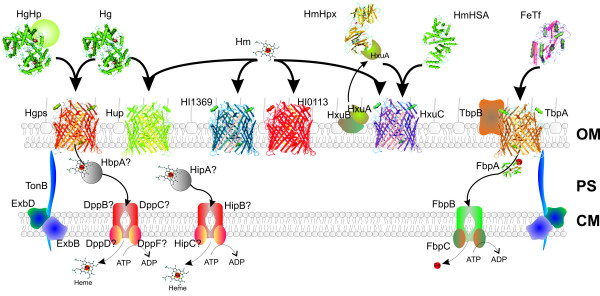
“Acquisition of transferrin-bound iron requires the TonB-dependent protein TbpA and the accessory protein TbpB [17].”
BackgroundIdentification of a quinone-sensitive redox switch in the ArcB sensor kinase
Malpica, R., Franco, B., Rodriguez, C., Kwon, O., & Georgellis, D. (2004) · Proceedings of the National Academy of Sciences · doi:10.1073/pnas.0403064101 · Cited by 281 · cited 1×
“Since the Arc regulator responds to changes in redox potential perceived as oxidation and/or reduction of membrane bound quinones [47,48], as opposed to oxygen levels per se, it is possible that the addition of an excess of exogenous iron may lead to trans-membrane redox alteration via a localized Fenton reaction anal…”
BackgroundPersistent Colonization by Haemophilus influenzae in Chronic Obstructive Pulmonary Disease
Murphy, T. F., Brauer, A. L., Schiffmacher, A. T., & Sethi, S. (2004) · American Journal of Respiratory and Critical Care Medicine · doi:10.1164/rccm.200403-354oc · Cited by 275
Bearden, S. W., & Perry, R. D. (1999) · Molecular Microbiology · doi:10.1046/j.1365-2958.1999.01360.x · Cited by 254 · cited 1×
“This locus has homology to the yfeABCD locus of Yersinia pestis which plays a role in the uptake Fe, Mn and Zn [41].”
BackgroundPrediction of transcription terminators in bacterial genomes 1 1Edited by F. E. Cohen
Ermolaeva, M. D., Khalak, H. G., White, O., Smith, H. O., & Salzberg, S. L. (2000) · Journal of Molecular Biology · doi:10.1006/jmbi.2000.3836 · Cited by 250 · cited 1×
“These include gene cluster analysis across species, transcriptional data from previous studies, conformity of orientation, size of intergenic regions and prediction of putative transcriptional terminators using the program Transterm [67].”
MethodPolyamines protect Escherichia coli cells from the toxic effect of oxygen
Chattopadhyay, M. K., Tabor, C. W., & Tabor, H. (2003) · Proceedings of the National Academy of Sciences · doi:10.1073/pnas.2627990100 · Cited by 209 · cited 1×
“coli they have been implicated in defense against peroxide [38].”
BackgroundHarrison, A., Dyer, D. W., Gillaspy, A., Ray, W. C., Mungur, R., Carson, M. B., Zhong, H., Gipson, J., Gipson, M., Johnson, L. S., et al. (2005) · Journal of Bacteriology · doi:10.1128/jb.187.13.4627-4636.2005 · Cited by 208 · cited 1×
“The annotation of the NTHi R2866 genome was based on comparative analyses between Rd KW20 [40], NTHi 86-028NP [65] and the NTHi R2846 sequence [54].”
MethodPolyamines Are Essential for the Formation of Plague Biofilm
Patel, C. N., Wortham, B. W., Lines, J. L., Fetherston, J. D., Perry, R. D., & Oliveira, M. A. (2006) · Journal of Bacteriology · doi:10.1128/jb.188.7.2355-2363.2006 · Cited by 197 · cited 1×
“In Yersinia pestis, polyamines play an essential role in biofilm formation [37], and in E.”
BackgroundExcretion and uptake of cadaverine by CadB and its physiological functions in Escherichia coli
Soksawatmaekhin, W., Kuraishi, A., Sakata, K., Kashiwagi, K., & Igarashi, K. (2004) · Molecular Microbiology · doi:10.1046/j.1365-2958.2003.03913.x · Cited by 186 · cited 1×
“Polyamines have also been implicated as an alternative source of energy production via generation of a transmembrane proton motive force [39].”
BackgroundLiu, Q., Berchner-Pfannschmidt, U., Möller, U., Brecht, M., Wotzlaw, C., Acker, H., Jungermann, K., & Kietzmann, T. (2004) · Proceedings of the National Academy of Sciences · doi:10.1073/pnas.0400265101 · Cited by 168 · cited 1×
“Since the Arc regulator responds to changes in redox potential perceived as oxidation and/or reduction of membrane bound quinones [47,48], as opposed to oxygen levels per se, it is possible that the addition of an excess of exogenous iron may lead to trans-membrane redox alteration via a localized Fenton reaction anal…”
BackgroundA Unifying Model for the Role of Polyamines in Bacterial Cell Growth, the Polyamine Modulon
Yoshida, M., Kashiwagi, K., Shigemasa, A., Taniguchi, S., Yamamoto, K., Makinoshima, H., Ishihama, A., & Igarashi, K. (2004) · Journal of Biological Chemistry · doi:10.1074/jbc.m404393200 · Cited by 162 · cited 1×
“This locus is potentially important in virulence since polyamines play a major role in the regulation of numerous cellular processes by modulating the biosynthesis of DNA, RNA and proteins [34-36].”
BackgroundAlexander, H. E., & Leidy, G. (1951) · The Journal of Experimental Medicine · doi:10.1084/jem.93.4.345 · Cited by 152 · cited 2×
“Indeed, since Rd KW20 is derived from a type d strain and was selected as a rough derivative following loss of the capsule, at least one major genetic event has occurred since primary isolation [26,27].”
BackgroundCope, L. D., Yogev, R., Muller-Eberhard, U., & Hansen, E. J. (1995) · Journal of Bacteriology · doi:10.1128/jb.177.10.2644-2653.1995 · Cited by 145 · cited 2×
“Heme from heme-hemopexin (HmHpx) is acquired through HxuC, and is dependent on the proteins HxuB and HxuA [71,72].”
BackgroundRibeiro, G. S., Reis, J. N., Cordeiro, S. M., Lima, J. B. T., Gouveia, E. L., Petersen, M., Salgado, K., Silva, H. R., Zanella, R. C., Almeida, S. C. G., et al. (2003) · The Journal of Infectious Diseases · doi:10.1086/345863 · Cited by 141 · cited 1×
“While such vaccines have nearly eradicated meningitis caused by type b strains in the developed world [5], they lack effectiveness against other capsular types [ 7 ,8] and against nontypeable strains [9] which remain a significant public health issue.”
BackgroundComputer analysis of transcription regulatory patterns in completely sequenced bacterial genomes
Mironov, A. (1999) · Nucleic Acids Research · doi:10.1093/nar/27.14.2981 · Cited by 133 · cited 1×
“Comparative genomic analyses have identified putative members of the FNR and CRP regulons [51] and purine, arginine and aromatic amino acid regulons [52].”
BackgroundA Comparative Genomics Approach to Prediction of New Members of Regulons
Tan, K., Moreno‐Hagelsieb, G., Collado‐Vides, J., & Stormo, G. D. (2001) · Genome Research · doi:10.1101/gr.149301 · Cited by 131 · cited 1×
“Comparative genomic analyses have identified putative members of the FNR and CRP regulons [51] and purine, arginine and aromatic amino acid regulons [52].”
BackgroundProtein sources of heme for Haemophilus influenzae
Stull, T. L. (1987) · Infection and Immunity · doi:10.1128/iai.55.1.148-153.1987 · Cited by 121 · cited 1×
“influenzae is able to use many potential host derived hemoproteins to satisfy its heme requirements, including hemoglobin, hemoglobin-haptoglobin, myoglobin-haptoglobin, heme-hemopexin, heme-albumin and catalase [11-15].”
BackgroundSelf-citationA Novel CRP-dependent Regulon Controls Expression of Competence Genes in Haemophilus influenzae
Redfield, R. J., Cameron, A. D. S., Qian, Q., Hinds, J., Ali, T. R., Kroll, J. S., & Langford, P. R. (2005) · Journal of Molecular Biology · doi:10.1016/j.jmb.2005.01.012 · Cited by 115 · cited 2×
“Included in these studies are the results of disruption of the tfoX (sxy) gene involved in regulating competence genes and the cya gene responsible for production of cAMP [53].”
BackgroundCharacterization of the Yersinia pestis Yfu ABC Inorganic Iron Transport System
Gong, S., Bearden, S. W., Geoffroy, V. A., Fetherston, J. D., & Perry, R. D. (2001) · Infection and Immunity · doi:10.1128/iai.67.5.2829-2837.2001 · Cited by 115 · cited 1×
“pestis [45].”
Debrunner, P. G. (1983) · Science · doi:10.1126/science.220.4603.1266 · Cited by 110
Gray-Owen, S. D., Loosmore, S., & Schryvers, A. B. (1995) · Infection and Immunity · doi:10.1128/iai.63.4.1201-1210.1995 · Cited by 102
Morton, D. J., Whitby, P. W., Jin, H., Ren, Z., & Stull, T. L. (1999) · Infection and Immunity · doi:10.1128/iai.67.6.2729-2739.1999 · Cited by 97
Self-citationEvans, N. M., Smith, D. D., & Wicken, A. J. (1974) · Journal of Medical Microbiology · doi:10.1099/00222615-7-3-359 · Cited by 94 · cited 6×
“Transport systems for other iron sources and PPIX across the OM have not been determined.”
BackgroundInfluentialA Virulent Nonencapsulated Haemophilus influenzae
Nizet, V., Colina, K. F., Almquist, J. R., Rubens, C. E., & Smith, A. L. (1996) · The Journal of Infectious Diseases · doi:10.1093/infdis/173.1.180 · Cited by 94
(2008) · Springer eBooks · doi:10.1007/978-1-4020-6754-9_6552 · Cited by 92
Wilcox, K. W., & Smith, H. O. (1975) · Journal of Bacteriology · doi:10.1128/jb.122.2.443-453.1975 · Cited by 86 · cited 2×
“Indeed, since Rd KW20 is derived from a type d strain and was selected as a rough derivative following loss of the capsule, at least one major genetic event has occurred since primary isolation [26,27].”
BackgroundIron transport systems of Serratia marcescens
Angerer, A., Klupp, B., & Braun, V (1992) · Journal of Bacteriology · doi:10.1128/jb.174.4.1378-1387.1992 · Cited by 82 · cited 1×
“pleuropneumoniae [42,43] as well as the SfuABC proteins of Serratia marcescens [44] and the YfuABC proteins of Y.”
BackgroundThe ArcA regulon and oxidative stress resistance in Haemophilus influenzae
Wong, S. M. S., Alugupalli, K. R., Ram, S., & Akerley, B. J. (2007) · Molecular Microbiology · doi:10.1111/j.1365-2958.2007.05747.x · Cited by 81 · cited 7×
“Interestingly, the formate dehydrogenase locus (HI0006m-HI0009) is also part of the ArcAB regulon and shows decreased transcription in the arcA mutant [32].”
BackgroundInfluentialSiderophore-independent acquisition of transferrin-bound iron by Haemophilus influenzae type b
Morton, D. J., & Williams, P. (1990) · Journal of General Microbiology · doi:10.1099/00221287-136-5-927 · Cited by 79 · cited 2×
“influenzae is able to use many potential host derived hemoproteins to satisfy its heme requirements, including hemoglobin, hemoglobin-haptoglobin, myoglobin-haptoglobin, heme-hemopexin, heme-albumin and catalase [11-15].”
BackgroundSelf-citationIdentification of a locus involved in the utilization of iron byActinobacillus pleuropneumoniae
Chin, N., Frey, J., Chang, C.-F., & Chang, Y. (1996) · FEMS Microbiology Letters · doi:10.1111/j.1574-6968.1996.tb08452.x · Cited by 69 · cited 1×
“pleuropneumoniae [42,43] as well as the SfuABC proteins of Serratia marcescens [44] and the YfuABC proteins of Y.”
BackgroundUtilization of transferrin-bound iron by Haemophilus species of human and porcine origins
Morton, D. (1989) · FEMS Microbiology Letters · doi:10.1016/0378-1097(89)90378-9 · Cited by 66 · cited 1×
“influenzae is able to use many potential host derived hemoproteins to satisfy its heme requirements, including hemoglobin, hemoglobin-haptoglobin, myoglobin-haptoglobin, heme-hemopexin, heme-albumin and catalase [11-15].”
BackgroundSelf-citationBajanca-Lavado, M. P., & Caniça, M. (2004) · Journal of Clinical Microbiology · doi:10.1128/jcm.42.2.807-810.2004 · Cited by 63 · cited 1×
“While such vaccines have nearly eradicated meningitis caused by type b strains in the developed world [5], they lack effectiveness against other capsular types [7, 8 ] and against nontypeable strains [9] which remain a significant public health issue.”
BackgroundMorton, D. J., Bakaletz, L. O., Jurcisek, J. A., VanWagoner, T. M., Seale, T. W., Whitby, P. W., & Stull, T. L. (2004) · Microbial Pathogenesis · doi:10.1016/j.micpath.2003.08.007 · Cited by 57 · cited 1×
“Several of the heme acquisition associated proteins have been shown to be involved in virulence in animal models of both invasive and non-invasive H. influenzae disease [ 19-22 ].”
BackgroundSelf-citationThe OxyR Regulon in Nontypeable Haemophilus influenzae
Harrison, A., Ray, W. C., Baker, B. D., Armbruster, D. W., Bakaletz, L. O., & Munson, R. S. (2007) · Journal of Bacteriology · doi:10.1128/jb.01040-06 · Cited by 56 · cited 7×
“Thus, we can determine transcription patterns affected by transition between FeHm availability [25], sugar and nucleotide availability [53], and presence of oxidizing agents [33].”
BackgroundInfluentialMorton, D. J., Seale, T. W., Madore, L. L., VanWagoner, T. M., Whitby, P. W., & Stull, T. L. (2007) · Microbiology · doi:10.1099/mic.0.2006/000190-0 · Cited by 54
Self-citationTwo-Component Systems in Haemophilus influenzae : a Regulatory Role for ArcA in Serum Resistance
Souza-Hart, J. A. D., Blackstock, W. P., Modugno, V. D., Holland, I. B., & Kok, M. (2002) · Infection and Immunity · doi:10.1128/iai.71.1.163-172.2003 · Cited by 54 · cited 1×
“influenzae show decreased lethality in a mouse model as well as increased sensitivity to killing by human serum [50].”
BackgroundIdentification of a haem-utilization protein (Hup) in Haemophilus influenzae
Morton, D. J. (2004) · Microbiology · doi:10.1099/mic.0.27238-0 · Cited by 52 · cited 1×
“Heme from hemoglobin (Hg) can be acquired through the TonB-dependent Hgp and Hup proteins [69, 70 ].”
BackgroundSelf-citationThe heme-binding lipoprotein (HbpA) of Haemophilus influenzae: Role in heme utilization
Morton, D. J., Madore, L. L., Smith, A., VanWagoner, T. M., Seale, T. W., Whitby, P. W., & Stull, T. L. (2005) · FEMS Microbiology Letters · doi:10.1016/j.femsle.2005.09.016 · Cited by 51
Self-citationSeale, T. W., Morton, D. J., Whitby, P. W., Wolf, R., Kosanke, S. D., VanWagoner, T. M., & Stull, T. L. (2006) · Infection and Immunity · doi:10.1128/iai.00744-06 · Cited by 47
Self-citationHaahtela, K. (1988) · FEMS Microbiology Letters · doi:10.1016/0378-1097(88)90433-8 · Cited by 37
Transcriptional Profile of Haemophilus influenzae : Effects of Iron and Heme
Whitby, P. W., VanWagoner, T. M., Seale, T. W., Morton, D. J., & Stull, T. L. (2006) · Journal of Bacteriology · doi:10.1128/jb.00417-06 · Cited by 35 · cited 10×
“During the design of the experiments detailed in this manuscript, as well as those previously reported from strain Rd KW20 [25], great care was taken to ensure that each isolate was treated identically to minimize environmental influences other than the FeHm status of the media.”
BackgroundMethodResultInfluentialSelf-citationVaccines for otitis media: proposals for overcoming obstacles to progress
Murphy, T. F., Bakaletz, L. O., Kyd, J. M., Watson, B., & Klein, D. L. (2005) · Vaccine · doi:10.1016/j.vaccine.2004.12.014 · Cited by 34
Characterization of Three New Competence-Regulated Operons in Haemophilus influenzae
VanWagoner, T. M., Whitby, P. W., Morton, D. J., Seale, T. W., & Stull, T. L. (2004) · Journal of Bacteriology · doi:10.1128/jb.186.19.6409-6421.2004 · Cited by 33
Self-citationWhitby, P. W., Sim, K. E., Morton, D. J., Patel, J. A., & Stull, T. L. (1997) · Infection and Immunity · doi:10.1128/iai.65.11.4696-4700.1997 · Cited by 32
Self-citationLipoprotein e (P4) of Haemophilus influenzae: role in heme utilization and pathogenesis
Morton, D. J., Smith, A., VanWagoner, T. M., Seale, T. W., Whitby, P. W., & Stull, T. L. (2007) · Microbes and Infection · doi:10.1016/j.micinf.2007.03.013 · Cited by 29 · cited 2×
“Lipoprotein e(P4) has also been shown to involved in heme acquisition although it is not included in this figure since little is known about its mode of action [ 21 ].”
BackgroundSelf-citationPersistent colonization by haemophilus influenzae in chronic obstructive pulmonary disease
Bartlett, J. (2004) · Infectious Diseases in Clinical Practice · Cited by 22
Morton, D. J., Van Wagoner, T. M., Seale, T. W., Whitby, P. W., & Stull, T. L. (2006) · FEMS Microbiology Letters · doi:10.1111/j.1574-6968.2006.00230.x · Cited by 18
Self-citationHsu, Y., Chin, N., Chang, C.-F., & Chang, Y.-F. (2003) · DNA sequence · doi:10.1080/1042517031000089469 · Cited by 14 · cited 1×
“pleuropneumoniae [42,43] as well as the SfuABC proteins of Serratia marcescens [44] and the YfuABC proteins of Y.”
BackgroundCatalase as a source of both X- and V-factor forHaemophilus influenzae
Morton, D. J., VanWagoner, T. M., Seale, T. W., Whitby, P. W., & Stull, T. L. (2008) · FEMS Microbiology Letters · doi:10.1111/j.1574-6968.2007.01020.x · Cited by 13
Self-citationIdentification of a locus involved in the utilization of iron by Actinobacillus pleuropneumoniae
Chin, N. (1996) · FEMS Microbiology Letters · doi:10.1016/0378-1097(96)00296-0 · Cited by 4
A VIRULENT NON-ENCAPSULATED HAEMOPHILUS INFLUENZAE.
&NA; (1996) · The Pediatric Infectious Disease Journal · doi:10.1097/00006454-199606000-00036 · Cited by 1
(1999)
Research works printed but not linked: 1
- [57]Sambrook J Russell DW Molecular Cloning: A Laboratory Manual 2001 Cold Spring Harbor, NY: Cold Spring Harbor Laboratory Press
Cited by
Heme Synthesis and Acquisition in Bacterial Pathogens
Choby, J. E., & Skaar, E. P. (2016) · Journal of Molecular Biology · doi:10.1016/j.jmb.2016.03.018 · Cited by 343
Iron Acquisition in Mycobacterium tuberculosis
Chao, A., Sieminski, P. J., Owens, C. P., & Goulding, C. W. (2018) · Chemical Reviews · doi:10.1021/acs.chemrev.8b00285 · Cited by 145
The Landscape of Realized Homologous Recombination in Pathogenic Bacteria
Yahara, K., Didelot, X., Jolley, K. A., Kobayashi, I., Maiden, M. C. J., Sheppard, S. K., & Falush, D. (2015) · Molecular Biology and Evolution · doi:10.1093/molbev/msv237 · Cited by 77
“…HI1217 Haem-utilization protein (hup) Involving acquisition of heme that is not synthesized in H. influenza and thus very important to its survival (Whitby et al. 2009) hxuA Heme-hemopexin utilization protein A hxuB Heme-hemopexin utilization protein B Neisseria gonorrhoeae porB Major outer…”
BackgroundThe heme-binding protein (HbpA) of Haemophilus influenzae as a virulence determinant
Morton, D. J., Seale, T. W., Bakaletz, L. O., Jurcisek, J. A., Smith, A., VanWagoner, T. M., Whitby, P. W., & Stull, T. L. (2009) · International Journal of Medical Microbiology · doi:10.1016/j.ijmm.2009.03.004 · Cited by 53
“influenzae strains transcription of the HI0213 homolog in those strains was unaffected by iron/heme levels (Whitby et al., 2009).”
BackgroundSelf-citationFur-Mediated Global Regulatory Circuits in Pathogenic Neisseria Species
Yu, C., & Genco, C. A. (2012) · Journal of Bacteriology · doi:10.1128/jb.00262-12 · Cited by 54
“enterica serovar Typhimurium, and Listeria monocytogenes, have revealed a number of novel regulatory roles for Fur (12, 20, 40, 56, 68, 94, 101, 102, 107).”
Background
Metadata
- Authors
- Whitby, P. W., Seale, T. W., VanWagoner, T. M., Morton, D. J., & Stull, T. L.
- Affiliations
- University of Oklahoma Health Sciences Center (US)
- Oklahoma Christian University (US)
- Corresponding author
- Whitby, Paul W
- Venue
- BMC Genomics
- Published
- 2009
- Volume
- 10
- Issue
- 1
- Pages
- 6
- ISSN
- 1471-2164 (ISSN-L)
- PMC
- PMC2627913
- OpenAlex
- W1966796134
- Cited by
- 57
- References
- 75
- Citations by year
- 2026: 4 · 2025: 1 · 2024: 5 · 2023: 2 · 2022: 5 · 2021: 2 · 2020: 1 · 2019: 3 · 2018: 2 · 2017: 4 · 2016: 2 · 2015: 3 · 2014: 6 · 2013: 5 · 2012: 6
- FWCI
- 2.33
- Type
- journal article
- Language
- en
- Open access
- gold
- doi.org
- Licence
- cc-by
- Locations
- BMC Genomics (publishedVersion, cc-by)
- PubMed Central (publishedVersion, cc-by)
- PubMed (publishedVersion)
- DOAJ (DOAJ: Directory of Open Access Journals) (submittedVersion)
- Funders
- Presbyterian Health Foundation
- Children's Medical Research
- National Institute of Allergy and Infectious Diseases (R56AI029611, AI-29611, R01AI029611)
- Topics
- Life Sciences › Biochemistry, Genetics and Molecular Biology › Genetics › Bacterial Genetics and Biotechnology
- Life Sciences › Immunology and Microbiology › Microbiology › Bacterial Infections and Vaccines
- Health Sciences › Medicine › Hematology › Iron Metabolism and Disorders
- Keywords
- Haemophilus influenzae, iron regulation, heme regulation, heme acquisition, iron acquisition, gene expression profiling, clinical isolates, nontypeable Haemophilus influenzae, iron homeostasis, transcriptional regulation, comparative transcriptomics, virulence genes, vaccine targets, therapeutic target
- MeSH terms
- Genes, Bacterial, Haemophilus influenzae, Heme, Iron, Operon, RNA, Bacterial, Transcription, Genetic, Reproducibility of Results, Gene Expression Regulation, Bacterial, Genome, Bacterial, Oligonucleotide Array Sequence Analysis, Gene Expression Profiling
About these checks
Registry, retraction, Cites and statistics results are computed, not judged, with one exception: a printed reference that no index lists is read once by a model before it counts as a citation error. Claims are extracted by a model and kept only when their quote appears verbatim in the text; each cited source is then checked, with a model’s help, for whether it says what the claim relies on. Those verdicts can be wrong — read the claim’s quote and the cited source before relying on one.
Statistics and arithmetic are recomputed, not judged.
Confidence bands are shown only for fields calibrated on our annotated test set. None is calibrated yet, so no band is shown.
What counts as a claim ›How we measure confidence ›How we check this ›
Are you an author, or do you see a problem with this page? Request a review
Data sources
Bibliographic data: Semantic Scholar, OpenAlex, Crossref.
Contains information from the Semantic Scholar Academic Graph Datasets, made available under the ODC Attribution License (ODC-BY 1.0).
Semantic Scholar’s data is described in: Kinney, R., et al. (2023). The Semantic Scholar Open Data Platform. arXiv:2301.10140.
