

Transcriptome sequencing in an ecologically important tree species: assembly, annotation, and marker discovery
Open accessThe DOI matches its Crossref record; 75 of the 75 references it cites were found in a registry or an index.
Abstract
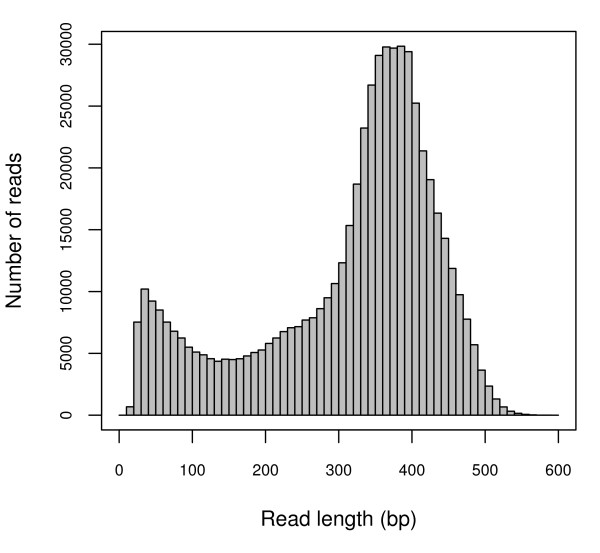
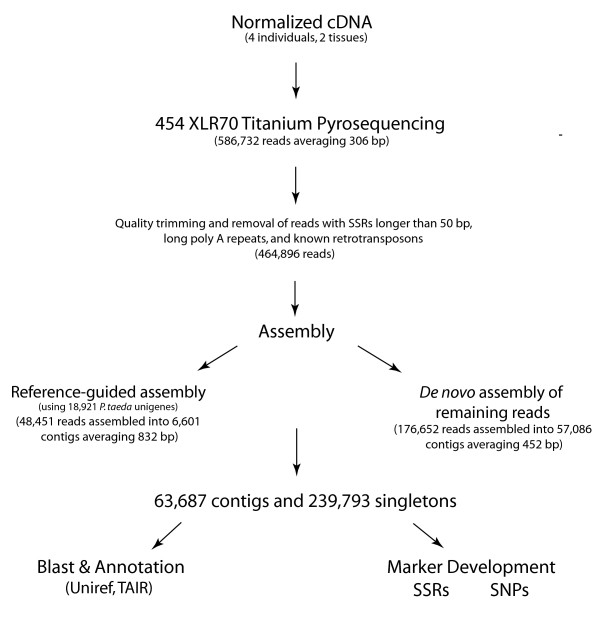
BACKGROUND: Massively parallel sequencing of cDNA is now an efficient route for generating enormous sequence collections that represent expressed genes. This approach provides a valuable starting point for characterizing functional genetic variation in non-model organisms, especially where whole genome sequencing efforts are currently cost and time prohibitive. The large and complex genomes of pines (Pinus spp.) have hindered the development of genomic resources, despite the ecological and economical importance of the group. While most genomic studies have focused on a single species (P. taeda), genomic level resources for other pines are insufficiently developed to facilitate ecological genomic research. Lodgepole pine (P. contorta) is an ecologically important foundation species of montane forest ecosystems and exhibits substantial adaptive variation across its range in western North America. Here we describe a sequencing study of expressed genes from P. contorta, including their assembly and annotation, and their potential for molecular marker development to support population and association genetic studies. RESULTS: We obtained 586,732 sequencing reads from a 454 GS XLR70 Titanium pyrosequencer (mean length: 306 base pairs). A combination of reference-based and de novo assemblies yielded 63,657 contigs, with 239,793 reads remaining as singletons. Based on sequence similarity with known proteins, these sequences represent approximately 17,000 unique genes, many of which are well covered by contig sequences. This sequence collection also included a surprisingly large number of retrotransposon sequences, suggesting that they are highly transcriptionally active in the tissues we sampled. We located and characterized thousands of simple sequence repeats and single nucleotide polymorphisms as potential molecular markers in our assembled and annotated sequences. High quality PCR primers were designed for a substantial number of the SSR loci, and a large number of these were amplified successfully in initial screening. CONCLUSIONS: This sequence collection represents a major genomic resource for P. contorta, and the large number of genetic markers characterized should contribute to future research in this and other pines. Our results illustrate the utility of next generation sequencing as a basis for marker development and population genomics in non-model species.
Overview
The claims and statistics of this paper haven’t been checked yet.
Free: it reads the open-access text and checks the first 5 claims that cite a source we can check. Create a free account to check every claim.
Integrity signals
Registry
Cites
Statistics
Figures
Verification
Claims the paper makes
The claims and statistics of this paper haven’t been checked yet.
Free: it reads the open-access text and checks the first 5 claims that cite a source we can check. Create a free account to check every claim.
Claims other papers make about this one
Each is checked against this paper’s own text: does it say what the citing paper says it does?
The cited source says what the claim attributes to it.
In the citing paper
“Furthermore, large collections of ESTs have proven invaluable for functional genomics and molecular marker development [9-13].”
The cited source says what the claim attributes to it.
In the citing paper
“Due to its long read length and appearance ahead of the other two platforms, Roche GS FLX has been the most widely used platform for de novo transcriptome sequencing in many organisms, such as chestnut [19], pine [10], olive [44], ginseng [20], A. thaliana [45,46], maize [47], Artemisia annua [48], fish [18], insects [49,50], and worms [17].”
The cited source says what the claim attributes to it.
In the citing paper
“The newly developed high throughput sequencing technology, i.e. Next Generation Sequencing (NGS), including the Roche/454 Genome Sequencer FLX Instrument, the ABI SOLiD System, and the Illumina Genome Analyser, is a powerful and cost-efficient tool for advanced research in many areas, including re-sequencing, microRNA expression profiling, DNA methylation, especially de novo transcriptome”
The cited source says what the claim attributes to it.
In the citing paper
“Like [10,19], if we assumed that the number of genes in sweetpotato was commensurate with that in Arabidopsis (25,000 genes, [62]), our annotated unigenes (20,755 genes with unique protein accession numbers) would likely represent more than 80% of genes in sweetpotato.”
The cited source says what the claim attributes to it.
In the citing paper
“Nonetheless, only 40% of reads were assembled into unigenes, which is less than that reported for 454 transciptome assemblies (e.g., 88% [11], 90% [17], 48% [10]).”
Self-check
Percentages, sums and reported differences re-computed from the paper’s own numbers.
The self-check needs the paper’s full text.
Citations
Cites
Gapped BLAST and PSI-BLAST: a new generation of protein database search programs
Altschul, S. (1997) · Nucleic Acids Research · doi:10.1093/nar/25.17.3389 · Cited by 73,302 · cited 7×
“These contigs were then aligned to UniRef50 using BLASTx with an E value threshold of 10-4.”
MethodInfluentialProceedings of the National Academy of Sciences of the United States of America
Dowling, J. E., & Wald, G. (2009) · Nutrition Reviews · doi:10.1111/j.1753-4887.1981.tb06752.x · Cited by 17,893
The Proceedings of the National Academy of Sciences
Richards, J. W. (1915) · Science · doi:10.1126/science.42.1074.161 · Cited by 13,983
Conesa, A., Götz, S., García-Gómez, J. M., Terol, J., Talón, M., & Robles, M. (2005) · Bioinformatics · doi:10.1093/bioinformatics/bti610 · Cited by 11,495
Genome sequencing in microfabricated high-density picolitre reactors
Margulies, M., Egholm, M., Altman, W. E., Attiya, S., Bader, J. S., Bemben, L. A., Berka, J., Braverman, M. S., Chen, Y.-J., Chen, Z., et al. (2005) · Nature · doi:10.1038/nature03959 · Cited by 7,693 · cited 2×
“For example 30-50% of the mammalian genome is composed of retroelements [9], and they comprise a substantial proportion of most plant genomes [49,50].”
BackgroundMethodMolecular Markers, Natural History and Evolution
Avise, J. C. (1994) · Springer eBooks · doi:10.1007/978-1-4615-2381-9 · Cited by 5,242
Environmental genome shotgun sequencing of the sargasso sea
Venter, J. C., Remington, K., Heidelberg, J. F., Halpern, A. L., Rusch, D., Eisen, J. A., Wu, D., Paulsen, I., Nelson, K. E., Nelson, W., et al. (2004) · Science · doi:10.1126/science.1093857 · Cited by 4,376 · cited 1×
“Such findings point to the utility of largescale transcriptome sequencing and annotation for detecting parasites or symbionts present in sampled in tissues, just as is done more generally in environmental genomics [47].”
BackgroundThe evolutionary dynamics of repetitive DNA in eukaryotes
Charlesworth, B., Sniegowski, P., & Stephan, W. (1994) · Nature · doi:10.1038/371215a0 · Cited by 1,623 · cited 1×
“Retrotransposons are known to play a prominent role in the evolution of genome size and complexity across eukaryotes [48].”
BackgroundUniRef: comprehensive and non-redundant UniProt reference clusters
Suzek, B. E., Huang, H., McGarvey, P., Mazumder, R., & Wu, C. H. (2007) · Bioinformatics · doi:10.1093/bioinformatics/btm098 · Cited by 1,613
The power and promise of population genomics: from genotyping to genome typing
Luikart, G., England, P. R., Tallmon, D., Jordan, S., & Taberlet, P. (2003) · Nature Reviews Genetics · doi:10.1038/nrg1226 · Cited by 1,365 · cited 2×
“The thousands of SNP and SSR markers in our 454 ESTs should enable population genomic and gene-based association studies [53,66].”
Background
Research works printed but not linked: 1
- [24]Lotan JE Baumgartner DM The role of cone serotiny in lodgepole pine forests Symposium Proceedings 1975 Washington State University, Pullman, Washington, USA 471 495
Cited by
Items 301–400 of 443
Fang, D., Zhou, Y., Duan, J.-R., Zhang, M.-Y., Xu, D.-P., Liu, K., Xu, P., & Wei, Q. (2015) · Genetics and Molecular Research · doi:10.4238/2015.november.13.1 · Cited by 10
Zheng, X., You, Y., Diao, Y., Zheng, X., Xie, K. Q., Zhou, M. Q., Hu, Z., & Wang, Y.-W. (2015) · Genetics and Molecular Research · doi:10.4238/2015.september.22.11 · Cited by 9
“, 2005), Pinus contorta (Parchman et al., 2010), sweet potato (Wang et al.”
Forest Tree Genomics: Review of Progress
Parent, G. J., Raherison, E., Sena, J. S., & MacKay, J. J. (2015) · Advances in botanical research · doi:10.1016/bs.abr.2015.05.004 · Cited by 11
Zhang, A. J., Liu, S., Zhu, J., Gu, Z. M., Zhou, Z., Zhang, G. F., & Lu, K. (2016) · AquaDocs (United Nations Educational, Scientific and Cultural Organization) · doi:10.22092/ijfs.2018.114620 · Cited by 11
Bansal, M., Adamski, N. M., Toor, P. I., Kaur, S., Sharma, A., Srivastava, P., Bansal, U. K., Uauy, C., & Chhuneja, P. (2021) · Molecular Biology Reports · doi:10.1007/s11033-021-06525-4 · Cited by 9
Ahn, Y., Tripathi, S., Kim, J.-H., Cho, Y., Lee, H.-E., Kim, D., Woo, J., & Yoon, M. K. (2014) · Scientia Horticulturae · doi:10.1016/j.scienta.2014.03.007 · Cited by 9
SNP discovery in radiata pine using a de novo transcriptome assembly
Durán, R., Rodriguez, V., Carrasco, A., Neale, D. B., Balocchi, C., & Valenzuela, S. (2019) · Trees · doi:10.1007/s00468-019-01875-w · Cited by 8
“However, there is still a high proportion of query without a hit (61%), which could represent artifacts, proteins not well characterized in closely related taxa, or potential novel conifer-specific proteins (Parchman et al. 2010; Gonzalez-Ibeas et al. 2016).”
BackgroundTranscriptomes That Confer to Plant Defense against Powdery Mildew Disease inLagerstroemia indica
Wang, X., Shi, W., & Rinehart, T. A. (2015) · International Journal of Genomics · doi:10.1155/2015/528395 · Cited by 10
“In recent years, the newly developed NGS-based RNA-seq technique has beenwidely used for transcriptome sequencing and de novo assembly, discovery of novel genes, and investigation of gene expression in many nonmodel trees such as bamboo [36], coffee [37], eucalyptus tree [38, 39], oak [40], pine [41], and poplar [42,…”
MethodTranscriptome Analysis of Reaction Wood in Gymnosperms by Next-Generation Sequencing
Sato, S., Yoshida, M., Hiraide, H., Ihara, K., & Yamamoto, H. (2014) · American Journal of Plant Sciences · doi:10.4236/ajps.2014.518295 · Cited by 10
“Some plant transcriptomic studies sequenced pooled cDNA samples from different tissues [25] [29] [30] or assembled transcriptomic data using sequencing reads from different tissues [10] [11] [31], whereas others performed tissue-specific transcriptomic sequencing and assembly [12] [26] [32].”
BackgroundCBrowse: a SAM/BAM-based contig browser for transcriptome assembly visualization and analysis
Li, P., Ji, G., Dong, M., Schmidt, E. E., Lenox, D., Chen, L., Liu, Q., Liu, L., Zhang, J., & Liang, C. (2012) · Bioinformatics · doi:10.1093/bioinformatics/bts443 · Cited by 8
“Designed in a standard three-tier architecture with a data pre-processing pipeline, CBrowse is essentially a Rich Internet Application that offers many seamlessly integrated web interfaces and allows users to navigate, sort, filter, search and visualize data smoothly.”
BackgroundFeng, Y., Zhao, Y.-Y., Wang, K., Li, Y., Wang, X., & Yin, J. (2016) · Journal of Genetics · doi:10.1007/s12041-016-0724-0 · Cited by 17
Wang, J., ZhiTong, C., Jin, S., Hu, Z., Huang, Y., & Diao, Y. (2017) · Genes & Genomics · doi:10.1007/s13258-017-0536-5 · Cited by 10
“2015), potentially reflecting the nature of the species, the criteria for defining SSRs, and the different software programs and parameters that were used (Tangphatsornruang et al. 2009; Castoe et al. 2010; Parchman et al. 2010).”
BackgroundTorales, S., Rivarola, M., González, S., Inza, M. V., Pomponio, M. F., Fernández, P. D. C., Acuña, C. V., Zelener, N., Fornes, L. F., Hopp, H. E., et al. (2018) · PLoS ONE · doi:10.1371/journal.pone.0203768 · Cited by 10
Transcriptome sequencing reveals signatures of positive selection in the Spot-Tailed Earless Lizard
Maldonado, J. A., Firneno, T. J., Roelke, C. E., Rains, N. D., Mwgiri, J., & Fujita, M. K. (2020) · PLoS ONE · doi:10.1371/journal.pone.0234504 · Cited by 8
Peery, R. M., McAllister, C. H., Cullingham, C. I., Mahon, E. L., Arango‐Velez, A., & Cooke, J. E. K. (2021) · Botany · doi:10.1139/cjb-2020-0125 · Cited by 11
“There are genomic resources available for lodgepole pine including transcriptomes (Parchman et al. 2010; Hall et al. 2013; Hodgins et al. 2016), single nucleotide polymorphism (SNP) resources (Cullingham et al. 2013a; Yeaman et al. 2016; Burns et al. 2019), and microsatellite assays (Cullingham et…”
BackgroundKim, S.-J., Nie, H., Jun, B.-K., Kim, J., Lee, J., Kim, S., Kim, E., & Kim, S. (2020) · Genes & Genomics · doi:10.1007/s13258-020-00927-7 · Cited by 8
Jantan, S. Z., Poh, K. B., & Ginibun, F. C. (2024) · Plant Gene · doi:10.1016/j.plgene.2024.100463 · Cited by 7
An, C. M., An, H. S., Lee, J. W., & Hong, S. W. (2013) · Genetics and Molecular Research · doi:10.4238/2013.may.14.8 · Cited by 7
“Hundreds if not thousands of MS loci can be identified from a fraction of a single next-generation sequencing run (Parchman et al., 2010).”
BackgroundCheng, X., Wang, F., Luo, W., Kuang, J., & Huang, X. (2022) · Genes · doi:10.3390/genes13061024 · Cited by 7
“52% unigenes did not significantly match to any of those six datasets, which might be attributed to their short full-length transcripts or the high threshold of E-value [45].”
BackgroundWang, L., Yang, Y., Zhao, Y., Yang, S., Udikeri, S. S., & Liu, T. (2016) · Cited by 7
Li, P., Du, L., Li, W., Fan, Z., Zeng, D., Chen, H., Zhou, L., Yi, Y., Yang, N., Dou, K., et al. (2017) · Molecular BioSystems · doi:10.1039/c6mb00771f · Cited by 7
Laricchia, K. M., Johnson, M. G., Ragone, D., Williams, E. W., Zerega, N. J. C., & Wickett, N. J. (2018) · American Journal of Botany · doi:10.1002/ajb2.1095 · Cited by 8
Yu, L. Y., Bai, J., Fan, J., Ma, D. M., Quan, Y., & Jiang, P. (2015) · Genetics and Molecular Research · doi:10.4238/2015.december.29.35 · Cited by 6
Sahoo, L., Das, S. P., Bit, A., Patnaik, S., Mohanty, M., Das, G., & Das, P. (2021) · Genetica · doi:10.1007/s10709-021-00141-7 · Cited by 6
Qu, J., Wang, X., Chi, S., Wu, S., Sun, J., Liu, C., Chen, S., Yu, J. M., & Liu, T. (2014) · Acta Oceanologica Sinica · doi:10.1007/s13131-014-0437-2 · Cited by 6
Díaz‐Sala, C., Cabezas, J. A., de Simón, B. F., Abarca, D., Guevara, M. Á., de Miguel, M., Cadahía, E., Aranda, I., & Cervera, M. (2013) · Elsevier eBooks · doi:10.1533/9781908818478.67 · Cited by 6
Pérez‐González, A., Marconi, M., Cobo-Simón, I., Méndez‐Cea, B., Perdiguero, P., Linacero, R., Linares, J. C., & Gallego, F. J. (2018) · Forest Science · doi:10.1093/forsci/fxy022 · Cited by 6
“Transcriptome sequencing is particularly useful for characterizing species such as conifers, which have large and repetitive genomes (Parchman et al. 2010; Roschanski et al. 2013; Canales et al. 2014).”
Suresh, S., Kim, T.-S., Raveendar, S., Cho, J.-H., Yi, J.-Y., Lee, M. C., Lee, S., Baek, H.-J., Cho, G., & Chung, J. (2015) · TURKISH JOURNAL OF AGRICULTURE AND FORESTRY · doi:10.3906/tar-1409-3 · Cited by 6
“Some recent studies indicated that short reads from 454 GS FLX pyrosequencing can be assembled and used effectively to characterize the gene space in various organisms (Barbazuk et al., 2007; Vera et al., 2008; Meyer et al., 2009; Parchman et al., 2010).”
BackgroundLin, Q., Luo, W., Wan, S., & Gao, Z. (2016) · PLoS ONE · doi:10.1371/journal.pone.0154096 · Cited by 8
Dantu, P. K., Prasad, M., & Ranjan, R. (2021) · bioRxiv (Cold Spring Harbor Laboratory) · doi:10.1101/2021.01.03.425108 · Cited by 7
“These analyses would provide genomic information to understand patterns of adaptive variation across the genome and to identify the genetic basis of adaptive traits (Parchman et al., 2010).”
BackgroundJackson, T., Ishengoma, E., & Rhode, C. (2021) · Marine Biotechnology · doi:10.1007/s10126-021-10046-3 · Cited by 5
Genomic and Transcriptomic Profiling: Tools for the Quality Production of Plant-Based Medicines
Sucher, N. J., Hennell, J. R., & Carles, M. (2012) · Springer eBooks · doi:10.1007/978-3-642-29974-2_19 · Cited by 5
“studies in plants including the discovery of SSR markers in expressed sequences, so-called expressed sequence tag (EST)-SSRs (Kaur et al. 2011; Zeng et al. 2010; Parchman et al. 2010; Molina et al. 2011; Hiremath et al. 2011; Franssen et al. 2011; Severin et al. 2010; Lu et al. 2010; Angeloni et al. 2011; Hao et al. 2…”
BackgroundMuñoz, H., & Ignacio, S. (2013) · Cited by 5
Huang, J., Fang, L., Wang, S., Liu, X., Chen, Y., Chen, Y., Tian, H., Lin, S., Tian, S., Wei, H., et al. (2019) · Archives of Insect Biochemistry and Physiology · doi:10.1002/arch.21549 · Cited by 5
Transcriptome analysis provides new insights into cold adaptation of corsac fox (Vulpes Corsac)
Yang, X., Sun, G., Xia, T., Cha, M., Zhang, L., Pang, B., Tang, Q., Dou, H., & Zhang, H. (2022) · Ecology and Evolution · doi:10.1002/ece3.8866 · Cited by 7
“This large number of reads with paired- end information produced much longer unigenes (mean: 618 bp) than those in previous studies (Novaes et al., 2008; Parchman et al., 2010).”
ResultGenome Sequencing Analysis of Macrophomina Phaseolina Resistant and Susceptible Castor Genotype
Verma, S., Tomar, R. S. S., Rathode, V., Thakker, J., Shubham, S., Nawade, B. D., Raval, S., Antala, T. J., Jogia, Z., & Golakiya, B. A. (2018) · Biosciences Biotechnology Research Asia · doi:10.13005/bbra/2624 · Cited by 5
“Contigs were ordered and aligned with reference genome Arabidopsis thallina (Parchman et al., 2010).”
MethodFonseca, N. R., Caballero, J. R. I., Kim, M., Stewart, J. E., Guimarães, L. M. D. S., Alfenas, A. C., & Klopfenstein, N. B. (2019) · Forest Pathology · doi:10.1111/efp.12508 · Cited by 5
Wei, H., Chang, H. H., Zheng, L., Lin, S., Chen, Y., Tian, H., Zhao, J., Chen, Y., Cai, H., Gu, X., et al. (2016) · Pesticide Biochemistry and Physiology · doi:10.1016/j.pestbp.2016.05.005 · Cited by 4
Zhou, H., Cai, B., Lu, Z., Gao, Z., & Qiao, Y. (2016) · Genetics and Molecular Research · doi:10.4238/gmr.15038683 · Cited by 4
Liu, C., Zhang, M., & Zhao, X. (2023) · BMC Plant Biology · doi:10.1186/s12870-023-04086-1 · Cited by 4
Zhong, X., Xu, M., Li, T., & Sun, R. (2023) · PLoS ONE · doi:10.1371/journal.pone.0288999 · Cited by 5
“A total of 16,674 unigenes failed to show matches to any functional annotation, which might be attributed to the short sequence length or the currently limited annotation of Castanopsis and related species in the database [29].”
BackgroundSzczecińska, M., Kwaśniewski, M., Sawicki, J., Chwiałkowska, K., Szandar, K., & Pisarek, W. (2012) · International Journal of Molecular Sciences · doi:10.3390/ijms13089893 · Cited by 4
Lu, R., Xu, W., Lu, Q., Li, P., Losh, J., Hina, F., En-xiang, L., & Qiu, Y. (2018) · Acta Botanica Yunnanica · doi:10.1016/j.pld.2018.11.006 · Cited by 4
“This phenomenon is common in many other plants and these “nonBLASTable” genes were thought to be Croomia-specific genes, rapidly evolving genes, or untranslated regions (UTRs) (Parchman et al., 2010; Logacheva et al., 2011; Zhang et al., 2013).”
BackgroundRhode, C. (2013) · SUNScholar (Stellenbosch University) · Cited by 6
Xu, Y., Zheng, R., Wang, Z., Wang, Y., Hong, Z., Yang, L., Lu, Y., Zhao, Y., Chen, J., & Shi, J. (2015) · Archives of Biological Sciences · doi:10.2298/abs150608124x · Cited by 3
“These results were in general agreement with previous work that demonstrated that 30%-49% of conifer genes had little or no sequence similarity with plant genes of known function [24, 32].”
ResultPopulation Genetics and Genomics of Aleppo Pine (Pinus halepensis)
Vendramin, G. G., Avanzi, C., González‐Martínez, S. C., & Grivet, D. (2021) · Managing forest ecosystems · doi:10.1007/978-3-030-63625-8_2 · Cited by 3
Park, Y., Moe, K. T., Hong, W.-J., & Kwon, S.-W. (2012) · Electronic Journal of Biotechnology · doi:10.2225/vol15-issue2-fulltext-4 · Cited by 3
“The use of next-generation cDNA sequencing has become popular to develop markers, not only because enormous amounts of sequence data are available from which markers can be identified, but also because the novel markers are gene-based (Parchman et al. 2010).”
BackgroundInfluentialCharacterization of Fraxinus spp. Phloem Transcriptome
Vega, R., & Loren, J. G. (2011) · OhioLink ETD Center (Ohio Library and Information Network) · Cited by 3
Köbölkuti, Z. A., Tóth, E. G., Jahn, D., Heinze, B., & Höhn, M. (2020) · Molecular Biology Reports · doi:10.1007/s11033-020-05527-y · Cited by 3
Zafar, U. B., Shahzaib, M., Atif, R. M., Khan, S. H., Niaz, M. Z., Shahzad, K., Chughtai, N., Awan, F. S., Azhar, M. T., & Rana, I. A. (2023) · Scientific Reports · doi:10.1038/s41598-023-45982-8 · Cited by 3
Next Generation Sequencing: A Revolutionary Tool For Plant Variety Improvement
Chikara, S. K., Pandey, M., Pandey, S., Vaidya, K., & Chaudhary, S. (2014) · Cited by 3
Ahn, Y., Tripathi, S., Cho, Y., Kim, J., Lee, H., Kim, D., Woo, J., & Yoon, M.-K. (2014) · Crop Science · doi:10.2135/cropsci2013.10.0673 · Cited by 3
EST sequencing and gene expression profiling in Scutellaria baicalensis
Park, N. I., Choi, I., Choi, B., Kim, Y. S., Lee, M. Y., & Park, S. U. (2014) · Europe PMC (PubMed Central) · doi:10.17877/de290r-15736 · Cited by 3
“Total RNA sequencing, using a high-throughput DNA sequencing method, is another method that not only efficiently provides RNA sequence data but also profiles gene expression and identifies novel genes in nonmodel organisms (Parchman et al., 2010; Zeng et al., 2010; Logacheva et al., 2011).”
MethodPERSPECTIVES Transcriptome sequencing: next generation approach to RNA functional analysis
Żmieńko, A., Jackowiak, P., & Figlerowicz, M. (2014) · Biotechnologia · doi:10.5114/bta.2011.46548 · Cited by 4
Zhang, Z., Lin, Q., & Zhong, Q. (2017) · HortScience · doi:10.21273/hortsci11370-16 · Cited by 3
Liu, D., Ma, J., Yang, J., Nguyen, T. V., Liu, H., Huang, R., Sui, S., & Li, M. (2014) · HortScience · doi:10.21273/hortsci.49.11.1360 · Cited by 3
“Next, we designed the primer pairs to flank the detected SSR sites using a Primer3 tool (Rychlik, 1995).”
MethodDevelopment of genomic resources for ornamental lilies (Lilium L.)
Shahin, A. (2012) · doi:10.18174/212113 · Cited by 5
“The same way of cDNA synthesis and normalization was also applied in other studies (Parchman et al., 2010; Wall et al., 2009).”
ResultComparative Evolutionary Genomics of Land Plants
Litt, A. (2012) · Wiley eBooks · doi:10.1002/9781118305881.ch8 · Cited by 3
Wan, M., Faruq, J., Rosenberg, J. N., Xia, J., Oyler, G. A., & Betenbaugh, M. J. (2012) · Journal of Microbiological Methods · doi:10.1016/j.mimet.2012.10.010 · Cited by 2
“Thus, cDNA sequencing is considered as an efficient means to obtain functional genomic data for non-model organisms or for those with genome characteristics prohibitive towhole genome sequencing (Nagalakshmi et al., 2008; Parchman et al., 2010).”
MethodBioinformatics Techniques for Understanding and Analyzing Tree Gene Expression Data
LUKENS, L. N., & Downs, G. S. (2012) · Springer eBooks · doi:10.1007/978-1-4614-0920-5_2 · Cited by 2
“Parchman et al. ( 2010 ) performed a similar large-scale gene discovery initiative.”
BackgroundWu, T., Xiao, L., Chen, S., & Delu, N. (2015) · Plant Omics · Cited by 2
He, Y., Li, Z., Liu, P., Wang, Q., & Li, J. (2016) · Fisheries Science · doi:10.1007/s12562-015-0961-9 · Cited by 2
“9 bp) than those generated in previous studies [36, 37].”
ResultDassanayake, M., Oh, D., Yun, D., Bressan, R. A., Cheeseman, J. M., & Bohnert, J. H. (2011) · Elsevier eBooks · doi:10.1016/b978-0-12-381466-1.00002-x · Cited by 2
Gene and Genome Sequencing in Conifers: Modern Era
Neale, D. B., & Wheeler, N. C. (2019) · Springer eBooks · doi:10.1007/978-3-319-46807-5_3 · Cited by 2
Finding simple sequence repeats (SSRs) within human genome using MapReduce based K-mer algorithm
Mondal, S., & Khatua, S. (2018) · International Conference on Parallel, Distributed and Grid Computing (PDGC) · doi:10.1109/pdgc.2018.8745894 · Cited by 2
“[9].”
Evolutionary targets of gene expression divergence in a complex of closely related pine species
Zaborowska, J., Perry, A., Cavers, S., & Wachowiak, W. M. (2022) · Journal of Systematics and Evolution · doi:10.1111/jse.12896 · Cited by 2
“In the new assembly, the number of raw gene models reconstructed is considerably higher as compared to the original P. sylvestris raw assembly and to single‐species studies in other pines (Parchman et al., 2010; Pinosio et al., 2014; Duran et al., 2019).”
ResultFunctional characteristics of EST-SSR markers available for Scots pine
Gulyaeva, E. E., Tarelkina, T. V., & Galibina, N. A. (2022) · Mathematical Biology and Bioinformatics · doi:10.17537/2022.17.82 · Cited by 2
Molecular and Population Level Approaches to Understand Taxus Metabolism in Cell Suspension Cultures
Patil, R. A. (2013) · ScholarWorks@UMassAmherst (University of Massachusetts Amherst) · doi:10.7275/r4bf-9574 · Cited by 2
“2007), and for de novo assembly of EST data for organisms where no prior genomic resources are present (Parchman et al. 2010).”
BackgroundChano, V. (2018) · UPM Digital Archive (Technical University of Madrid) · doi:10.20868/upm.thesis.51143 · Cited by 2
Sadhu, P., Kumari, M., Parmar, G. R., & Talele, C. (2025) · Wiley eBooks · doi:10.1002/9781394203680.ch20 · Cited by 2
Diversidad genética en las pináceas de Norteamérica: una revisión actual
Ortiz‐Martínez, A., Moreno‐Letelier, A., Valério, P., Piñero, D., Ortiz-Martínez, C., & Vázquez‐Lobo, A. (2024) · Ecosistemas · doi:10.7818/ecos.2725 · Cited by 1
Conifer Genome Sequencing and Functional Study of Disease Resistance Genes
Tang, X. (2024) · Tree Genetics and Molecular Breeding · doi:10.5376/tgmb.2024.14.0013 · Cited by 1
Expanding the Research Frontiers of Pinus Species in Wood Biology
Jang, H.-A., Pyo, S., Choi, Y., Lee, H., Bae, E., & Ko, J. (2025) · Forests · doi:10.3390/f17010048 · Cited by 1
Xu, X., Li, T., Li, Y., Wang, H., & Xu, X. (2015) · International Journal of Control and Automation · doi:10.14257/ijca.2015.8.2.11 · Cited by 1
RNA-SEQ driven analysis of seasonal gene expression variation in miscanthus giganteus
Barling, A. (2014) · Illinois Digital Environment for Access to Learning and Scholarship (University of Illinois at Urbana-Champaign) · Cited by 1
Comprehensive Organ-Specific Profiling of Douglas Fir (Pseudotsuga menziesii) Proteome
Teyssier, C., Rogier, O., Claverol, S., Gautier, F., Lelu‐Walter, M., & Duruflé, H. (2023) · Biomolecules · doi:10.3390/biom13091400 · Cited by 1
Postolache, D. (2017) · Bulletin of University of Agricultural Sciences and Veterinary Medicine Cluj-Napoca Horticulture · doi:10.15835/buasvmcn-hort:12625 · Cited by 1
“…is much more challenging for non-model organisms, particularly for species characterized by large and repetitive genomes such as conifers when compared to transcriptome sequencing, being facilitated by the reduce amount of repetitive DNA and by increased coverage depth (Parchman et al., 2010)2010.”
BackgroundMolecular genetic analysis of some North African barley germplasms
Gaafar, R. M., Allam, M. A., Sabry, R., & Saker, M. M. (2017) · Acta agriculturae Slovenica · doi:10.14720/aas.2017.109.2.03 · Cited by 1
“Recently, cDNA sequences are being used to develop markers, which are very useful since they are genebased markers (Parchman et al., 2010).”
BackgroundGood Citizenship Made Easy: A Step‐by‐Step Guide to Submitting RNA‐Seq Data to NCBI
Feindt, W., Oppenheim, S. J., DeSalle, R., & Mehr, S. (2018) · Current Protocols in Bioinformatics · doi:10.1002/cpbi.67 · Cited by 1
Shangguan, J. B., Xu, A., Hu, X., & Li, Z. (2019) · Journal of Oceanology and Limnology · doi:10.1007/s00343-019-8071-7 · Cited by 1
Torales, S., Mujtar, V. A. E., Poltri, S. N. M., Pomponio, M. F., Soliani, C., Villalba, P. V., Estravis-Barcala, M., Klein, L., García, M. N., Pentreath, V., et al. (2020) · Springer eBooks · doi:10.1007/978-3-030-56462-9_17 · Cited by 1
SNP discovery and SSR mining from Carya illinoinensis – RAD sequences
Wang, X., & Grauke, L. J. (2021) · Acta Horticulturae · doi:10.17660/actahortic.2021.1318.25 · Cited by 1
蕭, 培., 霍, 利., 陈, 士., 彭, 勇., 穆, 军., 郝, 大., 马, 培., 许, 利., & 孙, 超. (2012) · Scientia Sinica Vitae · doi:10.1360/zc2012-42-5-398 · Cited by 1
Integrative Analysis of Secondary Metabolism and Transcript Regulation inArabidopsis Thaliana
Matsuda, F., & Saito, K. (2013) · Wiley eBooks · doi:10.1002/9783527669882.ch9 · Cited by 1
Sun, H. (2011) · Työväentutkimus Vuosikirja · Cited by 1
Assembly, annotation, and polymorphic characterization of the Erysiphe necator transcriptome
Myers, J. R. (2012) · RIT Scholar Works (Rochester Institute of Technology) · Cited by 3
Hernández Muñoz, S. I. (2013) · Open Access Victoria University of Wellington | Te Herenga Waka (Figshare) · doi:10.26686/wgtn.17005726 · Cited by 3
Garzón-Martínez, G. A. (2020) · Repositorio Institucional (Pontificia Universidad Javeriana) · doi:10.11144/javeriana.10554.3384 · Cited by 2
High-Throughput Transcriptome Analysis of Plant Stress Responses
Tombuloğlu, G., & Tombuloğlu, H. (2015) · Springer eBooks · doi:10.1007/978-3-319-17157-9_12
Beyond Tags to Full‐Length Transcripts
Mohiuddin, M., Hutchison, S. K., & Jarvie, T. P. (2011) · Wiley eBooks · doi:10.1002/9783527644582.ch21
Viala, V. L. (2014) · Digital Library of Theses and Dissertations (Universidade de São Paulo) · doi:10.11606/t.85.2014.tde-13062014-104311 · Cited by 1
Sundan, S., Kim, T. S., Raveendar, S., Cho, G., Sung, J.-S., Cho, Y., Lee, S., Ma, K., & Chung, J. (2014) · Plant Breeding and Biotechnology · doi:10.9787/pbb.2014.2.3.213
“(2012) reported in their study on transcriptome sequencing de novo assembly that large numbers of singletons were obtained for Pisum sativum (86,476), Vicia faba (79,657), and some other species (Meyer et al. 2009; Wang et al. 2009; Parchman et al. 2010; Franssen et al. 2011).”
BackgroundResultInfluentialFunctional genomics of the Glanville fritillary butterfly
Kvist, J. (2014) · Helda - University of Helsinki Institutional Repository
Original article: EST SEQUENCING AND GENE EXPRESSION PROFILING IN SCUTELLARIA BAICALENSIS
Park, N. I., Choi, I., Choi, B., Kim, Y. S., & Lee, M. Y. (2014)
Analysis of RNA-seq data from the interaction of Coffea spp. - Colletotrichum kahawae
Fino, J. (2014) · Portuguese National Funding Agency for Science, Research and Technology (RCAAP Project by FCT) · Cited by 1
Gaspar, D. (2016) · Portuguese National Funding Agency for Science, Research and Technology (RCAAP Project by FCT)
Linkage mapping in Haliotis midae using gene-linked
Jansen, S. (2011)
Graph regularized, semi-supervised learning improves annotation of de novo transcriptomesPreprint
Malik, L. I., Thatipally, S., Junneti, N., & Patro, R. (2016) · bioRxiv (Cold Spring Harbor Laboratory) · doi:10.1101/089417
“Traditionally, variants of BLAST [5] are used to perform this annotation and then complete Gene Ontology (GO) analysis [6, 7].”
Method
Metadata
- Authors
- Parchman, T. L., Geist, K. S., Grahnen, J. A., Benkman, C. W., & Buerkle, C. A.
- Affiliations
- University of Wyoming (US)
- Beloit College (US)
- Corresponding author
- Parchman, Thomas L
- Venue
- BMC Genomics
- Published
- 2010
- Volume
- 11
- Issue
- 1
- Pages
- 180
- ISSN
- 1471-2164 (ISSN-L)
- PMC
- PMC2851599
- OpenAlex
- W2123405262
- Cited by
- 446
- References
- 73
- Citations by year
- 2026: 3 · 2025: 5 · 2024: 4 · 2023: 7 · 2022: 5 · 2021: 17 · 2020: 28 · 2019: 15 · 2018: 24 · 2017: 20 · 2016: 32 · 2015: 37 · 2014: 52 · 2013: 59 · 2012: 74
- FWCI
- 25.64
- Type
- journal article
- Language
- en
- Open access
- gold
- doi.org
- Licence
- cc-by
- Locations
- BMC Genomics (publishedVersion, cc-by)
- Europe PMC (PubMed Central) (publishedVersion, cc-by)
- PubMed Central (publishedVersion, cc-by)
- PubMed (publishedVersion)
- DOAJ (DOAJ: Directory of Open Access Journals) (submittedVersion)
- Funders
- National Science Foundation (0344503, 0701757)
- University of Wyoming
- National Institutes of Health
- Division of Biological Infrastructure
- Division of Environmental Biology
- Topics
- Life Sciences › Biochemistry, Genetics and Molecular Biology › Molecular Biology › Genomics and Phylogenetic Studies
- Life Sciences › Biochemistry, Genetics and Molecular Biology › Genetics › Genetic Mapping and Diversity in Plants and Animals
- Life Sciences › Biochemistry, Genetics and Molecular Biology › Genetics › Genetic diversity and population structure
- Keywords
- lodgepole pine, expressed genes, transcriptome assembly, genome annotation, molecular markers, microsatellite markers, single nucleotide polymorphisms, retrotransposons, population genomics, non-model organisms, cDNA sequencing
- MeSH terms
- Genetic Markers, Trees, Genes, Plant, Sequence Analysis, DNA, DNA Primers, DNA, Complementary, Minisatellite Repeats, Retroelements, DNA, Plant, Genome, Plant, Expressed Sequence Tags, Contig Mapping, Polymorphism, Single Nucleotide, Gene Expression Profiling, Genomics, Pinus
About these checks
Registry, retraction, Cites and statistics results are computed, not judged, with one exception: a printed reference that no index lists is read once by a model before it counts as a citation error. Claims are extracted by a model and kept only when their quote appears verbatim in the text; each cited source is then checked, with a model’s help, for whether it says what the claim relies on. Those verdicts can be wrong — read the claim’s quote and the cited source before relying on one.
Statistics and arithmetic are recomputed, not judged.
Confidence bands are shown only for fields calibrated on our annotated test set. None is calibrated yet, so no band is shown.
What counts as a claim ›How we measure confidence ›How we check this ›
Are you an author, or do you see a problem with this page? Request a review
Data sources
Bibliographic data: Semantic Scholar, OpenAlex, Crossref.
Contains information from the Semantic Scholar Academic Graph Datasets, made available under the ODC Attribution License (ODC-BY 1.0).
Semantic Scholar’s data is described in: Kinney, R., et al. (2023). The Semantic Scholar Open Data Platform. arXiv:2301.10140.
