

Rnnotator: an automated de novo transcriptome assembly pipeline from stranded RNA-Seq reads
Open accessThe DOI matches its Crossref record; 16 of the 16 references it cites were found in a registry or an index.
Abstract
Background: Comprehensive annotation and quantification of transcriptomes are outstanding problems in functional genomics. While high throughput mRNA sequencing (RNA-Seq) has emerged as a powerful tool for addressing these problems, its success is dependent upon the availability and quality of reference genome sequences, thus limiting the organisms to which it can be applied. Results: Here, we describe Rnnotator, an automated software pipeline that generates transcript models by de novo assembly of RNA-Seq data without the need for a reference genome. We have applied the Rnnotator assembly pipeline to two yeast transcriptomes and compared the results to the reference gene catalogs of these organisms. The contigs produced by Rnnotator are highly accurate (95%) and reconstruct full-length genes for the majority of the existing gene models (54.3%). Furthermore, our analyses revealed many novel transcribed regions that are absent from well annotated genomes, suggesting Rnnotator serves as a complementary approach to analysis based on a reference genome for comprehensive transcriptomics. Conclusions: These results demonstrate that the Rnnotator pipeline is able to reconstruct full-length transcripts in the absence of a complete reference genome.
Overview
The claims and statistics of this paper haven’t been checked yet.
Free: it reads the open-access text and checks the first 5 claims that cite a source we can check. Create a free account to check every claim.
Integrity signals
Registry
Cites
Statistics
Figures
Verification
Claims the paper makes
The claims and statistics of this paper haven’t been checked yet.
Free: it reads the open-access text and checks the first 5 claims that cite a source we can check. Create a free account to check every claim.
Claims other papers make about this one
Each is checked against this paper’s own text: does it say what the citing paper says it does?
The source backs part of the claim, not all of it — or backs it for a different population, condition or comparison.
In the citing paper
“However, new assembly strategies such as merging the contigs of multiple assemblies [20], [21] and trimming of low-quality bases at the end of reads [22] can give better assembly results [9].”
From Digital Gene Expression Analysis Based on Integrated De Novo Transcriptome Assembly of Sweet Potato [Ipomoea batatas (L.) Lam.] (2012) · cites this paper as [20]
Experimental — accuracy not yet measuredThe cited source says what the claim attributes to it.
In the citing paper
“There were no standard criteria to evaluate the quality of transcriptome assemblies [20].”
From Digital Gene Expression Analysis Based on Integrated De Novo Transcriptome Assembly of Sweet Potato [Ipomoea batatas (L.) Lam.] (2012) · cites this paper as [20]
Self-check
Percentages, sums and reported differences re-computed from the paper’s own numbers.
The self-check needs the paper’s full text.
Citations
Cites
Fast and accurate short read alignment with Burrows-Wheeler transform
Li, H., & Durbin, R. (2009) · Bioinformatics · doi:10.1093/bioinformatics/btp324 · Cited by 58,607
Trapnell, C., Williams, B. A., Pertea, G., Mortazavi, A., Kwan, G., van Baren, M. J., Salzberg, S. L., Wold, B. J., & Pachter, L. (2010) · Nature Biotechnology · doi:10.1038/nbt.1621 · Cited by 15,556
Mapping and quantifying mammalian transcriptomes by RNA-Seq
Mortazavi, A., Williams, B. A., McCue, K., Schaeffer, L., & Wold, B. (2008) · Nature Methods · doi:10.1038/nmeth.1226 · Cited by 13,696 · cited 1×
“A few software packages have been developed to perform one or more of the above data analysis tasks, including TopHat/Cufflinks [4,5], ERANGE [6] and Scripture [7].”
MethodRNA-Seq: a revolutionary tool for transcriptomics
Wang, Z., Gerstein, M., & Snyder, M. (2009) · Nature Reviews Genetics · doi:10.1038/nrg2484 · Cited by 13,174 · cited 2×
“A typical RNA-Seq experiment involves RNA isolation followed by conversion to a library of short cDNA fragments and sequencing using next-generation sequencing technology [1,2].”
MethodSelf-citationTopHat: discovering splice junctions with RNA-Seq
Trapnell, C., Pachter, L., & Salzberg, S. L. (2009) · Bioinformatics · doi:10.1093/bioinformatics/btp120 · Cited by 11,617
Velvet: Algorithms for de novo short read assembly using de Bruijn graphs
Zerbino, D. R., & Birney, E. (2008) · Genome Research · doi:10.1101/gr.074492.107 · Cited by 9,491 · cited 3×
“Also, the size of sequencing datasets produced is often very large, and therefore requires substantial memory and long computing times, even for the very efficient De Bruijn graph-based assemblers [8-10].”
Method<tt>BLAT</tt> —The <tt>BLAST</tt> -Like Alignment Tool
Kent, W. J. (2002) · Genome Research · doi:10.1101/gr.229202 · Cited by 8,480 · cited 1×
“The UCSC Blat software [17] was used to align contigs to both genome and transcriptome references.”
MethodGuttman, M., Garber, M., Levin, J. Z., Donaghey, J., Robinson, J., Adiconis, X., Fan, L., Koziol, M. J., Gnirke, A., Nusbaum, C., et al. (2010) · Nature Biotechnology · doi:10.1038/nbt.1633 · Cited by 1,253
Computation for ChIP-seq and RNA-seq studies
Pepke, S., Wold, B., & Mortazavi, A. (2009) · Nature Methods · doi:10.1038/nmeth.1371 · Cited by 557 · cited 1×
“This information is used to i) derive novel gene models or refine existing gene models, including exon structure and untranslated regions (UTRs) and ii) to determine gene expression levels from read count statistics [1,3].”
MethodRNA-Seq—quantitative measurement of expression through massively parallel RNA-sequencing
Wilhelm, B. T., & Landry, J.-R. (2009) · Methods · doi:10.1016/j.ymeth.2009.03.016 · Cited by 508 · cited 1×
“A typical RNA-Seq experiment involves RNA isolation followed by conversion to a library of short cDNA fragments and sequencing using next-generation sequencing technology [1,2].”
Method
Cited by
Items 101–200 of 218
Husaini, A. M., Haq, S. A. U., & Jiménez, A. J. L. (2022) · Molecular Biology Reports · doi:10.1007/s11033-021-07053-x · Cited by 29
Draft Genome Sequence of Tuber borchii Vittad., a Whitish Edible Truffle
Murat, C., Kuo, A., Barry, K., Clum, A., Dockter, R. B., Fauchery, L., Iotti, M., Kohler, A., LaButti, K. M., Lindquist, E., et al. (2018) · Genome Announcements · doi:10.1128/genomea.00537-18 · Cited by 25
“Three micrograms of RNA was used for RNA sequencing using the Illumina HiSeq 2500 platform and de novo assembled using Rnnotator (12).”
MethodSymbiotic nitrogen fixation in the reproductive structures of a basidiomycete fungus
Koch, R. A., Yoon, G. M., Aryal, U. K., Lail, K., Amirebrahimi, M., LaButti, K. M., Lipzen, A., Riley, R. W., Barry, K., Henrissat, B., et al. (2021) · Current Biology · doi:10.1016/j.cub.2021.06.033 · Cited by 30
Pittet, V., Phister, T. G., & Ziola, B. R. (2013) · PLoS ONE · doi:10.1371/journal.pone.0073627 · Cited by 27
“The de novo transcriptome assembly pipeline Rnnotator was used to build contigs from the RNA-seq reads [48].”
MethodYusoff, A. M., Tan, T. K., Hari, R., Koepfli, K., Wee, W. Y., Antunes, A., Sitam, F. T., Rovie‐Ryan, J. J., Karuppannan, K. V., Wong, G. J., et al. (2016) · Scientific Reports · doi:10.1038/srep28199 · Cited by 25
Functional insights into the testis transcriptome of the edible sea urchin Loxechinus albus
Gaitán‐Espitía, J. D., Sánchez, R., Bruning, P., & Cárdenas, L. (2016) · Scientific Reports · doi:10.1038/srep36516 · Cited by 24
Norman, J. D., Ferguson, M. M., & Danzmann, R. G. (2014) · Journal of Experimental Biology · doi:10.1242/jeb.107441 · Cited by 25
“To facilitate de novo assembly, reads with rare k-mers, low quality reads and identical reads were removed using Rnnotator (Martin et al., 2010).”
MethodLütkenhaus, R., Traeger, S., Breuer, J., Carreté, L., Kuo, A., Lipzen, A., Pangilinan, J. L., Dilworth, D. J., Sandor, L., Pöggeler, S., et al. (2019) · Genetics · doi:10.1534/genetics.119.302749 · Cited by 25
“Genome annotation and analysis of repeat content RNA-seq reads for annotation (for RNA preparation and sequencing, see below) were assembled into consensus sequences using Rnnotator v.3.3.2 (Martin et al. 2010b).”
BackgroundMethodInfluentialEmerging Tools for Synthetic Genome Design
Lee, B.-R., Cho, S., Song, Y., Kim, S. C., & Cho, B. (2013) · Molecules and Cells · doi:10.1007/s10059-013-0127-5 · Cited by 23
“Rnnotator: an automated de novo transcriptome assembly pipeline from stranded RNA-Seq reads.”
MethodPark, W., Kim, J., Kim, H. J., Choi, J., Park, J.-W., Cho, H.-W., Kim, B.-W., Park, M. H., Shin, T.-S., Cho, S., et al. (2014) · PLoS ONE · doi:10.1371/journal.pone.0091418 · Cited by 24
“Tools such as Trans-ABySS [15], Trinity [17], ABySS [18], Oases [19], Rnnotator [20], Multiple-k [21], SOAPdenovo [22] and Velvet [23] follow this approach.”
MethodNext-Generation Sequencing (NGS) Tools and Impact in Plant Breeding
Singh, V. K., Singh, A. K., Singh, S., & Singh, B. D. (2015) · Springer eBooks · doi:10.1007/978-3-319-22521-0_20 · Cited by 24
Mujic, A. B., Kuo, A., Tritt, A., Lipzen, A., Chen, C., Johnson, J., Sharma, A., Barry, K., Grigoriev, I. V., & Spatafora, J. W. (2017) · G3 Genes Genomes Genetics · doi:10.1534/g3.117.039396 · Cited by 21
“Reads were assembled into consensus sequences using Rnnotator (Martin et al. 2010).”
MethodtransXpress: a Snakemake pipeline for streamlined de novo transcriptome assembly and annotation
Fallon, T. R., Čalounová, T., Mokrejš, M., Weng, J., & Pluskal, T. (2023) · BMC Bioinformatics · doi:10.1186/s12859-023-05254-8 · Cited by 20
Reduction in Fecundity and Shifts in Cellular Processes by a Native Virus on an Invasive Insect
Cassone, B. J., Michel, A. P., Stewart, L. R., Bansal, R., Mian, M. A. R., & Redinbaugh, M. G. (2014) · Genome Biology and Evolution · doi:10.1093/gbe/evu057 · Cited by 21
“Some evidence indicates that aphid population growth (Blua and Perring 1992; Mauck et al. 2010) and survival (Hodge and Powell 2008) is reduced on plants infected by the potyviruses Zucchini yellow mosaic virus and Bean yellow mosaic virus.”
BackgroundInfluentialDraft Genome Sequence of the White-Rot Fungus Obba rivulosa 3A-2
Miettinen, O., Riley, R. W., Barry, K., Cullen, D., de Vries, R. P., Hainaut, M., Hatakka, A. I., Henrissat, B., Hildén, K., Kuo, R. C., et al. (2016) · Genome Announcements · doi:10.1128/genomea.00976-16 · Cited by 19
“The transcriptome was assembled using Rnnotator (14).”
López, S. C., Peng, M., Daly, P., Andreopoulos, B., Pangilinan, J. L., Lipzen, A., Riley, R. W., Ahrendt, S. R., Ng, V., Barry, K., et al. (2019) · Microbiology Resource Announcements · doi:10.1128/mra.00264-19 · Cited by 19
CAFU: a Galaxy framework for exploring unmapped RNA-Seq data
Chen, S., Ren, C., Zhai, J., Yu, J., Zhao, X., Li, Z., Zhang, T., Ma, W., Han, Z., & Ma, C. (2019) · Briefings in Bioinformatics · doi:10.1093/bib/bbz018 · Cited by 18
Self-citationGene Expression and Transcriptome Sequencing: Basics, Analysis, Advances
Magar, N. D., Shah, P., Harish, K., Bosamia, T. C., Barbadikar, K. M., Shukla, Y., Phule, A. S., Zala, H. N., Madhav, M. S., Mangrauthia, S. K., et al. (2022) · IntechOpen eBooks · doi:10.5772/intechopen.105929 · Cited by 25
Melicher, D., Torson, A. S., Dworkin, I. M., & Bowsher, J. H. (2014) · BMC Genomics · doi:10.1186/1471-2164-15-188 · Cited by 21
“This has prompted the development of a number of techniques, such as multiple-k approaches, to retrieve more contigs from the initial sequence reads [25,41-44].”
MethodArias, T., Niederhuth, C. E., McSteen, P., & Pires, J. C. (2021) · Frontiers in Plant Science · doi:10.3389/fpls.2021.637115 · Cited by 21
Hiltbrunner, M., & Heckel, G. (2020) · Viruses · doi:10.3390/v12070749 · Cited by 16
“Sequence reads from each library were then back-mapped against the de novo virus consensus genome in order to receive mapping statistics and to control sequence quality as suggested by [35].”
MethodPincho: A Modular Approach to High Quality De Novo Transcriptomics
Ortiz, R., Gera, P., Rivera, C., & Santos, J. C. (2021) · Genes · doi:10.3390/genes12070953 · Cited by 16
“We could say Rnnotator [1] in 2010 was the first single-assembler transcriptomic pipeline to be publicly available, while the Oyster River Protocol (ORP; [2]) in 2018 was the first multi-assembler pipeline available.”
MethodMusic of metagenomics—a review of its applications, analysis pipeline, and associated tools
Wajid, B., Anwar, F., Wajid, I., Nisar, H., Meraj, S., Zafar, A., AlShawaqfeh, M. K., Ekti, A. R., Khatoon, A., & Suchodolski, J. S. (2021) · Functional & Integrative Genomics · doi:10.1007/s10142-021-00810-y · Cited by 17
“2012) 32 Rnnotator (Martin et al. 2010) 33 TRUFA (Kornobis et al.”
Transcriptome sequencing, annotation and polymorphism detection in the hop bush, Dodonaea viscosa
Christmas, M. J., Biffin, E., & Lowe, A. J. (2015) · BMC Genomics · doi:10.1186/s12864-015-1987-1 · Cited by 15
“accurately assemble contigs and, as there is no reference, sequencing errors and the presence of chimeric molecules can have a much greater impact [20, 21].”
Kawaguchi, M., Hagio, H., Yamamoto, N., Matsumoto, K., Nakayama, K., Akazome, Y., Izumi, H., Tsuneoka, Y., Suto, F., Murakami, Y., et al. (2018) · The Journal of Comparative Neurology · doi:10.1002/cne.24547 · Cited by 15
“The sequence reads were assembled into transcript contigs using two ways; the all-in-one package Rnnotator (Martin et al., 2010) and CLC Genomics Workbench ver.”
MethodApplication of edgeR and DESeq2 methods in plant experiments based on RNA-seq technology
Niedziela, G., Szabelska‐Beręsewicz, A., Zyprych-Walczak, J., & Graczyk, M. (2022) · Biometrical Letters · doi:10.2478/bile-2022-0009 · Cited by 15
RNA-Seq Data Analysis for Studying Abiotic Stress in Horticultural Plants
Mironova, V., Weinholdt, C., & Große, I. (2014) · Springer eBooks · doi:10.1007/978-4-431-55251-2_14 · Cited by 17
DeepBound: accurate identification of transcript boundaries via deep convolutional neural fields
Shao, M., Ma, J., & Wang, S. (2017) · Bioinformatics · doi:10.1093/bioinformatics/btx267 · Cited by 14
“Existing assembly methods are either reference-based [for example, Cufflinks (Trapnell et al. , 2010), Scripture (Guttman et al. , 2010), IsoLasso (Li et al. , 2011b), SLIDE (Li et al. , 2011a), CLIIQ (Lin et al. , 2012), CEM (Li and Jiang, 2012), MITIE (Behr et al. , 2013), Traph (Tomescu et al. , 2013), StringTie (P…”
RNA‐seq: Applications and Best Practices
Pereira, M. A., Imada, E. L., & Guedes, R. L. M. (2017) · InTech eBooks · doi:10.5772/intechopen.69250 · Cited by 16
“Trinity [123], Oases [124], Rnnotator [119] and Trans‐ABySS [120] are advised for this task.”
BackgroundTranscriptomic analysis of the red and green light responses in Columba livia domestica
Wang, Y., Yang, H., Zi, C., & Wang, Z. (2019) · 3 Biotech · doi:10.1007/s13205-018-1551-1 · Cited by 13
Self-citationSardu, A., Treu, L., & Campanaro, S. (2014) · BMC Genomics · doi:10.1186/1471-2164-15-1045 · Cited by 14
“Reference-based software include, for example, Cufflinks [20] and Scripture [21], while Trinity [22], Oases [23], TransAByss [24], Rnnotator [25] and Multiple-k [26] are de-novo assemblers.”
Misner, I., Bicep, C., Lopez, P., Halary, S., Bapteste, E. P., & Lane, C. E. (2013) · Molecular Biology and Evolution · doi:10.1093/molbev/mst087 · Cited by 15
“The challenges of de novo transcriptome assembly are well documented (Normark et al. 1983; Cocquet et al. 2006; Martin et al. 2010; Grabherr et al. 2011; Martin and Wang 2011) and include varying transcript abundance, alternative splicing, and strand-specific expression of transcripts, which challenge the accuracy of…”
BackgroundEvaluating supervised and unsupervised background noise correction in human gut microbiome data
Briscoe, L., Balliu, B., Sankararaman, S., Halperin, E., & Garud, N. R. (2022) · PLoS Computational Biology · doi:10.1371/journal.pcbi.1009838 · Cited by 12
“It is crucial to note however, that k-mers may provide a better signature of technical artifacts like PCR bias [86,87] and are also known to be protocol specific [88].”
BackgroundSafikhani, Z., Sadeghi, M., Pezeshk, H., & Eslahchi, C. (2013) · Genomics · doi:10.1016/j.ygeno.2013.10.003 · Cited by 17
“De novo or reference-independent strategy is used to directly assemble transcripts by finding overlaps between the reads [23–27].”
MethodMatsumoto, K., Suzuki, A., Wakaguri, H., Sugano, S., & Suzuki, Y. (2014) · Nucleic Acids Research · doi:10.1093/nar/gku600 · Cited by 14
Kenny, N. J., & Shimeld, S. M. (2012) · Development Genes and Evolution · doi:10.1007/s00427-012-0416-6 · Cited by 16
“It has been suggested that the most powerful potential means of extracting data from reads is through a meta-analysis, where data from multiple assemblies are combined and redundant sequences are removed (Feldmeyer et al. 2011; Martin et al. 2010; Robertson et al. 2010).”
BackgroundComputational Approaches for Transcriptome Assembly Based on Sequencing Technologies
Luo, Y., Liao, X., Wu, F., & Wang, J. (2019) · Current Bioinformatics · doi:10.2174/1574893614666190410155603 · Cited by 13
Inferring bona fide transfrags in RNA-Seq derived-transcriptome assemblies of non-model organisms
Mbandi, S. K., Hesse, U., Heusden, P. V., & Christoffels, A. G. (2015) · BMC Bioinformatics · doi:10.1186/s12859-015-0492-5 · Cited by 11
“Profound differences between transcriptome assemblers and assembly methods have been elaborately dealt with elsewhere [4,41,51,52].”
BackgroundMethodLignin‐modifying processes in the rhizosphere of arid land grasses
Hudson, C. M., Kirton, E., Hutchinson, M. I., Redfern, J. L., Simmons, B. A., Ackerman, E. J., Singh, S., Williams, K. P., Natvig, D. O., & Powell, A. (2015) · Environmental Microbiology · doi:10.1111/1462-2920.13020 · Cited by 9
Genomic resources for multiple species in the Drosophila ananassae species group
Signor, S. A., Seher, T. D., & Kopp, A. (2013) · Fly · doi:10.4161/fly.22353 · Cited by 9
“Deeper coverage can be particularly important for de novo assembly.(10,11) When the goal is to develop molecular markers, higher coverage has the added advantage of increasing the confidence in the identified polymorphisms.”
BackgroundPan, L., Liu, Y., Wei, Q., Xiao, C., Ji, Q., Bao, G., & Wu, X. (2015) · PLoS ONE · doi:10.1371/journal.pone.0124583 · Cited by 15
“At present, there are no standard criteria to evaluate the quality of transcriptome assemblies[13].”
BackgroundMüller cell glutamine metabolism links photoreceptor and endothelial injury in diabetic retinopathy
Scheri, K. C., Hsieh, Y.-W., Tedeschi, T. R., Hurley, J. B., & Fawzi, A. A. (2025) · Life Science Alliance · doi:10.26508/lsa.202503434 · Cited by 9
Genomics and Metabolomics: A Strategy for Elucidation of Metabolic Pathways in Medicinal Plants
Surendran, K., Ranjisha, K. R., Nair, R. A., & Pillai, P. P. (2022) · Springer eBooks · doi:10.1007/978-981-19-5779-6_13 · Cited by 8
Transcriptomes That Confer to Plant Defense against Powdery Mildew Disease inLagerstroemia indica
Wang, X., Shi, W., & Rinehart, T. A. (2015) · International Journal of Genomics · doi:10.1155/2015/528395 · Cited by 10
“To get the transcriptome reference genome, the artifact-filtered reads from CAB and NAT samples were used for de novo assembly using Rnnotator [24], an automated de novo RNASeq assembler.”
MethodInfluentialGenomes correction and assembling: present methods and tools
Wojcieszek, M., Pawełkowicz, M. E., Nowak, R. M., & Przybecki, Z. (2014) · Proceedings of SPIE, the International Society for Optical Engineering/Proceedings of SPIE · doi:10.1117/12.2075624 · Cited by 8
“The Rnnotator[37], Multiple-k[38], and Trans-ABySS[39] assemblers follow the same strategy; they assemble the dataset multiple times using a De Bruijn graph-based approach6-8,58 to reconstruct transcripts from a broad range of expression levels, and then post-process the assembly to merge contigs and remove redundancy…”
MethodSynapse: Synthetic application profiler and emulator
Merzky, A., Ha, M. T., Turilli, M., & Jha, S. (2018) · Journal of Computational Science · doi:10.1016/j.jocs.2018.06.012 · Cited by 8
“A finer-grained analysis of the aforementioned use cases, results in the following requirements on the profiling and emulation stages of Synapse.”
BackgroundA method for the further assembly of targeted unigenes in a transcriptome after assembly by Trinity
Xiao, X., Ma, J., Sun, Y., & Yao, Y. (2015) · Frontiers in Plant Science · doi:10.3389/fpls.2015.00843 · Cited by 9
“…Chinese Academy of Science, Urumqi, China, 2University of Chinese Academy of Sciences, Beijing, China RNA-sequencing has been widely used to obtain high throughput transcriptome sequences in various species, but the assembly of a full set of complete transcripts is still a significant challenge.”
BackgroundMethodHigh Throughput Sequencing Advances and Future Challenges
Pervaiz, T., Lotfi, A., Haider, M. S., Haifang, J., & Fang, J. (2017) · Journal of Plant Biochemistry & Physiology · doi:10.4172/2329-9029.1000188 · Cited by 10
Okada, T., Takahashi, H., Suzuki, Y., Sugano, S., Noji, M., Kenmoku, H., Toyota, M., Kanaya, S., Kawahara, N., Asakawa, Y., et al. (2016) · Genomics Data · doi:10.1016/j.gdata.2016.08.003 · Cited by 7
“De novo assembly was performed using Rnnotator software [35] and cDNA contigs were generated from Es_S, Es_R, and Es_SR.”
MethodWang, Y., Ding, J., Yang, H., Yan, Z.-J., Cao, W., & Li, Y.-B. (2015) · PLoS ONE · doi:10.1371/journal.pone.0143568 · Cited by 7
Single-Molecule Long-Read Transcriptome Dataset of Halophyte Halogeton glomeratus
Wang, J., Yao, L., Li, B., Meng, Y., Ma, X., & Wang, H. (2017) · Frontiers in Genetics · doi:10.3389/fgene.2017.00197 · Cited by 7
“…but the disadvantages of the de novo assembly are obvious, such as a greater sequencing depth, highly sensitive to sequencing errors, presence of chimeric molecules in the sequencing dataset, and difficult to distinguish highly similar transcripts (Martin et al., 2010; Martin and Wang, 2011).”
BackgroundTranscriptome Sequencing (RNA-Seq)
Reuther, J., Roy, A., & Monzon, F. A. (2018) · Springer eBooks · doi:10.1007/978-3-319-96830-8_4 · Cited by 8
De novo assembly of transcriptome from next‐generation sequencing data
Li, X., Kong, Y., Zhao, Q., Li, Y., & Hao, P. (2016) · Quantitative Biology · doi:10.1007/s40484-016-0069-y · Cited by 7
“To take use of highperformance computing with thousands of CPU cores, many transcriptome assemblers, like Trinity [117], Oases [84], Trans-ABySS [83], Rnnotator [93], and SOAPdenovo [133], employ parallel computing methods of different levels.”
MethodHomma, Y., Okuda, S., Kasahara, M., Takahashi, F., Yoshikawa, S., & Uwai, S. (2020) · Marine Ecology Progress Series · doi:10.3354/meps13332 · Cited by 7
Schedina, I. M., Hartmann, S. A., Groth, D., Schlupp, I., & Tiedemann, R. (2014) · BMC Research Notes · doi:10.1186/1756-0500-7-249 · Cited by 7
Examining De Novo Transcriptome Assemblies via a Quality Assessment Pipeline
Ghaffari, N., Arshad, O. A., Jeong, H., Thiltges, J., Criscitiello, M. F., Yoon, B.-J., Datta, A. A., & Johnson, C. D. (2015) · IEEE Transactions on Computational Biology and Bioinformatics · doi:10.1109/tcbb.2015.2446478 · Cited by 7
“in overcoming a majority of these challenges: Trinity [32], Oases [33], Trans-ABySS [34], MIRA [35], Rnnotator [36], KISS-PLICE [37], SAT-Assembler [38], T-IDBA [39], STM”
BackgroundKimura, S., Nakayama, K., Wada, M., Kim, U., Azumi, K., Ojima, T., Nozawa, A., Kitamura, S., & Hirose, E. (2015) · Diseases of Aquatic Organisms · doi:10.3354/dao02913 · Cited by 6
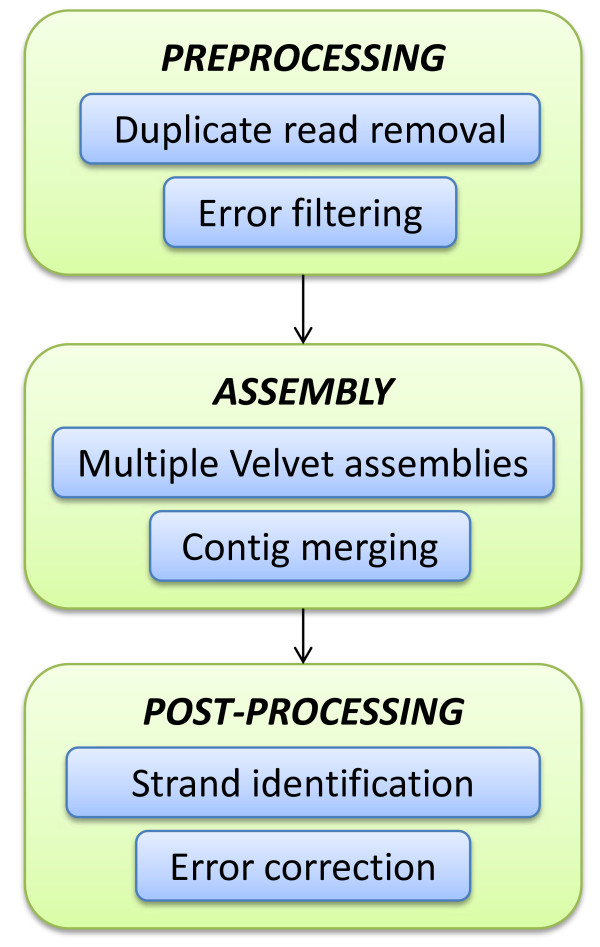
“The sequence reads were assembled into transcript contigs using the all-in-one package Rnnotator (Martin et al. 2010), which performs read pre-processing, de novo assembly, and contig post- processing.”
MethodInfluentialTranscriptome assembly strategies for precision medicine
Wang, L., Acharya, L. R., Bai, C., & Zhu, D. (2017) · Quantitative Biology · doi:10.1007/s40484-017-0109-2 · Cited by 6
Consecutive low-frequency shifts in A/T content denote nucleosome positions across microeukaryotes
Mondo, S. J., He, G., Sharma, A., Ciobanu, D., Riley, R. W., Andreopoulos, W., Lipzen, A., Kuo, A., LaButti, K. M., Pangilinan, J. L., et al. (2025) · iScience · doi:10.1016/j.isci.2025.112472 · Cited by 5
Chen, Y., Cao, Q., Tao, X., Shao, H., Zhang, K., Zhang, Y., & Tan, X. (2016) · Bioscience Biotechnology and Biochemistry · doi:10.1080/09168451.2016.1182418 · Cited by 6
Transcriptome Sequencing (RNA-Seq)
Daniel, S., Paniz‐Mondolfi, A., & Monzon, F. A. (2014) · Springer eBooks · doi:10.1007/978-1-4939-0727-4_3 · Cited by 6
Rodrigues, C. M., Mafra, V., & Machado, M. A. (2014) · Wiley eBooks · doi:10.1002/9781118820971.ch3 · Cited by 4
Next-Generation Sequence Assemblers
El‐Metwally, S., Ouda, O. M., & Helmy, M. (2014) · SpringerBriefs in systems biology · doi:10.1007/978-1-4939-0715-1_11 · Cited by 4
Doval, R. L., Müller, A., Brown, D. W., Johnson, D., Quandt, C. A., Barry, K., Clum, A., Hundley, H. N., LaButti, K. M., Lipzen, A., et al. (2025) · Marine Biotechnology · doi:10.1007/s10126-025-10484-3 · Cited by 3
Synapse: Synthetic Application Profiler and Emulator
Merzky, A., & Jha, S. (2016) · IEEE International Symposium on Parallel & Distributed Processing, Workshops and Phd Forum · doi:10.1109/ipdpsw.2016.168 · Cited by 3
Huang, X., Wang, B., Xi, J., Zhang, Y., He, C., Zheng, J., Gao, J., Chen, H., Zhang, S., Wu, W., et al. (2019) · doi:10.29290/tcgen.3.1.2019.2-28 · Cited by 3
PERSPECTIVES Transcriptome sequencing: next generation approach to RNA functional analysis
Żmieńko, A., Jackowiak, P., & Figlerowicz, M. (2014) · Biotechnologia · doi:10.5114/bta.2011.46548 · Cited by 4
“Despite these disadvantages, successful de novo transcriptome assembly has been recently performed for lower and higher eukaryotes (Martin et al., 2010; Garg et al., 2011; Grabherr et al., 2011; Jäger et al., 2011).”
BackgroundComputational Biology and Genomics Tools for Biohydrogen Research
Ramakodi, M. P. (2019) · Elsevier eBooks · doi:10.1016/b978-0-444-64203-5.00018-6 · Cited by 2
Recommendations for Bioinformatic Tools in lncRNA Research
Distefano, R., Ilieva, M. S., Rennie, S., & Uchida, S. (2023) · Current Bioinformatics · doi:10.2174/1574893618666230707103956 · Cited by 2
Assessment of Next-Generation Sequence Assembly
El‐Metwally, S., Ouda, O. M., & Helmy, M. (2014) · SpringerBriefs in systems biology · doi:10.1007/978-1-4939-0715-1_10 · Cited by 2
Pseudo-Reference-Based Assembly of Vertebrate Transcriptomes
Nam, K., Jeong, H., & Nam, J. (2016) · Genes · doi:10.3390/genes7030010 · Cited by 3
“A comprehensive map of the transcriptome can be acquired through the computational assembly of RNA-seq reads [22].”
BackgroundDesign and Analysis of RNA Sequencing Data
Bharti, R., & Grimm, D. G. (2021) · Learning materials in biosciences · doi:10.1007/978-3-030-62490-3_11 · Cited by 2
Efficient Heuristic for Decomposing a Flow with Minimum Number of PathsPreprint
Shao, M., & Kingsford, C. (2016) · bioRxiv (Cold Spring Harbor Laboratory) · doi:10.1101/087759 · Cited by 2
“…reference-based methods (e.g., Cufflinks [2], Scripture [3], IsoLasso [4], SLIDE [5], CLIIQ [6], CEM [7], MITIE [8], iReckon [9], Traph [10], and StringTie [11]), and de novo methods (e.g., TransABySS [12], Rnnotator [13], Trinity [14], SOAPdenovo-Trans [15], Velvet [16], and Oases [17]).”
MethodAn updated de novo transcriptome for green ash (Fraxinus pennsylvanica)
Brungardt, J., & Bock, C. H. (2023) · G3 Genes Genomes Genetics · doi:10.1093/g3journal/jkad086 · Cited by 1
Kumari, A., -, A. K., Sharma, K., Pati, S. R., Mohanty, S., & Kateriya, S. (2026) · In Silico Research in Biomedicine · doi:10.1016/j.insi.2026.100530 · Cited by 1
Deep sequencing of a plant transcriptome
Martin, J. V., Gross, S., Schnable, J. C., Choi, C., Wang, M., SINGH, K. P., Lindquist, E., Chen, F., Wei, C., & Wang, Z. (2012) · eScholarship (California Digital Library) · Cited by 1
Self-citationA Scalable Pipeline for Transcriptome Profiling Tasks with On-Demand Computing Clouds
Shams, S., Kim, N., Meng, X., Ha, M. T., Jha, S., Wang, Z., & Kim, J. (2016) · IEEE International Symposium on Parallel & Distributed Processing, Workshops and Phd Forum · doi:10.1109/ipdpsw.2016.129 · Cited by 1
“Our main goal is to develop a new pipeline based on the existing tool, Rnnotator[5].”
MethodSelf-citationAn Integrative Approach Revealing the Landscape of Long Noncoding RNAs in Human Brain
Li, D., Yang, W. E., Arthur, C., Yoshigoe, K., Liu, J. S., Tong, W., & Yang, M. Q. (2016) · International Conference on Computational Science and Computational Intelligence (CSCI) · doi:10.1109/csci.2016.0027 · Cited by 1
“Here, the completeness is defined as the percentage of known lncRNAs covered by the contigs to at least 80% of the lncRNAs length [19].”
BackgroundMethodExpression Profiling of ncRNAs Employing RNP Libraries and Custom LNA/DNA Microarray Analysis
Skreka, K., Karbiener, M., Żywicki, M., Hüttenhofer, A., Scheideler, M., & Rederstorff, M. (2011) · Springer eBooks · doi:10.1007/978-3-642-22517-8_9 · Cited by 1
Oh, S. (2015) · Communications for Statistical Applications and Methods · doi:10.5351/csam.2015.22.2.181 · Cited by 1
“…isoforms, and exons to better understand cellular and molecular complexity (Cumbie et al. , 2011; Gatto et al. , 2014; Goncalves et al. , 2011; Gupta et al. , 2012; Hill et al. , 2013; Knowles et al. , 2013; Kroll et al. , 2014; Lin et al. , 2012; Martin et al. , 2010; Zhang et al. , 2012).”
BackgroundInfluentialGeneration and Analysis of Microbial Metatranscriptomes
Sarode, N., Parris, D. J., Ganesh, S., Seston, S. L., & Stewart, F. J. (2015) · ASM Press eBooks · doi:10.1128/9781555818821.ch2.4.5 · Cited by 1
Computational Methods for Transcript Assembly from RNA‐SEQ Reads
Canzar, S., & Florea, L. (2016) · Wiley eBooks · doi:10.1002/9781119272182.ch11 · Cited by 1
Chen, W., Liu, Y., & Jiang, G.-F. (2015) · Scientific Reports · doi:10.1038/srep16547 · Cited by 1
Marchant, A. (2016) · theses.fr (ABES) · doi:10.70675/d3cb96ccz2ef0z4ae3zb4bfza7e186de6c26 · Cited by 2
RNA Splicing Regulation in Drosophila melanogaster
Brooks, A. N. (2011) · eScholarship (California Digital Library)
High-Throughput Transcriptome Analysis of Plant Stress Responses
Tombuloğlu, G., & Tombuloğlu, H. (2015) · Springer eBooks · doi:10.1007/978-3-319-17157-9_12
RNA and DNA Sequence analysis of the human transcriptome
Toung, J. M. (2013) · Scholarly Commons (University of Pennsylvania)
De novo transcriptome analysis by deep RNA sequencing
Sadamoto, H., & Takahashi, H. (2012) · Hikaku seiri seikagaku(Comparative Physiology and Biochemistry) · doi:10.3330/hikakuseiriseika.29.131 · Cited by 1
An island-based approach for RNA-SEQ differential expression analysis.
Eteleeb, A. M. (2015) · ThinkIR: The University of Louisville's Institutional Repository (University of Louisville) · doi:10.18297/etd/2072 · Cited by 1
“Assembly algorithms such as Trans-ABySS [130], Rnnotator [102], Multiple-k [150], Trinity [49], and Oases [137] assemble transcripts based on the construction of a De Bruijn graph (discussed in section 3.”
MethodA NOVEL COMPUTATIONAL FRAMEWORK FOR TRANSCRIPTOME ANALYSIS WITH RNA-SEQ DATA
Hu, Y. (2013) · UKnowledge (University of Kentucky)
Mbandi, S. K. (2014) · University of the Western Cape Electronic Theses and Dissertations Repository (University of the Western Cape)
Simultaneous inference for RNA-Seq data
Risso, D. (2012) · Padua Research Archive (University of Padova)
Clustering of Short Read Sequences for de novo Transcriptome Assembly
Saadat, S., Safikhani, Z., Badie, K., & Sadeghi, M. (2014) · مجله علوم دانشگاه تهران (منتشر نمی شود) · doi:10.22059/pbs.2014.50305
Genomic Analysis Through High-Throughput Sequencing
Hadjithomas, M. (2015) · Springer eBooks · doi:10.1007/978-1-4939-3070-8_12
“Transcriptomics Tophat (Spliced alignment) Cuffl inks (Assembler) PASA Rnnotator Trinity [ 51 ] [ 52 ] [ 53 ] [ 54 ] [ 55 ]”
Zaccaron, A. Z., Adi, S. S., Higa, C. H. A., & Araújo, E. (2016) · International Journal of Innovative Computing and Applications · doi:10.1504/ijica.2016.078727
Khoshnevis, S., & NC DOCKS at The University of North Carolina at Charlotte (2013) · NC Digital Online Collection of Knowledge and Scholarship (The University of North Carolina at Greensboro)
Palma, E., & Josué, C. (2015) · OhioLink ETD Center (Ohio Library and Information Network)
Vasconcelos, T. S. (2015) · Digital Library of Theses and Dissertations (Universidade de São Paulo) · doi:10.11606/d.11.2015.tde-23062015-153917 · Cited by 2
Engineering Regulation in Anaerobic Gut Fungi during Lignocellulose Breakdown
Henske, J. K. (2017) · eScholarship (California Digital Library)
Bioinformatics approaches for assessing microbial communities in the surface ocean
Martin, K. (2018) · UEA Digital Repository (University of East Anglia)
Metadata
- Authors
- Martin, J., Bruno, V. M., Fang, Z., Meng, X., Blow, M., Zhang, T., Sherlock, G., Snyder, M., & Wang, Z.
- Affiliations
- Yale University (US)
- Louisiana State University Health Sciences Center New Orleans (US)
- Lawrence Berkeley National Laboratory (US)
- Stanford Medicine (US)
- Corresponding author
- Wang, Zhong
- Venue
- BMC Genomics
- Published
- 2010-11-24
- Volume
- 11
- Issue
- 1
- Pages
- 663-663
- ISSN
- 1471-2164 (ISSN-L)
- PMC
- PMC3152782
- OpenAlex
- W334260928
- Cited by
- 0
- References
- 15
- FWCI
- 0.00
- Type
- journal article
- Language
- en
- Open access
- gold
- doi.org
- Licence
- cc-by
- Locations
- BMC Genomics (publishedVersion, cc-by)
- Europe PMC (PubMed Central) (publishedVersion, cc-by)
- PubMed Central (publishedVersion, cc-by)
- PubMed (publishedVersion)
- University of North Texas Digital Library (University of North Texas) (submittedVersion)
- eScholarship (California Digital Library) (submittedVersion)
- OSTI OAI (U.S. Department of Energy Office of Scientific and Technical Information) (submittedVersion)
- Lawrence Berkeley National Laboratory
- Funders
- U.S. Department of Energy (-AC02-05CH11231, Contract No. DE-AC02-05-CH11231, 05CH11231, No. DE-AC02-05-CH11231, DE AC02 05CH11231, DE-AC02-)
- Joint Genome Institute (AC02-05CH11231, DE–AC02–05CH11231)
- National Institutes of Health (DE-AC02–05CH11231)
- Office of Science (No. DE-AC02- 05-CH11231, DEAC02–05CH11231, AC02-05CH11231, DE-AC02, Contract No. DE-AC02-05CH11231)
- National Institute of Allergy and Infectious Diseases (R01AI077737)
- Topics
- Life Sciences › Biochemistry, Genetics and Molecular Biology › Molecular Biology › Genomics and Phylogenetic Studies
- Life Sciences › Biochemistry, Genetics and Molecular Biology › Molecular Biology › RNA Research and Splicing
- Life Sciences › Biochemistry, Genetics and Molecular Biology › Molecular Biology › Single-cell and spatial transcriptomics
- Keywords
- de novo transcriptome assembly, RNA-seq, yeast transcriptome, transcriptome quantification
- MeSH terms
- Automation, Base Sequence, Candida albicans, RNA, Messenger, Software, Transcription, Genetic, Gene Expression Regulation, Fungal, Sequence Analysis, RNA, Gene Expression Profiling
About these checks
Registry, retraction, Cites and statistics results are computed, not judged, with one exception: a printed reference that no index lists is read once by a model before it counts as a citation error. Claims are extracted by a model and kept only when their quote appears verbatim in the text; each cited source is then checked, with a model’s help, for whether it says what the claim relies on. Those verdicts can be wrong — read the claim’s quote and the cited source before relying on one.
Statistics and arithmetic are recomputed, not judged.
Confidence bands are shown only for fields calibrated on our annotated test set. None is calibrated yet, so no band is shown.
What counts as a claim ›How we measure confidence ›How we check this ›
Are you an author, or do you see a problem with this page? Request a review
Data sources
Bibliographic data: Semantic Scholar, OpenAlex, Crossref.
Contains information from the Semantic Scholar Academic Graph Datasets, made available under the ODC Attribution License (ODC-BY 1.0).
Semantic Scholar’s data is described in: Kinney, R., et al. (2023). The Semantic Scholar Open Data Platform. arXiv:2301.10140.
