

Rnnotator: an automated de novo transcriptome assembly pipeline from stranded RNA-Seq reads
Open accessThe DOI matches its Crossref record; 16 of the 16 references it cites were found in a registry or an index.
Abstract
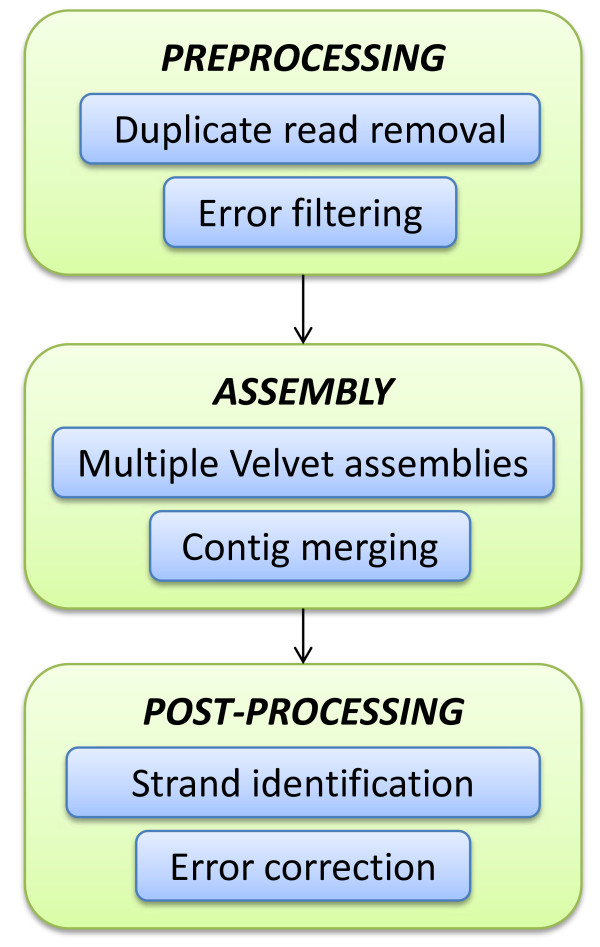
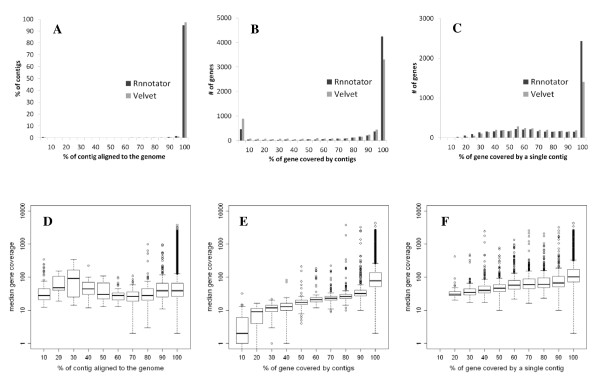
Background: Comprehensive annotation and quantification of transcriptomes are outstanding problems in functional genomics. While high throughput mRNA sequencing (RNA-Seq) has emerged as a powerful tool for addressing these problems, its success is dependent upon the availability and quality of reference genome sequences, thus limiting the organisms to which it can be applied. Results: Here, we describe Rnnotator, an automated software pipeline that generates transcript models by de novo assembly of RNA-Seq data without the need for a reference genome. We have applied the Rnnotator assembly pipeline to two yeast transcriptomes and compared the results to the reference gene catalogs of these organisms. The contigs produced by Rnnotator are highly accurate (95%) and reconstruct full-length genes for the majority of the existing gene models (54.3%). Furthermore, our analyses revealed many novel transcribed regions that are absent from well annotated genomes, suggesting Rnnotator serves as a complementary approach to analysis based on a reference genome for comprehensive transcriptomics. Conclusions: These results demonstrate that the Rnnotator pipeline is able to reconstruct full-length transcripts in the absence of a complete reference genome.
Overview
The claims and statistics of this paper haven’t been checked yet.
Free: it reads the open-access text and checks the first 5 claims that cite a source we can check. Create a free account to check every claim.
Integrity signals
Registry
Cites
Statistics
Figures
Verification
Claims the paper makes
The claims and statistics of this paper haven’t been checked yet.
Free: it reads the open-access text and checks the first 5 claims that cite a source we can check. Create a free account to check every claim.
Claims other papers make about this one
Each is checked against this paper’s own text: does it say what the citing paper says it does?
The source backs part of the claim, not all of it — or backs it for a different population, condition or comparison.
In the citing paper
“However, new assembly strategies such as merging the contigs of multiple assemblies [20], [21] and trimming of low-quality bases at the end of reads [22] can give better assembly results [9].”
From Digital Gene Expression Analysis Based on Integrated De Novo Transcriptome Assembly of Sweet Potato [Ipomoea batatas (L.) Lam.] (2012) · cites this paper as [20]
Experimental — accuracy not yet measuredThe cited source says what the claim attributes to it.
In the citing paper
“There were no standard criteria to evaluate the quality of transcriptome assemblies [20].”
From Digital Gene Expression Analysis Based on Integrated De Novo Transcriptome Assembly of Sweet Potato [Ipomoea batatas (L.) Lam.] (2012) · cites this paper as [20]
Self-check
Percentages, sums and reported differences re-computed from the paper’s own numbers.
The self-check needs the paper’s full text.
Citations
Cites
Fast and accurate short read alignment with Burrows-Wheeler transform
Li, H., & Durbin, R. (2009) · Bioinformatics · doi:10.1093/bioinformatics/btp324 · Cited by 58,607
Trapnell, C., Williams, B. A., Pertea, G., Mortazavi, A., Kwan, G., van Baren, M. J., Salzberg, S. L., Wold, B. J., & Pachter, L. (2010) · Nature Biotechnology · doi:10.1038/nbt.1621 · Cited by 15,556
Mapping and quantifying mammalian transcriptomes by RNA-Seq
Mortazavi, A., Williams, B. A., McCue, K., Schaeffer, L., & Wold, B. (2008) · Nature Methods · doi:10.1038/nmeth.1226 · Cited by 13,696 · cited 1×
“A few software packages have been developed to perform one or more of the above data analysis tasks, including TopHat/Cufflinks [4,5], ERANGE [6] and Scripture [7].”
MethodRNA-Seq: a revolutionary tool for transcriptomics
Wang, Z., Gerstein, M., & Snyder, M. (2009) · Nature Reviews Genetics · doi:10.1038/nrg2484 · Cited by 13,174 · cited 2×
“A typical RNA-Seq experiment involves RNA isolation followed by conversion to a library of short cDNA fragments and sequencing using next-generation sequencing technology [1,2].”
MethodSelf-citationTopHat: discovering splice junctions with RNA-Seq
Trapnell, C., Pachter, L., & Salzberg, S. L. (2009) · Bioinformatics · doi:10.1093/bioinformatics/btp120 · Cited by 11,617
Velvet: Algorithms for de novo short read assembly using de Bruijn graphs
Zerbino, D. R., & Birney, E. (2008) · Genome Research · doi:10.1101/gr.074492.107 · Cited by 9,491 · cited 3×
“Also, the size of sequencing datasets produced is often very large, and therefore requires substantial memory and long computing times, even for the very efficient De Bruijn graph-based assemblers [8-10].”
Method<tt>BLAT</tt> —The <tt>BLAST</tt> -Like Alignment Tool
Kent, W. J. (2002) · Genome Research · doi:10.1101/gr.229202 · Cited by 8,480 · cited 1×
“The UCSC Blat software [17] was used to align contigs to both genome and transcriptome references.”
MethodGuttman, M., Garber, M., Levin, J. Z., Donaghey, J., Robinson, J., Adiconis, X., Fan, L., Koziol, M. J., Gnirke, A., Nusbaum, C., et al. (2010) · Nature Biotechnology · doi:10.1038/nbt.1633 · Cited by 1,253
Computation for ChIP-seq and RNA-seq studies
Pepke, S., Wold, B., & Mortazavi, A. (2009) · Nature Methods · doi:10.1038/nmeth.1371 · Cited by 557 · cited 1×
“This information is used to i) derive novel gene models or refine existing gene models, including exon structure and untranslated regions (UTRs) and ii) to determine gene expression levels from read count statistics [1,3].”
MethodRNA-Seq—quantitative measurement of expression through massively parallel RNA-sequencing
Wilhelm, B. T., & Landry, J.-R. (2009) · Methods · doi:10.1016/j.ymeth.2009.03.016 · Cited by 508 · cited 1×
“A typical RNA-Seq experiment involves RNA isolation followed by conversion to a library of short cDNA fragments and sequencing using next-generation sequencing technology [1,2].”
Method
Cited by
Oases:robust de novo RNA-seq assembly across the dynamic range of expression levels
Schulz, M. H., Zerbino, D. R., Vingron, M., & Birney, E. (2012) · Bioinformatics · doi:10.1093/bioinformatics/bts094 · Cited by 1,424
“Received on December 2, 2011; revised on January 20, 2012; accepted on February 17, 2012”
Next-generation transcriptome assembly
Martin, J. A., & Wang, Z. (2011) · Nature Reviews Genetics · doi:10.1038/nrg3068 · Cited by 1,253
“…from opposite strands in these compact genomes can also be effectively resolved by the alignment of strand-specific reads to the assembled contigs 16 , or by not constructing the reverse compliment k-mers in the De Bruijn graph in the first place [ more explanation is needed of this process here…”
BackgroundMethodInfluentialSelf-citationSOAPdenovo-Trans: de novo transcriptome assembly with short RNA-Seq reads
Xie, Y., Wu, G., Tang, J., Luo, R., Patterson, J., Liu, S., Huang, W., He, G., Gu, S., Li, S., et al. (2014) · Bioinformatics · doi:10.1093/bioinformatics/btu077 · Cited by 983
GC-Content Normalization for RNA-Seq Data
Risso, D., Schwartz, K., Sherlock, G., & Dudoit, S. (2011) · BMC Bioinformatics · doi:10.1186/1471-2105-12-480 · Cited by 867
“[26], as in [27] with the following modifications: fragmentation was carried out before cDNA synthesis as above and gel purification after PCR amplification was omitted.”
MethodSelf-citationComplexity of the Alternative Splicing Landscape in Plants
Reddy, A. S. N., Marquez, Y., Kalyna, M., & Barta, A. (2013) · The Plant Cell · doi:10.1105/tpc.113.117523 · Cited by 862
“, 2013], and Rnnotator [Martin et al., 2010]).”
de Vries, R. P., Riley, R., Wiebenga, A., Aguilar-Osorio, G., Amillis, S., Uchima, C. A., Anderluh, G., Asadollahi, M., Askin, M., Barry, K., et al. (2017) · Genome Biology · doi:10.1186/s13059-017-1151-0 · Cited by 489
Self-citationWidespread Polycistronic Transcripts in Fungi Revealed by Single-Molecule mRNA Sequencing
Gordon, S. P., Tseng, E., Salamov, A., Zhang, J., Meng, X., Zhao, Z., Kang, D., Underwood, J., Grigoriev, I. V., Figueroa, M., et al. (2015) · PLOS ONE · doi:10.1371/journal.pone.0132628 · Cited by 408
Self-citationGostinčar, C., Ohm, R. A., Kogej, T., Sonjak, S., Turk, M., Zajc, J., Zalar, P., Grube, M., Sun, H., Han, J., et al. (2014) · BMC Genomics · doi:10.1186/1471-2164-15-549 · Cited by 363
“The reads were assembled into consensus sequences using Rnnotator 2.4.14 [147], which takes short read sequences as input, and outputs assembled transcript contigs.”
InfluentialComparative analysis of RNA-Seq alignment algorithms and the RNA-Seq unified mapper (RUM)
Grant, G. R., Farkas, M. H., Pizarro, A. D., Lahens, N. F., Schug, J., Brunk, B. P., Stoeckert, C. J., Hogenesch, J. B., & Pierce, E. A. (2011) · Bioinformatics · doi:10.1093/bioinformatics/btr427 · Cited by 336
Widespread adenine N6-methylation of active genes in fungi
Mondo, S. J., Dannebaum, R. O., Kuo, R. C., Louie, K. B., Bewick, A. J., LaButti, K., Haridas, S., Kuo, A., Salamov, A., Ahrendt, S. R., et al. (2017) · Nature Genetics · doi:10.1038/ng.3859 · Cited by 344
High throughput sequencing methods and analysis for microbiome research
Di Bella, J. M., Bao, Y., Gloor, G. B., Burton, J. P., & Reid, G. (2013) · Journal of Microbiological Methods · doi:10.1016/j.mimet.2013.08.011 · Cited by 324
“Some assemblers have been developed to facilitate de novo metatranscriptome assembly, including Rnnotator (Martin et al., 2010), Trans-ABySS (Robertson et al.”
MethodEvaluation of de novo transcriptome assemblies from RNA-Seq data
Li, B., Fillmore, N., Bai, Y., Collins, M., Thomson, J. A., Stewart, R., & Dewey, C. N. (2014) · Genome Biology · doi:10.1186/s13059-014-0553-5 · Cited by 309
“A number of de novo transcriptome assemblers are currently available, many designed for Illumina platform data [1-8] and others targeted for Roche 454 Life Science platform data [9-12].”
BackgroundEarly-branching gut fungi possess a large, comprehensive array of biomass-degrading enzymes
Solomon, K. V., Haitjema, C. H., Henske, J. K., Gilmore, S. P., Borges-Rivera, D., Lipzen, A., Brewer, H. M., Purvine, S. O., Wright, A. T., Theodorou, M. K., et al. (2016) · Science · doi:10.1126/science.aad1431 · Cited by 302
Megaphylogeny resolves global patterns of mushroom evolution
Varga, T., Krizsán, K., Földi, C., Dima, B., Sánchez-García, M., Sánchez-Ramírez, S., Szöllősi, G. J., Szarkándi, J. G., Papp, V., Albert, L., et al. (2019) · Nature Ecology & Evolution · doi:10.1038/s41559-019-0834-1 · Cited by 288
“Illumina reads of stranded RNA-seq data were used as input for de novo assembly of RNA contigs and assembled into consensus sequences using Rnnotator (v.3.4) 50 .”
InfluentialMartino, E., Morin, E., Grelet, G., Kuo, A., Kohler, A., Daghino, S., Barry, K. W., Cichocki, N., Clum, A., Dockter, R. B., et al. (2018) · New Phytologist · doi:10.1111/nph.14974 · Cited by 250
“The transcriptomes of all four species were sequenced using Illumina, assembled using R NNOTATOR (Martin et al. , 2010) and used for genome annotation (for further details, see Supporting Information Methods S1).”
Nagy, L. G., Riley, R., Tritt, A., Adam, C., Daum, C., Floudas, D., Sun, H., Yadav, J. S., Pangilinan, J., Larsson, K.-H., et al. (2016) · Molecular Biology and Evolution · doi:10.1093/molbev/msv337 · Cited by 252
“Illumina reads of stranded RNA-seq data were de novo assembled into consensus sequences using Rnnotator (v. 2.5.6 or later) (Martin et al. 2010).”
InfluentialMeasuring the exposome: A powerful basis for evaluating environmental exposures and cancer risk
Wild, C. P., Scalbert, A., & Herceg, Z. (2013) · Environmental and Molecular Mutagenesis · doi:10.1002/em.21777 · Cited by 227
“Software pipelines have been developed to automatize the analysis of highly complex datasets [Xia et al., 2009; Martin et al., 2010].”
MethodOptimizing de novo assembly of short-read RNA-seq data for phylogenomics
Yang, Y., & Smith, S. A. (2013) · BMC Genomics · doi:10.1186/1471-2164-14-328 · Cited by 223
“Only “ fusion transcripts ” formed from multiple genes have been discussed in previous studies without further discussion of their nature and sources [4,11-13].”
BackgroundA parts list for fungal cellulosomes revealed by comparative genomics
Haitjema, C. H., Gilmore, S. P., Henske, J. K., Solomon, K. V., de Groot, R., Kuo, A., Mondo, S. J., Salamov, A. A., LaButti, K., Zhao, Z., et al. (2017) · Nature Microbiology · doi:10.1038/nmicrobiol.2017.87 · Cited by 222
Vesth, T. C., Nybo, J. L., Theobald, S., Frisvad, J. C., Larsen, T. O., Nielsen, K. F., Hoof, J. B., Brandl, J., Salamov, A., Riley, R., et al. (2018) · Nature Genetics · doi:10.1038/s41588-018-0246-1 · Cited by 219
Druzhinina, I. S., Chenthamara, K., Zhang, J., Atanasova, L., Yang, D., Miao, Y., Rahimi, M. J., Grujic, M., Cai, F., Pourmehdi, S., et al. (2018) · PLOS Genetics · doi:10.1371/journal.pgen.1007322 · Cited by 216
“Illumina data were QC filtered for artifact/process contamination and subsequently assembled using Rnnotator [82] for transcriptomes, and AllPathsLG [83] for genomes.”
Targeted enrichment strategies for next‐generation plant biology
Cronn, R., Knaus, B. J., Liston, A., Maughan, P. J., Parks, M., Syring, J. V., & Udall, J. (2012) · American Journal of Botany · doi:10.3732/ajb.1100356 · Cited by 217
Accurate assembly of transcripts through phase-preserving graph decomposition
Shao, M., & Kingsford, C. (2017) · Nature Biotechnology · doi:10.1038/nbt.4020 · Cited by 217
Knapp, D. G., Németh, J. B., Barry, K., Hainaut, M., Henrissat, B., Johnson, J., Kuo, A., Lim, J. H. P., Lipzen, A., Nolan, M., et al. (2018) · Scientific Reports · doi:10.1038/s41598-018-24686-4 · Cited by 202
Genome expansion and lineage-specific genetic innovations in the forest pathogenic fungi Armillaria
Sipos, G., Prasanna, A. N., Walter, M. C., O’Connor, E., Bálint, B., Krizsán, K., Kiss, B., Hess, J., Varga, T., Slot, J., et al. (2017) · Nature Ecology & Evolution · doi:10.1038/s41559-017-0347-8 · Cited by 191
Mining and Development of Novel SSR Markers Using Next Generation Sequencing (NGS) Data in Plants
Taheri, S., Lee Abdullah, T., Yusop, M., Hanafi, M., Sahebi, M., Azizi, P., & Shamshiri, R. (2018) · Molecules · doi:10.3390/molecules23020399 · Cited by 178
“There are several tools used for de novo assembly of RNA-Seq reads, such as Multiple-k [137], Rnnotator [138], Trans-ABySS [139], Velvet-Oases [140], and SOAPdenovo-Trans (http://soap.”
MethodInfluentialPeter, M., Kohler, A., Ohm, R. A., Kuo, A., Krützmann, J., Morin, E., Arend, M., Barry, K. W., Binder, M., Choi, C., et al. (2016) · Nature Communications · doi:10.1038/ncomms12662 · Cited by 171
Uehling, J., Gryganskyi, A., Hameed, K., Tschaplinski, T., Misztal, P. K., Wu, S., Desirò, A., Vande Pol, N., Du, Z., Zienkiewicz, A., et al. (2017) · Environmental Microbiology · doi:10.1111/1462-2920.13669 · Cited by 173
“RNA-seq data for each genome were de novo assembled into consensus sequences using Rnnotator (v. 2.5.6 or later) (Martin et al ., 2010).”
InfluentialFloudas, D., Held, B. W., Riley, R., Nagy, L. G., Koehler, G., Ransdell, A. S., Younus, H., Chow, J., Chiniquy, J., Lipzen, A., et al. (2015) · Fungal Genetics and Biology · doi:10.1016/j.fgb.2015.02.002 · Cited by 170
Tao, X., Gu, Y.-H., Wang, H.-Y., Zheng, W., Li, X., Zhao, C.-W., & Zhang, Y.-Z. (2012) · PLoS ONE · doi:10.1371/journal.pone.0036234 · Cited by 168
“There were no standard criteria to evaluate the quality of transcriptome assemblies [20].”
BackgroundKrizsán, K., Almási, É. D. H., Merényi, Z., Sahu, N., Virágh, M., Kószó, T., Mondo, S. J., Kiss, B., Bálint, B., Kües, U., et al. (2019) · Proceedings of the National Academy of Sciences · doi:10.1073/pnas.1817822116 · Cited by 167
Upcoming progress of transcriptomics studies on plants: An overview
Tyagi, P., Singh, D., Mathur, S., Singh, A., & Ranjan, R. (2022) · Frontiers in Plant Science · doi:10.3389/fpls.2022.1030890 · Cited by 168
“The only assembly approach appropriate for non-model plants is de novo assembly, which is depicted in Figure 1. frontiersin.org The assembly and function annotation process Software such as Cufflinks and Scripture (Guo et al., 2021) is used to assemble genomes, whereas Oases, Trinity, Rnnotator (Martin et al., 2010),…”
MethodStrategies for transcriptome analysis in nonmodel plants
Ward, J. A., Ponnala, L., & Weber, C. A. (2012) · American Journal of Botany · doi:10.3732/ajb.1100334 · Cited by 180
Transcriptional response of bathypelagic marine bacterioplankton to the Deepwater Horizon oil spill
Rivers, A. R., Sharma, S., Tringe, S. G., Martin, J. V., Joye, S. B., & Moran, M. A. (2013) · The ISME Journal · doi:10.1038/ismej.2013.129 · Cited by 166
“The de novo assembly of operons was carried out using the Rnnotater pipeline (Martin et al., 2010); the mean assembly length was 886bp (Supplementary Figure S3).”
MethodSelf-citationRNA-Seq and molecular docking reveal multi-level pesticide resistance in the bed bug
Mamidala, P., Wijeratne, A., Wijeratne, S., Kornacker, K., Sudhamalla, B., Rivera-Vega, L. J., Hoelmer, A., Meulia, T., Jones, S. C., & Mittapalli, O. (2012) · BMC Genomics · doi:10.1186/1471-2164-13-6 · Cited by 164
“To do the de novo assembly, the trimmed reads from PR sample 1 and PS sample 1 were separately fed into Rnnotator, automated de novo RNAseq assembly pipeline [62], to remove duplicates and erroneous sequences.”
MethodWhy Assembling Plant Genome Sequences Is So Challenging
Claros, M. G., Bautista, R., Guerrero-Fernández, D., Benzerki, H., Seoane, P., & Fernández‐Pozo, N. (2012) · Biology · doi:10.3390/biology1020439 · Cited by 171
“This strategy is currently used for transcriptomes, and CAP3 [96] or Minimus [105] are good candidates for the second assembly process [106 108].”
MethodLehnert, E. M., Burriesci, M. S., & Pringle, J. R. (2012) · BMC Genomics · doi:10.1186/1471-2164-13-271 · Cited by 156
“The remaining reads were combined into files based on the insert size of the library (irrespective of the prior biological treatment) and assembled using an additive multiple-k-mer (35, 39, 43, 47, 51, 55, 59, 63, and 67) approach [28,29] with the Velvet/Oases assembler (Velvet version 1.”
MethodLiu, S., Li, W., Wu, Y., Chen, C., & Lei, J. (2013) · PLoS ONE · doi:10.1371/journal.pone.0048156 · Cited by 150
De novo transcriptome assembly of drought tolerant CAM plants, Agave deserti and Agave tequilana
Gross, S., Martin, J. A., Simpson, J. K., Abraham‐Juárez, M. J., Wang, Z., & Visel, A. (2013) · BMC Genomics · doi:10.1186/1471-2164-14-563 · Cited by 133
“de novo transcriptome assembly of Illumina sequence was performed by Rnnotator [29].”
MethodSelf-citationSadamoto, H., Takahashi, H., Okada, T., Kenmoku, H., Toyota, M., & Asakawa, Y. (2012) · PLoS ONE · doi:10.1371/journal.pone.0042546 · Cited by 132
“Rnnotator assembly also produced the value of reads per kilo per million (rpkm) as an index of the expression level [19].”
BackgroundMethodSchmid, M. W., Schmidt, A., Klostermeier, U. C., Barann, M., Rosenstiel, P. C., & Grossniklaus, U. (2012) · PLoS ONE · doi:10.1371/journal.pone.0029685 · Cited by 118
“De novo assembly of RNA-Seq data into transcripts is generally challenging due to the non-uniform sequencing coverage across transcripts, the presence of low quality reads, and the size of the data sets [35].”
BackgroundResearch Progress and Future Development Trends in Medicinal Plant Transcriptomics
Guo, J., Huang, Z. J., Sun, J., Cui, X., & Liu, Y. (2021) · Frontiers in Plant Science · doi:10.3389/fpls.2021.691838 · Cited by 110
Alkio, M., Jonas, U., Sprink, T., van Nocker, S., & Knoche, M. (2012) · Annals of Botany · doi:10.1093/aob/mcs087 · Cited by 107
“Assembly of contiguous sequences and sequence annotation Illumina reads were assembled to contiguous sequences (contigs) using Velvet 1.0.16 (Zerbino and Birney, 2008; Martin et al., 2010), TGICL 2.0 (Pertea et al., 2003) and CAP3 (Huang and Madan, 1999).”
MethodInfluentialGenome-Wide Analysis of Corynespora cassiicola Leaf Fall Disease Putative Effectors
López, D. P., Ribeiro, S., Label, P., Fumanal, B., Venisse, J., Kohler, A., de Oliveira, R. R., LaButti, K. M., Lipzen, A., Lail, K., et al. (2018) · Frontiers in Microbiology · doi:10.3389/fmicb.2018.00276 · Cited by 98
“RNA-seq data for each genome were de novo assembled into consensus sequences using Rnnotator (Martin et al., 2010).”
MethodReddy, A. S. N., Rogers, M. F., Richardson, D. N., Hamilton, M., & Ben‐Hur, A. (2012) · Frontiers in Plant Science · doi:10.3389/fpls.2012.00018 · Cited by 110
The genome of Xylona heveae provides a window into fungal endophytism
Gazis, R. O., Kuo, A., Riley, R. W., LaButti, K. M., Lipzen, A., Lin, J., Amirebrahimi, M., Hesse, C. N., Spatafora, J. W., Henrissat, B., et al. (2015) · Fungal Biology · doi:10.1016/j.funbio.2015.10.002 · Cited by 89
Henske, J. K., Gilmore, S. P., Knop, D., Cunningham, F. J., Sexton, J. A., Smallwood, C., Shutthanandan, V. S., Evans, J. E., Theodorou, M. K., & O’Malley, M. (2017) · Biotechnology for Biofuels · doi:10.1186/s13068-017-0997-4 · Cited by 87
“Comparatively, the transcriptome of Piromyces finnis assembled using Trinity comprises 27,140 transcripts and 22,959 predicted genes, while the transcriptomes of Anaeromyces robustus and Neocallimastix californiae assembled using Rnnotator [28] comprise 17,127 and 29,649 transcripts, and 16,038 and 27,671 predicted ge…”
BackgroundGenome diversity in Brachypodium distachyon: deep sequencing of highly diverse inbred lines
Gordon, S., Priest, H. D., Marais, D. L. D., Schackwitz, W., Figueroa, M., Martin, J., Bragg, J. N., Tyler, L., Lee, C., Bryant, D., et al. (2014) · The Plant Journal · doi:10.1111/tpj.12569 · Cited by 86
“million stranded RNA-Seq reads for the most divergent line, Bd1-1, and used RNNOTATOR software to assemble these reads into a de novo transcriptome (Martin et al., 2010).”
MethodSelf-citationLooney, B. P., Miyauchi, S., Morin, E., Drula, É., Courty, P., Kohler, A., Kuo, A., LaButti, K. M., Pangilinan, J. L., Lipzen, A., et al. (2021) · New Phytologist · doi:10.1111/nph.17892 · Cited by 86
Methods to Study Splicing from High-Throughput RNA Sequencing Data
Alamancos, G. P., Agirre, E., & Eyras, E. (2014) · Methods in molecular biology · doi:10.1007/978-1-62703-980-2_26 · Cited by 92
“Rnnotator Yes Variable k-mer No No (Martin et al. 2010) Email to vtdelapuente@lbl.”
BackgroundMethodKourist, R., Bracharz, F., Lorenzen, J., Kracht, O. N., Chovatia, M., Daum, C., Deshpande, S., Lipzen, A., Nolan, M., Ohm, R. A., et al. (2015) · mBio · doi:10.1128/mbio.00918-15 · Cited by 74
“3.1 (67).”
InfluentialLu, B., Zeng, Z., & Shi, T. (2013) · Science China Life Sciences · doi:10.1007/s11427-013-4442-z · Cited by 95
Overview of available methods for diverse RNA-Seq data analyses
Chen, G., Wang, C., & Shi, T. (2011) · Science China Life Sciences · doi:10.1007/s11427-011-4255-x · Cited by 92
Franssen, S. U., Gu, J., Winters, G., Huylmans, A. K., Wienpahl, I., Sparwel, M., Coyer, J. A., Olsen, J., Reusch, T. B. H., & Bornberg‐Bauer, E. (2014) · Marine Genomics · doi:10.1016/j.margen.2014.03.004 · Cited by 89
“noltii, and previous studies (Martin et al., 2010; Franssen et al., 2011b; Grabherr et al., 2011; Martin and Wang, 2011; Mundry et al., 2012), gene identification via orthology to the well annotated reference species A.”
BackgroundMutasa-Gottgens, E., Joshi, A., Holmes, H. F., Hedden, P., & Göttgens, B. (2012) · BMC Genomics · doi:10.1186/1471-2164-13-99 · Cited by 82
“As with all RNASeq assemblies, careful case-by-case evaluation of transcripts will be advisable given the possibility that highly related genes may have been inadvertently merged [47], a particular concern given the substantial expansion of gene families commonly seen in crop plants [48,49].”
BackgroundChallenges and advances for transcriptome assembly in non-model species
Ungaro, A., Pech, N., Martin, J., McCairns, R. J. S., Mévy, J., Chappaz, R., & Gilles, A. (2017) · PLoS ONE · doi:10.1371/journal.pone.0185020 · Cited by 83
“These metrics are implemented in Rnnotator [46], and were used in the comparative study of de novo and genome-guided assembly by Lu et al. [35].”
MethodSelf-citationHu, B., Xie, G. G., Lo, C., Starkenburg, S. R., & Chain, P. S. G. (2011) · Briefings in Functional Genomics · doi:10.1093/bfgp/elr042 · Cited by 87
Niu, J., An, J., Wang, L., Fang, C., Ha, D., Fu, C., Qiu, L., Yu, H., Zhao, H., Hou, X., et al. (2015) · Biotechnology for Biofuels · doi:10.1186/s13068-015-0213-3 · Cited by 84
“At present, there are no standard criteria to evaluate the quality of transcriptome assemblies [24].”
BackgroundPatnaik, B. B., Wang, T. H., Kang, S. W., Hwang, H., Park, S., Park, E. B., Chung, J. M., Song, D. K., Kim, C., Kim, S., et al. (2016) · PLoS ONE · doi:10.1371/journal.pone.0148622 · Cited by 70
Wu, W., Davis, R., Tran-Gyamfi, M. B., Kuo, A., LaButti, K. M., Mihaltcheva, S., Hundley, H. N., Chovatia, M., Lindquist, E., Barry, K., et al. (2017) · Applied Microbiology and Biotechnology · doi:10.1007/s00253-017-8091-1 · Cited by 67
Plant Defense Compounds: Systems Approaches to Metabolic Analysis
Kliebenstein, D. J. (2012) · Annual Review of Phytopathology · doi:10.1146/annurev-phyto-081211-172950 · Cited by 76
Advances in genomics for flatfish aquaculture
Cerdà, J., & Manchado, M. (2012) · Genes & Nutrition · doi:10.1007/s12263-012-0312-8 · Cited by 77
“For the assembly of de novo transcriptomes, sequencing with a 309 coverage might be required for the same task (Martin et al. 2010).”
BackgroundMethodPetzold, A., Reichwald, K., Groth, M., Taudien, S., Hartmann, N., Priebe, S., Shagin, D., Englert, C., & Platzer, M. (2013) · BMC Genomics · doi:10.1186/1471-2164-14-185 · Cited by 59
“However, while a number of established metrics and protocols exist for genome assembly, only a few have been recently proposed for transcriptome assembly [29,30].”
Broad Genomic Sampling Reveals a Smut Pathogenic Ancestry of the Fungal Clade Ustilaginomycotina
Kijpornyongpan, T., Mondo, S. J., Barry, K., Sandor, L., Lee, J., Lipzen, A., Pangilinan, J. L., LaButti, K. M., Hainaut, M., Henrissat, B., et al. (2018) · Molecular Biology and Evolution · doi:10.1093/molbev/msy072 · Cited by 61
The biogeographic differentiation of algal microbiomes in the upper ocean from pole to pole
Martin, K., Schmidt, K., Toseland, A., Boulton, C. A., Barry, K., Beszteri, B., Brussaard, C. P. D., Clum, A., Daum, C. G., Eloe‐Fadrosh, E. A., et al. (2021) · Nature Communications · doi:10.1038/s41467-021-25646-9 · Cited by 61
Zhou, Y. H., Chen, L., Fan, X., & Bian, Y. (2014) · PLoS ONE · doi:10.1371/journal.pone.0091740 · Cited by 63
Esquivel, C. J., Cassone, B. J., & Piermarini, P. M. (2016) · PeerJ · doi:10.7717/peerj.1784 · Cited by 67
Miyauchi, S., Rancon, A., Drula, É., Hage, H., Chaduli, D., Favel, A., Grisel, S., Henrissat, B., Herpoël‐Gimbert, I., Ruiz-Dueñas, F. J., et al. (2018) · Biotechnology for Biofuels · doi:10.1186/s13068-018-1198-5 · Cited by 57
High-confidence coding and noncoding transcriptome maps
Yu, B., Yoon, S.-H., & Nam, J. (2017) · Genome Research · doi:10.1101/gr.214288.116 · Cited by 59
“…et al. 2009; Guttman et al. 2010; Trapnell et al. 2010; Boley et al. 2014; Mangul et al. 2014; Maretty et al. 2014) and the de novo approach (Martin et al. 2010; Grabherr et al. 2011; Schulz et al. 2012; Safikhani et al. 2013; Xie et al. 2014; Chang et al. 2015; Pertea et al. 2015; Tjaden…”
BackgroundXu, Q., Zhao, W., Chen, Y., Tong, Y., Rong, G.-H., Huang, Z., Zhang, Y., Chang, G. B., Wu, X., & Chen, G. (2013) · PLoS ONE · doi:10.1371/journal.pone.0055496 · Cited by 65
“At present, there are no standard criteria to evaluate the quality of transcriptome assemblies [23].”
BackgroundBrand, P., Ramírez, S. R., Leese, F., Quezada‐Euán, J. J. G., Tollrian, R., & Eltz, T. (2015) · BMC Evolutionary Biology · doi:10.1186/s12862-015-0451-9 · Cited by 55
“2 [86] to improve assembly quality and computing efficiency [87].”
BackgroundEnsemble Toolkit: Scalable and Flexible Execution of Ensembles of Tasks
Balasubramanian, V., Treikalis, A., Weidner, O., & Jha, S. (2016) · Proceedings of the International Conference on Parallel Processing · doi:10.1109/icpp.2016.59 · Cited by 55
“I. INTRODUCTION Many scientific applications in the field of molecular sciences, computational biology [1]–[3], astrophysics [4], weather forecasting [5], [6], bioinformatics [7] are increasingly reliant on the ability to run ensemble-based methods to make scientific progress.”
BackgroundVisser, E. A., Wegrzyn, J., Steenkamp, E. T., Myburg, A. A., & Naidoo, S. (2015) · BMC Genomics · doi:10.1186/s12864-015-2277-7 · Cited by 55
Diversity of nitrogen assimilation pathways among microbial photosynthetic eukaryotes
Terrado, R., Monier, A., Edgar, R. E., & Lovejoy, C. (2015) · Journal of Phycology · doi:10.1111/jpy.12292 · Cited by 49
Differential Expression Analysis of RNA-seq Reads: Overview, Taxonomy, and Tools
Chowdhury, H. A., Bhattacharyya, D. K., & Kalita, J. K. (2018) · IEEE Transactions on Computational Biology and Bioinformatics · doi:10.1109/tcbb.2018.2873010 · Cited by 59
“d) Rnnotator [73]: It is an automated software pipeline that generates transcript models with highly accurate contigs.”
MethodNew approaches to Prunus transcriptome analysis
Martínez-Gómez, P., Crisosto, C. H., Bonghi, C., & Rubio, M. (2011) · Genetica · doi:10.1007/s10709-011-9580-2 · Cited by 54
“More recently, an automated software pipeline (Rnnotator) that generates transcript models by de novo assembly of stranded RNA-Seq reads without the need for a reference genome has been developed (Martin et al. 2010) open the door to a faster de novo assembly of transcriptomes.”
Method◾ Differential Expression Analysis
Korpelainen, E., Tuimala, J., Somervuo, P., Huss, M., & Wong, G. (2014) · Chapman & Hall/CRC eBooks · doi:10.1201/b17457-12 · Cited by 46
TransPi—a comprehensive TRanscriptome ANalysiS PIpeline for de novo transcriptome assembly
Rivera‐Vicéns, R. E., García‐Escudero, C. A., Conci, N., Eitel, M., & Wörheide, G. (2022) · Molecular Ecology Resources · doi:10.1111/1755-0998.13593 · Cited by 47
“…pipelines require a reference genome for the transcriptome assembly (i.e., reference-guided assembly) and are, consequently, not suitable for de novo approaches (Cornwell et al., 2018; D’Antonio et al., 2015; Wang, D. 2018; Zhang, X., & Jonassen, I. 2020; Kohen et al., 2019; Martin et al., 2010).”
MethodKim, H. A., Lim, C. J., Kim, S., Choe, J. K., Jo, S., Baek, N.-K., & Kwon, S. (2014) · PLoS ONE · doi:10.1371/journal.pone.0092087 · Cited by 42
“Similar to trimming the low-quality bases at the end of reads, merging the contigs generated by multiple assemblies can also enhance the assembly results [27,28].”
BackgroundCassone, B. J., Wijeratne, S., Michel, A. P., Stewart, L. R., Chen, Y., Yan, P. S., & Redinbaugh, M. G. (2014) · BMC Genomics · doi:10.1186/1471-2164-15-133 · Cited by 41
“Adapter indexes and poly (A) tails were trimmed and duplicates reads removed during the read quality filtering and duplicate read removal stage in the Rnnotator automated pipeline [54] in Galaxy [55] at the OARDC, MCIC.”
MethodLarge-Scale Transcriptome Analysis of Retroelements in the Migratory Locust, Locusta migratoria
Jiang, F., Yang, M., Guo, W., Wang, X., & Kang, L. (2012) · PLoS ONE · doi:10.1371/journal.pone.0040532 · Cited by 46
“Transcriptome assembly using the Multiple-k method has been proven to improve substantially the assembly performance and increase the length of contigs [62,63].”
MethodLi, S., Dong, X., & Su, Z. (2013) · BMC Genomics · doi:10.1186/1471-2164-14-520 · Cited by 49
“Martin J, Bruno VM, Fang Z, Meng X, Blow M, Zhang T, Sherlock G, Snyder M, Wang Z: Rnnotator: an automated de novo transcriptome assembly pipeline from stranded RNA-Seq reads.”
MethodKimura, K., Okuda, S., Nakayama, K., Shikata, T., Takahashi, F., Yamaguchi, H., Skamoto, S., Yamaguchi, M., & Tomaru, Y. (2015) · PLOS ONE · doi:10.1371/journal.pone.0142731 · Cited by 39
Huang, X., Wang, B., Xi, J., Zhang, Y., He, C., Zheng, J., Gao, J., Chen, H., Zhang, S., Wu, W., et al. (2018) · International Journal of Genomics · doi:10.1155/2018/5716518 · Cited by 39
“Transcriptome assembly of the Illumina sequence was performed by Rnnotator for each species, respectively [26].”
MethodNorman, J. D., Ferguson, M. M., & Danzmann, R. G. (2013) · Physiological Genomics · doi:10.1152/physiolgenomics.00105.2013 · Cited by 41
Identification and Characterization of Daurichromenic Acid Synthase Active in Anti-HIV Biosynthesis
Iijima, M., Munakata, R., Takahashi, H., Kenmoku, H., Nakagawa, R., Kodama, T., Asakawa, Y., Abe, I., Yazaki, K., Kurosaki, F., et al. (2017) · PLANT PHYSIOLOGY · doi:10.1104/pp.17.00586 · Cited by 40
Onda, Y., Mochida, K., Yoshida, T., Sakurai, T., Seymour, R. S., Umekawa, Y., Pirintsos, S., Shinozaki, K., & Ito, K. (2015) · Scientific Reports · doi:10.1038/srep08753 · Cited by 37
Draft Genome Sequence of Microdochium bolleyi , a Dark Septate Fungal Endophyte of Beach Grass
David, A. S., Haridas, S., LaButti, K. M., Lim, J., Lipzen, A., Wang, M., Barry, K., Grigoriev, I. V., Spatafora, J. W., & May, G. (2016) · Genome Announcements · doi:10.1128/genomea.00270-16 · Cited by 34
Tripathi, S., Jadaun, J. S., Chandra, M., & Sangwan, N. S. (2016) · Plant Genetic Resources · doi:10.1017/s1479262116000162 · Cited by 38
Li, H., Gao, X., Li, X., Chen, Q., Dong, J., & Zhao, W. (2013) · PLoS ONE · doi:10.1371/journal.pone.0083530 · Cited by 39
“Many criteria for systematically assessing assembly quality have been established [16,36], but these standards are only applicable to a simple transcriptome.”
BackgroundMethodPederson, E. R. A., Warshan, D., & Rasmussen, U. (2019) · G3 Genes Genomes Genetics · doi:10.1534/g3.119.400279 · Cited by 32
Baroncelli, R., Cobo-Díaz, J. F., Benocci, T., Peng, M., Battaglia, E., Haridas, S., Andreopoulos, W., LaButti, K. M., Pangilinan, J. L., Lipzen, A., et al. (2024) · GigaScience · doi:10.1093/gigascience/giae036 · Cited by 34
“3.2 ( RRID:SCR _ 011897 ) [ 103 ] or Trinity ver.”
InfluentialFebrer, M., McLay, K., Cáccamo, M., Twomey, K. B., & Ryan, R. P. (2011) · Trends in biotechnology · doi:10.1016/j.tibtech.2011.06.004 · Cited by 31
Marchant, A., Mougel, F., Almeida, C. E., Jacquin‐Joly, E., Costa, J. M., & Harry, M. (2014) · Genetica · doi:10.1007/s10709-014-9790-5 · Cited by 33
“2012), Rnnotator (Martin et al. 2010), Multiple-K (Surget-Groba and Montoya-Burgos 2010) or SOAPdenovo-Trans (Xie et al.”
RNASEQR—a streamlined and accurate RNA-seq sequence analysis program
Chen, L. Y., Wei, K., Huang, A. C. Y., Wang, K., Huang, C.-Y., Yi, D., Tang, C. Y., Galas, D. J., & Hood, L. (2011) · Nucleic Acids Research · doi:10.1093/nar/gkr1248 · Cited by 35
The obligate alkalophilic soda‐lake fungus Sodiomyces alkalinus has shifted to a protein diet
Grum‐Grzhimaylo, A. A., Falkoski, D. L., van den Heuvel, J., Valero‐Jiménez, C. A., Min, B., Choi, I., Lipzen, A., Daum, C. G., Aanen, D. K., Tsang, A., et al. (2018) · Molecular Ecology · doi:10.1111/mec.14912 · Cited by 32
“Rnnotator: An automated de novo transcriptome assembly pipeline from stranded RNA- Seq reads.”
MethodChen, W., Liu, Y., & Jiang, G. (2015) · Scientific Reports · doi:10.1038/srep11144 · Cited by 29
Walker, A. K., Frasz, S. L., Seifert, K. A., Miller, J. D., Mondo, S. J., LaButti, K. M., Lipzen, A., Dockter, R. B., Kennedy, M., Grigoriev, I. V., et al. (2016) · Genome Announcements · doi:10.1128/genomea.01768-15 · Cited by 28
Theory and A Heuristic for the Minimum Path Flow Decomposition Problem
Shao, M., & Kingsford, C. (2017) · IEEE Transactions on Computational Biology and Bioinformatics · doi:10.1109/tcbb.2017.2779509 · Cited by 27
A near complete snapshot of the Zea mays seedling transcriptome revealed from ultra-deep sequencing
Martin, J. A., Johnson, N. V., Gross, S., Schnable, J. C., Meng, X., Wang, M., Coleman‐Derr, D., Lindquist, E., Wei, C., Kaeppler, S. M., et al. (2014) · Scientific Reports · doi:10.1038/srep04519 · Cited by 30
Self-citation
Metadata
- Authors
- Martin, J., Bruno, V. M., Fang, Z., Meng, X., Blow, M., Zhang, T., Sherlock, G., Snyder, M., & Wang, Z.
- Affiliations
- Yale University (US)
- Louisiana State University Health Sciences Center New Orleans (US)
- Lawrence Berkeley National Laboratory (US)
- Stanford Medicine (US)
- Corresponding author
- Wang, Zhong
- Venue
- BMC Genomics
- Published
- 2010-11-24
- Volume
- 11
- Issue
- 1
- Pages
- 663-663
- ISSN
- 1471-2164 (ISSN-L)
- PMC
- PMC3152782
- OpenAlex
- W334260928
- Cited by
- 0
- References
- 15
- FWCI
- 0.00
- Type
- journal article
- Language
- en
- Open access
- gold
- doi.org
- Licence
- cc-by
- Locations
- BMC Genomics (publishedVersion, cc-by)
- Europe PMC (PubMed Central) (publishedVersion, cc-by)
- PubMed Central (publishedVersion, cc-by)
- PubMed (publishedVersion)
- University of North Texas Digital Library (University of North Texas) (submittedVersion)
- eScholarship (California Digital Library) (submittedVersion)
- OSTI OAI (U.S. Department of Energy Office of Scientific and Technical Information) (submittedVersion)
- Lawrence Berkeley National Laboratory
- Funders
- U.S. Department of Energy (-AC02-05CH11231, Contract No. DE-AC02-05-CH11231, 05CH11231, No. DE-AC02-05-CH11231, DE AC02 05CH11231, DE-AC02-)
- Joint Genome Institute (AC02-05CH11231, DE–AC02–05CH11231)
- National Institutes of Health (DE-AC02–05CH11231)
- Office of Science (No. DE-AC02- 05-CH11231, DEAC02–05CH11231, AC02-05CH11231, DE-AC02, Contract No. DE-AC02-05CH11231)
- National Institute of Allergy and Infectious Diseases (R01AI077737)
- Topics
- Life Sciences › Biochemistry, Genetics and Molecular Biology › Molecular Biology › Genomics and Phylogenetic Studies
- Life Sciences › Biochemistry, Genetics and Molecular Biology › Molecular Biology › RNA Research and Splicing
- Life Sciences › Biochemistry, Genetics and Molecular Biology › Molecular Biology › Single-cell and spatial transcriptomics
- Keywords
- de novo transcriptome assembly, RNA-seq, yeast transcriptome, transcriptome quantification
- MeSH terms
- Automation, Base Sequence, Candida albicans, RNA, Messenger, Software, Transcription, Genetic, Gene Expression Regulation, Fungal, Sequence Analysis, RNA, Gene Expression Profiling
About these checks
Registry, retraction, Cites and statistics results are computed, not judged, with one exception: a printed reference that no index lists is read once by a model before it counts as a citation error. Claims are extracted by a model and kept only when their quote appears verbatim in the text; each cited source is then checked, with a model’s help, for whether it says what the claim relies on. Those verdicts can be wrong — read the claim’s quote and the cited source before relying on one.
Statistics and arithmetic are recomputed, not judged.
Confidence bands are shown only for fields calibrated on our annotated test set. None is calibrated yet, so no band is shown.
What counts as a claim ›How we measure confidence ›How we check this ›
Are you an author, or do you see a problem with this page? Request a review
Data sources
Bibliographic data: Semantic Scholar, OpenAlex, Crossref.
Contains information from the Semantic Scholar Academic Graph Datasets, made available under the ODC Attribution License (ODC-BY 1.0).
Semantic Scholar’s data is described in: Kinney, R., et al. (2023). The Semantic Scholar Open Data Platform. arXiv:2301.10140.
