

Methylation quantitative trait loci (meQTLs) are consistently detected across ancestry, developmental stage, and tissue type
Open accessThe DOI matches its Crossref record; 49 of the 49 references it cites were found in a registry or an index.
Abstract
BACKGROUND: Individual genotypes at specific loci can result in different patterns of DNA methylation. These methylation quantitative trait loci (meQTLs) influence methylation across extended genomic regions and may underlie direct SNP associations or gene-environment interactions. We hypothesized that the detection of meQTLs varies with ancestral population, developmental stage, and tissue type. We explored this by analyzing seven datasets that varied by ancestry (African American vs. Caucasian), developmental stage (neonate vs. adult), and tissue type (blood vs. four regions of postmortem brain) with genome-wide DNA methylation and SNP data. We tested for meQTLs by constructing linear regression models of methylation levels at each CpG site on SNP genotypes within 50 kb under an additive model controlling for multiple tests. RESULTS: Most meQTLs mapped to intronic regions, although a limited number appeared to occur in synonymous or nonsynonymous coding SNPs. We saw significant overlap of meQTLs between ancestral groups, developmental stages, and tissue types, with the highest rates of overlap within the four brain regions. Compared with a random group of SNPs with comparable frequencies, meQTLs were more likely to be 1) represented among the most associated SNPs in the WTCCC bipolar disorder results and 2) located in microRNA binding sites. CONCLUSIONS: These data give us insight into how SNPs impact gene regulation and support the notion that peripheral blood may be a reliable correlate of physiological processes in other tissues.
Overview
The claims and statistics of this paper haven’t been checked yet.
Free: it reads the open-access text and checks the first 5 claims that cite a source we can check. Create a free account to check every claim.
Integrity signals
Registry
Cites
Statistics
Figures
Verification
Claims the paper makes
The claims and statistics of this paper haven’t been checked yet.
Free: it reads the open-access text and checks the first 5 claims that cite a source we can check. Create a free account to check every claim.
Claims other papers make about this one
Each is checked against this paper’s own text: does it say what the citing paper says it does?
In the citing paper
“Because of tissue and cell type specificity of DNA methylation, the genome-wide meQTLs can distribute differently from tissue to tissue (Grundberg et al., 2013; A. K. Smith et al., 2014), as well as from cell type to cell type (Gutierrez-Arcelus et al., 2013).”
From Integrative Analysis of Multi-omics Data for Discovery and Functional Studies of Complex Human Diseases (2016) · cites this paper as A. K. Smith et al., 2014
Self-check
Percentages, sums and reported differences re-computed from the paper’s own numbers.
The self-check needs the paper’s full text.
Citations
Cites
A Simple Sequentially Rejective Multiple Test Procedure
(1979) · Scandinavian Journal of Statistics · doi:10.2307/4615733 · Cited by 21,526 · cited 1×
“A Holm (step-down Bonferroni) correction [43] was applied to adjust for the total number of tests performed in each dataset; this type of approach will maintain the experiment-wide type I error rate at 5% for independent tests and will be even more conservative for the correlated tests performed here [44].”
MethodGenome-wide association study of 14,000 cases of seven common diseases and 3,000 shared controls
The Wellcome Trust Case Control Consortium, Management Committee, Burton, P. R., Clayton, D. G., Cardon, L. R., Craddock, N., Deloukas, P., Duncanson, A., Kwiatkowski, D. P., McCarthy, M. I., et al. (2007) · Nature · doi:10.1038/nature05911 · Cited by 9,442
Rectangular Confidence Regions for the Means of Multivariate Normal Distributions
Šidák, Z. (1967) · Journal of the American Statistical Association · doi:10.1080/01621459.1967.10482935 · Cited by 2,639 · cited 1×
“A Holm (step-down Bonferroni) correction [43] was applied to adjust for the total number of tests performed in each dataset; this type of approach will maintain the experiment-wide type I error rate at 5% for independent tests and will be even more conservative for the correlated tests performed here [44].”
MethodDu, P., Zhang, X., Huang, C.-C., Jafari, N., Kibbe, W. A., Hou, L., & Lin, S. M. (2010) · BMC Bioinformatics · doi:10.1186/1471-2105-11-587 · Cited by 2,136 · cited 1×
“To verify that our observed associations are robust to how methylation was modeled, we re-performed select analyses where we modeled methylation using M-values (the logit transform of βvalues [12]) rather than modeling β-values directly.”
MethodMaCH: using sequence and genotype data to estimate haplotypes and unobserved genotypes
Li, Y., Willer, C. J., Ding, J., Scheet, P., & Abecasis, G. R. (2010) · Genetic Epidemiology · doi:10.1002/gepi.20533 · Cited by 1,843 · cited 1×
“0 [42] was used to impute missing genotypes for SNPs that were not common to each array.”
MethodThe UCSC Genome Browser database: update 2011
Fujita, P. A., Rhead, B., Zweig, A. S., Hinrichs, A. S., Karolchik, D., Cline, M. S., Goldman, M., Barber, G. P., Clawson, H., Coelho, A., et al. (2011) · Nucleic Acids Research · doi:10.1093/nar/gkq963 · Cited by 1,811
The UCSC Genome Browser Database: update 2006
Hinrichs, A. S. (2006) · Nucleic Acids Research · doi:10.1093/nar/gkj144 · Cited by 1,646
SNAP: a web-based tool for identification and annotation of proxy SNPs using HapMap
Johnson, A. D., Handsaker, R. E., Pulit, S. L., Nizzari, M. M., O'Donnell, C. J., & de Bakker, P. I. W. (2008) · Bioinformatics · doi:10.1093/bioinformatics/btn564 · Cited by 1,330
Genomewide Association Study of Leprosy
Zhang, F.-R., Huang, W., Chen, S.-M., Sun, L.-D., Liu, H., Li, Y., Cui, Y., Yan, X.-X., Yang, H.-T., Yang, R.-D., et al. (2009) · New England Journal of Medicine · doi:10.1056/nejmoa0903753 · Cited by 1,031
Epigenetic Epidemiology of the Developmental Origins Hypothesis
Waterland, R. A., & Michels, K. B. (2007) · Annual Review of Nutrition · doi:10.1146/annurev.nutr.27.061406.093705 · Cited by 884 · cited 1×
“Because fetal development is a period of extensive cellular replication and growth, epigenetic changes may establish long-term patterns among exposed individuals [22-24].”
BackgroundApolipoprotein E in Alzheimer’s disease and other neurological disorders
Verghese, P. B., Castellano, J. M., & Holtzman, D. M. (2011) · The Lancet Neurology · doi:10.1016/s1474-4422(10)70325-2 · Cited by 857 · cited 1×
“APOE is linked to Alzheimer’s disease [17], and this study suggests that there may be limited insight to be gained from studies of APOE regulation that are not conducted in specific brain regions.”
BackgroundDNA methylation patterns associate with genetic and gene expression variation in HapMap cell lines
Bell, J. T., Pai, A. A., Pickrell, J. K., Gaffney, D. J., Pique-Regi, R., Degner, J. F., Gilad, Y., & Pritchard, J. K. (2011) · Genome Biology · doi:10.1186/gb-2011-12-1-r10 · Cited by 838 · cited 3×
“These sites are called methylation quantitative trait loci (meQTLs) and can influence the methylation pattern across an extended genomic region [3,8].”
BackgroundAbundant quantitative trait loci exist for DNA methylation and gene expression in human brain
Gibbs, J. R., van der Brug, M. P., Hernandez, D. G., Traynor, B. J., Nalls, M. A., Lai, S.-L., Arepalli, S., Dillman, A., Rafferty, I. P., Troncoso, J., et al. (2010) · PLoS Genetics · doi:10.1371/journal.pgen.1000952 · Cited by 769 · cited 7×
“Genotyping for each cohort has been described previously [8,30].”
BackgroundMethodResultInfluentialKuzawa, C. W., & Sweet, E. (2009) · American Journal of Human Biology · doi:10.1002/ajhb.20822 · Cited by 701 · cited 1×
“DNA methylation patterns vary significantly by ancestry [28-30], prompting several to suggest that epigenetic differences may contribute to the increased risk of African Americans for a variety of health conditions [31-33].”
BackgroundBell, J. T., Tsai, P.-C., Yang, T.-P., Pidsley, R., Nisbet, J., Glass, D., Mangino, M., Zhai, G., Zhang, F., Valdes, A., et al. (2012) · PLoS Genetics · doi:10.1371/journal.pgen.1002629 · Cited by 685 · cited 1×
“Indeed, a recent study of meQTLs suggests that, in some cases, DNA methylation may be the mechanism by which genetic and environmental risk factors contribute to agerelated phenotypes, including LDL, lung function, and longevity [25].”
BackgroundBradley, R. G., Binder, E. B., Epstein, M. P., Tang, Y., Nair, H. P., Liu, W., Gillespie, C. F., Berg, T., Evces, M., Newport, D. J., et al. (2008) · Archives of General Psychiatry · doi:10.1001/archgenpsychiatry.2007.26 · Cited by 643 · cited 1×
“Adult peripheral blood (PB) was assessed in African American subjects recruited as part of a larger study investigating the influence of genetic and environmental factors on response to stressful life events in a predominantly urban population of low socioeconomic status [37,38].”
BackgroundSelf-citationDavies, M. N., Volta, M., Pidsley, R., Lunnon, K., Dixit, A., Lovestone, S., Coarfa, C., Harris, R. A., Milosavljevic, A., Troakes, C., et al. (2012) · Genome Biology · doi:10.1186/gb-2012-13-6-r43 · Cited by 630 · cited 2×
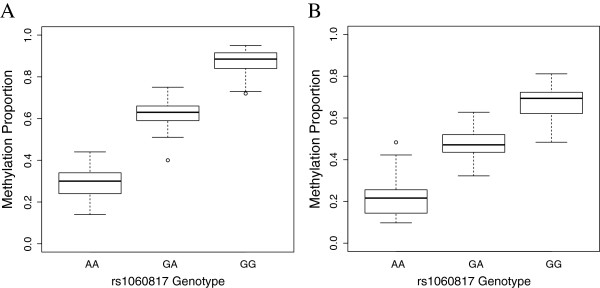
“DNA methylation patterns vary substantially between different tissues [2], but the sequence variants influencing methylation patterns may be consistent across tissues, as exemplified in Figure 2 and Table 1.”
BackgroundWaterland, R. A., & Jirtle, R. L. (2004) · Nutrition · doi:10.1016/j.nut.2003.09.011 · Cited by 613
GENECODIS: a web-based tool for finding significant concurrent annotations in gene lists
Carmona-Saez, P., Chagoyen, M., Tirado, F., Carazo, J. M., & Pascual-Montano, A. (2007) · Genome Biology · doi:10.1186/gb-2007-8-1-r3 · Cited by 592
Trauma exposure and stress-related disorders in inner city primary care patients
Gillespie, C. F., Bradley, B., Mercer, K., Smith, A. K., Conneely, K., Gapen, M., Weiss, T., Schwartz, A. C., Cubells, J. F., & Ressler, K. J. (2009) · General Hospital Psychiatry · doi:10.1016/j.genhosppsych.2009.05.003 · Cited by 504 · cited 1×
“Adult peripheral blood (PB) was assessed in African American subjects recruited as part of a larger study investigating the influence of genetic and environmental factors on response to stressful life events in a predominantly urban population of low socioeconomic status [37,38].”
BackgroundSelf-citationEpigenetic gene regulation: Linking early developmental environment to adult disease
Dolinoy, D. C., Weidman, J. R., & Jirtle, R. L. (2007) · Reproductive Toxicology · doi:10.1016/j.reprotox.2006.08.012 · Cited by 498 · cited 1×
“Because fetal development is a period of extensive cellular replication and growth, epigenetic changes may establish long-term patterns among exposed individuals [22-24].”
BackgroundFactors underlying variable DNA methylation in a human community cohort
Lam, L. L., Emberly, E., Fraser, H. B., Neumann, S. M., Chen, E., Miller, G. E., & Kobor, M. S. (2012) · Proceedings of the National Academy of Sciences · doi:10.1073/pnas.1121249109 · Cited by 476 · cited 1×
“DNA methylation patterns vary significantly by ancestry [28-30], prompting several to suggest that epigenetic differences may contribute to the increased risk of African Americans for a variety of health conditions [31-33].”
BackgroundWatson, M. S., Cutting, G. R., Desnick, R. J., Driscoll, D. A., Klinger, K., Mennuti, M., Palomaki, G. E., Popovich, B. W., Pratt, V. M., Rohlfs, E. M., et al. (2004) · Genetics in Medicine · doi:10.1097/01.gim.0000139506.11694.7c · Cited by 470 · cited 4×
“Although these two groups had the same sample size, linkage disequilibrium between markers is substantially lower in African Americans than in Caucasians [11], so SNPs in CB A are less likely to tag untyped meQTLs.”
BackgroundInfluentialPatterns of Cis Regulatory Variation in Diverse Human Populations
Stranger, B. E., Montgomery, S. B., Dimas, A. S., Parts, L., Stegle, O., Ingle, C. E., Sekowska, M., Smith, G. D., Evans, D., Gutierrez-Arcelus, M., et al. (2012) · PLoS Genetics · doi:10.1371/journal.pgen.1002639 · Cited by 470 · cited 2×
“For blood cohorts (PB, CB A, and CB B), we compared to eQTLs detected by Stranger and colleagues [10], and for brain cohorts (FCTX, TCTX, CRBLM, and PONS), we compared to meQTLs and eQTLs detected by Gibbs and colleagues [8].”
ResultNogales-Cadenas, R., Carmona-Saez, P., Vazquez, M., Vicente, C., Yang, X., Tirado, F., Carazo, J. M., & Pascual-Montano, A. (2009) · Nucleic Acids Research · doi:10.1093/nar/gkp416 · Cited by 437 · cited 1×
“0 [45,46].”
Genetic Control of Individual Differences in Gene-Specific Methylation in Human Brain
Zhang, D., Cheng, L., Badner, J. A., Chen, C., Chen, Q., Luo, W., Craig, D. W., Redman, M., Gershon, E. S., & Liu, C. (2010) · The American Journal of Human Genetics · doi:10.1016/j.ajhg.2010.02.005 · Cited by 387 · cited 2×
“Numerous studies have found meQTLs in blood leukocytes, buccal cells, brain tissue, and lymphoblast cell lines [3-7], though there is only modest overlap between the SNPCpG relationships identified in each study.”
BackgroundAllele-specific methylation is prevalent and is contributed by CpG-SNPs in the human genome
Shoemaker, R., Deng, J., Wang, W., & Zhang, K. (2010) · Genome Research · doi:10.1101/gr.104695.109 · Cited by 380 · cited 2×
“Numerous studies have found meQTLs in blood leukocytes, buccal cells, brain tissue, and lymphoblast cell lines [3-7], though there is only modest overlap between the SNPCpG relationships identified in each study.”
BackgroundDifferential immune system DNA methylation and cytokine regulation in post-traumatic stress disorder
Smith, A. K., Conneely, K. N., Kilaru, V., Mercer, K. B., Weiss, T. E., Bradley, B., Tang, Y., Gillespie, C. F., Cubells, J. F., & Ressler, K. J. (2011) · American Journal of Medical Genetics Part B: Neuropsychiatric Genetics · doi:10.1002/ajmg.b.31212 · Cited by 355 · cited 1×
“The methylation datasets for this analysis have been described previously [8,30,40].”
MethodSelf-citationThe apelin receptor APJ: journey from an orphan to a multifaceted regulator of homeostasis
O'Carroll, A.-M., Lolait, S. J., Harris, L. E., & Pope, G. R. (2013) · Journal of Endocrinology · doi:10.1530/joe-13-0227 · Cited by 344
DNA methylation in white blood cells: Association with risk factors in epidemiologic studies
Terry, M. B., Delgado-Cruzata, L., Vin-Raviv, N., Wu, H. C., & Santella, R. M. (2011) · Epigenetics · doi:10.4161/epi.6.7.16500 · Cited by 320 · cited 1×
“DNA methylation patterns vary significantly by ancestry [28-30], prompting several to suggest that epigenetic differences may contribute to the increased risk of African Americans for a variety of health conditions [31-33].”
BackgroundThe DNA Methylome of Human Peripheral Blood Mononuclear Cells
Li, Y., Zhu, J., Tian, G., Li, N., Li, Q., Ye, M., Zheng, H., Yu, J., Wu, H., Sun, J., et al. (2010) · PLoS Biology · doi:10.1371/journal.pbio.1000533 · Cited by 318 · cited 2×
“Numerous studies have found meQTLs in blood leukocytes, buccal cells, brain tissue, and lymphoblast cell lines [3-7], though there is only modest overlap between the SNPCpG relationships identified in each study.”
BackgroundA role for the 5-HT1A, 5-HT4 and 5-HT6 receptors in learning and memory
KING, M., MARSDEN, C., & FONE, K. (2008) · Trends in Pharmacological Sciences · doi:10.1016/j.tips.2008.07.001 · Cited by 304 · cited 1×
“site near 5-hydroxytryptamine (serotonin) receptor 6 (HTR6; Additional file 1), which is expressed on in many brain regions and plays a role in cognition [14,15].”
BackgroundBiological memories of past environments: Epigenetic pathways to health disparities
Thayer, Z. M., & Kuzawa, C. W. (2011) · Epigenetics · doi:10.4161/epi.6.7.16222 · Cited by 256 · cited 1×
“Studies of epigenetic differences may provide insight into health disparities [34], and meQTLs can help distinguish between genetic and epigenetic effects in such studies.”
BackgroundAllelic Skewing of DNA Methylation Is Widespread across the Genome
Schalkwyk, L. C., Meaburn, E. L., Smith, R., Dempster, E. L., Jeffries, A. R., Davies, M. N., Plomin, R., & Mill, J. (2010) · The American Journal of Human Genetics · doi:10.1016/j.ajhg.2010.01.014 · Cited by 244 · cited 2×
“Numerous studies have found meQTLs in blood leukocytes, buccal cells, brain tissue, and lymphoblast cell lines [3-7], though there is only modest overlap between the SNPCpG relationships identified in each study.”
BackgroundLinkage disequilibrium patterns of the human genome across populations
Shifman, S. (2003) · Human Molecular Genetics · doi:10.1093/hmg/ddg088 · Cited by 208 · cited 4×
“Although these two groups had the same sample size, linkage disequilibrium between markers is substantially lower in African Americans than in Caucasians [11], so SNPs in CB A are less likely to tag untyped meQTLs.”
BackgroundInfluentialRacial differences in gene‐specific DNA methylation levels are present at birth
Adkins, R. M., Krushkal, J., Tylavsky, F. A., & Thomas, F. (2011) · Birth Defects Research Part A: Clinical and Molecular Teratology · doi:10.1002/bdra.20770 · Cited by 172 · cited 3×
“DNA methylation patterns vary significantly by ancestry [28-30], prompting several to suggest that epigenetic differences may contribute to the increased risk of African Americans for a variety of health conditions [31-33].”
BackgroundMethodSelf-citationGamazon, E. R., Badner, J. A., Cheng, L., Zhang, C., Zhang, D., Cox, N. J., Gershon, E. S., Kelsoe, J. R., Greenwood, T. A., Nievergelt, C. M., et al. (2013) · Molecular Psychiatry · doi:10.1038/mp.2011.174 · Cited by 155 · cited 4×
“To compare our findings with earlier results demonstrating that meQTLs in cerebellum tissue were enriched in GWAS results for complex traits [9], we investigated whether our brain meQTLs were more likely to be represented among the top SNP associations from the WTCCC bipolar disorder study (defined here as p < 0.”
BackgroundResultInfluentialExpanding role for the apelin/APJ system in physiopathology
Carpéné, C., Dray, C., Attané, C., Valet, P., Portillo, M. P., Churruca, I., Milagro, F. I., & Castan‐Laurell, I. (2007) · Journal of Physiology and Biochemistry · doi:10.1007/bf03165767 · Cited by 150 · cited 1×
“Apelin and its receptor help to stimulate hematopoiesis in embryonic stem cells, and dysregulation of these genes is linked to numerous disorders related to blood flow problems and hypertension [18-21].”
BackgroundAn update on the role of the 5-hydroxytryptamine6 receptor in cognitive function
Fone, K. C. F. (2008) · Neuropharmacology · doi:10.1016/j.neuropharm.2008.06.061 · Cited by 141 · cited 1×
“site near 5-hydroxytryptamine (serotonin) receptor 6 (HTR6; Additional file 1), which is expressed on in many brain regions and plays a role in cognition [14,15].”
BackgroundLiang, P., Song, F., Ghosh, S., Morien, E., Qin, M., Mahmood, S., Fujiwara, K., Igarashi, J., Nagase, H., & Held, W. A. (2011) · BMC Genomics · doi:10.1186/1471-2164-12-231 · Cited by 140 · cited 2×
“DNA methylation patterns vary widely across the genome by developmental stage and by tissue type [1], making study design a challenge when the most relevant tissue is not accessible from living humans.”
BackgroundModulation of apelin and APJ receptor in normal and preeclampsia-complicated placentas.
Cobellis, L., Falco, M. D., Mastrogiacomo, A., Giraldi, D., Dattilo, D., Scaffa, C., Colacurci, N., & Luca, A. D. (2007) · PubMed · doi:10.14670/hh-22.1 · Cited by 101
Lambe, E. K., Fillman, S. G., Webster, M. J., & Shannon Weickert, C. (2011) · PLoS ONE · doi:10.1371/journal.pone.0022799 · Cited by 79 · cited 1×
“Recently, Lambe and colleagues characterized HTR6 expression levels in postmortem tissue over time [16].”
BackgroundDNA Methylation: An Epigenetic Risk Factor in Preterm Birth
Menon, R., Conneely, K. N., & Smith, A. K. (2012) · Reproductive Sciences · doi:10.1177/1933719111424446 · Cited by 76 · cited 1×
“DNA methylation patterns vary significantly by ancestry [28-30], prompting several to suggest that epigenetic differences may contribute to the increased risk of African Americans for a variety of health conditions [31-33].”
BackgroundSelf-citationAPELIN promotes hematopoiesis from human embryonic stem cells
Yu, Q. C., Hirst, C. E., Costa, M., Ng, E. S., Schiesser, J. V., Gertow, K., Stanley, E. G., & Elefanty, A. G. (2012) · Blood · doi:10.1182/blood-2011-12-396093 · Cited by 70
Cystic fibrosis testing 8 years on: Lessons learned from carrier screening and sequencing analysis
Strom, C. M., Crossley, B., Buller-Buerkle, A., Jarvis, M., Quan, F., Peng, M., Muralidharan, K., Pratt, V. M., Redman, J. B., & Sun, W. (2010) · Genetics in Medicine · doi:10.1097/gim.0b013e3181fa24c4 · Cited by 60 · cited 4×
“Although these two groups had the same sample size, linkage disequilibrium between markers is substantially lower in African Americans than in Caucasians [11], so SNPs in CB A are less likely to tag untyped meQTLs.”
BackgroundInfluentialRace and preterm birth--the case for epigenetic inquiry.
Burris, H. H., & Collins, J. W. (2010) · PubMed · doi:10.13016/x4lp-ffxi · Cited by 39 · cited 1×
“DNA methylation patterns vary significantly by ancestry [28-30], prompting several to suggest that epigenetic differences may contribute to the increased risk of African Americans for a variety of health conditions [31-33].”
BackgroundMapping Allele-Specific DNA Methylation: A New Tool for Maximizing Information from GWAS
Tycko, B. (2010) · The American Journal of Human Genetics · doi:10.1016/j.ajhg.2010.01.021 · Cited by 39 · cited 1×
“Because of their regulatory potential, identification of meQTLs may also be useful to harness the power of GWAS more efficiently [35].”
BackgroundAdkins, R. M., Tylavsky, F. A., & Krushkal, J. (2012) · Chemistry & Biodiversity · doi:10.1002/cbdv.201100395 · Cited by 29
Self-citationNagasaka, Y., Oda, K., Iwatsubo, T., Kawamura, A., & Usui, T. (2012) · Biopharmaceutics & Drug Disposition · doi:10.1002/bdd.1801 · Cited by 25 · cited 1×
“This gene encodes a drug transporter that functions at the blood–brain barrier [13].”
Background
Cited by
Systematic identification of genetic influences on methylation across the human life course
Gaunt, T. R., Shihab, H. A., Hemani, G., Min, J. L., Woodward, G., Lyttleton, O., Zheng, J., Duggirala, A., McArdle, W. L., Ho, K., et al. (2016) · Genome Biology · doi:10.1186/s13059-016-0926-z · Cited by 598
“Methylation data were only available in peripheral blood from ALSPAC participants, so we were unable to compare results between tissues (interestingly, mQTL have been reported to be enriched for CpG sites that are variable between tissues [32]).”
BackgroundSun, Y. V., & Hu, Y.-J. (2016) · Advances in Genetics · doi:10.1016/bs.adgen.2015.11.004 · Cited by 459
“Because of tissue and cell-type specificity of DNAm, the genome-wide meQTL can distribute differently from tissue to tissue (Grundberg et al., 2013; Smith et al., 2014), as well as from cell type to cell type (GutierrezArcelus et al.”
BackgroundHannon, E., Lunnon, K., Schalkwyk, L., & Mill, J. (2015) · Epigenetics · doi:10.1080/15592294.2015.1100786 · Cited by 455
Smith, A. K., Kilaru, V., Klengel, T., Mercer, K. B., Bradley, B., Conneely, K. N., Ressler, K. J., & Binder, E. B. (2015) · American Journal of Medical Genetics Part B: Neuropsychiatric Genetics · doi:10.1002/ajmg.b.32278 · Cited by 355
“, blood and brain) as well as age and race groups [Smith et al., 2014a].”
BackgroundMethodInfluentialSelf-citationIdentification of 55,000 Replicated DNA Methylation QTL
McRae, A. F., Marioni, R. E., Shah, S., Yang, J., Powell, J. E., Harris, S. E., Gibson, J., Henders, A. K., Bowdler, L., Painter, J. N., et al. (2018) · Scientific Reports · doi:10.1038/s41598-018-35871-w · Cited by 360
Metadata
- Authors
- Smith, A. K., Kilaru, V., Kocak, M., Almli, L. M., Mercer, K. B., Ressler, K. J., Tylavsky, F. A., & Conneely, K. N.
- Affiliations
- Emory University (US)
- Howard Hughes Medical Institute (US)
- University of Tennessee Health Science Center (US)
- Corresponding author
- Smith, Alicia K
- Venue
- BMC Genomics
- Published
- 2014
- Volume
- 15
- Issue
- 1
- Pages
- 145
- ISSN
- 1471-2164 (ISSN-L)
- PMC
- PMC4028873
- OpenAlex
- W2016113637
- Cited by
- 239
- References
- 49
- Citations by year
- 2026: 6 · 2025: 12 · 2024: 13 · 2023: 16 · 2022: 19 · 2021: 30 · 2020: 28 · 2019: 22 · 2018: 19 · 2017: 23 · 2016: 25 · 2015: 21 · 2014: 5
- FWCI
- 10.12
- Type
- journal article
- Language
- en
- Open access
- gold
- doi.org
- Licence
- cc-by
- Locations
- BMC Genomics (publishedVersion, cc-by)
- Europe PMC (PubMed Central) (publishedVersion, cc-by)
- PubMed Central (publishedVersion, cc-by)
- PubMed (publishedVersion)
- Funders
- Howard Hughes Medical Institute (MH071537)
- Urban Child Institute
- Health Science Center, University of Tennessee
- National Institute of Mental Health (MH 071537, K01MH085806, R01MH096764, MH085806, MH096764)
- National Institute of Child Health and Human Development (MH071537)
- Eunice Kennedy Shriver National Institute of Child Health and Human Development (R01HD060713, R01HD055462, HD060713, HD055462)
- Topics
- Life Sciences › Biochemistry, Genetics and Molecular Biology › Molecular Biology › Epigenetics and DNA Methylation
- Life Sciences › Biochemistry, Genetics and Molecular Biology › Genetics › Genetic Associations and Epidemiology
- Life Sciences › Biochemistry, Genetics and Molecular Biology › Molecular Biology › Genomics and Chromatin Dynamics
- Keywords
- methylation quantitative trait loci, DNA methylation, single nucleotide polymorphisms, genetic ancestry, developmental stages, neonates, postmortem brain, tissue type, CpG sites, intronic SNPs, microRNA binding sites, bipolar disorder, gene expression regulation
- MeSH terms
- Adult, Female, Gene Expression Regulation, Humans, Male, Middle Aged, Organ Specificity, Cluster Analysis, CpG Islands, Evolution, Molecular, DNA Methylation, Polymorphism, Single Nucleotide, Quantitative Trait Loci, Epigenesis, Genetic, Genome-Wide Association Study, Gene-Environment Interaction
About these checks
Registry, retraction, Cites and statistics results are computed, not judged, with one exception: a printed reference that no index lists is read once by a model before it counts as a citation error. Claims are extracted by a model and kept only when their quote appears verbatim in the text; each cited source is then checked, with a model’s help, for whether it says what the claim relies on. Those verdicts can be wrong — read the claim’s quote and the cited source before relying on one.
Statistics and arithmetic are recomputed, not judged.
Confidence bands are shown only for fields calibrated on our annotated test set. None is calibrated yet, so no band is shown.
What counts as a claim ›How we measure confidence ›How we check this ›
Are you an author, or do you see a problem with this page? Request a review
Data sources
Bibliographic data: Semantic Scholar, OpenAlex, Crossref.
Contains information from the Semantic Scholar Academic Graph Datasets, made available under the ODC Attribution License (ODC-BY 1.0).
Semantic Scholar’s data is described in: Kinney, R., et al. (2023). The Semantic Scholar Open Data Platform. arXiv:2301.10140.
