

The Rbf1, Hfl1 and Dbp4 of Candida albicans regulate common as well as transcription factor-specific mitochondrial and other cell activities
Open accessThe DOI matches its Crossref record; 48 of the 48 references it cites were found in a registry or an index.
Abstract
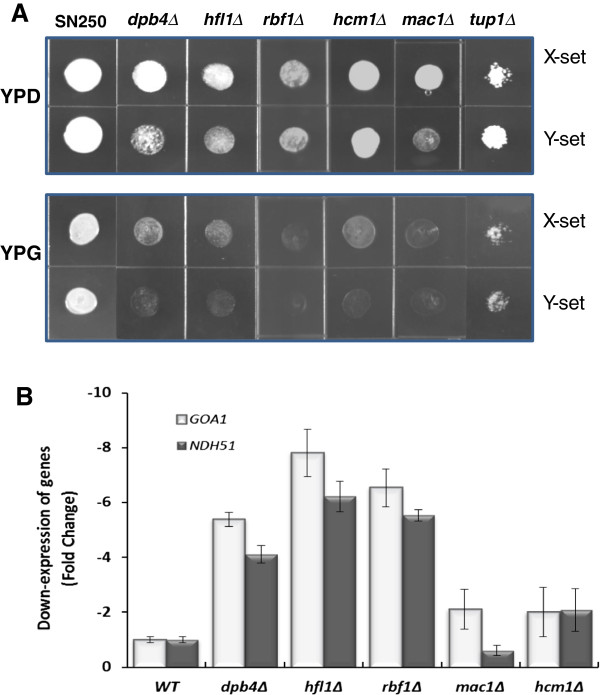
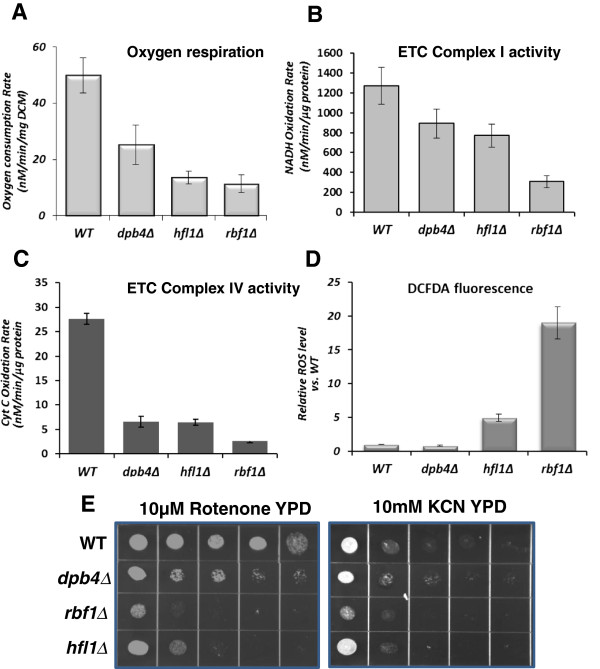
Background: Our interest in Candida albicans mitochondria began with the identification of GOA1. We demonstrated its role in cell energy production, cross-talk among mitochondria and peroxisomes, non-glucose energy metabolism, maintenance of stationary phase growth, and prevention of premature apoptosis. Its absence results in avirulence. However, what regulated transcription of GOA1 was unknown. Results: To identify transcriptional regulators (TRs) of GOA1, we screened a C. albicans TF knockout library (TRKO) and identified Rbf1p, Hfl1p, and Dpb4p as positive TRs of GOA1. The phenotypes of each mutant (reduced respiration, inability to grow on glycerol, reduced ETC CI and CIV activities) are reasonable evidence for their required roles especially in mitochondrial functions. While the integration of mitochondria with cell metabolic activities is presumed to occur, there is minimal information on this subject at the genome level. Therefore, microarray analysis was used to provide this information for each TR mutant. Transcriptional profiles of Rbf1p and Hfl1p are more similar than that of Dpn4p. Our data demonstrate common and also gene-specific regulatory functions for each TR. We establish their roles in carbon metabolism, stress adaptation, cell wall synthesis, transporter efflux, peroxisomal metabolism, phospholipid synthesis, rRNA processing, and nuclear/mtDNA replication. Conclusions: The TRs regulate a number of common genes but each also regulates specific gene transcription. These data for the first time create a genome roadmap that can be used to integrate mitochondria with other cell processes. Of interest, the TRs are fungal-specific, warranting consideration as antifungal drug targets.
Overview
The claims and statistics of this paper haven’t been checked yet.
Free: it reads the open-access text and checks the first 5 claims that cite a source we can check. Create a free account to check every claim.
Integrity signals
Registry
Cites
Statistics
Figures
Verification
Claims the paper makes
The claims and statistics of this paper haven’t been checked yet.
Free: it reads the open-access text and checks the first 5 claims that cite a source we can check. Create a free account to check every claim.
Claims other papers make about this one
Each is checked against this paper’s own text: does it say what the citing paper says it does?
The source backs part of the claim, not all of it — or backs it for a different population, condition or comparison.
In the citing paper
“In pathogenic fungi including C. albicans, Cryptococcus neoformans, and Aspergillus fumigatus, inhibiting the respiratory chain can affect the morphological transition from yeast to hyphae, cell wall biogenesis, drug resistance, and virulence [10–17].”
From Mitochondrial anchor protein Num11 is key to pathogenicity of Candida albicans by affecting mitochondrial function and cell wall masking (2025) · cites this paper as [14]
Experimental — accuracy not yet measuredThe source backs part of the claim, not all of it — or backs it for a different population, condition or comparison.
In the citing paper
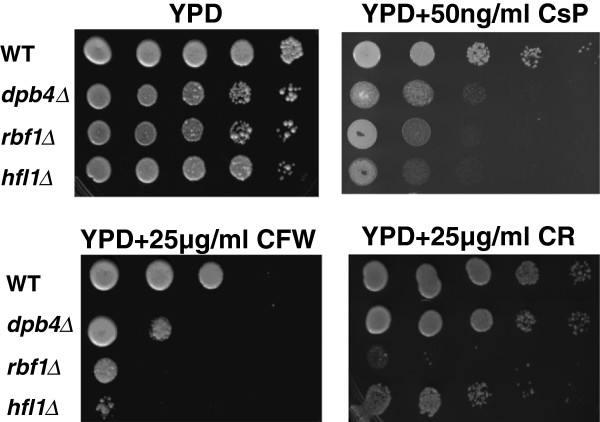
“C. albicans respiration-deficient mutants dpb4Δ, hfl1Δ, and rbf1Δ (8) and mutants goa1Δ and ndh51Δ (16) have similarly been shown to be sensitive to CFW and CR.”
From Inhibition of Classical and Alternative Modes of Respiration in Candida albicans Leads to Cell Wall Remodeling and Increased Macrophage Recognition (2019) · cites this paper as [8]
Experimental — accuracy not yet measuredThe cited source says what the claim attributes to it.
In the citing paper
“Mutants defective in respiration have consistently been shown to affect the hyphal morphological switch, an important determinant of virulence in C. albicans, whether negatively (goa1Δ, ndh51Δ) (7) or positively (dbp4Δ, hfl1Δ, rbf1Δ) (8).”
From Inhibition of Classical and Alternative Modes of Respiration in Candida albicans Leads to Cell Wall Remodeling and Increased Macrophage Recognition (2019) · cites this paper as [8]
Self-check
Percentages, sums and reported differences re-computed from the paper’s own numbers.
The self-check needs the paper’s full text.
Citations
Cites
Hidden Killers: Human Fungal Infections
Brown, G. D., Denning, D. W., Gow, N. A. R., Levitz, S. M., Netea, M. G., & White, T. C. (2012) · Science Translational Medicine · doi:10.1126/scitranslmed.3004404 · Cited by 4,284 · cited 6×
“Virulence of this organism is commonly attributed to factors that initiate colonization of host cells (the ALS gene family and others), cause invasion (secreted lipases and proteases), regulate morphogenesis (the yeast hyphal transition), and biofilm formation [1].”
InfluentialHazelwood, L. A., Daran, J.-M., van Maris, A. J. A., Pronk, J. T., & Dickinson, J. R. (2008) · Applied and Environmental Microbiology · doi:10.1128/aem.02625-07 · Cited by 1,547
The glyoxylate cycle is required for fungal virulence
Lorenz, M. C., & Fink, G. R. (2001) · Nature · doi:10.1038/35083594 · Cited by 745 · cited 1×
“albicans has been described [12,28-30].”
Transcriptional Response of Candida albicans upon Internalization by Macrophages
Lorenz, M. C., Bender, J. A., & Fink, G. R. (2004) · Eukaryotic Cell · doi:10.1128/ec.3.5.1076-1087.2004 · Cited by 712 · cited 2×
“albicans are critical to the pathogenesis of candidiasis, since these organelles house alternative carbon metabolic pathways (such as the glyoxylate cycle) that are critical to survival of the organisms in macrophages [15].”
Blumberg, H. M., Jarvis, W. R., Soucie, J. M., Edwards, J. E., Patterson, J. E., Pfaller, M. A., Rangel‐Frausto, M. S., Rinaldi, M. G., Saiman, L., Wiblin, R. T., et al. (2001) · Clinical Infectious Diseases · doi:10.1086/321811 · Cited by 661
Metabolism and Regulation of Glycerolipids in the Yeast Saccharomyces cerevisiae
Henry, S. A., Kohlwein, S. D., & Carman, G. M. (2012) · Genetics · doi:10.1534/genetics.111.130286 · Cited by 518
A Phenotypic Profile of the Candida albicans Regulatory Network
Homann, O. R., Dea, J., Noble, S. M., & Johnson, A. D. (2009) · PLoS Genetics · doi:10.1371/journal.pgen.1000783 · Cited by 444 · cited 3×
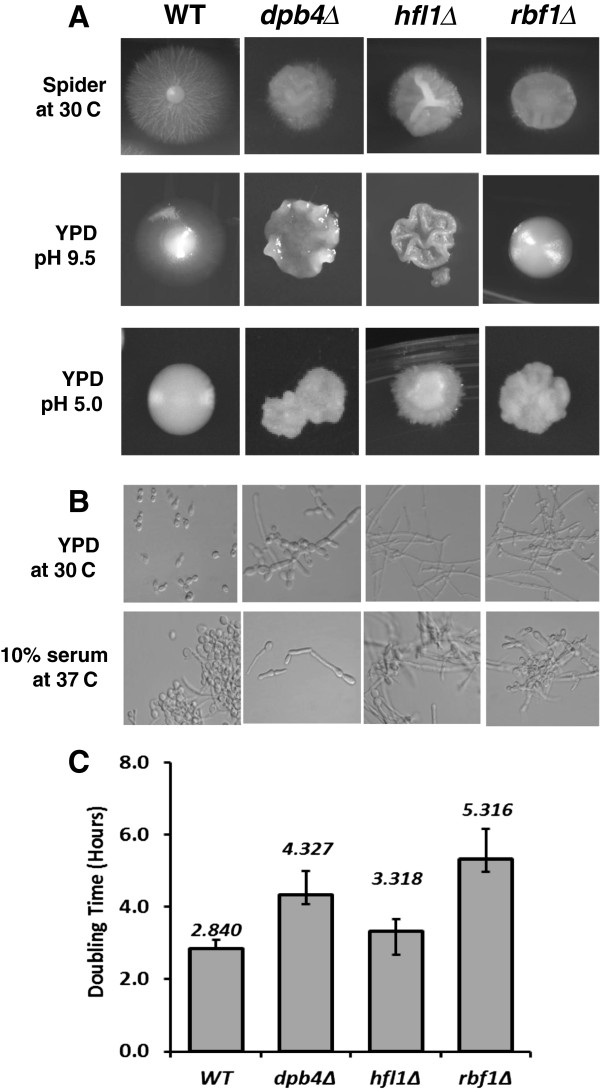
“Rbf1Δ and hfl1Δ were similar to WT cells in 10% serum at 37°C, as reported previously for rbf1Δ [21].”
Pfaller, M., Neofytos, D., Diekema, D., Azie, N., Meier-Kriesche, H.-U., Quan, S.-P., & Horn, D. (2012) · Diagnostic Microbiology and Infectious Disease · doi:10.1016/j.diagmicrobio.2012.10.003 · Cited by 394 · cited 1×
“6 billion per year [5-8].”
Niche-specific regulation of central metabolic pathways in a fungal pathogen
Barelle, C. J., Priest, C. L., MacCallum, D. M., Gow, N. A. R., Odds, F. C., & Brown, A. J. P. (2006) · Cellular Microbiology · doi:10.1111/j.1462-5822.2005.00676.x · Cited by 336 · cited 1×
“albicans, low blood levels of glucose cause the utilization of alternative carbon sources as mentioned above and described in other labs [13-16].”
Fungal respiration: a fusion of standard and alternative components
Joseph-Horne, T., Hollomon, D. W., & Wood, P. M. (2001) · Biochimica et Biophysica Acta (BBA) - Bioenergetics · doi:10.1016/s0005-2728(00)00251-6 · Cited by 331 · cited 3×
“This is especially true for AOX2, which is a hallmark gene of a mitochondrial stress response rather than its role in respiration [25].”
The production of reactive oxygen species by complex I
Hirst, J., King, M. S., & Pryde, K. R. (2008) · Biochemical Society Transactions · doi:10.1042/bst0360976 · Cited by 312 · cited 1×
“Oxidative stress caused by ROS is usually associated with aberrations of mitochondrial metabolism that can threaten cell survival [46].”
Shingu-Vazquez, M., & Traven, A. (2011) · Eukaryotic Cell · doi:10.1128/ec.05184-11 · Cited by 209 · cited 1×
“Regulation of both catabolic and anabolic pathways is critical to cell growth [27].”
Kelly, R. D. W., Mahmud, A., McKenzie, M., Trounce, I. A., & St John, J. C. (2012) · Nucleic Acids Research · doi:10.1093/nar/gks770 · Cited by 191 · cited 1×
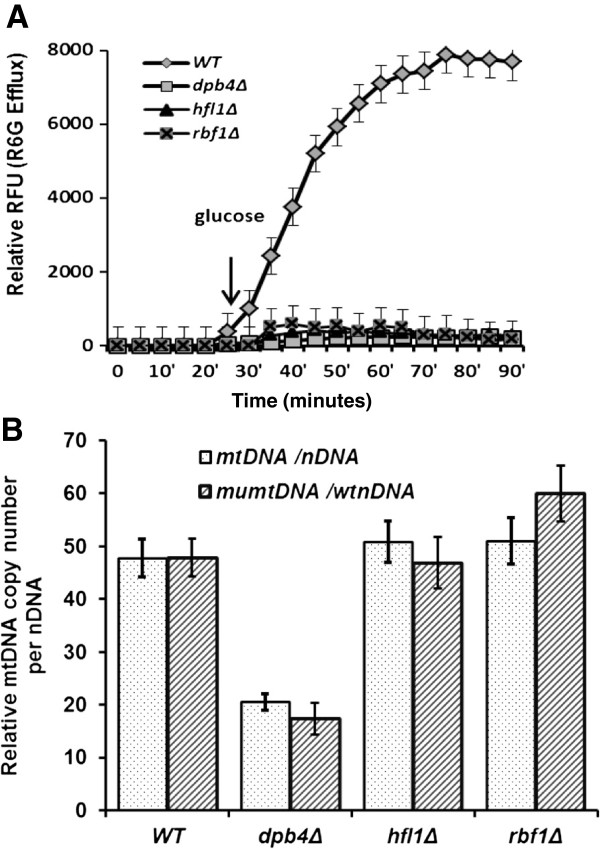
“The relative copy number of mitochondrial DNA over the nuclear DNA was averaged from the threshold cycle number (Ct) difference for each pairs of mtDNA/nDNA [47,48].”
Coordination of Lipid Metabolism in Membrane Biogenesis
Nohturfft, A., & Zhang, S. C. (2009) · Annual Review of Cell and Developmental Biology · doi:10.1146/annurev.cellbio.24.110707.175344 · Cited by 175 · cited 1×
“albicans lipids provide a source for energy generation via catabolism as well as phospholipid biosynthesis via anabolic pathways [26].”
Targeting virulence: A new paradigm for antifungals
Gauwerky, K., Borelli, C., & Korting, H. C. (2009) · Drug Discovery Today · doi:10.1016/j.drudis.2008.11.013 · Cited by 174 · cited 1×
“; licensee BioMed Cen Creative Commons Attribution License (http:/ distribution, and reproduction in any medium past few decades primarily due to cancer chemotherapy, organ/bone marrow transplantation, surgical intervention, and the AIDS pandemic [3,4].”
Ramírez, M. A., & Lorenz, M. C. (2007) · Eukaryotic Cell · doi:10.1128/ec.00372-06 · Cited by 174 · cited 1×
“albicans, low blood levels of glucose cause the utilization of alternative carbon sources as mentioned above and described in other labs [13-16].”
Oropharyngeal candidiasis in the era of antiretroviral therapy
Thompson, G. R., Patel, P. K., Kirkpatrick, W. R., Westbrook, S. D., Berg, D., Erlandsen, J., Redding, S. W., & Patterson, T. F. (2010) · Oral Surgery, Oral Medicine, Oral Pathology, Oral Radiology, and Endodontology · doi:10.1016/j.tripleo.2009.11.026 · Cited by 164
Eisman, B., Alonso-Monge, R., Román, E., Arana, D., Nombela, C., & Pla, J. (2006) · Eukaryotic Cell · doi:10.1128/ec.5.2.347-358.2006 · Cited by 163 · cited 1×
“Both genes are known to regulate cell wall polysaccharide synthesis [34,35].”
Rhodamine 6G efflux for the detection of CDR1-overexpressing azole-resistant Candidaalbicans strains
Maesaki, S., Marichal, P., Bossche, H. V., Sanglard, D., & Kohno, S. (1999) · Journal of Antimicrobial Chemotherapy · doi:10.1093/jac/44.1.27 · Cited by 162 · cited 1×
“albicans was inversely correlated with the level of this group of efflux exporters [36].”
Polyamines Improve K+/Na+ Homeostasis in Barley Seedlings by Regulating Root Ion Channel Activities
Zhao, F., Song, C.-P., He, J., & Zhu, H. (2007) · Plant Physiology · doi:10.1104/pp.107.105882 · Cited by 142 · cited 1×
“These data may illustrate that these mutants have a high demand for sustaining intracellular pH and membrane potential since the spermidine transporter synchronizes Ca, Na, K -ATPase in plant cells [38].”
Mapping of genetic and epigenetic regulatory networks using microarrays
van Steensel, B. (2005) · Nature Genetics · doi:10.1038/ng1559 · Cited by 136 · cited 1×
“In eukaryotes, ~3-5% of their protein repertoire is transcription factors [40].”
Quantitative PCR Analysis of Mitochondrial DNA Content in Patients with Mitochondrial Disease
BAI, R., PERNG, C., HSU, C., & WONG, L. C. (2004) · Annals of the New York Academy of Sciences · doi:10.1196/annals.1293.029 · Cited by 125 · cited 1×
“The relative copy number of mitochondrial DNA over the nuclear DNA was averaged from the threshold cycle number (Ct) difference for each pairs of mtDNA/nDNA [47,48].”
Sandai, D., Yin, Z., Selway, L., Stead, D., Walker, J., Leach, M. D., Bohovych, I., Ene, I. V., Kastora, S., Budge, S., et al. (2012) · mBio · doi:10.1128/mbio.00495-12 · Cited by 110 · cited 1×
“albicans, enzymes of alternative carbon metabolism (non-glucose substrates) are stabilized even in the presence of glucose, compared to model yeast of which these same enzymes are regulated by glucose-repressible events [11].”
Talibi, D., & Raymond, M. (1999) · Journal of Bacteriology · doi:10.1128/jb.181.1.231-240.1999 · Cited by 101 · cited 1×
“The likely involvement of these 7 TRs in the regulation of metabolic process needs to be determined, although the last three transcriptional regulators have been reported to process filamentous growth and azole drug resistance [42,43].”
Bambach, A., Fernandes, M. P., Ghosh, A., Kruppa, M., Alex, D., Li, D., Fonzi, W. A., Chauhan, N., Sun, N., Agrellos, O. A., et al. (2009) · Eukaryotic Cell · doi:10.1128/ec.00066-09 · Cited by 95 · cited 6×
“We have shown that a dysfunctional CI causes an increase in reactive oxidant species (ROS), triggering apoptosis and an associated shortened chronological aging in vitro [16-18].”
InfluentialSelf-citationHospital Resource Utilization and Costs of Inappropriate Treatment of Candidemia
Arnold, H. M., Micek, S. T., Shorr, A. F., Zilberberg, M. D., Labelle, A. J., Kothari, S., & Kollef, M. H. (2010) · Pharmacotherapy: The Journal of Human Pharmacology and Drug Therapy · doi:10.1592/phco.30.4.361 · Cited by 94 · cited 1×
“; licensee BioMed Cen Creative Commons Attribution License (http:/ distribution, and reproduction in any medium past few decades primarily due to cancer chemotherapy, organ/bone marrow transplantation, surgical intervention, and the AIDS pandemic [3,4].”
Sun, N., Fonzi, W., Chen, H., She, X., Zhang, L., Zhang, L., & Calderone, R. (2013) · Antimicrobial Agents and Chemotherapy · doi:10.1128/aac.01520-12 · Cited by 94 · cited 20×
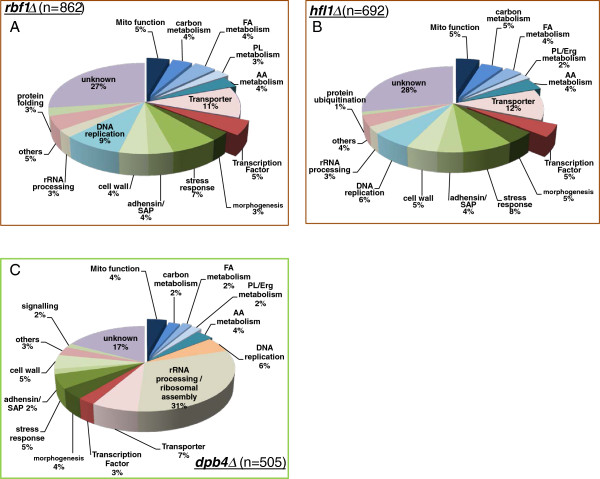
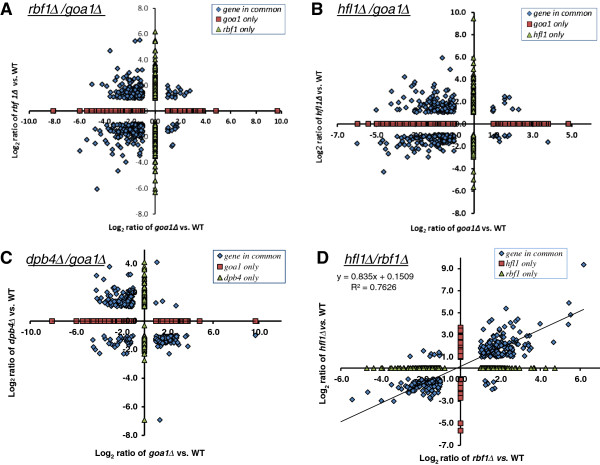
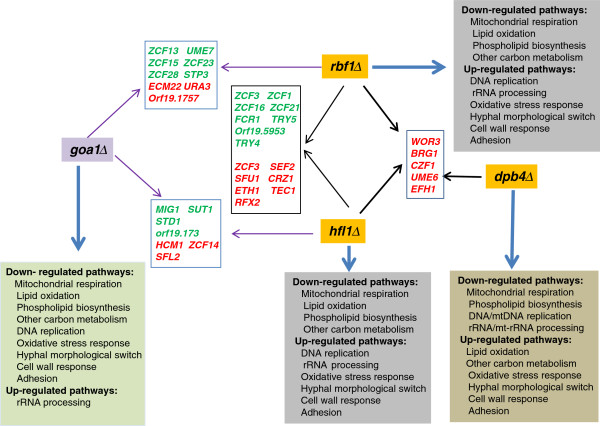
“Global transcriptional profiling in rbf1Δ, hfl1Δ, and dpb4Δ Based upon our published data on transcriptional profiling of the goa1Δ [19] and the functions of the RBF1, HFL1, and DPB4 as positive regulators of GOA1, we expected common gene pools as well as TR-specific gene changes.”
InfluentialSelf-citationLi, D., Chen, H., Florentino, A., Alex, D., Sikorski, P., Fonzi, W. A., & Calderone, R. (2011) · Eukaryotic Cell · doi:10.1128/ec.00303-10 · Cited by 91 · cited 6×
“We have shown that a dysfunctional CI causes an increase in reactive oxidant species (ROS), triggering apoptosis and an associated shortened chronological aging in vitro [16-18].”
MethodInfluentialSelf-citationMalanović, N., Streith, I. E., Wolinski, H., Rechberger, G. N., Kohlwein, S. D., & Tehlivets, O. (2008) · Journal of Biological Chemistry · doi:10.1074/jbc.m800830200 · Cited by 76
Carman, A. J., Vylkova, S., & Lorenz, M. C. (2008) · Eukaryotic Cell · doi:10.1128/ec.00253-08 · Cited by 70 · cited 1×
“albicans has been described [12,28-30].”
Shahi, P., & Moye-Rowley, W. S. (2009) · Biochimica et Biophysica Acta (BBA) - Proteins and Proteomics · doi:10.1016/j.bbapap.2008.12.012 · Cited by 57 · cited 1×
“albicans and model yeast is a rewiring of transcriptional regulation [10].”
Vandeputte, P., Ischer, F., Sanglard, D., & Coste, A. T. (2011) · PLoS ONE · doi:10.1371/journal.pone.0026962 · Cited by 56 · cited 1×
“However, of 77 such genes, most are poorly characterized, yet they are fungal-specific [41].”
Hao, B., Clancy, C. J., Cheng, S., Raman, S. B., Iczkowski, K. A., & Nguyen, M. H. (2009) · Eukaryotic Cell · doi:10.1128/ec.00246-08 · Cited by 48 · cited 1×
“The likely involvement of these 7 TRs in the regulation of metabolic process needs to be determined, although the last three transcriptional regulators have been reported to process filamentous growth and azole drug resistance [42,43].”
Chamilos, G., Lewis, R. E., & Kontoyiannis, D. P. (2006) · Antimicrobial Agents and Chemotherapy · doi:10.1128/aac.50.2.744-747.2006 · Cited by 47 · cited 3×
“In addition to the cell wall glucan biosynthesis genes, those of the cell wall integrity and MAPK pathways were up-regulated, including the CHK1 histidine kinase and the CEK1 MAP kinase.”
Zhou, H., & Lorenz, M. C. (2008) · Microbiology · doi:10.1099/mic.0.2007/014555-0 · Cited by 46 · cited 1×
“albicans has been described [12,28-30].”
Kinetic Analysis of Rhodamines Efflux Mediated by the Multidrug Resistance Protein (MRP1)
Saengkhae, C., Udomtanakunchai, C., & Garnier‐Suillerot, A. (2003) · Biophysical Journal · doi:10.1016/s0006-3495(03)74628-1 · Cited by 44 · cited 1×
“Because R6G has a permanent positive charge, its cellular accumulation relies on a plasma membrane potential that is localized mainly in the mitochondria [37].”
She, X., Zhang, L., Chen, H., Calderone, R., & Li, D. (2013) · Cellular Microbiology · doi:10.1111/cmi.12135 · Cited by 43 · cited 3×
“The host-pathogen outcomes from a lack of Goa1p are avirulence, a failure to colonize kidney tissues, and increased killing by human neutrophils and macrophages [16,20].”
Self-citationThe Candida albicans histidine kinase Chk1p: Signaling and cell wall mannan
Li, D., Williams, D., Lowman, D., Monteiro, M. A., Tan, X., Kruppa, M., Fonzi, W., Roman, E., Pla, J., & Calderone, R. (2009) · Fungal Genetics and Biology · doi:10.1016/j.fgb.2009.06.008 · Cited by 41 · cited 1×
“Both genes are known to regulate cell wall polysaccharide synthesis [34,35].”
Self-citationBrandt, M. E., & Vickery, L. E. (1993) · Journal of Biological Chemistry · doi:10.1016/s0021-9258(19)85311-5 · Cited by 37
Grumaz, C., Lorenz, S., Stevens, P., Lindemann, E., Schöck, U., Retey, J., Rupp, S., & Sohn, K. (2013) · BMC Genomics · doi:10.1186/1471-2164-14-212 · Cited by 36 · cited 1×
“dublinensis) [9].”
Niimi, M., Kamiyama, A., & Tokunaga, M. (1988) · Medical Mycology · doi:10.1080/02681218880000271 · Cited by 32 · cited 2×
“Oppositely, C. albicans respires oxidatively in the presence of glucose and is Crabtreenegative [12].”
Kumme, J., Dietz, M., Wagner, C., & Schüller, H. (2008) · Current Genetics · doi:10.1007/s00294-008-0197-7 · Cited by 28 · cited 1×
“UASINO-containing genes [44].”
Candidemia in the in-patient setting: treatment options and economics
Gagne, J. J., & Goldfarb, N. I. (2007) · Expert Opinion on Pharmacotherapy · doi:10.1517/14656566.8.11.1643 · Cited by 28 · cited 1×
“6 billion per year [5-8].”
Chen, H., Calderone, R., Sun, N., Wang, Y., & Li, D. (2012) · Fungal Genetics and Biology · doi:10.1016/j.fgb.2012.09.007 · Cited by 21 · cited 8×
“We demonstrated that cross-talking between mitochondria and peroxisomes in the presence of either glucose or non-glucose substrates requires Goa1p [17,19].”
MethodInfluentialSelf-citationThe effect of prostaglandin E2 on transcriptional responses of Candida albicans
Levitin, A., & Whiteway, M. S. (2007) · Microbiological Research · doi:10.1016/j.micres.2007.02.001 · Cited by 19 · cited 1×
“Mac1p and Tup1p are thought to regulate copper and iron uptake [23].”
Fairlamb, A. H., & Cole, S. T. (2011) · Future Microbiology · doi:10.2217/fmb.11.54 · Cited by 8
Control of methionine biosynthesis genes by protein kinase CK2-mediated phosphorylation of Cdc34
Barz, T., Ackermann, K., & Pyerin, W. G. (2006) · Cellular and Molecular Life Sciences · doi:10.1007/s00018-006-6213-5 · Cited by 5 · cited 1×
“Methionine, as a constituent of proteins, is also critical to biochemical pathways, including the “methyl cycle” which generates the key metabolite S-adnosylmethioinine (AdoMet) [32].”
Aoki, Y., Ishii, N., Watanabe, M., Yoshihara, F., & Arisawa, M. (1998) · Nippon Ishinkin Gakkai Zasshi · doi:10.3314/jjmm.39.67 · Cited by 5 · cited 3×
“albicans was first noted by Aoki et al [22].”
Cited by
System-level impact of mitochondria on fungal virulence: to metabolism and beyond
Calderone, R., Li, D., & Traven, A. (2015) · FEMS Yeast Research · doi:10.1093/femsyr/fov027 · Cited by 101
“albicans Subsequently, an isogenic set of strains was constructed that included a null mutant and a single gene-reconstituted strain were compared phenotypically to parental WT cells (Bambach et al. 2009; Li et al. 2011; Chen et al. 2012; She et al. 2013, 2015; Sun et al. 2013; Khamooshi et al. 2014).”
BackgroundSelf-citationCandida albicans targets that potentially synergize with fluconazole
Lu, H., Shrivastava, M., Whiteway, M., & Jiang, Y. (2021) · Critical Reviews in Microbiology · doi:10.1080/1040841x.2021.1884641 · Cited by 81
“2009), show increased susceptibility to fluconazole (Nagao et al. 2012; Ko et al. 2013; Khamooshi et al. 2014; Chen et al. 2018).”
BackgroundExploiting mitochondria as targets for the development of new antifungals
Li, D., & Calderone, R. (2017) · Virulence · doi:10.1080/21505594.2016.1188235 · Cited by 67
Self-citationDuvenage, L., Walker, L. A., Bojarczuk, A., Johnston, S. A., MacCallum, D. M., Munro, C. A., & Gourlay, C. W. (2019) · mBio · doi:10.1128/mbio.02535-18 · Cited by 61
“Mutants defective in respiration have consistently been shown to affect the hyphal morphological switch, an important determinant of virulence in C. albicans , whether negatively ( goa1 Δ, ndh51 Δ) (7) or positively ( dbp4 Δ, hfl1 Δ, rbf1 Δ) (8).”
Sharma, N. L., Massie, C. E., Butter, F., Mann, M., Bon, H., Ramos‐Montoya, A., Menon, S., Stark, R., Lamb, A. D. G., Scott, H. E., et al. (2014) · Nucleic Acids Research · doi:10.1093/nar/gku281 · Cited by 61
Metadata
- Authors
- Khamooshi, K., Sikorski, P., Sun, N., Calderone, R., & Li, D.
- Affiliations
- Georgetown University Medical Center (US)
- Corresponding author
- Li, Dongmei
- Venue
- BMC Genomics
- Published
- 2014-01-22
- Volume
- 15
- Issue
- 1
- Pages
- 56-56
- ISSN
- 1471-2164 (ISSN-L)
- PMC
- PMC3904162
- OpenAlex
- W2135399192
- Cited by
- 37
- References
- 48
- Citations by year
- 2025: 2 · 2024: 2 · 2022: 3 · 2021: 4 · 2020: 6 · 2019: 2 · 2018: 4 · 2017: 1 · 2016: 3 · 2015: 7 · 2014: 3
- FWCI
- 1.91
- Type
- journal article
- Language
- en
- Open access
- gold
- doi.org
- Licence
- cc-by
- Locations
- BMC Genomics (publishedVersion, cc-by)
- Europe PMC (PubMed Central) (publishedVersion, cc-by)
- PubMed Central (publishedVersion, cc-by)
- PubMed (publishedVersion)
- Funders
- Georgetown University
- National Institutes of Health
- National Institute of Allergy and Infectious Diseases (AI09029)
- Topics
- Life Sciences › Biochemistry, Genetics and Molecular Biology › Molecular Biology › Fungal and yeast genetics research
- Life Sciences › Biochemistry, Genetics and Molecular Biology › Molecular Biology › Mitochondrial Function and Pathology
- Health Sciences › Medicine › Infectious Diseases › Antifungal resistance and susceptibility
- Keywords
- Candida albicans, Rbf1, transcription factors, mitochondrial transcription, transcriptional regulation, carbon metabolism, peroxisomal metabolism, stress adaptation, cell wall biosynthesis, phospholipid synthesis, rRNA processing, mitochondrial DNA replication, antifungal drug targets
- MeSH terms
- Antifungal Agents, Candida albicans, Carbon, Cell Wall, DNA-Binding Proteins, Fungal Proteins, Mitochondria, Nuclear Proteins, Phenotype, Transcription Factors, Lipid Peroxidation, Gene Library, Cell Respiration, GTP-Binding Protein alpha Subunits, Gi-Go, Caenorhabditis elegans Proteins, Gene Knockout Techniques, Transcriptome
About these checks
Registry, retraction, Cites and statistics results are computed, not judged, with one exception: a printed reference that no index lists is read once by a model before it counts as a citation error. Claims are extracted by a model and kept only when their quote appears verbatim in the text; each cited source is then checked, with a model’s help, for whether it says what the claim relies on. Those verdicts can be wrong — read the claim’s quote and the cited source before relying on one.
Statistics and arithmetic are recomputed, not judged.
Confidence bands are shown only for fields calibrated on our annotated test set. None is calibrated yet, so no band is shown.
What counts as a claim ›How we measure confidence ›How we check this ›
Are you an author, or do you see a problem with this page? Request a review
Data sources
Bibliographic data: Semantic Scholar, OpenAlex, Crossref.
Contains information from the Semantic Scholar Academic Graph Datasets, made available under the ODC Attribution License (ODC-BY 1.0).
Semantic Scholar’s data is described in: Kinney, R., et al. (2023). The Semantic Scholar Open Data Platform. arXiv:2301.10140.
